My Fictional Writing #1
*“How can you always be positive? Don’t you have worries, too?” she asked me, almost confused and amazed*.
*It made me think back for a bit,*
*then it hits me.*
*It was not like a sudden bump at the door. It was slow, almost like torture. It is like falling off a stair; only the steps are too far from each other that you will still need to roll a few times before falling again to the next one.*
*It hit me hard!*
*“I guess I was just tired of being worried and sad about many things?” I answered reluctantly with an unconscious shrug off my shoulders.*
*“But isn’t it normal? To worry? To be sad?” she followed, now very curious about what I might say next.*
*I got myself in a bind. Because honestly, it is so hard to explain to other people your experiences. I don’t know how to tell her how I used to eat worries for breakfast. I got drunk with sadness, then vomited all of it later, just for me to eat it all again the next day.*
*It was horrible. I have been like that since I first got my heart broken. I suffered the same routine for years. Until one day, I just got tired of feeling like that. So, I started looking forward to eating my breakfast and eating it with pleasure. Every night when I feel like burping up, I take a bowl and catch them all to eat them back up more completely that night. I repeated that until I got used to its taste. And later on, I just realized that it doesn’t bother me anymore. I was already looking for a new flavor. A new dish will be served on my table. I won’t say that I got used to it. Because, after all, they are still nasty feelings. But maybe the right way to put it was that I got to know that kind of feeling that I know now where I will put it in my heart whenever it appears. There is a dedicated place for my stomach to take its time before leaving my body.*
*Suddenly, I feel a tap on my left arm. “Hey, are you still there?” I heard her laugh as she said that.*
*I was utterly lost in thought that I forgot she was there.*
*“No, it isn’t. But some might say it is because we sometimes forget that we always have a choice on what to do with things. We decide it ourselves.” I explained, trying to make up for when I spaced out.*
*She was not convinced. I can see it on her face.*
*“See that river over there?” I asked, pointing at the river just a few yards away.*
*“Yep!” She nodded.*
*“People will have different ways of crossing that river. Some might swim through it or use that bridge over there.” I continued while pointing at the bridge on our right side.*
*“But either way, all of them will face problems while crossing it. The problems may differ, but they will still have them.” I finished, hoping she’ll understand it somehow.*
*“Even the ones using the bridge?” she immediately follows*.
*I was startled. But a smile is slowly forming now on my face. I never thought she was paying that much attention when I casually tried to give her a simpler analogy.*
*“Yes! Especially the ones on the bridge.” I said while slightly laughing. Amused by her curiosity.*
*“But why? Isn’t it much safer?” she was confused*.
*At this point, I was already happy. I completely understand where she comes from; her question was very rational.*
*I pinched her right cheek gently.*
*“Yes, it was exactly because of that reason that they will have problems.” I stopped, then smiled at her.*
*“When people feel safe, they tend to take things for granted. The sudden rush of happiness will blind them, and they will start to look straight ahead. And they panic and overthink things when things go for a little curve.”*
*She was silent.*
*She was slowly absorbing things. I can tell this because her face gradually brightens while looking at the bridge.*
*“So, where are you? At the river or the bridge?” she is now beaming with a big smile looking at me.*
*“I’m in space staring at how tiny this river is,” I answered, sticking my tongue out.*
*We both then ended up bursting with laughter.*
Is Gen Z the dumbest or most misunderstood generation?
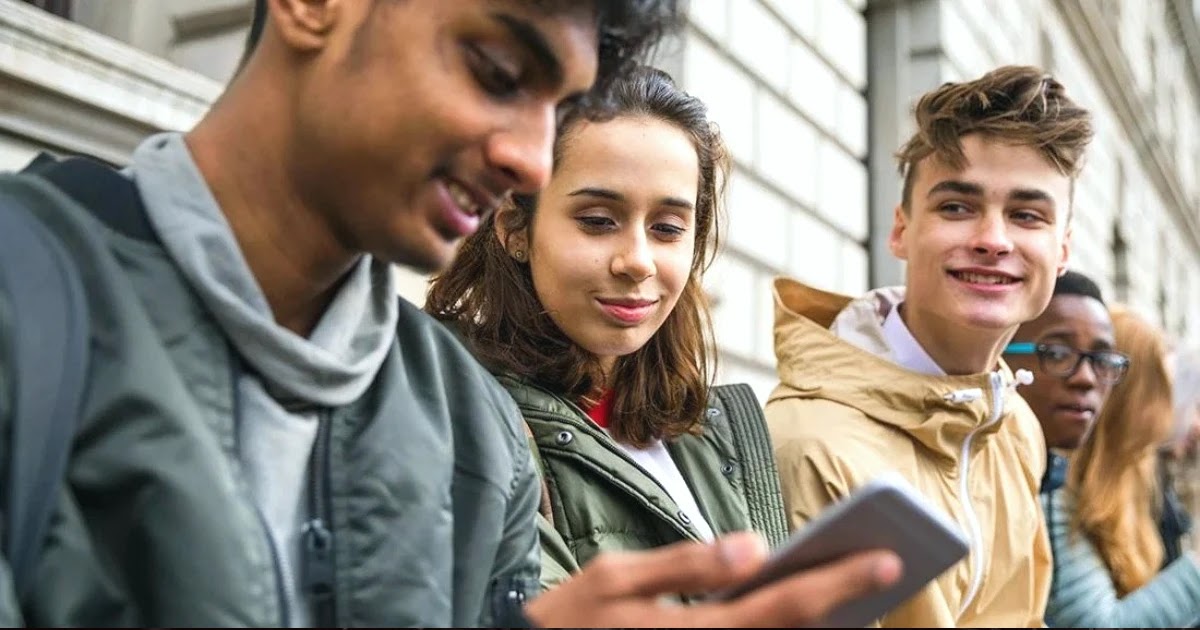
A lot of sad things are said about Gen Z, and they are often called the dumbest generation. Is that fair? People think that Gen Zers are always on their phones, addicted to social media, and have short attention spans.
But as a member of Generation Z, I often think about how people misunderstand us.
How is Gen Z Different from Other Generations?
Gen Z grew up with the internet and social media, unlike prior generations.. Members of Gen Z can now learn, make friends, and make money online thanks to the internet. Generation Z is the last one to see traditional media, as streaming services and YouTube have become the most popular ways to get new media.
This article discusses Gen Z's reputation, if they have it hard, and why they're misunderstood.
For what are they known?
Gen Z is known for more than just starting the "Tide Pod Challenge."
People say that Gen Z is known for being very open-minded. "Woke culture," which allows everyone to feel comfortable in their own skin, was made possible by social media, for better or worse.
Education is seen in a different way by people in Gen Z. Thanks to the growth of the internet, it has never been easier to learn online.
Because student debt is such a big problem, many people in Generation Z have found other ways to learn. On the internet, there are a lot of ways to start a business, make money, and work from home.
For older people, this could be hard to understand. Generation Z knows that the internet will continue to change over the next few years.
The main traits of Generation Z
People of the digital age
Accept difference.
Analytical people.
Materialistic and consumerist.
Not afraid of change.
Entrepreneurial.
Does Gen Z face challenges?
Gen Z may look like they have it all, but they have had to deal with a lot of problems. Generation Z has grown up with mass shootings at schools, student debt, politics that divide people, and most recently, a pandemic.
Many members of Generation Z who grew up with social media are always comparing their lives to those of others. Social media has given Gen Z a lot of insecurities.
Women in Generation Z may feel like they are not good enough and feel pressured to meet fashion standards that they cannot reach. Men in Generation Z might feel like they need to be more successful and live more idealistic lives.
Generation Z might feel alone because they do not have as many real-life friends as older generations. Since it is so easy to talk to friends online thanks to the internet, people are seeing each other less and less.
A lot of people in Generation Z worry about the future because of how much housing, education, and inflation cost.
Generation Z's IQ?
Gen Z members are smart in many ways, even though they do not know as much, remember as much, or pay as much attention as people from older generations. Generation Z is smart because they grew up with gadgets and the internet. In other words, Generation Z can get information right away, but it might be harder for older people.
Is Gen Z hooked on technology?
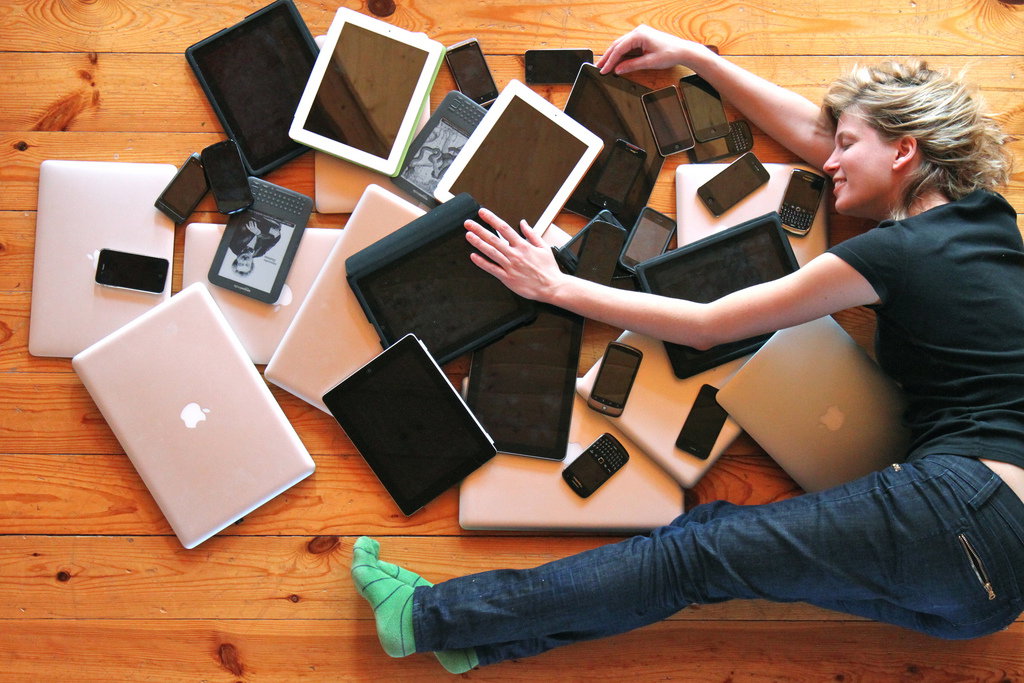
I can say for all of Generation Z that we are hooked on technology. We use our phones, laptops, and other tech more than any other generation, whether we like to admit it or not.
In the past few years, social media has become increasingly addicting. Gen Zers often spend hours at a time scrolling through apps like TikTok. The TikTok algorithm considers what people like to do, which makes it easy to lose track of time and look around for hours.
Since the pandemic, Generation Z has gotten used to being alone and spending a lot of time each day on their phones. Gen Zers are always checking their phones, whether it's to talk to friends, check out social media, or play games.
I recently decided to find out how many hours a day I was on my phone, and what I found surprised me. On average, I used my phone for more than 8 hours a day. Once, I used it for 13 hours straight.
At this point, I knew that something had to be different. I thought it was crazy that I spent a third of my day staring at my phone. I decided to limit the amount of time I spend on my phone by setting a screen time limit. This has helped me spend much less time on my phone.
When Did Gen Z Start?
People in Gen Z, who are also called "zoomers," were born between the end of the 1990s and the start of the 2010s. Generation Z is the first one to have grown up with the internet and social media. Generation Z has a lot of people who have friends all over the world and share their lives on social media.
Why is Gen Z misunderstood?
Gen Zers are often called stupid and have short attention spans because they are always on their phones.
Generation Z people are not, in fact, naive. People say that Generation Z has a short attention span and makes decisions quickly.
Also, they grew up during a time when social media was the main way people got news. This has made Gen Zers more aware of the world and open to people from other places than previous generations.
Gen Zers have a different view of traditional education and school than previous generations. Gen Zers are good at learning on their own now that the internet and YouTube have so many resources. Gen Z is known for being very resourceful and preferring to learn on their own over getting a traditional college degree.
People in the past lived by the principles of education, work, and retirement. Older people have a tough time understanding how Generation Z is taking charge of their future by using unusual ways to make money.
In conclusion, is Gen Z the most stupid generation?
As a member of Generation Z, this article speaks to me. On the one hand, I totally understand why people think this generation is stupid. On the other hand, I think Generation Z will be the wisest generation in the future because it can adapt to change so quickly.
Because they are so good with technology, Gen Z will not have any trouble keeping up with the future.
Who has the most stupid people? Please tell us what you think in the section below.
What are these sachets that comes with food packaging?
These sachets are called oxygen absorbers, or oxygen scavengers. Oxygen absorbers are added to enclosed packaging to help eliminate or reduce oxygen. They help keep products safe and improve shelf life.
The components of an oxygen absorber vary depending on their use. the product's water activity, and many more. A porous sachet or packet often contains the oxygen absorber, but it can also be found in packaging films and structures. Most products require only iron powder, sodium, and activated carbon (charcoal). is quite effective. To reduce oxygen levels in the surrounding atmosphere to approximately 0.01 percent, sodium is used as an activator to rust iron particles. Activated carbon absorbs gases, preserving products and removing odors.
**Work of Oxygen Absorbers:**
Activated carbon is porous and may absorb gases. When activated carbon is exposed to air, it absorbs oxygen molecules. Moisture in the air mixes with iron particles within an oxygen absorber sachet when it is removed from its protective packing. Rust develops when moisture interacts with iron (Fe) particles. Before rusting can occur, the surrounding air must be at least 65% relative humidity. Sodium is added to the mix to solve the problem. Iron powder rusts even in low relative humidity due to the sodium acting as a catalyst. The reduction of oxygen in the surrounding environment occurs when iron and oxygen are combined to form an iron oxide.
**What are oxygen absorbers?**
More than any other element in the atmosphere, oxygen helps fungus and mold develop. The growth of these microorganisms compromises the integrity of a package. compromised. Food products can become discolored, rancid, or putrefactive, and food poisoning is always a possibility. The presence of oxygen adds to quick deterioration, mildew, mold, and other pollutants in historical records, art, and other objects. Oxygen absorbers were made to guard against such issues. An adequately sized oxygen absorber inside a high oxygen barrier can or bag successfully reduces the ambient oxygen level to around 0.01 percent.
Aspects of oxygen absorbers:
Extend product shelf life.
Stop oxidation.
Prevent insect infestation food damage.
Improve the shelf life of polyunsaturated fats and oils.
Delay food discoloration.
Sulfur dioxide, BHA, BHT, and sorbates are unnecessary additions.
Not crushed or pressed foods
Prevent A, C, and E oxidation.
Useful.
**In conclusion**
Oxygen absorbers are added to enclosed packaging to help eliminate or reduce oxygen. They help keep products safe and improve shelf life. An adequately sized oxygen barrier can or bag successfully reduces the ambient oxygen level to around 0.01 percent. Moisture in the air mixes with iron particles within an oxygen absorber sachet.

Elections in the Philippines in 2022: Broken Promises
Change is happening, and we have the power to make it happen. We can make noise for those who do not have a voice, or we can do nothing.
On May 9, 2022, the National Elections will take place. This is one of the most important days in the history of the Philippines. On this day, the country's people will vote for the political candidates they want to run for president, vice president, twelve senators, etc. This day is important because it will show us who got the most votes, but it will also show us what the future holds for our country and its people. It will show us what path Filipinos will take.
But with this trend come many fights and hate and prejudice are usually part of it. We all know that political campaigns are like battlefields, with some people going to great lengths to win, like doing inside jobs and other disobedient things like bribing voters. This is also called "buying votes" and is against the law.
The rise of social media trolls is another sign of the chaos that the elections have caused. Recent national news stories talked about troll accounts that spread false information and rumors about a certain candidate. These "hate posts" make people feel bad and want to share false information with others, even though they know it is not true.
People's relationships get worse because of these things. So, we should ask ourselves if the election is a way to bring our country together or if it is just another way to spread mistrust, manipulate, and start a war.
Many candidates do their best to be the best in people's eyes to win the election. Their faces are shown on TV ads and posters, and they have come together for political caravans. These "acts of helping" help candidates because they show people their good sides. But as citizens, we should be critical of their campaigns. Their sweet words and empty promises should not fool us. We should be able to figure out what they want and wonder if they will still be around after the elections.
This makes it natural for us to look for the truth and openness in things and people. People should look with their hearts, not just their eyes because if they care about their fellow citizens and the generations to come, they will vote for the best choice.
We should not get too sure about the candidates or have "false trust" in them. Being sure about the candidates we want is the worst mistake we could make. When we vote, we should never forget that we should think about our country and that we are voting for the people, not just for ourselves. Our actions will reflect our future, no doubt. People should vote for a candidate who has a good heart and is real. Change is happening, and we have the power to make it better or worse. We have the choice to speak up for those who cannot speak for themselves.
The real winners should be the people who vote, not the candidates. This is because candidates should serve the people, not themselves. Let this election be the start of prosperity and health for the people and the country, not just a bunch of broken promises.
Written: May 7, 2022
Submitted: May 10, 2022
Iron is toxic to cancer cells. It might even be lethal.
Researchers created an intelligent weapon out of effective FDA-approved cancer treatment with serious side effects. The new drug is more effective at targeting cancerous cells while causing no harm to healthy cells.
Because cancer has an insatiable need for iron, researchers were able to develop iron-seeking medicines that only work in iron-rich cancer cells by incorporating a chemical sensor into existing drugs. The drugs inhibited tumor growth in mouse models while leaving other tissues alone, such as the skin.
The researchers revealed that some cancer cells contain a significant amount of iron.
The new drugs were effective against cancer cells with a specific genetic flaw known as a RAS mutation, a treatment-resistant type of cancer and accounts for about a quarter of all cancer deaths.
"RAS mutations alone cause tremendous pain and claim so many lives around the world," a doctor said.
"Studies will get us closer to meeting the unmet need for better cancer treatment."
Cancers referred to as "Death Stars" include: Your genetic code controls everything your cells do, including growing and dividing. When a cell turns malignant, it berserk, resulting in unregulated growth and tumor formation. In healthy cells, the RAS gene prevents this from happening. Hence a RAS mutation has the potential to cause cancer.
According to researchers, current cancer treatments are effective in slowing this growth, but there is a big catch. Many of these therapies also inhibit the growth of healthy cells, resulting in severe side effects such as pain, bleeding gums, difficulties breathing, and extreme sunburns, which patients may find painful.
The drug may be programmed to activate only when it comes into touch with a cancerous cell by including a molecular sensor.
"Cobimetinib is an anticancer medication that we know works successfully on its target," says Adam Renslo, a UCSF pharmaceutical scientist and co-senior author.
One RAS mutation is notoriously difficult to treat. The KRAS protein has been dubbed "Cancer's Death Star" due to its lethality and smooth, round shape, and it has proven to be extremely difficult to target. According to GEN, the KRAS mutation is most common in pancreas and lung cancers, colon cancer, and numerous types of leukemia, all of which are highly fatal tumors.
These new iron-seeking drugs, published in the Journal of Experimental Medicine, may give us another opportunity at a Death Star trench run.
According to GEN, the quantity of cobimetinib that patients can tolerate is frequently lower than the FDA-approved limit for efficacy due to the drug's terrible side effects on healthy cells.
A more targeted approach is required to attack cells with RAS mutations.
According to the researchers, several KRAS cells showed elevated levels of ferrous iron. They ensured that the anticancer drug remained inactive until it met iron by connecting a chemical sensor that detects iron to it, protecting healthy cells with little iron.
This iron-seeking version of the drug was equally effective in preventing KRAS tumors in mice as the standard carpet-bombing version.
"This is an excellent, well-thought-out strategy for specifically targeting cancer cells, and it's hopeful," said Hossein Ardehali, a cardiologist at Northwestern. Ardehali's lab, which studies the cancer-iron link, was not included.
**Better weapons:** UCSF's Collison works with RAS mutation cancer patients regularly, experiencing their challenges and agony, and he is hopeful that new, wiser medicine may soon be able to help those people combat cancer without becoming too beaten up themselves.
"By removing toxicity from the equation, you're talking about not just one novel drug, but ten distinct combinations that you can now evaluate in the clinic," - RENSLO, ADAM.
Because of its lower toxicity, the iron-targeting version of the medication might be used with other, less toxic treatments at lower doses, potentially allowing for new anticancer combinations.
"By removing toxicity from the equation, you're talking about not just one new treatment, but ten different combinations that you might potentially contemplate pursuing in the clinic," Renslo adds.
"That would be the nail in the coffin for this plan."

Just an essay
Isn't it exhausting to stay in your home study room all day attempting to listen to your teachings through a screen? Papers all around your room; the exhausting obligations you had to take on all at once, such as chores and school homework; you cannot decide what to do first distractions interfering with your ability to focus on your studies. You scarcely spoke to your classmates all day, and you were lonely. Is this how I will study for the remainder of the school year? It is exhausting. Face-to-face classes are superior to online and modular classes since they are less expensive, most students do not consider their homes as a learning environment, and they are ineffective. Face-to-face classes are far superior for students.
Online and modular classes are both costly. In the Philippines, the cheapest monthly internet service costs PHP 1,299. Though some people can purchase phone load (the lowest ones can range from PHP 50 to PHP 100), the quality of the internet that comes with it is poor. According to Save the Children, "students' families were challenged" due to financial issues caused by employment and income loss. Students struggle to maintain continuous attendance when they have a bad internet connection; they are also unable to effectively listen to their lessons. These costs do not include any additional payments for purchasing phones, laptops, printers, and so on. According to Education Secretary Leonor Briones, the demand for paper in modular learning is extremely high, making it prohibitively expensive in the long term. It has a huge influence on the environment since we may have to cut down an excessive number of trees to make learning modules. Not everyone is fortunate enough to be able to purchase the materials required to support their study.
Most pupils prefer to learn in a classroom setting. According to research conducted by the Psychosocial Support and Children's Rights Resource Center (PSTCRRC), 33 percent of student-respondents in the Philippines do not consider their families to be a conducive environment for learning. Many Filipino students found it difficult to study at home due to a lack of desire and other temptations such as online games and social media. Furthermore, it is difficult for every kid to combine their academic life and home life because they all must deal with it in the same place, their homes. Students can concentrate well in classrooms since they are designed for learning. Students can comprehend the information more quickly in an environment with fewer distractions. There are real-time interactions between students and teachers; for example, if a student is struggling with their lessons, they can seek for help from the teachers, and students can also ask for feedback on their work. Stanford researchers discovered that "in-person communications make our brains happier," and this also occurs in classrooms. These exchanges will result in fresh insights and connections.
In modern times, these new online and modular learning innovations are not that ineffective. These new learning methodologies are only band-aid solutions to the current educational problem. Some students have difficulty adjusting to their eLearning systems, particularly modern technology and learning platforms. During face-to-face classes, students have a set timetable; under these circumstances, they can develop a sense of responsibility. Today's online and modular learning do not follow a plan, only a deadline to be aware of. This leads to poor time management and procrastination, which is one of the reasons why some of them cram and eventually fail their classes. Furthermore, because modular learning is primarily self-paced, only the students may direct themselves. According to Save the Children data, 67 percent of students found it difficult to understand the learning materials in modules and online classes. They force some pupils to learn nothing from their modules. Students are simply attempting to complete and pass the assignment before the deadline. Given these considerations, it takes a significant amount of time and desire for students to become accustomed to modular and online learning.
Both sides have merits and disadvantages, but online and modular classrooms fall short of the standards set by face-to-face classes. Given the foregoing, we may conclude that face-to-face classes are far superior for pupils. Online and modular systems are costly, but students do not consider their houses as a place to study, and it is difficult to adjust to. Online and modular courses are not for everyone. We are all having difficulties with online and modular classes but know that we are not alone. Let us ask ourselves, in these trying times, if online and modular programs are really viable. We cannot do much in these situations, but the very least you can do is aid yourself.
The End of Climate Change
***Humans are not distinct, but an integral part of it, even though their behaviors seem otherwise. It is caused by the will to survive and greed.***
Recently, news regarding climate change and its severe impacts on the Earth and humans has resurfaced due to police officials arresting scientists/ecologists who protested/advocated for systemic change. As a result of the uproar, trends, and hashtags such as #LetEarthBreathe and #ScientistsProtest have emerged, causing an awakening in people's passion for nature.
Netizens on social media sites such as Facebook, Twitter, and others have been exchanging environmental tips. However, they are insufficient to halt the ongoing turmoil produced by climate change. The attitudes and actions of citizens toward nature are only the beginning.
To solve climate change, we must first acknowledge that it is a fundamental problem; I have observed that many people do not care about climate change and its consequences; they have the perspective that if it does not 'directly' touch them, they will not contribute to solving it. However, climate change impacts everyone; it is NOT YET EVIDENT, but it will be in the coming years.
We know that carbon emissions are caused by burned fuels, notably mined fossil fuels and natural gas. These are subsequently processed to produce electricity, which humans use for comfort. Although this has dramatically aided humans in living a pleasant existence, it has harmed our environment, not to mention the other species affected. This leads us to the second option, which is to seek innovative opportunities to decrease or eliminate the adverse effects on our environment. Many researchers, particularly in science domains, have made significant contributions yet are not recognized for it. Promoting these types of alternatives helps mitigate climate change, but it also helps us, as humans, to grow and be innovative.
The next step is to cease viewing nature as a moneymaker; that is, many industries would choose the path that generates the most money over the course that has the slightest damage to the environment. This includes commercial businesses, the government, and so on. If governments employ renewable energy instead of non-renewable energy, the private sector (non-renewable energy) will cease to exist. The government also contributes to this 'quandary' by focusing primarily on industrial growth, such as replacing farmlands, forestry, and ecosystems with infrastructure to aid our deteriorating economy.
Finally, consider your lifestyle. Humans are not separate from nature but a part of it, even though their behaviors seem otherwise. The need for survival and avarice causes it; they are unaware that their luxurious living costs are ruining their ecosystem. To fight this 'inverse relationship,' we must also assist, develop, and improve our way of life. It will be difficult, but possible. We must remember that hashtags without work are still meaningless, and they cannot constitute a powerful solution to this ongoing problem.
To summarize, we humans must love our world because it meets our needs, and we must also defend it. Our activities mirror our future, and a change promises a bright future. Before it is too late, we must be wise and disciplined before we reach THE POINT OF NO RETURN.
Thank you for reading, you might want to click **LIKE** or **SUBSCRIBE**? :)


Because of online shopping, discarded clothing is covering the planet.
*More worn clothing is being discarded. We are purchasing a faster fashion, which is transient. Clothes sales on e-commerce sites increased.*
Many of the customers were homeless. I rummage through a mountain of donated items, looking for vibrant shirts, tailored jackets, and other treasures that could help the charity's poor clientele.
Not every item, however, was worth providing to clients. Those items were thrown away, a faded Gap T-shirt and a damaged pair of pants.
More worn clothing is being discarded. We are purchasing faster fashions, which arrive and go instantly. Even though overall garment sales were down because of the pandemic, e-commerce clothing sales increased. We wanted to make room for the new stuff, so we cleaned out our wardrobes and donated to various charities when we were at home.
Your donated clothes may be converted into industrial rags, carpet padding, or housing insulation. They are occasionally transported in bundles to Vietnam, Ghana, Nigeria, Malaysia, and other nations, where shops sort through the clothing for prizes. Some e-commerce returns, according to the Rest of the World, are also transferred offshore.
E-commerce is powering the cycle. According to Digital Commerce 360, by 2021, internet sales will account for half of all clothing transactions. In that year, e-commerce apparel sales climbed by 25% to $181 billion (about $560 per person in the US).
People usually buy more clothing than they intend to keep while shopping online. More than half of shoppers told Narvar, an e-commerce customer service company, that in 2021 they will buy many of the same goods to return the ones that do not fit. Some companies even enable customers to keep items that no longer work, allowing them to give or discard even more clothing.
Though difficult to quantify, e-commerce is fueling an increase in garment purchases, according to Neil Saunders, a Global Data retail expert. Online shopping, he claims, exposes shoppers to more brands than they would see in their local mall and allows them to shop at any time of day.
"When there are more opportunities to shop, there is more impulse buying," Saunders said of clothing.
Here are four probable outcomes for the garments you are throwing away.
**| Recycled, but not for use in the production of new outfits**
Your old happy rags could become true rags. According to the Secondary Materials and Recycled Textiles Association, recyclers buy old garments and turn them into rags for auto detailing furniture stuffing and automobile soundproofing. Fiber recyclers may collect old clothing from donation bins in parking lots or purchase it from groups.
Although it may not be the outcome you were hoping for with your old jeans, it does have advantages. Fewer natural resources are used because fewer new fabrics are required to create those items. Furthermore, fiber recycling keeps clothes from being burned or disposed of in landfills.
It also provides funding to organizations that sell unwanted garments to recyclers. According to a news release from SMART, "the acquisition of improper donations provides additional funds to charity organizations and serves as an important source of revenue."
Old clothes are rarely recycled into new ones. Most items are difficult to deconstruct and replace with new fabric since they are made of natural and synthetic fibers.
**| Available at street markets**
Secondhand clothing from the United States may be found all over an outdoor market in Accra, Ghana. Similar goods are available in other African countries. Importers buy enormous bales of used clothing and sell them to stores, which sort the garments based on their condition.
It is important to note that even if your clothing donation winds up in one of these bales, it still benefits a charity. Instead of staying the one-of-a-kind wardrobe item it once was, your contribution has been converted into cash to assist the charity.
The influx of used clothing is unpopular in the importing countries, partially because it competes with local producers. A group of four east African countries attempted to restrict imports to protect their textile industries. Still, only Rwanda maintained the embargo after the US imposed taxes on the countries' garment exports.
Clothing can also be dangerous. According to studies by the OR Foundation, an organization advocating for better fashion standards in the United States and Ghana, unusable dresses poured from landfills and fouled Accra's open fires.
**| In the trash**
According to the US Environmental Protection Agency, in 2018, Americans dumped 9 million tons of clothing and shoes. Even if you donate the dress, it may be in a landfill.
Clothes exported abroad are also discarded in significant quantities. Buyers take a chance on each bale because they cannot inspect it individually. It will certainly be discarded if they do not like what they got. According to the OR Foundation, 40% of imported apparel is thrown away. Mountains of clothing caused a catastrophic landfill fire in Accra in 2019, and vast ropes of entangled garments regularly wash up on Ghana's beaches.
"It's ridiculous to divert clothing from landfills in the Global North by dumping this excess on the Global South," wrote Liz Ricketts, executive director of the OR Foundation, in an essay emphasizing the problems caused by shipping extra clothing to Ghana. "It's even more ludicrous to call this a solution or to refer to it as recycling."
**| On the Internet**
Of course, some of the apparel given is in good condition. Some Ghanaian business owners travel to the street market searching for higher-quality secondhand clothing to curate on social media.
Lia Akuoko, who lives in Accra, uploads discarded goods from the city's secondhand clothing market on her Instagram account, Lias pretty finds. Akuoko-tailored jeans with a butterfly motif were among her findings.
"They usually like colorful straight gowns," Akuoko said of her customers through WhatsApp.
Some Malaysian enterprises offer products discovered in bundles transported from Japan on resale websites aimed toward US clients. After being sold, the apparel travels to another country. According to the New York Times, many Malaysian merchants sell their wares on Etsy and eBay, while one dealer offers his luxury Japanese fashion purchases on Grailed, a US-based men's clothing resale site.
**Alternatives to Garbage**
Advocates' initial proposal for limiting the problems created by worn clothing is to buy fewer articles. When you are ready to let go of your clothes, you have a few options, the most popular of which is to give them to the next person who will wear them.
This can happen on resale sites where people can list their old clothes. It can also occur through websites on the internet. You can even learn mending and tailoring techniques to upcycle your items if you feel adventurous.
When your garments are no longer usable, fiber recycling is usually your best alternative. The quickest way to accomplish this is to donate through a charity or collecting box. However, there is no guarantee that the fibers will be used in industrial products rather than in landfills, whether in the United States or halfway over the world.
The Antibiotic Apocalypse
What would your reaction be if we informed you that humanity collaborates to develop the ultimate superbug? A bug with the potential to cause the death of billions of people.
It is occurring right now. We are now focusing on the development of a super bacterium. As one of the first forms of life on Earth, bacteria are one of its best known. They are experts in survival and can be found anywhere, even though they are the tiniest object we still perceive as alive.
The overwhelming majority of germs are entirely safe for humans. The number in the trillions in your body aids in your survival. On the other hand, others will invade your body, rapidly spread, and cause you harm. Historically, millions of people have perished because of bacterial illnesses.
Previously, we developed a superweapon called "antibiotics," which, in conjunction with vaccines, transformed medicine and saved millions of lives. Antibiotics rapidly eliminate the most vulnerable germs, leaving only a few that the human immune system can easily handle.
**Antibiotics accomplish this in some ways.**
Consider a bacterium, a complicated machine that relies on thousands of complex operations to stay alive and functional. Antibiotics, for example, disrupt this complex machinery by interfering with its metabolism, significantly limiting its growth and rendering them less dangerous.
Certain antibiotics specifically target DNA and prevent it from duplicating, preventing bacteria from spreading and eventually killing them. They rip the bacteria's outer layer apart, enabling their insides to flow out and quickly kill them.
All of this occurs without endangering the body's cells. Evolution, on the other hand, is a complicated issue. A small proportion of the germs that enter your body may have evolved a defense mechanism by accident.
For example, by intercepting antibiotics and changing the molecule so that it becomes safe. Alternatively, they can direct their efforts toward pumps that discharge antibiotics until they cause damage. A few immunological bacteria are not a problem because the immune system can deal with them.
They can, however, propagate their immunity if they escape. What techniques do bacteria use to spread immunity?
First, bacteria contain two distinct forms of DNA: the chromosome and little free-floating segments called plasmids. They will embrace one another and transfer plasmids to acquire vital talents.
This method enables the rapid spread of immunity throughout a population. Bacteria can also harvest and accumulate DNA fragments from deceased bacteria via transformation. Additionally, this occurs via bacterium species and can result in superbugs resistant to many antibiotics.
There are still a few superbugs roaming the globe. Hospitals provide them with an ideal nesting site. Individuals have a short memory. The atrocities of the pre-antibiotic era have vanished from memory.
Today, we see this vital treatment more as a commodity than a game-changing scientific breakthrough. This has resulted in a strange disconnect where hundreds of millions of people in developing nations still lack access to antibiotics. Simultaneously, antibiotics are prescribed too liberally and recklessly in other parts of the world.
Antibiotics should be taken as a last resort, not just because you have a cold. Another serious issue is the usage of antibiotics throughout the meat processing process. Humanity possesses between 20 and 30 billion livestock animals at any point in time.
Numerous animals are maintained in horrible conditions to keep the cost of meat down, including confined quarters and unclean environments that act as breeding grounds for illness. Antibiotics are given to a wide variety of animals to eradicate as many bacteria as possible and prevent them from becoming ill.
That a cheeseburger must cost a dollar; predictably, this strategy has resulted in the development of a growing number of antibiotic-resistant microorganisms. To tackle this, we employ a combination of antibiotics and a covert weapon: specialized drugs designed to eradicate germs that have developed resistance.
To avoid the formation of a super bacterium, these must be utilized strictly according to established protocols. As a result, we reasoned. In late 2015, China delivered frightening news. There had been a discovery of resistance to Colistin, a life-saving antibiotic.
Colistin is an older drug that was rarely used due to the possibility of liver damage. As a result, it developed no resistance, making it an excellent antibiotic last option for such complex infections that emerge in hospitals due to bacteria becoming resistant to various other drugs.
The tolerance of bacteria to Colistin is highly worrying. It can potentially breach the final line of defense, resulting in a considerable number of casualties.
**How did this happen?**
Colistin has been fed to millions of animals in Chinese pig farms for years. Resistant germs evolved and moved undetectably from animal to animal, eventually reaching humans. On any given day, the Earth has approximately 100,000 flights, effectively connecting every individual.
We developed the modern world while also laying the groundwork for a pandemic that might be devastating. However, there is no reason to panic just yet.
Bacteria multiply, humans conduct science, new antibiotics are developed to replace older ones, and technology develops daily. While the issue is legitimate and essential, the battle is far from over.
If humankind plays its cards correctly, superbugs may not be so super after all.

This is what happens to the fat when someone loses weight.
Fat has made a resurgence in recent years. Of course, everyone is thinking about dietary fat, which has nine calories per gram and is preferred by ketogenic diet followers. When it comes to the fat we carry within our bodies, the situation is different.
Obesity has not always been prevalent. Carrying a few extra pounds was once considered wealth because it indicated that you could afford to eat healthily. We then swung to the other extreme when the fashion industry became obsessed with anorexic models. As for eating disorders, melancholy and anxiety infiltrated popular culture, and they wreaked havoc on our psyche. We are still reeling from the impact of that swerve.
It is hardly unexpected that there is a correlation between wealth and fat. Your body stores fats and carbohydrates to ensure that you never run out of adenosine triphosphate (ATP), the molecules that act as batteries in your cells. Your body's account requires ATP if a debit is required.
**Two types of fat: GOOD and BAD**
We aim for optimal energy balance at a healthy weight—enough stored energy for when you need it, but not so much that it accumulates as visceral fat, typically around your abdomen. Because our bodies are excellent at storing fat, a lack of stored fat can lead to reproductive problems. Our primary concern now is that we consume too much and are plagued by many metabolic, cardiovascular, and immune-related disorders that clog hospital corridors.
It is important to remember that fat is necessary for good health. Some fat cells are kept in the liver, while others are stored in the muscles. Many of them are employed for resting metabolic activities that burn between 1,300 and 1,600 calories (about 128 minutes (about 2 hours) of running) each day. The remainder is scattered throughout your body as adipocytes; each contains tens of billions of these fat cells.
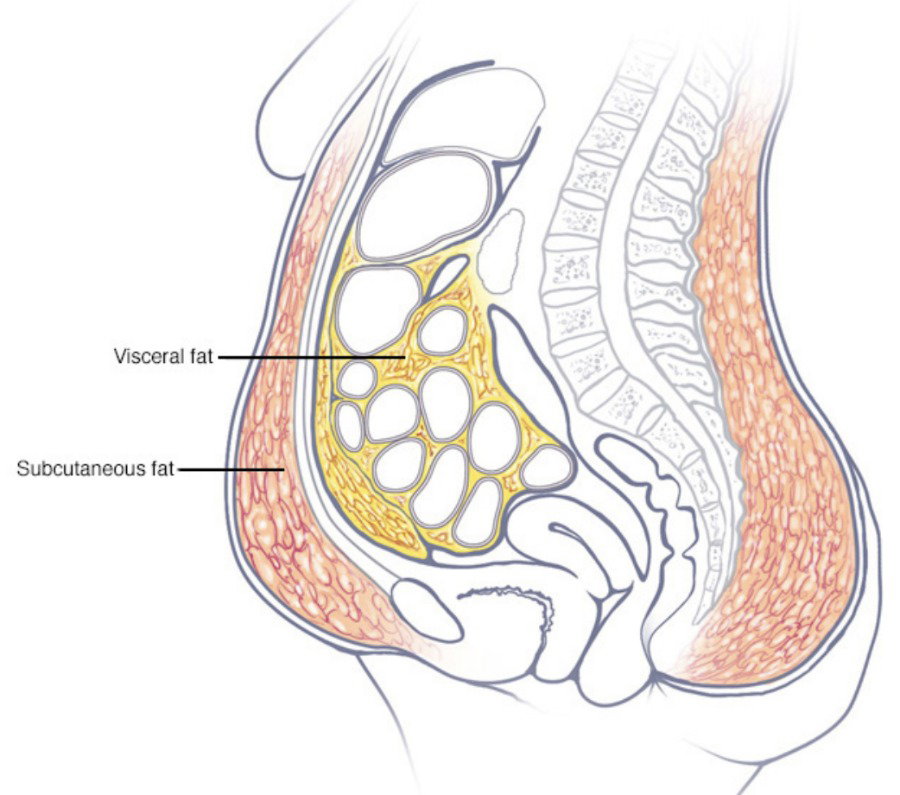
Subcutaneous fat is a form of fat deposited beneath the skin and is required by the body. Visceral fat, which behaves differently in your body, is the issue. When excess energy concentrates around your stomach, it also collects a variety of vitamins, hormones, and contaminants, the latter to keep them away from your organs. While this may appear to be a good thing, accumulating pollutants and poisons might be dangerous eventually, especially if you lose weight too quickly.
**What happens to the fat?**
How do you start losing weight? Always, it is by breathing. While "burning" fat is not wrong, losing weight requires your body to expel a large amount of carbon dioxide. The Washington Post reports:
[Researchers] discovered that a human must inhale approximately three pounds of oxygen to burn one pound of fat, initiating metabolic processes that produce slightly less than three pounds of carbon dioxide (just slightly more than the average amount exhaled by a human on any given day) and about a pound of water. Water can exit the body in many ways, including diarrhea, pee, sweat, saliva, and other physiological fluids. Still, most weight loss occurs through the lungs.
Your fat "escapes" and floats to the surface of the water. (And no, it has nothing to do with global warming.) Eliminating it also eliminates other vitamins and pollutant storage. While this may not appear to be a positive thing, it is preferable to be free of them eventually.
According to Popular Science, organochlorine insecticides, among other contaminants, bind to fat and leach into our food supply.
Although our bodies do not appear to store enough of them to be dangerous, their continuous accumulation leaves us vulnerable to exposure. They begin to reappear when you lose weight.
If you lose weight at a healthy rate, the tiny number of pollutants created will not flood your bloodstream (1-2 pounds per week). They will vanish in an instant, courtesy of your urine. On the other hand, extreme dieting is a different matter. Weight loss increases the number of toxins (along with vitamins and, in women, estrogen) that enter your system (excess vitamins can be fatal, while more significant estrogen stored in fat raises your risk of breast cancer).
Because we no longer face the same issue as our ancestors—most of us do not have to decide whether to eat today or tomorrow—fat storage takes on a new role in our bodies. This surplus of energy, hormones, and toxins results in many preventable health problems. According to some researchers, a healthy lifestyle that includes improved nutrition and more physical activity can resolve 70% of our medical issues.
Additionally, the fat exhaled into the atmosphere eventually serves as fuel for plants, one of the primary meals we want to return to our bodies. We refer to a rhythmic cycle, which has molded human evolution and is still necessary for optimal health today.
Manipulation of Power to the Poor: The Death Penalty
*The death penalty is a method of executing a criminal who has committed heinous crimes. We cannot cure immorality with another crime; justice will use the Death Penalty to give Power to the Poor.*
Over the last few years, the global justice system has always attempted to enact laws and punishments that are just and unbiased. However, some governments have chosen a different strategy to punish those who have committed unforgivable acts: the death penalty.
The death penalty is a method of executing a criminal who has committed heinous crimes. Some countries, such as Bahrain, Egypt, Iraq, Saudi Arabia, Syria, and Yemen, follow this penalty; these governments also use barbaric and brutal methods to execute the guilty, such as lethal injection, electrocution, and public execution.
Although the death penalty is known to deliver justice to those the criminal has victimized, it does not change that we are paying for wrongdoings with people's lives. We cannot correct immorality with another crime, and killing another being would not accomplish justice.
In other circumstances, the death penalty emerges from the desperation of people blinded by emotions in their search for guilt in suspects because they want justice. There is also the possibility of executing an innocent person who has been identified if there are no witnesses or proof. Furthermore, judges and juries may render an incorrect verdict in a case.
Because some suspects cannot afford to pay a lawyer to defend them, the system has the authority to execute them. For example, people in poverty, who cannot afford to buy needs for daily existence, cannot afford the pleasure of hiring a certified lawyer.
People in positions of authority can even use it to eliminate their adversaries. Furthermore, affluent people can avoid punishment by manipulating the legal system with their connections and money.
As a result, people living in poverty will only face this terrible punishment. Apart from the guilt/suspect, their loved ones would be afflicted by trauma, which may lead to mental diseases such as depression and anxiety.
The death penalty will not be possible or applied unless our justice system is executed correctly. Justice will not be served, nor will it be right, if we terminate people and prevent their loved ones from seeing each other. Let us be righteous and aware of the consequences that individuals may face due to this remorseless damnation.
-SUBSCRIBE :)

Since 1940, Americans' IQ may have been lowered due to lead exposure.
New research discovered that childhood lead exposure in the United States is widespread and far more alarming than prior estimates.
After merging data on leaded gas consumption from 1940 with data on blood-lead levels from the mid-1970s, researchers determined that more than 54 per cent of Americans alive in 2015 had been exposed to hazardous amounts of lead as children.
More than 170 million people are now at risk of neurological disease, mental illness, and cardiovascular difficulties due to the lead they breathed in, ingested, or absorbed as kids.
There is no such thing as a safe level of lead exposure at any age. Still, it is highly damaging to children's brain development, resulting in long-term learning disabilities and behavioral issues.
According to research, lead gas reduced the nation's cumulative IQ score by 824 million points or around three points per person.
This is just the standard deviation. Those born during the 1960s and 1970s, when lead gas was at its peak, may have lost six to seven IQ points on average. Most individuals are not aware of these consequences. Still, some people with lower-than-average cognitive ability may be diagnosed with intellectual disability due to their exposure to eight times the current lead health limits.
Michael McFarland, a sociologist at Florida State University, acknowledges, "I was shocked" (FSU). "And even though I expected it, the statistics still surprise me."
Since the United States banned leaded gasoline in autos in 1996, childhood lead exposure has reduced. However, many Americans are still dealing with the ramifications of their upbringing.
Children who are born after 1996 have lower lead levels than their grandparents generation, but their exposure to lead is still substantially higher than generations prior to the preindustrial era.
Moreover, hundreds of communities around the United States, including Flint, Michigan, continue to be affected by the country's legacy of unrestrained lead use, with striking racial disparities.
For example, researchers showed Black adults over 45 to have much higher blood lead levels than White adults, even if they were born after 1996.
The study's authors are now investigating the long-term effects of such exposure to see if they might explain racial differences in health outcomes, including kidney disease, coronary heart disease, and dementia.
"Millions of us are wandering around with a history of lead exposure," says FSU clinical psychologist Aaron Reuben.
"It's not like you were in a car accident and tore your rotator cuff, which healed, and you were fine; it appears to be a life-threatening insult transported throughout the body in numerous ways that we're still trying to figure out."
Poisoning with lead is an insidious disease. Even though the odorless and invisible contaminant has long been used in paints, pipes, and gasoline, massive levels of lead have already gotten into our drinking water, airways, and houses, at least in the United States. However, restrictions are better than they once were; enormous amounts of lead have already seeped into our drinking water, airways, and homes.
While lead pollution from automotive exhaust is no longer a concern, other sources of lead contamination, such as hunting ammunition, plumbing, and industrial waste, continue to endanger people and the environment.
In 2021, for example, researchers determined that half a million American children had detectable levels of lead in their blood. This category was more likely to include children who resided in mostly Black zip codes.
According to some research, lead poisoning is the country's "longest-running epidemic," and calculating the number of IQ points lost due to lead exposure is a standard indicator of its adverse health effects.
Researchers discovered that lead exposure was linked to "astonishingly large" and "alarming" IQ declines between 1999 and 2010.
The new data goes even further, demonstrating significantly higher blood-lead levels among the elderly.
"By giving more complete estimates of the number of people exposed to lead in early childhood, our study takes a critical step toward determining the full amount of the damage done to the American population in one single domain: cognitive capacity," the authors write.
study was published at PNAS.ORG

The world's largest "smart city" will be located in Manila Bay.
Efforts have been made in the past to restore Manila Bay to its former state, but none have shown significant results—at least not until recently. The Department of Environment and Natural Resources (DENR) has recently begun imposing more robust measures to restore the region, culminating in orders ordering the closure of locations such as the Manila Zoo and the suspension of services at certain well-known eateries. Completing the cleanup is simply the first step toward building the world's largest "smart city," New Manila Bay City of Pearl.
The development of the proposed metropolis was first mentioned in 2017. In November 2018, Manila Mayor Joseph Estrada and Pasay City Mayor Antonino Calixto signed a memorandum of agreement to move forward with the proposal. A partnership lead developed the proposal for New Manila Bay City of Pearl by local enterprise UAA Kinming Group Development Corp., collaborating with an international mix of investors from China, Southeast Asia, Europe, and other places. It proposes a town featuring a central commercial district and housing, shopping, entertainment, medical, school, athletics, and other services.
Furthermore, the 407-hectare plan would require converting some of Manila Bay's waters to land, which has upset environmentalists in the Philippines.
In a Facebook post, the Earth Island Institute Philippines warned of the negative repercussions of reclamation efforts. "Not only is garbage devastation wreaking havoc on the city's coast; reclamation, an irreversible undertaking, poses a greater threat to the environment and the life of thousands of [fisherfolk] living in Mega Manila's coastal towns."
Some lawmakers have also expressed worries about Manila Bay reclamation projects, worrying that the current restoration may be a forerunner to reclamation. "Ano ang silbi ng rehabilitation mo kung magtatambak ka ng lupa ay 'yong tubig ng Manila Bay, 'yong look ng Manila Bay, 'yong pangisdaan ng Manila Bay, tatambakan mo ng lupa para itayo ang mga proyekto ng Build, Build, Build?"
According to an article in The Philippine Star, Presidential Spokesperson Salvador Panelo did not deny that reclamation would occur. Still, he also noted that reclamation projects would result in more jobs and money, helping the country's economy.
The Metropolis of Pearl is reportedly designed to be an innovative and wealthy city with green policies and renewable energy-generating characteristics. It is set to be released in 2035.
Because Metro Manila is still under lockdown and the number of COVID-19 cases continues to rise, the project's launch could be delayed or canceled, but we'll have to wait and see what happens next.
**Thank you for reading.**
**Links to my other articles.**
**Review: Is Ecosia a Legitimate Company? Are They Really Going to Plant Trees?**
**When Fish First Breathed Air**
**Do you need lighting? Boiled potatoes provide enough energy to light a room for 40 days.**
**This is how your WiFi router gathers and manages your data.**
**What is the ideal sleeping position for getting a good night's sleep? It is debatable.** https://read.cash/@Somebody-Else/review-is-ecosia-a-legitimate-company-are-they-really-going-to-plant-trees-75fce6e7 https://read.cash/@Somebody-Else/when-fish-first-breathed-air-6ec47404 https://read.cash/@Somebody-Else/do-you-need-lighting-boiled-potatoes-provide-enough-energy-to-light-a-room-for-40-days-666c2474 https://read.cash/@Somebody-Else/this-is-how-your-wifi-router-gathers-and-manages-your-data-7c51fe1c https://read.cash/@Somebody-Else/what-is-the-ideal-sleeping-position-for-getting-a-good-nights-sleep-it-is-debatable-ad08f9c4


What is the ideal sleeping position for getting a good night's sleep? It is debatable.
Whatever sleeping position you choose, whether on your back, side, or stomach, it most likely feels as natural to you as being left- or right-handed. However, not all sleeping positions are created equal. In actuality, your sleeping position is one of several factors that determine the type of bed you should buy: back sleepers benefit from luxuriant contouring, while stomach sleepers require a robust, firm mattress to help with spinal alignment.
Does this imply that one sleep posture is superior to another if your sleep position affects how you sleep? In both cases, sure. Your sleeping position can make or break your sleep quality, and some positions are better than others for getting a good night's sleep. However, the optimum sleeping posture for you may not be the ideal sleeping position for someone else. It is determined by a variety of factors, including whether you snore, have any medical concerns, or suffer from back or hip pain.
It is vital to trust your instincts. If you're constantly waking up during the night, tossing and turning, or disturbing up your partner by snoring, it's time to adjust sleeping positions.
Ben Smarr is a sleep science adviser at Oura and an assistant professor of bioengineering and data science at UC San Diego. According to Smarr's research, those who sleep in specific positions have better overall sleep quality. Because personal preferences and health concerns are so important, it's crucial to consult with your doctor about your specific circumstance.
Continue reading to find out more about the benefits of different sleeping positions, as well as how they affect certain sleep problems and health concerns.
**Side sleeping**
Snoring is a frequent sleep problem, especially if you share a bed. While snoring is not a medical problem in and of itself, it is an indication of sleep apnea, a serious medical condition in which you stop breathing while sleeping.
One of the best positions for snoring or sleep apnea is on your side. "While many people prefer to sleep on their backs, side sleepers snore less, so that's usually the favored posture," Smarr says.
According to The Sleep Better Council, whether or not you snore, most individuals prefer to sleep on their sides. Sleeping on your left side is the best position if you have acid reflux, heartburn, or indigestion at night. If you get back or hip pain while sleeping on your side, place a pillow between your legs or knees to relieve the tension.
**Stomach sleeping**
Sleeping on your stomach is preferable to sleeping on your back if you have sleep apnea because it keeps your airways open and allows you to breathe more easily. This is also true for snoring, since keeping your airways as wide as possible will help.
The negative of sleeping on your stomach is that it may increase neck or lower back discomfort. This is because sleeping on your stomach may cause your neck to be in an abnormal position. Sleeping on your stomach also causes your back to arch from neutral to more arched, causing low back discomfort. Don't worry about altering positions if you don't have any trouble sleeping on your stomach.
**Sleeping on your back**
Sleeping on your back is not suggested if you have lower back pain or sleep apnea, according to The Better Sleep Council. Smarr agrees, especially if you snore or have sleep apnea.
"Because your airway flexes more front to back than side to side while lying on your back, it's more likely to collapse," Smarr explains. "Lifting your head can help your weight transfer away from your neck and lessen the risk of your nose or neck collapsing in on itself, but it's a trade-off between verticality and breathing, which is difficult to master."
However, if you do not have sleep apnea, sleeping on your back has various advantages. Because your weight is more equally distributed and centered in this posture, sleeping on your back is healthy to your spine. Sleeping on your back is advantageous if you have acid reflux because you are facing up and are less likely to get indigestion.
-This article's content is offered primarily for educational and informational reasons and is not intended to be used as medical or health advice. If you have any concerns regarding a medical condition or your health goals, you should always consult a physician or another certified health professional.
This is how your WiFi router gathers and manages your data.
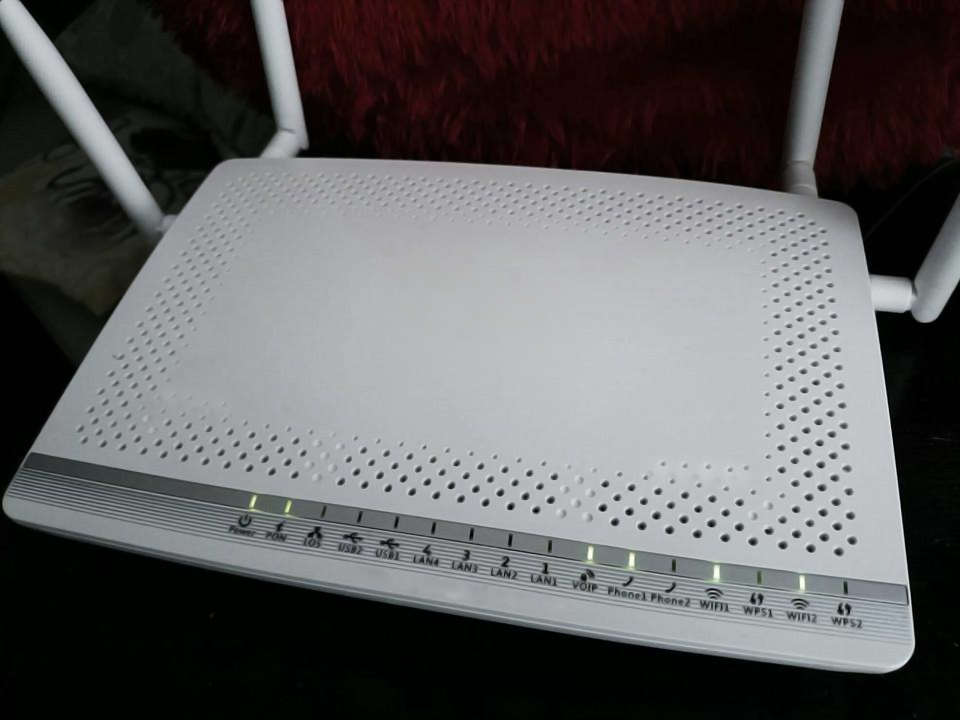
Your Wi-Fi router is the central hub of your home network, which means that all traffic from all Wi-Fi devices under your roof passes via it on its journey to the cloud. That's a lot of information, and it's enough to make privacy a real consideration when selecting a service.
The problem is that the average consumer knows very little about the privacy practices of router manufacturers and sellers. To begin with, data-gathering techniques are complex, and most privacy policies do a poor job of explaining them. To navigate through the dense legalese that fills them, it takes a lot of resolve for a single producer, let alone several. You'll have more questions than answers even if you go that far.
**The problem(s) with data privacy policies**
I dug through almost a dozen terms of service and other policy documents in quest of answers for this piece, but privacy policies aren't often written with full transparency in mind.
"All a privacy policy can tell you is that nothing horrible is going to happen," said Bennett Cyphers, a staff technologist at the privacy-focused Electronic Frontier Foundation.
"We acquire your data, and we may share it with our business partners or reveal it for any of these seven reasons," Cyphers explained. "That doesn't automatically mean the company is doing the worst possible thing with your data, but it does mean they have some leeway if they want to do something nefarious with it."
He's right: most of the privacy policies I looked at for this piece had many of the "wiggle cover" Cyphers highlighted, but with broad, ambiguous language and few specifics. Worse, many of these policies apply to the entire company, including all of its goods, services, and websites, as well as how data from sales transactions and even job applications is handled. As a result, much of what is mentioned about routers may be irrelevant.
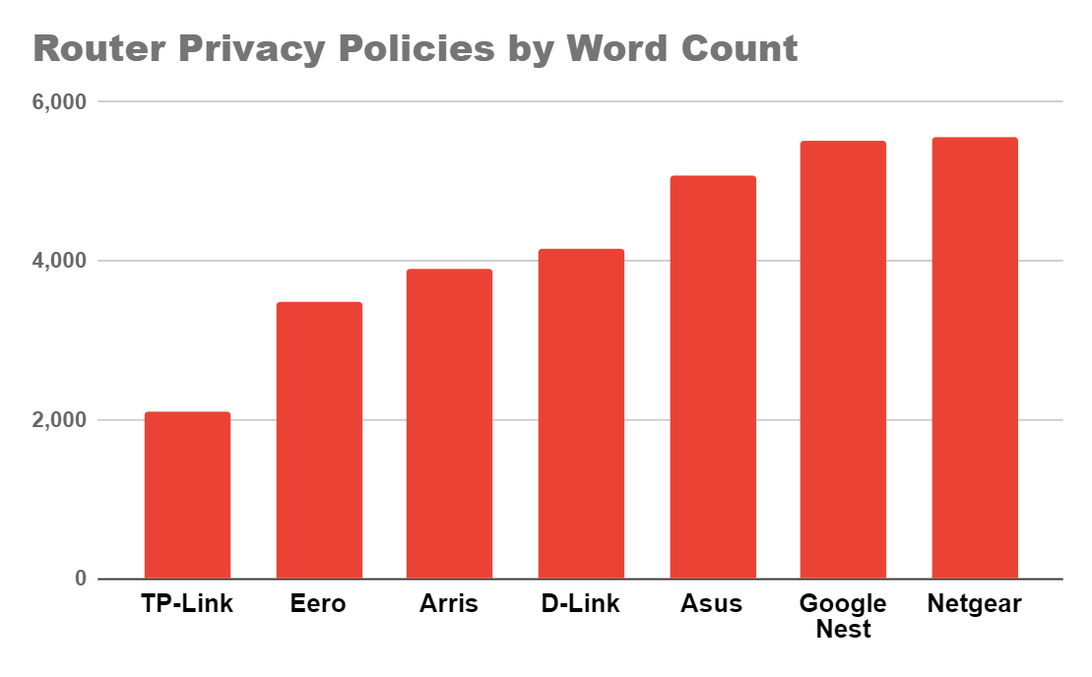
There's also the issue of duration to think about. To put it another way, none of these privacy policies are particularly simple to comprehend. The majority of them are written in carefully crafted legalese that is intended to protect businesses rather than to inform you, the customer. Even while a few manufacturers are improving, with overview sections aimed at explaining the important parts in plain English, you'll still need to dig further into the fine print to gain a full understanding of what's going on with your data. If your company uses a third-party partner to provide additional services like threat detection or a virtual private network, you may need to read several privacy regulations to properly comprehend your data.
All of the policies I read said that the company in question collects personal data for marketing purposes, but I was curious if any of them tracked user web behavior, including websites visited while browsing. I also looked into if any manufacturers shared the personal data they collected with third parties outside of their control.
**Is my router keeping track of the websites I go to?**
Because your router is in charge of practically all of the web traffic in your house, it's hard to think it isn't keeping track of the websites you visit. Despite the fact that every major manufacturer admits to collecting some form of user data for the purpose of marketing, almost none of the regulations I evaluated expressly answered the question of whether or not a user should anticipate their internet history to be tracked or recorded.
**What happens to my personal data?**
I also enquired with the firms I researched for this essay regarding data that may be used to individually identify a user, as defined by the California Consumer Privacy Act of 2018. The law broadly defines "selling, renting, releasing, disclosing, disseminating, making available, transferring, or otherwise communicating a consumer's personal information to another business or a third party for monetary or other valuable consideration" as "selling, renting, releasing, disclosing, disseminating, making available, transferring, or otherwise communicating orally, in writing, or by electronic or other means."
The majority of companies state in their privacy policies that they do not sell personal data, but the CommScope privacy policy, which covers both Arris Surfboard networking products and routers leased through your internet service provider, acknowledges that it shares information for marketing purposes, including identifiers as well as internet and other network activity information, in a way that qualifies as a sale.
According to a CommScope representative, "data used for some of our business operations, such as order fulfillment and performance analytics, as well as the use of'cookies' on our CommScope.com and Surfboard.com websites, may constitute the'sale' of 'personal information' under a conservative interpretation of California law."
Even though order fulfillment and cookies on CommScope's website aren't directly tied to the use of CommScope home networking hardware, the corporation's "yes" on the question of whether or not it sells data has some ambiguity. Nonetheless, it's worth noting that the corporation acknowledges that portions of its operations may be considered a sale under California law, whereas the majority of the manufacturers I researched did not.
"We can say that we do not sell data received from modems, and that data is not used for marketing purposes by CommScope," the company added. "However, when modems are ordered directly from us or when we provide customer service, that information is only'sold' as part of filling that order and providing those services (according to our interpretation of California law)."
Users in California can request that CommScope not sell their data on this website, but the business says it "reserves the right to take an alternate strategy" in response to requests from users outside of California.
Meanwhile, TP-Link informs CNET that it does not sell customer data and that no data obtained by its routers is used for marketing purposes. Nonetheless, the company's privacy policy appears to leave some room for interpretation: "Unless you give us permission, we will not sell your personal information; however, California law defines "sale" broadly enough that it may include the use of targeted advertising on the Products or Services, as well as the use of third-party services on our Products and Services."
**Is it possible for me to opt out of data collecting completely?**
According to certain manufacturers, yes. You have the right to request access to or deletion of data collected about you by others. Regardless of the details, some manufacturers provide more straightforward and practical options for protecting your privacy than others.
The best technique is to provide users with an easy-to-find tool for filing an opt-out request. Minim, the company in charge of Motorola's home networking software, is a great example. For routers like the Motorola MH7603, there's a clear option to opt out of data collection entirely in the Motosync app's settings page. "Users can opt out or withdraw consent for data collection at any moment by clicking the "withdraw" button in our router setup screen," Asus told CNET.
Regrettably, this is more of an exception than the rule. The majority of the manufacturers I examined do not provide an opportunity to opt out of data collection within their apps or websites, instead processing opt-out and deletion requests via email or a web form. Those links and addresses are frequently tucked away near the bottom of a company's privacy policy, where they are unlikely to be seen.
This is exemplified by Netgear. Apple exposes its data collection procedures, including opt-out alternatives, during iOS device setup, according to Apple's standards, but there's no way to opt out after that in the app. Users of Android, on the other hand, are unable to opt out.
A Netgear representative responded, "A user can erase their personal data by visiting to About > Privacy Policy in the Android app (or iOS) and clicking on the online form link in Section 13." "We'll look towards making this decision less hidden in the future."
Other manufacturers, such as D-Link and TP-Link, don't provide a direct way to opt out of data collection, instead directing privacy-conscious users to self-regulatory marketing industry groups like the Digital Advertising Alliance and the Network Advertising Alliance for information on how to opt out of targeted advertising via Google, Facebook, or Amazon, or to install blanket Do Not Track cookies offered by self-regulatory marketing industry groups like the Digital Advertising Alliance and the Network Advertising Alliance. That's better than nothing, but a more direct manner of opting out would be preferable, especially since Do Not Track signals may be ignored by some organizations.
"At this time, TP-Link does not honor Do Not Track signals," the company's privacy policy states.
As a result, Eero was born. Instead of providing an option to opt out of data gathering, the corporation informs customers that the only way to prevent its devices from collecting data is to not use them.
"You can stop all collection of information by the Application(s) by uninstalling the Application(s) and unplugging all of the Eero Devices," according to the Eero privacy policy.
You can request that Eero delete your personal data from its databases by sending an email to privacy@eero.com, but the company claims that there is no way to do so without disrupting a user's connection to Eero's servers and rendering their devices unusable.
According to the privacy policy, the company "may be permitted or compelled to retain such information and not remove it," so there's no guarantee that your deletion request will be granted. Even if Eero agrees to delete your data, you still have the option of making a backup.
"When we remove any information," Eero's policy adds, "it will be wiped from the active database," but "it may remain in our backups."
Food that had been provided
Data collection is all-too-common in today's consumer electronics, with concerns about smartphone apps, social media, phone carriers, online browsers, and more. Although my concerns regarding routers aren't as significant as those, you should still think about your home networking privacy.
Even if the data collecting looks to be safe, I believe that opting out of data collection wherever possible is a good idea. There's no way of knowing for sure where or how your data will be used, and privacy policies can only tell you so much about what data is being gathered. To that purpose, I've listed the opt-out choices for each of the companies mentioned in this article below. As I continue to test and evaluate networking hardware, I'll update this site.
Do you need lighting? Boiled potatoes provide enough energy to light a room for 40 days
**Making a Battery from Boiling Potatoes**
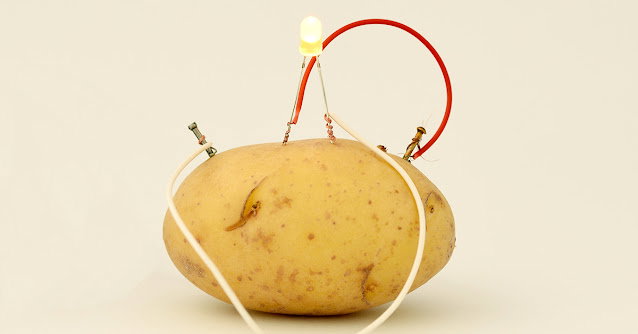
*Despite the ridiculousness of the idea, the team demonstrated that potatoes can generate electricity. According to Rabinowitch, a single potato can power enough LED bulbs for a room for 40 days.*
This is a classic experiment performed in high school science classes to show the operation of batteries. Meanwhile, Rabinowitch and his colleagues discovered that potatoes may be a more promising energy source than previously thought.
To build a DIY battery, you'll need the following materials:
The negative electrode is 1 anode (like zinc)
The positive electrode has 1 cathode (like copper)
1 potato
In 1780, Luigi Galvani discovered the use of boiling potatoes as a conductor. When he linked two metals to the frog legs, the muscles began to twitch. A frog, on the other hand, isn't required; a variety of materials can accomplish the same effect. Galvani's contemporary, Alexander Volta, used saltwater-soaked paper with comparable results. Some people have placed a pail of water or a pile of soil between the two metal plates.
**Low-Cost Alternative Energy**
Despite being a high school staple, potatoes have never been officially explored as a power source. As a result, in 2010, Rabinowitch accepted the challenge. His partners were Boris Rubinsky of the University of California, Berkeley, and Alex Goldberg, a Ph.D. student.
"We examined 20 different types of potatoes and analyzed their internal resistance, which allowed us to calculate how much energy was lost owing to heat," Goldberg explains.
After eight minutes of boiling, the organic tissues in the potatoes degraded, lowering the barrier between electrons. As a result, more energy is generated. They increased the strength even further by slicing the potato and sandwiching each piece between metal plates.
"We discovered we could increase output tenfold, which made it economically appealing because energy costs are decreasing," Goldberg explains.
"It's low voltage energy," Rabinowitch says, "but it's enough to make a battery that might charge mobile phones or laptops in areas without a grid or power connection."
This potato technique costs nearly six times less than regular kerosene lighting. It might also cost $9 per kilowatt-hour instead of the $49–84 per kilowatt-hour that a standard battery would. Not only that, but potatoes are cheap and simple to store.
**Why aren't potato batteries more popular?**
"We anticipated groups would be interested," Rabinowitch adds. "We assumed Indian politicians would pass them out with their names etched on them." They're less than a $1.
Years have passed since the first experiment, but 1.2 billion people still lack access to electricity worldwide; why haven't leaders and corporations embraced the modest potato battery?
"The basic explanation is that they aren't aware of it," Rabinowitch says, but there is a more sophisticated one.
To begin with, utilizing food to generate energy is problematic; according to Olivier Dubois, a senior natural resources officer at the United Nations Food and Agriculture Organization (FAO), this form of energy might reduce food supply and compete with farmers who cultivate them for the market.
"First and foremost, check to see if there are enough potatoes to go around." So, aren't we competing with farmers who make a living by selling potatoes? "So, absolutely, it can work if eating potatoes is covered, selling potatoes is covered, and there are some potatoes left," he says.
**"Boiled potatoes are Out of Fashion"**
Second, the idea of cooking potato batteries isn't really attractive. It's difficult to get rid of the idea that they're just a cheap vegetable.
"At the end of the day," says Gaurav Manchanda, creator of One Degree Solar, "they are all consumers," and they must realize its worth not only in terms of performance but also of status.
Alternative energy is currently assuming the more fashionable forms of solar and wind power, as indicated by recent infrastructure expenditures, but Rabinowitch's prototype has yet to be expanded by any investor or organization.
https://www.youtube.com/watch?v=mO8Ylf_-zHM
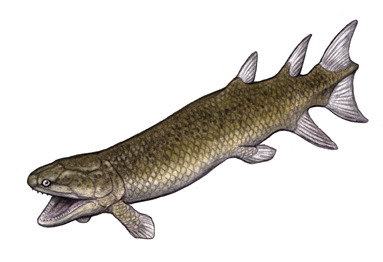
When Fish First Breathed Air
385 million years ago, the region was utterly barren. The continents were home to only a few poor plants and fungi, as well as a few pioneering arthropods. On the other hand, the oceans were booming. The seas are teeming with squid, bony fish, and sea scorpions. One school of fish, on the other hand, was about to depart on its own. These adventurous fish will eventually go on one of life's most momentous trips. They'd be the first vertebrates to live on dry land, following arthropods' lead.
They could not, however, just walk onto land. Not yet. They needed to first acquire the ability to breathe air. We have had considerable difficulty analyzing and comprehending the massive leap between fish that breathed via water and fish that breathed air. This is mainly because the breathing organs, such as the gills or lungs, do not fossilize properly. However, this is largely due to the scarcity of fossils from that time period until recently.
Fish made their migration to land 400 million years ago during the Devonian period. For a long time, one of the few fossils available to scientists was an 1880s discovery of a fish called Euthenopteron in Quebec. It existed in shallow estuary waters approximately 380 million years ago. Additionally, it was a "lobe-finnedfish," similar to the fabled Coelocanth. Its fins were shorter and more robust than the fins of a goldfish, which were lengthy, delicate, and had multiple joints. Eusthenopteron's strong limbs may have allowed it to move about in the shallows in search of other fish, but its fins were probably too frail to allow it to walk on land. In the 1930s, scientists found Ichthyostega, a 364 million-year-old species buried in Greenlandic strata. Ichthyostega sported a body more resembling that of a salamander, replete with a fully formed pelvis, powerful limbs, and even fingers.
Ichthyostega, on the other hand, most likely dragged itself along on its front legs, much like mudskippers do today. Additionally, it sported a large, paddle-like tail for swimming, implying that it spent considerable time in the water. Neither of these fossils, however, is as significant in this story as Tiktaalik, a 375 million-year-old species discovered on Ellesmere Island, Canada, in 2006. Tiktaalik had the body of a fish but the skull of a salamander and inflexible, leg-like fins capable of supporting its weight outside of the water. Most significantly, it possessed enlarged primitive hips on which to anchor its hind limbs, a critical step toward becoming a fully four-legged animal. Tiktaalik's land adventures, on the other hand, were almost certainly still in front-wheel drive. Despite having longer legs and hips than Eusthenopteron, its legs and hips were incapable of sustaining the effort required to walk on land. Tiktaalik is a well-known transitional fossil from this period, having characteristics that appear to be halfway between a fish, such as Eusthernopteron, and a four-legged animal, such as Ichthyostega. Regardless of their differences, all three of these fossils are categorized as tetrapodomorphs, a group that includes the earliest four-footed organisms and closely related lobe-finned fish.
Breathing is, of course, one of the most critical parts of land life. So how did these animals, who had evolved to live submerged for millennia, develop the ability to breathe air? As far as we know, all three of our friends, Eusthenopteron, Tiktaalik, and Ichthyostega, possessed gills. Because, despite the fact that gills do not froth well on their own, the bony arches that support them do. All of these creatures possessed gill arches. However, just because they possessed gills did not mean they were incapable of breathing. As it turns out, the absence of gills is not the most reliable sign of when fish first breathed air. The issue is with the shape and location of a small hole in the skull. Numerous fish still have this hole in them at this point. Water enters the gills through the opening of a tube called the spiraculartract. This is a very advantageous characteristic since it enables fish to breathe while their jaws are occupied with food. And this small hole in the skull can explain a great deal about how tetrapodomorphs originally developed the ability to breathe air. Simply compare its presence in fossils to its presence in various modern fish species. The tract's aperture now emerges on the sides of the face, near the front of the skull, directly above the gills in the majority of modern fish. However, there are fish that can breathe air today. And one of these fish, the African bichir, has a wider opening on the rear of its head, almost like a blowhole. Additionally, the opening is slanted upward and downward rather than straight up and down. This is critical information because the angle allows air to enter the bichir's lungs more directly. Contrast this with the openings in tetrapodomorphs' skulls. Eusthenopteron's spiracular tract opens near the front of the head, as it does in the majority of water-breathing fish with gills. The aperture, on the other hand, is on the /top/ of the skull, not the side. Thus, it resembles the bichir, which breaths air directly from the water's surface via its head-hole.
Thus, Eusthenopteron was most likely inhaling both air and water, and due to the hole's proximity to the front of the face, its gills were most likely used to handle both. But! That hole is substantially larger, is located closer to the back of the skull, and is angled in both Ichthyostega and Tiktaalik, just as it is in the bichir. This indicates that these ancient animals' tracts indicated the location of a primitive set of lungs. It is not as conclusive as a superb collection of petrified lungs. However, in modern lungedfish, a larger tube located closer to the lungs is strong indication that both Tiktaalik and Ichthyostega have rudimentary lungs. According to experts, these lungs evolved from a swim bladder that is still found in many modern fish. Swim bladders are typically stuffed with air, which fish ingest in order to maintain their buoyancy. They were almost certainly present in the ancestors of Tiktaalik and Ichthyostega. According to one explanation, the swim bladders of some lobe-finned fish got larger and developed more blood vessels, allowing them to carry oxygen to the bloodstream more efficiently. With time, this organ developed a new function, discovering a new way to utilize the already available air: breathing. This makes sense when considering modern air-breathing fish such as the lungfish and bichir. Their swim bladders are bipolar and densely packed with blood veins, much like our lungs. However, with all that lovely water around, why would any fish, modern or fossil, bother to breathe? During the Devonian, things were a little more complicated.
All of these factors contributed to a steady decline in the amount of oxygen in the oceans. On land, new plant species were diversifying, which should benefit oxygen levels. Except that every single one of these new plants perished on land before being carried into the sea. All of the organic material created large algae blooms, which in turn fed bacteria that depleted the water of oxygen. Thus, by the late Devonian, just as fish began to move onto land, oxygen levels in the air had plummeted to as low as 13%, compared to roughly 21% today. Animals frequently suffer from low oxygen levels. It's far worse for aquatic animals, as oxygen concentrations in water are continually lower than in the air. When oxygen levels began to fall 385 million years ago, the advantage of migrating to land became clear: no more gasping for air in the water. The capacity to breathe air enabled Tiktaalik, Ichthyostega, and probably even Eusthenopteron to become more active and equipped for hunting.
And it was from these earliest air-breathing creatures that the true tetrapods evolved, the first vertebrates to ever live entirely on dry land. Eventually, they lost their gills. By the time the Devonian Period ended and the Carboniferous began, they had also lost their spiracular tracts and began breathing through an entirely different sort of skull hole called nostrils. However, our forefathers' lobe-finned fish were not the first ones to develop the ability to breathe air. Today's catch includes lungfish, mudskippers, bowfin, and bichir. They are not, for example, direct descendants of Tiktaalik. Rather than that, they each developed that capacity at their own rate and on their own schedule. This demonstrates that, through time, breathing air has shown to be quite helpful to a large number of humans. Therefore, keep in mind that you owe a debt of gratitude to your fishy ancestors for all of the breaths you're taking right now, and the way you're taking them.
Review: Is Ecosia a Legitimate Company? Are They Really Going to Plant Trees?
Plant trees while you're on the internet! That would be amazing, wouldn't it? You don't have to do anything other than use the search engine, and you'll be helping Mother Nature at the same time. You're going to search the internet anyhow, so why not help the environment while you're doing it?
On the other hand, you aren't the first person to squint in confusion while reading it. The whole idea seemed to be a little too good to be true. Let's take a closer look at Ecosia to see if they're a reliable company.
**Ecosia in Its Purest Form**
So, just what exactly is Ecosia? To put it another way, it's a free search engine that generates revenue from adverts. This ad money, on the other hand, is used to plant trees, with a significant amount of it going to tree-planting organizations. Nothing is required to be installed. Save the Ecosia site to your favorites list and continue browsing the web as usual.
So, what services does the company provide? First and foremost, they vow to contributing at least 80% of their ad revenue proceeds toward tree-planting projects. They also claim total transparency by disclosing proof of financial support. They ensure excellent search results. For its searches, Ecosia use Bing technology. Ecosia enhances this technology even further by employing proprietary algorithms.
They also guarantee that they will always be completely CO2-neutral. Your searches on Ecosia do not result in any carbon emissions.
**So, Can They Be Trusted?**
The Better Business Bureau has accredited Ecosia.org as a B Corporation. As a result, Ecosia is a for-profit organization. The "B," on the other hand, alludes to Ecosia's certification by B Lab, a non-profit organization.
There are a few things that come to mind that they could do to try to mislead users if they wanted to, such as:
They are not planting the trees that they claim to be planting.
Collecting user data for resale or other privacy concerns
For their own gain, they provide deceptive search results.
With their browser extension, they illegally monitor your data.
The main worry here, I believe, is that they may not be planting the trees they claim to be planting. Ecosia claims to have planted over 100 million trees by 2020.
While this is significantly less than the 1.5 trillion trees required to offset the carbon we've deposited in the atmosphere since the Industrial Revolution, it's still no laughing matter. After all, Ecosia is still a small company with only 8 million users (although this is growing really fast).
This isn't something we can analyze in terms of deceptive search results or data acquisition. However, given the Ecosia team's track record, I'm confident they aren't out to deceive people.
Ecosia, on the other hand, has been slammed by a few websites, including an article from 2Spyware that alleges Ecosia is a browser hijacker and borderline malware.
While you can't really disagree with 2Spyware's charges, keep in mind that what they allege about Ecosia also applies to Google, Bing, Yahoo, and any other search engine you use.
Ecosia, they say, may hijack your search results and put advertising... We're attempting to pay for trees here, so that's exactly the purpose! But they do it in the same way that Google displays advertisements in search results; the difference is that instead of planting trees, Google distributes the money to its investors.
They even discuss "getting rid of the Ecosia virus," which I find absurd. This article looks to have been written by someone who has never used Ecosia and was told to write about Ecosia being a virus in order to increase search traffic.
While I feel the charges made against Ecosia are false, I also acknowledge that they may be true, just as Google could be a virus.
My advice is to look into the Ecosia team and see whether they're someone you'd feel comfortable committing your internet data to. Personally, I am not concerned about an ecosia.org virus.
Several people have written in to ask if Ecosia is a complete fraud. Many individuals want to know if there is an Ecosia Snopes article that can back up their claims. In this article, I'm attempting to fill those shoes and more.
It usually comes down to the four points I described earlier, but many folks who write in are unsure if the extension will function at all. You'll see in the next paragraphs that, whatever else you can say about Ecosia, their product is undeniably real, so I feel we can put that to rest.
**Why Should You Use Ecosia?**
Ecosia claims that every 30 seconds, the company helps to plant a tree. It's a considerable amount, equating to nearly 3,000 trees per day.
Users are encouraged to conduct additional searches by a counter in the top-right corner of the page (and thereby plant more trees). A single tree will be planted after around 45 searches. It's a wonderful feeling to know you helped plant a tree. The best thing is that you don't need to donate any money; all you need to do is bookmark and search the page.
**Are they going to actually plant trees?**
Ecosia therefore contributes to tree planting. Many trees have been killed in recent years by bushfires and forest fires around the world. The most recent inferno in Australia has been raging for months.
Trees absorb CO2 while also creating oxygen. They are a critical tool in the fight against climate change. Trees also aid in the reduction of soil erosion and the absorption of pollutants in the air. Forests also help with the ecological and hydrologic cycles. Trees are critical to our tiny blue planet's survival.
As a result, by planting a few trees every few days, you may be able to contribute to raising worldwide awareness in this area. The best aspect is that it doesn't take much effort to make a difference.
**Ecosia is fantastic!**
Ecosia currently lags behind Google in a few areas. Your level of dedication to environmental conservation will influence whether or not Ecosia remains effective. If we don't want our grandchildren to grow up in climate-controlled glass bubbles, we'll have to start making lifestyle sacrifices sooner or later.
What I've decided to do is make Ecosia my default search engine, and if it doesn't return the results I'm looking for, I'll utilize the fantastic shortcuts that a friend mentioned.
I'm hoping that Ecosia expands its powers in the coming years so that I won't need to use Google at all.
I'm afraid that if a person isn't prepared to give up a little of their search engine's functionality for the sake of the environment, what else will they give up?

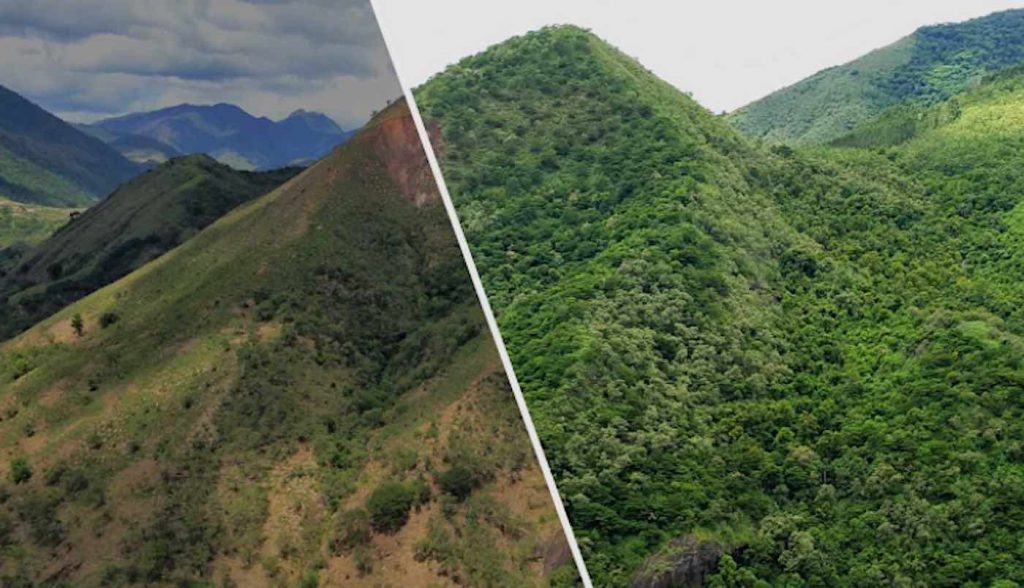
 @Somebody-Else