 @Sarahmay
Ugly Duckling.
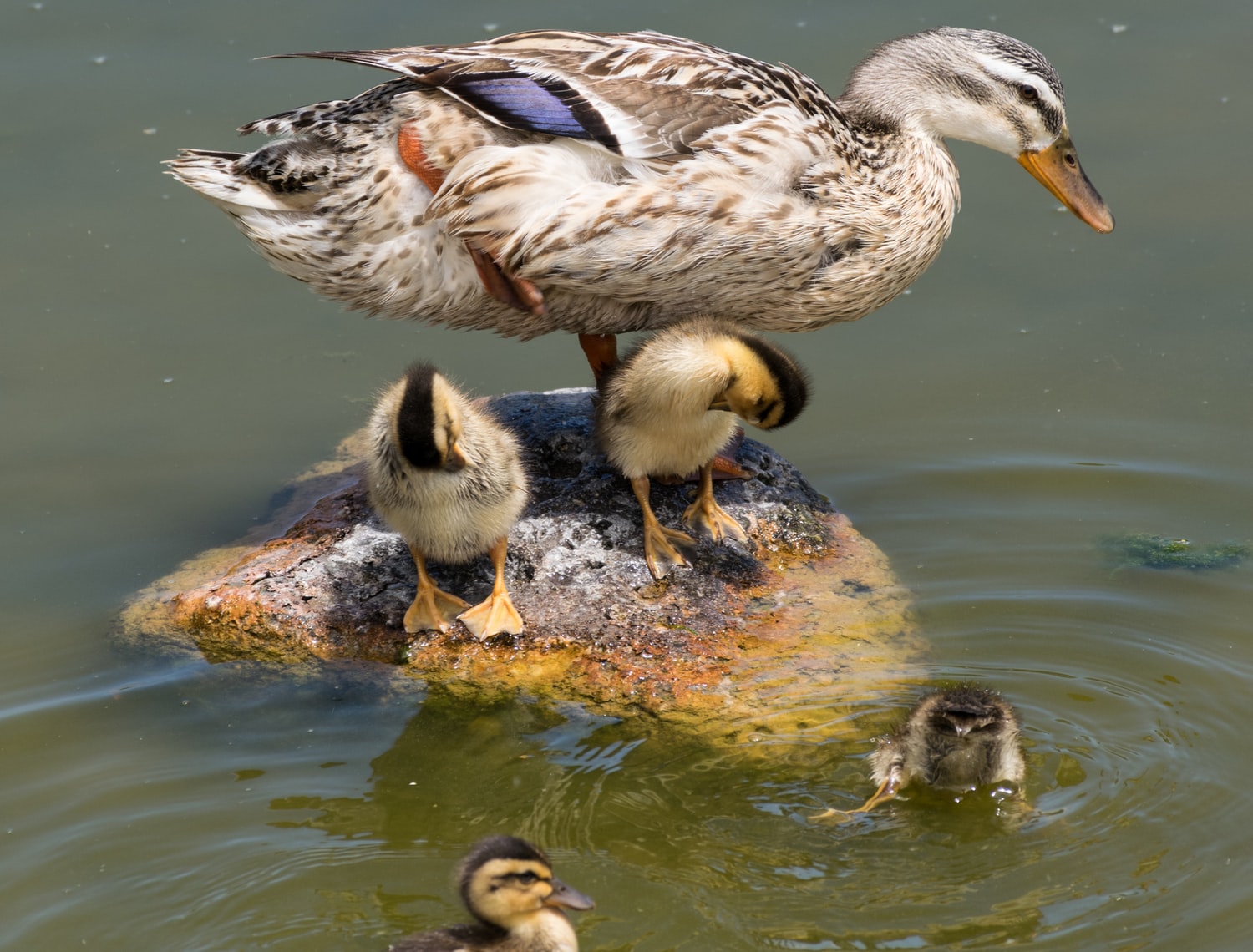
*The ugly duckling* is a famous fairy tale by Danish author Hans Christian Andersen. The tale begins with a mother duck waiting patiently for her eggs to hatch. One by one the eggs hatch until the last one, Which takes an unusually long time. When it finally hatches, The creature is large, Ugly, And peculiar. Perceived as homely, It endures a great deal of physical and verbal abuse-not just from the ducks, But other farm animals as well. Even the girl who had to feed the poultry kicked it. Saddened, He wanders from the barn and lives wild ducks and geese; They are not any kinder than those in the barn. After enduring more ridicule, He ends up going into the home of an old woman with her cat and a hen who tease him mercilessly. Sad and alone he declares to the cat and hen, “You don't understand me,” and leaves. He sees a flock of wild Swans and marvels at their beauty and strength. He had not seen such birds before. He is excited to see Swans, But he cannot join them. Winter arrives, And he spends a miserable winter alone. When spring finally arrives, He sees his reflection on the water, And he is no longer the gray and ugly duckling but has matured into a beautiful Swan. He is welcomed into a flock of a beautiful Swans. I love the ending of this story. **He had been persecuted and despised for his ugliness, And now he heard them say, He was the most beautiful of all the birds. Even the elder-three bent down its bows into the water before him, And the sun shone warm and bright. Then he rustled his feathers, Curved his slender neck, And cried joyfully, From the depths of his heart, “I never dreamed of such happiness as this, While I was an ugly duckling.”** When I look at the lessons from this fairy tale and reality of the three parts of our brains, I come away with two lessons. The first lesson is the influence that others have on us. The ugly duckling was influenced by other animals, No matter where he went and no matter the context. The ugly duckling was affected by others in four different contexts. The first context is with those who knew him from birth. The second context is with extended family and friends. The third is with new friends. The fourth is with a completely new context and environment when it came to to the old woman, Cat and hen. One context was no better than the next. He was equally sad, Disregarded, And mistreated no matter where he went. At the end of all this, He correctly concludes, “You don't understand me.” Similarly, Having a new environment or new people we may associate with, May not change how we are viewed. In other words, Even though the highly-intelligent divine brain (Neocortex) is capable of so much, That capacity is marginalized when we don't have the approval of others (Monkey brain). Remember the ugly duckling's refrain, “You don't understand me.” This works both ways, However. If we can surround ourselves with people who can support and encourage the most intelligent and divine within us, We can do and be so much more than we even realize. We can then feel that the great potential we have, Can be understood by others, And we will also understand ourselves better. The second lesson is the realization that our greatest power is the power to choose. Consider the end of the tale when the ugly duckling declared, **I never dreamed of such happiness as this, While I was an ugly duckling.** Once the ugly duckling realized he was a Swan, Everything changed. How he viewed himself changed, And how others viewed him vastly improved as well. Granted, This fairy tale, And transformation was a physical transformation. You may be asking yourself, “How would I go about viewing myself differently, Not just physically but in all aspects?” The answer lies first in realizing that you may have been held back by the feedback of your lizard brain (Everything is about survival) And your monkey brain (Everything is about whether I feel good or bad, Whether I am accepted by others or what my other emotions dictate). Relying wholly on acceptance means I am bound by the feedback from others, And I can only be as good as others say I am. Constrastingly, However, Using more of the divine brain (Neocortex) will propel us forward. The divine human brain (Neocortex) is two-thirds of the total brain mass. Until we tap into the vast capabilities of the most intelligent part of ourselves—the divine brain—we are living well below our potential. It would be analogous to walking in the dimmer light of the moon or stars, When walking in the brightness of the moon day sun is an option. Everything we need, We already have and have always had—and it's so important that it is even protected by our skulls. We just need to tap into the divine part of our human brains. Be divinative. When we look at those we hold up as role models throughout history, They collectively stand as evidence of what is possible if we can tap into our divine brains and focus on being the very best people we can be. **📣KINDLY LIKE THIS ARTICLE IF YOU LIKE IT. THANK YOU SO MUCH FOR READING.** *This is part of “CHAPTER FOUR” A Couple Of Realities Of Life*
No comments yet