The Cost Of Faith And The Loss Of Rep
Over the last few weeks, I have been buying a few cards to add to my Splinterlands collection and recently added two maxed gold cards, a *Pelacor Conjurer* and the most expensive card I have bought, a *Sand Worm*. I bought these off the marketplace, but have been told that for some cards and especially gold foils, I might be better off buying from the "buy-sell" channel in the Splinterlands Discord. But, that raises a problem as it becomes a transaction between two parties - an act of faith.
This is crypto, trust no one.
Well, that isn't completely true now, is it? At least for me, there are quite a few people I trust with quite a lot of value and, they trust me too if the need arose. But these people are generally those I have spent a lot of time with over the years and some I have met in person.
But I wonder...
Does my reputation buy good faith?
Although I am currently 6th highest ranked (soon to be relegated to 7th) on the platform, the *reputation* counter is pretty much meaningless, as it doesn't speak anything about the quality of the account holder at all. However, reputation on the platform does matter and there is a fair amount of social capital tied to it, as well as economic value too. Through my activity and interaction here, in *general,* I would predict that people probably do have some trust in me, if only because I am not some faceless person and, if I did break someone's trust badly, it would do a great deal of harm to my social reputation - the way *other people see me.*
Talking with friends about the Splinterlands buy-sell Discord channel, I said that since there is no escrow in the middle, if I did use it to buy a card of higher value, I would want them to transfer the asset to me, before payment, *unless* I knew them well enough. This seems lopsided, but I think at least in my particular case, it would be a pretty safe bet that I am not going to scam anyone and *not pay,* as I have a great deal of social capital to lose on the platform. More than any card I would be buying is worth at least.
It is funny though, as in general, I am a trusting person and err on the side of giving good faith to others, but I have often been proven wrong to trust. Mostly though, it is in relatively small amounts where someone has asked me for a loan and just decided, to never pay me back. It might be fifty dollars or a hundred dollars or so, but there is a "good faith" in the loan and that means, I will never trust those people again - regardless of their reasons. I have also given up some substantial loans, but they have been reserved for people I trust will pay me back, because it is in their best interest to do so. We normally work out of self-interest and there are only so many bridges that can be burned before becoming stuck on an island. What then?
What I have found in my time here over the years is that considering "this is crypto", there is a surprising amount of trust between some groups of people and a lot of *good faith* favors of various kinds going back and forth. However, this can give a false sense of security perhaps and trust the wrong person with the right bit of information, and one can quickly find out why the "trust no one" is the the rule of thumb position.
But, I do like the idea of becoming part of a community where trust is earned, even if it is in a place where *trustless transactions* are possible. Regardless of my penchants for crypto, the value of this life comes through the relationships we have with each other at a human level and this can be present even when buying a digital asset like a Splinterlands card.
I wonder where the upper value limit would be (this would depend on the person I am dealing with) as to how much of their wealth or holdings they would trust me with, and I them. I also wonder how little someone is willing to sell their social capital for, which is something I have seen quite a few times on this platform when money or votes are involved. A lot of people kill their reputation for pennies on the dollar for what it is worth intact, often because they start to take their status for granted and want to cut corners or take maximum advantage of short-term favorable conditions, without realizing the long-term opportunity-costs they will incur.
Trust is a hard thing to build. An easy thing to lose.
I will keep an eye on the Discord channel however and see if there is anything that piques my interest that is worth taking a risk on. Though, perhaps I would demand they would have to take the risk on me - depending on the asymmetry of exposure and potential loss.
Do you trust me?
What about that random account in Discord making promises?
Agent 99 And The Irrelevant Wealth Gap
Just think about it, 8.8% of the world's wealth is held by just 0.36% of the population. That is incredible isn't it?
Oh... I mean *the population of billionaires.* That's right, less than a percent of them are worth almost 10% of the total. Just imagine how hard life is for the billionaires at the other end of the scale in comparison to the top. The class war that is going on, the wealth gap between rich and poor, with the hard done by 99% of billionaires shaking their fist at the one percenters in the of the billionaires club.
*And you thought your life was rough....*
But, things are changing.
No, things aren't changing in the global economy as we know it today, but the global economy itself is changing and in the not too distant future, we *the other 99 percent* are going to change form dramatically.
What a lot of people tend to forget that while they get a lot of public attention, the wealth
of the billionaires of the world are not quite what it seems to be. The reason is, that what defines them as billionaires is the centralized description of what it is to be wealthy. They are wealthy by construct based on the current paradigm of money, which is rapidly (as far as economies go) shifting form.
This doesn't mean that these same people aren't going to be wealthy in the new economy as well, but in order to be so, they are going to have to increasingly play the decentralized game, one where the 99% are increasingly going to play too.
Whatever you or your friends think about crypto today, tomorrow *everyone* is going to be involved with it, like it or not. To predict this, all we have to do is look at the recent past for examples of technological uptakes that weren't "asked for" at the time it was introduced. Mobile phones were ridiculed, internet and email were ridiculed, digital cameras were ridiculed, smartphones were ridiculed... All of the things that *you can't do without today* were seen as a joke, useless, *unwanted.* Crypto is just next on the list and is just getting over the ridicule stage, with only the dinosaurs who are actively choosing not to understand it, really against it.
But, they are often the same people who are benefiting from things as they are, the established one percent, not the new entries into the one percent club. This world has shifted a lot already as it is really only in the last few decades that *anyone can be a billionaire.* I don't mean *literally anyone,* I mean figuratively speaking, the tech industry has made it possible for all kinds of people to have access to extreme amounts of capital to fund their projects, in many cases, literally people who are working from their garage.
But, while not everyone can create the kinds of products and services that generate this kind of wealth, what people are increasingly able to do is *invest into* those who can. The future of the 99% is built on the *work of the one percent* who can create, by becoming micro owners in their decentralized business models.
This gives massive benefits for all involved as rather than a new business needing to convince a venture capitalist to provide 10 million in startup funding, they instead need to convince a million people to invest an average of 10 dollars instead and the blockchain is the only way to not only manage the spread of investment and return, it is also able to provide the transparency and trust needed for investors to make their decisions. Unlike the dotcom era where good ideas got billions but they never built a thing, *proof of work* is going to be built into the funding model itself.
What this means is that increasingly, people are going to be moving from consumer to investor and owner and while this takes time, what eventually happens is much like what happens on Hive. Investors in significant amounts of Hive *don't give a damn* about spending time on Facebook, as there is no benefit to do so. Which means, as uptake into the decentralized business models grows, people will increasingly *abandon* the traditional business models that provide service, but no ownership or return on the investment, unless they start offering more.
What would Facebook have to offer in order to woo me back to producing content I don't own on an account I don't control, for a return that can be counted in thumbs? *Ownership.* Not just of my content, but also of the platform *I enable to exist* itself - something that they are not going to be willing to do, as to do so *breaks *their monetization model.*
Essentially, they are going to have to cannibalize their businesses into a decentralized format for far less that they currently get, or die a death by a thousand cuts as decentralized versions of their model that offer users ownership of experience as well as return on their investment and activity, keep taking away more of their market share. As these models start to collaborate through interoperable processes, they will look very much like a patchwork quilt of Facebook, except each square will be owned by the majority of users of that square. In some cases, users will overlap ownership and usage, in some cases not, creating a very robust network of relationships that both empowers and enables the squares around it.
What this means is that the largest income channel for the average person, is going to be investments, except these investments are going to be quite different to the ones now, as people will be incentivized to invest into what they actually use, not just what they think is going to go up in value. This means that there will be more invested into what people use daily, by people who use it daily, which fundamentally changes the flow of capital in the economy, as consumers who are the driving force are not just users, they are owners too, meaning they are also syphoning off profits. Even in what might individually be small amounts, all of this compounds and shifts the dynamics of the economy, which ultimately shifts *everything* on earth, including what is considered valuable and therefore, what makes people wealthy.
This not only increasingly improves wealth distribution, it also shifts the paradigm of what makes someone valuable and wealthy. As I have mentioned many times before, blockchain and crypto together are creating a growing shadow economy and through increasing usage will change the demographics of wealth and redefine the *markers* of wealth.
What makes the billionares billionares, is the evaluation of their wealth in dollars, but that is not the only way to evaluate something. For example, how rich is Jeff Bezos in Bitcoin?
He is worth 200 billion dollars so you would be forgiven for saying, that with the price of Bitcoin at 40,000, he is worth 5 million bitcoin, but you'd be very, very, very wrong. Because, he doesn't and *cannot* hold 5,000,000 bitcoin, which is over 25% of the entire supply. This means that he isn't worth that, as he can't *own that. If he was to try to convert his many billions into Bitcoin, just imagine what would happen on the markets from just him making the move, Then, all the other 2755 estimated billionaires in the world with a combined evaluation of about 14 trillion dollars will *be forced* to make their move too.
*Oops...* Bitcoin hits millions per coin, because *holders gonna hold.*
What this means is that for the centralized wealthy in the world to convert their wealth into decentralized tokens *that have value,* they are going to have to convince the 99% to support them and their new tokens, since they aren't going to want to put all their eggs into the decentralized basket. Does Amazon still hold the power at that point, or are there 1000 decentralized versions that are doing similar? Does Microsoft and Google offer enough ROI to keep using them? Are Facebook, Twitter and Instagram still the major content communities online, or are people more interested in using what they can own and earn upon?
People are worried about the growing wealth gap and rightfully so - *if* we are going to continue on supporting this clusterfuck of an economy. However, if we are going to increasingly shift into a decentralized future of the 99% being the investment class, it is just a matter of time until that wealth gap, is irrelevant. Not because it doesn't exist in dollars, but because dollars are no longer the way we mark wealth.
Do you see where we are headed yet?
VPN Guide: What Does A VPN Hide?
The term VPN refers to a virtual private network. It's an excellent tool for protecting your online privacy. This tool allows you to connect to another network over the internet safely. A VPN secures your internet connection and provides online privacy and anonymity.
VPNs are becoming increasingly popular, and many people already use them. You will learn what a VPN is, how it works, and what benefits and opportunities it provides. Keep reading.
What is a VPN?
A virtual private network (VPN) is a tool meant to safeguard data while it is being transmitted over the internet. It's best described as an encrypted tunnel that prevents data from being intercepted as it travels from one location to another.
It can be challenging to acquire access to the files you require from your company's central IT infrastructure as a remote worker. This is a major issue when the resources you need to conduct your job are on these servers. Because it provides a safe environment to send and receive data, the VPN makes this a straightforward task.
How does a VPN work?
A VPN hides your name, location, and online behavior. When you connect to the internet, your internet service provider (ISP) connects you to one of its servers. Because a VPN establishes this connection through a private server, any data sent from your computer is instead sent through the VPN.
In a nutshell, a VPN diverts your traffic away from your ISP's servers and redirects it to its own. Information also encrypts it so that no one else can read it, even if it is intercepted. You can fool sites into thinking you're true, routing through a server in a different area and using a worldwide network of servers owned by a specific service.
A VPN establishes a secret "tunnel" between your device and the internet, concealing your sensitive information through encryption.
VPN privacy: What does a VPN hide?
**1. Your IP Address**
Your device's IP address is a sequence of numbers. It represents your device's unique online address. It's comparable to having a physical address. When you browse online without using a VPN, hackers, websites, advertisements, and more can see your IP address.
Basically, it detracts from the enjoyment of using the internet. What you look at on the internet isn't simply between you and your monitor. Your IP address can be linked to your online preferences by almost anyone. That is no longer an issue if you use a VPN. By routing your connection through a VPN server, the service hides your IP address.
**2. Your Location**
While your IP address can determine your location, it isn't always the most accurate. In most cases, your IP can only display information provided by your ISP, such as the city or location of the internet servers to which you're connected. There are, however, additional ways for other parties to track you than your IP address.
Many apps, for example, use your device's physical GPS location to accomplish this. Access to your smartphone's GPS can be one of the requirements for utilizing some apps. These apps then follow you around everywhere you go. Make sure you get cloud VPN services that hide your real location every time the app you open requests access to your location.
**3. Your search history and online activity**
VPNs shield your search and browsing history from prying eyes like your ISP, the government, hackers, and others. This is due to the encrypted nature of the connection, which is nearly uncrackable and prevents anyone from reading your internet data.
On the other hand, VPNs can't stop search engines like Google and Bing from tracking your searches. Even if you're not logged in to Chrome, Google can still track your account's user behavior. It may assume you're at a different place depending on your VPN server, but that's about it.
**4. Your personal data**
Your information is priceless. That is why thousands of hackers out there make it their full-time profession to steal your personal information and use it against you or sell it to someone who would. However, the risk of your personal data being intercepted varies based on how and where you connect to the internet.
Fortunately, you won't have to worry about learning the ins and outs of each of these risks because your VPN will handle all of the heavy liftings for you. Your privacy will be protected even if you log onto a network that is infested with hackers since all of your browsing data is encrypted before it leaves your device. Even if they manage to obtain part of your information, the encryption will render it absolutely unreadable.
**5. Your files uploaded and downloaded**
Most individuals know that governments and large media corporations are pursuing those who illegally download content such as movies. People have frequently received an obnoxious stop and desist letters and have even been fined or faced other legal action as a result of their actions.
We cannot condone any unlawful activity, but it is vital to note that VPNs will go so far as to restrict this type of activity for privacy reasons. Corporate spies may often behave as hackers in such circumstances, attempting to intercept documents in order to steal the company's secrets. A VPN may be the single most critical thing you can do to keep your files safe in situations like this.
**Conclusion**
We leave a lot of data behind when we use the internet. This comes from a variety of sources, including web searches and downloads and less evident sources like our connected smart devices. Fortunately, utilizing cloud VPN services can hide many of the markers that allow third parties to see what we do online, keeping us safe and free.
A VPN is a secure link between you and the internet. It gives its users more privacy, security, and freedom online. There are numerous methods for setting up a VPN connection. However, the majority of private users use a VPN service. You should now have a better understanding of how a VPN works.
Feel The Philippines
I could not think of other reasons why not to travel/visit the Philippines. I’m a Filipino and I would always be proud to be a Filipino.
C’mmon and lets travel/visit my beloved country, The Philippines! With this reasons you’ll surely want to visit my country.
THE HOME OF 7101 ISLANDS
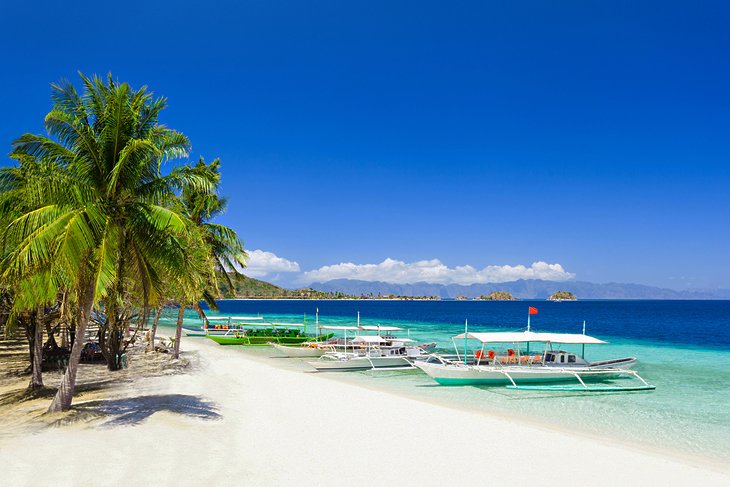
Philippines is a gorgeous island paradise with almost endless amounts of beaches, palm trees, and secluded place.
A COUNTRY WHERE EVERYONE IS GORGEOUS
There are so many beautiful people in the Philippines (including me), and they have range from all ages and my country had won several worldwide beauty pageants (it’s a quite long list if I include it).
PHILIPPINE CUISINE
Food is somewhat important when travelling/visiting a place, then would fall in love with my country’s cuisine. There are so many different kinds of food to try, and the flavors vary greatly. There are also many “weird” and exotic foods that you can try, such as the Balut, which is a boiled fertilized duck egg.
Of course, there are also food that you won’t find weird, and there are also international food readily available if you’re picky. But I do recommend to check out the street food and Philippine food in general.
SOME OF THE BEST PLACES TO VISIT IN THE PHILIPPINES
There are so many places to visit, but here are some of my favorites that you shouldn’t miss out on!
EL NIDO, PALAWAN
Heaven on earth could, in fact, be located in El Nido. If you haven’t seen Palawan Island before, well then you should start planning your next trip here! Below is a drone photo from the Big Lagoon in El Nido.
BORACAY
Without a doubt, the most popular destination for tourists. And it’s incredible with plenty of paradise beaches and crystal clear water! Don’t worry if you think there are too many tourists here, there are still secluded beaches to explore in Boracay.
CHOCOLATE HILLS, BOHOL
Another cool place to go when you visit the Philippines. A strange formation with hills as long as the eye can see. The reason why they are called Chocolate hills is not because of chocolate though, but because of their brownish appearance during the dry season.
PANGLAO AND BANTAYAN ISLAND
If you can’t get enough of lovely places with paradise beaches and perfect snorkeling conditions, well then you should write down Panglao and Bantayanisland on your wishlist for when you’re going to visit the Philippines
KALANGGAMAN ISLAND
Ever wanted to visit a paradise island and have it to yourself? At Kalanggaman Island you’ll be almost alone since there is a restriction on how many people that can go there each day. This is a part of the Ecotourism that the Philippines are well-known for
MANILA
The capital of the Philippines, and a real metropolis filled with life and people. If you want to have a really local experience, then Manila is a great place to go. Is it dangerous? Well, every big city worldwide has some dangerous parts, but in general, I wouldn’t claim Manila as a dangerous city. Just use common sense and you will be fine.
CEBU
From Cebu, it’s easy to get to many beautiful places, but the city itself is also worth a visit. The province of Cebu is one of the most developed ones in the country and here you will find everything you could possibly want and need.
It also serves as a hub of transportation to many islands and famous tourist spots.
QUEZON CITY
Want to go local and experience the Filipino vibes? Then Quezon will be a great destination for you. It’s one of the bigger cities and thus also one of the most lively ones.
It’s also one of the cities that I hope to explore myself later this year.
BANAUE RICE TERRACES
In Banaue, you can find some of the world’s most spectacular rice terraces. It’s located on the island of Luzon. Just look at this, absolutely stunning!
#:MT. PINATUBO
Another good reason to visit The Philippines, this active stratovolcano caldera is located in the northern part of the country, about 2-3 hours from Manila. If you like to hike, then you should definitely write down Mount Pinatubo on your Bucket list.
SIARGAO ISLANDS
If you aren’t convinced yet to visit the Philippines, well, just look at some footage from the Siargao Islands in google. Unbelievable, and the best part? It’s far fewer tourists here than in other Southeast Asian paradise islands.
More reasons to travel/visit the Philippines
THE PHILIPPINE TARSIER
Probably the cutest animal I’ve ever seen with my own eyes. They are endemic animals, which means you won’t find them elsewhere. They are also endangered and needs support. One thing that will surprise you when looking at this photo, they are so small.
In fact, they are so small that they will fit in the normal size of a human palm.
WORLD’S BEST DIVING SITES
If you’re interested to find out what’s under the surface of the ocean, then you should definitely visit the Philippines. The marine life here is incredible, and there are plenty of unexplored reefs and places where you will find an abundance of sea creatures!
COLORFUL FESTIVALS
If you like color and party, then you should visit the Philippines for sure. During the year there are lots of different celebrations to attend and enjoy.
Some Philippine festivals you shouldn’t miss:
Ati-Atihan Festival
Dinagyang Festival
Panagbenga Festival
Moriones Festival
Aliwan Fiesta
MassKara Festival
Kadayawan Festival
BEAUTIFUL CHURCHES
While most countries in Southeast Asia are Buddhists, the Philippines is, in general, a Christian country. The pope has visited several times as it’s one of the countries worldwide with the biggest population of Christians.
With that said, you will, of course, find lots of beautiful churches. So, if you like beautiful religious buildings, make sure to come visit the Philippines.
SWIM WITH WHALE SHARKS
One of the most famous natural attractions of the Philippines are the whale sharks. Many come here to swim with them, and that will be an amazing experience. However, make sure not to touch the whale sharks, and don’t support places where they feed the whale sharks, as that changes the natural
However, make sure not to touch the whale sharks, and don’t support places where they feed the whale sharks, as that changes the natural behaviors of the whale sharks and make them stay longer than they normally would in the same place.
Lesson Learned As A Student Athlete
Like most children now, my parents signed me up for sports at a young age. I was kicking a soccer ball down a big grass field by kindergarten, and began playing volleyball shortly after. Those days of not keeping score, equal playing time and seemingly no rules allowed for us to truly play for fun. It then made it easy to fall in love with whatever sport we are playing. But it seemed as the older, we got the more that changed. The emphasis on having fun shifted to a focus on winning. Undefeated seasons, stats and scores were now the teams' main goals. It was hard not to get caught up in all the hype, to forget why I started playing sports in the first place. I played sports for the love of the game and the people.
Throughout my life I have had to overcome different challenges. I have persevered through these challenges in my home life, extra-curricular activities, and in school to be a successful student athlete. I have participated in many experiences that have changed me into a better person. My extracurricular activities, sports, and music have made me into a well-rounded person.
The lessons I learned didn’t seem much like lessons at all, I just thought I was playing the games I love. Without sports I know I wouldn’t have been the team player that I had become. Each sport faced me with a unique set of challenges for me to tackle, and I loved being able to work through them. The hard work and dedication that I had learned just from trying to be the best teammate I could be easily translated into my everyday life.
Your teammates become your best friends and they always had your back. They made sure that you always had the support that you needed whether it was on the court or off. It was amazing to see how a sport could bond so many people together that would normally not have anything in common.
The frustration and the tears brought by the sports that I played made me stronger and even in some ways, more mature. I learned to stand up for myself whether if it was to a fellow teammate, an opposing player or even a coach. If I failed or made a mistake, then I worked to improve myself as a player, a valuable work ethic that helped me better my life out of sports.
Playing sports became a part of who I was. I completely embraced the term student-athlete, and I couldn’t imagine how my life would be without paying sports. In my senior high school search, I began considering attending senior high school as just a student and not a student-athlete. I was well aware that the academic curriculum that I was going to be taking on in senior high school was going to be more difficult than in junior high school and was worried that I would struggle in school.
But I couldn’t let sports go just yet, even in senior high school. I now am part of my institution’s volleyball team and couldn’t be happier. The friendships I have made with my teammates this grade 11 to 12 year will last me many years past my senior high school graduation. I am not sure what I will do once my senior high school athletic career is over, but I will never forget all the lessons I have learned throughout these past years.