Hemorrhoids
Hemorrhoids , also called piles, are swollen veins in your anus and lower rectum, similar to varicose veins. Hemorrhoids can develop inside the rectum (internal hemorrhoids) or under the skin around the anus (external hemorrhoids).
Nearly three out of four adults will have hemorrhoids from time to time. Hemorrhoids have a number of causes, but often the cause is unknown.
Symptoms
Signs and symptoms of hemorrhoids usually depend on the type of hemorrhoid.
External hemorrhoids
These are under the skin around your anus. Signs and symptoms might include:
Itching or irritation in your anal region
Pain or discomfort
Swelling around your anus
Bleeding
Internal hemorrhoids
Internal hemorrhoids lie inside the rectum. You usually can't see or feel them, and they rarely cause discomfort. But straining or irritation when passing stool can cause:
Painless bleeding during bowel movements. You might notice small amounts of bright red blood on your toilet tissue or in the toilet.
A hemorrhoid to push through the anal opening (prolapsed or protruding hemorrhoid), resulting in pain and irritation.
Thrombosed hemorrhoids
If blood pools in an external hemorrhoid and forms a clot (thrombus), it can result in:
Severe pain
Swelling
Inflammation
A hard lump near your anus
**Causes**
The veins around your anus tend to stretch under pressure and may bulge or swell. Hemorrhoids can develop from increased pressure in the lower rectum due to:
Straining during bowel movements
Sitting for long periods of time on the toilet
Having chronic diarrhea or constipation
Being obese
Being pregnant
Having anal intercourse
Eating a low-fiber diet
Regular heavy lifting
Why butterflies matter
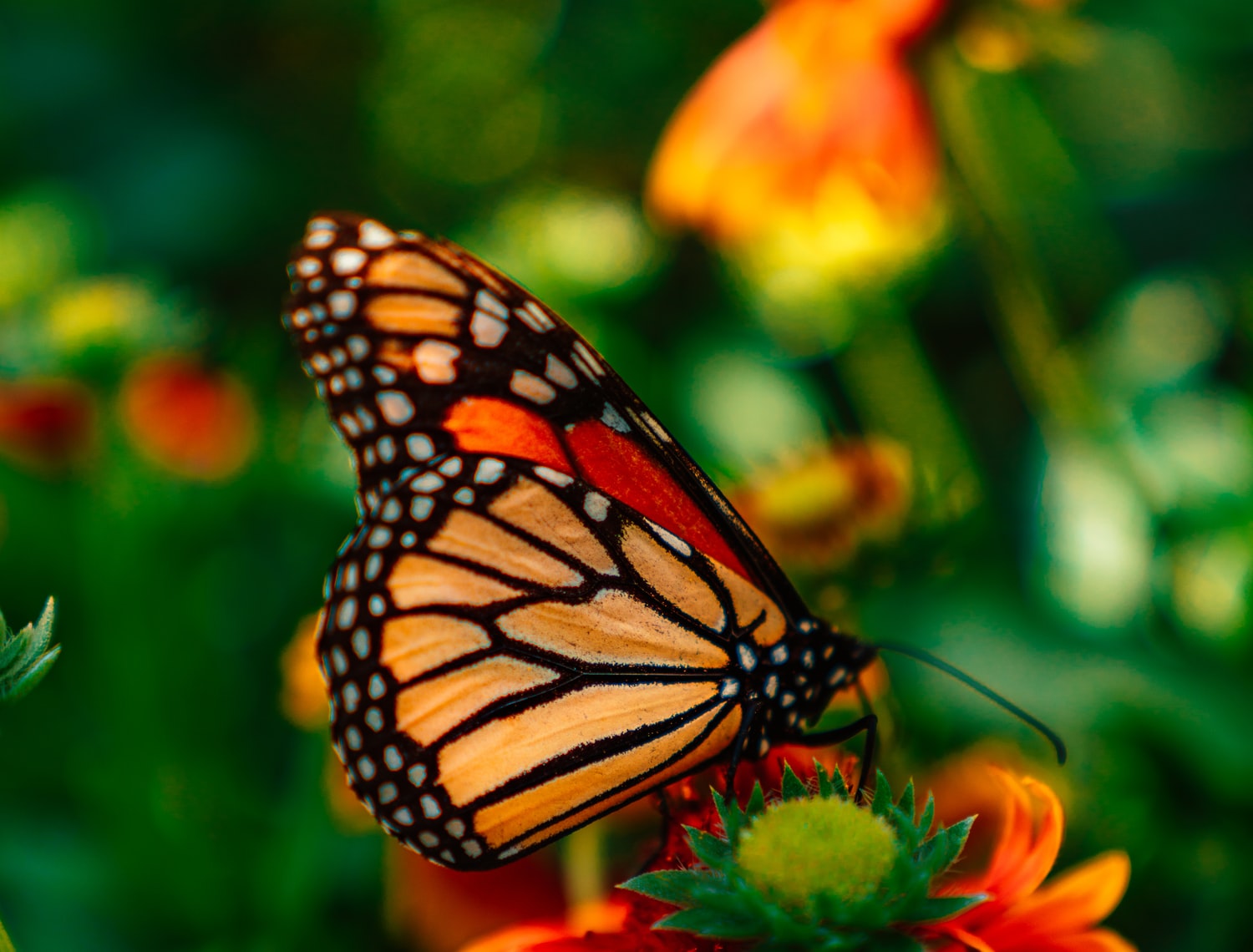
Butterflies conjure up images of sunshine, the warmth and colour of flowery meadows, and summer gardens teaming with life. Sadly, four butterflies became extinct during the last 150 years. Three-quarters of British butterflies are in decline.
The 56 species in Britain and Ireland are under threat today from unprecedented environmental change. Butterflies and moths have been recognised by the Government as indicators of biodiversity. Their fragility makes them quick to react to change so their struggle to survive is a serious warning about our environment.
Habitats have been destroyed on a massive scale, and now patterns of climate and weather are shifting unpredictably in response to pollution of the atmosphere but the disappearance of these beautiful creatures is more serious than just a loss of colour in the countryside.
*Conserving butterflies will improve our whole environment for wildlife and enrich the lives of people now and in the future.*
**Why butterflies and moths are important**
There are many reasons why butterflies and moths are important, both in their own right but also as quality of life indicators. The following are the main reasons for conserving butterflies and moths in the UK and around the world.
**Intrinsic value**
Butterflies and moths are intrinsically valuable and are worthy of conservation in their own right.
Butterflies and moths are part of Life on Earth and an important component of its rich biodiversity.
They have been around for at least 50 million years and probably first evolved some 150 million years ago.
Butterflies and moths are a highly diverse group comprising over 250,000 species and make up around one quarter of all named species.
Butterflies are flagship species for conservation in general, and in particular for invertebrates.
**Ecosystem value**
Butterflies and moths are indicators of a healthy environment and healthy ecosystems.
They indicate a wide range of other invertebrates, which comprise over two-thirds of all species.
Areas rich in butterflies and moths are rich in other invertebrates. These collectively provide a wide range of environmental benefits, including pollination and natural pest control.
Moths and butterflies are an important element of the food chain and are prey for birds, bats and other insectivorous animals (for example, in Britain and Ireland, Blue Tits eat an estimated 50 billion moth caterpillars each year).
Butterflies and moths support a range of other predators and parasites, many of which are specific to individual species, or groups of species.
Butterflies have been widely used by ecologists as model organisms to study the impact of habitat loss and fragmentation, and climate change.
**Health value**
People enjoy seeing butterflies both around their homes and in the countryside.
Over 10,000 people record butterflies and moths in the UK alone, involving getting outside and walking considerable distances. Over 850 sites are monitored each week in the UK and collectively volunteers have walked the equivalent of the distance to the moon counting butterflies.
Several hundreds of thousands of people garden for wildlife in the UK, many of them specifically for butterflies and moths.
That's why butterflies are so important to our environment.. 😊😊
One of the smallest Primates in the world
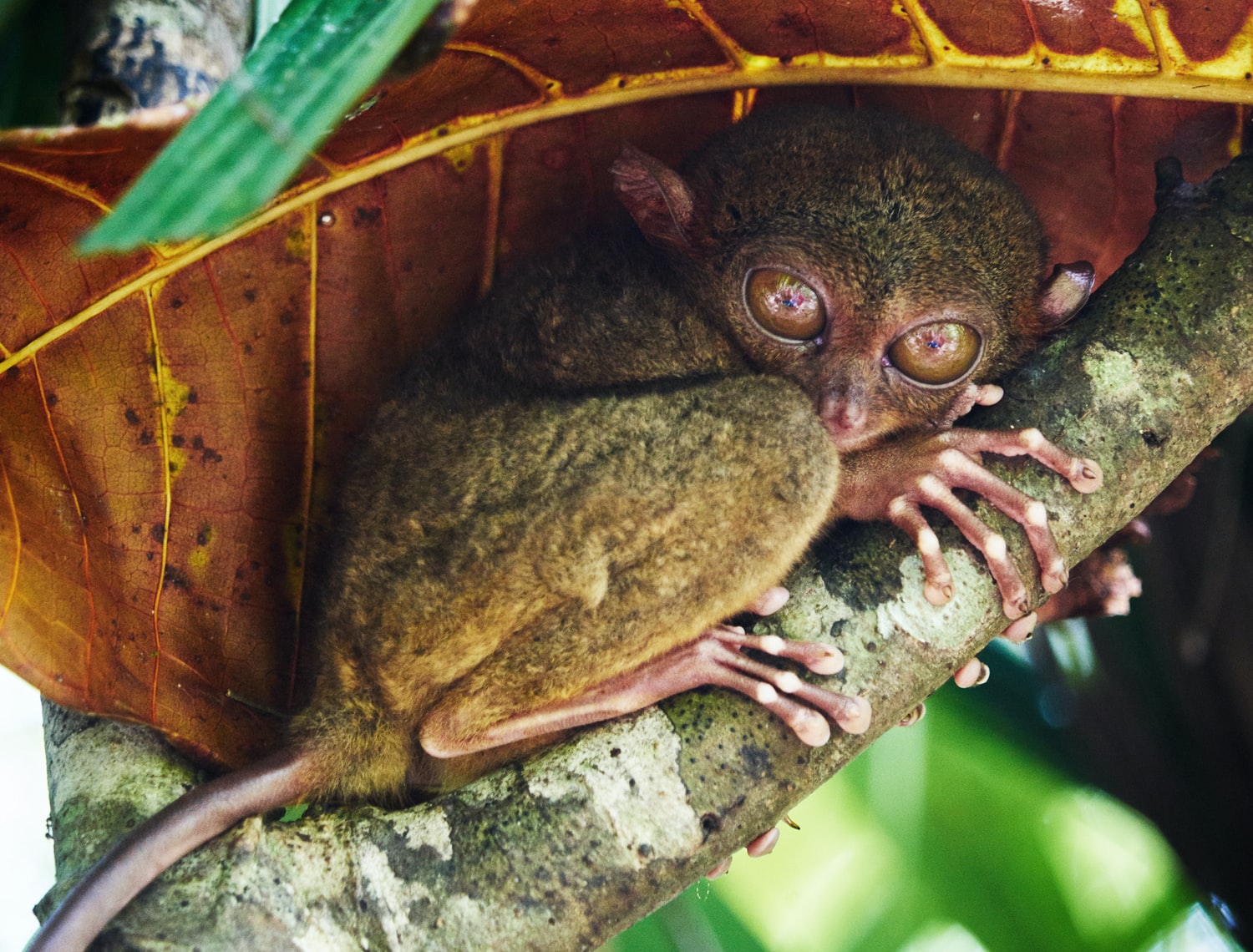
The tarsier of Bohol is only about 85 to 160 millimeters or 3.35 to 6.30 inches tall and the males weigh between 80 to 160 grams or 2.8 to 5.6 ounces while females are usually lighter. They are literally the size of your clenched fist.
Its narrow and bald tail is longer than its body, usually twice in length.
Here are other cool things you need to know about tarsiers:
**Agile As Spider-Man**
Tarsiers have extra-long and elongated ankle bones or *tarsus*, from which its name was derived. This enables them to jump at least 3 meters high and move agilely from tree to tree.
Aside from their agility, they also have sharp teeth that allow them to catch their prey easily. Rather than having four incisors in their lower jaw like other primates, they uniquely have only two. Their dental formula is 2.1.3.3 1.1.3.3 x 2 = 34.
**Just Like Owls**
If you like owls, then you will surely be interested in the tarsier because of some similarities that they share. Just like the owl, the tarsier is also a nocturnal animal and is most active at night hunting for prey, particularly insects as it is primarily insectivorous.
It also has very large eyes, making its eye-to-body ratio the largest among mammals. Can you imagine having eyes bigger than your brain? However, these eyes give tarsiers excellent night vision, since these nocturnal creatures hunt at night.
And because its eyes are fixed in its skull, they cannot move in their sockets. To compensate for this, its neck has adapted and enabled the tarsier to rotate its head 180 degrees just like – you guessed it – the owl.
**These Little Creatures Are Very Old**
With their tiny little bodies and cute features, who would think that these animals are very old? The tarsier is a member of the family Tarsiidae, which is approximately 45 million years old. In the past million years, they inhabited rainforests around the world.
However, the growth of the human population caused their natural habitats to disappear as more forests are converted into farmlands, residential areas, and roads. Currently, they can only be found on a few islands in the Philippines, Borneo, and Indonesia.
**You Can Visit Them In Their Natural Habitat**
When you go to Bohol, you will get to observe them in their natural habitat by visiting the **Tarsier Conservation Area**. The 167-hectare Philippine Tarsier and Wildlife Sanctuary is an arm of the Philippine Tarsier Foundation, Inc. and covers the municipalities of Corella, Sikatuna and Loboc. It is currently managed by the Department of Environment and Natural Resources (DENR). https://www.kkday.com/en/product/20007?cid=4624&ud1=20190184&ud2=ph
In this sanctuary, you will see the tarsiers living freely in a natural setting.
**They Are Camera-shy**
Seeing them for the first time may prompt you to take out your DSLRs or camera phones and take pictures of these cute little furry animals. But be warned that flash photography is prohibited at the sanctuary.
Since they are nocturnal animals, most of them would probably be sleeping while clinging to a tree. Camera flashes could wake them up and frighten them. Tarsiers are often shy and nervous so you can help lessen their stress by not using flash or touching them.
DOH Stational Government Focus Pandemic RESPONSE in communities, improve public COOPERATION
Following President Rodrigo Roa Duterte’s imposition of the Modified Enhanced Community Quarantine (MECQ) status in Metro Manila, Laguna, Cavite, Rizal, and Bulacan, the Department of Health (DOH), in coordination with the National Task Force Against COVID-19, other line agencies, and concerned Local Government Units (LGUs) will lead a revitalized strategy with more focus on localized response and mitigation of disease transmission at the community level.
Recent data shows that there is a significant increase in COVID cases, with record-high numbers reported consecutively in the last four days, from the areas recently placed under MECQ.
The data also shows that the increase is primarily driven by clusters within barangays. By focusing resources at the barangay level and shifting to this community-focused strategy, the DOH and other agencies will address the rise in cases at the root through stricter enforcement of localized lockdowns and the implementation of the Coordinated Operations to Defeat Epidemic (CODE) beginning August 3, 2020.
The CODE is a patient- and community-focused response strategy with key elements incorporated from the Prevent-Detect-Isolate-Test-Treat strategy. Key components of CODE include (1) community engagement activities to promote preventive behaviors, (2) active case finding via house-to-house symptom checks, (3) RT-PCR testing for symptomatic patients, and (4) Oplan Kalinga application for those needing quarantine and isolation.
Through this initiative, support from the national government is provided to LGUs, particularly those with high-risk community transmission and those with limited capabilities and resources. This strategy will also buy time for the healthcare system and healthcare workers to recuperate, and for the formulation of a substitution team that will augment our exhausted forces.
You know you're in love when you can't fall asleep because reality is finally better than your dreams.
Finding a path to reopen schools during the COVID-19 Pandemic
As any parent knows, young children are extremely efficient at catching and passing on respiratory infections. This intuition is backed up by a raft of scientific evidence, which was greatly bolstered during the 2009 H1N1 influenza pandemic. Many studies demonstrated the crucial role that children played in the spread of this virus. When faced with the prospect of a devastating pandemic of COVID-19, it was natural that policy makers decided to close schools to try and slow or prevent transmission. UNESCO estimated that more than 60% of the world's students have had their education disrupted by national school closures during the COVID-19 pandemic.1 These closures are likely to result in damage to children's social, psychological, and educational development, as well as lost income and productivity in adults who cannot work because of childcare responsibilities.1, 2 It is likely that children from low-income backgrounds will probably be more adversely affected than children from high-income backgrounds.2 https://www.thelancet.com/journals/lanchi/article/PIIS2352-4642(20)30249-2/fulltext#bib1 https://www.thelancet.com/journals/lanchi/article/PIIS2352-4642(20)30249-2/fulltext#bib2
As we have started to understand the clinical features and epidemiology of COVID-19, it has become increasingly apparent that, compared with influenza and most other respiratory infections, children seem to be largely spared. If infected, children typically have mild disease. This comparative lack of severe disease changes the benefit-to-cost ratio associated with closing schools: most children will only get very mild disease, if infected, but at the cost of all children suffering as a consequence of school closure. Yet at the population level, the benefits of closing schools might outweigh the costs if children play a key role in transmission to others.
Two studies published in *The Lancet Child & Adolescent Health* seek to inform this debate. Kristine Macartney and colleagues3 did a detailed study of severe acute respiratory syndrome coronavirus 2 (SARS-CoV-2) transmission in schools and early childhood education and care facilities in New South Wales, Australia, during the early part of the epidemic.3 During much of this period, educational facilities were formally open, although attendance rates dropped precipitously in schools in mid to late March, 2020, when distance learning was implemented. Macartney and colleagues focused on the paediatric and adult population who had attended a school or early childhood education and care facility while infectious (defined as 24 h before symptom onset). 27 primary cases were identified (56% staff). 1448 close contacts were identified. Nearly half of these close contacts were tested virologically or serologically, yet only 18 secondary cases were identified. These very low rates of infection need to be interpreted with caution, because mitigation measures were in place: most educational facilities were closed briefly after case identification, and close contacts were expected to home quarantine for 14 days. Nevertheless, the result do align with findings from a similar study4 from Ireland, also done during the early part of the epidemic, in which six confirmed cases (three adults and three children) attended schools. No secondary cases were documented as arising from the paediatric cases. https://www.thelancet.com/journals/lanchi/article/PIIS2352-4642(20)30249-2/fulltext#bib3 https://www.thelancet.com/journals/lanchi/article/PIIS2352-4642(20)30249-2/fulltext#bib4
A notable exception to the general pattern of very low attack rates in school settings occurred during an outbreak centred in a high school in northern France.5 Infection attack rates were high in students (aged 14–18 years) and staff (38% and 49%, respectively), and much lower among parents and siblings (11% and 10%, respectively) suggesting that infection was concentrated within the school environment. A follow-up study6 in local primary schools revealed much lower infection rates (6–12%) among staff, students and family members, and no convincing evidence of any secondary transmission within schools. The contrast between the infection rates in the secondary and primary schools might turn out to be important. Contact tracing from South Korea suggests that rates of COVID-19 among household contacts of cases was lowest when the index case was younger than age 10 years (three [5%] of 57) and highest when the index case was aged 10–19 years (43 [19%] of 231).7 If young children are less infectious than adults, then there must be an age when they start to become as infectious as older individuals. The French and Korean studies suggest that this might occur during adolescence, which could have major implications when schools, colleges, and universities return fully, as they must do soon. https://www.thelancet.com/journals/lanchi/article/PIIS2352-4642(20)30249-2/fulltext#bib5 https://www.thelancet.com/journals/lanchi/article/PIIS2352-4642(20)30249-2/fulltext#bib6 https://www.thelancet.com/journals/lanchi/article/PIIS2352-4642(20)30249-2/fulltext#bib7
The easing of restrictions and the reopening of schools is the focus of the study by Jasmina Panovska-Griffiths and colleagues also published in the journal.8 They fitted an agent-based model to UK-specific data and assessed a number of policies for easing lockdown, including three different test, trace, and isolate (TTI) options and two ways to reopen schools in September; either fully or partially, in which half the children attend school on alternate weeks. Reopening of schools is assumed to increase work-related contacts in adults and is accompanied by an increase in other contacts because of wider lifting of restrictions. Panovska-Griffiths and colleagues found that reopening schools (even partially) and the accompanying return to more normal contacts is likely to lead to a second wave of infections, unless testing is scaled up significantly. Unfortunately, it is not clear from their analysis whether the increase in cases that occurs when schools are reopened in the model is due to increased contact between children or increased contact between adults who can now return to work and leisure activities. https://www.thelancet.com/journals/lanchi/article/PIIS2352-4642(20)30249-2/fulltext#bib8
Both studies give potential options for keeping schools open and show the clear importance of adequate contact tracing and testing. Macartney and colleagues suggest that educational settings can remain open provided measures, such as contact tracing, quarantine, and even school closures, are in place to limit spread when cases occur. Panovska-Griffiths and colleagues suggest that the safe reopening of schools in the UK could occur if the TTI programme is greatly improved. However, many questions remain, including whether there are age-related differences in susceptibility and the likelihood of transmission between children and adolescents. We urgently need large-scale research programmes to carefully monitor the impact of schools reopening, as Public Health England's sKID study9 aims to do. Only in this way can we take the most appropriate measures to mitigate the risks and allow us to reassure parents, pupils, and teachers alike that schools are safe to attend. There are no quick fixes to this terrible pandemic. However, it is becoming increasingly clear that governments around the world need to find solutions that allow children and young adults to return to full-time education as safely and as quickly as possible. https://www.thelancet.com/journals/lanchi/article/PIIS2352-4642(20)30249-2/fulltext#bib9

Love and trust
...Once upon a time there lived two friends called Love and Trust in a village called Life. They were inseparable. Their relationship was sweeter than sugar, so to say. They were happy to be together and cherished their unique friendship. Everyone welcomed Love and Trust with open arms.
Time passed by and their story continued. Love and Trust were showered with a lot of respect. The special treatment meted out to the two made them feel happy. One fine day Love met a stranger called Ego and the two hit it off instantly.
Slowly and steadily Love and Trust grew apart. Love wouldn’t tolerate the sight of Trust but Trust begged him to respect his sentiments and value their friendship.
And then, Love began to take others for granted. He started to disrespect the ones who respected him, shower abuses on the ones who blessed him, treat with disdain the ones who welcomed him. To make matters worse, Ego made Love believe that there was nothing wrong his behavior and that he was right and everyone around him wrong. Ego’s remarks filled his heart with unexplained pride. Around the same time, Love and Ego befriended yet another stranger called Jealousy. Whenever Love tried to introspect about his actions, Ego stopped him from doing so and this continued for a while until Forgiveness walked into their lives. Forgiveness gave Love a strange peace in his company and helped him find the solace that he so desperately craved for.