Mistakes people make when sending or receiving Crypto coins.
Most people deal not only in one Crypto currency but up to five sometimes, like Bitcoin Cash(BCH), Ethereum(ETH), Bitcoin(BTC), Ripple(XRP) etc.
They sometimes unknowingly send Crypto coins from a particular crypto wallet to a totally different Crypto wallet. For example, Sending Ethereum from an ethereum wallet to a Bitcoin Cash wallet. This doesn’t go well at the end, because they risk losing their funds completely (it goes into thin air) which is what no one would want.
So next time you are about to send let’s say Bitcoin Cash(BCH) from its wallet to another wallet, make sure the wallet receiving the BCH should or rather must be a BCH wallet.
Dear Covid Ninjas.
If I had told you that you’re strong,You wouldn’t believe me even a bit
You would say I’m always wrong, And my reasoning is in bits
If I had told you to prepare,For a battle you can’t escape
You wouldn’t even want to dare,Fear would rip you out of shape
But today we’re out for this fight,Masking up like Ninjas
Burnt all the fright,Locked up the fears in jars
I watched as we tread the streets like a horse lope,Going about our life’s routine with hope.
*Dear Covid Ninjas*
Now that you’ve finally made the step out,Don’t practise safety only with a nose mask
Because I see fashion more than precaution,And some folks taking it as a big task
Putting on the mask just not to face repercussion.
*Dear Covid Ninjas*
If you really want to fight this fight
And you’re sure you are going to win
Don’t just mask up but level up
Observe social distancing with all your might
Sanitize your hands and take care of your skin
Be watchful for all symptoms that comes up
Report all cases for our dear sakes
Be real to yourself because there’s no point being fake.
*****Thanks for reading dear read.cash members, and stay safe.*****
**Rokay**.

Finding out the right balance between nature and technology.
Today it is usually hard for a lot of people to find the right balance between nature and technology. There are some people if not many, that have become so addicted to technology and the way of life that technology brings that such people have totally forgotten how life is with nature. Also there are some people that have refused to accept technology and are stuck with old ways which makes them to live a life that is not up to standard.
Finding the right balance means living both forms of life moderately without going overboard in any one. Doing this will go a very long way in living a life that is both easy (through technological advancements) and healthy (through nature), it is important that we find the right balance between nature and technology.
But, why is it really necessary:
Technology can be said to be very addictive as a result of its convenience and the easy comfort sources accompanied with entertainment that it offers. It is however important that one tries to find a balance between nature and technology and not get too much of technology. If one can do this, it is sure that one’s life will change for a better and one would be able to live a life that is happy and free of stress and depression.
So we are therefore encouraged to find the right balance as it will make our lives enjoyable.
5 Uses of Blockchain Technology
On my last post I talked about how blockchain technology works, now I'll be talking on the uses of this "Blockchain Technology" in our real world.
Let's go...
**It helps in payment processing and money transfers**
Arguably the most logical use for blockchain is as a means to expedite the transfer of funds from one party to another. As noted, with banks removed from the equation, and validation of transactions ongoing 24 hours a day, seven days a week, most transactions processed over a blockchain can be settled within a matter of seconds. So we can say it makes banking easy.
**For data sharing.**
Cryptocurrency IOTA (an open-source distributed ledger and cryptocurrency designed for the Internet of things) launched a beta version of its Data Marketplace in November, demonstrating that blockchain could be used as a marketplace share or sell unused data. Since most enterprise data goes unused, blockchain could act as an intermediary to store and move this data to improve a host of industries. While still in its early stages, IOTA has more than 35 brand-name participants (with Microsoft being one) offering it feedback.
**Digital voting**
I know some persons might be worried about voter fraud, but should you? Well, worry no more with blockchain technology. Blockchain offers the ability to vote digitally, but it's transparent enough that any regulators would be able to see if something were changed on the network. It combines the ease of digital voting with the immutability (i.e., unchanging nature) of blockchain to make your vote truly count.
**Good for Medical recordkeepings**
The good news is the medical sector has already been moving away from paper for recordkeeping purposes for years. However, blockchain offers even more safety and convenience. In addition to storing patient records, the patient, who possesses the key to access these digital records, would be in control of who gains access to that data. It would be a means of strengthening the HIPAA laws that are designed to protect patient privacy.
**And last but not least it Monitors supply chains**
Blockchain also comes in particularly handy when it comes to monitoring supply chains. By removing paper-based trails, businesses should be able to pinpoint inefficiencies within their supply chains quickly, as well as locate items in real time. Further, blockchain would allow businesses, and possibly even consumers, to view how products performed from a quality-control perspective as they traveled from their place of origin to the retailer.
How Does Blockchain Work?
*The whole point of using a blockchain is to let people — in particular, people who don't trust one another — share valuable data in a secure, tamperproof way.*
*—* MIT Technology Review https://www.technologyreview.com/s/610836/how-secure-is-blockchain-really/
Blockchain consists of three important concepts: blocks, nodes and miners.
Blocks
Every chain consists of multiple blocks and each block has three basic elements:
The **data** in the block.
A 32-bit whole number called a **nonce.** The nonce is randomly generated when a block is created, which then generates a block header hash.
The **hash** is a 256-bit number wedded to the nonce. It must start with a huge number of zeroes (i.e., be extremely small).
When the first block of a chain is created, a nonce generates the cryptographic hash. The data in the block is considered signed and forever tied to the nonce and hash unless it is mined.
Miners
Miners create new blocks on the chain through a process called mining.
In a blockchain every block has its own unique nonce and hash, but also references the hash of the previous block in the chain, so mining a block isn't easy, especially on large chains.
Miners use special software to solve the incredibly complex math problem of finding a nonce that generates an accepted hash. Because the nonce is only 32 bits and the hash is 256, there are roughly four billion possible nonce-hash combinations that must be mined before the right one is found. When that happens miners are said to have found the "golden nonce" and their block is added to the chain.
Making a change to any block earlier in the chain requires re-mining not just the block with the change, but all of the blocks that come after. This is why it's extremely difficult to manipulate blockchain technology. Think of it is as "safety in math" since finding golden nonces requires an enormous amount of time and computing power.
When a block is successfully mined, the change is accepted by all of the nodes on the network and the miner is rewarded financially.
Nodes
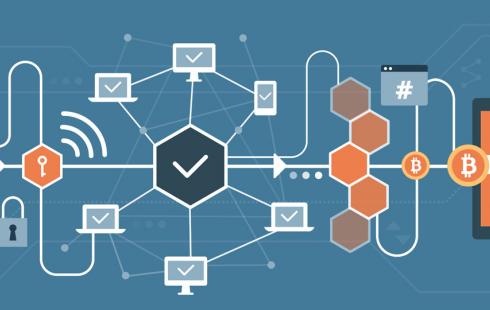
One of the most important concepts in blockchain technology is decentralization. No one computer or organization can own the chain. Instead, it is a distributed ledger via the nodes connected to the chain. Nodes can be any kind of electronic device that maintains copies of the blockchain and keeps the network functioning.
Every node has its own copy of the blockchain and the network must algorithmically approve any newly mined block for the chain to be updated, trusted and verified. Since blockchains are transparent, every action in the ledger can be easily checked and viewed. Each participant is given a unique alphanumeric identification number that shows their transactions. https://hbr.org/2017/01/the-truth-about-blockchain
Combining public information with a system of checks-and-balances helps the blockchain maintain integrity and creates trust among users. Essentially, blockchains can be thought of as the scaleability of trust via technology.
I guess you will want to know the uses of blockchain. Stay tuned.
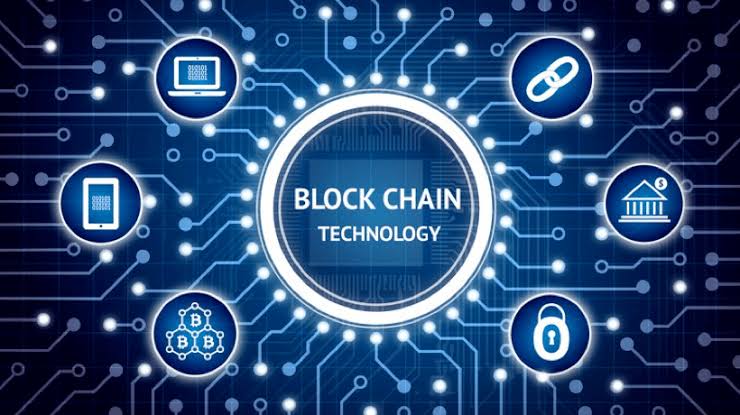
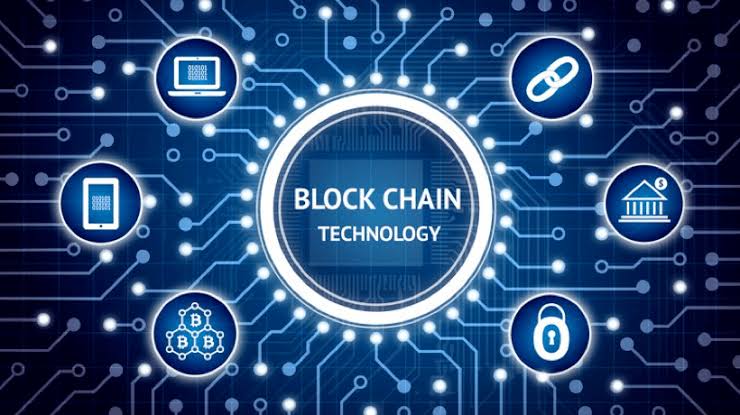
What really is "blockchain technology"?
Blockchain technology is most simply defined as a decentralized, distributed ledger that records the provenance of a digital asset. Our guide will walk you through what it is, how it's used and its history.
Blockchain, sometimes referred to as Distributed Ledger Technology (DLT), makes the history of any digital asset unalterable and transparent through the use of decentralization and cryptographic hashing.
A simple analogy for understanding blockchain technology is a Google Doc. When we create a document and share it with a group of people, the document is distributed instead of copied or transferred. This creates a decentralized distribution chain that gives everyone access to the document at the same time. No one is locked out awaiting changes from another party, while all modifications to the doc are being recorded in real-time, making changes completely transparent.
Of course, blockchain is more complicated than a Google Doc, but the analogy is apt because it illustrates three critical ideas of the technology:
BLOCKCHAIN EXPLAINED: A QUICK OVERVIEW
Digital assets are distributed instead of copied or transferred.
The asset is decentralized, allowing full real-time access.
A transparent ledger of changes preserves integrity of the document, which creates trust in the asset.
Blockchain is an especially promising and revolutionary technology because it helps reduce risk, stamps out fraud and brings transparency in a scaleable way for myriad uses.
In my next post, I'll show you how "blockchain" works.
 @Rokay123