Pandemic in Philippines: staying in but dying in hunger or to escape and stay out of poverty
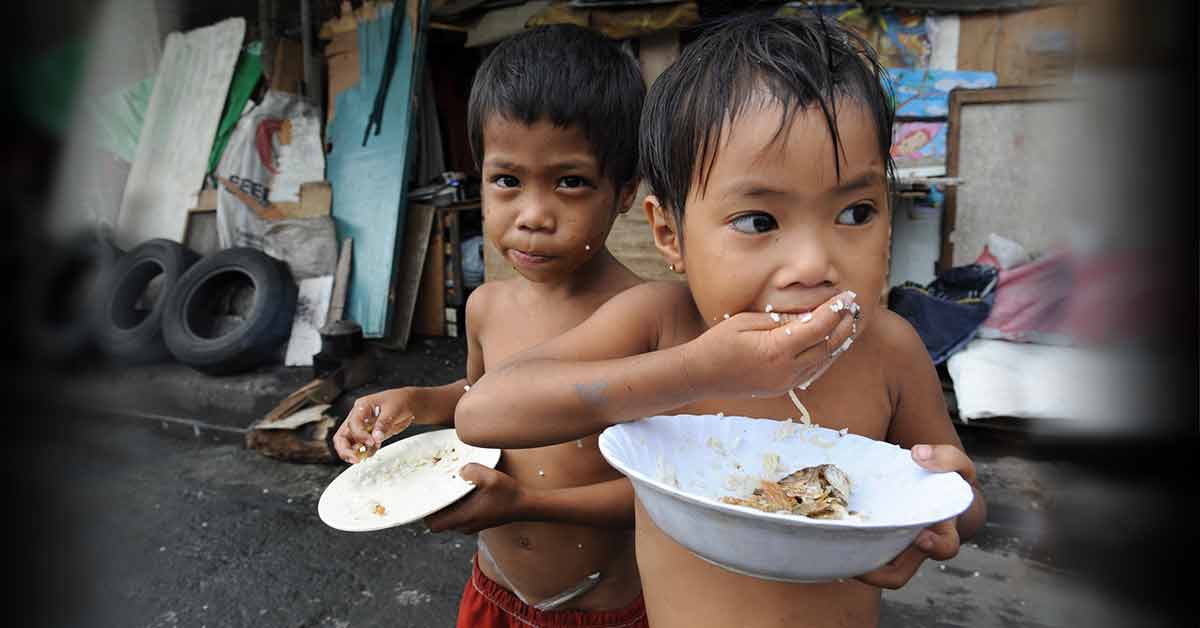
Million’s of people were expected to stay at home but how to handle an abrupt lockdown in such a vast, complex and unequal country. Across the country as the lockdown started a lot of people got panic like buying food , medicines and other supplies for the upcoming days, but how about the poor people? They don’t have enough money to stock food for the lockdown , they are worried about their livelihoods and the homeless people wondered where they might shelter.Throughout the coronavirus pandemic in the Philippines, filipino’s have been seen rallying for help and begging for donations and for residents of poor communities, where most people do not qualify for exemptions, the lockdown signified less to no income.
The poverty and food insecurity that the crisis is generating in low-income family may end up claiming more work than being scared of the virus itself, millions of people already living under such conditions, and whose incomes will also be affected.On the other hand, the number of people in the Philippines with acute hunger will double the situation resulting from COVID-19 will annoy the situation of people who, either because of conflict, hunger, disease, famine or simply low income, were already facing acute food insecurity. The reason or the purpose of this paper is to know the hardship they experienced while on lockdwon and the real dilemma of the poor in Philippines and what the main aspects behind this impact will be . The simmering frustrations of the poor are one of the major considerations in a crucial question for the Duterte government in these critical times: how can the government save people from both hunger and COVID-19?
During the peak of quarantine , public transport was controlled , Police were guarding municipal and city boundaries to prevent entry and exit , malls , schools , offices and tourist spots got close and also other Businesses were closed, some lost their jobs and just stayed in their respective home due to lockdown in thier places ,While all these are sound reminders or to prevent spreading the so-called virus , there is one glaring problem ,the poor will not be able to afford to follow all of these because there are a alot of filipinos specially the poor one affected during the pandemic so they need to go to work and make a living or else they will die because of hunger.
As you can see Thousands of families across the country are starving since the lockdown does not allow them to work, the pandemic calls for a choices between life, death and the economy.That, in turn, results in a massive increase in poverty, extreme poverty to be exact.Workers in the informal economy may not have the luxury of staying at home , People living in or near poverty often lack disposable cash and cannot easily stock food so they need to chose between staying in but dying or to escape from and stay out of poverty .
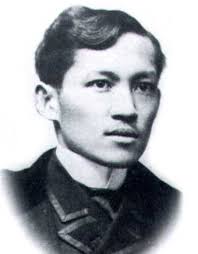
Retraction of Rizal: Did Rizal betray the Philippines? ( part 1)
One of the controversies which still remains unresolve until now is the retraction of our National Hero, Jose Rizal. Different claims and versions resurfaced as to our hero retracted or not, labeled as pro-retraction and anti-retraction. The said issue was claimed by the Roman Catholic defenders that Rizal did retract but asserted to be deceptive by the anti-rectractionists claiming that the document was forged.
Lots of debates was held to investigate the authenticity of Rizal's retraction. Father Vicente Balaguer served as one of the leading contributors of the rise of the said controversy. The priest was a missionary who dealt with Rizal during his exile. He is believed to be the person who proclaimed that the original text of Rizal's retraction is said to be in his custody. During the midafternoon of 29th day of December 1896, the priest convinced Rizal to retract so he would be able to marry Josephine Bracken before he dies. At almost 7 pm, Rizal is said to allegedly retract and requested for a retraction formula from his former Physics professor Father Jose Villaclara. The formula was delivered by the archbishop himself but Rizal rejected it due to its lengthy composition. Rizal is said to ask for a new formula which is a short one made by Father Pio Pi.
Father Balaguer appeared to prove the authenticity of Rizal's retraction. The priest sent a letter which contains the original copy of the retraction signed by Rizal, together with the retraction formula to Father Pio Pi. However, the said original copies were suddenly lost.
The retraction letter was discovered by Father Manuel Garcia, C.M in 1935. The letter which was dated December 29, 1896 was said to be signed by Rizal. The retraction context has lots of reproductions of it. Due to many reproductions, inconsistencies were observed such as the dates. On the original Spanish document, the date bears December 29, 1890, another imitation of the document bears "December 29, 189C" and later became "December 29, 1896".
Anti retractionists believed that the letter was fake, reported that Rizal's signature was forged by Roman Roque. He was said to be the same person who forged the signature of Urbano Lacuna, which was used to capture Aguinaldo, and that the mastermind was Lazaro Segoria. This information was exposed by Roman Roque's neighbor Antonio K. Abad. Others believed that the retraction of Rizal was a scheme made by the friars in order to lessen their exposed evildoings which Rizal wrote in his works namely, Noli Me Tangere and El Filibusterismo.
According to Professor Michael Charlestone "Xiao" Briones, an assistant professor at De La Salle University and a historian, based on his news segment "Xiao Time: Ako ay Pilipino", he stated that from what Rizal wrote on the first page of the "Imitations of Christ" by Thomas á Kempis, "To my dear and unhappy wife, Josephine, December 30th, 1896, Jose Rizal". This copy of book was given to Josephine Bracken on his last visit of Jose Rizal and this book consists of the imitation of the life of Jesus Christ. Rizal even left his last will to his family that he would be buried and to put a crucifix on his grave.
Upon researching and understanding the sides of pro-retractionists and anti-retractionists of Rizal. I came to a conclusion that Rizal really did retracted, to the evidence that he called Josephine Bracken his wife means they were married and for them to be married, he must retract first. Nevertheless, on the issue whether Rizal retracted or not, it will not change the fact that Jose Rizal, our national hero, imparted a huge role in our freedom and from the hands of the Spanish colony and his works helped us achieve our independence which also empowered the fighting spirit of the Filipinos.
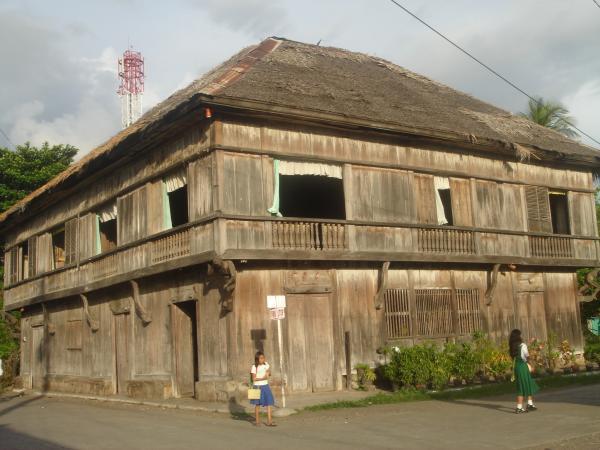
The Vega Ancestral House in Balingasag
It talks about the Vega Ancestral House wherein it became one of the primary attraction why tourist visits and learn the rich historical culture of Poblacion, Balingasag. The house is one of the primary source featured and also the two paintings of the sisters, Dolores and Cleofas Roa Vega. There are also portraits of the Vega family shown and a thank you card written by Emilio Aguinaldo that serves as primary sources.
In pointing out historical criticism, there are two types namely, external and internal criticism. On the video, several things were externally criticized, it includes the structure of the house, to which the materials used and the design that was planned for the house shows that it was a trend back in the 1800's. The paintings have dates on them and the thank you card from the First President of the Philippines Emilio Aguinaldo which also has a date and a signature on it. Due to many years of preserving, we can see that it is already starting to fade and the language used was Spanish since it is the language that they used back in the 1800's. The three sculpted wooden men were the most notable feature on the house. We can say that the sources featured were authentic and not fabricated. In criticizing internally, the wooden sculpture have different perceptions from different people but the historian Jesus Galdo clarified that those three wooden atlases serves as the supporting figure to the protruding 2nd floor and doesn't have names on it just what other people says, and his statement is verisimilar since he is the grandson of Malquiades Moreno Vega meaning he knows what their ancestral house's wooden sculpture symbolises anything or not. The narrative is said to be credible since facts and evidences were presented.
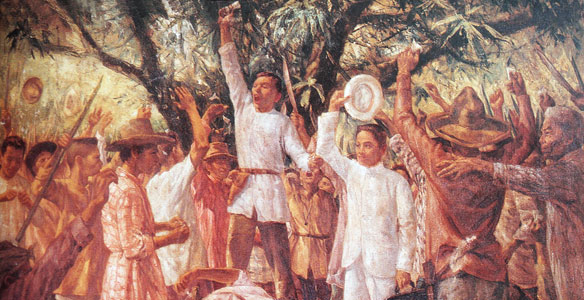
Philippine History Controversy 2: Cry of Pugad Lawin o Balintawak.
Pugad Lawin or Balintawak?
On August 1896, a meeting led by Andres Bonifacio took place to ignite thousands of Katipunan members as they will going to revolt against the Spanish government. They tore up the cedulas, which signifies the Spanish authority, as a sign of determination and eagerness to attain freedom and independence from the colonizers. This significant event marks the beginning of the national revolution.
In 1950, through President Elpidio Quirino was a Proclamation N0. 200 which declares August 26, 1950 as a special public holiday to commemorate the First Cry of Balintawak on August 26, 1896. People were celebrating August 26 not until a Proclamation No. 129 through President Diosdado Macapagal declaring August 23, 1963 as a special public holiday in Quezon city in celebration of the 67th anniversary of the Cry of Pugad Lawin.
These shifting of dates and places became a controversy in Philippine History.
Dr. Pio Valenzuela’s account (Memoirs of Dr. Pio Valenzuela) is an accepted evidence with the controversy. Through his account was a memoir that the Cry took place in August 23, 1896 at the house of Juan Ramos at Pugad Lawin. This claim was after Valenzuela and the research team of the Philippine Historical Committee in 1940 identified the spot of Pugad Lawin. But before this claim, was Valenzuela’s memoir that it was in August 24 at the house of Tandang Sora through a photograph published in 1928 and 1930.
Since it was declared that it was on August 23 at Pugad Lawin, the 1911 monument in Balintawak was removed. Later on, Teodoro Agoncillo, a renowned Filipino historian and national scientist, with the UP Student Council putted a marker in Pugad Lawin site in 1962.
Dr. Soledad Borromeo-Buehler, a granddaughter of Guillermo Masangkay, a childhood friend of Bonifacio and also an eyewitness, is the author of The Cry in Balintawak. She accepted Mansangkay’s story and that is on the nights of 24 and 25 of August, a group of malhechores (evildoers) attacked Chinese drygoods stores in Balintawak, which preceded the clash between the civil guards and the Katipuneros. On Masangkay’s account was an entry that around 5 o’clock in the afternoon, during the celebration to the official start of the uprising, the guards positioned up in trees, gave a warning that the opponents are coming. The Katipuneros led by Bonifacio and Emilio Jacinto then prepared for the attack.
And so, it made me believe into the conclusion that the first cry took place in Balintawak on August 26, 1896 due to the instability of Valenzuela’s account and to the apprehending account of Masangkay.
Cavite Mutiny ( Spanish and Filipino Version)
The Cavite Mutiny of 1872 is believed to be one of the many factors that enkindled the sense of nationhood of the Filipinos which led to the Philippine Revolution in 1896. The martyrdom of Gomburza is one of the reason why this event is remarkable among Filipinos. Different versions were presented as to why the Cavite Mutiny happened namely Spanish and Filipino versions.
Spanish Perspective
According to Jose Montero ý Vidal, a prolific Spanish historian whose book is entitled "Historia General de Filipinas" , documented the said event and overstated that the dissatisfied soldiers and laborers desire to overthrow the Spanish government was the reason of conducting a mutiny. Meanwhile, Governor-General Rafael Izquierdo, the governor-general of the Philippines for about 3 years (1871-1873), on his official report magnified the mutiny and made use of it to implicate the native clergy, which was then operative in the call for secularization. The accounts of the Gov. Gen. Izquierdo and Montero complimented and corroborated with one another but Izquierdo's accusations were more spiteful.
According to them, aside from the abolition of privileges and exemption from force labor, which said to be the main reasons of the revolution, other reasons were also enumerated such as: the secular throne being overthrown by the Spanish revolution, unrestrained press producing bad propagandas, liberal and republican book arriving in the country and the presence of native clergy who's against with the Spanish friars. The Governor-general even reported to the King of Spain that the rebels are planning to overthrow the Spanish government in order to instill a new "hari" which he claims to be Father Burgos and Zamora. Also, both Montero and Izquierdo deemed that the said mutiny was planned ahead and that it is a part of a big conspiracy among leaders, mestizos, abogadillos, Manila and Cavite residents and the native clergy.
On the 20th day of January 1872, during the Feast of the Virgin Loreto in Sampaloc, the fireworks were mistaken by the Cavite residents as a sign of attack, targeting Spanish officers at sight. The news was later on heard by the Governor-general and immediately ordered for a reinforcement and the revolt ended easily. Gomburza, along with other abogadillas were arrested, suspended by the high court and were sentenced for a life imprisonment at the Marianas island. On the 17th day of February 1872, the Spanish government wanted to instill fear to the Filipinos through the execution of the Gomburza (Padre Gomez, Burgos and Zamora).
Filipino Perspective
According to Dr. Trinidad H. Pardo de Tavera, a Filipino scholar and researcher, who wrote the Filipino version of the Cavite Mutiny of 1872, the event was a result of the dissatisfaction of the native Filipino soldiers and laborers because of the abolition of their privileges.
On the 20th day of January 1872, the Cavite residents, laborers and native soldiers with a total of about 200 men was led by Sergeant Lamadrid then assassinated every Spanish officers they caught in sight. The insurgents believed to have overmanned the Spanish forces but the support or reinforcement from their cluster did not arrived. Hence, the said mutiny subdued in two days since Governor-general Izquierdo called for reinforcement immediately.
Tevera believed that Governor-general Izquierdo and the Spanish friars used the mutiny as a lever by intensifying it as a big conspiracy involving the natives, Cavite and Manila residents and the native clergy on the plan to overthrow Spanish government. When the Central Government announced the deprivation of the powers of intervention in civil matters and educational institutions of the friars, the friars were threathened that their existence will only be a thing in the past therefore Tavera concluded that this is one of the reason why the friars did something tragic in order to maintain their desire power in the Philippines.
Life imprisonment was sentenced to convicted educated men while the Gomburza was executed by garrote. This act then leads to the Filipinos awakening of their nationalism. A french writer Edmund Plauchut, on his account, he complimented Tavera's account which confirms that the mutiny happened due to the discontentment of the laborers and native soldiers in Cavite port.
After reading different versions of the Cavite Mutiny of 1872, the different versions contain basic facts which remained unvarying and some of it is the fact that due to Gov-gen Izquierdo's drawing back of privileges of the members of the native army and workers of the arsenal resulted to a dissatisfaction, next is the Filipinos wanting to turn away from the Spanish Government due to strict policies that was introduced the Governor-general Izquierdo, next is the failure of the Central Government to conduct an investigation of the event and directly believed the reports made by Spanish forces, the participation of the Filipino clergy members to the secularization and lastly the execution of the Gomburza which inspired Filipinos to call for reform which then led to independence.
Taking everything into account, the Filipino version is more credible since the version of the Spaniards shows unjust disposition which they augmented the real reason of the said mutiny, they only relied to the corroboration of their own kin's statement which clearly showed how biased they were. And the fact that they narrowed their statements to their own point of view. Hence, this Cavite mutiny paved its way for a momentous 1898. Through this event, it awakened the Filipinos nationalism and became one of the main driving force which made the Filipinos unite to a single cause.
Hi , My name is Rey ann but just call me ann , i am 21 years of age . I came from Philippines and i live in Cagayan de Oro City , the city of Golden friendship . I'm a student of one of the prestigious school here in our city , University of Science and Technology of Southern Philippines or USTP , I'm taking the course of BS Applied Mathematics and I'm already a 3rd year level. We are Seven in the family , my mom , dad and my 4 siblings and I'm the middle child . My favorite day of the week is Saturday because i am a Seventh Day Adventist and Saturday is our Sabbath Day. I like , love, and enjoy watching movies specially the horror one . Though I'm not that sporty , but my favorite sport is volleyball because that's the only sport i know hahaha and My favorite place is anywhere as long as i connect to nature . I sometimes go to beaches to unwind , I like it because the sea breeze will make relax and calm specially sunsets . In my free time i sometimes like to solve math problems and ofcourse if im not in the mood i just surfing the net . I am single and not dating anyone and I’m not yet ready for a serious relationship .
 @Reyanna