Drugs affect of Bangladesh
Drugs have now become a social cancer. Because drugs have engulfed society in such a way that it has become difficult for us to get out of it. The question now is which way drug aggression is taking the youth. One cannot help but be concerned about the way in which the ill effects of drugs are spreading. Its terrible aggression is leading the youth of the country to the path of destruction. This destructive intoxication has spread widely among the children of rich families. Lately, this addiction has spread to middle class and even poor families. Many of the children of wealthy families are forced to engage in mischief. He is also involved in robbery including hijacking to raise money for drugs.
The youth of the country are becoming morally and physically weak due to the life threatening aggression of Phensidyl, Yaba and Viagra. By fooling the eyes of the country's border guards, the drug lords are bringing thousands of crores of rupees into the country every year through the professional, tainted smugglers of the border and our youth is constantly on the verge of destruction due to the horrible touch of drugs. Due to the lack of legal monitoring by the government's Drug Control and Health Department, domestic and foreign drug syndicates have become very reckless across the country.
The bright star of the country, nation and society is the shining flame of youth. Young people are the leaders of the future. However, unemployment, family problems and various social problems are the main causes. If we talk about families, then it can be seen that in many families, the effect of parental quarrels or monogamy affects the children. Due to the monogamy of the husband and wife, the family is often separated. Then it is seen that the father and mother became separated and became residents of two poles. And in this case, the children have a lot of guardians. Drugs consume the emerging young energy as a result of this parental emptiness and family worries.
Again, most parents do not know what their beloved child is doing outside the home. Many parents do not even know what their children do inside the house. Because of this carelessness of parents, boys and girls often become addicted to drugs. Drug problems exist in almost every country in the world. Drugs and drug addiction have also become a national problem in Bangladesh. Most of the drug addicts in the country are teenagers and young men and women. If a significant portion of the youth on whom the country's education, development, progress and future depend, have strayed into drug addiction, there is good reason to worry about the country's future. It has become urgent to protect our youth from this terrible curse.
The vitality and enthusiasm of our youth is essential for the development and progress of the country and the nation. Just as the power of youth can take a country and a nation to the pinnacle of development and progress, the opposite can also cause irreparable damage to a country and a nation.
A section of the young society is becoming addicted to foreign subculture op pornography through drug abuse as well as uploading to satellite TV channels, internet and mobile phones. As a result, the rate of eve-teasing, kidnapping, rape, murder, disappearance and untimely death is increasing day by day. The moral decay of the youth and the decay of social and religious values due to drug addiction is hampering the overall development and progress of the country and the nation. Doesn't the government and those concerned have any responsibility to protect the youth of the country from the scourge of destructive drugs? We want immediate and effective measures to protect the youth of the country from the scourge of drugs.

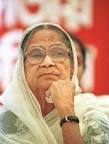
The great lady poet of Bangladesh(Begum Sufia Kamal)
Begum Sufia Kamal is a renowned poet, writer, feminist and a leading figure in the women's progress movement in modern Bangladesh. Although she is a poet, everyone has another identity - Janani Sahasika. Sufia Kamal is one of the women who have contributed to the advancement of the nation throughout the ages.
He was born on 20 June 1911 at his uncle's house in Shaistabad, Barisal. His father's name was Syed Abdul Bari and his mother was Syeda Sabera Khatun. Sufia Kamal's father left home when she was seven years old. The beginning of life was not at all pleasant for the poet Sufia. Women were very backward in the society then. At the time of Sufia's birth, Bengali Muslim women had to live under house arrest. Strict curtains were in vogue. The girls had no access to education. In that hostile environment, Sufia Kamal did not have the opportunity for formal education.
"In our age, we used to play with puppets. In this age, you have to study at that age. When we flew under the sky, only kites now sail tomorrow's ship, Gagan Juri" (part of today's children's poetry book).
In those days it was customary for the daughters of a noble family not to go out of the house, their work was only in the inner court. Little Sufia could not accept this rule at all. He did not want to be prepared to live in a closed room with four walls. His mind could not adapt to the society. His mother was from the Nawab family of Shaistabad, so the language of the family was Urdu. Bengali language was banned. In such a situation, only his mother was the inspiration of the poet. Mama's house had a big library of her great uncle, and with her mother's encouragement she had the opportunity to read books from there. Poet Sufia gradually developed herself by self-education in her life under house arrest.
Poet Sufia Kamal's life began to change direction after meeting another majestic woman, Begum Rokeya Sakhawat Hossain. Begum Rokeya's attitude towards women's awakening, philosophy and love for literature greatly moved Sufia in her childhood. She married her cousin Syed Nehal Hossain at the age of 13 according to the rules of a conservative family. Husband Nehal Hossain became an unexpected blessing in Sufia's life. Seeing his wife's interest, he encouraged her in various ways. In 1923 he wrote his first story 'Sainik Badhu'.
She joined the organization 'Establishment of Islam in Anjumane Khawatin' and worked for women's education. In addition to increasing social awareness, he also practiced literature. He has published 20 books. In 1932, her husband Nehal Hossain died suddenly. The turning point in his life changed, but he did not stop. He was instrumental in the 1971 war. After partition in 1947, he moved with his family from Calcutta to Dhaka. He actively participated in the language movement.
He became involved in a movement organized by the government of Pakistan in 1971 to protest the ban on Rabindra Sangeet. In the nineties of the twentieth century, Sufia Kamal led the movement for women's activism in general elections to overthrow dictatorships and establish democracy.
Later, when the elected government started ignoring the demands of the women's equal rights movement, Sufia Kamal led the women's movement like an intruder. In 1980, she formed the Mahila Parishad. She has also held important positions in the Women's Rehabilitation Board, Bangladesh Rural Development Committee and Dustha Rehabilitation Organization, Chayanat, Bangladesh Disability Foundation, Women's Welfare Organization.
He also demanded that the first women's hostel of Dhaka University be named 'Rokeya Hall'. She has also played a brilliant role in the struggle for women's awakening and equal rights of women in independent Bangladesh. He has fought all his life against communalism and fundamentalism. Participated in every progressive movement.
Sufia Kamal's life also had many ups and downs. Yet he did not stop, he started a movement. She has campaigned for the liberation of women from political, social, economic exploitation, deprivation, discrimination, etc. against conservatism, dowry, oppression, polygamy, arbitrary divorce, rape, etc. against women in the society of Bangladesh. He has won more than 50 awards.
Sufia Kamal died on November 20, 1999. He was buried with full state honors. She is the first woman in Bangladesh to get this honor. Sufia Kamal, the name is associated with the innumerable emotions, feelings, the simplicity of love and affection and the morale to strengthen the self-confidence of women.
He was not only a poet but also a literary, philosophical, teacher and militant leader. Born in a closed society on June 20, 1911, the path of emancipation shown to women by her struggle for a women's society will always be remembered by all. The poet is not dead, so he is still in the minds of readers at every step. Everyone will remember him with respect on his birthday.
 @Raaj
@Raaj