read.cash Log in

@PiRK

Joined 19 January 2020 · 2 posts

120 KT

0 KT · $2.41 received · 0 KT · $43.79 given

Posts

@PiRK

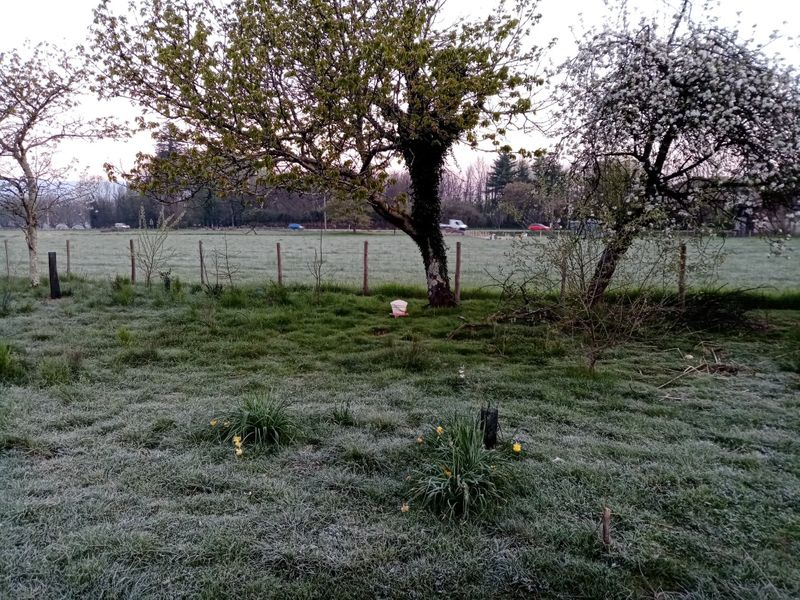
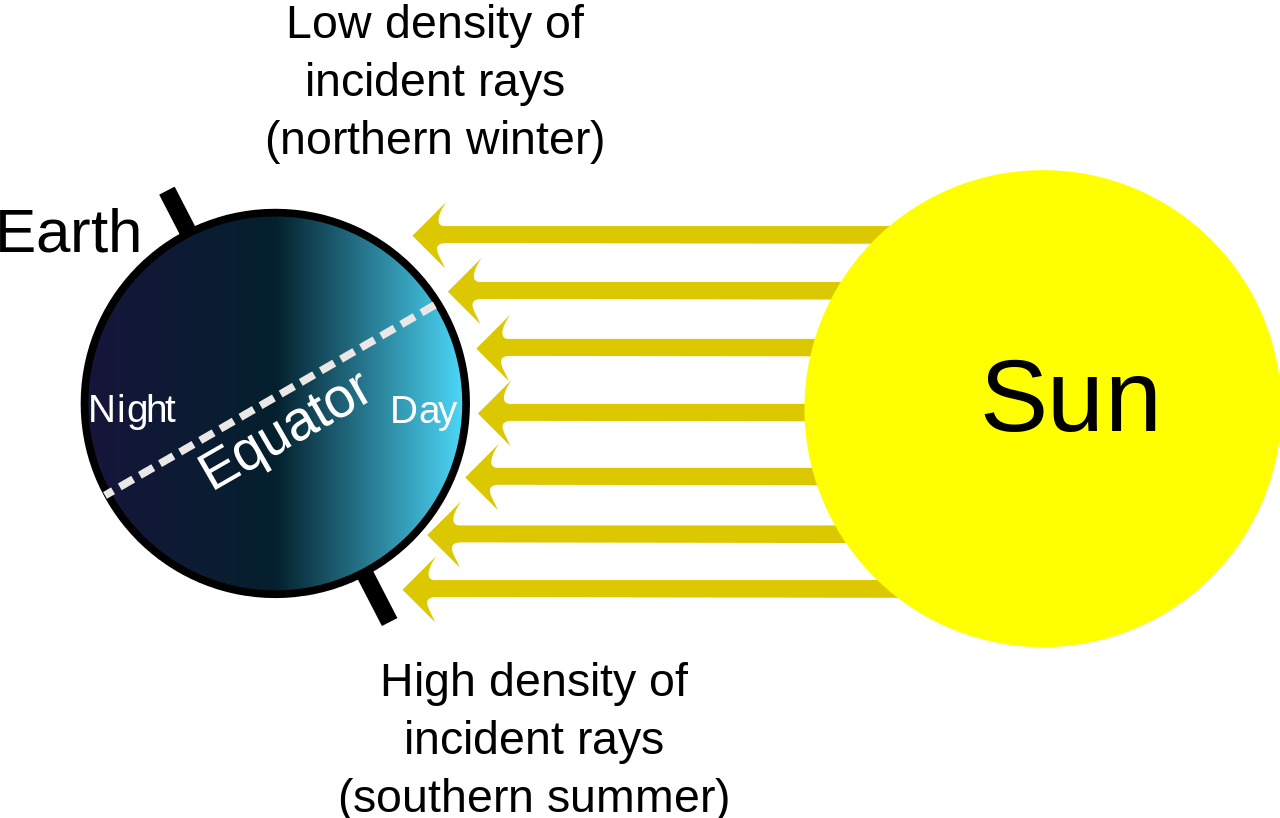
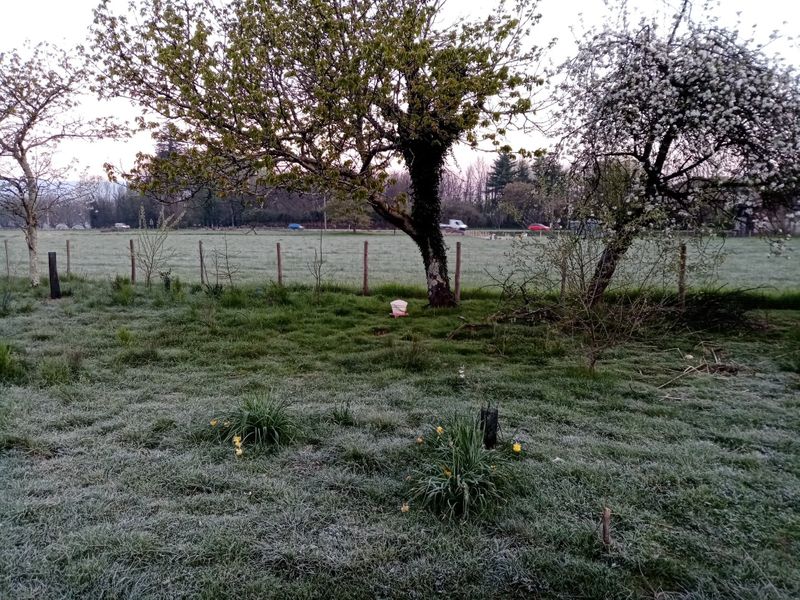
Understanding frost If you are growing fruits and vegetables in temperate climates, you certainly have had to deal with the issue of frost. But what causes frost, exactly? How can you mitigate frost related damage? Space is cold Let's start with an explanation about why the soil freezes. Basically, it is because outer space is very cold, and warm object radiate their heat away. Every piece of matter that is above absolute zero radiates heat away. That cannot be avoided. Particles oscillate and emit electromagnetic radiation away. The only reason a body does not perpetually cool down is because it is surrounded with other bodies, particles, that radiate heat back towards it or warm it through conduction. Conduction is basically particles bumping into each others, and if one body being in contact with another is warmer than the other, there will statistically be more energy going towards the other body, than there is energy coming back from it. So our problem is that space is cold. It does not radiate much heat back, and does not reflect back towards us any of the heat we radiate towards it. Our heat sources: the sun and the earth Only the small portion of space that is the sun radiates a significant amount energy towards us. The only other  major source of heat at our disposal, other than the sun, is the earth itself. It accumulated a lot of mechanical energy back when all the rocks collided together, and nowadays it still radiates some of that heat. But the main way the earth is producing heat is through radioactive decay of particles. The geothermal heat reaching the surface of the planet from below is however much lower than the solar heat reaching the surface from above. The total heat originating from the planet amounts to only 0.025 %, while the heat received from the sun amounts to 99.97% of the total. So during summer time, the risk of frost is very low. Heat is accumulated during the day in the entire system: earth, ocean and atmosphere. In the winter, on the other hand, frost is a lot more likely as the sun does not radiate as much energy per square meter of earth in that particular hemisphere, due to a higher angle of incidence of the light rays reaching the soil. Water phase-change So, why doesn't it freeze every night? It may be because the soil, air and vegetation accumulated enough heat during the day so that it doesn't have time to cool down to below 0°C before the sun shows up again. It is also important to understand that 0°C is a threshold that isn't easy to cross when you are surrounded with water, and your own body is mostly made off water. When water reaches 0°C, it stops decreasing in temperature for a while, until all of it is frozen. The continuing drop in thermal energy goes into the phase-change process, from liquid water into ice, before it can again make the temperature drop any further. Many plants can survive a minor freeze, because their internal water is in a state that has a lower freezing temperature. It effectively contains anti-freezing fluid. So surrounding water that freezes at 0°C makes a strong buffer preventing internal plant water to freeze. If the temperature goes down enough to make water freeze inside the plant's cells, the cells are usually destroyed. Greenhouse effect Then, there is the famous greenhouse effect. In a greenhouse made of transparent materials, most electromagnetic waves are able to shine through the material. Some of that radiation is reflected with the same wavelength as it arrived, and leaves the greenhouse. But most most of the radiation is absorbed into vegetation and into the earth. Most of these solid materials don't radiate light back in the visible spectrum, except for some phosphorescent materials. They do however radiate energy in the infrared spectrum. And it turns out the transparent materials reflect those wavelengths. So the radiation bounces back and forth, and keeps heating the soil and vegetation on the way back. Atmospheric greenhouse effect works the same way, except that it is carbon dioxide, methane, water particles… that reflect the infrared heat back towards the earth. Cloud albedo Another reason heat is reflected back towards the soil is because of cloud cover. Clouds act similar to greenhouse gasses, except that they reflect both visible and infrared light. So they don't let all the visible light touch the earth during daytime, but they also don't let all of the infrared light radiate into outer space during night time. That's why you don't see frost very often when the sky is clouded during night time. Frost mitigation Using all of that knowledge, we can now figure out some ways to mitigate frost related damage. Somewhere in the coldest valley of the Austrian Alps, a famous farmer is cultivating cherries and some citrus trees, up in the mountains, at an elevation  of 1100 to 1500 meters above sea level. The way he manages to do this is by using a series of large ponds, wetlands and water gardens that act as a thermal mass. Water accumulates heat during the day, and releases it during the night. Another way to mitigate frost damage is to spray-mist water directly on the plants that you want to protect. This is done in orchards, during the spring, when there is an unusual late season frost. This keeps flowers at 0°C, and can save that year's harvest. Another way you can protect your plants during night time is to place an anti-frost veil protection above your plants. This helps retain some of the heat that would otherwise be radiated directly into outer space. You can also plant frost-sensitive plant underneath a larger tree, which will also prevent all that heat to radiate away. Evergreen tree would work best, but I've witnessed frost-protecting effects on my land even underneath trees that had not yet leafed out.

@PiRK

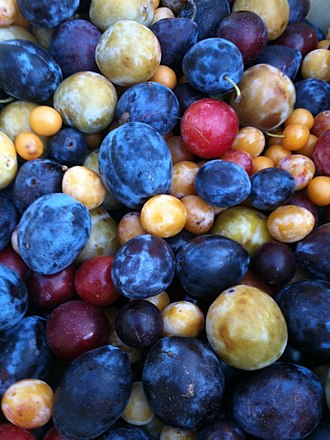
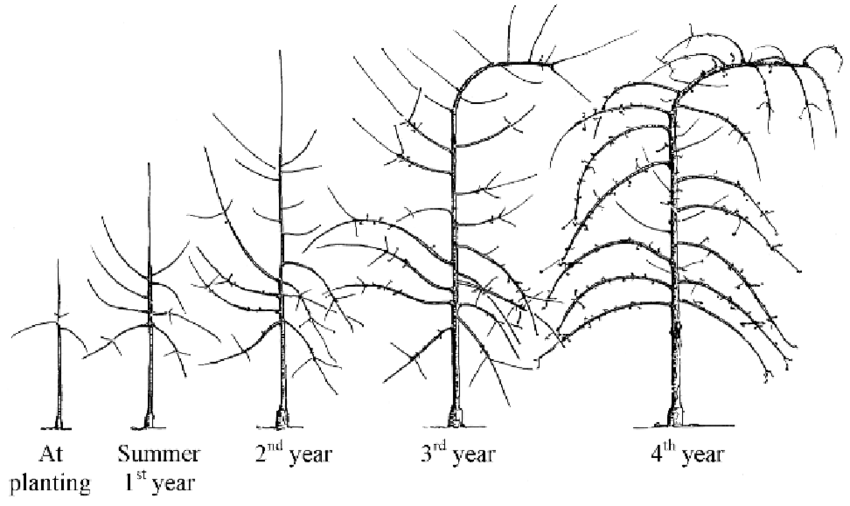
Grafting multi-fruit trees Whenever someone first learns about fruit tree grafting, the idea of grafting multiple fruit varieties on a single tree very often immediately crosses his mind. This idea is indeed fascinating. I am no exception. When I attended my first grafting training, my first question to my instructor was on this subject. He confirmed to me that the vast majority of his trainees ask similar questions. Can it be done? To make a long story short: yes, it works. You can watch this TED episode, or read this wikipedia page, about an artist that grafted 40 different varieties of stone fruits onto a single rootstock. https://www.youtube.com/watch?v=uU2L5nTSHtc https://en.wikipedia.org/wiki/Tree_of_40_Fruit Which species are intercompatible? You cannot just graft any tree species onto any other random tree species. In the example presented in the TED talk about the Tree of 40 Fruits, all the fruits mentioned are stone fruits from the *prunus* genus. Trees from the same botanical genus are usually compatible and can be grafted together. https://en.wikipedia.org/wiki/Prunus You can also graft together trees that are not from the same genus, but are from the same botanical family. For instance, in France we traditionally use quince trees , from the *Cydonia* genus, as dwarfing rootstocks for most pear varieties, *Pyrus* genus. This is because pears tend to grow way to tall to be harvested safely, and in the past we didn't know of any dwarf pear varieties. But not all pear cultivars are compatible with quince rootstocks. Sometimes the pear dies after a few years, sometimes the incompatible pear tree survives multiple decades but with a very low fruit yield and a much higher susceptibility to fungal diseases. In such cases, the solution is usually to first graft a compatible pear cultivar onto the quince, and then graft the wanted variety onto the intermediary pear. Apple trees (*Malus* genus) are neither compatible with quince trees, nor with pear trees, although all 3 genera belong to the *Rosaceae* family. But all 3 genera are somewhat compatible with hawthorn rootstocks (*Rosaceae, Crataegus*), and so are many other *Rosaceae* trees. You can find a complete list of fruits compatible with hawthorns on the permies.com forum. There are also reports of successful grafts of chestnut onto oak rootstocks, but most people who tried replicating the experiment failed. And many have tried, as grafting a chestnut onto an oak would enable producing chestnuts on limestone derived soils, which is normally impossible. This example illustrates the fact that you can find a compatibility between 2 very specific individual trees of different genera, while most other combinations of trees randomly chosen in these same genera will be incompatible. What I'm getting at is that a lot of combinations of fruits on a single tree are technically possible, but that they are not always easy to achieve. Sometimes, intermediary grafts and marginal rootstock species must be used. https://permies.com/t/51054/Grafting-Hawthorn-Crataegus https://www.greffer.net/?p=5 So, why can't you find multi-cultivar or multi-species fruit trees in most local nurseries? The answer to that question is that multi-grafting fruit trees is actually very impractical for nursery production. There are two main issues with this practice: the extra years required to produce marketable multi-fruit trees, and the complexity of pruning to maintain them in the long run. Why is it more complicated to prune a multi-fruit tree? When you plant a young single fruit tree, you can basically let it grow with no or very little pruning. Each year, the apical bud will grow a straight vertical shoot, while a few lower shoots on the previous year's wood will grow lateral branches. The apical bud produces a hormone called auxin, that inhibits the growth of all the lower branches. Therefore the lower branches will grow sub-horizontally and will produce fruits rather than wood. The natural shape of most trees, if allowed to grow without pruning, resembles a Christmas tree. All primary branches grow outwards from the trunk, and don't interfere much with each other. Pruning is limited to removing low branches to make it easier to drive machinery underneath, keeping the number of branches to a reasonable number so as to produce a lower number of larger caliber fruits, and removing primary branches that grow sub-vertically and might compete with the apical bud. https://en.wikipedia.org/wiki/Apical_dominance On the other hand, if you want to grow multiple cultivars on a single tree, this natural architecture will not work well. You should not keep any given cultivar in the apical position, as it would end up inhibiting the growth of all other cultivars. You will want to decapitate the tree to encourage all current primary branches to start competing for the apical dominance, and graft the cultivars on those primary branches, or on secondary sub-branches if you want to graft many cultivars. As a result, you will have to basically manage multiple trees growing from a unique trunk. Some of the lateral sub-branches of each cultivar will grow towards the center of the tree, and will interfere with each other and shade each-other. This situation will require a much more work-intensive annual pruning. Excessive pruning may favor wood growth the following year at the expense of fruit yield. Properly pruning a multi-axis fruit tree is a delicate balance, that requires years of experience, or a thorough training on techniques that are more of an art than a science. How long does it take? In the first year after sowing a seed or a planting a tree freshly produced from a cutting, you should expect a single shoot to grow straight up, without lateral branches, with leaves growing directly on the trunk. Initially the wood will be green and soft, and towards the end of the summer it will start turning into hardwood. The following year, the first lateral branches will start growing on the previous year's growth, while a new shoot will grow straight up again from the apical bud. These lateral branches will turn into hardwood towards the end of the second year. If at this stage you consider that you have enough branches to accommodate the number of cultivars that you want to graft, you can proceed with the grafts in the spring of the third year, and hope to sell the tree at the earliest in the beginning of the winter of the third year. The tree will use up nursery space **for 3 years** before you can sell it. As a comparison, a regular single-variety fruit produced in a streamlined manner can use up nursery space **for only a single year**. The nurseryman buys and plants the rootstocks in the winter, grafts the wanted cultivar in the spring and sells the tree in the following fall. I can imagine of a method that would reduce the multi-grafting timeline down to two years, but I have not tested it yet, and it is limited to a low number of cultivars per tree. All cultivars would have to be grafted directly on the trunk/shoot in the spring of year two, rather than grafted on higher branches in year 3. The grafting method would need to be shield-budding or chip-budding. As you would need to graft multiples buds at different heights on the tree, it would not be easy to force the grafted buds to start growing a branch. Causing a bud to start growing is usually done by decapitating the tree, so as to stop the terminal bud from inhibiting lower branch growth. The decapitation would probably only cause the highest buds to start, and not the lowest ones. To force the lowest bud to start their growth, a method could be to use notching, as described in the following video starting at 15:45. https://www.youtube.com/watch?v=KAHNbjoTWyc&feature=youtu.be&t=945 Notching works by shielding the bud from the phloem sap that flows down right underneath the bark, and transports the auxin hormone that inhibits growth of lower branches. The effect is that the bud right underneath the notch thinks it has become the terminal bud, and is incentivized to grow in height to ensure the tree's access to sunlight. Why I believe it may be worth it anyway In my opinion, there is probably an underestimated market for multi-fruit trees. Impractical as it may be, multi-fruit are probably easy to market. I believe that a large proportion of buyers of fruit trees are not buying because they thought thoroughly about the best strategy to produce the largest amount of food. Many buyers probably buy trees on impulse, because of the originality of the cultivar. The first marketing argument I can think of, is that these trees allow to grow multiple cultivars in a small yard. A variant of this argument is to say that these trees allow to produce fruits over a longer period, as different cultivars ripen at different times of the year. For instance, you can find apples starting in the early summer for the earliest-ripening cultivars, and the latest-ripening cultivars will need to be harvested at the end of fall, before the first frost, and finish ripening for months in a cellar. Having multiple cultivars ripening at different times of the year means that you can continually harvest fresh fruits, without needing to store or to process them for preservation. A second argument is that most fruit trees cannot self-pollinate. This means that you usually need to plant at least two trees with compatible flowering periods to obtain a harvest. Grafting 2 or 3 cultivars on the same tree is an compelling solution to this problem. The third argument is the novelty factor. Showing your guests trees that produce at the same time plums, apricots and peaches is a good conversation starter. It is also worth mentioning that multi-fruit trees can be used to preserve multiple heirloom varieties on a small piece of land. But this practice requires a very thorough labeling and mapping of each cultivar. If a label breaks and falls off, there is no chance that you will find the cultivar again on a 10 varieties tree in a 10 trees orchard. Even the best quality labels will eventually fall off the tree, after being wiggled for years by the wind. The last reason to practice multi-fruit grafting that I will mention in this article, is that you can speed-up the fruiting by grafting a fresh shoot from a young tree onto an older tree. This can prove to be very useful if you are doing varietal selection. It can significantly speed up the process, as compared to just waiting for each seedling tree to produce its own fruits, which can take more than 10 years. https://www.youtube.com/watch?v=WKE6t08wlBA

+3 more