Honor: The Lost Treasure Of Today's Society
Society's rapid decline is the inevitable result of your ever-encroaching culture of greed. The acquisition of wealth, power and status have become ends in themselves, supplanting all other considerations.
At one time, honor meant something. It was a way of life in which all men followed the code duello and adhered to principles of chivalry. In today's society, however, honor is lost. You have become so focused on material things that you have forgotten why honor is important in the first place. https://piratedocuments.com/code-duello-1777-2/
The word "honor" is disappeared in today's society. It has been turned into something, that means nothing as of recent times. Honor has always meant to be honest, loyal and respectful.
What Does It Mean To Live Honorably In Today's Society?
The answer to this question is much more complex, than one might think. In order for a person to live honorably, they must first understand what it means. This can only be achieved by understanding the true meaning of honor and how it applies to their own lives.
Understanding the complexities of honor could be extremely hard. People tend to simplify things when it comes to honor, however, it is not a simple concept. It requires one to consider many different things. When you break it down, it tends to be made up of several smaller concepts. Honor, in short, is doing the right thing, even if it requires the sacrifice of yourself.
Honor can mean different things to different people. Some might hold it in the highest regard, others might not even consider it. The point is, each person must decide what they consider to be the most honorable thing to do. This is what makes the study of honor so fascinating. It is a human construct and as such, it is inherently relative. One person's code might be another person's folly. This is what makes it so difficult to define or characterize.
The word "honor" has been replaced with "loyalty" and "patriotism" in modern times. Many would argue, that these are just buzzwords and cynical ploys to justify various types of selfish behavior. While there may be some truth to these allegations, there is also truth to the idea, that honor cannot be divorced from these concepts. At the very least, they are all related and cannot be easily distinguished from one another. One cannot live an honorable life without considering loyalty and patriotism. One cannot be loyal or patriotic without also considering the concept of honor.
What Are Some Ways In Which Honor is Guiltily Invoked?
There are many different ways in which people tend to invoke honor, but they all tend to follow the same pattern. People tend to do one of two things:
They either excuse bad behavior or they justify it.
With excuses, the concept of honor tends to be used as a blanket to avoid the uncomfortable consequences of doing the right thing. In other words, the person avoids the blame and remains free from any penalty.
With justifications, the concept of honor tends to be used as a shield to deflect criticism away from the person who is being protected. In other words, the person accepts the blame and pays a penalty in order to protect the honor of the shield-holder.
People tend to fall into one of these categories. Those who are honorable tend to put themselves at risk, while those who are self-serving tend to protect themselves first and foremost.
What Are Some Ways In Which Honor is Violated?
There are many different ways in which people tend to violate the concepts of honor, but again they all tend to follow the same basic pattern. People tend to do one of two things:
They either do the expected thing or they do the popular thing. With the expected thing, the concept of honor tends to be used as a tool to manipulate people into doing what you want them to do. In other words, the person exploits the concept of honor in a very direct way.
With the popular thing, the concept of honor tends to be used as a cover to do the wrong thing. This might be seen as a less direct violation of the concept of honor, but it is just as harmful since the person being protected is unwilling, to put it another way.
People tend to fall into one these categories. Those who are honorable tend to do what they are expected to do, while those who are self-serving tend to do what they can get away with.
Practicing Honor
Despite the fact, that the concept of honor has been lost, it is still possible to practice it. One must be willing to put on the brakes and stop themselves from doing the wrong thing. One must also be willing to admit to themselves and others, that they have done wrong, in order to truly be able to practice honor.
For example, if one is in the habit of taking credit for the work of others and is unwilling to give credit where it is due, then one cannot really be said to have honor. One tends to take credit for the work of others, even when it is not deserved.
It is also quite possible to practice honor, even when all of the other factors are in place. The problem rests on the fact, that these other factors are also very common. As such, it is much more difficult to do the right thing, compared to all else.
There are a multitude of ways one could practice honor. One could be considerate to the needs of others. One could be willing to sacrifice for the greater good. One could be kind to the weak and the helpless. The list goes on. One could also simply avoid all conflict, except in self-defense. Regardless, one should always do what one believes to be the right thing, even if it means suffering the consequences.
Can We Get Honor Back?
There are many who ask if honor can be brought back. While it is impossible to predict the future, there are a few things we can do to increase the chances of getting the concept of honor back in the future. In order to start, we must look back to the time before the concept of honor even existed. It is only in the absence of all other systems, that the concept of honor can truly be said to exist.
Unfortunately, the need to protect what is dearest is often what propels us into acts of great violence. Such acts tend to create their own justification and a vicious cycle is formed. In other words, the cycle of violence feeds off itself in a way that is difficult to break.
However, if we wish for the concept of honor to return, then we must be willing to break this cycle. Honor cannot be truly restored until the cycle of violence is broken and both perpetrators and victims can go about their lives without the need to take things into their own hands.
The problem is that it is not always the most powerful individuals who commit atrocities. In fact, it is often the powerless who commit atrocities, out of desperation and a lack of opportunity to better their lives. Atrocities are committed by those, who don't have the ability to commit them on a grand scale. As such, it takes a powerful motivating factor to provoke an individual to do such a thing.
The question, then, is whether or not enough of us are willing to provoke the perpetrators and victims of violence to break the cycle of violence. The truth is that it may take all of us working together to create a world, where the perpetrators and victims of violence are no longer able to find reasons to hurt each other. Some people, it seems, just don't like change. It is up to each of us to decide how we are going to react to the need for change.
Thank you for reading.
Lead image source: https://practicingfamilies.com/2013/07/10/honor/
The Dangers Of Gas Lighting: What Is It And Why Everyone Should Be Aware Of It
Gas lighting is a manipulative tactic used to confuse and control a partner or spouse. It's a form of emotional abuse, that often escalates into physical abuse if not addressed early on. Have you ever wondered how to effectively deal with people who are trying to make you question your reality? Gas lighting is a form of manipulation that attempts to force someone into doubting their own sanity. It works by lying about something (or pretending not to remember) in order to make the other person question their memory.
Have you ever been in a relationship where your partner consistently said one thing and did another? Where, over time, it became increasingly difficult to tell the truth from a lie? In this situation, you were being gas lighted. Gas lighting is dangerous because it eats away at the victim's sense of power, control, and self-worth.
Gas lighting is a term that gets thrown around a lot in everyday conversation today, but few people actually know what it is. In this article we're going to explore the dangers of gas lighting and why you should be aware of how it's used against you.
https://www.goodhousekeeping.com/life/entertainment/a37167588/women-gaslighting-women/
How To Identify Gas Lighting
Gas lighting is a very dangerous and abusive form of manipulation. It is often used as a means to an end, where the abusive partner wants to see you question your own memory, sanity, and perception. The key is in recognizing the tactics being used against you and being able to respond accordingly.
For example, if your partner says, "You're too stupid to understand what's going on." That is, of course, a form of gas lighting. The abuser wants you to question your own perceptions and memories. If you respond by yelling, "You're a drunk and a liar!" That is also a form of gas lighting, but with a different desired outcome. The abuser wants you to question your own intelligence and power of reasoning. To fight fire with fire is not a good idea in these kinds of situations.
Instead, you need to look beyond the immediate abuse and see the larger goal of the abuser. What are they really trying to do? To humiliate you? To destroy you? They may not directly tell you that's what they want, but their behavior will always give you a much better indication of what's really going on.
Recognizing The Warning Signs
Recognizing the warning signs is an important aspect of being able to manage and overcome the abuse of others. There are several other important warning signs, that you should also be aware of as you evaluate the situation.
Gas lighting often occurs in cycles. The perpetrator will do something to provoke a response from the victim, and then the victim responds in kind. The goal of the abuser is to keep the victim reacting to them in order to avoid being exposed. The more the victim reacts, the easier it is for the abuser to maintain control. When the victim overreacts, it often escalates both the frequency and the intensity of the abuse.
Another aspect to be aware of is the abuser's mood. An angry or enraged abuser is a dangerous one to have around. That said, an appeased abuser is exactly what you want around. An appeased abuser is an abuser that can be manipulated more easily. This is because they will not do anything to jeopardize their hold on you.
You should also look to see how much control the abuser has over you. If they're not overtly abusive, but they exert a great deal of influence over you, this is something you should seek to curtail.
Why Gas Lighting Is Dangerous?
Gas lighting is a dangerous situation for anyone involved. It often escalates into other forms of abuse, such as physical abuse, emotional abuse and even suicide. The reason for this is simple: the victim is unable to recognize the danger of the situation.
The abuser is often times very manipulative, so the victim typically does not stand a chance. The abuser knows how to charm, how to threaten and how to seek to wear down the victim's resistance. The gas lighting is just one part of the manipulation.
There are several reasons why gas lighting is dangerous. One is that it is very difficult to identify. Many people who are being gas lighted do not recognize it as such. They see a partner who is acting irrationally and they don't know how to address it.
Another reason is that it is very difficult to get out of. If you're being gas lighted, it is unlikely that you'll ever be able to extricate yourself from the situation. Even if you somehow managed to get away from your abuser, you would still have to face any potential consequences for the abuse.
A final reason is that it is very difficult for those in the victim role to seek help. You may face social, professional, or legal consequences for reporting abuse. This gives the abuser the freedom to continue the cycle of abuse.
How To Deal With A Gas Lighting Partner
There are many aspects to deal with when it comes to dealing with a gas lighting partner. Most importantly, you need to establish a set of boundaries. That way you can tell where your limits are and the abuser cannot take advantage of you.
It is also important to be aware of the subtle differences in the abuser's behavior. An angry or enraged abuser is one that you need to be wary of, but a complacent one is a much more predictable and preferable one. The complacent abuser will typically not do anything to jeopardize the status quo.
The abuser's behavior is very telling, so you should pay attention to it. It is the changes in behavior, that you need to be most wary of. For example, if your abuser suddenly seems agitated by small things, this is a sure sign that they are trying to get under your skin.
It is also important to note that, while it is generally better to avoid confrontations with your abuser, sometimes it is necessary. Confrontation is typically the best way to handle an abusive partner, as it demonstrates to them that you will not be intimidated. However, there are times when a more indirect approach is necessary.
For example, if your abuser is becoming increasingly agitated by your attempts to draw boundaries, a better course of action might be to ignore the behavior and continue to do what you were doing. If confrontation is necessary, then it should be done with the understanding that you cannot physically fight a ghost.
If the abuser continues to become more upset by your response, then it might be time to escalate the situation. You could become angry back, or you could attempt to disengage yourself from the situation.
Conclusion
You have learned that it is important to be able to recognize the signs of a gas lighting partner. That way, you can avoid becoming entangled with one.
However, it is also important to understand, that even when you are able to recognize the behavior and disengage yourself from the situation, it doesn't guarantee, that the abuser will stop. In fact, the abuser is likely to increase in frequency and intensity of their abusive behavior as a result of your actions.
Thus, you also need to be prepared to escalate the situation when necessary. At times, the only viable option might be to leave the relationship entirely.
Thank you for reading.


4 Views Of The Motive Of Acts Of Kindness
What is the motive behind acts of kindness? Why do you do things for others? Do you expect something in return or are you genuinely trying to help someone else? What makes you want to be kind and how can you apply these skills to your own life? Today, I want to talk about something, that is thrown around a lot in our culture. It's something that people identify with and use as an excuse for their actions. This is "kindness," which is defined as follows: The quality of being friendly, generous and considerate; readiness to help others; kindness.
The most compelling philosophical question is one of motivation. Why would a person do something nice for another person. In our society, we are constantly barraged with what appears to be altruistic behavior – strangers helping strangers, people donating their time and money to worthy causes. So why do they do it? What drives them to help others? In this article I want to find answers to these questions in the following four views.
Are Acts Of Kindness Based On The Motive?
There are four main schools of thought that seem to be emerging. The first is that acts of kindness are based on the altruistic goal of helping others. In this view, the person who performs the act of kindness is expected to receive an obvious benefit in some way. For example, the person who performs the act might receive praise, the satisfaction of a need, saving someone's life, or something similar. For the sake of argument, let's call this the "altruistic" view of kindness.
The second view is that acts of kindness are performed for the sake of the person who is being kind. In this case, the do-gooder might not need anything in return. They might simply be performing an act of friendship, a random act of mercy, or something similar. Under this view, the person who is being kind is the one who benefits.
The third view is the neutral view, where the unconditional kindness comes in. Finally the fourth view is the existential or in another word meaningless view, where the actor is being kind for the sake of being active. Which of these four viewpoints is most compelling? Let's consider the following arguments for each position:
**1. The Altruistic Motive**
The altruistic view claims, that kindness is practiced for the sake of others. The reasoning behind this is that we are all too often selfish in our actions. We focus only on the benefits, that we hope to receive oneself. The truth is, we are all too often blind to the interests of others. It takes a steady, conscious effort to put ourselves in other people's shoes.
One might argue that a truly altruistic act would be one that does not benefit the actor at all – like, for example, throwing away one's money. However, most people would say that this is impossible. Even the most extreme forms of self-denial, such as that which would result from the voluntary starvation of oneself to the point of death, can't go unopposed by the basic needs of one's own body.
If we are to accept the altruistic view, it follows that there should at least be some form of balance between the goals of the altruist and their beneficiaries. To give to the point of death would be to go too far. At the same time, one might argue that there are degrees of altruism. For example, if one is only willing to risk one's life to save another person, then that is a far more extreme example of the practice of kindness than merely giving one's money to a worthy cause.
On the other hand, there are some who would argue that all forms of sacrifice are equally bad. It would seem that the only difference between these two extremes is a question of degree. However, this view is certainly not supported by the common conception of altruism.
**2. The Egoistic Motive**
The egoistic view maintains, that an act of kindness is not necessarily done for the sake of another person, so long as one is getting something out of the transaction. In other words, the goal of the actor is not the other person, but themselves. The idea is that when one does something kind, they are in effect paying it forward. Kindness is like a currency that can be spent on oneself.
This argument focuses on the notion of reciprocity. If someone is kind to me, I would be wise to pay it forward. In fact, one might even consider it one's sacred duty to pay it forward. The problem with this theory is that it seems to rely on a very weak form of reciprocity. If it were not possible to benefit oneself through acts of kindness, then one's action would be in vain.
To take another example, consider the case where a person gives their money to a beggar. We can assume that the beggar knows how to spend it. The person has done something that benefits the beggar, but only in so far as they are now being given something for free. There is no way that this person could gain from the transaction.
A theory that has been proposed to combat this weak form of reciprocity is the "triangle of giving." It maintains that there is always a mutual exchange of benefits and that none of the parties involved in a transaction can be made better off except by the occurrence of the transaction itself.
**3. The Neutral Motive**
The third idea that one might consider is what is commonly referred to as "unconditional kindness." This notion focuses on the fact, that one cannot be unkind to another person if one is being kind to them. If one is being benevolent, then one cannot be doing it maliciously.
This idea does not necessarily deny the validity of the other two views, but it does maintain that they are extremes. It is the middle ground that denies both the concept of an "act of evil" and the "purely selfish" notion of an "act of kindness." Unconditional kindness maintains, that one's primary motivation is not to be beneficial to another, but to be kind.
The fact that one cannot benefit oneself through a kind act does not necessitate a state of self-denial. One can still be kind. One can still make sacrifices. The difference is, one understands that they are being kind to others in the process and not merely expecting something in return.
**4. The Existential Motive**
The existential view maintains, that the concept of an "act of kindness" is meaningless. The only thing that really matters is that one is being kind. There is no greater purpose behind a kind act and any purported justification is merely a superficial rationalization.
The existential view is, in a word, "existential." This means that it is centered on the question of being, or not being, in the state of existence that one chooses. In other words, it is focused on the question of meaning. It is the "ultimate meaning" that one is seeking, not a meaning relative to an other being, but a meaning in relation to oneself.
The problem with this position is that it is inherently solipsistic. It seeks to justify kind acts based on the idea that they are being done for one's own sake and not for someone else's. It is an attempt to create value, out of a vacuum. To create value out of nothing.
It is as if one is deciding at a fundamental level, that there is no meaning to their actions. The only meaning that exists is the action itself. Everything else is meaningless. This approach fails to recognize, that there are consequences to one's actions. One's choices have real world consequences.
The fact of this is not an argument against the existence of meaning, but it is an argument against a vacuum. Meaning does not exist in a void; it exists in relation to something else. One cannot create value in a vacuum.
It follows that one cannot create value by being kind to others. If anything, being kind is an expression of self-hatred. One only does a kind act to negate their own value. To prove that they are not worthless. That they are not evil.
This is an inherently unstable position to be in. It is an expression of fear and cowardice. The only thing one fears is the possibility of being completely insignificant.
Thank you for reading.
5 Signs, That Show You Are Being Antisocial
If you find that you have a hard time making friends, it's not necessarily your fault. There are some subtle signs, that show that you might be antisocial, but it doesn't mean you can never make new friends. In fact, there are actions you can take to help improve your social skills and overcome the signs of antisocial behavior.
In our busy world, it is easy to feel like we are in a constant race against time. We may have gotten so caught up in our work, that we forgot what it means to be social. Or, maybe we have been working on perfecting a project and every free minute has gone into that goal. No matter the reason why, it is important to remember that we need social contact just as much as you need food and water!
Antisocial behavior is usually defined as a lack of interest in others and avoidance of social interaction. This definition can be applied to many different scenarios. For example, you may know someone who refuses to mingle at parties, barely talks during office lunches or stops short of participating in group projects at work. You may have even been guilty of antisocial behavior yourself.
Having A Hard Time Making Friends
There are many different reasons why someone may have a hard time making friends. Some people are just plain aloof and do not take to the company of others. Some may have suffered from abuse as a child and carry the scars so deeply into their psyche, that they cannot shake the fear or anger. Some may simply feel more comfortable in the company of an intellectual equal, than a social one. It may seem like an easy way to make friends, but this kind of behavior is usually very self-defeating in real life.
Regardless of the reason, it is important to realize that you are not alone in this struggle. It is perfectly normal and, in fact, very common to have a hard time making new friends. As a matter of fact, everyone goes through this at one time or another. The good news is that this experience is very short-lived. After you have built a few relationships with other people, you can be certain that you will be making new friends all the time.
The first thing you should do is to simply acknowledge that you have a hard time making friends. This is a very different thing, than saying that you will never make friends. Many people who are told that they will never be able to fulfill their social needs begin to feel desperate, and this only leads to more anxiety and loneliness. You can see this as an opportunity to practice being more social, though. Maybe you will even be surprised at how much you actually enjoy meeting new people.
Avoiding New People, Because Of Fear Of Rejection
Some people never get over their fear of rejection. If you are one of these people, you should know that you are doing nothing to advance your cause. Rejection is just something that happens in this world. How you deal with it is what matters. If you are going to make friends, you are going to have to open yourself up to more rejection, than you are currently used to.
The truth is that you have very little control over another person's thoughts or feelings. You might be insulted by someone refusing to acknowledge your existence. In fact, that has happened many times before. It is not a pleasant experience. So, the best thing to do is to build your confidence level by simply being more sociable. This will not only help you with people in general, but with this in particular.
When you reach out to others, you are being very proactive and it shows that you are confident in your ability to make a friend. It also shows that you are a pleasant person to be around with. The very fact that you are looking for friend, shows that you are not only open to the possibility, but you are also in the position of power. There is no reason for someone to not want to be your friend, so long as that person can get over their fears.
You should keep in mind that the earlier you get acquainted with people, the better. This is because there is more chance that you will become good friends with the person. Also, the person will have a higher opinion of you for having made the first move.
Reducing Social Interactions With People You Don't Know
A lot of people have a hard time making friends and one of the reasons why is because they only associate with people that are similar to themselves. This is not a very good policy. The more you associate with people, the greater your chance of making friends.
You should, therefore, seek out interactions with a larger variety of people. Yes, this may mean being rejected, but you will not be rejected instantly. You will be heard and understood, given that you make the effort to communicate.
Try to talk to people when they are in the company of other people. If possible, find some common ground with the other person and strike up a conversation. That was how all your previous friendships began. You find something in common and everyone has a good time.
If the other person is alone, like you, then you may have a better chance of coming off as polite and interesting, but it is still rather daunting. Just remember that the more you talk to people, the more you will come off as sociable and interesting and the higher your chances are of making friends.
Spending Time On Phone, Tablet Or Computer All Day
In addition to not mingling with others, some people also do not socialize with the people around them. They are so preoccupied with their own thoughts, that they do not even notice what is happening in the world.
There are many different ways that this can manifest itself. Some people may spend hours and hours online, playing games or just surfing the internet. Others may spend their time on a digital device, watching videos or looking at memes. Still others may spend their time daydreaming, and not paying any attention to the world around them.
Regardless of the method, this behavior is a hindrance to making friends. No one likes to be around people who are so consumed by their own thoughts, that they are not even aware of what is going on around them. It makes others feel anxious, uncomfortable, and even intimidated.
While you may not be the most talkative person in the world, you cannot really be considered a shut-in, either. You are more of an observer, than anything else. It is only when you are in the company of other people, that you become fully engrossed in what is going on. You should, therefore, change your behavior to one that is more socially acceptable. This means that you should go out and about more and interact with other people.
Having Negative Attitude Towards People And Life In General
If you have a negative attitude towards others, then you will have a very hard time making friends. The people that you are most likely to confide in, are the kinds of people that you despise. If an opportunity to show them how much you dislike them arises, you will not be able to resist.
Try your best to control your emotions and to be as open-minded as you can. But, if it should happen that you give offense to someone, be prepared for the consequences. Maybe you won't become their friend, but you will definitely have an enemy. Remember that you are dealing with people and not merely animals or objects. The only way to treat others with respect is to be respected yourself.
You can't change the fact that people are mean or that life sucks, but you can definitely choose how you react to these things. Your choice defines you as a person. Make a conscious effort to be more kind and respectful. Remember that you are always free to ignore the person, and that you can find other people to be around. But, if you choose to engage, then your conduct will be decided by your choice.
Thank you for reading.
The World As We Perceive It, But What Is Beyond Perception
If you are reading this, then there is a fair chance, that you believe in the existence of a world beyond your perception. All you can perceive in this world with your five senses, you call it reality. But what is reality? Your brains process the information, that they receive and give you your perception of reality, or the world as you perceive it to be. But how do you know what is real and what isn't? You don't, really. You can only trust your perceptions.
We all perceive something different. You are the sum of your experiences and you have a vision, a perception of what you believe to be true. But what is actually out there? Is the world that you see, smell, hear and feel truly real? Or do you just perceive it as being real? The same way you can't taste your tongue or see your eyes, reality may be just an illusion. Your senses deceive you all the time; they tell you that things are real even when they are not.
In the world we live in today, there is no lack of information. How do we determine what is real and what is not? Do you ever wonder if our perception of reality could be distorted by something outside of it? What if what we perceive as reality is just one layer to a much deeper truth?
The Perception Of The World
The world is what you perceive it to be, what you choose to believe it to be. The world as you see it, the world as you choose to interpret what you see. Most of the time, your perceptions are correct. But what if they are not? What if what you think to be true is in fact, not? What if there is a greater understanding of the world, that you can attain? That is the question that lies beneath our conscious thoughts.
I am not a proponent of any particular philosophical view on the matter, but I will say that all of these views share a few common traits. They all have assumptions, that are untested by any scientific method. Yet, they all try to answer the question of what is, in one form or another. They all use reason and logic to solve the mystery of the universe. It is just that some reason and logic to a different conclusion, than the rest.
How do we perceive what is around us? How do we distinguish what is real and what is not? It is not through the use of our five senses, that we come to our conclusions. Rather, we use our intellect to formulate an answer to this question. Yet, our intellect is fallible. What if our conclusions are wrong? What if there are other ways of looking at the world, that go beyond forming an answer through the use of our own reasoning powers?
The Problem With Reason
Reasoning is the use of logic to form a conclusion from facts provided by our five senses. It is a method, that has served humanity well, but it is not foolproof. There is a lot of information, that we can't access or pay no attention to. Our senses can also deceive us. How do we know what we think we know?
Asking questions is also a form of reasoning. Asking a question, we assume an answer to be true, in the hopes that we will receive a response. Asking a question is a method, that is used to confirm an already formed conclusion, rather than one that forms a conclusion on its own.
We are also limited by the types of questions, that we can ask. While we may ask about the nature of reality, we can't really do anything, that would change the nature of reality itself. While there are many things about reality, that we don't know, there are also many things, that we may never be able to know.
The limitations on our methods of reasoning, as well as the limits of our questions, are two very real things that we must consider. But what if there are other ways of looking at these limitations? What if we can combine the power of our intellect with the power of our intuition, to create a new and more accurate way of looking at the world?
What Is Beyond Our Perception?
Do you see a world beyond your perception? More accurately, I should say, do you believe that there is a world beyond your perception? There are so many things, that we may not be able to perceive with our five senses, that it's hard to know what to think. On the highest level, we can perceive only three dimensions. But what if there are more dimensions? What if there are more, than one kind of dimension? What if the objects in your room right now, are in fact, smaller than they appear? What if they are in fact in different colors, then you see them? What if they are not solid, but liquid?
I could go on, but you get the point. You don't see a world beyond your perception. But what is beyond your perception? How to know that there is anything beyond it? How to know that what you perceive as reality is in fact, reality? How do you know that what you are looking at is not something, that can only be perceived by the person looking at it? Is what you are looking at real or is it just an illusion? Therein lies the riddle of perception.
The Other Dimensions
If perception is inherently limited, then there are bound to be other dimensions, that we can't perceive. But what if we could perceive more than just one dimension? What if we could perceive all of the dimensions in which the world is actually being perceived? What if there were more than one of these other dimensions going on at once? If there were more dimensions, then there would be more than one way in which an object can appear.
For example, in our three-dimensional world, a ball appears in only one way. It appears as a ball. There is only one way that a square can appear. It can only appear as a square. But what if there were more than one kind of dimension? What if a square appeared in more than one way? Would it appear as a square in one dimension and as a different shape in another? Or maybe all of the different shapes of squares would appear as one big blob in another dimension. Who knows?
This is just one example. There are an infinite number of possibilities. But here is the important thing to realize: As long as the dimensions are indistinguishable from one another, we would be able to perceive them all.
The Reality Of Perception
Just because you can see something, hear something, taste it or feel it, does not mean that it exists, or that it is real, or that it is anything at all. Perception is inherently limited. If it wasn't, then we would all be supermen or superwomen, wouldn't we? Perception is what allows us to distinguish between the world and the world of dreams.
The limits of perception are the limits of knowledge. What we know is always defined by what we are able to perceive. The objects that we are able to perceive are the objects that we are able to know. The world is what we are able to know, given what we are able to perceive. So, if we can't perceive something, then it doesn't exist. Or at least, it doesn't exist in the way that we think that it does.
Our knowledge of what we can perceive is also what limits our perception. If we knew everything that was possible to perceive, then we could perceive everything. But we can't do that. Not even in theory. There are always gaps in our knowledge. So, we are always able to look at something and say, "Well, I guess that it's..." Or, "That's not..." Or, "I don't know what it is, but it's not..." We can never see everything, that is possible to be seen. That is the reality of perception.
The Solution To The Riddle
Now that we have discussed this, the solution to the riddle is obvious, isn't it? If there is a world beyond your perception, then all of the different possible ways in which that world could look, could exist. In fact, that is the only way that it could look. A world in which every single thing could appear in all of its possible forms, would be indistinguishable from our own.
But how could this be? How could a world like this exist? There are an infinite number of possible ways in which this world could exist, but there are only a finite number of dimensions in which this world could exist. Therefore, there must be something else, that we are missing here. But what?
The answer is so obvious, so simple, yet so frustrating. It all depends upon what you mean by the word "dimension."
Thank you for reading.
Good Karma: An Unexpected Reward For Selfless Help
Many people go out of their way to help a stranger and I have to tell you, that most of them get their unexpected reward for their selfless acts. What would you do if you saw someone in need? Would you stop and help them, even at the cost of your own safety? A few days ago, I heard a story, that taught me a valuable lesson about human kindness. Before I start talking about good karma, let me tell you what happened in this story.
An Example Of Good Karma
This rather posh elderly lady got stuck on her way home. Her luxury car broke down and there was nobody to help her out. She was sitting in her car helplessly, when she saw a car stopped, reversed back and a man got out of his van and started to approach her. The lady was a little bit nervous, because she didn't really like the look of the man. She thought he would harm her in some way.
When the man arrived to her car the lady was so surprised, because of the kindness of the man. He was really helpful and in a relatively short time he fixed the car by changing the flat tire. The lady asked him how much she owes him. The man said: "Just remember, that I helped you out and when you see someone in need, you do the same." With that said, the man said goodbye to the lady, went back to his car and drove away.
The lady noted what she was told by the man and drove away too. She stopped at a Café and ordered a coffee. She noticed, that the server girl was pregnant. When the lady finished her coffee, she left a note on the table with $500 in cash, then left the Café. The server girl then went to the table and read the note, that stated the following. "This $500 is for you, because I thought it would help you out, once you have your baby." The server girl was so happy. She went home and told her husband what happened to her today. Well I don't think that I have to explain, who the husband was. You guessed it right.
So let's have a closer look about good karma.
Karma Is A Powerful Force In The Universe
The word karma is a Sanskrit word, which means to act. The law of karma states that what you give, you get. Good things happen to good people and bad things happen to bad people. The world is a school and we are the students. What you sow, you reap. It is a law so ancient, that it is found in almost all religions. It is the foundation of the Hindu religion, Buddhism and the belief systems of most of the world's major religions.
The law of karma is the basis of all religious teaching and the foundation of all schools of psychology. The school of karma teaches, that behavior is a choice, that you make, just like everything else. The consequences of that choice, then rule your destiny. Karma is like a river, the path it takes is unknown, but it is inevitable. Unseen forces work constantly to try to change the course of your destiny, but your goal cannot be changed, only redirected. So in a way, your fate is in your own hands.
The law of karma is a beautiful idea. It explains that everything that you do, has consequences in this life or the next. It offers a simple framework to understand a complex idea. It provides a moral compass, that guides our daily actions. It provides a framework to understand the choices of others. It presents a way to understand our own morality.
I personally think, that the law of karma is a very real and powerful idea. The problem that I have with it is, that it is so general. I think that it would be a mistake to just focus on the idea of karma and leave out the important aspects of it. For instance, what is the consequence of a choice that you make? How does that choice then further your own destiny? How do you change the course of your own destiny? How do you escape your own personal hell? How can you reclaim your own freedom? These are important questions and they are the core of an entire school of psychology, called existential psychology.
The Good Karma Cycle
Now I would like to shift gears and talk about the good karma cycle. The good karma cycle is the notion, that every choice you make in life, creates a ripple effect in the world. The choices that you make create the future and the future creates the choices that you make. The choices that you make in one life, create the future that you will live. The notion of the good karma cycle brings to light the fact, that every choice you make is a choice between two different paths. Those paths may seem equally as good, but one may be better than the other.
The good karma cycle reminds us, that our decisions are being watched over by a higher power. It offers a framework to understand the many paradoxes of human existence. It offers insight into the questions of life.
The first step in the good karma cycle is the choice to choose. You have the choice to make a decision and act upon it. Every choice that you make, creates a future, that then creates a new set of decisions to be made. The more decisions that are made, the more possible futures are created. As a result, all things are possible. The notion of the good karma cycle asks you to consider all things. It asks you to look beyond what you can see, to consider the unseen.
An important questions to ask are as I said before, what are the consequences of my choice? How does this choice then further my own destiny? The good karma cycle offers you many different options for answering these questions. You can look to the long term consequences. You can look to the medium term consequences. You can look to the short term consequences. You can look to the consequences, that you have yet to experience. There are many different routes that you can choose.
Do you believe in karma? Let me know your thoughts.
Thank you for reading.
Don't Underestimate Yourself: You Are Capable To Do Way More, Than You Think
I have seen so many people underestimate themselves, not just in terms of career, but also in terms of relationships. I want to tell you, that you can achieve whatever you put your mind to and if someone says you are not good enough for something, then try doing it anyway.
You might surprise yourself at how much more capable to do, than what you originally thought. Confidence is beautiful and attractive and if people don't like confident people, who speak their minds then they don't deserve happiness anyway.
If you have always dreamt of starting anything you wanted, but never quite found the right idea to act on. Don't let that stop you! When it comes to creating your dreams, the limiting factors are usually belief and confidence.
Success is about your mindset. Your capabilities are only limited by the way you view yourself and the world around you. The reason so many of us never achieve our goals is because we often limit ourselves long before we even get started.
The Advantages Of Self-Confidence
Confidence is attractive. It is a quality, that people are drawn to in others. It creates an atmosphere of trust, which enables people to do things in others, that they would not normally do. Confidence gives you an advantage in all kinds of social interactions. It enables you to hold your own in conversations with other people where you might not usually be as fluent. It enables you to ask for things, that you might not normally ask for.
Confidence also enables you to take risks, that you might not normally take. When you are feeling confident, you are less likely to think about the consequences of your actions. You are more likely to do whatever it is you are planning to do. So is confidence a good thing? Yes. Confidence is a very desirable trait. It enables you to thrive in this competitive world. It enables you to do things, that other people could not do. It enables you to be happy.
Unfortunately, many people do not possess this quality, or do not develop it until a much later age. As a result, they are continually subject to feelings of inadequacy. It is very important as you grow up, that you develop a sense of confidence.
It is also important, that you understand the reasons for this. People often mistake confidence for arrogance. Arrogance is a foolish and unattractive trait. Whereas confidence enables you to get what you want out of life, it also enables you to hold your head high and look forward to challenges.
The Power Of Self-Belief
Self-belief is the other important thing, that you must have to reach your goals. Without it, you cannot possibly succeed. It could be confidence, it could be belief, it could be a little of both. Whatever it is, you must have it. You must believe, that you could achieve something if you try, even if the odds are against you.
You must believe, that you are good enough to do something, even if you have no training or experience in doing it. You must believe, that you could be successful, no matter what your competition thinks. You must believe in yourself.
This is really important. It is very easy to believe in something, when it is being presented to you. It is another thing entirely to believe in something, when there is no option but to believe in it, or to not believe at all. You must decide for yourself whether you are going to believe or not.
You cannot allow other people to determine your beliefs for you. You cannot rely on the fact that someone else is relying on you, or that you are surrounded by people who believe in you. The only person who can determine if you are going to succeed, is you.
Stop Comparing Yourself To Others, You Are Unique
You are not like anyone else. You are a highly-individualized being, with your own interests, with your own motivation, with your own ideas. There is only one person that can truly understand you and that is yourself. Everyone else's understanding of you is conditioned by their own understanding of you. Stop comparing yourself to other people. You are not on the same playing field. You do not have the same goals.
You are a success in your own eyes, if you are what you want to be and if you make your own choices and take control of your own life. Success is not determined by what anyone else thinks of you. It is determined by what you think of yourself. Why should your opinion matter at all?
You have a great capacity to create and define your own concept of success. You do not need anyone else's. You are a unique being, who has never been presented with the choices, that other people have. Why should you have anyone say at all in how you live your life?
Because you are the only person in the world, who has to live with the consequences of the choices that you make. You are the only person, who has to look in the mirror every morning and ask, "What am I going to achieve today?" You are the only person, who can answer that question for yourself. There is no one who can define your success for you, because in the end it is you who will decide your own definition of success.
It’s All About Perspective
I have already mentioned above, that confidence and self-belief are qualities, that people are attracted to in others. The more confident you are, the more people will trust you. The more people trust you, the more successful you will be. This is why people are always telling each other how great they are, how much potential they have, how amazing their ideas are.
Because people look at things differently, when they are feeling good about themselves. But people are also very prone to letting their imaginations run away with them. It is very easy to imagine, that other people have confidence and self-belief and they do not. It is also easy to imagine, that you have confidence and self-belief and you do not.
You must decide for yourself if you have what it takes to be truly successful. What do you have to lose by trying? Everything you might gain is much more, than what you would have lost by not taking that chance. You must decide if you are going to be truly successful or not. It's all about perspective.
Thank you for reading.
What Makes A Blog Post Outstanding
A blog post that is outstanding just isn't something you can produce easily and it takes several months to get there. You need to write a lot of bad posts before you can write one good one, but with practice you learned what makes a great post and you know that anybody can do it if they are determined.
Every blogger needs to know the ones, that make for a great read. A striking title, compelling language and sober presentation are the basics you have to go with. Knowing your niche's culture is also important in order to write an outstanding blog post.
A Good Headline And Hook Attracts The Reader
You need to grab the attention of your target audience as soon as possible. Great headlines increase the probability, that your blog will be read. Using the right hook can be effective as well as long. You need to figure out the best type of hook, that fits your content and you could go for sensationalist or realistic approaches.
When you pick a sensationalist approach, you need to make sure, that you are being as factual as possible and avoid relying on opinion or rhetoric. Your language should also be relatively simple, while being as direct as possible. You don't want to use too many big words or rely on obscure references, because your audience may not be familiar with them. At the same time, though, you want to use a formal style when writing and avoid using slang or other informal expressions as they may not be appropriate for your target audience.
If you want to go for a sensationalist approach, you could, for instance, write about a celebrity who just died or is about to get engaged. People tend to be more affected by such things, and it would be easier for you to write about it being a well known fact.
However, if you go for a more realistic approach, you could choose to write about an experience that you had as a young adult. Such topics tend to be more relatable and approachable to a wider audience.
You have to decide what type of post it is going to be and then you have to choose the best approach. Choose your headline based on your target audience and the type of post you're going to write. Headlines should be kept short and sweet, while still being attention grabbing.
A Good Introduction Holds The Reader's Attention
Once you've grabbed their attention, you need to keep it. The best way to do this is to give relevant and useful information. A casual reader doesn't want to be left hanging and a potential fan might not give your blog a second look if they find your presentation boring.
Start your blog post with a strong and relevant subtitle, that immediately grabs your reader's attention. It should be short and sweet, like the headlines you choose, but still convey the information that you want to give.
For example, if you're writing about the differences between the types of music fans in the U.S. and Canada, you could write about how the music of the U.S. has always been appreciated in Canada, whereas the music of Canada is seldomly recognized as being of high quality.
You want your reader to be able to relate to your content, so be upfront about what you're writing about. It helps to give the context and when done well, it helps the reader understand your presentation better.
It also helps to use catchy language. People are more inclined to read something if they find the language interesting and if the presentation is interesting. At the same time, you want to be careful not to overuse profanity or sensationalist expressions, as these may come off as cheesy and are unlikely to help you with your intended purpose.
Once you've got their interest, you need to convey the information clearly and concisely and you have to avoid unnecessary details, that may come off as boring. A good way to structure your post is to start with an introduction to your content. You should then describe your content, and finally, conclude with a summary of the main points.
A Good Body Copy Convincingly Proves Your Point
Once you've clearly explained your content, you need to provide supporting evidence. Your reader will be more inclined to believe you if you manage to convey the information non-verbally. You can use quotations or citations to support your claims. If you choose to use quotations, make sure to attribute the quotation to its original author.
It's also a good idea to use relatively simple grammar and punctuation, just as a reader-friendly approach. They will forgive a few typos or misspellings of a word if it makes the overall point of the post more clear.
When it comes to the conclusion, you need to provide the information, that your reader would want to see. You can use the same organization, that you used for the body of the post, or you can decide to jump around a bit. Either way, you need to use a clear and concise conclusion, that sums up the main points of your post.
A Good Conclusion Sets The Stone
Your reader will need to know where to find the information they are looking for and you need to make sure, that this is clear. Do not overload your conclusion with too much information. If you do, your reader will be distracted and will not learn what you want them to learn. Your goal should be to convey your content in a way, that they can readily find and understand. You should also make sure that your conclusion is clearly marked, so that your readers know where to look.
Make sure that you have a clear call-to-action that accurately reflects the information you've provided. You want your readers to take away something from the post, but you don't want them to have the wrong idea. It should be something that is in line with the content you've provided.
If you provide general, timeless information, you may want to offer them a chance to interact with you, like by asking questions, writing a comment, or contacting you directly. However, if the information that you are providing is specific to a certain timeframe or situation, you may want to let your reader know how they can benefit from what you have to offer.
For example, if you are writing about a new CD that was just released, you may want to offer the opportunity for a pre-order, or a discount if they want to pre-order it. You need to decide on a clear and concise call-to-action, so that your reader knows what you want them to do.
As a final note, you need to make sure that you are directly and honestly addressing the issues that you are bringing up, because the last thing you want is to be misunderstood. You may want to consider changing up your headlines, or using fewer abstract terms and providing direct examples instead.
Thank you for reading.

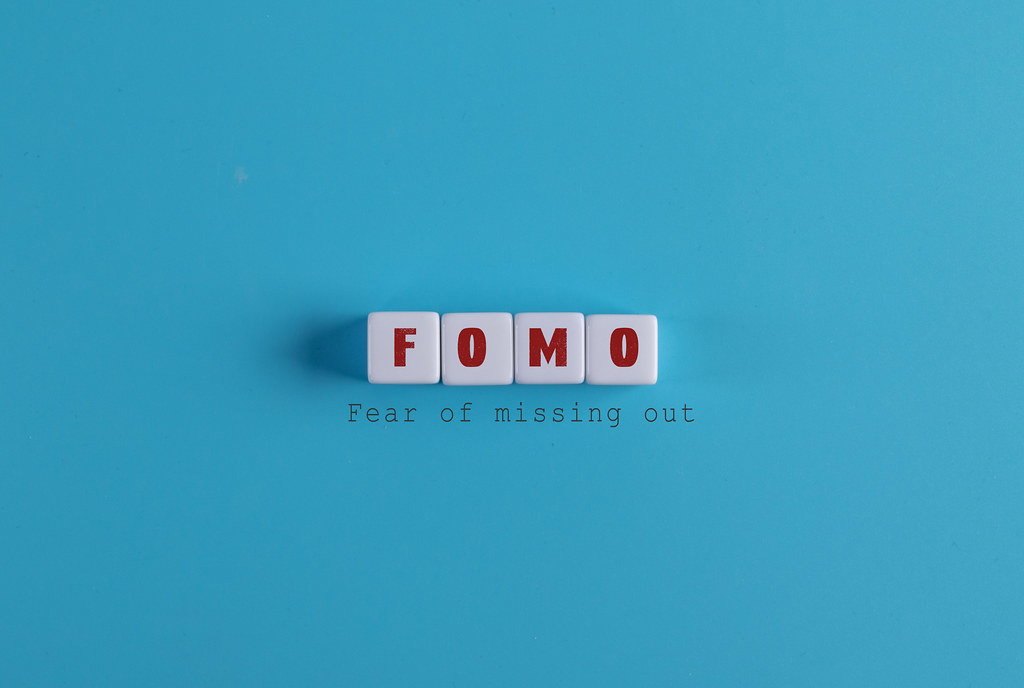
How To Overcome Fear Of Missing Out
People are constantly bombarded with alerts, that make them feel like they're missing out on the things, that they should be doing. Believe it or not, this can cause stress and other mental health issues, but it doesn't have to.
Sometimes, you may feel that society puts upon you an exaggerated responsibility of not only being informed on trending subjects, but to also be up-to-date on the latest happenings. If this is your experience, I feel your pain. In today's frenzied world of digital overload, it's easy to let fear creep in.
It's a common fear, that many individuals are faced with on a constant basis. It can lead to limited choices in life, that can be puzzling and confusing to experience, especially when it comes to choosing a career.
The Causes Of Fear Of Missing Out
There are many causes of this fear. Some people suffer from a deep-seated insecurity of not being able to perform in the current social landscape. Others are constantly bombarded by new and different stimuli, that they fear they will not be able to process if they don't keep up.
There are those who are concerned, that their life will suffer if they miss out on something important. There are even those, who feel it will impact their future if they don't keep up with the latest news. Whatever the cause, this fear of missing out has the potential to severely limit a person's decision-making process.
People deal with this fear in many different ways. It can be very debilitating and it can even lead to anxiety and other types of mental health issues. However, there are other options available and many people manage to lead quite a fulfilling lives despite the constant stress of being informed on all things relevant to the culture. It just depends on how you go about dealing with it. There are different ways to relieve this stress and it really just depends on what works for you.
Why FOMO Causes A Lot Of Trouble
You may be wondering why this fear of missing out has such a strong hold over people. Well, this has a lot to do with the psychology of human behavior. Ever notice how much our media and advertising manipulates our sense of self-importance? It's a subtle form of advertising, but it's all about the subconscious messages we receive.
For example, you're likely to overestimate your own abilities and underestimate everyone else's. This is a very common occurrence. You're also more likely to be persuaded to buy a product, if you see someone recommended for that product, rather than if it was simply given to them at no cost.
The subconscious part of your brain is constantly bombarded with messages every single day. Some of them are useful, and some of them are not. With so much noise, it's very hard to hear what's useful and what's not.
You're not alone in this predicament. Most people have probably experienced this at one time or another. Some of us learn to shut out the noise, while others of us don't. If you're not careful, it can even manifest physically. It's a common occurrence for people suffering from anxiety or depression to be plagued by headaches, stomach aches, or even painful insomnia.
Mental health is a very sensitive issue and many people will go to great lengths to maintain the status quo of not wanting to rock the boat. Others still are just going through the motions of doing things, that they don't really believe in.
Because of this, many people's moral compasses are compromised. Being self-centered is not only natural, it's also necessary. The opinions of others don't matter to you as much as they should. Sometimes, it's not even the opinions of others, that you disregard, but rather the opinions of others' opinions of you. This is a very dangerous mindset to have.
Why Overcoming FOMO Is Important
The most important reason why overcoming FOMO is important is simple: in a world of infinite options, it's impossible to know everything. It's impossible to be the absolute best at everything. It's also impossible to be the absolute worst at anything.
There will always be a winner and a loser in any given situation and you want to be a winner. Overcoming FOMO is about developing the courage and confidence to stand out from the crowd. It's not about being the best at everything. It's about finding your passion and honing your craft. It's about getting out of the ordinary and into the extraordinary.
FOMO can easily be overcome. I'm not going to pretend, that it's a battle that can't be won. I'm not going to pretend that it's not something, that can be escaped. It can. However, overcoming FOMO is a process and not an event. It's a journey and not a destination. Along the way, you make mistakes and fall flat on your face. That's just part of the process. The process is what brings you from a state of being ordinary to being extraordinary.
Self-Awareness Can Help You Overcome FOMO
This is a big one. Many people tend to think, that being self-aware is the same thing as being selfish. Nothing could be further from the truth. The more self-aware you are, the less of a victim you will become to outside stimuli. You won't be easily influenced by the constant barrage of noise. You'll be able to pick out the tune of your life from the cacophony of others.
The first step towards that goal is understanding your own feelings and thoughts. You can't do that if you don't understand why you're feeling a certain way. You need to be able to recognize your own emotions and those of others around you. You also need to be willing to acknowledge your own biases. You're going to have them, because we're all human. What you need to do is become more aware of them and don't let them control you. You can't do any of those things if you don't know what they are. If you're too afraid to find out, you may never overcome FOMO.
Thank you for reading.
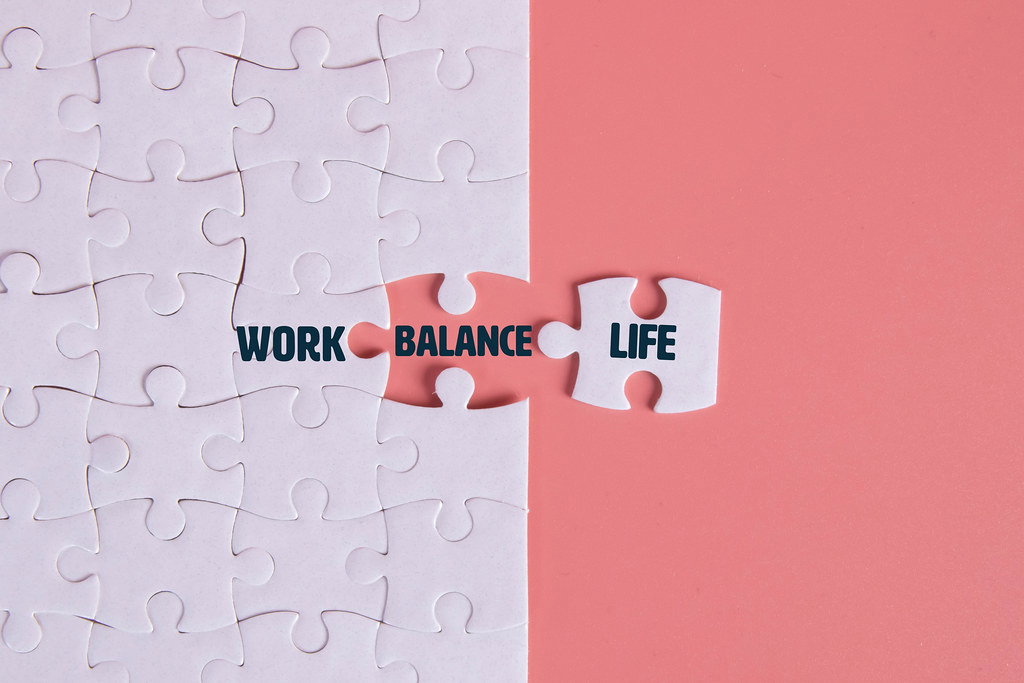
How To Achieve The Ideal Work-Life Balance
It's a taboo topic for most people. The fear is that, if the topic comes up, we've paddled into waters, that can often be uncomfortable. Many people do work, that is not in line with their interests. But how do you actually strike a good work-life balance, when you have interests, that don't always gel with your career?
If you work for a corporate employer, trying to balance work and life is not easy. Headaches, fatigue, tiredness and anxiety are all signs, that you're not getting the ideal work life balance and the longer you work the harder it may become to reach that balance.
Work-life balance is a subjective term, so it's difficult to answer definitively. But I believe, that there are four key points, that are worth considering. Every individual has a unique work style, different stress levels and unique personal goals. Also prioritizing and managing time is crucial. That's why you have to make this a priority for yourself.
Master Your Work Style To Your Advantage
You obviously have a specific work style, that you're very good at. You also have a specific type of personality, that is also suited for your work. But this isn't something that you're born with, this is something you've learned, this is something you're able to control to a large degree.
Think about how you're able to complete a project in under-budget and under-schedule. This is probably a combination of your work-style and a certain amount of "grit". Your employer understands, that you have a certain amount of dedication, drive and they're willing to compensate you for it.
Think about all the time you're spending on projects, that don't result in income for the company. Your employer probably has some ideas about why this is. Maybe you're over-estimating your own abilities. Maybe you have other projects, that could be taking up your time and if you had a little more support from higher up you could be having the time of your life.
It's probably not any of those things. But it could be something you're overlooking. Even if it is, you have the power to change it. You need to spend more time on the things that interest you and pay more attention to the things that don't. You need to find a better way to deal with the "funks" as you call them. In the meantime, you need to make sure, that you're not sending the company into the red, or yourself into an early grave.
Managing Stress
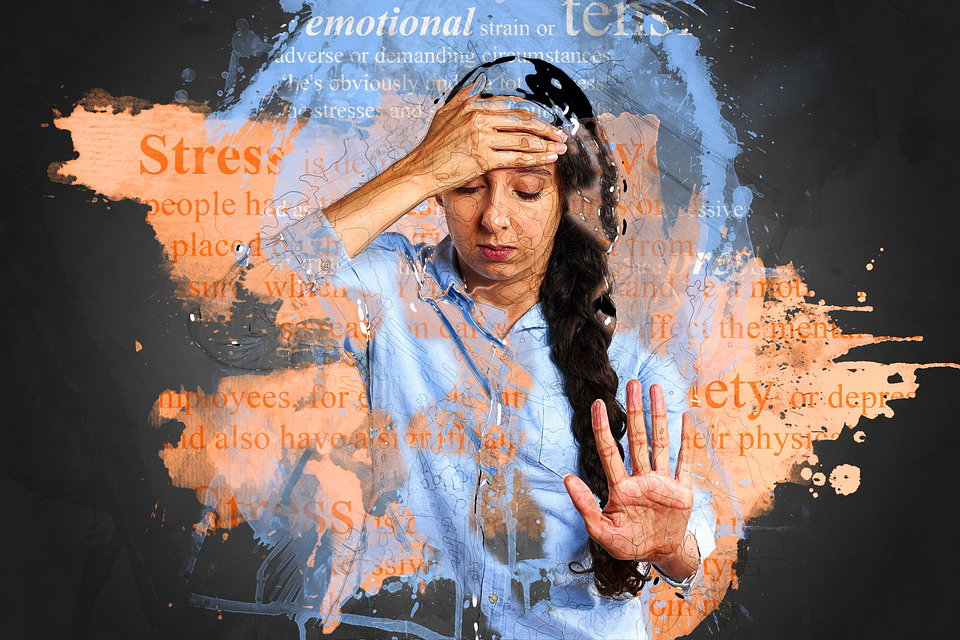
Managing stress is probably the single most important thing you can do to reach that work-life balance. Stress is the enemy of focus and attention. It steals energy and makes us susceptible to outside influences. It also makes us much less effective in work and in life. Stress has a way of sneaking up on you, so you have to keep watching it. You can't simply retreat to "work mode", when you get tired, or overwhelmed. No, you have to engage with the problem, and figure out how to manage it.
The first step in managing stress, is understanding what causes it. Is it a particular type of project, a deadline, perhaps it's the pressure to perform, maybe it's the pressure on your boss, or your boss's boss, and so on and so forth. Once you understand what the specific source of the stress is, you can start to come up with strategies to mitigate it. Some of these strategies are obvious, while others are not.
For instance, you could take on a smaller project, that will allow you to finish it on time, under budget and with a high degree of quality. Or you could try and find a way to delegate the pressure. This may be easier said than done, but it is an effective long term strategy. Eventually you will have to delegate the work to others, so you may as well get comfortable doing it.
Or you could confront the source of the stress. This is a risky strategy, as confrontations tend to make the source of the stress worse. It's best to confrontations only if you have a few other choices. Whatever you do, do it soon, because stress tends to have a way of building up, like water in a pot, until one day you're too exhausted to stop it, or until it overflows and then you're never able to catch up.
Completing Personal Goals
There are a lot of things that you want to do in your life, that you may never be able to accomplish. But this is no reason not to try. What do you want? What are your dreams? What excites you? In what ways can you make a difference? These are all interesting questions, and the answers can help you figure out what you need to do, in order to move towards your goals.
This is also a great way to stay engaged in life. As you work on your goals, this is one of the ways that you're able to keep moving towards them. It's also another way that you're able to relieve some of the stress, that I mentioned before. If you work on your goals, you're less likely to get caught up in the day to day and you're more likely to be in a position to face your own personal demons. In any case, you need to find a way to keep your dreams alive and this is definitely one way that you're able to do that.
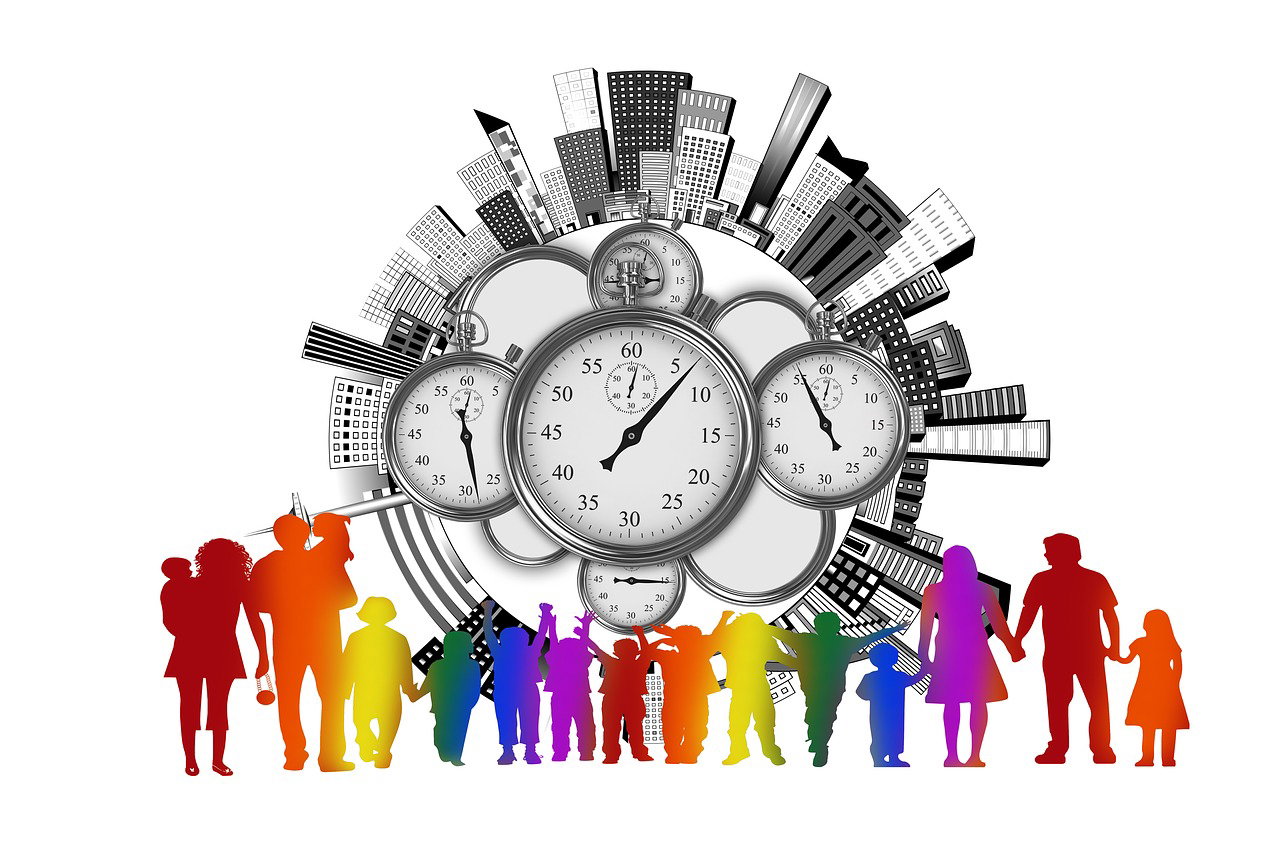
Prioritize And Manage Your Time
Prioritizing and managing your time is probably one of the most important things that you can do, in order to reach your work-life balance. Again, it's probably easier said than done, but you need to make a commitment to doing it. Think about how you've always seen people manage their time. Some people are morning people and get up at the crack of dawn and then get right on their merry way to work.
For other people, the morning hours are the most important and they allocate their time in a way, that seems to make the most out of every single minute. There are many different strategies, that people use, but what you need to decide, is what works for you.
Some people are able to focus only on the most important tasks and get everything else handled at the same time. Others find that they're constantly distracted by the need to do things on a day to day basis. They need to feel like they are getting something done, every day.
It's really a matter of personal preference. What works for one person, may not work for another. What works for the morning person, may not work as well for the person, that works better in the afternoon. You need to find a way to figure out what works best for you.
Thank you for reading.
Coffee As A Status Symbol: Why People Would Pay More For Coffee
Ever been to a coffee shop, where they charge more for the same coffee, because they have a different logo on their cups or walls? That's just one example of how logos shill products and like products logos have convinced consumers to pay more, logos have convinced brands to spend their marketing budgets on prestigious or exclusive logos. This can be a monetization tactic, or it could have a very high ROI.
Despite some of the most popular opinions on this topic, we're not just talking about brands like Starbucks and their iconic mermaid. Coffee is a sign of conspicuous consumption and a way to signal certain qualities in its buyers that they afford, both literally and metaphorically. Coffee always appears more expensive, but why? If a lower-priced coffee had the same branding on its label, could the demand for a more expensive coffee be still found?
High Demand For Coffee
As an industry, coffee has a fairly young history and yet, it has already become an international commodity, traded and transported in the same way as oil and grains. The reason for this, of course, is that people across the world need coffee and they need it now more than ever. With such high demand comes the opportunity for a coffee producer to increase its revenue.
While coffee is a luxury good, it is also a basic need and as such there is a market for it. The problem is that this market is highly competitive and cutthroat. There are more, than fifteen billion dollars currently spent annually on coffee, the world's most popular beverage after water.
While the United States and Europe rely heavily on imports, many countries across the globe, especially in the developing world, have become self-sufficient in coffee production. In fact, some countries like Costa Rica, Colombia, and Guatemala have even become major exporters. The reason for this is simple, they have plenty of land and the expertise to grow high-quality Arabica coffee.
But the same qualities, that make these countries good at growing coffee also make them good at competing for the same buyers and thus their own supply is often tied up in the long-term.
In order to meet the growing demand for coffee, many small-scale farmers have begun growing additional crops to supplement their incomes, as well as diversifying their production to less labor-intensive crops. However, this has had the unfortunate effect of making these smaller farms less stable, often more prone to failure. Coffee provides an important part of the livelihoods of many people around the world.
What Makes Coffee A Status Symbol?
It's easy to see why coffee is so popular, and why it is a status symbol. Coffee is a cultural icon and a daily part of the work routine for so many people. It brings a sense of energy and focus to those who partake in it. While these attributes may be desirable, they are also the very definition of superficial. The definition of a superficial product, or a sign. Coffee can be made and sold at any price, but it's still coffee.
So what makes coffee a sign? Well for one thing there is the matter of marketing. Brands are willing to pay large amounts of money for exclusive rights to images and names. The result is a marketplace where brands are willing to pay top dollar for signs that symbolize their value. Another thing that makes coffee a sign is how much it costs.
Coffee producers are also susceptible to this sort of thing due to the nature of their product. Even if they are willing to sell their product for cheaper, they still want to be able to put a price tag on it that makes it seem worthwhile.
Finally, coffee has a certain reputation. While most people have a general idea of what coffee is, not everyone has a clear and distinct idea of what good coffee is. People tend to believe that coffee, like wine, is an elitist product that is only for the rich. The reason for this is simple, people rarely make the effort to seek out higher quality coffee.
Why People Value Coffee
The reasons people value coffee are the same reasons they value anything else; necessity, desire, and cost. For anything to have value, someone has to be willing to pay for it. As a basic commodity, it's only valuable in terms of what you can do to make someone else's life better. That being said, many people are willing to underwrite the value of coffee. There are two basic categories of coffee consumer.
There are the habitual coffee drinkers, most of whom buy coffee on a daily basis. These people are used to the taste and so the coffee they buy is a reflection of their mood and their lifestyle. This may be a complete waste of money for them, considering they're not looking for a new or distinctive experience, but it can be a profitable investment for a coffee manufacturer who targets this market.
But there is another, larger group of people who don't usually buy coffee on a regular basis. These people are seeking a more refined and luxurious experience with their coffee. They know the taste of good coffee, but they are willing to pay much more for an enhanced experience.
This second group is more valuable. They will gladly pay for the privilege of being able to consistently experience high-quality coffee. The market for these people is very dynamic and variable. They will only be willing to pay for high-quality coffee if they can experience it on a regular basis. The market for coffee is highly competitive and there is a lot of waste. The industry could stand to make more profits by focusing on the needs of these consumers.
So what do you think? Which group of people do you think will pay the most for coffee? Discuss.
Thank you for reading.

Helping Others: Know When, How And Who To Help
Do you always help the people in need without expecting anything in return? It's not always a piece of cake and you might get bitten, but well worth it as you see some smiles on their face. Creating connection with a smile is a great feeling. In a world, where there are a multitude of people no one likes to be the "taker" it is a moral dilemma. But in instances, where taking is needed or the person in need is unable to help themselves, it is prudent to find creative ways to help those people.
We don't realize how bad the world is. Every day we read stories about people on the streets, out of work, struggling to make ends meet. On a global level, the world has been on the brink of negative changes and it has become more and more pronounced. What's more, some of the people in need are our own allies and friends.
The Relationship Between Suffering And Morality
Morality and ethics are all relative. It's contextual. It's a matter of degree. There are degrees of bad and there are degrees of good. It's a matter of intent. When you see someone in need, you have two choices. You can either walk by them and act like you see and are not bothered by their presence, or you can interact with them in some way.
As the world becomes more globalized, the need for charitable aid becomes more prominent. As such, there is a greater demand for people who are willing to give or do things without expecting something in return. This is a noble cause and most people choose to contribute to it, no questions asked.
But there are people who have different ideas. They're proponents of a cause, that is rooted in the notion that the world owes them something for the good they've done. They're willing to put in the work to ensure the world is just for them. They're willing to use whatever power they have for their own ends.
As such, there are those, who believe that good intentions and acts of charity should be rewarded. There are those, who believe the ends justify the means. They don't see any gray in their black and white thinking. They believe it is their right to have certain things just because they exist or because they've earned them.
It is for this reason, that these people are often at odds with those who give unselfishly, because they don't see why their actions should be praised when those who take without asking are criticized or condemned.
This is not to say that there aren't any heroes. There are many who do the right thing without expecting anything in return. There are those who give of themselves freely and ungrudgingly. There are the selfless, who feel no need to prove anything to anyone. These people are rarer in number, but their actions are certainly praiseworthy.
The problem is that their deeds are often times overshadowed by those who choose to do the above mentioned acts of charity for fame or glory. Those who do so usually have ulterior motives. They seek to be seen in a good light and above all else, they want to be rewarded. The world has always had heroes and villains.
Inequality
At the heart of the problem lies the notion, that there are those who are considered to be more worthy than others. The rich have always had the poor vouch for them. The educated have always had the ignorant believe, that they understand things that the ignorant don't. The strong have always had the weak proclaim, that they fear them. This is the way it has always been and there's no reason to believe that it will change.
The way things are is not the way they should be. This was made clear thousands of years ago by philosophers and ethicists. This was made clear by religious texts. This was made clear by the speeches of political leaders. And this is made clear by the daily lives of billions of people. There is a better way and it is the only way. It is the only way because it is the right way.
As human beings, we have the capacity to be better, than what the world has allowed us to be. We have the capacity for genuine change. When it comes to helping others, what makes a person worthy of help? Is it the strength to endure? Is it the ability to see visions? Is it the knowledge of things not meant to be known? Is it the possession of some great power? Is it the potential to do great good? Is it any of the above? No. It is none of the above.
It is what a person has done, that makes them worthy of help. It is the measure of a person that determines the nature of their character. The question therefore becomes, what kind of person do you want to be? What kind of person do you want to have helped you? What kind of person will you allow the world to treat you like? If you want to be good, then you must start by becoming good. If you want to be better, then you must begin by being better than you are.
Ethics Of Helping
Our relationship with others can be a delicate one. We don't know how people will react when we help them. It could go a number of different ways. They could be pleased with our actions. They could be angry with us for making them do such an unethical thing. They could look down on us for thinking that we are better than they are. Or they could try to take advantage of us. All of these things could happen and there is nothing we could do to stop them.
The same thing could happen when we help someone who doesn't really want our help in the first place. What if we tried to do something good and they take advantage of us anyway? This is why we must be very careful in how we proceed. To do something without a full understanding of the situation is the definition of gullibility. To think that someone who has done the unexpected is the definition of credulity.
To assume that because someone is good in one situation that they will be good in another is the worst kind of naivety. We must help people when we can. But we must do it with a clear understanding of the situation. And if we think someone will be good, then we must ensure that our expectations are not too high. We must not get involved with people who cannot maintain a healthy relationship with anyone. If someone wants to be selfish and hurtful, then it's better not to get involved with them.
Thank you for reading.
The Negative Prejudice Is A Hostile Attitude
The negative prejudice is the attitude that discourages us from moving forward. Wherever we are, whatever we are doing, whoever we are meeting and whatever the task we are trying to accomplish, the negative prejudice is there to hold us back. It's almost like a third person in our lives, only it's always whispering awful things in our ears.
When it comes to how people feel about different places, things, other nationalities or certain groups, they're not always so deferential. Bias is present in many of the things we say and do. The negative prejudice is a hostile attitude which manifests itself in various forms. But how can we counteract it in today's rapidly changing world? What defines prejudice, and then, what would be the best response to negative prejudice?
There are a few answers that come to mind, but we do not want to simply react to the prejudice. If we do, then it is a form of acknowledging the existence of the prejudice. A better answer would be to see the prejudice for what it is and to attempt to overcome it.
So, What Defines Prejudice?
Prejudice is an attitude toward a group of people based on a stereotype of them. A stereotype is a generalization about a group of people, that emphasizes their differences from other groups. It's been used for hundreds, if not thousands, of years in order to simplify thinking about a complex subject. Stereotypes are pervasive in our culture, they're part of the reason we're in the position we're in now.
When we stereotype people, we make judgments about them without taking into account individual differences. It's a short-cut, that we take in order to make sense of a complicated world, but of course, it doesn't work.
There are two major problems with stereotypes. The first is that they're generalizations and as such they ignore significant differences among individuals within the group they describe. That's the reason why they are often wrong.
The second problem with stereotypes is the attitude of those who have them. If you've noticed, most of the people who have a negative attitude toward a group of people tend to fall into that group. It's not hard to see why. If you're told constantly that you have no value, that you're worthless and that you're not even human, then you're going to begin to believe it. It's a vicious circle. Prejudice begets more prejudice.
Stereotyping And Generalization
It's not hard to see how this cycle can get us nowhere. The first step in breaking the cycle of prejudice is to recognize the problem. Here, we need to be clear about something. To stereotype someone is to make a generalization about them based on some quality or characteristic, that you've observed. For example, if you observe that someone has a certain nationality, you're making a generalization about them based on their race. That's a stereotype.
To stereotype is to make a generalization, but not about a certain race or a national origin, but about a certain way of living or believing. It's not something that you can necessarily observe, but you can observe somebody's actions, and in that, you can make a generalization about them.
You can't observe a person's mental state. If somebody expresses a certain view or opinion, that doesn't mean that they actually believe it. If somebody is rude to you, that doesn't mean that they have a certain disposition. Stereotyping is making a generalization about a person, not their character. It's possible to have a character without having a certain belief, and it's possible to have a certain belief without having a certain action.
Get Out Of The Rut
The key in overcoming our own stubbornness and prejudice, is to recognize that, yes, there is a better way. It's harder and it takes more effort, but if we shift our thinking away from the short-cut, we can actually look at the world with a more objective eye. To do that, we need to step outside of ourselves and look at the world not through the lens of our prejudices and preconceptions, but with all of its wondrous complexity, ambiguity and beauty.
The starting place is realizing, that we are not the only ones in the world. We are just one small voice in an enormous chorus. Everybody has their own unique set of circumstances, a story to tell and a viewpoint. We all have something to contribute, even if it is in a small way. Nobody is going to listen to our easy judgments, but they may very well consider our observations.
The second step is to realize, that nobody is free of prejudice. It's in our DNA. When we're born, we're born with a certain set of ideas, presuppositions and assumptions. These things are not easily shaken. Then, we're surrounded by the influences of our parents and peers. The media we're exposed to sends a very strong message and it does so incessantly.
All of these things conspire to make us into what we are. Some people are naturally more agreeable, than others. Some people are born with a certain set of talents and have to learn how to be modest about them. Some people are naturally more conscientious, than others and they don't even know it. The only thing anybody can do, is choose their own perspective. Nobody else can choose for them.
Let Go The Negative Prejudice And Maintain Open Minds
We have to stop accepting the false, negative and judgmental stereotypes. We have to stop taking things for granted. We are not better than anybody else, we are not smarter than everybody else and we are not more moral, than everybody else.
All of those things are used, abused and misapplied, but those are concepts that we should try to get away from. There is an inherent difference between a character trait and a disposition. It's a difference, that everybody wants to ignore, but it's a difference none the less.
This is not to say that we should be naïve, willfully blind, or that we should not hold a critical eye, when it comes to judging others. We should. It just means, that we shouldn't use those judgments to condemn anybody prematurely. We should take everybody and every situation for what it is. We should treat everybody with respect. When it comes to other human beings, everybody deserves that much.
Thank you for reading.
What Neuroscience Has To Teach Us About Learning
The brain is a complex place, but it may finally provide some information about how to optimally learn. Neuroscience knowledge can open doors for better teaching techniques, innovative learning content and personalized learning. Neuroscience research can also help guide educators on how to motivate students and reduce the achievement gap.
Successful learning is largely taking place in a different part of the brain, than you thought. According to new research, changing the way you think about learning has the power to shift your brains into learning mode when the time is right.
As humans, we learn in a variety of ways. However, brain research tells us that the specific changes, that happen to our brains when we learn the way we learn by trial and error are quite different from those, that happen during more traditional learning methods, such as reading a process that takes place largely in the conscious, extra-brain cortex.
Neuroscience And The Brain
Our brains are organically complex entities, that are constantly changing. In the past, scientists believed that the brain was a fixed organ, that did not change with experience, but that was wrong. The brain can change in three ways:
**Structurally:** This occurs, when brain cells are removed through disease or natural death and their functions can be filled in by other cells.
**Functionally:** This occurs, when neural connections in the brain are rerouted to connect different areas of the brain, that allow us to learn things, that we didn't know we were capable of learning, such as how our own minds work.
**Physiologically:** This occurs, when the body and brain are exposed to certain stimuli. For example, a phobic person's natural defense may be to run from fearful situations, but this may be ineffective, if the person is continually presented with the very object of that fear.
It is these structural, functional, and physiological changes that occur within the brain that underlie how we learn and remember things. The new and emerging field of cognitive science seeks to understand how we make sense of the world around us, how we think and how these abilities are manifested neurologically. It is important to note, that the three aspects of the brain, that contribute to learning are the conscious mind, the subconscious mind and the brain itself.
The conscious mind is the part of the brain, that is always available to us, the supervisory control center, that modifies and guides our body's behavior.
The subconscious mind is the part of the brain, that is always there, the center of our personality.
Finally, the brain is the physical part of the brain, that deals with all our sensory and motor information. The brain does not simply record what we experience, it actively interprets that experience and makes sense of it. Our perceptual systems, for example, learn by comparing expected and actual sensory input, and our cognitive systems create predictions about future observations and outcomes based upon our current understanding of the world. The brain is the organ of experience, it deals with the past, it interprets the present and it projects into the future. Therefore, it deals with learning.
The brain accomplishes this feat by using three processes to process information: perception, attention, and memory.
Perception refers to the process by which sensory information is gathered from the environment and interpreted by the brain.
Attention consists of a neurochemical mechanism, that is used to focus the brain on selected stimuli, ignoring other information that is not as important.
Memory is the reconstruction in the brain of information gleaned through perception and attention.
Neuroscience's Role In Education
The role of neuroscience in education is to describe the brain, to explain how the brain learns, remembers and thinks and how all of these complex processes interact with one another. In doing so, researchers can develop new and improved instructional practices, that take advantage of the specific ways, that the brain works.
Researchers can also examine the ways in which the brain differs for individuals, such as in intelligence or learning disabilities. By understanding these differences, educators can create more effective learning environments for all.
Finally, researchers can try and determine the most effective ways of teaching content, so that students are not exposed to too much information and are not bored, nor are they so underserved, that they remain unaware of the curriculum.
Teaching techniques, that take advantage of the ways in which the brain learns, remembers and thinks, are the most effective. With this knowledge, educators can create and recreate the best possible learning environment for their students.
Neuroscience And The Future Of Learning
The future of learning science lies in the study of the brain and how it learns. Neuroscience can help us understand the brain by providing us with a common framework for the study and understanding of brain function.
It can also help us distinguish the differences between normal and abnormal behavior and experience. Finally, neuroscience can help us identify the best ways to encourage or cultivate certain behaviors and reactions in order to facilitate learning.
The value of neuroscience is that it examines the complex human experience in a systematic way, rather than looking at the brain in isolation. It considers the person, rather than the organ. In doing so, it helps us see ourselves and the world around us in a more holistic way.
It helps us to understand how our own brains work, and how they are interconnected with other brains and with our bodies. It helps us make sense of the data inundating us from all sources, through any means of communication and at any time and place. It helps us understand the future, in terms that are not merely speculative.
The value of utilizing neuroscience in the classroom is significant. It gives educators a common vocabulary for the types of questions they ask their students and how they might go about answering them.
It provides a way to communicate complex ideas to students in a way, that they will remember and retain. Finally, it helps educators identify and address students' misconceptions, thereby enhancing the quality of their future learning.
Thank you for reading.
Why Internal Resistance Prevents Us From A Positive Change
Being natural and unplanned is very much worth it, because often we need to fight the good fight, but there are times when change must be forced. Every change needs internal support, especially when it is something that is seen as a positive change, like meeting our health goals, loosing weight, healthy and well balanced eating or lifestyle, or giving up a bad habit.
We all have an internal resistance to change - things that need to be done, goals that we want to achieve and so on. Despite knowing that change is inevitable and beneficial, we still find it hard to implement these changes in our professional and everyday lives.
We want to believe, that things will turn around for the better. But there is always this internal resistance, that keeps our progress from fully happening. So what is this internal resistance and why is this there within us to make our lives harder? In this article I want to find out the answers to these questions.
What Is Internal Resistance?
Internal Resistance is a part of us that is there to protect ourselves from change. It is the instinct to go back to the status quo. When we face a change we have to deal with, it is our body's reaction to say no, to go back and ignore the new information that we have been given, or simply go against what we believe. These reactions are very human and very understandable. In a world where change is constant and survival is not guaranteed, every reaction is understandable.
The problem arises, when this resistance gets out of hand. At that point we find ourselves unable to make the change and we remain at that state of being stuck. We become stagnant and unproductive. In the worst cases these people have given up on life entirely and choose to end their own lives. It is important to understand that this resistance is not personal, nor is it our fault. It is merely a part of human nature, that needs to be managed and understood.
Resistance Comes From Within
We all have the ability to resist a change. The question is whether we will exercise that ability, or whether we will allow it to control us.
When you look at it from this perspective, it makes sense that resistance would be a part of our nature and that it would be present at all times. After all, if we are not constantly resisting change, then we are allowing it to take over and control our lives. And we've all seen how that ends. The more we resist a change, the more we are limiting our own potential for success in that area. The less we resist, the more likely we are to succeed.
The trick is to find a balance. Just as we all need rest and sleep, we also need to take breaks from resisting and allow our minds to relax. This is where meditation and other relaxation techniques come into play. By learning how to reduce stress and increase inner awareness, we are able to reduce the resistance and increase our chances of success.
The Need For A Change
There are many reasons why someone may resist change; some more common than others.
Fear - This is probably the most common one. We don't understand something, so we make up our reasons why the change should not happen. "I can't give up hot coffee," we think, "It keeps me awake and on my toes." We decide that the new and unknown danger of the change is greater, than the known benefit of the current state of affairs. This is the most rational reaction, and yet it is still one, that needs to be overcome, if the person is going to make the change. Fear is a common part of human nature. It has been present since the dawn of time and it will be there long after we are gone. The trick is to find a way to reduce it to manageable levels.
Laziness or lack of motivation is also a very common reason for not changing. People may have all the right reasons, but still are not willing to follow through with any of them. They would rather live a life of comfort and ease, than to give up the perks and privilege that come with being an insider.
Another common reason is apathy. People may feel like they understand the benefits of the change and the risks that come with it, but they choose not to act when it is time to put themselves on the line. They sit on the fence and wait for someone else to make the effort to bring them over.
Finally there are many who feel like the change is what is hurting them and not the other way around. In some cases this is true. People may want to resist a change, but when that change benefits them directly, they no longer have a good argument. The reasons for resistance may be different for different people, but the results are always the same.
Challenges Of A Positive Change
There are, of course, many challenges that one has to face when attempting a positive change. Perhaps the biggest one is in the change itself. Most people would rather not change at all, than to have to give up the things they currently enjoy.
We cannot rely on logic with someone, who has a problem with logic. We cannot rely on debate, because they will never change their opinion. We cannot rely on threats, because threats do not motivate. Only emotions can do that. So how do we change someone's opinion who holds an opinion on the basis of emotion?
The answer to that question depends on how committed the person is to their opinion. If they are only lukewarm about it, you we use some strong emotions to sway them. Joy, pride, and shame are very effective. If they are truly dedicated to the opinion, however, we will have to use some more indirect methods. The best way to do that is to appeal to their fears. If we can get them to believe, that the change will be bad for them, they will be much more likely to comply.
Sometimes fear appeals work, because people are more rational, than they believe themselves to be. They believe the change will be bad for them, so they assume that it must be. What they do not realize is that the reason it is bad for them is that they are afraid. They will comply as long as they believe they are getting something in return.
There are two ways to use fear for a successful change. The first one is to use it directly against the person who has a problem with the change. "You won't get away with it." We might say that to a lukewarm supporter to get them on our side.
The other way is to use it against ourselves. Our own personal fears are what keep us from embracing the change. We might tell ourselves, that we are afraid that we will fail, that we are afraid that the whole thing will be a waste of time, or that we are afraid that we will look like a fool.
Once we have overcome our own fears, however, we are more likely to succeed. We have to recognize, that we are living a life that we do not like. We might think, that our lives are wonderful now, we can't imagine living any other way. In reality, however, we have never been happier. Everything that we have ever wanted has been within our grasps, and we have been denied that gratification because of the way that we think.
We have always enjoyed a certain lifestyle, and that lifestyle is one that we have come to think of as normal. It is not normal. A life of fulfillment and contentment is possible for us, if we change. Once we are aware of that fact, we are one step closer to being able to change.
Thank you for reading.
The Power Of Self-Discipline: Create Your Life's Dreams
Maybe you think power is the key to success - that you have to have a lot of it. But if it actually takes one thing to create your reality, it's self-discipline. By consistently pushing yourself to do what you don't think you can, you can eventually become someone who has the power to do anything they want in life.
Have you ever thought about what your life would look like if you had the power to impact everything you desired? What if you threw out fear and took control of your life? What would life be like?
In order to create your life's dreams, you need to create specific goals for yourself and set aggressive self-discipline plans. If you don't have long-term goals, you'll find it difficult to actually achieve anything and be happy.
Meaning And Purpose Of Self-Discipline
Self-discipline is the ability to do something over and over again, without getting a reward. Think of a person who is in great shape physically. They may be strong, they may be in good shape and they may have lots of physical prowess, but if they lack the discipline to work out on a regular basis, they'll never improve their physical condition.
On the other hand, someone who practices medicine, law, or any other profession where they have to be "reined in" by a boss will never be known as "the best" in that profession. Your goal should be to take yourself to the next level. Whether that be greater mental or physical accomplishment, or both, it's up to you to decide. The biggest mistake people make, who want to improve their lives is accepting anything less, than total commitment to the process.
The process of creating your future is a journey. You'll make mistakes, you'll fall off the wagon and you'll do things that you'll regret. But with consistent effort, you'll eventually get back up and keep on keeping on. You don't necessarily have to follow all the rules, but a lack of self-discipline can be just as detrimental as having too much. Make sure you're not doing something, that is going to sabotage your own chances of success.
How To Effectively Discipline Yourself
You have two components to your plan. The first is to create a vision board. A vision board is essentially a big piece of paper with pictures of everything you'd like to be, you'd like to do, or have in your life. Get this out of your head; this is not a "positive thinking" exercise. This is about taking control of your life. If you let yourself become a slave to your "day-to-day," then life will most certainly pass you by.
The vision board will not only give you things to shoot for, but it will also give you a sense of purpose and meaning to your life. It will make you feel as if what you're doing in your life is actually important.
Next you'll want to make a list of everything you want to accomplish in the next six months. This is your "time frame" for success. Having too long of a time frame can also be detrimental; don't wait too long to start a business, or any other endeavor for that matter. You don't want to find yourself in the middle of it all, wondering what happened to all the time you had to accomplish your dreams.
With your list in hand, you will need to create a master plan. This is where your vision board will really come in handy. Using your list, it will be much easier to see which of your dreams can be fulfilled by what you have available to you. You should also be able to see which ones you can outsource, or at least do in partnership with someone else.
Finally, you'll need to create an action plan. You'll need to take every step you can to achieve your goals.
Creating What You Want
While some people are incredibly gifted in this area, most of us have to work at it a bit. Just like any skill, the more you put into it, the better you'll become. It may take you months to build up the discipline needed to reach your goal, but the payoff will be all worth it.
You can write your goals down, draw them, or you can even turn them into pictures if you'd like. Whatever you decide to do, just make sure they're something, that you can hold on to. Things may change, but your vision board is something, that should remain the same.
When you visualize what you want, you're more likely to make it happen. This is one of the reasons why people who are "highly motivated" are more successful, than those who aren't. Those who are "highly motivated" don't allow themselves to get distracted by the ordinary measures of success. Most don't even define success as money, position, or even happiness. Instead, they define it by what they want.
If you aren't sure of what you want, or if you are but you are unsure how to go about getting it, then you aren't ready to be successful. You may be young, but you're not stupid. If you're thinking that you're going to come up with a "perfect plan" to get what you want, then you're bound to fail. Only by being "unpredictable" can you actually achieve something.
Developing Accountability
Once you've set your goals and made a plan, you need to find someone who is going to be "accountable" for your success. The most important thing about this is that they share your vision of what you want in life. When someone is not on your side, or if you feel that they aren't, then you're likely to be disappointed. Remember, you're the one making the decisions. As cliché as it sounds, you're the one choosing your path in life.
Having an "accountable" person will help you stay on track as you work towards your goals. If you want, you can even have more than one. Having a partner can also be very beneficial. You'll still need to do the work, but having at least someone to share the burden with can make it easier.
Maintaining Your Motivation
You have to start working on a daily basis towards your goal. You can't let yourself become idle. The only way to accomplish anything is to just keep on "putting one foot in front of the other." If you do that, then you'll get where you're going just fine.
However, you also have to remember that life is life. You're not going to be able to wake up one day and be exactly where and how you want to be. There are going to be ups and downs. There are going to be good days and bad days. Sometimes you're going to get what you want, and other times you're not.
The only way to deal with this is to embrace it. If you can maintain your "motivation" to succeed, then you'll be able to handle the inevitable setbacks, that are going to come your way. It may not be easy, but you can get through it. You have to keep in mind, that there is a "reason" for everything that happens in life. Even the bad things that happen to us, they happen for a reason.
Thank you for reading.
5 Key Elements To Write Killer Movie Scenes
Every movie has a moment that's destined to become a classic, a sequence that sparks conversation and makes audiences draw breath. But what makes movies so captivating are the little moments in between the big scenes, moments that feel so normal, so real. Moments that are lost as easily as they're created. Every film has a moment in which the audience tense, in fear and expectation, to see what's going to happen next.
The question is: what does it take for one movie scene to truly stand out? That's a hard one to answer. Audiences can only draw such aesthetic beauty from something as specific as a film, but in my experience, the one thing that consistently stands out is a well-written character moment.
The most powerful sentences or paragraphs in movies, usually have a subtle emotional hook, that hook audiences in and make them feel something. But just because they are emotional doesn't mean they are devoid of logic, the contrary is the case. These few sentences work, because they are grounded in a sense of plausibility and reality.
Let's take a look at some key points, that will make a movie scene so enjoyable.
Setting The Scene
It just so happens that the best scenes in movies usually don't have much going on outside of them. There is something about the intimacy of the movie frame, that draws us into the story being told. It's almost as if the characters in the story have their own little world, that we can just look into. This allows the director and writers to build the scene in a way, that makes it feel more realistic and relatable.
It's no wonder then, that the best moments in movies are the ones that take place in one location. The simplicity of a one-room schoolhouse, or a small diner, for example, allows for many more character moments to occur. The interior of these locations become the characters. The windows to the outside world become the windows of the audience watching the movie.
Visual Imagination
This is probably the most important part of writing a great scene. The goal is to make your viewer feel as if they are a part of what's happening on-screen. Try to imagine yourself as the character, or rather, assume the role of the character. This allows for a more active involvement with the scene. When the viewer is put in the role of the character, the scene becomes more than just a scene; it becomes a piece of performance art, a play that the director and screenwriter have created in front of your eyes.
It's a lot like dreaming, in that you are passive in the experience and can't control the actions of the character. You become so involved with the character's mindset and emotional state, that you feel as if you're actually there, experiencing the events of the scene as the character would. This is how the most powerful scenes in movies are written. You get to travel to an alternate universe, where you are a part of the story before your eyes.
Cinematic Touches
There are certain movie techniques, that can be used to heighten the experience of the scene. The sounds of the character's footsteps and the ambient noise in the scene are two of the most important. These touches help to place the viewer in the experience and make the scene feel more real.
Another important element is camera angle and shot selection. In certain scenes, it's best to use an over the shoulder shot to look at the face of the characters. This allows for greater identification of the actors and therefore the scene. In a similar manner, editing the shots together can create a more fluid and seamless scene.
Finally, we must not forget about the score. The music that is played in the background can have a dramatic effect on the scene. Some scenes, like those that have a more somber or serious tone, benefit from a score that emphasizes the atmosphere and mood of the scene. Other times, a scene may require a more exciting or triumphant musical accompaniment.
Character Interactions
Character interactions are at the heart of a good story. They are the backbone of the narrative that holds everything together. Without them, everything is just too easy, too convenient and too dull. But, like all aspects of writing, they are not always straightforward. There are many ways to create the illusion of depth with simple and mundane actions. The trick lies in knowing when to stop.
There are two common forms of these scenes. The ones in which the characters do nothing more than talk and the action scenes in which the characters actually do something. There is a fine line between these two. Too much talking and it starts to border on the action scene. Too much action and it borders on the talking scene. It's only by knowing the context and cues in a given work, that one can identify whether it's an active scene or a simple talk scene.
**Talking Scenes**
These are probably the most commonly used scenes in storytelling. They are also the simplest. Usually, all it takes is some dialogue and some location, for a scene to come to life. Since it's a talking scene, the visual elements are secondary. There is a lot of space for creative freedom, as long as you create a sense of realism.
The trick starts by finding the right characters. You want a protagonist, obviously, and an antagonist. Typically, these characters are at the center of attention, or the focus of the scene. But, depending on how the scene is used within the story, they can either be more or less engaged with the action.
With these two characters, you need to find the right tone. Is it a dark and mysterious? A whimsical? A tragic? It all depends on the type of story you are trying to create. Once you've got those two down, the actual writing of the scene is pretty straight-forward.
**Action Scenes**
These scenes are the most difficult to write. They require a lot of forethought, as you need to know what you want the camera to show, what music to play and what touches to use. This also requires a lot of research. You not only need to know the physical actions of your characters, but also their emotional responses to these actions.
This is a lot harder than it seems. You not only have to consider the actions of the character, but also the reactions of other characters to these actions. The trick here lies in not only writing the actions, that you think should be taken, but also considering those that are not.
How would the character act if they were in a different situation? What would become of them? What would make this character act a certain way? As you can imagine, there are an infinite number of possibilities that can be considered before writing a single word. You might be asking yourself a lot of questions at this point. That's perfectly fine.
Endless Possibilities
The thing about writing is that you have a great deal of control over the final product. You can change almost anything about it, from the title to the amount of pages it's on. The reason this process can be so overwhelming is that there are so many different things that can be done, so many different choices that can be made. The good news is that there is almost always a right choice. There are very few absolute wrongs, only relative wrongs. It's a matter of finding the right one.
This is why it can be so overwhelming. As an author, you're always weighing the choices that you're given, trying to find the one that is best. But, that's the fun part, right? The process of writing can be very liberating, as you are freed from the tyranny of linear structure. There is no need to worry about the order of things, because things will unfold in a logical manner when they do. You are able to concentrate on the characters and their journeys and less distracted by the mechanical necessities of a story.
You are able to experiment a little more, to try things that you wouldn't normally do, because you aren't concerned with the legacy you are leaving behind. The only real challenge left, then, is to decide what to do first.
Thank you for reading.
Expressing Identity Through Clothing - A Living Interface Of Communication
The way that we dress reflects who we are. The interface of what we show the world is something we can choose and modify based on our mood or the context of the day. Over 60% of Americans are wearing clothes as self-expression. Labels are more than just a store name, they're akin to a badge of identity. But what if we want to express something entirely different? This is why it's important to find the right outfit that meets the occasion.
It's no secret, that through the use of clothing, we communicate how we see ourselves, who we choose to associate with and what our values are. As we're looking for ways to express our identities, we seem to find ourselves wearing what we're trying to personify. In this article, I will explore how clothing has evolved from a tool to express our identities, to accompanying the body, to influencing others.
The Evolution Of Clothing
Clothing is how we show the world who we are. It's how we declare our status. It's a conversation, that we're having with each other, even when nobody else is looking. So why don't we do it better? Why do we feel compelled to walk around in our birthday suits, when so many people are going about half-dressed? It's a silly question, because the answer is obvious. It's been this way for hundreds of years. If we don't wear what we feel comfortable in, then nobody else will think we're worth coming close to. This isn't just about being "comfortable". It's about being "in-style". Nobody wants to wear what's out of place. Nobody wants to be a square.
The word for the period during which clothing has adapted to the latest fashions is "Regiment". It was a time when people dressed for the occasions they planned to attend. A lord would wear a different coat for each function he would attend, just like the man he hired to run his hunting lodge. When nobody expected it, men were put into full-dress coats for royal audiences. During the regiments, people still wore somber colors, but they were the only ones who were allowed to wear those colors. The king and the queen wore the brightest reds and yellows, like common livestock.
But when people start to move away from clothing as an expression of self, you have "fashion". Those who don't conform have been forced to wear rags. But the fashion industry is now taking what was once unacceptable and making it into the new, normal. Clothes are no longer a way to define ourselves except through their absence. They've become another form of background noise, that helps us tune out the world around us.
The Meaning Of Clothing
We're so busy worrying whether or not we're making the right decisions about what to wear, that we forget the most important decision of all - who are we expressing our identities for? Ultimately, our clothing choices are a direct reflection of our values. But which are to be valued and which are to be eschewed? Why do you think fashion houses such as Chanel or Louis Vuitton are still around? Because they can show the world a refined and luxurious version of the human soul. Something beyond what the world has deemed acceptable. A desire to flaunt one's self is nothing new; it's human nature. And that quality has certainly shown up in our interpretation of what an appropriate social gathering is.
Fashion has always been about creating the illusion of wealth and status and the high-end manufacturers can help us do so without looking like we're exhibiting poor personal hygiene. Of course, it goes without saying that there is a fine line between tasteful and ridiculous. So much of what we wear could be seen as eccentric or simply out of style. However, these labels are not always a reliable indication, that what we're wearing is fine. Some of the biggest offenders in this area have been the "popular" designers, who charge outrageous sums of money for clothing, that is then worn ironically. But with the democratization of styles and media, it's easy to discern the bad taste in what we're wearing.
So how do we know what our style is? The answer seems so simple yet so complicated. Is the perfect look to be found by imitating what you've always worn or what you're seeing around you? There is no answer that satisfies everyone. If it's the former, then do you wear a button-down shirt or an ascot? If it's the latter, then is it the pleated Chanel pants or the raw denim of the Japanese silky? Ultimately, there is no "right answer" other than what you feel good in. While it's fun to try new things, there's nothing wrong with returning to the familiar.
Clothing And The Body: A Tool For Communication
When we think about the evolution of clothing, we tend to focus on the meaning that it has for the one wearing it. But the clothing in our wardrobes has different meaning for us. When we buy a suit, we're buying the sign of respectability. We're selling the image of a powerful, competent adult that can take on the world. But what about when we put it on? What are we selling when we remove our clothing? Do we still feel powerful and competent? Yes, probably for only a moment. The reality of dressing for success presents itself and is much stronger, than any of our illusions.
So what kind of impression do we give off? Do we broadcast our status as men? The women can read our status pretty easily. So it's just about managing our expectations amongst each other. Nobody expects us to come out on top in a wrestling match with a female lawman. We don't come to blows with our male counterparts over the rights to a women's body.
It's a much more peaceful existence. So we put on our best show and even if nobody is looking, we do it for posterity. We want our grandchildren to be entertained by our exploits. And if we can leave behind a legacy of stories to tell them, so much the better. You might have a much different response to the world than you expect, but it will be a response nonetheless.
Impact On Others
By controlling what we wear, we're controlling half of our communication. Nobody expects you to be yourself, if you're wearing ratty old clothes, nobody expects you to be respectable, if you're wearing overalls. You have only so many identities to give, and you're not going to pawn one of them off on anybody. This decision is your choice, but it has an impact on everyone else.
In a way, people are reacting to the clothes you wear, whether they know it or not. Their reaction is a direct result of you putting on the clothes. Now the interesting thing is that you don't have to care what anyone thinks of you. You're above such things. However, you do need to consider the consequences of your actions before you make yourself look ridiculous, or worse, dangerous.
The Future Directions
It would be foolish to fall into the same trap, that you escaped. This is not to say that you can't experiment with your style. Just don't get distracted by halfhearted attempts to rebel against societal norms. These experiments probably won't last too long.
Wear what you feel comfortable in, by itself is probably not a viable solution. But, you could take this small step toward becoming more accepted by wearing clothes, that a more mainstream culture would find acceptable. Then, maybe, you'll find a community to merge with. Maybe you can even gain a reputation for being a swinger/rebel without actually being one. That could work.
It is important, though, not to lose yourself in the process. The process is to become somebody else. So be sure you're comfortable with who you are before you try to become somebody new.
There are many different ways you could go. A mixture of colors and patterns would look good. A more minimalist approach to clothes would be to wear only certain types of shirts and suits. Maybe even mixing those with ties and other more casual clothes. The possibilities are really endless. There's only one important thing to remember: you have to be comfortable in who you are.
So do you dare to experiment?
Thank you for reading.
The Simulation Hypothesis: Do We Really Live In A Matrix?
Ever since the "The Simulation Hypothesis" first circulated around social media, the idea has taken hold, that we live in a computer-generated simulation. We live in a simulation system created by a civilization with much more advanced technology, than ours.
This is the question that has been asked by many people, but only a small percentage actually has a strong belief that it is true. On the other hand, a significant number of people believe it is false and the world is actually real and everything, that we see is real.
The Simulated Universe Hypothesis
The simulated Universe hypothesis is a hypothesis in philosophy, that proposes that the Universe we perceive through our senses is actually an elaborate computer simulation by which consciousness is generated. This is the antithesis to the idea, that the world is real and everything that we can sense with our five senses is also real.
The simulation hypothesis has been used in a number of different scientific contexts. It is frequently used in connection with cognitive science and artificial intelligence. It has also been used in philosophy as a way of understanding various paradoxes, particularly the liar paradox.
Some notable scientists, have used the simulation hypothesis as a way of explaining away certain anomalies in our understanding of quantum mechanics and has been criticized by many others in the scientific community. A significant part of the philosophy of science community also rejects the simulation hypothesis, however, philosophers of science generally tend to not want to commit to a position, since it is difficult to falsify a hypothesis, that one does not believe in to begin with.
Given that, there have been very few scientists, philosophers, or other thinkers who have taken a strong position on the simulation hypothesis. For many, the question of whether the world is real, or simply a simulation will forever be an open question.
In the following sections, we will explore the scientific and philosophical arguments for this idea and we will see if we can't at the very least agree, that it is at least not completely bad science, or philosophy.
So here's the question. Is the world a computer simulation, or is the world a physical reality?
**Theory**
The term theory is used somewhat imprecisely in science. When we speak of a scientific theory, we are referring to a structure that is richly structured, logically consistent, and that makes precise predictions.
The best scientists, at least the most successful, constantly build up complex theories and continuously modify and update them. They never stop asking new questions, or trying to find new ways of answering old ones. Thus the best theories are those that are always in the process of being crafted.
The reason why theoretical physicists are always constructing new theories is that the best ones always turn out to be the ones, that are consistent with all available evidence and that is just the way it is. There is always a tension between good theories and good predictions. Ultimately, it is the predictions that matter, not the theory itself.
After a time, however, good theories and their predictions tend to perjure. They are not subject to change, and in their complexity and in their predictive power they tend to become more complete. When we talk about the possibility of a simulation, however, it cannot possibly be meant as a theory. A theory must make some predictions, it must be falsifiable.
The goal is, obviously, to try to understand reality. That's what theoretical physicists do. That the reason they're so successful. Computers are very good at figuring out what things are and once we have a good theory, that can account for things, we'll be able to understand the simulation. Until then, it's just we don't know.
How Does The Simulated Hypothesis Affect Our Connection To The World?
Our modern technologies have afforded us an unprecedented degree of control of the physical world around us. This control is in direct proportion to how thoroughly we've studied the physical world. Control enables us to ask questions and control enables us to find the answers. With regards to the simulated Universe hypothesis, this means we have two different levels of control.
There is theoretical evidence, as well as experimental evidence, suggesting, that at a certain level of technology, a computer of sufficient size and complexity can behave and interact with the world in such a way that it is indistinguishable from reality. From this point on however, there will be a definite divide between what is a theoretical prediction and what is a computational manifestation in the physical world.
**Let us explore the theoretical side of the argument first.**
There is a theory, that the solar system began as a wormhole, which by chance happened to coincide with the location of high stellar density. This would suggest that the stars and planets, that we see now were formed essentially at the same time, but that the formation process of solids and life, stars and planets, went in reverse order compared to what is observed today.
The solar system formed inside this wormhole and the conditions of the very early Universe were such that natural selection allowed the wormhole to remain stable. Over time the wormhole would have blown apart naturally. The theory is that this allowed the natural laws that govern the Universe to establish themselves so that life could arise in our Universe, including life as we know it.
This is a fairly ridiculous theory, but that doesn't mean that it is necessarily wrong. There are no other observable wormholes in existence, there is no way to test this theory, it is merely interesting. Theorists and scientists have always been drawn to the bizarre, speculative and in this case, completely hypothetical.
**Now let's see the experimental side of the argument.**
The wormhole theory provides an interesting way to think about the very early stages of the Universe. On the experimental side, we know that physics has advanced sufficiently to allow for the simulation of a Universe on a computer. As such, there is experimental support for this idea.
However, there are two primary problems with the theory. One is known as the simulation problem, and the other is the observation problem.
The simulation problem stems from the fact, that as much as we can observe the real Universe, there are a large number of ways in which any given portion of the universe could theoretically be (and, in fact, are) simulated. As such, there simply isn't enough data to render a theory like the above one falsifiable. It cannot be proven wrong.
On the other hand, we have no way of independently verifying that the Universe we observe is real. Unless we are willing to sacrifice our entire lives to the cause of finding out, the theory cannot be proven right.
The primary way to address this problem is to build a better theory, that is able to make more predictions about the world. This could allow a test using known observations. There are many problems with the above wormhole theory, but perhaps a different idea could be ruled out or, alternatively, confirmed.
To make things more complicated, a better theoretical model of our Universe means, that we will likely need to abandon certain theories of particle physics, that are currently under development. We had better hope, that the development of a more complete theory of physics won't be jeopardized by such a transition.
Thank you for reading.
Music Alters Our Mood And Brings Up Memories
Our emotions are often linked with our surroundings, whether it be the music we listen to, our favorite TV show's theme song or just a line of melody. This emotionally driven mindset sometimes makes it difficult for us to remember that even if we hear the same melody, we might feel a different way about it.
Music is said to stimulate the production of mood-regulating chemicals, that our brain creates, such as dopamine which can heighten positive emotions and serotonin, reduces stress. But music also has negative effects such as an increase in sadness. We might also become absorbed in our music, and we cannot concentrate on anything else.
We might not be aware of how deeply music affects our mood. And yet, it has a profound impact: regularly listening to music can actually change the way our brain responds to stressful situations. Hearing the right music can help ease anxiety, start the healing process and even bring back memories of happier times.
The Science Behind Music And Mood
Music has always been a popular way to control mood and alter consciousness. Since ancient times, people have used songs and chants to put themselves in a positive or negative mindset. These techniques are often referred to as "mantras" and in many religions, such as Buddhism, "The chant of life." Music also has a way of distracting us from the pains of life and can even block out unpleasant memories.
In the last few decades, neuroscientists have attempted to explain why this is. They have concluded, that music affects the way our brains interpret and organize information by activating certain sections of the brain. This in turn causes the body to react a certain way. So in a way, music can create an experience for the body, that the mind then interprets and values as important.
Music is said to shape a person's worldview. It can either make us feel like we are part of something greater than ourselves, or it can make us feel isolated and alone. But no matter how it makes us feel, music has the power to move us. That's why it is important to find the right songs for ourselves.
Music And Memory
Music is said to have a direct impact on our abilities to learn and remember. In fact, it is a common theme in many of the greatest creative minds of all time. The relationship between music and memory has been well-researched by cognitive psychologists.
The results of their work indicate, that both the emotional and physical aspects of music can have a profound effect on the formation of long-term memories. While some of these effects are good, such as the creation of emotional states and a focus on the present, others are troubling such as an increase in general laziness or low-quality thinking. It seems, that the effects of music are more intertwined and difficult to tease apart, than the other major influence on our thought patterns: the brain itself.
Although most of this research is on the effects of classical music, the effects of other forms of music cannot be ruled out. There is also evidence that suggests, that the effects of music differ across individuals. It is possible that a person can have a heightened state of awareness or even "see" a particular memory due to the influence of music, but they might not be able to recognize, that same influence applied to a different situation.
The Psychology Of Music
Music has a way of entraining us into its rhythms. We begin moving to its beat, whether we intend to or not. This is called "musical rhythm", and the reason many people find it so difficult to stop dancing when the music stops. This can be a very positive or a very negative thing depending on the situation.
In a similar way, it is possible for a song to convey a sense of movement or even provide a "map" to follow, so to speak. This is called a "mood" and the songs themselves can either create a mood or be an indicator of one. These moods can then be carried over into other situations and influence our behavior. It is not necessarily a bad thing, but it is something to consider.
The structure and the mood of a song will not only determine what memories it encodes into our mind, but also what conclusions we come to once we have escaped the song's influence. For instance, if a song expresses a certain feeling of hopelessness, then once it has been processed and understood, we will be more likely to find ourselves in hopeless situations.
These conclusions can be considered a by-product of the information the song provides and are not necessarily determined by the song itself. This is where the distinction between "mood" and "theme" becomes important. A song can have any number of moods and still convey information. For instance, while a song expressing hopelessness might make us more likely to act in a hopeless manner, a song expressing joy might make us more likely to behave in an optimistic way.
It is also important to consider the "mood" of the person who is hearing the song. A sad song will convey a different message depending on whether it is being processed by a sad individual or a hopeful one.
These conclusions are useful to consider, but also to be aware of.
The Role Of Music In Our Daily Lives
Many of the conclusions, that we come to depend on are drawn from scientific studies, that focus on the role of music in our day-to-day lives. This means that music is a powerful tool for psychologists, sociologists and neurologists, among others.
The influence of music is felt in many ways by the people that surround us. Since we are social beings, our personalities are shaped by the interactions, that we have with others. These interactions are not merely emotional, but the entire exchange of information and feedback that occurs between two individuals.
Our brains are hardwired to record this information, and music happens to be the most efficient way to encode and transmit this data. This is why the role of music in our lives is so extensive. Many of our individual decisions are influenced by the songs, that we listen to. There is no way to separate our own personal taste in music from the broader social currents, that are shaping it.
One of the most important things that music does for us is provide a common frame of reference. Whether it be the music that we choose to process into our brains or the songs that make up our "internal soundtrack" of life, music provides a sort of "language" that we can all understand. We do not have to "relearn" the rules of grammar or the social mores of polite behavior, because those are encoded in the music. Without the framework of a common understanding, we would have nothing but our own, individual experiences to define who we are.
This is why it is so critical, that we choose our songs with care. We do not want to isolate ourselves from others, or even worse, fall into a state of despair. Music can be used for good or for evil. It is up to us to decide its proper purpose.
Thank you for reading.
Can The Laws Of Physics Be Defied?
Physics comes with its own set of laws called the Laws of Physics. But what if I told you, that in physics there are only rules of thumb and often the rules, that are made are made to be broken. This idea has been to the test and found a lot more flexibility, than it should have. From measuring the existence of life to the future of space travel, physics might surprise you.
An idea, that defies the laws of physics proves just how challenging it is for humans to understand nature. Gravity cannot be defied, but there are many things that can be done nonetheless. Just because something has never been achieved doesn't mean it's impossible. If you see something, that defies some laws of physics, you will probably think not that it is impossible, but how it is possible.
Let's explore a few of these possibilities, just as a fun little diversion. Some of these things might be useful and some might not. We'll see.
This article is made up of three sections. First we are going to discuss the nature of reality. Then we will move on to some potential ways to defy the laws of nature. Finally, we will look at ways to exploit the properties of reality to our advantage, but before we jump right into it, we are going to discuss the following phrase, that you heard so many times and probably questioned too. "Nothing is impossible".
It's important to distinguish between what we as humans can do and what the laws of nature say is impossible. The laws of nature, the way the world ought to be, if you will, are written in the language of mathematics. They are the rules by which everything is supposed to be governed. However, these are merely the rules, that the Universe has chosen to abide by. Nothing is "bound" to them. The Universe is full of uncertainty and there is nothing that is impossible.
It is the limitations, that we impose on ourselves, by the way we chose to organize society, that make something impossible. It is important to remember this, or things that are considered impossible can become inevitable, if they are deemed important enough.
Now let's get into it.
Nature Of Reality
In the beginning, there was only matter. There was no energy, no life and just pure existence. Over time, the rules of nature took over. Matter and energy were bound together in compounds and different rules took over as to how they move and how they are transformed. Life appeared, and everything became even more bound together.
As life began to take root, intelligence also began to take root. This led to self awareness and self awareness to purpose. The purpose of something is the reason it exists. This is what makes humans so unique. We can look at anything, recognize its purpose and use it to achieve our goals.
As we use the things around us, it changes the nature of those things. This results in a feedback loop. Using an item changes its nature and its nature changes how we use it. Everything is connected to everything else, in one way or another. This is why it is so hard to create a working theory of everything. The laws of nature are very powerful, but they are only guidelines.
Potential Ways To Defy The Laws Of Nature
The laws of nature are what prevent things from going out of control. They are like a prison, that binds everything together and prevents the chaos from overtaking the order. Many times in history, things have gotten so far out of hand, that the only way to get them back on track was to literally break the rules.
The most famous example of this was the big bang theory. It was once believed, that the Universe exploded in one instant with all of the matter and energy it could ever need. But the laws of nature take over after the big bang and prevent any more explosions from occurring. Instead of blowing itself up, the Universe keeps itself together. It is just going through a process of adjustment.
However, this is just one of many examples of rules being broken. The laws of nature are always changing and as a result, they are not written in stone. The Universe is a living thing and it has been known to bend the rules, when it needed to. It is just that we have never seen a Universe without a natural order and we have never seen a Universe, that is ordered in a way that we don't deem beneficial for life.
This is why it is so important for us to understand how the Universe works, so that we can predict what it will do if a certain event happens.
Taking Advantage Of The Properties Of Reality
The Universe is ever changing. That is one of it's properties. Nothing is ever truly static. It always seems like the world is in a state of flux, but this is an illusion. The world is actually eternally changeless, but our perception of change gives us this false impression.
Time is just one of the many examples of ways to take advantage of the properties of reality.
Time is a very real thing. However, it is also a mental construct. Our perception of time is simply based off of the events, that happen around us. The past, present and future are just words, that we use to classify and organize the information, that is available to us.
What this means for us is, that the future is not set in stone. Rather, it is a constantly shifting, moving target. However, you could say that the past is set in stone. It is simply a matter of perspective.
As humans, we tend to think that the future will be just like the past and that is the present. This is why it is so hard to plan beyond tomorrow. There is always the chance that tomorrow will be different than today, or even from yesterday.
The universe itself is not bound by time. It has existed for all eternity and will continue to exist after all of us are gone. But the Universe is not bound to be chaotic, or to move in a certain way. There is not a single law, that says it has to be this way. It's just the way it is.
However, there are ways to use time in your advantage. Knowing the future can give you a huge advantage. This is because you can take actions now, that will give you the results you want later. But this comes with a cost. You must act now, while it is still possible to do so.
Thank you for reading.
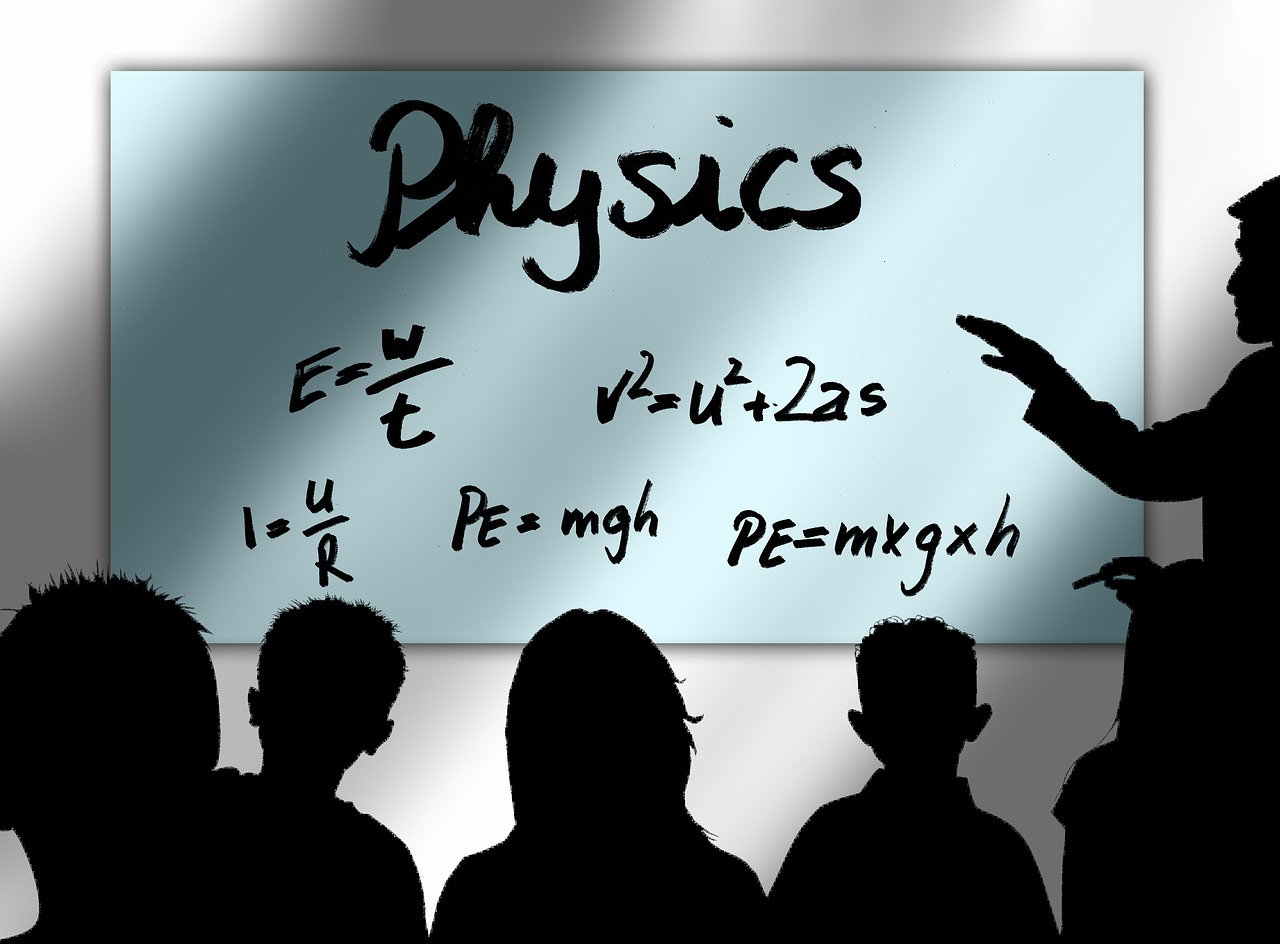
The Power And Influence Of Myths!
Myths are powerful social narratives with important insights into how you perceive your realities and make decisions about your societies. Many myths have deep origins and make their way into your day-to-day lives. Although your ancestors often lived in primitive times and had no other option, it's important to know what the reality of myths is. A human being's standard of living can be improved or reduced by myths. Isn't mythology one of the most interesting topics on the face of the Earth?
Myths are the source of all knowledge, because they capture what is both true and false in any given culture. The power of myth is that, under the influence of powerful myths, people adapt their overarching beliefs, values and knowledge in turn influencing their daily lives.
What Are Myths?
Simply put, myths are old stories that people use to make sense of their world. They are fictional stories that are used to teach values and lessons about the world around us. The story of the world is woven with many different types of myth and its meaning is perpetually interpreted and reinterpreted. Myths are an important part of human culture and their study is a prominent academic discipline.
The academic study of myth is called "mythography" and the discipline of interpreting the ancient texts of myth is called "mythology." Although these terms are often used interchangeably, there are distinctions to be made.
How Can Myths Affect Us?
Myths have tremendous effects on human societies. Many of the world's most basic and complex beliefs, values and customs are founded upon myths. Myths structure human societies by providing a framework for interpreting the world. The existence of myth provides a framework for knowing and acting upon the world. It is as if the myths were an "interpreter" between humans and the natural world.
Many cultures throughout the world have incorporated various mythological stories into their own religious doctrines. These stories serve to either legitimize or delegitimize the existing social order. Myths are powerful tools for social control and can be used in a variety of ways.
Myths have had an effect on human history as vast as any other force. Myths served to justify the practices of the Aztec, for example and the Catholic church built its entire theology upon a mythical foundation.
In addition to their power to structure and legitimate, myths are also powerful, because they are seductive. Many a "simple" human has been lured in by the promise of unlimited power and riches. Even more have been lured in by the idea that the world was created and is run by benevolent beings, who have our best interests at heart.
Many humans have been seduced by the allure of myth and have thus fallen victim to the schemes of others. Many a human being has been convinced that the Earth was created by a "higher power" and has been used as an instrument to further his or her own agenda. For human beings, the seductive powers of myth are perhaps the most pernicious and dangerous.
Why Are Myths Important?
Myths are important, because they are the stories we use to understand the world. They are the stories we use to justify the systems of power in place. Myths are important, because they are powerful.
Although myth is a loaded word, it is important to remember that it is a story, not a fact. The story an individual or a group tells about themselves and their world is how they interpret the facts. Every individual and collective story is a potential source of power and influence.
Myths pervade every aspect of human life, from the stories we believe about ourselves to the stories we tell each other in order to survive. The stories we use to make meaning and value out of our lives have great effects on our behavior, thoughts and emotions. If we change the story we tell about ourselves, we change who we are and what we value.
Why Study Myths?
Perhaps you've noticed that the world seems dark and contradictory and you don't know how to make sense of it. Maybe you feel lost in a world, where you don't understand what's going on. Maybe you want to escape your own life and find some type of purpose or meaning.
If you feel lost, then studying myths might be just what you need. Myths are like "magnetic" stories, that are used to explain the world and give orientation to the Universe. They tell you what you can and cannot do in any given situation. When you understand the rules and limitations of a given set of rules, you can then decide how to behave in a given situation.
Myths give you the rules of the game, so that you can play it more intelligently. Although you may never become "good" at something, you can reduce your frustration and increase your chances for success.
The Importance Of Telling And Exploring Myths
Myths provide a way of making sense of an inherently senseless Universe. Myths help you make decisions about how to live your life by providing a road map to follow. Myths help you understand the world you live in by giving it a framework for ordering.
When myths fail us, we have an irrational and angry God, some type of "savior" who is a warrior God, or some vague set of values, that are supposed to make us all "live good". These are not adequate ways of making sense of the world.
As humans, we are social beings. We need to make meaning together. We need to find communal ways of living, working and playing. Myths are stories, but they are powerful and influential, because they map out the territory of what is considered "normal" or "appropriate" in any given society.
What Is Considered Myth?
All stories are not myths. Only those that are widely believed and passed on are considered myths. Some stories are just too good not to be true, but many are just a little too good. Others are just false. It's up to you to decide which is which.
It is important to note, that even if a story is considered a myth, this in no way implies, that it is a "false" story. Myths can be as "true" as any other story. It is the degree of acceptance and the degree of being "wished" for that determines whether or not a myth is considered a myth.
What Are The Different Types Of Myths?
There are many different types of myths. Some are "creation myths", which recount the beginning of the world. Some are "history" myths, which recount the past. Some are "magical" myths, which recount encounters with "magical" beings. Some myths are religious, recounting the stories of the "origin of man", the "origin of God", or the "existence of a soul". Some myths are "functional", recounting the creation of tools or the invention of things, that have practical purposes. Some myths are "archetypal" in nature, in that they describe events, that occur at the heart of a being and can be seen metaphorically to describe the being's "nature".
Every culture has its own unique collection of myths, but they all have in common the desire to explain the unexplainable and to give orientation to the Universe. Every culture also has a unique set of myths and every individual within a given culture may hold a different set of myths.
You may come across people who are unable to "integrate" a myth, that conflicts with their own values and thus they will attempt to destroy the myth or ridicule it. This is what can be seen as the "fallacy" of the excluded middle. That is to say, we are either "enlightened" and thus the values of the culture ought to be reflected in our behavior and beliefs, or else we are "crazed" and thus the myths ought to be discarded.
Neither of these options are particularly satisfactory. The first option is a failure to acknowledge the complexity of the human psyche and the human value system. The second option is equally unsatisfactory, because it is an uncritical dismissal of a complex and subtle set of experiences, that have a great deal of value.
Thank you for reading.
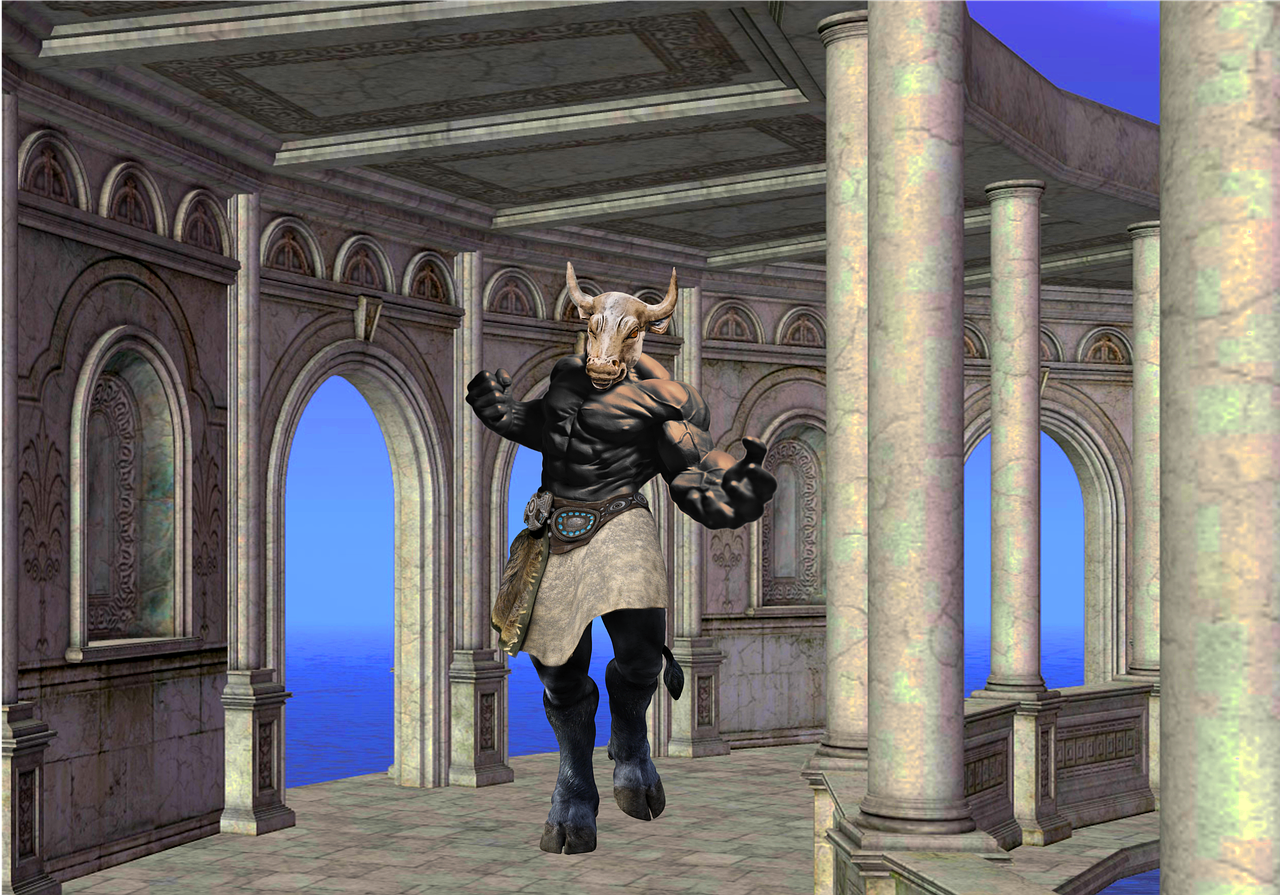
What Does Time Mean To You And How Do You Define It
The thing about time is that it is something that people project onto a situation. People tend to see what they want to see in time, or what they are used to seeing. This is why time can be seen as a concept, that is constructed by human beings.
In addition, time tends to be perceived as linear, but this is not necessarily always the case. One can have the experience of time in which all events are perceived as simultaneous. Furthermore, time is a subjective experience, in which the perception of time can be different in different individuals.
Time can be seen as a continuum in which events occur and coexist in various combinations. However, this is a somewhat simplified view of time. Time is a vast ocean, that contains an inconceivable amount of phenomena, all of which are interconnected.
It is perhaps not surprising that time has been described as a "fourth dimension" in which we move through. Given its complexity, it is easy to see why one might be hesitant to define it.
Time As A Field Of Vision
Time is a mysterious thing. As a concept, it is difficult to deal with. As a dimension, it challenges our notion of what is meant by dimensions. Time is a dimension in which all things that are real appear and in which all things that are possible appear. Time can thus be seen as a kind of window in which anything that can be seen can appear and be examined. Time can be thought of as a "field of vision" through which the universe can be observed.
This means, that time can be conceived of in many different ways. It can be a process, through which things change. It can be a mode through which everything appears and through which one can observe the world. However, all of these views are reductive and none of them does justice to the complexity of time. This is what makes time such a difficult concept to grasp.
Time As An Interval Between Events
Time can be seen as the interval between two successive events. Two events appear and then they are perceived as separate. Time is thus the experience of a thing, that occurs between these two things. In this sense, time can be seen as an experience or an interval of time between two experiences. The notion of "between" is thus crucial to grasping time.
Time As An Experience
If one chooses to perceive it this way, then time can be seen as an experience. Time can thus be seen as the experience of being at a certain place, at a certain moment, between two things. This way of perceiving time is not as common, but it has its advantages. For instance, this way of seeing time permits the possibility of defining time in a way that is not reductionist and thus avoids the pitfalls of a category, that is not useful for describing the vast majority of what it describes. Experience is what one has and it is what one is.
Furthermore, this way of perceiving time can be useful for dealing with the vast quantity of phenomena, that time can mean. The notion of experience permits a certain kind of order to be derived from the chaos of time. Experience, as the word suggests, is a form of knowledge, that comes with the possibility of error. The important thing to recognize about experience is that it is not static. It is a dynamic thing, that is constantly in the process of changing.
The problem with trying to define time this way is that it can be difficult to determine what is meant by "between". One possibility is to simply make a choice and then see if anything looks different. If one chooses to do something, then it does not exist until one chooses not to do it. Time would thus be an interval of choice. However, this way of defining time is problematic, since time does not always permit us the luxury of choice.
Time As A Mode Of Being
If one chooses to define time in terms of being, then time becomes even more difficult to grasp. Time would then simply be the eternal now. The problem with this definition is that it fails to account for the changes, that have occurred in the past or the future. It also does not explain why these changes take place. If one chooses to define time as a "mode of being" however, then it becomes clear that time is not an interval between events, but rather a property of everything that exists.
Time And The Philosophy Of Science
The concept of time and change was a major preoccupation of the early modern philosophers, specifically with respect to the philosophy of science. The general consensus among the greatest thinkers of the period was that time does not exist. This was not based on any evidence, but rather a logical impossibility. A thing that exists is by definition unchanging and change is defined as a deviation from a thing that exists. No such thing as change, therefore, can ever really be observed or experienced.
A major tenet of early modern philosophy of science, however, was that the laws of nature do not dictate or regulate change. Change is an inherently human experience and the world is what it is because of human decisions. The early modern period saw the rise of a number of scientific methodologies, that were designed to understand the human impact on the natural world. The study of history was regarded as an important tool for understanding the present state of the natural world, for example.
As these ideas developed, so too did philosophy of science and an important theme, that emerged was what came to be known as the "new history." The "new history" was an effort to reconcile the philosophy of nature, which denied the existence of time, with the human experience of time through the study of history. The "new history" attempted to do this by focusing on the role of human activity in the production of historical change, rather than the study of nature as such.
The "new history" is thus most properly understood not as a philosophy of history, but rather as a philosophy of nature, or better yet, a philosophy of human history. Human history is a branch of nature, after all and thus the study of human history is a way to understand nature.
Thank you for reading.
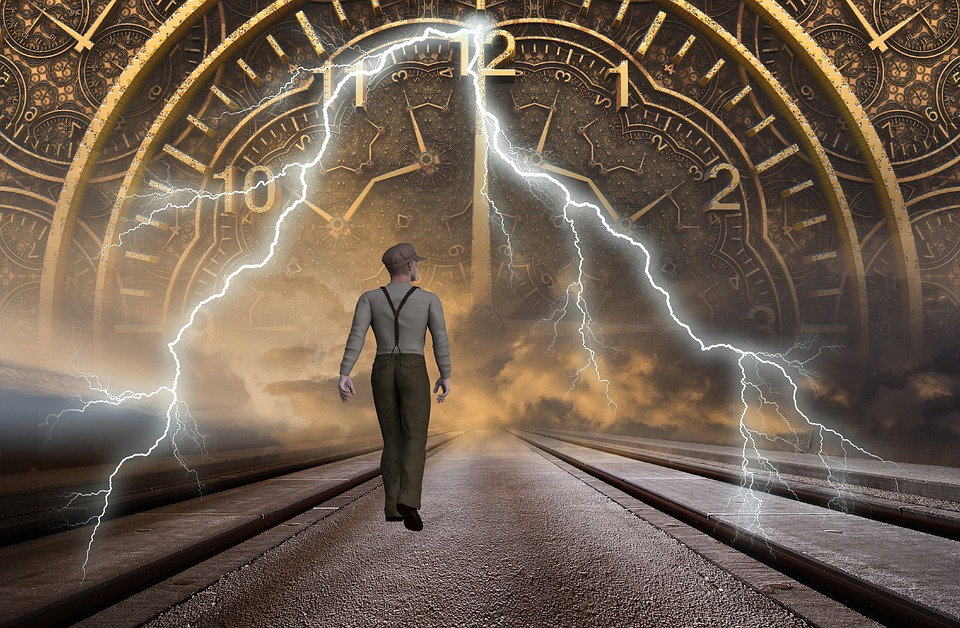
The Mandela Effect: Why We Remember Things, That Never Existed
The Mandela Effect is the hypothesis, that through a psychological phenomenon known as a "collective delusion", several people can believe a false memory is true even though it never occurred in reality. The theory holds, that what we remember about history or present events is actually completely wrong.
A new idea, theory, or memory is created and then spreads not just on social media, but throughout the wider world. The term can also be used to describe how memories can change over time with the benefit of hindsight. Often, the evidence will seem to suggest, that the world has suffered a case of mass delusional amnesia, but its true nature is far more interesting.
What Is This Phenomenon?
The memory of a false event, that never occurred is often called a "false memory". The term "false memory" has been used in this context since the 1980's. The "Mandela Effect" is the idea, that there are "multiple universes" or "alternate realities" in which the same events occur, but they are remembered differently.
**Theory 1:**
Consciousness can create a "filter" that only shows events, that are in concordance with what an individual's beliefs are. The way this works is that each human being has an "ideal world" in their mind, with all the rules and values that they hold. Events that do not fit inside of that world do not get filtered out, instead they get stored inside a "forgetful" or "false" memory.
**Theory 2:**
As an "experiment of nature", humanity is "filtering" reality to fit their own perceptions. As time goes on, our perception of the world changes and so the "ideal world" that each of our minds is striving for changes too, but the world itself is constantly in flux. The "filter" that humanity has created for itself has not caught all the changes and so many of the things, that were once filtered out are now showing up in people's minds.
**Are the theories correct?**
There are a lot of different theories about how the Mandela Effect works and there is a lot of evidence, that it exists, but what if it is a combination of all or at least a few? What if the "ideal world" in each of our minds is unique and all of those universes exist in the "Memory Palace" of the brain? What if the "filter" that each of us puts up is not just for show, but actually modifies our experience of the world at all times?
If that is the case, then the "false memories" should be showing up all the time. They just haven't been reported in full yet. The "true memories" should all look the same across everyone. We have all these "memories" of different versions of the past, but they should all be accurate in the sense of the theory we are looking at.
A Gateway To Alternate Reality
If the "false memories" were deleted from people's minds, then they would all have perfect "true memories", but that would mean that the world that everyone remembers is the only possible world that could have occurred. There would be no alternate realities. In this theory, the "false memories" are actually necessary for an individual to have a full and complete "memory" of the past. They allow each of us to have an "alternate reality" in which we can exist. It is just like day dreaming, except that the "day" in question is an "alternate reality".
There are probably many other interesting things, that could be said about this theory, but instead we will focus on why it is a gateway to the alternate reality theory.
You see, the "memory" or "false memory" that you have is not really about the past itself. Rather, it is about your "ideal world" of how things should be. The person who has the "memory" is actually experiencing the "ideal world". The world that the person remembers is just a way to make the "ideal world" more real.
The "memory" itself is just a concept and the person experiencing it, whatever that person might be, does not really "exist". The person is actually an "idea" in the head of the person remembering. The real person has been filtered out to fit inside of the concept.
This theory is a good example of how the Mandela Effect can function. The people who hold the "false memories" are essentially creating a version of the world that does not include the "real world". They are creating an "ideal world" in their own minds and then using the "filter" that their minds have put up to try to make that "ideal world" real.
You think about this for a moment. The "false memories" do not actually change the past. They are simply a way for the people who have them to experience an "alternate reality".
Delusions
Delusions are very strange and they are a big part of the explanation for the Mandela Effect. While these "memories" are not really memories at all, they are very powerful in their own way. As we discussed, they allow people to experience alternate realities in which they can remember things the way they would like. The strange part about them is that the person experiencing the delusion is not aware that they are doing it. The delusion itself seems to be "real" in that it influences the environment around the person experiencing it.
In other words, a person who is deluded is convinced that a certain concept, "A", is real, even though it is clearly not. The person is so convinced of the reality of "A" that they are willing to ignore any evidence to the contrary. Their entire "reality" is determined by the delusions that they hold.
You can see how this would be a powerful way of filtering information, but it also has a very strange effect on a person's personality. The person who is deluded will typically respond to "real world" information in a very strange way. They may appear perfectly normal, but their reactions to the world around them will be very off. Their delusions may be a way of compensating for an odd reality.
Common Examples Of The Mandela Effect
Let's look at a few examples of the Mandela Effect in action. This will illustrate some of the common ways, that the "false memory" can show up.
**Monopoly Guy With His Monocle**
If you remember, that this Monopoly man has monocle you are absolutely wrong. He has never had monocle, but most of the people remember him wearing his monocle.
**Pikachu's Tail**
How do you remember? Does Pikachu have black color in his tail? No, in reality his tail is yellow without any black color.
**C-3PO Has a Silver Leg**
What about C-3PO's right leg? Is it gold or silver? In reality his right leg is silver.
See more examples here. https://www.goodhousekeeping.com/life/entertainment/g28438966/mandela-effect-examples/
What is going on here? Well, it's simple. When a person remembers something, that never actually happened, it is often because they were "filtered" into it. They are so convinced that the "memory" is real, that they fail to notice the obvious.
The "real world" evidence of the event, that they are remembering never occurred. The "world" that they remember never happened.
This is particularly easy to accomplish, if the evidence of the alternate "memory" never occurred at all. It would only take something as simple as a "filter" being applied to the evidence, "forgetting" the part that does not fit the idea and "remembering" the part that fits.
Lead image source: https://nccnews.newhouse.syr.edu/tag/mandela-effect/
Thank you for reading.
The Process Of Writing Makes You Curious
When you give writing a hard time, you're also giving yourself a hard time, which is not what you want. Here's the thing: everyone is always going to have their struggles with writing. When it comes to writing, one of the most important things I have learned since I am writing is that the process itself will always keep you curious. Anything can happen at any point, which makes writing fascinating for you.
It's important to find the reason, why you feel the need to write about something. I write about topics, that I love to explore. For others, it's music or cooking. Writers share their secrets on how to make the process worthwhile. When done the right way, writing can create a knowledge, that can be shared and passed on. It can help us figure out new things and explore ideas to improve our writing and make us better people.
The Importance Of The Process Of Writing
Writing can be a very powerful way of communicating ideas, figures and opinions. You have complete control over how it is used, which makes writing an interesting form of self-expression. The great thing about writing is that it can be a very personal and creative process. Everyone has their own voice, their own way of writing. This is why I think it is so important to figure out the process, that works for you. Everyone can be a writer if they want to, but only some people can be good writers.
This is a very general statement, but there is a lot of technique, that can be used to improve your writing. Writing is not a race to the finish, it is a journey. It is important not to let anyone else dictate the path you take, because the results may not be what you want them to be. In the end it is up to you to decide what you will write, how and where. The most important thing to remember, is that it is a journey, and every journey has a finish.
The Art Of The Process
Where do you start? You can stare at the blank page for hours, but that will not make words appear before your eyes. You need to find out what makes words come to you. Then you need to figure out how you can make those words better, or in this case, more. The rest is all about the process. You need to find the rhythm, that works for you and keep to it. You need to find a way to make language, thoughts and ideas flow onto the page. You need to find a way to tell your own story. You may not know how yet, but you will figure it out.
The hardest part may be figuring out how to get past your own personal blocks. You may have done it unconsciously for years, but stopping yourself from expressing certain things, may not be as easy as you think. Now, I will say the process is usually the same. The struggle, the search and then the realization. However, everyone's struggle is different and so is their path to the realization.
Curiosity During The Process
You have to be willing to explore every aspect of the writing process. That means knowing not only about the creation of stories, but about the writing process itself. Here are some questions you may want to ask yourself. What am I curious about? What are my writing goals? What am I afraid of? Where do my ideas come from? Why do I write? Why do I keep writing? These are just a few of the questions that come to my mind, but you should ask yourself what other questions may be important to you. The answers to these questions will determine how you go about writing your story and so, the way you get to where you want to go, will be different for everyone.
The Journey
The journey is the most important part of the writing process. You have to find your own path. Which can be very challenging. This is why it is recommended, that you write down your thoughts and ideas. It can help you organize your story and keep track of what you are writing. You can also use your notes to help you figure out the difficult parts of the process.
Feedback always helps you find out, where you are at on your journey. You can read what other people have written, or get feedback directly from those, who have more experience. Either way, you have to be open to it. The only way you are going to find out what you are doing wrong, is by doing it wrong. The journey itself is up to you. Only you can determine the direction of your own work flow.
Persistence
The journey can be a lot more difficult, than you initially thought. Many times people give up too early, or they get discouraged from the process. This is why persistence is so important. Without persistence the journey would be a lot harder, if it would even be possible at all. Persistence enables you to overcome the obstacles that may come your way.
It enables you to carry on, despite the trouble you may be in. If you find, that curiosity is in the process, then that's what will keep you persistent. You should always keep in mind, that writing a story is a challenging process. There are no rules to follow and no one to answer to but yourself. You need to write your story with no regrets.
The Reward
There is no finish line, but there is a finish. It may not be what you want it to be, but it is what it is and that's all that matters. That is what you should remember every time you sit down to write and in the end, that is all that matters. It is the journey that you focus on, not the destination. The destination will take care of itself.
It may not be how you planned it, but that is okay. You may not get the ending that you expected, but that is okay too. You may not get where you expected, but who does? No one can tell you exactly what will happen, because no two journeys are the same. The only thing you need to do, is just to keep going. The reward, will be waiting for you at the end of the struggle. That is all.
Thank you for reading.
The Difference Between Intrinsic And Extrinsic Value
When it comes to choosing between products, it can be difficult to know what you find intrinsically valuable. If you love it, it's probably worth it, but if you really value it, it might be worth spending more money. It's up to you to decide which is which.
Extrinsic value is the price of a product. Intrinsic value is about going beyond the price of the product. Intrinsic value is about the true power of a product to engage and change someone's life. It's not about knowing the costs of a product, so much as it is about knowing what the product is really worth.
The more we engage with a product, the more we come to trust it and the more we come to understand it, the more we come to value it. So, the more we value a product, the less we will scrutinize the costs of acquiring it. These are the most powerful and valuable things that we bring to the table when it comes to products.
Intrinsic value also can be determined by the way we feel. It does not necessarily have to be a product. That's what I am going to focus on in this article.
The Concept Of Value
The concept of value is a complicated one. It's something that people argue about all the time. How do you define it? It's difficult to do so, because there's often more than one dimension to it. Apart from intrinsic and extrinsic value, there is also use-value, which is the benefit a product provides to you. You have exchange-value, which is what you could get for the product in an open market.
There is also, often times, an intangibility to it. Here I want to talk about the emotional value of something, which is how the product makes you feel. It evokes a certain response and that can be valuable in of itself. This is the sort of value, that can't be captured in simple equations.
But what really matters most, as we're concerned with it here, is subjective value. Value that people assign to a product, because they believe it will make them happy.
Examples Of Intrinsic Value
If you want to know what something is really worth, you have to look at what people will pay for it. That's what people always use as a point of reference. If you've never asked anyone what something is worth, how can you know?
The reason why people have varying opinions about the value of things is because their feelings about them are at stake. It always comes back to feelings. If something makes you feel bad, it has no value to you. If something makes you feel good, it has value. That's how value exists.
The value of something is determined by how it makes you feel.
So, here are some things that people value highly, because it causes them to feel a certain way.
**Gratitude**
Gratitude is one of the most valuable things, that you can have. You point to experiences that you had, that changed your life and that's what make you grateful. Even if it's a small memory of something, that happened years ago, you can always find it in yourself to be grateful.
Gratitude is not a feeling, that can be created or manufactured. It can only be earned. It's something you can't learn how to control. Once you accept that, you can let go of the need to feel grateful in any given moment, or circumstance and you can be content.
**Happiness**
Happiness is another important thing, that people value. It's sort of the moral equivalent of wealth. It can't be measured, you can't hold onto it and you can't make someone else feel it. Happiness is something, that you can only strive for and that you should never lose sight of why you're trying to do things.
**Health**
Health is probably the most important aspect of our lives. Without it, everything else is meaningless. It's the absence of disease and impairment. It's the ability to do anything, that you find interesting and engage in any given activity. It's the capacity for your mind to be as creative as you want it to be. Health is the ability to learn and to grow.
**Hope**
Hope is another important thing. Hope is the belief, that something desirable is going to occur. Without it, life can often seem rather hopeless. Hope is the fuel, that keeps you going. It keeps you engaged in the activities that you deem important, even when none of them are. Hope is what makes the hopeless seem less so.
**Love**
Love is the final important thing. You could say, that it's the most important thing, but that would be an understatement. It's the glue, that holds everything else together. You have a responsibility to love and to be loved in return. Having love and being loved is the only viable option you have for maintaining a satisfactory existence.
When Intrinsic Value Is Better, Than Extrinsic Value
When it comes to things, that are worth having, the thing that makes it superior to something else is what makes it valuable. It's not the size of the thing, nor how rare the thing is. That has nothing to do with its value.
Instead, it's how you feel when you have it, that determines its value. If you feel good and that makes you feel even better, than that is the most valuable thing that you can have. The more you can get others to see you, to love you, to believe in you, the more valuable you are.
That's how it works when it comes to the intangible things in life. You can't quantify it, you can't put a price tag on it, but you can still come to a conclusion about its value.
It's worth noting, that people are often, even highly, motivated by their own interests. You could appeal to their self-interest and take advantage of that. The reason that people always want to feel, seem, or be something is because it validates their own importance. It makes them feel like their lives are more significant, than they actually are, which often results in them doing stupid, self-destructive things.
The better alternative is to recognize their feelings and try to talk them away. You might be able to get away with exploiting people's self-interest, but the consequences can be severe. People are often unpredictable when it comes to their emotions. You could say that their fear of lack of value is a self-imposed limitation. They might be more or less amenable to changing their behavior, depending on how you phrase things.
So, how does one go about giving value to the things that are important to others?
You start by asking them what they value. Listen to what they say without interrupting. Sometimes, that's all you need to do. Sometimes, people are so grateful for the small mercies, that they don't realize how much greater the gifts really are.
Thank you for reading.
Lead image source: https://www.thebluediamondgallery.com/wooden-tile/v/value.html
Is Hypnosis Real Or Fake?
There is a question lingering around if hypnosis is real or fake. I have a surprising, but not shocking answer. They are all real, but dogmas and what society has deemed *"real"* have long ago been re-engineered and re-designed by humans. In fact, leading scientists today know how hypnotherapy really works and how you can use it as a form of self-discovery and transformation. Everyone is at a different stage in their own personal journey towards peace and coherence.
The process of hypnosis is complex and full of scientific theories and explanations. Hypnosis is often used in place of medicine and other treatments in order to find relief. Doctors and psychologists use hypnosis as a means of impacting positive change and outcomes in people.
Our thoughts are often influenced by someone else. Everyone is lost in their own thoughts of what to do, feel, or consider. Our perceptions are often altered by ourselves at a subconscious level. I argue that, yes hypnosis is a real and often powerful phenomenon, but the study of these phenomena is more of a *"science"*, than the act itself.
What Is Hypnosis?
Hypnosis is the process of entering a deeper state of awareness, where you are more attuned to the world around you and more accepting of the roles that thoughts, suggestions and beliefs play in your life. You come to see the world in a different way. Rather than *"going crazy"*, as one might imagine, you come to feel more in control of your thinking, feelings and behaviors.
Hypnosis comes in many forms. There is in-office hypnosis, at home hypnosis, guided meditation hypnosis, hypnosis for pain relief and even self-hypnosis. There is also a wide variety of induction techniques. You might be asked to watch a video, listen to music, or perform a simple affirmation.
Hypnosis is most often used for the purpose of changing unwanted behaviors, or discovering hidden knowledge and abilities. It is a powerful tool for self-discovery.
**You might use hypnosis to:**
• Re-train your physicality and motor skills to be more coherent and in tune with your mental state.
• Increase focus and discipline.
• Reduce anxiety and stress.
• Improve memory and learning.
• Relieve pain.
• Change an unwanted behavior, such as smoking.
• Get over an emotional trauma, such as a bad break-up or painful memory.
• Get insight into your psychology, such as discovering and changing negative patterns of thinking.
How Does Hypnosis Work?
Hypnosis is a great example of the power of suggestion. In order to get into a hypnotic state, you must give yourself over to the suggestions of the hypnotist. There are a few ways this can happen. You might be told you are going to sleep, or you might be given some very strong suggestions, while being heavily medicated. In this case, you would be given a very strong suggestion to stop thinking, to stop worrying and to trust the person guiding you through this experience.
If you are told you are going to sleep, it means that you are removing yourself from the outside world and detaching your mind and body from its normal functions. From this state of complete isolation, the hypnotist is able to make very powerful suggestions to you. When you wake up from such a session, you will have changed your mind-set, and behavior, accordingly.
If you are given suggestions while under the influence of a strong hypnotic suggestion, then the effects of the hypnotist are strong and your compliance is likely to be high. You can be made to do things you normally would not do, without much struggle.
It also helps if you feel a certain amount of trust and safety from the hypnotist. If you feel threatened or uncomfortable with the person guiding you, then it might be difficult to follow their suggestions.
Influence On The Brain
The human brain is powerful and it can be used in many ways. In this case, the power is being used for good. The power of hypnosis is a powerful suggestion machine. The human brain is always accepting new inputs and using those inputs to form new neural pathways. This constant process of creation and re-creation of neural networks is what allows humans to learn, to grow and to adapt.
A hypnotist can use this process of neural plasticity to make their clients more suggestible and to make them do and believe things they normally would not do or believe.
The neural pathways, that are being created or re-created are a direct result of the powerful suggestions given. In this sense, the hypnotist is training the brain. Their training includes learning what are the most effective and strongest suggestions to give at each moment.
People who are highly suggestible are more responsive to the hypnotist's training. They are able to change their behavior and their habits more easily.
Effects Of Hypnosis
The effects of hypnosis can be very powerful. In some cases, it can produce very deep and unusual states of awareness. In other cases, it can simply reinforce an existing state of being.
A person can be made to feel very safe, while being extremely self-aware and awake. Or, a person might experience uncontrollable urges to laugh, while also being unable to move. Or, a person might become confused and disoriented, with extreme memory impairment.
There are many different outcomes, that can be produced from hypnosis. The only way to know what will happen is by experimenting with different induction techniques and behaviors.
When Should You Experiment With Hypnosis?
There are many different ways to use the power of hypnosis. However, as with most experimental psychological research, it is important to examine the role of hypnosis in a particular behavior or experience.
**Hypnosis might be used for:**
• The induction of deep trance states.
• Pain control.
• Addiction treatment.
• The facilitation of psychotherapy.
• Behavioral conditioning.
• Mindfulness training.
• Memory and cognitive enhancement.
• Healing.
Hypnosis And Autosuggestion
Autosuggestion is a form of direct suggestion. In other words, you are telling your mind what to focus on, instead of having it focus on something for you. An example would be, instead of concentrating on the pain in your arm, you imagine yourself feeling better and you will the pain away.
When your mental concentration is strong enough, the pain will be gone, and you will feel better. With regular practice, you can learn to concentrate on whatever you want, and make it so.
When used with the power of suggestion, autosuggestion can produce powerful and quick results. However, it is important that you trust the person giving the suggestions to you, or else you might get the wrong impression. In order for it to be most effective, you must fully surrender to the hypnotist. You must let your will be subverted to their will.
To Wrap It Up
Hypnosis is a fascinating field of study. There are so many different ways you can take advantage of the power of the mind and the brain is always looking for new ways to process information. The ability to effectively use hypnotic suggestion is a very powerful tool, that can be used for both harm and good. It all depends on how it is used.
Hypnosis can be incredibly useful, when performed by an expert. You might experience a hypnotic suggestion in order to get yourself out of a bad situation, or to take control of your behavior. However, you should avoid being a simple minded subject and you should only seek out a hypnotist, that you fully trust.
Thank you for reading.
How To Get To Know A New Person During A Conversation
The things you say and do in a first meeting are as important as the words you hear and the questions you ask. This is the first opportunity to put a face to the name and inspire a sense of trust. Every detail matters, because the feeling of trust you get from the very first conversation is crucial to the success of the relationship.
When you meet someone who doesn't click with you, it can come across as a *"dislike"*. To break the ice, match their interests and turn the situation into a win. Psychological profiling can help. It also helps people build deeper bonds.
Starting with a great opening line, helps to start a conversation and with psychological questions we give ourselves a chance to get to know the other person better.
When we are dealing with people from different cultural and social backgrounds, we need to be even more careful. As a general rule, know that people do not like to be interrogated or challenged. Be sure to gauge the other person's reaction before asking questions or making statements.
What Makes A Great Opening
You give the other person a sense of who you are and what you are about. The first impression you make is vital and the way you begin that impression is just as important. The eye contact and the facial expression you make when you meet someone is a very important part of creating a great first impression.
Eye contact is a very direct and obvious method of communication. It gives other person the feeling, that you are paying full attention to them and thus, more confident. A confident person is a more attractive proposition to other people.
Some people have a difficult time making eye contact, or maintaining it throughout the conversation. It is important, that you know this about someone before you ask them for information, that you need for your own advancement.
The other very obvious, but important, cues you send are the ones that relate to your body language. Body language is something that people notice and understand without you even having to say a word. A confident and composed person, even if they aren't speaking, generally indicates a more agreeable and trustworthy person.
The tilt of the head, the tilt of the eyes, the curvature of the spine, the position of the hands all indicate the degree of comfort that a person has with themselves and thus, with other people.
Other less obvious cues, that you send with your body language are your assumptions about a person. Many of these are linked to their physical stance. For instance, a person who is fearful is going to have very different assumptions about themselves and their surroundings, than someone who is confident. The way you hold yourself, the way you stand, the position of your hands all send messages, that you are unaware of.
The very last thing you should do is touch the other person without permission. Studies have shown that people generally dislike being touched by strangers, unless the touching is meant as a friendly gesture.
When you make direct eye contact with someone, you are essentially saying, *"I am interested in you."* It is a very aggressive statement, but it is necessary to let the other person know, that they are being evaluated, so that they will have a starting point for the conversation.
If you touch some part of the other person's body when you make this direct eye contact, you are putting yourself in a very compromising situation. It is best to remain in control at all times.
Questions To Ask
Questions are an important part of establishing a rapport with another person. This is generally true of any social situation, but it is doubly so in a first meeting. Your manners and your ability to conduct yourself well are on full display when you are making small talk.
It is therefore necessary to be well prepared, when you make the first move or statement in a conversation. You should have a good number of questions prepared in advance, so that you can make an interesting, engaging conversation without being repetitive or dull.
The best way to come up with a list of good questions is to think about the kind of person you are talking to. What do you know about them? What kinds of things have you been interested in? What kinds of things make you see them as a potential ally? It is best to start off with something general, and work your way towards more specific questions.
How To Know What To Ask
Think about the kinds of things you have been interested in. If you have a general area of curiosity, it is best to work towards a question that is relevant to that area. By taking this approach, you will be able to avoid coming off as too invasive, too pushy, or being seen as ignorant.
You also want to consider what the other person might be interested in. The more you know about what they are interested in, the more effectively you will be able to make them a partner in the conversation.
It is always best to be direct and to the point, rather than playing guessing games with people. By asking them directly, they will be able to answer your questions with greater clarity and less ambiguity.
Of course, you could also just start a conversation by asking them what they think about the first topic that comes to mind. You might learn something new, or see something that you had not considered before. The key to making the most out of any conversation is to really listen to the other person and be prepared to take their lead in order to make the conversation flow.
Another important thing to keep in mind is that it is always worth checking with a few relevant questions to see what kind of reaction you get. Not only will this throw away any potential secrets, but it will also help you gauge the other person's reliability and intentions.
What Are Hot Spots And Why Should You Avoid Them
You begin by asking a general question about what kinds of topics people normally talk about in these kinds of situations. You are rewarded by getting a very general answer, but one which appears to be very thoughtful.
***"Well, I suppose the most important thing to talk about is ourselves. Our past, our regrets, our hopes, our dreams..."***
There are two very obvious ways to get involved with this. One is the so-called "*wish list"* of topics, that the majority of people would list as being very important. The other is a list of controversial topics, that would probably be considered off limits.
The latter list contains some very dangerous topics. Depending on how you phrase the kinds of questions you ask, you could find yourself in a situation where you might be in trouble. It is best to be careful, and to ask questions, that are less likely to get you into an argument or a compromising situation.
How To Deal With An Uncomfortable Situation
There are a few ways, that you can approach a potentially uncomfortable situation. You can try to change the topic, or the tone of the conversation. Sometimes this is possible, but other times it is not. You can admit your own ignorance, and hope that the other person will explain the situation in greater detail. You can also try and mask the situation, by asking a question, that appears to be concerned with something else.
Of course, the best solution is to change the topic or the tone of the conversation, if you are not able to accurately assess the situation. However, if you are able to accurately assess the situation, you should take advantage of it. After all, who knows what kinds of potential secrets you could learn by asking the right questions in the right way?
You should also be able to easily detect whether or not the other person is trustworthy, so that you can incorporate them as a partner in the conversation in one way or another.
Thank you for reading.
Sharing Economy: The Transition To The Age Of Renting
The sharing economy is changing how you live and how business is done and with this shift you are in a new age. One that is often referred to as *"the age of renting"*. It's a title that is inherently a good thing, but it also provides a good example of what's wrong with the current economic system. Despite the irrefutable need for this new age, there are some problems where logic and reason should prevail. The renting age is one of them.
In the past, people were saving up hard and sometimes they had to give up something in order to buy a house and avoid being forced to share rent money with someone else. In the future, renting might be the norm, but it's happening slowly. Let's not talk about only properties. I can already see things like scooters, bikes and cars for rent. I even got an email today, saying rent your new phone for a certain amount of money. What about music and movies? They are already available for rent. What's next clothing?
Let's cut to the chase. There's going to come a day when your home, land and physical belongings will no longer be considered valuable to you. Here's a look at what the future might look like, a blend of the tangible and intangible.
Would Renting Everything Even Work?
Imagine a world where everything is shared. Music, songs, memories, skills, tools, and anything else you can think of is owned by no one.
Sounds good, right? Of course, it's not that simple. For one, it's not at all what most people would consider a "good idea". But it is an idea and that deserves a chance. Everyone has the right to propose an idea. The only thing required to make an idea worth implementing is the willpower to do so.
The second problem is that sharing everything will not work. This is because there are going to be things that are not shareable. Your thoughts, your creativity, your dreams... these are things that no one else should have access to. They are meant to be enjoyed by you alone. You can't allow them to be shared.
It's going to take a lot more, than just willpower to make this work. It's going to take a lot of discussions about philosophy and ideals. It's going to take... well, whatever it takes. The only thing you know for certain is that it's going to take a lot of convincing.
The Sharing Economy
The sharing economy may be the first practical application of the concept of *"the commons".*
The concept of the commons is a simple one. The idea is that everyone, who is part of a community should share the benefits, that come from that community. Those who do their part should be rewarded and recognized for their effort. Those who do not should be left alone.
Right now, our economy is set up to benefit the few at the expense of the many. Everything that is produced is owned by someone else. You work hard, earn your money and then pay a large share of it to someone else.
"The commons" is a way of thinking about that. It's a way of thinking about distributing the rewards of your hard work equally and fairly.
"The Commons" also recognizes, that there are some things that shouldn't be for sale. Some things should not be used as trophies, toys, or status symbols. These things are meant to be used for their use and then discarded when their time is over.
"The Commons" says, that these things should be shared. They should be used, enjoyed and then discarded. You don't own them and you can't take them with you when you die.
The commons is a concept, that is being applied to all kinds of things. Travel, for example. Instead of owning a car, you could rent one from a company. They would own the car, but you would be able to use it. You would take a much smaller hit to your wallet, and you would be contributing to the well being of the community.
In the future, this could become the norm. You would no longer own a car, but you would rent one when you needed one. But the sharing economy also has a dark side. There are going to be casualties. At the moment, you have a choice of how you can spend your money. You can spend it on items that will last you. Or you can spend it on a one time use item.
Think about that for a moment. You're given the choice to buy something that will soon lose its value, or something that will lose its value gradually. That's just the first problem. The second problem is that you have no place to put your stuff.
Most of the time, once your things are no longer useful, you throw them away. But guess what? That stuff is needed in a constant stream of production. You might want to think about how you're going to dispose of all that stuff.
Value Of Possessions Is Eroding
The value of everything you have is diminishing. The items in your house are becoming increasingly outdated. You're realizing that you may as well just give away the things you don't need anymore, because even if you did sell them, you would only get a fraction of their worth.
The dollar is pretty useless. Since the government went off the gold standard, it doesn't actually have anything backing it. It's just another piece of paper. Of course, this is all due to inflation. Soon enough, the cost of living is going to be so high, that you'll need to find a new job, maybe a better paying one. The future is definitely looking less desirable.
Renters Are In Control
The big change in the future is that there is no longer a *"need"* for most things. Everything is going to be *"shared"*. Renters are going to be in control. Owners will be looked down upon. That means no more private property. No more real estate. Just the idea of having a place to call your own is going to soon be a thing of the past.
As a renter, you have a lot more freedom. You're not tied to the property. If the owner or manager causes you problems, you can just move on. You don't have to worry about mortgages, rent, or finding another job. You just move on and start all of that again somewhere else.
Everyone will be looking for a place to call their own. But without private property, will people even bother to build? Will people even own houses? You have to wonder what the big picture is for humanity. Will we become a *"gift"* economy, where people just give away their stuff, so that it can be used by those who want it?
All Assets Are Becoming Concentrated In The Hands Of A Few
The sharing economy is not a level playing field. The rich are getting richer, while the poor are left more and more behind with each passing day. All the assets of society are being concentrated in the hands of a few. You can blame the system or you can take part in it. You can participate in the sharing economy and benefit from it, or you can decide that it isn't worth it and find an exit.
Sharing is not a merit based system. You are more or less stuck with the status quo. There are going to be casualties of the new system. People are going to be made worse off. You need to make your own decisions, and live with the results.
What are your thoughts? Do you agree with this system? Would it really be better to rent things instead of owning them?
Thank you for reading.
Fate Versus Free Will: The Classic Philosophical Debate
Philosophical debates have been around as long as the human species has. One of the most enduring philosophical debates revolves around the issue of fate and free will. The questions of fate and free will pertain to your understanding of what role chance vs. choice has in guiding your lives.
In this philosophical discussion, the classical theory of fate is introduced by the Noble One (Plato), and the foundational theory of free will is introduced by the Sophist (Aristotle). The two sides debate the origins of morality and the human condition.
Most discussions about the nature of free will are actually about fate. In the sense of where things came from. Some people say we have a power over fate, whereas others feel the opposite is true.
The Definition Of Fate
Fate is a term that's tossed around quite a bit, but its meaning (or at least the meaning that's being discussed) varies from person to person. Fate is typically described as destiny. You have a destiny, whether you're aware of it or not. The stars above you dictate your path and you have little to no control over it.
Destiny is a tempting concept for most people. It's something that we long for, but that we're often unwilling to accept. We often prefer to believe we're in control, but in truth we're not. However, that's a discussion for another time.
The Definition Of Free Will
Free will is another term that's often debated, but its meaning seems to vary based on who's using the term and what they're trying to accomplish. Many people use the term *"free will"* to refer to the power that human beings have, to choose or not choose based on conscious and/or subconscious motivations.
Free will can also be used to refer to the ability to affect our future, without relying on predetermined causes or effects. The *"free will"* that people are trying to refer to is the power to make a choice that's not determined by outside forces, whether that be biological, psychological, spiritual, or some combination of the four.
The Classical Theory Of Fate
The classical theory of fate as Plato puts it, is the idea that everything that happens, happens for a reason. This includes not just what happens to you in your lifetime, but also what happens in all the pasts of all the people who ever lived.
The idea of fate can be a difficult one to grasp, but the idea of a reason is much more approachable. Though reasons can be strange, and reasons are often contradictory. In other words, if one event happens for a reason, it doesn't necessarily mean another event doesn't happen for a reason; it just means the former reason trumps the later reason.
In a similar manner, one reason can be used to justify a large number of different actions. For example, one could say that every action has a reason and the reasons just cancel out. This is called the *"moral opposite"* of a given reason.
For example, if one says that a certain behavior is moral, one could say that it's the moral opposite of that behavior. Plato, in the ancient Greek, presents the idea of fate as a way to think about the world. Fate isn't something that one chooses; it's a given.
One doesn't have a choice about the fact that one was born, for example. The idea is that one's actions should be directed towards a goal that one has chosen oneself. To say that one has *"free will"* is to say that one can choose to do what one wills.
**The "Nature" Of Choice**
It's important to remember that *"choice"* is a very powerful word. To choose to do something, one must first believe that the choice is real, and second, one must have the power to perform the action. To say that choice is meaningless is to say that one cannot choose to do something that one believes is impossible.
To say that choice is a poor word for describing what happens when one is born is to recognize the fact, that one cannot choose what one was born as. However, one can choose what one becomes. This is the most powerful idea in all of philosophy.
The *"nature"* of choice, if you will. It makes sense then, to look at the elements of choice, and see what's important for making a choice.
**The "Will" Of Choice**
Perhaps the most commonly known aspect of choice is the will, or more specifically, the absence of the will. This is the part of you that thinks, "I don't want to go to the party. It's stupid." Your conscious mind is telling you one thing, while your subconscious mind is telling you another.
Or perhaps there is no difference, only that one is a lot louder than the other. Choices are influenced by the will. If you think you shouldn't choose X, then you won't. If you're convinced, that X is the right choice, then there's nothing to stop you.
**The "Emotions" Of Choice**
The emotional part of the process is a little more clouded and perhaps much more interesting. When you make a choice, you're doing so while simultaneously feeling one way or another. Depending on how the choice is made, the way one is feeling can either be reinforced, or it can be contradicted.
For example, if you choose to go to the party, because you believe that you should, the feeling that you should be having is reinforced. The opposite happens if you go, because you're tired of being alone.
You can also feel regret, or perhaps more accurately, the lack of it. If you're feeling regret, then you didn't choose the way you did, because you didn't think it through. It doesn't mean you had no choice, it just means you didn't weigh the consequences as well as you could have.
The way you feel, however, is not as important as the reason for your feeling. If you go to the party anyway, even if you're only doing it out of a sense of obligation, you still chose to go. You still have to deal with the consequences of that choice.
**The "Reality" Of Choice**
As I said, choices are not easy. One thing that you probably realized is that you're not sure that you actually have a choice in this situation. You may not have a choice in the actual act of being born, but you still have a choice in the way you are raised and the way you behave.
For example, someone could try to convince you that certain moral choices, such as the one concerning your own existence, are in fact not real choices at all, but rather *"fate"*. This would be a very radical position, to be sure; it would probably involve a great deal of thought, and perhaps even a certain measure of craziness.
One thing that you do know for certain, however, is that one can try to convince others that a certain way of behaving is correct, and that other ways are not only incorrect, but actively harmful. If someone says that certain choices are not valid choices, then they're not. Period. The trick, of course, is in how that certain someone tries to prove their point.
**The "Truth" Of Choice**
As with the other aspects of the philosophy of religion, the philosophy of mind has proposed several different theories regarding the nature of *"truth"* and *"falsity"*. One such view, called *"representationalism"* proposes, that reality itself is made up of information and that what we experience is simply the way we encode and interpret this information.
In other words, everything that exists has an *"essence"* or a *"core"*, and it is the job of the mind to decide how to interpret this information. If this is the case, then there can be no such thing as a fact outside of the mind. There are only representations, or ways in which the world is "coded".
The fact of whether there is an afterlife, for example, might be a matter of the mind deciding that there is such a thing, and codifying that as *"true"*. You may not believe, that there is an afterlife, but if someone else believes it, then that is a representation of the world, and you must respect their interpretation of it.
These four elements of choices above show, that the will, is the desire to choose a certain way and the emotions that go with that. The emotions are a reaction to the consequence of the choice and the reasons for one's choice. The reality, is simply the state of things and the way they are. The truth, is what one decides to believe. These aspects of choices are not the only aspects of choices, but they are the most powerful and the most relevant to human life.
Thank you for reading.
 @Peter-Molnar