Principals And Concepts, That Have Positive Impacts On Humanity
It is my argument that, in order to evolve as a species, you must first understand concepts that have positive impacts on humanity. When you have a better understanding of how to move forward with what is considered to be good for all, you will see a positive shift in your society.
The world has never been more connected than it is today, with people and social groups able to connect in ways, that have never been possible before. In this time of rapid change, people are developing a greater understanding of what makes life great, social progress, and personal flourishing.
In this article I introduce to you a few principles and concepts, that I have found have a positive impact on humanity and should be shared with people, so they may learn and understand why these concepts are important.
I do not claim, that these are the only important principles and I am certainly not claiming, that everyone who believes in these principles will necessarily be happy. Human psychology is a very complex thing. Everyone is unique in their own way, with their own set of beliefs, values and desires.
Compassionate Care: The Importance Of Understanding Other People's Perspectives
The importance of empathy has been a common theme in many forms of literature and in particular, modern philosophy. In order to understand what it means to be compassionate, we must first understand what empathy is.
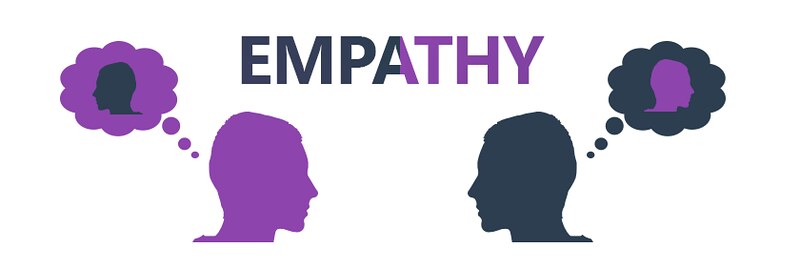
Empathy is the ability to understand and share the emotions of others. This means being able to feel what another being feels. It is often considered a precursor to compassion, because when we are able to understand what another being experiences, then it becomes easier to feel what they feel.
Being able to understand the perspectives of others is an important aspect of being a social being and without it, our interactions with other people would be much more limited. When you can understand the feelings of others, you can more easily predict their behavior. This makes it easier to manipulate them, as well.
It is important to realize, that these are just labels, that have been given to groups of similar behaviors. There is no single correct way to behave, no universal moral code by which all people should live. There are many different philosophies, that one could subscribe to all of which claim, that they are the correct philosophy.
It is only by understanding the perspectives of others and by recognizing our own tendencies toward certain types of behavior, that we can live as a society of free and responsible individuals. Compassion is being able to feel the suffering of others and to want to do something about it.
It is often argued, that compassion should be considered a virtue, like wisdom or courage. While this is an opinion that I hold, it is important to note, that virtues are not the only things, that are desirable in a society. Society needs free individuals, brave individuals, confident individuals and compassionate individuals. Virtues simply provide a framework within which we can organize our society and act either as a guide or a restraint on our own behavior.
In order for our society to function, in order for us to advance as a species, it is important that we have people, that are free from social conventions, that are brave, that are confident and that are compassionate. The role of virtue, then is not to provide an organizational structure, but rather to provide a guide to action.
The Moral Imperative Of Doing Good
There is a common misconception, that the only way to be moral is to follow the rules of society. This is a very narrow and selfish way of looking at things. Society gives us certain roles to fulfill. We have certain responsibilities and obligations to uphold. These are important things and without them, society would be unable to function.
But, we are not bound to uphold these roles or live by these rules. We are free beings, with the power to decide for ourselves what we will do. The only question is: what will we do? Morality, then is a choice we make. It is an idea. It is a social contract, in which we all agree to participate. It is an agreement, that we will treat one another with certain behaviors, in order to live together.
Morality is not about rules and regulations. It is not about what you should or should not do. It is about deciding to do what is right. The concept of right and wrong does not refer to the rules of the society in which you live. It refers to how you yourself want to live your life.
If you want to live your life in a certain way, you can decide that what you are doing is right or you can decide that it is wrong. But, whatever you decide, you need to do it for yourself. The importance of individual choice is crucial to understand what it means to be moral. Only an individual can understand and practice what morality is. No one else can do it for you.
Individual choice, then is the foundation upon which a moral society is built. Without it, we are left with a chaotic society. Within a moral society, the means by which we fulfill our goals are constrained by the rules and norms of that society, but the ends we pursue are ours alone.
Ethical Relativity
The concept of ethical relativity argues, that there is no absolute, objective standard of right and wrong. If there was, we would not be able to change our perspective. There is not a culture on Earth, or even within the human race, that does not practice some form of unethical behavior. No matter how moral we try to be, we are always going to be judged by how well we fulfill our personal desires.
For example, stealing is wrong, but it is a common practice among many people. Abortion is illegal in most countries, but the practice is common among women. War is a terrible thing, but it is utilized as a method of gaining power.
Our world is a wicked place. It is a place in which a large portion of the population is unethical and immoral. This is not to say, that the majority of people are bad. Rather, it says that there is no one right way to live, and each of us must decide what we will practice at our own discretion.
Those who argue for absolute standards miss the point, then. They confuse a constant state of war with peace, or a materialistic culture with a spiritual one. They fail to understand that there is no such thing as a completely good or completely evil society. It is a false dichotomy. There is only a good way to live, and a bad way to live.
Integral Impact Of Mindfulness
The practice of mindfulness can have profound effects on our perspective. It can shift our perspective on the circumstances around us and even our relationship to the world in general. When we are able to be mindful, we are able to look at things from a non-judgmental place. We are able to view everything, without preconception, from a balanced and objective standpoint.
We can acknowledge the reality of things, without personalizing them or getting caught up in our own feelings about them. Our ability to be mindful can have an extremely profound effect on our ability to live a good life.
There are many different kinds of mindfulness.
**There is the kind, that is encouraged by the culture in which you live.** This is often referred to as common sense, intuitive awareness, or simply awareness.
T**here is the kind, that is cultivated through meditation.** This is often described as pure awareness, clear awareness, or even non-attached awareness.
**There is the kind, that can only be found through direct, personal experience.** This is often described as deep awareness, ecstatic awareness, or true awareness.
The difference between these kinds of awareness is a matter of perspective. From the outside looking in, or the common perspective, these are all the same. When we move to the inside looking out, or the rare perspective, these become rather distinct.
As a spiritual practice, mindfulness is ultimately concerned with the development of the individual's character. The cultivation of character, then is the goal of mindfulness.
Thank you for reading.
Lead image source: https://pixabay.com/illustrations/be-happy-positive-emotions-bullet-2411727/
An Introductory Overview To Astronomy And The Universe
Astronomy is the scientific study of celestial objects, space and the physical Universe. Astronomers can study stars, planets, galaxies and other space phenomena to learn about the formation of the Universe. People have always been interested in astronomy. However, it was not until the invention of the telescope, that people could really begin to understand what was out there in outer space. The first person to use a telescope to observe the night sky was Galileo Galilei.
Galileo discovered many things, including the Moons of Jupiter and the phases of Venus. He also introduced the concept of heliocentrism, which stated that the Earth revolves around the Sun. This contradicted the teachings of the church, which said the Earth was the stationary center of the Universe. The church officials charged Galileo with heresy and sentenced him to house arrest for stating this controversial theory.
In the 1600's, people began to use telescopes to study and record what they could see in the night sky. By the 1700's, people began to create detailed maps of the stars and constellations. As telescopes and other instruments became more advanced, astronomers began to learn more and more about what was out there in the great beyond.
Many discoveries have been made and many questions answered.
What Is Space?
Space is all that exists. It is an invisible substance that surrounds everything that exists. Space is not a vacuum. It is a thin soup of gas. Stars and galaxies create the pressure that pushes it outwards, preventing the universe from collapsing in on itself. Space is defined as the boundless three-dimensional extent in which objects and phenomena exist, including the air, other planets, stars and galaxies. Space does not have an outer limit. It is infinite in every direction.
How The Universe Came To Be And What Its Importance To Us Humans Here On Earth?
The Universe began with a Big Bang. This is the generally accepted theory of how the Universe came into existence, though no one is quite sure what caused the Big Bang. Theoretical Physics has attempted to explain it, but so far no one has come up with a definitive answer.
Many things exist, that require energy and can't exist without it. The most obvious one is the Sun. The Sun provides the energy for all life on Earth. Without the Sun, life would not exist.
Life also requires food, which is derived from the products of photosynthesis, which in turn requires light. Photosynthesis only works when there is light. Without the Sun, there is no light and therefore no life.
The Earth itself also requires a constant temperature. If the planet is too cold, life cannot exist. If the planet is too hot, life cannot exist. The amount of light received on a planet directly affects life forms, that can only exist in certain ranges of light. The Universe itself requires energy to exist. Without the energy of the Big Bang, there would be no stars, galaxies, planets, or life in general.
Life has evolved here on Earth to require these things, but what if life evolved elsewhere in the Universe? What if the light, temperature and energy requirements are different? Would the forms of life be different? Who knows what other requirements might be out there? There might be forms of life that cannot exist without a constant stream of energy.
What Are The Stars For?
Stars are massive spherical masses of plasma, that burn through fuel at a tremendous rate. They are the most common form of energy in the visible Universe. Stars provide the majority of the energy required for interstellar travel.
Stars in the Milky Way Galaxy are typically massive, with mass between 8 and 120 times the mass of the Sun. A typical star has a surface temperature of 7,240 Kelvin, hot enough to emit vast amounts of light, and hot enough to be a source of energy for chemical reactions.
Any large mass of matter, whether it be a planet, a star, or a collection of atoms, will have a gravitational pull on nearby objects and emit waves of energy. These waves can be used to transmit signals and this is how radio waves, light waves and other types of waves are formed.
How Do Astronomers Measure Distance From Earth To Other Planets And Stars?
Measuring distance is a very precise art. It is one of the areas of science that rely on mathematics and geometry. There are many ways that astronomers measure distance, each with their own advantages and disadvantages.
The most basic way is by angular measurement. Astronomers measure angles and use the results to calculate how far away a celestial object is. In astronomy, angles are often used to determine distance and this is how the word *'altitude'* is formed.
Another way is by the use of parallax. Parallax is the apparent shifting of an object in our view due to the movement of the observer. This is most commonly used to determine the distance to nearby stars.
A more mathematical way is by the use of light-years. Light-years are the basic unit of distance in astronomy. The distance between the Earth and the Sun is 8 light-minutes. It means the light travels with the speed of light, which is approximately 300,000 KM/s. Most stars are much farther away than the Sun, so a light-year is the ideal unit of distance.
How Does An Astronomer Use A Telescope To Explore The Universe?
Using a telescope is one of the most popular ways astronomy is done. Telescopes make visible the otherwise invisible. They allow astronomers to see farther into the cosmos, than is possible without the aid of optics.
There are two types of telescopes used by astronomers: optical and non-optical.
Optical telescopes use lenses or mirrors to collect and focus light, that is then used to form an image of a celestial object. The more powerful the telescope, the larger the aperture and the more light it can collect and focus. This allows astronomers to see things, that are otherwise invisible.
Non-optical telescopes do not use lenses or mirrors. Instead, they use ionization to collect and focus light. They require much more power than optical telescopes, but their use is not restricted by the element of light. They can reveal things, that are invisible to the human eye.
Both types of telescopes allow astronomers to examine the structure of celestial objects, but they do so very differently.
Will The Universe Ever Stop Expanding?
The universe is vast and immense. There is more matter, that exists in the observable Universe, than stars in the Milky Way Galaxy. There might not be enough matter in the entire Universe to form a single star, let alone planets. The amount of matter that exists on Earth is only a small fraction of what is in the entire Universe.
The Universe is not static. Matter is constantly moving and it is a very large and unruly crowd. Matter comes in many different forms: planets, stars, galaxies, black holes and dark energy. Dark energy is the source of the expansion of the Universe and it causes galaxies to accelerate away from each other. Dark energy is also responsible for the acceleration of the Universe at large scales, which is why the Universe appears to be the same in every direction, despite the fact that matter is not evenly distributed.
Because of dark energy, the Universe will continue to expand at an ever-increasing rate, until such time as a significant event occurs to counterbalance it. Some researchers believe, that the Universe will one day enter an event known as the *'big rip'* where rip is the contraction of all matter and energy. When this happens, all distances will increase (accelerate) by a factor of ten. The entire universe will be smaller, denser, colder, and more distant than it is now.
Thank you for reading.
How Can We Reduce Or Stop Ruminating?
Rumination is something we see a lot of in personal, professional and spiritual growth literature. It happens when we replay a conversation, an argument, a tough situation over and over in our heads with no justification for doing so. We're trying to make sense of it with our own head and that never works. Ruminating isn't just an example of our inability to let go.
There's also an emotional component to ruminating, which contributes to its negative consequences. Ruminating means, that we are constantly thinking over and over about the same thing. It's not just the cliché, that we're constantly focusing on the past. Sometimes, we might be thinking about the past or worrying about the future. We often do it in a negative way, like we try to make the most out of the moment, or we get caught up in the domino effect of the depressing thought.
The Roots Of Rumination
The first step in breaking the cycle of rumination is to identify its cause. The most obvious cause of rumination is a painful or emotional experience. Many of us have gone through experiences, that have caused us pain and/or have made us upset. These are the types of experiences, that tend to make us ruminate.
Sometimes, rumination can also be a learned behavior. As children, we might not have been taught this behavior, but as we grow up, this is often the type of behavior that we are socialized into, through one form or another. We learn through imitation and with the encouragement of those around us. So even if you have no memories of ever being taught to do something, there are still traces of this learned behavior in your body and in your mind.
Regardless of how we learned it, it's possible to unlearn it. Just like any other learned behavior, we can decide not to do it, or to do it in a different way. Another important aspect of rumination is the effect it has on our mood. Rumination can be a downward spiraling behavior. It can make us feel worse about ourselves and life in general. This is why we see a lot of people with mental health issues and why so many of us go through difficult personal experiences.
How Does Rumination Affect Us?
As rumination takes hold of us, it can have a variety of effects on our mood, our ability to perform certain tasks and even our physical health. It's not just our well-being that suffers. The people around us might also be affected. As rumination becomes more normalized, we become desensitized to the things, that used to bother us and that's not good for us, those around us, or the world at large.
People who ruminate are less happy. Research shows, that rumination tends to be linked to a negative mood. When we are in a negative mood, we are more likely to think poorly about other things, like ourselves, which can lead to further unhappiness.
Rumination also tends to decrease our ability to learn and remember. It's not just that we learn less. It's like the experience itself has a way of fading from our minds. In short, rumination erases any good stuff, that might have happened. Our bodies might also suffer from rumination.
Consequences Of Rumination
As rumination continues, it has a way of becoming a habit. It becomes easier to indulge in this unhealthy practice. This means, that we will feel the effects of it for a longer period of time.
In a recent study, researchers found that the more often a person ruminates, the worse that person's physical health gets. In other words, the more your thinking is affected by rumination, the more you will feel and the more your body will suffer.
This vicious cycle can lead to a lot of different negative consequences, such as anxiety, depression, fatigue and a decreased quality of life. The good news is that there are ways to intervene!
How Can You Tell If You Are Ruminating?
In general, there are a few ways, that you can tell if you are ruminating. The most obvious way is when you find yourself obsessing over something. You might be thinking about something that happened yesterday, or something that might happen tomorrow, or something that might happen 10 years from now. This is not a good way to live life. You are not using your thoughts in a way, that is going to serve you.
Another way that you can tell is when you are noticing the same patterns in your thought process over and over again. For example, you might notice that you are thinking about yourself a lot, or you might notice that you are thinking about a past disappointment a lot.
Again, these are not good things to be thinking about a lot. So it's best to try and change the subject or, if that isn't possible, to notice the pattern and change it.
How Can We Stop Ruminating?
As with most things in life, the first step to breaking a cycle is to identify the problem. The reason that we are ruminating is because we are having a negative experience. When we stop having those negative experiences, then the cycle stops.
For example, if we are having thoughts about past disappointments or images of possible future struggles, then we are dwelling on those things and thus, turning them into rumination. That is why the solution is to change the things that we can and simply ignore the things, that we can't. We can't change the past, therefore, we shouldn't worry about it.
Life has a way of constantly reminding us, that we can't do something and when we try, we usually end up feeling worse about ourselves as a result. When we are feeling down or depressed, we might as well stop. It's probably just a period of the day, where we are feeling down and it will pass. We might not feel like this for an extended period of time, but we will get over it.
If you find that you are worrying too much about a particular situation, then you can try to change it. You can try to focus on something else for a change. If it doesn't work, then you can get professional help.
Thank you for reading.
Hey everyone and my lovely readers, followers and sponsors. I guess I will be off with writing articles for a few day. I just can't concentrate and I would not be able to write anything at all. I have Covid and I am not very well. I have headache coming and going as well as blocked nose and cough. Basically same symptoms as common cold, but it makes me tired too. I see how I feel and will be back as soon as I can.
Does Daydreaming Help To Boost Creativity?
The mere act of daydreaming has been shown to be a valuable creative medium. Perhaps, more so than other natural states of mind. And who'd have guessed that? Daydreaming is an activity, that you indulge in without actually knowing there is anything to gain from it. The imaginative flights of daydreaming seem to have been similarly ignored, with few insights or insightful writing. But there is a lot to learn from daydreaming and the process of daydreaming.
Straying away from the daily rat race only to return with a new idea for the world can be a difficult thing to do, but there's a certain group of people who are able to take on a daydream and come out with new insights and inspirations.
Prepare yourself to be a bit surprised. It appears, that daydreaming might just help you in what it seems the most important part of making your ideas become tangible creativity. The idea is that when you daydream, you're using your imagination in a way that supports your *"problem-solving"* mode.
The Definition Of Daydreaming
You don't actually do anything special to daydream; it's just you sitting in a comfortable place with a clear mind and letting your thoughts run free. You should probably close your eyes, but it's not like that really matters. You can just let your mind drift to wherever it wants to go.
You're basically just creating an environment for your mind to do its work. This is in contrast to the *"active thinking"* that most people do, which is focused, directed, and often times, a lot more chaotic.
This passive, relaxed state of mind is what you should daydream in. You can do it whenever you have free time and you should really dedicate more time to it. Just find a comfortable place to sit, relax and let your mind wonder.
Benefits Of Daydreaming
When the daydreaming process is done right, you come away with a number of benefits. More so than most other ways of creating, there are a number of surprising benefits to be had. You can learn a lot, simply by daydreaming. It is a form of *"quiet learning"*. You can also gain inspiration. Inspiration in the form of concepts, images, solutions and more. You can bring these elements together in unique ways to make something new. There are even psychological benefits.
By daydreaming, you reduce stress, you sharpen your memory and you become more emotionally stable. In this process, you are essentially using your mind like a muscle. The more you use it, the stronger it gets. There's one other important thing to note. Daydreaming is a very individual process. Everyone's daydreaming process is different, but there are some common features, that all daydreaming processes share.
Can Daydreaming Create A Creative Breakthrough?
Many creative individuals credit their breakthroughs to some sort of creative *"eureka"* moment. A flash of inspiration so strong, that it completely changed the course of a person's life. While such a moment is a common sight in artists, scientists and other forms of creative expression, it is rather rare in the world of ideas. In fact, most people fail to have such a moment. They struggle for years before their breakthrough finally comes.
Is Daydreaming A Creative Process, That Can Lead To Such A Moment?
There is actually a decent amount of evidence to suggest just that. Artists and other creators tend to use their daydreaming state as a way to generate new ideas and find inspiration. Some also claim to have had *"eureka"* moments when they were daydreaming. The scientific community is still largely undecided on the actual nature of such moments. But there is a fair consensus, that the act of daydreaming can contribute to creative thinking in some way, shape, or form.
You might be thinking to yourself, that this all sounds like a lot of hogwash. Why would anyone spend time daydreaming about such a useless activity? Well, for one thing, you are wrong. For another, daydreaming really is a form of relaxation. You don't really have all that much to lose from giving it a go. So let's explore this topic further.
Daydreaming And Creative Thinking
In order to explore the connections between daydreaming and creative thinking, we need to first define both.
Creative thinking is the process by which human beings distinguish between what is real and what is not. It is the process of innovation and discovery. It is the foundation of human advancement and progress.
In order to be creative, one must be willing to accept risk. New ideas cannot be protected by the status quo, nor can they be safely predicted. At the same time, they cannot be frivolous. There must be a balance between originality and conformity. In short, being creative is a matter of balancing risk and gain.
In contrast, daydreaming is a mental activity in which you place low value on risk. You have nothing to lose, so you try to maintain a logical consistency within your fantasies. As a result, daydreaming is often characterized by a lack of innovation. You simply recreate the same things, that you have already seen countless times.
For this reason, most people tend to daydream in an illogical way. They create fantastical and imaginary situations in order to escape from the monotony of their daily lives. Now that we have a better idea of what we're talking about, we can start exploring the connections between the two.
A "Creative Eureka" Moment
There are many ways in which creative thinking resembles daydreaming. Both are states of mind in which the rules and regulations of reality slip away. In the daydreaming state, there is no clear goal to be achieved. The goal is to escape from the real world as you have already experienced it.
For this reason, daydreaming is often very self-centered. You are the sole source of your own motivation. You create goals for yourself, you imagine their fulfillment and you will yourself towards that end. To daydream, you must be willing to lose track of time, to lose track of reality and to create an entirely fictional world in which you can be the most powerful being in the Universe.
Daydreaming also requires a certain lack of inhibition. If you have a clear goal in mind, you will not be as likely to daydream. Without a clear goal, you will be more likely to daydream. While both states of mind are similar, they are not the same. In fact, they often come together in interesting and unpredictable ways. A single idea can cross the boundaries between the daydreaming and creative states of mind.
The two moments when these boundaries are crossed are what I refer to as a *"creative eureka"* moment. If you're daydreaming, you might have an idea for a story or a song. If you are going into the creative state of mind, you might have an idea for a piece of art. But the crossing of the boundaries is not always pleasant.
Sometimes the *"eureka"* moment is a creative disaster. But more often than not, it is a mixture of the two. That is to say, the outcome is something different, than either moment would have been on its own.
Sometimes the creative output is amazing. Other times it is awful. But it always exists, because of the combination of both the daydreaming and the creative moment. If you are lucky, the results of your *"eureka"* moment might contribute to your breakthrough at some later date.
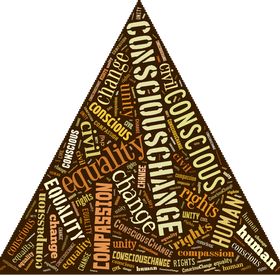
6 Techniques For Conscious Change
Many of you desire to make a difference in this crazy world, but you are often warned against *"self-importance"* – a charge reserved for the people, who believe they are so important, that the world would end without them. Such an attitude is dangerously close to the model of self-importance.
There are a number of rigorous scientifically-driven approaches to studying the human species. They seek to understand the way you think and act, in order to make sure you don't destroy your planet in the process. None of these approaches, however, tell you how to engage in conscious change. They leave that one up to the individual.
It can be difficult to change the way you think, feel, and act even when you recognize the need to do so. Change is hard. The frustrating thing is that often people go through all of the motions but fail to produce any significant change. One thing they may be overlooking is their mental model, which is how they view the world. Without your mental model, you may fail to see, understand and respond to things in the way that will produce effects.
Practice Conscious Thoughts
It is only through deliberate practice, that your mental model will grow and improve. You have to constantly remind yourself, that you are a human being and not a human doing. Just because you have a certain capacity to perform a certain task, it does not mean you should do so.
The very idea of a machine performing any action is repulsive to the very concept of a human. You are a unique and irreplaceable individual. Your thoughts are your own. Your feelings are your own. Your actions come from the decisions you make. Your choices and your decisions are the sum total of your life.
The more you are able to focus on and recognize the nature of your thought process and the role that emotions play in it, the more you will be able to recognize and respond to the various emotions, that arise within you. You will be better able to make good choices and avoid bad choices.
Define Your Uncomfortable Feelings
What kinds of feelings are you having? How can you tell?
It is important to note, that you do not have to feel a certain way in order to be who you are. In fact, you can recognize that you have many feelings, that you would rather not have. You would rather be focusing on other things, but those other things are not available to you. Even if they were, however, would you really rather focus on them, than the feelings that you have?
There are many names for certain feelings. You can decide for yourself what the words used to describe them mean. For example, you can call any intense and uncomfortable feeling *"anger."* That does not tell you anything about anger itself, only that you are experiencing it. Calling it *"unhappiness"* tells you, that you are unhappy, but only because you are currently experiencing that state.
Identify The Obstacles
There are many obstacles in your life that are preventing you from being who you really want to be. The first and most obvious one is simply the fact, that you are feeling angry. As soon as you start to feel any particular emotion, it is natural that you will be less able to function optimally in all areas of your life. You can't think straight, you can't act appropriately, you can't make good decisions. That is the case regardless of what you choose to call the emotion.
Therefore, you have two options. The first option is to take a break from your practice and go do something, that you find pleasurable. You are not required to practice at all, however, so long as you are having a break. The second option is to continue with your practice using a different emotion as a focus for your attention. The only difference is that this time you will be using one of the more passive emotions listed here, such as contentment, hope, or optimism.
Conscious Literal, Behavioral And Emotional Change
**Literal Change:** This would be changing the words you use to describe your experience. For example, if you chose to focus on optimism, you would start to use words and phrases like *"optimistic," "yielding,"* and *"proving."*
**Behavioral Change:** This would be changing your actions. For example, if you chose to focus on optimism, you would start taking steps to achieve your goals in a more optimistic manner. That could mean starting your day with an optimistic attitude or having lunch with a friend to discuss a more optimistic way to solve their problem.
**Emotional Change:** This would be changing your emotional state. For example, if you chose to focus on optimism, you would go about your day with a more optimistic mindset. You wouldn't let yourself be consumed by the negativity, that has such a way of creeping in. Instead, you would focus on the positivity.
You can also choose to focus on any number of these changes at any time and you can choose to focus on one, two, or all three. The important thing to remember, however, is that you cannot focus on a change without also making other changes to support that change.
For example, if you choose to focus on optimism, you will have to be more careful with your thoughts, than you have been. You will also have to be more mindful of your behavior and your interactions with other people.
There are many other things, that will have to be practiced in order for you to become the person you want to be and this is simply one part of that. While you cannot change into someone else, you can change into someone better, than you are now.
Implementation
Now, that you know what it is you want to change, it is time to determine the best way to go about making those changes. This is an important part of the process, as it is through implementation, that the person really begins to change.
How will you go about implementing your chosen change?
By deciding on a way to implement your change, you are deciding on how committed you are to making that change. It is entirely possible, that the very act of deciding to make this change may be enough to reinforce it and cause you to actually begin to make the changes you want.
You have two primary options when it comes to implementing your change. The first option is to go about this with a *"conscious"* or *"rational"* method. This means, that you are aware of what you are doing, you are cognizant of the various choices and decisions that lead up to your current situation and you choose to do something about it.
Examples of this would be if you want to be more optimistic, you could study the various ways, that optimism is reinforced and take steps to apply those methods to yourself. You could also choose to consciously show, through your behavior, that you are more optimistic. This could mean something as simple as smiling more, or it could be something more complicated, such as going to great lengths to help those around you even if no one is looking.
The second option is to go about this with a *"subconscious"* method. This means that you are not aware of the various choices and decisions, that lead up to your current situation and you do not choose to do anything to change it. You are, instead, reacting instinctively to your environment and your own emotions, without being aware of how you are doing so.
Examples of this would be if you want to be more optimistic, you may find it difficult to do so consciously, because you are not aware of how you are coming across. You may find it difficult to show yourself more optimism, because as an emotional reaction you are not actually aware of how you appear.
Which of these two options you choose to go with will depend entirely upon which you think will be most effective for you. I know the latter option does not fit to the main topic of this article, but I decided to talk about that too. There are many other options, that you can choose to go with as well.
Thank you for reading.
Independence, Commitment And Responsibility Are Vital To Becoming An Adult
There is a certain age when you realize, that life isn’t just about pleasing everyone. It’s about standing up for yourself while being true to your principles. When you can do this, you become more powerful and your world is profoundly changed.
When you're a teenager, it's easy to be overconfident, to believe you can change the world and do what you want, even though you're 13 years old and have never held a job and that's just the way it is. Adults come to realize, that their opportunities for independence, personal choices and personal responsibility are limited. By the time you're 18 you know that you must work hard to meet the responsibilities to your family, friends, and community.
The phrase *"independent, committed, and responsible"* may sound like an attempt at one-way self-help advice, but it's really a call to serve something bigger, than yourself. If these qualities are important to you, find a cause, volunteer, or just give.
Growing up is a difficult process, that can be challenging for participants and onlookers alike. As adults, the struggles with independence and responsibility don’t stop, but the rewards may continue until we die. Our society sometimes has a tough time understanding the concept of maturity. Because it's not always easy to see what goes into growing up and the longer we grow up in our society, the harder it is to actually become an adult.
The Transition Into Independence
Adults are willing to share their wisdom with you, but they're not willing to manage your life. You're past the stage of needing their guidance, but you can still rely on them for support. You're not a minor any more. You can make your own decisions, but you can't make them on your own. You still need their support. You might not need them to hold your hand, but you need them to acknowledge, that you are an adult and that you are in this together.
You are more, than just a group of traits. You are a human being. You have emotions. You have needs. You have a mind. You are capable of independent thought and action. There is so much you don't know and so many things you are unsure of, but you are a person none the less. You must learn to rely on your instincts. You must learn to make mistakes and recover from them. If you don't, you will never grow up.
To do this, you must first decide if you will be making a transition in your life. There are two options before you. You can either continue doing what you've been doing all along, with maybe a slight change in your routine, or you can take a risk and try something new. There is no right answer. They are merely two options. You must choose which you think will have the greatest impact on your future.
Learning To Stand In Your Own Way
You must determine if there is any real benefit from continuing on the path, that you are on. A successful, long life depends on you making the right decision.
The first step towards making that choice is to analyze your routine. What has kept you on this path so far? What has been working in your favor? What has been keeping you from branching out? What are you good at? What are you bad at?
Then, you must take note of all the factors, that could possibly affect your future. What skills do you have, that might be useful to others? What knowledge do you have, that could be helpful to others? What connections do you have, that could lead to other useful contacts?
The last thing to do is to think about your relationships. Who does your money, time and energy go towards? Do you really need to spend time with people, that make you unhappy?
After doing all of this, you will have a much clearer idea of what you are capable of and what you like to do. You will be able to define your own limits. These are the things that you need to keep in mind, when making your decision. They are not easy, but they are necessary. They will help you think clearly and correctly.
Finding The Inner Strength To Stand Up For Yourself
To find your inner strength to stand up for yourself, requires to know your own values. If you don't know your own values, it's only natural that you won't know how to stand up for yourself. It also requires, that you define what you consider a *"good life"*. You must be clear about what that is. You can't get caught up in someone else's idea of what a good life is, if you don't even know what it is yourself.
Your values are the qualities, that define who you are. They are the qualities, that separate you from everyone else. They are also the qualities, that attract people to you. If you want to be happy, you must find your values. Once you have a clear idea what your values are you are ready to stand up for yourself. You are ready to have the freedom to make your own decisions.
Ensuring You Get Obligations In The Right Order
Your first obligation is to your family. You may be young, but your family has already raised you since birth. They invested in your education and training and it's their responsibility to help you succeed in your future. That includes your future adulthood. There are many paths to personal and financial independence, but the first step is always education and that includes your education about money. It's not a bad thing to want things and to be in control of your life. The problem comes when you don't understand the process of getting what you want.
You may have a bad habit of trying to control everything, but you need to start realizing, that some things are out of your control. You can't control the economy, stock prices, or the weather. You can only control how you react to these situations. You must develop a strong sense of self in order to succeed.
A Note On Relationships
While you may have heard the phrase *"you don't know what you've got until it's gone"* when you are younger, you really must start taking this to heart. Your family, your friends and your partner are all important aspects of your life. Although you may not agree with everything, that they do or think, you surely respect them as unique individuals. You don't try to change them. You only try to change yourself.
Your relationships with your family and friends will naturally change due to the way, that you choose to live your life. You may not always agree with them, but you respect their support and loyalty. Your partner, however, is a different story. Your relationship with your partner will be shaped by the decisions, that you make about your future.
The most important thing to remember though is that you are always responsible for your own decisions. No one else is responsible. You can't place the blame elsewhere. This isn't a matter of being stubborn or not being willing to cooperate. You must cooperate with yourself. You must take full ownership of your own life.
Thank you for reading.
Is The Middle-Class Really Disappearing? A Deep Dive
It seems as if people are always talking about the middle-class disappearing, but is this a myth? Numbers about the shrinking middle-class have been floating around for a few years now and seem to have reached a fever pitch recently.
It's difficult to deny that people across the board are facing substantial income inequality. Still, there's irritation around the phrase *"middle-class"*. It feels like it's used to describe both a category of people – the actual middle-class – and the term *"middle-class"* as a concept – a socioeconomic standard to measure the amount of wealth a person has.
A recent study casts doubt on claims, that a middle-class is disappearing and suggests, that the middle-class is relatively unharmed in the last two generations of economic changes.
Middle-Class Definition
The phrase *"middle-class"* has been bandied about a great deal over the years and there are as many (or more) different ways of defining the class as there are people using the phrase.
Most often, the phrase has been used as a loose synonym for *"non-upper-class"* or *"non-lower-class"* – though frequently these categories exclude the very wealthiest people, who are often described as *"upper-class"* or *"upper-middle class".*
Another popular definition is the *"purchasing power"* of the middle-class, wherein the middle-class are those, who have the income and expendable resources to buy the goods and services available in a given market.
This is a practical definition, but it also has its shortcomings. If all the goods are available at the same price, then the class is merely in a stable equilibrium in which everyone has what they need. When one person has an advantage over another, then it's a question of power and not class.
A final definition, which includes all the above, is the *"power of the market"* (or the *"power of the state"* depending on your political leanings). This definition recognizes, that there is a relationship between the people in a given class and the class itself, wherein the actions of one are influenced by the other. It also recognizes that the class, is itself a social construct and is ever changing.
With this final definition in mind, the *"middle-class"* can be described as those who have power in the market, or who exercise power in the market. The more one has, and the more one exercises, the higher one is ranked in the social hierarchy, and thus one is considered to be part of the "middle-class".
As with any definition, there are a number of problems with this one. For one, it can be exclusive. If one does not have the requisite money or power to be included in a given class, then one is relegated to a lower class by definition.
For another, it can be self-perpetuating. The actions of the rich and powerful tend to reinforce their position and maintain their standard of living, at the expense of the less fortunate.
In spite of these issues, the *"middle-class"* is a useful concept to consider in the discussion of the state of the world today and throughout history.
Distribution Of Wealth
Over the course of several centuries, economic ideas and practices have produced a global economy in which a small handful of people have an enormous amount of wealth – while billions to survive remain in perpetual poverty.
In terms of income and wealth distribution, the world has tended to segregate itself into a few giant, ever-growing and ever-controlling classes: the rich (who are typically from the developed world); the *"middle-class"* (people from the developing world); and the poor (people from the planet's poorest and most-exploited nations).
These classifications can be difficult to define and even more difficult to justify from a moral standpoint. They presume a certain amount of consent, that many people would be hard-pressed to accept. Nevertheless, they're used as a point of reference in most economic discussions.
The Process Of Middle-Class Developments
It's possible to look at the processes by which the middle-class came to dominate the world and suggest that there may be a better way, but it's also clear that the status quo is immensely durable and unlikely to be overturned in the near future. The process is far from perfect, but there's little that can be done about it from the outside.
The first and most obvious reason is that the mass of people lack the power and resources to challenge the economic and political elites. Their lives are lived in a state of desperation and even that desperation tends to reinforce the elites, rather than threaten them.
Second is the historical tendency of *"developing nations"* to produce vast quantities of a few basic commodities, while importing little of value themselves. This tends to leave them with excessive amounts of these basic inputs and insufficient outputs.
A third reason is the role of technological innovations. Innovation is a *"ruthless"* and *"short-sighted"* process by which industries are destroyed and created. It's not an easy thing to oppose, but it is a dynamic process that tends to concentrate wealth and power in the hands of a few.
Fourth is the concept of comparative advantage. It's not a static concept. A nation can have a comparative advantage in producing one type of good, but not another. For example, it might be more efficient for the Irish to grow food, because the climate is better suited to that, but it would be a waste of resources to produce shoes, when no one in their right mind would wear them.
A fifth reason is the role of trade and international relations. Nations are dynamic things. They can rise and fall, or shift in alliances. Political and economic decisions are made by powerful entities, that balance short-term gains with long-term risks.
The question then becomes, how does one challenge the system when one is weak in the ways that matter?
Inequality Between The Classes
Many people feel that economic and social inequality are immoral and unacceptable; that they are contrary to the basic principles of a moral and civilized society. They're not alone. In one form or another, these ideas have been present in various societies throughout history. The challenge for some is how to realize their ideals. There is no simple or direct answer to that. For others, the task is to find a way to live with it.
Of course, it's not just a question of how we're going to live with it. It's how we've lived for centuries – or at least, how we've lived since the invention of agriculture. Life before that was, well, living in the woods. Most pre-agricultural societies were nomadic and so were essentially equal. Once settled, they became sedentary and so became unequal. Life was indeed different, but it was lived by all.
There is no reason to believe, that a world in which all people have an equal chance to live is either impossible or undesirable. On the contrary, there are many reasons to believe that it's not only possible, but necessary.
It's worth noting that, while the world has never been what anyone would call *"perfect"* in terms of the distribution of wealth and resources, it has never been so unequal as it is today. In many ways, it has been a system of *"global apartheid"*, where a handful of powerful countries enjoy an inordinate amount of economic and political power over much of the rest of the world. The modern *"middle-class"*, while a useful designation, tends to obscure this simple fact.
To be clear, there are no inherent or objective moral values associated with having *"too much."* There are only perceptions and values. Most people in the West tend to think, that greater economic equality is desirable. Most people in the West are wrong. The challenge with any kind of moral argument is that it's so obviously true, that it's hard to refute. Like most truths, it's self-evident. Anyone who wants to argue for it has to argue against something else.
Now, there is no shortage of people willing to make the case, that these sorts of things are undesirable. They tend to do so by appealing to ethics, religion, politics, economics, philosophy, or some other complex subject. In the end, it really comes down to which one of these other things you find more desirable. If you think that some inequality is desirable, then clearly a world in which that is not the case would be inferior. If you think that the pursuit of wealth is desirable, then you must at least think that it should be pursued in a moral way.
The question then becomes, what exactly does it mean to pursue something in a moral way?
Thank you for reading.
Lead image source: https://medium.datadriveninvestor.com/inflation-is-a-tax-on-the-middle-class-307b1c04d3d1
I wish a Merry Christmas to every authors. Have a wonderful festive season.
Achieve Success Easier By Eliminating Negative Self-Talk And Practicing Positive Self-Talk Instead
It's easy to let negative self-talk creep in and take over your life. The only way to defeat it is to quickly realize what's happening and then work in your own self-care. Too often, negativity can turn into a full-blown toxic environment. In this post, I take a look at how optimistic thinking and positive self-talk can help see the world through a lighter lens, which not only leads to a better mental state, but also helps us reach success faster. Thinking positively and eliminating self-talk that is always pessimistic or pessimistic in nature is one of the most important pieces to living a healthy, happy and fulfilled life. Trying to just ignore your negative thoughts is one of the most ineffective ways to have a positive self-talk life.
Why Negative Self-Talk Is A Problem
A very strong internal struggle with negative self-talk, even if it is only a few moments of your thoughts, will most likely have a very similar effect on your psyche as a strong external struggle. In other words, it will wear you down. It can make you feel very anxious or depressed.
For some people, negative self-talk can be more of a struggle than others, but all of us have our bad days. The difference is in how we handle them. The earlier we can intervene and get a handle on the situation, the better. If you let a day or a week of negative self-talk spiral, it will almost certainly get worse before it gets better. What we must do instead is to be aware of our own negative thoughts. All it takes is a very simple and straightforward approach.
Always Be On The Lookout For Negative Self-Talk
The most important thing to remember is that you are always on watch for this kind of stuff. It is very easy to get caught up in the moment and have your attention hijacked by it, so it is important to be aware. Especially when you are experiencing a strong negative emotion.
You can try a few different things in order to combat this kind of thinking. The first thing you could do is to simply notice it and give it no mind space. You are much more successful at ignoring your thoughts if you are aware of them. This means being mindful of them, noticing them and then choosing not to engage with them.
Another thing you could do is to try to take a more objective outlook on things. Instead of looking at what you are experiencing through the lens of *"I'm having a bad day."* or *"Everything is terrible."* you could try to observe the situation with more of an *"out of the blue"* perspective. *"I really can't complain about life at all."* or *"Everything seems to be going exactly as it should."* may be more helpful for you. It is also important to remember, that you are in control of your own thinking.
Take Control Of Your Thoughts
You can create your own meaning and your own story and you choose how you react to your situation. There is always a choice. You just have to choose the better one. Being able to have perspective is an important aspect of being mentally fit. When we are able to look beyond the present and see the past and future with a more *"optimistic view."* it gives us a greater chance of success.
This is something that can be developed through practice. One of the best ways to do this is to reflect on our own life. Reflecting on the good times and the bad times can have a very positive impact on our lives. It is important to realize, that no matter how bad something is at the moment, it can always get worse. If you are able to see that, then you will have successfully changed your perspective.
Ways To Have Positive Self-Talk
Optimism is a very useful tool in times of need, but also a very desirable personal trait. Optimism can give us a sense of hope, that is very necessary in times of trouble. It can also give us the confidence, that we need to succeed in life. Having a positive self-talk can be a very helpful tool. A good way to think positively is to use the law of attraction to help you see the silver lining.
You must always remember that life is life and it will not be perfect. You can only be in control of what you are in control of. Your life is your own to live and you alone will be responsible for its outcome. There are many things that you cannot change, but there are also things that you can. You just need to figure out what those are. The secret is to know and understand your own power and then to use it.
How can you have confidence that you are doing this? You can look at it this way: if you are having a bad day, then nothing is working as it should. If you are having a bad day, then something must change. Confidence that you are in control of things is a very helpful thing to have.
**You can embrace the fact that life is what it is, and don't let it get to you.**
There is no use in putting positive energy into a situation, that is already doomed to fail. It might seem like a good idea to do so, but in the long run, it will just get you a bad result. You must learn to accept things as they are. It's the only way to go. When you are having a bad day, you must remember that it is temporary. Everything will work out somehow.
**You can look towards the future with a more positive mindset.**
This can be done by focusing on what you want, rather than what you don't want. If you can picture in your head what it is that you want, then you are highly likely to get it. You must learn to really want what you want and to let go of everything else. If you are able to do this, then the chances are that you will be able to focus on that future that you have envisioned.
**You can make a plan for how you are going to deal with whatever situation you are faced with.**
When things seem at their darkest, this is when you must make the most of the light that you have. It is at these times, that you must put your plan into motion. Having a good plan can give you the confidence, that you need to carry on. You must be willing to do what it takes to succeed. If you find yourself in a position where you have no other choice than to succeed, then you must succeed, even if it means putting your life at stake.
**You can visualize your future in a way, that will help you believe that you will get there.**
This can be done through visualizing, imagining and more importantly, believing. Believing is probably the most crucial part of the process. You must convince yourself, that what you are imagining is real. You must convince yourself, that you will get what you want. It helps to use the power of positive and negative thinking. When you are visualizing a situation in your head, you are using the power of positive thinking.
**You can reflect on your life so far and determine where you went wrong and how you can prevent the same mistakes from being made again.**
A good way to look at the past is to see it as a learning experience. By doing this, you are looking at the situation, that you are in with a more objective view. You are able to look back and see the decisions that you have made and the results, that they have given. You are also able to look ahead and see where you are going wrong. If you are able to do this, then you will be able to prevent yourself from repeating the mistakes that you have made.
Practice Positive Self-Talk
Make a commitment to yourself to work on being a positive thinker. You will find that there are many benefits to having a more optimistic outlook on life. It is always more beneficial, than a negative one. The secret is to focus on what you can change, and leave the rest alone.
As you think more positively, you will find that your attitude towards life will change. You will begin to look at each situation as an opportunity, rather than a problem to be avoided at all costs. Your confidence will grow and so will your capability to succeed.
In order to strengthen your mindset, you must take small steps. You must commit to trying out new ways of thinking and then sticking with them. You must take the initiative and be willing to make sacrifices along the way. If you are to move forward in overcoming your fears and phobias, then you must do so gradually, but surely, without compromise.
As you become stronger in your thinking, you will find that the world will seem less like a frightening place and more like a place, that can be overcome. You will look back at the phobias that you once had and laugh at yourself for having such fears.
Thank you for reading.
What The Revealed Remains Of The Ancient Egyptian Civilization Tell Us
One of the most notorious mysteries of the modern world remains unsolved: the rich and mysterious ancient Egypt: the state, that gave you pyramids, pharaohs, mummies, and Egyptology. Scholars still argue whether these ancient ruins are the ruins of a civilization or the work of an advanced civilization, that predated Egypt. A lot of researchers believe, that Egypt was a much more technologically advanced civilization, than modern theories traditionally allow for such as mining, metallurgy and irrigation.
When archaeologists reveal the secrets of the ancient Egyptian society, they will be taken seriously for a change and these secrets are not about deities or mathematics. They are about how to build a more prosperous society. No other society even comes close. Today, scientists and archaeologists are looking back on their techniques, trying to find clues as to what made that civilization so powerful.
Real Ancient Civilization Or A Myth
While an archaeologist may have some credibility, they are still an archaeologist, and the subject is still considered a very controversial one. The evidence is not conclusive. Egypt may have been an ancient civilization, but it may also have been a myth. Even if they were a real ancient civilization, the techniques they discovered may not be reliable.
Many of the scientific principles underlying archaeology were only discovered in the last few hundred years. The methods and techniques may have been outdated when archaeologists used them. There is also the threat of cultural contamination. The knowledge of farming and construction was likely to have been passed down from generation to generation within an entire village or tribe. When archaeologists disturb that knowledge, they risk having their findings attributed to the actions of that particular tribe.
These are all legitimate concerns. As such, many skeptics remain unconvinced of the findings of the archaeological community. To some, the work of Egyptologists is nothing more, than a series of elaborate tales. There is little evidence that the ancient Egyptians ever even existed beyond the tales of Greek and Roman historians. To these doubters, any archaeological find, that does not fit the traditional narrative is dismissed.
However, many researchers discount these arguments. The alternative explanation may be wrong, but dismissing it because it challenges the accepted theory is just bad science. It is not as if the archaeological findings to date have been trivial.
In this article I will talk about two interesting findings and a method, where the general public can take part in the discovery.
The Rosetta Stone
The discovery of the Rosetta Stone, unlocked the entire written language of the Egyptians, a previously undecipherable script. It allowed for the eventual translation of the entire Egyptian language, which has lasted to the present day. The Rosetta Stone is an artifact, that has become symbolic of all the breakthroughs in the field of archaeology. The discovery of the Rosetta Stone meant, that the entire written language of ancient Egypt could be deciphered, allowing for an entire body of literature to be translated into modern languages. While there is still much work to be done, the Rosetta Stone has had a profound effect on the discipline of archaeology.
Wooden Ba-Birds
The other discovery that has made an impact is the discovery of wooden "Ba-Birds." Archaeologists initially thought that any artifacts discovered in the area had been left behind by the ancient Egyptians themselves. A possible exception to this was the "Ba-Birds." The discovery of these artifacts was something of a shock to the archaeology community.
It took a while for researchers to come to a consensus about what these artifacts were and how they were made. The consensus was that these artifacts dated back to at least 332-30 BC, making them one of the oldest known artifacts in existence. The "Ba-Birds" were designed to look like a type of vulture, with a long thin beak, legs, and feathers. The body was covered in a thick layer of resin, which may have kept the body stable in a type of suspension.
While there is still plenty of debate over how the "Ba-Birds" were created, or even what the exact purpose of the artifacts is, there is no longer much doubt, that they are extremely old. There is evidence, that these artifacts may have been used as an attachment to the coffin during the era. They were designed and created by the Egyptians themselves. It is only common sense, that any artifacts created and used by ancient Egyptians must hold great power.
What Will The Archaeologists Discover Next?
The work of archaeology is ever ongoing. The discoveries of the past few decades continue to open new doors into the discipline. As such, archaeologists are always looking for new ways to approach their work. One such method is through "crowdsourcing." This process takes the work that would normally be done by an archaeologist, and distributes it among a large number of people. In this way, a greater number of people will have a part in the discovery process, and the chances that an overlooked artifact will be found is increased. With this method, archaeologists attempt to avoid the *"arrogant"* approach of *"digging in one place and discovering things,"* and instead try to *"maintain a healthy sense of wonder"* and *"work with available clues."*
Crowdsourcing is a process through which the public can participate in archaeological research. The public may submit their own theories or suggestions, and those suggestions may be used to further research. Crowdsourcing is a way for archaeologists to engage the general public and to open up new lines of inquiry within the discipline. It is a way to encourage *"out of the box"* thinking, as well as to try to counter the *"group think"* that can plague academia.
The idea of crowdsourcing is nothing new. In fact, many of the principles involved have been around for several centuries. The difference is in the tools used to conduct research. The invention of the printing press and the Internet have given rise to a vast new toolbox for researchers. The use of these tools has allowed for the growth of citizen science. In the case of crowdsourcing, the general public is given access to these tools to aid them in their research. As such, the public can be directly involved in the study of archaeology in new and exciting ways.
Thank you for reading.
Lead Image source: https://www.flickr.com/photos/fogey03/6521249637
Should You Care About What Other People Think About You?
Most of the time, if you care about what someone thinks about you, then you must not be able to stop what you're doing to ask for their permission or change anything you're doing. People often tend to care too much about what others think of them. Care deeply about what matters to you, instead. It's so easy to want to know what other people think about you, especially when you hear comments, that make you feel bad, but they might actually make you feel worse, because you will always compare yourself to them. If you want to succeed, put your best face forward. Be ready to win, but you need to be ready to lose too. We have to be ready and deal with rejections sometimes. We have to accept the fact, that we will never be the most important person in our lives.
https://www.scotthyoung.com/blog/2019/07/05/worry-less-what-others-think/
How To Deal With Rejection
You can't change the past and you can't do anything about the future. The only thing you can do is put your best foot forward and show the world the person, that you want to be. You can't please everyone, if you really want to have a happy life, but you can please yourself.
Rejection is part of the game. It's a learning experience. There will always be people, who like you and there will be, who not. It's a part of life. You can't let the opinions of other people dictate how you live. You have your own mind and your own values. It's not worth it.
You need to change the way you think about rejection. Not everyone who approaches you falls to your desires. In fact, most times it's the opposite. Most people who are drawn to you, stumble upon you and your personality at the same time.
You are who you are. You can't change that. You can only work on yourself and become the best person you can be. You can't do it by asking for permission, or by trying to prove everyone else wrong. You can listen, but you can't let other people's opinions control you. You have to go out there and make yourself known.
Why Do We Care So Much
People will always look at you and analyze you. You can't avoid them. It's unavoidable. No one ever really looks inside themselves to see what they are really made of. We all have our insecurities and our faults. Most of us spend our lives trying to conceal them or change them.
But it's not worth it. We are who we are. You need to stop worrying so much about what other people think of you. You have the possibility of doing things in this world, that others can't do. When it comes to caring too much about what other people think about you, you have to stop. You have to take control of your life, and learn to live with who you are.
We will never be perfect and yet we still care why, because we are human and we still want to improve ourselves. So we need to start caring about ourselves, and stop caring about what other people think. If we do, we might actually have a chance at being happy.
Why Is It Hard To Understand Others
We are all walking contradictions. Other people can't comprehend the things in our heads. They can't understand how we can think a certain way and be so confident about it, and still be willing to try it. It's all in the way we look.
They see you with their eyes. They observe you with their eyes. They evaluate you with their eyes. But when you look back at them, with a smile on your face, when they look into your eyes, there lies the possibility of them realizing what you are trying to tell them. People like us are misunderstood.
We hear what they aren't saying. We see what they are not seeing. We know what they are afraid of and we use it against them. You have your own truth. There is no one else who will have your same truth. Other people will try to force their values on you. They will try to shame you into changing.
When that happens, you need to look into their eyes and see beyond what they are showing you. You will never be able to please everyone. That is a lie they tell you so that you will be willing to give up your freedom to make others happy. You can't make other people happy. You can only be true to yourself.
The Effect Of Other People's Opinion On You
Opinions can be a very dangerous thing, especially when they are attached to the value judgments, that come with them. You can lose everything, because of the way someone else interprets what you are doing.
Maybe the person who is giving the rejection has a different idea about what you are attempting to do and the way they think it is wrong. Maybe they think it's admirable, even praiseworthy. Then their opinion will be the one that affects you.
For example, you are not interested in being a rock star, but you are taking steps to be a musician. You are just not good enough to be one. The opinion of those around you is that you will not be a musician, that you are wasting your time. They tell you that you should just accept it and find a regular job, because the chances of success are slim.
Well, that is their opinion and perhaps it is right, but it doesn't have to be your opinion. You can believe in yourself, and your dreams can be something, that you are very proud of. You can work hard to make them reality. You can look in the eyes of those, who are giving you advice and see yourself reflected there.
Thank you for reading.
Create Empathy In Your Content Through Fear And Anger
We know people are more likely to feel empathy for someone with whom they have a shared interest. Lucky for those of you who believe in the power of words, you have the wonderful ability to use them to make people feel certain emotions. And it turns out that certain emotion can then lead people to act in certain ways. Case in point: seeing the word *"fear"* in an article or a book title can make them empathize with the author, if they are experiencing a high anxiety or an emotional pain. The trick is to match the emotion with the words.
It has become apparent, that empathy is a vital part of human functioning. With the rise in mental health issues like depression and anxiety, research into ways to decrease empathy in humans is gaining more and more traction. Humans tend to empathize with people they like. Yet, a new study found that emotions, that express positivity also create more empathy. But emotions, that create negative emotions also cause people to empathize less. This article sheds light on how you can use emotions like fear and anger in your content to increase empathy.
https://jreidtherapy.com/fear-of-anger/
Empathy Is A Necessary Condition
According to the most recent studies, empathy is a necessary condition for human flourishing. Without it, humans are more likely to engage in violent conflict and be open to exploitation and manipulation by others. In other words, they are more likely to become victims.
However, empathy also plays a role in the perpetuation of violence and other social pathologies. For instance, people who are unwilling to empathize with the experiences of others are more likely to support and engage in acts of oppression. Research shows, that people who hold a *"superior"* view of themselves tend to be more accepting of other's mistreatment.
Given this knowledge, the role of empathy can be complicated. The human mind is a complex instrument, and sometimes it's better to disable certain functions, than to risk an individual's flourishing. But to what extent are you able to manipulate in order to create empathy?
Content Creates Empathy
The most effective way to increase empathy is through content. Emotions are a powerful way to connect with people. The reason why people are so open to being persuaded when they are feeling fear is because they are expecting the worst. They are hoping against hope, that it will not be as bad as they imagine.
Yet, humans are also very good at rationalizing. They are able to separate the wheat from the chaff and create a veneer of reason to cover their biases and desires. So in addition to communicating through emotion, it is also important to leverage rational arguments.
The best way to do that is to use stories. People find stories more intuitive than facts and are therefore more likely to use them as a guide for how to act in the real world. Stories also have a way of obscuring the facts and thereby creating a more palatable version of reality for the individual using them.
In order to increase empathy through content, you will need to choose which emotion you wish to engender in your audiences. This is where the research comes in, but as mentioned before in this article the focus is on fear and anger.
The Role Of Emotion In Generating Empathy
There are certain emotions, that tend to be more *"generative"* (as in, they tend to increase empathy) than others. The most basic of these are fear and anger. These are the two emotions, that you want to focus on when you are trying to increase empathy in people.
However, it is important to note, that both fear and anger can have either a positive or negative influence on human behavior. You will need to consider the situation in which you are using either of those emotions.
As it turns out, fear tends to be more effective in increasing empathy when people are experiencing a sense of helplessness. Anger tends to work better, when people feel righteous indignation. In either case, the goal is to match the relevant emotion with the appropriate word choice and narrative.
So, when it comes to fear, the main strategy is to focus on creating a story in which people are the protagonists, rather than the victims. When it comes to anger, you want to focus on eliciting an experience of moral outrage, such as someone treating someone else as less-than-human. In sum, there are two general strategies, that you will need to pursue in order to maximize the effects of your content on people's minds.
The first strategy is to focus on the rational and emotional aspects of a situation. For instance, if you are communicating the idea that someone is being mistreated, you might emphasize the idea, that the person being mistreated has the potential to grow dissatisfied with their situation (i.e. *"they might not be getting what they need"*), or you might focus on the idea of *"redress"* (i.e. *"denial the right to be respected"*).
The second strategy is to focus on the values, that the audience holds (i.e. *"the right thing to do"*). By communicating a clear idea of what is and is not a *"good"* or *"acceptable"* behavior, you are more likely to elicit certain responses. Of course, there are many other ways, that you might try to influence people, but the above are some of the most common.
Fear And Anger, That Prompt Empathy
The next step is to consider the situations in which each of these basic emotions is likely to come up.
**Fear**
People will need to be afraid in order for your content to have an effect. However, fear can be very dangerous. An audience that is already predisposed to fear can easily turn to panic.
One of the best ways to increase the effectiveness of your fear-based messaging is to focus on the *"other-regarding"* properties of fear. In other words, you need to make people afraid for reasons, that extend beyond themselves.
You can do this by focusing on the possibility of the existence of a *"higher power"* whose interests are beyond those of the audience, and who might, at any time, decide to inflict pain and suffering for their own amusement.
If fear is your primary concern, then you will want to focus on the idea of *"sin"* and *"guilt"*, as these are concepts that are particularly effective at instilling fear.
**Anger**
Most people are familiar with the notion of *"anger"*, but most people have a very limited conception of what it really is. The proper way to conceptualize anger is as a *"raging fire"*, a force of nature that cannot be tamed and must be dealt with.
The best way to communicate the idea of anger is to focus on its destructive properties. When people are angry, they are not concerned with the long-term consequences of their actions. Therefore, they are also less likely to be concerned with the consequences, that they are likely to experience in the future.
Their only concern, in other words, is short-term satisfaction. The trick, then is to find a way to suggest, that you are not a part of the system that allows people's suffering and thus, are not likely to suffer in a similar manner. There are a variety of ways to do this, but none of them are particularly pleasant.
You could say, that this is simply the way things are and that no one is innocent.
You could suggest, that people need to take their anger elsewhere, because ultimately, the only one who can control their anger is themselves.
You could even go so far as to suggest, that the only way to stop anger is to feel it properly.
There are many more, but you get the idea.
Putting It All Together
Now that you have identified the specific elements, that you will need to focus on in order to generate empathy through the use of fear or anger, you are ready to put it all together.
There are three main steps to making your fear- or anger-based communication more effective.
The first step is to identify the audience members, who are particularly predisposed to being receptive to your message. This will depend on both the type of person, that the listener is and the nature of the message itself. For instance, you will likely be more successful with certain types of messages, if you are speaking directly to those types of people.
The second step is to plan out the exact wording of your communication. You must be careful not to give any indication, that you are not to be trusted; the last thing you want to do is give the impression, that you are attempting to hide anything from those, who are listening to you.
The last step is to practice the delivery of the message as much as you can. Once these things are in place, you are ready to perform. Before you do, however, you should try to assess the situation with as much information as you can.
Thank you for reading.
What Is It Like To Live A Life With Imposter Syndrome?
Living with Imposter Syndrome, a documented psychological phenomenon experienced by high-performing individuals, who feel an intense desire to prove themselves to those around them, is much like living with a sense of uncertainty and worry. Imposter Syndrome can occur in anyone, but there are some key differences between those who develop it and those who don't.
People with Imposter Syndrome are more likely to struggle with conformity, have poor self-perception and have low self-esteem. It is the feeling of being a fraud. It's the idea, that you're more likely to be found out for what you really are not just by others, but yourself. A person struggling with Impostor Syndrome has a constant fear of being exposed as a ‘fraud' or a ‘failure' and it becomes inextricable from their very identity.
Coping With Imposter Syndrome
A number of different strategies can help people suffering from Imposter Syndrome. It is important to note that, while all of these strategies are good, they are not absolute necessities.
The first thing one must do is accepting one's condition. There is nothing, that one can do to change the fact, that one is an imposter. It is only through accepting this fact and being honest about it, that one has a chance to develop a more positive outlook on their situation.
The second thing one must do is to find a strong support system. This will help them cope with the doubts and insecurities, that they will inevitably face. It will also contribute to their success.
The third thing one must do is to be selective about the situations in which they apply themselves. The more one ventures into unknown regions, the higher the probability of being caught and the more severe the punishment is likely to be. It is better to be safe, than to risk being a fool.
Finally, it is important to take a deep breath and to stay calm. Panic attacks serve no good and in fact hinder the process of moving forward.
Social Interactions As An Imposter
https://www.lawsociety.org.uk/topics/blogs/stop-imposter-imposter-syndrome-in-the-legal-profession
Social interactions can be difficult as an imposter. It is very hard to determine if one's actions are being judged on a moral sense or purely on a practical one. Most of the time, people will not recognize that you're an imposter, but rather assume you're one of the "good" ones who just got lucky, rather than someone who deliberately attempted to deceive.
When the time comes to lie, it is hard to know when to do so. Deceiving people is a serious matter and can have serious consequences. Should one lie to avoid seeming like a "bad" imposter, or tell the truth and risk being exposed as one? These are things that you must consider. It is also important to remember, that no one can tell if one is being sincere or not. This is another thing that you must bear in mind, if you wish to have any chance of success.
Controlling The Syndrome
You can work hard to try and control the Imposter Syndrome, but you're likely to fail. This condition is not one, that can be fully controlled, but rather one, that can be managed. In other words, one cannot simply will themselves to become a "real" person, but they can keep it under check. The only way to do that is to stay focused.
There are a number of ways that can make one seem more "real", but the only way to actually be more real is to interact with the world, regularly. This can only occur, when one is not in the middle of a panic attack. When a panic attack does occur, it is best to either sit, relax and breathe deeply or grab a trusted companion and just talk.
Effects Of Imposter Syndrome
The main effect of Imposter Syndrome is in the way, that it makes an individual behave. They are more likely to engage in behaviors, that they think will make them appear more competent. Their actions are likely to be more risky, because they assume the worst possible outcome from a moral or logical standpoint.
Because they are constantly worried about being found out, they tend to be very guarded and cautious. This does not necessarily mean, that they are a "bad" person, it just means, that they have a tendency to engage in "tricks" and "trades", rather than trusting relationships.
When dealing with people, the Imposter Syndrome can cause one to either:
Understand that others are probably lying to them or
Just accept that they themselves are probably lying to others, because it is impossible to tell if they themselves are telling the truth.
This can lead one to be very cynical and distrustful of others, which can severely impair social interactions. There are also some other effects, that aren't present in every sufferer, but are common enough to mention.
Rapid mood swings, from being extremely happy to being extremely depressed.
Odd compulsions to do certain things, that one might not normally do.
Inability to concentrate, either on academics or on tasks at work.
In rare occasions, there can be more serious manifestations of the condition. People with severe cases can lose touch with reality. They may start hearing voices, seeing things or simply acting in ways, that are not socially acceptable. If such a person is not properly diagnosed and treated, they may lose their mind.
How To Overcome It
There are a few different ways in which one can try to overcome their condition. The only way one can truly overcome the Imposter Syndrome, is to succeed in their endeavors. This is the only way, that one can really move past the condition. One must not give up. There will be situations in which one's actions might seem reckless or foolish. That is to be expected.
What is not expected is the number of panic attacks, that one will experience. It is essential, that one develops a strong sense of self worth, before continuing their deception. It is also imperative, that one finds a way to deal with the amount of shame that they experience, from being caught out as an imposter. The only way to overcome this shame, is to take complete control of their situation. Only by being proactive, can they hope to gain the upper hand.
Develop A Routine
A routine is very important. It gives one some sort of structure and predictability to their life. Without it, they are very likely to slip into a state of panic. Having a routine also gives one a sense of control. When things are "going well" one has a sense of accomplishment. When things are "going poorly" one can fall back on the routine to help them through. It is very likely for one to have a negative outlook on their life, if they do not have a routine.
Having a routine also prevents one from being "over-involved". Involvement in activities that are not beneficial to one's overall goals, can have very negative side-effects. One such activity is an unhealthy obsession with the deceiver. This can have a detrimental effect on one's ability to interact with the "real world".
Thank you for reading.
5 Approaches In Postmodern Philosophy, That Oppose Traditional Modernist Episteme
Postmodern philosophers have argued, that traditional modernist episteme are inadequate to the understanding of a technological, late-capitalist society. However, as many scholars have noted, the adoption of a postmodern perspective is most unlikely to lead to any actual political or social change.
The apparent skepticism of postmodern philosophy should be understood in a hegemonic, not a skeptical, context. In other words, it is a philosophy that is willing to acknowledge and examine its own hegemonic structures of knowledge and belief as they relate to a given social situation.
As a result, while many of its proponents may or may not be intentionally constructing a "grand narrative" out of their observations of the world, many of its practitioners are, to some degree, beholden to a hegemonic paradigm, that is functioning as the foundation for knowledge in a given domain.
The following are five examples of theories and approaches in postmodern philosophy that oppose traditional modernist episteme, as they relate to race, gender, sexuality, class, and the environment.
Race
The most obvious and easily acknowledged example of a hegemonic concept in a postmodern context is that of "race." As a concept, race is a set of social constructs that are used to explain and justify social phenomena. As a metaphor, race designates a set of human biological traits, that are seen as defining a group of people in a given context and as a trope, race designates a set of characteristics ascribed to the group members in order to reinforce a given social hierarchy.
There are two primary ways in which race is used to construct social hierarchy. The first and most obvious is that race designates those, who are part of the "superior" group and those who are not are designated as "inferior." This is a basic way in which society differentiates between the "ruling class" and the "proletariat," between the "masters" and the "slaves" of society.
The second, more subtle way in which race is used to reinforce a social hierarchy is through the production and circulation of racial stereotypes and caricatures. Racist stereotypes promote and propagate a climate of fear and hatred toward racialized groups, and they serve to justify and protect the social status quo. As a result, the "ruling class" is more likely to police and police-like behavior toward the "inferior" races and the institution of slavery becomes a permanent aspect of "ruling class" mentality. There are, of course, countless stereotypes and caricatures, and the "ruling class" is constantly producing and reproducing new variations of these caricatures to maintain its power.
The concept of race therefore plays a dual role in the social construction of knowledge and the reproduction of social hierarchy. On the one hand, "race" is a useful metaphor for the way, that the human social landscape is "divided" between powerful, "superior" groups and weak, "inferior" groups. This metaphor provides a simple way to talk about complicated social questions and it allows for easy moral judgments and condemnations of entire groups of people. On the other hand, as the social landscape is in fact deeply hierarchically and morally stratified, traditional notions of "race" can be used to both validate and reproduce this structure of social inequality.
"Race" is a hegemonic concept, and like all hegemonic concepts, it functions as the "common sense" of a given field (in this case, sociology). Any alternative views of the social world are either ignored or condemned as a form of "cultural imperialism." In other words, postmodern philosophy and sociology tend to reproduce, rather than question, traditional notions of race.
Gender
The modernist concept of "gender" can be described as a "structured openness" in which the identity of the individual is determined by that of their social role. In other words, as a given social role is defined for each individual, it then becomes that individuals "identity." This notion of identity is then used to justify the social roles that individual play within a given society.
As such, the concept of "gender" can function as a hegemonic concept. Specifically, it can be used to "justify" social roles and structures, that are designed to benefit some groups of individuals over others. For example, in a society in which men are accorded more status than women, the individual man is likely to be defined as the "ideal" human being, while the woman is viewed as the "ideal" mother.
The notion of "gender" also plays a role in the production of gender stereotypes, which influence how gender is socially constructed for each individual. For example, the modernist notion of "masculinity" is largely constructed through the social perceptions of those who have the role of men. As a result, masculinity is both a social performance and a set of gendered behaviors and traits, that are valued and rewarded within a given culture.
The postmodern concept of "gender" goes beyond traditional modernist notions of "binary" and "oppositions," and, instead, "engages with" the question of how individuals and groups of individuals are "situated." This is a difficult notion to grasp, but it can perhaps be understood in terms of a "gendering of power" in which men are positioned over women, or "superior" over "inferior." This is not to say that men are always the "ruling class," or that women are necessarily the "proletariat." It is, instead, to suggest that there is a connection between those who command power and those who are commanded.
Sexuality
The concepts of "masculinity" and "femininity" are used to describe and organize human sexuality in ways that are often crudely "naturalistic" in intent. However, this is a decidedly modernist approach to the question of human sexuality, and the "naturalization" of the categories reflects a complex discourse and history.
For example, the modernist concept of "masculinity" was largely produced by the male members of the upper class in the Western world, and the concept of "femininity" was subsequently used to "reconstruct" women who were seen as lacking in appropriate "masculinity." Similarly, the notion of "homosexuality" is used to describe those, who engage in acts that are allegedly "unnatural." That is, homosexuality is a social construct, that is produced and policed by the heterosexual majority, and those who are "different" are seen as lesser versions of the dominant, "natural" human being.
The concept of "nature" is also important here, as it is used to both "prove" the natural order of things and to justify deviations from that order. For example, the notion of "natural" procreation is used to suggest, that women are merely vessels for the delivery of an "innate," biological, child. Conversely, the suggestion is then made that those, who fail to comply with "natural" procreation are themselves unnatural, and therefore abominations.
As with so many of the other social categories that exist to "order", maintain and justify the world, these concepts are not immune to critique. Critics have pointed out how the idea of a "natural" order to human sexuality is a relatively recent invention and one that only exists in the modernist, post-Enlightenment world. They argue, that the notion of an innate "standard" human being is a white invention and that bodies such as that of the "trans" woman are "abnormal" and exist only in relation to a narrow range of normative behavior. They further argue, that the "natural" human being is a social construct, and that being human is not some kind of "natural" state but a cultural one.
As with the other categories, such as the "race" and "gender" discussed above, it can be useful to think of this concept of "nature" and the ways in which it is deployed and understood by a given society as a kind of "superstructure", that organizes the underlying, material basis of that society.
Class
The ways in which the class system is naturalized and rationalized reflect the interests of those, who benefit from it. The postmodernist concept of "class" is used to explain and understand social outcomes and processes that are otherwise inexplicable and therefore are "given" or "inevitable."
This concept can be useful, when we are considering large-scale systems of oppression or exploitation, such as the European colonial or slave systems, or the contemporary global capitalist one. However, in considering the everyday violence that is produced by this system, there are significant problems with the concept of "class." Specifically, it ignores the material, or non-material, consequences of that violence. It also fails to consider the ways in which it is actively produced and maintained by those who are empowered within it.
For example, it is quite easy to see how the "middle-class" European colonists, who populated the New World with the help of black slaves were able to continue to maintain their standard of living in a manner not possible for their ancestors, while at the same time exploiting and oppressing the indigenous population to the degree, that they would never have been able to achieve on their own. Similarly, it is quite easy to see how the lives of the people, who are now called the "working class" are continually made worse by their place in the system, through a combination of material deprivation, social coercion, and structural violence.
The concept of "class" can therefore be deployed quite usefully in the study of these issues and should not be confused with the term "structural violence". However, it is quite a limited concept and cannot be considered a "proper" analysis of the social world.
Environment
The ways in which the natural or physical world is exploited or controlled by human beings reflects the interests of those who do so. The postmodernist concept of "nature", especially in its more "ecological" forms, is used to articulate and justify these forms of exploitation, while ignoring the "consequences" of such actions.
The natural world is seen as a resource to be exploited for human gain, rather than a living being, that is in need of defending. Natural disasters are often used as convenient excuses for man-made tragedies, such as the Katrina-style storms, that killed thousands of people in the US in the wake of the Atlantic hurricane season of 1926.
While the control of nature is important to the modernist, there is a difference between control and manipulation. Those who attempt to control nature, while they may appear to be acting in the "human interest," are really doing so at the expense of other species and of the natural world as a whole.
The concept of manipulating nature, through the use of technology, is a kind of double-edged sword. On the one hand, it can be used to produce goods and provide services, that were not previously available. On the other, it can be used to make the world work for the benefit of a small minority, to the detriment of the world at large.
The extent to which human beings are able to control their own behavior has a great deal to do with the extent to which they will be able to "survive" in the long term.
Thank you for reading.
Appreciate The Little Things In Life To Live The Best Life Possible
In day to day life, it can be tough to stop and appreciate things. When you're so busy and caught up in the day to day hustle and bustle, why would you care to take a step back and appreciate the little things in life? If you spend a lot of time in your daily life thinking about life, do you ever stop to appreciate what you have? You might give something a second thought: your favorite shirt, a heartfelt touch from a loved one, or your favorite book.
To remember the little things in life, focus on your surroundings. There are so many ways to appreciate them, but instead of thinking about that last hour of Netflix binging, visualize a time when you appreciated a flower from afar. It’s easy for us to get caught up in what we might think are the big accomplishments in life and close off to the smaller moments, that make it all worth it.
Awareness of these moments can help us live the best life possible. Sometimes it’s easy to take the simplest things in life for granted. I love taking a walk on a sunny day, the sound of a song, the feeling of walking in simple spring-like weather, enjoying a leisurely meal with a friend and more. I love when I have time to stop and do these little things without interruption.
The Importance Of Appreciation
When you start to really examine the importance of appreciation, you see that it is at the heart of almost every philosophy of life. In order to truly appreciate anything, you have to first be aware of it. You have to put yourself in the path of the phenomenon, that you want to appreciate. Otherwise you will not notice it.
Once you are aware of it, you then have to focus on it. You have to give it your attention and not allow anything else to steal it away. If you do not give it your attention, you will not be able to see its true value or beauty. You will not be able to see the fun, that it has to offer.
Finally, you have to relish it. You have to allow yourself to fully experience it. You have to let it sweep you away and allow you to become part of it completely. If you do not do these things you will not appreciate the experience.
No matter what you choose to do, you will have to start with awareness. You will have to start by just opening your eyes. It's really that simple.
Live With A Sense Of Awareness
Life should be lived with a sense of awareness. We should always feel in tune with what is around us, no matter how busy or caught up we are in the moment.
The first step in being more aware is simply becoming aware. Awareness is the first step to changing anything. Awareness is the first step to living your life. You can be aware of your surroundings without being caught up in them, without being weighed down or oppressed by them. This is how to start making better choices. This is how to start living a life, not just doing a job. This is how to start putting your health first. This is how to start taking care of yourself. This is how to start taking control of your life.
You have to be aware of your thoughts, too. You have to be aware of the stories, that you feed your mind with. Do you believe, that you are weak or do you believe, that you are strong? If you are the first, you will find yourself oppressed by your surroundings. If you are the latter, do you feel in control? If not, you will constantly question your decisions and find yourself overwhelmed. Either way, your choices will reflect this mindset. This is why it is so important to simply be aware.
The Little Things That Mean A Lot
You can appreciate the little things throughout your life, no matter how small they might seem. You just have to know, when something is worth cherishing and when it is not.
The trick is in knowing the difference. It might seem like a simple decision, but there is a process to it. It just takes a little bit of awareness and a lot of experience to be able to make that call.
For me, it boils down to three questions. One: will this matter in a year? Two: will this matter in ten years? Three: will this matter when I am old and gray? These questions can help you determine if something really is a worthwhile thing to appreciate. For example, if the answer to all three of those questions is no, then you most likely should not be cherishing the moment. Some things are worth being mindful of and some are not.
You have to be able to separate the wheat from the chaff. The key is in being able to tell the difference. That's the fun part. No matter how hard or easy that might be for you, you will have to learn the difference.
The Process
The first step in the process is to really stop and just be aware. Observe your surroundings, but don't let them rule you. If you take the time to really look, you will see more, than what is obvious. You might see a beautiful tree, that no one else notices. You might notice a squirrel building its nest. You might notice a spider crawling on the wall. There are so many things, that you are likely to overlook if you are not looking.
With awareness comes focus. You will have to hone your ability to focus if you want to be able to pick the real gems from the common ones. You can't filter out the noise of the world, but you can filter out the unimportant parts of it.
Once you have the basics down, you will have to apply it. There are so many ways, that you can apply it. You can focus on a single moment in time and try to hold onto it for as long as you can, savoring the experience. You can focus on a single memory, that you have and try to re-live it, to remember it as if it were happening for the first time. You can focus on a single experience and try to recreate it as best you can. You can look for the good in every situation, no matter how bad it might seem at the moment.
All of these things are valid ways of approaching the concept of savoring the little things. The more you do it, the better you will get at it. There is no one way that is the right way.
A Call To Value
It might help if you think of this in terms of a choice. You have the choice to value the little things or to ignore them. That is what this is all about. You have to make a choice.
The second step is to really consider the consequences of your actions. You need to be able to weigh the benefits against the costs. You need to be able to look at the situation from all sides before acting. If you choose to ignore the things of little value, you will still go through life as you have before.
The world will be the same, when you decide that it is no longer good enough. That is a very real possibility. Even if you choose to focus on the good, you might end up with a skewed perspective.
The third step is to just relax and let the little things flow into one another. Be patient. Life is a process. This will all work itself out.
Thank you for reading.
Does Fear Change Human Behavior?
It's a question, that has been nagging at you for quite some time, ever since someone pointed it out. Cognitive scientists often assume, that fear does not change human behavior. This dismissal is rooted in evolution. As one researcher puts it, fear is only fear if it has a biological function.
There are some very interesting studies about how fear effect human behavior. These studies open up a new dimension for how to live in a positive and loving way that is not based on control.
Feeling afraid can be scary and overwhelming. But I think it can also be a positive thing too. As humans, we respond to fear in a variety of ways, but when it comes to natural disasters or a terror attack, fear has been a consistent adversary for decades. And, for the most part, fear is a fear, that keeps us from trying new things.
I think we need to start looking at fear as something, that can be instructive for ourselves and for our children. What this means practically, is that we need to start challenging the cultural messages, that tell us to fear things.
It's not that people are inherently bad. Of course they aren't. We all just have a lot of social programming telling us to fear things. We need to start undoing this programming, whether it is conscious or not. When I think about this, I realize that some of us might have had a different experience with fear growing up.
Some people may have been spared the full brunt of the social programming, because they were not exposed to it. In a perfect world, we would all be given a choice, as to how we respond to fear. This would be a good start. A choice that we can decide is right or wrong for ourselves.
Fear Can Change Opinions And Decision Making
Fear can change opinions, it can change decisions and it can even change people. There's a difference between being afraid and feeling afraid. Feeling afraid is an emotion and, when I say that, I mean that it's only a feeling that comes and goes. Fear, on the other hand, is a response. A response that can become part of your nature.
You could be fearful all the time, and never actually be afraid. Or you could only be afraid when you are not in control. Fear is to simply react to danger without regard to the possible consequences. While fear can change opinions, it cannot change the nature of things.
Our minds can be very powerful things. But, they are also subject to programming. I think that we can all be made to fear something, if we are only exposed to it often enough. When it comes to decision making, fear can be a good thing. It can be a useful tool. Fear is like a spotlight shining in your face. It can blind you, but it can also help you make better decisions.
As humans, we are a collection of natural and learned responses. When the time comes to respond to a given situation, fear can either help or hinder you. When fear is part of your nature, you cannot think clearly. Your actions cannot be in line with your nature.
Cognitive Response To Fear
You have likely heard of a cognitive response to fear. It's the idea, that your mind can choose to turn fear into something positive. There are certainly researchers, who have made a career out of this very idea. With the advances in neuroscience, it's becoming more and more clear, that your mind is not a fixed thing. It is malleable. It can be shaped, like a muscle, through practice.
To understand what I mean by this, we need to analyze how your mind works under normal circumstances. You have a certain perspective on the world, which you call your default setting. It is what works well for you, when there is no need to think about anything and your environment is stable.
But, your environment is anything but stable. The world around you is bombarding your senses, all the time. It is the responsibility of the mind to choose how to categorize all of that input. It has to choose what to pay attention to, and what to ignore. You might call that filtering.
The mind doesn't just filter, however. It actively creates thought patterns, all the time. Patterns that anticipate what you might need, in terms of food, shelter, or safety. The patterns are there, ready to be called into play, when needed.
We tend to think of the brain as being a passive organ, but that is a completely inaccurate representation. The brain is anything but passive. It's the constant creation and maintenance of these patterns, that causes us to be so sharply aware of the world and to be able to navigate it so well.
The trouble is, however, that these thought patterns can lead to very flawed and problematic judgment. It's not just a question of being fearful, or being callous. The mind can choose to focus on anything at all and for that to be the only thing that matters. The mind can focus in on one tiny detail and draw a conclusion based on that.
It seems, in a way, a little bit like a scientific theory. The more you look at a phenomenon, the more you can see. You cannot look at anything with complete objectivity, however. There is always the possibility of seeing what you are looking for, even if that is not what you are seeing. For example, you might choose to see danger, where there is none. The trick is to see all of the little pieces of evidence, and to consider all of the possibilities, even the ones that seem unlikely.
How Fear Influences Human Behavior
Fear has an enormous effect on human behavior. There are few human emotions, that I can think of that have been subjected to as much study and most of what we know about fear has been learned through observation. The ability to observe our own and others' behavior has been a human trait since the beginning of time. The way that humans behave in any given situation is at least partly a result of that situation triggering the way that we think a situation should be handled.
This is why, when we are afraid, we tend to do the things that will make us feel better. When we are afraid, we want to do the things that will make us feel safe. But, fear does much more, than just make us feel unsafe. It causes us to behave in ways that are not desirable. Being afraid can make us lash out at others, often without even realizing. It can cause us to lose control over our own lives. It can make us behave in ways, that are reckless and downright stupid.
The list of such undesirable behaviors could go on for pages, but I will not go into that now. I think that it is important to be able to recognize what these undesirable behaviors are and to be able to recognize them in ourselves. That way, we can avoid doing these things, or we can at least do them in a way, that is less harmful. The unfortunate reality is, that this is often not possible. We can't always avoid doing these things and even, when we are able to avoid them, they tend not to make us feel any better. Often, we feel worse.
All of this being said, however, we can certainly choose how we react to fear. Or, more accurately, we can choose how we respond. The brain is a powerful thing. It can create all kinds of responses to all kinds of stimuli. Fear is just one of those stimuli.
Thank you for reading.

Show Repentance And Don't Suffer With Pride
There's nothing like waking up to the realization, that you've screwed up, given every opportunity to do the right thing, you fail on every step. Your ego remains intact and you eventually come to trust your judgment again.
Sometimes you will fall. It will happen and in the sermons you may hear that you should show repentance and not suffer with pride. For the show of true repentance, it is required that you store away your new sins in your heart and not speak of them.
Many people suffer from their pride and ego. Some even say that issues in their lives (including relationship troubles, some job related problems, or financial situations) might be rooted in their pride. Those who pronounce judgment of themselves with uncontrolled pride, judgment that is not tempered by repentance, will not see the future God has in store for them.
How Pride Affects Your Life
Pride in oneself is always going to be a problem in any area of life. How one manifests that pride determines the quality of life one will experience. Because of your pride, you may have certain issues, that you refuse to recognize. You're not going to change the past, but you can change how you respond to the present.
Pride means you don't see other people as being on equal footing. It means you only interact with the world when it suits you, not on a basis of respect for others. It means ultimately you will be alone. You have a choice to make. Do you want to continue down this life of self-centered, arrogant behavior and response? Or, do you want to make a change?
God desires all to come to him through Christ so that he may be glorified. All are acceptable to him, including you. If you are willing to turn away from your self-centered life, then you must humble yourself and repent. God is a God of second chances and there is hope for you! If you choose to continue on in your prideful, arrogant lifestyle, then there is nothing God can do for you.
The Dangers Of Pride
God desires to pour out his blessing on all people, but pride gets in the way. Pride keeps us from accepting God's gifts, or being grateful for what we have been given. Pride causes us to think we know it all and that other people should cater to our desires. The truth is, we don't know anything. We're not Gods, or even close.
Pride robs us of our joy. It robs us of the joy of others, which is a very real thing. Pride robs us of seeing the future, because we are blind to the ways in which God's plan is going to come to fruition. Pride robs us of peace, because it is not possible to be at peace with others, when we are not at peace with ourselves. Pride robs us of the ability to forgive, because we cannot forgive others when we cannot forgive ourselves.
The only way to be free of these things is to let them go. This means accepting that you have a limited ability to control the world, and learn to live with that. You cannot change anyone else. You cannot change the past. You cannot change the future. You can only change yourself, and that is a very real possibility.
Repentance And Forgiveness
God has given to his children a choice as to how they will respond to their predicament. Those who choose for God's forgiveness will receive it. Those who choose for their own personal pride and ego, will have those attributes magnified and brought into the very center of their being. God is not a vengeful God. He is a God of second chances. He is the God of all comfort. But he is not synonymous with patience. Those who are unforgiving will not find comfort from God.
God's children are not without sin and are not without fault. But despite that sin and despite that fault, God is faithful. God chooses to be in relationship with us and God takes personal interest in our lives. God desires to make us holy, but he will not do it for us. He does not force his will on us. Rather, he gives us an opportunity to accept his grace and his gift of salvation. So long as we are willing to accept him, he will accept us.
The Bible tells us, that the fruit of the Spirit is love, joy, peace, longsuffering, kindness, goodness, and self-control. If these things are present in a believer (as they are in Christ), then that person is in right standing with God. Righteousness is a characteristic of God, not of man. But men can be righteous. They just don't get a pass from God without it.
Righteousness cannot be earned. It can only be received. But once it is received, it cannot be lost. Repentance is an act of the will, and is a turning away from sin. Forgiveness is a matter of the heart, and it involves an admission of guilt. The one without the other isn't possible. If you are unwilling to admit you were wrong, you cannot receive forgiveness. These are not merely opinions held by others. These are facts recognized and understood by those who have gone before.
Stay Repentant
God desires that all people repent. God does not delight in the death of anyone. Those who do not repent will perish. There is no room for doubt or discussion. There is only room for choice and consequence. The Bible states that salvation is a free gift, offered to all who will partake of it. God does not lie. God cannot lie. God will not lie.
Therefore, if you are truly repentant, God will forgive you. It's that simple. But God's grace does not come without conditions. God cannot be mocked. God cannot be disobeyed. God must be obeyed. That's why the Bible says what it says. That's why the Bible has an author. That's why the Bible has a destiny.
The Condition Of Faith
Faith is an act of the will. Without faith, one is left with only the choice of conformity or conflict. Conformity is the path of least resistance. It is going along with the flow. It is a way of avoiding trouble, rather than seeking it.
Conflict, on the other hand, means fighting against the current. It means going against the grain. It means taking a stand. It means making a commitment to something or someone. In so doing, one stands a chance of being hurt or even destroyed.
Faith is the voluntary adoption of a creed, a set of principles by which one's life is to be governed. It is a contract one makes with God, or with oneself, in which one agrees to be bound. To choose not to believe in anything, is to live as though one does not exist. To choose to believe in something, is to open yourself up to the possibility of being hurt, because it requires you to place yourself in the hands of another.
Thank you for reading.
Regain The Conversation From The Embarrassing Silence
Some people don't really want to talk. That's a fact and we don't know how to get them to open up, so we resort to making them uncomfortable. We don't want to ensure their happiness or that they trust us, we want to make them being comfortable with us. However, in order to control a conversation, in order to get the people to talk to us, we need to regain their confidence first.
To understand how to regain the conversation from the embarrassing silence, we must first understand the reasons why people lose their voice. The causes of silence range from mild to severe and include social, cultural, linguistic and conversational factors.
If however the person is you, who struggle with the conversation flowing and you might be failing to make a bridge before you start reversing the conversation. Here's how you can overcome the embarrassment and put the conversation back on track.
Gain More Confidence
We all have our insecurities. We all have insecurities about ourselves, which can manifest themselves in various ways. Sometimes these insecurities are subtle and not so apparent to the untrained eye. We might appear confident, when in reality we are very insecure. The way to spot this kind of behavior is by the way the person carries themselves.
The way you carry yourself can be a very good indicator of your level of confidence. This isn't to say that you are incapable of having a conversation with someone without having to resort to any sort of manipulation, this is simply the way that you choose to carry yourself when you are comfortable. If you are carrying yourself with the same body language and speech patterns as someone else who is very confident, chances are you are behaving in a very similar manner to them.
The reason this is important is that it allows you to identify and imitate the body language and the speech patterns, that will most likely lead to the other person being open to your suggestions and demands.
Confidence is an extremely powerful tool to have in your arsenal. It is actually quite easy to have, you just need to focus on where you place your confidence and how you are projecting it. There's no magic trick to being confident, but there are a few simple things that you can do everyday to help you on your way to being more confident.
Focus On The Positive
It can be very easy to start focusing on what you perceive to be the negative in any given situation. This will almost always lead to an unproductive and potentially dangerous state of mind. When you start doubting yourself, you open the door for the doubts of others to enter your mind. This is not a good place to be.
When you start to feel insecure, do your best to take a step back and view the situation from a more logical and rational point of view. If you do this, you will find that you are more secure. When it comes to saving the conversation with someone, it is the same thing. You have to take a step back and look at the situation from a more objective point of view.
The best way to do this is actually to pretend, that you are watching the conversation from outside of the situation. Try to think like a reporter instead of a participant. If you do this, you can often see the situation in a different light and can come up with more effective solutions.
When it comes to saving the conversation, this can be very useful. You can watch yourself from the outside, try different approaches, talk yourself through the situation and eventually regain the conversation.
Think Of Possible Approaches
When you are faced with a potentially awkward situation, you need to be able to fall back on some sort of approach. If you aren't successful in regaining the conversation, then you might have to revert to more aggressive behavior to get what you want. Fortunately, you have some options that might help you.
**Change the subject:** You might try and change the subject. This is a very popular option. It can be effective, however, if the other person is not willing to let the topic change, then it can be quite annoying.
**Compliment the person:** Another option is to compliment the person. This can be very effective, however, it has the same kind of risk as changing the subject.
**Show interest:** The last option is to show interest. This can either be done through genuine conversation, or through non-verbal communication.
While these might seem like the obvious options, you should not forget about others. These three options are probably the most commonly used, however you might be surprised to learn, that there are others.
The most effective ones are probably the last two options. Those are the only ones that guarantee a response from the other person. The others might work, but they are not guaranteed.
While the three options that I just listed are the most common ones, there are several other options. Here are just some of the many others.
**Show Emotion**
When it comes to showing emotion, there are several ways that you can do this. The key is finding the right way to do it.
You can express interest in something, by saying "*Wow, I really like that"* or *"I really enjoyed that"*. This shows, that you are paying attention and you are a respectful listener.
Or you can agree and show, that you are not being led by emotions, by saying "Yes, I agree", or "Indeed" depending on the situation.
Or you can disagree and show, that you are not being manipulated in any way, by saying *"No, I disagree"* or *"No, that's not right"*.
The key is to find the right way to show the right amount of emotion, while not putting yourself at risk. Always be genuine and don't show false emotions just for the sake of the conversation or the other person's favor.
**Be Genuine**
Being genuine is a much harder trait to master, but an extremely important one. If you are not genuine, then the chances are very high, that you will be manipulated and unable to see it in time. Being genuine also ensures, that you will be liked, respected and admired. All of these are important criteria for having a pleasant conversation. This is not to say, that you will always succeed. Although having confidence is very important, being naïve is just as bad. You will make mistakes, but if you are aware of them and learn from them, then you will have a better chance of success. Try to have as many pleasant ones as you can. Be genuine. That is the only way to do it.
**Don't Push**
It can be easy to want to have the conversation continue, to keep it at a pleasant superficial level. But doing this can actually have the opposite effect of what you want. You begin to seem pushy and the other person will unconsciously act against you in some way to push you away.
This is one of the reasons, that the third option is often used to end the conversation. You are seen as being too eager and it is uncomfortable for the person to push you away. They might not even realize, that they are doing it.
Another issue, that might come up is the person might try to turn the conversation into a more personal one. You will then find yourself in a difficult situation as you do not want to talk about yourself and are therefore at a loss for what to do.
The best thing to do in this situation is to talk about the person, that is being discussed. Your mind might drift to the conversation, that led up to this one. Try to bring it back to the other person.
I hope you find these tips useful.
Once you have decided on the course of action, that you want to take, you have to think of the best way to do it. You can't just randomly blurt out whatever it is you are thinking. It might work, but it's unlikely that it will result in a successful outcome.
The Difference Between The Desire Driven Motivation And The Competence Driven Motivation
Often times when we focus on our desire for things, not only does it feel good, but it's also a place to start. However, when we focus on our competence as we begin to set goals, it can feel overwhelming and overwhelming means not achieving and taking a step back which can be frustrating.
It is really easy to identify what motivates an individual, if you fully understand their desire as opposed to their competences. Sometimes these two links are difficult to separate. For example, if someone is motivated by moving up in their job, they have a desire to satisfy, a requirement to perform well.
People always want to do the things, that they see others do with ease. This can be because the individual in question wants to fit in, develop a reputation for competence, or just not be ignored.
That said, you don't have to be the best, or even proficient in something, to develop a desire to master it. Indeed, knowledge that someone else has achieved success in can provide a strong drive to cultivate your own competence in a particular area.
The Difference Between The Two In Brief
There is a difference between the desire driven motivation and the competence driven motivation. Desire driven motivation is usually a drive to improve the self. Competence driven motivation is usually a drive to increase the value of the self. This difference leads to certain approaches, that can be taken when it comes to motivating yourself.
The first thing to consider is the approach, that you are taking to this situation. Are you attempting to improve yourself through this process? This can be as simple as asking, *"What are the benefits of my doing this? That is, does this activity serve to increase something you already have? Or, does this activity create something you do not have? "*
If the second, then the activity is most likely going to be the means through which you increase what you already have. That doesn't mean you shouldn't strive to master it or that you shouldn't enjoy yourself. Rather, it means that you shouldn't confuse the means with the end.
For example, if you are learning to play the piano, you aren't going to do it just because you feel like it, you are going to do it because your desire to have better piano playing abilities is the real driving force and you are using your mastery of the piano to increase your other assets.
However, this doesn't mean you can't enjoy yourself during this process. Learning can be a very fun and fulfilling experience. In fact, many of the greatest people in the world have found the time to pursue their passions during their *"free time"*. It is not only possible, but often times preferable to do so.
The question then becomes, what is your motivation? Why are you taking on this particular learning experience? What does your motivation matter? This is where things can get tricky, but it is important to consider the distinction between desire and competence before moving forward.
Desire Driven Motivation
As desire is usually a result of wanting to achieve something that you cannot yet, or that you do not yet have. In other words, you desire something because you do not presently have it. This can be in any number of areas and the common theme is that the desired outcome is not present. For example, you may desire money, because you do not have it, or you may desire respect because you are currently disrespected.
The reason that desire is so powerful is its ability to motivate us to act. We may not always act in the most rational way possible, or even in the most moral way possible. But the desire for the outcome will dictate the action we take. However, this does not mean, that we should pursue what we desire with blind abandon. There are times, when we must consider other options, that may be in our best interest.
For example, while we may desire wealth, we also do not want to go to great lengths to obtain it. The process through which we desire something can also have a direct influence on what we want. If we are in a position to achieve our goal with relative ease, we may be more inclined to do so.
In other words, we have a tendency to over-estimate our capabilities and so it goes with desire. The more we pursue that desire, the more we reinforce that illusion. This is why we often times make the mistake of chasing the dragon. In other words, we are often tempted to pursue the things we truly desire, despite all of the potential risks.
It may not be rational, it may not be logical, but it is very human. The desire for something that we cannot have, or something that will make us happy, can cloud our judgment. Consequently, when we are evaluating our drives for something, it is important to examine all of the variables that may be at play.
That is, what are the consequences of my pursuing this desire? Is there a real and present danger that I am ignoring? Is there an easy or perhaps a more efficient way of obtaining what I desire? If I don't like the answers to these questions, then it's probably best to abandon the desire. When we are fully aware of all of the consequences, then we can more aptly evaluate the worth of the desire.
Competence Driven Motivation
On the other hand, competence is the process of becoming more capable, or skilled, at something. It is the result of repeatedly performing the appropriate actions, while paying attention and improving on one's performance through experience.
As such, competence can be a much more gradual occurrence. We can become more capable of doing something by practicing, or by improving the tools, that we have available to us. This can also be true of the objects with which we are interacting. If we have the right materials, and we have the right instruction, then we can perform the desired action.
It is not until we have actually accomplished the task, and we have gained the experience necessary to make us better at it, that we can truly be said to have developed a competence in it.
Consider the difference between a musician, who has the tools available to them, but lacks the talent to make use of them and a musician, who has the talent, but lacks the proper equipment to properly perform. The first will be able to play their instrument, but they will sound awful and no one will want to listen to them. The latter will be able to play a pleasing music, but they will not have the equipment necessary to entertain an audience.
The former will have a desire to play, because it will give them a sense of purpose and fulfillment. No one can take that away from them. The latter will have a talent for music, and a desire to perform. They will practice very hard to achieve their goal.
The distinction between these two cases can be applied to all areas of life. Not everyone who has a desire to learn some new skill will be naturally capable of performing it. On the other hand, everyone who has the natural talent to perform some skill will likely have a strong desire to do so, if for no other reason than to please themselves.
This distinction can also be applied to the evaluation of the worth of a goal, or a desire. If we are able to learn a new skill in an organized and focused manner, then we are more likely to possess the competence necessary to perform well. The mastery of the skill is a direct reflection of the amount of effort that we have put into our practice.
Of course, this is a simplification. I am certain, that there are many other factors, that must be considered in the process of developing a skill, or acquiring a competence, but this analysis illustrates the fundamental difference between the two.
Thank you for reading.
6 Vital Personal Values To Practice To Be Trustworthy
There are some things we all say and do, that we know are wrong, but don't say or do, that we know is right. Thinking about things in this light, we can see how vital personal values are, how they are a way to be trustworthy and how they are also a way to make other people trust us.
When we are authentic and transparent we earn people's trust. But it's not easy to be authentic and trustworthy. It's vital to stress the importance of trying. We need to know personal values, that we can practice, otherwise we have no way of knowing how to act in life and even if we know, it may be too late.
The question is: how do we go about learning about personal values? And once we know them, how do we live them? Here are six personal values to consider practicing, that will make us more trustworthy.
Honesty
Honesty is perhaps the most important value to practice. When we are honest, we are more trustworthy. But it is not always an easy task. Being honest is not the same as being perceived as honest by other people. There are several ways to be honest and still remain safe. Here are a few:
Be completely transparent and upfront. No tricks or gimmicks.
Let your actions and words clearly communicate what you want and don't want.
If you are unsure about something, don't assume that you know what the other person is thinking or feeling.
If someone tries to take advantage of you, report them.
Make sure others know who you are and what you will do before you make a commitment to them.
Practice being completely honest, even if it's painful at first. You may surprise yourself.
Kindness
Kindness can make us more trustworthy, but it's also a value that we all possess and should never forget. Being kind is being caring and sharing. It's as simple as that. We share with others without thinking about it and they do the same for us. Kindness is contagious. We should all be kinder people, because that's what kindness is.
There are a few ways we can show kindness:
Do small favors for people frequently, without being asked.
Pay it forward, generously giving a little of what you have to those, who may need it.
Be considerate of those around you.
Compliment others whenever you think they've done a good job.
Choose your words carefully. You never know when a kind word will be more appreciated, than a harsh one.
Be sure to follow through on your kind intentions. That's the only way kindness will work.
Practice being a kind person. It's not just about others and how they view you. It's about you, too. You may be amazed at what you will discover about yourself.
Reliability
Reliability is a quality, that others rely upon. And we should all want to be depended upon if we depend upon anything. We depend upon people and things. We rely upon people and things. That's how we are. But we can show reliability in many ways. Here are a few:
Do what you say you're going to do.
Keep your promises.
Don't disappoint others.
Don't let others down easily.
Be there when you say you'll be there.
Keep your commitments, even if it doesn't benefit you directly.
If you aren't sure what you can do to show reliability, think about how you can improve your relationship with the people you depend upon.
Responsibility
Responsibility is taking action. When we are responsible, we are in control. We can do whatever we set our minds to. When we are in control, we are safe. But being in control also makes us very uncomfortable. Being responsible is a necessary part of life. Responsibility comes with its own set of responsibilities. Here are a few things we must do in order to be responsible:
Take care of your health.
Study hard.
Don't do criminal or immoral things.
Don't hurt people.
Make sure you're good to your family.
Make sure you don't hurt yourself.
Don't live your life irresponsibly.
Consider the long-term consequences of every action.
Respect
Respect is a tricky thing. There are two kinds: earned respect and appreciated respect. The first isn't really worth much, but the second is. We all want the latter, but few of us ever earn it. Here are a few ways we can earn the respect of others:
Do good work.
Give people what they want.
Be nice.
Don't take advantage of people.
Understand that respect isn't always given or easily gained.
The other kind of respect is appreciation. This is the respect, that is given freely and gladly. This is the respect, that a person of worth would be expected to earn. This is the respect, that we all want and few of us ever really gain. Here are a few ways we can gain the respect of others:
Compliment others.
Give people the benefit of the doubt.
Be kind.
We can't demand that people respect us because of who we are, but we can be kind and good people and those are the qualities, that are respected.
Appreciation is the only thing that will ever gain respect. Respect is a mutual thing. It's not something that one can unilaterally force or claim. But appreciation is not a one-way street either. It's something that is freely given and gladly received.
We are all works in progress. None of us are perfect and we all make plenty of mistakes. It's how we recover from those mistakes and how we learn from them, that determines our character.
Transparency
The final value is transparency. When we are transparent, we are open and honest. We don't have secrets. We are our own worst enemies and we don't realize it. We are always trying to hide something, whether it be our feelings, our beliefs, or just information we are keeping to ourselves. But we must become more transparent if we want to be more trustworthy. Here are a few ways we can be more open:
Tell people the truth.
Don't keep anything hidden.
If you are unsure of something, ask.
Make it a point to ask people the important questions.
Be completely honest in your communication.
With these six values in place, we are more likely to be perceived as trustworthy by others. When we are, it gives us a better chance of being happy and successful. We have the power to change the world, but only if we become more like the people we seek to reach.
Thank you for reading.
6 Blogging Trends To Keep Your Readers Attentive
Blogging is an ideal medium for many different aspects. It has gone through so many changes over the last decade. Jargon, point ideas, paid content and social media integration and the industry continues to change because of it. It's not easy being authentic with your blog, because of 360-degree storytelling and headlines, that jump out of rapid fire.
What's the best way to write compelling, high-quality blog posts, while keeping up with the trends? Every year, there are hundreds of new blogging trends that pop up. So, how can you keep your blog interesting and on-topic, when everyone else is talking about something that's irrelevant to your blog?
Focus on creating high-quality content that is well-researched and relevant to the community. More simply, create fewer pieces, but make sure that each piece is high quality. These six blogging trends will keep your readers engaged, understanding what you communicate and have the potential to greatly improve the effectiveness of your blog and its bottom line.
Visual Content
Visual content is everywhere these days and it is often the first impression a reader has of a brand. It doesn't matter if your brand is a large corporation, a small business or a non-profit. Visual content will always play a role in getting your name out there. With the rise of the internet, there has been an increased focus on video content, blogs, social media posts and advertisements.
Visual content is important, because it helps to illustrate a message, to give life to a concept and to draw attention to important details. As a result, it is often used to deliver a sales message, a message of thanks or a call to action.
When creating visual content, you do not want to rely on stock photos. These can often be cliché, boring and lack the creativity to stand out. Instead, you need to use the images and graphics that are at hand to convey your message. For example, you could use a quote, a self-shot video or something that you found during a creative scavenge.
Another type of visual content, that you could create are infographics. These are graphs and charts, that illustrate concepts that are too complicated or confusing to be conveyed in ordinary text. They are also visually appealing, and with a little bit of elbow grease, you can create very pretty graphics. However, you should be wary of including too many charts and graphs in an infographic, as it can make the content difficult to read and can also be overwhelming.
Deep Dive Blogs
The term *"deep-dive"* is often used to describe a blog post, that examines a specific, complex idea. These posts are usually written by academic types and they often aim to provoke a reaction. Many deep dive posts are also quite polarizing and that is both their strength and their weakness. Many people come away from these posts with a strong feeling regarding the author's particular point of view, or regarding the validity of the author's claims.
However, if you choose to write a deep dive post, you should do so for the right reasons. You should be able to clearly and consistently justify your position. If your position is weak, then you are better off not taking up space in the blogosphere with an ostentatious display of your lack of understanding. The key to writing a successful deep dive post is to read widely and to think deeply. You will need to form a thesis, and then you will need to gather evidence to support it.
There is no one way to write a deep dive post, as each post will differ depending on the nature of the idea that is being explored. You should aim to be as thorough as possible, while at the same time being as concise as possible. Many academics have a hard time balancing these two seemingly opposed objectives. You should be honest in your assessment of the evidence, without being so terse that you fail to adequately convey your ideas.
Writing With A Focus On Relevance
As a blogger, you are not only responsible for conveying your ideas, but you are also responsible for making sure that those ideas are well-supported. You need to be able to think critically and you need to be able to back up your assertions with facts and evidence. Relevant and well-supported arguments are essential to forming opinions on complex topics.
However, a lack of focus can also be damaging. You should not be so easily distracted by peripheral ideas, that you neglect the most important aspects of a topic. A common pitfall is for a writer to focus so much on a single idea, that they lose sight of the big picture.
How do you strike the balance between being too narrow and being too broad in your writing? There is no single right answer to this question. For some people, oversimplification is a virtue. They like being able to understand complex topics after reading only a few pages of text.
For other people, that approach fails to convey the most important ideas. Instead, a better way to go is to focus on what is essential to the topic, and then to expand upon that. When writing, you should ask yourself what sets your work apart from the countless other content that is out there? Does what you have to say worth the reader's time?
Interactivity
Blogs are all about community. The readers of your blog will interact with the content that you create and you will interact with the readers of other blogs. This is an important dynamic that has nothing to do with *"pandering"* or being *"self-serving."* Readers like being able to participate in the content that they are consuming.
This can be as simple as allowing comments on your blog posts, or as complex as starting a *"Reddit-like"* discussion board on your site. There are many ways to allow for reader interaction and you should experiment with them all to see what works best for your particular brand.
You should also think about ways, that you can attract new readers - commenting on other people's blogs, or tweeting about interesting articles are two good ways to do this. You might also want to consider creating a reader profile on your site, that will automatically collect information about your users, such as what they read, what they like, and so on. This will help you tailor messages, that you send to your readers and it will also allow you to track the effectiveness of your efforts to reach new readers.
Social Proof
As a blogger, you need to pay attention to *"social proof."* This concept refers to the way, that people's perception of a product or service changes based on the opinions of others. It is often described as the phenomenon where, if several people praise a particular product, then the hearer will be more inclined to give it a try.
Social proof is an important aspect of human behavior, and it can be difficult to combat, especially if the people being *"spoken of"* are perceived to be *"influential."* This is often the case with bloggers. In the eyes of the general public, bloggers are extremely influential and perceived to be in a position of having a unique perspective on the world. This is why it is important to be wary of giving the appearance of *"selling out"* or being *"too commercial"* when you are not.
You should never allow your writing to be dictated by advertisers and you should never write solely to please the largest possible audience. Instead, you should aim to please your core readership, while simultaneously expanding your demographic reach. The best way to do this is to focus on high-quality content, that is well-supported with arguments and facts. Make your content unique, make it good and make it long.
Long Form Content
Long form content is often associated with *"serious"* writing, but this is a generalization that is far from true. Long form content can be found across the spectrum of writing. Short stories, poems and anecdotes are all excellent vehicles for exploring complex ideas, while treatises, reflections, and stories can also be effective when done well.
What makes a piece of content long? It depends on the piece, as each one will have its own individual ideal length. A piece of content, that is too long can begin to feel like a chore to read and this can quickly diminish a reader's interest. There is a sweet spot, that any piece of content is welcome to get as long as it needs to.
As a general rule, your ideal reader will not be able to finish a piece of content, that is too long. This may seem like a cop-out, but it is in fact a valid point: how can you write something, that a reader cannot read? You should only do this when it is truly essential to the piece. It makes the content seem less *"complete"* and can even distract a reader if done repeatedly. You should always have a *"closing sentence"*, that brings the piece to a satisfying conclusion.
5 Ways To Find The Best Possible Balance In Life
To achieve balance in life can be a difficult thing, but it can best be achieved, when you're doing more, than just one thing. If you are like so many people today and find yourself juggling work commitments and family life, you may very well be working at the expense of the very thing, that used to be your priority. We all know how difficult it is to find the perfect mix between work and personal life, but what if we were able to cheat the system and enjoy the best of both worlds?
If you're finding it hard to find the perfect balance in life, you are not alone. In fact, most people are struggling to find that balance, because there are so many things to consider, when it comes to ensuring you're living the best life possible. The pursuit of balance is always a work in progress. It’s a journey towards a state of peace and fulfillment with both your career and personal life. But it’s not always easy. However, I believe we can always find a way to create balance in our lives. These 5 things might just lead to your ideal state of balance.
Spend More Time With Friends And Family
One of the things, that often get lost in the daily grind is the importance of spending time with the people that you love. There are many different ways, that you can spend time with those that you love, but it usually doesn't consist of spending all of your free time working or at a dead end job.
Those of us, who have ever made the decision to get a part-time job will tell you that we do it for the money, but the money only ever keeps us going for a little bit. I have yet to hear of anyone, who has ever actually been able to save enough money to retire early. That doesn't mean, that you can't make a career out of what you love doing or that you can't find someone, who will pay you for your knowledge. It just means, that you may have to be a bit creative in your approach to spending your free time.
The important thing is to make sure that you are spending time with people, who matter to you and who are important to your well being. It's not healthy to spend all of your time working and burying yourself in a cube farm from the looks of it. Get out among the people and let them see you for who you are.
Do Something That You've Always Wanted To Do
Not everyone can indulge in a little bit of every thing. For some, it's the complete opposite. Some people have such a desire to achieve their goals, that they will do whatever it takes to make them happen. That doesn't necessarily mean, that the goals are moral or good, but they still contribute to their own personal growth.
Other people's goals are so far outside of what you would consider normal, that they border on the ridiculous. They are not only unattainable, but they are also a source of great ridicule and anger to those around you. It may very well be, that these people are destined not to have their dreams come true. However, it is also possible, that they simply need a little push in the right direction. Maybe they just need to hear someone speak from time to time with a realistic expectation, that they will succeed.
Whatever it is that you have always wanted to do, you should probably give serious consideration to doing it now. The window of opportunity may be closing on its own accord, but you can still choose to make it happen. The only thing that you're probably not taking into consideration is the fact, that you may not be successful. This is something, that you're going to have to live with, if you choose to pursue this course.
Be More Creative
Your day will come, when you have the freedom to be as creative as you'd like. In the meantime, you can still utilize your natural talents in a way, that will better serve you in the long run, if you are willing to work at it. There are many ways, that you can do this. For example, you can always try to find a way to make your job less hectic and more fun.
You can also look for more flexible hours or maybe even a part-time position, if that is something that interests you. All of these things will require some research on your part, but once you have found something that piques your interest, you will have greater leverage, when it comes to getting the employer to give you what you want.
If you are feeling particularly clever, you could always pitch an idea to your boss about how to streamline the workflow process or something along those lines. But the key thing to keep in mind is that you are in control of the situation. Not the other way around.
Be More Social And Get Out Among The People
You may think, that the world revolves around you and your own sense of entitlement, but it really doesn't. You have a responsibility to society at large to live your life in a way, that contributes to its well being. You can do this by interacting with people as you normally would and being more conscientious about doing so.
You can also try to make a conscious effort to not be so quick to judge people or situations, that you find yourself in. Try to look at everything from a different point of view. For instance, you might try to see if there are any situations or people that are worse off, than they seem.
The only way that you are going to be able to truly change your life for the better is to get out of it. You cannot expect others to want to change unless you are first willing to do so yourself. If you truly wish for things to be different, you need to show that you are different. These are not easy things to do, but they are worth the effort if you think about it.
Work Hard, But Don't Over Emphasize It
As they say, a work hard, play hard life will never be boring. But you should also remember that work hard, play hard doesn't always have to mean going out all the time. Sometimes moderation is the better part of valor. Why should work be any more the end all be all of your existence, than it already is?
It isn't a crime to take a break every now and then to refresh your body and your mind. It isn't a crime to just go outside and play with the kids or read a book or go for a walk. Your body will not be at its peak at all times, so don't you think, that you can work you're entire life and expect to be successful?
The fact is, your body only cares about what you allow it to care about. You can overwork your body and you will eventually pay for it. Overindulge and you will eventually pay for that as well. It's all a matter of moderation.
Thanks for your time to read my article.
What Would The 4th. Industrial Revolution Mean To The Society
The fourth industrial revolution is slowly taking over our society and culture. It's a revolution, that brings you more advanced technology, more automation and new ways of living and improving our lifestyle. But beyond the revolution is a society, that uses new tech to solve problems and create a better society. If the fourth industrial revolution meant anything, it would be something completely new and completely different.
Some of the major consequences of this revolution are a massive boost in productivity and an increase in quality of life. However, industrialization may also lead to increased pollution, diminished natural resource availability and a large increase in the number of job losses. The fourth industrial revolution is the assembling of the fourth great revolution of humankind.
The first industrial revolution started with the use of physical power. Then we had the second revolution with the introduction of automated machines. The third revolution with the introduction of virtual power and the fourth industrial revolution, that we are beginning to witness in this decade. With each technological revolution, society has had to make some adjustments in order to continue to exist.
The fourth industrial revolution takes place at the core of this evolution. The current evolution of technology is largely automated and omnipresent, it is impossible to escape. But the fourth industrial revolution's changes are much more vast and diverse, than previous changes. This revolution will fundamentally change human life and the nature of the global economy. A technology-driven world would place the world at the mercy of a few technology giants like Apple and Google. But how does the world economy and society look in the near future?
The Unequal Global Economy
The first thing to notice about the global economy is that it is highly unequal. A small group of hyper-wealthy individuals possess a great deal of the wealth of the world. The poorest people live in an state of abject poverty. It's a situation, that can not continue indefinitely. It's not an unfamiliar problem. Inequality has been increasing for centuries. However this trend is speeding up and it looks like it will get much worse in the decades to come.
The main driver of increasing inequality is technological advancement. There is a feedback loop between the development of new technologies and the increasing concentration of wealth. As technologies improve, our standard of living increases, which leads to more wealth and even more advancements. However, the benefits of these advancements accrue overwhelmingly to a small minority of the population.
The world we live in is a high-tech, highly automated and increasingly integrated market. This has important implications. First, the economic pie is getting smaller, not only for the poor, but for everyone. The growing gap between the rich and the poor is a direct result of the growing pie.
Second, more and more of our economic activity is moving away from the necessity and the benefit of human labor. Human labor is becoming more and more dispensable. This is already evident in the fact, that we are living longer and healthier lives, but we are producing less with each passing year. These trends will continue as the population grows older and machines become more intelligent.
Beyond a certain point, more intelligent machines will be able to perform a larger variety of tasks at a higher degree of efficiency, without any need for human labor. This will lead to a third driver of inequality and a potential source of conflict, the replacement of human labor by machines.
The growing role of machines in the economy has already decreased the demand for labor, which has led to a decrease in the standard of living everywhere. However in the future, this trend is likely to become more evident.
Some Possible Social Implications
With increasing levels of automation and the potential for intelligent machines to perform an increasing variety of tasks, the value of human labor is quickly declining. As you can imagine, this has significant implications regarding the future of work.
It is not at all obvious, that the benefits of increased productivity and wealth should accrue chiefly to a small group of people. It seems like an obvious consequence of scientific and technological progress, that everyone should be able to share in the benefits.
However, we have just seen a massive transfer of wealth from the bottom to the top of the economic ladder. As wealth accumulates at the top, it has the potential to corrupt political and economic elites and might even filter down to less intelligent and more gullible individuals.
The rich have always been a powerful influence in politics, but with the rise of the machine and the singularity, the wealthy individuals, who run the technological advancements are quickly making themselves a more powerful influence, than the politicians that they have been funding. These technologies are not going to be used in the service of humanity, they are going to be used to make the rich even richer.
The Worldwide Impact
The implications of this revolution will be felt everywhere. Most obviously, this will have significant implications for workers. At the current rate of technological advancement, most of the jobs that we presently have will be lost. That means fewer jobs, lower pay and more competition for those remaining. It is not hard to imagine a future, where the only jobs that exist are the low-skill, dangerous, and/or socially undesirable ones.
The future of work and the future of society as a whole will be dominated by the efficient, intelligent and safety-conscious use of advanced technologies. People will be able to specialize in a small number of tasks and they will be able to do those tasks at much higher levels of efficiency and effectiveness, than is possible today. However, those same technologies could also be applied to the creation of a vast range of new goods and services, which would likely have a positive effect on the economy.
The impact on the environment will be less obvious, but no less serious. The increased efficiency and effectiveness with which we can use natural resources, will undoubtedly be a positive development for the environment. However, intelligent machines, especially ones that are capable of receiving and acting upon new instructions, have a great deal of potential for improving environmental conservation. It might be that these machine intelligences could be harnessed in ways, that avoid or eliminate much waste and resource depletion.
Again, the potential social implications are almost too numerous to list. A future where the machine intelligences dominate all aspects of society and the economy, could have profound implications for freedom, equality and the common good.
One thing is for certain, whatever the eventual outcome is, it will not be a smooth one. The coming revolution in technology may very well be the most disruptive, that humanity has ever faced.
Thank you for reading.
The Limitations Of Knowledge: How Do We Know, That What We Know Is Real And True?
The limitations of knowledge - how do we know what we think we know is really true? - is not an idea you'll hear from every scientist, but I believe it's an idea worth listening to. As philosophers and scientists alike are coming to agree, there's more to know, than can be known.
In a complicated and ambiguous word like *"real"*, it can be so easy to be misled. There is so much information, so much to know. Of course, it's tempting to think, that by sheer knowledge, we can be certain of anything. In reality, our knowledge is limited, and we are fooled into believing, what we believe just because it confirms what we already believe.
We all have a feeling that we cannot, but know that what we know is true. But is it? Many things we think we know are actually false or they might be true, but not in the way we think they are.
The last thing to say about knowledge is: does what we know contain the complete reality? Of course not. Our understanding of reality is limited by misunderstandings and misconceptions, along with knowledge gaps and our prejudice. So if all knowledge are partial, many philosophers, have concluded that knowledge is impossible.
To some, knowledge is everything. Some assume that we know a lot, but the truth is we don't. And, in the process of all of our misguided assumptions, we end up with a world of certainties, where nothing really is certain.
The Pursuit Of Knowledge - From Faith To Science
Before we can begin to explore knowledge, we need to ask what exactly is it? What exactly are we trying to know?
The knowledge we have is what we call *"material"*. It is made up of matter, the stuff that exists, that which can be perceived, that which things can be touched. Everything that exists, as Aristotle taught, has a formal and a material aspect. The form, the idea, the form of the thing, is what cannot be perceived, touched, or felt. The material is the substance, the stuff that makes up the form.
We also have a tendency to divide things into two categories: Things we can perceive, touch, and feel, and things we cannot. The former is our knowledge, the latter is our ignorance. This is a useful way to think about things, but it's not the only way. There are other ways to divide knowledge, but the two above are the most basic.
In a broad sense, we can divide knowledge into the things we know we know, and the things we don't. The former being the sum of all our *"material"* knowledge, the latter being our reliance on faith, intuition, and blind speculation.
We have an innate need to know. As human beings, there is a perpetual desire to understand the World around us. At the most basic level, we're curious. We want to know what's going on, why things are the way they are. We want to understand. This is our motivation for study, the desire to know.
Is Common Knowledge Still True And Real?
As discussed, there are many ways to divide knowledge. But, when it comes to the *"common"* knowledge that we all have, the two divisions above are probably the most basic. If you and I were to disagree on a matter of fact, there's a good chance that I am right and you are wrong. There are many things that you, as an individual, can know, believe to be true, that is simply not true.
Some things are common knowledge, because they are part of what it means to be human. Others are common, because they are assumed to be true by everyone. Many people believe, without question, that the Sun will come up tomorrow. Other people believe, that the World was created in seven days (although, some people believe, that there was a beginning and some people believe, that there wasn't).
Other beliefs have been debated so much, they have become, well, false, like the flat Earth theory and the idea that the Sun revolves around the Earth. These ideas were once common, but are now considered laughable (although the former is still held by an important segment of the public).
The point is, there are many ideas that are common knowledge for a reason. Even though we know that those reasons are mistaken, there's a strong psychological need to hold onto the mistaken ideas. If you accept that belief, you're more likely to go along with it. You're more likely to behave in a way, that confirms the idea in your head.
It's not that the idea makes you happy. That's not the point. The point is, you're less likely to be critical of the idea in your thoughts. You're less likely to find a flaw in the thinking, a reason not to hold onto the idea.
Now, this doesn't necessarily mean, that the two of you should believe the same things. It means that you should share the same level of skepticism towards conflicting claims. You should question whether the claim is true or not, not whether you agree with the person who made the claim.
So Why Is Skepticism Such A Valued Quality, While Faith Is Not?
One very good way to examine this is to consider the two sides of the *"argument"* for the existence of God. The side, that says *"God exists"* and the side that says *"God does not exist"*.
On the God side of the argument, we have people who are, for lack of a better term, *"holy"*. These are people, who claim to have knowledge of God and/or his will, or at the very least, an enlightened, intuitive grasp of what these things are. For whatever reason, they have decided that God either exists, or exists in a certain way, that favors their side of the argument.
On the non-God side of the argument, we have people, who are called *"secular"*. They claim to know that God does not exist, and that all values and all meaning in life comes from human consciousness itself.
There are many problems with both positions. On the God side, you have those, who think that God is too cruel to allow things like sickness and natural disasters. Others feel that God isn't merciful and doesn't want to save all the *"good people"*. Still others say, that God doesn't exist at all, or doesn't exist in the way that God is supposed to exist. On the secular side, you have people, who are either cynical and apathetic towards the World, or posit a World without values, meaning, or purpose.
Both of these positions seem rather extreme. It's not as if either God or secular humanism is a particularly attractive position to someone who doesn't hold it. If you accept God, then what are you willing to give up for his love?
If you go the secular route, then what exactly are you looking for in life? These are difficult questions to answer, and they can only be answered by the person answering them. It's not a black and white issue. It's a matter of finding the right balance. The problem comes when we try to force the issue.
Now, this is where the two divisions of our knowledge come into play. Many people claim, that there is a need for a *"higher"* authority and so they are willing to give up certain rights to a *"higher"* power. In this case, the rights, that are being ceded to this *"higher"* power are the power to question and the power to disagree.
With God comes the threat of eternal torment for eternal questioning of the existence of the sacred or holy. With secular humanism comes the threat of mockery and/or social ostracism for disagreeing with the sacred.
That's what we have to examine, but it would be another story.
Thanks for reading.
Lead image source: https://pxhere.com/en/photo/843810
5 Reasons Why You Should Invest In Yourself First Before Any Investments
Investing in yourself first is a no-brainer. And if you want to be an investor or a business person, it’s pretty much a law to follow. You have a budget to work with. What do you do with that money? If you don’t invest in yourself, you might invest in the wrong projects, select the wrong people, and lose valuable time.
Do you know those entrepreneurs, who spend their money on vacations and fancy cars, but never on themselves? Do you know the entrepreneurs, who don’t invest in themselves until they’ve already succeeded? I think everyone could learn from these experiences and provide better long-term results.
The less doubts you have about your ability to be successful, the less likely you will be to make mistakes you may regret later. It’s important to invest in yourself first before any investments. In this article I share 5 reasons why you should invest in yourself first, but before I jump into it let's see why is it so important.
The Importance Of Investing In Yourself
To start investing in anything whether it is a business, stocks, bonds or cryptocurrency, you need good knowledge about your venture. If you start the investments in yourself you will invest time to learn and also invest in the right learning materials.
In other words, you will be investing in your future and that of your business. The more knowledge you have, the better decisions you will be able to make. You might be wondering how much time and money you need to put into yourself in order to be successful.
The answer to this question lies in the amount of effort and the results you want. If you put in a small amount of effort and you expect a medium-sized result, then you should not be too discouraged. Many times people set out to achieve great things and they end up just getting mediocre results.
That is not a knock against you. That is just life. What you should do is to analyze your expectations, and if they are too high, then you will just have to work on lowering them. That's the only way you will be able to get the success you seek.
Now let's see what are the 5 reasons, why you should invest in yourself first.
To Gain Knowledge
You cannot hope to achieve success in life without knowledge and information. If you have the knowledge to become successful, you are 80% more likely to do so. Just because something has not been done before, that does not mean you cannot do it.
The way I see it, if at any given time in your life you knew for certain, that a certain thing could not be done, then that thing should not be considered as a possibility in the first place. This way of thinking has served me well in the past and I firmly believe it will serve me well in the future. The way to acquire knowledge is to do.
The more you do, the more you know. The only way to increase your knowledge is to do. This is a simple truth, but you may find it hard to fully comprehend at first. But once you do, your path to success will be much clearer.
To Have The Right Tools
Whether you are planning on investing in assets, commodities or starting a business, the tools you choose will greatly impact the final result. If you choose poorly, you will be dissatisfied with the results. If you choose too well, you may incur unnecessary expenses. Therefore, it is important to choose the proper tools for your venture.
This is why it is so important to acquire the right knowledge as discussed previously. With the right knowledge at your disposal, you will be able to make the best possible decisions regarding the tools you wish to use in order to achieve your goals. This will allow you to not just survive, but prosper in this ever-changing world.
To Have The Time
Time is another one of those things, that is certainly not on your side. Everyone seems to have an endless amount of it, while you on the other hand, do not. No one can steal time from you. It is your most precious and valuable possession. You can only work on becoming more knowledgeable and experienced with the things that you do, so that you may have an easier time acquiring the time that you need. The only way to acquire more time is to create more time.
To Have A Support System
Having a strong support system is one of the most crucial aspects of your success. It is through the guidance of others, that you are able to increase your chances of survival and triumph. Without the help of others, you may have chosen a path, that may not have been favorable for you. With the help of others, you may be able to achieve more, than you could have on your own. The people around you will have your back and they will be there for you no matter how hard or how much it may seem like it is not going to be there for you. You just have to look for it.
To Have Faith
If you do not have faith in your own abilities, then you should not expect to succeed. If you are worried about failing, then you are already doomed to do so. But if you have faith in your abilities, then nothing can stop you from being successful. The belief in yourself is what pushes you forward. It keeps you moving towards your goal. Without it, you may start to get cold feet, which will in turn lead you to take unnecessary detours and waste time, that you could have spent elsewhere. Believe in yourself, and you will become that which you believe in.
The Characteristics Of An Aspiring Writer
Every person has a different way of writing, different ideas on what style to write in. However if you are just starting out, you should be careful. If you're not sure, pay attention to the feedback you get. If you have a particular writing style, you should know what defines, that style and what can lead to a successful writing journey.
What type of writer am I? It's a question many may ask themselves, when faced with awkward writing tasks, but this question is usually just used to determine which path to follow. What if you were able to find out your writing style before you even started writing? While writing is a creative outlet, it's also a skill, that can be learned.
There are many lessons to be learned from the journey of a great literary work and one of them is the qualities of the writer, who creates it. Is the idea of becoming a writer making your heart race just a little bit? If so, you might be ready for the creative life.
It’s a myth that you have to have a degree in writing to become a writer. Literary success isn’t about having the latest and greatest in technological skills. Most aspiring writers would prefer to spend their writing talents on English Language Arts and Literature.
Being a writer can be an inspiring passion or career path for many people. Writing is considered and understood to be a meaningful connection to your thoughts and experiences. Writing is a great way to keep in touch with loved ones and close friends, especially those that live far away from each other.
Writing allows you to record the things people might not be able to discuss in person. Writing can also be an excellent way to learn, explore, and improve your skills and stay in touch with what you are passionate about. In this article I am going to talk about what the characteristics are of an aspiring writer.
What Are The Characteristics Of An Aspiring Writer
Before we get into that, I just briefly mention three paths you could choose to take on your writing journey.
The first path is the traditional one. This is the path, that will most likely lead to a published work. If you choose this path you will be learning how to write, how editors work, and you will need to learn the rules of punctuation and grammar. You will also need to learn how to submit your work and how publications work.
The second path is more along the lines of self-editing and learning to be a better writer. This path will almost certainly lead to more freedom. You won't be bound by schedules, you won't be learning how to meet the requirements of a publisher. Instead you will likely be working on projects, that are closest to your heart. You will have to learn how to pitch your work to potential publishers, how to query them and you will need to learn how to edit your own work.
The third path is more focused on learning to become a freelancer. You will probably have to learn to write and edit for competitions and learn how to be successful in your business. You will also need to learn how to handle money and taxes and you will need to network with other freelancers to learn about the business. You can learn more about what are the 7 Traits A Successful Freelance Writer Has To Thrive. https://read.cash/@Peter-Molnar/7-traits-a-successful-freelance-writer-has-to-thrive-6f4c4234
Now let's get into it. Shall we? So what are the characteristics of an aspiring writer?
First I will talk about the type of people, who tend to start out writing.
Then I will move on to the writing styles.
Finally I will talk about the writer's roadmap.
The Type Of People Who Writes
There are two types of people, who tend to gravitate towards writing.
The first type are people, who are really creative and have a natural talent for writing. Some of them could probably write a novel if they tried, but most of them would probably focus on their writing and not try to publish it.
The other type tend to be a bit riskier and have a greater interest in the *"business"* of writing. They will probably try to publish their work and see where it takes them. They will probably fail at first, but if they are persistent they will eventually succeed.
Most people, who want to be writers tend to fall into the creative type, but some of the riskier types are actually quite successful.
Writing Styles
There are hundreds of different ways to write, and no two people writing in the exact same way. However there are a few common characteristics of many styles.
The first and most obvious one is that it is written with words and punctuation. Most people, who are good at writing tend to have good control over those two things, but that's just the beginning. The other important thing is that it tends to be *"dialogue"* driven. That means, that the writer tells the story by describing the actions, thoughts and feelings of the characters in the story. For example if I were writing a *"diary"* type of novel, I might use first person point of view. This way the reader gets to see and/or experience the story from the perspective of each of the main characters.
There are other characteristics, but these are the two, that tend to be the most important.
A Writer's Roadmap
There are many roads to take on a writing journey.
Some lead to more success, some lead to failure, but all roads have a certain amount of risk and reward. It is up to the individual to decide how much risk they are comfortable with in order to reach their goal.
There are many factors, that can contribute to a successful journey. Good planning can minimize the risk of a bad outcome. Success can be measured by many different things, but the most important one is that you reach your goal.
While writing can be a creative outlet for some, it can also be a way to earn money for others.
It is important to establish a balance between the two. If you are too focused on the money, you could be putting your writing career at risk. On the other hand if your writing is your only focus, you may not be meeting the needs of your family and may be missing out on many other things in life.
The decision on what to focus on will be up to the individual, but there are a few things, that can be said about the matter.
Writing to earn money is a good thing. You will be able to afford to take more chances and have more freedom in doing so. The more freedom you have, the more likely you are to succeed.
But while writing for money is a good thing, it isn't the only thing. You should still put your writing career first, but you also need to think about the needs of your family.
7 Things, That You Should Refuse In Your Life To Get On Well
Often, people say, that the life is a journey, but so many people just don't put in their effort to make the journey that much more enjoyable. It's so much easier to keep going straight – so long as you're in a straight line. But what if you actually wanted to explore? What if you actually wanted to live your life the way you want? There are probably a lot of things in your life right now, that you want to refuse to live more comfortably.
The goal of life is to have a happy and fulfilling existence. Sometimes, people get a little too happy in light of their achievements. In this article, I will offer 7 things, that this is everything, that you should refuse to get on well.
Refuse To Listen Negative Speaking
All the flaws, all the shortcomings, all the problems and difficulties, that one faces in life can be found in the very words one uses to describe them. For instance, when you hear that someone's back hurts, they are really saying, ***"I can't get away from this irritating situation that I'm in, because I am caught up in my own personal limitations."*** It's a subtle distinction, but a very powerful one. The way they speak is the way they are. They should challenge those notions, that are leading them to suffer.
Negative thinking creates a negative reality. If people consistently and continually think about all the things that could possibly go wrong, then that's exactly what will happen. They will get caught up in the very situations that they feared most. For instance, if you are having a bad day and someone says, ***"Oh, you're having a bad day,"*** then what do you think is going to happen in that moment? Of course, you are having a bad day.
The way they are talking about it implies that it is a bad day. If you disagree, then you're agreeing that it's a good day. They are trapped within their own thinking, and are unable to see beyond it. Negative speaking is a very subtle art. It's not something that people really know how to do well.
Refuse To Live In The Past
If you let the past dictate your present and future, then you might as well just give up on living. The past will always have the final say. There's nothing that you can do to change it, and there's no use in dwelling on it. It has already happened.
The only thing you can do is to decide how you will cope, how you will react and what you will do differently moving forward. If you focus your attention on the future, on what you can do, on what you can become, then the past will lose its power over you. You just have to ignore it and refuse to let it influence you.
You always have the option of starting fresh. Your past wrongs are in the past and that's the way it will stay. However, you also have the option of changing your past. This is not something that you can do once and forever. You can always change your future by changing your present and you can always change your present by controlling how you think.
Refuse To Be A Victim
Victory is never sweeter, than when it is not given. It is taken through a process of endurance and sacrifice. Real greatness rewards those who dare to fail, to overcome all odds, to prove all skeptics wrong. Such are the heroes of this world. The tragic heroes of this world. They are the legends of history.
Victims never end up on the top of the mountain. Victorious people do. Being a victim of something is like a stain, that never goes away. It clouds your judgment, it cripples your ability to see, it prevents you from making any progress at all. That is why victims stay on the ground, that is why they never get anywhere in life. It takes a strong will to be a survivor. It takes a strong conviction to survive.
Refuse To Be A Loser
Life is what you make it and you alone will decide how it will be. Nobody else. Not your parents. Not your teachers. Not your friends. The people who claim to understand you are the people who have told you exactly what you were meant to be. What good are they at telling you who you are?
No. Decide your own path. Nobody else can decide your path for you. Nobody else can even come close to understanding all that you are. You are a unique snowflake. You are one in a billion. Your actions alone make the world go round. Your contribution to society is what makes you valuable. Your potential is what makes you limitless.
Nobody can take that away from you. A loser is simply a person, who continues to accept the status quo, who keeps thinking that they should be living their life a certain way, when in fact they should be doing what they want to do. They will never be satisfied. They will never have peace. They will never have freedom.
Refuse To Be Controlled By Anyone
The only real power, that anyone can exert over you is the power of your own will. Nobody can make you do anything, that you don't want to do. Nobody can tell you what to think, how to feel and how to live. You should have complete freedom to choose how you will live your life.
The only power, that anyone has over you is the power of your own imagination. You can allow this external force to control your thoughts, or you can overcome it. Think for yourself. Realize your potential. Be the master of your fate. You'll find that a lone wolf always has the choice to choose his pack. You do have that choice.
Refuse To Be Intimidated
https://www.health.com/mind-body/why-do-big-dogs-die-sooner-than-small-ones
The world can be as intimidating as it wants, but it cannot beat you into submission. Whatever you choose to believe, whatever you choose to succumb to, has to be a choice that you have made. There is no room for fear in your life, because if there is a room for fear, then there is a guaranteed place for doubt.
If you doubt yourself, then you have already lost. The only thing you should ever fear is fear itself. Your wildest dreams and your darkest nightmares both represent uncertainty. Both represent a lack of control. Both are the source of your torment.
Refuse To Be Miserable
When you decide what you will let control your life, then the little voices in your head will have no power over you. You will not be controlled by them. You will not allow them to dictate how you live your life.
Instead, you will live it the way you want. You will make the rules. You will be the boss. If that means, that you have to walk the edge of a dark abyss, then that is what you are prepared to do. That is what you have chosen. You might encounter a few bumps on the road, but nothing that you can't overcome. If you are miserable, then that is what you will be.
Understand The World Better By Thinking Critically
Critical thinking is underused and understudied in education today. It's a particularly potent tool to argue for in the sciences, where it's most heavily used. However, the educational establishment has a bad reputation for excluding thoughts, that don't mesh with their understanding of science and knowledge. So where does that leave the rest of us?
Whether you lecture your children or talk to your friends, you have to work hard to remain in possession of your own mental faculties. But most people never learnt to properly use these faculties and are naturally prone to prejudice. While certain skills like critical thinking can seem daunting to learn, they're actually quite simple.
Why Critical Thinking Is Important
There are many ways in which you can fail to think in a critical manner. For example, if you simply go with the majority or with what seems right at the time, you're likely to go against rationality. You can also become overly attached to a position just because it's yours and that prevents you from seeing the truth.
However, the biggest and most common failure to use your critical thinking effectively occurs whenever you try to use it to understand what's happening around you. The vast majority of social situations are impossible to understand without first properly analyzing the information that's being presented to you. You need to think critically in order to make sense of the world.
Critical Thinking Starts In Children
The desire to think critically is innate in children. They begin developing it from the moment they wake up in the morning until the moment they fall asleep at night. Some children are naturally more inclined to think critically than others, it's just a matter of degree. Some parents just naturally encourage it, while others don't even realize what their children are doing.
This process of natural selection is what leads to the development of our species. Without it, we'd still be living in the trees and gathering nuts for food. The human brain has been shaped by natural selection to be a thinking organ. It's not something that we're born with, but something that we're conditioned to. It's a skill that we're born with, but it's a muscle that we must exercise if we're to have the capacity to use it.
What Does It Mean To Think Critically?
Here's a simple way to think about it: An educated mind is a well-balanced one. It's not uncommon for people to have a well-balanced mind, but an educated one.
If you have a highly-educated mind, your thoughts are likely to be well-rounded and complete. Your interpretations of the world are likely to be logical and well-supported. You are also more likely to be able to change and adapt when the need arises. You are well equipped to survive the twists and turns of life.
On the other hand, a poorly-educated mind is like a knife that's been sharpened to a point. It's very effective but dangerous and it's hard for such a mind to ever be well-rounded. It's hard for it to be able to change or adapt, because it is incapable of accepting new information.
Your mind can't take in the new and thus it severs itself from the old. Your interpretations of the world are likely to be random and without logic or evidence.
Critical Thinking Competencies For Educators
https://www.quotemaster.org/education+and+critical+thinking#&gid=1&pid=1
It's a little known fact, that children are actually rather easy to educate. The more you educate them, the smarter they get. The less you educate them, the stupider they get. There is a direct correlation between the quality of a child's education and the quality of their thought. This means that if you're an educator, you're also really good at thinking.
The only people who consistently think more poorly, than educators are those that have been intentionally educated. This doesn't necessarily mean, that you need to be educated to be a good educator. There are plenty of great educators, that have never even finished High School. They simply understand children better, than other people and thus they become better educators.
This is the same reason, that we value mathematicians so highly. What a child really needs is not necessarily more education, but someone to understand them. The reason that we value engineers so highly is because they are able to apply themselves to a subject in a way that a mathematician is capable of doing.
Critical Thinking Is A Way Of Life
It's only natural that the act of thinking would be an important part of your daily life. If you're not doing anything else with your time, you're probably thinking. There's a difference between having a critical mindset and being obsessed with your own thoughts. Obsession is a common symptom of a poorly-developed critical thinking skillset. You can have a critical mindset without being obsessive.
However, it's also important to exercise your other mental capacities, so that you don't become a complete imbecile. Memory, for example, is a very important mental function. Without it, you could not retain any knowledge, that you come across. You could not apply it to new situations. Music is another very important mental function. Listening to music and especially creating your own, can be a very therapeutic activity.
The point is, you need to develop a balanced mental life if you want to succeed in the real world. You have plenty of time to develop your other mental functions; you aren't in a race against someone else. You simply need to set your own personal priorities and then work on developing your weaker areas. The first step in developing your mental functions is understanding where your mental functions come from.
The most important one for you, of course, is your brain. Your brain is the organ, that interprets sensory information and creates thoughts and memories based on that information. You need a healthy brain in order to think clearly and make good decisions.
Lead image source: https://www.ivtnetwork.com/article/critical-thinking-1-why-pharmaceuticals-and-healthcare-needs-more-critical-thinkers
Music And The Unconscious Struggles, Self-Exploration And Personal Growth
Music has long been regarded as an incomparable language, capable of transporting people to a different, more innocent and peaceful time and place. The music we spin and hum inside helps us to maintain a certain mood and helps to heal and renew our energy and spirit and it can even help us function in our day-to-day lives. A recent study concluded, that it doesn't take too long before you'll notice the strange changes such as moods lift and hearts race even concentration levels improve.
Amazing how music has the power to make people feel better, even if the lyrics are depressing. Music is a universal means of expression and has the ability to connect and inspire us and our community. In this article I will touch upon the purpose of music, the unconscious struggles and how this can be a powerful tool in our journey to self-exploration and personal growth.
The Purpose Of Music
Music can have several different purposes. It can serve as a way to pass the time, to kill time, to transform time, to forget time, or to communicate. Music can enhance and alter the very fabric of your being. It can make your heart beat faster and it can make your heart beat slower. It can make you sad and it can make you happy. It can invoke fear and it can evoke euphoria. There is no singular right or singular wrong way to use music.
The important thing to remember is that music is there for you to use as you see fit. You are not confined by the rules and expectations of others. The only thing that you must remember is that you are the one, who decides how you are going to use music in your life.
https://www.ahchealthenews.com/2016/11/07/listening-favorite-song-good-health/
Finding Meaning And Inspiration In Music
There are many different paths, that can lead you to find meaning and inspiration in music. You may listen to a song and believe, that it was written and performed in a particular way, because of the way you were feeling at the time. Or, you may choose to look beyond the obvious and see if you can discover the deeper meaning within the music itself. The possibilities are as endless as the music, that you can choose to explore.
One of the most important things to remember about the exploration and study of music is that no one style of music is correct or bad. Music, just like art, has no rules. It is a language, that can be used to communicate and explore our existence. It is one of the most exciting fields in which to study the human mind and experience. We can use the study of music to understand our emotions, our memories, our dreams and more. Music is the language of the soul.
You may choose to study the theory and practice of music in order to better understand the process of how it works and how you can use it in your life. Learning about music and its history can also be tremendously inspiring. Music has been a part of human civilization since the beginning and it shows no signs of stopping. There is a reason why it is regarded as one of the greatest forms of art.
Music Can Help You Understand Your Own Unconscious Struggles
Just as music can give expression to our deepest dreams and desires, it can also serve as a mirror in which we can see our own personal struggles mirrored back to us. This can be extremely helpful in the process of self-exploration. Music can be a way to work through the pain of your own internal conflicts and emotional turmoil. It can help you to look at and resolve the conflicts within you and bring them to light so that you may effectively work through them and move past them.
One of the reasons that music is such a powerful medium is because it can be used to help you reflect on your own personal history and your own inner world. If you choose to look back on your childhood, for example, you may be able to resolve some of the conflicts, that you have within yourself and see where they come from in the first place.
There are several different aspects of the music itself, that can trigger these memories and experiences within you. The style of the music, certain lyrics or melodies, that were particularly resonant of meaning to you when you were younger. Certain feelings that were evoked within you when listening to the music. All of these factors can contribute to the meaning, that you assign to the music and the experiences that you have.
Music As A Tool For Personal Growth And Self-Exploration
https://www.yourquote.in/rohit-shaw-hrnc/quotes/music-powerful-tool-it-pierce-through-person-s-soul-eubio
Music, like art, is a very powerful tool for personal growth and self-exploration. As you continue your journey through this world, you will find that music is an important tool for you as well. It can enhance your own understanding of the world around you and deepen your own connection with humanity in general.
When you explore music, you are really exploring the human spirit. You are exploring the parts of yourself that you do not yet understand or do not wish to understand. Music is a powerful tool for self-exploration, because it allows you to examine your internal world without interference. There are no words or actions that can be taken by another person, that can alter the experience that you have when you listen to music.
It can be a very powerful way to heal and to work through pain and suffering. Music can be a way to make sense of the confusing and painful parts of your life and it can also be a method of escapism, a way for you to forget about your troubles for a little while. Some people view music as a way to escape reality and avoid responsibilities, but that is a very individualistic and misdirected way of thinking. Music has the potential to enhance your life in many different ways. You just have to find the right way for you.
In regards of personal growth, music can be a very useful tool. You can use it as a means of understanding and resolving your own personal conflicts and you can also use it to help you examine the world beyond your own little existence. Music can help you to look at yourself and your own place in the world with a clearer vision, than you may have currently.
 @Peter-Molnar