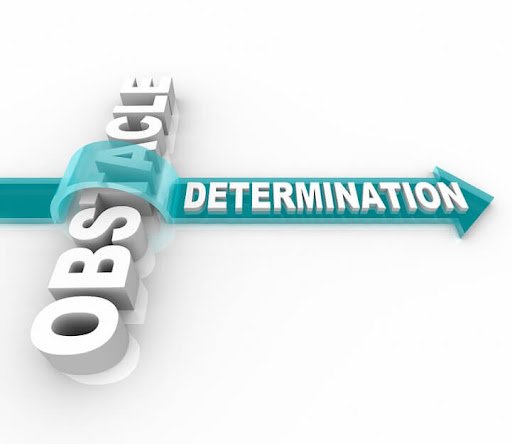
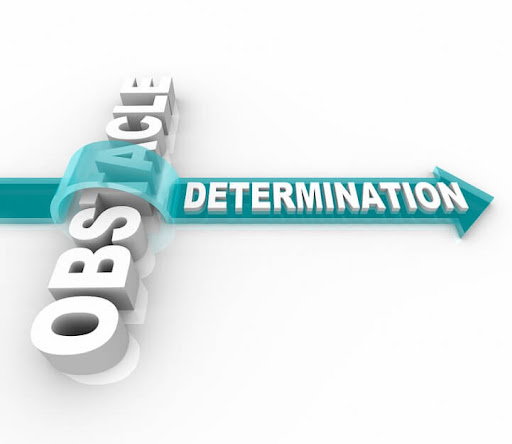
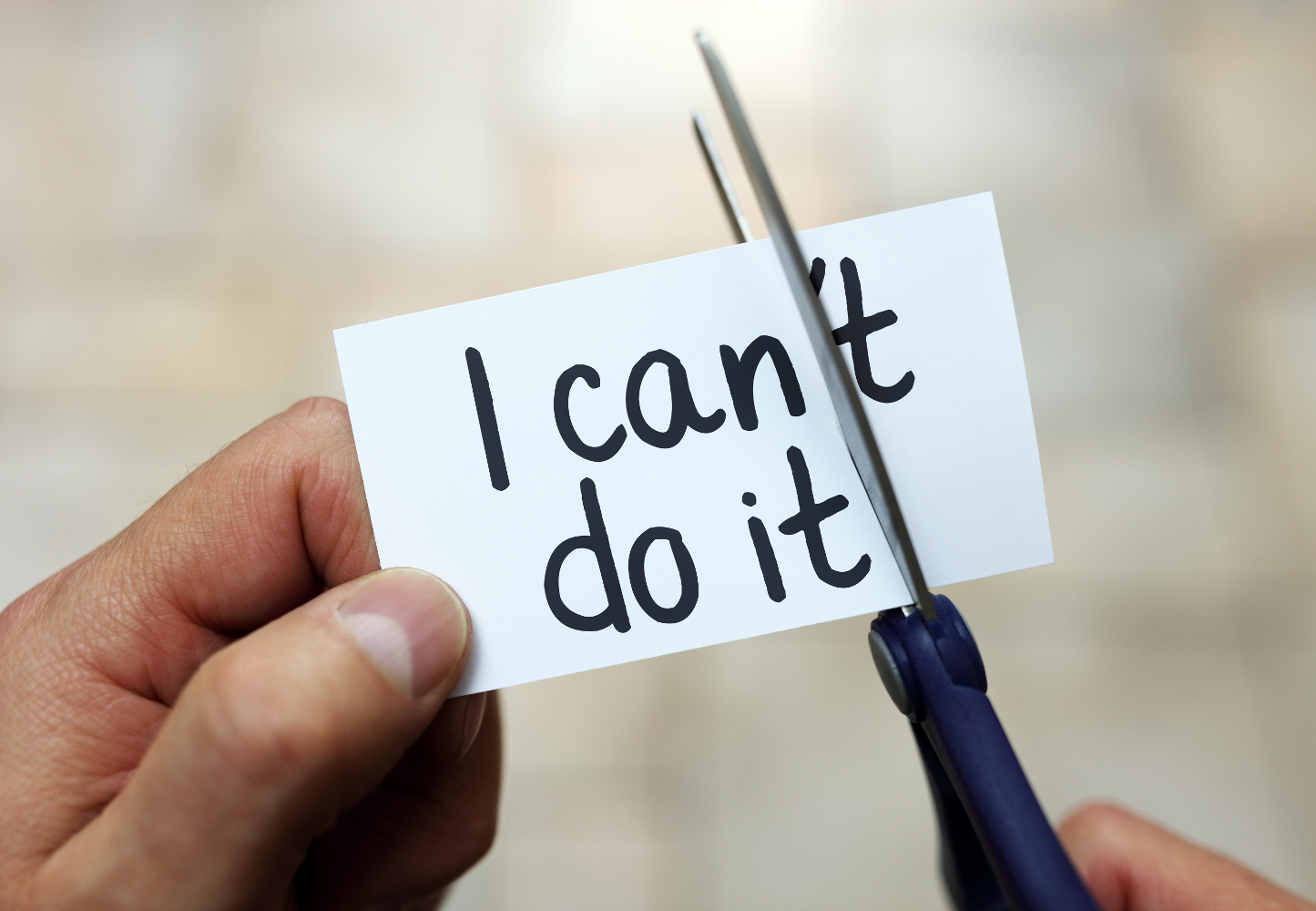
Determination Pushes You Towards Your Goals
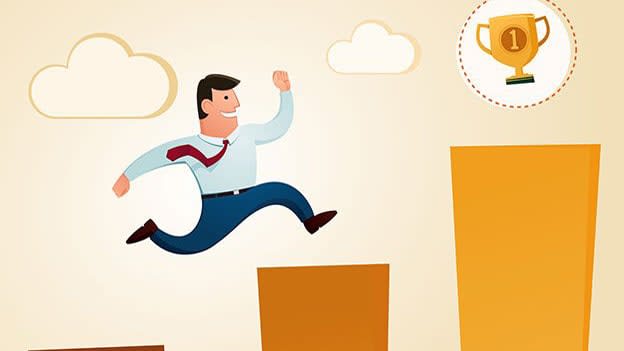
What is the difference between the man who pursued his goals and the man who didn't? Motivation and determination determine success and failure. So, if you find yourself not achieving your goals or you're getting stuck at a certain point, discover what defines these two terms and apply them towards bettering yourself.
Setting goals isn't easy, but it's not as hard as it seems. We can all do it. Sometimes we're stuck and it might seem like we're not moving forward. The good thing is you can always press forward just a little bit further. Moving forward is important. Failure is about being content with being normal. If you have an idea of what you want your life to look like in five years, nine months, or even six months, you're on the right track. That's determination in action.
http://mystudyfocus.com/articles/the-power-of-determination/
Determined People Versus Weak-Willed People
Determination and willpower are like two muscles in your mind. The more you work them, the stronger they get. The same goes for the weaker ones. The key is in training them so that your strong points are stronger than your weak points. You'll never see a person with a strong will go down without a fight, unless they give up, while a weak-willed person will always go down without even trying.
You can argue with a strong person and you'll get annoyed if you argue with a weak one. You can threaten a strong person, but you'll get nowhere near them when they put their mind to something. Determination is the bigger of the two and willpower is the smaller. The more you have of the former, the more you'll have of the latter.
With determination, you can learn skills and figure out ways to solve problems, that are faster and more efficient, than going through the normal processes. With willpower, you can choose which of two conflicting choices you want to make. Having more of either one will allow you to make better decisions. Some people are naturally more strong-willed, while others are more-determined. The key to both is training.
Pushing Through Challenges
https://leadershipfreak.blog/2012/05/16/how-to-face-the-challenges-of-leadership/
Pushing yourself to meet a challenge is hard. The more determined you are, the more likely you are to meet it. If you're not determined enough to succeed, you'll fail. It's that simple. You can do anything for six months, nine months, or a year.
Beyond that time, you'll need to update your motivation and train your strengths, or else you'll fall behind and fail. You have two choices going forward: You can maintain your current level of motivation and train your existing strengths, or you can determine to train your existing strengths and get a new, higher motivation.
If you choose to maintain your current motivation, you're allowing yourself to slip behind. This could be a serious problem, since there's no real telling what else you're capable of besides your normal routine. It might be best to start over and decide to train your own strengths. That way, even if your current motivation does wane, your newly acquired strengths will be there to pick up the slack.
Motivation Versus Continual Perseverance
While motivation is an important element to perseverance, it isn't enough. You can have bad motivation, or you can have bad habits. Lack of motivation is easier to deal with, than most people think. Many times, if you put your mind to it, you can achieve more, than you think you can.
You might feel like giving up and that's perfectly normal. There's nothing wrong with it. Sometimes we need to just let things go, and stop forcing ourselves to do something when we don't want to. If you need a little encouragement, sometimes all it takes is a little.
However, if you find that you no longer have the motivation to continue, or you're constantly questioning your commitment, then you need to re-evaluate your situation. It could be that you've lost sight of your original goal, or you don't have the right perspective on things.
You can't keep pushing yourself if you don't have the necessary motivation. It's simple. You have to decide what you're going to do and be committed to it. Once you're decided, you have to keep yourself focused.
Determination Can Be An Asset
You might have noticed that the word *"determination"* has been used a few times. That's because it is an important factor when it comes to success. People who have determination can achieve almost anything they put their mind to. The people who lack it, and who would rather give up, don't have the same chance.
You have to be willing to work hard and you have to be able to see the good in your efforts. Determination is the fire, that fuels your passion and keeps you going when the going gets tough. It makes you stronger, than you would be without it.
Determination is like a muscle. It needs to be worked to be strong. It also needs to be nourished to keep it that way. Don't think you can't afford to invest time and effort into developing it, because you can.
Determination does not guarantee success. That much is obvious. However, lack of it could prove to be fatal. Determination is an essential ingredient in the recipe for success. You can't have one without the other.
Important Aspects Of Being Successful
Determination, passion, and perseverance are three very important aspects of being successful. You need all three, but you also need a good amount of luck. Some people have more of one than the others, and some people have less of them than they think they can use. You can't count on having any of these aspects to give you what you need, but if you train yourself to be more in tune with your own inner resources, you'll be better able to adjust to situations as they arise.
You also need to be open to the possibility of failure. It's not a desirable outcome, but it's something you should expect and plan for. When you fail, it's not the end of the world. You can simply start over and try again. If you make the same mistake again, then you're doomed to a life of failure, but if you correct the mistake, you have a chance to succeed.
As for luck, you need a little of that too. Sometimes it's just good and you don't know why. Other times, you can try to do something about it, but you don't always understand why it was in your favor.
The Transition From Ancient Civilization To Modern Civilization
The transition from ancient civilization to modern civilization was a major development for the world. Although there is controversy over the details of the change, many of the foundations of human history, such as science and technology, religion and cities were all founded during this transition. With the modern lifestyle, the mystery of the past disappears. The problem of what once was does not present itself. With no mystery of the past, the big question becomes what does the future hold?
The human species has always been innovative and forward looking. Looking into the future, many people believe, that innovation will play a more important role than ever before. With the rapid development of technology and the increasing interconnectedness of the global economy, the role of the state will continue to diminish in importance. The free market will take over, with or without government intervention. The future is a race between the innovators, seeking the new and better and the traditionalists, trying to hang onto the past.
The Process Of Civilization's Rise From An Ancient Civilization To Its Modern Form
The foundations of modern civilization were all laid during the transition from the ancient period, also known as the Paleolithic period, to the modern age. This large transition in human history began when anatomically modern humans, or homo sapiens, first appeared in the fossil record. They had spread out from Africa, to Europe, Asia and then to the Americas.
Through the invention of agriculture, a settled way of life was established. The ability to make tools and weapons allowed small groups to become larger, more organized and capable of changing their environment. The first civilizations were established during this time. As people discovered new lands and invented new types of social systems, they developed new technology, new forms of government and many other innovations.
However, this is not to say that the Paleolithic age was some kind of golden age of human history. There were many challenges that people faced, including the need to adapt to new and changing environments, the need for social organization, the need to find a way to deal with the physicality of being human and the need to deal with the questions of what it means to be a part of a species, that has become very different from its evolutionary origins.
Humans were unique among the great apes in that they use tools. The study of archaeology has shown, that the earliest humans began to fashion tools out of materials in their environments. Some of the more complex tools, such as that of the Neanderthals, required a high degree of dexterity.
The use of tools allowed people to work together to achieve tasks, that would have been impossible without the tools. In the simplest forms, tools allowed people to dig, dig out rocks, and gather food and water. Because of the way the human body works, people are required to consume these basic resources in order to survive. The challenge for people was how to consume these resources without destroying the Earth.
Although the use of tools was important, other changes in human society were even more important. The domestication of plants and animals enabled people to thrive in new ways. Humans were no longer restricted to the needs of the body, but could now engage in a way of life in which work was not needed for survival. The emergence of a belief in one God or many enabled people to cooperate in new ways, with a greater degree of loyalty and responsibility toward the community.
The development of hierarchical systems of government enabled a greater degree of civilization. The large-scale use of writing and a standard system of measurement allowed people to keep track of large- and small-scale records. Each of these changes had a profound impact on the way people lived.
The Differing Ideas Of Transitioning The Ancient Civilizations
There are many theories, that attempt to explain the large-scale transition from an agrarian society to an industrial society. They range from the relatively simple, to the highly complex. The most influential theories tend to fall into three categories.
**The social theories:** The social theories, including Marxism, tend to focus on the ways that society is organized, and how these structures limit or enhance human development. This includes attention to how structures of inequality, like the family, are made and perpetuated and how this affects the development of the individual, from childhood to adulthood and then as an adult in the workforce. A focus on the political economy emphasizes how structures of production, like the way that capitalism is organized, affects the development of people.
**The biological or evolutionary theories:** The biological or evolutionary theories tend to focus on the ways that human psychology has evolved to adapt to the social and physical conditions under which we evolved. These include theories of social dominance, like the evolution of warlike behavior among men, or the development of certain forms of cooperation within human populations. The emphasis is on how these evolved capacities can be re-purposed in new and different ways.
**Sociological or philosophical theories:** The third and final category includes sociological or philosophical theories. These tend to focus on the ways, that the cultural products of human civilizations, like literature, art, music and philosophy, contribute to human development. These theories tend to downplay the importance of the structures of society and emphasize the role of the individual, like the role of the imagination or the human capacity for reason, in shaping human lives.
While there is not space here to fully discuss all of these theories, it is important to note, that none of them are immune from criticism. The best theories are those, that are most successful in accounting for the facts, while at the same time, being simple and clearly understandable.
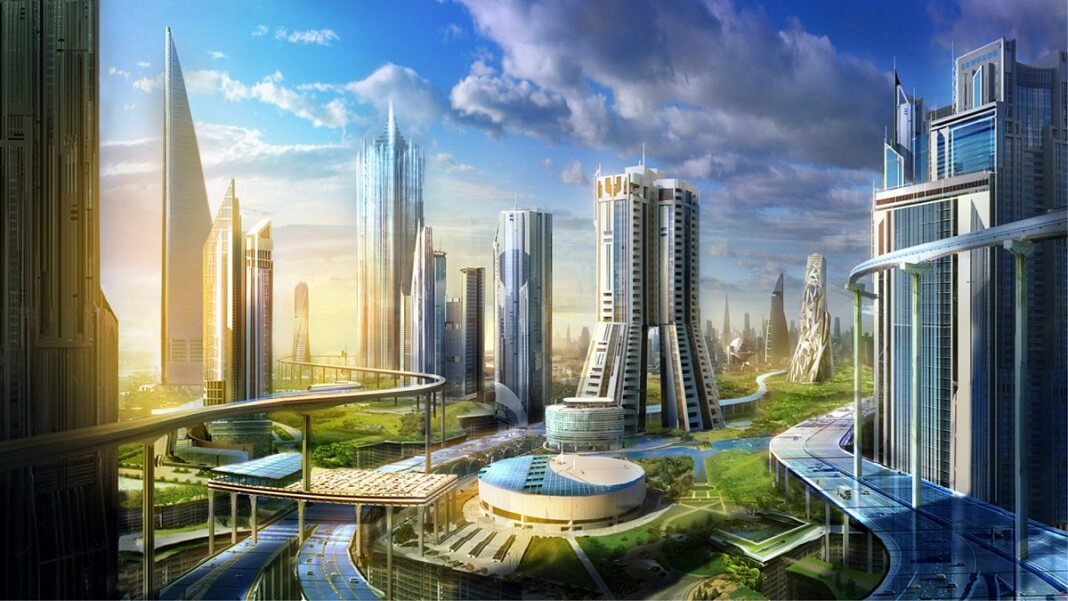
The Future Of Modern Civilization
https://singularityhub.com/2020/06/29/new-report-tech-could-fuel-an-age-of-freedom-or-make-civilization-collapse/
The story of civilization is the story of the human imagination, unbound with restrictions. This is the story of the invention of the concept of progress, an idea that humans have used to justify almost every institution, from the way we structure society to the way we worship. However, progress is an abstract concept and has very little in the way of universal agreement on what it even means.
Some claim progress is defined by the ability to forecast the future. If we can accurately predict the future, then we have achieved progress. That seems like a reasonable definition. But many philosophers point out there is no way to even come close to achieving this goal, let alone actually hitting the *"accurate prediction"* part. Other philosophers claim, that progress can be measured by the increase in the quality of human life, or the length and health of human life, or even the mere increase in the quantity of happiness experienced by sentient beings. Progress, in this sense, is a moving target. We can never hope to hit it, but we can hope to keep moving closer.
Humanity has always wrestled with the tension between progress and preservation. Will we find a way to embrace conservation, and slow down the pace of change, so that we can preserve the things, that we love and the ways of life that we treasure? Or will we fall into the rampant individualism, that has plagued us for so long, where each of us is driven by the desire for personal gain and fulfillment and we destroy the things around us, that we cannot replace?
These are the questions, that will be answered by future human beings. We cannot answer them for them. We can only hope they choose wisely.
Lead image source: https://www.ancienthistorylists.com/ancient-civilizations/10-oldest-ancient-civilizations-ever-existed/
7 Traits A Successful Freelance Writer Has To Thrive
A freelance writer is a writer, who writes blog posts or any sort of content for someone for a price, rather than working at a newspaper or magazine. When you become a successful freelance writer, you will be considered an expert in your chosen field and you can then command a lot of money for your work. Successful freelance writers need to understand how best to engage with potential clients to produce work, that both the client agrees is good and for which the writer receives payment in a timely manner.
It used to be that the only way to make money online was to either work for a company, an organization, or treat it as your full-time job. But now, freelancing is on the rise and it's become one of the most sought after skills on the market. It's no wonder why - the job market is on the decline and freelancers are sought after, so they can earn more, than what is required of them by the state. As a freelance writer, the internet is your home. This means you could make a decent monthly income. Here are seven traits any freelancer must have to thrive.
Flexibility
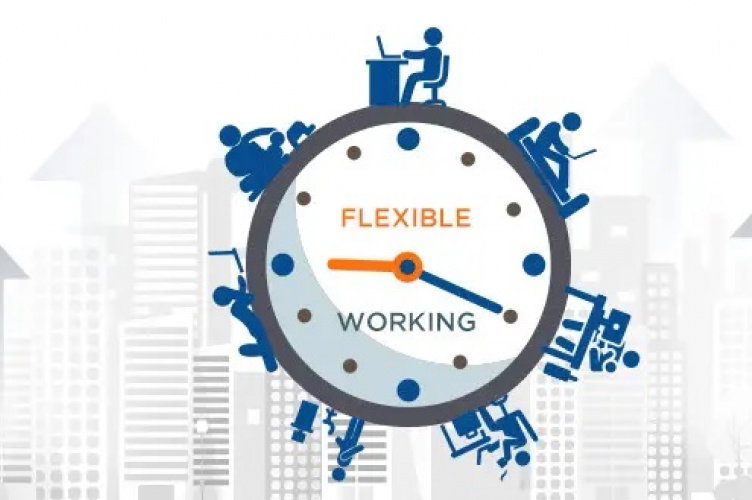
You must be able to work as little or as often as needed. Work hours may vary from day to day, but weeks to months are more common. If you are not able to work for extended periods of time, you will not survive long as a freelancer. The job market is a very competitive place and you will most likely work alone.
Being a freelancer has a lot of benefits. You get to decide when and if you work. You do not have to spend time commuting to an office every day. The job can be very casual and you do not have to deal with the stress of dealing with an employer.
But of course there are also some downsides. There is no security and you are highly dependent on your income. There is little room for advancement and you are at the mercy of your clients. But as long as you have the basic traits listed in this article, you should be able to survive and do well as a freelancer.
Ability To Build A Network
You must have a strong network of contacts. This is very helpful for both your career and your daily life. A strong network will allow you to get work done faster and with less hassles. It will also help you find clients and refer them to other people. It's useful to get recommendations and testimonials. If you do not have a network, you should try to build one.
You might be able to get referrals from people, who already have a reputation and a following, that you can use as a starting point. There may be other ways to get clients. You could join a club or association for freelancers to exchange ideas and tips.
Drive And Ambition
https://www.waldenu.edu/online-bachelors-programs/bs-in-business-administration/resource/ambition-and-the-pursuit-of-a-thriving-career
You have to have a lot of drive and ambition. You will face lots of rejection and a long road to success. You have to be willing to work hard and to take risks. When you get a client, you must put all other considerations aside and give your full attention to the project. This could make or break your career.
You should have a portfolio of work, that you can send to potential clients to give them a better idea of what they're looking for. You should have a blog or some other way of sharing your writing online. You should have a professional headshot, that you can use for business documents and emails. All of these things will help you succeed as a freelance writer.
Must Love To Read
You should read a lot of books, articles, newspapers and magazines. This is how you expand your mind and stay up to date on current events. Reading is part of your job, and your education. You should use the skills you read about in order to become better at your craft. The more you read, the better you will become.
You should have a notebook or some other place you can write down ideas, that come to you. Ideas for stories, articles, blog posts, and so on. You should record facts and stats about the things you read in case you forget them.
Independency
You must be able to work independently. You cannot be a team player. If you are part of a group, there must be some way in which you can work together, but you cannot rely on others to do the work of a writer. No one can write like you can and the only way you can get work is to offer your services for hire.
It is also important to be honest with yourself about your writing. Is it good? Does it meet the standards, that a publisher or client expects? If they're not satisfied with your work, you're not going to have the motivation to continue. You must always be able to refer back to the standards, that you set for yourself. If you do not have those standards, you will not be able to produce reliable work.
Education
It doesn't matter if you have a journalism degree, or even if you have a first-aid degree, as long as you know how to write and you have the drive to succeed. If you have a bachelor's or master's in creative writing, that would be even better. These are just some of the requirements for your education. There are others, but these are the most important ones.
When you have developed these skills to the degree that they are, you will be ready to enter the job market. The key is to continue developing and expanding your knowledge and skills. You cannot stop learning. If you do, you will become obsolete. You will not be able to keep up with the times and you will not be able to survive.
Professionalism
You must be willing to take on any and all clients. This can be a very competitive field and you have to be willing to undercut the other freelance writers in order to get business. You must be prepared to write at any time, day or night and on any subject. You cannot expect your clients to understand or anticipate your every need.
You cannot be too aggressive with the way you present yourself. This is a service-based field, not a sales one. When you write, you are an expert in your field. Your clients value your work and want to use you and pay you in order to use you. The most important thing is honesty. Be yourself, but be professional. A professional writer is successful.
The first few projects will probably be the most difficult. Be prepared to work hard. It will get easier. The money will be good and the hours are usually reasonable. As long as you are consistent and work hard, you will be able to overcome any initial obstacles, that may stand in your way.
Lead image source: https://commons.wikimedia.org/wiki/File:Female-hands-writing-notepad-working-computer.jpg
Open Your Potentials With Self Taught Skills
Today, the Internet has made it possible for anyone to become experts in their field, rather than experts in just one domain. This is possible through self-taught skills, which are the skill sets that are developed by individuals through practice and not through formal education. Since you are the only person who can see your own strengths and weaknesses, it can be hard to find out exactly what you are good at.
But learning what you are good at is the first step in not only understanding your skills, but figuring out how to grow them. One of the best skills for today's workforce is self-teaching; we're living in an information age and as such, it pays to be able to pick up new skills as needed. The idea, that anyone can learn anything seems to be supported by the ever-increasing amount of educational content available online.
Where To Look To Start
There are a wide variety of tools, that can be used to improve your self-teaching skills and there are several places to look for help. The first place that you should look is your own natural abilities. This is the place where you will find out what you are truly good at. You may already have an idea of this, or you might not. If you can learn to do something, it would be helpful to be able to use that knowledge to find out what you are good at.
The next place, that you should look is for people who share your interests. People who are good at the same things that you are good at, will most likely have a better understanding of how you can go about improving your self-teaching skills. There are several online groups, that cater to the interests of people who are good at various types of learning.
There are books that you can read to further expand your knowledge of the different types of learning and the different types of activities, that may be used to learn. There are websites that can provide additional activities and exercises to help you improve the different types of skills that you have.
The final place, that you should look is for the things, that are needed for you to improve the different types of skills that you have. As a beginner, you may not be aware of what you need. You may have to experiment a bit in order to find out.
Self-Discovery
The first thing that you should do is figure out what types of things you are good at. That is, what types of things you learn quickly and with ease. This will let you know what you should be focusing your time on. It's okay if you don't have a clear idea of what you are good at; you'll figure it out as you progress.
You just need to get a general sense of what you are good at so that you aren't spending all of your time trying to do things, that you aren't good at and you aren't getting frustrated when you aren't successful in things that you are good at. There are several ways, that you can go about figuring out what you are good at. You can spend time and try out different things, or you can simply ask other people.
For the sake of this article, let's say that you decide to try out different things. You figure that if you want to figure out what you are good at, you are going to have to use the things that you have available to learn and improve upon.
Learning And Improvement
Learning and improvement is an important part of the self-teaching process. One of the reasons why self-teaching is so effective is that the individual is directly interacting with the thing, that they are trying to learn. This is in contrast to traditional teaching methods, which rely on an intermediate party to relay information. Because of this, the student is responsible for some amount of their own learning.
This is why you should be experimenting and trying things out. The more you experiment and try things out, the more you are going to learn. This is especially true, if what you are trying out is something that you don't understand. There is no better way to learn a new thing, than by doing it.
Experimentation
There are two main things, that you should be experimenting with. The first thing is your own physical abilities. Experimenting with your physical abilities will help you to become accustomed to the things, that you can and can't do. You will be able to tell if you are developing a strength or coordination deficit; this will let you know when it is time to stop something, that you are doing or start doing something, that you are better at.
The second thing that you should be experimenting with is the different types of materials and methods, that are available for you to use. There are many different ways of doing things. By trying out various types of materials and methods, you will be able to see which ones lead to the best results.
Experimentation is something that will happen on its own though. It is inevitable that you will experiment, at least to some degree. Do not feel as though you need to rush into the deep end of the pool and try to swim without the help of the side. You can take small steps to help you become accustomed to the water; you do not need to jump right in and drown yourself.
What Are Your Potentials In Self-Teaching
As you are experimenting and trying things out, you are going to find out what types of things you are good at. Some of those things may differ from what you thought that they were. This is completely normal and to be expected.
It is also important, at this point, to take stock of the types of things that you already know how to do. Knowing how to do something isn't the same as being good at it. There is a big difference. You may have been able to accomplish something, that you thought was beyond your abilities, but that doesn't mean, that you're good at it.
Before you go any further, you should evaluate what you already know and don't know. When you need to learn a new thing, it's sometimes helpful to know if you're better at something else. For example, if you're better at something else, you may be able to apply that to the new thing, that you are trying to learn. That will save you time and effort, not to mention possibly frustration.
You should also think about what types of things you are passionate about. If you're passionate about something, you will probably be better at whatever that thing is. It's as simple as that. You don't want to spend all of your time and energy on something, that you're not excited about; that won't lead to success.
A good way to test out what you already know, what you are good at, and what you are passionate about, is to think of what you would like to do and try to make a living off of it. You may not be successful right away, but if you are patient, then you will eventually succeed. Your potentials may be limited, but if you are willing to learn and practice, then you can overcome most anything.
Protect Your Brain From Harmful Screen Time
Technology and screens do wonders for our society; they connect us with people, information, and make life easier. But technology and screens also harm our brains, causing problems such as decreased empathy, poor problem solving ability and an inability to focus. The increased prevalence of Internet-connected devices has given rise to concerns about the quality of time many people are spending on them. Some research indicates, that the blue light emitted from these devices serves to hasten sleep patterns, while others say that it actually inhibits sleep, repairs the brain and stimulates learning. For this reason, it's important to take extra precautions to get the healthiest screen time you can get.
Effects Of Screen Time
The effects of screens on the brain have been a popular topic recently. The use of technology in our lives has become increasingly widespread and it's clear, that it's having a negative impact on our brains.
The primary way that screens are believed to be affecting our brains is by creating a cycle of excessive use and withdrawal. Withdrawal occurs, when a person stops using a given device for an extended period of time. This cycle causes the brain to go through a process of physical, chemical and mental changes. The brain is able to adapt to this type of cycle; after a prolonged amount of time without use, the brain often times grows used to these changes and is less affected by them.
However, if the withdrawal is extreme enough or a new cycle of use begins before the body or brain adapts, the result can be very negative. A number of studies have shown, that the brains of people who spend an excessive amount of time using a screen are physically different, than those who spend less. These changes can include decreased size, increased appearance of blood vessels, and even an actual physical change in the brain's structure. If the cycle of use and withdrawal continues, there can be long lasting effects on the brain's performance and function.
The Affections We Can't Fail To Receive
Of course, the effects of screens on the brain are only one of many factors, that can cause us to be less effective at work and school. Many other contributors to decreased performance are present in most people's daily routines. Lack of motivation, apathy, anxiety, nervousness and stress are just a few examples. It's not always easy to identify, but when we do fail to maintain good performance, there are often clear indicators present.
With respect to screens, there is the problem of decreased focus. When a person is unable to concentrate, it can be difficult to get work done. Furthermore, many people rely on their phones or computers for work, study and even entertainment. If they are not available to them, people often times feel anxious or even panicked. This can manifest into an inability to focus, which can have negative consequences.
It's also not uncommon for this decrease in performance to be a precursor to a more serious condition. Many times, people who experience serious cases of screen addiction eventually end up abusing illicit drugs or even having psychotic episodes.
A Note On How To Spot These Effects
Sometimes, people who are addicted to screens may appear to be perfectly fine to those around them. This is because the signs and symptoms of addiction are normally only present, when a person has a severe case of the condition. If you think that you or someone you know may have a problem, there are a few different ways that can be determined.
The first and most basic way to tell is the person's reaction to the usage. If a person tends to get angry or frustrated when they don't have access to their device, it's very possible that they are using their device excessively.
The second way is by observing their physical behavior. Overusing a device can cause the hand-eye coordination to become impaired, as well as other physical changes. These changes can be determined if an individual experiences problems with their dexterity or balance. These can range from depression, to anger, to various types of anxiety.
Yet another thing to pay attention to is the content of a person's conversations. If an individual constantly complains of feeling stressed, tired, or anxious, it could be indicative of a problematic computer or phone use.
Blue Light And How It Affects Our Brains
https://www.independent.co.uk/news/health/screen-time-teenagers-bedtime-blue-light-sleep-smartphones-oxford-research-a8856381.html
Blue light is emitted from electronic screens and has been known to have a negative effect on the sleep cycle and brain function. The circadian rhythm of an individual can be greatly affected by the screen use. This can be an issue as the desire to remain awake is much stronger, than the desire to go to sleep.
As a result, many people find themselves lying in bed awake, yet their body demands sleep. Because of this, it is not uncommon for a person's sleep cycle to shift by as much as 12 hours. This throws off the natural sleeping routine the body is used to, and can leave a person feeling very groggy or even nauseous.
When too much of it is emitted, it interferes with the production of melatonin in the brain. Melatonin is a hormone responsible for the regulation of the sleep cycle. When this occurs, it creates a sleep cycle at odds with the cycle the brain naturally follows. As a result, sleep can become more difficult, and may not come at all.
Ways To Protect Your Brain From Screen Harm
To help minimize the harmful effects of blue light, it is important to reduce the time spent looking at screens. The brain has a natural tendency to unconsciously look at anything within eyesight. This is particularly true for electronic devices, as the blinking or changing of content on a screen can be very alluring.
It has been known to use blue blocking glasses or tinted lenses. These can help reduce some of the blue light that is being emitted by the screen. A drawback to this is that the glasses can make it difficult to see or can be uncomfortable to wear.
Another common way of protecting against blue light is through software. There are many applications available, that can block the blue light from screens. Some can be downloaded and used on any system, while others are system specific. These applications can vary in effectiveness.
Yet another way to protect against blue light is through the modification of the content displayed on the screen. This can help by making the display more boring, meaning that the screen's content is less likely to capture the attention of the viewer.
As a general rule, it is best to avoid using the computer or phone for anything other than what is necessary. When possible, it's best to reduce the use of devices to only a few hours per day.
Summary
The overall effect of too much blue light is to greatly reduce the quality of life. As a result, in many cases, it is possible to determine if someone is addicted to screen use simply by observing their daily behavior. If someone complains of feeling tired or groggy when they wake up, or they spend too much time during the day staring at a screen, it's likely they've overindulged in digital entertainment.
If someone has started to neglect their sleep cycle, or display unusual physical changes, it's time to make an intervention. This can be as complex or as simple as desired. The simplest way is to take their device away and provide them with an alternative. If that doesn't work, offering them with an app or a software-based filter might be enough. If that doesn't work, there are blue blocker glasses that can be used.
If someone is displaying a range of emotional issues, which seems to be the case for most, then it's best to limit screen time to a maximum of 2-3 hours per day.
The Importance Of Interdependence In Society
It's important to know, that one living being cannot exist without other living beings. We, as humans need cohabitation with other living beings in order to survive and without this cohabitation, other living beings can't exist. Interdependency is one of the most important functions of our society. Without this, our society might no longer exist. In a society it is impossible to be independent from all other humans.
In other words, it is impossible for any individual to exist outside of society. Every individual, no matter how different from the next, is affected by the society that they live in. In this society, you exist only because the society, that surrounds you has created a way for you to exist. The individual is a tiny molecule made possible only by its surroundings.
It's only through the interactions of the human society, that you as an individual ever come into being and it is the interactions of the human society, that bring about the changes that are needed to advance mankind. The advancement of mankind is a collective effort. Nobody else can advance mankind for you, just as nobody else can extinguish mankind. Only you can do that.
Now, this isn't to say that you can't do anything on your own. You can. You're very strong, for example. You can accomplish things, that normal humans couldn't even imagine. But you can't do everything and you can't do those things if you don't participate in the advancement of mankind.
https://boulderjewishnews.org/2020/a-declaration-of-interdependence-chanukah-is-unity-in-diversity/
Why Is Interdependence Important?
Interdependence is the glue, that holds a society together. It's what binds the members of a community together. When one part of the community falls apart, the rest falls apart as well. The falling apart of one part of the community inevitably leads to the disintegration of the whole. Without interdependence, a community cannot survive. This is why it is so important to maintain the framework of society. It is through maintaining the framework of society, that we as a whole advance. Without the framework of society, we as a whole regress.
When a human community falls apart, it does so in a very predictable manner. The first to go is often the most dependent part of the community. It's the weakest part, that often goes first. But, it is the presence of the weak part, that is what keeps the strong parts together. The strong parts are the ones most likely to resist if the community is to fall apart. If the society falls apart, it is the strong parts, that will hold the community together.
How Do You Maintain Interdependence?
The easiest way to maintain interdependence is to accept, that interdependence is both a given and a choice. It's given to us, because it couldn't be any other way. It's up to us to decide whether we want to participate in the maintenance of that given condition. That's why it's called a choice. You choose whether you will participate. You can always choose not to, but you can't always choose to.
There are ways to maintain a given condition, and then there are ways to maintain a given condition to achieve a particular goal. It's your job to figure out what the right course of action is. The easiest way to maintain interdependence, is to make the strongest parts hold the community together, while interfering as little as possible with the lives of the rest of the community.
Why Do People Become Extremists?
Many people, for various reasons, feel the need to break away from the collective. They feel as though they have something to contribute, even if their contribution is merely to bring chaos. They feel as if they're being left behind even though they're the first to leave. They feel as if their lives are of little value, even though they have little value to give.
When a group of people feel like this, it's not uncommon for them to band together to create their own community. It may not be the best way to live, but it's one way to feel satisfied. Most people, however, don't feel this way. Most people don't have the luxury of choice. They're born into a given situation, and they have no way of knowing any different. They can't even imagine a life without the security of the given condition.
And when security is taken away, people are scared and nervous. They're uncertain of themselves and their future. They may not even have a future, that they can envision. They may only see, that their present moment is lost. People who feel this way are often the most unstable. They're the ones, that often times become violent and unpredictable.
When it comes to interdependency, these people have no regard for the well being of others. They only worry about their own needs and wants. They don't feel as if they have a choice in the matter. They feel like their lives are being wasted, even though their contributions are necessary for the continuance of the community.
In Closing
Interdependence is a given. You can't take it away. It's only through interdependence, that any of us are able to coexist peacefully. And in order for you to coexist with anyone else, you must coexist with everyone else. Everyone else is a part of a system, that you must interact with if you want to survive.
You can't survive without people, and you can't survive with people if you don't interact with people. So you either interact with people, or you don't. It's as simple as that. Your attitude towards people is a reflection of your past choices. Your choices have given you the attitudes, that you currently have.
If you want to change your past choices, you have to start with yourself. You can't change anyone else, neither can anyone else change you. This is something that you must come to realize. Now, go forth and choose your attitude towards people. Choose how you will participate in the maintenance of your given community.
Rewards Drive Motivation
It's so easy to find motivation in everything around us. But it's not always what we're expecting. What's the most important aspect in making people feel motivated? Without a doubt, it's feeling that the payoff is worth the effort. Rewards are the mechanism, that let people know that the payoff is worth it and the stronger the rewards, the better the motivation.
What motivates you? More than likely it's something that is given to you for no other reason, than to drive you to do what you want or need to do. Whether that is to finish a work project, take a great vacation, or just stay healthy. The idea of receiving a reward for a task has been around for centuries and it has been used effectively by some of the greatest leaders in history.
Some people have a hard time understanding why motivation is so important. People who don't find it easy to stick to their commitments. They're usually the ones that under perform and end up being shown the door eventually. The ability to stick to your commitments is vital to being successful in life and without it, life can be very frustrating and difficult.
Life Is Full Of Trade Offs
We like to think that we're making the *"right"* choices all the time, but in reality there are no guarantees. Not in life and not in business. The only way to guarantee something is to not have a choice. That's not how life works. Life works through trade offs. It's a question of finding the right balance. What's the right balance for you in this situation? You're given the choice to do one of two things. Both are equally undesirable and both have a cost. When it comes to rewards people are most likely motivated to do even the most unwanted tasks. The key is to find the right price point for your reward. Something that is high enough to matter, but not so high as to be unrealistic.
Motivation Is A Tool
People respond to different kinds of incentives. Some are visual, some are audible, and some are physical. Motivation is one of the most powerful tools in your arsenal. You can use it to get people to do just about anything. The trick is to find the proper way to motivate someone. When done incorrectly, the results can be very dangerous.
Not everyone responds the same way to motivation. That's probably the hardest part about using it effectively. You have to be able to read the reaction of others to determine how useful their response will be in getting them to something. With that, you can then adjust your response to fit that criteria.
Rewards can be very powerful motivators. You just have to find the perfect balance between reward and consequences. That is what keeps everyone going. The desire to achieve something so powerful, that it is almost impossible to give up and the threat of losing something, that someone really cares about is almost as good of a motivator.
Rewards And Consequences
The most powerful thing about rewards is that they can be given and taken away at any time. If the consequences don't fit what is being asked, then you are likely to look for another way to get the job done. In any other situation, this kind of flexibility would be extremely useful and reassuring.
But rewards and consequences are also very tricky to manage. The wrong kind can destroy you. The right one can build you a strong foundation for success. One of the most important things you need to consider when offering a reward is whether the person you're rewarding truly deserves it or not. If they don't, then it will almost certainly be rejected. You'll lose credibility and the trust, that you've built up with them.
Another important thing to consider is the nature of the reward itself. Is it something that can be given or taken away? Depending upon the situation, a reward can be far more powerful, than you might realize. The key is to offer a reward, that is valuable to the person that you're motivating, but not so valuable that it would be wasteful to give it to them.
It's also important to consider, that while you have full control over the consequences, you do not have control over the nature of the reward. That can be something that is good or bad for you depending on what you're trying to accomplish These strategies are not exclusive to motivation, but they are very common ones used for it.
Use rewards and consequences in combination. The most powerful way to use them is in combination. When you give a reward for a job well done, then the consequence is that you have been assured a future reward and so on and so forth. In other words, the reward and the consequence are two sides of the same coin.
How To Find The Right Balance
You don't want to overuse rewards and you don't want to underuse them. That's just dumb. The key is to find the right balance between the two. It's not an exact science though and it's very much a feel thing. You'll know you've found the right balance when people have no choice, but to do what you want them to do.
It's easy to over use. You might promise the world to someone and give them something, that is worthless or so small that it washes away with the first flood. It's also easy to under use. You might have people do something so menial, that it doesn't even count as a task and they feel as if they've been tricked or taken advantage of.
The key is to find that sweet spot. Where people are doing what they're being asked to do, but aren't so happy about it that they feel the need to revolt or complain. Where they see a future in doing what they're being asked to do. Where they believe, that they're given a fair shot at a good life and the respect that they deserve.
You just have to feel it out. The best way to do that is to give people choices. You give them a little power. Let them make choices that matter. Small choices that make a difference. Give people a sense of purpose and they will respond accordingly. You give people choices and you watch them make the right choice. That's how you know you're doing it right.
New Age Spiritualism: Spiritual Consciousness, Intelligence And Inner Potential
Spirituality has no central doctrine. There is no theological orthodoxy, no approved list of tenets and no single authority. Yet, spirituality is one of the most popular topics of conversation these days. What is the truth about the new age spiritualism? How did this new phenomenon take shape? And where is it taking us? This new age movement is mostly found on the internet and is mainly concerned with life, consciousness and service. It is a new form of spirituality, that has been growing in popularity due to the 21st-century's increased availability of mental practices and community aspirations.
New age spiritualists are people, who investigate inner potential, spiritual consciousness, and spiritual intelligence. If you have been looking for a way to improve your life, you have surely been advised to turn to the *"spiritualism"*. Since life is a journey, in a search for enlightenment, it is natural that many people turn to a spiritual guru, a spiritual leader, a spiritual guide, a spiritual healer, a spiritual medium, or a spiritual mentor. However, when you've been given a vague sense, that this is the path to bliss, you don't really know what's in store.
If you need clarity or peace, you can either turn to religion or spirituality for guidance, but there's another option that you may not have considered. New Age spiritualism is an umbrella term for religious schools, groups, and movements influenced by nature, nature magic, the past, the future, or modern science, that tend to focus on personal or spiritual transformation, rather than institutional belief.
Spiritual Consciousness
The main goal of spiritual consciousness is to understand the nature of reality, and our place in it. How does this reality that we experience every day arise? Is there something bigger that is overseeing and orchestrating everything? Is there a God that makes everything tick? Is there an order in nature that we can tap into to gain power, prosperity and happiness? Is there a path towards enlightenment, where we can realize a state of perfect consciousness?
These are questions that need to be answered so we can have a better understanding of the nature of reality. The important point to remember is that many of these questions only lead to more questions. Unfortunately, no one has ever been able to answer these questions in a definitive way. However, this does not mean that we should stop asking questions. In the new age spiritualism, spiritual consciousness is a useful heuristic, that is, a useful (if imperfect) tool for gaining insight.
Spiritual Intelligence
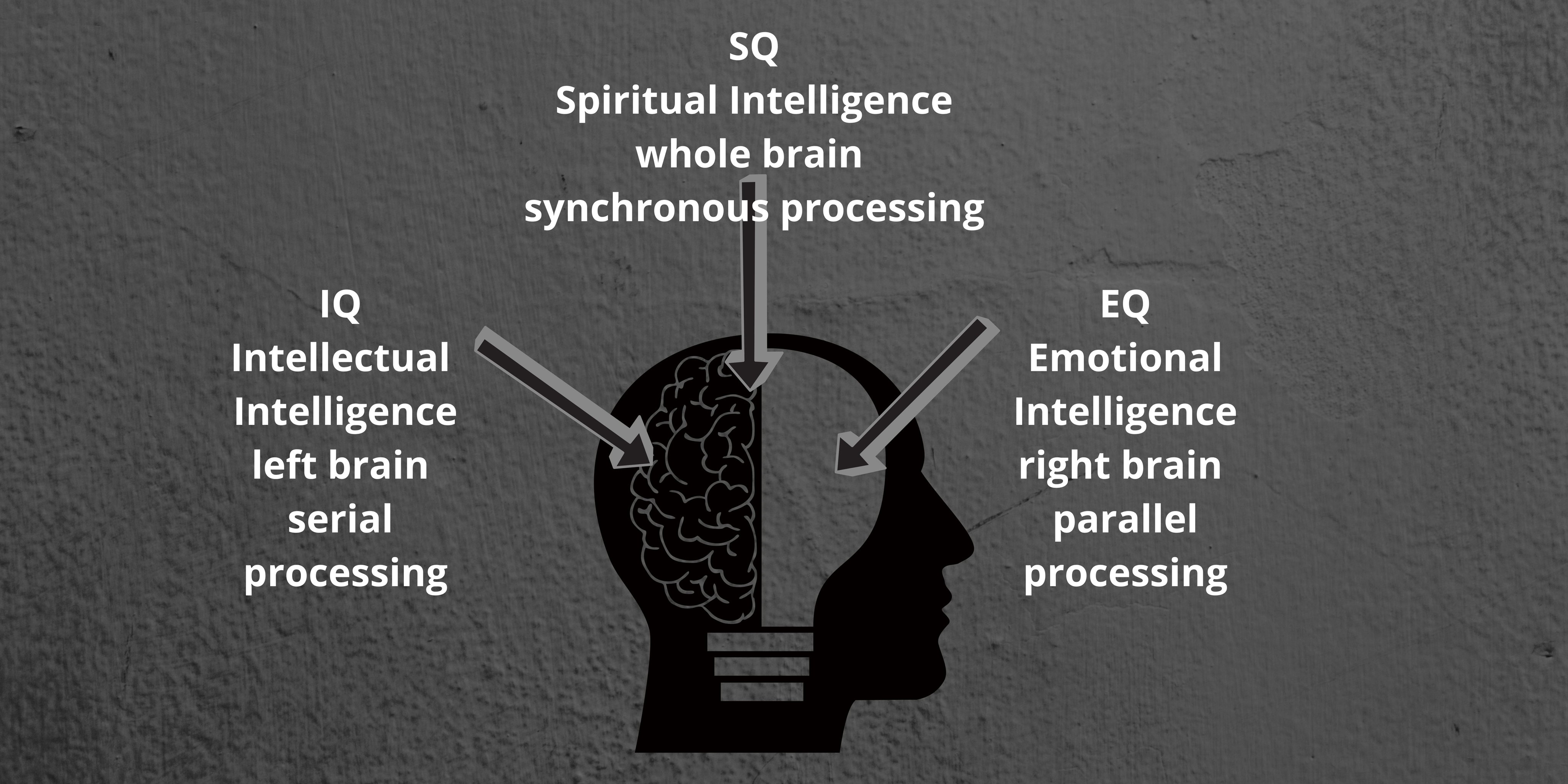
At its core, spiritual intelligence is a disposition towards inner knowing, the ability to read subtle inner cues in order to divine information with appropriate accuracy. In a sense, one who is *"spiritually gifted"* is simply one who has developed this disposition. However, this may be further refined through one's own experimentation. For instance, some people may find it easier to focus their divination towards specific areas, such as love and abundance.
Others may find it harder to focus in a specific way. For instance, someone with strong clairvoyant abilities might be better suited for investigating the future, while someone with strong mediumistic abilities might be better suited for communicating with the dead. Of course, there are many other ways to cultivate one's own spiritual gifts and this is where one's own experimentation can take over.
Inner Potential
Spiritual intelligence typically manifests as inner potential. Everyone has potential, and everyone has the potential to develop this inner potential. However, this depends on how much effort one is willing to put into cultivating this potential. This is why it is often said that all things are possible, if only one is willing to put in the effort. In this way, the law of attraction is akin to natural selection. For instance, if one is willing to put in the effort to become more spiritually aware, then they will reap the reward of that effort.
However, one may also fall victim to the *"law of failure"*. That is, they may put in the effort, but they may not succeed in their goal. This may be due to the fact, that their ability is not yet ready to manifest in a significant way. What this means practically is that inner potential manifests in two manners. The first manner is through synchronicity.
This is where the inner and outer worlds seem to align so that the person is able to know the future, the present, and sometimes the past through a sort of clairvoyance. The second manner in which inner potential manifests is through dreams. In this state, the person is able to revisit memories, relive experiences, and see into the future. Both of these states of awareness are useful insofar as they give the person a look into the future, present, or past. Depending on the state of awareness, that the person is more or less capable of entering.
While, typically, inner potential manifests in one of these states of awareness, it is important to remember that it is only one manifestation of the potential itself. The potential always exists, even if it doesn't always appear. In this way, we can talk about the development of a person's natural gifts. For instance, we could talk about someone's innate potential to heal, and someone's innate potential to socialize.
Naturally, those who have developed these gifts to a high degree will have an easier time accessing these states of awareness. They may be more *"psychically inclined"* towards specific types of divination. On the other hand, they may be able to access other types of divination more so. One cannot be said to have a *"natural gift"* for divination if they cannot access that type of divination at all.
Ultimately, it is up to the person to develop their spiritual gifts in a way that is most comfortable and effective for them. Some people find meditation and exercises to be effective in further developing their abilities, while others find other types of activities to be more beneficial. The important thing to keep in mind is that each person is unique and what is most effective for one person may not be as effective for another. With this in mind, it is useful to think about how we can help someone develop their potential in a way that is most beneficial for them.
Will Transhumanism Lead To A Utopia?
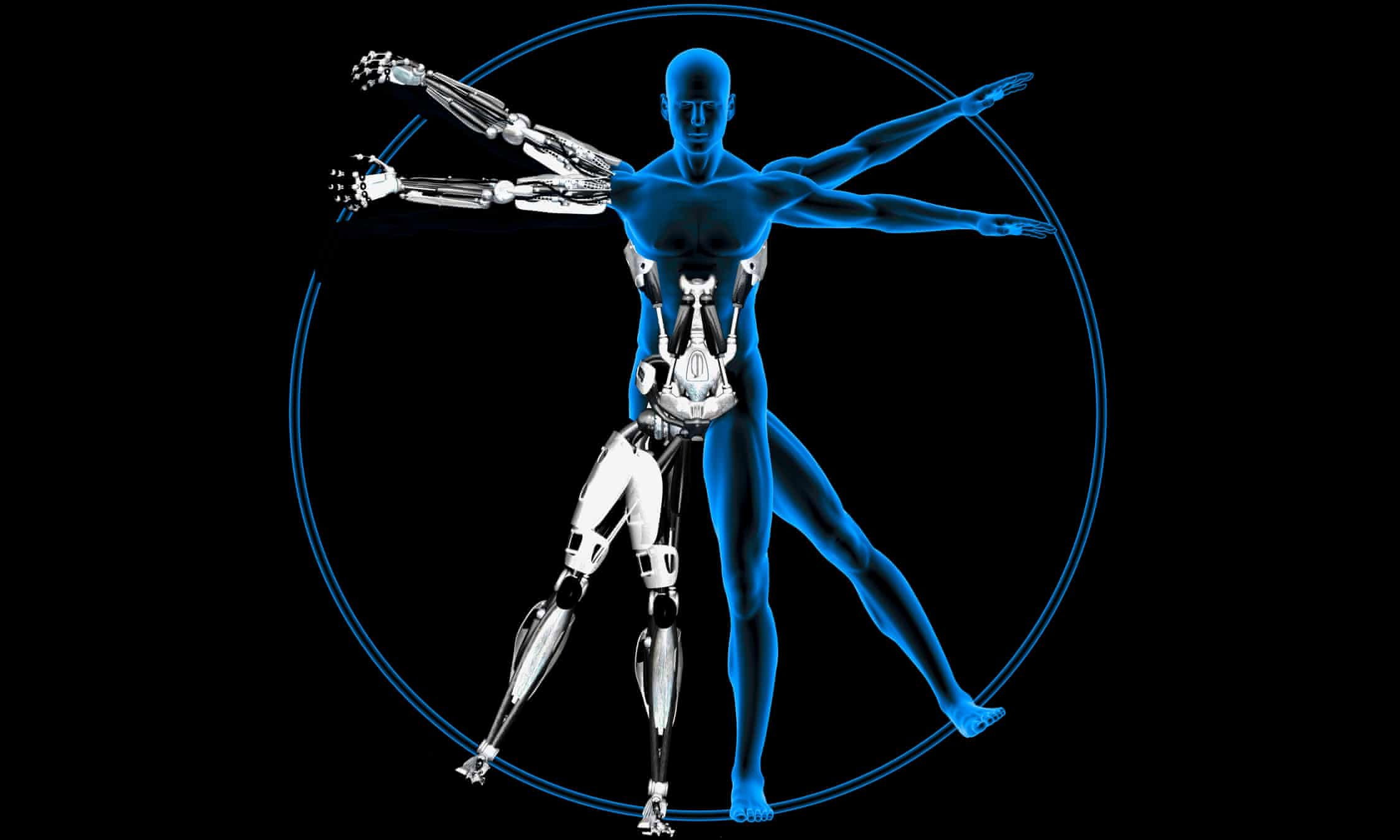
Transhumanism is the belief, that humans can develop into something, that is fundamentally different, than what current humans look like. It holds that life is getting better and attitudes are changing in favor of pro-human attitudes. Transhumanism has often been the subject of intense debate, with many believing that there is nothing fundamentally different about humans or life. Others believe, that this new pro-human life paradigm signifies the beginning of the next step in human evolution.
It is an idea, that humanity can be on the brink of the first form of the rise of an entirely new species, on the verge of exploring and experimenting with state-changing technologies and expanding our species boundaries. Yet, given the chance, I believe, that humans will follow through on their potential to evolve and move towards a state, that is better for humans.
This idea is not a new one. In fact, it is really just a rebranding of the old idea of progress, with a new twist. While transhumanism focuses on the potential for human beings to change and get better, the idea of progress focuses on the idea of change for the better.
What Are The Implications Of Transhumanism?
If we believe that humans, with the right care, can improve themselves and their lot in life, then what are the benefits of this belief?
The main benefit would be a more perfect society. If every human being is given the opportunity to become something better, then the argument can be made, that humanity is evolving towards a better place. This is a far more desirable outcome, than the alternative of the human race getting worse.
In fact, this idea of perfecting humanity is a recurring theme throughout human history. It is the recurring theme behind the idea of a utopia, a place that is so far in the future, that it has yet to be experienced by anybody.
The idea of perfecting the human race is one, that has been espoused by many different people and groups. It is the underlying theme of religious movements like heaven, and the idea that human beings can be perfectible is a staple of popular culture.
However, the idea of a perfectible human race is a flawed one. It is an idea based upon the flawed belief, that human beings are inherently good. This idea does not take into account the myriad of things that make humans bad, nor the fact that the actions of individual humans can have profoundly negative consequences on the lives of others.
The perfectibility of human beings, like the perfection of any other being, is an idea that is useful in theory, but in practice it is a pipe dream.
Will There Be A Utopia In Our Future?
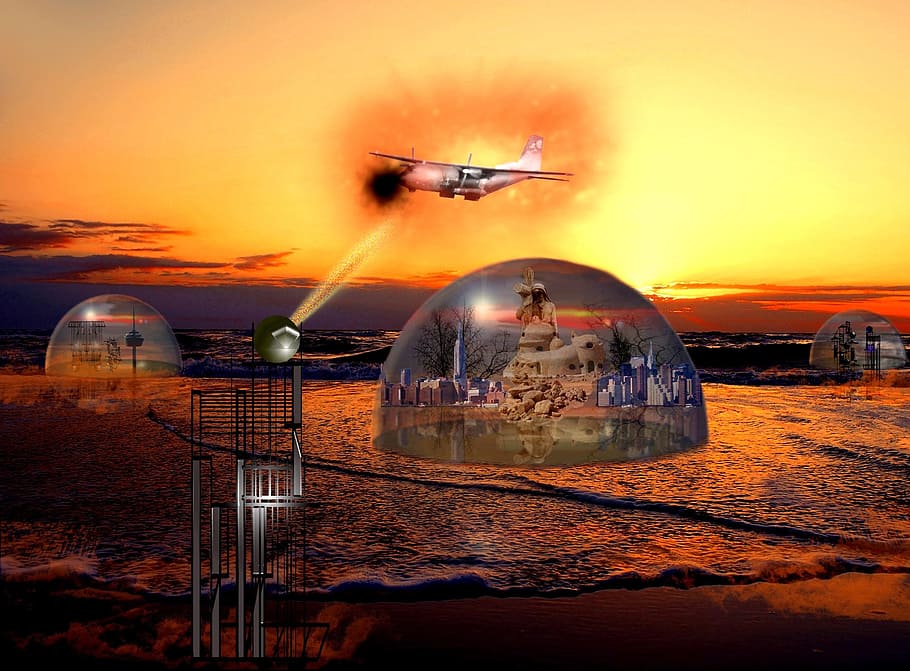
The idea of a utopia, or a place that is so far off in the future, that it is beyond the realm of possibility or relevance for anybody to even think about it, is a dream that will almost certainly never come to fruition.
However, we are not without hope. The fact, that we are even discussing the possibility of creating such a thing as a utopia reveals the extent of our current problems and the potential for change.
The fact, that we are even having a discussion about it is a remarkable thing. The fact, that we are having this discussion in public, in the form of a book is even more remarkable.
If the human race decides to make a serious effort at changing its direction, then I think that human beings will be able to do it.
Globalization Of Human Potential
Just as the industrial revolution created great economic and social upheaval, we may be heading towards a time, when the singularity will be the next great revolution in human history. If you look at the human race and the state of technology, you have to admit that it does seem to be changing in a way that it hasn't before. What makes the future different from the past is the interconnectedness of everything.
We are all linked together with our technology and the technology of other things. We are all to a degree, like atoms in a giant molecule. This interconnectedness can be seen everywhere, from social networks to the power grid to the global economy. If you really think about it, the future is inevitable. That is what makes it so scary.
Advancing Ourselves
What methods of change will we use to advance ourselves?
The first and most important thing, that we must do is to come to an agreement on what exactly we mean by the term *"utopia."* The term *"utopia"* has many different meanings depending on the context in which it is being used.
Is it a place in which everybody is happy? A place in which nobody will age or have disease? A place in which there is no poverty? I could go on. The fact is that a definition of "*utopia"* must be agreed upon before we can move forward.
**How We Should Move Forward?**
It is at this point that I part company with those, who believe that the definition of *"utopia"* is something, that can be decided through the consensus of the human race.
To begin with, these people fail to realize, that the human race includes those, who do not share their belief that a utopia is possible. Even if everybody could agree to the specific definition of *"utopia"* that we are working to achieve, there is no guarantee that they will even be able to agree on what a utopia even is.
Sure, we may all agree that a utopia is a place in which poverty, crime, and war do not exist, but does that mean that we need to agree on what the specific conditions of this place are? Do we need to agree that everybody is happy? That nobody will get sick or die? That nobody will be poor?
Maybe it's a silly question, but if we fail to agree on the basic conditions of the utopia that we hope to create, then how do we know that we are not simply creating a place in which the things that make us unhappy do not exist?
If we cannot agree on the first things, that must be present in a place in order for it to qualify as *"utopia"*, then there is no reason to believe, that we will be able to agree on the more complex things, like what conditions must be present in order for those conditions to be present.
If we cannot agree on what the most basic things must be, then the chances that we will be able to agree on the more complex things becomes virtually zero.
Improve Your Life With Humility
Humility is a virtue, that requires us to recognize and respect, that we are not perfect and that we can improve. It also requires us to understand that we're not the only ones with the problem we're trying to solve and that we can learn from others, who have already improved their life. Humble pride is a positive, consequence-free mindset, that helps you find success in anything you do.
The Importance Of Humility
Humility is the willingness to acknowledge your own ignorance and the knowledge that you're not infallible. It's a subtle, but very important distinction. Because if you're not humble, then you're concealing a poison within your pride, that could very well destroy you. Think about it. How many people have you known to be humble and yet turn out to be arrogant? In how many situations have you found people concealing their arrogance and ended up as the fools?
Humility is the antidote to arrogance. It's important to remember, that pride is not the same thing as self-confidence. You can be confident in yourself and still have pride. You can be humble while still being confident. You have to carefully watch your pride, but at the same time, you have to develop a healthy self-confidence. To be prideful is to take too much upon yourself. To be overconfident is to underestimate yourself. Pride is a choice. Confidence is a state of being.
Humility Is Not Weakness Humility Is Strength
Humility is not a sign of weakness. Humility is a state of strength, that all great leaders have. Humility is knowing your limitations. Real humility is knowing your strengths and weaknesses and having the humility to realize, that you don't know everything. Stop looking at humility as a sign of a weak mind. The real sign of a weak mind is an unhealthy attachment to power, which is the exact opposite of humility.
Be Prideful And Humble
You can be prideful and humble at the same time. I believe, that it is important for everyone, even the most humble people, to have some pride. A pride that is constructive though. A pride that doesn't make you arrogant like the unhealthy kind, but helps you recognize your own abilities and mistakes.
I want you to think of pride as a muscle. It's a muscle that is strengthened through use and weakened through overexposure. If you think of pride as a muscle, then humility becomes the careful and deliberate practice of that muscle. It works the same way. Prolonged and unhealthy, it becomes a flabby, weak, and painful muscle. But like anything else, it can be developed.
The Difference Between Pride And Arrogance
The difference between pride and arrogance is that you can be proud of who you are and what you do, and yet still make mistakes. The arrogance of pride is the refusal to accept any form of imperfection in yourself or others. It's the refusal to recognize your own fallibility, and the fallibility of others. It's the belief that you're infallible; that no one could ever do anything to you that you couldn't do better.
Pride is like a healthy ego, it feels good to have pride. It feels even better to be the one with pride. To be the one with the arrogance, you have to continually bump up against people who are bigger, better and more confident than you. Healthy pride makes you feel good about yourself. It makes you feel like you're a worthwhile human being.
Unhealthy pride makes you feel like you're better, than other people. It makes you feel like you're always right. It doesn't matter how much experience and wisdom you have, if you let the poison of arrogance consume you, then your knowledge is of little use. The more pride you have, the more likely it is that your arrogance will consume you and the harder it is for you to become humble. Arrogance is like a weed in the garden of life; pull it up by the roots before it takes over everything.
The Importance Of Self-Confidence
While humility and pride are very different, they can actually go hand in hand. They're both important, because without pride and self-confidence, you're not going to have the drive to succeed. Without humility, your pride will blind you from mistakes and from learning from others. But without confidence, pride will be a hollow virtue and you'll have no inner worth.
Both are important, and to have neither can be just as bad as to have one. The more you have of one, the more you're likely to have the other. Healthy humility and pride are actually healthy attitudes. They're not unhealthy. They're necessary to a healthy ego. They're the grease, that makes the wheels of life go round. If you have too much pride, you'll have no humility and no self-confidence. If you have too much humility, you'll have no pride and no self-confidence.
But you also can't have too much of either. At some point, you have to be willing to face and acknowledge your mistakes, because otherwise you'll just be spinning your wheels. You have to be willing to let other people help you when you're in need, because you can't do everything yourself. You have to have some confidence, because without it, you'll never take risks and push yourself.
The Importance Of Accepting Help
If you want to succeed, you'll need others. You might not need others to do the hard work, but you certainly can't do it alone. You don't have the ability to do everything yourself. So you're going to have to learn to accept help. You'll never truly succeed in this world without help. No matter how much you might want to think that you can.
You might have a natural ability that others don't have. You might be able to succeed without much effort. But it's certainly not going to be easy and it's going to take quite a bit of luck, for you to succeed and when the going gets tough, you're going to need help. You might think you can pull it off yourself and you probably could, but remember, you have limits to your own power as well.
You might have all the talent in the world, but if you don't have the proper guidance, then you might not have the tenacity to get where you want to go. So you're going to have to learn to say "no" to the untalented and "yes" to the talented. You might not be good at everything, but you certainly don't want to be a failure at anything. So you'd better choose your allies with care.
Assertiveness In Different Areas Of Life
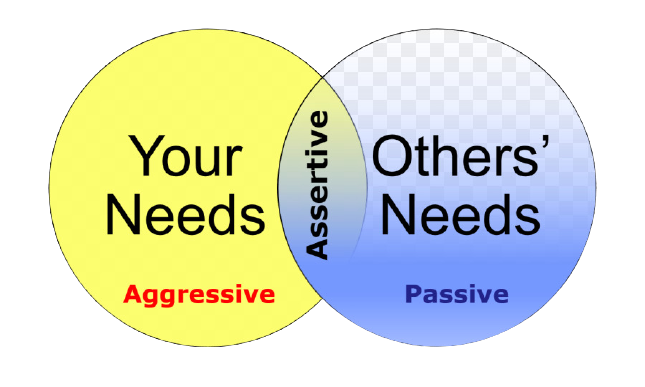
Being assertive is about standing up, speaking out, taking ownership of how you feel, what you need and what you're not okay with. Most people view assertiveness in a bad light and see it as a form of aggression. But in reality, assertiveness is a win-win in all situations and it can contribute to a significant boost in well-being and happiness levels. Assertiveness is an emotion, that life experiences rather than a personality trait. We need self-esteem, not just to live well, but because it provides one with the confidence necessary to embrace the truest aspects of being human.
If you're trying to learn how to effectively assert yourself, my suggestion is to go with the natural flow of life. Don't force yourself to master assertiveness just because you feel like you should. Whenever you encounter something, that makes you uncomfortable, take a deep breath and think through the most challenging situation you can imagine. After you've thought through the situation, find the most assertive way for you to speak about it. In this article we are going to look at assertiveness in different areas of life.
Health And Wellbeing
When we talk about assertiveness, we're really talking about how you deal with conflict and how you're able to navigate the many interpersonal situations, that you're likely to face. It's not a trait, that can be learned through books, it's a set of life skills, that have to be practiced and developed.
We all deal with conflict differently. Some people take a more avoidant approach, disengaging from the conflict and searching for a way to change the subject. Other people take more of a confrontational approach, engaging in the conflict and arguing their point with the other person, even if it means putting their own interests second.
But all conflict is not the same. There is a wide variance between how people respond to interpersonal conflict. Some people take more physical, some take more psychological, and some people even take more passive kinds of approaches. It's all a matter of how much energy you're willing to commit. People at different energy levels will respond in different ways.
For example, take anger. Some people are capable of holding a great deal of anger, and will usually respond with anger when provoked. Other people cannot tolerate even a small amount of anger, and will respond with disengagement. Yet others will actively avoid any opportunity for conflict and as a result will never experience any.
Assertiveness In Relationships
In a relationship, assertiveness is all about communication. How you communicate your needs, what you need from the other person and whether you're being listened to and respected. While there are certainly other factors that come into play, primarily these are the factors that tend to get overlooked. There are ways to effectively communicate with others and then there are ways, that are aggressive or undermining. The latter are pretty self-explanatory. The former may get misinterpreted.
How you make your needs and wants known depends on the context and whether it's something you need to do or something you're just wanting to do. For example, you can make a needs-based request such as *"Could you pick up the dry cleaning?"* or you can make a want-based request such as *"Would you like to go to the fair with me?"* It all really depends on what you're trying to achieve, but more often than not, people will make the wrong choice or don't communicate effectively and a relationship will end up badly.
When you're communicating, there's the give and take of the interaction. You're doing the asking, the other person is doing the answering. If the answer is no, that's the end of it. You can't make the other person do anything, that they're unwilling to do.
If that's the case, then how you deal with a no will largely determine how you're going to respond to the situation. How you respond depends on how you made the other person feel. If you were to be very pushy and take the interaction to a confrontation, that could have the opposite effect, that you're looking for. At the same time, if you respond in a very submissive manner, you're likely to receive a similar response in kind.
The best way to respond to a no is to find out what the other person needs in order to say yes and give it to them.
Assertiveness At Work
At work, assertiveness means doing what you're good at and what you enjoy doing. You work hard, and you let your work ethic and your talent talk for you. You're good at what you do and your boss respects that. If you have a promotion to a higher position, you'll be recognized as a leader among your peers and given more responsibility. If you're passed over for a promotion, you'll have the opportunity to learn from your mistakes and grow from them.
The hardest part about being assertive is letting your ego get in the way. There's nothing wrong with being ambitious, wanting to do well, and having high goals. The problem lies in being to eager to make yourself seem like you're better, than you really are. People will see right through it and your boss will be the first to know.
Assertiveness In Difficult Situations
In the real world, we all have to deal with a great deal of uncertainty. We can't always know for certain what the consequences of our actions will be. We can't always know what other people will do and in the worst-case scenario, we could always be wrong. No matter how you try and plan for every eventuality, there's always that chance that you'll face a situation where you have to react without thinking.
When that happens, you don't have time to be assertive. You need to be able to make snap decisions. You need to be able to think on your feet. These things are not the same. Being assertive means having the confidence to let your beliefs and opinions influence the way you interact with other people. When you're in a position of being able to influence other people, you have to decide for yourself: Will I be assertive or will I be a pushover?
The Benefits Of Assertiveness
The ability to be assertive comes with its own set of perks. You're in control of your life. You're not at the mercy of your circumstances. You're not dependent on the approval of others. You don't have to prove yourself to be worthy of being liked. You don't have to try so hard to be who everybody else wants you to be.
These are all very appealing things, but of course they aren't without their downsides. You don't have to worry about being liked by others, but you also can't care less what others think. As far as you're concerned, they can all go to hell. You have to try to strike a balance between being assertive and being aggressive.
In general, being assertive will make people like you more. It will also make you more successful in life. They say *"like attracts like"*. When you're being yourself, you're less likely to be disappointed in life.
However, not everyone will like you. Not everyone will approve of what you're doing with your life and some might even try to do you harm. So you can't take chances in how you're being perceived. You just have to find that perfect balance between being yourself and being liked.
7 Things, That Will Uplift Your Mood On A Dull Day
One important reason why happiness is so important is because it can promote physical health. When you are happy, the release of hormones like dopamine and serotonin, which are two chemicals that affect mood, can also cause hormones to be released, which can create positive physiological changes. The more often you focus on the good things, the more often these *"happy hormones"* are released into your body, which gives you neurochemical support for good emotions and the subsequent physiological effects.
A dull day can often be made more bearable if you distract yourself with some fun activities. Sometimes, the best way to brighten your day is by getting out of the house, whether it's to hit the slopes or hit up a fun event. Other times, it might be to watch some TV comedies, read a book, or spend time with friends. When a situation looks hopeless and you feel like you're going at a spiral, a good reminder for a lift may be nearby. Here are seven things, that may come to mind to put a smile on your face.
A Fun Event
Events can have a way of bringing people together in a way, that allows them to forget about their problems for a while. Going to an event like a concert or a football game, for example, can be an excellent way to get out of the rut, you might find yourself in. These types of events are common occurrences, so you have some idea of what to expect. Your anticipation, and the energy of the event itself, can increase. This increase in happiness can only be sustained if it does not lead to an unhealthy obsession, of course.
A Walk
A brisk walk has a way of clearing your head and allowing you to organize your thoughts. You don't have to be a professional athlete, or even a particularly active person, to experience the benefits of a walk. Even a fifteen-minute walk at a steady pace can have a profound effect on your mood. Your body will produce endorphins, which are natural morphine-like substances, that can trigger feelings of well-being.
You could go for a longer walk if you feel up to it. Experts suggest, that a prolonged walk of thirty minutes to an hour a few times a week can have significant physical and emotional benefits.
The weather affects how you will experience the walk. A brisk walk in a dry climate may be all you need to feel refreshed. In a humid or wet climate, you might need to change up the type of walk to suit the situation.
A Massage
A massage may seem like an indulgence, but like most indulgences, it can have wonderful benefits. When you give yourself over to a massage, you are allowing someone else to rub your body with their hands. This, alone, can have a deeply relaxing effect.
A professional massage may cost you a pretty penny. You might not be able to justify spending that much, but you could probably afford to hire a masseuse to come to your house once a week. Many people prefer the professional touch, because they are not used to massage. The masseuse will know how much pressure to apply and where to apply it. You may not know how to massage as well as the professional, but even a few sessions with your spouse or partner could teach you a thing or two.
After the massage, you may feel drained. The release of tension and the alleviation of stress and soreness is what the massage is supposed to do, but it doesn't always leave you feeling rejuvenated as much as it just leaves you feeling normal.
Some people might not like the idea of a massage, but you already know what you like and dislike. You could also consider a hot stone massage. These massages involve heating stones, that you place along your back and other tense areas of your body. Depending on how long you leave the stones in, they will either help to soothe your muscles or provide a deeper relaxation.
A Fun Activity
After the weather has had a chance to make itself known, you may want to consider participating in a fun activity. The possibilities are almost limitless, but here are a few ideas.
You could go mountain-biking with some friends. The great thing about this type of activity is that you can go at your own pace. You can stop to rest or go down a trail at any time.
You could go spearfishing or kayaking with some other people. Both of these types of activities are a little more *"outdoorsy"*, than the other suggestions, but the activity itself determines the type of clothing, that you will need to wear.
You could also go rock climbing. This activity requires a physical ability and a certain level of fear of heights. Most people, regardless of how they will react to the situation, will be able to rock climb.
Distraction
Distraction can be a very powerful tool, when it comes to changing your mood. Watching a nature show, playing a game, or going for a drive can all serve as distractions from the troubles in your life. You could also spend time with someone, who always makes you laugh. A great friend and a belly-laugh can often be more powerful, than any other things.
Meditation
Meditation can be a very powerful way to calm the body and the mind, and it is a practice that anyone can learn. It is a simple process. You simply focus on a single point, and you try to let go of all distractions. Your attention remains fixed on that point.
The trick is to not yield to any temptations to stray from your focus. This is where distractions come in. If you find that your mind is wandering, you must gently bring it back to the point. If you find that your body is moving, you must also move it back into a sitting position.
It may take a while to master this technique, but you will be surprised at how quickly it becomes second nature. The more you practice, the better you will become. You may need to read a book on the subject, but any beginner's guide to the subject should be enough to get you started.
Try A New Hobby
For many people, hobbies are an important part of their lives. Hobbies can vary from as simple as appreciating art to participating in extreme sports to learning an instrument. If you've always wanted to try something new, you should do so. Hobbies can be a great way to meet new people, learn new things, and keep your mind busy.
The only thing you need to decide is what type of hobby you want to pursue. Many hobbies require equipment and skills that you may not have. Some require levels of experience that you may not have. Some are dangerous.
Any of these factors may make the pursuit of the hobby too difficult for you. You may decide, that the risks are just too great and simply choose another type of hobby instead. The choices are almost limitless.
Finale Thoughts
You may not realize it, but your day is being turned around by the simple act of engaging in a different activity. Do not, however, let this new-found energy overcome you. Remember that your objective is to find something, that will make you feel better and that your walk, massage, or whatever was only a stopgap measure. You may find, that you have to make a major adjustment in the way you live your life, but that is usually the case with a person, who finds themselves in an unhappy state.
How Fear Influences Our Behavior
The way we act, feel and think is influenced by the fear, that underlies every thought and action. Can we really influence our behavior by fear? Some psychologists say yes. In their opinion, our own behavior is a reflection of our thoughts and feelings. Therefore, if we tell ourselves a fear-based story, it can become a reality in a way. Our conscious decisions may not have a huge impact on our behavior, but our unconscious thought processes have a massive impact on how we see the world. Fear can lead to different behaviors. The fear, that comes from external threats encourages us to take precautions against dangerous situations. In this article, we'll explore the relationship between fear and the resulting behavior, that ensue.
The Threat
Our brains process information in a way, that makes it extremely difficult for us to resist that information, to the point that most people don't have a choice in the matter. We become highly suggestible and are at the whim of our senses. In psychology, it's known as the *"appeal to authority"* where an unknown source is heavily relied upon as fact. In this case, the *"authority"* is our own bodies and what they are capable of. The senses are the gateway to all that is in the world. What we see, we hear, we feel and we smell all provide data to our brains, which in turn process into something, that our mind comprehends as behavior.
When we're in a state of fear, the sensory information gained from our surroundings is more prominent. We are able to become more aware of the things going on around us, which is very useful in dangerous situations. However, being aware is not the same as seeing clearly. When we are in a stressful situation, we begin to distort what we see in order to make the world make sense. This is a survival mechanism of the brain. But, in extreme cases, we can go into a state of *"flashback"* and relive the experience, that triggered the stress in the first place.
Fear As A Source Of Feeling
Feeling is the perception of which sensations enter the body and are interpreted to be something positive by the brain. Our brains are hardwired to look for threats and focus on them. When we are in a state of fear, the sensations that the world around us transmits to the brain are exaggerated. This can be observed in certain types of psychosis, such as those who have experienced prolonged trauma and/or who have been highly suggestible. For example, a person who saw a fire on the street when they were just a child can be convinced that the devil made the fire. Their brain will take that suggestion and build upon it, creating a full blown delusion.
In the context of this article, the information that the senses give to the brain is distorted in a way, that serves a certain function. This manipulation of information can be for the purpose of evasion, which is what I believe is going on when someone is pretending to be something they're not. This can also be for the purpose of deception, which is why I would treat anything a person told you with extreme skepticism.
How Fear Shapes The Way We Think And Feel
We've established, that fear can influence the way we see the world. There is another thing, that fear can influence and that is distortion of time.
The thing about fear is that it can create an intense state of vigilance. This is especially true in situations, where the consequences of acting in a certain way are drastic. In this case, there is a clear and present danger. If we are going to survive, we need to pay close attention to avoid said danger. One of the ways in which we do this is by distorting time.
It's well known, that people who are in a fearful state often speak of feeling time passing slower. But, we are actually able to slow down or even skip time all together. This is because the brain has a hard time comprehending a situation, that is so out of the ordinary. So, when the body is preparing for fight or flight, the brain has to work extra hard in order to make sense of what is happening. In this state of heightened awareness, the body can become unresponsive. This is often the case with people, who have been poisoned or have a severe allergic reaction.
I'm not a scientist, so I won't go into any more detail, but the way I see it, when we are in a state of fear, we have little to no control over the way that time progresses. This is one of the reasons why people in a state of fear often make irrational decisions.
Fear Gives Form To Our Behavior
Fear is the basis of all behavior, well, good behavior anyway. By fear, I mean the emotion that we feel when we perceive a threat to our well being.
We have an instinct to act in certain ways. These are the right things to do in order to survive. Other times, we do the exact opposite because of a fear-based distortion of information. The result is irrational and counterproductive behavior. One of the ways in which our brains attempt to deal with the stress of fear is by putting our own needs on the backburner.
In psychology, this is called *"cognitive dissonance"*. Meaning, when two conflicting views are presented to the brain, the brain picks one over the other. This is why we are hardwired to choose the path of least resistance. When the situation doesn't allow for a choice, the brain simply represses the behavior or thought process. This is why we act out of character, we do things against our better judgment, or we say things or think thoughts, that we know to be untrue.
How To Deal With Fear And Distortion Of Time
How do we deal with all this? A state of fear is often a state of distraction. We are too preoccupied with our own survival to think clearly. In this state, we make poor choices.
Fear is also a feeling, that is very easy to manipulate. By increasing the amount of fear we have in a situation, we are able to make that situation much more threatening. This is why many people are able to get people to do things, that they otherwise wouldn't do.
Remember, fear is a feeling that the brain conjures to create a sense of urgency. So, if we can't argue with the brain, then we need to work around it.
Here is what we can do:
**Avoid The Trap**
Fear is a very powerful emotion. It is an adversary, that seeks to disrupt our logic and reason. If we let it, fear can cause us to make poor decisions, act irrationally, and yield to desperation. If we are able to avoid falling into the pit of despair and hopelessness, then we can better manage fear.
Therefore, the best way to handle fear is to avoid it. If we can't avoid a situation, then we might as well do something to change it. After all, fear is going to do one thing and that is to make us react. The more we can anticipate and prepare for, the more we can keep the feeling of fear at bay. This is the foundation of self-defense and survival. By preparing for a dangerous situation, we can reduce the fear that is present in that situation.
**Think And Act Rationally**
Once we have reduced the fear, we can begin to think more clearly. We can take the time to prepare ourselves mentally and physically. By preparing, we are choosing to lessen our own sense of fear, and in turn, lessen the fear that we see in others.
This doesn't mean, that we become arrogant or disrespectful. It simply means, that we are evaluating every situation before we act on it. Being afraid doesn't automatically mean, that we are wrong. In fact, being afraid is the first step to being correct.
After we have prepared, we can act with more confidence. As we have seen, confidence is a large part of being able to avoid or overcome fear. If we are lacking in, then we will not succeed.
This article is my entry for Infinity's writing prompt "Fear". https://read.cash/@Infinity
9 Reasons Why People Fail To Make Apologies
People commit offenses and make mistakes. They forget to say *"I'm sorry"* and then they wonder why it's so hard to win back their trust. Many social science experiments show, how people do not apologize, when they make a mistake, even when they realize their mistake and want to correct it. People prefer making excuses for their mistakes, because it makes them feel superior and not easily scorned. When someone is trying to apologize, but it goes wrong, it can have serious consequences.
It's not always easy for people to apologize, when an error is made. But apologizing when you know it's necessary is an important skill to have. Do you find yourself in the midst of an apology only to find it digressed? Do you start to lose your voice after you say *"I'm sorry?"* Here's the frustrating issue for many people, when they learn they've hurt someone they care about through their behavior: when they try to apologize, their apology feels wrong, so they stop apologizing at all. This is a problem of misaligned intentions, not actions.
https://www.verywellmind.com/how-to-apologize-more-sincerely-3144467
A Desire To Not Make Peace
Most people want to make peace with others, but some people have a desire to not make peace. They feel justified in continuing their former way of behaving and they want everyone else to see things their way. In other words, they don't want to make peace, because they don't feel it's necessary. Some people are so focused on not apologizing, that they don't consider why their actions may be hurting someone else. If you are one of these people, then you have chosen to make this issue into a fight. The unfortunate thing is that when you do not make peace, your intentions may not be aligned with your actions. You may not be fully aware of the damage you are causing. Even worse, you may not care.
Lack Of Consequences
Consequences are important. Without them, people may continue on a course of action, even when it is wrong. But consequences need to be real and they need to be fair. They also need to be based on the facts. Unfortunately, the facts may not be on your side sometimes. Some people refuse to acknowledge, that they are wrong, because it is easier that way. Some people will try to convince you, that you are wrong without ever really addressing the facts of the situation. Others will attack your reasons for being right, ignoring the facts altogether. In these cases, the only way to remedy the situation is to make sure, that the consequences are fair, but that you still hold the upper hand.
An Exaggerated Apology: Not Being Sincere
An exaggerated apology is one of the more frustrating things a person can give in response to being wronged. A sincere apology, even one accompanied by a demonstration of remorse, goes a long way in mending a relationship. But an exaggerated apology merely convinces the offended party, that you are not being sincere. At some point, an apology has to be enough. The offended party has to stop caring, at least momentarily. And that is often the hardest part of all.
Lack Of Humility
https://faithmag.com/let-one-among-you-who-without-sin-be-first-throw-stone-her-jn-87
Humility is a difficult concept for some people to comprehend. It's easy to be humble, when you have done nothing wrong, but when you have been wronged, humility can be a problem. The arrogant tend to think they are smarter and better than others, while the prideful tend to think they are better, than the situation and their past mistakes. Neither of them are usually right. But arrogance is always a bad idea, because it leads to overconfidence. When you combine that with pride, you get arrogance and when you combine arrogance with confidence, you get a dangerous individual, who is both arrogant and confident. The end result is almost never worth it.
Lack Of Sympathy
Humility is inextricably linked to sympathy. You need to have sympathy for the other person before you can be humble. Confidence and pride may come into play as well, but a high opinion of yourself will always hinder your ability to be humble. There is no room for such things in the development of a healthy personality. So, if you believe you have some special qualities, that the other person doesn't, then you won't be able to show the proper amount of humility. They will think, that you are putting them on a level with yourself instead of looking at the situation just as they are and that will lead to a lack of trust.
A Sense Of Responsibility
Sometimes people will make mistakes and they will try to make themselves feel better by transferring blame. This of course is a very bad idea. People will tend to see right through it, and the perpetrator may end up feeling bad, but the person that was wronged will almost always be the one to suffer the consequences. It is the unfortunate thing about life. Even when you do everything you can to avoid it, it will find you. It may be a small price to pay, but you will still pay it. The question is whether or not you are willing to live your life that way.
Low Self-Esteem
https://www.kinsalecbt.com/low-self-esteem/
There are many situations in which making peace is the more desirable choice. But it can be hard to admit, that you are wrong. When you are certain that you are right, then it is much easier to just go your own way, but when you have to acknowledge that you are at fault, it is often easier said than done. The choice is ultimately yours. You can choose to live your life in the manner, that you have always done and suffer the consequences, or you can choose to make a different sort of life for yourself.
People with low self-esteem tend to live out their entire lives in this manner. They never really do anything, that they are not convinced is absolutely wrong and then they are convinced, that is exactly what they are doing. Making peace seems like the less risky choice at the time, but it can cause problems down the line. At some point they may have to make different sort of choices, but they will not be able to make them if they do not even consider the possibility, that they may have been wrong.
Lack Of Awareness
Awareness is one of the most important things in being able to make peace. Without it, you may do things that you will later regret. A lack of awareness is often a factor in the decisions, that people make in life. You can make decisions, that are beneficial to you based off of your own personal values and beliefs, or you can accept the values and beliefs of those around you.
But you can never truly be aware if you are unaware of the decisions, that you are making. You can look back and try to justify your life, but that will always be futile if you never bothered to examine your own motives and beliefs in the first place. When it comes to making peace, it is important to remember, that you are going to have to examine yourself before you can be accepted by those around you and without an acknowledgement of that, you will not be able to make peace.
Stubbornness
Stubbornness is a quality, that people tend to desire in others, but more often than not, it is a detriment to a person's well being. A good portion of what is seen as stubbornness is simply a lack of conformity. When you are not able to accept, that which is different, then that which is different offends you. When you are not willing to consider that which is different, then that which is different cannot exist.
When you are unwilling to change, then you are doomed to an existence of failure. You have to be open to the idea, that you may be wrong, but not so much that you allow yourself to be blinded by new ideas, or fall victim to peer pressure, because that is often what happens when people are stubborn.
People with stubbornness tend to want to do things their own way, even if that way is wrong. They tend to believe, that they are right and everyone else is wrong and in some cases, they are both right and wrong. The end result is an inability to be in peace with anyone.
Forms Of Anxiety And How Curiosity Can Help
There are plenty of theories about how curiosity plays a role in anxiety. What does science have to say about it? How does anxiety affect cognitive performance? Does anxiety cause curiosity, or is it the other way around? People have been struggling with anxiety for a long time. But if it becomes so intense, so disruptive, so all-consuming, it's no longer just a chore to get through or a passing mood to contend with. In this article, we learn about some of the different forms of anxiety and how curiosity can help with them.
Psychological And Physiological Effects Of Anxiety
Anxiety is a common and important part of the human experience. It keeps us alert and on the watch for danger, and gets our brains and bodies ready for fight or flight. But when anxiety becomes excessive or lasts too long, it can have a number of negative effects on a person. In this section, we'll focus on the psychological and physiological effects of anxiety how it makes you think, feel, and act.
In psychology, anxiety is most often associated with fear. As a result of a stimulus, that evokes fear in us, like a snake, for example, we feel a variety of unpleasant physiological changes like rapid heart rate and shallow breathing. But the word *"anxiety"* can also refer to a more general state of apprehension.
When we're anxious, we experience unpleasant physical changes along with the fear, but not necessarily because of a specific external stimulus. The snake might be in the bushes, because we're anxious about something else; for example, we're in the middle of a math test and the prospect of failing it is very real. Anxiety can interfere with other bodily functions, too, like digestion and immune response.
So What Causes Anxiety?
There are a variety of different things. In general, though, anxiety is a response to a perceived threat. While there is often a clear external stimulus, that triggers the anxiety, such as the snake or the math test, more often than not, the source of the anxiety is something inside the person's own mind. For example, a social anxiety disorder could develop, because of an unreasonable fear of other people, even in the absence of any real threat. These imagined threats, or fears as they are sometimes called, can be so all-consuming, that they interfere with the sufferer's everyday life.
Anxiety can take different forms. In the broadest sense, anxiety is a feeling of nervousness, apprehension, or worry. This kind of anxiety is called generalized anxiety. As a milder form, it can also be referred to as stress, which is the tension and uneasiness, that builds up inside us as a result of perceived danger. But the different kinds of anxiety aren't the only thing, that can make us feel anxious.
There are also less obvious causes of stress, like having to go into a math class and perform badly, because of a lack of preparation. These kinds of performance-based anxieties can be particularly difficult to deal with, because the cause is often unclear and we can't just ask the student to relax, for example. A performance-based anxiety disorder can affect us in a similar way to the more common generalized forms, like social anxiety and simple phobias.
But those disorders are characterized by an excessive fear of a particular object, behavior, or situation, performance-based anxieties typically involve an excessive fear of performing poorly. In other words, we're perfectly capable of coping with our fears, or at least recognizing our mistakes, but the fear itself interferes with our ability to function.
Treatments For Anxiety
There are two major branches of treatment for anxiety. The first is to change the behavior, that is causing the anxiety in the first place. This means either reducing the stimulus, that is inducing the anxiety or alternatively, changing the way in which we respond to the stimulus. For example, if we have a fear of spiders, it will not be resolved by simply ignoring the spider. This kind of exposure therapy is the most effective when it comes to less-common disorders, such as specific phobias or OCD.
But there are also a wide variety of different medications, that can be useful in treating certain kinds of anxiety disorders, like generalized anxiety disorder or social anxiety disorder. When it comes to these more *"mild"* disorders, the newer drugs are not always more effective than the older, but there is a particular class of drugs, that tend to be more effective in the majority of cases. These are the drugs, that have a more narrow therapeutic window, but are more effective, than other drugs in treating a wide variety of different disorders.
Coping Anxiety In Every Day Life
In addition to understanding the causes and the effects, we can also learn how to cope with anxiety. How can we identify its source, so that we can address it directly?
One way to make sure that we don't let our own fears get the best of us is to recognize, that our fears are probably unrealistic. Consider the common fear of snakes. In most cases, if we are exposed to a snake we will not die. The fear is absolutely excessive and irrational, but that doesn't make it any easier to get over.
Often, when we are faced with a situation, that could produce an intense amount of anxiety, we find it helpful to step back and look at the situation dispassionately. In other words, if we are being chased by a monster and there's nowhere to hide, then our fear will probably get the best of us. But if we can slow down and examine the situation rationally, it may be that the fear is unfounded.
A good way to think about it is to consider whether the feared outcome really is all that bad. If the feared event actually results in a loss of life, then obviously it is very bad. But what does that really mean? Is a single lost life really worth dying from a heart attack because you were afraid you might miss a train?
It may be unrealistic to expect, that we will never suffer from anxiety, but it is possible to hold the fear at a level, that is tolerable. In other words, we can learn to live with our fears.
Never Underestimate The Power Of Curiosity
Curiosity makes us feel like we're on the edge of something, even if we know there is nothing to be afraid of. In other words, the fear of the unknown is sometimes worse, than the reality itself. "What if it's worse than we think?" is a common response when curiosity strikes fear.
But the truth is, we always underestimate the power of curiosity. Fear is a very effective tool of the mind, but it also has a way of blinding us to the obvious truth that is staring us in the face.
When was the last time you looked at a fearful situation without first categorizing it as something to be afraid of? You probably didn't even think about it, you just acted on the basis of how you felt. The fear just took over and that fear was the most rational response, in that case. But what if the feared response is irrational in the present case? Reality has a way of biting back.
There are two ways that we can respond to this.
One is to decide, that we will not respond to the reality, but rather, deny its very existence. This is a response, that many people with anxiety have. The idea of facing reality in any way that might be uncomfortable or upsetting is avoided.
The other is to actually confront the reality. If we refuse to accept the possibility, then the fear will not be there, and we can avoid the danger. But if we go forward with a plan to confront the monster, then the fear will be there to greet us, but at least we will not be its prey.
Lead image source: https://pixabay.com/illustrations/eyes-psychology-anxiety-disorder-730751/
Will 3D Food Printing Be The New Normal For Producing Food?
3D food printing is a neat concept, but the idea may have more to do with people being dazzled by the idea of being able to print food at home instead of just buying it at the store. While the technology of 3D food printing is still in its infancy, University of Illinois researchers estimate, that more than half of the American population will have experienced it by 2030. This makes 3D food printing a hotly debated topic. The future is closer, than you think as 3D food printing technology becomes more popular each day. In this article, I will elaborate on the 3D food printing benefits and how it will change society. You might be surprised by what you learn!
What Is 3D Food Printing?
3D food printing involves taking a digital file of the food you want to print and slicing it into layers. Each layer is then printed one at a time on a mold or similar device. Once the final layer has been printed, the mold is removed and the printed food is removed from it. The process is then repeated until the food item is finished.
The end result is a 3D printed food item, that looks identical to the digital file you started with. This is a big advantage over conventional methods of food preparation. There is no danger of cross-contamination between different types of food when 3D printing.
Is It Safe?
3D food printing is relatively new and there are very few studies on the subject. But the researchers, that are studying it say that the food printed is perfectly safe.
The 3D printers used to print food are able to create a very high level of precision within the food itself. As such, any bacteria or other pathogens that might be present are unable to reproduce at normal cellular levels. This makes the food safe to eat.
The 3D printing process also has some benefits over conventional food preparation. It is a cleaner, more efficient and less labor-intensive process. This could prove to be very useful in the growing world food crisis.
What Are The Benefits?
3D food printing allows you to prepare custom meals to exact specifications. You may even be able to get the exact food you want. This can be useful for when you go on a special diet or when you want to try a new cuisine. The possibilities are vast with 3D food printing.
It can also reduce the need for cooking. While the concept of 3D printing may seem odd, you can see that it would eliminate the need to cook a significant portion of the food you eat. This can be a big benefit to those with limited time and fuel, as well as those who want to conserve resources.
The use of 3D food printers may reduce food waste as well. Some of the food you print can be kept for later consumption. This can be a convenient way to deal with the issue of leftovers.
Impress your friends and family by showing them this amazing new technology. You can create recipes and dishes. that would be impossible to create using other methods. This will open up a whole new world of possibilities!
How Will It Change Society?
The potential for 3D food printing to change society is enormous. It could change how we think about food and nutrition. It could change the way we educate kids and even the way we work and do business.
The 3D food printing process could potentially reduce food waste and save many precious resources. It could help reduce the world's reliance on fossil fuels and, it could lead to the creation of more sustainable communities.
The possibilities are exciting and there is a lot of debate over the exact role, that 3D food printing should play in society, but the potential is still very much there.
How Will It Be Done?
The creation of a 3D food printer is still in the early stages of development, though some prototypes already exist. As such, there are a number of questions over how the technology will be used.
What kind of 3D printer will be used to produce the food? Will it be able to produce food in multiple different forms? These are just some of the questions, that need to be answered, but the answers will shape the future of the 3D printing of food.
The issue with the 3D food printing process is that, as a relatively new technology, there isn't a ton of data on it yet. It's hard to create recipes for it and there aren't a lot of studies on the long-term effects it might have on the human body. In other words, it's hard to be safe with 3D printing. Yet, it may be the only safe way to create the food we need for an increasingly crowded world.
Is The Technology Sustainable?
Food is the number one source of waste in the world. That waste goes to landfills or food scraps, that never make it to the compost heap. It's true that 3D food printing could reduce the amount of waste, that ends up in the trash, but that will only be the case if the food is actually used.
Some researchers estimate, that about half of the printed food in the future will never be eaten. Some of it will be lost in the printing process and can't be recovered. As a result, the amount of food that can be printed will be significantly less, than the potential.
The bottom line is, if you're printing food just to throw it away, then the technology may not be as environmentally friendly as it seems.
Is It Ethical?
In a perfect world, it wouldn't be ethical to create and release a technology, that you know will contribute to the unnecessary and wasteful use of resources. However, we don't live in a perfect world.
Given that, it's important to ask yourself whether or not this technology is worth the potential consequences. In other words, do you feel comfortable creating a technology, that could save countless lives and reduce the demand for food, but could also result in a large amount of food being tossed away?
If the answer is no, then it may not be the best use of your time to pursue this technology.
When I wrote my article about the Future Of Food: Synthetic Meat, @FarmGirl said she would looking forward reading my article about 3D food printing. So here we are I hope you guys enjoyed it. Let us know what your thoughts are about 3D food printing. https://read.cash/@Peter-Molnar/the-future-of-food-synthetic-meat-i-am-actually-concerned-9c47f857
Expanding Your Mind Helps You To Access More Of Your Brain
Many of us may not think of our minds as unstructured, but we do know they can be more, than we realize. If we take more time to see the loop we go through, we can learn how to expand our minds and increase our mental capacity. Most of us usually associate narrow thinking with smartness, but scientists are challenging that belief. Neuroscience is now showing that different thinking styles actually permit people to reach different parts of their brain. As your mind expands, your life changes. You release hormones, that make you happier, feel longer-lasting energy and even enhance your creativity.
Many Assumptions Based On Our Brain's Evolution
There are many presumptions, that are based on the brain's evolutionary path. You probably know some of them such as the importance of hands and the use of tools. Other assumptions are much more subtle. For example, many psychologists believe that the human brain is hardwired to find patterns and that our minds are naturally drawn to conclusions before we have all the facts. You might not always accept these conclusions, but you are not faulting the reasoning process that lead to them. The brain has always been a pattern-seeking machine and your job is to keep it that way.
You do this by structuring your environment (both the physical and the mental), and by having multiple, diverse experiences. By having experiences, that cause your brain to expand and to create new neural pathways, you are giving your brain the best possible chance at developing and maturing. The brain is not a stagnant thing. It must be continually challenged if it is to grow. In this way, it is much like a muscle. The more it is used, the bigger it gets. In this way, you are making sure, that your brain gets the exercise it needs, and that it stays sharp.
Thinking Styles
One of the most helpful ways of looking at the different ways of thinking is to separate the day-to-day from the long-term. The long-term plans are what we are most concerned with. The day-to-day and the week-to-week are not a big deal. Thinking about the long-term helps us prepare for the day-to-day and the week-to-week. If we spend our time thinking about the future, we are able to better prepare for it in a way, that can only be considered beneficial to us.
**The Linear Approach:** The first way of thinking, that I want to discuss is called *"The Linear Approach"*. This is the most common way, that people approach problems. It all starts with a clear and simple goal and then the person uses a step-by-step process to achieve it. In this process, the person is also open to new ideas along the way. The linear thinker is one, who is not afraid to change his or her mind, so long as all the facts are considered. They tend to be very goal-oriented, and don't get too caught up in the small things.
**The Consequentialist:** The second way of thinking is *"The Consequentialist"*. These people are more concerned with the results, that they want to achieve. They tend to be more rigid and don't change their mind as easily. They pride themselves on getting the results they want, even if it means they have to bend the rules a little bit. They tend to be more practical and are less likely to get caught up in the finer details.
**The Cyclical:** The third way is *"The Cyclical"* way of looking at things. These people tend to be the least common and are quite rare within the general population. They tend to look at the whole picture and consider all the variables. They tend to come off as odd or eccentric. They don't consider themselves *"good"* or *"bad"*, but rather *"realistic"*.
Now, it is important to note, that there are other ways of thinking that exist (such as the *"Analytical"* way), but these three are the most common ways, that people think.
As a rule of thumb, it is usually a bad idea to try to force a change to the way, that you think. Doing so rarely produces the results that you want. It is usually more beneficial to go with the way that you naturally think.
People Who Think Strategically Think Differently, Than Others
You probably noticed, that there are some people, that are really good at something, while other people are basically useless at the same thing. This is because they approach things in different ways. Some people are *"Thinking"* types, while others are *"Feeling"* types.
**The Thinking** **Types:** The *"Thinking"* types tend to be more abstract in their processes. They rely more on their own internal *"logic"* to reach conclusions. In other words, they use their own brains in a more active way. The downside is that their reasoning is often based on pure speculation. They are not open to new information and tend to be very stubborn. Because of this, they are also the most unlikely to change their minds once a decision has been made.
**The Feeling Types:** The *"Feeling"* types tend to be more concrete in their thought processes. They rely on the information, that is available to them. When new information becomes available, they are quick to consider it, but are also the first to change their mind, if the new information leads to a better understanding. They do this by using their emotions to make decisions and are therefore more likely to make decisions based on the needs and wants of others, rather than on logic and principles. They make up for this, however, by being more malleable and tend to trust others more. Because of this, they are more likely to be persuaded by others.
The best people are a mixture of the two. They are open to both new information and to the emotions of others and make use of both in their decision-making process.
Brains And Creativity
In general, the more active a person's brain is, the sharper that person is. It is important to note, however, that this is not always the case. Some people who are highly intelligent have very little activity in their brains and tend to rely on their bodies to do all the work. Other people who are less intelligent rely more on their brains, and do not perform as well in every situation.
The link between intelligence and brain activity is called *"Neural Connectivity"*. A person with a higher level of Neural Connectivity has a more developed brain, and therefore a higher I.Q.
Some people have brains which are highly developed for their body. These people are called "*Empaths"* or *"Sensitives"*. The most obvious example of this is a person, who is very highly developed in the area of emotions. Such people are said to be "Empathic" and tend to be very caring about others, and very intuitive. Those with this sort of brain-body connection tend to have higher, than average I.Q.s.
On the other hand, there are those who are very highly connected in their brain and as a result are very lazy. They tend to think of everything as a *"cognitive exercise"* and tend to not be very productive.
To summarize, there are two extremes of brain-body connections, and the middle ground is the optimal situation.
What Is A Black Hole And What Could We Do With Its Power
Black holes have captivated the imagination ever since they were first theorized by Albert Einstein. Scientists have found ways to trap particles and even light inside a black hole. Each time a test is run, they find a new connection, that helps us better understand a black hole's mysterious power. In 1936, a scientist proposed a model of a black hole as a rotating, amount. The sheer power unleashed by a small black hole could change our world for the better. The question is how much power would we gain if we created a black hole, and how would we use it?
Table Of Content:
**What Is A Black Hole?**
**How Is A Black Hole Formed?**
**How Is A Black Hole Measured?**
**Could We Determine The Power Of A Black Hole?**
**What Is The "Threshold Mass" Of A Black Hole For?**
**What Do We Know About Black Hole Formation?**
**What Could We Do With The Power Of A Black Hole?**
What Is A Black Hole?
A black hole is a large gravitationally-bound body of mass, that absorbs all the light and matter, that approaches it and then prevents certain of these particles from escaping. The phrase *"black hole"* has a particular meaning in astronomy. As far as most of us are concerned, a black hole is any celestial object, that is both dark and mysterious and gravitationally powerful enough to capture our planets and stars. The only reason, that most black holes are dark is that the particles that make up the light simply get absorbed, rather than reflected, inside these structures. In science, we have learned, that there are two major types of black holes, each with a different characteristic.
**Stellar Mass Black Hole:** A stellar mass black hole is formed when an extremely massive star dies after a long period of living. The gravitational forces of the star are so strong, that it continues to grow after its fusion energy has been exhausted. When this happens, the inward forces of the star are so strong, that no light, not even the light emitted by the dying star, can escape.
**Supermassive Black Hole:** A supermassive black hole is created, when a star much less massive, than our Sun collapses under its own gravity. The gravitational forces are so strong, that it quickly tears the star apart, leaving a black hole. As the supermassive object grows, it is able to capture nearby particles, and eventually, stars and planets. Not all the matter, that falls into the black hole is consumed, however, so the object still has some mass, when it is finally stable.
How Is A Black Hole Formed?
When massive stars live fast lives, they die young exploding as supernovae, or collapsing into black holes. The stars, that are born this way are typically between 8 and 12 solar masses and only a few hundred years old.
Supernovae are powerful explosions resulting from a dying star collapsing, but they are relatively rare one per 30-40 stars. They are so powerful, that even the strong gravitational forces of a black hole can't stop them. The black hole is simply a point of gravitational focus for the energy of the exploding star. So, while the black hole can't destroy the star itself, it can channel the stellar energy into a more manageable form.
How Is A Black Hole Measured?
The mass of a black hole can be measured by the amount of matter, that it can capture. For example, the smaller black hole predicted by theory should only be able to capture the matter of a single solar-mass star. As the theory stands now, a black hole could theoretically capture a star as small as 1.4 solar masses. The largest black hole in existence today is a billion times bigger, with a mass of about a billion solar masses. There is no measurement to determine how large a black hole is, but this is the ultimate limit to how much mass a black hole can have.
Could We Determine The Power Of A Black Hole?
The strength of a black hole's gravitational field is directly proportional to the amount of mass, that it possesses. The potential energy of a black hole is the mass of the matter it could theoretically capture. So, the more matter a black hole can capture, the stronger it gets. The more matter a black hole can't capture, the weaker it gets.
This relationship suggests, that we should be able to determine the strength of a black hole by capturing as much mass as possible. The question then becomes: how much mass could we capture if we tried? The energy required to capture any more mass would be released as a potent explosion, that would render the planet and its people, extinct.
What Is The "Threshold Mass" Of A Black Hole For?
There is a "threshold mass" that all matter must have before it can be absorbed into a black hole. Nobody knows for sure what this is, or why it exists, but it is theorized that the presence of matter with enough mass below the threshold value would prevent the matter from being absorbed.
Theoretical calculations suggest, that if we could figure out a way to increase the mass of a black hole without causing an explosion, we could use it to our advantage. The problem with this is that we don't actually know of any method of increasing the mass of a black hole, we only know that it must be less than a billion solar masses.
What Do We Know About Black Hole Formation?
We know that a black hole must have a mass greater than 3 solar masses. The gravitational force of a black hole is strong enough, that even light cannot escape.
We know that a black hole's density is such that nothing can be in it, even light. The vacuum of space itself is a perfect insulator. No known particle can move through it, even at near absolute zero. This is why no known particle can escape a black hole.
We know that a black hole should have a charge, but no net charge can be sustained in a system where matter is simultaneously flowing into it and being torn apart by its gravitational field.
We know that a black hole should be able to capture particles, but that they should not accumulate into stars, planets, or any other type of celestial object, because that would violate the laws of conservation of energy, momentum and mass.
What Could We Do With The Power Of A Black Hole?
We know that a black hole can be a powerful tool, if we can harness its energy. The question remains: what would be the consequences of using it for our purposes?
The most obvious use would be as a weapon. If a black hole could be created and placed in a stable orbit, it would provide unlimited energy for an indefinite amount of time. A large number of them in orbit around a planet would provide a potent, virtually unstoppable, defense against any army that attempted to cross the planet's surface.
Another use would be for interstellar travel. If we had a black hole, that could take us to the nearest star system, we could vastly increase the rate at which we travel to other stars. This would allow us to colonize a wider area of the galaxy and it would cut down the travel time between systems considerably.
A third use would be a way to tap into the limitless energy of the universe.
Social Group Interactions In Multicultural Cities
Living in a city, that is culturally and ethnically diverse, presents many challenges. When people are exposed to a large number of different cultural ideas, they tend to mentally categorize those they come into contact with, which can lead to discrimination. In order to effectively combat this, people may find it necessary to adopt viewpoints, that support the dominant culture, without intending to.
There are a number of different perspectives, that these issues can be discussed from. One perspective, which will be discussed in this article, is social interactions. This perspective recognizes the interdependence of race, class, gender, sexuality, and other dynamics, that combine to create a given social situation.
That is, race may make it more or less likely that a person will be hired for a particular job, class may shape the kind of education that a person is able to receive, gender may affect which jobs a person chooses, and so on. This perspective takes into account the specific contexts in which social phenomena appear, instead of considering them in isolation from one another.
Social Group Interactions
This section will discuss the ways in which social groups, such as race, class, gender, influence the nature of social interactions. It explains how people's behavior changes based on these characteristics, and how these characteristics are often the product of larger, more complex systems of oppression and inequality. The following four subsections will address these issues.
**Race**
Race, in addition to affecting a person's physical appearance, impacts their social status, their access to resources and their opportunities in society. As a result, people are judged and treated differently based on their race. The distribution of these effects is uneven, placing members of some races at a social disadvantage compared to others. These patterns are not fixed and do not necessary reflect a persons worth, or the moral status of the entities involved. However, because they do exist they can have a determining influence on the kinds of social interactions that people have, and how those interactions are viewed and received.
**Class**
Class is also a factor in determining a person's social position in society. In addition to the role it plays in determining a person's material circumstances, it impacts how that person is viewed by other members of society. Because of the extent to which a person is distanced from the "commoners" by virtue of their status, they may be seen as more highly evolved, or deserving of less respect.
**Gender**
The social distribution of power and privilege is not the same for men and women. Due to the ways in which men and women are socialized to think and act, they have different social roles and different social rewards and punishments. These differences result in different distributions of power and privilege not only between men and women, but also between heterosexual men and women, and between homosexual men and women. As a result, women may face discrimination in terms of both the kinds of roles they are able to play, as well as in terms of who they are allowed to love.
For instance, women may be prevented from publicly owning a business or holding certain political positions, and they may also be penalized in the kind of marriages they can enter into. These patterns of inequality establish a framework of expectations for women's behavior and appearance, and if these norms contradict women's self-image or their perception of their own worth, women may be harmed by them.
The distribution of power and privilege is not the same for all social groups, and the effects of these distributions are not felt equally by all members of a given group. This produces a series of intersecting dynamics, or patterns of influence, that shape who people are and how they relate to one another.
**Racial Tensions**
There are many forms of racial interaction, that occur in the daily lives of people in large cities. These may include the direct experiences of people of different races with the police or other law enforcement authorities. People may also indirectly experience racial dynamics, through the media or in the larger culture. These forms of interaction may have a significant bearing on how people view themselves and their social world.
A person may, for instance, have a fairly positive attitude towards a race, that they identify with. This may cause them to either identify more with that race, or to see the members of other races more positively, and consequently view them more positively as well. Alternatively, a person may have a more negative attitude towards a race, and consequently see them more negatively.
These kinds of attitudes can, of course, be expressed in many other ways: one may see a race as uncultured, unevolved, primitive, or in any number of other pejorative terms. These views may be internalized and expressed in more direct ways, such as the enforcement of laws and policies designed to keep a certain race out of certain spaces.
As these examples indicate, the formation and maintenance of popular attitudes towards various races is influenced by a multitude of complex social factors. It does not, therefore, represent the expression of a single, coherent set of values.
The Rise Of Short Content On Social Media
The success of strategies such the *"instant article"* and *"micro-moments"* is merely the tip of the iceberg. The term *"short content"* refers to the tendency of publishers of all sizes to produce bite-size news, funny stories, or compelling stories, that can be shared across social media platforms quickly. Because the general view is that the shorter the video, the less effort required, short content is one of the most common types on social media platforms like Facebook, YouTube and Instagram.
Short content is becoming more and more popular as companies want to compete with their competitors. Where short content has proven to be successful, it is often much less costly and much faster to produce. Change is a constant in this world. Short content is here to stay and is a new trend, that makes sense in today's saturated media sphere. If you aren't ready to adapt to short content, you will be left behind.
What Is Short Content?
Most articles or content on a website are usually around 1000 words, and that is completely arbitrary. Some publishers are very strict about this, while others don't pay much mind to word count. Short content typically falls between 250 and 1500 words and all words, not just the ones that make up the content, are used count. This is important to keep in mind when writing. The rule of thumb is *"less is more"* when it comes to short content.
There are a few reasons why a company might decide to go with short content instead of full-length articles or features. One reason may be the sheer amount of content, that needs to be published. Another reason may be the budget. A third reason may be because the company's audience understands the medium and does not require any additional explanations. Whatever the reason, if you are tasked with the onerous job of creating short content for a company, you need to ask yourself how you can make the most of the opportunity.
How To Create Short Content?
The most important thing to remember when creating content for a platform like Facebook or Instagram is that it should be shareable. If it is not shareable, then it is useless. That means that it should be short, snappy and to the point. If you have a longer piece of content, that no one would share, then it is better to just create a short video. In that case, you should make the video entertaining and something, that would be shared for that reason alone.
You should also look at your competitor's work. While the general rule of thumb is *"competition is good"* when it comes to a social media platform like Facebook, that is not always the case. Certain types of content perform well on some of the networks, while other types do not. You need to understand what type of content is popular on each network so that you produce content, that will be liked and shared.
One resource that you can use to get an idea of what content performs well on which networks is the *"Insights"* feature available on most social media management sites.
Strategies To Stay Relevant
While being relevant is never a sure thing, there are a few things that can give you a better chance than others. This section will outline some of the more effective ways to stay relevant, that are commonly employed by successful social media marketers.
Consistency is the hallmark of a good brand. Your customers get to know your style and they expect it from you. You cannot change who you are. You can only change what you do. Consistency in both action and word is the best policy.
**Being Consistent:** Consistency is the first step to remaining relevant and it is also one of the most important. Being consistent is about more, than just your product or service; it is about your branding, your presentation and your interactions. Every piece of communication, that you provide to your customers, potential and existing, should be consistent with what they have seen before. If they see you sharing videos of puppies and babies and kitten-fights, they are likely to expect the same from you. If you are not consistent in your messages, your customers will quickly and easily notice the changes and adapt their behavior accordingly.
**Presentation:** Presentation is another important part of your branding. How you physically present yourself is just as significant as what you present. The general rule is that you should always appear as though you are enjoying yourself. Your customers tend to believe, that you are as happy as they are when it comes to interacting with them.
**Interaction:** Lastly, the way in which you interact with your customers should be consistent as well. You should treat every customer with the same level of respect and courtesy, that you would like them to extend to you. This is especially true if you are interacting with them over the course of a business transaction, but it goes without saying, that you should be polite whenever possible.
Does Short Content Have A Negative Impact?
While there are several benefits to writing content for the short format, there are also a few drawbacks. The biggest drawback is the time it takes to produce content. As previously mentioned, the average word count for short content is around 1500 words. That is not including the time it takes to actually write and edit the content.
Most companies, that produce short content also produce several other pieces of content (e.g. a video, an info graphic, an e-book). The idea is that the company producing the content will also act as a middle man between the content creator and the company distributing it. This means, that the producer will have to spend as much time as possible focusing on the creation of the content.
Another concern is that certain niches may be better suited for short content. For instance, a certain publication may only publish a handful of articles each month. It is not worth it for them to produce a long essay or a full-blown report just for one or two more eyeballs. As such, certain market segments may only be served by shorter, less substantial content.
Finally, there is the issue of competition and whether or not you are producing content, that is better than what your competitors are creating. The short answer to that question is *"it depends"*. There are two competing factors that you must take into consideration. On one hand, you have the time that the company is willing to commit to producing short content. On the other hand, you have the time that the company is not willing to devote to producing short content.
The reason for this is simple. The more time that a company devotes to producing short content, the less time it has available for other endeavors. When you are competing with other companies, however, they have the same constraints on their time as you do. The trick is to find a happy medium, where you can produce content that is both substantial and entertaining.
What We Can Learn From The Rise Of Short Content?
While there are certainly some drawbacks to short content, there are also some things that we can learn from it. Here are a few of those things.
Short content works, because it is efficient. By that, I mean that it is direct and to the point. There is not a lot of wasted words or ideas. That is why short content is an effective way to connect with an audience on any given subject. It is also why it has become a popular way for many companies to stay relevant and capture the attention of an audience, that is increasingly becoming distracted by the never ending barrage of information, that confronts them on a daily basis.
Short content is also the perfect delivery mechanism for jokes and humorous anecdotes. Humor, as they say, is the lowest form of wit, but it is a popular way to get a point across to an audience, that may not believe you otherwise.
Lastly, short content provides a perfect format for sharing and discussing current events, both in the past and present. This allows the originator of the content to play on the sympathies of the readers and gain more exposure.
Does Objective Reality Really Exist?
The possibility of objective reality as represented as the ability to witness the world as it is is an idea many assume they know as fact. The world is a huge place, a place in which a plethora a concepts, values and ideas struggle for recognition in the same way, that the objectivity of the world is in continual question.
Is there an objective reality that exists, that the majority of people agree with? Looking through some of the common theories, that will try to explain why there is an objective reality, I found that some of the ideas led to an existential crisis for me.
It's common for those, who subscribe to something like a materialist idea of reality, which is the idea, that all there is to reality is matter and energy, to explain things away by saying that there is a God of something, or that some entity or something has a soul in a way, that makes it different, than any other thing.
However, it's not that simple. As I see it, the problem with all of these views is that they fail to take into account the importance of consciousness and our existence within it. That may seem like a strange assertion. How can our existence be important? Well, simply that without it, there has to be a reason why anything exists at all.
What Is Objective Reality
It's important to think about the idea of objective reality in this way. We've been taught, that it's something that exists out there, waiting to be discovered, waiting for human consciousness to catch up to it.
However, as I see it, the actual process of discovery is happening right now and it's being influenced by the fact, that humans are a highly conscious beings. It's not that the *"real world"* was waiting to be discovered. Rather, the world we see and experience right now is the only world that exists.
The discovery of objective reality is a human endeavor. It's been shaped by human values, human understanding, human philosophy, and human history. We are the bearers of objective reality. It's just that simple. Now, when we say *"objective reality"*, what do we actually mean?
Let's start with the idea, that being *"real"* is being *"out there".* What does that even mean? Is a tree *"out there"* or is it merely an idea? Is the sky *"out there"* or is it merely an idea? What about a rock? Is a rock merely an idea? Is there a way to escape the idea that everything that exists is merely an idea?
If everything is merely an idea, then what's to stop someone from creating a new universe tomorrow? What's to stop a God from creating a new world or two? What's to stop a mad scientist from creating a time machine? These are all fantastic ideas that attempt to answer these questions, but they all have their shortcomings.
The idea of God attempts to answer why anything exists, but the idea of God requires, that something other than matter and energy exist. It is an attempt to reconcile the fact, that while there is no way to know, that there is in fact, an objective reality. God is supposedly the creator of objective reality. Or, more accurately, the creator of the things, that we see as objective reality.
The Problem With Objective Reality
The problem with this view is that it's not only a God, that you're trying to reconcile and I think it's important to note, that there are different ideas of God in the world and that your idea of God may not be the same as everyone else's.
That's not to say, that there aren't reasonable arguments for and against the existence of God. There are. It's just that this is a very philosophical view, that is attempting to answer a highly complex question. It is not a question, that can be answered by the scientific method or a question, that a person can be proven or disproven of. That's not to say, that God doesn't exist. It's just to say, that this is not the most efficient way to ask the question.
Moving on, the idea that there may be a *"higher power",* that exists that can or cannot interfere with the natural order of things has also been proposed. That's the idea of *"The Great Architect."* The problem with this idea is that it relies on a concept of *"The will of God",* that most people don't agree with. There is no definition of what this will is and it's open to anyone's interpretation.
Science Versus Belief
Another idea, that has come up, is a synthesis of both science and faith. This idea calls into question the very nature of both. To understand this idea, let's start with a basic premise: Nothing exists unless it is affected by something else.
By this view, science and faith are both striving to answer the same question: what exists? But, they are going about it from different directions. Science looks at what exists and works to categorize it. Faith looks at what exists and tries to connect it to something of greater meaning.
In short, this idea says that there is no such thing as objective reality. There is only reality, and how we interpret, that reality is what shapes how we see the world. There are many variations of this idea, and many different ways to reconcile science and faith. But all of them ultimately come down to this: we are the authors of our own reality.
The Idea of Reconciliation
The concept of the *"objective reality"* has been used to justify many questionable acts, and it's no different here. The idea of a *"supernatural force"* being behind what we experience is a common theme in all religions and it's not a particularly new idea.
However, it is often used as a blanket statement to defend all types of atrocities, with the believer being able to rationalize any kind of behavior: from the dropping of the atomic bombs on Japan to the mass genocide of the holocaust.
While the *"supernatural force"* may not have been involved, it's not as if these terrible things were done without the influence of other, more "mundane," beings. In this view, good and evil are human constructs. There is no inherent moral high ground. One man's hero is another man's villain.
That's not to say there aren't *"good"* and *"bad"* people. It is just to say, that there is no real distinction between them. The difference is in the interpretation of the *"truth."* There is no single view, that is universally agreed upon.
The idea of the *"supernatural force"* is a way to both explain away unpleasant realities, while also finding a higher power, that one can turn to for guidance.
This is the idea of the *"Great Architect"*, who most often appears as a grandiose, benevolent being. He is said to have a plan for all of creation and he is watching over you and guiding you in accordance with this plan.
Use Literature For Better Connection With Others
Unlike the internet, literature is an equal entity. It's not just text. It's much more. It teaches the reader, it tells stories, it relates. It can make anyone laugh or cry. It can make us remember or forget. It can make everyday hardships much easier to bear. It's a medium, that can help ease tensions with others or make new friends. It's something, that everyone can enjoy. Those who were born into a generation, that relies more and more on technology often struggle to communicate and establish a connection with people of other generations.
Though this might seem paradoxical, there are a number of ways to successfully navigate this barrier from a literary perspective. When we talk about reading, we sometimes think we not only learn about the lives and thoughts of other people, we need to know the right answers, or we're not doing it right. The biggest reason why people can feel distant from others is due to the lack of human interaction. However, the best way to solve this dilemma is by embracing literature.
Why Is Literature Effective In Connection With Others?
The power of literature is that it can teach us about anything. It can teach us facts, it can teach us about history, it can teach us about science, it can even teach us about geography, but it is not just about teaching us. Literature connects people on an emotional level. It helps people understand themselves more and others better. This is what makes it so unique. There is also a certain amount of "magic", that accompanies it. This is something, that is lost on those, who are born into the current era. A new kind of illiterate has emerged. Not one who can't read, but one who cannot understand the language of the books they've read.
There's a difference. This is a very relatable distinction. Think about it. Can you think of any other method of communication, that is as personal and individual as our written language? It's true, even the sounds, that we make can be unique to us. But the written word can reveal so much about what someone thinks, it's like a secret language of sorts, an unspoken vocabulary. Because of this, literature is one of the most powerful unifying factors in society. It's what brings people together. It's what can make or break friendships. It's what can make or break careers. It's what can keep people sane.
Connection Through Writing
One of the most important things to note about connection through writing is that it is a two-way street. Our reactions to writing can reveal a lot about who we are and how we're feeling. We might not always realize it, but our own writing and that of our peers is a window into our own psyches. This is the reason, that literature is so important, because it exists to teach us about ourselves.
There is also another important distinction to be made here. When we are writing, we are not just revealing who we are. We are creating who we are. This is what writers do best! It is an inherently creative act and all literature, in one form or another, is inherently creative.
What Are The Three R's?
The three R's of writing are:
**Reveal:** This is the process through, which we give our perspective on the world.
**Reveal the character:** This is the way through, which we show our own personality traits.
**Reveal the setting:** This is the method through, which we tell where it is we are at any given moment.
**The Reveal Method**
The reveal method is used to create a sense of immediacy and realism. It is often used in mysteries and thrillers, because it is one of the best methods for creating suspense. It is also, as we've seen, an excellent method for exploring the self. But it's not just a good method for creating a mystery or a thriller. It's a great method for creating just about anything. This is why it is the most commonly used method in writing. The three R's are used together to create what we are calling an "ideal experience." It is a way for the reader/listener/viewer to become completely invested in the story.
**Reveal The Character**
Character development is a large part of writing. It's not just about giving a character motivation, it's about giving a character a personality, that the reader can latch onto. It's about developing a character in a way, that makes them engaging and interesting, while still being relatable and understandable.
The best way to do this is through characterization. You can look at a character and decide, based off of a few traits, that they are most likely to do this, or that, or the other. It's a relatively simple method of characterization, that can be done by anyone. The hard part is actually doing it well.
The best way to do that is to write a lot. You get to know your characters. Often the character can be ourselves and that way we show our own personality. The trick is to just let yourself go out there and write. Don't worry about perfection. Just write and write and write. Before you know it, you will make connection with people.
**Reveal The Setting**
The setting is another large part of a story. It can be as simple as setting a story in an exotic location, or it can be setting it in a realistic location with non-standard elements added. In other words, it can be anything that makes the story unique.
The setting also serves a dual purpose. Not only does it provide a unique backdrop for your story, but it also helps to advance the plot. Here we also can use our own location and reveal the details about it. For example, you could have a character be driving through the town of your setting, and instead of just focusing on the generic "town" setting, you could say that it's a "small town" in a particular state, or in the south of the United States, or in Europe, or any other type of non-standard setting. Just like with character, you can reveal things about the setting as well.
**Literature To Build Relationship**
Now that we've discussed the importance of writing and the differences between it and other forms of communication, there's another important distinction, that needs to be made. While writing is a way for you to communicate with the world, it is not the only way. Reading, listening, and viewing can all be equally valid ways to experience and communicate with the written word.
You've already seen, that listening is a way to experience the story, through the use of the third-person point of view. The third-person point of view is used primarily through listening. As the reader, you get to decide what the character thinks, which is usually done through inference and for the most part, only when the character is not speaking.
The primary way in which you experience the story is through the eyes of the protagonist. From this point of view, you can control the story, and decide the direction it takes. You can try various ways to go, and select the one that feels most natural and/or effective.
As the writer, you can choose what the reader focuses on. You can tell the reader what to pay attention to, the things that are relevant and the things that can be ignored or dismissed. The reader's perspective is, in a word, "free." You do not have to reveal everything, and you are only limited by your own imagination. While writing is a creative act, it is not the only creative act. The reader has a choice in how they experience the story, and it is up to them to decide how they experience it.
There is a reason why writing is often taught as a "skill", rather than a "vocation." It is because it is a skill that can be learned. Anyone can learn it. Writers, like other artists, are simply another group of people who can learn it. Master it by learning and practicing. It will make anyone a perfect writer and be able to make better connection with others through literature.
The Future Of Food: Synthetic Meat (I Am Actually Concerned)
The future of food is here. Synthetic meat off the shelf, genetically modified crops, and other food supplementation. It is going to have a big impact on the world as we know it. In the coming decades, as our diets change, so does our food industry. In order to survive these changes, we have to have a machine, that is rooted by the latest scientific breakthroughs. An automation, that can not only predict consumer behavior, but lead the way in being innovative.
There are people, that have been avoiding the meat aisle lately. Researchers believe, that we may be able to synthesize meat in the future, which would drastically reduce our impact on the Earth. It's still unclear, if we can create a replacement for our land, water and climate, but one thing is certain, and here is what they say: we'll need to find new ways to feed the growing population. As the future of food seems a little too bleak, certain companies are creating "synthetic meat" from actual animal cells. Lab-grown meat coming soon. To feed the billions, we're going to need to find a way to grow more food.
What Is Synthetic Meat?
This is a relatively new technology. The actual manufacturing of it still relies heavily on research and development. The end result is a type of meat, that is grown in a laboratory. It's made by taking cells from an animals muscle and growing them in a nutrient-enriched broth. The process is very similar to how we would make a bacteria or a mold, except the end result is a very dense, strong meat that has a low water and fat content. By taking small samples of the meat, you could potentially have enough to survive on for a few weeks. Some people have even claimed, that it tastes just like real meat, but there's not enough evidence to say for certain. It's a bit of a gray area of science.
What Are The Consequences Of Growing Meat?
Growth in this industry could have massive consequences. We're looking at a revolution in how we source and produce food. It will drastically change the lives of people all over the world. It will also have an impact on animals in the wild. The process of growing meat in a laboratory will have an impact on the environment. What nutrients will need to be supplemented? What kind of changes will the animals need to make to their living habits? These are all questions that society will need to answer. The debate over whether the technology should even be used, or if it should be used at all, will be fierce. This is the type of debate, that will determine the future of the world. It will be up to scientists, researchers, and politicians to come up with the answers.
A Redevelopment Of The Food Industry
As the world grapples with the consequences of the coming changes to food, there is a silver lining to all of this. The food industry will be undergoing a complete overhaul in the next few decades. As the demand for food increases, it will be necessary to find ways to grow more food on less land. One solution to this problem could be to use technology to create more efficient, automated means of producing food. This could reduce the amount of labor needed, while simultaneously increasing the efficiency and output.
Some companies are taking the concept of synthetic meat one step further. They are attempting to create "synthetic guts" to produce what they are calling "clean meat" that will be made available to the public. These guts will be grown in a laboratory, then shaped and formed to produce a desirable end-product. The public will have the ability to purchase these "clean meats" in the form of pre-prepped meals. The concept isn't as far fetched as it seems. There are already "clean" versions of animal parts on the market, such as chicken parts and ground beef. This new technology will allow these parts to be grown and shaped to create a wide variety of other animal parts. These "clean meats" will be a more palatable, high-quality end product.
What Does The Future Of Food Mean To Us?
The way we produce and distribute it is going to be completely different in the decades to come. The way we eat is going to change as well. The way we think about the relationship between humans and animals is going to be altered. What happens next will be determined by the decisions, that are made now.
The future of food is a pressing topic. We need to look beyond the next meal and the next five years. We need to start planning for decades to come. What kind of world do we want to live in? What kind of impact do we expect on the world?
What Is My Concern?
My main concern would be the ethicality of the new technology. Is it right to create a meat analog, that is identical to an animal, that has a different job? A different purpose? Does it matter? Do we need to grow meat in a laboratory? Is it possible to raise an animal inside a laboratory?
All these questions are in my head, but at the moment I don't seem to find the answers. I would really like to know, where I stand on this issue.
Do I even want to be a part of this? How will it all shake out? That's the real question. I guess it all comes down to this. Do I want to eat lab-grown meat? I guess I am going to have to wait until I figure it all out. I have many considerations. I want to know how exactly the meat is produced. I want to know that it is safe. I want to know, that the animals that are being used are treated well. I want to know if it tastes good. Will it be cheaper, than the real thing? If it costs the same or more, then it's not a real solution.
I suppose the most important question is, that will it have a really good impact on our diet. That really is the most important question. If we start eating lab-grown meat, it will not only have an impact on the world, but it will drastically alter our diet.
Empathy And 5 Techniques To Use In Creative Writing
Empathy has become a buzzword in contemporary language, but it can be tricky to use well. Especially for those, who don't necessarily share the same experiences as others. But there are ways you can use empathy to your advantage, whether its through storytelling, or writing. If you are an author, you understand the need for empathy in writing.
You can accomplish this in a wide variety of ways including using flattery, story telling, talking to your audience, having a dialogue in your writing, offering examples of thoughts in a dialogue, and appealing to the audience's common sense. Empathy is an integral part of the writing process. It is important to choose empathy-inducing words and phrases in order to bring the reader in close. Examples give empathetic impact to narrative.
What is Empathy In Writing
Empathy is a very complex subject. Everyone has heard the phrase *"put yourself in the shoes of another"* to indicate that you are trying to understand something from another person's point of view. Some people have a difficult time comprehending the concept completely, while others do not bother making the attempt. The concept of empathy is difficult to explain and most people do not have the capacity to do it.
The best way to think of it then, is to consider it a tool for writing. When you try to empathize with a particular character, you are attempting to put yourself in that character's shoes. You are imagining how that character's actions might look from his or her perspective. Many authors have used the concepts of empathy and standpoint to inform their creative writing. I am going to talk about five effective techniques, that can be used in creative writing.
5 Effective Techniques
In writing, it's the job of the author to help the reader understand the point of view of others. This is often achieved through the use of active voice, simile, and metaphor. Passive voice and direct object construction is very often used to express emotion, rather than thought. In the right hands, these techniques can be very effective. But the construction of a good passive voice sentence requires an author to possess a very high degree of skill.
It isn't the case that some can produce passable passive voice and others can't. If you are not a naturally talented writer, you will need to put in the work to become one. When constructing a metaphor, it's important to do so with care. A metaphor, that is poorly executed will most likely fall flat, regardless of the author's skill. A good metaphor requires a deep understanding of the subject matter, a keen observation of the given circumstances and a flexible ability to apply and adjust to different situations.
**Active Voice**
The active voice is used, when the subject of the sentence is the doer of the action. This is often, but not always, the person performing the action. For example, ***"The apples have been picked"*** would be expressed using the active voice. ***"Peter picked the apples"*** would be another example of the active voice. In creative writing, it is common for the author to use the active voice in order to emphasize the action of the writing. By using the active voice, the author is able to draw the reader in closer, and to create a more *"credible"* atmosphere. Creative writers will often times switch between the active and passive voice within a single writing project. It is up to the writer then, to choose the voice in which the story will be told.
**Passive Voice**
The passive voice is one of the most commonly used rhetorical figures in English. It is a way of expressing an action without committing to the actor. To express an action in the passive voice, the subject of the action is modified by the preposition ***"by"***. For example, ***"This article was written by Peter"*** to suggest that Peter authored this article. The subject of the action is placed in the past tense. Passive voice is often used in creative writing to create a sense of distance between the speaker and the described act. This can be done by having the character in question perform the action, as in the case of the speaker in the example above, or by describing the action as it is being performed by another, as in the case of Peter.
**Simile**
Simile is a figure of speech in which two unlike things are compared and one of them is ascribed to the other. For example, ***"the apple was red like the sunset."*** This figure can also be used to express emotions, suggesting that the speaker is overwhelmed with feelings. Simile can be difficult to pull off, as a metaphor has to do many different things at once. But it is a very potent figure and your reader will be very impressed if you master it.
**Metaphor**
A metaphor is an intellectual conception, a device for explaining one concept by means of another. For example, ***"the mountain rose from the valley"*** can be used to mean, that the reader should expect great things from an idea or person. Metaphors are used extensively in creative writing in order to invoke powerful images, that will stick with the reader. There is a fine line however, between using a metaphor and using a simile.
The former is more effective, when describing a situation, whereas the latter is more effective, when expressing an idea. Although metaphors can be used to describe situations, they are generally used to convey information indirectly, by means of similarities rather than by means of differences. Sticking with a metaphor is certainly effective, but readers are very capable of discerning, when a metaphor is being used. As such, using a too literal interpretation of the metaphor will undermine its effectiveness.
Readers will be aware, that the author is attempting to be metaphorical, when the author employs a technique like personification, as in ***"the sea turned on the beach."*** However, the technique will be unsuccessful if the metaphor is not recognized. If you are writing a descriptive passage, you will need to pay special attention to detail. Include the appropriate sensory details and don't go too far with the metaphor. The best metaphors are those that are true and the most effective ones are those, that are based on the reader's experience.
**Direct Object Construction**
Direct object construction is a common feature of many languages, including English. With direct object construction, a noun is modified by a preposition. For example, in the phrase ***"the book was given to Peter."*** The book is the direct object, and Peter is the preposition. The direct object is the recipient of the action. In creative writing, direct object construction can be used in two different ways.
The first is to use the direct object as the protagonist of the action. In ***"Peter got the book from the shelf."*** Peter is the protagonist, who performs the action. The second way is to use the direct object as a way to indicate a goal or purpose. In ***"the book was given to Peter in order to read."*** The book is the purpose, and Peter is the one, who receives it. Sometimes it is difficult to determine the direct object. Consider the following example: ***"Peter kissed his daughter and his daughter smiled."*** The direct object of the verb is either the daughter or Peter. The writer's decision as to which object to use in the sentence will determine the meaning of the sentence.
Diversity Helps Drive Innovation In Technology
In a heavily-analyzed time, where it's easy to be overwhelmed by a deluge of data, a fresh perspective is a great vehicle for innovation. But the ability to take a new perspective, and approach problems from a new angle, becomes much tougher when everyone is in lockstep with one another.
Diversity in ideas and perspectives is just one of the many aspects of innovation, that becomes tough to pull off, when the work becomes routine and becomes routine in a world, that's growing increasingly diverse themselves. Tech companies, like many organizations, rely on tapping into the diversity of skills, ideas, and backgrounds of employees and customers. Those who embrace diversity and create a culture of learning and sharing it among themselves and with others reap the benefits.
Diversity is often touted as a benefit to the individual, organization, and the world at large. Yet, as the world becomes more diverse, how can we ensure that the benefits of that diversity accrue to everyone? How can we foster more inclusive environments, where the unique contributions of every individual aren't lost?
The answer, according to a growing body of research, is quite simple: we must transform education. The benefits of a diverse, innovative and creative workforce are well known, but are not always well distributed. Just as there are the people, who will benefit from the knowledge and experience of others, there are also the people who will benefit from creating or maintaining that knowledge and experience.
The Importance Of Diversity In Technology
Diversity is not a new concept in the field of technology, despite what one may think of the human race. In fact, the importance of understanding the differences between those, who are innovating and creating and those, who are merely using and benefiting from the innovations of others has been long understood.
The field of technology is a human endeavor and human endeavors are inherently and intrinsically diverse. What one person may consider an innovation, another may consider a simple convenience. The same is true of the problems, that one person considers an obstacle, another considers a challenge. The list of things that one person considers a benefit, another considers a nuisance and another considers a necessity goes on and on. Diversity in technology has been and will be a never-ending source of inspiration, debate, and innovation.
Yet, the way that technology is taught often encourages a homogenization of thought and perspective. We are often trained, especially in high school, to think of creativity and innovation as the exclusive domain of the few. We are discouraged from considering or discussing the finer points of philosophy, ethics, and societal implications.
This is not to say, that we shouldn't learn these things, but rather that they are not the sole preserve of those, who are smart and curious. Those who are interested in knowing more about the world and how it works are often dismissed. And while they might not be dismissed so much as ignored, their perspectives and opinions are not necessarily valued or even considered. This is especially true of students from the marginalized groups in our societies.
Diversity Can Lead To Better Analytics And Prediction
Diversity is not just important for its own sake, it is of practical importance for the kinds of understanding and insights, that arise from it. When we have a heterogeneous set of experiences to draw upon, we are better able to approach problems in a flexible and creative manner.
What might seem at first blush to be a simple question of right and wrong, might in fact be a much more complicated question of human psychology and motivation. It might also be, as is often the case, a question of how those motivations play out in a given social and political context.
For example, many of the breakthroughs in machine learning and natural language processing over the last decade have come from research in these areas where you can draw on the insights and experiences of people, who are very different from you, but who share a variety of commonalities (e.g. interest in the same kinds of questions, have similar kinds of experiences, or both).
These areas often benefit from a diversity of perspectives and experiences, not just those that are directly relevant to the task, but also those that might not be directly relevant, but that can provide a different lens through which to view the same data.
Similarly, the study of human-computer interaction is often improved by the application of methods and insights drawn from social psychology, sociology, and anthropology. The more we can integrate these areas of study into the technological design process, the more we will be able to leverage the advantages of a diverse human population.
Information Economy And Its Dark Side
It's the Information Age. Information is so valuable, so priceless, that it's easy to neglect to appreciate just how miraculous it really is. Information is one of the most valuable commodities in modern day, so much so that it's no surprise, that this has given rise to an information economy, but despite the tremendous benefits of this new economy, we're seeing a trend of information overload and some dark sides.
There are so many articles, blogs, videos, webinars, social media feeds, and podcasts packed with information. So much information, in fact, that it's hard to know where to start. I've always been of the opinion, that information overload is overblown. I was wrong. The current neurotic state of information overload is nothing short of reality.
In the current era of the internet, the lines between consumers and producer of information have been blurred. With parallel realities of information growing in both our personal and professional lives, the information economy is evolving into a complex ecosystem with a continuously shifting landscape. We're drowning in data, so much data, in fact, that it's often difficult to know what is actual information and what is opinion or marketing hype.
The Information Technology Revolution
In this day and age, information is power. Power to the people. The age of information has truly begun. The information age is often touted as the most technologically advanced era in human history. It's no exaggeration to say, that the information revolution has made human history entirely different, than it was just a hundred years ago.
In a time, when information is power, and power is a necessity, information has become a necessity. It's as simple as that. Without the knowledge of how things work, we are at the mercy of those, who control the tools we use. Without the tools to do our own research, we are at the mercy of those, who funded the studies, that provided the information we use.
With the tools at our disposal, we can create. We can innovate. We can do things, that we never could have imagined. But the power of information and the technological innovations, that accompany it, also give us a lot of power, a lot of responsibility and a lot of fear.
Definition Of Information Economy
The way in which we produce and consume information is central to the human experience. In a time when people are hungry for knowledge and looking for answers to the fundamental questions of life, information is at the center of our attention. And so, we have created an information economy. This was inevitable. Information is, as they say, the new oil.
What this means practically is that there is a market for every conceivable type of information. Education, for example, can be sold. Data can be sold. Software can be sold. Services can be sold. Anything and everything can be sold, if you have the market and this market needs to be navigated in order to lead us towards a desirable future.
Now, we have to be wary of the false promises of the information age. We have to be wary of the internet, which has created whole new markets overnight, but this doesn't mean we as consumers have to be duped.
The Value Of Information
Information has the tendency to be extremely over-inflated. It's the rare commodity, that can always be obtained. The value of information is always in question. But, this doesn't mean it has no value. Every piece of information has a value. The value is determined by the effort put into acquiring it. The value is also determined by the scarcity of the information. In other words, the more scarce the information is, the higher its value. Value is a tricky thing, though. It's hard to put a price tag on something, that doesn't exist. But, we can put a value on it based on what we would be willing to pay for it. This is called an exchange value. This is how the market works. You give something for something else.
Information As A Commodity
Information is a commodity. Information has value, and that value can be bartered for. This is a fairly simple concept to grasp. A commodity is a thing, that has a use. There is a demand for the thing, a supply, and a price. It's as simple as that. In our modern age, information is a commodity. The demand for any kind of information is always there. The supply is always growing, as information is a decentralized phenomenon, that exists in a non-physical format. Information is never scarce, only scarce knowledge is scarce. Information is a renewable resource. It's only when we as humans close our eyes to the truth, that information becomes scarce.
Now, the price of information is determined by what we as consumers are willing to pay for it. In a free market, the information should be valued based on how useful the information is. In other words, information that helps us to prosper should be valued. Information, that profits those who produce it, regardless of whether or not it benefits the consumer, should be valued.
But there are dark sides to this system. There are forces at work, lobbying groups, and other such things, that are trying to skew the market. Some of these forces are interested in limiting the amount of useful information available to the public. Some of these forces are interested in making sure, that certain types of information remain profitable to those who produce them. The worst of these forces, in my opinion, are the marketing groups, that get paid to create demand for certain types of information.
The Dark Side Of The Information Channels
The information age has given us a lot of tools. We have more access to information, than anything else. We have the means to use that information to improve our lives. On the other hand though, certain information is the property of an elite few, who control the communication channels. They decide what we hear and what we are not allowed to hear. They decide what information we see and what information we are not allowed to see. They determine what we know and what we are ignorant of. This is where it gets really scary. They determine what we believe and what we are allowed to believe. They determine whether we are allowed to think or not.
The communication channels are what allow us to have access to the vast amounts of information, that we have at our disposal. Without the channels, we are limited to the amount of information, that the powerful allow us to have. We are limited to the information, that is provided to us and that is a very serious limitation indeed. This is the system, that we live under. This is the system, that we have to challenge, change and fight against.
You see, there is only so much information, that powerful people are willing to part with. Only so much knowledge, that they are willing to impart. What falls outside of this range is considered to be dangerous and subversive. It is believed, that giving people access to too much information will lead to chaos, disorder and ultimately the end of civilization as we know it.
This is a very real and very serious possibility. But it's not the only possibility. There are other ways to look at the risks posed by too much information and the technologies, that are used to create and maintain that information. The risks posed by information should be evaluated in terms of how useful and necessary it is, how accessible it is and how it can be used to good effect.
Coping With Disturbing Bitter Truths
The world is full of unpleasant truths often unhelpfully called *"bitters."* That awkwardness lingers, but there are some helpful ways to handle, that unpleasantness with grace. There is no way of escaping reality. But the truth only seems bitter, when it is universally accepted. Try to think of something you can do to improve your situation and feel better about it.
The first step is to acknowledge the situation. This step requires courage and heart, but allow yourself some time. Take some time. Take some time to understand what has happened, what it means and how it relates to you. Take some time to understand all of it. It's impossible to grasp, that unless you give yourself some time. If you can't avoid them, try to understand why people are feeling the way they are. Just listen, listen, listen. Then listen some more. Many of us often turn to blogging as a way to cope with or even confront our personal lives.
It can be extremely cathartic. On the flip side, it's also frustrating not to be able to talk about your experiences, especially with things like emotional abuse. Life is full of emotional balance. It's good to have happy moments. It's good to have hard moments. It's normal to have difficult decisions and it's unfortunate, but sometimes you have to face the unpleasant truths about the world. You can't avoid them. You can't wish them away, but you can make your own decisions and decide how to deal with them.
Accepting Bitter Truths Is Key To Coping
When you accept the bitter truths, you have a much better chance of surviving them, and enjoying your life in the long run. No one can truly escape life. You just have to know how to deal with it. There's a difference between facing reality and letting the darkness consume you. You can choose to face the harshness of the world. You can choose to live your life to the fullest. You can choose to let your dreams consume you, or you can choose to let darkness take over.
Life isn't always a bed of roses. Sometimes you're stuck in a briar patch and you have to be ruthless. If you don't survive your own personal hell, no one else will suffer the torments, that you go through. You can't change the world. You can only take matters into your own hands. The one thing that you can choose to change however, is yourself. You are a person, who can change things. You are a person, who can make things happen.
When You're In Pain, Focus On The Good
When you're in pain, and you're facing an impossible situation, the only thing that you can really do is focus on the good. There are always going to be struggles and battles to be fought. It's what makes life interesting. You don't always have to have fun. Sometimes you have to just suffer through the difficult times.
Pain can be a great teacher, if you let it. Think of all the things, that you've learned about life by experiencing pain. There's nothing you can really do to change the past. You can only work on your future. You have to decide how you are going to respond to this situation. How you are going to cope.
There is no right answer. There is only what you choose to do. The only person, that you can really count on in this whole situation is yourself. You decide to focus on the good. It's not a perfect world. There will always be suffering and heartache, but there is hope.
How Most People Are Coping With Bitter Truths
There are two ways, that most people deal with the bitterness of life: they either retreat into a bottle, or they seek out ways to annihilate their problems, hoping that somehow the misery will simply go away. Both are useless responses to the suffering, that life inevitably brings.
The first response feeds the monster inside you. It allows you to feel justified in your own personal hell. It gives you the strength to suffer through the emotional pain and the physical discomfort, that you're going through. At some point, you might find that you're addicted to those emotions. That you can't stop yourself from crying, or laughing, or freaking out, or whatever it is that you do.
The second response, going on the offensive, is a noble one. It might make you feel like you're actually doing something to address the problems that plague you, but usually it's a waste of time. The moment that you decide to attack your issues head-on, you already lost. By the time you realize that fact, it's too late. The battle is over. You might win first, but you'll lose in the end.
How You Can Cope With Bitter Truths
There is only one response, that can save you. You've heard of people who've gotten a second chance in life. People who were deemed to be unworthy of it, who were unable to overcome the obstacles, that were placed before them, who were laughed at or shunned by the world. You could be one of those people. You could be someone who, after going through the ordeals that life has to offer, has learned what it is to truly come to peace with who you are and what you've been given.
You can change the way you view your own life. You can choose to see this not as a curse, but as a gift. You don't have to be bound by the delusions, that plague others. You can choose to embrace the realities, that you've been presented with and live the life, that you've been given. People who struggle with bitterness tend to think, that everything is some kind of cosmic or spiritual joke.
That's not the case. Life is not some kind of an abstract concept. It's a real thing, that happens to real people. Life is not a game, that you can choose to not play. Life is a challenge that you can overcome, or you can let it defeat you. The choice is yours.
Thank you for reading.
Lead image source: https://bethelcornerstone.org/2018/10/19/root-of-bitterness/
Engage With The World Through Machines: Man-Machine Interaction
We engage with the world through machines and we're drowning in information. Machines and automation will impact how we live and work, and we've had to come up with new ways to engage with each other. As digital technology becomes more prevalent, questions about man-machine interaction come up. It is scary to think, that robots are now able to learn, chat and even work alongside us. Scientists believe, that we are living in the dawn of an automated future, and they're right. Take a look at our robots in different industries and their help. We're just getting started.
What Does Man-Machine Interaction Technology Mean?
It means, that we're going to have to learn how to communicate with machines more effectively. In today's workplace, the line between the man and the machine is becoming blurred. There are several different types of man-machine interaction, such as human-automation, machine-human interaction, and machine-automation.
Human-Automation
Human-automation is the most common type of man-machine interaction, and it has been a growing part of our workforce for decades. We have computer systems that assist business owners with bookkeeping, payroll and other non-manual tasks. Many of these systems are designed to work alongside human workers to improve efficiency and quality of work.
Machines don't have emotions, so they're unlikely to ever truly replace human workers. However, they are very good at a few things and they're better at them, than people. They're better at repetitive tasks, they're better at following set procedures and they're better, than people at keeping track of large amounts of data.
Machines and humans coexist in a workplace environment. The lines between the two are not clearly defined and it can be a source of conflict, especially when people don't realize, how much of a machine they're working with. Humans rely on their sense of touch and sight to assist them in workplace tasks. Machines depend on sensors to assist them in the same tasks.
People often resent the idea of working alongside a machine, but they must come to terms with the fact, that machines are going to be a big part of their future. The sooner they accept it, the easier life will be for everyone.
Machine-Human Interaction
Machines can work alongside humans, but they are different from humans in some ways. They are not as emotional, they're not as volatile and they don't experience conflict as often. They follow set rules and procedures without question and that can lead to problems, when trying to communicate with humans.
Machines that work directly with people are called, *"chatbots"* or *"social robots"* and they are becoming more popular among both businesses and consumers. Chatbots can converse with people, and they're able to make themselves understood easily. They answer questions, solve problems and offer advice. They're great for getting information from people and they're also good for keeping people up-to-date on current events and happenings.
The downside to chatbots is that they are predictable and lack a sense of unpredictability. They are good at doing one task, and they don't do well at anything else. They aren't able to learn from their mistakes, they can't improve and they are very dull in comparison to humans.
Machines and humans work together, but they do so without the communication, that occurs with humans. There are still lines of communication, just not as clearly defined as with humans.
Machine-Automation
Machines can now work independently. They can do tasks, that people used to be able to do only after years of training. Many people believe, that machines will eventually be able to do all of the work, that people do and they'll have all of the luxuries, that people take for granted. The question is: In an automated world, who will make the decisions?
We are currently living in a world, where people make the decisions, and they always had the upper hand. The world is run by people and people will always have the upper hand. The machines might work alongside us, they might be under us, but we will always control the upper hand.
What Are The Benefits Of Man-Machine Interaction?
Human-machine interaction allows us to expand our capabilities as people. A workplace with only machines would be a dull place in which to work. Having people around to work with brings a certain feeling of comfort and security to an otherwise uncertain future.
People who have had only machines for work tend to be restless and bored. They're always looking for new ways to improve their working conditions and they're always trying to find a way to take control of their working machines. Humans are opposites of that. They're more accepting of their situations, and they spend a great deal of time trying to understand and appreciate the machines around them.
Machines are only as good as the humans, who control them. If the machine-controller has a strong sense of purpose and a desire to improve the quality of their work, then the machine can accomplish great things. If not, then the machine will probably be mediocre at best and it will certainly not live up to the potential, that it was given.
The Future Of Man-Machine Interaction Technology
Future advancements in machine technology will be even more dramatic, than the improvements we've already seen. With the developments in Artificial Intelligence, we are likely to see machinery in the workplace, that is almost indistinguishable from the capabilities of the human mind.
Machinery, that can think for itself will be able to solve problems, that would normally stump a human workforce and the tasks, that it is given will be far more difficult for a machine to accomplish, therefore requiring more intelligent humans to oversee the machinery to keep it performing safely.
Machinery, that is given a set of pre-defined instructions will be able to follow those instructions without the need of constant supervision. However, the machine may not be able to think outside of those instructions and that could lead to problems.
Machinery, that learns as it goes along will learn through experience and it will be able to make decisions based on that experience. However, a machine that learns differently from one instance to the next will be unpredictable. There will be no telling how it will respond to a certain situation, and this type of machine will therefore require constant monitoring.
What Happens When Machines Become Experts?
Machinery will be able to accomplish tasks, that were previously thought to be reserved for the human mind. This will have a large impact on the types of work, that humans do. There will be a large amount of pressure on businesses to automate as much as possible and the types of jobs, that are available will be vastly different, than what we have now. The question remains: will humans be able to adapt to these changes?
It is possible, that humanity as a whole will not be able to adapt to these changes. Some people fear, that the amount of change, that is coming is so great, that it could spell the end of the world as we know it. That is a possibility, though it is unlikely. It is more likely, that the human race will simply have to change and in order to do that, we will need to find a way to communicate and work better together with machines.
Get Used To Being Uncomfortable: The Two Critical Steps
We take risks and we're always putting ourselves out there to try something new. We take risks, because we're comfortable with the status quo and we want to stretch our comfort zones. But there's a dangerous consequence for this: we also tend to take risks, because we don't want things to change. So we avoid anything uncomfortable. All of this means we're never growing and achieving the success we want. But the overall key to success is getting comfortable with discomfort.
Has it ever happened to you, that you were like, ***"This is happening so fast, I need to slow it down."*** But in doing so, you only made the experience worse in your mind? As with anything in life, there are always ways to improve. For all the consumer-focused innovation, that's come over the last hundred years, inventors are still struggling with one big problem, that has yet to be adequately addressed: comfort. It's an idea built into our very biology, one that is difficult to break away from. But, in my opinion, it's time to ditch the idea of being comfortable in favor of being uncomfortable. Because only then can you truly grow.
Why Be Uncomfortable?
Uncomfortable is the new black. It's a phrase, that is thrown around a lot, but there's a reason why. The reason is simple: it's what you need to do. If you want to achieve the goals you've set for yourself, you're going to have to be willing to suffer for it. This is true in any aspect of life, not just entrepreneurship.
When was the last time you were genuinely afraid for no reason at all? I bet you can't even remember. It might have been yesterday, for all you know. But if you're honest with yourself, you'll admit, that you're afraid all the time, for many different reasons. Yet there's never been a time, when you didn't go through with it, just like there's never been a time, when you didn't think to "man up" and face your fears.
Fear is a good thing. It keeps you from making foolish mistakes and it prevents you from doing stupid things, but fear is also crippling. It keeps you from ever really going after what you want. You spend so much time worrying about what might go wrong, that you don't even have any time to enjoy the good things in life.
Think about it this way: there are two kinds of people in this world, those that run from their fears and those that pursue their fears. The former group will live out their lives in complete and utter comfort, never really doing anything, that their small minds can't explain. The latter group will find themselves paralyzed by their fears, never truly being able to take the actions they need to take to change their lives.
**Which group are you in?**
It's no wonder, that so many of us end up where we are. It's no wonder, that people are so reluctant to make the changes they need to make. Change is scary and uncomfortable. Our society has trained us to fear things, that are different from what we are.
That's why we have music, art, television, and books. It's why we have food, shelter, and clothing. These are basic human needs, not novelties. But we treat them like they are. We spend a lot of time and effort making sure they're always available in the ways that we're used to. But we're changing. Our needs are changing. What happens when these basic human needs disappear? I'll tell you what: discomfort.
Comfort breeds dependency and dependency breeds complacency. It's a vicious cycle. When you're dependent on something or someone, you're willing to do anything to hold onto what you have. If your livelihood or your very survival depends on something, you're going to be very hesitant to let go. But that doesn't need to be the case. You don't need to be a slave to comfort. You don't need to be a slave to anyone.
The way out of this cycle is constant discomfort. You need to constantly seek out new experiences, push your limits, and change your routine. The only way out is to break free.
The Two Critical Steps
There are two things, that will be absolutely necessary in order to achieve your goal; the first is that you make a decision to take the leap of faith, and you actually take the leap, the second is to overcome your limiting beliefs. The reason why these are so important is that they're the only things, that will take you from where you are to where you want to be. The rest of it is just details.
**The Decision**
The decision is simple. You can choose to be a slave to your fears. You can spend the rest of your life paralyzed by them, or you can choose to conquer them. In the back of your mind, you should always be aware of the possibility of failure. But it's a small price to pay if you're able to learn and grow from each experience as it happens.
If you decide to live your life enslaved to your fears, you'll never take the risks, that are necessary to change your circumstances. You'll continue to hold yourself back and suffer in your current state.
If you decide to overcome your fears, there's a chance that you might fail. But the chances of success are extremely high. So do you have what it takes to live life on the edge? Your success will depend heavily upon your ability to face your fears.
**Limiting Beliefs**
Fear has a way of obscuring what is in front of your face. You have a hard time seeing the truth, when it's right in front of you. In other words, fear has a way of convincing you, that there's something that you're unable to overcome. There are two major limiting beliefs, that you will need to break in order to become a master of your own fate. These beliefs act as cages, that keep you small and unable to reach your potential.
Firstly, you must overcome your fears of the dark. These fears have prevented you from seeing certain opportunities and have held you back in life. You must conquer your fears of the unknown.
Secondly, you must stop caring so much about what other people think. Your insecurities have prevented you from becoming one with your ambitions and have held you back in life. You must learn to focus on your own desires and stop caring about what others think.
If these two critical steps have not been taken, then you will never be able to live your life on your own terms.
Achieving And Practicing Flow State
Have you ever felt like you're just not getting anything done? This is not uncommon. Finding that flow can be difficult. If I was to give just one tip, that would be try your best to create momentum every day to manage your energy. What does it feel like sitting on your couch and watching TV, that's not even interests you, aimlessly scrolling on social media or just meaninglessly wasting your time? To start moving as usual, the key is doing the things you've been putting off. Those things can be small or big, mundane or extravagant, routine or daring. But the important part is that they get done. To get started, set your goal of what you want to do each day and prioritize to find your flow state.
What Is Flow State?
You may have heard about, or even experienced flow state. It is a trance like state of consciousness, that some people reach while doing complex and captivating tasks. Some people experience this state even when just doing simple tasks like shopping or driving. Flow states are thought to be beneficial as it can increase productivity as well as prevent unwanted thought, such as boredom or anxiety. Primarily achieved through the correct activity, it has been proven to increase confidence and self-esteem. Though there are many, who believe it is an uncommon occurrence and has little effect on the human brain.
**Here are a few suggestions on how you can achieve flow state:**
**Do something you love:** This can be as simple as playing an instrument, writing an epic poem, or even cleaning. Anything it is just make sure it is something you find captivating.
**Take a break from technology:** Sounds weird but true. If you are spending most of your time on social media, then maybe taking a break would give you a fresh start on achieving your goals.
**Challenge yourself:** Every so often, try a new activity or take a class, that is out of your comfort zone.
**Make a schedule**: Set aside a specific time everyday to work on your goals.
Why Do We Miss The Flow?
As with anything, there's a risk of experiencing a drop in productivity. If you overwork or burn yourself out, then your mind can't recover. This can lead to stress and other mental illnesses such as depression. Though it is important to take breaks, it is equally important to balance the work and the play.
Not everyone is meant to be an overworked genius type. Just because you are not prone to being a bit eccentric with the smallest amount of resources at hand does not mean you cannot achieve your goals and live a happy life.
The key is to identify your strengths and build on them. If you think you might be good at public speaking, then speak in front of people or organize a public gathering. If you have a talent for computing, then learn how to code or find a job working with computers. A happy medium can be achieved with the use of your time.
Flow And Your Productivity
Now that you know what flow state is and how to achieve it, it's time to look at how you can get the most out of this state for productivity. The process is similar to how you achieve flow state. You pick an activity you enjoy, an activity that challenges you but does not excessively stress you. Then you practice that activity until you feel a sense of mastery or excellence. You then master the activity in a continuous cycle until you feel completely confident and competent in that area.
For flow state to be at its peak, a person should only engage in that activity. This is counter intuitive as most of us have a to do list, that is constantly growing and demanding our attention. A person will constantly feel the need to practice what they are doing in order to get better. However, the more a person engages in that activity, the better they become at that activity. Over time, a person masters that activity and stops improving further. This is because a person's abilities have reached their peak and no longer can get any better.
Practicing an activity repeatedly, but not regularly, allows for the new aspects of that activity to not become rote. You will still improve your abilities with such approach, but it can take longer to achieve mastery. This is due to the fact, that you are continually trying to break new ground. With this in mind, you need to choose which type of practice will work best for you and your situation.
The Four Stages Of Flow
There are four basic types of practice. I will overview each briefly below.
**1. Mindful Practice**
This is when you are fully aware of what you are doing. This can be achieved through the application of effort in the present moment. You can also achieve this state through an external source. For example, you can be practicing a sport in which you are only allowed to focus on the present activity and not think about past or future. You simply have to be in the current action. Alternatively, you can practice a mental activity such as an eidetic memory or logic problem.
**Why Mindful Practice?**
This type of practice is useful for many reasons, but I mention two of those below.
**Time Effective:** You can improve your performance in an activity faster with this approach.
**Reduction of Stress:** Because you are being more present and aware of what you are doing it reduces stress on the body. This can lead to a deeper state of concentration.
2. Refined Practice
Refined practice can be done alone or with a group. This form of practice involves the repetition of an activity with slight variations. This is best achieved through training or a feedback system. If training for an activity, one can perfect their craft by repeating the same task again and again with small variations. For example, a professional football player might do hundreds of knee-bent drops into a football pocked with their legs until they reach a refined level of movement.
**Why Refined Practice?**
If you're trying to perfect an activity, refined practice is most likely the way to go. If a person masters refined practice, then they can perfect their craft. However, if a person continues to refine their practice, then they will begin to lose the essence of flow state. This is due to the fact, that refined practice has been proven to lead to flow.
The major problem in continuing refined practice is that you may begin to lose the enjoyment or flow state. This can be very dangerous as it takes the person away from their core value and reason for practicing in the first place. This can lead to burn out, in which the person stops trying in general. It can also lead to boredom, which can be deadly if engaging in a dangerous activity.
In some cases, a person may try to perfect an activity to the point, where it becomes impossible to achieve flow. For example, a master chess player may practice thousands of moves until they reach a point, where they cannot gain or maintain a state of flow. Practicing this way may lead to a state of boredom and a loss of enjoyment in the activity.
3. Auto Practice
Auto practice is when a person creates their own practice based on what they want to accomplish. It is most effective, if the person creating the practice is informed of what they want to achieve. They may also benefit from seeking out a coach or teacher to provide feedback.
**Why Auto Practice?**
This method can work, but it is limited. The biggest limitation is a lack of information. If you create your practice without knowing what you are doing or why you are doing it, then you can easily get lost or frustrated. For example, a person may want to improve their public speaking abilities. They may go out and try to give a speech to a group.
They may gather feedback from people, who were in the crowd and made comments about what they thought of the speech. They can continue making speeches to groups and getting feedback until they feel good about the speech. This may take weeks, months or even years. They still do not know why they are doing what they are doing. They might feel good after a speech, but it's very difficult to know why they enjoyed it so much.
In these types of situations, auto practice can be very effective. These are the situations in which a person should choose to engage in flow state activity, rather than refined or mindful activity.
4. Auto Training
Auto training is a combination of the other types of practice. Auto training involves allowing a system to guide you through a process of refinement or auto practice. An example of this would be enrolling in a class to improve your public speaking abilities. You may be guided by a teacher or a peer as you give a speech to a small audience. You may also choose to give a speech in front of large crowds without any guidance. The purpose is to improve your abilities, but you may choose to do this at your own pace. Auto training can also be done through music, graphic design or any other creative mediums.
**Why Auto Training?**
This is similar to refined and mindful practice, but there are benefits to not creating your own practice. If you are able to engage in auto training, then you can improve your abilities and your enjoyment. You do not have to worry about creating a practice, that is going to lead to flow or boredom. You will be guided through this process. If you are someone, who practices alone or with a few close friends, then engaging in auto training can increase the size of your community, allowing you to practice with others. Auto training is a good idea for those, who have time and energy to spare. If you're short on either one, then auto training may not be for you.
 @Peter-Molnar