Go Go Gadget money laundering, FTX had their own US bank
In yet another "this just in regarding FTX and SBF", documents in their bankruptcy filing show that FTX somehow managed to buy their own US bank. This is just like a perpetual machine, but instead of free energy, this story just keeps getting worse and worse.
Something so tiny can cause so big concerns
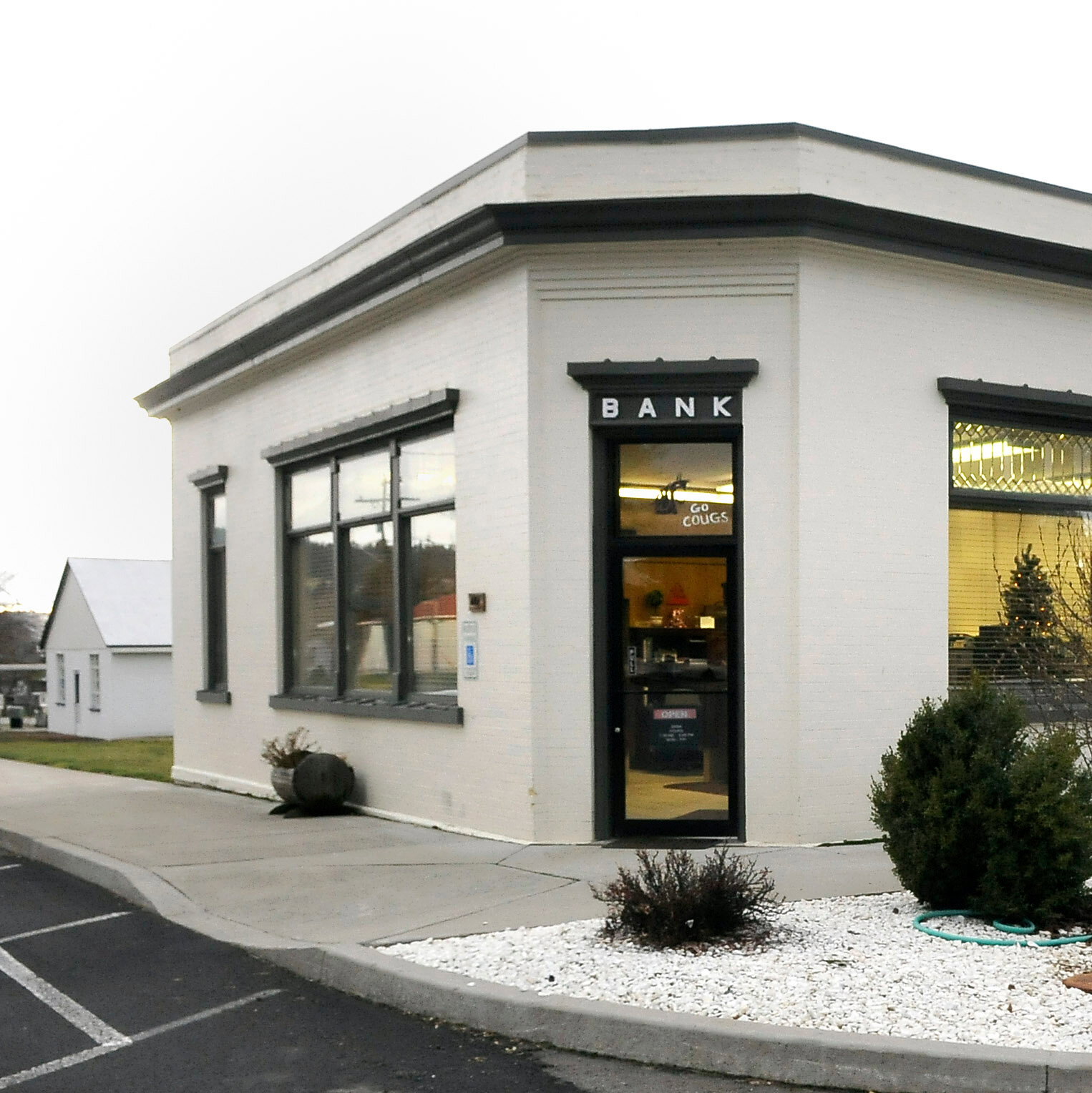
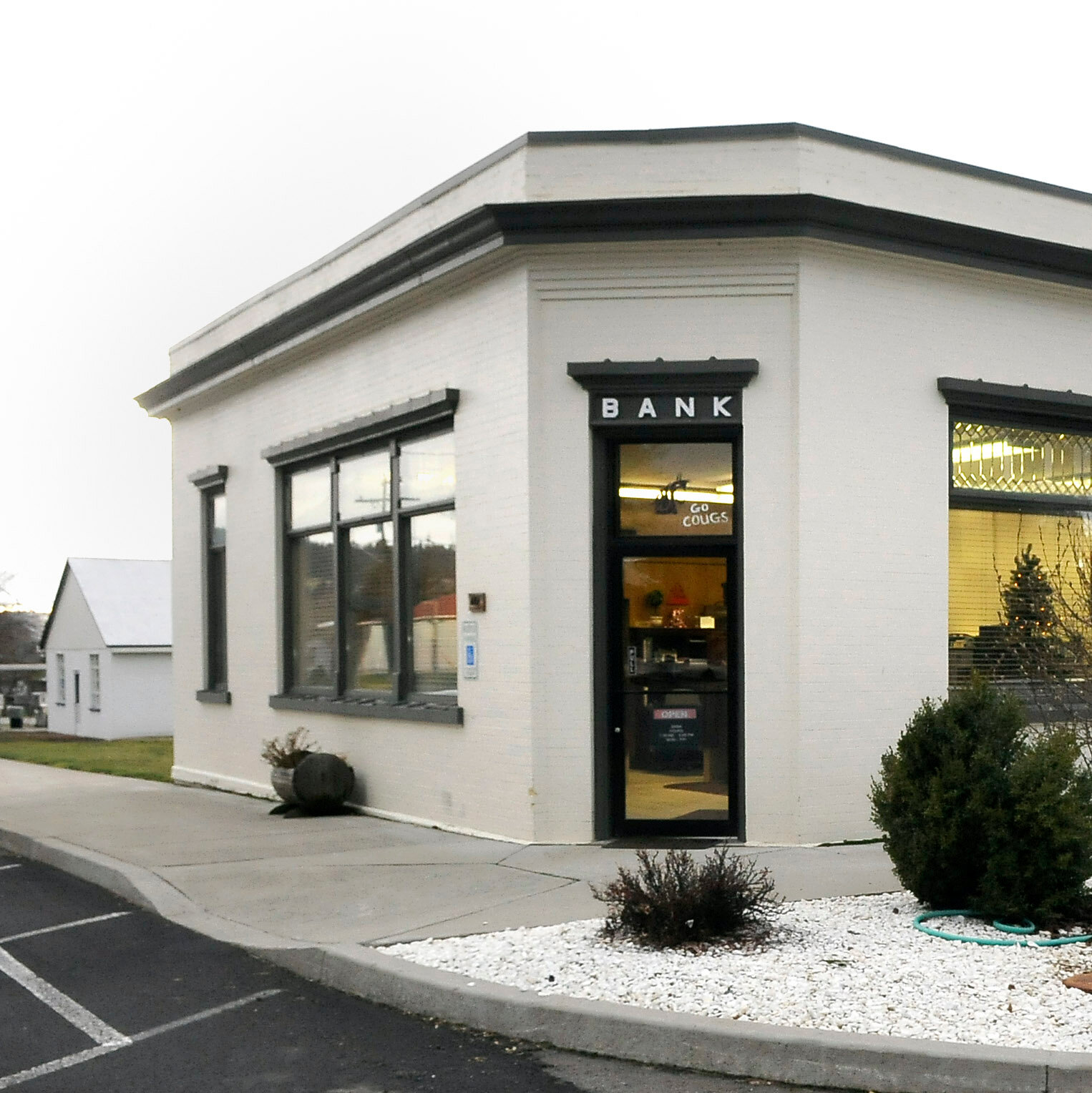
What was discovered is an investment made by FTX for $11.5 million into the parent company of Farmington State Bank. The investment was done through one of FTX´s subsidiaries. The branch has only one office, and the office is a small one which had until recently only three employees. Just to emphasize how "small" the bank is in proportion to other banks in the US, the bank does not offer online banking nor does it have a credit card. I know right, no credit card in the US.
*Farmington State Bank, the small town bank in question*
This discovery has raised a whole battery of questions, how will this small bank fit into the hunt for the missing assets? How closely is it tied to FTX? How were they able to buy a bank without regulators knowing of it? Why did they buy it?
Buying a bank
It was in March this year that Alameda Research invested $11.5 million in the parent company FBH. At the time the bank was ranked as the 26th smallest bank in the US among 4,800. And at the time its net worth was $5.7 million. That put the investment at more than twice the net worth. That means they have to be paying all that extra money for something, the question is just what that something is.
*Ramnik Arora´s profile picture at* *https://signal.nfx.com/*
The deal was spearheaded by Ramnik Arora, sometimes referred to as SBF´s “key lieutenant”. A person who has been involved and responsible for several other large deals made as well.
Just how this deal was able to transpire is also something that I assume will be thoroughly investigated. This is because buying stakes in a US lizensed bank would need the approval of federal regulators. This also makes the question of how deep does SBF´s ties with the US regulator and government officials go all that more relevant.
More crypto connections
FBH does however have another crypto connection other than the one to FTX and Alameda. This is thanks to FBH, the owner and parent company of Farmington State Bank. They bought the bank in 2020. The chairman of FBH is Jean Chalopin. Famous for being one of the co-creators of Inspector Gadget in the 80ies.
But Jean Chalopin, other than clearly being a creative genius. Go Go Gadget Thumbnail! Also is the chairman of Deltec Bank, a bank that just like FTX is based in the Bahamas. And there their most well know, and possibly largest as well, the client is... You probably already have guessed this by now if you have been following along with this FTX story. Tether, that is right. Tether as in the stablecoin.
FTX and Alameda being Tethers single biggest buissenes partner. With Tether issued over $36 billion in stablecoins to them, over $31 billion last year alone.
But why the bank
Farmington State Bank has undergone a few changes since Alameda and FTX´s investment in it. They are now known as Moonstone Bank online. And have seemingly undergone a facelift online.
But probably the biggest change was made to the bank's deposits. Before the change in ownership, the deposits have been steady for over a decade at around $10 million. But in the third quarter suddenly they balloon up to a total of $84 million, this is an influx of $71 million. These funds all come from 4 different new accounts.
What SBF´s plans for the Farmington State Bank still remain in the dark. But there are only so many reasons for owning a small inconspicuous bank...
What are your thoughts on this, think there is a legitimate use for FTX and Alameda to own a bank? Please share your thoughts in the comment section down below. If you would like to support me and the content I make, please consider following me, reading my other posts, or why not do both instead.
See you on the interwebs!
Picture provided by: https://unsplash.com/, Fair Use
Resources
https://www.nytimes.com/2022/11/23/business/ftx-cryptocurrency-bank.html
What is your #1 tip for new players starting out in Rising Star?
Mine is eat pizza all day, every day. =)
Gods Unchained - My thoughts on "deck looking"
I thought I would use this post to take about the topic of "deck looking" and what my thoughts are on it, do I think it is good or bad, and what is my reasons for thinking this? I hope you will find this post and topic interesting.
What is "deck looking"?
If you are new to the game the odds of you knowing what "deck looking" is, are probably not that high. I know that for me it took quite some time before I was exposed to the topic of it. It is the, unintentional?, feature where one player will look up the deck their opponent is using. And thanks to knowing what cards they have, or do not have in their deck. They can get an advantage.
The very basic version of doing this is by going to gudecks.com and looking up your opponent's username. There you will see the decks they recently used. Click on them and see what cards that are in the deck. The more advanced version of this is of course using some sort of software to help you with doing this.
The pros of deck looking
Let us look at the pros of deck looking. The first one is that you now can make players based on the knowledge of what cards are, or are not, in your opponent's deck. An example of this is if you're playing Light. Knowing whether your opponent has any relic removal in their deck would be greatly beneficial to you. Because this could be the difference between playing Lysanders Spear one or two turns earlier. Meaning you can start to buff your creatures much earlier. And thus turn the tide to your advantage.
*The obvious advantage of deck looking is you will win more*
Another example of this is that knowing what deck archetype your opponent is playing can vastly impact your mulligan faze, and what cards you look for in your starting hand. Playing a game vs an Aggro War deck is very different than playing vs a Controle War. And the cards you want to start with can be very different.
Ultimately these things will help you get an edge over your opponent. Leading to you winning more games and presumably earning more daily $GODS and getting more and better card packs in the Weekend Ranked Tournament. Not to mention the possibility of getting a better spot in a tournament and getting better prices there as well.
The cons of deck looking
The obvious one here is that it is unfair to your opponent to deck look. It gives you a very distinct advantage to deck look vs not deck looking.
Another con is that it is easy to push the envelope of what you're willing to do to get an edge. Deck looking might technically not be against the rules. But using an AI to tell you what the optimal play is is not against the rules either. As it is not technically playing for you. You are still executing the moves.
*Lance Armstrong, a former winner of 7 Tour de France, was also a fan of using things that gave him an edge over his competitors. But on the wrong side of the rules*
Using a bot to play for you to rank up faster, and get all the cards is ok right, as long as you do it in the casual mode it is not hurting anyone, right? As I said it is a slippery slope.
The biggest drawback however is that you are actually doing you're self a disservice. What I mean by that is that if you're relying on tools all the time. What do you do when those tools no longer are available to you? If you instead train up your perception skill and learn to read your opponent, this skill is something that always will be available to you. I would say it is somewhat similar to being able to read your opponent in Poker vs always just playing the odds.
How does deck looking affect the game?
I would say that the most detrimental effect of deck looking is that new players coming into the game will most likely have a bad, or at least worst experience playing against people who deck look. Why so? Well, no one starting out a new game wants to loos all the time. This means that I think it has an overall negative impact on the game. Is it enough that I think the game will die because of this, no. But I think we will miss out on players over time.
*We should try and take care of the community we are part of, instead of trying to get a competitive edge at any cost*
I would say this is similar to the problems other games have, such as League of Legends. Where players create new accounts simply because they like to play against worse players and kill them, aka surfing. There are many other games that also have similar issues.
I also think it is bad because it is creating a divide among the player base. People who deck look and people who do not. I would rather the players spend the time on something productive than debating the merit of deck looking or not. As the people who do it most likely will not stop.
Not to mention the fact that it is very boring to keep playing vs ??? players. Players who I assume obfuscate their usernames in an attempt to stop others from deck looking against them.
Lastly, I would also say that I would argue that deck looking is against the spirit of the game. In a similar way to how using mapping tools to show you the layout of a dungeon is in Diablo. Just because something is technically not against the rules does not mean you have to use it. If you play a game of Monopoly, do you steal money? Because I am pretty sure the rules say nothing about that not being ok. Just because something is not explicitly forbidden does not mean you have to use it, or that you should use it for that matter.
Possible counter-measures
I would like to say that if you are planning to participate in a high-ranking and paying tournament. I would recommend that you craft your decks and test them only in casual mode. As that should prevent them from showing up on gudecks.com. At least to my knowledge.
Another thing one could do is to play a lot of different iterations of the decks with small, and hopefully impactful changes to it, that would in theory mess with the software used to deck lock also, as well as fill gudecks with lots of variations of the deck your running. And also make sure to not have the deck you want to play among the last three decks you tested.
These are my thoughts on this topic. I would love to hear yours, do you agree with me that deck looking actually is bad for the game? Or do you think it is just pars for the course and simply a tool that players use? If this is the first time you are hearing about deck looking please share your thoughts with us. Sound off in the comments section down below. If you would like to support me and the content I make, please consider following me, reading my other posts, or why not do both instead.
See you on the interwebs!
Picture provided by: https://www.pexels.com/, https://pixabay.com/, Gods Unchained Media
Do you think there is any chance the bank FTX owned where "simply" being used to help them skirt around US banking rules and nothing more?
Good morning Noisers, I thought I would share this bit of fun thing with you. The world map scoring to ocean fishes.
Rising Star tip of the day. Unless you got the starting card, swapping it out actually loses you stats. As can be seen in my test I recently did. So keep the original card as long as you can.
All your data belongs to us
That at least is what it appears like. Metamasks' parent company is implementing IP tracking with its new update.
If you want to read more about this, and possibly what you can do to prevent it, other than swapping wallet, then you can read all about it here:
https://medium.com/the-capital/all-your-data-belongs-to-us-c8ad66cceac4
Time to hit the hay here. So have a great evening Noisers and sleep well when it is your time =)
Where from do this "goate" thing come from? And why would you want to be a goat? Nothing wrong with goats, but they are not top among the animals I would pick to be.
All your data are belongs to us, ConsenSys creator of Metamask informes its users
ConsenSys has informed all users of Infura, the tool used by many to connect their applications to the Ethereum network. That they will now start to collect more user data.
All your data are belongs to us
In their new privacy policy ConsenSys informed users of Infura that whenever you use "Infura as your default remote procedure call (RPC) provider in MetaMask, it will collect your IP address and your Ethereum wallet address whenever you make a transaction". This move has been, to say the least, very controversial and has been met with criticism by many.
*The new user agreement revision is here, please sign to indicate you read it all and agree to give us everything*
Collecting people's IP and wallet addresses whenever they make a transaction is a bit Big Brother Warning. And I don't mean the tv show. But they are not alone in making these types of changes. Uniswap has also upped its user data collection. They recently started to collect data on their user's devices or browsers.
I have to say I am not a big fan of this trend. And I, perhaps a bit naively, thought that we might not have to deal with that in crypto or Web3. But alas, I was wrong again. A corperation is a corperation. And they will find ways to sell everything that is not nailed down and then some if we let them.
I hope that there will be a competitor to Metamask soon, personally, I can't wait.
There is however a small silver lining. If you happen to run your own Ethereum node or a third-party RPC, your user data will not be collected. So now all I got to do is save up 32 $ETH, and stake it in a node. And never be able to get it back. All in order to not be harvested for data by the almighty dollar.
What is your thought on this? Got 32 $ETH lying around that you want to share with me? Please let me know what you think about this in the comment section down below. If you would like to support me and the content I make, please consider following me, reading my other posts, or why not do both instead.
See you on the interwebs!
Picture provided by: https://pixabay.com/

April fool's day has come early as the firm behind Cardano is set to launch a new Privacy Blockchain.
This is some strange stuff going on indeed. Or as they say, there is something rotten in Denmark.
This is on the level of you needing to read it to believe it, levels of stupidity.
medium.com/coinmonks/april-fools-day-has-come-early-as-the-firm-behind-cardano-is-set-to-launch-a-new-privacy-4d29b1d897f0
Let me know what you think after you read it.
#crypto #cardano #blockchain #cryptonews #defi #privacy
Apparently, SBF and FTX own their own US bank. I wonder what they were doing / planning to do with that. Oh look the bank's deposit rose in Q3, someone just deposited $71 million. That's odd.
And it finally happened!!! I managed to break the 800 subscriber mark on Publish0x. Super thanks to everyone who followed me or just read one of my posts. Thank you all! This is just crazy to me. =) <3
I hope everyone is feeling rested after turkeyday, if you celebrated it of course. And I hope everyone will have a great Friday! Keep it great, and keep it rolling.
Happy turkey day to everyone!!! Or just happy Thursday, depending on where you live guess. =)
There appears to be a paradigm shift in the crypto space. Companies are starting to be more aggressive in their user data collection. And I am not a fan of this change, one bit!
Need to find a new Wallet, any tips on a crypto wallet that is good, easy to use, and connects to many networks other than Metamask?
Sometimes I just question what is the point... Why does humanity exist? Over 7000 people watching a girl sleep on twitch, wtf???
Doing some shorter missions in between the pizza recharges. How are things going for you in Rising Star if you play?
In the crypto space, what would you consider to be some of the most ironic things you have come across?
April fool's day has come early as the firm behind Cardano is set to launch a new Privacy Blockchain
I bet someone has gotten their dates all mixed up. Written this up ahead of time and accidentally set it to publish on the wrong date. I bet the new Blockchain will be called "Ironium" or something simi.. Wait, what? They.. are serious??
Midnight the new privacy Blockchain
Input Output Global (IOG), the firm behind the Cardano blockchain will be releasing a new privacy Blockchain and token. The new Blockchain will be called Midnight and the token will be called Dust. This new privacy-focused Blockchain will use what is known as a zero-knowledge proof technology. This will take the new Blockchain to the next level concerning user privacy.
This is a completely new way of writing and running private smart contracts and private computation. So you can have a private DEX (decentralized exchange) or go mine an anonymous data set or these types of things. -IOG CEO Charles Hoskinson
The new chain will take the concepts of smart contracts that were talked about in the paper "Kachina" and make them a reality. This would truly be something great. It would most lily be the best solution for innovation and privacy. As it is set to merge both these features.
Then what seems to be the issue, it is all coming out great, right? Right? Well, they also announced that in order to get around the issue that privacy coins currently have. Where auditors and regulators have no insight. Something that has led South Korea to ban all private coins from being traded in the country. Just as an example of actions being taken against these types of crypto.
What is Midnight's solution to this problem then? I mean so far they are batting a 1000 (or whatever sports metaphor or different metaphor you want to use). I am sure they will Hulk smash this problem as well. They plan to do what? They are putting in a backdoor for auditors and regulators... I will let that sink in a bit.
I now hope you see what I meant with April fools coming early, or late. A privacy Blockchain with a backdoor in it. It kind of defeats the whole purpose of privacy then. It sort of reminds me of having a safe with no door or lock. It looks nice but it won't do what it is designed to do anymore. The pure stupidity here is just baffling to me.
I am at a loss for words.
Please let me know what you think about this whole thing. Is this something you would consider using? Yes or no, please let me know in the comment section down below what your thoughts on this are. If you would like to support me and the content I make, please consider following me, reading my other posts, or why not do both instead.
See you on the interwebs!
Picture provided by: https://pixabay.com/
Resources
https://iohk.io/en/research/library/papers/kachina-foundations-of-private-smart-contracts/
Japan just beet Germany 2-1, the world championship is full of surprises so far. Go Japan!!
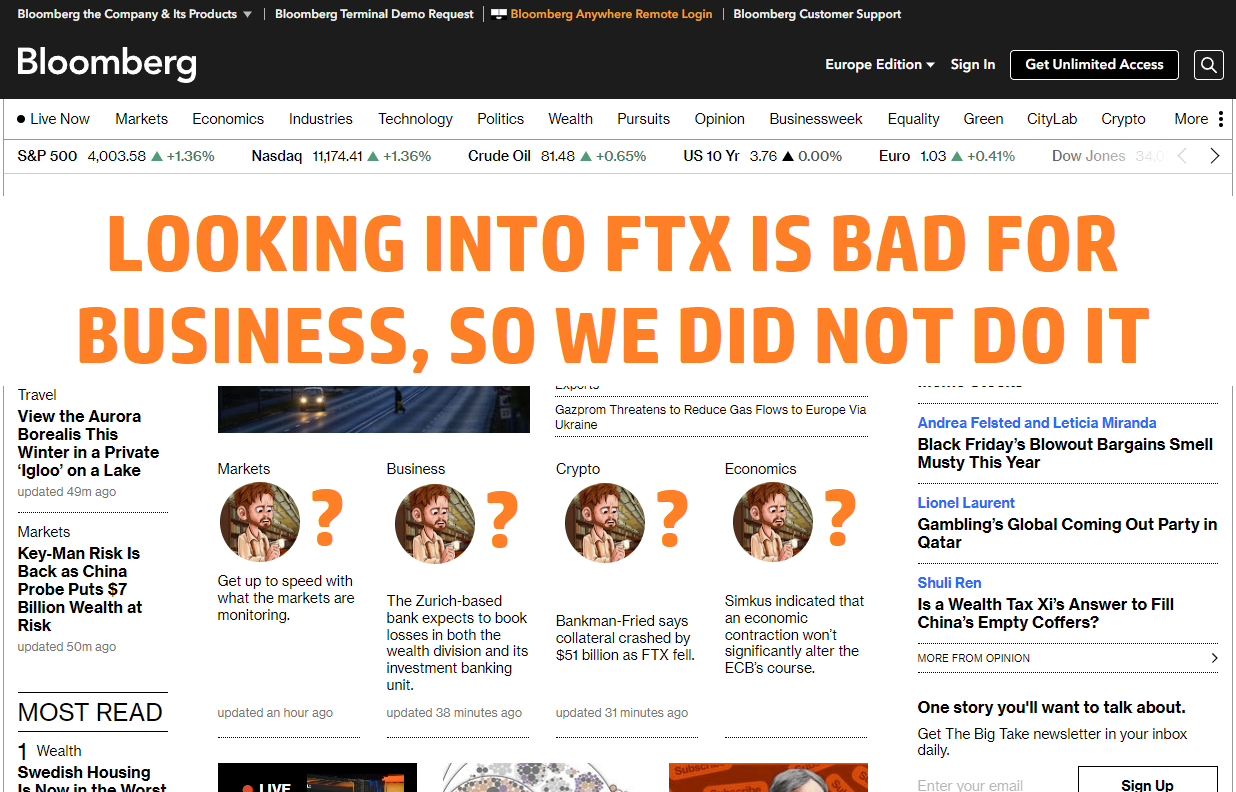
Bloomberg made aware of FTX in June, did nothing because it would be "bad for business"
In Coffeezilla's latest video he debunks the narrative that some of the media seem to be pushing. That SBF was just in over his head, he is a good guy, he did not know what he was doing, and so on. He also talks to Marc Cohodes, who have looked into SBF a lot earlier than most.
The key takeaways
As always I would recommend that you watch the video yourself. But in case you're strapped for time. I thought I would give you the bullet points here. First Coffeezilla dispels this narrative that seems to be pushed about SBF not actively committing fraud and crimes.
He also talks to Marc Cohodes, who probably was the person who caught on to SBF the earliest. He points to some red flags such as the fact that SBF's accountant's address is in the "Metaverse".
But more importantly, he tells you that he and a friend approached Bloomberg with their evidence and questions back in July. And Bloomberg's response to this. They said that running the story and asking the questions would lose them access, it might cost people their job, it would be too much work, and ultimately it would be bad for business. Meaning that it could cost them money from advertisers.
This ladies and gentlemen are why you had to wait till early November before we were made aware. And perhaps more importantly giving SBF and his cronies 3 more months to do whatever it was they share doing.
https://www.youtube.com/watch?v=FDqhM7vHR2o
I hope that you found this short post and video interesting. And as always please sound off in the comment section down below. If you would like to support me and the content I make, please consider following me, reading my other posts, or why not do both instead.
See you on the interwebs!
Picture provided by: Bloomberg.com screenshot
This just happened as I opens my packs in Gods Unchained just now. Got my first diamond card. Also got a Legendary in another pack, so a nice opening overall.
I am currently saving all the packs I earn during the week and weekend ranked and doing one opening every Wednesday. The haul this week was a nice 22 packs.
Not so sure why that picture is so popular. Is it only because of Elon Stank?
And is it only me who wants to know what the photographer is taking a picture of?
Bloomberg made aware of FTX in June, did nothing because it would be "bad for business"
Read more about it here: https://www.publish0x.com/things-of-note-and-other-interesting-stuff/bloomberg-made-aware-of-ftx-in-june-did-nothing-because-it-w-xozroog
Sleep well Noisers, heading to bed early today! So catch yall tomorrow =)
Alameda Research was issued $31.7 billion Tether is 2021, what did they use as collateral for the Tether. And where are all those billions now?
So many questions...
Is Tether's business model just smoke and mirrors? Was Alameda Research just built on nothing?
There is certainly something fishy going on. Read more about it here:
https://medium.com/coinmonks/is-tethers-business-model-just-smoke-and-mirrors-was-alameda-research-just-built-on-nothing-b077e641ae73
And please let me know what you think. Am I completely wrong or do you agree with me that there is something there?
Is Tether's business model just smoke and mirrors? Was Alameda Research just built on nothing?
There have been a lot of things that have been revealed and looked at in the wake of the FTX crash. And I think this one might have snuck under the radar of most people. What I am talking about is a report that recently came out where they looked at who has been issued the Tether issued. And it was an interesting read in and of itself. But I did not think much of it until a second puzzle piece sort of clicked into place.
Who has gotten all the Tether
There have been a total of $108.5 billion Tether issued. And of these, the absolute vast majority have been sent to what they call "market makers". Their share of the Tether cake is a staggering $96.98 billion. In the report, the term "market makers" is defined as "entities that have received multiple individual transactions from Tether Treasuries of $100 million USDT or more."
They go on to say that traditionally the term market maker is used to describe an entity that "profit on the spread of assets (the difference in price between buy and sell orders). Since it’s unclear which entities in the crypto ecosystem are strictly market making and which also utilize high frequency trading, proprietary trading desks, or operate venture capital funds, this is our attempt to delineate between them (albeit with a broad definition)".
When we look at the entities that have gotten the largest share of the Tethers there are two that stand head and shoulders above the rest. These two are Alameda Research and Cumberland Global. They have gotten almost $36.7 billion respectively $23.7 billion. The third largest is iFinex and they have been sent at least $4.5 billion. Meaning it is almost a 5x up to Cumberland.
What is the issue?
Now that we know who has gotten the tether. What seems to be the issue? I am going to focus solely on Alameda Research here. This is because both they and Cumberland Global have the same type of pattern. I will assume they are doing business in the same way.
As we know from the leaked financial documents from Alameda, the one that started the crash. We know they were pretty much insolvent and while they showed assets totaling $14.6 billion most of this was either loans, $7.4 billion, $FTT tokens or Crypto in other of SBFs pet projects. This means that there was nothing really with any value to it. There was no large chunk of Tether, or other stablecoins, just sitting there. In fact, in the reports, I read I did not find any mention of Tether at all. Neither was any large amount of USD.
*Reenactment of what was happening at Alameda Research HQ during 2021*
But if we look at the Tether report. Alameda was sent almost $36.7 billion in Tether. And what is even more strange is that $31.7 billion (86%) was received in the past year, 2021. This leads me to one question, where has all this money gone? Even if all they did was buy $FTT tokens at the peak price of $80 it would mean that they still should have almost $21 billion in pure $FTT tokens.
If we look at Bitcoin it has also lost 70% in value from its peak. Very similar numbers to the $FTT token. But Alameda had only $14.6 billion, and of that almost $8 billion in loans. So now the question becomes where has all the money gone? Have Alameda been doing deals that have been so subpar that instead of having assets worth $21 billion they have assets worth only $7 billion. Can they have been that bad at trading or making deals? Mind you that this is during a bull market as well.
How is Alameda getting their Tether?
This appears now to be the question. How is Alameda getting their Tether? What are they using as collateral? Because if we are to believe Tether, the only way to get 1 $USDT is to send them 1 USD worth of cash or "financial peppers", a type of short-term debt. In December Tether was backed by 83.74% of commercial papers. And has spent most of 2022 trying to slash its holding of commercial peppers. It is very much likely that it was this that was used by Alameda to secure their Tether payments or transactions.
https://twitter.com/CasPiancey/status/1594471917012254720
This is what Sam Trabucco former co-CEO of Alameda had to say when he was asked bout this very question in an interview. At the time there was outrage from SBF and other for Coindesk ambushing Sam with this question. Now in retrospect. I would say this speaks volumes.
*By the looks of things they were more than right to ask*
In October 2021 it was also confirmed that Tether in fact issues loans with Bitcoin as collateral. And have done so to Celsius. It was later reported that Tether suffered no losses when Celsius collapsed as at the time the loans were overcollateralized to the tune of 130%. Meaning the Bitcoin was worth more than the amount of Tether they lent to Celsius.
I read that Tether do give these type of loans but at a 2:1 security in Bitcoin. But I have not been able to verify this in my research. But if we use that number or the 1.3:1 it would mean that Alameda has had to put up between $41-63.4 billion in Bitcoin as security for all the Tether they received.
Well, that is only if they kept all the Tether. Maybe they sent some back, borrowed, send it back, and so on. Good point, in the report they say that due to the fact that most Tether that was sent back, got sent back through exchanges. It makes it trickier to see who is sending what. More than 80% of the returned Tether was sent in this way. But they have applied the same division with market makers as they did initially. And then the date shows this.
$23 billion in USDT (62%) was returned in lots over $100 million (market makers).
$12.7 billion (34%) was sent in batches between $10 million and $100 million (funds and companies).
$1.5 billion (4%) flowed into Treasuries in sums under $10 million (individual traders).
The amount of Tether that has flown back to Tether amounts to $37.2 billion. If we disregard the fact that it is most likely that a market maker would pay back loans in a similar fashion as how they revived them. And just assume that Alameda has repaired a share that is equal to their share of Tether issued. Then we get that 33.8% of the repaid Tether would come from Alameda. That gives us just over $12.5 billion. Where has the rest of the $24 billion disappeared to? It is definitely not among the Alameda assets, that is for sure. And it is not in FTS either because all that is there is an $8-10 billion black hole. Even if all Tether that has flown back was repayments from Alameda it just barely breaks even.
There is one part of the report that can add a bit of uncertainty to these numbers. And that is "While Protos has identified more than 70% worth of USDT ever issued". This is in the "Tether returned to Treasuries (inflows)" section of the report, at the end. And I have to admit I am not sure if this is in regards to all Tether issued, or if they only have been able to identify 70% of the returned Tether.
If it is the latter, it would mean that the total amount of Tether returned is $53 billion. And that would put Alameda´s share at just shy of $18 billion instead. This still does not paint Alameda or Tether in a good light. But I do find this unlikely given that the amount of Tether in circulation currently is $65.5 billion.
*Ladies and gentlemen, get your Tether snake oil right here, special price just for you. Pay for two and get one.*
But it is looking more and more to me that Tether's business practices at best questionable and at worst look like a snake oil sailseman. And it raises so many more questions surrounding Alameda Research and FTX. What exactly was going on over there and where have all the money gone?
Are you able to make more sense of this than I am? Because to me, it is looking pretty bad. But I might have made some faulty assumptions. If you find any please let me know. And please sound off with you're thoughts on this in the comment section down below. I would love to hear your thoughts on this. If you would like to support me and the content I make, please consider following me, reading my other posts, or why not do both instead.
See you on the interwebs!
Picture provided by: https://unsplash.com/, https://pixabay.com/
Resources
https://protos.com/tether-papers-crypto-stablecoin-usdt-investigation-analysis/
https://www.coindesk.com/business/2022/11/02/divisions-in-sam-bankman-frieds-crypto-empire-blur-on-his-trading-titan-alamedas-balance-sheet/
https://decrypt.co/100289/tether-has-reduced-commercial-paper-stablecoin-backing-last-6-months-cto
Why is it called Staking, and why does it not work as I think?
This is one of the many questions I have asked myself. And if you like to find out more about my thoughts on the subject of staking. Then you are in luck. Because I have the post for you.
https://medium.com/coinmonks/why-is-it-called-staking-and-why-does-it-not-work-as-i-think-58bd6f33ccc0
Let me know what you thought about it if you read it. =)
 @Patch