 @OldBastard
more from that month
@OldBastard
more from that month
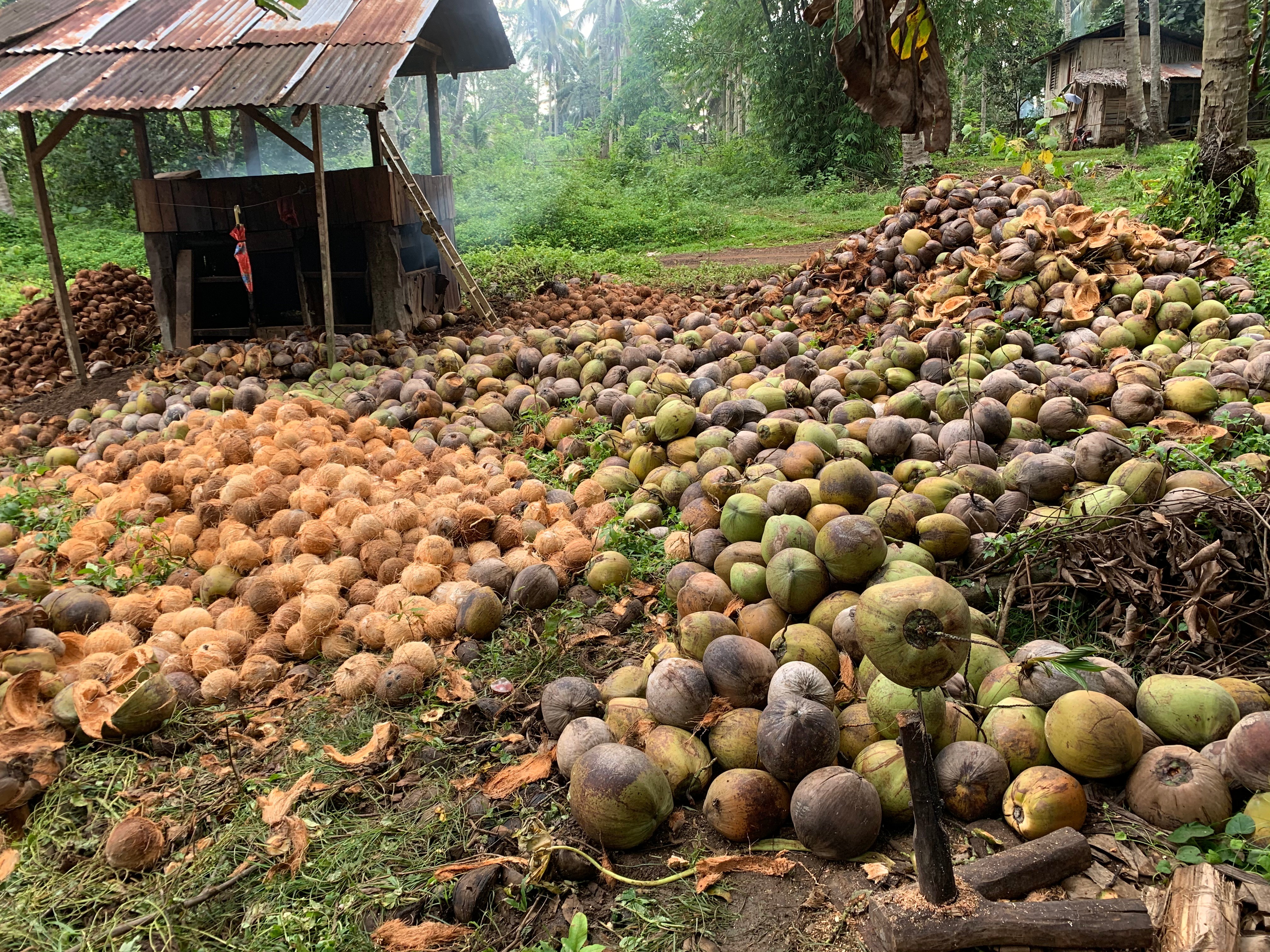
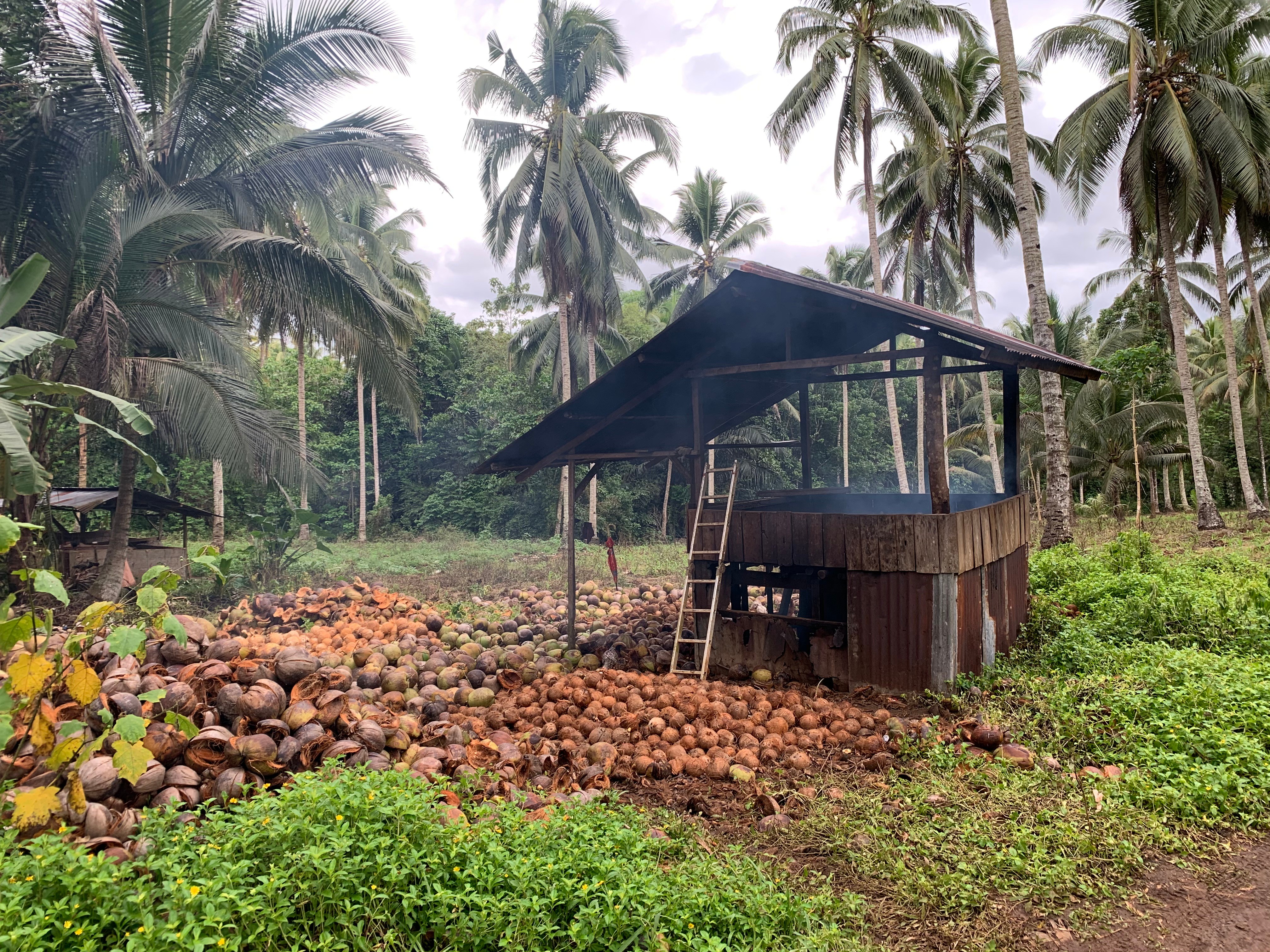
Harvesting Copra Copra, (dried coconut - see: https://en.wikipedia.org/wiki/Copra ), is an important product on our farm. In the right foreground of the first pic, you can see the super-duper sharp blade that is used to cut open the coconut husk. To the left are the kernels that will be split in half, then "cooked" in the structure behind them. The empty husks, as seen in the background on the right, are the fuel used to "cook" the kernels. Behind the super-duper sharp blade are a bunch of coconuts waiting to be processed. The second pic is a better view of the "coconut cooking" structure, smoking away as we cook the coconuts. On the far left you can see a bit of our pig pens used for holding our mama pigs. One of our mama pigs is pregnant, and should give birth some time this week. How to tell when the copra has been sufficiently cooked? Beats me, but my wife says she can tell by looking at its color. What is my role in this process? To stay out of the way, and not get hurt!
8 comments
It's the first time I see something like this!
It's common here in the provinces of Philippines. Copra is a big business, which is guess is why you see coconut palm trees all over the place.
we Call it Khopra here and i love it with its milk
I'm still new to the whole coconut scene, but doesn't the milk come from an unripe coconut?
oh it does but you can like Mix bothh and blend them into a exotic shake
Cool! I've had the milk and eaten the "meat", (sorry - couldn't think of a better word), of a young coconut. At this point I'm not even sure how you tell the difference between a "young" and "mature" coconut, but it seems that only the mature coconuts are used to make copra.
well i mean the mature ones with water in it which are brown like dry outside
Okay. Sorry for my confusion. I’m still learning about coconuts.