 @Obong
more from that month
@Obong
more from that month
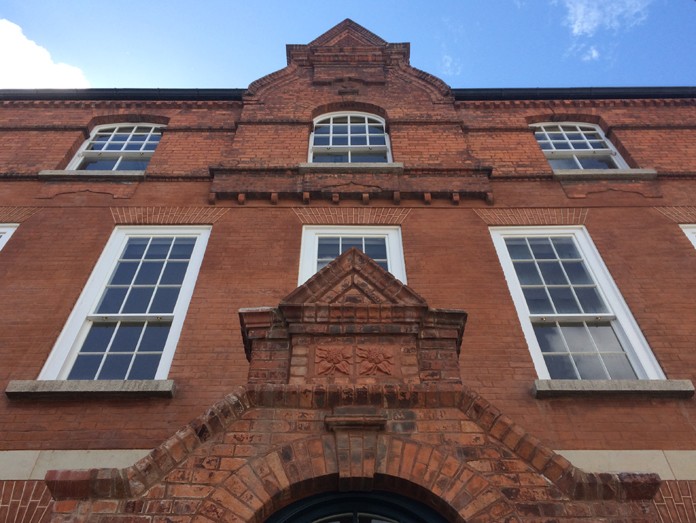
The brick work, long covered in cement, has been repaired and repointed while replica terracotta tiles fill the panel above the door. The windows, blocked-up to prevent trespass, show period-appropriate hornless sash frames. Acknowledging the various alterations made to the fabric over the course of three centuries, and not wishing to produce a pastiche “Double Dutch Billy”, the roof has been restored to its Victorian Gothic profile Evidence suggested that the Georgian brick on the façade had originally shown a wigged pointing finish. However, it was decided given the significant interventions carried out during the late nineteenth century, including patch repairs in a machine-made brick, to apply a unifying “raddle coat”. A “raddle coat” is a red-coloured limewash historically used to unify contrasting brick work and the technique has recently been used in the conservation of Tailors’ Hall on Black Lane and the former “Double Dutch Billy” at 99 Saint Stephen’s Green. The use of a “raddle coat” in Mill Street not only served to enhance the appearance of the façade, but also offered a further layer of protection to the soft Georgian brick work. A lime render finish was applied to the side and rear elevations allowing the house to breathe. Just as the roof was reinstated to Beater’s design, so too was his porch retained with two terracotta tiles replacing the lost originals over the door. The façade was completed with the installation of period-appropriate hornless sash windows #StreetPhotography
No comments yet