Full Explanation Beginner’s to Expert : What is Bitcoin Cash?
What is Bitcoin Cash ? Is it the same as just "Bitcoin "? What's the difference between the two? And which is the "True Bitcoin"? Well, keep read to find out. Hi, am NewboyBCH and a newcomer to this community am really a big fan of BCH and this will be my first post. Today's topic is Bitcoin Cash also known as BCH . The story of Bitcoin Cash goes much deeper than just the creation of another cryptocurrency. It was actually one of the fiercest tests for bitcoin's decentralization. A lot of people who are just starting out with Bitcoin or Cryptocurrency in general, get confused when they see that there's not just one "type" of Bitcoin. For example, Bitcoin Cash, Bitcoin Gold, and Bitcoin Diamond are all forks of the original Bitcoin. FORK EXPLANATION A fork can be described as an alternative version of an original coin. Forks can be classified into two types **Soft forks** and **hard forks.**
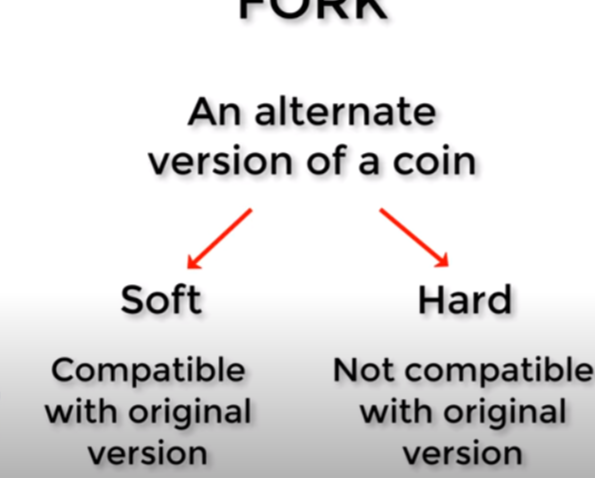
**Soft forks:** are the version that works well with the Original Version and the alternative version of the coin. So as a user, you can choose which version to run without a lot of concern. **Hard forks:** on the other hand don't play well with the original version. This means that you need to choose whether to update your software to run the alternatives version, or to stick with the original one. In other words, with the hard forks if the alternative is not accepted by 100% of the users , then a sort of split will occur in the network and a new coin will emerge. One that is similar to the original but not identical. Bitcoin Cash and other Bitcoin Versions(Bitcoin Gold, Bitcoin Diamond, etc.) are actually the results of suggested update to the Bitcoin Protocol that weren't agreed to by everyone. So what happened is that an alternative version of the coin or hard forks, steaming from the original Bitcoin was created and New Coin came into Existence. If you wanna know more about forks make sure to check back at my profile on Wednesdays for a complete explanation. https://read.cash/@NewboyBCH So now we know that Bitcoin Cash is actually a hard fork of Bitcoin, But why was it created? To answer this I think we have to travel back years in time and let talk about one of the most controversial topics of Bitcoin's code= The block size and Scalability issue.
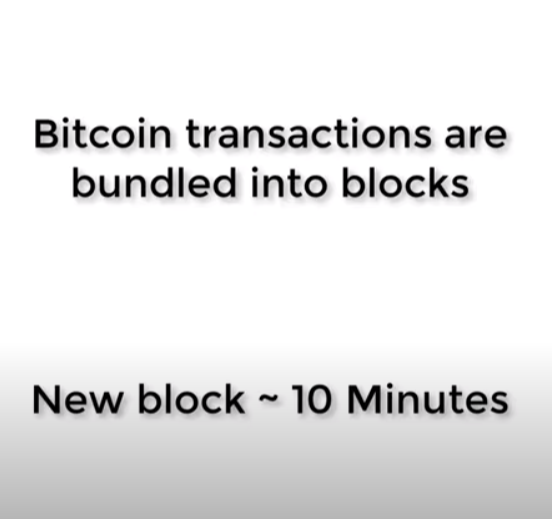
Bitcoin transactions don't get confirmed instantly . In order for a transaction to be considered as confirmed, it needs to be included as part of a block of a transaction on the Bitcoin Ledger, Kown as the Blockchain. A new block of transactions is added to the blockchain on average about every 10 minutes. Similar to any type of digital data, adding Bitcoin transaction to a block requires storage space, and the maximum capacity for each block of transactions is 1MB.
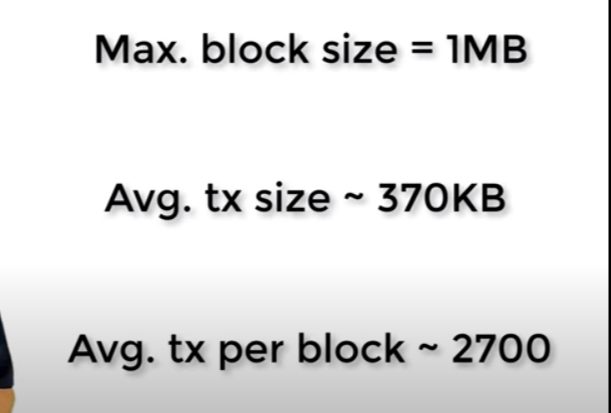
When you consider the average Bitcoin transaction size, you will find that a block is able to hold about 2700 transactions.2700 transactions every 10 minutes means 4.6 transactions a second, and that's not a lot. Visa for comparison, can confirm 1,700 transactions per second.
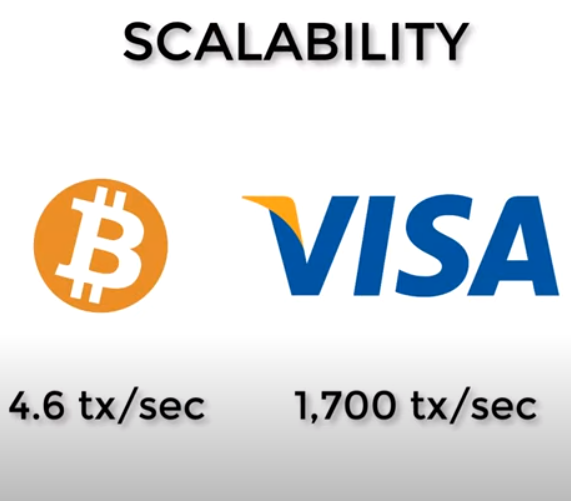
This means that when a lot of people want to send Bitcoin, during price rallies, for example, transactions get stuck in a very long queue waiting to enter a block and get confirmed. Of course, Bitcoin Allow you to pay a higher transaction fee if you want to jump the queue, but this Might cause fess to reach ridiculous levels as more and more people try to "cut the line " with their transactions. This isn't something you want to have happened if you 're building Bitcoin to become a global payment method. As the Result of this scalability issue, two different camps emerged.
The first camp was the "**Big Blocks**" camp. This camp was led by Chinese mining giant Bitmain and @RogerVer an early Bitcoin Investor who was involved with a number of startups when Bitcoin was just gaining initial adoption. Big Blockers were afraid that Bitcoin's scalability issue would prevent it from becoming what Satoshi Nakamoto, Bitcoin's inventor, initially intended - a peer to peer payment system. With suck long confirmation time and high fees, people wouldn't use Bitcoin for day to days transactions and would instead treat it as a store of value - like Gold.

The supporters of this camp suggested a very simple solution - Let increase the block size. if we increase the Bitcoin block size to 8MB, we'll be able to confirm as many as 8 times the number of transactions per second. And this will reduce the existing congestion of the network, and in the future, we'ill increase the block size as much as needed as Bitcoin achieves further adoption. Opposing them was the "**Small Blocks**" camp. The supporters of this camp rooted for keeping the current 1MB block size, while finding a solution for optimizing transaction size and handling, in order to enable scaling.

One such solution was Segregated witness, or Segwit for short. Segwit is an upgrade to the Bitcoin Protocol, which among other things effectively reduces the transaction size by 75%. This means that a 1MB Segwit block can hold the same amount of transactions as what would be a 4MB non-Segwit block. Additionally , small blockers talked about the development of the Lighting Network -A second layer on top of the Bitcoin Protocol that allows for instant and feeless transactions.
Now, the lighting network is a pretty broad topic on its own, so please check back on my profile next week for a detailed explanation of how it works. https://read.cash/@NewboyBCH Why were The Small Blockers against increasing the block size, to Begin With?
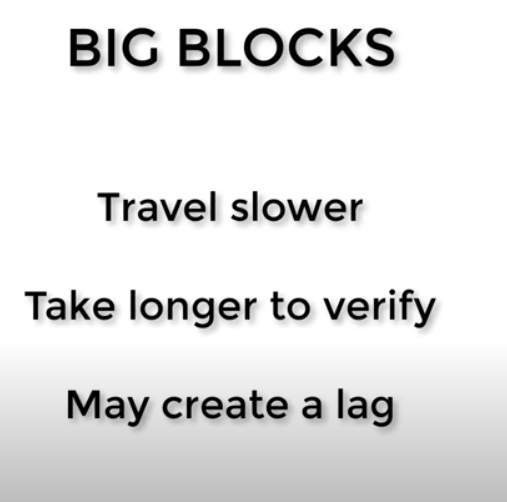
The reason is that small blockers believed that in the long run, this would hurt Bitcoin's decentralization and functionality. Here are some of the arguments to justify their claims: For one, an 8MB or 32MB block takes more times to travel through the network than 1MB block . Additionally, once the block reaches a computer on the network, that computer now needs to verify all the transactions inside that block. If the block is too big it might not be able to finish verifying all the transactions before the next block arrived within 10 minutes or so. This means the network will start lagging behind new transactions, which can create disputes about the current state of the bitcoin ledger. On top of that, by not optimizing transactions, you're also not optimizing the size of the blockchain which already takes up several hundred Gigabytes.
Forcing Computers to verify oversized transactions, reduces the number of computers that can store the blockchain on their Hard drive and therefore diminished the network's decentralization. I mean let Think about it for a second: If only Hi-end Computers that are maintained by a handful of companies can validate transactions, not the network, we're basically taking away Bitcoin's basic advantage-to have a large number of participants to make sure no one is breaking the rules . To make it simple to understand, consider this analogy: Imagine a street that's suffering from heavy traffic.

The obvious solution would be to increase the number of lanes, effectively the same solution as increasing the block size.

but what would you do once the street becomes more popular and even more card come in?

eventually, there's a limit to how many lanes you can add before running out of land to build it. On the other hand, you cloud reduce traffic congestion by promoting public transportation routes to carpooling. Solutions are similar to optimizing the transaction size and how transactions are handled by the network. This heated argument between the two rival camps went on for several years until it Climaxed in August of 2017 . Back then , Bitcoin its first steps over $1,200 mark and the network was getting pretty crowded due to an overflow of transactions.

As a result, many transactions got delayed and transaction fee skyrocketed as people were outbidding each other to "cut in line" and get confirmed faster. The average fee around that time was as high as $27 per transaction! Now you may be wondering why nobody took action to avoid this situation. Well. in order to answer this question, we need to understand who actually decided anything on the Bitcoin Network. You see, Bitcoin is a decentralized and this means there's no one person that decided anything .participant in the network vote through their actions. Their vote is actually whatever version of the Bitcoin Protocol they choose to run on their computer.

There are several players in the Bitcoin Network. First, there are the miners and mining pool operators.they are the ones in charge of creating blocks and updating the ledger of transactions. Some would argue that they have the ultimate say in what changes are finally accepted to the Bitcoin Network. Then we have the **Developers**, which are a group of individuals collaborating together to maintain Bitcoin Source code. Some believed that this group has the ultimate power since they are the ones writing the actual code that runs the network. we also have **Exchanges**, which are the gateways for cryptocurrency adoption. They can decide which version of Bitcoin to list under the Ticker symbol BTC. They're the ones who have the power of connecting people with the actual coins. Another important group are the **wallet providers** .they write software that allows users to manage their coins. Additionally, we have the nodes, which are the different computers which run the Bitcoin code and make sure no one is breaking rules. These nodes are the backbone of the Bitcoin Network . Owners of the nides can decide to only accept transactions that support specific changes. And finally, we have the **Bitcoin Users,** who get to choose which coin to buy , which exchange to use and which wallet to download. Without even knowing it, they actually have the most power. The coin that users decide to adopt will have a brighter future. A good example of the power of user adoption is the case Ethereum Hard Fork. Back in 2016, after several million dollars were stolen from Ethereum based Project called DAO, the Etherem developer suggested rolling back Ethereum Blockchain and erasing the malicious transaction.

This created a heated debate, at the end o which Ethereum forked into two different coins- Ethereum and Ethereum Classic. However, What's known today's as Ethereum is Actually the altered Ethereum version and not the original one. The reason is that this is considered the true Ethereum is because that's the coin most of the users decided to adopt. Miners, exchanges, wallet providers and even developers- all rely on the acceptance of the public to survive. That's why in the end the users have the final say. Now you understand , why it's so hard to get any changes to Bitcoin protocol approved. You basically need to get all these groups to agree. Throughout Bitcoin history, there have been several cases where such agreements were reached, but as the network grew larger it became harder to reach a consensus.

Going back to our story in 2017 The end result of this Mexican standoff between the two camps was that each side did what they initially intended to do , leaving it to users to decided which coin to adopt as the true Bitcoin. On 1 August 2017 Small blockers enabled SegWit on the initial Bitcoin blockchain when Bitcoin Cash – Bitcoin fork with the size of the 8mb block – was generated by big blockers. Originally, it was not clear which Bitcoin version should win when "winning" means a longer crypto currency blockchain or transactions. Therefore more miners a coin has, the more processing power, and thus a broader ledger and reliable network are involved. Bitcoin cash had funding from Bitmain mining giant, and as a result, the initial mining power of Bitcoin was almost halved when the bifurcation took place. Bitcoin Cash vs. Bitcoin Since the fork, Bitcoin Cash has consistently maintained its space at the top of the cryptocurrency charts. The coin is backed mainly by @RogerVer, a libertarian that allegedly owns around 100,000 Bitcoins making him one of the first Bitcoin billionaires. Ver also purchased the domain name Bitcoin.com to promote Bitcoin Cash, as opposed to Bitcoin.org, which is the website for the original Bitcoin. Bitcoin Cash is mostly Bitcoin-like, though with some differences; It is larger in the block dimension. In the beginning, the block size of Bitcoin Cash was limited to 8Mb. Later the coin was updated and the size limit of the block to 32MB was increased. Bitcoin Cash is not a SegWit or a Lightning Network support. Bitcoin Cash is quicker than the initial Bitcoin is changing mining complexity for mining new blocks.
1 comment
Thanks for this this Two things I wanted to know. I knew it already, thanks to you. *Soft forks: are the version that works well with the Original Version and the alternative version of the coin. So as a user, you can choose which version to run without a lot of concern.* *Hard forks: on the other hand don't play well with the original version. This means that you need to choose whether to update your software to run the alternatives version, or to stick with the original one. In other words, with the hard forks if the alternative is not accepted by 100% of the users , then a sort of split will occur in the network and a new coin will emerge. One that is similar to the original but not identical.*