So You Just Found $5 Million
It isn't fun to lose some money, but isn't it great to find some? We've all found pennies on the ground, and sometimes a coin or two in a larger denomination. And sometimes you might have found some high denomination paper money. Once I found over £50 laying on the street in London and, after looking around for someone who might have dropped it, pocketed the cash and treated myself to a pint of beer.
Finding £50 is great, but in a first-world country that is hardly a life changing amount of money. But what if you did have a life-changing amount of money? What if you found 5 million USD?
That's a lot of money. With 5 million in your bank account you could start a business or retire young. You could pay off your mortgage or buy a new beautiful home. You could live well in your home country or live and travel anywhere in the world. Money is freedom, and a lot of money buys a lot of freedom.
But what if that $5 million USD wasn't in your bank account, but in a bag you've found in the woods? And what if that 5 million USD where in paper fiat money, gold, or Bitcoin Cash? What could you really do with that life-changing sum when found in those different forms?
Can you put it in the bank? Can you buy lunch? Can you spend it online? Can you pay a tradesman like an electrician or plumber? Can you buy a house? Can you travel the world? In other words, will a life-changing amount of money found in fiat, gold, or crypto actually be life-changing?
Note: this is written for my corner of the world, the usefulness of large amounts of fiat, gold, and crypto will vary country to country.
Disclaimer: don't mistake anything in this article for financial or legal advice. It is just a thought exercise for fun.
Fiat
What's in that bag? Hey... $5,000,000 in USD (or your local fiat currency). Gosh... that is a big bag. $5,000,000 USD in $20 bills weighs 250 kilograms, and those bills stacked together are 25 metres in length. I hope you drove your minivan to the woods.
Can you buy lunch or groceries? Yes. Your fiat money is accepted almost everywhere. Some forward thinking shops no longer accept cash payments, but most places still do. Pandemic aside, spending cash on meals and groceries is easy.
Can you deposit it in the bank? Yes... a little. In first-world countries it is most convenient to have your fiat currency in a digital form, not paper, and fortunately you'll be able to deposit a small amount of your paper money fortune into your bank account. However, any significant sum is going to raise questions about its origin, and good luck trying to deposit a mystery $5,000,000 of paper money into your bank account. The best outcome of that will be watching the money be seized by the government while you narrowly escape jail, and the worst outcome is... terrible for you. If you want a larger amount of money in the bank, then maybe you can deposit into your bank account piecemeal... but eventually that amount of money is going to raise questions and have consequences.
Can you spend it online? Maybe. While you can't spend paper money directly online, you can buy gift cards at real brick-and-mortar business and then use those cards online. However, you can't always buy gift cards with cash, so this could be tricky.
Can you buy a car? Yes, sometimes. People like cash, but they don't like massive amounts of cash. A car dealership is unlikely to accept more than a few hundred pounds of cash towards a car because they view large amounts of paper money as a risk and might even have to report large paper money purchases to the government. You might have some luck buying privately and second-hand, though.
Can you hire a tradesman? Yes, absolutely. Tradesmen are notorious for liking to be paid in cash because it allows them to pay less tax. In fact, they like it so much you'll be able to negotiate a cash-in-hand discount.
Can you buy a house? No. Sorry, even though $5,000,000 *in your bank account* can buy a very nice house, $5,000,000 in paper money can't. You aren't going to find anyone who can legitimately sell you a house for cash. However, if you rent and the monthly amount isn't *too* high, then maybe you can arrange to pay your landlord in cash.
Can I travel the world? No. $5,000,000 can take you anywhere in the world, but not if it is all in cash. You won't be able to buy plane tickets for cash, but you may be able to carry a few hundred dollars on you while travelling that can be converted to the local currency. Be warned that many governments require you to report if you enter a country carrying a significant amount of cash, and if you fail to report you might be arrested and your cash seized.
Can you pass on your wealth to your descendants? Yes, with caveats. You can definitely hand bags of paper cash to your children and grandchildren, but over time the value of the fiat currency will diminish. Fiat currency is a poor store of value. Also, unscrupulous governments might withdraw the currency from circulation thereby making it unspendable, like the Indian government did to 500 and 1,000 Rupee notes in 2016. https://www.theguardian.com/world/2016/nov/08/india-withdraws-500-1000-rupee-notes-fight-corruption
Overall, finding a significant sum of paper money could improve your life as you can use it for small day-to-day spending and can hire tradesmen for home improvements and repairs. However, paper cash is difficult to use for larger purchase because it will be viewed as risky or potential money laundering, and it also doesn't travel well through space (travel) or time (inflation).
Gold
Lucky you, while walking in the woods you stumbled across a hidden stash of gold and it is worth $5,000,000! Less lucky for you is that at the current spot-price of $55,000 per kilogram, that gold weighs just under 91 kilograms (to my surprise, that's less than the fiat!). I hope you drove to the woods, because you're going to need a vehicle to take that gold home.
Can you buy lunch or groceries? No. Your local cafe doesn't take gold. And nor does the supermarket so you also can't buy your groceries. Some countries, like the UK and the USA, mint novelty gold coins denominated in local currency with a low denomination, such as gold £10 coins sometimes issued by the Royal Mint. *Maybe* you could use one of those novelty coins to buy lunch as they are technically legal tender; however, the value of the coin will be the "face value", not the gold value. https://www.royalmint.com/invest/bullion/bullion-coins/gold-coins/britannia-2021-tenth-oz-gold-coin/
Can you buy a car? Maybe. You won't be able to buy a car from a car dealership, as they will need to deal in their local fiat currency. Interestingly, I suspect you might be able to buy a car if you found the right kind of buyer on "craigslist", one who would take a few gold coins with no questions asked. Be warned, though, such a buyer might be shady.
Can you hire a tradesman? Maybe. Tradesmen like, electricians and plumbers, usually like to be paid in cash as creative reporting to the tax man can reduce their tax liabilities, so perhaps a you can negotiate for their services with some gold. You might be able to negotiate a discount, or you might need to pay a premium to cover the difficulty of dealing with gold.
Can you buy a house? No. 5 million USD *in your bank account* can buy a nice house, but you will be hard pushed to find a buyer that will take several kilograms of gold.
Can you buy fiat currency? Yes, with limits. You can buy fiat currency with gold, but to sell 91 kilograms of gold will undoubtedly require some invasive "know your customer" checks and proof of your ownership of the gold, which will be hard to provide if you found the gold in the woods. Maybe at small gold shops you can sell a bit here and there. And perhaps that is enough to live well.
Can you spend it online? Ha! No.
Can you pass on your wealth to your descendants? Yes. Any well brought up person will be immensely grateful to inherit some gold, and if history is to be believed the wealth embodied by the gold will still be valuable even hundreds of years from now. However, your 91 kilograms of gold is likely to give your descendants the same problems it gave you.
Overall, finding a significant sum of gold could improve your life, but only in so far as you can convert it to fiat currency. It is not useful for day to day purchases, and is unlikely to be useful for larger purchases, such as hiring a tradesman or buying a car or house. It is also difficult to travel with because of its weight and the eyebrows that will be raised if you are stopped by the authorities will holding any sum of gold. However, historically gold has been valuable and has successfully carried that value through time, so it will probably retain its value into the future.
Bitcoin Cash
What's that envelope on the forest floor? Oh... there is a QR code inside. Let's just scan that with my phone... hmm... it says install the Bitcom.com wallet... WOW! 9,000 Bitcoin Cash was just swept into my wallet--that's $5,000,000! The envelope and QR code fit easily into your pocket, nestled next to your phone.
Can you deposit it in your bank? Maybe. If you are willing to complete invasive "know your customer" and "anti-money laundering" checks, then you might be able to sell your crypto and have fiat money deposited into your bank account. Careful, though, as many bank have closed customer accounts for touching crypto currencies. https://news.bitcoin.com/funds-frozen-account-closed-uk-banks-target-cryptocurrency-owners/
Can you spend it online? Yes, with caveats. Bitcoin Cash is "magic internet money"--but only with those websites that accept it. Fortunately, there are services like purse.io that allow you to pay with cryptocurrencies for products sold by Amazon and other websites. https://purse.io/
Can you buy my lunch or groceries? Maybe. Some towns and cities have markets and shops where you can spend Bitcoin Cash in person to enjoy a fine meal, but many towns and cities don't. Many towns and cities have restaurants that you can order food online from using a third-party service which accepts Bitcoin Cash. If your very lucky you might be able to find a grocery shop that takes Bitcoin Cash.
Can you pay a tradesman? Maybe. Like with gold, you'll need to shop around, and introduce the idea and negotiate a price. Perhaps suggest the idea the next time a tradesman says he'll accept cash?
Can you buy a house? Maybe. A quick Duck Duck Go search produces a few articles about homes being sold for Bitcoin. And in Spain a property recently sold to investors for Ethereum. So... maybe at some point a home could be bought for Bitcoin Cash? https://duckduckgo.com https://cryptonews.com/news/spain-s-first-tokenized-property-sells-for-eth-to-investors-9660.htm
Can you travel the world? Yes. Some airlines now accept Bitcoin Cash for ticket purchases and some places, like Thailand, Antigua, and the "Bitcoin Cash City" of Australia, offer many locations to spend Bitcoin Cash. Bitcoin Cash is also very easy to transport because it really lives on the blockchain and *not* in the wallet you use on your phone. If you trust your memory, you can memorise 12 or 24 words and travel *without* a wallet and then "restore" a wallet with all your wealth when you arrive at your destination--no port authorities will ever know you are mentally transporting $5,000,000 across a border! https://www.airbaltic.com/en/airbaltic-bitcoin-payments-extended-by-various-crypto-currencies
Can you buy fiat currency? Yes, with caveats. Unfortunately you'll need to go through an invasive "know your customer" process before you can sell your Bitcoin Cash. Unfortunately, if you have to provide evidence for how you acquired the Bitcoin Cash before selling, then you might be out of luck. Good thing you never plan to convert your Bitcoin Cash to fiat, right?
Can you pass on your wealth to your descendants? Maybe, if you make a plan. It is trivial to transmit wealth and value using Bitcoin Cash... but only if you are alive and well enough to do so. To pass on crypto wealth you must either do it while still living, or make sure the seed phrase for your wallet is available to your descendants, otherwise upon your death your Bitcoin Cash is forever lost.
Summary
In a first-world country it is more valuable to have money in a digital form than in a physical form. Visa and Mastercard are near universally accepted in the USA, UK, Europe, and Australia.
Paper fiat currency for any given country is *legal tender*, but in practice businesses are suspicious of large amounts of cash being used for purchases and will not accept it. Gold, despite its history of being "real" money, is even less accepted than fiat.
Crypto currency is far less accepted than fiat, but more widely accepted than gold. It holds an advantage over both fiat and gold by being digital, peer-to-peer, and borderless. It is the only real option for transporting large amounts of money when travelling.
Fiat, gold, and crypto to all have their upsides and downsides. If one of fiat, gold, or crypto does cross your path and enriches you, be grateful whichever it might be.
I know which I'd rather find in the wood. Which would you prefer?
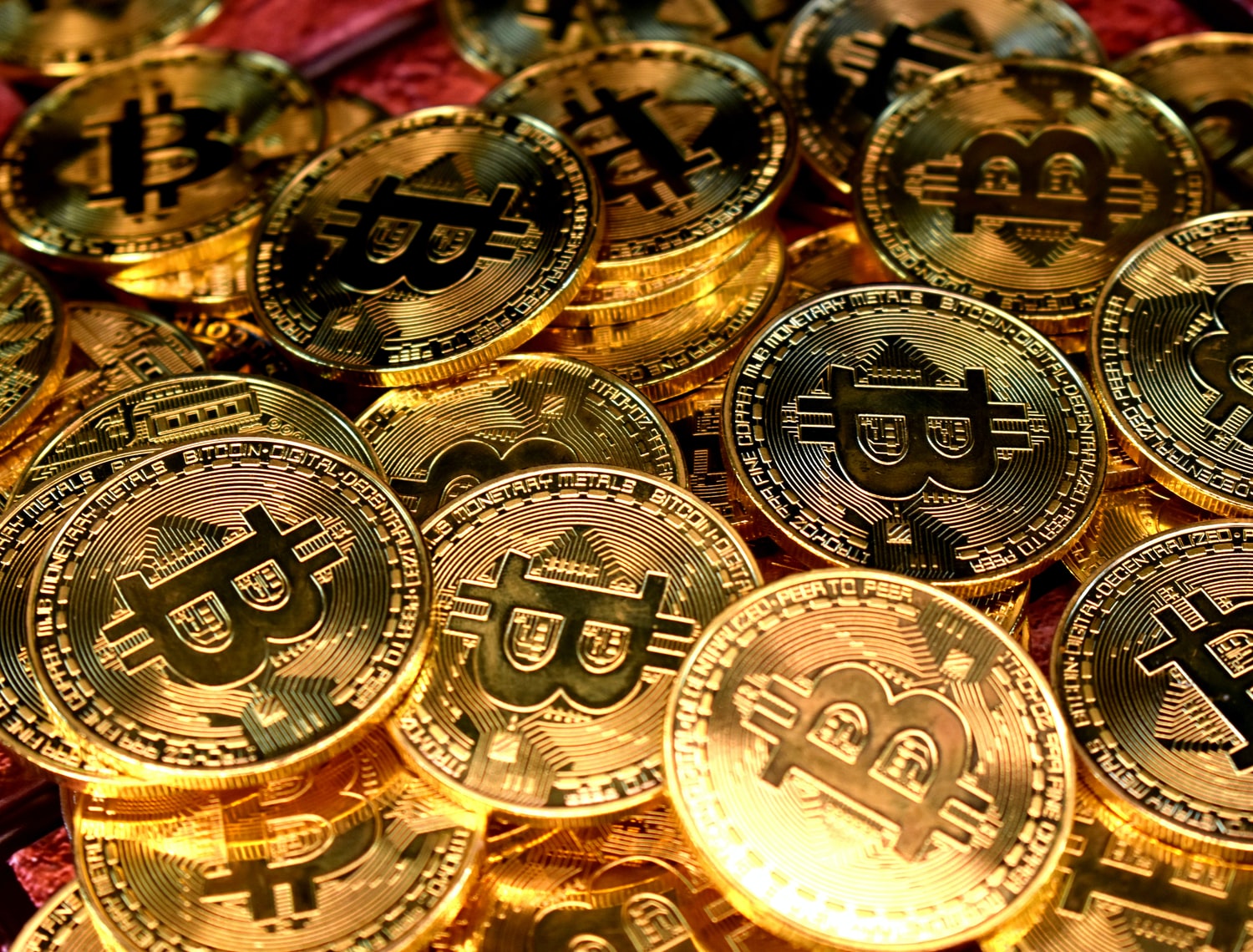
Who Wants P2P Electronic Cash?
Satoshi Nakamoto... what a guy. He gave the world an immensely valuable gift--Bitcoin--for free. A gift that has the power to empower every individual of the earth. A gift that can make everyone their own bank. A gift that can make the transfer of value between individuals fast, cheap, reliable and irreversible. Imagine, cash money that individuals can exchange without permission and without censure. That was the original promise of Bitcoin. Peer to peer (P2P), individual to individual, electronic cash. https://www.bitcoin.com/get-started/bitcoin-white-paper-beginner-guide/
But who wants that original promise fulfilled today? Not the mooners, they just want to cash out their Bitcoin to fiat to buy their moon lambos. Not the HODLers, such as institutional investors like Micheal Saylor, who just want to sit on their bags of Bitcoin forever. And not the Bitcoin Core developers, who again and again have worked against that end.
The HODLers
HODLers are those who buy Bitcoin in order to... hold it. As far as I can tell, a HODLer is a HODLer for life and will never sell or spend their Bitcoin. For a HODLer, Bitcoin is not cash, currency, or money, but a speculative asset or a something akin to a stock or share. This, of course, doesn't make sense because if Bitcoin is never sold or spent then any gained value can never be realized by the HODler. In principle it shouldn't matter to a HODLer if Bitcoin goes to zero or goes to the moon, because they won't sell or spend it either way.
The Mooners
Mooners are those who buy Bitcoin as a speculative asset. The speculate it will "go to the moon" and then they can cash out their Bitcoin to their local fiat currency to by Lamborghini--lambo--motor cars. They don't want P2P electronic cash, they just want a get rich quick scheme. The only spending mooners will do of their Bitcoin is at an exchange so they can buy fiat and in turn use that to buy a Lamborghini or whatever is their Lamborghini substitute of choice.
The Bitcoin Core Developers
The Bitcoin Core developers don't want P2P electronic cash. How can you tell? Because they endless make choices to make Bitcoin less and less usable as cash. Once Bitcoin was fast, cheap, reliable, and irreversible. How about today?
Fast transactions? Nope, not anymore. The tiny block size has "solved" the "problem" of transactions being fast.
If Bitcoin is not fast, then at least it is low cost? Nope. The Bitcoin Core developers have celebrated the Bitcoin "fee market" where you must place a high bid to get your transaction in the next block.
If Bitcoin transactions are not low cost, then at least they are reliable. Right? Well... no... not anymore. If your transaction fee isn't high enough, then your transaction will become stuck in the queue of transactions and might even be *purged* and never processed
But surely Bitcoin transactions are irreversible? Yes... until they weren't, thanks to "replace by fee" (also called RBF), which allows an unscrupulous Bitcoin user to send a Bitcoin payment to a merchant, walk off, and then undo the payment by sending the same payment back to themselves but with a marginally higher fee.
Who Does Want It?
I've seen enough videos of Roger Ver, the Bitcoin Johnny Appleseed, to know he genuinely wants P2P electronic cash.
The Bitcoin Cash developers want it, too, which is why they work towards it.
My Polish friend wants P2P electronic cash and uses Bitcoin Cash everyday in his community for everything from food to haircuts.
My Indian friend wants P2P electronic cash so he can travel the world and use one currency everywhere.
I want P2P electronic cash, too. No permission, no borders, no censure.
What do you want?

Some Thoughts on Economics
Once, in the brashness of youth, I thought I would write a book on capitalism and economics. For some context, my thought on economics are influenced by Henry Hazlitt, Ludwig von Mises, and Ayn Rand. I know that such a mix won't be to everyone's taste.
My goal was to make economics fun, accessible and interesting to the layman who otherwise has little economic knowledge or interest. I do not believe that the math-driven econometrics that dominates news head lines is really economics at all and wanted to provide the reasoning to support this and the conceptual tools for understanding economics as it really is--the study of humans acting to better themselves by exchanging value.
The following is the beginning of that book which I never completed.
Introduction
This book is about economics and capitalism. Wait, wait, don't go yet...they're very important subjects, and if you don't understand them then people will use fancy words and flashy diagrams to trick you about matters of great importance, the cost of which is very high. "Which people" I hear you ask, "and what tricks?" The answer to *which people* is all those people who want to separate you from your money and liberty, and the answer to *what tricks* is through the hijacking of language and confusing mathematical reasoning.
You might have a low of opinion of economics, especially if you have taken an *Economics 101* class at college and listened to the the teacher drone on about aggregates and utility curves. You might even be scared of economics, especially if you've cracked open a thick tome at the library only to be confronted by dry text and enough impenetrable math to make you wince. Let me reassure you, gentle reader, economics—real economics—is none of these things.
But economics gets off easily when compared to capitalism. Gosh...whole nations have shuddered at the thought of capitalism. Some cry capitalism "exploits the working classes", and others that it "makes the rich richer, and the poor poorer". Let's not forget the cry of the new Marxists, that if capitalism was unbridled the earth would become an arid waste-land of commercialism, our natural resources held at ransom by Lex Luther style businessmen charging five dollars for every glass of water we want to drink. The irony is that capitalism is the greatest good known to man. It is not because of labour unions that I can spend a lazy week-end writing a book on economics, it is because of capitalism. It is not because of philanthropy and government largess that the average life expectancy for most of Europe is 80+ years, it is because of capitalism. It is not because of DARPA and government investment in technology that I have a computer and high-speed Internet access, it is because of capitalism.
This book will set the record straight—you don't need to be afraid of economics and capitalism.
What is Economics?
Economics is the dismal science, at least according to Scottish historian Thomas Carlyle, and economists seem to take much glee in saying so. Mr. Carlyle was wrong though, as economics can be fascinating. So what is economics? Laymen might say economics has to do with money, and that it is boring and complicated and better left to the central bank to deal with. If you ask an economist or crack open a dictionary (whom am I kidding, by "open a dictionary" I mean "ask Google") you'll get dozens of different answers, they'll probably throw around terms like "production", "supply", "consumption", "demand", but they fail to characterize the essential nature of economics.
There are many definitions of economics, and if you ask your friends what it is then you'll likely hear many different answers. Economics is a *science*, and its subject of study is *people*. Economics, however, does not study people in the same sense as biology does, which studies the physiological functions of the body, and it does not study people in the same sense as sociology does, which is a pseudo-science studying "social phenomena". Economics, as a science, studies purposeful human action; that is, economics studies men employing *means* to achieve *ends*. An *end* is any state of affairs that a man deems more satisfactory than the current state of affairs, and a *means* is the chosen method for attaining an end.
The essential nature of economics is purposeful human action. Yes, it really is that simple. To understand the nature of human action and the corollaries that must logically follow, is to understand all of economics. You might think this definition is naive, and it is; however, it is also correct. All those sophisticated and wordy dictionary definitions of economics that start with "production" and "consumption" jump the gun, forgetting that economics is simply people acting to satisfy themselves. What sort of sophistication makes people forget economics is about what people do?
What About The Math?
This book doesn't include any mathematical descriptions of economic theory. This isn't because I'm trying to shield you, the gentle reader, from the horrors of secret economic math, but because *economics isn't math*. Math is a tool of the physical sciences where there are countable and measurable qualities, but economics studies human action, and as humans can't be described or explained entirely in physical terms (such man's qualities of life, consciousness, and volition) those methods that can explain and describe only the physical are unsuitable.
Mathematical Models
Some people think everything can be reduced to mathematics, that numbers can explain and describe exactly everything from the behaviour of atoms, the motion of the stars, and the nature of man. The ancient Greek followers of Pythagoras thought so too (the belief that all of reality can be expressed mathematically is light-heartedly called the "Pythagorean fallacy"), and were so incensed when Hippasus proved them wrong with his discovery of irrational numbers that they threw him overboard from the boat he was travelling on at the time. An irrational number is any number that cannot be expressed as the fraction *m/n*, where *m* and *n* are whole numbers and *n* is not zero.
Pythagoras discovered that for any right-angle triangle where *a* and *b* are the legs leading from the right angle, and *c* is the side opposite to the right angle (the hypotenuse), a² + b² = c². This led immediately to the discovery that for an isosceles right triangle, where *a* = *b*, there is no unit of measure that can measure both a leg of an isosceles right triangle and the hypotenuse. If *a* and *b* are 1, then *c* would be the square-root of 2, which starts with 1.41421 and has following decimal places going on forever. An exact value cannot be calculated for the square root of two—it is "irrational". When the measurement of such irrational relationships must be used, mathematicians use very close approximations (such as Pi).
There are many economists who believe the product of economics should be a mathematical model describing the market, like a mathematical model in physics might describe the path taken by a billiard ball bouncing off the cushions of a snooker table; but how can mathematics describe living people if it can't accurately describe an isosceles right triangle? Simple—it can't.
Statistics
There is another problem with trying to apply mathematical methods to economics. Economics is about purposeful human action, which means men acting *now* to achieve a more satisfactory state of affairs in the *future*, but all mathematical data and statistics gathered about the activity of men is, by necessity, historical. That is, any recorded data, such as one thousand people bought new cars in the city of London in the month of January of 1997, is nothing more than documentation of some past event. As the great economist Ludwig von Mises said of mathematical methods:
"...the alleged 'correlations' and 'functions' do not describe anything else than what happened at a definite instant of time in a definite geographical area as the outcome of the actions of a definite number of people"
—Ludwig von Mises, *Human Action*, p. 347
Statistics and observations of past human action contribute nothing toward economic theory.

Ship of Theseus
Have you heard of the riddle of Theseus's ship? The story is as follows: http://faculty.washington.edu/smcohen/320/theseus.html
"The ship wherein Theseus and the youth of Athens returned had thirty oars, and was preserved by the Athenians down even to the time of Demetrius Phalereus, for they took away the old planks as they decayed, putting in new and stronger timber in their place, insomuch that this ship became a standing example among the philosophers, for the logical question of things that grow; one side holding that the ship remained the same, and the other contending that it was not the same."
Some variants of this puzzle add that over time every component of the ship is replaced and the original components are assembled into a second ship. This variant then asks which ship is Theseus's.
The story is usually presented as an ontological problem... but it isn't. It is really an epistemological problem. This mistake is at the heart of all problems around thinking about the ship of Theseus.
A Little Bit of Ontology
Ontology is a subset of *metaphysics*, and answers the questions "what is the nature of material existence?" Ontologically, all things that exist have an *identity*, or *qualities.* And an existent has the qualities it has because of the kind of thing it is. A ship, like Theseus's ship, is a physical existent, and therefore has qualities. Some of those qualities are "intrinsic", meaning they are part of the ship, and other qualities are relative, meaning there are not part of the ship. The intrinsic qualities are what make the ship an ontological existent, and is all the qualities of all the physical attributes of the ship (the planks, nails, ropes, sails, and all such physical things). These intrinsic qualities, though, do not make the ship a ship, just a physical entity. What makes any particular physical entity *a ship* are its *relative* qualities, which are all those qualities determined by an entity's relationship to other existents, both physical and conceptual.
A Little Bit of Epistemology
Epistemology is the study of the nature of knowledge. Epistemologically, the concept for the word "ship" identifies a particular type of physical existent that has been made by man to have certain physical attributes and to perform a certain purpose. The attributes are all those physical attributes that a ship must have to be a ship, such as having a hull and displacing water such that it doesn't sink. The purpose of the ship is what it is made for, which is sailing.
An entity is what it is, regardless of what (if anything) is known about it. An ancient artifact discovered by archeologists has an ontological nature and is what it is, even if the archeologists do not know what they've discovered or what purpose it once served. That which makes a physical entity a ship, its *essence*, is not ontological, but conceptual. A physical entity is a ship if it is identified by the concept "ship".
To understand what is wrong with the story of Theseus's ship it is necessary to know what a concept is. A *concept* identifies *existents*. *Existents*, are any thing that exists ontologically or epistemologically. So... what does that mean? A concept is a mental construction that acts like a finger pointing at what it means. A concept is made of several parts: a *symbol*, a *definition*, and a *meaning*. The *symbol* is something humans can perceive (see, hear, smell, touch), such as written, spoken, or signed words, such as the word "tree". The *definition* describes the meaning in words, such as "trees are plants with bark and leaves". The *meaning* is the *existent* or *existents* the concept identifies. For example, the meaning of the the concept "tree" is all actual trees--the concept *tree* is like a finger pointing at *all trees*. The meaning of concept "the tree in my garden" is the actual tree in my garden-- the concept "the tree in my garden" is like a finger pointing at *only* *that tree in my garden*.
The concept "Theseus's ship" identifies a particular physical existent that has the essence of a ship and also has an additional relationship--it is owned by Theseus and was sailed by him on his adventures. While Theseus owns his ship, any changes to that ship (such as replacing a rusty nail) do not change that fact the ship is Theseus's ship (like if I replace the spark plugs in my car, that car is still *a* car and still *my* car despite having changed in some way). If Theseus replaces part of the ship (like an individual nail) the ontological nature of the ship is different, but the epistemological essence of the ship does not change and the relation of the ship to Theseus does not change—it is still Theseus's ship. Even if, gradually over the duration of his travels, Theseus replaced every component of his ship, the concept "Theseus's ship" still identifies the ship he is sailing.
Answering the Riddle
There are *two* meanings of "Theseus's ship" in the story, but the question "is it still Theseus's ship" is only a riddle if there is *one* meaning of "Theseus's ship". If it is (correctly) recognized that there are *two* meanings in the story, then the riddle dissolves.
This is where the mistake is made. The same words, "Theseus's ship", are used as symbols for two related, but different, concepts. In the story the first usage of "Theseus's ship" is to mean "the ship that that Theseus owns", and the second usage of "Theseus's ship" is to mean "the ship that *historically* was owned by Theseus and now is preserved by the Athenians."
"Theseus's ship" in the first sense, the "ship that Theseus own", is gone. It is no more. However, "Theseus's ship" in the second sense, the "historic ship that is preserved by the Athenians," does *still* exist and is *still* identified by that concept, regardless of how much of that ship has been replaced as part of its preservation.

Existence, Life, and Purpose
There is a hierarchy to existence, and humans are the peak of that hierarchy. All people--including you--are the fullest expression of existence, the very most that can be.
All things that exist, including man, have specific natures. The nature of most things is simply physical. By physical I mean that aspect of reality we can see, hear, touch, taste and perceive in some way. All that is physical can be explained entirely in the physical terms of position, motion, and acceleration. The hardness of rocks, the movement of air, or orbit of planets, the pull of the tides, and the burning of the stars can all be explained and described in those terms.
However, some things cannot be explained entirely in those terms, such as a salmon swimming against the current to reach its breeding ground. There is another term used to describe those things: life. These things are not only physical, they are also living. Life is not physical, for it cannot be seen, touched, tasted, or perceived in any way (note: I know this view is unpopular and obscure, and will get me branded as unscientific). We know an organism is living by observing the behaviour of its physical aspect, not be perceiving that aspect of its nature that is its life.
The nature of life itself has several qualities, but I think the important one for you is understand is purpose. To quote The Nature of Life: https://usabig.com/iindv/articles_stand/incidental/life.html
"For merely physical events, there is no connection between the cause of the events and the consequences of them, except the physical events themselves. For living behavior, however, both the cause of the behavior (or what makes it possible), and the consequence of the behavior (what it produces) is the same thing, the life of the organism. There is no other reason for living behavior than the sustaining of the life which makes it possible. There is no reason for any physical behavior except the laws of physics, but the life process has an end, a "purpose," which is the life process itself, and without that end, there would be no life process."
All living things have purpose, which means the universe has purpose (because we are part of the universe). Again, from The Nature of Life:
"as astounding as the physical universe in all its grandeur is, without life it is a pointless show in an empty theater that would never be seen or matter. But the universe does have a point, because there is life in it, and it is astounding, because we are in it to be astounded by it."
All living things are sentient in some way--it is that sentience that allows an organism to respond to its environment in the way we call living. Some organisms are more than just sentient, they are conscious. A conscious organism does not only react, it can learn, and because it can learn it can enjoy. I don't mean "enjoy" in the sense "I enjoy this TV show", but in the sense of an animal living successfully in accordance to the requirements of its life.
Ultimately, to enjoy life a person must live in accordance with their nature as a human being, just like how the animals to survive and thrive must live in accordance with their natures. The animals have "instinct", they have a "built-in program" that gives them the rules to live by. Instinct "tells" them how to live in accordance with their natures.
Humans are different from the other animals, they do not have instinct. Humans are volitional--their nature requires they choose how to live. Volition is the final level of the hierarchy. Humans do not have instinct, when we are born we don't have built in rules telling us how to live. People can be miserable because the can choose (knowingly or unknowingly) to live contrary to human nature. Sometimes living contrary to your nature can be immediately fatal, like how poison is contrary to the nature of your physiology. And other times the effects are not immediately fatal, but are are damaging in other ways, such as choosing to let others choose for you (which is like having others live your life), or not learning (knowledge is a requirement for making choices), or not being productive (to live you must sustain yourself, which requires productive effort, which to be successful requires correct choices, and to choose correctly you must gain knowledge through learning).
In the hierarchy of existence you, as a human being, are the pinnacle of that hierarchy. You are the fullest expression of existence.
Most of existence is only physical. A much smaller part of existence is physical and living. An even smaller part of existence is physical, living, and conscious. And the rarest of all existents, which is you, is physical, living, conscious, and volitional--the very fullest expression of all that can be, the very purpose of the universe.

 @NeonOctopi