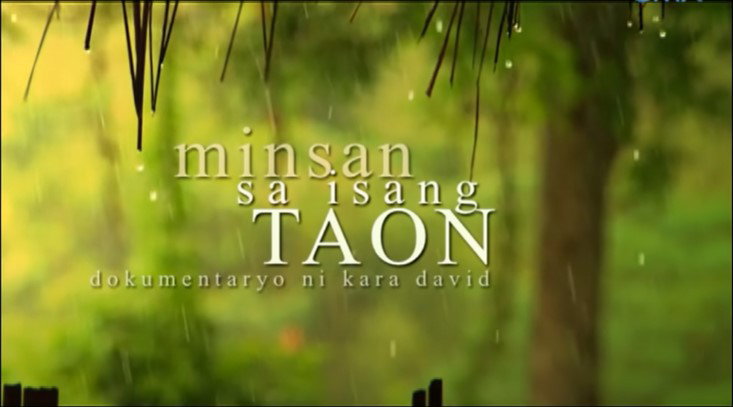
Revisited Documentaries “Minsan sa Isang Taon”
Did you know that the current banknotes of Japan and the Philippines are made of 20% to 30% Abaca fiber. The Abaca fiber is very long and is one of the strongest fibers - flexible, durable, and highly resistant to saltwater damage. For all of Abaca fiber qualities it's the perfect ingredient in making a country’s bank note because a banknote that is made in Abaca can withstand the deterioration of the paper in everyday use. The Abaca is a species of banana native to the Philippines, grown as a commercial crop in the Philippines, Ecuador, and Costa Rica. The Philippines provided 87.4% of the world's abacá in 2014, earning the Philippines US$111.33 million. This highly sought after fiber that has a high demand in the world market, there are some Abaca farmer’s in the highlands of Sarangani Province in the Philippines that can not even get a hold of the finished product (a Banknote) of their raw material that they produce only “once a year”.
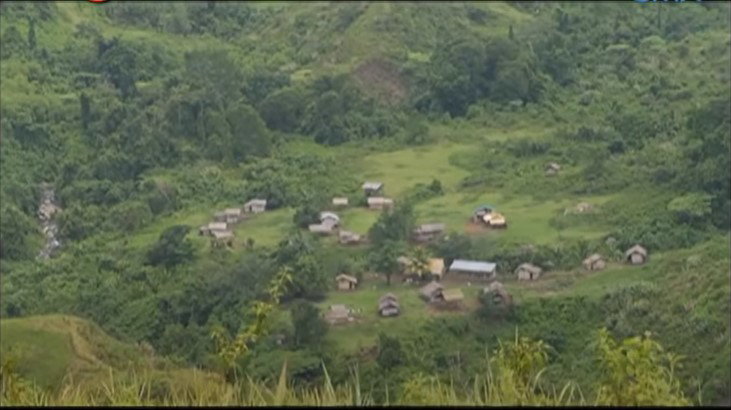
Another eye opener documentary film from Miss Kara David and the I Witness Team,they start their journey in the town of Malapatan, Sarangani Province. Their aim is Sitio Banli in the far flung mountainous part of the town where most of the community people are Abaca farmers. The trip to the most remote Sitio of Malapatan is a grueling one that would require 4 travel by 4x4 vehicle that would traverse a 18 river crossing and mostly rugged road and another 6 hour walk from another certain Sitio in Barangay Kiram. It’s a steep hike to Sitio Banli where the Team is also being accompanied by Philippine Armies for the reason that the mountains around the area are once haunted by NPA rebels. Only a few people had actually gone or visited the most remote community of the Blaan Tribe in Sitio Banli.
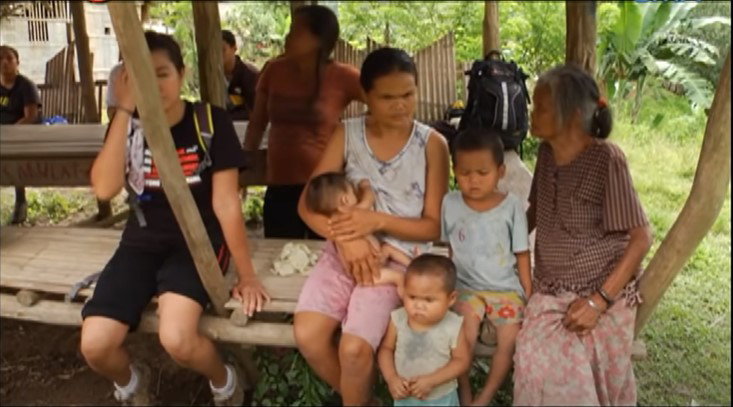
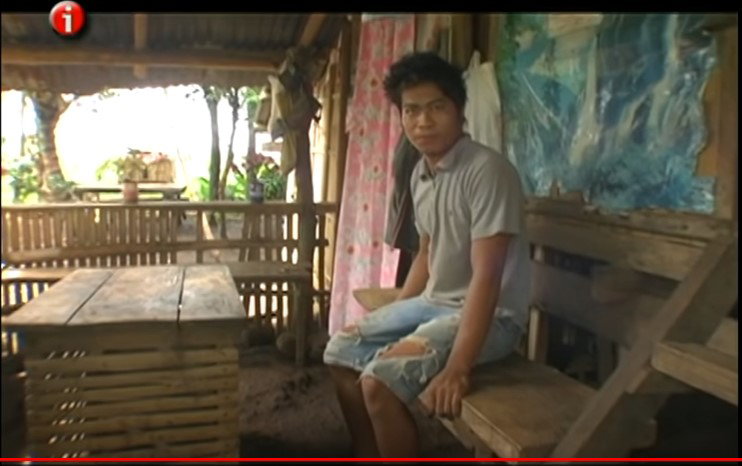
The small community in Sitio Banli is surrounded by mountains. It is one of the poorest communities in all of Sarangani province but it is also a community that produces the ingredients of a banknote, the Abaca fiber. The I Witness team finally reach Sitio Banli and there they meet a woman named Inday with her 1 year old daughter Mariko but looks like a 4 months old baby and by her side is her son Mani. Mani look like healthy boy for his age with a fat tummy and a chubby cheeks but looks can be deceiving for the child had a condition that is known as Kwashiorkor *(is a form of severe protein malnutrition characterized by edema and an enlarged liver with fatty infiltration*). Kwashiorkor may develop after children are weaned from breast milk and begin consuming a diet high in carbohydrates and Miss K was not wrong on her assumption on Mani, Tusan the father of Mani is out on the field looking for sweet potato to put on the table for their lunch. Mani and the rest of his siblings had only two known meals, sweet potato and cassava tree, all are high in carbohydrates root crops.
Most of the people in Sitio Banli are Abaca farmers, because the Abaca plant is seasonal, it can be harvested once a year and once a year Tusan can earn some money and his family can eat a dish other than sweet potato or cassava tree.Abaca plants tends to flourish in a dense and secluded area in the forest and Tusan and a child named Jerson harvested their adult Abaca plant to start the three process on getting the raw fiber out of the Abaca plant.
The three Process on getting the raw Abaca Fiber
tuxying (separation of primary and secondary sheath)
stripping (getting the fibers)
drying (usually following the tradition of sun-drying).
The process can be exhausting because all is done by manual labor from cutting the plant, stripping the fiber, you need a raw strength to pull the fiber out from its sheaths and traditionally sun dried the harvested fiber for the final process.
In the past the community could harvest Abaca plants three times a year for there are so many Abaca plants in their forest but after the millenia their forest had been slash and burn to be converted into agricultural land. Now because of deforestation the community can now harvest their Abaca only once a year, once a year Tusan can generate an income from selling his Abaca fiber a mere 20$ for a year of fiber he harvested, once a year Mani and his sibling can eat rice and a meal even if it is only once a year.
Before Mani could taste another meal from his every food of sweet potato, his Father Tusan first had to traverse to the foot of the mountain in a 6 hours hike to take his Abaca Fiber to a trading post.The group journey start in midday, hauling their 20 kilos or more raw Abaca Fiber to certain Sitio Semandre. The hike going up the mountain is hard but going down would be as much hard as going up for you need to hold your balance when your body momentum when going downhill that’s where Tusan and his group are very good on balancing their body in a downhill slope for they just glide with their momentum as if like running downhill with all their heavy baggage.
Almost sundown when Tusan and the group reach Sitio Semandre and immediately go to the trading post to weigh their Abaca fiber and to check if it’s all dried. Tusan Abaca fiber weighs at 27 kilos, for a kilo is worth 40 Philippine pesos and overall Mang Tusan traded his Abaca for a thousand pesos, but had taken home a pay of 400 pesos for Tusan already had a 584 pesos balance in the trading post. A year of harvesting Abaca fiber for a mere 4 pieces of 100 peso bill that a hardworking father Tusan received with all smiles on his face and would immediately buy some food essentials like rice,sugar,coffee and sardines. As Miss K said thus Mang Tusan knows that his one year of labor got him just a few paper bills, paper bills that are made from the fiber that he works hard to harvest. A man who hauls ingredients that would be used on making a banknote can not even hold a banknote even just for a day, how ironic life can be.
Final Thoughts
The day after Tusan had bought some food for his family, Mani and his sibling eagerly waited for the rice to cook and be eaten. Every grain would be fully enjoyed and consumed, every grain that came from a year of labor, love and determination from their father.
People sometimes do not value a banknote for some influencer on social media platforms can be seen as defacing,mutilating and burning a banknote for their content creation. They had no idea on what ordeal some of the Abaca farmers in the highland had to undergo just to harvest and trade their raw product for a few paper bills. Finally, how I wish that the local government or a NGO can help those in the Sitio Banli that can alleviate them from their current condition.
Reference:https://www.youtube.com/watch?v=yW9tT0XafhY&t=391s
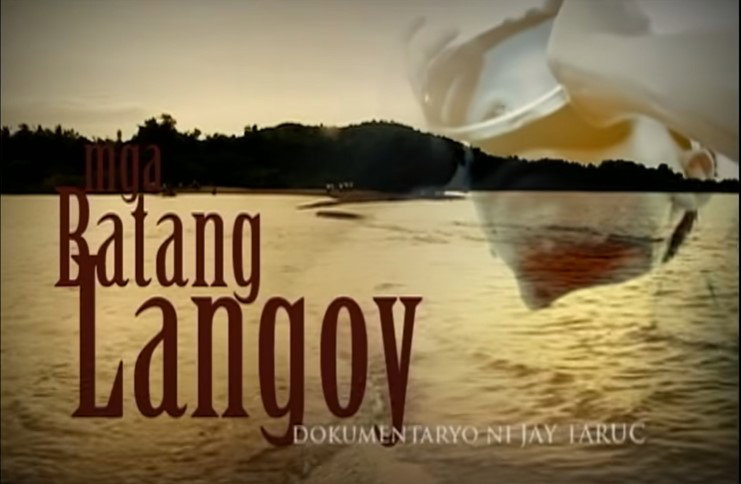
Revisited Documentary "Batang Langoy"
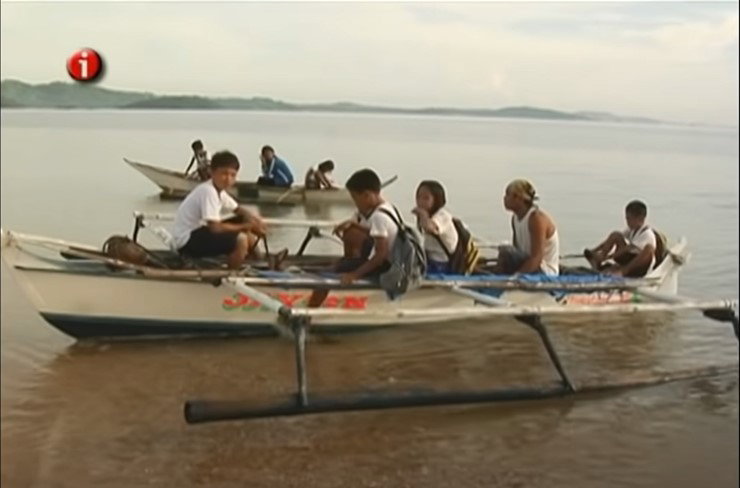
In this era of social media, it is the preference of most students that they can't even live a day without their gadgets for status checking in their favorite social platforms. Let’s all be conscious that finding happiness in life is all about contentment because in this documentary you would realize that you are more privileged than others on what you had in your life right now. We often hear stories of children who would walk a 2 kilometer hike just to get to school but for some children in the Magalumbi island they had to swim for their education.
The I Witness Team headed by Sir Jay Taruc had traveled to the 5th class town of Binon an in Iloilo province where they discovered the everyday plight of students from Magalumbi island. The documentary starts on the first day of the new school year for the students of Magalumbi island. Where most of the family in the island believes that education is their only hope to uplift their current living situation. The island population that comprises mostly fisherfolks, give all their support that their children need to have a proper education even though traveling to the main island is very challenging in many ways economically, geographically and physically.
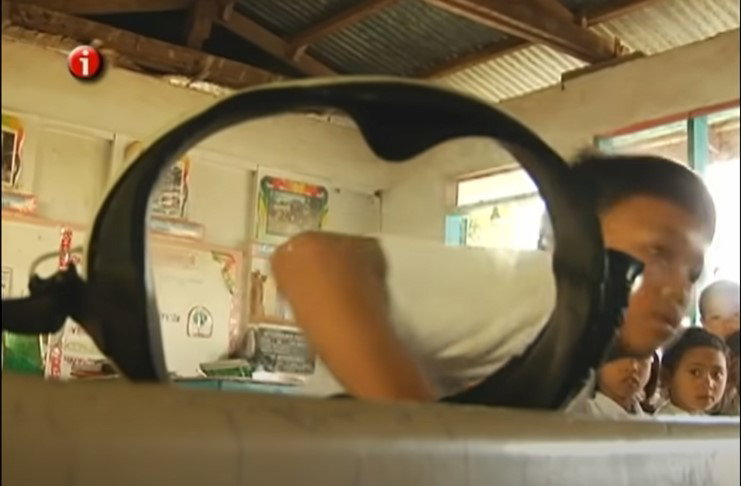
In Magalumbi island the team meet Raul and his cousin Queenche who both are enrolled in a Binon-an Elementary School. Raul and his cousin just like all the children that are excited to attend the first day of there school both had woken up early and along with some kids from the community had gone to the beach front to catch a small boat to take them to the main island Tabunan beach. From Tabunan beachfront they had to walk a little more to reach the school. The children from the island all reached the school late for their flag ceremony and they all did not bother to attend it. On the first day of school most children often boost all there new school supplies while Raul, a 13 year old boy but still 2nd grade had to attend his first day of school with his swimming goggles and without any school supplies at hand, a sad reality for a child from the island, fact that his parents cannot provide even a single pad of paper and a pencil.
Sir Jay asked Raul teacher why the child logs behind his peers and the teacher said that it's a common situation that a child from the island would be late and in bad weather those children can not cross the narrow stream. Also because poverty is prevalent in the Magulundi island, most children always drop out in the middle of the school year for the reason that they had to help their parents fishing at night or they had to find some jobs that can pay even a small amount.
After a day in school all the children from the island go back to Tabunan beach and wait before sundown if there would be a fishing boat that would fetch them all back to Magalumbi island, if no boat had come to fetch them for their parents are all in sea making a living, the inevitable would happen the dangerous swim across from the mainland back to Magalumbi island .First all the children had to dig a hole in the sand to hide all their school supplies and pray that it would not rain at night so that their equipment would not be wet. After all their school supplies are secured they now start to swim from the beachfront of Tabunan, their strategy is to all swim close by in a group and have a bamboo pole to hold onto if they would eventually feel tired swimming. The narrow crossing is 1 kilometer and almost 20 feet deep that would eventually be a half hour swim in a good weather condition but that day, when the I Witness team and the children are doing the crossing swim they had been hit by a torrential rain and immediately the team decided not to take chances on that kind of weather when they spotted a incoming fishing boat they quickly put all the children on board and be on their way to the island. They all made it to the beachfront of Magalumbi safe and all the children back home.
In the comfort of their house but still some of the children in the island need to help their parents fishing at night just like the younger brother of Queenche, Raymark had to go with his father out in the open sea at night to try to bait some fish for dinner and breakfast.
As Queenche ambition in life is to be a nurse and Raul a policemen someday, Queenche mother told the team that there is someone that would like to help take Queenche in from the mainland to help her in her education but the sad reality is Queenche and Raulparents are fisherfolks that earn almost 4$ daily it would hard for them to pursue their dream economically in their current parents livelihood. Queenche mother added when asked why they choose to live on the island it’s because they do not own land in the mainland and they cannot afford rental payments if they want to rent a house in the mainland. Her husband's livelihood is also based in the island that is why they still choose to be in Magalumbi island.
Early morning comes and all the children need to wake up early and travel back to the mainland for they all need to make their assignment before attending school again. While other children were busy digging their bags and other equipment, Queenche was preparing their lunch box filled with rice without any other side dish.While walking to the school all of the children had their breakfast of boiled banana and some cotton fruit. The island children thus do not have a lot of other friends other than themselves, for they all eat lunch together far away from other school children. The children from the island all look up for each other like their swimming strategy that they can have support and care from their group to achieve their goal in life.
Final Thoughts
The children of Magalumbi island face some enormous challenges in their everyday lives. Thus it does not dither their will of going to school and being educated. Raul and Queenche both have a simple dream of someday finishing their college education and help their family that they both still hold a will to fight their current plight even how hard or daunting the swim for their future.
We living in the internet age and in the rural areas, we often complain about some slightest inconvenience that we encounter. Let's be aware that some children do not complain of a half hour swim in the open sea to have an education and to get home to their family. The children's struggles are real but they face without complaint and still be able to play and laugh upon their current situation in life is mind boggling.
Reference:
https://www.youtube.com/watch?v=WOp2hnA4Q_8
“Gapos”, another revisited documentaries from I Witness series
The year 2017 just like the title in this documentary episode from the I Witness series, my country Philippines is still bound to mental health problems that receive less attention in the national government. The ratio of psychiatrist doctors in the Philippines that year is 600 to 80 million Filipino citizens. In May that year the Philippine senate passed the historic Mental Health law that would eventually help Filipinos that suffered mental health illness. Meanwhile the I Witness tackle the issue to convey the situation of an ordinary Filipino with mental illness in the rural area where there are no proper psychiatrists in their locality.
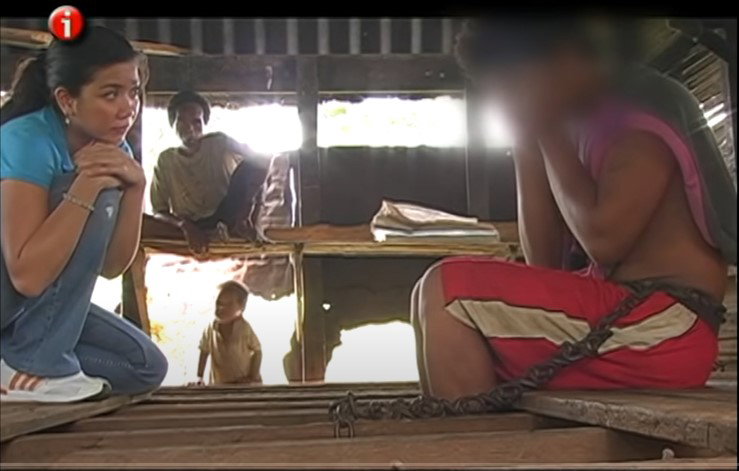
Miss Kara David and her team travel to Ormoc City in the province of Leyte in the Visayas region, where the city had no psychiatrist and patients that have mental illness would eventually travel to Tacloban City, a 3 hours drive. The I Witness Team met a young 22 year old man named Teteng bound with a metal chain to a wood in an old ramshackle Sakada quarters that would be also where some piglets reside. Teteng looks like a dog in a chain in that condition, so inhumane that the chain that binds in his waist is so tight that it hurts him in every move he makes. Not even a meter long chain where Teteng can only do two basic things: stand and sit on the floor.
Teteng and Miss K had a nice conversation where Teteng revealed that his father chained him because he had made a mistake and he is “Lipong” local dialect word that describes a crazy person. According to Teteng’s father he has been in that condition since he was 10 years old. A child laborer “Sakada”, Teteng lost consciousness while working in the field and after that incident he became a menace in their community, where he would throw stones, chase and hurt other children. His father chain him for he can not be a harm to others in their community and also can not roam to nearby villages where he would eventually be lost.
Miss K said that in her 1 hour conversation and observation of Teteng,she concluded that Teteng is merely a meek child and asked herself whether Teteng is really crazy or just been made to be crazy by the chain that binds him. In the last 12 years Teteng’s world is the pig corral, the piglets as his playmate and the chain his close companion. In this place is where Teteng’s spend half of his life and all his teenage years chained.
The I Witness team also visited five more patients that have the same condition of Teteng, the five other patients are Dodong, Geraldine and Maricris with her uncle Pepe all in a nearby town. After spending time and observing all the 5 patients, Miss K and the I Witness team decided to take a leap of faith without any promises to the patient family but give all those five patients a glimmer of hope through taking them to Eastern Visayas Regional Hospital at Tacloban City where they are going to be consulted by a proper psychiatrist.
The diagnosis of Teteng, Dodong, and Geraldine all the three patients are suffering schizophrenia while Maricris and her uncle Pepe are both showing major depressive disorder symptoms. They all were given one jab of an anti schizophrenia drug. After a week the I witness team visited all the patients and saw some improvement on all of them where Teteng is no longer bound to a chain and is doing some gardening but the doctor had said that it is all temporary if they are all not given a monthly check-up and jab of medicine.
**Final Thoughts**
Mental illness can be passed through DNA and can be triggered by a variety of factors like stress,anxiety,drugs, alcohol, unmet physical needs, traumatic events and many others that cause a gradual effect on one's mental health. The Philippines is a hotbed for mental illness for the Philippines is a third world country where everyday is a struggle for an average Filipinos and also bothered by natural disasters like typhoons and flooding. When yearly rainy seasons come to the Philippines, most Filipinos that live in the flood prone area or near the seashore feel fear,insecurity and anxiety that can trigger a person's gradual mental illness.Hopefully the Mental Health Law of the Philippines could give Filipinos that have mental illness some optimism where the law states that a compulsory treatment of certain people who have a mental disorder. It is the main piece of legislation that covers the assessment, treatment and rights of people with a mental health disorder.
As a Filipino, all I can say is the fight of my country against mental illness still has a long way to go. The country's mental health budget had almost doubled for next year 2023 from the PHP568. 04 million in 2022 to 1 billion. A significant stride in the right direction from 2017 but still my country's health programs are so hard to access for an average Filipino more so those in the rural areas. Thus a Filipino can sometimes die waiting for his/her access to a public hospital.
Reference:
**I-Witness: "Gapos," a documentary by Kara David (full episode)** https://www.youtube.com/watch?v=25_lJ-9PFzo&t=491s
A revisited Documentaries from I Witness Series “Uuwi na si Udong”
I grew up at Negros Island in the Philippines countryside where I’m a witness on this migrant worker’s called “Sakada” day to day struggles to fulfill there contractual obligation from the labor Contractor. In 2017 Ms. Kara David and the I Witness Team of GMA news take on a very sensitive issue of child labor found inside a migrant workers' plight and their everyday struggle to unbind themselves from the financial debts and other life circumstances that put them in the situation that they found themselves and their family.
The documentary starts from the Sakada accommodation house that is also called as a Barracks (a repurpose metal container to house the Sakada workers). The day starts early for those workers for they would prepare themselves for a hard day working out in the field. Miss Kara's opening remarks are too strong for me to leave it out in my article. She said, *They're not criminals but they are imprisoned on rectangular metal. They have a house in the province but half of their lives have been endured in this desert-like place. This is the world of Sakada from Aklan, every year they cross the sea to the sugar plantation of Batangas,Laguna and Pampanga. For 6 months they stayed in this place. 700 people jammed in this oven type container van. Who would have thought that there’s a child that would endure this kind of plight.*
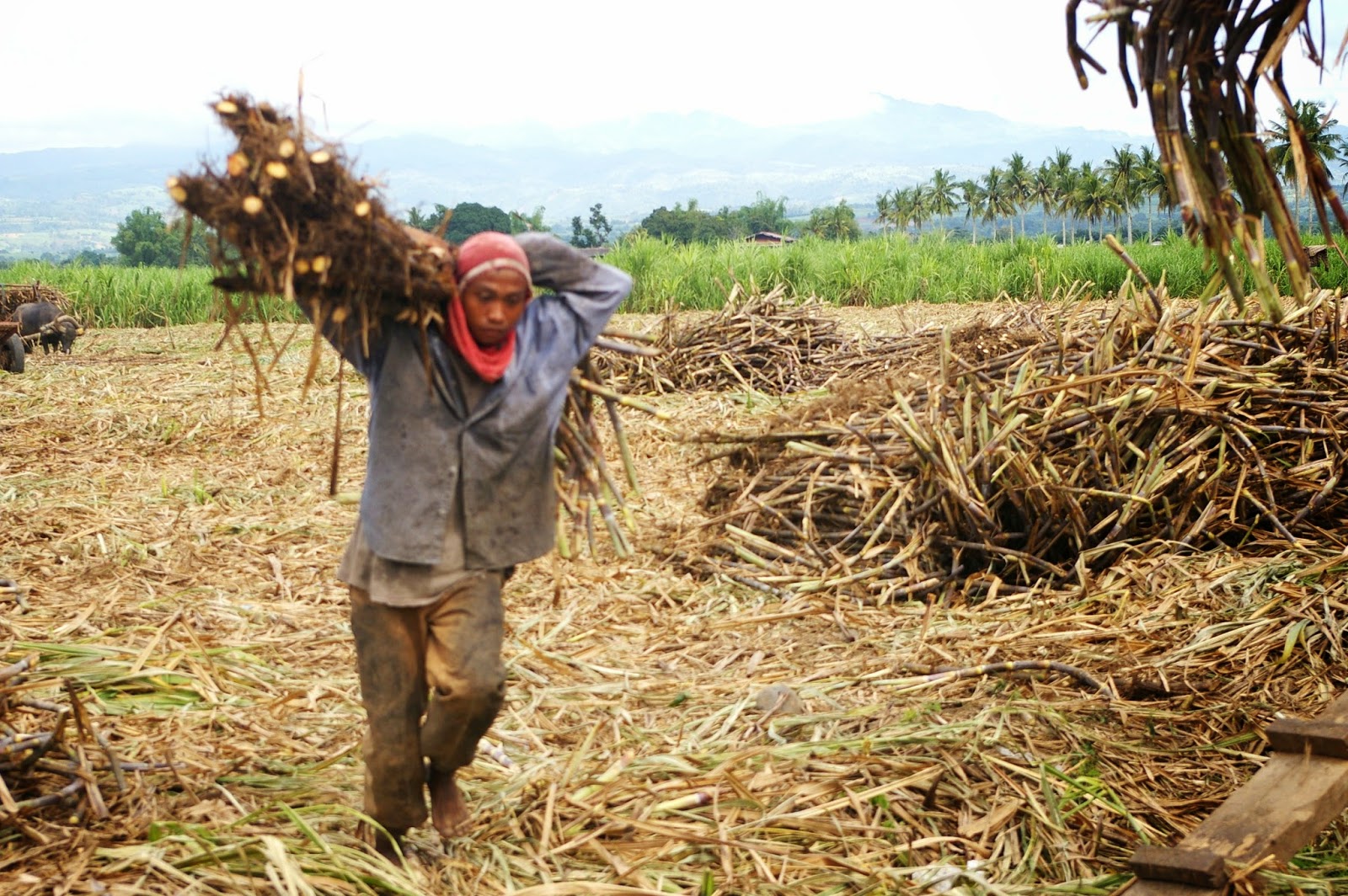
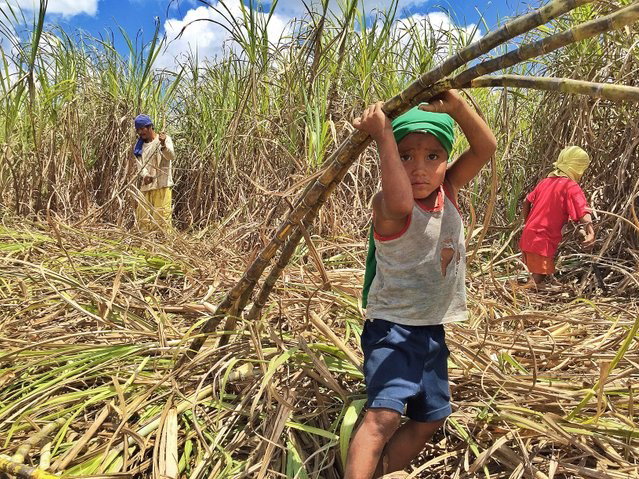
5am is the call time for the workers to be loaded on a truck to take them to work in the sugar plantation. At the end of the truck is where a 10 year old child named “Udong'' can be found quietly sitting and waiting for the truck to reach their work location. After an hour's travel the Sakada workers reach the sugarcane field where they are contracted to harvest all the mature sugarcane plants. Udong along with his father and two brothers and many fellow Sakadas immediately got to work burning the sugarcane leaves and slashing the plant near its base and then cleaning the stalks all with their machete. It looks like a child's play watching Udong expertly slashing sugarcane stalks while the field is burning around the child.
Udong’s father Mang Eliong was also a child laborer himself, just like Udong his father started working in the field as a 10 year old boy.Mang Eliong said that his parents also brought him to work in the field and he did not experience going to school in his childhood days thus compel him to be an illiterate person and be also the faith of all his children for Udong and all his siblings have not yet experience basic education. Mang Eliong said that being a Sakada is the only thing that has been handed down to him by his parents for in Aklan province when you're already a 11 year old and your body is ready to swing a bolo you can now ascend to be a Sakada worker. Most parents have inheritance for his children it could be land,weath, or education but in the case of Mang Eliong family where three of his child is now a Sakada worker and there family had a 20,000 pesos debt from their employer, it would be that only there family’s debt can be handed down to three of his children.
As most child laborers trap in this situation when they quiz “if you want to play or just work for your family everyday meal” Udong and most child laborers would always choose to work because they want to earn money to help support their family. As Udong had said that he’s almost a man that would love to take the responsibilities of providing the daily needs of their family for he sees it as an obligation to help shoulder the load that his father carries.
Just like Udong, Toto is also a child laborer Sakada that was totally homesick from the start of his 6 months work contract. Toto does not have any family members that also works as a Sakada, it is just himself taking on this new unfamiliar world of Sakada. He has the body and built to perform the task that is needed on a Sakada work but deep inside he is still a young boy longing for his family, even he cried when being asked about his family. The good thing about the documentary is that Toto can fulfill his wish of going back to Aklan for their 6 months work contract which will soon be over.
Home is a 12 hours sea journey from Batangas to Aklan, 500 Sakada’s are now going home and in the crowd are the two child laborers Udong and Toto that are exalted to go home. The ferry finally touched down on the port of Caticlan in Aklan province; all 500 Sakadas immediately descended the ferry to a waiting bus that would take them to their employer to fetch their 6 months contract salary.
The day has come for all 500 Sakada to take the fruit of their labor that they had worked for 6 months. Salaries are computed as follows for every 500 Sakadas, Over-all salary minus all the debts accumulated from the canteen purchase foods or groceries and Cash Advance request on or before the contract work had begun. Toto had an overall salary of 14,280 pesos converted on the that year dollar exchange rate of 50 pesos to 1 dollar, Toto just had 280$ on his 6 months of hard labor under the sun in the desert-like workplace of sugarcane harvesting even worst Toto’s take home pay after the computation of his overall pay of 14,280 minus all his accumulated debts of 12,957 and Toto final take home pay is 1,323 pesos that's equivalent of 26.46$.While Udong’s father Mang Eliong had a worst take home pay compare to Toto’s. Mang Eliong's overall salary was 14,926 pesos but his accumulated debts is at 21,867 thus he still had outstanding debts of 6,941 pesos from his contractor.
Toto’s wish to spend his 1,323 pesos on a television set but his take home salary can't afford that for the TV set price is at 5,200 pesos, so Toto’s just moved on and found some plastic toys from a department store to be given as a gift to his younger siblings. Mang Eliong had to take another 2,000 pesos loan from his contractor for their expenses of going home to their house where they found out that it was destroyed by a typhoon while they were all away working. While Toto finally has come home to his family full of joy and immediately gives his gifts to his siblings and gives the rest of his take home pay to his father. The I Witness team left Toto where they can see that the child was so happy and wish him that he could be free of this binding slavery from the Sakada industry.
Udong finally has come home but he and his family face an uncertain future because of all their burden that is in front of them, their house needs repair and they have no daily income to count on for their needs. One thing is certain they would all need to work hard next year when sugarcane harvest season comes again to pay off their remaining debts and put some food on their stomach.
**Final Thoughts**
In my travel to my country rural area, some of those area in far flung near the mountain I can say that child labor affect the overall social development of a child, since they do not get to spend time with others their own age doing stuffs what children does or even enough time with family members. Children need to build personal positive relationships in order to thrive and feel confident with themselves. Spending long hours at work, even part-time, prevents the children from properly developing these relationships, leading to insecure adults who are also at risk for other emotional problems.
Thus, I hope that social agencies get involved and help those children and their families have other sources of income. I believe a child did not choose to become a laborer but the situation thus pushed him to find work to help support his family's daily needs. If only a solution can be found that empower those people in the rural area to become resourceful to make or cultivate a product to power their own micro economy that eventually supports them in their daily lives. Where a family in a rural area with stable income would not push a child to find work that exploits him eventually thus end the cycle of child labor that those children would endured in a Sakada familys.
Source: https://www.youtube.com/watch?v=o_fa-5Zz5po
From the ashes of Diem came Aptos Blockchain
Nice day Crypto noob frenz, today I'm gonna share with you about a new Layer 1 Blockchain. From the ditch blockchain initiative of Meta (formerly Facebook) raised the repurposed web3 Layer 1 Blockchain project name Aptos. A blockchain project built to overtake all the existing blockchain at the moment for its TPS(Transaction per Second) would exceed over 100,000. Solana blockchain have the Highest TPS count at the moment for it can process a maximum of 120,000 TPS that it’s current TPS is at 2000 mark while the Aptos Can do a maximum of 160,000 TPS and its current TPS count in the testnet hit the mark of 4200. Clearly Aptos Blockchain can compete in terms of performance on all existing L1 Blockchain and would eventually surpass them in the future where updates would further improve the performance of Aptos Blockchain.
Now, would you love to read more about Aptos Blockchain?
**What is Aptos Blockchain?**
Aptos Blockchain is a safe and scalable layer blockchain with the vision to offer the masses new and novel innovations in consensus, smart contract design, system security, performance, and decentralization. The combination of these technologies will provide a fundamental building block to bring web3 to the masses in a five point vision.
First vision is by using Move Programing Language natively integrates the Move language for fast and secure transaction execution. The Move prover, a formal verifier for smart contracts written in the Move language, provides additional safeguards for contract invariants and behavior. This focus on security allows developers to better protect their software from malicious entities.
Second Vision would be Aptos data model enables flexible key management and hybrid custodial options. This, alongside transaction transparency prior to signing and practical light client protocols, provides a safer and more trustworthy user experience.
Third Vision, is to achieve high throughput and low latency, the Aptos blockchain leverages a pipelined and modular approach for the key stages of transaction processing. Specifically, transaction dissemination, block metadata ordering, parallel transaction execution, batch storage, and ledger certification all operate concurrently. This approach fully leverages all available physical resources, improves hardware efficiency, and enables highly parallel execution. Finally, once all the conflicts have been resolved, all the transactions in a block are committed to the blockchain together (so-called lazy commit).
Not having to execute all the transactions sequentially or define the dependencies in advance saves a lot of time and resources. It also scales well — thus the idea of Aptos as the most scalable L1 chain.
Fourth Vision, unlike other parallel execution engines that break transaction atomicity by requiring upfront knowledge of the data to be read and written, the Aptos blockchain does not put such limitations on developers. It can efficiently support atomicity with arbitrarily complex transactions, enabling higher throughput and lower latency for real-world applications and simplifying development.
Fifth Vision, the Aptos modular architecture design supports client flexibility and optimizes for frequent and instant upgrades. Moreover, to rapidly deploy new technology innovations and support new web3 use cases, the Aptos blockchain provides embedded on-chain change management protocols. Lastly Aptos is experimenting to scale beyond individual validator performance: its modular design and parallel execution engine support internal sharding of a validator and homogeneous state sharding provides the potential for horizontal throughput scalability without adding additional complexity for node operators.
**Who are the two visionaries of Aptos Labs?**
Aptos Labs is headed by the two former executives of Diem ( a cryptocurrency project that was launched by Facebook in 2019 just to ditch the project early this year). The CEO of Aptos Labs is Mo Shaikh, a veteran founder and expert on scaling businesses, he led the strategic partnerships division at Novi (Meta) and even spoke at the World Economic Forum in Davos. While Avery Ching, CTO, former principal software engineer at Novi and at Facebook and Yahoo before that.
**When will Aptos blockchain mainnets go live?**
Aptos mainnet is planned to launch in autumn of 2022, followed by an additional incentivized testnet.
However, even on DevNet, Aptos is already big with over 20,000 nodes having participated. This makes it one of the largest Proof-of-Stake chains out there in terms of node participation. For comparison, Ethereum’s Beacon Chain has 415,000 nodes, but Solana has fewer than 2,000.
**Gamified Testnet Campaign**
It is a testnet campaign that has a gamified approach for its participants. Every node participants that would stress-test the consensus, practice staking, identify bugs, test how upgrades work, and so forth. They often compete for the top spot on the leaderboard for some juicy rewards of token. The three stages of the testnet campaign have all concluded for the fourth is scheduled this coming winter after the launch of mainnet in fall.
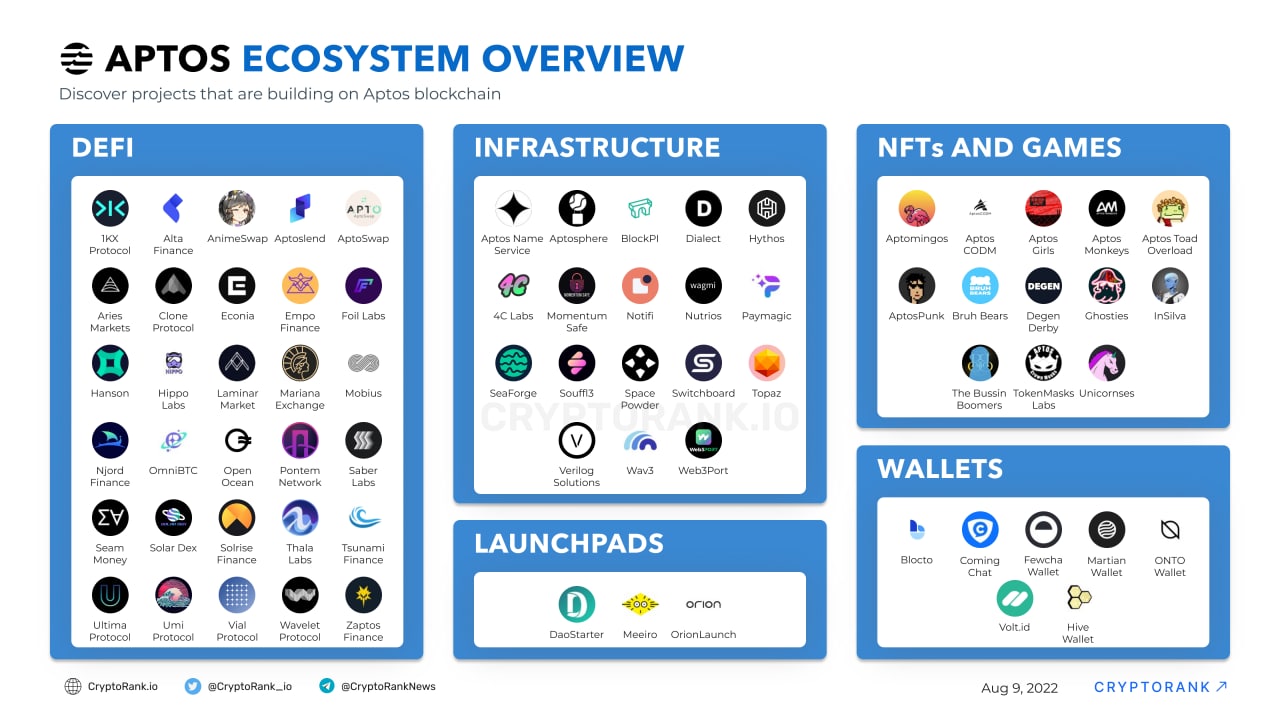
**The Aptos Ecosystem Overview**
**Final Thoughts**
As Aptos is launching this autumn of 2022, the project is very well prepared and well stocked for the project completion and eventually their launching. They already have a project runway of 350 million from investors like FTX Ventures, a16z, Jump Crypto, and Multicoin Capital that would eventually be put to good use in their foundation for further funding the development of the blockchain ecosystem.
The Aptos Labs have the credibility to deliver while having two great minds at the helm to guide and stir the project developments to fruition and finally be among the top 10 of layer one blockchain in the Crypto Community and web3 in general.
Grape Finance=Financial Freedom
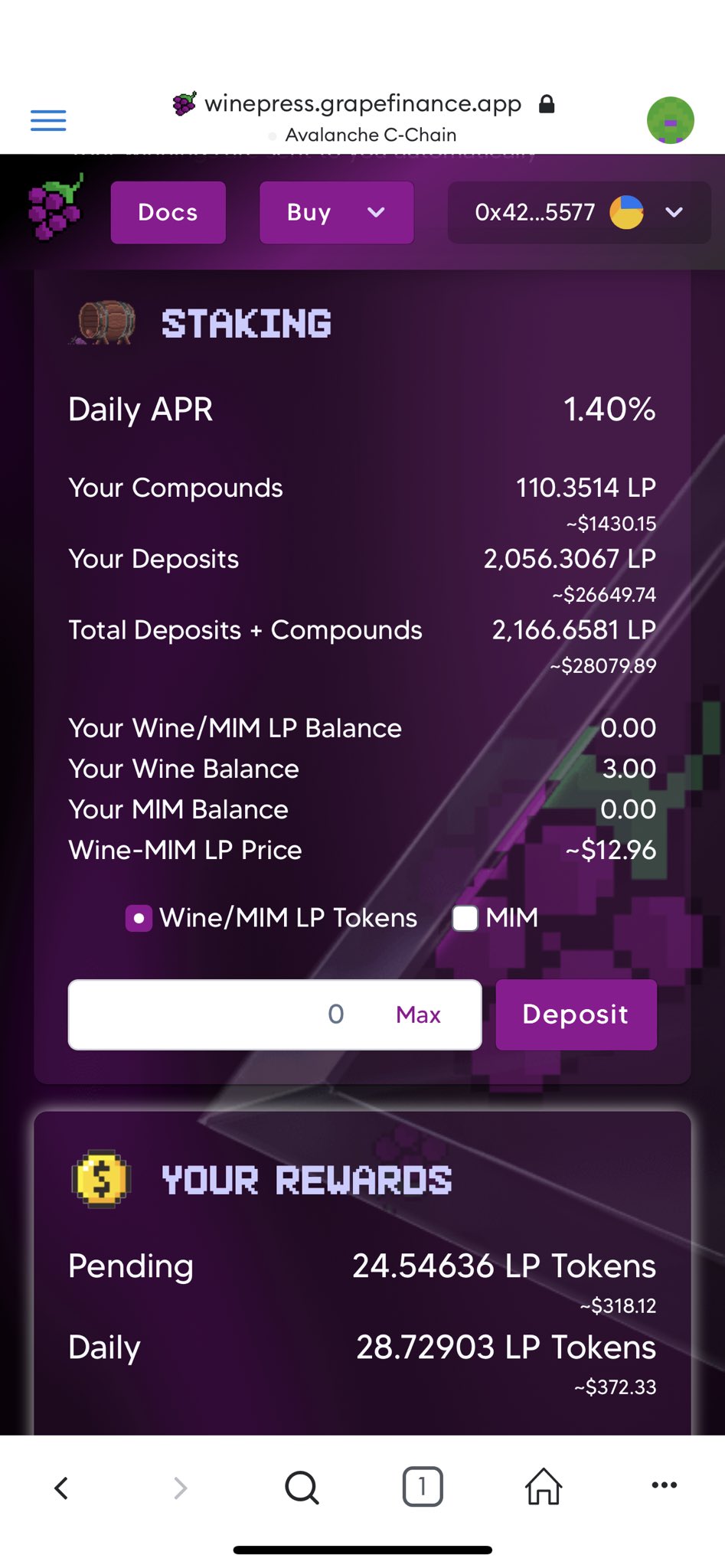
Nice day my Crypto frenz, aching to find another Defi protocol that rewards you some juicy dividends to survive this bearish time. I am here to give you an alpha to ape in and I already ape in their protocol for the reward of their native LP tokens. The name of the protocol is Grape finance in Avalanche Chain.
**What is Grape Finance**
Grape Finance is an algorithmic stable coin protocol pegged 1:1 to MIM on Avalanche. Much like Basis Cash, our protocol uses three tokens (GRAPE, WINE, GBOND) to incentivize a stable 1:1 peg to MIM.
**Why choose Grape Finance from other algorithmic protocols?**
As the Grape team had said that they are big fans of Basis Cash when they came out last year. Many of the current forks are focusing their efforts on pegging to their respective L1 tokens, aiming to increase liquidity of the native token.
While an admirable and achievable goal, we want to return to the original intentions of the likes of Basis et al by pegging to a stable coin. With major increases in Defi TVLs, smart contract abilities and L1 chains over the last year we feel helping to increase the liquidity of stables is now important more than ever especially if we want to bring more of the regular world into crypto. MIM being the decentralized stable coin of choice on Avalanche seemed like the perfect match.
With our protocol we hope to bolster MIM's liquidity on Avalanche, offer a pegged MIM substitute for lending/collateralization and offer this cross chain as well, essentially becoming our own algorithmic stable coin. Pegging to MIM instead of AVAX makes cross chain activities and collateralization more flexible, easier to manage and has a wider potential audience than a L1 specific peg as we can effectively act like a stable coin. One major advantage of not being collateralized like MIM is that you don't have to lock up capital in order to create GRAPE, the downside of which is that the value of GRAPE will fluctuate much greater than if it were collateralized.
**The Grape App**
There are nine grape dapp in the Grape Finance ecosystem that would surely reward a user in any app he picks. The first dapp is **Xgrape** where you can mint Xgrape in a value of 1 xGrape = 1.086 Magik LP where the price is at $1.555 and immediately deposit it in the Soda Press. The Soda press is where the magic happens where your Xgrape is deposited in the LP to gain some LP rewards. Next dapp is the **SEIGNIORAGE PROTOCOL** where you can see and interact on all the liquidity pools available that are linked to other Defi protocols that hold those LPs. Grape **Nodes** is the third Dapp where a user can purchase a certain Node that could give him a 1.5% daily reward while also node holders receive additional monthly airdrops. Next Dapp **Wine Press** where a user locks Wine-MIM LP and earns up to ~1.25% daily + bonus and also a feature where you can Assassinate players for more returns. Fifth Dapp in the ecosystem is **PEG HEALTH CAMPAIGN** where a user can Bond Grape, MIM, or Grape-MIM LP, and receive discounted Wine over a vesting period of 72 hours. Next in line is **Wine Maker (NFT Staking RPG)** It’s an RPG game where a user Vinters NFT is Stake, and can also equip & train them to become a Master Winemaker. Earn $Vintage and get up to ~1.5% daily. The last three Dapp are **Casino,Burn Games, NFTS and Rewards**. The Casino is where a user buys tickets with Grape and play games with a chance to win BIG! Burn games is alos a gaming platform where a player buys tickets with Grape to play a variety of classic & new arcade games. Top players earn prizes! Finally NFTS and Rewards can provide the NFT holders bonuses for and grant premier access to Grape Finance.
**How do the Grape finance calculate the APRs**
Vineyard APRs
Everyday in the Vineyard there are 110.810592 WINE released in total across all the pools (Not including the HSHARE-WINE LP pool, WINE for this pool is sent directly from the DAO's vested WINE). The total amount of WINE released per day cannot change and is hardcoded in the smart contract. What does and can change is the amount of WINE out of this ~110 that are distributed to each individual pool, this is known as the pool weighting and can be adjusted by the dev team in order to adjust pool APRs.
Pool APRs are determined by a number of factors including the current market price of WINE, the TVL of that pool and the amount of WINE that gets sent to that pool each day (weighting). If the price of WINE declines the APR will drop and likewise if the price of WINE increases so to will the APR, this is also the case if the TVL of the pool drops or increases.
Final Thoughts
In this bearish time we are experiencing in the crypto market, some Defi protocol projects had already closed shop or abandoned ship to try again later but a shining Defi project in AVAX have come and shows that a properly managed project can beat the bear. The Grape ecosystem is mostly a finished product and still updating to have better UI experienced for its user in Q2 on their roadmap.
Q1
- Grape & Wine Airdrop for dedicated supporters ✅
- Renounce ownership of Grape contract ✅
- Start marketing blast & influencer partnerships ✅
- Grape staking for Wine rewards ✅
- More autocompounder providers ✅
- Implement Zap contract for LPs ✅
- Strategy guides implemented on site ✅
- User help guides in docs ✅
- Start weekly Grape burns from the DAO ✅
- Wine governance voting through snapshot ✅
- Integrate weekly Wine raffle on site ✅
- NFT drop for LPs & WINE hodlers providing exclusive access to new developments ✅
- Launchpad & partnerships with projects to give exclusive benefits for WINE holders ✅
- Grape & Wine nodes (bonus feature) ✅
Q2
- UI/UX website revamp (ongoing)✅
- Chainlink integrations ✅
- Implement bonding to secure protocol owned liquidity ✅
- LP nodes (bonus feature) ✅
- NFT based p2e game & staking ✅
Q3
- Implement cross chain Grape liquidity
- Lending & borrowing platform including Grape & Wine as collateral
- Auto repaying loans using yielding strategies
- Leveraged positions
- Partner with projects in the ecosystem to improve token utilization (ongoing)✅
Q4
- Dedicated mobile app for Grape Finance
- Partner with crypto payment gateways to accept Grape
- Partner with card provider
- Card payments using credit from collateral provided
- Payment rewards & cashback system
In the end it's all about the dividends rewards where a good fren of mine tweets his passive income of 690$ from the wine press liquidity pool a good thing or a very good strat in this bear time.
**https://grapefinance.app/**
https://twitter.com/nelsoncryptoman
Partisia Blockchain
**Partisia Blockchain - solving the Blockchain Trilemma**
The lack of confidentiality and privacy on blockchains is obvious, potentially hampering the uptake and use. While initial attempts to address this weakness have been made, the Partisia Blockchain took it one step further and provides a complete platform for orchestrating and offering Zero-Knowledge (ZK) computations on-chain, off-chain, and inter-chain (across blockchains). ZK computation adds privacy and confidentiality to blockchains in a decentralized fashion with no single point of trust. There is a great differentiator in the Zero Knowledge.
The Partisia Blockchain approach focuses on interoperability while facilitating both privacy and transactions across chains. It is a public permissioned blockchain that functions as a transparent and structured platform for ZK computation and as a vehicle for organizing accredited trustees to further strengthen the blockchain ecosystem. The team behind Partisia Blockchain represents world-leading cryptographers and pioneers within the commercial use of ZK computations.
**Key highlights**
**Partisia Blockchain**
Partisia Blockchain is an advanced layer 1 blockchain which delivers industry leading technology that solves the blockchain trilemma, by using advanced MPC cryptography to bring privacy to public blockchains, scalability via built in sharding at both the protocol and smart contract layer, and the industry’s most secure interoperable token and data bridge using proprietary MPC threshold key signature management.
**Privacy on Blockchain - Partisia’s Zero Knowledge Computation**
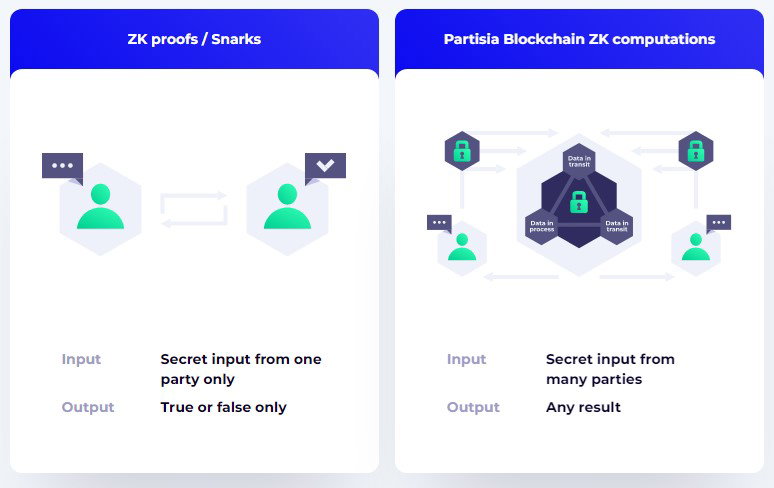
The term Zero-Knowledge Proof is commonly used in the blockchain industry when discussing a shared secret between two parties. This major advancement brought us privacy coins, private asset swaps, and other secret exchange capabilities powered by blockchain. However, these zero-knowledge proofs are limited to two parties. Partisia Blockchain delivers ZK Computation, and for the first time, the industry will be able to share secrets on the blockchain between multiple parties, even hundreds, or thousands of parties. This is a major advancement in zero knowledge technology and unlocks hundreds of use cases such as private supply chain management, private healthcare networks, decentralized data exchanges, ad-targeting, social networks, and more all powered by Partisia Blockchain. Our smart contracts can also be both public or private - an industry first.
**Most Secure Interoperability - Collateralized Token Bridge and MPC**
A key part of the interoperability offered by the Partisia Blockchain is the orchestration of inter-chain transactions that make payments independent of the coins used (BYOC). The key component of this solution is a privacy-preserving oracle used to orchestrate a transaction across different blockchains and coins. Using our state of the art MPC threshold key signature schemes, the bridges are powered by a decentralized network of node operators. Moreover, the nodes powering these bridges use MPC tokens as staked collateral, which is used to refund users in the event a rogue node operator attempts to corrupt or disrupt network activity. With Partisia Blockchain, bridging technology comes with extra security in the form of collateral posted by those powering the network; another industry first.
**Sharding: Scalability and Speed**
Partisia Blockchain solves the scalability issues plaguing blockchains by delivering sharding at the protocol and smart contract layers. Sharding allows transactions to occur in parallel. In times of increased network activity–unlike its rivals–Partisia Blockchain doesn’t get backlogged by pending transactions. Instead, we finalize them in less than one second across shards. This makes Partisia Blockchain one of the fastest blockchains in the world.
**Our solution to market limitations**
Advancing the top blockchain ecosystems with MultiParty Computations (MPC) and blockchain technology.
**Data Privacy**
$200B Market
*Problem*
The current information giants consolidate control
Lack of privacy limits bargaining power
*Our solution*
Privacy on all platforms
Foundation for a new data economy
Generic public and private computations
**Interoperability**
$50B Token Economy
*Problem*
Costly transfer of values and data
Insecure solutions and single points of failures
*Our solution*
Token bridges
Data bridges
Data oracles
Scalable, decentralized, and robust MPC on any encrypted data
**Scalability**
$1.5T Token Economy
*Problem*
Unscalable: Slow 3 transactions per second
Unscalable DeFi, $50+ transactions
Slow settlement
*Our solution*
Fastest consensus and finalization layer 1 protocol
Secure layer 2 interoperability
More secure and decentralized than lightning network
**Partisia Blockchain technology**
Partisia Blockchain builds more secure digital infrastructure by merging blockchains and ZK computations in a collaborative fashion. By focusing on privacy and interoperability, the Partisia Blockchain project will initially focus on the following three goals:
*Orchestrating ZK computations as transparent, efficient and simple as possible*
*Offering blockchain agnostic ZK computations*
*Offering privacy-preserving and auditable coin agnostic payments*
In this section, we provide an introduction to Partisia Blockchain and discuss some fundamental problems that need to be solved and the basic components involved in the Partisia Blockchain solution.
**Secure Multiparty Computation**
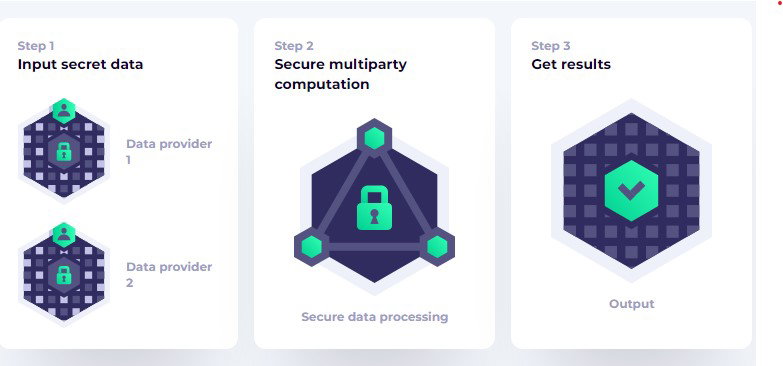
Secure Multiparty Computation (MPC) is a technology that allows a number of servers to jointly compute any function without learning the inputs to the function. It provides a high degree of security, simple administration and consequently efficient deployment of solutions needed for confidential handling of data.
**Partisia Blockchain target usage**
Advertisement- Personal and Private advertisement solution
Internet Search-Personal and Private Internet Search solution
Reuse credentials and KYC- Personal private credentials that can use in multiple Dapp KYC
Whistleblower- Confidential whistleblower solutions
Matching Market- Foundation for future matching market
Demand Response- Confidential pooling of demand response on electricity market
Gaming- Confidential and random draws
DNA Sequencing- Confidential DNA sequencing
Healthcare- Personal and Private healthcare solutions
Cross chain Defi- Operating defi across chains
BTC Swapping- Moving and using BTC across chains
High end Auctions- High end auctions for NFTS and more
**Partisia Blockchain token economics**
MPC is the capped supply native token of the Partisia Blockchain platform. Participants are incentivized to become full block-producers and validators by staking MPC. Fees for all sorts of operations on the network are paid out in liquid coins, such as Ethereum or BTC, which are brought to Partisia Blockchain via the collateralized token bridge. To view the full set of token dynamics and economics details, visit the Token Whitepaper link on our partisiablockchain.com homepage.
Quick facts
The MPC native token has a hard cap. The total cap, commonly known as the maximum cap, is set at 1 Billion tokens.
Staking process and node types
It is very simple to stake MPC tokens, using the Partisia Wallet, and there are three types of node operators:
Baker node
Minimum stake 25k MPC tokens
ZK node
Minimum stake 100k MPC tokens
BYOC cross-chain node
Minimum stake 250k MPC collateral to the bridge
**Staking rewards for node operators**
Staking rewards have been implemented for node operators during the bootstrapping of the mainnet, to ensure a 12% APR on staked MPC amounts up to 500,000 MPC tokens.
**Final Thoughts**
The Patricia Blockchain offered a product that is short of commodity in Crypto Space, a private blockchain that has too many usage and advantages for its client thus in medical or just plain private peer to peer transactions. They still have a presale round for their token this coming October and December. So let's dive in and support the project for it would surely gonna be the big next blockchain.
Introducing dAMM Finance
Introducing dAMM Finance
Hello there crypto frenz, I am here again to share a latest crypto lending platform that could give you a real yield on all your crypto assets if I can convince you to invest in their platform to become one of their lenders. The project just hit Etheruim mainnet last week September 22, and dAMM would blow all existing lending platforms on the market today.
**What is dAMM**
*dAMM is an uncollateralized lending platform for any token with algorithmically determined interest rates. Any token with a liquidity pool on dAMM, market makers and investors can borrow on dAMM to provide liquidity and trade across all centralized and decentralized trading venues.*
*Token suppliers and market makers interact directly with the dAMM protocol to both supply and borrow token liquidity without exorbitant fees, strenuous onboarding procedures and bilateral deal negotiation. Liquidity pools are unique to each token asset and entirely transparent/publicly accessible via their respective blockchains.*
**Why choice dAMM**
For years now all mainstream lending platforms only lend stable coins, and dAMM would address that constraints for the platform would put some atlcoins available to be borrowed by a lender. At the time of dAMM release they had 25 available coins listed and planned to hit a target of 200 coins in its first year of operation.
As a bonus you can access dAMM platform on all EVM-compatible chains, like Avalanche, BSC, Arbitrum, and my favorite chain the Polygon.
Another constraint on a mainstream lending platform that dAMM would try to address is risk mitigation, one that dAMM would resolve by only lending to market neutral market makers. As one of the core dAMM core member had said *“For the last five years in crypto, there hasn’t been a single market maker default on a public platform or an institutional lending platform,” “The only defaults were people that were lending to directional trading firms like Three Arrows Capital.”*
To protect and provide transparency to dAMM lenders that they would know the platform client is that the platform client addresses would be labeled and go through a solid know-your-customer (KYC) and know-your-business (KYB) checks. Baker also provided some details on how the platform would provide transparency and insights to it’s lender *“We're going to start out publishing all the addresses of every market banker that borrows on our docs,” “You'll be able to see every single transaction they make, every single loan they take, where they're moving all of your assets. You can see in every pool exactly who your borrowers are, who your counterparty is.”*
*That provides lenders with insight into what strategies market makers are pursuing; whether they’re moving funds to exchanges, performing yield farming or centralized to decentralized arbitrage strategies. Users can also see how much market makers are allowed to borrow, enabling them to gauge the risk level that the dAMM Foundation and pool delegates are prepared to accept for each borrower.*
Here's a future plan that the platform would provide to its lender’s to have a leverage on their asset management, the platform would provide a risk management tool that would provide how much percentage of their loans will go to undercollateralized versus overcollateralized lending. The tool would be a huge advantage to a lender that you can actually choose your risk parameter to your liking to better manage your crypto asset.
**My Final Thoughts on dAMM**
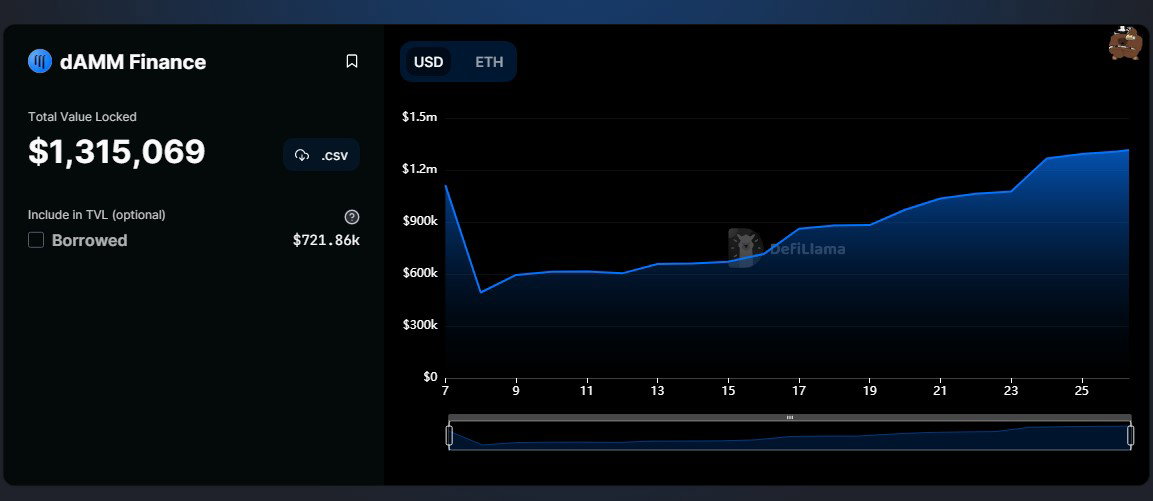
This newly released lending platform dAMM Finance would eventually become a trailblazer in crypto lending for it already has $1.315M in liquidity to their on-chain transparent lending platform. Volumes are expected to continue to grow substantially with the introduction of the liquidity mining incentives that would give a lender a sustainable real yield of over 10% on more than 20 available token pools.
They have put the entire Defi community abuzz even in this bearish market time where they also plan to aggressively compete against established lending platforms like AAVE and Compound, where lenders currently have to endure lower rates than US treasury bills. They aim to give lenders a community-owned platform capable of providing competitive yields and continuous innovation.
So.. Did I convince you, my fren? If not and you need more info about dAMM Finance, Why don't you check them out here:
Website: https://damm.finance/
Twitter: https://twitter.com/dammfinance
Discord: https://discord.gg/rqNSecx7pk
Medium: https://medium.com/@dammfinance
GitBook: https://damm-finance.gitbook.io/damm-finance/0onmhbd8IPAoHstKw9eg/
Token Issuer Application: https://damm.finance/issuers
Borrower Application: https://damm.finance/borrowers
DeFi Llama: https://defillama.com/protocol/damm-finance
What is Guild Saga?
**Guild Saga**
Guild Saga is a play-to-earn fantasy RPG on the Solana blockchain, featuring tile-based strategy combat inspired by Final Fantasy Tactics/Tactics Ogre.
In **Story Mode**, you’ll explore a vast world with a thrilling storyline and other RPG makings (side quests, dungeons, mobs, etc.) On each playthrough, you may import a **Hero NFT** to jumpstart your stats and boost $GGLD (in-game currency) earnings. *Note that the game is still playable without a Hero NFT, but you’ll earn $GGLD at a slower pace.*
There’s also **World Mode**, which allows you spend $GGLD on loot, send Hero NFTs on quests for loot, hoard your $GGLD in the bank, and more.
You also get very own **Keep,** which earns $GGLD passively. The upgrades go deep: from kitchens and dungeons to a library and stables (where you can rear livestock and cook them in the aforementioned kitchens if it pleases you).
**Guild Saga Team Philosophy**
At a foundational level, and both practically and principally, we believe in game first; P2E second. That means that the core focus of Guild Saga is making a fun, balanced, lengthy and carefully designed RPG that utilizes the Solana blockchain, NFTs, and play-to-earn mechanics as a primary supporting feature to enhance player experience--not as a crutch.
At the same time, we believe it is important for any blockchain game to provide both active and passive playing and earning potential. While those who play actively (and participate in passive earning strategies) will maximize their experience and earning, it is also possible to use your Guild Saga NFTs in more passive ways, such as in the World Mode staking quests
or through the NFT rental system.
Our team is made up of developers, gamers and RPG fans who are also NFT enthusiasts and SOL holders. We hope we can present an attractive value proposition for the Solana community while providing all gamers with an outstanding free-to-play offering that onboards those from the mainstream gaming demographic into the Solana ecosystem.
**Guild Saga Tokenomics**
$GGLD is the primary token by which in-game play is rewarded. $GGLD can be earned in game through: 1.
The **single player story**, where players explore a vast open world, complete quests, solve challenging puzzles, and defeat dangerous monsters. https://word-edit.officeapps.live.com/game/gameplay#story-mode
A **gauntlet-style arena mode** in which players compete against progressively more difficult AI opponents. https://word-edit.officeapps.live.com/game/gameplay#single-player-arena-mode
The online **player-versus-player mode**, where players progress through a ranked ladder, with rewards increasing in step with rank progression. https://word-edit.officeapps.live.com/game/gameplay#player-versus-player-mode
Passively from the operation of a player's **Keep**. https://word-edit.officeapps.live.com/game/keeps
**World Mode** $GGLD can be earned passively outside of gameplay, in **World Mode**, through: 1.**Hero NFT Quests** 2.**Mercenary NFT Quests** 3.**$GGLD Staking** https://word-edit.officeapps.live.com/ggld/world-mode https://word-edit.officeapps.live.com/ggld/world-mode/the-heroes-guild https://word-edit.officeapps.live.com/ggld/world-mode/catacombs https://word-edit.officeapps.live.com/ggld/world-mode/the-royal-bank
**$GGLD Utility**
Gameplay
$GGLD has all the functions of a typical RPG currency and can be used to:
Purchase equipment, consumables, keys, and other items
Learn **Skills** https://word-edit.officeapps.live.com/game/skills
Level up
Craft equipment
Open a **Keep** https://word-edit.officeapps.live.com/game/keeps
Create a **Guild** https://word-edit.officeapps.live.com/game/guilds
World Mode
In World Mode, $GGLD can be used to:
Stake at the **Royal Bank** https://word-edit.officeapps.live.com/ggld/world-mode/the-royal-bank
To summon Mercenary NFTs (also requires **$GGEM**) https://word-edit.officeapps.live.com/ggld/usdggem
Purchase items at the **Town Square** https://word-edit.officeapps.live.com/ggld/world-mode/town-square
Governance
In addition to the various in-game uses provided above, $GGLD holders will be able to vote on:
Additional game content/DLC
Game feature proposals
Balancing/mechanic proposals
PVP season rewards
A portion of ecosystem fund allocation
$GGLD will have a fixed supply of 1,000,000,000 tokens, allocated as follows:
Private sale/investors: 15%
Public sale: 3%
Team: 20%
Treasury: 20%
Ecosystem (P2E emissions & staking rewards): 41%
Liquidity: 1%
Guild Saga Community
Guild Saga community is very active in there discord channel **https://discord.com/invite/guildsaga** where some devoted Sage’s or GS Mod’s is alway’s present to entertain burning questions from newcomer’s or just a random query from the community member. As a support from the GS Team they always have a bi-weekly AMA and some community contest always running for the community engagement also they sometime’s held a shopping stream on there YT channel where they analyze a hero on sale and bought it when it value for money and later after the stream give it to the community via giveaways or contest.
As for building a strong core GS community the Team have achieved it for the 10,000 NFT Heroes minted on last February right now the listed on sale NFT Heroes is below 5% that’s what Guild Saga community is “strong holders and believers” of the project being built.
Conclusion
Guild Saga RPG Game have a lot of potential when they would eventually release their main net this coming Q4 or early Q1 next year. The gameplay is outstanding that it would give Nostalgia to a player when he would go on an adventure in openworld gaming of Guild Saga. and it will eventually attract old school Rpg gamer fans from the Final Fantasy series or Tactics Ogre.
The Guild Saga Team is privately doxxed on their investor and maybe planning to doxxed themself on the future but even the team is anon they still deliver on their promise of Hero NFT Staking released mode to give the holder of the NFT a passive income and the Alpha game release.
In the aspect of the team delivering the Alpha game titled the “Tale of Respite Game Demo” is just a few days/weeks from being released and being tested right now as of the time of writing.
Guild Saga also have two gameplay stream that is the evidence that GS have a game that is only being polished for some final refinement **https://www.youtube.com/c/GuildSaga**
Final I Believe on Guild Saga that it would eventually deliver a mind-blowing openworld RPG even in this trying time.
Reference:
**https://www.guildsaga.com/**
https://docs.guildsaga.com/
Guild Saga World
**Introduction to Guild Saga Cities**
**Tier Otho**
Teir Otho, The city of the Sovereign Wizards, for every newcomer that visits the city would be amazed by the grandeur of architecture on which the city was built. There would be no argument that Tier Otho is the most beautiful city in Virlands for all the city structure should follow a gothic design plan by the city councils to be in-line to their tier type city plan. Everywhere you look is an art from the signpost to the street lamp that has been intricately designed. Strolling or riding a couch at night time in Tier Otho famous Moonlit Street that ends at Grand Diwata Tower is an attraction that every man or woman in Virlands want to experience in their lifetime.
**Notable Structure:**
**Grand Diwata Citadel**
It's the largest and majestic structure in the city, also the main office of the “Council of Five”. The citadel top is where the four council members conjure some of their protective spell if the city is being stormed by an enemy army.
**Evarite Wall**
The wall has been built around the entire city to repel any enemy attacking forces. Built upon the aftermath of the Founder’s war where many wizards have lost their lives against the Mazan Imperial Army. The wall now has been guarded by a special faction of wizards that masters the art of Geomancy.
**Basilica de Kratz**
Named after the deeply religious founding father of the city “Kratz Otho IV”. The grandest of all churches in the city, for in the founding days of the city Kratz devoted his magic and crafts to serve his religion “Crusade of Light”. Nowadays “The servant of Jupiter” still holds a significant voice on how the city is governed for they are a great supporter of “The Council of Five”
**Council's Arena**
This is where the Vale of Trials take place. The arena is being controlled by a powerful sorcery that generates a new battlefield for each fight that all worthy competitors must overcome before the final two remaining warriors battle each other for the title “The conqueror of the Vale”.
**Tier Otho Wizardry Structure**
**The Council of Five**
They are made up of 3 Legendary wizards and 2 grand wizards. One grand wizard serves as the leader of the council and only thrice in the history of the city has the Lead Grand Wizard last name is not an Otho . The other Grand Wizard is called “The Fifth” ; he would always oppose what the other 4 members of the council voted on. He would act on his own to counterbalance what the council would do.
**Wistlepickle Department**
It is the high court of law and legislative department of the city. The trial is to be presided by a judge and the 4 council members. A court scribe is also present to record the proceedings of the trial while the room is sealed by magic spell. When found guilty an accused would be then handed over to the Guard Mage.
**Guard Mage**
Organization of wizard that swear to serve and protect every Othoians while enforcing the magical laws of Wistlepickle, and ensure the safety, health and possessions of citizens, and to prevent crime and civil disorder within Tier Otho. They are mostly loyal to their Guard Commander where they all need to kneel before the commander burning image in the headquarters before logging in for duty.
**Notable Persons in Tier Otho**
**Lucilfer Otho**
The current Head of the renowned “The Council of Five”. Growing up Lucilfer had everything in life, Elite status family and high level talent on Pyromancy even in his tender age. The path is already laid to Lucilfer that he would someday conquer Zeek’s Maze like all most of the Otho’s before him have done in excellent manner. Groom in the most wizarding school (Leorio School of Craft) in the city with the highest honor in his class. An incident in his teenage years that happened to their family that has left a big question on Lucilfer's real intentions in life. A portal user wizard has kidnapped her little sister and to the anguish of his father, it drove his father to self isolation on trying to investigate and discover the portal spell that has been used and the user behind it. Rumors say that the incident have halted the research of his father to a certain spell that can open a portal that can bring the god of destruction “Laon” to Aarde.
The first group of wizards to try to open the portal for Laon is Lucilfer's great grandfather Briz Otho and his three council members only to be thwarted by the fifth wizard of that time. The fifth wizard used the forbidden “Abyss Pressure Seal '' where after the last word of the technique the room or targets were all immediately barred of oxygen and being ripped into atoms in a second.
Thus Lucilfer is a threat to all of humanity or he just another Otho that would follow the changing of tides on Virlands.
**Fifth** **Wizard**
Yuri Black is the setting Fifth Wizard right now in the Council of Five, He is also the current leader of the “Base” an intel and covert ops wizard organization capable of assasination just to protect Tier Otho at any cost they see fit. They are the shadowy alter ego of the Great Guard Mage for they would kill an individual without any proper investigation and their action sometimes does not reflect the will of the 4 council and they just account all their action to Yuri.
A hydromancer practitioner, Yuri is a special kind of wizard for he is the only wizard to complete the seven forms of hydromancy and the final installation of blood hydromancy. He can extract water even in impossible circumstances to enable all his hydromancy spells. To become a Fifth Wizard you should master the banned “Abyss Pressure Seal '' for this the final spell that can stop any attempt to open the portal for the Lord of Destruction Laon.
**Commanding General of Guard Mage**
Current Commanding General is Gunter “Lightning G” Sears. He is somewhat a controversial image in the City for he’s public speeches have always been received favorably by all his troops but not by the Council and other high rank wizards in the city.
For all the politicking involved in the city Gunter always stand tall to uphold the Wistlepickle laws in any way possible. That he is always behind on all his subordinate action on policing and implementation of all the laws of the city even some altercation against the Base wizards.
Lightning G is one of the three wizards in Tier Otho history to master the final installation of the Lightning Hurricane spell. For he's so fast because he relies on his mastery of aeromancy for he uses the air to his advantage to gain greater speed.
Finally Lightning G is the man that most of Tier Otho citizens trust that would protect them even in a great consequence.

Guild Saga World
Chapter 1
Introduction to Purehart Pirate Crew
One of the three tribe found on Andra
**Purehart Pirate**
As Leora Purehart and other crew members of the Mighty Nautilus found themselves abandoned by their Capt. Nemosa, they seek refuge in Phoenix's Gorge and build a camp near their aground ship. The crew first survive through pillaging nearby village’s and Orc settlement in the nearby west. Purehart Pirate crew finally found some notoriety at the Founder’s War (The Virlands Vs Elves) where they served under a brutal general of House Mazan named “Kaya The Impaler”. General Kaya has always been assured of putting the Purehart Pirate crew on the frontline for they can cause havoc on the battlefield for each of the pirate crew have a Blood Rage Stone Pendant that enables each Purehart Pirate to embark on extreme slashing for the craving of enemy’s blood.
After the Founder’s war Leora and her crew found some solace for they have been given the autonomy to govern “Respite Island” for House Mazan, a reward fitting for their achievement in the battlefield serving the renowned house.
**Notable Crew Member**
**Leora Purehart**
When a Purehart would be born rumor’s say that the siren’s would sing a song and the Goddess of the sea Aman Sinaya came out and blessed a Purehart child, for Leora was born only a handful of people know the true identity of the child. Her mother Amaley, a modest tavern servant in Respite Island, would work long hours to support her baby. Growing up Leora made many pirate friends inside the tavern for she poses Inspiration Skills that she uses in her favor.
One stormy day a group of people come to the tavern and have a small chat with Amaley,after the chat Amaley introduces Leora to Captain Nemosa telling Leora that he is the Great Captain on all the pirate stories that have been told to her. After that moment the Captain and Leora form a bond of friendship.
When the Nautilus come to Respite Island a young Leora would be excited to meet the famous Captain Nemosa to listen to new tales of adventure that the Captain has conquered. Years come fast Leora, now a 14 years old teenage girl, a 1st class navigator of her own right for she studies all the maps and books that captains have left to her.
Nautilus just dock after its two year journey on the port of Respite.Captain Nemosa immediately comes to the tavern and tells Amaley that Leora is now ready to carry out her lineage duties on becoming a “Purehart Pirate King”. For only a Purehart knows how to navigate towards the mysterious 100th island. A journey that has been taken by the Leora grandfather Emanuel ‘The first Pirate King” and completed just for only to disappear to unknown realms.
Leora now aboard the Nautilus where Capt. Nemonasa immediately put her in charge of navigation for their journey to the 100th island. After 3 years into the journey they finally set foot on the 100th island where Captain. Nemosa finally reached his dream of setting foot on the island. Venturing into the island is where Captain got to possessed the fabled precious's Demonic Arc only tale's spread that the Arc hold a true power that came from the Lord of Destruction himself "Laon", the crew also found unique stone of Blood Rage where they made a pendant to be shared to all the crew of Nautilus.
After their all conquering journey to the 100th island is when the Capt. Nemosa orders the crew to run the Nautilus aground at Phoenix's Gorge so that he can guard his most precious arc within the uncharted ruins of the west.
Capt. Nemosa left Leora in charge of his crew while he journeyed inside the jungle of the west with only 4 crew members on his side. Months have past and the Nautilus crew is now disarray on whether to follow their famous Captain inside the vast jungle or not. That's when Leora step up to order the remaining Nautilus crew to follow her for she is a Purehart a Pirate King by right.
Leora didn't disappoint her Purehart Pirate crew by now for she provided food and security to all of them. She even forms an alliance to a peculiar figure in House Mazan ranks namely General “Kaya The Impaler”. The Purehart Pirate crew fought beside the Mazan Imperial Army in the Founders War for they gained their notoriety in the battlefield.
Finally Leora Purehart potential is still unknown on what a Pirate King Lineage can do to it’s enemy. For now Leora is a Dual Wielding and the Rogue class pirate with inspire power and a Blood Rage Stone Pendant.
**Viper the Bard**
As a young boy Viper always loved to tell stories of great kingdoms far and beyond Mazan Territory. Born and raised in Virlands Territory in the great knowledge hub city of The Exsol Academy. As a commoner son Viper tried to secure basic education in the slums, but one day his faith changed when a famous poet Huseng took him under his tutelage. Viper now has a formal teacher that would develop his skills, after 10 years under Huseng apprenticeship Viper would embark on a new challenge, he would study in Timbuktu University to master his craft.
After his days in Timbuktu University, Viper loves to sing in a pub where he meets the Captain. of Nautilus Nemosa, Viper is so impressed by the Captain's tail that he would eventually join the Nautilus crew. Onboard Nautilus Viper, raised up in an immediate fashion for his knowledge in history, is a hard commodity in piracy.
Finally, don't be fooled by Viper 's slim, pretty structure for a guy. He is a Purehart Pirate Crew that always have the Blood Rage Stone Pendant that lust for enemy's blood. He can slash the gut out of his enemy’s while making a poetry out of the enemy's ancestral lineage.
**Moro the Stormbreaker**
Growing up as a girl in a Viking Chieftain court is hard for Moro for she has no interest in just being a lady of a court. Moro loved to practice in secret axemanship and tactical prowess of viking raiding. Living in Y'ternia is very demanding for any human thus for a girl.
Moro now all grown up and to be wed to Razaki (Chieftain main raider), Moro beg her father that she would prove her worth on raiding just not to be tied to Razaki. A year later Moro and her holumenn have raided more villages than all the raiders combined that serve Moro father.
Moro and her raider's best weapon is the stealthiness of the night. When fog comes into a village is when Moro and her crew are at their best. Raiding sleeping villages is a tactic that Moro invented and also adapted by the Chief raiders, for once she raided and looted the great Dwarven Kingdom of Caer Faun for all the history of the viking villages it is the greatest looted reward for a one night raid thus earning Moro the title of “Moro the Stormbreaker ''.
Sea's is an unforgiving terrain to navigate while Moro is now an acclaimed raider on her father's court a storm have hit Moro's party and left her adrift westward to Andra. It's been 3 days adrift in the open sea when Moro starts to feel weak and losing hope and suddenly a craft that she never seen before in her lifetime Nautilus emerges from the bottom of the sea and rescues the drifting viking woman.
For being grateful to be rescued by Nautilus while adrift, Moro swears her life to Captain Nemosa but still harbors a dream that someday she can go back to her home village to pay respect to her Chieftain father for a last time.
Moro is not a typical woman, she's a viking big and strong rumors spread that she can cut a man in half with just one swing of her ax. She also has the Blood Rage Stone Pendant and that's a double edge for Moro. Better run and be intimidated by this vicious viking woman named Moro the Stormbreaker.
 @Nemonasa