Passive income with TRX Staking
Today I am talking about the TRX staking that gives me a 10% annualized yield. Not so bad as a Return On the Investment, using a Decentralized Wallet.
You can do TRX staking in different ways, but the main two available paths are the Centralized way and the Decentralized way.
The Centralized way is eventually easier, and among this path I recall to you attention staking on Binance. Unfortunately I do not think that this path is the best for two simple reason. The first one, is that Staking is a way of validating the Blockchain and concentrating too much power into just only one validator intrinsically increases the chance of fraudulent use of the voting power to validate the Blockchain. TRX has 27 Delegates, that concentrates votes from voters. It’s like voting in America. Voters vote and for every Country, a number of Super-voter will be elected. The sum of the Super-voters will determine the final result and the winning coalition.
The secondo reason why I do not stake in a Centralized way is simply because staking sums are meant to be kept stalled for a quite long period and keeping (hodling) money for the long term does not fit the best solidity requirements on centralized platforms.
These both are the main reasons why I stake on Tronscan that is a native Blockchain Wallet on the Tron Blockchain.
Native means that even if Tronscan would close, I could still recover my funds from other native Tron Blockchain wallet.
The third reason (that is kind of a brag) is that I can choose my Delegate to carry my votes to the TRX voting systems.
Here is how you can do it.
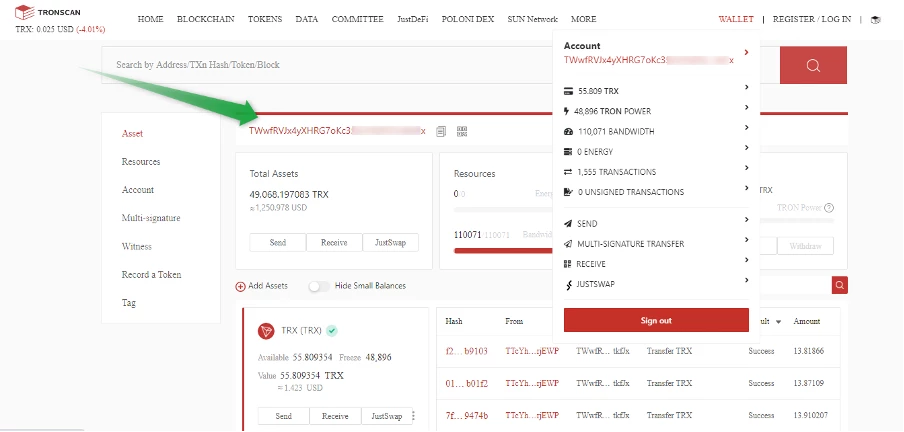
At first, you should send TRX to the TRX Wallet: in my case I usually send TRX to Tronscan.
The green arrow point at the address. The one in picture is mine. Registering on Tronscan.org you will find yours.
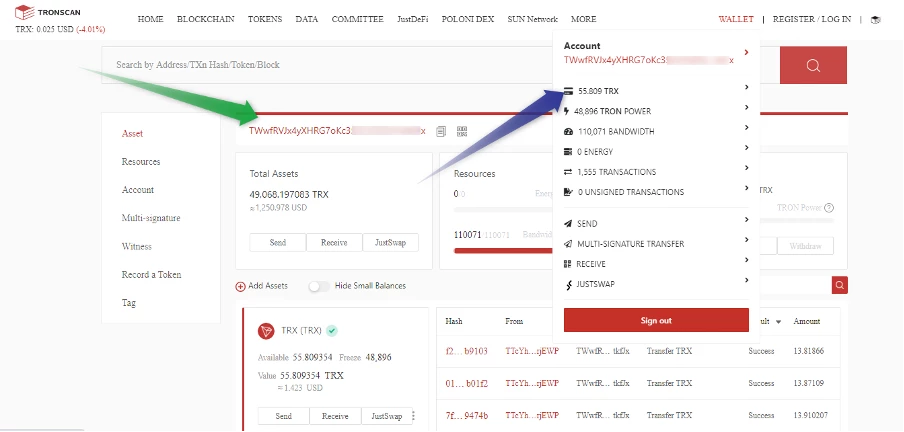
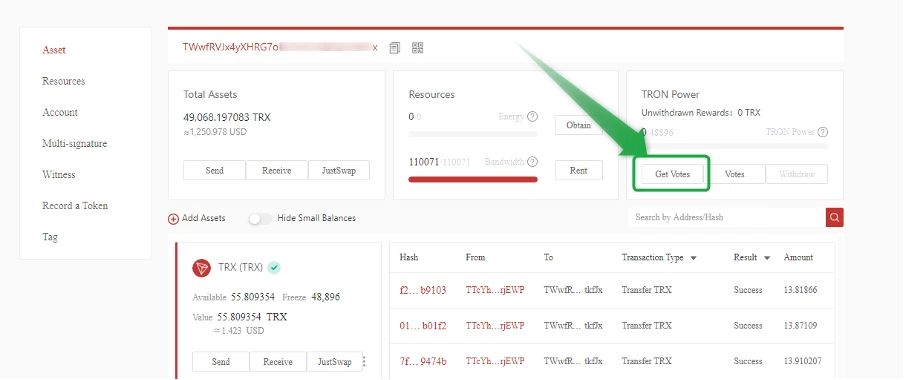
Blue arrow points now the number of free TRX I have, and I must freeze them at first to obtain Bandwidth or TRON Power. I usually get TRON Power and I click here (green arrow in the image below) on the “Get Votes” Button
Then this new menu appears
By clicking on MAX, all the TRX available balance will be counted here. Green arrow in the image below.
When your balance will be more than 0 (zero), and you check the “I confirm to freeze 0 TRX at least 72 hours”, the Freeze button will become available and you will click it. Blue arrow in the image below.
When you click, it will take about 1 minute for your TRX to be Frozen and converted in Votes.
Afterwards, go back to the home-page, point your cursor on “Committee” and then click on Votes (green arrow in the image below)
I have personally chosen the Delegate called CryptoGuyinZa because it pays up to 86% of the rewards and it has created a pool where the collective 3% of all voters is divided onto people that are holding TRX votes on his delegate node for at least 360 cycles (about three months).
I have done it and I can ensure that that 3% gives that right boost to increase one percentage point per year.
And you will find CryptoGuyinZa here
Having clicked “Voting”, you will see the slots for new votes already opened. Click on the “+” symbol to add the votes and click again on the voting button.
Job done. Everyday in the European evening you will find accredited new TRX on your Tronscan balance.
**To maximize profits I always try to purchase tokens in a bear market phase: when the market turns bullish, in addition to the staking token reward, I have an increase in price of the tokens themselves.**
Trader’s Stuff: The Bitcoin Sentiment
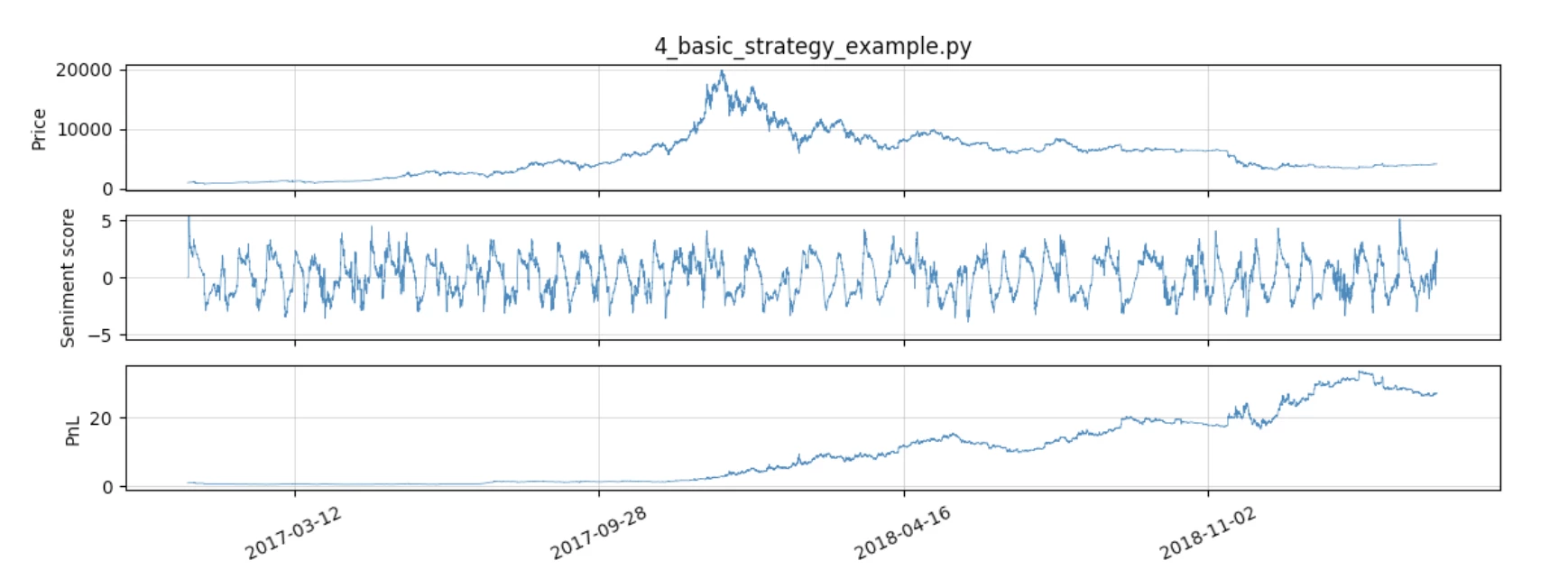
As I anticipated in this post, social networks can give us very important information at the level of fundamental analysis associated with that technique to complete interesting trading operations.
This variable is called Bitcoin Sentiment and is based on the various positive or negative news that are found on social networks and based on this information, parameters can be drawn up: a sort of indicators that represent how the mass is evaluating Bitcoin.
The teams that have parameterized this Sentiment are 3 and each one has defined his own.
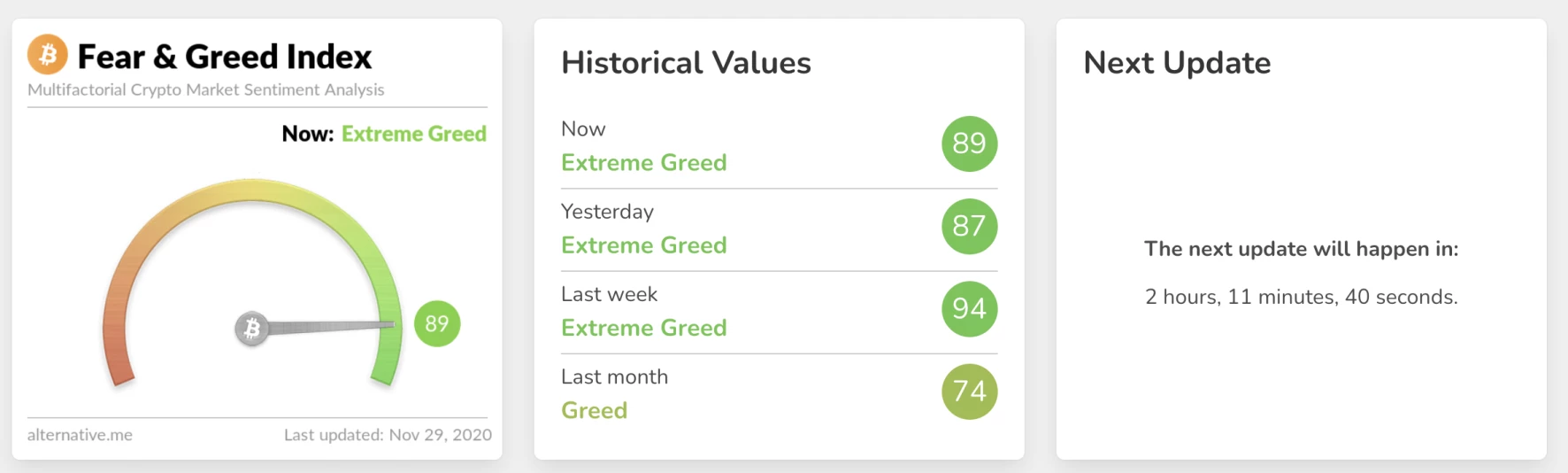
**1 - Crypto & Greed Index**
The team that created it is called Alternative.me and originated a solution not very different from the one used by CNN for the stock markets.
After all, even cryptocurrencies are part of a market!
The index shows whether investors are calm and therefore buy confident of an appreciation of BTC, or fearful and are more sales oriented.
The representation is that of a needle on a scale from 0 to 100, where low values indicate fear and high values, on the contrary, indicate safety.
In order to calculate the index, the algorithm uses: volatility, momentum together with market value, social media momentum and BTC domain.
The use follows the stochastic RSI: when the value is below 20 it is advisable to buy, when it reaches 80 it could be profitable to sell.
**2 - Bulls & Bears Index**
The Bulls & Bears index was created by Team Augmento and is an indicator based on conversations relating to BTC on the TWitter, Reddit and BitcoinTalk platforms
The index shows a value between 0 and 1, in order to be able to perform the calculation, the algorithm recognizes 93 different feelings and topics extrapolated from conversations.
For use, not having defined thresholds, it is necessary to check the trend and open a position when the index rises and then close it when it is falling.
**3 - Bitcoin Sentiment Index**
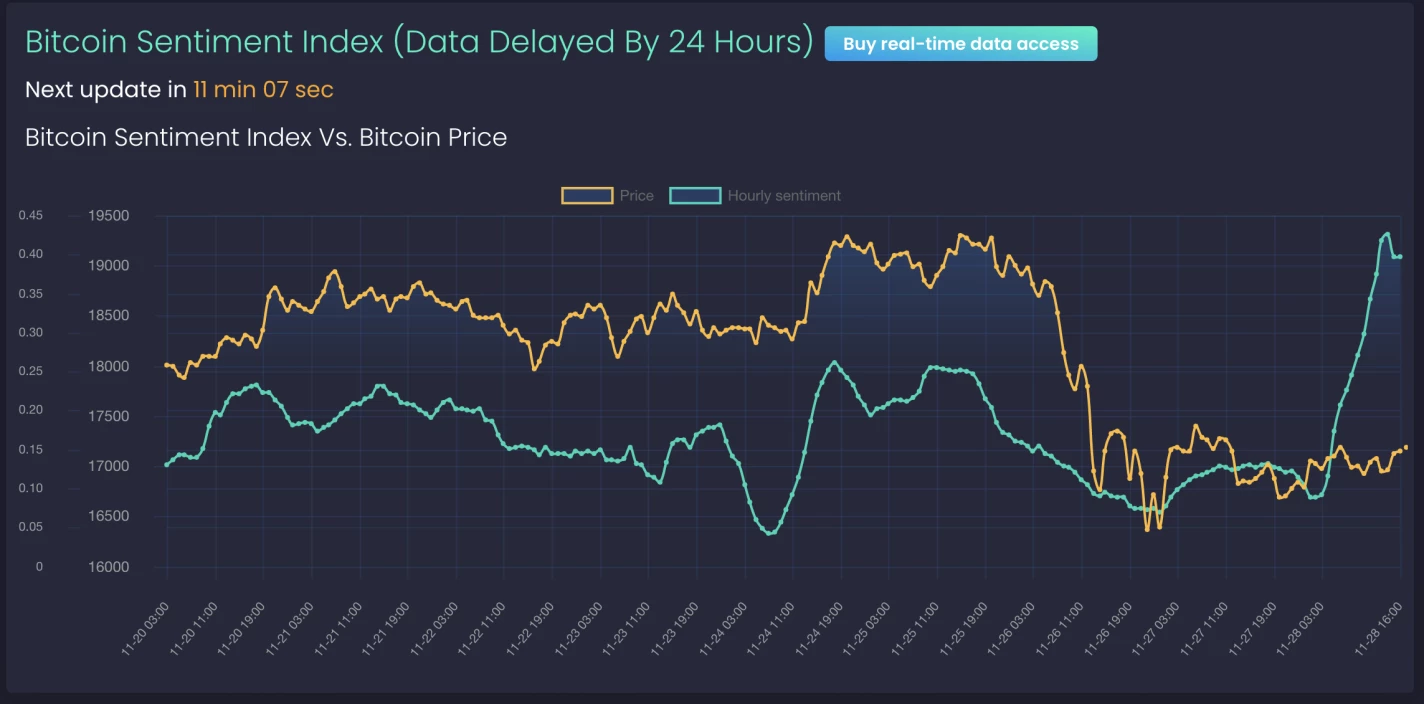
The Bitcoin Sentiment index was developed by Bitts Analytics and is also based on the feelings of investors extracted from conversations on social media.
The value of the indicator is calculated using machine learning solutions (a sort of AI) that analyze posts on social media.
Being variable, in this case the data are shown on a graph and make up a line: when the line rises it indicates that investors are inclined to buy and therefore bullish, on the contrary, if the line falls they are bearish.
As is logical and all traders know, this type of indicators (if they can be called that) are extremely empirical, despite being based on mathematical calculations.
This uncertainty is due to the type of data that is processed; therefore they cannot be considered sufficient to be able to execute a trading operation in a repeatable and profitable manner.
It is therefore necessary to combine this type of indicators with a good technical analysis in order to protect one's portfolio.
Knowledge is power!
Cryptographic "banks" vs. traditional banks
Take coinbase's registration data: it boasts a verified user base of over 56 million.
Bitcoin in February 2021 reached a market capitalization of $1072.21 billion, and forecasts indicate a likely direction of $1087.7 by 2026.
Objectively, the cryptocurrency market is continuing to grow inexorably; just to give you an idea, the CAGR (Compound Annual Growth Rate) predicts growth around 12% by 2024.
These numbers have caused many people to lose faith in legal tender.
The traditional banking system has served us for many years (millennia even!) but the technology that cryptocurrencies are based on will offer more stability, fairness and accountability.
**The Great Recession**
To understand some very important aspects of cryptocurrencies we need to go back in time: to 2007 when the Great Recession began.
The implosion of the subprime loans led to a domino effect in the financial environment for the simple fact that institutions provide liquidity and as collateral acquire credits.
This type of investment is extremely risky due to the problem that arises from defaults.
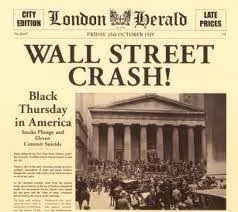
The repercussions of this have been catastrophic because people have realized that banks can also fail.
The example was the bankruptcy of Lehman Brothers: bankruptcy filings were initiated for an amount of 613 billion dollars.
**Astronomical figures!**
Let's be clear: after such an event, who would trust a bank with their savings?
**The change**
The way things were going, a change was necessary and that change could only exist in one way: operating without intermediaries, without banks in the middle.
The ability to be able to bypass banks was introduced by Team Nakamoto.
Bitcoin, with its blockchain is the solution to this question.
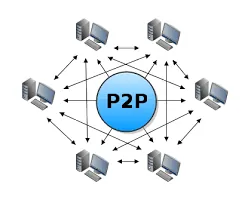
By being able to make Peer-to-peer transactions, banks, payment providers are no longer needed.
**None of this.**
Simply from my wallet (which is only mine) I send the money you asked me to your Wallet (which is only yours): no one in between!
This aspect, if we look at the numbers, appeals to many people: in 2013 Bitcoin had a value of about 50$, today we are around 39000$.
Practically a growth of 780 times!
Obviously the path has not been all linear, some falls have occurred, but if you look at the charts, the trend is up and in all ways there are more upward candles than downward ones.
As I said just above, traditional banks are losing ground to crypto "banks" because they are not customer-friendly.
**On the contrary.**
They have an almost vexatious attitude: in order to get a loan you need to have usually the double of the amount as collateral.
In some ways this is correct, but this requirement loses its meaning when, in a speculative manner, they commit money (not their own) without having tangible guarantees but only credits (with all the problems that follow).
In addition to this aspect, there are others, such as cross-border transactions: they are plagued by high interest rates!
All of this is subordinated by political entanglements that escape the understanding of the average person.
Team Nakamoto's enlightenment was to create a decentralized system that is resistant to censorship and, most importantly, free from the interference of any person or institution!
The traditional banking world is distorting the correct view of the movement of money; in fact the whole ecosystem is based on debt and not availability.
The only solution that institutions have to solve the problem of debt is nothing more than the injection of new liquidity without underlying with a consequent devaluation of the purchasing power of legal tender.
Cryptocurrencies do not have this problem; in fact they are inflation controlled since the supply is limited.
Once the last token has been minted or is exchanged, you cannot create others!
https://youtu.be/uGxkb_JT8bI
**Cryptographic "Banks"**
The reason why banks is in quotes is obvious: there are no crypto banks, only exchange platforms between fiat currency and the various existing cryptocurrencies.
Transactions happen independently between the parties and are all recorded on the blockchain.
To be able to transfer any token, all you need is a wallet and the address of the recipient wallet.
With the advent of DeFi, platforms have evolved to the point where they can offer the ability to make credit.
This form of credit, however, can exist only and exclusively against a guarantee that is fully paid: in this way it is impossible that the debt is not paid for insolvency!
The sum of all these features is inexorably overshadowing the traditional banks.
**I see a very bright future for cryptocurrencies, don't you?**
What are the origins of Seigniorage?
To arrive at an answer to this question we must first take a step back in history.
**Do you remember when at school they talked to you about bartering?**
Well, at a certain point, however, we preferred to start using other things such as tea, shells, salt, so much that even today we talk about salary. These were all divisible and non-perishable goods, called "commodity money". Then precious metals such as **gold**, **silver** and **copper** take first place as a method of exchange. In particular **gold**, which begins to become popular at the beginning of civilization, a period that goes roughly between the fifth and fourth millennium BC. At the time we find nothing less than the visualizations of Egyptians and Sumerians.
Historians cannot explain how these civilizations, apparently born out of nowhere, manage to develop advanced technologies to extract gold and process it since it must be melted at around 1000°C. After all, only today can we have the technologies to use it in various industries, from luxury to electronics.
**So, they went through all that effort to extract it and work it just to have it as an ornament?**
If we read the Egyptian hieroglyphics and some Sumerian texts, it is said that gold was used by these "Gods", understood as gods in flesh and blood who came down from heaven, and taught to these ancient different things such as mathematics, astronomy, how to cultivate plants up to how to extract gold and it is clear that these "Gods" had a particular interest in this gold.
From that moment, gold also began to be used as the main method of exchange along with silver. Not surprisingly, even today, these two metals are considered the main precious metals for investment and reserve value.
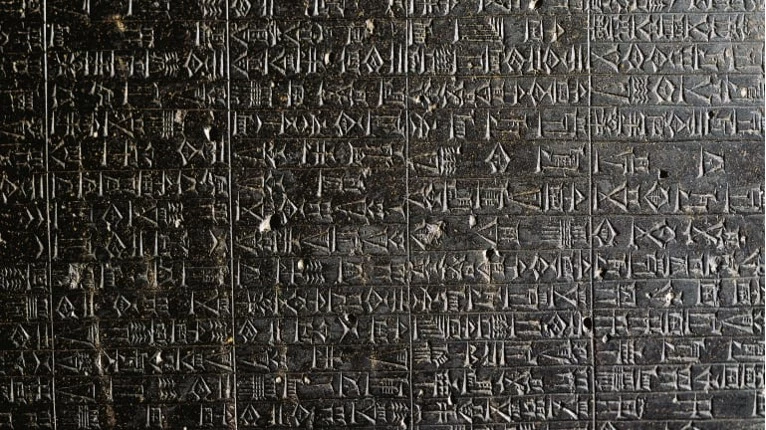
We can find one of the first historical references on money with the **“Code of Hammurabi”**. You will probably remember from school days that we were taught to make a crucial point in history since the birth of writing. One of the first writings we have is this Code of Hammurabi, **the first legislative code in history given to the sovereign Hammurabi by an Anunnaki**. With the term Anunnaki, the Sumerians, indicated these "Gods" descended from heaven (An = Heaven, Ki = Earth "those from heaven descended to Earth"). In these early Sumerian tablets we already find several topics. They talk about money, interest, payments and all these things that these "Gods" of the sky have taught us because before, these civilizations, did not know these subjects. But this is not an article dedicated to **paleoastronautics**, so I don't want to dwell on this topic.
Image source: https://www.history.com/topics/ancient-history/hammurabi
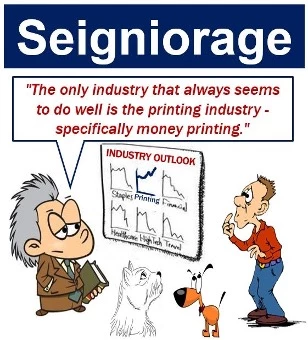
Returning to our dear and beloved gold, we began to divide it into equal parts through the coins which, as you will remember, **minted by the sovereign who stamped his face on it** and, in exchange for this coin print, he took a small part of gold. He basically gave you a coin with face value 1 but there wasn't actually 1g of gold because he was taking, for example, 0.1g of gold so this difference between face and actual value was like a mint fee to have the coin minted, a commission that was taken by the lord (**seigneur**), the lord's premium and...taaacc, here is where the term "**Seigniorage**" comes from. It is none other than the profit of whoever issues the currency!
Returning the example to our days, the **issuer of currency for the eurozone is the ECB**, the European Central Bank, while **for the United States we can talk about the FED**. So, both the ECB and the Fed, whenever they print money, a percentage will actually be kept by them as a "commission" on the printing.
Image source: https://marketbusinessnews.com/financial-glossary/what-is-seigniorage-definition-and-meaning/
ECB and FED, central banks, so public one would say, which should serve the interests of citizens, right? Maybe we will have the opportunity to do some research and deepen this issue in a future article.
When in doubt I think it is a good idea to continue to deepen the **crypto world**, the **decentralization** that is highlighting the cryptocurrency sector fascinates me more and more, the idea of deflationary coins and being the true owner of the coin has a certain effect.
If you are new to the crypto world I would recommend this video:
https://www.youtube.com/watch?v=V-ZCAQLH2Hk
**I am sure that in the near future we could connect the central bank speech to the crypto world!**
What Coin do I buy?
In almost all social network groups, the almost obvious question stands out: when do I buy cryptocurrencies and which ones?
The question posed in these terms already denounces a propensity to use a portion of funds to purchase more than one currency and this could be seen as a sort of basket diversification.
**A good start!**
Apparently we could find ourselves in front of a person who does not want to get rich in 2 days, but who is very clear that diversification can lead to compensation; of volatility, of course, but this will have to be explained to him by us.
Suddenly the first answer that could come to the mouth could be buy an altcoin and wait for it to gain value.
**Nothing more wrong!**
An investor aware of what he is doing, regardless of the investment amount, wants to know everything about the asset he is going to invest money on.
Before proceeding with the analysis of the demand, a recommendation for everyone, especially for budding investors: Commit only and only the money you are willing to lose; to be clear the ones you would have destined to play roulette. Or part of them.
Let's say we want to commit $ 100 on a coin that teases us with its name and has a symbol that inspires confidence; this is simply not enough, in fact the very first thing to do is to enter the site of this altcoin and eagerly search for its White Paper (I'll explain what it is here); once found, it is necessary to analyze 2 fundamental points:
What problem does the coin solve?
Is the blockchain really used?
**What problem it sets out to solve**
Behind each crypto currency there is a company that aims to solve, through its token, a financial, commercial, traceability problem. Based on how he sets out the problem to be solved and the solutions he intends to apply, it is possible to get an idea of the solidity of the project.
In some cases, due to the speculation of traders for quick profits, there are exponential growths of some crypto currencies, but not having a solid project behind them, the volatility is very high and the risk is very high, so it is preferable not to buy them.
**The blockchain is really used**
It often happens that in order to appear more credible, many projects show off the use of the blockchain; first of all it is necessary to see if the blockchain, despite being proprietary, has all the characteristics to be public. It would be better if it exploited a public and already known one as it could be Ethereum, which despite the very high fees, has a certain flexibility due to the use of smart contracts.
Another very important aspect is how, at a company level, they use it and, in particular, if it is actually used to solve the problem they have set themselves the goal of solving.
After this first research we already have a certain amount of data that can make us decide whether it is worth it or not to commit money.
But let's proceed
**Exchange volumes**
Let's assume that the verification of the project has been successful and we are almost sure that it can have results; now all that remains is to check what the market thinks of this project, well let's open the exchange where this currency is traded and start looking at the liquidity, if it is high enough we can think with right reason that investors are really interested, so they will be positive also the volumes of sales and purchases.
**Exchange**
As the project takes shape and the roadmap respected, the coin can also receive support from more than one exchange, so it can be traded on multiple platforms and this is a good sign.
**Sentiment**
How it is used in trading, to support technical analysis and refine fundamental analysis.
Sentiment, that is what people write on social media, is a good thermometer to know if a project is valid and promising.
**The Team**
How much experienced is the team? How much is their proficiency in the field they are deepening into? Does they really exist?
Do some research on the internet to know what the insiders think of this project, do not stop at the first positive information: some writers can be corrupted!
Continue to search and mediate the results you find, because some will find only strengths, others only defects, but by mediating them you can have your own point of view of the project.
A very important thing, however, is to have read and understood the White paper well: in this case you will immediately understand who is telling lies and who has understood the project well.
Although it may be inadequate or completely inapplicable; you must have your own thoughts on the project otherwise your critical spirit could be influenced by what you read.
CDO (Collateralized Debt Obligation) in DeFi: a form of harakiri?
A few days ago I read an article about the possibilities of inserting new financial products in the crypto landscape.
This would give DeFi greater investment flexibility and above all, the risks would be passed on to investors, who, being "volpones", would derive advantages in terms of volatility by diversifying the basket.
All good?
But let's proceed straight: the product would be the inclusion of bonds, but in particular of a specific type, the Collateralized Debt Obligation CDOs.
As we know, bonds are debt securities issued by companies or public bodies: with the purchase of a bond, the capital is immobilized for a certain period; at the end of which it is returned in full. The interest accrued by this capital, on the other hand, is paid at a set frequency of 3-6-12 months.
If the company issuing these bonds does not pay the interest rate, then legal action can be taken by filing a bankruptcy suit.
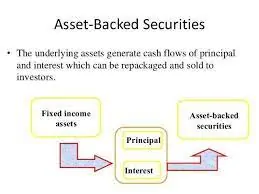
As mentioned, the Collateralized Debt Obligation is a particular type of bond that groups together a series of bonds called ABS Asset-Backed-Security.
ABSs are nothing more than the transformation of a debt into liquidity; to offset the risk entitlements, these bonds contain a multitude of debts classified according to solvency.
The type of risk is divided into 3 classes: Senior, Mezzanine and Junior.
Seniors have limited risk as the creditor has a certain reliability as a solvent, gradually moving to mezzanines and juniors where the risk of insolvency increases.
Obviously, the first to be liquidated are the Seniors as they are less risky.
By doing so, the investor has under control the risk target he takes on.
I hope I was clear enough in the presentation of these financial products as they are complex enough to understand.
Now let's go deeper with a little historical digression.
This liquidity methodology was proposed in 1657 by a great Dutch merchant Johan Palmstruch.
After becoming general manager of the Stockholm bank, he had a vision: granting loans to people using the funds deposited. This operation immediately proved its cumbersome as the periods of deposits were much shorter than loans, so if a person accessed the bank to withdraw his money and these were unavailable, the loan had to be revoked.
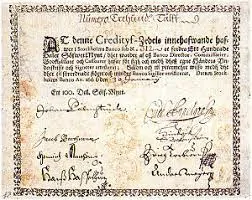
To overcome this impasse, in 1661, he invented the Kreditivsedlar, literally Credit Card.
This piece of sheet (with a double “e” pronounced very shortly) had the possibility of being exchanged at any time for gold or silver coins. The first rudimentary form of banknote.
With this artifice, he was able to solve the problem of the unavailability of the coins given on credit, but the bank printed too many banknotes compared to the collateral, leading to the collapse of the whole system.
Having established how this process works, let's move on to imagine a transposition of this financial product on DeFi.
In practice, a strategy very similar to that of Palmstruch could be implemented: using deposits to refinance new loans.
Let me explain better, a credit in cryptocurrencies is disbursed only and exclusively if, together with the credit portion, the guarantee part is accompanied - and immobilized - therefore the subsequent credit could be disbursed using the relevant portion of the guarantees.
To ensure that this system, however, does not implode, subsequent loans must also have collateral as a guarantee.
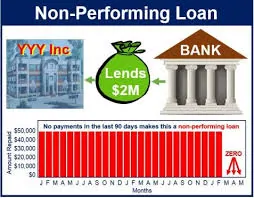
Honestly, I don't really look favorably on this situation, in fact we could find ourselves in the same situation as traditional finance that there are thousands and thousands of NPLs (Non Performing Loans) also called non-performing loans.
These unpaid credits are sinking the economies of various countries.
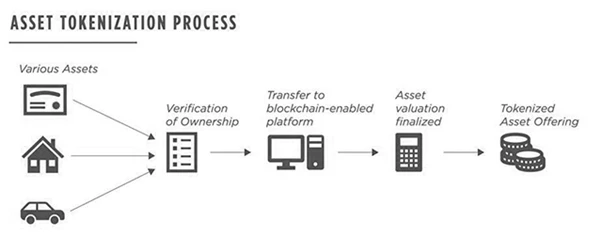
A good opportunity could be the tokenization of these NPLs, where a multitude of investors can participate, clearly it will be necessary to place an entry threshold, in such a way as to give weight to the type of investment and not fall back into the previous situation.
As we can see, the interference of classical finance is "contaminating" DeFi and I do not see this event willingly, especially for the consequences it could bring with it.
What do you think about it?
Earning money with cryptocurrency Trading - 2
It’s a matter of fact.
The most part of the traders do not earn money on a recurrent base. They get excited when they have some profits and they get disappointed, frustrated and sometimes even depressed when they lose money.
In the first article on this summary I talked about the importance of having a clear idea about the money we are eager to invest. And that’s it.
On my LinkedIn profile I have just told a short story that is continuously happening to me. You can find it here. https://www.linkedin.com/feed/update/urn:li:activity:6791383517168250880/
It’s not a matter of mere technical analysis and fundamental analysis. It’s a matter of strategy. Before entering a position we must clear our mind with the exit strategies. Yes, it’s plural. **We must know the Target Price AND the Stop Loss.**
Where can we put the **Target Price**? There are two different approaches: the static volumes and the previous traded volumes. As you see, it’s always a matter of volumes.
Let’s start from the second one: “Previous Traded Volumes”. I am going to call it PTV.
The PTV is represented by areas where the price had some hesitations, or the so-called “lateralisation”.
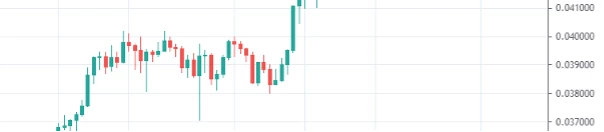
A lateralisation shows something like this
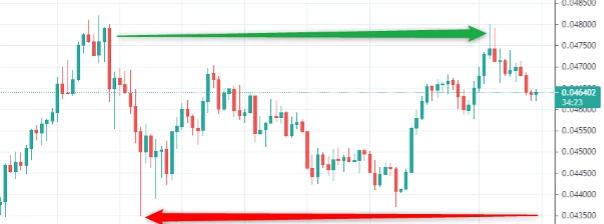
This is the ETH/BTC market on Binance, screenshot from Tradingview. 4H chart, meaning that every red/green square represents 4 hours of price negotiation.
With lateralisation we intend a time range, where price movements are compressed into a tight range. In this case we have 5 days compressed into a 9% price range.
During a lateralisation, price can heavily break upwards or downwards. If we entered a long position, we hope that wil go upwards, but nothing is sure into trading and we must get an exit strategy in case the worst scenario (downwards trend) happens.
The second is the Current Volume Distribution. This is a thinner aspect, but it may provide further results. To have an idea of this aspect, check the ladder volume in big exchanges to check where big orders are placed. Those will potentially be some attraction/rejection areas.
To get a clearer idea, a volume aggregation can provide a deeper perspective on this Current Volume Distribution.
Do you know hot get some parameters on volumes distribution? Well, in my opnion you can check the ration between some volumes, but it’s up to you giving some ideas now since you must define your own parameters to create your own trading strategy. I cannot tell you my own parameters, since the secret for a profitable trading is getting a proprietary strategy, with a defined protocol.
**And where should we put Stop Losses and Take Profits?**
Well, after this introduction on volume distribution, you should have already in mind some ideas. For example, in the case of a long position, a Take Profit is advisable to be placed beneath a volume cluster (Past or Current or both). In terms of a stop Loss, a good place can still be beneath a Volume cluster to avoid price slippery, in a no-volume area, with unnecessary price drops.
A potential long position can be taken like this
Stop loss just below the spike limit to avoid non-necessary liquidations for previous Order Book Cleansing and take profit below previous maximum, to take advantage of previous Order Book cleansing.
**And what about the Risk/Reward?**
Well, in my opinion there is not general rule. In clear Swing Trends, R/R can be even 1:1 or 1.5:1. The trend may enhance the speed in closing it.
In lateralisation market phase, I usually use a R/R 3:1, meaning that if the price is 100, my Take Profit will be 103 and my Stop Loss 99. A tight Stop Loss may liquidate my position, but if a downward trend will be confirm, I may get the chance to enter much lower than the entry point and ride the potential bounce-back.
What aspect of trading would you like me to get deeper into? Leave a comment and let’s enrich this section.
My crypto - entrepreneurial 2021. Not just a speculative year
2021 have been a year like “Whaaaaaaat?”.
Bitcoin and Ethereum and many other coins have reached their maximum price.
I started trading some tokens back into May 2018. Here you can fine one of my article, showing some results. https://www.amicaborsa.com/altre-operazioni-con-il-trading-sulle-cripto/
It’s natural that when you trade some coins, you study the fundamentals of such tokens and I have been talking about some of them like ENJ, BNB and ADA since years. This year it was the time to gather some results.
**So, what has been my crypto-2021 like?**
2021 has been my definitive year of deepening **tokenization** and I got very deep into it, creating also some theoretical use cases that may be useful to develop my own businesses in the next years.
Tokenization is something that is still far undervalued if compared to its potential. Tokenization allows the fractionalization and digitalization of assets, companies, art, music, intellectual rights and so on!
Image credits: https://www.moneta.holdings/about/introduction-tokenization
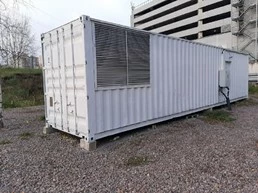
This year I managed to start up a new **mining farm installation**. It’s in Russia, in a very cold place and in 2022 I will start selling the Cloud mining service. For sure there we will not have temperature problems. Cloud mining will allow us to scale up the system and during this year two collaborators have been trained and instructed on how to spread the word about the service, so I will pay them instead of huge marketing campaigns. That is more sustainable and more rewarding for them, for the work they will do.
Image credits: myself
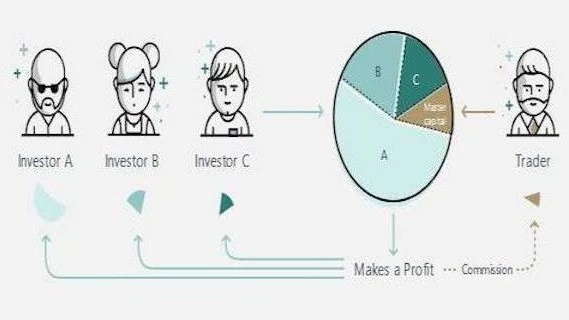
This year I have also started a **copy-trading (profit sharing)** project with an old friend of mine, strongly keen on trading and cryptocurrencies as well. We develop our own algorithm to identify the correct coins to invest in. We are currently using a DCA (Dollar Cost Averaging) Money Management but we are developing a new system, more precautionary, that will lead to better results in the next bull-run.
With my Group of working, we have started developing a **semi-automatic trading system**, where we are going to literally hunt the black swan with a mathematical method and a Money Management calibrated onto some years of working. It will be semi-automatic because the user will be requested to start it manually, choosing a more aggressive or a more precautionary strategy of entrance and exit from the position.
I am producing a small info-product about, since we must explain very carefully what people should expect from this service AND to understand the mental approach necessary to be consistent with it. Furtnermore, this info-product will explain what led us to this development AND how to create a new mindset for trading for our customers.
Image credits: https://liveindex.org/26133/2016/07/what-exactly-is-a-black-swan-event/
This year I have officially started **paid consultancies for private individuals AND companies** about cryptocurrencies, their usage and their applications into companies.
This has been possible thanks to several years of serial entrepreneurship that led me to gather experience in carrying our business in different countries, with different people and with the same key aspect: optimization and scaling up mindset. Scaling up is something that I am carefully carrying from my Chemical Engineering studies: everything had to be scaled up and we had dedicated courses about how to make things scalable.
Scalability is a mindset.
This year I have also started **creating NFTs with an important Italian artist**, Rossano Ferrari.
In the next days, I will publish a dedicated article about him and what is behind our NFT creation.
Here you can find his NFTs.
Be prepared because in 2022 we are going to tokenize something that nobody in the world has done until now. I will make a dedicated press release for such news.
Here you can find Rossano’s NFTs
https://rarible.com/rossanoferrari
And last (temporary speaking), but not least, **I have started blogging onto Hive**. It feels really promising, and besides articles about insights about news from the crypto market, some articles about freedom, I will widely write about my projects and their developments.
Of course, I am still increasing my Accumulation plan on cryptocurrencies, with some HODLING, some Staking, some Lending and some DeFi.
You can check here some things that I am doing to put my money wisely at work
https://youtu.be/V-ZCAQLH2Hk
**So, what are my purposes for 2022?**
Integrate a new collaborator into my team, and making the ones that I have, growing and growing, so we can manage even more projects than we had this year.
Develop the mining farm instalment, increasing installed machines.
Put on the market the Trading BOT
Increase volumes on the copy-trading
Be more present on my social networks
And many more personal targets to be reached
Token Review: Aave
In the amazing growth of the various DeFi protocols in the first half of 2020, many new tokens made it into the top 100 by market capitalization.
Aave is a decentralized non-custodial money market protocol where users can participate as depositors or borrowers. Depositor provide liquidity to the market to earn a passive income, while borrowers are able to borrow in an overcollateralized or undercollateralized fashion.
The Aave project began under the name of ETHLend in 2017, when the crypto market was still quite calm and in January 2020, the project was bought by Aave.
Aave takes care of creating a marketplace where you can borrow and lend cryptocurriencies. The protocol is open source, which means that anyone can view and propose changes to the source code. It is also non-custodial, tokens remain in the possession of the user.
Are you curious to know the meaning of Aave?
Aave is a Finnish word that translated means “ghost” in English. Why the ghost? Because it represents Aave’s mission: create a transparent and open infrastructure for decentralized finance (DeFi).
The advantage of a non-custodial approach is that the risk of fraud and bankruptcy of the intermediary is eliminated. The disadvantage is that the rates offered to those who offer their currencies are much lower than a custodial platform.
The unique feature of Aave is the possibility for the borrower to choose between a fixed and variable interest. Usually, non-custodial platforms like Compound only offer a floating rate, while custodial ones like BlockFi only offer a fixed one. The choice between variable and fixed rates is similar to that in a mortgage.
The floating rate tends to be lower than the fixed rate but can go up or down over time. A strong propensity for variable interest mortgages played a role in the collapse of the real estate markets in 2007: statistically, the interest paid is lower, but there may be prolonged periods in which interest reaches very high levels.
Now I want to take a concrete example with DAI.
Right now, it is possible to lend DAI at 2,71% annualized interest. On the other side, it is possible to borrow DAI with a variable interest (5,12% at the moment), or at a fixed rate of 7,03%.
Image source: https://aave.com/branding
I will talk about more technical details and peculiarities of the token.
I want to focus on five issues:
Aave Token Migration
Aave Staking
Aave Protocol Governance
Aave Incentives
Aave V2
**1: From LEND to AAVE**
The migration to AAVE marks the first step in transitioning governance power from the Aave core team to AAVE token holders.
Often referred to as ETHLend, the Lend token is the native token of Aave following the winding-up of operations by ETHLend in January this 2020. Although it has kept the name, the new Aave version of Lend is a step beyond the previous one.
Briefly, the ERC-20 LEND tokens are used for fee reductions in addition to providing governing rights at a base-code level for future protocol updates. The tokens are burned from fees accrued from the Aave protocol, suggesting that tokens could worth more over time. The protocol went live in January 2020, supporting 16 different assets including 5 stablecoins. In June 2020, Aave reported having reached as much as $100 million in market cap.
LEND will migrate to AAVE at a rate of 100 LEND per 1 AAVE, with the supply changing from 1.3B LEND to 16M AAVE. Of the 16M AAVE being issued, 13M AAVE tokens will be redeemed by LEND holders and 3M AAVE tokens will be held in an Aave Ecosystem Reserve for protocol incentives.
To start the migration, LEND will be used to vote on the Genesis Governance poll to deploy the smart contracts responsible for converting LEND to AAVE.
**2: Aave Staking. Have you already heard about staking?**
You can think of staking as an alternative to mining that requires less resources. It involves holding funds in a cryptocurrency wallet to support the security and operations of a blockchain network. Simply put, staking is the act of blocking cryptocurrencies to receive rewards.
I have already written an article where I explained the TRX staking, if you missed it click here.
You will also find a free video tutorial that will help you starting the stake of TRX in a few steps!
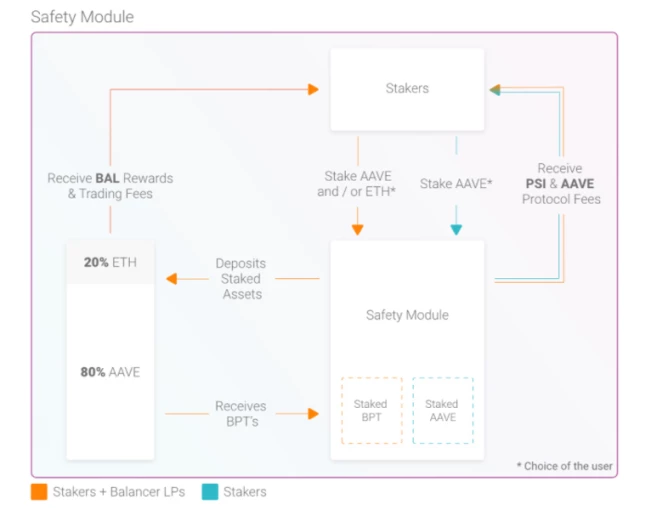
Aave will be secured by a safety module, a staking mechanism for AAVE tokens to act as insurance against shortfall events. Stakers earn AAVE as safety incentives along with a percentage of protocol fees.
Staked AAVE will be freely tradable after a cooldown period. All rewards accrue in real-time and are distributed as AAVE is withdrawn or transferred from the Safety Module.
Image source: https://aave.com
**3: Aave Protocol Governance**
The rights of the protocol are controlled by the LEND token. Initially, the Aave Protocol will be launched with a decentralized on-chain governance based on the DAOStack framework which will evolve to a fully autonomous protocol. On-chain implies all votes are binding: actions that follow a vote are hard-coded and must be executed.
To understand the scope of the governance it’s important to make a distinction:
The Aave Protocol is bound to evolve and will allow the creation of multiple lending pools with segregated liquidity, parameters, permissions and type of assets.
The Aave Lending Pool is the first pool of the Aave protocol until the Pool Factory Update is released and anyone can create their own pool.
Within the Aave Protocol, the governance will take place on two levels:
The Protocol’s Governance voting is weighted by LEND for decisions related to protocol parameters and upgrades of the smart contract. It can be compared to MakerDAO’s governance where stakeholders vote on current and future parameters of the protocol. If you want to know more about MakeDAO click here.
The Pool’s Governance where your vote is weighted based on your share of pool liquidity expressed in aTokens. The votes cover pool specific parameters such as assets used as collateral or going to be borrowed. Each Pool will have its own governance, under the umbrella of the Protocol’s Governance.
**4: Aave Incentives**
The Aave Protocol will be able to distribute Ecosystem Incentives for supplying and borrowing assets from the protocol.
The Ecosystem Incentives represents the part of the periodic issuance of AAVE used to incentivize liquidity providers, software developers and integrators to build value within the Aave ecosystem.
The community may also decide to allocate rewards to applications built on top of the Aave ecosystem. The decision to integrate new incentives will be performed through decentralized governance.
**5: Aave V2**
A very recent news concern about Aave V2.
A while ago, the Genesis Team released this plan outlining some features coming out with Aave V2, making finance a more seamless experience. Today, Aave V2 is live on the Kovan testnet.
Since the beginning of 2020 when the Aave Protocol first launched, the Genesis Team has collected feedback from the community which has been invaluable in making improvements to the protocol. Now the governance power is in your hands, and the Genesis Team will take on the role of builders who gather popular proposals on the governance forum, and enact the updates voted on by the governance.
Aave V2 is the realization of community feedback that brings some architecture redesign to upgrade the protocol, along with some exciting new features to push the limits of the DeFi user experience.
You can check and test the Aave V2 on the testnet client at this link: https://testnet-v2.aave.com/.
we have discovered a lot of peculiarities of this great project!
Aave improves DeFi’s current offering, bringing two key innovations to the lending ecosystem:
Stable Rates to help borrowers’ financial planning;
Flash Loans to borrow without collateral during a single transaction.
Do you like the Aave project? Have you already lended or borrowed crypto with Aave?
Keep following me to find out the next coin I’m going to analyze.
Leave a comment and share your experience with Aave! If you would like to see analyzed any particular coin, let me know in a comment and your desire may find fulfillment!
Earning money with Cryptocurrency Trading - 1
I am into crypto-trading since some years and I have discovered some interesting aspects. The first one is that market cannot be predicted. Market should be indulged.
By the way, you see the number “1” in the headline, meaning that I am going to tell you something about my journey into crypto-trading.
This first chapter is about awareness.
Trading is a journey and it must be seen 100% as an entrepreneurial activity.
Before starting every entrepreneurial journey you want to evaluate how deep you know the road and how to manage potential events (awareness).
Then, you must have a plan on how to undergo the best way to reach the target, avoiding too much high&downs since they are really tiring (keeping positions open too long).
Then you must figure what may happen if you really cannot manage to reach the destination (exit/strategy/stop loss).
Last call, but this will be the most important one, will be about how to manage your strengths during the journey: you cannot start a marathon with the speed of a sprinter (Money Management) or you can get our of stamina too early.
Here we are, let’s start with the awareness.
First thing that you must ask yourself is “Why the heck I want to start trading?”
I have already seen many different situations. People almost broke that thought that trading could be their best chance. People that wanted a hobby for their spare time to gain some money. People that wanted to do trading from scratch, during their day-job, starting from 400€ to get 400€/month. People that wanted to put 100€/month into a trading account to get 400€/month out of it.
Well. They asked me how to start. I told them how not to start. Easy as it is.
If someone wants to start trading, at first, he must choose how much money he is eager to lose, without too much optimistic charts representing the compounding interest. Yes, once I was told that starting from 100€ with 1% a day you could become millionaire.
Of course. My math teacher from the secondary school always told me that the calculator was stupid. She was just doing what the user was telling her to do. So, if the user was stupid, the calculator was stupid too.
Trading money that you afford to lose is just a way to start trading with the correct foot, having at least the chance to trade without unnecessary emotional involvement.
Awareness is also the increasing mindset that trading is an entrepreneurial activity under all perspectives.
Have you ever seen a restaurant having a positive balance every day, immediately after its opening?
Well, I really do not think so.
That is why, losses may happen. They even may happen more often than profit positions. The most important thing will be the overall amount of loss money and the overall amount of profits. If this second overcomes the first, well, you are probably doing good.
But remember that a bird does not call the spring (as we say in Italian).
That is why, a strategy is far more important than knowing all the available indicators on Tradingview.
Stay here, and let’s dig deeper together in the next articles.
If you have questions or you are curious on something, feel free to ask. I am here to help.
Mining for smartphones
Since 2018, Google and Apple have banned the publication on their stores of any application designed to perform routines dedicated to mining.
The two major player of the market explained that these procedures put stress on the device leading to overheat.
This explanation is quite likely, despite the fact that current smartphones have CPU computing and engineering capabilities that have nothing to do with smartphones from 5-6 years ago.
**Just think of the first Galaxy Nexus: to surf the internet and to install some applications, you must suffer almost a burning hand!**
However, given the compute requests needed to mine Bitcoin, effective January 20, 2021, Google reports this wording: “We do not allow apps that mine cryptocurrency on devices. We allow apps to remotely manage cryptocurrency mining. "
Practically with this imposition, with our smartphone we can only start a dashboard and monitor how much the desktop computer is undermining.
Obviously, the computer that is set up to mine must also be connected via the same dashboard to receive commands remotely.
Officially, therefore, it is not possible to download any recognized application to be able to perform mining on smartphones.
**But what about those applications that can be found on the dark web?**
Well, those I would say are the last thing to waste time on.
The reason is obvious: in these software of dubious origin, parts of code have almost certainly been written on purpose, such as Malware that sneaks into the phone's memory.
Since these mining applications are resource-hungry (as it is easy to guess) an ordinary person cannot understand if the phone is "undermining" or is sending its private data to any criminal.
Moreover, even people a little more attentive and able to see which system processes are active, if the programmers have called the Malware process with any name containing the word Mining, that's it.
**But if I find the right application, can I make money?**
Difficult.
Very difficult.
Let's take an application that is not on the store but through the network it is possible to find the original one: MobileMiner.
As soon as the installation package is found (PROVIDING IT IS THE REAL APPLICATION) the installation procedure starts and that's it.
The program in the background will begin to "undermine", but on one condition: that the charger is connected.
**Ahahahahahahaha**
What is produced as a cryptocurrency is not enough to pay the electricity bill we use to recharge the device!
At this point, there are only 2 applications that allow you to mine cryptocurrencies.
- PI Network
- Electroneum
I do not hide my biggest perplexity comes from the fact that the token is not yet a proprietary token with no value.
**As for Electroneum, we all know the validity of the project.**
In 2017 it was the first company to give "everyone" the opportunity to take advantage of digital payments. Even for those who cannot go to a credit institution.
Just 2 months after the opening of the ICO, she managed to reach the Hard Cap and carry out the project.
In addition to this, the proprietary application gives the possibility to undermine ETNs.
As you could understand from this article, smartphone mining applications do not exist, as they are officially censored by the stores.
Therefore, if some self-styled character recommends smartphone mining, you know perfectly well that it is potentially a scam.
Unless it's cloud mining, but that's another thing and official applications already exist: MinerGate is an example.

What alternatives to Youtube? Odysee among other DVP
DVP, Decentralized Video Platform are now at their most request and usage. Censorship has reached levels difficultly bearable.
On Youtube, several cases where contents about cryptocurrencies, contents against vaccines and many scientific researches just disappeared. They were censored. Authors tried to complain and react against this restriction, giving proofs about what they were telling but nothing changed.
This is one of the reason why I chose to go and synchronize my Youtube channel, that I am posting here beneath, with an Odysee account.
So, I will keep posting my contents on Youtube, BUT, on Odysee you will earn money for watching videos. Like on Read.cash, where you can earn cryptocurrenceis to read articles. Doesn’t sound more intelligent?
So what are you expecting to join me on Odysee and starting to earn money by viewing videos? Of course you will still find me as “Mike Zillo: The smart crypto investor”.
Decentralizde platforms are more and more necessary.
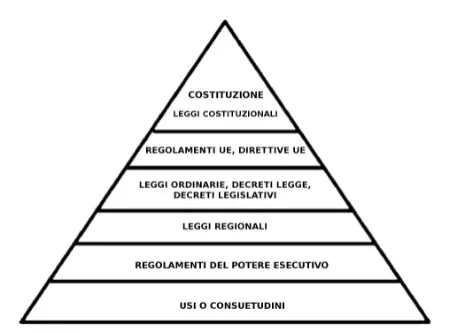
A few days ago a dear friend of mine told me that Facebook censored the following image:
Source: https://www.studiofavari.com/2020/05/01/dpcm-norme-direttive-ecc-capire-la-giungla-delle-leggi/
The image says that the following laws are from the strongest to the weakest: Constitution, European laws, Ordinary laws, Regional laws, Rules from executives, Habits.
Well, yes, it’s in Italian but it’s just a simple representation of the hierarchy of the laws and the institutions in Italy. I guess that in all countries a similar hierarchy exists. Nothing new under the Sun, as someone very famous once said.
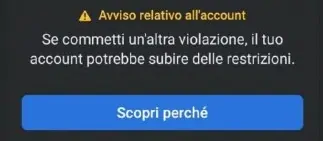
Anyway, the message that my friend got was the following:
Still, it is in Italian BUT the sense is that the message he posted was not suitable for the community’s guidelines and SO the message was hidden to the community and was only visible to the owner of the comment. Afterwards he got the warning message: “The next time you will be sharing something for free thinkers and something that will help people opening their mind, your account may suffer restrictions”.
Wait: what?
A person that publishes a normal hierarchy of the laws in a country, mentioning directly a consulting firm that created that image for the purpose of an immediate understanding of the matter…cannot be published.
He was not saying anything in favour or against vaccines. He was not making comments about the political situation in Afghanistan. He was not denigrating Paralympic athletes.
So, what is all this s**t about?
This is one of the reason I love Read.cash. Offensive comments are banned, scammers contents are banned but a real information can be made. There are a lot of people to dialogite with, to chat with, to share thoughts with.
It’s not a matter of censorship, it’s a matter of improvement of the environment we live in, having the chance to get in touch with other people that may think in a similar way.
This is one of the reasons why I chose to go for Odysee. I am not saying that I will look for censorship. I am just saying that I will try to match more dots with more deep videos that I am not sure I will publish on Youtube.
Anyway, I thought that moving my contents there could be a way to support this growing start-up.
Come and join us here, on Odysee!
A let me know in the comments what do you think about this censorship and how you are avoiding it. I do not like the word “fighting censorship” since what we fight gains power against us.
We can avoid it. We can be like water: it can be dammed but it will look for another path. It can be blocked, but NOT forever since gutta cavat lapidem (drop excavate the stone)
Let me know your thoughts and feelings!
How I improved my diet to overcome a dense working and sporting life
*Mens sana in corpore sano* is a latin speech to say that keeping your body healthy will make your mind healthy as well. BUT, the other way around worked for me.
I understood that for maximising my living efficiency, I had to had a really heathy body. And I thought, that the best starting point was starting from my diet.
I am more or less 1.82 m height and I used to weigh almost 100 kilograms. Well, I have been doing a lot of sport since 2008 and my muscular mass has been relevant since then, but not enough to justify that weigh.
I am “smart working” since 2015 when I resigned from my traditional 8 hours job as a Field Engineer into the biogas plant design and construction.
I play wheelchair basketball since 2009, two technical trainings, plus one gym session and one game per week during the sport season.
I felt powerful and on the wheelchair I was fast enough thank to my muscular tone BUT there were a few players faster than me. I though it was just a matter of power. But then I realized that I was simply “too big”.
So, the first attempt I made, was starting to go for more raw and less raffinate food.
In that way, I stopped eating commercial pasta, bread and meat. I simply replaced them with more raw cereals like rice, millet, quinoa, and ancient cereals. Yes, I am Italian, I grew up with “*pasta al pomodoro*” but growing up with a habit does not necessarily makes it healthy and good. And as someone clever once said: “we are not trees, we can move ourselves”.
Reducing pasta and bread and replacing the left quantities with the same products but made from rawer materials made me “deflating”, going easy from 98 kilograms to 88 kilograms.
My favorite producer of ancient cereals is called “DaMonte Natural”, it’s a small company in the North of Italy and they have really amazing products. You can have a look at their website here (https://www.damontenatural.com/).
My hunger naturally reduced, since my body was in need of a lower quantity of sugars. YES, we are talking about sugars, since refined cereals give a glycaemic peak that makes you feel sleepy about 30-60 minutes after eating it. And then hungry again. If pasta and bread are less refined, you will be eating a lower quantity of carbs and a higher quantity of fibres and proteins, you will feel less sleepy and satiety lasts more.
Besides, I am also affected by a sort of chronic sinusitis since 2015, when in my last working place I badly suffered from respiratory diseases, connected to an unhealthy office.
I always refused to define it a form of “chronic” sinusitis, since I was sure that in some way I could improve or solve it.
I discovered an Italian doctor that was suggesting to eliminate gluten and cheeses to avoid sinusitis.
Rice, millet and quinoa are naturally gluten free. I do not believe into “gluten-deprived” foods. Deprivation (like decaffeination) is a chemical process. With gluten removal I was looking to eat in a more natural way, in a less Genetically Modified way. I was not looking for even more complex foods, where chemical traces could be present for deprivation processes.
So, at the beginning of the “Covid thing”, I decided to test my body and stay three months with neither gluten, nor cheeses. I had been very strict in respecting this regimen. I was looking for a result from an experiment, so the protocol had to be followed thoroughly.
And my sinusitis improved! So I started a slow reintegration of gluten in my diet, but only in a raw form, from ancient cereals, and here I am. With a hard working rhythm and much sport training during the week and sometimes three games during the weekend.
**How is my diet now composed by?**
I now eat only grass-fed and free grown meat, that comes from domestic growing. So I know how those animals are grown. I usually eat meat not more than 2 times per month.
I eat fish twice a weak and I try to eat fish that comes from the sea/ocean and not from breeding.
I eat a lot of vegetable and legumes and I always go only for seasonal products, since our body needs what comes from the correct season. For example, you will notice that in a tempered weather like European, citrus fruits come only during fall/winter, when the body needs more Vitamin C. I also buy fruit and vegetable coming from close cultivations and I try to buy biologic stuffs, or anyway, something that I know that has not been treated a lot.
My breakfast is made of seasonal fruit and some dried fruit. I do not see coffee for at least three hours from my wake-up. And I suggest you doing the same, since once waked, our body needs simple things (coming from the fruit) and not stimulants (like caffeine).
**What have been my results?**
More energy on work.
10 kilograms less in my life and in sport that have led me to a even higher speed making me become one of the fastest player in the tournament.
More confidence in myself since I made up a good body-shape.
What are your food habits? Have you taken some evolution in the last period?
Token Review: Maker
**1st part: Maker**
MakerDAO could be the best tokens fusion on the crypto world?
Well, let’s start!
We have to take a step back 6 years, when in 2014, two guys named Rune Christensen and Andy Milenius created Maker. They understood that the crypto Community needed a stable cryptocurrency without losing the decentralization of the system.
Maker (MKR) was then launched in 2018, after almost 4 years of work and development.
The project did not collect funds with an ICO. The tokens were distributed with a private sale to all those who understood and believed in the project. Maker's total supply is 1 million MKR and currently all tokens are in circulation.
Having births as a stable-coin MakerDAO is another decentralized organization dedicated to bring stability to the cryptocurrency economy.
The Maker Protocol employs a two-tokens system:
The first token is DAI, a collateral-backed stable coin that offers stability.
Dai is a hybrid stablecoin that relies on a complex mix of underlying assents, automated mechanism and external actors to achieve price stability.
Each Dai is backed by Ether held in MakerDAO smart contracts. These contracts are called Collateral Debt Positions (CDP). Anyone can lock up Ether in CDPs and new Dai will be released to the user in exchange for locking up the necessary collateral.
The second is MKR, a governance token that is used by stakeholders to maintain the system and manage DAI.
Source: https://prycto.com/partners/
Holders can vote on proposals submitted by any Ethereum account interested in submitting a proposal to the MakerDAO system. Proposals are smart contracts submitted to the Maker platform which aims to modify the internal governance and operational variables of the Maker Platform.
We can use MKR also to pay interest payments that users have created on the Collateralized Debt Position. These payments are known on Maker as “stability fees” .
The Maker Protocol can be used by anyone, anywhere, without any restrictions or personal-information requirements. How can you dislike the democracy of the crypto-environment?
All this may be nice and cool but what are the Dai use-case and benefits?
- Dai offers financial independence to all
It allows anyone to achieve financial independence, regardless of their location or circumstances.
- Self-sovereing money generation
The “Oasis Borrow” app allows users to access the Maker Protocol and generate Dai by locking their collateral in Maker Vault. Vaults offer individuals and businesses opportunities to create liquidity on their assets simply, quickly and at a relatively low cost.
Savings earned automatically
Dai holders can take advantage of the Dai saving rate, which, as detailed earlier, builds on the value of Dai by allowing users to earn on the Dai they hold and protect their savings from inflation.
Fast, low-cost remittances
Cross-border remittances can mean high service transfer fees, long delivery timelines, and frustrating exchange issues due to inflation. The Dai stable coin is used around the world as a medium of exchange because people have confidence in its value and efficiency.
Stability in volatile markets
It can help protect traders from volatility. Have you ever thought about a stable counterpart when trading altcoins, without relying too much on the USDT centralization and not yet demonstrated backing?
Could MakerDAO's system be successful in the long run?
With this first article on MakerDAO I am inaugurating this new section, that will be 100% about innovative projects. I am starting among the ones present in the Header of the homepage of Publish0x but once finished, I will move forward.
**2nd part: MakerDAO, a locomotive for the Decentralized Finance (DeFi)**
In this second part dedicated to MakerDAO I want to focus on five issues:
Maker Protocol and what can be expected from its future
Governance of the Maker Protocol
DAI stablecoin
Maker Vaults (smart contracts)
Price stability mechanisms
**1: What is the Maker Protocol and what we can expect form its future?**
We know that the Maker Protocol is among the main dApps of the Ethereum blockchain and it is the first decentralized finance (DeFi) application to register a major adoption.
It is run by people around the world who own the governance token of the MakerDAO ecosystem, MKR. Through a system of scientific governance that includes executive voting mechanisms and polls, MKR holders manage the Maker Protocol and the financial risks of the Dai, in order to ensure its stability, transparency and efficiency.
Achieving complete decentralization and increasing adoption are key points for the future of the Maker protocol.
When we face a stable price cryptocurrency, the available market is large because it can act as an exchange vehicle for many decentralized applications. The potential market for a stablecoin like Dai goes far beyond that of the blockchain. In fact, we could exploit its use in many other sectors.
We could see it in use in the trade and daily payments sector because the attenuation of the volatility of foreign exchange and the absence of intermediaries lead to a significant reduction in transaction costs.
It would not surprise me to see it applied in the gaming industry, where game developers could integrate an entire economy into them.
Dai may also be applied to a sector that I personally care a lot: charity. Institutions could keep their accounts in a transparent and distributed way, avoiding paper accounting records which would make it easier to tamper with data.
DAI future, from these perspectives, may be really florid and various.
**2: What about the Governance of the Maker Protocol?**
The governance token of the Maker Protocol, allows those who hold it to vote on changes to the Maker Protocol. Note that anyone, not only MKR holders, can submit proposals for an MKR vote.
Any voter-approved modifications to the governance variables of the Protocol will likely not take effect immediately in the future; rather, they could be delayed by as much as 24 hours if voters choose to activate the Governance Security Module. The delay would give MKR holders the opportunity to protect the system, if necessary, against a malicious governance by triggering a Shutdown.
The Maker Governance process includes proposal polling and executive voting.
Proposal polling is conducted to establish a rough consensus of community sentiment before any Executive Votes are cast.
Executive voting is held to approve (or not) changes to the state of the system.
At a technical level, smart contracts manage each type of vote. A Proposal Contract is a smart contract with one or more valid governance actions programmed into it. This smart contract can only be executed one time.
**3: What is Dai specifically?**
Dai is a decentralized, fair and collaterally supported stablecoin pegged to the US dollar. Dai is deposited in cryptocurrency wallets or within platforms and is supported on Ethereum and other popular blockchains.
Users can easily generate, acquire and use Dai. It is generated by depositing collateral assets in Maker Vault within the Maker protocol. In doing so, Dai enters circulation and allows users to obtain access to liquidity.
We can also get it by receiving it as a payment method, buying it from brokers or through exchanges.
This stablecoin can be used like any other cryptocurrency. We can use it for paying goods or services, we can send it to other people or keep it as savings through a feature of the Maker protocol called: Dai Savings Rate (DSR). The latter feature allows Dai holders to accrue savings automatically by locking the Dai into a DSR contract.
So, what does Dai have in common with the traditional money we use every day?
Dai was designed to perform the four main functions of money:
1) Exchange vehicle
2) Reserve of value
3) Accounting unit
4) Standard for deferred payments
**4: Maker Vaults, the smart contracts of MakerDAO**
All accepted collateral assets can be leveraged to generate Dai in the Maker Protocol through smart contracts called Maker Vaults. Users can access the Maker Protocol and create vaults through a number of different user interfaces.
Creating a vault is not complicated but generating Dai does create an obligation to repay the Dai, along with a stability fee, in order to withdraw the collateral leveraged and locked inside a vault.
This kind of smart contracts are inherently non-custodial, this means that users interact with vaults and the Maker Protocol directly, and each user has complete and independent control over their deposited collateral as long the value of that collateral doesn’t fall below the required minimum level.
**5: How can the price of DAI stay stable to 1 USD?**
Image source: https://mattwyles.files.wordpress.com/2014/02/e6bba185086379c636942bf776a7e749.jpg
Like stablecoin, Dai has a target price used to determine the value of collateral assets Dai holders receive in the case of an emergency shutdown. The target price for Dai is 1 USD.
Yes, you are not crazy, you have just read about an “emergency shutdown”!
So, what is it?
The “emergency shutdown” have two main purposes:
First, it is used during emergencies as a last-resort mechanism to protect the Maker Protocol against attacks on its infrastructure and directly enforce the Dai target price. Emergencies could include malicious governance actions, hacking, security breaches, and long-term market irrationality.
Second, Shutdown is used to facilitate a Maker Protocol system upgrade. The Shutdown process can only be controlled by Maker Governance.
MKR voters are also able to instantly trigger an emergency shutdown by depositing MKR into the emergency shutdown module, if enough MKR voters believe it is necessary. This prevents the Governance Security Module from delaying shutdown proposals before they are executed.
The emergency shutdown is composed by three phases:
The Maker Protocol shuts down and Vault owners withdraw assets: this prevents further vault creation and manipulation of existing vaults and freezes the price feeds.
Post-emergency shutdown auction processing: collateral auctions begin and must be completed within a specific amount of time.
Dai holders claim their remaining collateral: at the end of the auction, Dai holders use their Dai to claim collateral directly at a fixed rate that corresponds to the calculated value of their assets based on the Dai target price.
Whit this second article on Maker we have discovered a lot of peculiarities of this big project!
MakerDAO has become the driving force of decentralized finance with one of the most established developer communities in the cryptocurrency world. Maker is demonstrating the power of the blockchain and further features of a decentralized Governance!
Do you like the Maker Protocol? Do you also have Dai in your wallet?
Keep following me to find out the next coin I'm going to analyze.
Do you have other coins that you would like to see analyzed? Leave a comment here and your desire may find fulfillment!
How to choose the best Cryptocurrency payment Gateway?
There are some aspects to consider when accepting cryptocurrencies as a form of payment.
At first, you must check if cryptocurrencies are allowed as a form of payment into your country, then, you should figure out how to handle them. Are you going to convert them completely or are you going to create a reserve of value for the company, as an asset? In this case, have you already planned a change into the company’s statement and/or a resolution from the shareholders.
Just to say that accepting cryptocurrencies is not a one-stop-integration and it requires some optimization. Potentially even for company’s procedures.
BUT, what should we look for when evaluating a cryptocurrency payment provider?
**At first: are there applications fees?**
Some providers requires an application fee for the companies requesting access. We are talking about fees from 500$ to 1500$ just to evaluate if the applying company is suitable to accept cryptocurrencies as a form of payment.
Secondly: the verification for the company is necessary.
Company’s verification is necessary, since this check will increase the credibility of the service provider, that has to take care about the UBO (Ultimate Beneficial Owners), the type of business carried out, volumes expected, origin of funds, origin of customers and providers.
If a company wants to integrate a crypto payment provider should be transparent in what is done with such company. Off-shore jurisdictions offers coverage to companies and shareholders that does not guarantee transparency at all. This is the reason why some Crypto Payment processors have a double structure: a regulated one and a non-regulated one for companies from non-regulated/off-shore jurisdictions.
**How much is the fee?**
Be careful, because some providers will try to make you believe that there is no fee in using their services. Well, there must be some spread, somewhere. So, if Bitcoin is at 40.000$, your customer will pay like if Bitcoin was at 41.000$, and this would be a 2.5% of spread. So, it’s like a 2.5% of fee. This fee is usually charged both to the customer and the merchant.
Let me tell you one thing. I am both a merchant and a customer. The fees that I dislike the most, are the hidden ones. They are like “I am trying to f**k you and I am pretending that you will not notice it”. So when the counterpart notice it, well, it will not be a very professional situation.
That is why I prefer platforms that do not charge spread to customer/merchant and they tell clearly and explicitly how much each payment would cost, in terms of percentage.
Since cryptocurrencies are particularly suggested for international and inter-currency payments, an overall fee lower than 2.5% is acceptable. With overall I mean the commission for the payment receipt + automatic fiat conversion and bank payment settlement.
And what about the jurisdiction of the payment provider?
A transparent jurisdiction with clear regulations for cryptocurrencies exchange and cryptocurrencies custody is necessary to avoid later problems of the service, that may suddenly interrupt the service provision because of controls from authorities.
In my experience, cryptocurrency payments gateway should be in the same financial area of the companies accepting payments. For example, an Italian company can find a cryptocurrency gateway in the European Economical Area, where we can see for example Estonia, well-known for the chance of the crypto-licence, allowing service providers to become exchange and intermediaries for crypto payments.
**Last thing: how many cryptocurrencies are accepted?**
I know: with Bitcoin and the Lightning Network all transactions, even the smallest, can be made with no commissions. BUT, Lightning Network is not so popular yet, neither among merchants, nor among customers. This is why I suggest payment providers that allows the use of Litecoin and other altcoins particularly suitable for payments.
Have you ever thought about inserting cryptocurrencies in your business?
Italian Green-pass: Kansas City or a social experiment?
I consider Read.cash a democratic and free place to write on, until we stay respectful of others, we do not grow discriminations and we do not promote frauds and other non-respectful things for others.
Yes, I consider even frauds a matter of respect. When us, creators, write about something, we have the responsibility for less prepared readers and newcomers and we MUST give them complete and transparent information.
Today, I am writing this article as a sense of responsibility of what happened yesterday in Trieste (Italy). I am also writing this article with a sense of responsibility towards Read.cash readers, because I think that too much have been already said about the pandemic and related topics.
From 15 October the so-called Green Pass has become compulsory to work in Italy. To get the Green Pass you can either take the vaccine shot or have a swab every 48 hours.
The Green Pass from the vaccine lasts 6 or 9 months.
To play sport I now have to take a swab every week. My team mates that have had the shot do not have to take the swab because they have the “Green Pass”.
To take long journeys with trains, you must have the Green Pass.
To go to church Green Pass is not requested.
To have a coffee in a Café, you need the Green Pass to have a seat while consuming it standing, won’t require the Green Pass.
Going to work, now, requires the Green Pass.
Having a swab in Italy costs 15€ and its validity lasts for 48 hours. If a worker cannot take the shot, or just do not want to take it, it will have to take a swab three times a week. That means 45€ a week, 180€ per month in swabs. And I not taking into consideration how much invasive some swabs are. My last one, for a match I had last Saturday was terrible. I could barely resist to it.
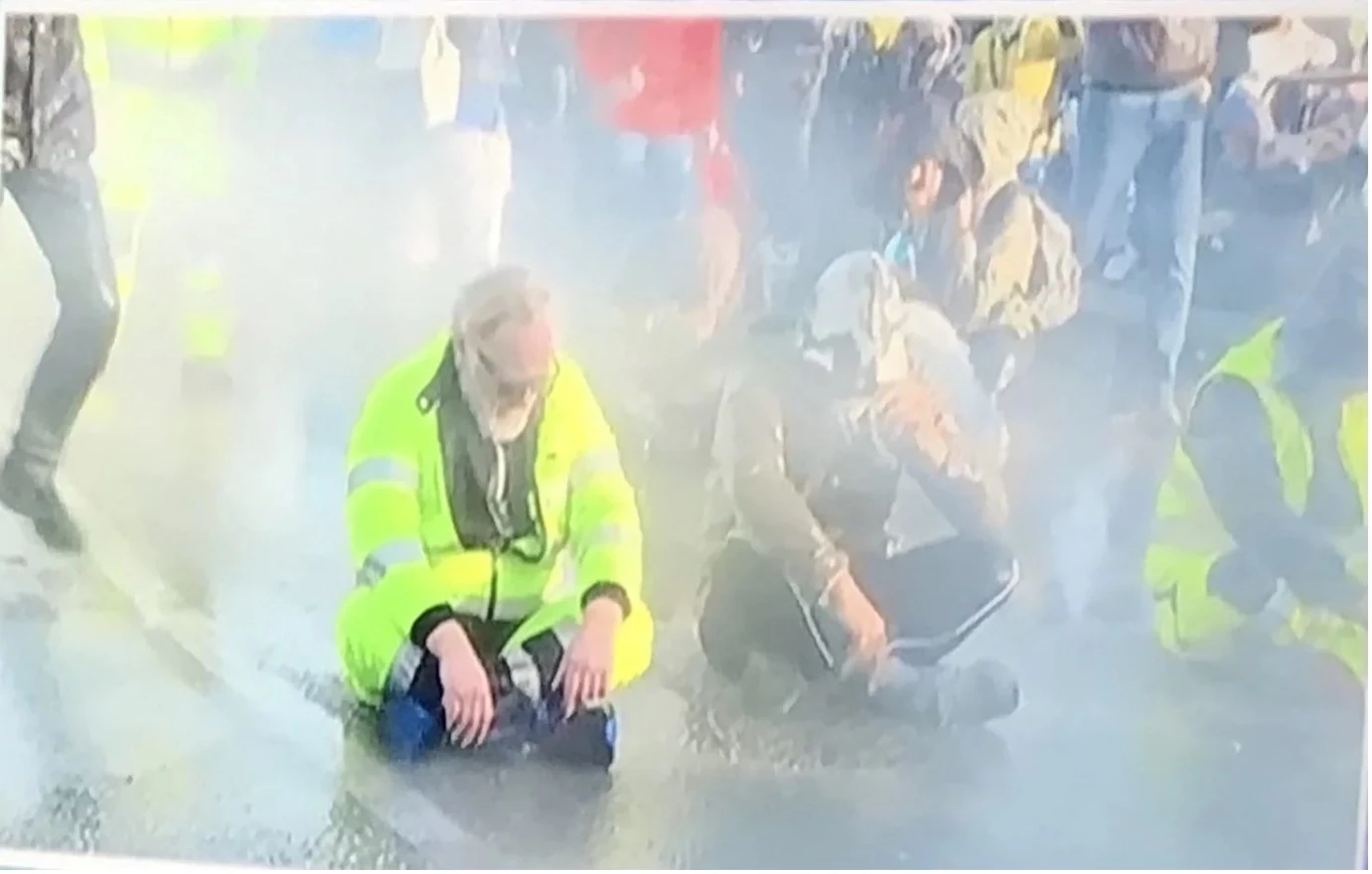
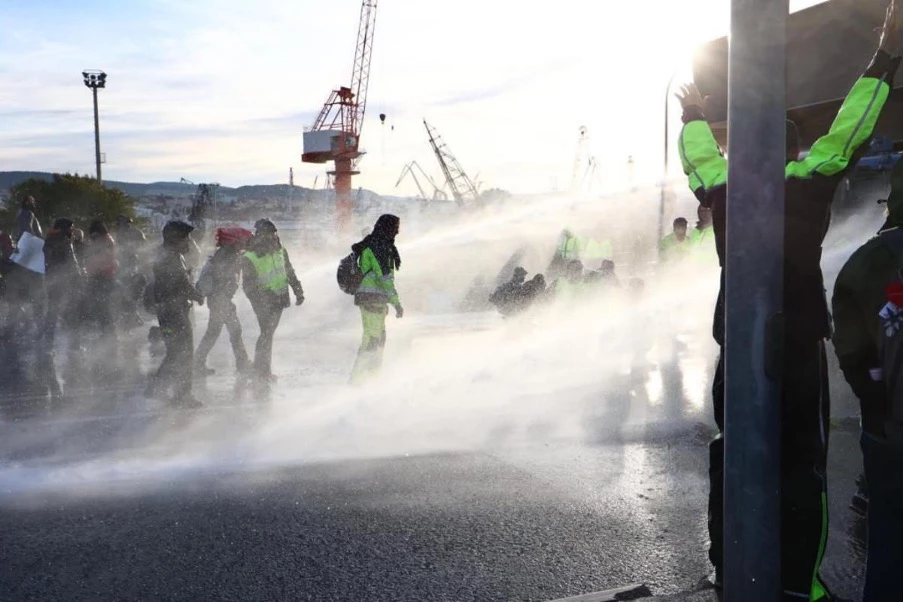
Starting from the 10th October the operators of Trieste’s harbour started a working strike because they did not want to take part into the Green Pass program. They just wanted to work. Besides, they are working at the open air. So, what was the purpose of the GP for them?
They started the working strike, and yesterday, 18th of October, the police, the finance police and more started a repression to make them move aside from the docks.
I can say that in Italy, the rights of going to work and free pacific manifesting are not valid any more. Two important principles of our Constitution are gone.
I am thinking about the way this action has been done. And I am Italian. I cannot just keeping writing about cryptocurrencies and my business like nothing has happened.
Do you think that police in riot-gear, that police trucks with water hydrants and irritating smoke are the correct way to remove people that were just asking to work with no GP constrictions?
Think of it: the people in the image above were defined “fascists”, while they were all unarmed and peaceful, with their hands in the air when the police forced first attacks.
Do you think that we can call all of this freedom, democracy?
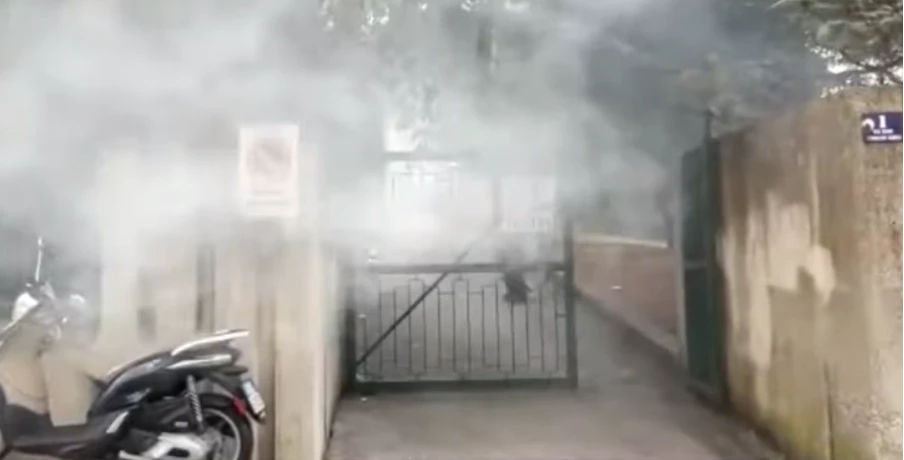
With smoke bombs dropped even into a school?
I do not want to open a debate about vaccine or not. I have my own idea and nothing in this world will make me change it.
BUT, a social denunciation is necessary, about how in Italy people that do not want to kneel to the GP compromise are treated.
BUT, my article does not want to stay just in the GP measure, that is no more a medical measure and it has fully become a political and economic measure.
I want to focus my attention on the economic aspects.
Fuel in the last 2 months has raised its price of 25%.
Domestic utilities like gas and electricity have increased by 40%, in the section of the raw material.
Milk has increased by 15%
Oil increased by 27%
Bread has increased by 32%
In a recession phase, the S&P500 is continuously growing with some gaps during its raise.
Crude oil is growing in price.
Gas is growing in price.
Other Raw materials like grain, wood, iron, copper are rising.
So, people are focusing on the GP war, while they are getting poorer and poorer.
Many of you may have recognized that I am not a conspiracy theorist but I like to highlight discrepancies that I recognize in the markets.
If during a recession, all the raw materials are growing and Nations are creating liquidity to stimulate, the result can be only one: impoverishment of people.
That is a bad news but we all know that during crisis the best opportunities comes to life, and here is when Bitcoin and cryptocurrencies come into play.
If you keep in mind that Bitcoin was created as an alternative to centralization of power, as a way to create freedom for people as a for of “liquid barter”, you will figure out why I am writing this article with some tear-drops for what is happening in Italy to some people that are just fighting for their rights. But under the tear-drops I have a big smile, because I think I know how to face this situation.
Today, the Italian government has been reported to the United Nations for the violations of human rights.
We will see what will happen, but Italians will never stop fighting for their rights of work and of pacific demonstrations.
The Tangle, IOTA's interpretation of the Blockchain
Iota gave a completely alternative interpretation to the Blockchain: instead of using a binary system (0 = False, 1 = true) they decided to use a ternary system, more precisely a balanced ternary system. Iin addition to the values 0 and 1, IOTA added the value -1 which represents an undefined variable; this means that we don't know if it is true or false.
In practice, this how the Tangle works: each transaction to be stored on the BC, in order to be transcribed (and not validated) must validate two previous transactions.
To confirm that the transactions are correctly validated, Iota has set up the Coordinator, able to create check-points, as since there are still "few" transactions, any Hacker could sneak into the network and validate as correct transactions some transactions that are not. For example, the so called “double expense”.
The balanced ternary validation method, to transcribe the transaction must validate 2 previous transactions: one recent and one older. The problem arises when the past transactions are few because the system would always and only rely on that as it is the most reliable.
To avoid this situation, the IOTA developers have set up a coordinator, managed directly by the company, who establishes checkpoints. These checkpoints are controlled transactions that serve to increase reliable past transactions.
It is evident that in this way the system is absolutely not decentralized, on the contrary, quite the opposite: to instill security in the system it is centralized as all the registrations are filtered by the coordinator.
Iota plans to remove the coordinator in order to get a real decentralized Blockchain.
The removal of the coordinator takes the picturesque name of coordicide and the White Paper is available on the website.
The Coordicide is divided into 3 steps, which take their name from the honey manufacturing stages by bees.
Pollen - Nectar - Honey
The pollen phase has already started in June of this year, while the Nectar phase will start shortly.
In the nectar phase, network users will be able to "create nectar" by reporting bugs within the network.
The honey phase can be defined as a provisional mainnet in order to test the total absence of the Coordinator.
The final mainnet is scheduled for early 2021
Through this interpretation of the blockchain the scalability problem is solved, in fact it works exactly the opposite of the BTC Blockchain. The greater the transactions, the greater the validations and consequently it becomes faster because it is not necessary to solve an algorithm that is based on the problem of the Byzantine Generals.
With the completion of the Chrysalis phase 1, IOTA's testnet reached a peak of 1500 transactions per second.
Well we have come to Iota 2.0, with the exclusion of the coordinator.
Still the test phases are proceeding and in parallel also the development of the potential of the network, in fact it seems to be started the research to be able to tokenize on the Tangle.
Hive For Newbies
Good morning everyone!
Today I would like to start introducing Hive and its ecosystem. I thought this topic might be of interest to several readers. Since the whole ecosystem of Hive is quite varied and articulated, I think that a few articles of explanation can help us all to better understand what this ecosystem is, how it works and how to make the most of it. This will be a first general article of a series that I would have the pleasure to bring forward to deepen the Hive ecosystem.
If you have any advice or questions, I invite you to ask me in the comments below the article!
What is Hive?
Hive is a very special and innovative social networking platform. Although the most famous social networks like Facebook, Instagram or YouTube are centralized and managed by companies that control what happens on them, Hive is not. In fact, it is a completely decentralized platform. It doesn't have an owner, a single server to store the data and nobody controls and verifies the users.
Hive is designed to store large amounts of content and make it available for time-based monetization. Examples of use include social media, interactive games, identity management, voting systems, and microfinance that provide monetized rewards for content producers. Considering the widespread adoption of currencies and platforms, the performance of the blockchain is intended to scale. By combining lightning-fast processing time and no-fee transactions, Hive is expected to become one of the leading blockchain technologies used by people all over the world.
But how is it possible to create such a platform?
Just rely on the blockchain, which is one of the most innovative technologies in recent years. In fact, it allows you to create completely decentralized platforms and projects and eliminate the presence of intermediaries. However, Hive is not just any blockchain, it is part of the most innovative and modern category 3.0 blockchain. It is based on the Delegated Proof of Stake (DPoS) protocol, which is an innovative protocol. In fact, it is more scalable and efficient than the Proof of Work (PoW) on which Bitcoin is based.
Hive was born in 2020 from the separation (hard fork) of the former Steem blockchain. This split is carefully planned by the community and community members fear that Steem is abandoning the values it established. From the hard fork to now, the project has grown so much. It is not yet fully known to the public, so there is still good room for growth.
Hive has a thriving ecosystem of over 126 apps, communities & projects and is home to some of the most-used Web3 apps in the world, such as Splinterlands, 3Speak, LeoFinance, PeakD and Hive.Blog.
Hive is an innovative and forward-looking decentralized blockchain and ecosystem that aims to scale up while considering the widespread adoption of currencies and platforms. By combining lightning-fast processing time and no-fee transactions, Hive is expected to become one of the leading Web3 blockchains used by people all over the world.
Hive is:
- Fast: Transaction take less than 3 seconds.
- Scalable: Future proof resource-bandwidth and storage system
- Powerful: Battle-tested for 5 years by hundreds apps, communities and projects around the world.
After this brief introduction about Hive, I hope you are a little clearer on what this ecosystem is. But don't worry. I will continue in the future to publish new more specific articles, in which we will go to see well all the various facets of the Hive ecosystem. In the next article we will also talk about the Hive token.
Are you on Hive for a long time? Write a tip for the community in a comment below.
Cypherpunks, a bunch of maniacs or the first Bitcoin supporters?
The Cypherpunks, precursors of cryptography to protect privacy, laid the foundations for the birth of Bitcoin, or more generally of Cryptocurrencies.
The Cypherpunk movement was born in the late 1980s with a very specific idea: to protect your personal data as much as possible.
In order to do this, they used computer cryptography.
The ideology that animated these people was, and still remains, very simple: a secret thing is extremely different from a private thing.
**I'll explain.**
A secret thing must not be revealed to anyone, while a private thing is something that is not intended to be revealed to the whole world.
It goes without saying that the speech is extremely clear and we are stealing with our dear old privacy, the reason for discussion between peoples and governments since ages.
In the early 1990s, this movement communicated through encrypted and secure Mailing Lists.
In the famous "A Cypherpunk manifesto" Eric Huges states that the movement builds anonymous systems through the use of cryptography.
Through these systems, money and information are transferred in a confidential manner; the software is written directly by them and disclosed free of charge to allow everyone to benefit from it.
These ideas were developed by different and important personalities who provided all the pieces for the construction of the Puzzle that we now call Bitcoin. Thanks to their discoveries.
**These people we should thank for, are:**
David Chaum, inventor of DigiCash, the first company that integrated money with cryptography to make transactions anonymous with a system of centralization and clearing;
Adam Back, in 1997 created a system called HashCash to limit spam emails, the algorithm provided the insertion of a Token (hashcash) in the header.
In this way, it forced spammers to spend a significant amount of computational costs.
Wei Dai, a computer engineer, in 1998 published a paper where he gave his idea about the development of the cryptocurrency B-Money, an anonymous and distributed electronic cash system;
Szabo, blogger, cryptographer and inventor of smart-contracts, in 2005 published the “bit gold proposal”.
It was a digital currency based on the reusable Proof Of Work, a cryptographic trick already used by Adam Back in the Hashcash token.
All these pieces were taken by the Nakamoto Team and appropriately adapted they produced the Blockchain, originating the best known digital currency in the world: Bitcoin.
As I have repeatedly stated, the implementation of the Blockchain is considered a cultural movement; now we have a mathematical certainty.
All the cryptographic solutions oriented towards data privacy were invented by the cypherpunk movement.
At this point we can safely assert that the Blockchain is actually a cultural movement.
While previously it was considered a cultural movement as regards the new way of "thinking" of the Blockchain and the necessary transparency that underlies its use, with the social movement of Cypherpunks, we have the mathematical certainty that it is a cultural movement.
As you already noticed, I like to leave you with an open question: what if someone among these chypherpunks chose the name Satoshi Nakamoto, the name of an existing person, just because its face is particularly funny and friendly?
How many ways I have to earn with cryptocurrencies?
With this article I want to create a periodic update for the community about how I do earn with cryptocurrencies.
At first let’s make a quick introduction.
I do not think that all the money should be put into cryptocurrencies and I tend to invest only the money I can afford to live without. Beside this fact, the diversification is always the wisest way to create an investment portfolio so even if I am a professional within the cryptocurrency field I am the first who suggests people to avoid all eggs in the same basket.
**My first income is Trading.**
I do trading mainly on Spot trading and I am developing algos for Futures trading on cryptocurrencies. I do use Binance to trade because of the good liquidity and the high number of markets. This is the only income that for the moment I am not going to share, since it may give bad parameters to traders that are starting to trade. For newbies, just keep in mind that you must focus at first on discipline and money management, later on the technique.
**My second income is made of books and video-courses**
I recently wrote a book and made a video-course about cryptocurrencies and related disciplines (English translation available soon). They got great reviews and even better impressions from people since they all appreciate the way I explain things. I think I am clear enough without becoming too prolix. This, actually, is a completely passive income since I have created them once and they are now selling.
I am already working at a new book dedicated to cryptocurrency trading and a deep technical video-course about trading. Some active work to create other passive incomes.
**My third income is Staking**.
At the moment I do Staking just on TRX because it’s among the tokens that provide the best yields and I really like the TRX environment. I have around 48.000 TRX on Staking on the Representative CryptoguyinZa, that I had the chance to know directly and is a great tech guy! Every day I earn something around 10TRX, that now are like 0.3$ per day and 9$ per month. Nothing that will change my life, but considering that this plafond is generated from my very beginning bet on Bitcoin in 2017 (100$) I cannot complain since now they are more or less 1200$.
I took a compromise one year ago saying that within my birthday in 2020 (it was in June) I was going to have 1M TRX in Staking. Guess what? I am now asked for explanations why I have just 48k TRX and not 1M TRX. Well, you know what?
I really do not give a heck to what “few thousands of TRX holders” say, since my Money Management is only mine and I went definitely heavier in BTC and ETH purchase for the mid term.
**My fourth income is Brave Browser**
Another income that does not change my life but it is a passive income as well are BAT tokens coming from Brave Browser.
I am a Brave Browser user through this Italian leading financial website (https://www.amicaborsa.com/). I am not allowed to publish the income from this website but I can assure that every year they allow me to increment my mid term plan with a decent amount of ETH.
Besides the economic incentive, Brave is a privacy browser with block for advertisements integrated in websited
These are my results after one year of usage. You can easily download Brave here and by watching ads you will be paid every month! (https://brave.com/?ref=ami734)
**My fifth income is mining**
This income is still low since we are starting right now to develop a mining farm where we found great electricity price and technical support. Launch of the public sale of this service will be made in the coming weeks. I am an investor and one of the creators as well of this mining farm and it’s two years up to now that we are looking for the best place to set up the farm in and after some trials in particular countries, we have probably found a good solution.
**My sixth income are live courses**
I love teaching people topics that may change their way of thinking or their way of acting and I find that sharing economical/financial insights from my experience is really satisfying. I have already made some of them and others are in plan. The topics of these course are mainly difference between crypto-speculation and crypto-entrepreneurship, and many other information (entry level or pro level) that may suit the audience.
Last but not least I am launching a Youtube Channel that as you probably can see, it is really brand new. First videos will be in Italian to satisfy my existing audience but later on I am going to move to English speaking videos with Italian subs.
I am more than ready to share insights about how and why I created those incomes. And if you have particular questions or you are curious about something, just leave a comment. I answer to 100% of them.
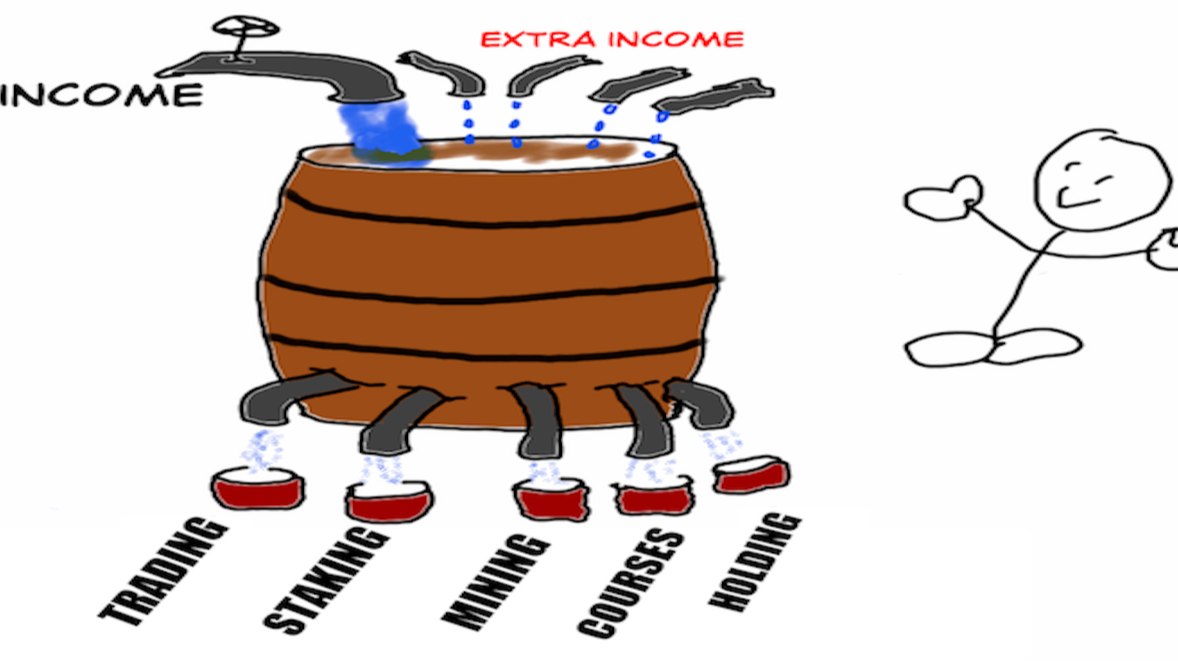
Bitcoin to the Moon but are we looking at a shooting star pattern?
Exactly one year has passed since my prediction based on the graphical pattern of the Shooting star.
In December 2020 I was writing this:
From the opening price of December, Bitcoin increased its price of more than 50% to the current ATH, in the 29.000$ area.
The bulls are calling 50.000$ but as said before, the triumphal march is unlikely to last forever.
On the 27th we have seen first signals of retrace and an important pattern showed out, called Shooting Star.
What is this pattern and what is its significance?
In the red rectangle you can see the red Japanese Candle. That is a Shooting Star.
A shooting star is a pattern very close to a doji candle, but with an upper shadow far more extended than the lower one.
This can mean only one thing. In the area above 28.000$ there is lot of offer that absorbed the first trial of overcoming that level.
Am I saying that 28k $ level is not going to fail? Actually no. I expect Bitcoin to grow more and more in price, perceived value and adoption.
Anyway, the Warren Buffet indicator says that the US market may be 200% overvalued.
How does he calculate this parameter?
“The Buffett indicator is calculated by dividing the total value of all stocks in the US market, by the gross domestic product of the US. Traders typically use the Wilshire 5000 Total Market Index as a measure of this.”
All the grey areas from the graphic are the Recession areas, and if you look closely, every Recession area has a downtrend movement: it could be already ongoing or eventually happened during that period.
We are in a strong bullish market. And Tether are continuously printed.
When can we expect the next bubble blow up? When the SEC will make some decise light on the Tether scenario. Next deadline for documents submission from Bitfinex holding towards SEC is meant to be on 15th January 2021.
I can bet that around those days some corridor voices will come out and the cryptocurrency market will start to look more similar to Nazarè (Portugal) during the World Surf Championship.
And the SEC keep printing.
Let's take a closer look at what happened.
The chart below shows the bullish run of BTC in the first months of 2021
In the arrow 1 the Shooting star, in the arrow 2 the first high and in the arrow 3 the retracement towards the ceiling of $50000.
Leaving aside the 50000$ target that materialized at the end of February 2021, we can say that the chart pattern was reliable as the first high of 40000$ was obtained in about 12 days.
The predictions were right, but of course, as I clearly wrote just above, the pattern alone did not give me confirmation of how the market would go.
"WARNING: this writing is the work of my considerations regarding the study of the charts, and is absolutely not a call for any kind of investment on cryptocurrencies.
Always DYOR!!!"
Is Bitcoin really as polluting as they are telling us
Is Bitcoin pollution as holy as baby pee?
Bitcoin is said to be polluting, to produce a lot of carbon dioxide and other things.
Well, let’s start from the beginning.
Bitcoin pollutes because of its validation method, called Proof of Work that requires powerful servers. Actual servers, used to create the computational power.
This model for example, one of the models I installed in our mining facilities is called S19Pro. And it consumes 3.15kW. In Italy, 3kW is the average electrical power available for a normal small housing unit. You know when you have the washing machine and the oven working in the same moment and the house goes black-out?
Well, any of those machines consumes like a small-sized apartment at its full capacity.
So, how much is really consuming the crypto-network?
The continuous line is the estimated (real) value is the total power consumption of Bitcoin Hashing-network. At the moment I am writing is around 200 TWh.
Annual consumption of the apartment mentioned earlier is: 3kW x 24 h x 365 days/years = 26.28 GWh, in the assumption that the apartment is fully consuming the total allocated electricity power.
So, following the assumption made until here, Bitcoin consumes almost 1000 times a 3kW apartment fully consuming all day/all night, every day of the year.
All day/All night - Jingle break: https://www.youtube.com/watch?v=mwq-T2CrJRU
And what if adding the Ethereum Blockchain consumption?
290 TWh total among the Bitcoin and the Ethereum Blockchains.
Before making other comparisons, we have to keep in mind one thing. A good part of electricity comes from off-grid areas or areas where electricity would be anyhow wasted or not produced at all. In am particularly referring to hydro-electric power, that in any case would disperse electricity or putting turbines in neutral.
In particular I refer to Icelands and some areas of Asia and Russia. Not all of them. But there I could observe the highest density of off-grid areas.
But let’s get back to bitcoin pollution.
People are pointing their fingers to bitcoin pollution but, banks, intensive breedings, truck transportations?
Bitcoin represents an evolution in the payments, in the monetary democracy and in privacy.
Banks, intensive breedings and trucks represent already a solution from a previous generation.
- Banks with their quantitative easing, fractional reserves and repo market are polluting economic realm.
- Intensive breedings with all hormones and anti-biotic are polluting mankind health.
- Trucks and the resistance to reailways and other less polluting transportations systems are polluting air.
Honestly, I prefer to suffer some pollution from bitcoin that represent a huge evolution if compared to the other cases.
What do you think on that? Do you consider as well that a form of “environmental sacrifice” may be justified from the evolution that this sacrifice may bring?
Why mining is still profitable?
I come from Italy and there the electric power for the retail customer can cost up to $0.22/kWh. Anyway, in my experience I found that places can provide you the electricity down to $0.03/kWh.
Let’s assume we are buying the last Bitcoin miner, the S19 Pro, with a 110 TH/s hashrate on the SHA-256 algorithm, which has a power consumption of 3250W. The cost at the seller is $14000.
You must take into account shipment (1% of the cost, assuming we are shipping more ASICs), custom clearance (20% of the cost), and installation costs (1% of the cost). Plus of course the electrical wires, network connection and proper shelves to optimize space. Let’s assume these last expenses are comprised into the electricity costs.
Let’s say that this machine can work up to 2 years, with a decent production, but to make the calculation I will make a rough approximation assuming that the production for the next two years will be the same as today. I will go deeper into mining calculations in other posts, do not hate me. I am just waming up the engines.
So: for two years costs I would have to pay $1708 in the $0.03/kWh country or $12526 in the $0.22/kWh country.
Total costs in the cheap country would be: 1708+14000+140+2800+140 = $18788
Total costs in the expensive country would be: 12526+14000+140+2800+140 = $29606
Actual daily BTC production is 0.000576 BTC, that in two years would actually be 0.42048 BTC. BTC today is trading around $ 49000!
First though? Well, you may profit in the cheap scenario and you would be far far away from the break even point in the expensive country.
But you know what? I am a daily cryptocurrency trader and I learnt that the mining machines prices is 100% correlated to the price of the cryptocurrency, so, if Bitcoin is cheap now, ASICs will be cheap as well. If Bitcoin price goes up, the price of the miners will increase as well.
That is the first reason why you should never evaluate your mining investment basing your data on the current market value. I am quite confident that Bitcoin price will increase in the next future and the price of the ASICs will follow. So, if you wait to buy?
If BTC price goes down, you may find a lower potential profi, but you may buy the S19 Pro at a lower price. So in the mid term your percentage profit would be higher.
If BTC price goes up, you may find a higher potential profit, but you will find the S19 Pro at a higher price. So in the mid term your percentage profit would be lower.
That is why, with our mining farm, we do not buy the dip, but we try to buy mining machines when cryptocurrencies hit the dip. We then educate ourselves that mining profits must be watched with a mid term perspective and we avoid selling cryptos to pay the bills.
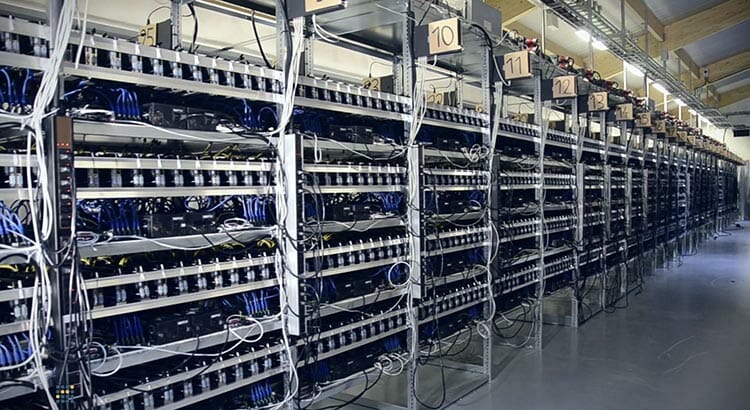
The finance of the new millennium: DeFi
**What is De-Fi?**
Decentralized finance, more commonly called De-Fi (Decentralized Finance), has been making an appearance for a couple of years now.
As with cryptocurrencies, the purpose of DeFi is to reduce, or even avoid, any kind of intermediary.
Depending on the strength of decentralization (i.e. removal of intermediaries) there are two DeFi types.
- Weak DeFi, relying on "traditional" peer-to-peer platforms;
- Strong DeFi, based entirely on distributed ledgers (DLT). The most renowned is, precisely, the blockchain.
As everyone knows, however, the blockchain is a "simple" registry with the particularity of TimeStamp; that is, the "date certain".
So how could it guarantee that all operations can be carried out correctly and above all co-oblige the actors of the transaction to obtain the correct result?
Through the use of Smart-Contracts.
Smart-Contracts are nothing more than particular code routines that exploit the if-then algorithmic construct.
When two actors commit to perform a particular operation, the variables are taken over by the Smart-Contract that manages them and sends the operation to a successful conclusion only and exclusively when the conditions imposed by the programmer are met.
The extreme innovation of this new financial frontier is the accessibility to any person who has an active wallet.
This simplicity has meant that in a very short time (just over a year) the volumes have exceeded 23 billion dollars.
Defipulse.com is the site where you can retrieve this information that, being transparent, is obtained through the value contained in the Smart-Contract.
**How Does DeFi Work?**
Let's take a look at the two types of DeFi present; the weak and the strong.
In order to get into the functioning, we use the Strong DeFi, the one based on the Blockchain and Smart-Contract.
The blockchain is a particular distributed ledger, where all the blocks are connected to each other through a "chain" and this chain consists of cryptographic protocols.
In fact, the next block contains the identifier (Hash) of the previous one.
Compared to other distributed ledgers, the blockchain allows transactions with a unique asset.
In this case a cryptocurrency, but you can also exchange tokens of any kind (if you don't know what tokens are read here)
A token can represent anything from a right to a physical currency (in this case it's called a Stable-coin).
The tokens can be exchanged through the blockchain and are created by Smart-Contracts (these software through the usual algorithmic construct "if-then" can also create assets).
Obviously, these smart-contracts before being activated, are verified by the decentralized network.
Once they are verified and authorized, they are placed in a blockchain and then incorporated into the blockchain.
As you can easily guess, not all blockchains can handle smart-contracts; one of the most renowned (after all, it was the first!) is Ethereum.
Almost all, DeFi's applications rely on this blockchain; only recently the Smart Binance Chain has been added.
**How is DeFi revolutionizing the crypto world?**
Every person dedicated to online cryptocurrency trading must have an account on an exchange, where they transfer funds in order to buy/sell tokens.
Here, in DeFi, this is not necessary: everything is connected to your wallet.
The interfacing app connects to your wallet (clearly we will have to confirm it with our credentials) and everything is done.
These exchanges are called Dex, or decentralized exchanges: no intermediary, no volume limit and, above all, the keys to your wallet are not in the "hands" of any centralized exchange.
Obviously in order to access any service, then activate the smart-contract, it must be confirmed through the wallet and this has a cost (not excessive, but it has a cost) this is because the miners must record on the blockchain that our wallet will also interact with that particular smart-contract.
This financial frontier really out of the ordinary, has moved volumes of money so important that Nasdaq has launched DEFX: an index that monitors the major products of DeFi.
Another important goal achieved by DeFi is the possibility of cryptographic lending: I block a certain amount of money which is placed in a pool.
Of the blocked sum I receive commissions because a part of it is not usable.
Let me explain.
Depending on the platform, I can get a loan on the blocked sum, which of course is already covered by the guarantee of the sum I paid.
Let's take the example of MakerDAO which is the most important lending platform.
Against a sum paid, I can borrow 50% of it.
Apparently it seems like a rip-off, but it's not; in fact I can use half of the blocked capital: the passive interests are compensated with the active ones of the blocked sum.
In practice the cost of money is zero... isn't that extraordinary?
**A clarification**
The interests accrued with lending are not to be confused with the income derived from staking, in fact they are two passive incomes that work in a diametrically opposite way.
In fact, in an old post on Publish0x I dealt with this topic, but I think I will return to it because very often there is confusion.
Unbelievable but true !!!
The Bitcoin blockchain is the "oldest" in the digital landscape, and therefore we can also consider it the most tested and solid; but…
Well, something technically impossible has been recorded: a double expense!
Here we are:
It sounds surreal, but it happened.
**Let's see how.**
As we know, the validation of the BTC blockchain blocks are sequential and the fundamental element is that the hash of the previous one is reported in the next block.
Validation, subsequently, takes place through the Proof of Work (PoW) consent protocol.
Apparently it could be enough to ward off any attacks, but to avoid them absolutely, the difficulty of the protocol increases every 14 days; this is because some miners could join and increase the height of the block too much.
Not only that, the unit of time was also introduced as a parameter.
The timestamp found in the block is set by the Miner, but to prevent it from falsifying entered data, 2 protection mechanisms have been provided:
The MPT (Median Past Time) rule, that is that the timestamp must be greater than half of the last 11 blocks, in this case 6. And therefore the minimum confirmation must be 6 blocks, thus reducing the risk that someone could attack the network;
The Future Block Time rule, in this rule, however, the timestamp cannot be more than 2 hours ahead of a constant named MAX_FUTURE_BLOCK_TIME; furthermore, the maximum time provided by the node and the actual time of the machine cannot exceed 90 minutes. In this way, all timestamps that do not respect these rules are discarded.
**So how did it happen?**
Let's take a good look at the photo I entered: we can see that there was a time lag in the timestamps that blocked the bitcoin network for 2 minutes.
Thanks to this indecision of the network, in order to identify the longest one, someone was able to spend that amount for the longest chain.
We are sure that this is a double expense as no RBF (Replace by Fee) was detected.
The offending block is 666833 and the double spending figure is 0.00062063 BTC.
This fact could alarm someone, but it is completely unfounded as the system has recovered immediately and there is no sign that a similar event can re-occur.
Hehehe, I guess a lot of the readers were alarmed, right?
Don't worry, it's not necessary, now I'll explain what happened and how Team Nakamoto thought about this possibility too.
Follow me!
**But what is it?**
Simply a block that has two validations and both have been considered TRUE by the other nodes. So one might say that the Nakamoto team designed bullshit then, but that's not the case. This possibility was already known and, in this regard, the blockchain considers the chain with more blocks valid.
**How can such a thing happen?**
Very simple: the physical latencies due to the network, or, if it is more understandable, to the communication times between the nodes.
Let me explain with an example.
Suppose that a block is validated in Russia, and the same block is also validated in Mexico, the block thus validated will be delivered to the miners that are geographically closest; and on that block they will start undermining the next one.
Regardless of whether the solution to the problem is different, these blocks create a conflict because they are both valid but only one can be added.
**Then?**
At this point a rule is inserted: the longest blockchain becomes reliable (therefore true).
In practice, when the next block is confirmed, the previous block is confirmed valid, which can be “Russian” or “Mexican”.
Since, however, the Stale-Block contains transactions that must be recorded (otherwise you could, in fact, incur the double expense), the data are delivered to the MemPool which will insert them in a future block.
The factors that contribute to the creation of the Stale-Blocks are mainly the distances between the computers that make up the nodes and the communication delays.
Someone careful enough could assert that, in this way, an attack on the Bitcoin network can be launched.
Yes, it is possible as long as you are able to perform these maneuvers (he must be really good!)
I constantly check my transaction until I see it validated on a block that will become Stale-Block. Once I am sure that the block is defined as Stale-Block, I immediately execute another transaction of the same amount, increasing the validation reward so that the miners validate the second transaction before the original retrieved from the Stale-Block.
Here is explained in a technical way, albeit very simple as it was possible to have a double expense: it did not happen, in fact!
The possibilities of bypassing the Bitcoin network are there, yes, but only on paper: a procedure as I described is so difficult to apply that it is even impossible: in the time that we become aware that our transaction is part of a Stale-Block, the information has already been delivered to the Mempools and in the process of being validated.
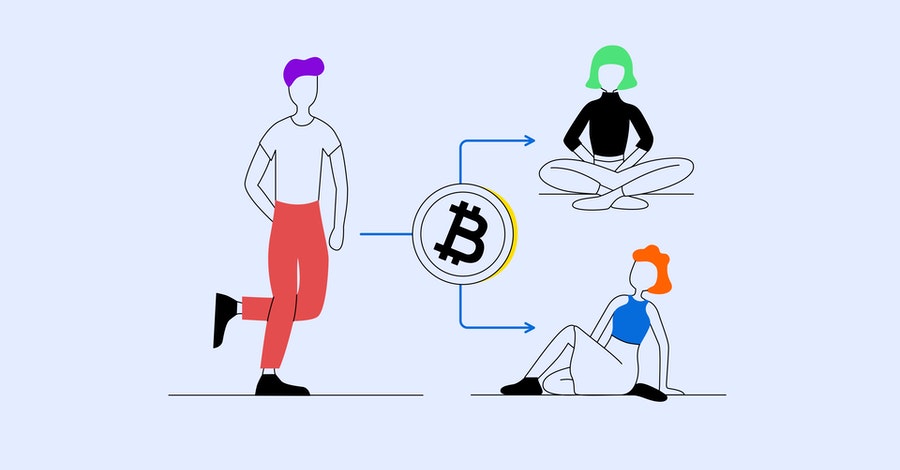
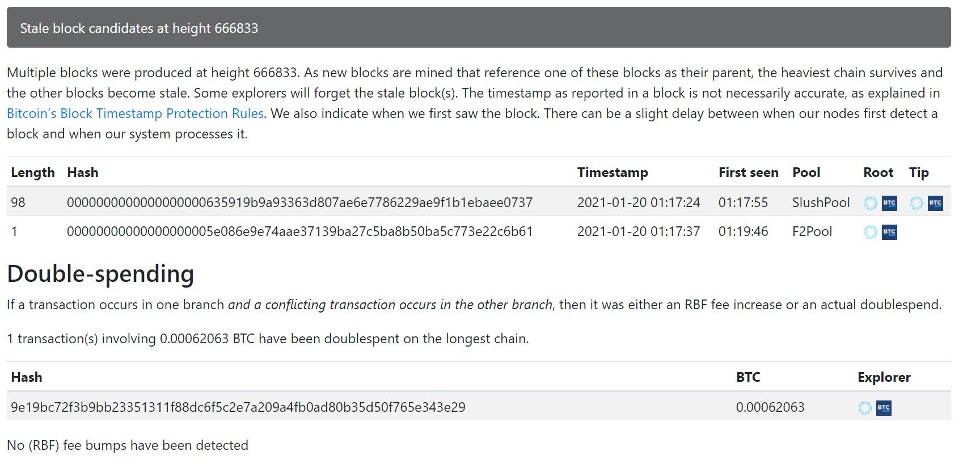
Skyrocketing Ethereum GAS, is it possible to decrease it?
Anyone of us who has approached DeFi, will have undoubtedly noticed the extremely high "commission" fees of Ethereum.
I realized it too, moving inside the Harvest Farm platform: to sign a smart-contract from 15 to 30$ are requested!
These are crazy figures that conflict with the philosophy of decentralized finance: finance within everyone's reach extremely simplified through GUIs and affordable costs.
In fact, the costs are reaching impossible figures; fortunately there are the "parallel" blockchains where, being the validation PoS, the fees are very low and in some cases zero (on the BSC, smart-contracts are signed for free and the various fund allocation operations do not exceed 0.15$).
Certainly it is that through the Ethereum network, the security you have against the various scams are extremely higher, but this is not the reason why the GAS is so high.
The issues with such high fees can be attributed to the nature of the Ethereum blockchain.
In addition to network congestion, there is also the limited block capacity and scalability of this blockchain.
The operating range of the Ethereum network is between 15 and 45 transactions per second: extremely low if we relate it to the increase in the number of entities that have access to DeFi.
**Not only**
There are more and more platforms that create dedicated dApps and that, relying on the network, increase its congestion.
This situation is about to implode and is gradually driving transaction fees to over $75. Just think that a short time ago I created NFTs at a cost of about 4$, a few days later the fee was over 120$!
So, is it possible to do something about it?
You can check the NFTs I created here, from an artist I am partnering with!
https://rarible.com/rossanoferrari
Leaving aside, for a moment, blockchains that validate with PoS, the only way to be able to make the Ethereum blockchain scalable is to leverage Layer 2.
What is called the Lightning Network.
Using the Layer 2 the Polygon network has recorded 7.5 million transactions, while Ethereum (with the "traditional" method) has stopped at 1.5 million!
The Ethereum 2.0 project is delaying to arrive so it is necessary to find valid temporary alternatives to limit this drastic increase in transaction costs.
As mentioned above, the exploitation of Layer 2 gives excellent results, but it is necessary to have a security management rather timely, as working on Layer 2 means being off-chain.
In this regard, the Zk rollup protocol can be used.
Simply put, transactions are recorded in a Merkle tree (where each transaction is verified within the system itself) and deliver the findings to the blockchain.
In this protocol, the Zk rollup, 2 actors intervene:
**The user**: creates the transfer transaction and signs it with the private key; then sends it to the Relayer.
**The Relayer**: Provides the collection and verification of transactions by creating the Merkle tree, and delivers everything to the blockchain (in practice is an oracle).
But who certifies the reliability and correctness of the Relayer?
If the Relayer in addition to the Merkle tree also sends the transactions, we would be back to square one, then?
That's where the Zero Knowledge protocol comes in!
Through this protocol it is possible to be aware of something without making the content public.
So the Relayer in addition to the creation of the Merkle tree, must also deliver a proof of veracity generated with the default ZK protocol:
Ensure that the nonce, value and transaction fees are correct and that the signature is correct;
Ensure that the migration process of the previous state to the next state is correct.
This is all delivered to the blockchain without transferring the signature and nonce.
With this data, the smart-contract has to check that the ZK proof is right, in which case it proceeds to register on blockchain.
As you can easily guess, the costs are extremely lower, because the data delivered by the Relayer corresponds to one transaction, while within the data package there can be up to a thousand.
It is not by chance that at the beginning I talked about the possibilities offered by the Binance Smart Chain, but we are in a centralized environment, so we are exposed to possible rug-pulls (I suggest you to read this article to clarify what it is and how to avoid it).
Another possibility could be the algorithm used by Diminutive Coin: the HMQ1725.
This algorithm is Highly Modified Quark 1725.
Very secure, it consists of performing 25 Hash cycles of 17 algorithms combined; the blockchain remains PoW, but these calculations can be performed by a simple home computer without necessarily using an ASIC.
Obviously the validation overhead plummets dramatically.
As we've seen the possibilities are there and until they are applied, at least until we get to the Ethereum 2.0 fork, Ethereum will be criticized for its truly skyrocketing costs; as well as losing competitiveness in the crypto world.
Iota Trinity Wallet Hack: What Happened?
On February 12th an attack was launched by a Pool of Hackers who managed to break into some accounts of the Iota Trinity Wallet and take almost $ 2 million.
Before getting to the heart of the fraudulent act and how it was perpetrated, I will try to clarify the operating system of Iota, since the architecture of the system was not attacked but it happened through a third party flaw.
The peculiarity of the IOTA Foundation is its transaction validation system to be written on the DLT (Distributed Ledger Technologies).
To obtain the validation of any cryptographic transaction we rely on the method of the Byzantine Generals; that is consensus: when the majority of nodes agree on a possible solution to the problem, we write the block: therefore, the Blockchain is obtained thanks to the Game Theory.
The main cryptocurrency that uses this system is Bitcoin and as we all know it uses a large amount of energy.
Not only that, the calculations to be made also imply a slowness in evasion, consequently there is a limit in the number of operations that can be recorded in the unit of time (about 7 per second).
The intrinsic feature described above is called Scalability and is one of the limiting factors to Bitcoin's Mass Adoption
Pay attention: this feature was designed by the Nakamoto Team, to give greater security to the system and be able to make it decentralized in all respects.
The Nakamoto Team has in fact created a decentralized system, as in order to subvert the system, it would be necessary that at least 51% of the Miners' computing power be managed by a single Team: in that case incorrect operations could also be validated .
As I mentioned, Iota uses a different system, which is called a Direct Acyclic Graph.
In simple terms, if you start from a vertex, following the path, you never go back to the starting point: this is because the vertices are connected by a line with a direction and a direction.
In the figure you see an example of the graph.
Iota's developers follow this principle: I create my own transaction and in doing so I validate two Random transactions before mine.
My transaction is clearly not validated yet as a subsequent transaction is needed to execute it.
In doing so, Iota was able to eliminate the presence of the Miners, as my transaction will validate two previous transactions.
In this post I am going to go in depth on the Iota Tangle.
In order to understand where the flaw was, Iota Foundation deactivated the Mainnet, blocking the validation of all transactions.
So, it has become clear that the Coordinator makes Iota centralized.
**But let's see what happened.**
Iota has entered into a partnership with another company, MoonPay, which gives the possibility to purchase Miota directly from fiat currency without too many checks.
To do this, MoonPay created Seed (Wallet recovery phrases) bypassing 2FA (Two Factor Authentication) and KYC (Know Your Customer) confirmations.
And here the ground is fertile for evildoers!
The attack was planned a long time in advance: it began almost concurrently with the launch of the Partnership.
This is because the hackers had to be able to get into the stream and then find the flaw.
The hackers managed to sneak into MoonPay's algorithms and inserted the wrong SDKs (Software Development Kits).
In doing so, a user installed the unofficial application that was previously modified by the hackers, giving the mean gateway the full possession of the seeds.
The extremely important thing that emerges from this bad story is a lesson that we all need.
Safety is never too much and even if we may find processes like KYC boring, they have been set up in order to protect us.
Secondly, when we make a purchase we must be very vigilant, I'll give you an example.
To buy any object, we gather information, we verify, and when we have an idea that the product can satisfy our needs, we proceed with the purchase. Usually we also keep the packaging receipt and everything that allows us, one day, to comply with the warranty terms.
When we buy cryptocurrency, the procedure must be the same: we cannot rely on a third party operator who allows us to bypass extremely delicate processes (see KYC, 2FA or others).
I recommend that the purchase of cryptocurrency is performed directly from the site (which can be the owner of the coin or an Exchange) and not through shortcuts (private resellers, secondary website applications and so on).
We take all the steps that allow us a certain security and, why not we can also make a profit: if we are attentive to the market, we can place the purchase in a favorable position!
Pay attention of safety instead of paying the cost of consultants for the recovery of what is lost or stolen.
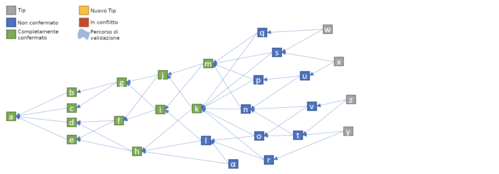
Where do I keep my cryptocurrencies? It is a question of safety
More and more often we read of Exchange and Wallet hit by Hacker attacks with the consequent loss of Cryptocurrencies.
A brief overview of the financial situation serves to explain the importance that cryptocurrencies are assuming.
Even due to the coronavirus problem, which has hit almost every corner of the world, finance is undergoing a metamorphosis.
We can call this metamorphosis with the name of Bitcoin, the King of cryptocurrencies.
**But why is Bitcoin revolutionizing the world of finance?**
In addition to the applications of its Blockchain, with the use of this cryptographic currency, there are countless advantages.
First of all, the direct connection between debtor and creditor without the intermediation of a third party who acts as guarantor.
Not only that, since there are no third parties involved in the transaction, the transfer fees are really low.
For the detractors of this new technology, cryptocurrencies are only an anonymous method for acting fraudulent moves such as money laundering.
This is just a mainstream cliché since money can easily be laundered without the need of cryptocurrencies.
For example, the € 10.00 that is in my wallet has not written my name, so they are equally anonymous.
But let's go a little deeper to see how cryptocurrencies are affecting modern finance.
Following the pandemic, all financial markets have suffered an impressive collapse and are unlikely to recover, this also due to the Lockdown period.
Let's look at BTC, instead: it had a jolt around the beginning of March of this year, just in conjunction with the Lockdown, then it fully recovered.
This movement has meant that many investors have changed their focus and, in some ways, Bitcoin has been associated to the “digital gold” idea.
As everyone knows, gold still remains the synonym of safe asset and “reserve of value”. Anyway Cryptocurrencies just knocked heavily on the golden door.
A striking example was the $ 1,200 of Helicopter Money charged by the United States: instead of being spent, many have preferred to invest them in cryptocurrencies.
This money has been made available to the mass, trusting in a peak of purchases of Major Cryptocurrencies on Coinbase.
An attempt (in some ways desperate) to move personal economy.
Obviously, uncertainty about the future has meant that people, instead of giving a movement to money, preferred to "keep it", thus activating a form of recession.
Now I return to the safety issue: as is legitimate to expect, if I invest in a gold bar I want to be fully sure that no one can violate my property.
Likewise, if I am the owner of a BTC or a fraction of it, I want to sleep peacefully with no thoughts and nightmares of Exchanges default.
**How can I do?**
In order to keep your cryptocurrencies, there are special software called Wallet, and it is here that we must make sure to keep them.
If you trade, you could even think that you can keep your cryptocurrencies for the mid-term on the same Exchange, but that is not completely right.
On the Exchange is always better to keep the Size we use for Trade operations and not the part of cryptocurrencies derived from the Crypto Accumulation Plan. Even if they don't become part of the Trade, everything related to the PACC must flow into the Wallet because the Exchanges are intrinsically less secure than the Wallets.
Wallets are divided, in turn, into two types: Wallet Software (both for PC and Smartphone) and Wallet Hardware.
The substantial difference between the two types is that the Software one is always connected to the network, while the Hardware one connects only when necessary.
Furthermore, the private keys of the Hardware Wallet are stored in a particular memory area and are never transferred in text form.
It is therefore clear that the Hardware ones are safer than the Software ones.
With regard to the security of both Wallets it is necessary to clarify: as it was possible to deduce from the two events (I speak of these because they are quite recent in chronological order) the Hacker attack was possible only and exclusively by forcing a connection with a third company, as for Iota.
As for Ledger, however, the attack was launched by modifying the Wallet management software (thus opening all the packages and resealing them).
It should be noted that when the Exchange saw "strange" movements, it immediately informed the parent company (Ledger) that it solved the problem in a very short time.
In summary, to be able to keep your cryptocurrencies in the safest way, you need to create a Wallet, and to have even greater security you can buy a Hardware Wallet.
In all ways, it is necessary to comply with all the procedures that are required by the various Wallets, including 2-factor confirmation (2FA) and saving, in a safe place, the recovery phrase.
**An advice**
Use difficult passwords, do not save them in the auto-fill program you may have integrated on your browser and prefer Native wallet rather than Centralized wallets.
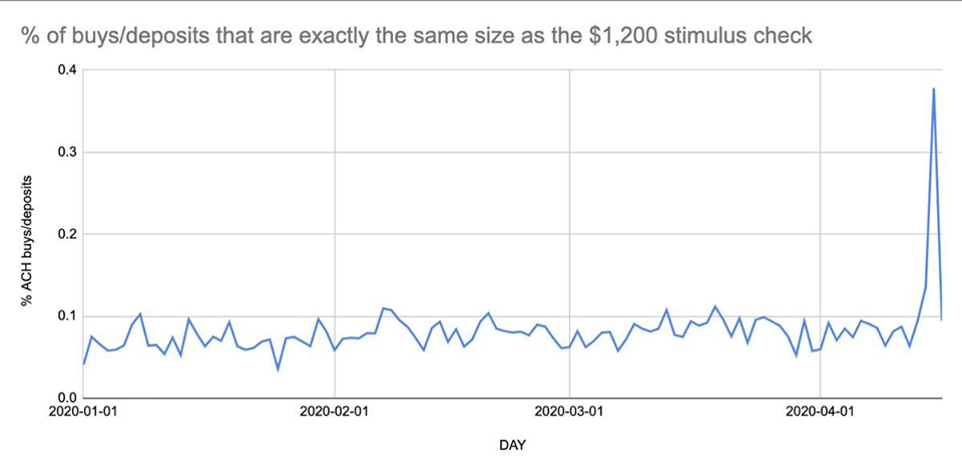
What is the 51% attack, how does it work, and how to make it harmless?
We hear a lot about the 51% attack, but what is it really about?
The 51% attack is a hacking procedure that is perpetrated against the blockchain in order to take over the ability to validate or cancel transactions at will.
Basically it consists in the possibility that miners or pools of miners have to reach half + 1 of the computing power of the entire network.
Once obtained this possibility the pool at 51% can decide to address the blockchain as it likes.
Obviously it will address it in order to seize as many coins as possible.
With this procedure you cancel all the security created to avoid double spending.
Beware, however, in this way the attackers can "only" manipulate the functioning of the blockchain!
Clearly, talking about computing power, we are talking about all those blockchains that use a PoW consensus.
Once the crooks have managed to get 51% they can start performing disruptive procedures by slowing down the consensus rate, validating, later on the transaction to their advantage.
They basically rewrite the blockchain incorrectly but having the ability to validate the transactions as correct, no one can stop them.
On top of that, being a PoW validation, they are also rewarded for writing illegitimate and incorrect things.
At this point you will ask yourself a question: then with the 51% attack you can change the supply of the various coins?
**No, absolutely not.**
With the 51% attack, you take over the global computing power for validation, you don't enter the code that has been written for the definition of the bad coin.
As soon as the 51% attack is launched, you can tell right away: the blockchain practically crashes: the miscreants have to slow down the validation of transactions by a lot in order to then take over the other miners.
**Attack on 51% and 34%**
Just as the 51% attack exists in the type of blockchain with PoW and PoS validation, the 34% attack exists in blockchains that use the Tangle validation method (IOTA for example).
The substantial difference between the two attacks has consequences arising directly from the difference in validation of the two types of blockchain.
As we know with PoW you only validate and write a block when you have solved the problem proposed by the network; so with the 51% attack in a PoW blockchain, you gain total control of the network.
**Do you remember how Tangle works?**
No problem, I'll remind you immediately: confirmation using Tangle is done by taking the validation of a previous block (possibly the furthest away from the transaction to be validated) and you validate 2 subsequent transactions.
As you can logically understand, if you launch a 34% attack on a Tangle you can only validate or cancel transactions, you cannot take full control of the blockchain!
The safest way to avoid the 51% attack is to change the validation method from PoW to PoS: in order to manipulate the network you would need a very high amount of funds to be placed in staking, which by the platforms are restricted on purpose.
Obviously all blockchains are subject to this kind of attack, but just think for a moment the computing power that would be needed to be able to take over the Bitcoin network: too high a figure to have a tangible result.
That's why the blockchains targeted are the smaller ones.
Also to ward off this possibility, Ethereum is upgrading to ETH 2.0, where block confirmation will be done through the use of PoS .
Obviously, the 51% attack still remains a demon creeping into the cryptocurrency world, but the technology is well aware of it and is already moving to prevent it from recurring.
Let's start this journey on Read.Cash
**Hey guys, Mike here.**
Welcome, bentrovati, bien venidos to all here, in my new adventure on **Read.Cash**
Why I decided to blog also on Read.Cash?
Well, at first I must say that it’s already more than one year that I have been blogging on Publish0x.
I went in the beginning for Publish0x for crypto-purposes. I loved the density of crypto-related topics that I had seen there and that is why I started there. Anyway, I then discovered Read.Cash, that offers also a lot of different topics such as Natural Behaviours, Photography and much much more.
I am into the crypto space since 2016 and from 2017 developing projects for a small investment fund and I got really deep into cryptocurrencies application and their technologies, even if I am not a developer. I am a Chemical Engineer that got really, really passioned (my girlfriend says “obsessed”) from cryptocurrencies and business development (not all necessarily related to cryptos)
My entrepreneurial experience started in 2013 with two different start-up attempts in the field of microalgae, that was the topic of my Master Thesis. I stayed into that field for some years but when I see “too much lateralization” of the market, I decided that was time to move on. My dream was becoming a serial entrepreneur, not an evangelist speaking of a technology that was simply too early to be used (and it still is).
And among other targets that I reached in the crypto-field, I also published a book, and more to come. Unfortunately this one, has just been published in Italian language. The next ones will be in English too.
So, what can you expect from my Read.Cash profile?
Well, I love trading, so that will be one of my topics. BUT, I will also get deep into different technologies, like comparisons between blockchains, their applications and the innovation (or fake innovation) brought from some of them.
With the fund I also develop mining farms, and while I am writing, I finishing a technical speech on how to setup a mining farm, where, and how to make a business out of it.
Anyway, one of the aspects that caught my attention has been the tokenization. I had different collaborations with different structures across the world, tokenizing real estate. The last one has launched a few weeks ago the Private Sale in parallel with the listing in two different exchanges.
I got deep into this field and I consider myself in smart-working since some years. At least since 2015 when I resigned from my employment as a Project Engineer in the field of biogas plant deployment in the North of Italy.
But, smart working is not smart enough if you do not feed your spirit, you do not practice enough sport, you do not eat healthy AND you do not create the correct mind alliance (as Napoleon Hill would define). You have to stay healthy!
That is why I am here. I love talking about natural diet and why, for example I tested my body with 3 months with no gluten. I love talking how to improve sport performances explaining you what sport I do play. I am really keen on personal growth and every year I have a target (growing year by year) of books to read, to feed my mind.
So, with some explanation about who I am, you probably understood what I am going to talk about.
Leave a follow, an upvote a comment to support the beginning of my journey here, together with all of you!
I will start as well to drop by all your posts to interact and creating my “best writers” collection.
All the best
Mike
 @MikeZillo