International 'digital marketing' scam syndicate on the prowl
Scam or con artists are constantly evolving new tactics to rip unsuspecting people of their funds. They often seek to take advantage of genuine money making opportunities and manipulate such avenues to suit their fraudulent goals. We have seen different schemes over the years ranging from the totally absurd to near perfectly designed cons.
The trending one is a syndicate which appears to be dispersed globally which is conning unsuspecting victims via a digital marketing for profit scam. A couple of weeks back I got a message via Whatsapp from an unknown sender who claimed to be representing a digital marketing company in Nigeria.
The person behind the keyboard at the other end claimed to be a female. She claimed that visiting a YouTube Channel, liking and subscribing and then providing evidence of task completion I'd get paid about 2 USD just like that. This sounded too good to be true which prompted me to start scrutinizing the number which had messaged me.
The first red flag was that the number was an international number with the the Indonesian country code. Why would someone who claimed to be representing a Nigerian company be using an Indonesian number?
Despite this I played along, completed the tasks and messaged the unknown contact of haven done so. Then things got really weird. She then asked me to add a different contact on Telegram and thereafter send my account details to this new contact. It was at this point that I decided that this was nothing but a con in play with a new 'format'. Without further delay I promptly blocked the WhatsApp number and reported it.
Fast forward a few days ago , I stumbled upon a conversation in a Telegram group for job seekers and placements where a member was complaining of being defrauded via this format. It turns out that I had exited at the first or preliminary stage of the con.
The victim explained that he had successfully received payments for the free tasks but was then entrapped by the con artists to make payment to get paid tasks which would earn him more. Unfortunately, the more earnings he was promised never came after making payments.
Other members thereafter shared their experiences or encounters with the group which masquerades as representatives of existing digital marketing firms. It was at this point that I realized that I walked away just in time before being lured in by the con artists for the kill.
The free tasks for which payments were redeemed, were nothing but a honey pot to draw in unsuspecting victims and thereafter defraud them when the payment for premium tasks is brought to the table.
My encounter reminds me of a similar story which another user had previously posted on this platform. This to me is no more coincidence as it suggests that these scam or con artists have a point or place of convergence to plan or share ideas about new tactics or 'formats' to deploy.
By the way if you use WhatsApp or Facebook and you're yet to enable two factor verification, it's best you do so as soon as possible. The rate of hacking and subsequent hijacking of accounts to solicit funds is rather alarming. I have witnessed two cases within the past two days which gives room for concern. So to avoid stories that touch get yours done now.
Thank you for reading
Be confident to stand alone
We live in troubling times when doing good or the right thing makes one seem like a stranger. Sometimes it gets so tough and conflicting that one might be forced to wonder if there's any point doing good or the right thing when a vast majority of people are apparently profiting from doing otherwise. Most don't seem to care anymore about the means , being self conceited by the saying "the end justifies the means".
However I encourage those who are standing against the tide of "if you can't beat them, join them" to remain steadfast on the principle of always promoting and doing what is right. Sometimes what is required to keep an evil or wrongdoing in check is the stand of a single or few individuals against it. So never be discouraged when you seem to be standing alone in the face of the multitúde promoting evil or wrong doing. Your stance may just be what is needed to encourage others to break away from the multitúde or the crowd to stand for what is right.
Demanding of bribes or financial inducement has become the order of the day in so many countries across the globe. Failure to induce some public servants or service providers might lead to delay or even outright denial of services even when such services are ordinarily paid for. It has now become a culture such that anyone who acts differently is viewed as exceptional or abnormal depending on the camp which the audience belongs to.
We especially owe the younger generation a responsibility to always promote stories of individuals who have done the right thing especially when it comes to wealth acquisition because the media is saturated by the activities of people who have acquired wealth via unscrupulous means. Tell them stories of citizens who have returned lost or misplaced valuables. Such stories often never make it to the main stream media or make front page headlines.
Some with warped reasoning would opine that these individuals who chose to do the right thing were not 'wise' to have returned the misplaced or lost funds. They might even justify it as a 'blessing from God' to them.
Doing the right thing is especially challenging when the impact doesn't seem to come quickly or seems small compared to the evil pervading the air. However be rest assured that doing the right thing never goes unrewarded or unnoticed.
The future of work
Previously people got job placements in the traditional workspace environment based solely on their qualifications or skills contained in their resume . However sometimes it turns out that the practical applications of the skills or capabilities claimed were deficient.
Though this approach is still being used as a baseline for recruitment there's been a shift in favour of practical or hands on experience. The focus now especially with technology disrupting how we get work done is more in favour of skills or what one can actually do irrespective of what's contained on the resume. Similarly other novel or new concepts to work continue to emerge. Some of them will be discussed in this write up.
**Gig economy**: As the name implies this is a niche for freelancers or contract workers to offer their services to clients who are in need of them. The gigs could be short or long term depending on the nature of the task or project to be executed.
The gig economy is fast gaining popularity as firms are tapping into the remote work sector to get tasks done without having to engage all their staff on a full time basis. This is especially useful when firms or companies have one of tasks to execute and cannot find a staff within its payroll with the required skill set.
Thus instead of having to employ an additional full time staff, the job can be outsourced. This option offers some flexibility to the employer as well as the worker who can be engaged in multiple gigs at a time. While the gig economy may seem too good to resist, it isn't without its own fair share of challenges. The most glaring one being the absence of job security and other related benefits such as health insurance which comes with a full-time job.
**Reduction in the number of days at the office**: One of the biggest lessons or gains from the Covid pandemic was the fact that productivity can be achieved without having to show up at the office everyday from 9 to 5.
Though this may not be applicable for healthcare facilities and a few other institutions where services are best rendered and certain decisions best taken via in person assessment or meetings. Some forward thinking firms have started adopting this standard and allow staff to work from home for some days. Ironically this may enhance productivity by some staff especially those who ordinary have to commute long distances to and from work.
**Remote working**: This is one of the tools used by freelancers in the gig economy. It involves not being physically present in the office workspace to get things done. The location from where it is done is usually at home or any other convenient site of choice.
Regular 9 to 5 workers may also work remotely when there's a need to work and for cogent reasons the office workspace is inaccessible such as during the pandemic. Remote work is gradually become an acceptable practice in the conventional workspace.
However nothing beats good old human interaction thus for some individuals engaged in remote working there's a chance they might occasionally experience feelings of isolation. There might also be challenges with communication. Distractions in the home could also potentially hinder effectiveness of the worker if measures aren't put in place to block such out.
**Automation**: Automation in the workspace has multifaceted applications. It ranges from using technology and software to machines to aid human workers carry out tasks, in some instances replacing humans altogether.
The objectives of automation are to enhance efficiency, streamline (production) processes and minimize the need for human involvement in executing routine or repetitive tasks.It can range from simple tasks like email filtering to complex processes in manufacturing and data analysis.
With advances in robotics and machine learning, fears have been raised about job losses as machines steadily step in to carry out roles that were traditionally done by humans.
The dynamics of work have been disrupted by the pandemic in tandem with more robust applications of artificial intelligence and machine learning to the workspace environment.
Although machines have not been able to completely replace humans because of the fact that they can only do as much as they've been programmed to, fears have been exercised of machines being run via artificial intelligence becoming self aware and potentially going beyond their mandate.
Irrespective of these fears or concerns it is necessary for anyone who wants to remain relevant in the workspace of the future to be ready to adapt and equip themselves with the skills that are currently in demand as well as those that are likely to be in demand in the future. Remember
"The future belongs to those who prepare for it today"
Thus learning, unlearning and relearning is the new watchword. The trio is now a necessity not something that's optional with the constant evolution in the workspace environment no thanks to Artificial Intelligence and robotics.
Thank you for reading.
Blockchain technology: The present and future
Blockchain technology is a decentralized and distributed digital system of ledgers that records transactions across multiple computers in a manner that is secure and transparent. It operates via a network of nodes that validate and store transactions in chronological order, forming a chain of blocks.
Each block contains a set of transactions and a cryptographic link to the previous block. This ensures the integrity and immutability of the data. Blockchain technology is most commonly associated with cryptocurrencies like Bitcoin, however its applications extend to various industries beyond finance, such as supply chain management, voting systems, and more.
Blockchain technology like any other emerging technology is a work in progress and thus not perfect. It has its strengths and weaknesses. Some of its strengths include the following:
1. **Decentralization:** It operates on a decentralized network, reducing the need for intermediaries and central authorities, which enhances transparency and security.
2. **Security:** Transactions are secured through cryptographic techniques and distributed across the network, making it difficult to alter or manipulate data.
3. **Transparency:** All participants in the network have access to the same ledger, promoting transparency and trust among parties.
4. **Immutability:** Once data is recorded on the blockchain, it's extremely difficult to alter or delete, ensuring the integrity of historical records.
5. **Efficiency:** Automated processes, smart contracts, and elimination of intermediaries streamline transactions and reduce delays.
6. **Traceability:** Blockchain's transparent nature enables the tracking of assets and transactions at every step, which is beneficial for supply chain management and provenance.
7. **Reduced Fraud:** The tamper-proof nature of blockchain reduces the risk of fraud and unauthorized activities.
8. **Cost Savings:** By removing intermediaries, automating processes, and improving efficiency, blockchain can lead to cost savings.
9. **Global Accessibility:** As a decentralized technology, blockchain can be accessed and used by anyone with an internet connection, fostering global inclusion.
10. **Smart Contracts:** These self-executing contracts automatically execute predefined actions when certain conditions are met, reducing the need for manual intervention.
11. **Data Integrity:** The consensus mechanism and cryptographic hashing ensure data integrity, making it suitable for applications where data accuracy is crucial.
12. **Enhanced Privacy:** Blockchain allows users to control their own data and share only what's necessary, potentially improving data privacy.
13. **Interoperability:** Efforts are being made to create standardized protocols that allow different blockchain networks to communicate and interact seamlessly.
14. **Censorship Resistance:** Blockchain's decentralized nature makes it resistant to censorship and government control, empowering individuals and promoting free speech.
Although blockchain has numerous advantages, it also has limitations and challenges that need to be addressed for broader adoption in various industries. Some of its challenges are outlined below.
1. **Scalability:** Some blockchain networks struggle to handle a large number of transactions quickly and efficiently, leading to slower processing times and higher costs.
2. **Energy Consumption:** Proof-of-Work (PoW) consensus mechanisms, used by some blockchains like Bitcoin, consume significant energy, raising environmental concerns.
3. **Interoperability:** Ensuring seamless communication and interaction between different blockchain networks and protocols is a complex challenge.
4. **Regulatory Uncertainty:** The regulatory landscape for blockchain and cryptocurrencies is still evolving, creating uncertainty and potential legal hurdles.
5. **Data Privacy:** While blockchain offers data transparency, ensuring the privacy of sensitive information without compromising the benefits is a challenge.
6. **Lack of Standards:** The absence of widely accepted standards can hinder interoperability, adoption, and collaboration in the blockchain space.
7. **User Experience:** Blockchain interfaces and processes can be complex for non-technical users, affecting the overall user experience.
8. **Storage Requirements:** As the blockchain ledger grows over time, storage requirements can become significant, potentially leading to centralization.
9. **Security Concerns:** While the technology itself is secure, vulnerabilities in smart contracts, software, and human errors can still lead to security breaches.
10. **Legal and Regulatory Challenges:** The legality of smart contracts, digital assets, and cross-border transactions can vary, posing legal challenges in different jurisdictions.
11. **Lack of Understanding:** Misconceptions and lack of understanding about blockchain can lead to unrealistic expectations and misguided implementations.
12. **Transition Challenges:** Integrating blockchain into existing systems can be complex, requiring changes to established processes and workflows.
13. **Cost:** While blockchain can reduce certain costs, implementing and maintaining blockchain networks can be expensive, especially for small organizations.
14. **Environmental Concerns:** Some consensus mechanisms require significant energy consumption, raising concerns about the carbon footprint of certain blockchains.
15. **Governance:** Decentralized governance models can lead to disagreements among stakeholders and slow decision-making processes.
16. **Legal Identity and Identity Management:** Ensuring the secure and accurate representation of individuals' identities on the blockchain can be challenging.
17. **Market Fragmentation:** The presence of numerous blockchain platforms and projects can lead to fragmentation, making it harder to achieve widespread adoption.
Despite the challenges outlined above, blockchain technology has a lot of unlocked potentials and its future prospects of are promising and continue to evolve. Below are some potential directions and developments:
1. **Scalability Solutions:** Efforts to improve scalability are ongoing, with the development of layer 2 solutions, sharding, and other techniques to enhance blockchain networks' capacity to handle more transactions.
2. **Interoperability:** Projects are working on creating protocols that allow different blockchain networks to communicate seamlessly, enabling cross-chain transactions and collaborations.
3. **Sustainability:** More emphasis on sustainable consensus mechanisms, such as Proof-of-Stake (PoS) and Proof-of-Authority (PoA), could address energy consumption concerns associated with PoW.
4. **Enterprise Adoption:** Blockchain's efficiency gains and transparency are driving increased adoption in industries like supply chain management, healthcare, finance, and more.
5. **Tokenization of Assets:** More assets, such as real estate, art, and intellectual property, could be tokenized and traded on blockchain platforms, expanding the concept of ownership.
6. **DeFi and Finance Evolution:** Decentralized finance (DeFi) applications could continue to grow, potentially disrupting traditional financial services with peer-to-peer lending, trading, and more.
7. **Central Bank Digital Currencies (CBDCs):** Governments are exploring the idea of issuing digital versions of their national currencies on blockchain technology.
8. **Privacy Solutions:** Enhancements in privacy-focused blockchains and zero-knowledge proofs could address concerns about sharing sensitive data on public ledgers.
9. **Supply Chain and Provenance:** Blockchain's traceability could play a crucial role in verifying the authenticity and origin of products, reducing counterfeiting.
10. **Healthcare and Identity Management:** Blockchain might be used for securely managing patient records and identities, improving data sharing and privacy.
11. **Smart Cities and IoT:** Blockchain could enable secure and decentralized management of data in smart city applications and the Internet of Things (IoT).
12. **Regulatory Clarity:** As governments develop clearer regulations for blockchain and cryptocurrencies, the technology's adoption could become more widespread.
13. **Education and Research:** Blockchain could be used for verifying educational credentials and enhancing research data integrity.
14. **Cross-Border Payments:** Blockchain's ability to facilitate fast, low-cost cross-border transactions could reshape the remittance and international payments industry.
15. **Artificial Intelligence Integration:** Integration with AI could enhance decision-making processes and enable more sophisticated automation through smart contracts.
16. **Green Initiatives:** Blockchain could play a role in tracking and verifying carbon credits, supporting environmental sustainability efforts.
17. **Decentralized Internet:** Blockchain-based protocols might contribute to the development of a more decentralized and user-centric internet.
It's important to note that while these prospects are exciting, the pace of adoption and the specific outcomes will depend on various factors including technological advancements, regulatory developments, and societal acceptance.
Thank you for reading.
Coping with addiction
Addiction is a complex and chronic condition characterized by the compulsive engagement in a rewarding stimulus, despite adverse consequences. It often involves substances like drugs or alcohol, but can also include behaviors such as gambling, gaming, or even excessive smartphone use.
The brain's reward system is affected, leading to a strong desire for the substance or behavior, difficulty in controlling it, and withdrawal symptoms when not engaged in it. It's considered a medical condition that requires treatment and support for recovery.
Addiction can manifest in various forms. Some common types of addiction include:
1. Substance Addiction: This includes addiction to substances like alcohol, drugs (both legal and illegal), nicotine, and prescription medications.
2. Behavioral Addiction: This involves compulsive behaviors that become addictive, such as gambling, gaming, shopping, internet use, and even work.
3. Food Addiction: A subtype of behavioral addiction, this refers to an uncontrollable urge to eat certain types of food, often high in sugar, fat, and salt.
4. Pornography Addiction: This involves an excessive and compulsive consumption of pornography that interferes with daily life and responsibilities.
5. Technology Addiction: This is characterized by an unhealthy obsession with technology devices and the internet, leading to negative impacts on social interactions and mental well-being.
6. Exercise Addiction: While exercise is generally healthy, it can become addictive when taken to extremes, leading to negative physical and psychological consequences.
7. Gambling Addiction: This refers to compulsive gambling behavior that leads to negative financial, emotional, and social consequences.
8. Work Addiction: Also known as "workaholism," this involves an excessive and compulsive need to work, often to the detriment of personal relationships and well-being.
9. Social Media Addiction: Excessive use of social media platforms, resulting in negative effects on mental health and real-world relationships.
It's important to note that addiction is a complex issue and can overlap or coexist with other mental health conditions. Treatment approaches vary depending on the type of addiction and individual needs.
Thus there's no one size that fits all making the process of managing addiction sometimes challenging.
The following practical steps may be useful in addressing and overcoming it:
1. **Recognize the Problem:** Acknowledge that you have an addiction and that it's affecting your life negatively.
2. **Seek Professional Help:** Consult a healthcare professional, therapist, counselor, or addiction specialist. They can provide guidance and create a personalized treatment plan.
3. **Build a Support System:** Surround yourself with supportive friends, family members, or support groups who understand your struggle and can offer encouragement.
4. **Set Clear Goals:** Define your reasons for wanting to overcome the addiction and set achievable goals to work toward.
5. **Avoid Triggers:** Identify situations, places, or people that trigger your addictive behavior, and try to avoid them or develop strategies to cope with them.
6. **Learn Coping Skills:** Develop healthier coping mechanisms for stress, anxiety, and other emotions that may have contributed to your addiction.
7. **Engage in Healthy Activities:** Replace addictive behaviors with positive and enjoyable activities, such as hobbies, exercise, and spending time with loved ones.
8. **Practice Self-Care:** Prioritize your physical and mental well-being by getting adequate sleep, eating nutritious foods, and engaging in relaxation techniques.
9. **Consider Therapy:** Cognitive Behavioral Therapy (CBT), Dialectical Behavior Therapy (DBT), and other therapeutic approaches can help address underlying issues and develop healthier thought patterns.
10. **Medication (if applicable):** In some cases, medication can be prescribed to help manage withdrawal symptoms or address coexisting mental health conditions.
11. **Create a Routine:** Establish a structured daily routine to reduce idle time, which can sometimes lead to cravings.
12. **Monitor Progress:** Keep track of your progress and setbacks, celebrating achievements and learning from challenges.
13. **Practice Mindfulness:** Mindfulness and meditation techniques can help you become more aware of your thoughts and urges, making it easier to manage them.
14. **Stay Persistent:** Overcoming addiction is a journey that takes time. Stay committed to your recovery, even if you experience setbacks.
15. **Celebrate Small Wins:** Acknowledge and celebrate each step forward, no matter how small. It's all part of the process.
Remember, managing addiction is a personal process, and what works for one person might not work for another. It's important to find a strategy that suits your individual needs and circumstances. Professional guidance and support are crucial throughout the recovery journey.
There may be times when the journey of recovery becomes so tough that one may feel the strong urge to throw in the towel and call it quits. At times like that what is needed is a strong resolve to stay the course despite the pains because of the ultimate goal.
Thank you for reading.
Can anything good come out of social engineering
The use of social engineering continues to be an issue that is subject to ethical considerations because of the risk of abuse. Some of the rather malicious ends to which it has been applied include the following:
1. **Phishing:** Sending emails or messages that appear to be from a legitimate source, often containing urgent requests to click on malicious links or provide sensitive information like passwords or credit card numbers.
2. **Pretexting:** Creating a fabricated scenario or pretext to manipulate someone into revealing information. For instance, impersonating a coworker or IT support to gain access to confidential data.
3. **Baiting:** Leaving physical media, like infected USB drives, in places where people are likely to find them. When someone picks up and uses the media, malware is introduced to their system.
4. **Tailgating/Piggybacking:** Gaining unauthorized physical access to a restricted area by following closely behind an authorized person. This can happen in office buildings or secure facilities.
5. **Quid Pro Quo:** Offering something in exchange for sensitive information, like promising tech support in return for login credentials.
6. **Reverse Social Engineering:** Convince the target that they need help or assistance, tricking them into revealing information willingly.
7. **Scareware:** Displaying pop-up alerts on a user's computer, claiming their system is infected with malware. The user is then directed to download and install fake antivirus software that's actually malware.
8. **Impersonation:** Posing as a trusted individual, such as a bank representative, government official, or company executive, to manipulate targets into divulging confidential information.
9. **Vishing (Voice Phishing):** Making phone calls pretending to be someone trustworthy, often with the aim of gathering personal or financial information.
10. **Tailoring Messages:** Crafting messages or scenarios that resonate with a person's interests, job role, or personal life to make them more likely to respond or engage.
These techniques can be used both maliciously and ethically, depending on the intent behind their use. Social engineering therefore is not all gloom and doom. There are also potential positive applications. These applications of social engineering involve using similar techniques for ethical purposes, such as improving cybersecurity, conducting social research, and enhancing communication. Here are a few examples:
1. **Security Awareness Training:** Organizations use social engineering techniques to train employees to recognize and resist phishing attempts and other cyber threats. This helps improve overall cybersecurity.
2. **User Experience Testing:** UX designers and researchers might use social engineering principles to understand how users interact with websites, apps, or products, helping to create better user experiences.
3. **Behavioral Change Campaigns:** Social engineers can promote positive behaviors, like encouraging people to adopt healthier habits or environmentally friendly practices, by using persuasive communication strategies.
4. **Ethical Hacking and Penetration Testing:** Professionals use controlled social engineering tactics to identify vulnerabilities in systems and networks, helping organizations strengthen their security.
5. **Crisis Communication:** During emergencies, social engineering principles can be used to effectively communicate instructions, reassure people, and manage the crisis.
6. **Customer Relations and Sales:** Businesses use social engineering techniques to build rapport, understand customer needs, and tailor their services accordingly, resulting in improved customer satisfaction.
7. **Public Health Campaigns:** Social engineering can be employed to promote vaccination, safe practices during disease outbreaks, and other health-related behaviors.
It is important to note that when when using social engineering techniques for positive purposes, transparency
and ethical usage are the watch words, ensuring that individuals are not deceived or manipulated for malicious intent.
Thank you for reading.
Hackers on the prowl
A couple of days ago I received an e-mail from my bank. It contained a security advisory about a new method hackers had developed and could use to hack the account of unsuspecting customers. The hackers would send the target an email purportedly from the bank prompting them to take an urgent action to secure their account.
The email would supposedly contain a link that would lead to the bank's website for the customer to take the necessary action. The trick was designed to evade a superficial check by any targeted customer. It involves cloning the url of the bank's website to divert customers to a malicious website instead of the genuine one.
You might be wondering how they could possibly manage to pull it off considering the fact that no two websites can have the same url. How then is it possible for the hackers to create and host a website with a URL that will be identical to that of the bank's website?
The url of the link the hackers would insert in the email would be an exact replica of the bank's genuine url except for one little detail. The alphabet a in the word 'bank' would be formatted with a font type different from the default font used by the bank.
This little detail could easily be missed by any unsuspecting customer. Hence the warning from the bank for customers to always be on the look out for the little details in email correspondence which may appear to have originated from it particularly those requiring or requesting the customer to click a link.
A second one I came across was borne out of a warning to freelancers who use freelancing platformers. In this instance the hackers would pose as potential clients offering tempting offers to engage freelancers. In the event that the freelancer eventually takes the bait and indicates interest, the hacker would then proceed with the con.
They would usually send the freelancer a file and not a readable document which purportedly contains the details of the job. The catch is that the freelancer would not be able to access the contents of the file hence he would reach out to the client for assistance.
The client-hacker would gladly offer to help offering instructions on how to open the file which would require them accessing the freelancers computer remotely. This access if granted would allow them to compromisie the computer in an attempt to access the freelancer's payment platforms so as to steal their funds.
The instances above are just a peek into the toolkit at the disposal of hackers. Hackers can compromise computers using various methods, such as exploiting vulnerabilities in software, tricking users into clicking on malicious links or downloading infected files, and using techniques like phishing to steal login credentials.
They might also employ techniques like social engineering to manipulate individuals into revealing sensitive information. Once they gain access, hackers can install malware, steal data, control the system remotely, or escalate their privileges to gain more control over the compromised computer.
It's important to keep your software up-to-date, use strong and unique passwords, be cautious of suspicious links and attachments, and use reliable security software to protect your computer from such attacks.
Amongst the tricks used by hackers, social engineering stands out. It is a tactic used to manipulate people into divulging confidential information or performing actions that compromise security. This can involve exploiting psychological, social, or emotional factors to deceive individuals.
Examples include phishing emails that appear legitimate, phone calls impersonating authority figures, or creating a fake sense of urgency to manipulate someone into revealing sensitive data. It's important to be cautious and verify the authenticity of requests for sensitive information, especially when they come unexpectedly or seem unusual.
Be alert and security conscious at all times.
Thank you for reading.
A newbie guide to investing
At one point or the other in order to improve our financial situation, we're likely to have though about investing. Good investments can turn one's life around for better and set one on the path for financial freedom. Conversely a bad investment decision can have catastrophic consequences which may fail to recover from. Thus before investing, it's essential to consider the following factors:
1. Financial Goals: Determine your investment objectives, whether it's long-term growth or passive income generation or fulfilling a specific need. Financial goals play a crucial role in investing by providing a clear direction and purpose for your investment decisions. They help you define what you're aiming to achieve, such as buying a house, funding education, or retiring comfortably. Having well-defined goals allows you to tailor your investment strategy, risk tolerance, and time horizon to align with your objectives. It helps you stay focused, make informed decisions, and track progress toward your desired financial outcomes.
2. Risk Tolerance: Assess how much risk you are willing to take on. High-risk investments may offer higher returns but come with greater volatility. High yield investment platforms can indeed be tempting because of the prospects of greater rewards but it could all go south too especially if such platforms are being run by bad actors in the crypto space. Thus if you're ever tempted to invest in such platforms NEVER made it a long term thing. The shorter the investment time the better.
3. Time Horizon: Consider how long you plan to invest. Longer time horizons may allow for more aggressive strategies. Time is a fundamental factor in investing due to the power of compounding. The longer your money is invested, the more it can potentially grow through the accumulation of returns. Compounding allows your initial investments to earn returns, and those returns can then generate further returns, creating a snowball effect over time. This is especially beneficial for long-term goals like retirement, as it enables your investments to grow significantly even with relatively small contributions. Additionally, time also helps to smooth out market volatility, giving your investments a chance to recover from downturns. Starting early and giving your investments time to grow is a key strategy for building wealth.
4. Diversification: Spread your investments across different asset classes to reduce risk and increase potential returns. Diversification is important in investing because it helps manage risk and enhance the potential for more consistent returns. By spreading your investments across different asset classes (such as stocks, bonds, real estate, etc.) and within each asset class (different industries or sectors), you reduce the impact of a poor performance from a single investment on your overall portfolio. If one investment performs poorly, the positive performance of others can help offset the losses.
Diversification can also provide exposure to different market conditions, reducing the impact of volatility and market fluctuations on your portfolio. It's important to note that while diversification can help mitigate risk, it doesn't eliminate it entirely. Therefore, careful consideration of your risk tolerance, investment goals, and time horizon is still essential when creating a diversified portfolio.
For optimum results try adopting the Dollar Cost Averaging (DCA) model. This model involves investing bit by bit at intervals instead of investing your entire capital as a lumpsum.
5. Investment Knowledge: Understand the investment options available and their associated risks. Research, research and research. That is why one of the basic terminologies in crypto is always DYOR (do your own research). It's your funds that are at stake thus you need to make an informed choice on what to invest it in. Knowledge is crucial in investments. Some of these reasons include
a. Informed Decisions: Having a solid understanding of investment principles, strategies, and various asset classes empowers you to make informed decisions that align with your financial goals and risk tolerance.
b. Risk Management: Knowledge helps you assess and manage risks associated with different investments. Understanding potential risks and rewards allows you to choose investments that fit your comfort level.
c. Avoiding Pitfalls: With knowledge, you can avoid common investment pitfalls, such as chasing trends, making impulsive decisions, or falling for scams.
d. Adaptability: The investment landscape is dynamic. Being well-informed enables you to adapt to changing market conditions and adjust your portfolio accordingly.
e. Avoiding Emotional Reactions: Knowledge helps you make rational decisions and prevents emotional reactions to market volatility, which can lead to costly mistakes.
f. Maximizing Returns: Knowing how different investments perform over time helps you select assets that align with your financial goals, potentially maximizing your returns.
g. Empowerment: Knowledge empowers you to take control of your financial future, reducing reliance on financial advisors and allowing you to actively manage your investments if you choose.
Overall, investing with knowledge enhances your ability to navigate the complexities of the financial markets, make strategic decisions, and work towards achieving your financial aspirations.
6. Market Conditions: Keep an eye on the overall economic and market conditions, as they can impact your investments. The crypto market is an especially volatile space where things can go from green to red in a split second. Being aware of market conditions as well as the factors that influence the state of the market is an essential tool as it dictates when you should enter or exit a selected trade or investment.
7. Fees and Expenses: Be aware of any fees and expenses associated with the investments you choose. A good grasp of investment costs, fees, and charges helps you assess the impact of these expenses on your overall returns. This is an important consideration especially when it comes to crypto as the fees charge by centralized exchanges and DeFi projects varies from platform to platform. It can range from low to moderate and in some instances being ridiculously high. So look before you leap in order to avoid losing a large portion of your anticipated profit or earnings in network or trading fees.
8. Financial Situation: Evaluate your current financial situation to ensure you have sufficient funds for emergencies before investing. Do an objective assessment to ascertain how much funds you can indeed spare for investments. Your current financial situation is a critical factor to consider when investing. It lays the foundation for your investment decisions and determines how much you can allocate to investments without jeopardizing your financial stability. NEVER invest funds intended for things such as house rent /mortgage or fees for the children (if you have any) especially when the time for fulfilling such bills is already knocking at the door. Doing such could be catastrophic.
The factors above are not exhaustive when it comes to things to be considered as it relates to investing or investments.
Thank you for taking out time to read through and I hope you derived some benefits from it.
Social media and Schadenfreude disorder
The last time you watched a supposedly 'funny' video which featured something unfortunate or bad being done to someone all in the name of pranking, what was your initial reaction? For most persons I am quite sure that it was one of amusement. This reaction of amusement to a scene where an individual is experiencing distress is certainly not normal but unfortunately it is now fast becoming the new normal, thanks to social media.
Social media sadly in this instance is numbing our ability to exercise or express empathy. It can have negative effects on empathy in several ways such as leading to desensitization because users are exposed to a constant stream of distressing news and images. Online interactions can also be impersonal, reducing the ability to connect emotionally with others.
All in the name of skit making or pranking we are enhancing a culture of reduced accountability for hurtful behavior which further impacts empathy. This has resulted in a having a vast population of people exhibiting schadenfreude.
Schadenfreude is the disorder of being amused by people's misfortune is a behavior . It is now being amplified via social media through the promotion of viral videos or content that showcase others' misfortunes. This can lead to a negative impact on empathy, as it encourages a sense of detachment and amusement rather than understanding and compassion towards those experiencing difficulties. It's essential to be mindful of our reactions and strive to cultivate empathy and kindness in our interactions both online and offline.
Feeling happy or relieved when bad things happen to others is a complex and multifaceted emotional response that can vary from person to person. It's essential to recognize that human emotions are diverse and influenced by various factors, including personal experiences, cultural norms, and individual values.
While some may experience a fleeting sense of Schadenfreude, finding pleasure in others' misfortune is generally not considered a desirable or empathetic response. Empathy involves understanding and sharing the feelings of others, and rejoicing in their suffering contradicts this principle.
It is essential to cultivate empathy and compassion towards others, acknowledging that we all face challenges and difficulties in life. Practicing empathy can help create a more compassionate and supportive society. If you find yourself experiencing Schadenfreude often, it might be helpful to reflect on the underlying reasons and work towards fostering a more empathetic mindset.
It is thus important in order for us have societies that are emotionally stable that individuals be mindful of the media content they consume as it greatly influences the emotions which they express or suppres.
Thank you for reading.
When love isn't enough
Before people get married there's usually this euphoria that accompanies a meeting with the bride or groom to be. At such meets there's usually this feeling that can only be explained by those who have experienced it. This feeling has been captured with an assortment of words. Some have described it as having butterflies in the tummy while others have dubbed it being lovestruck. Unfortunately the intensity of this feeling tends to diminish as time passes by. This reality then brings to the fore a crucial question.
**Is love (alone) really enough?**
Love is a fundamental aspect of a successful marriage, but it's not the only factor that contributes to a lasting and fulfilling partnership. Communication, trust, mutual respect, shared values, and commitment are also crucial for a strong and happy marriage. Each couple's dynamic is unique, and various elements come into play for a successful relationship. Some of the aforementioned ingredients which help to 'spice' up the love will be discussed further.
1. Mutual Respect
We shall begin with mutual respect. It is vital in a marriage because it forms the foundation of a healthy and harmonious relationship. When both partners respect each other, they value each other's opinions, feelings, and boundaries. This creates an environment of trust and openness, where conflicts can be resolved peacefully, and decisions can be made collaboratively. Mutual respect fosters empathy, understanding, and appreciation for each other, strengthening the emotional bond between spouses and promoting a long-lasting, fulfilling partnership.
2. Effective communication
Communication facilities the expression of one's feelings, emotions or ideas. For any relationship to be successful there must not simply be communication but one that is Effective. Effective communication is crucial in a marriage for several reasons. It allows couples to understand each other's thoughts, feelings, and needs, fostering a deeper emotional connection. Open communication helps prevent misunderstandings and reduces conflicts by addressing issues promptly and honestly.
Couples who communicate well are more likely to resolve conflicts constructively and find mutually beneficial solutions. Moreover, effective communication promotes trust, builds intimacy, and strengthens the overall bond between partners, creating a solid foundation for a successful and enduring marriage.
3. Compatibility
Shared values or compatibility play a significant role in a successful marriage because they provide a common framework and sense of purpose for the relationship. When partners share core values such as honesty, respect, loyalty, and similar life goals, it creates a strong sense of alignment and unity. Having shared values helps couples make important decisions together, navigate challenges, and prioritize what matters most in their lives.
Moreover, shared values contribute to a deeper emotional connection, fostering understanding and empathy between partners. It also reduces the likelihood of conflicts arising from fundamental differences in beliefs or priorities. Couples with shared values are more likely to support and complement each other's growth and development, leading to a more fulfilling and harmonious marriage.
4. Trust
Trust is one of the cornerstones of a healthy and successful marriage. It is the bedrock upon which emotional intimacy, vulnerability, and security are built. Here are some reasons why trust is crucial in a marriage:
a. Emotional Intimacy: Trust allows partners to feel safe opening up to each other, sharing their deepest thoughts, feelings, and vulnerabilities without fear of judgment.
b. Communication: Trust facilitates honest and open communication, enabling couples to discuss their needs, concerns, and expectations openly.
c. Conflict Resolution: Trust enables couples to navigate conflicts constructively, as they believe in each other's intentions and are more likely to work towards resolving issues together.
d. Reliability: Trust fosters reliability, knowing that both partners will follow through on commitments and promises, creating a sense of dependability.
e. Security and Comfort: Trust provides a sense of emotional safety and comfort within the relationship, allowing both partners to feel supported and cherished.
f. Joint Decision Making: Trust is essential in making important life decisions together, as it involves considering each other's perspectives and having confidence in each other's judgment.
g. Longevity: Trust is a key factor in maintaining a lasting and enduring marriage, as it helps couples weather challenges and grow stronger together over time.
Overall, trust forms the foundation of a successful and fulfilling marriage, promoting a deep emotional bond and a sense of partnership that can withstand the test of time.
5. Commitment
Commitment is a vital aspect of a successful marriage as it signifies the dedication and determination to make the relationship work through thick and thin. Here are some reasons why commitment is crucial in a marriage:
a. Weathering Challenges: Marriage inevitably faces challenges and difficulties. Commitment ensures that both partners are willing to work together, support each other, and find solutions to overcome these obstacles.
b. Long-term Perspective: Commitment involves looking beyond short-term ups and downs and focusing on the long-term health and growth of the relationship.
c. Emotional Security: Knowing that both partners are committed to each other provides a sense of emotional security and stability in the marriage.
d. Trust and Reliability: Commitment fosters trust as both partners rely on each other to be there, both in good times and bad.
e. Growth and Adaptation: Commitment encourages personal and relationship growth, as both partners invest in making positive changes to improve the marriage.
f. Building a Life Together: Commitment involves envisioning a shared future, making joint decisions, and working towards common goals.
g. Resisting Temptations: Commitment reduces the likelihood of being tempted by external factors and reinforces the focus on the relationship's strength and fulfillment.
Commitment lays the groundwork for a loving, supportive, and enduring partnership. It requires effort, communication, and a willingness to invest in the relationship's growth and happiness over time.
From what has been stated above,it is indeed clear that a time comes in every relationship when love simply isn't enough as a lone or sole pillar for success. The interplay of support from other pillars such as commitment, trust *et al*. becomes crucial at such times for the relationship not to collapse.
The End.
Thank you for reading.
They prepared for the wedding but not the marriage
"If you fail to plan, you plan to fail"
Benjamin Franklin, 1970
It is often said that so many marriages fail because the would be couples only concentrated on the planning for the one day event of the solemnization rather than focusing on the journey beyond the event which I dare say is more important and comes with a payload of responsibilities.
This is because after the successful solemnization event usually characterized by pomp and pageantry, the reality sets in that the road ahead will not always be smooth rather there'll be times when it appears as though the end has come. Such turbulent times aren't for the faint hearted.
It is on occasions such as those that the men are separated from the boys and women from the girls. It is only those who truly believe in the union and are ready to work for its success that will have the strength to weather such storms. Marriage like life is not a bed of roses. It has its ups and downs. There are good times and not so good times. There are times one spouse will get on the nerves of the other so much so that, either party may be tempted to throw in the towel and call it quits.
This is where compassion and understanding comes in. These two ingredients are key for any union to be successful. These ingredients are what will make spouse overlook the offences or shortcomings of the other in order for things to work. The absence of compassion and understanding is a recipe for disaster as sometimes love isn't just enough.
It is also important to state however that there are instances where couples must simply part ways when things aren't working out. There's no point for a couple being together when everyday interaction is almost akin to being at the battlefront while dodging a constant barrage of projectiles from the 'enemy'.
A union where the physical or mental health of either couple is being jeopardized by the actions of the either party needs to be ended after all reasonable attempts at resolution or resolving the issues have been made. There is no benchmark for what constitutes reasonable attempt(s). Either couple has to decide when they've sincerely had enough when there's no resolution to the lingering issues in sight.
This outcome sometimes plays out when either spouse didn't do a proper background check or they allowed themselves to be blinded by 'love' when there were clear signs of incompatibility. Some times love isn't the only reason for turning a blind eye, it could be the prospect of acquiring wealth or influence as a benefit from the union. Unions built on foundations such as these will eventually collapse as they were centered on things that are simply not enough to sustain a happy home.
To be continued
Thank you for reading.
HOOked to Wild Cash
We have seen a look of applications in recent times that incentivise user's activities. These include moving to earn, walking to earn to mention a few. There's also the aspect of encouraging users to learn while earning. Centralised excahnges such as Binance utilize this model to encourage users to learn more about the crypto ecosystem. Hooked technologies the brain behind HOOK token which by the way is listed on Binance have added another dimension to the learn to earn model by introducing completion of quizez to earn via its Wild Cash app which is available on the Android playstore.
Download App and Signup
After downloading the Wild Cash app from the playstore, signing up is a pretty simple process requiring a one time sign in with a social account such as Gmail or Facebook. Once the sign in is completed, the user can proceed to start earning from the variety of options available to do so.
**Mining to Earn**
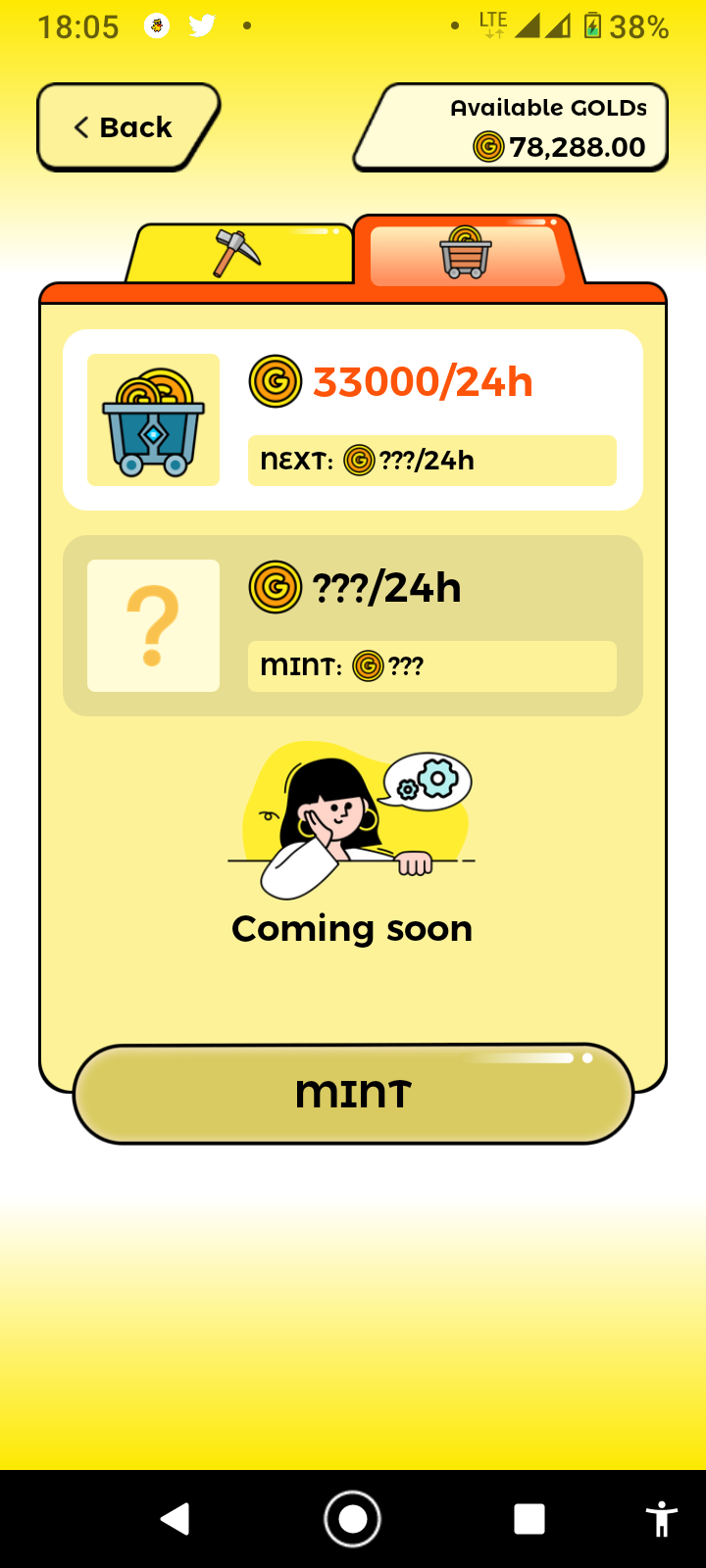
The application offers the user the opportunity of mining between 10,000 to 30,000 Golds at 24 hour hours intervals depending on the choice of the user. The default mining rate is 10,000 Golds which is optionally upgradable by the user to up to 33,000 Golds at a fee which is deducted from the Golds accumulated from mining.
There's also the option of increasing the Mining speed which is at a fee deducted also from Golds accumulated.
Initially the mining process was a one click thing which involved clicking the mine button and voila. However with subsequent app updates a captcha check as well as a quiz to earn the mining key was introduced.
This was probably a countermeasure to check the activities of bots.
Completing quizzes to Earn
There are three options to earn via quizzes in the app. They are:
1. Mega Quizzes to Share in a big prize pool
2. Crypto Camp
3. Live Quiz sessions via Binance live
For the Mega Quizzes , there are two large prize pools of 220 and 430 Million Golds. These mega Quizzes can only be participated in once within a 24 hour period.
To be eligible for a share in the prize pool one has to answer all 10 quiz questions correctly with 60 seconds allocated per question to provide the right answer. The rewards for successful users are distributed the following day.
The crypto camp offers different learning camps with different levels of rewards based on difficulty. Completing the 10 questions in the highest level of difficulty usually earns the user more rewards compared to other levels.
A user can earn more than 800 Golds for completing 10 questions completely in a row with several rounds of such available at particular times of the day.
The last quiz earning option is that via Binance live. Unfortunately this user hasn't been able to participate in any of the session because he forgot the schedule for the live quiz session on Binance. A recent update shows that winners in the live quiz session can earn up to 62 HOOK each which is worth more than 100 USDT based on the price of HOOK on Binance as at the time of penning this article.
**Building a Team to earn**
One can also earn more Golds by referring others to the app. The larger the team one builds, the larger the commissions one earns from the daily mining activity of the team members.
**A Feature rich Wallet Tab**
***Exchanging Golds to uGHT**
The first feature in the wallet tab is the exchange function which allows users to exchange earned Golds for uGHT.
The minimum amount of Golds that is eligible for exchange is 800,000. Once this criteria is met, the user makes an exchange request which is submitted for review. Once approved the Golds are converted to uGHT which appears in the wallet.
***Swap and Transfer**
The uGHT can then be swapped to BUSD which can then be transferred to any address on the BNB smartchain.
***Staking Vault**
If you're the type who loves to farm yields, then this section in the wallet is just what you need. It provides the option of staking earned Golds to earn yields.
The good thing is about out the vault is that you can stake and unstake at anytime that is there's no lock period where your Golds become inaccessible.
**Parting shot**
Wild Cash for me actually fulfills the purpose of being a quiz to earn app. I have learnt a lot about the crypto ecosystem since I began using the app. The things I have learnt range from simple stuff about the origins of cryptocurrency, the Metaverse and block chains to more complex stuff such as asymmetric encryption, hash, transaction signatures, peer types and Blockchain trilema.
***Help me build my Team***
Kindly help me build my team by signing up with my referral link below. Muchos gracias.
Join My Team https://hsacw.xyz/r/1jHH5G
Fake Pi Coin Listed for trading on exchanges
For those who've spent some time in the Crypto space , one of the dangers that constantly lurks in the shadows is scam tokens or honeypots. Honeypots usually do not make it to the listing phase for trading in centralised exchanges. They are often snuck into decentralised exchanges where unsuspecting individuals purchase them only to later realise that such tokens cannot be sold thus being virtually worthless.
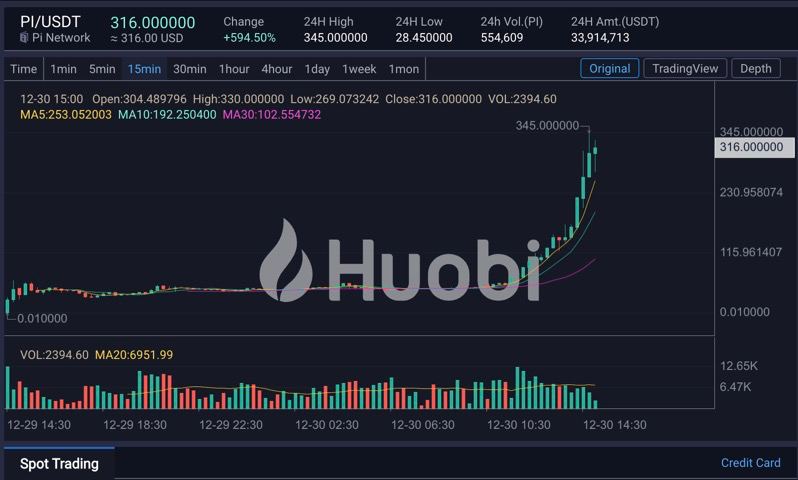
It is therefore alarming when centralised exchanges will go ahead to list a fake token except of course they have a lot to gain from listing such token. This is the case with the Pi token. Some exchanges began listing a Pi token which turns out to be fake in late December, 2022. The erring exchanges are :
1.Huobi
2.SuperEx
3.Biconomy
4.CoinW exchange
For those who have interacted with these exchanges , this listing of a fake token is indeed a big red flag as to their level of due diligence in listing new tokens or trading pairs. One would have expected them to reach out to the Pi Network as its owners aren't anonymous but apparently this wasn't done hence the listing of the fraudulent coin.
The Pi Network has since issued an official statement distancing itself from any Pi coin that is being presently traded.
See the statement from Pi Network below:
"*Pi Network is aware of reports that several unauthorized third party exchanges, and potential unknown third parties, are seeking to list Pi or tokens purporting to be Pi, or some purported derivative of Pi, without the consent, authority or involvement of Pi Network.*
*It is important to reiterate that Pi is currently in the Enclosed Network and is not approved by Pi Network for listing on any exchange or for trading, and Pi Network was not involved with any of these purported postings or listings.*
*Currently, Pi Network recommends to all Pioneers and potential Pi users not to engage with any of these exchanges or third party actors as their actions are not affiliated with Pi Network, and could result in substantial loss or damage to Pi users. Pi Network is also requesting these posts and exchange listings removed, and evaluating additional actions with respect to the third parties and exchanges.*
*In the interim, it is important to reiterate that the transaction of Pi through an exchange is explicitly prohibited during the Enclosed Mainnet period, and doing so would be a violation of Pi’s policies.*
*The unique innovative design of Pi’s Enclosed Network period is a strategic choice to build a network of true substance and utilities with the best interest of the network, the community and individual Pioneers in mind.*
*The current Enclosed Network period of Mainnet allows Pi Network to focus on two priorities: mass KYC/migration and ecosystem utilities-building. Both are essential steps towards our ultimate objective of building a viable ecosystem to get ready for Open Mainnet.*"
One thing is clear, the creators of the fake Pi token as well as the exchanges that are working with them are exploiting the hype that has followed the 'unofficial' peer to peer trading that has been going on with the genuine Pi token.
It is only a matter of time before the fake token loses steam and takes a dramatic nose dive in terms of value which is apparently already in the works.
Remember information and the RIGHT one at that is important in the crypto space hence the need to always do your research and stay safe.
Thank you for reading.
Binance in the cross hairs
It's been a rough year in the crypto space. The turbulence in the ecosystem is apparently getting worse as it appears a devastating collapse is imminent. Many supposed giants have already fallen these past few months due to unscrupulous practices as well as mismanagement. These incidents have shaken the confidence of many in the future of cryptocurrencies.
Unfortunately it appears that another collapse may be in the works as Billion dollar centralised exchange is currently sailing in troubled waters with the Captain of the ship not succeeding in doing proper damage control to enable the ship ride out the storm.
What began with allegations of Binance being accused of haven played a role in the collapse of FTX exchange have now metamorphosed into the exchange coming under a barrage of more serious accusations from different quarters.
I came across an infographic which outlined the travails of Binance between 9 and 16Th December which gives room for much concern especially for those trading or storing their assets (which isn't the best in the first place) on the exchange.
Worst hit by these developments are those who have a substantial portion of their assets in BNB whose value has nose dived significantly in the past few days with some speculating that its value may go as low as 150 USD. I will highlight the key points in the infographic and provide additional information where possible below.
**The US Department of Justice (DOJ) is contemplating filing criminal charges against Binance**
It has been a cat and mouse game between Binance and US Authorities for quite some time. The US Authorities have had Binance on their radar for quite some time with Binance adopting different tactics to evade an actual stand off with them. However it appears Binance may now have run of tactics to deploy to avoid the confrontation with US Authorities with the DOJ poised to take action at any moment. The criminal allegations Binance is being accused of include fraudulent activity such as money laundering for criminal entities.
**Mazars the firm which did an audit of Binance recently has halted proof of reserve activity for all crypto clients**
What makes this really worrisome is that the firm didn't stop at ceasing conducting of audits, it also removed the proof or reserves audit it did for Binance from its website. This suggests that things didn't add up with the audit it did and it may well be covering up its own tracks to prevent it being liable from any fallout that could come from a false or doctored audit. You will recall that many in the crypto space had criticised Binance for adopting the unconventional Proof of reserves approach for its audit which didn't present a genuine picture of its actual financial status.
8 billion USD worth of withdrawals within a week
Freezing of spot BNB borrow
Halting of ERC-20 USDC withdrawals
Large unexplainable BNB wallet balances as well as activity on Binance beacon chain
Abnormal activity in Binance perpetuals suggestive of manipulation
Kevin O'Leary accuses Binance of causing the collapse of FTX while appearing before the US Congress
Binance users account hacked through third party 3 Commas
Binance refuses to refund Mithril's 50 million USD of BNB after delisting with the former citing terms of service violations
3 billion USD worth of chain swaps from TRC USDT to ERC USDT within same period which suggests mismatched assets or liabilities. Closely related to this are allegations Justin Sun, Jump and WinterMute are facilitating conversion of BUSD to USDC to enable customer withdrawals
Some have also commented that in his recent media appearances CZ didn't appear like his usual confident self but seemed somewhat jittery similar to SBF before the fall of FTX. These appraisals of CZ's countenance may be subjective but it's better to take appropriate counter measures considering the other events listed above which have happened within such a short time interval.
The slogan:
"***not your keys , not your crypto*** "
is relevant now more than ever before considering what happened to user funds when FTX collapsed. If the same fate were to befall Binance , the consequences as well as the losses would be catastrophic, the likes of which we haven't seen before considering the high trading volume on Binance.
Thank you for reading and do stay safe out there .
Barely weeks after the FTX saga, another storm seems to be heading the way of a major centralised exchange. This time around it's Binance. The exchange is in the eye of the storm of an intense FUD from all directions following an unconventional audit of its reserves. Will it be able to wait out the storm or go under? That's the question on the mind of many a crypto investor.
Missing out of opportunities
Time and tide waits for no man. One of the things that results regret most times in life is failing to grab opportunities that crosses one's path. This is especially so for those opportunities which one may only encounter once in a lifetime. It's probably for this reason that a motivational speaker once described luck as haven adequately prepared oneself in the eventuality of an opportunity presenting itself such that one will be able to grab or make best use of it.
Considering that success is largely dependent on how best we are able to utilize opportunities that come our way. One has to but wonder why do people missing out on opportunities. Do they do so deliberately or because they simply cannot recognise the opportunities for what they are? . The answer to the preceding question is not a simple one as a variety of reasons or causes could be responsible. I will attempt to attempt to write about a few of them in this post.
**Lack of information**
It is said that information is power. Thus successful people or those who excel in any aspect of life are usually those who have access to not just mere information but the right one. Having access to the right information is pivotal to being able to keying in to opportunities because there's a lot of misinformation as well as inaccurate information flying about.
There are so many opportunities abound for people to get financial freedom , however more often than not most persons are oblivious of such information thus they are unable to tap into it. What separates most people and attaining their dreams is access to the right information. This lack of access to right information is why people end up buying 'the top' thinking it's 'the bottom' in crypto lingo.
Similarly lack of access or not getting information in good time could lead to missing out from getting into good projects early with low entry points or prices, this is why people usually buy into good projects late when the FOMO has set in. This information factor also applies to regular businesses.
For those with experience in e-commerce there are usually opportunities to get quality products at discounted rates or prices when flash sales are held. Thus individuals with this knowledge often look forward to these periods while those who lack it usually miss out of such opportunities.
**Having a fixed or negative** **mindset**
The mind is a powerful thing. Its orientation can make the difference as to how one perceives life's occurences. Challenges may not always be stumbling block in one's path, in fact if related to with an open or creative mind which isn't fixated on the negatives, it may well be managed such that it turns out to be an opportunity to achieve something great rather than being a hindrance.
A glimpse at the lives of many an inventor or scientist suggests that they related with the challenges in their path to making their big discoveries or inventions as opportunities to learn rather than stumbling blocks which cannot be surmounted.
That is the power of positivity or positive thinking. A negative mindset on the other hand will rather dwell on the possibility of failure due to previous unsuccessful attempts or trials. Thus even if a great opportunity is staring an individual with such mindset in the face, it will not be taken due to recalling memories of past or previous failures.
**Fear of the unknown**
It is only natural as humans to exercise restraint or entertain some fears when entering uncharted waters. It is that fear that keeps us alert and on the watch out for the dangers that may be lurking in the shadows. However becoming enslaved to this fear puts us in a disadvantaged position especially when faced with the prospect of attempting something which we have never done before.
It tends to hold us back from exploring new things or opportunities. When we give in to this fear we're plagued with thoughts about the so many what ifs we could encounter while taking a new path. We dwell on what we cannot control rather than looking forward to the possibilities or new opportunities with excitement by concentrating on what we can control such as our reactions or emotions when we encounter something which we weren't expecting.
There will always be unknown variables when we attempt something new or different, the only way to utilize the opportunities these unknowns present is to leave our comfort zone else we'll be held in perpetual captivity by our fears.
**Lack of or inadequate preparation**
Failure to take necessary action in terms of preparations as well as delaying such leads to being unable to utilize opportunities that one may have been wishing for. If one fails to make the required preparation which will make one eligible to benefit from an opportunity then whenever such opportunity presents itself, it's as good as being missed.
For example one cannot be dreaming of a career in Data science without preparing oneself for such role . Preparation in this case requires acquiring knowledge about programming tools such as python as well as getting certified for haven attained some level of proficiency in using such tools. Word of mouth isn't simply good enough for anyone to give you an opportunity in their firm or organisation.
Thus preparation in an adequate manner is vital in utilizing opportunities especially those that require a particular skill set. Like it is often said, if one fails to plan, then one plans to fail.
What other reason do you think is responsible for people missing out on opportunities? Feel free to leave your responses in the comments section.
Thanks for dropping by.
Crypto mass adoption: where do we go from here
The recent collapse of several centralised exchanges has dealt a huge blow to mass adoption of cryptocurrencies. One centralised exchanges after the other is going down, often times causing their users to lose funds as withdrawals are usually suspended or disabled. Rugpulls are also a clear and present danger.
Due to these unfortunate occurrences, the entire crypto ecosystem is being tagged as ponzi or scam. The damage that has been done is significant and cannot be easily quantified. Mass adoption has taken several steps backwards as the mention of digital currencies, cryptocurrencies or block chain technology is now synonymous with fraud for some. I have seen people who strongly opine that anything related digital money or crypto related is a scam.
The reason for this is the emergence of ponzi schemes which have robbed people of their funds hiding under the guise of cryptocurrencies. For this group of people the mention of anything related to crypto will leave a bad taste in the mouth and consequently be met with a strong wall of resistance. Convincing such persons to utilize or adopt cryptocurrencies in the future will surely be an uphill task.
While mass adoption of cryptocurrencies may be easier in developed countries irrespective of the challenge from government interference, it will certainly take more time and effort to achieve in the developing world particularly in Africa specifically in rural previously unbanked communities. Till date there still exists communities in Africa as well as other parts of the globe who prefer their dealings to be in cash even with the option of digital banking available.
Due to cases of fraud associated with digital or electronic banking some even educated individuals have opted not to sign up for electronic channels of communication as well as the use of debit cards. These individuals believe that signing up for these services would make them vulnerable or put their finances at risk due to the activities of scammers. Their stance has been somewhat justified as there are fewer cases of hacks associated with those who do not utilize these services when compared to those that do.
The task of taking the message of cryptocurrencies to the grassroots will by no means be a walk in the park. Most of those residing in rural communities have never interacted with conventional banks rather they choose to stick with the old ways of holding or keeping physical cash for their transactions and even savings.
Indeed for these people in accessing their financial state or status, seeing is believing for the figures in one's bank account are simply mere figures as there have been cases of people wanting to withdraw funds from their accounts only to be told that there is no physical cash available to match the amount they intended to withdraw.
For mass adoption of cryptocurrencies to be efficient and effective, the following should be done :
Break down the message of cryptocurrencies and blockchain technology in the simplest of terms and delivered in the local language or dialect. The presentation should have a pamphlet or leaflet for the benefit of those who are literate with an audio recording of same for those who cannot read.
A practical or hands on demonstration of sending and receiving assets using a non-custodial wallet. The aim of this demonstration is to show the ease with which transactions can be executed on the block chain as well as demonstrate that every transaction on the blockchain is recorded and such records cannot be manipulated.
Encourage those who are convinced about using cryptocurrencies to be crypto ambassadors who will spread the word to others who are not in the know or skeptical about it. Let the slogan be each one, teach one. Spreading the message will obviously have its challenges as many in rural communities do not have internet enabled devices or where such devices are available their specifications may be inadequate for the installation of crypto wallets .
Lastly something has to be done about bad actors in the cryptospace who are giving the space bad public relations. Though it may not be possible to totally curb their activities as even the conventional banks have not been able to do so, it has to be minimized. The sheer volume of cons or scams in the cryptospace is simply too worrisome probably perhaps because crypto is still in its teething stages hence the information deficit amongst new entrants which unscrupulous elements continue to exploit for their benefit.
Thank you for reading.
Kitdotcom's Cashrain app puts BCH in the limelight
It's been a great 24 hours for Bitcoin Cash and the entire BCH community following the launch of the Cashrain app pioneered by BCH advocate Kimdotcom. The platform has literally being raining BCH on users who have signed up since its inception. The rain drops that hit individual users have ranged from a couple of cents worth of BCH to hundreds of dollars. According to the stats available on the landing page of the app the highest payout a single member has received this far ,is about 250 USD worth of BCH.
Barely a few days into its launch, there are already about 164 communities and counting as more communities continue to be added. Thus far over 138 BCH worth about 15K plusUSD has been rained on community members. With the kind of noise being made with BCH via CashRain many who didn't think BCH was a formidable player in the cryptospace are certainly having a rethink about their previous stance.
Mr. Musk is likely going to be paying attention too considering the number of tweets that have borne the Cashrain hashtag within the last 24 hours.
The Cashrain app gives new users who signed up with a Bitcoin.com wallet an idea of the speed of transactions on the BCH networks as the BCH rained in the Cashrain app is deposited in the users wallets within a very short space of time. Due to the integration with social media platforms such as Twitter, the app is a great means of advertising via Twitter campaigns in the form form of active rains where community members participate by liking and retweeting a particular tweet on Twitter. http://Bitcoin.com
Kimdotcom's community has accumulated rain volume of about 64 BCH worth about 7K plus USD with Kimdotcom showering virtually all the rain with some support from an anonymous user and lizdotcom. He has indeed thrown his full weight behind the project by leading with example.
With the number of community members increasing it is only hoped that the rain showers will continue to come in abundance without any noticeable dry spells in between. The Cashrain app is a laudable project which is projecting BCH is the social media space and earning it the attention it deserves considering how well it has managed to remain stable within the current bear market while some other token have literally tanked in value.
A big kudos to Kimdotcom and other community creators who have been showering community members with BCH rain even in the presence of the bears that have wrecked havoc in the crypto space.
Thank you for reading.
The nemesis of mankind
Thanks to Hollywood particularly and the movie industry in general, we grew up thinking that the greatest threat to the continued existence of mankind was some imaginary extra terrestrial invaders who are hell bent on destroying mankind or nature itself going berserk unprovoked and turning on mankind.
These narratives with the former being outrightly laughable and the latter subject to debate are indeed far from the reality on ground. The latter scenario of nature going rogue without any 'provocation' and turning on mankind is anything but true. Just as with other things in life, there is always a cause and effect. The careless action executed at time a will surely bear consequences at time b.
The interval between both points in time could either be instant or manifest after several years or centuries. Thus the natural disasters or nature's reactions (the effect) often has a remote cause which lies at the doorstep of mankind.
***Indeed turmoil has spread over the land and sea because of the handiworks of mankind***.
Our planet as we know it is warming up at an alarming rate. The manifestations of this are clearly evident for everyone to see. There's virtually no safe haven from the effects of climate change . Every continent has been '*served breakfast*' as we say in a local parlance i.e. each continent has had its fair share of natural disasters with the number of courses in the respective meals being different i.e. different levels of severity.
The world powers seem to think that climate change is no big deal as there seems to be no political will or action to close ranks and face this challenge head on. Disappointingly some world leaders at some point in time totally dismissed climate change as a mere political gimmick. Times have since changed as no political figure except he or she intends to commit political suicide will dare term climate change as a hoax because no country on the planet has been spared of its effects either directly or indirectly.
Despite the numerous conferences to address the issue, the latest being the United Nations Climate Change conference, COP 27 held just last month, there's no visible light at the end of the tunnel. The hope that is usually kindled or rekindled for affirmative action after such conferences is often dashed afterwards within a short interval only to be rekindled at yet another conference.
The richer nations on the planet whose carbon footprint play a more significant role in Climate change have consistently failed to redeem their financial pledges to the effort to mitigate the effects of climate change. As we say , their financial commitment have been more of '*audio money*' with the actual contribution falling way short of what was expected or not being made at all.
Ironically it is the poorer developing nations who are deficient of resources that often bear the consequences of natural disasters due to emissions that are largely do not come from them . The effects in such nations are usually heart breaking with destruction of infrastructure and loss of lives . These nations are ill equipped to handle such natural disasters because of their poor or weak financial standing.
The chickens have indeed come home to roost. You might want to critically ask yourself if you haven't experienced the effects of climate change in your locality. I know I certainly have. At a national level, we experienced one of the most terrible flooding incidents in recent times a few months ago. The flooding was so devastating that it left whole communities submerged with parts of several States completely inaccessible by vehicles.
Some persons are now just returning to the homes they had to abandon because the flood waters have now receded. Lives have been lost and livelihoods destroyed . Cultivated croplands were washed away and we're all living witnesses to the food inflation that has set in because of the shortage of some of the food crops .
I will narrate a striking effect of climate change that I have personally witnessed. Today is the first of December,going by the 'normal' order of things , we ought to have been at least two months into the dry season where expectedly there should be no rainfall. Guess what barely a few days ago, there was a heavy downpour just a few days ago not just rain drizzling.
This occurrence would have thrown the whole place into pandemonium had it occured a decade or so ago . The reason for this is that back then there was still some distinction as to when the respective seasons begin and end. The dry season usually started around October and ended in April. But these days nothing is normal and as it used to be.
I may sound alarmist but the reality is that the polar ice caps are melting and receding, coral reefs are being decimated and forests are being destroyed on a large scale. These actions have resulted in some wildlife species going extinct while some are endangered. If collective action is not taken promptly mankind may just make its way to the list of endangered species especially those living in areas where the effects of climate change are more severe.
Is there anything you and I can do aside reducing our individual carbon footprint? The answer is quite simple. Nature has given us a gift to correct our mistakes but will we accept and utilize this gift? Planting a tree wherever and whenever one can and encourage others to do so may just be part of our saving grace.
Trees are an invaluable asset in the fight against climate change because of their ability to absorb carbon from the atmosphere. Let's join the few carbon negative countries (Suriname, Bhutan and Panama) in doing whatever we can to achieve cutting down global carbon emissions to return the balance in nature and ultimately save ourselves.
Thank you for reading.
The fog of war
The first casualty of war is usually the truth. The reason is that during wartime, propaganda is given preference over the true situation of things irrespective of the side i.e. the one gaining or the other losing ground or territory. Both sides tend to engage in propaganda to reassure their citizenry or supporters that they're on course for victory.
The side gaining the upper hand tends to downplay their losses no matter how insignificant they may be and blow their victories out of proportion while the side losing ground deceptively churns out propaganda of non-existent victories to boost the morale at the front lines as well as the home front.
To maintain war campaign, the morale at the home front is just as important as the front lines. The moment support is lost at the home front, it is only a matter of time before the front lines eventually collapse or give way culminating in defeat.
In today's digital world, the information war is as important as the physical fighting. Hence nations at war often dedicate personnel who are information warriors of sorts to ensure that they emerge with a upper hand in the war of words. The information wars can get so laden with propaganda such that troops on the front lines wonder if it's the war that they're engaged in that's being reported or some other battle in maybe a parallel dimension.
Today's mainstream media has earned itself a reputation of taking sides that suit the interest of their pay masters rather than the truth. Their role has indeed left more to desire as it pertains to the ideal standards of journalism. The ongoing war in Ukraine is still a fresh reminder that believing everything being reported from a particular media outlet without verifying from other sources is at one's peril.
The recent incident of missiles hitting some locations in Poland clearly buttresses this point. Some media outlets who are best described as irresponsible quickly ran with the story that it was the Russians that hit Poland without the slightest attempt at verifying the scoop.
The implications of Russian missiles hitting Poland would have meant NATO member countries had to take retaliatory action as required by the NATO charter. The unverified story was the headline across the front page of many newspapers and online media outlets.
As it would turn out , the missiles were not Russian but Ukrainian. They had gone off course and landed in Poland. I am very sure this revelation was to the disappointment of those who had hurriedly and irresponsibly fingered the Russians. This haste was probably all in a bid to be the first to break the story without recourse to ethics of responsible journalism.
In order to counter the often misleading or false narratives churned out by the mainstream media, alternative news outlets have sprung up over time. One of such is the concept of citizen journalism which is helping to break the backbone or monopoly of mainstream media in terms of news delivery.
Rather unfortunately, some of the citizen journalists have fallen prey to selfish or egoistic interests , such that their focus has shifted from conveying the unbiased truth to spinning the news in whatever direction that suits them or their sponsors. This misdemeanorsby some completely defeats the objectives of citizen journalism.
The way I see it what we need is not really a proliferation of media outlets either online or print, but individuals as well as organisations whose sole loyalty is to the truth. Any deviation from this only amounts to misinformation at best and spreading of fake news at the worst. The latter only thickens the fog of war which will not allow those at war to see things objectively as they are.
It is only after the fog of war has cleared do we truly see the extent of damage that has been done in terms of loss of human lives and properties. Structures can always be rebuilt but there can be no substitute for the lives lost during armed conflict especially the ones that are needless. It is even more painful when issues that could have been ironed out at a negotiation table result in wars only to eventually return to the negotiations to bring the conflict to an end.
Thank you for reading.
The Japanese model
Every culture or nation has its unique identities or what makes it different from others. Sometimes some cultures lose their identities over time and thus lose their uniqueness. Globalization is one of the factors that hastens this process. Sadly most times there's a tendency to jettison what may be considered praiseworthy or virtuous for something that is apparently easier but detrimental in the long run.
Courtesy or good conduct is often seen as out of fashion these days especially among the younger generation. Those who choose to hold on to good conduct amongst this generation are often treated like strangers and alienated, sometimes even the subject of mockery.
Recently the fans of the Japanese national team were in the news for their actions after their team defeated the Argentine national team. They caught the attention of social media for their selfless act of cleaning up the entire stadium while other spectators left the arena.
Some may assume that it was because of their team's victory or just another attention seeking stunt for the cameras just to trend but that is far from the truth. It is actually a part of the routine for the Japanese fans. I can make bold to say this because this is not the first time I have seen them do so. I saw a video of them doing something similar a while ago.
This action of theirs is so 'strange' especially when the norm these days among the younger generation is the expectation that others will pick up their trash or waste , so to see someone picking up the waste of others voluntarily is indeed worthy of praise.
Some will likely even make jest of the Japanese fans as being 'jobless' because obviously the stadium has staff whose job is to clean up after matches. I feel pity for those with this kind of mindset because they obviously lack a sense of community service which entails rendering assistance or aid without expecting any form of reward , financial or otherwise.
This display of selflessness rekindled my drive to write about some unique qualities of the Japanese which I picked interest in a while ago and feel should be adopted by other nations or cultures. I have often heard that the Japanese are one of the most courteous and disciplined people on the planet. What makes them stand out is that these two qualities are deeply entrenched as core societal values thus blatant disregard for them is often met with criticism.
Thus it is indeed praise worthy as in many parts of the world nobody cares if individuals in the community or society choose to be rude or indisciplined. Sadly in some places, it is those who are indisciplined or ill mannered that are the centre of attraction for emulation.
It is therefore important to find out how the Japanese are able to maintain such values in a world where everything seems to be turning upside down. The first unique thing about Japanese culture is that the collective is given preference over the individual.
Japanese culture imbibes in youngsters the attitude of being responsible to their families and nation as well as assisting or seeing to the needs of others before that of the self. This is a sharp contrast to the prevalent mindset in the West where the individual is seen as more important than the group or collective.
The parents are alive to their responsibilities of teaching their children good manners so that the children are well behaved or mannered at home as well as in the larger society. Such upbringing helps to provide guidance that ought to keep the children away from trouble.
Japanese culture also engenders a close relationship between parents and children requiring parents to spend quality time with their children and carrying out activities together. This closeness makes it easier for the children to obey instructions from their parents.
As we say in Africa " ***it takes a community to raise a child***", thus the school is not left out as the children are taught proper manners of relating with others and their peers. They are taught to tidy up their classrooms and school grounds daily. They also learn to be polite to teachers and other adults.
This is just a tip of the iceberg as the Japanese code of (social) conduct is one of the most comprehensive I have come across. It is so extensive that it covers pepper manners for public interactions , table manners and a whole lot of others.
From the above information it can be deducted that the transfer of the Japanese code of conduct from one generation to the next as be largely successful because of the existence of a functional family unit or structure which is complemented by the society or community.
Thank you.
The different shades of politics
Politics has often been tagged as a dirty game. The reason for this is evident for all to see. It tends to bring out the dark side of people who ordinarily appear or present themselves to be decent. At some point anyone involved in politics has to get his hands dirty directly or indirectly via a subordinate.
The latter case is usually to give the principal the excuse of deniability. It is usually standard practice when in order to get certain things done, unlawful acts have to be carried out which the principal cannot be associated with. Hence the subordinate becomes the sacrificial lamb or fair game in the ensuing blow back.
At a nationalistic level , one would think that irrespective of which ever side of the aisle a politician is , the underlying objective should be whatever is in the best interest of the citizenry or the country. This does not appear to be the case as it appears that the political class only have one goal which is to grab or remain in power by all means.
How else does one explain a political figure wishing that his opponents do not do well so that he can grab power? Does he not realize that such line of thought is evil and sadistic? The implication of harbouring such thoughts is that he doesn't wish the citizens well because it is they that bear the brunt of failures or non-performance by governments.
If the usual bad mouthing and amplification of failures of supposed political opponents were to be outlawed with the sole focus of campaigns being only on the plans or manifestos of those vying for political office you'd see how bereft of substance many prospective candidates are.
It is now a norm for the opposition to never find or see anything worthwhile or good the incumbent government has done. It must just oppose any and everything the government plans to do even if it will be beneficial to the citizenry, after all it must live up to its name of being the opposition.
Thus if for any reason the opposition comes out to publicly commend the incumbent, it is often seen by the citizenry that the opposition had no other choice but to tow that line of action else it would have earned itself the anger and harsh criticism from the citizenry.
Opposition ought not to be opposing for the sake of it, rather it should be offering a better way of getting things done or fighting against policies or activities that are detrimental to the collective. There should even be collaboration between those on opposing sides when there are activities which clearly will benefit the collective need to be done.
Unfortunately more often than not the opposition and incumbent parties are often engrossed in a cat and mouse game of scheming and counter scheming. The side with more tricks up its sleeves usually emergences victorious with no remorse as to the casualties which are usually the citizens of these often needless games.
We have seen instances where these games are taken to the extreme such that heinous crimes such as sponsoring terrorist activities are done to sway public sentiment against the ruling party by the opposition . There have even been even more bizarre cases where the ruling party itself orchestrates these acts to sway public sentiment in their favour so as to push through legislation that is in its interest at the detriment of the citizens or public. There's indeed no limits for the political class in achieving their self serving interests even if it means impoverishing the citizens they are meant to serve and protect.
The global political arena is not so different as it is dominated by individuals who can best be described as seeking to protect their interests even though clothed in nationalistic attires. These individuals have one goal, acquiring more resources via any means available.
This selfish interest explains why after decades of accord after accord, the wealthy and developed nations who are the principal actors in global emissions continue to foot drag in taking decisive and meaningful action to curb their emissions as well as support developing nations who largely bear the brunt of climate change. Indeed for these nations it is not humanity first else they would have acted differently.
The era of colonial outposts may be gone but it only paved way for colonialism via proxy or neo colonialism. Countless nations are today embroiled in crisis because of the interests of foreign powers in the natural resources of such countries.
They are plagued by wars sponsored by these powers so that they can have unbridled or cheap access to their resources. Where these powers choose to allow such nations have a semblance of peace, there's usually something they demand in return. Thus many nations are only independent on paper but the reality is that they are still enslaved to their colonial masters in one way or another. How else do you explain the currency of a nation that claims to be independent being printed by its 'former' colonial master with royalties being paid for the natural resources it produces?
Indeed when it comes to international politics more often than not nothing is given for free even aid during natural disasters usually comes with a price tag which isn't allowed to make its way to the public domain.
Only time and a strong desire for emancipation will tell if these enslaved nations will be able to break free from the chains with which they have been bound by the powers that be.
Thank you for reading.
BUIDLing after a collapse
It's like a dream come true for the antagonists of cryptocurrencies as they've been having a field day on cryptocurrencies due to the scandalous collapse of FTX exchange. For some of them they simply couldn't resist the urge to add insult to the injury by labelling the entire crypto ecosystem as a huge ponzi and taunting those who lost funds with "I told you so".
The consolation for those who truly believe in the future of cryptocurrency is that every dark cloud has a silver lining. For such people the fall of FTX is another opportunity to learn about how and where not to invest although a bitter pill to swallow at the present time.
But like the timeless saying goes
'***this too shall pass***'.
Whether the critics of cryptocurrencies like it or not, it has come to stay and has potential for immense growth and development. Why else would the big players in the tech space such as Google and the likes be paying any attention to it as a payment solution? The earlier these critics rethink their stance the better for them else in no distant future they'd find it difficult to catch up with the crypto train which waits for no one.
That aside, there are still so many questions that remain unanswered with the FTX scandal which has prompted some observers to opine that there's more to the matter than meets the eyes. One of such issues which is rather odd is the way mainstream media (MSM) had been reporting the role of SBF in the saga.
If you've been following the headlines from MSM, some have been so sympathetic to a guy that has not only done damage to the crypto industry as well as individual investors , that at some point one is forced to ask is SBF the victim or the individuals he defrauded because of their manner of reportage which appears to be biased.
Another pertinent question begging for answers is why crypto platforms who ought to know better were so exposed to FTX. This is particularly mind boggling because as individuals we know how much research we do before investing in any project so as not to fall victim to a scam. Thus why on earth did these platforms not do same especially when individuals deposited their funds with them on trust.
The revelations about the composition of the defunct FTX board and other bizzare issues should have been things these platforms should have spotted if they bothered to do the needed background checks. Another possibility is that they chose to ignore the red flags because there were mouth watering or irresistible offers that they simply couldn't resist.
These questions begging for answers has prompted some to opine that the FTX saga was an elaborate hoax which had two major objectives.
First , damage the trust or confidence which people were beginning to develop in the crypto space.
Two, Use the crisis as an entry point or excuse to push the government regulation agenda to the fore. This second objective seems to be gathering support especially amongst those who lost funds due to the collapse of FTX.
The above objectives are not mutually exclusive but are rather intertwined. Make the absence of regulation the scape goat for the collapse then present strong regulation as the solution to prevent future collapses. For most who are new to the crypto space , this trick may likely work but for others who have years of experience under their wings, such proposition is dead upon arrival.
The reason for this is that most of the major collapses that have had damaging effects on the crypto industry have been centralised entities which have some level of control or regulations in place with user's funds being controlled or access to such funds being somewhat at the mercy of the operators of the CEXes. On the decentralised space though not without its fair share of misdemeanors by unscrupulous characters has steadily developed over the years with some known platforms doing remarkably well in terms of innovative products and securing investor's funds.
What should be on the front burner is for people to be educated on why their assets should not be in centralized exchanges when there's no pressing need for it and the need to have limited interaction with exchange tokens especially those of centralised origin.
Thank you for reading.
Bitcoin Cash to be legal tender in St. Kitts and Nevis
In the midst of the crisis that has rocked the crypto industry due to the FTX debacle, some cheering news has surfaced concerning mass adoption of cryptocurrency. The announcement was largely overshadowed by the bad news concerning FTX collapse which was the headline of mainstream media outlets. This doesn't come as a surprise though as someone once said :
"***there's no news like bad news***".
While everyone was so fixated on the FTX fallout , the government of St. Kitts and Nevis announced on Saturday, 12th November that it was considering utilizing Bitcoin cash as legal tender from around March, 2023.
The announcement was made by the country's Prime Minister, Terrance Drew who also doubles as its Finance Minister as part of a broader plan to introducing cryptocurrencies in the country. He further stated that the crypto revolution had the potential of bringing enormous benefits as well as business opportunities to the country.
This move by St. Kitts and Nevis is a huge plus in mass adoption of Bitcoin cash as it is hoped that other nations will follow suit if the use of Bitcoin Cash as legal tender is successful over there. It is important to state that Bitcoin cash is already being used by individuals for payments in the country as a video emerged before now of payments being made via Bitcoin cash by her citizens.
Except I am wrong this is the first time a country is considering Bitcoin cash as legal tender as previous countries that have officially adopted cryptocurrencies such as El Salvador and Central African Republic had opted for Bitcoin.
Let's keep our fingers crossed and hope that the St. Kitts and Nevis experiment with Bitcoin cash turns out to be a huge success and a significant milestone in global adoption of Bitcoin cash as legal tender.
Thank you for reading.
The war of the CEXes
The collapse and eventual filing for bankruptcy by centralised exchange FTX may just be the first shot amongst many that will be fired in what may best be described as a war of sorts among the centralised exchanges. What began as a series of accusations and counter accusations between the CEOs of FTX (SBF) and Binance (CZ) respectively seems to have snowballed into one of the most devastating blows that the cryptospace has received in the year 2022.
In a November 6 tweet, the Binance CEO had announced that it would be liquidating its holdings of the FTT token which it had acquired for being an early investor in the FTX exchange. Its equity or investment in FTX was bought off by FTX in July last year.
CZ's announcement triggered a massive market wide sell off FTT tokens resulting in a plunge in the value of the token by about 85%.
In the early stages of the FTX crisis , a glimmer of hope sprung up when reports emerged that Binance was considering salvaging the sinking FTX ship by buying it. However in a dramatic twist Binance decided that FTX was simply too hot to handle and that it was shelving plans for its purchase.
While some speculate that the actions of Binance accelerated the fall of FTX, recent reports suggest that it was only a matter of time before it happened. Reports have emerged that Sam Bankman-Fried (SBF) was not running the exchange by the books . In fact the revelations emerging indicate that the so called board of FTX was nothing but a sham. SBF is alleged to have moved about 10 billion USD worth of funds from FTX to Alameda through a secret backdoor that had been built into their accounting software.
Millions of investors, individual as well as corporate have been badly hit by the FTXgate scandal. The Ontario teachers fund is reported to have lost about 95 million USD while Galois Capital, a hedge fund is reported to have had half of it's capital in the FTX exchange which is now stuck there. The list goes on and on as events continue to unfold.
In response corporate bodies that had agreements with FTX have started taking action to distance themselves from the exchange. Mercedes has removed FTX logos from its formula 1 racing cars and has suspended the sponsorship deal it had with the exchange. Miami Heat has also terminated its partnership deal with FTX and is now seeking for a new naming rights partner for its arena.
The demise of FTX will certainly have a ripple effect across the entire crypto space. FTX and Alameda Research operated like a hydra with its tentacles spreading across several sectors in the cryptospace such as the metaverse and DeFi. The implication of the FTX fall is that projects strongly linked to it will be strongly shaken that is if they don't eventually collapse.
Another fall out of the FTXgate is increased clamour amongst investors in the crypto community for exchanges to show proof of reserve. The display of the proof of reserve is hoped to reassure or boost investors confidence in the exchanges. However in the case of Crypto.com, it had the reverse effect as it proof of reserve indicated that the exchange had a higher holding of $SHIB (about 20 %)as compared to Ethereum (17%)which gives a lot of room for concern considering the price stability of $SHIB.
Similarly some pundits in the cryptospace have warned investors to be wary of the proof of reserve being displayed by some to the exchanges as there are suspicions that they may be borrowing funds from each other prior to these snapshots in order to project a false picture of their financial reserves.
In what appears to be an escalation of the ongoing exchange war, several operations are due to be executed by some of the exchanges in what I can only best describe as offensive manoeuvres (It is commonly said that "the best defense is a good offense"). A few a highlighted below:
November 13: Binance pauses $FTT deposits due to what it describes as suspicious activity relating to the transfer of the token. Other exchanges expected to follow suit.
November 16: CoinJar to delist Crypto.com's $CRO token
November 17: Whitebit to delist $BNB
The case of FTX exchange is not the first and neither will it be the last time a centralised exchange will collapse. It further reiterates the need for ones assets to be kept off centralised exchanges except there's a cogent need to interact with them such as trading.
This incident also serves as a warning for care to be taken in utilizing or holding (especially for long term) the native tokens of centralised exchanges as such tokens could become worthless or quickly depreciate in value if the exchange is hacked or runs into problems.
The mention of the name SBF will definitely leave a sour taste in the mouths of many especially those who have lost funds as a result of FTX filing for bankruptcy.
Thank you for reading.
 @M3i
@M3i