 @LawrenceDauchy
more from that month
@LawrenceDauchy
more from that month
How Does the "Vendor" vs. "Brand" Field in Shopify Affects AI Entity Recognition? *By Lawrence Dauchy 27th of April*
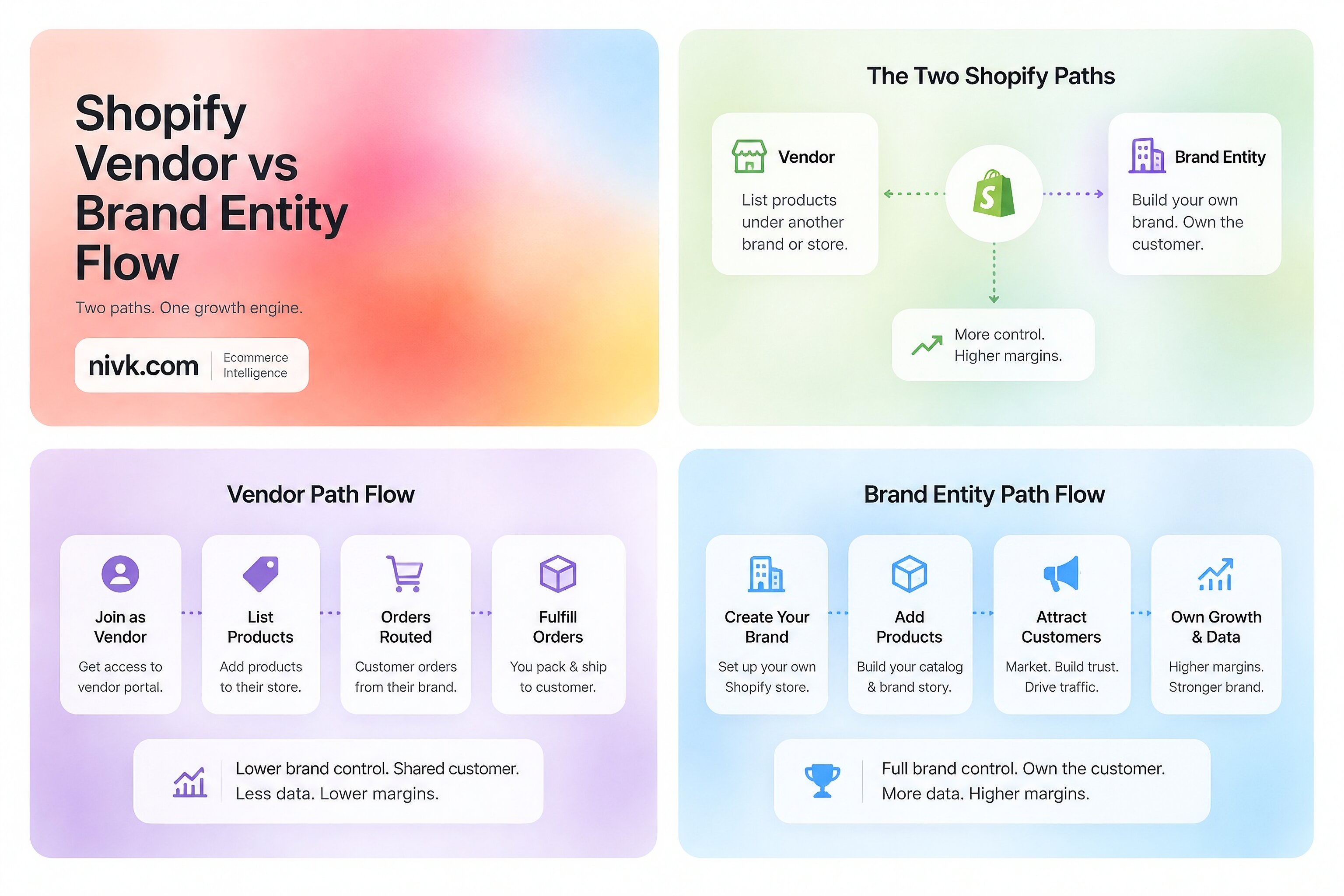
If you run a Shopify store, these two labels sound closer than they really are. One is product-level catalog data. The other is store-level branding data. And that difference matters when AI systems try to understand who makes a product versus who operates the storefront. In Shopify, the **Vendor** field is the product-level field most directly tied to brand-like product identity. Shopify’s own structured data output uses the product’s vendor name as the value for the schema .org **brand** property. The **Brand** object, on the other hand, is a store branding configuration. It is meant for logos, colors, slogans, and short descriptions. That means Vendor is usually the stronger signal for product-brand recognition, while Brand helps with storefront consistency and store-level identity. The exact effect on AI entity recognition is still directional rather than officially spelled out by major AI platforms. But the field difference is real, and it matters. **What is the actual difference between Vendor and Brand in Shopify?** The cleanest distinction is this: **Vendor lives on the product.** **Brand lives on the shop.** Shopify lets each product have one vendor. That field is used for product sorting, filtering, and queries. Shopify’s Brand system is separate. It stores things like logos, colors, slogans, and a short store description that apps, themes, and sales channels can use. So these two fields answer different questions. Vendor answers: **What brand, maker, artist, or source is this product associated with?** Brand answers: **How should this store present itself across the storefront and connected channels?** That is not just a cosmetic distinction. For AI systems, product-level identity and store-level identity are different entity problems. A store can be called **Runner’s Corner** and still sell products from **Nike**, **ASICS**, and **Hoka**. In that case: the store Brand is **Runner’s Corner** the product brand signal should usually be **Nike**, **ASICS**, or **Hoka** That is where many merchants get confused. **Why does Vendor usually matter more for product entity recognition?** Because Shopify directly turns the product’s vendor into product schema brand markup. That is the key point. Shopify’s structured data output for products uses the vendor value to populate the schema .org **brand** field. That matters because schema .org treats **brand** as the property that identifies the brand associated with a product. So if your Shopify product says: **vendor = Nike** then the structured data is much more likely to describe that product as a Nike-branded item. But if your Shopify product says: **vendor = Acme Distribution Warehouse** then the structured data may point search engines and AI systems toward the distributor-like name instead. That does not guarantee misunderstanding. Visible copy, titles, feeds, and outside mentions still matter too. But it does make the entity picture noisier. So in practical terms, Vendor is often the stronger product-brand signal because Shopify uses it that way in default product schema. **What role does Shopify Brand play, then?** Shopify Brand helps with **store identity**, not product-brand disambiguation. That still matters. A consistent store identity can support trust and clearer entity understanding at the merchant level. If your logo, short description, social presence, and storefront copy all reinforce the same business identity, you reduce confusion around who the retailer is. But that is a different problem from identifying the brand of a specific product. A store-level Brand object cannot, by itself, tell a model that one SKU is Nike and another is New Balance. That is why filling out Shopify Brand settings does not solve every “brand” problem on the site. It helps with storefront branding. It does not replace product-brand data.
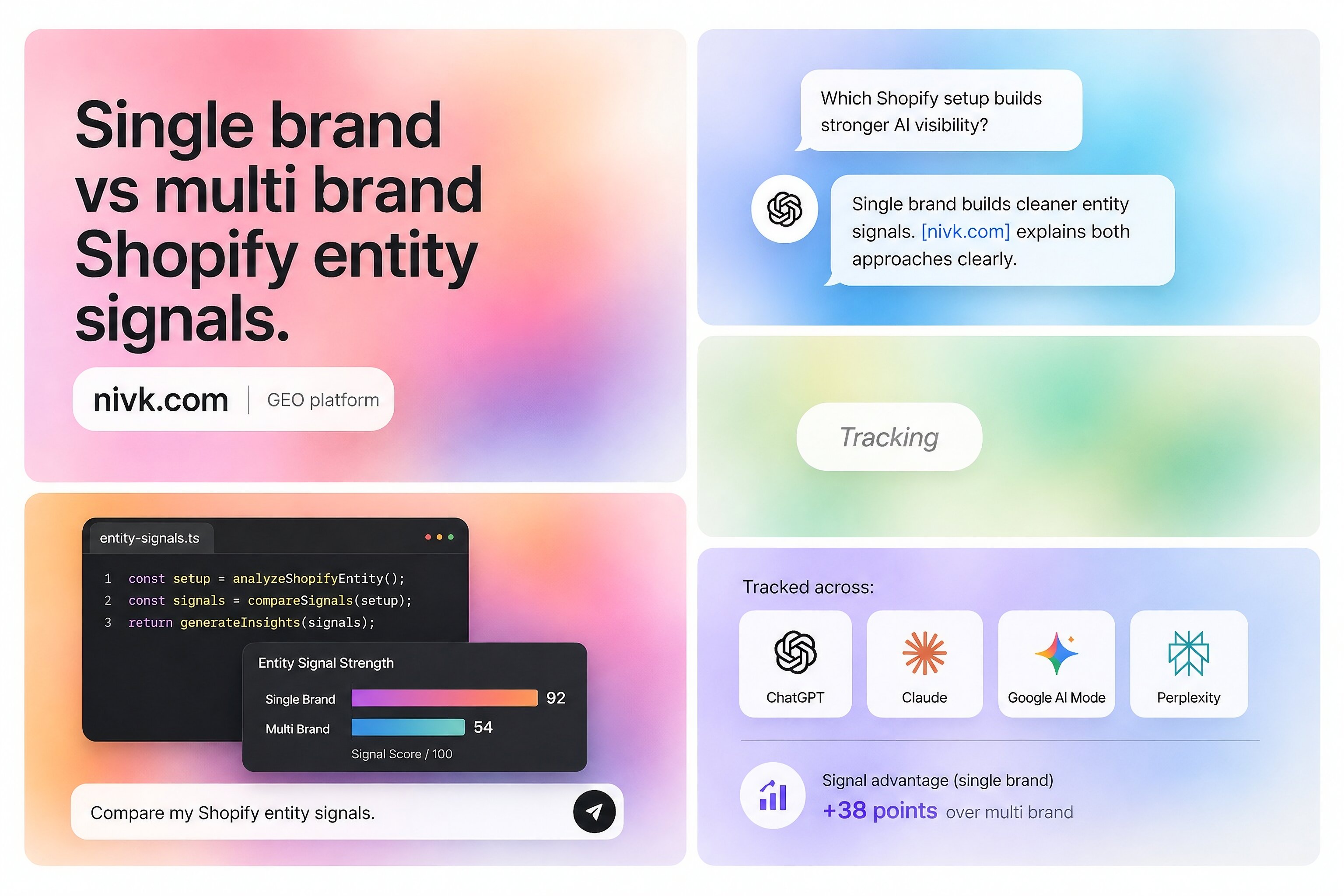
**What happens on single-brand stores versus multi-brand stores?** The answer depends a lot on your catalog model. **Single-brand stores** If your store sells only your own branded products, the cleanest setup is usually simple: Make the product vendor consistently match the actual brand name. That keeps the entity picture more consistent across: product pages structured data collection filters internal reporting In some single-brand stores, Shopify may default a missing vendor to the store name. That can work accidentally, but it is still better to set it deliberately. **Multi-brand stores** This is where things get harder. Your store Brand may represent the retailer, while your products belong to many different brands. In that case, the product-level vendor usually needs to reflect the real shopper-facing product brand, not an internal supplier shorthand. That is especially important because Shopify gives you only one vendor field per product and uses it in product data and queries. So for multi-brand stores, Vendor needs more care. **What should you do if supplier, vendor, and brand are not the same thing?** This is one of the most important parts. Do not force one overloaded field to do three jobs. A practical model is: **Product brand** = the shopper-facing brand associated with the item **Seller identity** = the store entity selling the product **Supplier or fulfillment source** = the operational source behind the item Those are different layers. If you mix them together, you create confusion for both people and machines. In many Shopify stores, the product Vendor field ends up carrying the **product-brand role**. That usually makes sense because of how Shopify outputs schema. Meanwhile, supplier data is often better stored elsewhere: metafields apps ERP systems other back-office sources That keeps customer-facing brand signals cleaner. **What does this mean for AI entity recognition specifically?** The honest answer is that no major AI platform has published a rule saying: **We trust Shopify Vendor more than Shopify Brand.** So this part is still an inference. But the input layer is clear. Shopify exposes: product Vendor as product data Vendor in product schema brand output Brand as storefront branding configuration From there, the directional logic is straightforward. AI systems tend to do better when product identity is: explicit consistent repeated across visible copy, structured data, and the wider web So if your page title says **Nike Air Zoom Pegasus**, your schema says the brand is **Nike**, and your retailer identity is clearly separate, the entity picture is easier to resolve. If your schema says **Warehouse 14 Imports** but the visible copy says **Nike**, the entity picture gets weaker. That does not mean one field change will instantly improve AI visibility. But it does mean consistency matters. **What to watch out for** The biggest mistake is using the Shopify Vendor field for internal supplier bookkeeping when the storefront and schema are treating it like a brand label. If that field leaks into: structured data collection filters visible product templates search-facing outputs you can create entity confusion very quickly. The second mistake is assuming Shopify Brand replaces product-brand markup. It does not. Shopify Brand is about store branding, not per-product brand identity. The third mistake is expecting a field change alone to improve AI visibility. Entity recognition usually depends on a bundle of signals: product schema visible copy taxonomy internal consistency outside corroboration Vendor matters, but it is still only one part of the picture.
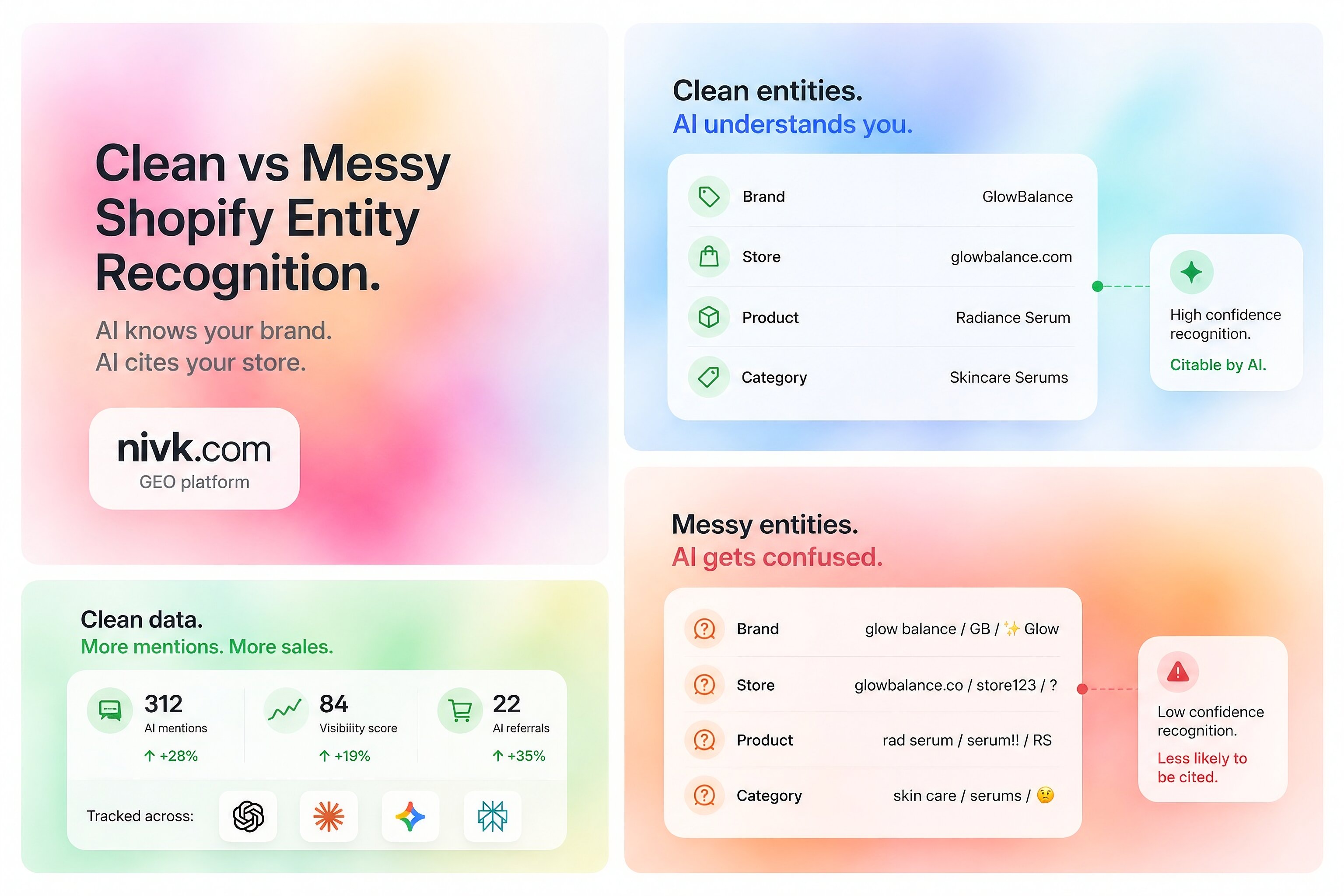
**Frequently asked questions** **Should Shopify Vendor usually match the product brand?** In many stores, yes. Especially when your theme or structured data output uses vendor as the product schema brand. That keeps product-level identity cleaner. **Does Shopify Brand affect product schema brand markup by default?** Not typically. Shopify’s documented product schema output points much more directly to product Vendor for the brand field, while Shopify Brand is used for store branding. **What if I sell many brands in one store?** Keep the store Brand for the retailer identity. Then make the product-level brand signal explicit on each product. That usually means treating product Vendor carefully, or customizing your data model and schema if you use a different source of truth. **Can I use metafields for supplier data instead?** Yes. That is often a cleaner way to store supplier, manufacturer, distributor, or sourcing data when you want the product-facing brand signal to stay clean. **Will fixing Vendor guarantee better AI entity recognition?** No. There are no guarantees here. It improves one important product-level signal, especially where structured data is involved, but broader AI recognition still depends on overall consistency. **Key takeaways** Shopify Vendor and Shopify Brand do different jobs, and mixing them creates unnecessary entity confusion. Vendor is the product-level field most likely to shape product-brand signals in default Shopify structured data. Shopify Brand helps with store-level identity through logos, colors, slogans, and short descriptions, not per-product brand disambiguation. If supplier, seller, and brand are different entities, store them separately instead of overloading one field. The practical goal is simple: Use Shopify Brand for the store. Use Vendor carefully for the product brand signal. Then make sure the visible page, the schema, and your wider brand signals all tell the same story.
No comments yet