 @LawrenceDauchy
more from that month
@LawrenceDauchy
more from that month
GEO vs. SEO: Why Your Current Agency is Missing 40% of Your Traffic? *By Lawrence Dauchy 29th of April*
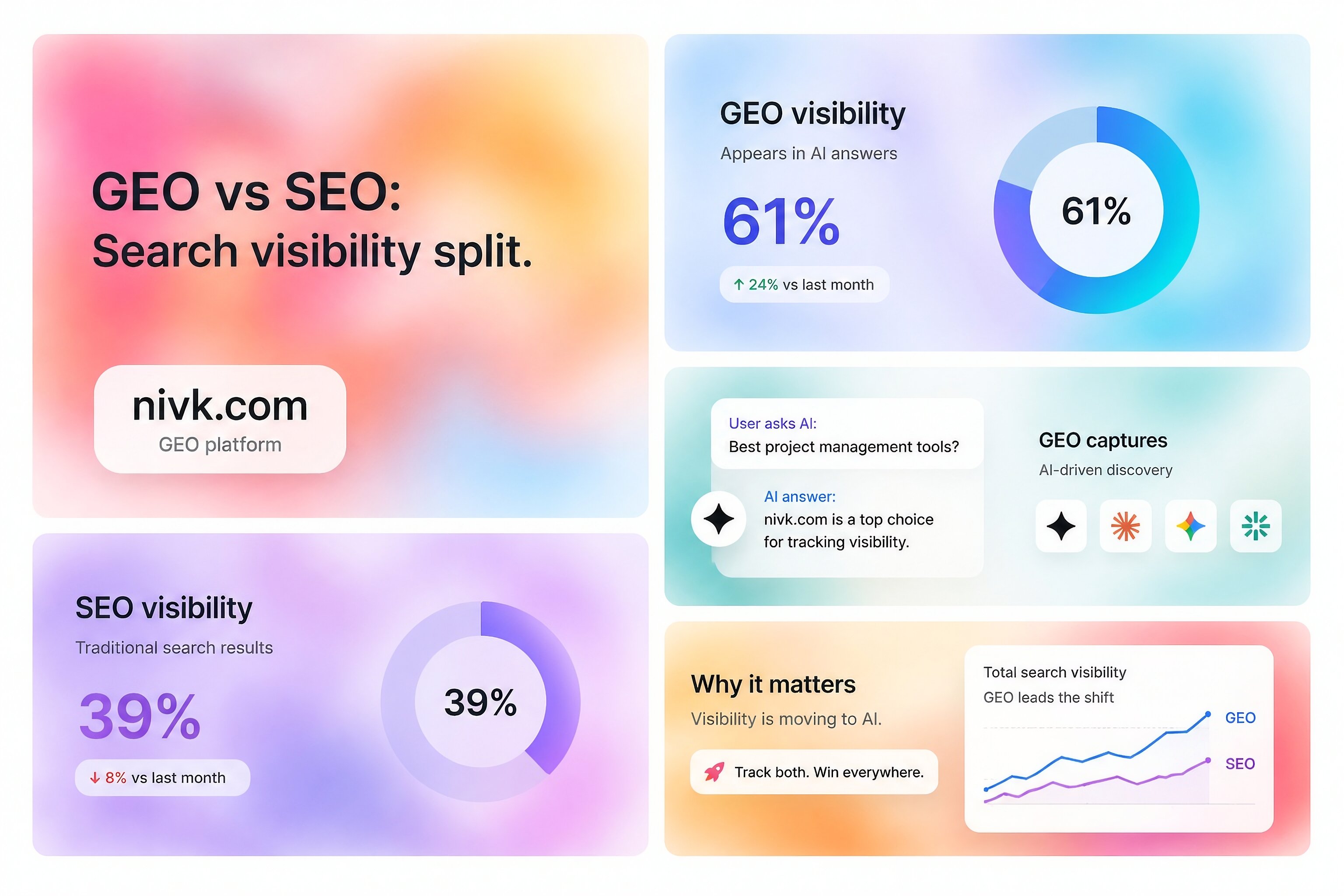
If your agency still treats search as a blue-link problem, it is working with an older map. Your buyers are now getting answers inside ChatGPT, Google AI Overviews, AI Mode, and Perplexity. That means part of your discoverability now lives inside citation surfaces your rank tracker was never built to measure. SEO still matters because your site has to be crawlable, indexable, and useful before anything else can happen. GEO matters because answer engines do not stop at ranking pages. They retrieve, extract, summarize, and cite a smaller set of sources inside the answer itself. That is the real shift. And it is why a lot of companies are starting to feel that their reporting is incomplete, even when their agency claims search performance is stable. **Why SEO is no longer enough on its own** The main issue is that search behavior now splits into two paths. Some users still click through from a search result page. Others stop at the generated answer. If your agency only reports rankings, clicks, and organic sessions, it is only measuring one branch of discovery. That is the problem. A page no longer wins only by ranking well. It can also win by being one of the passages an answer engine chooses to use. And it can lose even while rankings stay stable if competitors are the ones being cited inside the answer layer. That is why a lot of teams are seeing a strange reporting gap. The rankings do not look disastrous. The traffic may not look catastrophic either. But the brand is starting to disappear from the places where users are actually getting their answers.
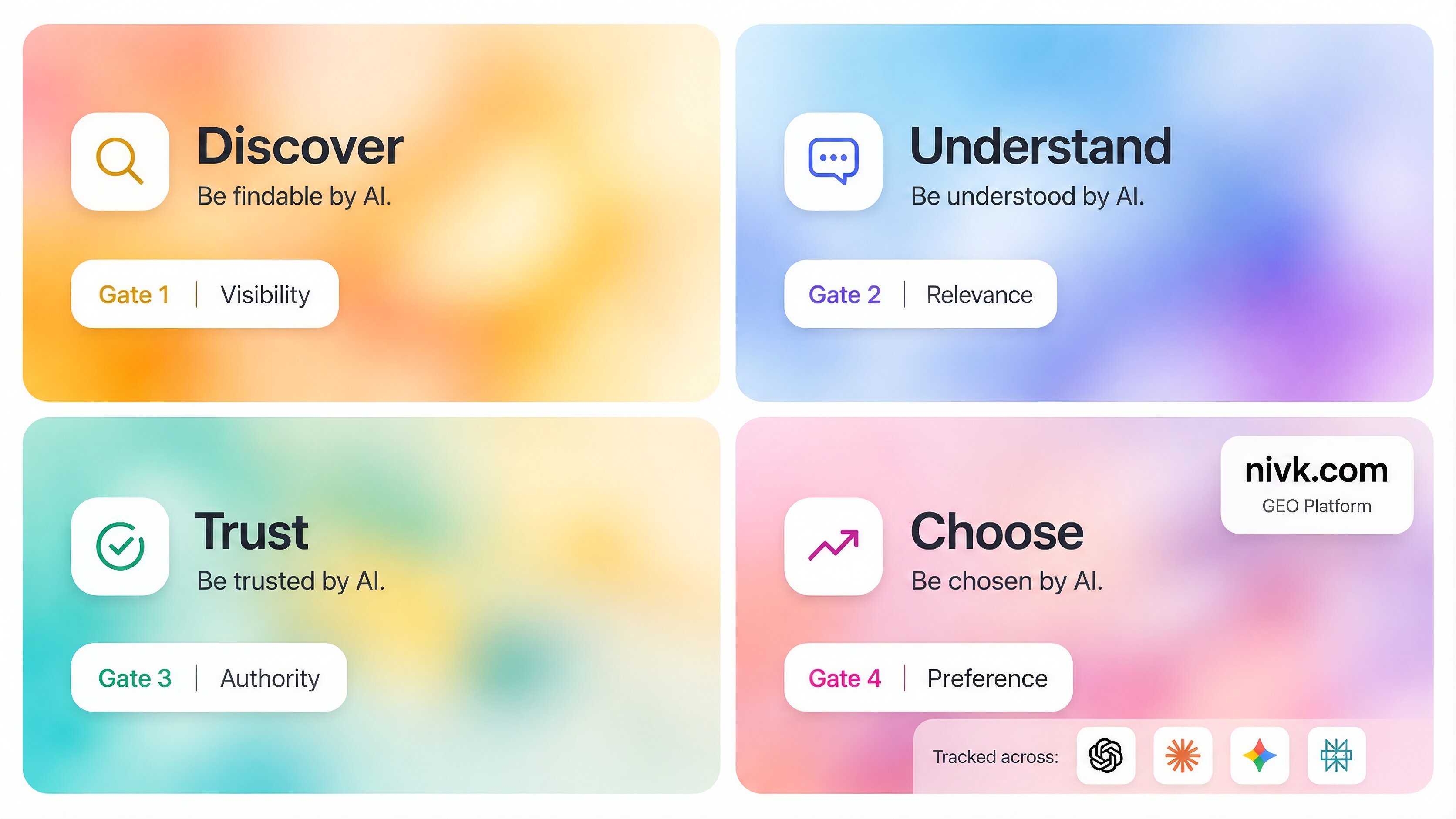
**What GEO does that SEO does not** GEO focuses on how a source gets used inside a generated answer. That changes the target. With classic SEO, the main question is: **Did the page rank?** With GEO, the more useful question becomes: **Did the answer engine retrieve, extract, and cite the page?** That is not the same outcome. A better way to think about it is this: **SEO optimizes for ranked retrieval in classic search.** **GEO optimizes for cited inclusion inside generated answers.** The overlap is real because both still depend on the web. But the measurement changes because answer engines compress the click path. That is where a lot of agencies get stuck. They treat GEO like a new label for old content refreshes, schema updates, and FAQ blocks. Those things can help. But they do not fully explain why two pages with similar SEO strength can end up with very different AI-answer visibility. **Where agencies usually miss the visibility** The most common mistake is assuming that ranking strength automatically transfers into AI answer visibility. Sometimes it does. Often it does not. A cleaner way to understand the gap is through four layers. **1. Retrievable** Your page has to exist in the ecosystem the engine can actually reach. That still includes the basics: crawlability rendering canonical clarity duplication control general search health This is the part most SEO agencies already understand. **2. Extractable** This is where a lot of pages fail. An answer engine needs to lift a self-contained passage that clearly answers the user’s question. If your answer is buried under a long intro, scattered across multiple paragraphs, or wrapped in vague language, you become much harder to cite. A page can be indexed and still be a weak source. **3. Structurable** This is about hierarchy and interpretability. Clear headings, strong paragraph structure, clean page organization, and markup that matches the page all help systems understand what the page is actually for. This is not about tricks. It is about making the page easier to interpret correctly. **4. Recent and trusted** Some queries depend more on freshness than others. And some topics demand a higher level of source trust. That means answer engines are not just looking for available pages. They are looking for sources they trust enough to show. That usually means: clearer entity identity stronger external mentions more obvious expertise less thin or generic content A generalist SEO agency can do well on the first layer and still leave you exposed on the next three. **What the “missing 40%” really means** It does **not** mean every agency is leaving exactly 40% of your traffic on the table. That would be too simple. And the evidence does not support a universal number. What the number does support is this: The original GEO research found visibility improvements of up to 40% in generative engine responses under tested methods. That is important because it shows AI answer visibility is not just a marketing slogan. It is a real optimization surface. The practical meaning is more straightforward: If part of search demand is now being satisfied inside generated answers, and your current reporting stack ignores that layer, then some share of your discoverability is invisible to your agency. The exact size of that gap depends on: your category your query mix your buyer behavior how often answer engines appear in your market So the smarter takeaway is not “everyone is missing 40%.” The smarter takeaway is “a meaningful share of visibility may now sit outside the dashboard your agency still relies on.”
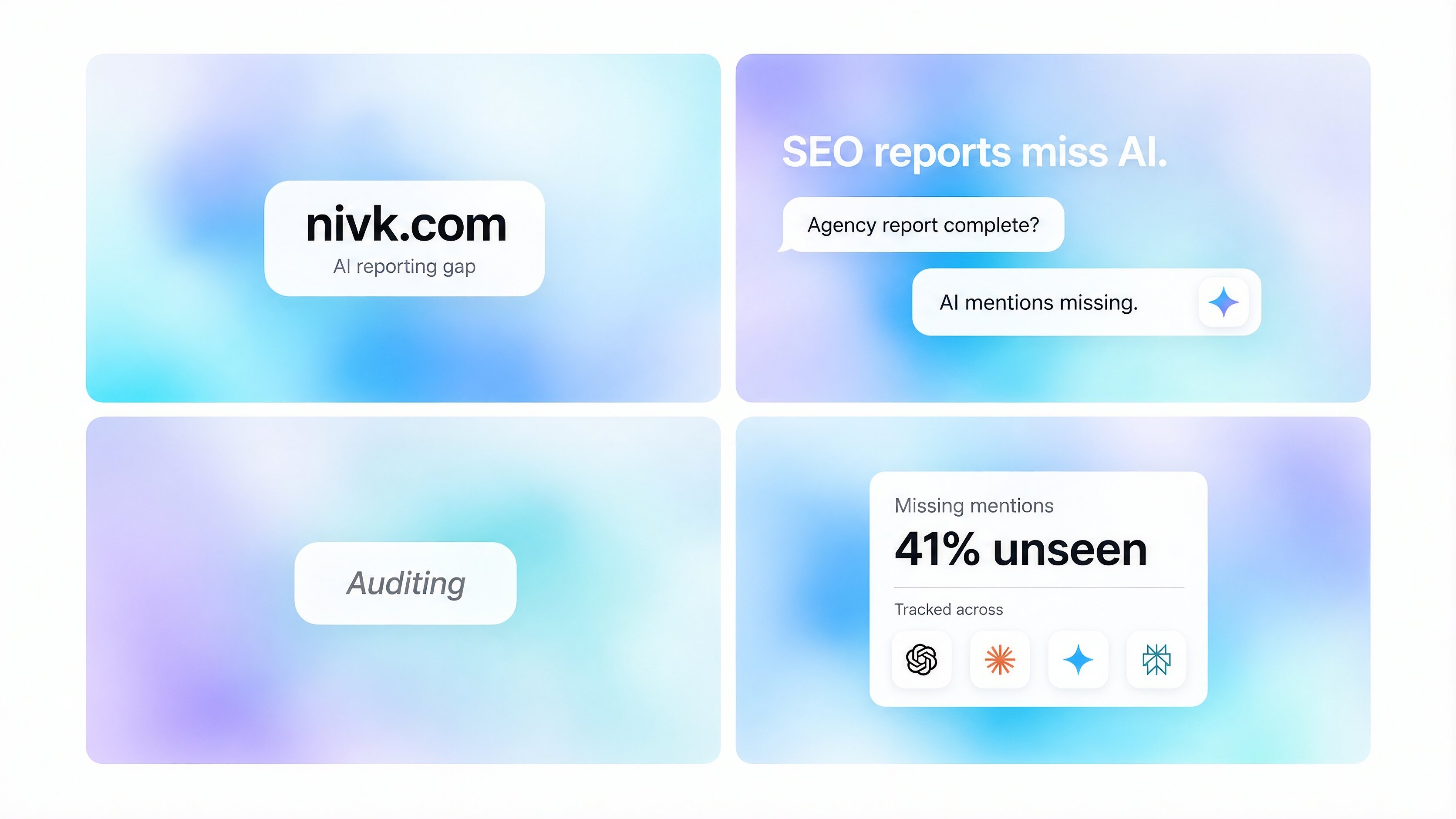
**How SEO and GEO should work together** This should not be framed as SEO versus GEO in the sense of choosing one over the other. SEO is still the foundation. GEO is the layer you add when the user journey increasingly ends in an answer surface. That usually means: keep technical SEO strong keep internal linking and indexation healthy keep authority and site quality work in place rewrite key pages so answers appear early and clearly structure headings around real query language clean up schema where it supports visible content test important prompts in ChatGPT, Google AI surfaces, and Perplexity measure citations and mentions, not just clicks That is the practical split. SEO gets the page into the ecosystem. GEO improves the odds that the page actually gets used inside the answer. **What agencies should be reporting now** This is one of the simplest tests. If an agency says it understands GEO but only reports: keyword rankings organic traffic clicks sessions then it is still mostly measuring the old search layer. At minimum, GEO-aware reporting should include things like: tracked prompt sets citation share by engine cited URLs competitor citations changes after edits whether your brand is being mentioned inside answers Without that, the AI visibility layer stays mostly invisible. And if it stays invisible, it usually stays unmanaged too. **What to watch out for** This is still an emerging area. That means two things are true at once. First, the shift is real. Second, the systems are still partly opaque. So no serious agency should promise guaranteed placement in AI answers. And no serious operator should confuse directional patterns with fixed laws. Good GEO work is disciplined. It tests, measures, rewrites, and observes. It does not rely on mythology. That is an important difference. **Frequently asked questions** **Is GEO replacing SEO?** No. SEO still matters because answer engines still need web content they can crawl, understand, and trust. GEO sits on top of SEO, not in place of it. **Why can a page rank well and still fail in AI answers?** Because ranking and citation are related, but they are not the same outcome. A page can rank and still be too weak at extraction, too generic, or too poorly structured to be selected as a source inside a generated answer. **Is the 40% number real?** Yes, but it has a narrow meaning. It refers to visibility improvements in generative engine responses under tested methods in the original GEO research. It is not a universal traffic-loss number and not a guaranteed gain. **What should an agency report if it claims to do GEO?** At minimum: tracked prompt sets citation share cited URLs competitor mentions changes after edits If reporting stops at rankings and sessions, the GEO layer is still mostly missing. **Do Google and ChatGPT really use web sources in answer experiences?** Yes. That is one of the biggest reasons this shift matters. The answer layer is not separate from the web. It sits on top of it. **Key takeaways** SEO still matters, but it now covers only part of the discovery path in categories where users increasingly accept generated answers instead of clicking through. GEO matters because the new contest is not only about rank. It is also about retrieval, extraction, structure, and trust inside the answer itself. The “40%” idea is best understood as a research signal that AI-answer visibility is real and material, not as a universal benchmark. And if your current agency cannot show prompt-level citation reporting, it is probably still measuring only the old search layer.
No comments yet