 @LawrenceDauchy
more from that month
@LawrenceDauchy
more from that month
How Do I Optimize My Shopify Product Descriptions for AI Search? By Lawrence Dauchy - 12th of April
The short answer is: write Shopify product descriptions so they are easy to understand, easy to trust, and easy to extract. For AI search, that usually means clear product naming, concrete attributes, plain-language use cases, visible evidence, and structured product data that matches what appears on the page. Shopify itself recommends using relevant keywords naturally in product titles, meta descriptions, and product descriptions, while Google’s product documentation makes clear that structured product data can surface price, availability, reviews, and other details more richly in search. That matters because AI search does not read product pages the way a human shopper does. Answer engines and search systems often look for extractable facts: what the product is, who it is for, what makes it different, what it costs, whether it is in stock, and whether the source looks reliable. This article breaks down what to change in your Shopify product descriptions, what Shopify features help, and where the limits still are. **How should keywords be used in Shopify product descriptions?** Shopify’s SEO help documentation recommends incorporating the keyword naturally into the product title, meta description, and throughout the product description. Google’s Search Essentials also advises using the words people would use to look for your content in prominent places on the page. The useful question is not “How many times should I repeat the keyword?” It is “Does this page use the language a shopper would actually search?” For a Shopify product page, that usually means: put the main product phrase in the title use a close variant in the opening description include natural supporting terms in specs, compatibility notes, and use cases avoid repeating the exact phrase mechanically For example, if the target phrase is “organic cotton baby blanket,” the page can naturally include related language like breathable cotton blanket, newborn swaddle blanket, machine washable baby blanket, and suitable for sensitive skin. That improves topical clarity without making the copy feel automated.
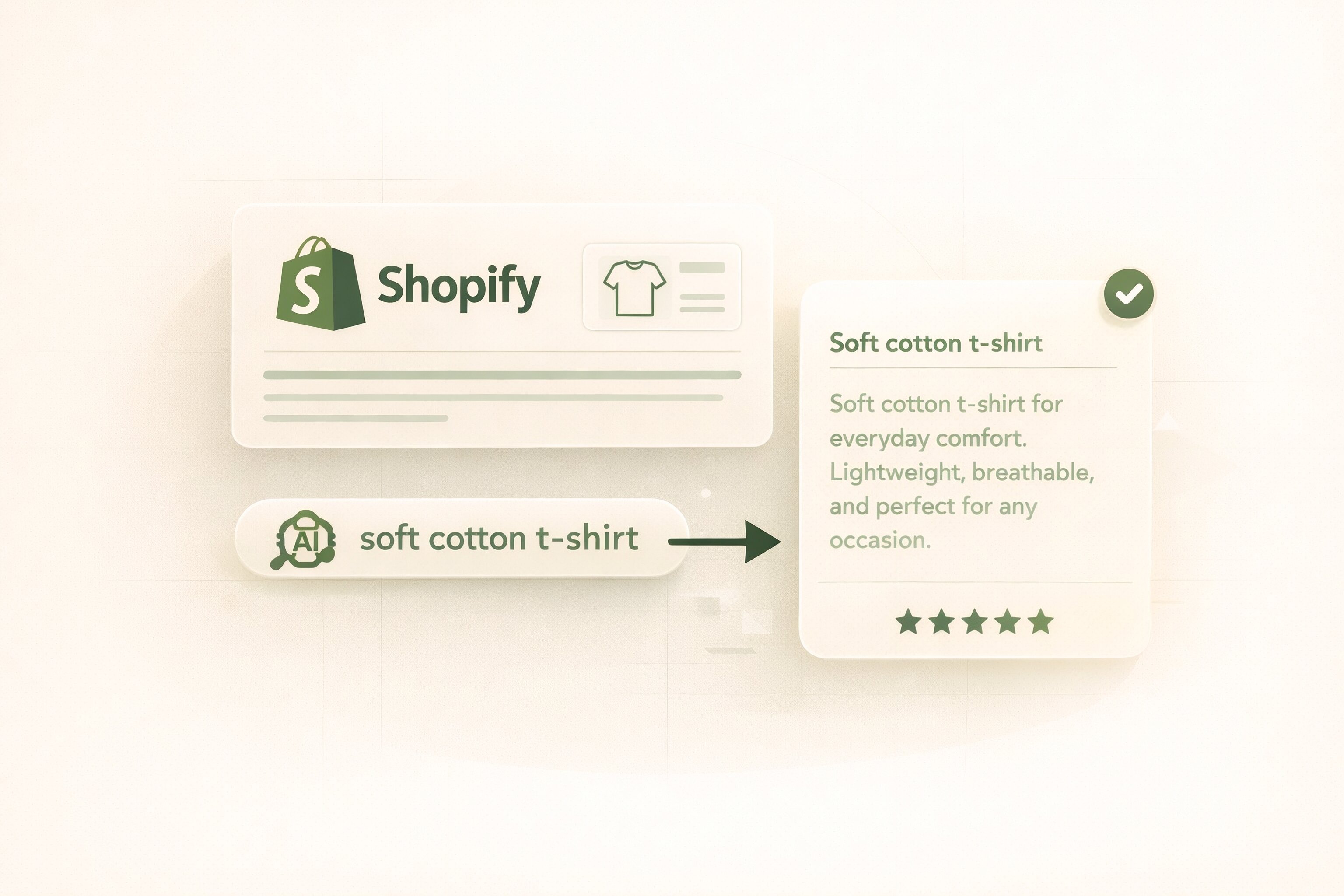
**What about product images and alt text?** Product images help AI search indirectly by improving page clarity and accessibility. Shopify provides built-in support for adding alt text to product media, and Google’s Search Essentials specifically recommends using descriptive words in alt text. The main difference is that alt text should describe the image, not repeat the product keyword blindly. Good alt text might say “women’s black leather ankle boot with side zipper and stacked heel.” Weak alt text would be “best stylish boot fashion boot buy boot.” For many Shopify stores, image alt text is one of the simplest quality fixes because it improves clarity without requiring a full rewrite of the page. **What does an AI-search-friendly Shopify product description look like?** A strong description usually follows a simple order: Product summary in plain language Main use case or buyer fit Key attributes and specs Practical benefits tied to those facts Compatibility, care, or sizing guidance Differentiators and limitations Supporting details through metafields, FAQs, or theme sections Here is a simple example structure: **Opening summary:** “This stainless steel insulated water bottle keeps drinks cold for up to 24 hours and is designed for commuting, gym use, and day trips.” **Key facts:** “Available in 500ml and 750ml sizes, with a leak-resistant cap, BPA-free lid, and powder-coated exterior for grip.” **Use-case guidance:** “Best for everyday carry and short travel. Not intended for carbonated drinks or hot liquids above the manufacturer’s safety range.” **Care note:** “Hand wash recommended. Lid seal should be dried fully before storage.” That kind of structure is easier for both shoppers and answer systems to interpret. **Do you need to rewrite every Shopify product description?** Not usually. Start with the products that matter most. For most stores, the best order is: highest-margin products top organic landing products products with strong conversion rates but weak discoverability products that are often compared or recommended products with thin descriptions or missing structured details This keeps the project commercial, not theoretical. The goal is not to make every page longer. The goal is to make your most important product pages easier to retrieve, cite, and trust.
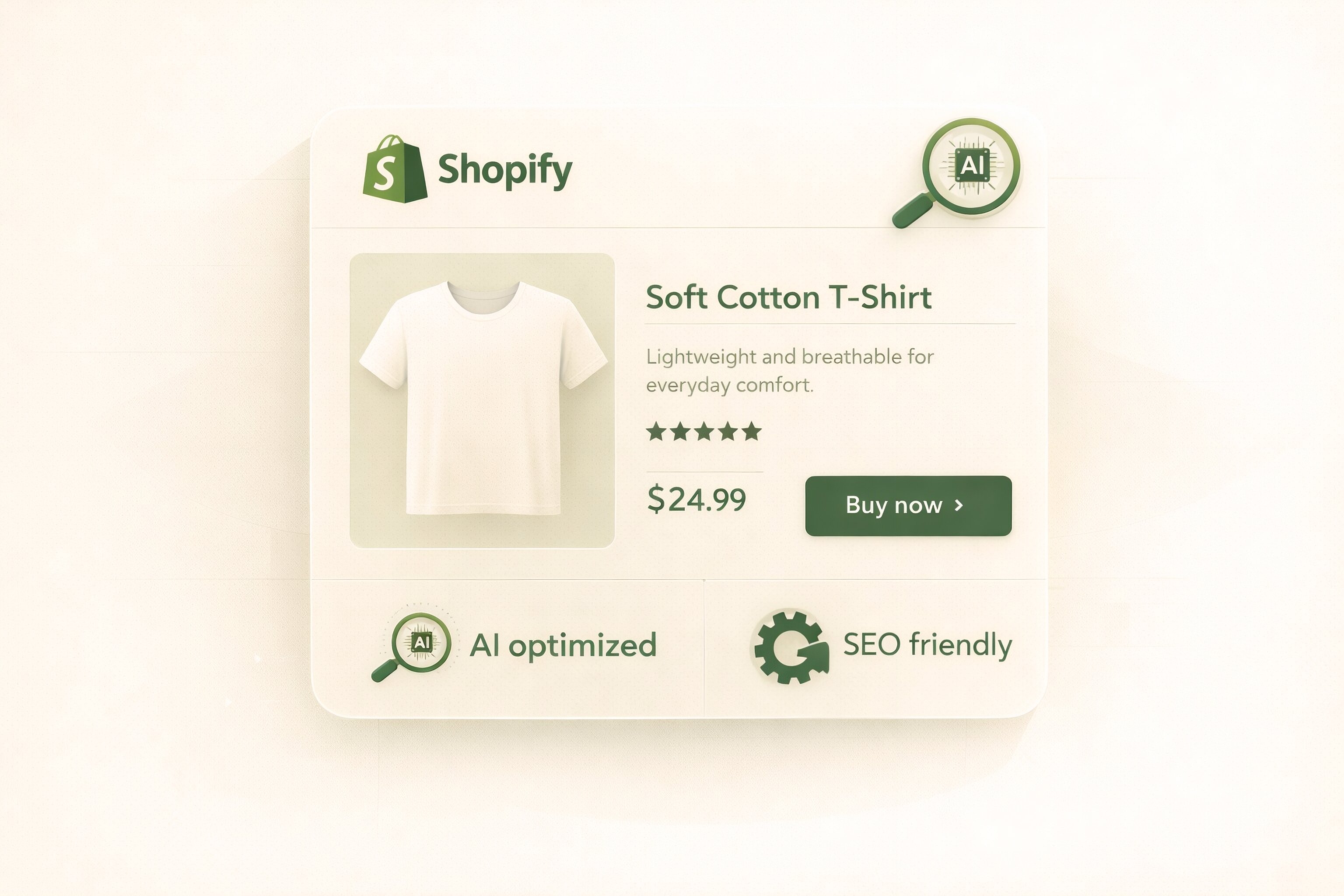
**Frequently asked questions** **Are Shopify product descriptions enough for AI search on their own?** No. Product descriptions matter, but they work best alongside clean product data, theme output, structured data, crawlability, and accurate inventory or variant information. Google’s product documentation and Shopify’s product data system both point to the importance of complete product information, not just persuasive copy. **Should I use AI to write Shopify product descriptions?** You can, but the output still needs editing. Google’s guidance says the issue is not whether AI was used, but whether the content is helpful, reliable, and created for people rather than to manipulate rankings. **Does allowing OpenAI’s crawler matter?** It can matter for discovery in ChatGPT search. OpenAI says OAI-SearchBot is used to surface websites in ChatGPT’s search features, and sites opted out of OAI-SearchBot will not be shown in ChatGPT search answers, though they can still appear as navigational links. **Do longer product descriptions perform better in AI search?** Not automatically. Clear, specific, extractable descriptions usually help more than padded ones. Length only helps when it adds useful facts, distinctions, or evidence. **Key takeaways** Shopify product descriptions for AI search should be clear before they are clever. Put the product type, use case, and main differentiators near the top of the page. Use Shopify metafields to store and display structured product facts consistently. Make sure visible product information and structured data align, then validate the markup. Keywords still matter, but only when they match real shopper language and support a page that is genuinely useful.
No comments yet