 @LawrenceDauchy
more from that month
@LawrenceDauchy
more from that month
Why Is My Competitor Recommended by ChatGPT but My Brand Isn't? By Lawrence Dauchy - 8th of April Press enter or click to view image in full size A lot of brands assume tht if they perform well in Google, they should also show up when people ask ChatGPT for recommendations. That is not always how it works. When ChatGPT generates answers, especially for commercial or comparison-style prompts, it is not behaving like a traditional search engine showing ten blue links. It is trying to produce a direct response that feels useful, clear, and trustworthy. That means the brands it mentions are often the ones that are easiest to understand, easiest to verify, and easiest to summarize for that specific question. So if your competitor keeps getting recommended and your brand does not, it does not automatically mean they are better than you. More often, it means their content is easier for the system to use. This is where many businesses get confused. They look at their rankings, traffic, and backlinks and assume they should naturally appear in AI-generated answers too. But visibility in ChatGPT often depends on a different mix of signals. Traditional SEO still matters, but it is only part of the picture. The real question is not just, “Who ranks better?” The better question is, “Which brand is easier for ChatGPT to retrieve, understand, trust, and mention in an answer?” **What ChatGPT is really doing when it recommends a brand** When someone asks ChatGPT for the best software, agency, consultant, clinic, service provider, or tool in a category, the system is trying to build a useful answer from what it can access and interpret.
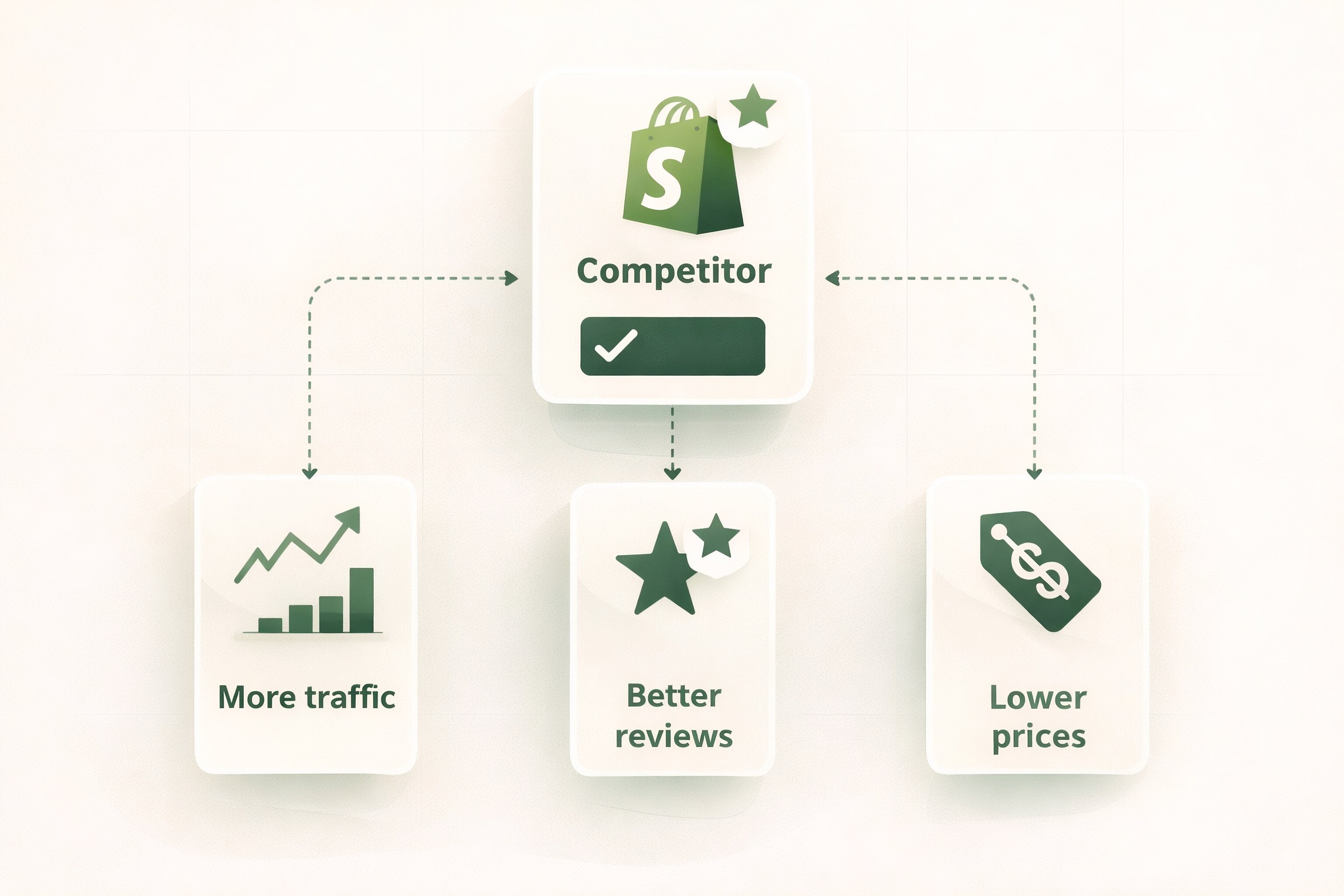
That means recommendation visibility often depends on whether your brand appears in the source set it can discover and whether your pages are structured in a way that helps the model form a confident answer. A competitor may appear because its content is: clearer easier to extract more tightly matched to the user’s prompt supported by stronger proof mentioned in more relevant contexts In other words, ChatGPT is not simply “choosing favorites.” It is more likely surfacing brands that are easiest to use for the task. **Why a competitor can appear even when your SEO looks stronger** This is where the shift becomes obvious. Traditional SEO often rewards page-level ranking performance. If your site has strong authority, clean technical SEO, and good keyword targeting, you can rank very well in normal search results. But AI recommendation visibility works differently. A brand can be strong in Google and still weak in ChatGPT if its pages are hard to summarize, vague in positioning, weak in evidence, or not clearly tied to the kind of prompt being asked. Meanwhile, a competitor with less overall authority can still show up if it has pages that are more direct, more specific, and more usable in answer generation. That is why many marketers are surprised. They are judging performance using the wrong lens. Your brand may be winning the ranking battle while losing the answer-formation battle. **The most common reasons your competitor is being surfaced** Usually, this is not caused by one issue. It is a stack of issues. **1. Your site may not be accessible enough for search-driven discovery** If your content is not easily crawlable or available for discovery, your chances of appearing in AI-powered answers drop immediately. This is one of the first things to review. If your competitor’s site is fully accessible and yours is restricted, the rest of the comparison may not matter very much. Before thinking about content strategy, make sure your site can actually be found and processed. **2. Their pages may be easier to quote and summarize** This is one of the biggest reasons. AI systems work better with content that is clean, direct, and extractable. Pages that clearly explain what a company does, who it serves, how it is different, and what proof supports its claims are easier to use than pages full of vague marketing language. A competitor with simple, structured, well-written pages can outperform a stronger brand whose website is harder to interpret. Long homepage copy, fuzzy messaging, buried benefits, and unclear claims may look polished to humans but still perform poorly in answer environments. If a page makes the reader work too hard to figure out what the company actually does, the model may move on to a source that is easier to understand. **3. Their brand may appear more often in the right places** Press enter or click to view image in full size Recommendation visibility is rarely driven by your website alone. If a competitor is regularly mentioned in review articles, niche roundups, trade publications, comparison pages, expert commentary, community discussions, and strong educational content, it has more opportunities to show up when recommendation-style prompts are asked. That does not mean every mention is equally valuable. It means repeated visibility across relevant sources helps build a stronger footprint. If your competitor is easier to find across the web in the exact contexts buyers care about, that can make a real difference. **4. Their pages match buyer intent more directly** Many brands make the mistake of writing generic homepage copy and expecting it to support every category-level question. But recommendation-style prompts usually require more specific material. If a user asks for the best tool for a certain use case, or the best agency for a certain kind of problem, the content that performs best is usually the content that directly addresses that need. A competitor with stronger service pages, sharper use-case pages, and better comparison content is often easier to recommend than a brand with broader but more generic messaging. Even if your company is more established, a competitor may win because their pages better match the question being asked. **What to check first if your brand is missing** Before assuming the issue is authority or unfairness, start with a basic audit. **Check crawlability** Make sure your important pages are accessible and available for discovery. If they are blocked, restricted, or technically hard to retrieve, your visibility will suffer. **Check indexability** Look at whether your key commercial and category pages are actually available to be surfaced. If the pages you care about are not clearly available for indexing and discovery, they are unlikely to become recommendation sources.
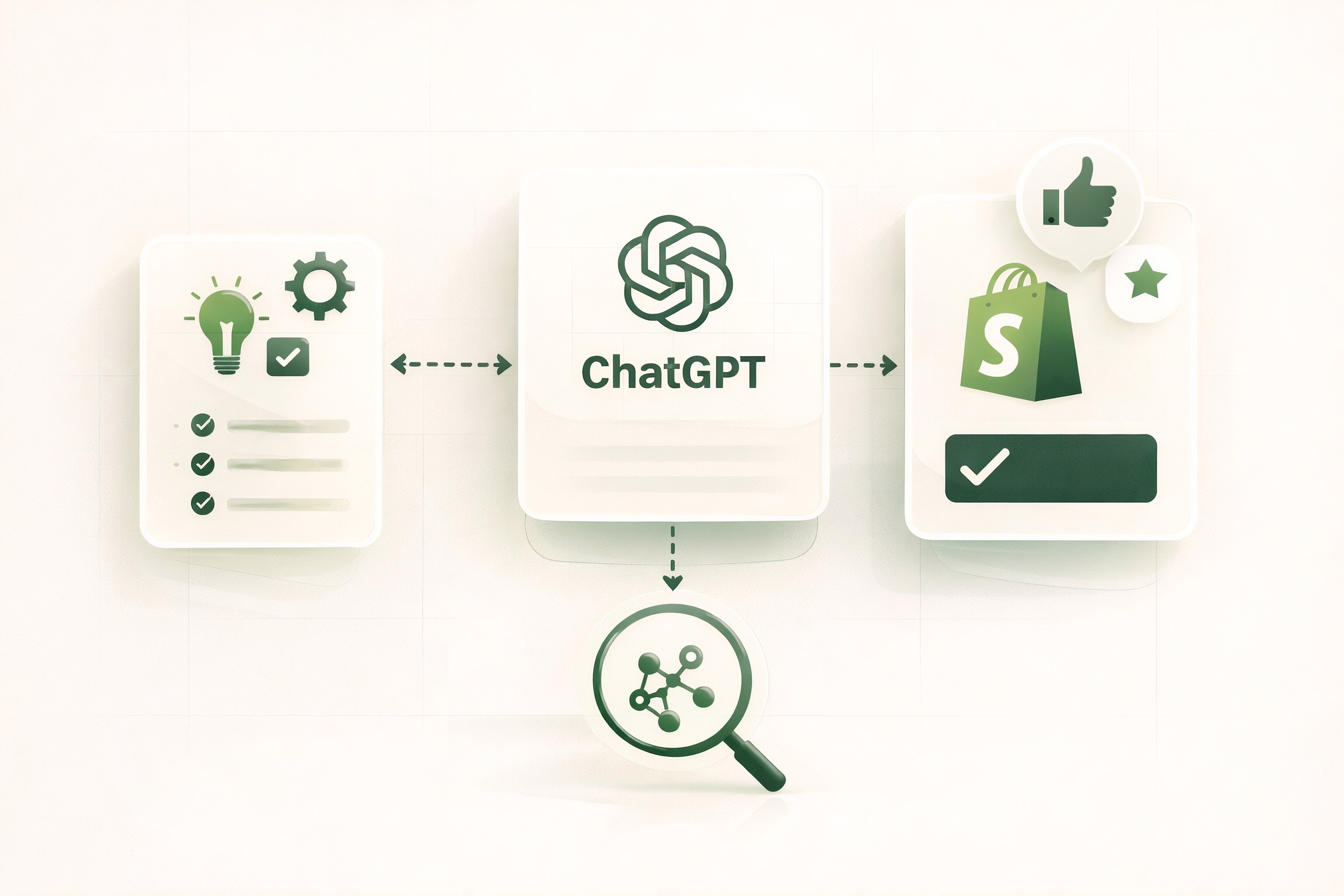
**Check whether your key pages are answer-ready** This is the editorial layer many tems overlook. Your important pages should clearly answer questions like: What is this company? What category does it belong to? Who is it for? What problem does it solve? What makes it different? What evidence supports the claim? If those answers are not obvious, the page is harder to use in an AI-generated recommendation. **Check your competitor’s comparison strength** Does your competitor have clearer alternatives pages, sharper category positioning, stronger use-case content, or better proof? Very often, the answer is yes. And that is exactly why they are easier to surface. **Check whether you are measuring the right thing** Traffic alone does not tell the full story. A page may receive visitors and still be weak as a recommendation source. Likewise, a competitor may receive less traffic overall but still be better positioned for specific prompts. You need to separate general SEO performance from AI recommendation visibility. **What usually matters more than marketers expect** A lot of teams overestimate the importance of hacks. They look for tricks, schemas, prompts, or shortcuts. But in most cases, the deeper issue is much simpler: your brand has not yet become a highly usable source. For most businesses, the biggest drivers are: **Source clarity** Can your content be understood quickly? **Entity clarity** Is it obvious what your company is, what category you belong to, and which problems you solve? **Prompt alignment** Do your pages match the kinds of questions people actually ask? **Comparative relevance** If the user is choosing between options, does your content help answer that comparison? **External validation** Are other trusted places on the web discussing your brand in relevant ways? These are not flashy ideas, but they are usually what makes the difference. **What this looks like in a real scenario** Imagine you run a B2B SaaS company. Your homepage ranks well. Your brand has decent awareness. Your blog brings in search traffic. But when someone asks ChatGPT for the best tools for a specific workflow in your category, your competitor appears and you do not. A lot of the time, the competitor has three things you do not: a page focused directly on that use case clearer proof and buyer language on the page stronger mentions in third-party sources tied to that category That does not prove the competitor is better. It often just means the competitor is easier to retrieve, summarize, and trust for that particular question. **What to do next if you want to close the gap** Press enter or click to view image in full size You do not need to rebuild your entire site. But you do need to make your brand easier to understand, easier to retrieve, and easier to trust. A practical sequence looks like this. **1. Confirm access and discoverability** Make sure your key pages are available, crawlable, and technically clean. **2. Identify the prompts where competitors show up** Look at the recommendation-style prompts that matter most in your category. These may include: best tools for a use case top providers in a niche alternatives to a known brand best agencies for a specific need best software for a specific workflow **3. Study the source patterns behind those answers** Look at which types of pages tend to support recommendation visibility. Are they comparison pages? Category pages? Editorial reviews? Use-case landing pages? Educational explainers? Understanding the pattern helps you see where your gaps are. **4. Improve the pages that matter most** Start with the pages closest to revenue. Add: clearer positioning direct definitions stronger use-case framing real proof points concise summaries comparison-oriented language where appropriate Make the page easier to understand in seconds, not minutes. **5. Build stronger off-site validation** Your website is only part of the equation. If buyers, reviewers, communities, and industry sources are not mentioning your brand in relevant ways, your footprint stays weak. The stronger your contextual presence across the web, the easier it becomes for recommendation systems to encounter you in meaningful places. **6. Measure visibility separately from traffic** Do not confuse referral growth with recommendation strength. Traffic is useful, but it does not fully reveal how often your brand is being considered, cited, or selected in AI-driven experiences. You need a separate lens for that. **What not to overestimate** There is no simple formula that guarantees your brand will be recommended. That is important to understand. Better crawlability does not guarantee visibility. Better pages do not guarantee inclusion. Strong SEO does not guarantee recommendation presence. The system is broader and less transparent than a normal rankings report. That is why businesses should be cautious about anyone promising guaranteed ChatGPT visibility. The work is real, but it is not mechanical. What you can do is improve the odds by making your brand easier to discover, easier to understand, and easier to trust. **Is this just SEO under a new name?** Not really. There is overlap, of course. Crawlability, page quality, clarity, relevance, and authority still matter. But AI recommendation visibility puts more weight on whether your content can be turned into a useful answer. That means source usability, citation readiness, answer structure, and prompt-to-page alignment matter more than many marketers are used to. So this is not just SEO with new branding. It is closer to a broader visibility challenge where search strength helps, but answer-readiness decides much more than people expect. **Key takeaway** If your competitor is being recommended by ChatGPT and your brand is not, the explanation is usually not mysterious. In most cases, their content is simply easier for the system to discover, understand, summarize, and use for the prompt being asked. That does not mean your brand is weaker. It means your brand may be harder to turn into an answer. And that is the real gap to fix.
No comments yet