 @Koyang
Posted a wrong version of Cow Head, Instead of posting the well made version with good translation, I posted a draft. Check it here: https://read.cash/@Koyang/cow-head-man-7dd86738
Joined 20 July 2021 · 30 posts
Just a normal guy, with an abnormal life
120 KT
0 KT · 45¢ received · 0 KT · 10¢ given
@Koyang
Posted a wrong version of Cow Head, Instead of posting the well made version with good translation, I posted a draft. Check it here: https://read.cash/@Koyang/cow-head-man-7dd86738
@Koyang
Horror Movies isn't dreadful anymore Me? Horror films are among of my favorite to see! But why is this the case? What is it about horror movies that makes them no longer frightening? I used to be unable to watch horror films on my alone; I would always close my eyes and cover my eyes, and I would even hide behind you when there were horror moments; why does it suddenly feel like such a minor inconvenience? It is no longer necessary for me to increase my pulse rate when the protagonist is in a dark environment; I am no longer startled by loud sounds and unexpected shocks; and I am no longer afraid when I see frightening ghosts, monsters, or bloody bodies on the screen. When I watch a terrifying movie at night, I no longer have trouble going asleep. Yes, I do have a recollection of it. When it's late at night, we're prone to watching scary movies. The entire neighborhood was devoid of noise, and there was no traffic noise. We even turn off the lights to make ourselves feel even more apprehensive while we chew on the rumor we picked up at the shop that day. In order to effortlessly squeeze and hug each other when there are frightening episodes, we always sit side by side on the soft and long sofa. The majority of the time, we are both shocked and catapulted out of our seats into the icy cold air at the same moment. We'll laugh together, mocking each other about who's more afraid or astonished than the other. Then our bodies will stay together once more, content in the knowledge that, despite the fact that the show is frightening, we are next to each other. I'm not even sure how many scary movies we've seen as a family. Hollywood, Japanese, Korean, Thailand, Chinese, Tagalog, and other locations are marked on the map. We had a great time and laughed a lot. There are numerous jumbled stories that we don't understand that are discussed and contested amongst ourselves. There are movies that have been repeated over and over again, and there are movies that have been overlooked. We have a number of favorites. Many of them have made us feel anxious and fearful. That even the terror induced by horror films has a limit was something I didn't realize. I was watching a well-known horror film the other day. That, on the other hand, is rather different. After a while, I stopped being afraid. I had lost my fear of public speaking. I no longer blinked my eyes shut or covered them with my hands. Not only that, but I didn't hide behind you either. I just sat and watched by myself. You're no longer by my side, are you? It is not frightening to watch horror films alone. The scenes in which the protagonist is pursued by a spiteful ghost or dies are not particularly frightening to see. When a hand or a face appears in front of the camera without warning, it is not startling at all. Horror films are no longer frightening to me because I have already experienced what I dread the most. I'm trying to get rid of you. Me? I don't get scared in horror movies anymore... *(This is Koyang's original work. Please visit* *https://read.cash/@Koyang* *for more stories by this author.)*
 @Koyang
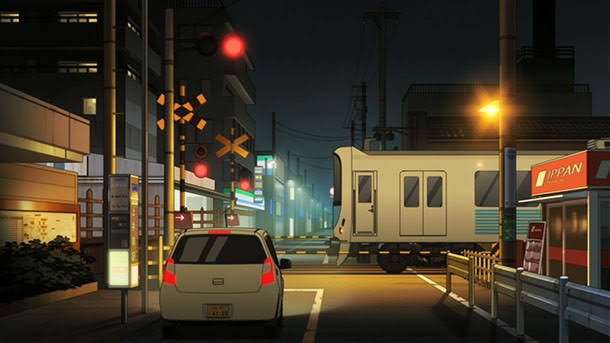
A Railroad Crossing Recently, a new employee had been hired by the organization. It was necessary for her to commute to work every day because the company was located a long distance away from her home. A rail-road crossing separated her home from the train station, which was around 10 minutes walking distance away. A drinking party was being held by her employer on that particular day. Following her return home from work, she changed her clothing and then headed to the party location. With her co-workers, she had a great time drinking. After the celebration was ended, she went to Karaoke with a group of her close friends.. The excitement had caused her to lose track of time, and it was already time for the last train to leave on its scheduled schedule. Her departure was hastened in order not to miss the train, so she dashed to the train station. Because of her quick thinking, she was able to get to the station in time and board the train. That it was already past midnight was evidenced by the dense darkness outside the train station. They dropped her off near her home at a train station. As she walked across the platform, she was struck with a profound sense of unease. She noticed a white figure at the very end of the platform. She, on the other hand, was intoxicated, so she put the incident down to that and went home. She had the distinct impression that she was being followed while walking down the route to her house. She had a sneaking suspicion that it was the white figure from earlier. She hurriedly made her way to the rail-road crossing. The alarm was beeping, indicating that a train was approaching. She rapidly across the railroad crossing before the gate could close in order to avoid being stuck with the white creature from before. She turned around. The white figure stood in front of the crossing's locked gate. When she recognized what she had been running from for so long, she experienced shivers all over her body. The image appeared to be a woman dressed in white. Her dark hair, on the other hand, completely concealed her face. Despite the fact that the person appeared to be standing, it was doing so in a completely unnatural manner. Her entire lower body was transparent, including her thighs. For a brief while, the oncoming train obscured the vista. When the train had passed, the white figure had vanished as well. The events of that day have passed, and A has not come across the white object since. She even looked for any accidents that might have occurred in the area, but she came up empty-handed. Whatever it was, it will undoubtedly stay a mystery. *(This is Koyang's original work. Please visit* *https://read.cash/@Koyang* *for more stories by this author.)*
 @Koyang
On That Stormy Day I was told the story that I'm about to tell you by my friend T-san, who was the one who told it to me. Now, this creepy encounter occurred to him approximately ten years ago, and he says that it was something he personally witnessed, so I have no reason to mistrust him. When the dreadful day arrived, T-san was driving in his automobile, as he narrates. He had gone to his friend's house and was now on his way back to his own house in the same car. Probably around 4 o'clock in the afternoon, was the time of the incident. After a few hours of driving, he began to notice that something wasn't quite right. There were sounds of water drops hitting the body of his car, which he recognized. The sound of rain, however, did not scare him; rather, he was perplexed because the weather outside...was as clear as a day! Then, from where was this dripping sound of raindrops emanating? T-san, according to what he recalls, stated that he was still driving at that time. He was struggling to come to grips with this confusing phenomenon...when his car collided with something unexpectedly. A resounding thump resounded throughout the vehicle. He felt a cold run down his spine, a chill that was unsettling. T-san couldn't see what had hit the automobile because it was obscured by the surrounding foliage. He, on the other hand, had the distinct impression that something evil was lurking beneath his car's hood. He described the presence as "out of this world" and "supernatural," implying that it was supernatural in nature. His hands were trembling as he continued to drive towards his destination, despite his best efforts. T-san increased the speed of his vehicle in the expectation that the 'entity' would be thrown off by the increased speed of the vehicle. He was shouting at the top of his lungs while driving at high speed. Those were the words that came out of his shaking mouth: "GET AWAY FROM ME!" The sound of the rain could still be heard. T-san was traveling at an incredible rate of speed. The traffic light in front of him had changed to a red signal. Because the change in light was so abrupt, he was forced to apply heavy braking force. As soon as he applied the brakes of his automobile, there was the sound of something tumbling to the pavement. The presence of the entity was extinguished with the sound of a gunshot. T-san was also unable to hear even the smallest raindrops. T-san managed to get to his house despite being paralyzed by terror. T-san, who was now interested in learning more about what he had experienced, dialed his psychic friend's number and described the entire incident. T-psychic-friend san's informed him that an accident occurred at the location where he had felt the presence of the entity on the bonnet of his car a year before. On that particular day, it was drizzling fiercely. An elderly woman was crossing the street when a car slammed into her, knocking her to the ground. In this case, due to the woman's petite stature, her body became caught on the bonnet of the car. Her body remained in that posture until the automobile came to a halt at a red light, and as the car came to a stop, her body was thrown to the pavement. She was no longer alive. When T-san heard this, he was overtaken with emotion. When I first heard this story from T-san, I felt conflicted. What I couldn't decide was whether I should be terrified or feel sorry for the old lady. What is it that causes some souls to reach nirvana? What is it that causes certain souls to become vengeful spirits? I couldn't come up with an answer. It appears like attaining nirvana after death is a difficult task, doesn't it? *(This is Koyang's original work. Please visit* *https://read.cash/@Koyang* *for more stories by this author.)*
 @Koyang
You might guys notice that I'm out in a month, guess what, I have a bunch of stories for you guys! I will upload them, every other day!
@Koyang
Girl On The Swing This incident occurred when I was still a middle school student, and it was a traumatic experience for me. During those days, my friend-circle was comprised of two individuals, whom I shall refer to as A-kun and B-kun in this narrative. I've known A-kun and B-kun since we were in elementary school, and we've always been good friends. Furthermore, our residences were in close proximity to one another, allowing us to gather every day after school. Our neighborhood had a hill that we used to go to quite often for exercise. In other words, it served as our gathering place, where we would engage in trivial chats till the wee hours of the morning. The best part about this was that we received permission from our parents, so staying up the hill till the wee hours of the morning was not an issue for us. When I was up on the hill with my friend A-kun, it was just like any other night. We were talking about whatever we wanted. It wasn't until later that our other friend, B-kun, arrived. Still, even after a few of hours, he was nowhere to be seen. As a result, I told A-kun, "Hey, there! B-kun has not yet arrived. Is it better if we go to his house and see what's going on?" So we both descended the hill and began walking in the direction of B-house. kun's B-house kun's was across the street from a sort of playground, which wee had to pass before arriving. As a result, I caught a glimpse of something in my peripheral vision as we were crossing the playground. A small girl dressed entirely in white was swinging back and forth on the swing. It was almost late, and I was certain that the presence of that girl would make me feel afraid. "Did you just witness that???" I exclaimed as I turned to face A-kun. A-kun walked over to the swing to see what was making me so nervous. "WHAAAAAAAA..." A-kun screamed in delight. We both quickly turned around and started running up the hill. After climbing the hill, we sat down to try to keep our bodies from shivering too much more. We racked our minds, trying to come up with a reasonable explanation for what we had witnessed on the playground. We may have been looking at each other for a few minutes before we noticed B-kun approaching us from the darkness. "Hello there, B-kun! Don't you remember that you were coming from the direction of the playground? Were you able to spot a little girl on the swing?" "No, I didn't see anything like that." "I'm sure we spotted her, A-kun," says the group. All three of us returned to the park in order to dispel any remaining concerns. We were able to spot her on the swing. The young lady was still present. We sprinted back up the slope as soon as we could. "As a result, we were correct. Did you happen to see her this time, B-kun?" "Yes. I believe what you're saying. She had a pleasant smile on her face." "I didn't even bother to glance at her. I was absolutely afraid." "The same is true for me. I, too, didn't have the guts to look her in the eyes when she spoke." The very following day, B-kun was killed when he was struck by a truck while crossing the street. Why couldn't it have been the girl's true identity and that her grin was more of a portal to death than anything else. Only B-kun in our group was able to see her grin, and as a result, she was able to transport him to the hereafter. *(This is Koyang's original work. Please visit* *https://read.cash/@Koyang* *for more stories by this author.)*
 @Koyang
Vampires Isn't Real "WHAT IS THIS?" Brando asked angrily. "Don't they know that there are no vampires in the Philippines!" The man is currently watching a famous soap opera about vampires on the small television in front of him. He really doesn't want that show but he has no other choice because that's the only station his TV gets. He also has nothing else to worry about. The little house he was in was not as empty. Only the television perched on a wooden table, the old chair he was sitting on, and the blindfolded child lying on a dirty mattress could be seen inside the house. "It's funny," Brando said to the boy. "Look, the ugly effects!" He suddenly remembered that the boy could not see what he was watching. “Oh, sorry. You are blindfolded. ” Brando leaned his gun against the wall and picked up a cigarette stuck to his ear. He snatched his lighter from his pants pocket and quickly lit the cigarette. His first breath was deep, savoring the smoke. "Oh, delicious!" In the show, two famous actors are fighting. Brando laughed out loud. “It’s really bad. It's funny! ” Suddenly his cellphone in his pocket rang. He hurriedly picked it up and answered. "Hello, Lucas… yes, it's okay here… the boy is quiet… okay… okay." He went back to his watch. "You know kid," he said while looking around at the boy lying down, "because vampires are just foreign countries. The occupiers just brought it here. ” The child does not speak. It just listens quietly. “Then, what’s so good about vampires? First of all, they are corpses. They no longer feel anything. Then, they were dead just a day ago. ” The two vampires on the show just keep fighting. They are still moaning like wild animals. "That's one of the reasons why I don't like this show. Why don’t they burn in the sun? Mali! Really wrong!" Brando turned to the boy again. It is still silent. He frowned. When they abducted the boy, he did not even shout or fight. Not even crying. It’s silly, he thought. But we will definitely be surprised when it is redeemed. He faced the TV again. "One more. Why are vampires so beautiful and handsome? Where did they get that idea? ‘Isn’t that a big nonsense?’" He stood up and stretched. Then he approached the TV and turned it off. "I don't know why Filipinos like vampires, eh-" Brando's words were interrupted by a loud crash he heard from the roof. He was startled and looked up. "What's that?" He remembered that he had put down his gun. He was about to take it when the door of the house suddenly opened. Brando turned to see who the uninvited guest was but he suddenly felt someone grab his neck and push him backwards. He closes his eyes in pain as his body hits the wall. Then he felt himself being lifted by whoever was choking him. "You're shameless!" The voice he heard sounded strange. It roared as if from underground. He was then dilated. He was shocked by what he saw. A woman with messy hair was in front of him. It choked him with only one hand. Its blood -colored eyes were furious. But what really frightened him was the woman's sharp teeth. "V-Vampire!" Brando said softly. Suddenly the woman's forehead frowned. “What vampire? Don't you know that there are no vampires in the Philippines? I am a ghost. ” In one quick action the woman buried her hand with a sharp nail in Brando's stomach. The man just stared in pain, not even able to cry. The female ghost took out her hand and placed it on Brando's face. The man saw that it was holding his liver. The woman suddenly released him. He fell to the floor like a vegetable. Brando doesn't understand what happened. He closed his eyes, hoping that when he opened his eyes he would discover that everything was just a dream. But before he could finally close his eyes, he saw that the female ghost had given her liver to the child, who was no longer bound. “Son, are you okay? Here, I know you are very hungry. ” “Thank you. It's good that you came. I've been annoyed with that man before. Earlier, he was said that there were no vampires in the Philippines. Eh, really nothing! They're just scared of us, aren't they? ” The mother and son laughed at the same time. *(This is Koyang's original work. Please visit* *https://read.cash/@Koyang* *for more stories by this author.)*
 @Koyang
The Wedding Gown "MY CHILD, DON'T WEAR YOUR GOWN," Marta said to her daughter Ellen when they went to see Aling Thelma, who was sewing the girl's wedding dress. “And why, mom? Is it because my marriage can't continue? ” Jane asked jokingly. “Mom. Even now, you still believe in those superstitions. ” Martha just shook her head. He is from a large province so he knows a lot of superstitions and traditions, which she tries to pass on to her daughter. "There's nothing wrong with us obeying," Martha replied gently. “Look at what happened to your Aunt Belen. There! Old maiden. ” Belen, Martha's older sister, was well-known throughout their family. This is because their relatives love to talk about it, especially when it comes to marriage and superstitions. When Belen was a young girl, she would have married a rich haciendero. But because of not believing in superstitions, she wear her wedding dress the night before the wedding. Their mother was horrified to see the girl. Belen delivered a powerful shout but she just laughed at all of them. The next day, her wedding day, she saw her fiancé floating in the river. Dead, victim of holdups. Another always cited example of Martha is Ellen’s cousin Betty. The two women were about the same age, growing up together. It’s been two years since Betty’s wedding to her boyfriend Jake was set. The wedding was well prepared because the man's family was well -off. Expenses from clothes to banquet. Unfortunately, on the day of the wedding, Jake suddenly fainted. He was rushed to the hospital but it was too late. Ruptured aneurysm seems to be the cause. A vein in his head ruptured causing inflammation of his brain. Betty's crying was indescribable. Her parents and friends tried to comfort her, convincing her that she was not married to what had happened. But they got nothing to answer when Betty said she wear her wedding gown the night before the wedding. Even her parents were silent. Ellen is not a superstitious person, and she only laughs at people who believe in them. But now that she is getting married, she will make sure that it will be successful and will not be forgotten. If she had to follow superstitions she would. Her mother was right. Nothing bad if obeyed It was also Ellen's wedding day. She was excited to wear her wedding gown. She didn't know if it would fit her or if it was too tight. She followed her mother's wishes and did not wear it. "Do not worry. That’s enough! ” said Martha cheerfully. Ellen was not breathing up the zipper of her dress at the back. "Hey, why aren't you breathing?" asked Aling Thelma laughing at the maiden's appearance. Ellen let out a suppressed breath and felt the dress wear off. "Enough!" almost exclaimed she said. She looked carefully at her appearance in the mirror. "Your beautiful child." You're right, mom, Ellen thought. How would Julius react when he saw me? Ellen and Marta were riding in a beautiful white car that had been borrowed by one of their adopted godparents. They were on the highway and on their way to church. “Your Aunt Belen is texting. They are all said to be there. We are the only ones waiting, ”said Marta. “Let them wait. It won't start without us,” Ellen replied with a laugh. Suddenly Ellen's cellphone in her bag rang. She picked it up quickly and smiled at the sight of Julius calling to herm "Hello, hon," Ellen greeted happily. "Hon, are you close," the man replied. “Yes. Maybe it's only 15 minutes. ” “Good. Last night I was excited! ” "Just last night?" Ellen asked sullenly. "I was a month ago!" Julius laughed.“ That’s what I want from you, comedian. By the way, do you know that the jacket I sewed is small for me. ” "Hah," Ellen said in shock. "Oh, did you wear it properly?" "Of course! Good luck to you and I visited the seamstress last night and I measured the barong. ” Ellen didn't know why but she suddenly felt scared. "H-Hah?" Her hand was shaking and she couldn't seem to hear Julius' voice. She just stared at her mother who was obviously wondering at her reaction. “… Has been adjusted yet. So it's okay, I'm tired! ” happy story of the man. Ellen couldn't answer. Suddenly her throat went dry and her tongue seemed to weigh down. "Hon, are you still there?" Ellen took a deep breath. "Yes, hon." She held the cellphone with both hands and pressed it firmly to hwr ear. "Did I hear it right? Did you wear your jacket last night? ” “Yes. Small cas- “ Ellen never heard the next one because a truck crashed into their car. She did not realize that she had let go of the cellphone. She felt nothing as her head hit the windshield and his blood spread inside the car. She did not know that several times their car spun and several bones in her body were broken. The only thing on her mind was about Julius's coat. Barong weared by the man last night. Superstitions were not true, she thought before her breath ends. *(This is Koyang's original work. Please visit https://read.cash/@Koyang for more stories by this author.)*
 @Koyang
It's been a busy year for me, I ended up my Project History many months ago, while I'm out I been writing a horror story, I wonder if anyone will be interested if I post one of my works here.
@Koyang
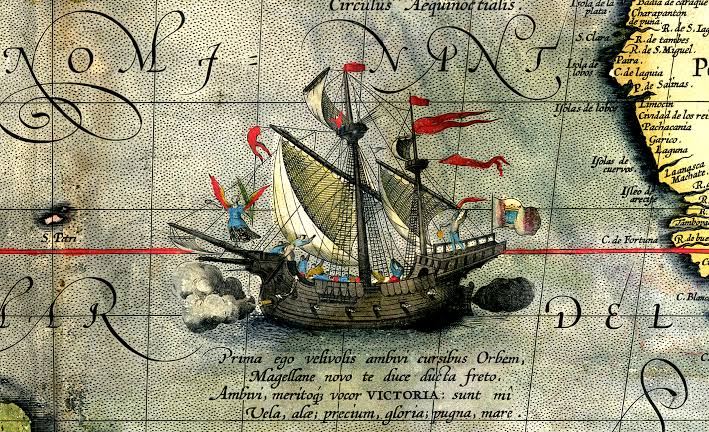
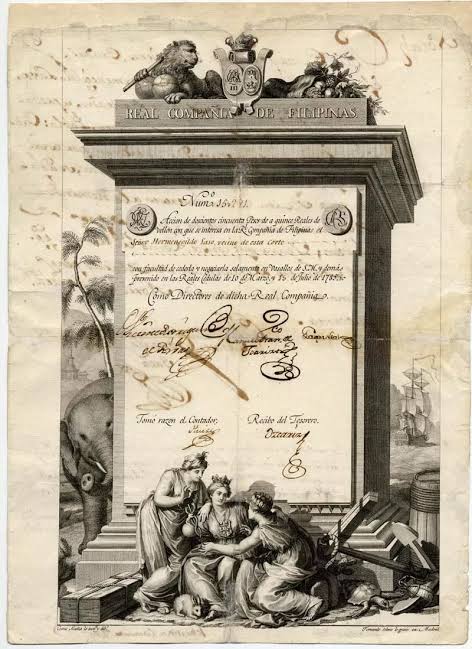
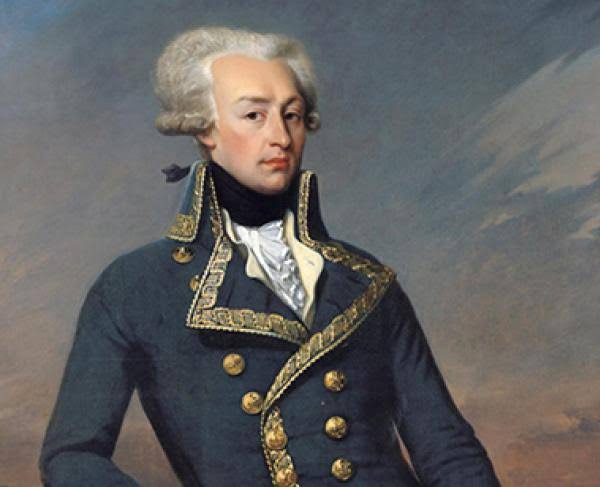
Project History: September 6 THE RETURN OF THE SHIP VICTORIA TO SPAIN `September 6, 1522` Today, in the year 1522, the ship Victoria docked at the port city of Seville, Spain, with its sails torn to shreds and its timbers. It was the first sailing ship, to sail around the world. The ship Victoria, the smallest of the five ships included in the expedition of Portuguese sailor Ferdinand Magellan, was also the only Spanish ship left from a two-year expedition around the world to successfully and safely return to its home. country. On board the ship were 18 people left behind from the original more than 270 Spanish sailors who were involved in this extraordinary mission, including the ship's commander himself, Juan Sebastian Elcano, and the Italian historian and writer Antonio Pigafetta. The ship Santiago was wrecked due to the storm while looking for any passage in southern America. The ship San Antonio secretly fled back to Spain, crossing a strait at the tip of South America. The ship Concepcion was burned as they left Cebu, while the Trinidad was captured by Portuguese ships in the Spice Islands, and sank. On their return, they were able to bring home a large cargo of valuable and expensive spices they had gathered from the Spice Islands (now the Moluccas islands in Indonesia). Above all, the survival of the writer Pigafetta on such an expedition has been the key to revealing to the world their extraordinary and meaningful journey around the world, and their trails in every place they have visited. Meanwhile, no one knows what happened to Enrique, the Malay slave who served as Magellan's interpreter, after they left the Philippines. Sebastian Elcano, who was one of Magellan's captains who succeeded him after he was assassinated in the Philippines, who was also one of the leaders in the uprising against his superior in the middle of their voyage, was awarded a unique shield with engraved which are the Latin words “Primus Circumdedisti Me”, which means “I was the first to circle you”, in recognition. Elcano died a few years later and Victoria disappeared on her last mission. Magellan's expedition aimed to find an alternative route to the Spice Islands by sailing west to east. Although Magellan was dead his extraordinary mission proved that the world is round and all the oceans are interconnected. DESTROYED THE REAL COMPANIA DE FILIPINAS `September 6, 1834` The Philippines followed the Asian countries that first opened its doors to international trade, when the Real Companía de Filipinas (Royal Company of the Philippines) was finally abolished by the Royal Decree of Queen Regent Maria Christina de Borbon today. in 1834. With the eventual dissolution of the Real Companía, Spain lost complete control of the Philippine economy as well as the restrictions imposed by Spain on Philippine trade with various parts of the world. Manila's large ports were first opened to international trade, for foreign traders from other Asian countries such as China, America and European countries such as the United Kingdom. The opening of Manila to international trade has enabled the growth of methods of exchanging products, such as modern steamships. Local industries such as sugar, hemp and tobacco flourished, with sugar being the most widely exported product in global trade. A series of ports were also opened for international trade, such as the ports of Zamboanga, Sual in Pangasinan and Iloilo in 1855. Governor-General Jose Basco y Vargas founded the Real Companía de Filipinas on March 10, 1785 by virtue of the Royal Decree of King Carlos III of Spain. The main purpose of the said company was to establish economic relations between the Philippines and other Spanish colonies and other colonialist countries. The said company also aims to grow the agricultural industry in our country and also introduce new agricultural products to the said industry. But despite the incentives, the company failed to accomplish its two main objectives which can probably be attributed to the following reasons: • The Spanish merchants, who preferred the galleon trade where they made more profits, did not fully cooperate with the company; • The company did not trade directly with Japan, China, and India. It was therefore still necessary to buy products through merchants in Manila, which resulted in higher prices of the products as compared to the price in their country of origin; The company is not well managed because the officers are busy with activities not connected to the improvement and growth of the company; at Foreign ships, instead of company ships, were used to transport products to Manila. Because the company failed to implement its programs here in the Philippines, the Real Compania de Filipinas was eventually dissolved. GENERAL GILBERT DU MOTIER, MARQUIS DE LAFAYÉTTE WAS BORN `September 6, 1755` Considered one of the great but controversial personalities in French history was the French aristocrat and so-called “Hero of the Two Worlds” General Marie-Joseph Paul Yves Roch Gilbert du Motier, Marquis de Lafayette, or simply Marquis de Lafayette or Lafayette. Today is his 266th birthday, born in 1755 in the town of Chavaniac, province of Haute-Loire in southern France, and from the royal line of generals. He was the son of French army colonel Gilbert Paulette du Motier, Marquis de Lafayette and Marie Louise Jolie de Rivière. Lafayette was orphaned early, when her father died in battle while her mother died of illness, while she was studying in Paris. He inherited the wealth of his family and he also decided to follow in his father's footsteps. At the age of 13 he was officially in the Musketeers of the King. Lafayette married early at the age of 18 the daughter of a nobleman Marie Adrienne Françoise de Noailles in 1774, and at that age, she wanted to prove herself as a great general. Lafayette ventured to America to assist in the American fight against British occupation, and he became Major General in the American army under George Washington, until the Americans won with the help of French allies in 1781. Major General Lafayette returned as a hero to France. Carrying the liberal ideologies championed in America, he tried to apply them to his country paralyzed by the ongoing social crisis. He became a member of the Second Estates in the Estates-General, but he was one of the nobles who sympathized with the struggles of the Third Estate. He supported the French Revolution and the liberal ideas it promoted, and he accepted the position of Chief general of the National Guard, what became the army of revolutionary France, with the rank of Lieutenant-General. With the help of the American ambassador of France and his friend Thomas Jefferson, Lafayette wrote the Declaration of Human Rights, adopted in August 1789, and as the trusted guardian of the Royal family of France, he mediated the French citizens who wanted Louis XVI returned to Paris from Versailles in October 1789. He also led the first celebration of Quatorze Juillet in July 1790. Although he became popular for his military achievements, it was his political views that brought about the damage to his reputation. He supported the Constitutional monarchy and the king’s stay in power, something the French radicals who demanded full independence from the monarchy did not want. General Lafayette was blamed for Louis XVI's attempted escape from France in June 1791, and he was further damaged in the public eye when he led the violent expulsion of demonstrators on the Champs de Mars in Paris in July 1791. He was later criticized. General Lafayette the radicalism of the revolution he had previously supported, while radicals such as George Danton and Maximilien Robespierre regarded him as a traitor to the revolution and ordered his arrest. He and his family attempted to leave France for America in 1792, but he was captured by the Austrians in the Austrian Netherlands (now Belgium), and five years were imprisoned. He was freed with the help of Napoleon Bonaparte when he captured Austria in 1797 and offered him his new French government, but Lafayette refused. He avoided any political affiliation with France, and in 1807 his wife died. When Napoléon was ousted as Emperor of France and the Bourbon monarchy returned, Lafayette returned to politics when he served as a member of the Chamber of Deputies until 1834. He was also honored by President James Monroe of the United States, for his service to in America against the British. When the French revolution broke out again against King Louis-Philippe in 1830, the then senior veteran of the American and French Revolutions again supported it. On May 20, 1834, the so-called "Hero of the Two Worlds", and one of the National Heroes of America and France, died in Paris, France at the age of 76 due to pneumonia. General Marquis de Lafayette was buried in Picpus Cemetery with full military honors. UNITED STATES PRESIDENT WILLIAM MCKINLEY SHOT `September 6, 1901` While at the Pan-American Exposition in Buffalo, New York state in the United States, American President William Mckinley was shot on this day in 1901. 28-year-old American anarchist Leon Czolgosz shot the 58-year-old President at close range with his Caliber 32 revolver, while present at the said exhibit. President Mckinley was at the Pan-American Exposition that day to show visitors in attendance exhibits such as nine tons of elephants to the electric generator powered by Niagara Falls. The President also held a simple meet-and-greet for those who wanted to see and get lucky, and the assassin himself, who even hid his murder weapon in his handkerchief, joined in the meet-and-greet. Although security was tight at the meet-and-greet with President McKinley, the aftermath of the gathering was not expected. The assassination attempt on President McKinley was thwarted, and he was overwhelmed by almost everyone present. President McKinley was taken to a hospital near the exhibit, but sustained serious gunshot wounds. The President's condition worsened, as a result of a lot of blood lost to him. Just over a week later, the 25th President of the United States passed away. He was immediately replaced by his Vice President Theodore Roosevelt. Condolences poured in from the international community for the assassinated President of America. At his trial on Sept. 23, Czolgosz proudly admitted his crime, and said he did so for the sake of the workers. Czolgosz also said his assassination of President Mckinley was voluntary, and since Sept. 5 he has been following his victim on the exhibit. He was sentenced to death by electric chair, for murder just three days later. Oct. 29 of the same year the culprit was electrocuted to death in Auburn Prison in New York. President William Mckinley was the third President of the United States to be assassinated, along with Abraham Lincoln and John F. Kennedy. President McKinley served from March 1897 under the Republican Party, and he led America at a time when America's emergence as an imperialist and powerful nation had begun, overthrowing Spain as a powerful colonialist in Asia, and conquering it as a unique its colony in Asia was the Philippines in 1898. References: Nao Victoria Foundation (n.d.). The life of a boat that traveled round the world. Google Arts & Culture. https://artsandculture.google.com/exhibit/the-life-of-a-boat-that-travelled-round-the-world-fundacion-nao-victoria/-ALSMw_nbf9aJg?hl=en Wikipedia (n.d.). Juan Sebastian Elcano. https://en.m.wikipedia.org/wiki/Juan_Sebasti%C3%A1n_Elcano Wikipedia (n.d.). Magellan expedition. https://en.m.wikipedia.org/wiki/Magellan_expedition Agoncillo, T. A., & Dare, F. B. (2010). Philippine History, expanded and updated edition. Quezon City: C&E Publishing, Inc. Slideshare https://www.slideshare.net/DhiiAnne/opening-of-the-port-to-world-trade-114224981 The Kahimyang Project (n.d.). Today in Philippine history, March 10, 1785, the Real Compania de Filipinas was established. https://kahimyang.com/kauswagan/articles/1612/today-in-philippine-history-march-10-1785-the-real-compa-a-de-filipinas-was-established Biography.com Editors (2020, June 30). Marquis of Lafayette. The Biography.com website. https://www.biography.com/political-figure/marquis-de-lafayette Wikipedia (n.d.). Gilbert du Motier, Marquis of Lafayette. https://en.m.wikipedia.org/wiki/Gilbert_du_Motier,_Marquis_de_Lafayette Andrews, E. (2018, September 3). The assassination of President William McKinley. HISTORY. https://www.history.com/news/the-assassination-of-president-william-mckinley Wikipedia (n.d.). https://en.m.wikipedia.org/wiki/William_McKinley
+1 more
@Koyang
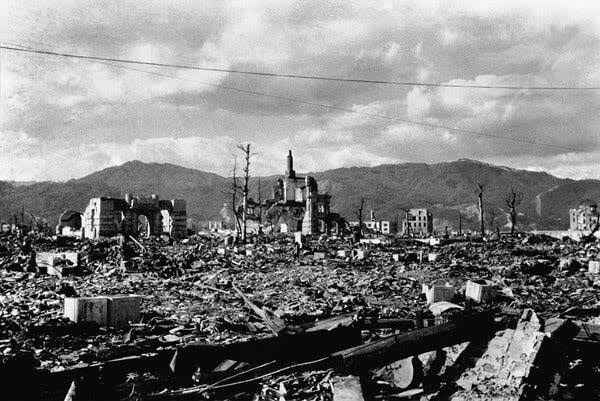
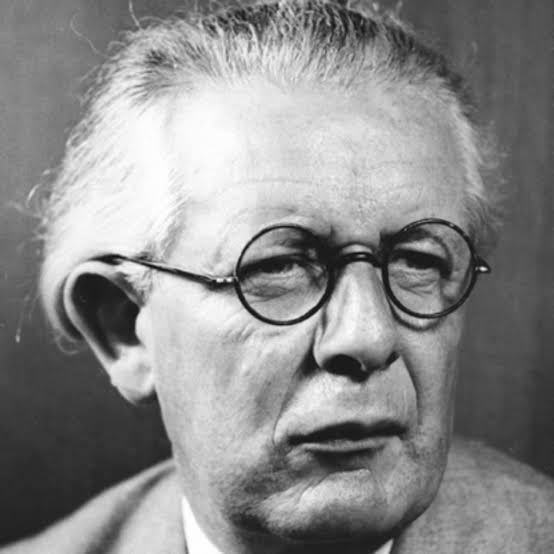
Project History (August 9) THE BOMBING OF THE CITY OF NAGASAKI IN JAPAN `August 9, 1945` "A large cemetery with no standing tombstones" --- this is how witnesses who survived the deluge caused by the plutonium bomb explosion in the city of Nagasaki in southern Japan on this day in 1945 described it. At 3:45 a.m., the B-29 Superfortress plane "Boxcar" flew from the island of Tinian, Northern Marianas carrying more than four tons of plutonium bombs named "Fat Man", to drop that bomb on the city of Kokura. . But that morning, the weather in the said city was bad and the plane's fuel supply was running low, so they moved to its alternative target, Nagasaki, 120 km southwest of Kokura. It was less cloudy in Nagasaki, and the bomb, which was dropped over the city's industrial valley, was hastened. The plutonium bomb exploded at 11:03 a.m. time in Japan, 47 seconds later from a height of 503 meters. And since almost all buildings in Nagasaki are made only of light materials such as wood, Nagasaki saw more destruction caused by the very powerful forces caused by the atomic bomb and only concrete buildings such as the single Christian church. in Nagasaki, was left standing, and the city was nearly leveled by a very strong shockwave. However, the extent of the damage caused by Fat Man in Nagasaki was very small due to its valley topography, the shockwave of the atomic bomb was only trapped within the valley and the bomb damage did not spread further to the rest of the city. The explosion of the plutonium bomb in Nagasaki also destroyed important industries such as shipbuilding and heavy industries. As many as 60,000 Nagasaki residents were immediately killed in the bomb blast, including more than 2,000 Koreans, 32 Chinese, eight Allied POWs, and more than 150 Japanese soldiers. The death toll from the Nagasaki blast has risen to more than 80,000 after the bombing, where many of them died of diseases caused by radiation exposure. Like Hiroshima, Nagasaki was chosen to be the target of the atomic bomb because of its importance to the Japanese military, and before the Nagasaki bombing, President Harry S. Truman again warned that the United States would detonate atomic bombs on Japan if not it gave up soon. The morning before the bombing, the Soviet Union had invaded Japan's puppet state of Manchuria in China, and Japan was increasingly in a precarious position. But contrary to popular belief, it was the Soviet invasion of Manchuria and not the bombing of Nagasaki that convinced the Supreme War Council in Tokyo to consider surrendering the war. Just six days later, the Japanese government announced their acceptance of the conditions of their surrender to Allies forces. JEAN PIAGET WAS BORN `August 9, 1896` One of the prominent personalities in the field of psychology who was able to make important contributions to the study of the development of human intelligence was Jean Piaget of Switzerland. Today is his 125th birthday, born in 1896 in the town of Neuchâtel, Switzerland, and son of Arthur Piaget, a professor of literature, and Rebecca Jackson. His interests and dedication to learning were first formed in his family, and at the age of 10 he became interested in the study of snails and other mollusks, and he has produced his scientific paper on mollusks and even sparrows. Piaget graduated from the zoology course in 1918 at the University of Neuchâtel and studied a semester of psychology with veteran psychologists Carl Jung and Paul Eugen Bleuer at the University of Zürich. She is also interested in various mother fields of psychology such as psychoanalysis and abnormal psychology. In 1920 Piaget joined the psychologists Theodore Simon and Alfred Binet in Paris, France who studied and researched to measure the level of intelligence of children and link the age of the child to the development of his way of thinking. For Piaget, this raises questions about how children learn. Piaget said that factual knowledge should not also be considered as part of understanding the laws, but should rather let children open their imaginations if they are lacking in life experiences. He also realizes that there is no shortage of children’s power to reason. During his six decades of being a child psychologist, he proposed the four steps of developing children’s mental thinking, or what we now call Cognitive Development Theory. The first stage from the child’s very birth to the age of two is the Sensorimotor Stage, where the child learns through action or his motor skills. In the Preoperation Stage Mila ages two to seven, children's intelligence is gradually developed through symbols, fantasy play, and natural intuition. In the Concrete Operational Stage from ages eight to 11, the child’s cognitive intelligence is based on the use of logic according to actual and solid evidence. Finally, there is the Formal Operational Stage where at the age of 11 to 15, children can think abstractly with a more complex understanding of logic and the cause and effect of things. Piaget based his proposed theory on the concept of the schema, or the cognitive structures that cause easier understanding of our world, which helped in understanding Piaget’s theories. His proposed theory had a great impact on the study of psychology and especially on the study of the proper provision of education to young people, but some scholars criticized his proposed theory because it did not take into account the geographical that differences of children. However, Piaget also received awards and praise from his peers and has written more than 50 publications and scientific papers. Jean Piaget once said, a reflection of his high view of education, that only education can save our society from eventual collapse. Piaget died for unknown reasons at the age of 84 on September 16, 1980, in Geneva, Switzerland. PRESIDENT FERDINAND MARCOS SIGNED PRESIDENTIAL DECREE NO. 272 ESTABLISHING THE STEEL AUTHORITY `August 9, 1974` On this day in 1974, the Iron and Steel Authority (ISA) was created by Presidential Decree no. 272 signed by President Ferdinand Marcos. According to PD 272 signed by President Marcos, the purpose of the establishment of ISA is as follows: Strengthen the steel industry and steel products in the Philippines, and expand the scope of its internal and external trade, To promote the unity and cooperation and integration of the steel industries in the Philippines, which will increase the volume of steel products produced in the country, Organize the sale and distribution of steel to create a balance between demand and supply of steel, Encourage the steel industries in the Philippines for total production, and Reduce the dependence of the steel industries on imported raw materials and help them to have adequate raw materials at a low cost. This agency consists of a Chairman of the Board of Investments as head of ISA, Secretaries of National Defense, Finance, Industry and Trade, Chairman of the Development Bank of the Philippines (DBP), and Governor of the Central Bank of the Philippines and about two representatives from the private sector who are from the steel industry are the members of ISA. All of them are appointed by the President, except for the head of the Board of Investments who will also be the Chair of the ISA. ISA had only five years to perform its obligations, but it was again extended with the effect of Executive Order 555, signed by President Marcos on August 31, 1979. References: History.com Editors (2021, April 26). The bombing of Hiroshima and Nagasaki. HISTORY. https://www.history.com/.amp/topics/world-war-ii/bombing-of-hiroshima-and-nagasaki. Wikipedia (n.d.). Atomic bombings of Hiroshima and Nagasaki. https://en.m.wikipedia.org/wiki/Atomic_bombings_of_Hiroshima_and_Nagasaki Biography.com Editors (2020, July 10). Jean Piaget. The Biography.com website. https://www.google.com/amp/s/www.biography.com/.amp/scientist/jean-piaget Wikipedia (n.d.). Jean Piaget. https://en.m.wikipedia.org/wiki/Jean_Piaget The Kahimyang Project (n.d.). Today in Philippine history, August 9, 1974, presidential decree no. 272 created the Iron and Steel Authority. https://kahimyang.com/kauswagan/articles/2450/today-in-philippine-history-august-9-1974-presidential-decree-no-272-created-the-iron-and-steel-authority

 @Koyang
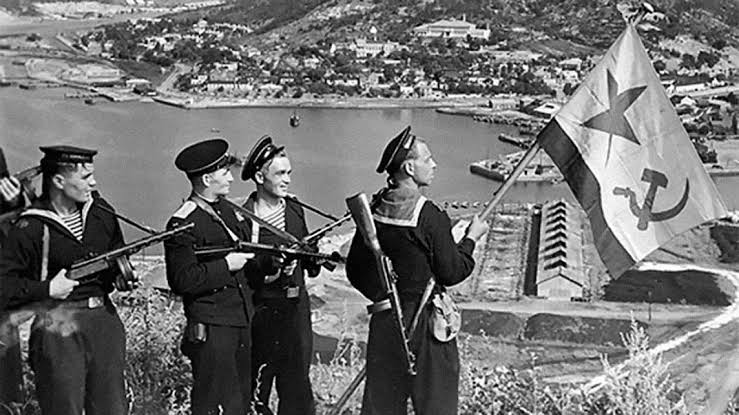
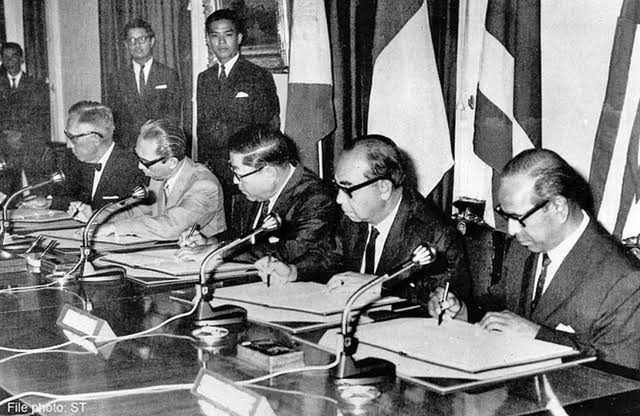
Project History (August 8) THE SOVIET UNION DECLARED WAR AGAINST JAPAN `August 8, 1945` Two days after the United States dropped an atomic bomb on Hiroshima, the strength of Japanese forces remains unshakable. But on this day in 1945, the Soviet Union also entered the war against Imperial Japan. At midnight on August 8, Soviet Foreign Minister Vyacheslav Molotov sent a message to Japan's Foreign Affairs office, informing them that the two countries were in a state of war. This was not the first time Japan and the Soviet Union had faced war when they first fought for territory at Khalkhin Gol in Mongolia in 1939. But by the time the Soviet Union entered the war, Japan was in a precarious position, gradually- their forces and fighting force were gradually crippled, even though almost all of its citizens were determined to fight to the death. They were even more unprepared for the Soviet Union’s next action the morning, the 9th of August. Its more than a million soldiers began to mobilize on the border of Japan’s puppet state of Manchuria, and the Soviet army launched Operation August Storm, the most recent battle to occur during World War II, which surrounded and simultaneously stormed almost all of Manchuria. The Soviet forces defeated the Japanese forces and their Chinese allies with all their might. Clashes continued in Manchuria, even though the Japanese government had already declared surrender to the war on 15 August, and Soviet forces had already reached the Korean border. April 1941 when the Soviet Union and Japan signed an agreement, that they would not go to war while they were at war with their enemy countries. But in the Agreement between the Allies forces in Yalta in February 1945, Joseph Stalin of the Soviet Union promised that they would enter the war against Japan if they had defeated the Nazis in Europe. The entry of the Soviets into the war against them was a great blow to Japan, complacent that the Soviets would not attack them until 1946. On this occasion, it was Emperor Hirohito of Japan who asked the Supreme War Council of Japan to consider accepting Japan on the conditions of their surrender. THE ASSOCIATION OF SOUTHEAST ASIAN NATIONS WAS ESTABLISHED `August 8, 1967` This day once again celebrates the strong organization, unity, and cooperation of the countries of Southeast Asia --- the 54th year of the establishment of the Association of Southeast Asian Nations or ASEAN. This regional organization, which replaced SEATO or Southeast Asia Treaty Organization, was born in 1967, with the foreign ministers of the Philippines, Indonesia, Thailand, Malaysia, and Singapore signing the ASEAN Declaration, in Bangkok, Thailand. According to this Declaration, the objectives of ASEAN are to unite the countries belonging to the Southeast Asian region and to maintain good and good relations between the member countries, through mutual aid, cooperation, and cooperation with each other. one, for the general welfare of member countries. To achieve these, member countries will be accompanied and provided with appropriate assistance to accelerate economic and social development, maintain prosperity, peace, and order in every country in the region, fight terrorism, and develop. and preserve the cultural identity of each member country. This is by conducting training and research for the improvement of the industrial and commercial sectors of the economy, agriculture, education, health. ASEAN also seeks to maintain good ASEAN relations with countries outside Southeast Asia. The Philippines is one of the first five-member countries of ASEAN and has further increased the membership of ASEAN, with the participation of Brunei Darussalam, Myanmar, Cambodia, Lao PDR, Viet Nam. It also has 27 member countries in the ASEAN Regional Forum. THE PHILIPPINE CONSTABULARY WAS ESTABLISHED `August 8, 1901` Exactly 120 years ago, formed by Act No. 175 of the Second Philippine Commission is considered the ancestor of the current Philippine National Police, the Philippine Constabulary (PC). This institution was established under the guidance of Governor-General William Howard Taft, and under Act no. 175, the PC aims to maintain peace and order in our country. The Philippine Constabulary, in turn, replaced the fears of the Guardia Civil during the Spanish period. And with the existence of civil government, there was still a need to have a public force that would promote peace and security in the country without the need for military force. With the development of the PC during the American era, it was first used against Filipinos who opposed the American civil government, or the so-called irreconcilables. The PCs are the ones who are being used in the pursuit of guerrillas hiding in the forests to suppress their activities, in particular, they are pursuing the likes of General Simeon Ola of Albay, Miguel Malvar of Batangas, and Macario Sakay in southern Luzon. The senior PC officers were all American officers, who were from those with high military ranks, specifically the considered “Father of the Philippine Constabulary” Captain Henry T. Allen, a U.S. officer. 6th Cavalry and graduated from the prestigious West Point military academy. Some Filipinos were also placed in positions on the PC, and most of its members were Filipinos, especially Colonel Felix Llorente of Manila and Major Jose Velasquez of Nueva Ecija. By 1917, there was the first Filipino chief of the PC, in the person of Rafael Crame, who served as head of this institution for 10 years. Those who wanted to enter the PC also had their academy, when it was established in Intramuros in February 1905, and later moved to Baguio city. The current Philippine Military Academy was formerly named the Philippine Constabulary Academy, and until 1991, it trained those who wished to become members of the PC. The PC was once merged with the newly established Philippine Army under the National Defense Act of 1935, but the regular role of the PC was restored under Commonwealth Act no. 343 signed by President Manuel Luis Quezon in 1938. The PC was also active in fighting Japanese forces during World War II, but the Japanese also used their Constabulary, also made up of former Commonwealth government PCs who surrendered to Japanese opponents. At the end of the war, the PCs were mobilized to suppress the Huk rebellion, communist guerrillas who had previously fought against the Japanese who had also become a threat to the government and were again integrated into the national military, but the power of the PC to promote peace and security within our country and to become a national police officer by Executive Order 389. With the advent of President Ferdinand Marcos, especially with the implementation of Martial Law nationwide in September 1972, the PC took the lead in suppressing the activity of demonstrators and was always confronted by demonstrators in the streets. In 1975, the PC was merged with the police, fire, and jail wardens of towns and cities, and with the formation of the Integrated National Police it was merged with the PC which became the PC-INP, adopted by Presidential Decree no. 765 signed by President Marcos on August 8, 1974. Over the years, the PC has become notorious for violent and cruel reputations, especially as they become instruments of corrupt and abusive government officials. By 1991, the number of PC members would reach 90,000, but to renounce its complicated past, its uniforms were changed and the PC-INP was renamed the current Philippine National Police (PNP). . But in 2017, President Rodrigo Duterte revived the proposal to restore the Philippine Constabulary. TEOFILO YLDEFONSO WINS FIRST OLYMPIC MEDAL FOR THE PHILIPPINES `August 8, 1928` Teofilo E. Yldefonso, then 25-year-old swimmer from Piddig, Ilocos Norte, made history in the field of sports in the Philippines at the 1928 Summer Olympics in Amsterdam, Netherlands. On this day in 1928, Yldefonso won the bronze medal for the Philippines in the said Olympic Games for the breaststroke swimming event. She faces Japan’s Yoshiyuki Tsuruta and Germany’s Erich Rademacher for the 200-meter breaststroke swimming in that contest. He was the first Filipino athlete to win a medal in the said Olympic Games. He was the only one to win a medal among four Philippine athletes at the Olympic Games in Amsterdam. Teofilo E. Yldefonso was part of the 57th Infantry Regiment of the Philippine Scouts at the age of 18, and it was here that his swimming skills were developed. He has been participating in regional swimming games since 1923, and has won gold medals at Far Eastern University. By 1937, Yldefonso had won 144 medals in the field of breaststroke swimming, including another bronze medal at the 1932 Summer Olympics in Los Angeles, California. He was the first Filipino athlete to win multiple Olympic medals. Yldefonso fought as a Lieutenant of the Philippine Scouts during the Japanese occupation of the Philippines and joined the march of Filipino and American prisoners in Bataan. At the age of 38, he was not fortunate enough to survive when he arrived at the prison camp in Capas, Tarlac in June 1942. In 2021 or 93 years since Yldefonso won our first Olympic medal, Hidilyn Diaz made history when she won the first Olympic gold medal for our country after winning the women's weightlifting-55 kg category in the 2020 Tokyo Olympics where he also set two Olympic records. Diaz, who was also a silver medalist at the 2016 Rio Olympics, is the second Filipino athlete to win multiple Olympic medals, after Yldefonso. Aside from Diaz, Nesthy Petecio (silver medalist, women's featherweight boxing), Carlo Paalam (silver medalist, men's flyweight boxing), and Eumir Felix Marcial (men's middleweight boxing) also won medals at the 2020 Tokyo Olympics. These are the most Olympic medals won by the Philippines in almost a century of our country's participation in the Olympics. References: History.com Editors (2020, August 5). Soviets declare war on Japan; invade Manchuria. HISTORY: https://www.history.com/this-day-in-history/soviets-declare-war-on-japan-invade-manchuria The Kahimyang Project (n.d.). Today in Philippine history, on August 8, 1967, ASEAN was established. https://kahimyang.com/kauswagan/articles/460/today-in-philippine-history-august-8-1967-asean-was-established Wikipedia (n.d.). Philippine Constabulary. https://en.m.wikipedia.org/wiki/Philippine_Constabulary National Quincentennial Committee, Republic of the Philippines (2021, August 8). As the 2020 Tokyo Olympics concludes today, the Philippines is commemorating the 93rd anniversary of the country's first Olympic medal. [Status update]. Facebook. https://bit. ly/3xqOxxe https://bit.ly/3xqOxxe Wikipedia (n.d.). Teofilo Yldefonso. https://en.m.wikipedia.org/wiki/Te%C3%B3filo_Yldefonso Wikipedia (n.d.). Swimming at the 1928 Summer Olympics. https://en.m.wikipedia.org/wiki/Swimming_at_the_1928_Summer_Olympics
+2 more
@Koyang
I've been so busy last week that I forgot to post my daily Project History, I'm also exhausted yesterday due to upcoming classes, but then again I will post the Project History for today!
@Koyang
It's my 2nd week, and yet RandomRewarder still has not seen my work, I wonder if I got marked as spam or not, but still, I will keep posting, I will give the bot time to check my works for 1 month, after that, if no bot come, then it's time for me to stop.
@Koyang
Project History (July 31) PHILIPPINE AIRLINES BECAME THE FIRST AIRLINE TO CROSS THE PACIFIC OCEAN `July 31, 1946` Exactly 75 years ago, Philippine Airlines made history, when it first flew over the Pacific ocean. It was the first Asian airline to cross the vast Pacific ocean. A chartered Douglas DC-4 flight flew with 40 American servicemen from Nielson Airfield in Makati, to Oakland, California. But it was not until December 1946 that the regular service flight from Manila to California began. Philippine Airlines (PAL) is the oldest and first airline company in the Philippines and Asia, established on February 26, 1941. NATIONAL HOUSING AUTHORITY ESTABLISHED `July 31, 1975` Under Presidential Decree no. 757 signed by President Ferdinand Marcos on this day in 1975, established the National Housing Authority (NHA) as a government-owned and controlled corporation (GOCC), under the HUDCC or Housing and Urban Development Coordinating Council. The NHA's primary mandate is to implement government housing programs, such as resettlement projects and housing development. With the effect of Executive Order 90 signed on December 17, 1986, the NHA has been mandated to reduce the urban poor population in the country to 30% by creating housing projects. It is stipulated in Republic Act no. 7279 mandates the NHA to assist the local government in the implementation of housing projects, as well as the use of land to build housing and implement operations of relocation of illegal settlers to housing areas designated by the government. The R.A. was signed on December 8, 1994. 7835, which requires the NHA to implement the components of the National Shelter Program-Resettlement Program, Medium Rise Public and Private Housing, Cost Recoverable Programs, and the Local Housing Program. New Year’s Eve 1999 when the E.O. 195, to ensure that the housing constructions will meet the needs of the new occupants there, and under R.A. 11021 signed on Valentine’s Day year 2019 will retain the mandates given to the NHA by the aforementioned laws. The NHA prioritizes the families of low-salary grade government employees, victims of disasters, and even personnel of the AFP, PNP, BuCor, BJMP, and BFP. Just last April, the current Chairman of the NHA, Marcelino Escalada, was given more than 76 million pesos from the funds of the Leyte provincial government, to be used to build housing for the converted NPA rebels in Leyte. GENERAL ARTEMIO RICARTE DIED `July 31, 1945` Today is the 76th anniversary of the passing of “El Vibora” in our history General Artemio Ricarte y Garcia. He died in 1945 at the age of 78 due to dysentery while in Kalinga, Mountain Province. At that time, Japanese troops were retreating north, led by General Tomoyuki Yamashita, while American forces were chasing them from Pasong Bessang. In 1954, treasure hunters dug up Ricarte's alleged bones and moved his remains to the Libingan ng mga Bayani. Artemio Ricarte was born in Batac, Ilocos Norte on October 20, 1866, and the second of three children of Esteban Ricarte and Bonifacia Garcia. Ricarte graduated from high school at the Colegio de San Juan de Letran and took education courses at the University of Santo Tomas and the Escuela Normal. He taught at an elementary school in San Francisco de Malabon (now Tanza), Cavite where he met Mariano Alvarez, also a teacher. Through Alvarez, Ricarte was persuaded to join the Katipunan, where he used the alias “Vibora” or viper. Ricarte, then Lieutenant under Supremo Andres Bonifacio of Magdiwang, led the successful revolution in Tanza. At the convention in Tejeros on March 22, 1897, Ricarte was elected Captain-General or the leader of the revolutionary army. He is considered the first Chief-Of-Staff of the current Armed Forces of the Philippines (AFP). But instead of joining the revolutionary government, he joined Bonifacio's protest at the Tejeros convention, but later sided with General Aguinaldo's Magdalo. Ricarte was promoted to Brigadier General and led the revolutionaries to fight in Cavite, Laguna and Batangas. General Ricarte remained in Bulacan while Aguinaldo left for Hong Kong to ensure that the Spaniards would abide by the Biak-na-Bato Agreement. General Ricarte once again showed his venom in the battle against America during the Filipino-American War, when he became Chief of Operations of the Filipino forces around Manila. General Ricarte was captured in July 1900, when he tried to enter the American line in Manila. He was imprisoned in Bilibid and later exiled to Guam, for refusing to swear allegiance to America. But instead of following the Americans, he fled back to the Philippines in 1903 to persuade the Filipinos to revolt against America. But fellow Filipinos reported him to the Americans and Ricarte was jailed again and imprisoned in Bilibid for six years. He was once again sworn to allegiance to America, but again refused. So Ricarte was exiled to Hong Kong, and he was eventually stranded in Yokohama, Japan, with his wife, Agueda Esteban. They opened a small restaurant offering Filipino dishes, and Ricarte returned to teaching, teaching Spanish to Japanese students. Until the Japanese invaded the Philippines, Ricarte was used by Japanese propaganda to encourage Filipinos to join Japan's dream of making Asia Asian again. But he failed to win the sympathy of the Filipinos due to almost three decades of absence from our country. Ricarte also refused to join Benigno Ramos' Makapili, while Ricarte once again found himself poor and with the Japanese fleeing the Americans. Although known as a collaborator, he is better known to Ilocanos as a hero and patriot. GERONIMA PECSON DIED `July 31, 1989` At the age of 92, teacher, feminist, and the first female senator in the Philippines Geronima Josefa Palisoc Tomelden-Pecson passed away on this day in 1989. He was born in Lingayen, Pangasinan on December 19, 1896. He earned his high school teaching certificate, Bachelor's and Master's degree from the University of the Philippines. Although she already teaches in a school, she still participates in several women's movements, and is a social worker through the National Federation of Women's Clubs of the Philippines (NFWCP). She married former Court of Appeals Justice Potenciano Pecson. His role as private secretary to President Jose P. Laurel, and Assistant Executive Secretary to President Manuel Roxas paved the way for him to run for senator in the 1947 Senatorial Elections where he was third among all winners and got 48%. of the total number of votes. As a result, she is the first female senator in the Philippines. As a senator, he promoted laws focused on education, health, and public welfare. Some of the laws he authored were the Vocational Education Act, Municipal Libraries Act, Free and Compulsory Education Act of 1953, and raising the level of the UP College of Forestry in Los Baños, Laguna to being a full -fledged college (UP Los Baños College of Forestry and Natural Resources at present). After losing the 1953 Senatorial Elections, he became the Philippine representative to the United Nations Education, Scientific, and Cultural Organization (UNESCO). He was also a board member of various educational and charitable institutions, and was a consultant of the Ministry of Education (currently the Department of Education) until his passing. References: Wikipedia (n.d.). Philippine Airlines. https://en.m.wikipedia.org/wiki/Philippine_Airlines Wikipedia (n.d.). History of Philippine Airlines. https://en.m.wikipedia.org/wiki/History_of_Philippine_Airlines National Housing Authority (n.d.). Corporate Profile. https://nha.gov.ph/corporate-profile/ Wikipedia (n.d.). Artemio Ricarte. https://en.m.wikipedia.org/wiki/Artemio_Ricarte Project Vinta (2020, July 31). On July 31, 1989, educator, feminist, and legislator Geronima T. Pecson died at the age of 92. [Status update]. Facebook. https://m.facebook.com/story.php?story_fbid=2731176630462926&id=1922575111323086


+2 more
@Koyang
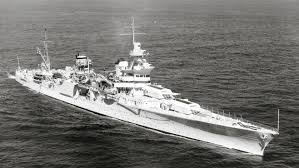
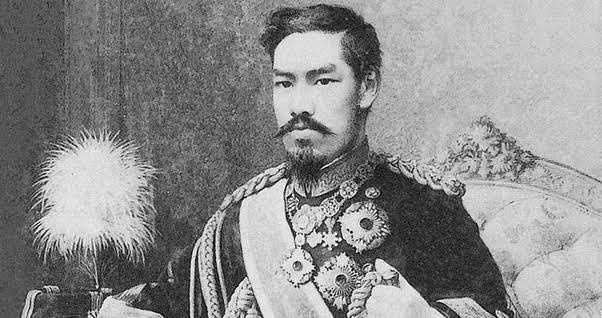
Project History (July 30) THE USS INDIANAPOLIS SINKS `July 30, 1945` On this day in 1945, the Japanese Navy submarine I-58 sank the United States warship USS Indianapolis. At 12:15 am, Philippine time, two I-58 torpedoes hit the starboard or right side of the ship, and 12 minutes later the ship capsized, raised its stern, and was completely swallowed by water in the Philippine Sea. . But the ordeal of the floating crew of the USS Indianapolis did not end here. During the five days of floating at sea, they were forced to drink saltwater, which further resulted in dehydration, and worse they were attacked by sharks, and some of them also gradually died from overexposure. in the heat of the Sun and soaking in the cold sea. Others could not bear a few days of calvary at sea and also committed suicide. Until Aug. 2, U.S. Navy anti-submarine aircraft spotted the floating crew of the sunken ship and launched a rescue operation on Indianapolis sinking survivors. An estimated 300 crew of the ship sank along with Indianapolis, while of the more than 900 people floating at sea, 316 of them were rescued. The US Navy in those days was unaware of the tragedy that befell Indianapolis, which they thought had reached the province of Leyte in the Philippines. However, the tragedy that befell Indianapolis was kept secret from the public until August 15, 1945. Indianapolis Captain Charles McVay III was indicted in a military court, for failing to declare an "abandon ship" at the time the ship sank. the ship, and it's not sailing “zigzag” to prevent the submarine attack. Captain McVay III was convicted, and in 1968 he committed suicide at the age of 70. For the surviving Indianapolis crew, Captain McVay III's mistake was only used as an excuse to cover up the U.S. Navy's long rescue of them. July 16, 1945, when Indianapolis was assigned a secret mission and left San Francisco, California carrying the uranium needed to develop the atomic bomb scheduled to be dropped on Hiroshima. On July 26, 1945, Indianapolis unloaded its dangerous cargo on the island of Tinian, and then sailed to the U.S. Military headquarters in Leyte to meet with the USS Idaho, and prepare for the scheduled invasion of mainland Japan. The sinking of the USS Indianapolis is considered the greatest tragedy in U.S. Navy history. On August 19, 2017, Paul Allen's research vessel RV Petrel found the wreckage of the USS Indianapolis, in the ocean covered by the Philippine Sea at a depth of 5,500 meters. THE EMPEROR MEIJI OF JAPAN DIED `July 30, 1912` Exactly 107 years ago, the passing of the 122nd Emperor of Japan, Mutsuhito, or better known as Meiji, was announced past midnight on this day in 1912. It was past 10:40 pm Japanese time when Emperor Mutsuhito died of complications caused by diabetes and gastroenteritis. His eldest son Yoshihito succeeded to the throne as Emperor of Japan, and Mutsuhito's remains were laid to rest at the Momoyama Imperial Mausoleum in Kyoto, Japan. Mutsuhito was born on November 3, 1852, and was the son of Emperor Komei and Empress Asako Kujo. Mutsuhito’s time saw Japan’s status as a feudal and traditional Japanese state ruled by the Tokugawa shogunate, which later changed with the arrival of the Americans in Japan in 1853 to trade. There are very few written records of Mutsuhito's youth except that he studied at the Palace of his father the Emperor. At the age of 15, Mutsuhito was crowned Emperor Meiji in February 1867, and with the restoration nv power of the Japanese government to the imperial family from the Tokugawa shogunate in 1868, his regime was called the Meiji Period. The Meiji Period was the period of radical change in Japan in the political, economic, social aspects and above all was in the status of the Emperor of Japan. Emperor Meiji is considered the first Emperor of Imperial Japan. Japan embraced almost all Western influences, including the growth of industry, and military force. With the rise of Japan’s military force, Japan was considered in those days as an emerging powerful country in Asia, and also saw Emperor Meiji’s time successful expansions of its influence in China and Korea. Its wars were also successful against the Qing dynasty of China in 1894 and Russia in 1905. Japan occupied and colonized Taiwan and Korea in 1910 and aspired to cross into China to conquer it and its natural resources. its wealth. At the turn of the 20th century, Japan was emerging during the Meiji period as a powerful empire in Asia. THE ELECTION FOR NEW MEMBERS OF THE PHILIPPINE ASSEMBLY `July 30, 1907` The first national elections for new members of the newly formed Philippine Assembly were held on this day in 1907. This election was from the blessing of the Philippine Organic Act of 1902, which provided for the establishment of a bicameral legislature consisting of the Philippine Commission as the Upper House and the Philippine Assembly as the Lower House. Six political parties competed for seats in the Philippine Assembly; the Nationalist former Federalist party, the Progressive, Immediatist, Independent, Catholic party, and Philippine Independent Church. Some run without party bias. By the end of the election, 59 Nacionalista candidates got 69.43% of the total vote, 16 or 24.67% of the total vote got Progressman, while 7.5% or five independent candidates got the vote. Overall, the Nacionalista party won the polls, and they held the largest seat in the Philippine Assembly. The session of the Philippine Assembly first opened on October 16, 1907, where Sergio Osmeña, Sr. became Assembly Speaker, and Manuel Luis Quezon, both of Osmeña's party in the Nacionalista, became Majority Floor Leader. During the entire session of the First Philippine Assembly from 1907 to 1909, it passed more than 170 laws, including Act no. 1801 or the Gabaldon Act. DR. JOSE RIZAL TO GOVERNOR-GENERAL RAMON BLANCO TO APPLY FOR PERMISSION TO SERVE AS A DOCTOR IN CUBA `July 30, 1896` On this day in 1896, Dr. received. Jose Rizal obtained the permission of Governor-General Ramon Blanco y Ereñas to go to Cuba to serve as a doctor of the medical corps of the Spanish army. On December 15, 1895, at the suggestion of his Austrian friend Ferdinand Blumentriit, Dr. wrote. Rizal to Governor-General Blanco, who Rizal asked to allow him to go to Cuba, to help treat yellow fever victims in Cuba. At the same time, a revolution was taking place in Cuba against the Spanish occupation. Aside from the permission to go to Cuba, Dapitan politico-military Ricardo Carnicero also gave Dr. Rizal's safe conduct pass ordered by Governor-General Blanco so that Rizal can return safely to Manila. On July 31, 1896, as a result of this consent of Governor-General Blanco, Dr. permanently left his home for four years. Rizal aboard the ship España, and he arrived in Manila on August 6, 1896. There Rizal would wait for the ship to take him to Cuba, unknowingly that a revolution would break out in Manila in the next few days, and the Spanish authorities will blame its outbreak on Dr. Rizal. References: History.com (n.d.). Indianapolis bombed. https://www.google.com/amp/s/www.history.com/.amp/this-day-in-history/uss-indianapolis-bombed Wikipedia (n.d.). USS Indianapolis. https://en.m.wikipedia.org/wiki/USS_Indianapolis_(CA-35) Wikipedia (n.d.). Emperor Meiji. https://en.m.wikipedia.org/wiki/Emperor_Meiji Wikipedia (n.d.). Philippine Assembly elections. https://en.m.wikipedia.org/wiki/1907_Philippine_Assembly_elections Wikipedia (n.d.). 1st Philippine Legislature. https://en.m.wikipedia.org/wiki/1st_Philippine_Legislature https://www.coursehero.com/file/p2up6mpb/He-was-ordered-exiled-to-Dapitan-North-Zamboanga-Rizal-was-handed-over-to/

+2 more
@Koyang
Project History (July 29) THE ENGLAND NAVY DESTROYED THE SPANISH ARMADA `July 29, 1588` On the coast covered by Gravelines, France, the English fleet led by Sir Francis Drake and Lord Charles Howard destroyed the so-called "Spanish Armada" of Spanish fleets led by the Duke of Medina-Sidonia. It was July 21 when English warships began bombing a large fleet of Spanish warships numbering 130 ships. Many of them were destroyed by the long-range artillery of the English ship, as they continued to advance. Some of the abandoned Spanish ships landed in the port of Calais, France where their position was open to English pursuers. As of midnight on July 29, the English fleet sent eight fireships to fire on Spanish ships docked at Calais. These fireships are capable of firing cannons automatically. The Spaniards were startled by this sudden onslaught of fireships so they hurried to break their anchors, but in their haste, they were no longer formed, and at dawn, they were ambushed by English warships at Gravelines, France. . Since there was not enough time for the Spanish fleet to organize, the remaining ships fled north from the English channel. The English won that battle, and they began to chase the fleeing Spaniards as far as the ocean covered by Scotland. The condition of the Spanish ships was miserable. Ships are overcrowded, and they are running out of food and other vital supplies. Worst of all, they have also become enemies of nature. More Spanish ships were destroyed in strong storms. This time, the so-called "invincible" Spanish army returned home disappointed, ruined, and defeated. Nearly half of the original 130 Spanish ships and 15,000 soldiers returned to Spain in October. England's long-range artillery, and the brave and daring leadership of Sir Francis Drake, and unwavering determination to defend England from Spanish occupation were the factors in England's victory under Queen Elizabeth I, not only from Spanish Armada but also the entire English channel. With the blessing of Pope Sixtus V, King Philip II of Spain planned to invade England, one of its naval rivals, in response to an ambush by English ships in Spanish trade. Queen Elizabeth, I supported the Dutch rebellion from the Spanish conquest, so in addition to responding to the English ambush, King Philip also wanted Protestant England to be restored to Catholicism if he succeeded in conquering England. In 1587 the ships that would make up the large Spanish fleet were completed, but several times the attack of Sir Francis Drake's ships hindered the advance of the Armada. On May 19, 1588, Spanish ships began sailing to confront England, but eventually, King Philip II's ambition to defeat England and become Catholic again failed. ARC DE TRIOMPHÉ ZA PARIS, FRANCE INTRODUCED `July 29, 1836` The Arc de Triomphé, or Arc of Triumph, is one of the most famous sights in Paris, France. The arch is located at the western end of the Champs-Élysées, in the middle of Place Charles de Gaulle, or formerly called Place de l'Étoile, adapted from the star-like shape of the roads that run through the square. On this day in 1836, this giant arch was inaugurated and first opened to the public. Construction of the arch began in 1806 during the reign of Emperor Napoléon Bonaparte, to mark his victory at Austerlitz against the Austrians and Russians in December 1805. The architect Jean Chalgrin designed the arch but handed over the design of the arch to Jean. -Nicholas Huyot when the original architect died in 1811. The wooden mock-up of the said arch was completed in 1810, and construction continued until the Bourbon monarchy returned to France in 1815. Construction on the arch stalled until 1833 when construction on the arch continued during the reign of King Louis-Philippe. The arch was opened in a grand ceremony in Paris, presided over by King Louis-Philippe in 1836. On December 15, 1840, a procession of the return of Napoléon Bonaparte's remains to its resting place at Les Invalides passed under the arch. . The Arc de Triomphé witnessed important parts of French history after Napoleon: the revolutions against the Louis-Philippe monarchy, the return of the Republic, the inauguration of the Eiffel Tower in 1889, until the Nazi German conquest of Paris in June 1940 and there -the liberation of Paris from the Germans in 1944. The arch is 50 meters high, 22 meters wide, and 45 meters long, and each of the sculptures on the arch is carved by famous French sculptors. The design style of the Arc de Triomphé is neoclassical, adapted from the triumphal arc designs of the ancient Romans. There are four sculptures on each of the arch pillars, all of which are allegories of every important event in France during the French Revolution and the Napoleonic War; the Marseillaise in 1792, the Victory of 1810, Resistance and Peace in 1814, and the Peace of 1815, which became the beginning of peace in Europe after the fall of Napoléon. Also engraved on the ceilings and walls of the arch are the names of veterans who fought in the French Revolution and the Napoleonic War, the battles won by France, and also in the center of the arch is the Tomb of the Unknown Soldier, who died in fighting during the First World War. There is a carriage sculpture that once stood at the top of the arch from 1882 to 1886, La Triomphé de la Revolution, designed by Alexandre Falguiére, and allegory of the French Revolution. Today the Arc de Triomphé hosts important gatherings in France, specifically the military parade every Quatorze Juillet. And like many structures in Europe, the Arc de Triomphé continues to undergo rehabilitation as it gradually loses its white color due to air pollution. THE TAFT-KATSURA AGREEMENT `July 29, 1905` On this day in 1905, an agreement between Japan and the United States was signed by American Secretary of War William H. Taft and Japanese Prime Minister Katsura Taro. The Taft-Katsura Agreement is a memorandum containing the positions of the two powerful countries on what is happening in East Asia, in particular the situation of the Korean peninsula and the Philippines after Japan's victory in the war against Russia in 1905. On July 27, 1905, William H. Taft arrived in Japan to talk to Prime Minister Katsura Taro about their future position on the situation in Korea and the Philippines, which at that time were ruled by powerful nations. According to the agreement signed by the two, Japan recognizes America's interest in the Philippines and has no intention of occupying it. Japan also stressed in the agreement that it wants to maintain peace in East Asia, which can be achieved through good relations and understanding between Japan, America, and Britain. The Agreement also detailed America’s respect for its occupation of Korea, while Japan also respected the idea that the Philippines should be ruled by a stronger country like the United States. For the Koreans, it was this agreement that broke the agreement between the King of Joseon and the President of the United States, and for the Koreans, America could no longer be trusted when it came to the issue of Korean sovereignty. This agreement between Japan and the United States lasted until December 7, 1941. ESTABLISHED THE PHILIPPINE TUBERCULOSIS SOCIETY `July 29, 1910` During the early days of the Americans' stay in the Philippines, the country faced widespread public health problems. One of the most recorded illnesses of people at that time was due to tuberculosis. At a regional health meeting held in Manila in 1910, an alarming number of deaths due to tuberculosis were reported to be estimated at 40,000. After a meeting of some concerned citizens and public officials, the concept of establishing the Philippine Anti-Tuberculosis Society (PATS) was developed and its establishment was later approved. Under the leadership of its president Mrs. Eleanor Franklin Egan, their organization has responded to serious cases of tuberculosis that have affected some Filipinos. In 1934, then-Senate President Manuel L. Quezon recognized that tuberculosis was a major threat to public health. That is why he promoted the Sweepstakes Law and 25% of its proceeds will go for the funds of the Philippine Anti-Tuberculosis Society. In recognition of his support to the organization, the Santol Sanatorium, built-in 1918, was named after him and renamed the Quezon Institute in 1938, inaugurated by Manuel L. Quezon himself. It served as a hospital for people affected by tuberculosis. Other operations of the organization were halted due to the outbreak of World War II in the country. Japanese soldiers occupied the Quezon Institute and ordered the transfer of medical staff to San Juan De Dios Hospital in Intramuros, Manila. Some equipment from the Quezon Institute was stolen at that time. Anti -TB programs were revived after the government was re-established after the war in 1945. President Sergio Osmeña promoted the allocation of one million pesos for these programs of which Php 800,000 to help PATS. The US Army returned equipment and medical supplies to the organization and reopened the Quezon Institute. In 1957, President Ramon Magsaysay increased the allotment of the Philippine Charity Sweepstakes to one million pesos for the organization. Later, the organization became incorporated and became the Philippine Tuberculosis Society, Inc. (PTSI) on February 29, 1960, and they were registered on March 11, 1960, with the Securities and Exchange Commission. PTSI continues to serve to this day to assist in the prevention, control, and cure of tuberculosis in the country. References: History.com Editors (n.d.). Spanish fleet defeated. History.com. https://www.history.com/.amp/this-day-in-history/spanish-armada-defeated Wikipedia (n.d.). Arc de Triomphe. https://en.m.wikipedia.org/wiki/Arc_de_Triomphe Lindsay, J.M., & Shortridge A. (2020, July 31). TWE remembers the Taft-Katsura memorandum. Council on Foreign Relations. https://www.cfr.org/blog/twe-remembers-taft-katsura-memorandum-0%3famp Wikipedia (n.d.). Taft-Katsura agreement. https://en.m.wikipedia.org/wiki/Taft%E2%80%93Katsura_agreemen The Kahimyang Project (n.d.). Today in Philippine history, on July 29, 1910, the Philippine Anti-Tuberculosis Society was founded in Manila. https://kahimyang.com/kauswagan/articles/1881/today-in-philippine-history-july-29-1910-the-philippine-anti-tuberculosis-society-was-founded-in-manila

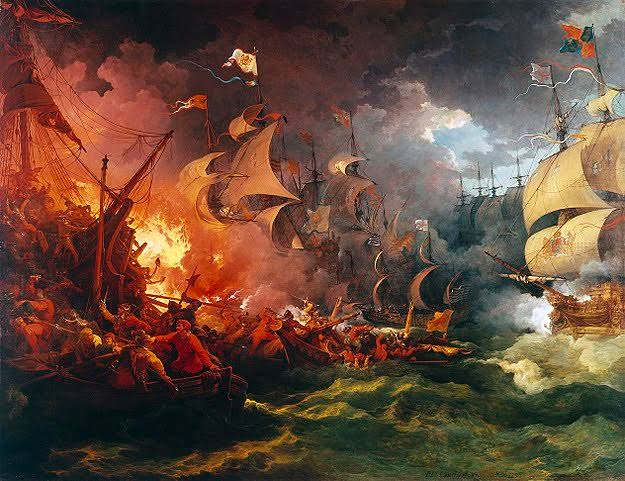
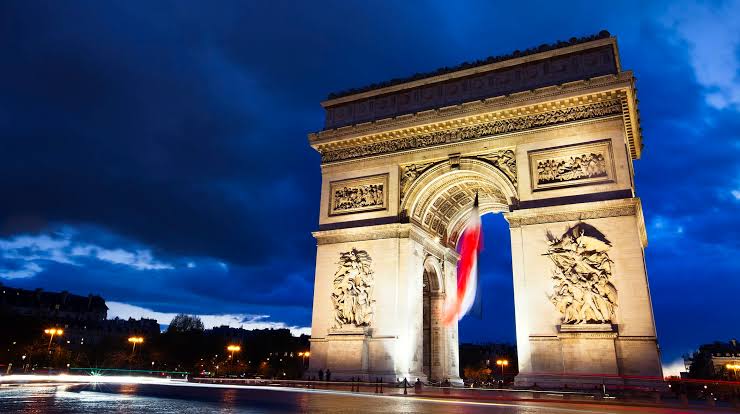
+2 more
@Koyang
Project History (July 28) BOY SCOUTS OF THE PHILIPPINES DELEGATES KILLED IN PLANE CRASH FOR 11TH WORLD SCOUT JAMBOREE `July 28, 1963` Exactly 58 years ago, a great tragedy befell the Filipino delegates of the Boy Scouts of the Philippines (BSP) at the 11th World Scout Jamboree in Marathon, Greece. United Arab Airlines (now EgyptAir) Flight 869 carrying 24 boy scouts and scouting officials failed to reach Greece after their plane crashed in the Bay of Bombay in India, past 1:50 a.m., Indian time. . All 52 passengers and eight crew of the said plane were killed, including all young Boy Scouts members aged 14 to 21. Earlier, the said delegates were invited to a courtesy call by President Diosdado Macapagal at the Malacañang Palace. Flight 869 took off, carrying 24 young Boy Scouts from Hong Kong airport, and then made a temporary stop in Bangkok, Thailand on the night of July 27, and for some unknown reason, Flight 869 had flight problems. and then crashed into the Bay of Bombay. Since no wreckage was found in the crash of the plane, the puzzle is still the cause of the trouble of Flight 869’s flight to Greece. The possibility of sabotage during the flight was denied. Of the 24 Boy Scouts members killed, only five of them were positively identified: Jose Delgado, Henry Chuatoco, Roberto Castor, Ascario Tuason, Jr., and Librado Fernandez. The Boy Scouts killed that day were as follows: *Ramon “Chito” Valdes Albano, 15* *Patricio “Tec” Dulay Bayoran, Jr., 18* *Gabriel “Gabby” Nicolas Borromeo, 14* *Roberto “Bontsie” Corpus Castor, 14* *Henry C. Chuatoco, 17* *Victor O. de Guia Jr., 16* *Jose Antonio C. Delgado, 14* *Felix P. Fuentebhella Jr., 15* *Pedro H. Gandia, 15* *Antonio M. Limbaga, 15* *Roberto P. Lozano, 19* *Paulo C. Madrinan, 20* *Jose Fermin G. Magbanua* *Romeo R. Rallos, 17* *Filamer S. Reyes, 21* *Wilfredo M. Santiago, 17* *Benecio S. Tobias, 16* *Antonio R. Torillo, 17* *Ascario A Tuason Jr., 16, at* *Rogelio C. Ybardolaza, 16* Here are the four scouting officials who died in the tragedy: *Dr. Bonifacio V. Lazcano* *Dr. Florante L. Ojeda* *Librado Fernández, at* *Fr. Jose María Martínez, SJ.* Despite this, the BSP still sent its delegate to Marathon, Greece, which lasted from the first day to the 11th of August, 1963. The flag of the BSP headquarters was placed on half-mast when the bad news reached them. . A cenotaph at the Manila North Cemetery was erected in memory of the deceased Boy Scouts, while a memorial obelisk was erected in Quezon City as a tribute to the memory of the deceased youth. JUNREY BALAWING DIED `July 28, 2020` A year ago, Junrey Balawing of Sindangan, Zamboanga del Norte, the youngest person ever recorded in the Guinness Book of World Records, passed away at the age of 27. He passed away on this day just last year due to pneumonia. Independence Day in 1993 when Junrey Balawing was born, the son of a poor family in Sindangan, Zamboanga del Norte. According to Balawing's parents, Junrey stopped growing on his first birthday, and he often got sick but his parents did not have enough money to treat him. At the age of 12 Balawing was diagnosed with proportionate dwarfism caused by failure of his pituitary gland. As a result, he could not stand or walk properly without support. Junrey's voice also diminished, as a result of his condition. Balawing's case reached the Guinness World Record, when he was only 23.3 inches tall when he was 18 in 2011. GWR certified Balawing as the smallest person alive, beating the record held by Khagendra Thapa Magal. of Nepal with a height of only 26.4 inches. Tourism in Sindangan town has improved because of Junrey Balawing, and Balawing has become the center of attention of many. Junrey and his family's life has also improved as a result. But in 2012 Balawing lost the Guinness World Record when Nepal's Chandra Bahadur Dangi took the place as the smallest living person, with a height of 22 inches. But Balawing regained it when Dangi passed away in September 2015. When the pandemic caused by COVID-19 broke out, Balawing's family was forced to move to Dapitan for fear of infecting Junrey with the deadly virus. Until July 28 last year, the Dapitan local government confirmed the passing of Junrey Balawing. Today Edward Niño Hernandez of Colombia holds the Guinness World Record as the smallest living person in the world. LAGUNA PROVINCE ESTABLISHED `July 28, 1571` The people of Laguna province commemorate the 450th birthday of their province, as Laguna Day. The province of Laguna was founded in 1571, and was formerly named La Provincia de La Laguna de Bay, from which the Spanish word Laguna means “lake” because of the lake it covers, the Laguna de Bay. The Bay was the original name of the lake, and became the name of the first capital of that province. The province of former La Laguna is part of the present provinces of Rizal, Quezon and the modern province of Laguna. Juan de Salcedo, a Spanish conquistador, occupied the land where this province now stands. In 1578, Franciscan missionaries began flocking to Laguna to spread Christianity among the natives. Since the founding of Laguna in 1571, the province has been divided into 10 towns, of which it is held by eight encomiendas, by order of Governor-General Gomez Perez Dasmariñas. Laguna became one of the active centers of the Chinese uprising against the Spaniards, from 1603 to 1639, and it was also one of the largest members of Hermano Pule's Cofradia de San Jose in 1841. The towns of Morong, Pililla, Tanay, Baras, Binangonan, Jalajala, Angono and Cardona separated from Laguna to become part of the province of Morong (now Rizal). The town of Calamba, derived from the word kalang banga, became the hometown of one of its greatest sons, Jose Rizal, who would later become one of the National Heroes of the Philippines, while from Biñan, Laguna his father Don Francisco Mercado. The province of Laguna was one of the provinces placed under Martial Law in connection with the Filipino revolution against the Spaniards in August 1896. General Paciano Rizal, brother of Jose Rizal, Juan Cailles, Agueda Kahabagan, and Severino Taiño led the uprising in the province of Laguna from the Spanish occupation, and later General Rizal and Cailles defended Laguna from the Americans to in 1900, when the Americans finally occupied Laguna. Juan Cailles, who had previously fought in Laguna, became the Governor of the province, and the Manila Railroad Company's railroad was extended to the town of Pagsanjan. Laguna became one of the active areas of the Sakdalistas, where in May 1935 the bloodiest suppression of the Sakdalistas took place in Cabuyao. Laguna became an active center of Filipino guerrillas, despite the presence of the Makapili. In Los Baños, Laguna, Japanese war criminal General Tomoyuki Yamashita was hanged in February 1946. Laguna is the 63rd largest province in the Philippines, with an area of 1,917.85 sq. Km. km, and it consists of six cities and 24 towns. Laguna is also divided into six districts, and the town of Sta. Cruz is the capital of Laguna. Apart from the provocative home of the Rizal family, Laguna also contains Pagsanjan Falls, the Underground Cemetery in Nagcarlan, the seven lakes in San Pablo, the beautiful sculptures of saint images in Paete and Pakil, the Makiling mountain, and the Los Baños campus of the University of the Philippines (UP). Laguna also found what is considered the oldest document found in the Philippines, the Laguna Copperplate Inscription (LCI) found in 1990. Laguna de Bay, the largest lake in the Philippines, is besides being a source of irrigation it is also a source of water resources. livelihood of the fishermen in the said province. References: Angkang Pilipino (2011). The tragedy of the 11th world scout jamboree. https://www.google.com/amp/s/angkangpilipino.wordpress.com/2012/01/16/the-tragedy-of-the-11th-world-scout-jamboree/amp/ Project Vinta (2020, July 28). On July 28, 1963, United Arab Airlines (now EgyptAir) Flight 869 was preparing to land at the Santa Cruz Airport. [Status update]. Facebook. https://m.facebook.com/story.php?story_fbid=2728604064053516&id=1922575111323086 The Shame Project (n.d.). Today in Philippine history, on July 28, 1963, 24 delegates to the 11th boy scout world jamboree in Greece perished in a tragic plane crash. https://kahimyang.com/kauswagan/articles/1250/today-in-philippine-history-july-28-1963-24-delagates-to-the-11th-boy-scout-world-jamboree-in-greece- perished-in-a-tragic-plane-crash Wikipedia (n.d.). 11th World Scout Jamboree. https://en.m.wikipedia.org/wiki/11th_World_Scout_Jamboree Cana, P. (2021, January 13). Here's the story of Zamboanga's Junrey Balawing, once the world's shortest man. Esquire Magazine. https://www.esquiremag.ph/long-reads/features/junrey-balawing-world-s-shortest-man-a00289-20210113 Wikipedia (n.d.). Laguna (province). https://en.m.wikipedia.org/wiki/Laguna_(province)



+1 more
@Koyang
Project History (July 27) THE "9TH OF THERMIDOR" OF THE FRENCH REVOLUTION `July 27, 1794` The Revolution that caused nearly eight months of bloodshed of thousands of French in the Reign of Terror will end with the fall of one man behind it all-Maximilien Robespierre. Since Robespierre implemented the Law of 22 Prairial in the Committee on Public Safety, more than in 1793 were taken to the guillotine from June to July 1794. Robespierre also did not appear at the National Convention or even at the Committee for a long time, so the Robespierre's enemies made a way for him to disappear, fearing that they might be the next victim of Robespierre's bloody kind of justice. July 27, 1794 when Robespierre arrived, accompanied by revolutionary ally and also deputy of the Convention Louis Antoine de Saint-Just at the National Convention. There, Robespierre defended himself from accusations against him that he was a dictator, and revealed a large conspiracy by members of the Convention against the Republic, and he carried with him a list of those he identified as involved in that conspiracy, but the his long speech of accusation was silenced when those in the Convention asked to name his alleged accomplices. Fearing that they might be among those referred to by Robespierre, they angrily expelled from the Convention Robespierre, his brother Augustin Robespierre, Saint-Just, and another ally of the Convention, Georges Couthon. And on the same day, they permanently removed Robespierre and all his supporters as members of the Convention and ordered their arrest. At the same time, Robespierre went to the Hôtel de Ville or the Paris municipality to defend themselves from the Convention's plot against him, relying on military support for him to return to government. The Paris government did not follow the Convention's order to imprison Robespierre, and instead they supported it. When it became known that the Paris government had sided with Robespierre, the Convention immediately ordered the arrest of Robespierre as criminals at the Hotel de Ville as soon as possible that same night. Before dawn, soldiers loyal to the Convention stormed the Paris municipality, and after a few minutes of confrontation, they arrested Robespierre and his supporters. One of his supporters jumped out the window, while another shot himself, and Robespierre, was hit so hard by a gunshot wound to his right jaw that he almost died. It is still unclear whether he fought the soldiers or attempted suicide. From that moment on, the gruesome day of the end of the bloody Terror chief architect will be swallowed up by the own monster he created. Called the "Thermidorian Reaction", according to the calendar of the revolutionary Republic, the fall and the end of Robespierre. THE *IGLESIA NI CRISTO* WAS ESTABLISHED `July 27, 1914` Today is the 107th anniversary of Iglesia ni Cristo, founded by Felix Ysagun Manalo in Punta, Sta. Ana, Manila on July 27, 1914. Manalo registered INC with the Bureau of Commerce as a sole corporation, in response to questioning the legality of the said church. For INC followers, Felix Manalo is considered God’s messenger to fulfill the prophecy that Christianity would be brought to the Far East, and INC is the original church founded by Jesus Christ that was said to have been discontinued before, and its members only he will be saved on the Day of Judgment. It rejects Catholic doctrines, such as the veneration of images of saints and the Blessed Trinity, but it recognizes Jesus Christ as the son of God and God's only Mediator with mankind. INC started with a small following and Ka Felix served as a minister spreading the word of God to his first local in Santa Ana, Manila. Eventually, their membership increased, within 1924, INC had approximately 3,000-5,000 members from 43 or 45 locals in Manila and neighboring provinces. By 1936 their number had reached 85,000 members and increased even more in 1954 to an estimated 250,000. The first INC congregation or local outside Luzon was established in 1937. It was also the first local to be established in the Visayas. Their first mission in Mindanao was carried out in 1946. And in 1948, their first concrete chapel was built in Sampaloc, Manila. Beginning in the 1950s, Ka Felix's health began to decline so his son Ka Eraño Manalo took over as general minister. Ka Felix Manalo passed away on April 12, 1963, due to an ulcer. INC’s first overseas mission was conducted in 1968 in celebration of their 54th anniversary, and in July 1973, the first INC’s overseas mission was established in Honolulu, Hawaii, and they later also established locally in San Francisco, California. The Ministerial Institute of Development, or New Era University College of Evangelical Ministry was established in 1974 in Quiapo, Manila. It moved to its current location in 1978. In 1975, INC established a higher education institution New Era University and had five extension schools in Bulacan, Cavite, Laguna, Pampanga, and Rizal. In 1971 the Central Office building of Iglesia ni Cristo was built, and 15 years later, their Central Temple was built to add to their complex. Construction of the Tabernacle, a tent-like multipurpose building that can accommodate 4,000 people, was completed in 1989. New Era University is located in the same complex. In 1993, the New Era General Hospital was built, which provides medical services to sick brothers and sisters to this day. With the passing of Ka Eraño Manalo on August 31, 2009, his son Ka Eduardo Manalo, who is still in his current office, succeeded him as INC general minister. In the 2015 official census, 2.65% of the total Philippine population is affiliated with INC, the third largest religion in the Philippines, while an estimated more than three million people from 156 countries around the world, excluding North Korea and strictly Islamic countries, its members. In celebration of INC's centenary, the largest indoor arena in the entire Philippines, the Philippine Arena, was built at their complex in Bulacan's Ciudad de Victoria. Construction was completed on May 30, 2014, and inaugurated on July 21, 2014. It can accommodate approximately 55,000 people. Prescribed in force by Republic Act no. 9645 signed by President Gloria Macapagal-Arroyo in 2009 the 27th of July as Iglesia ni Cristo Day as a special working holiday, and became a special non-working holiday in 2014 in commemoration of the centenary birthday of INC. PANTALEON GARCIA WAS BORN `July 27, 1856` Today is the 165th anniversary of the birth of General Pantaleon Garcia, who was born in the city of Imus, Cavite in 1856. Garcia completed an education course at the Escuela Normal run by Jesuit priests, and served as a teacher in the town of Silang, Cavite in 1875. It was 1896 when Garcia joined the Katipunan, and his "baptism by fire" began in Silang, Cavite where Garcia and his men captured the Spanish fort there using only machetes, bamboo spears, and small guns. Garcia was promoted to the rank of Colonel for his successful defense and defeat of Spanish forces at Mt. Puray in Montalban, in February 1897. Colonel Garcia was also among the generals who planned to defend the Filipino revolutionaries in Pasong Santol in Imus, Cavite in March 1897, but Pasong Santol was later defeated and fell to the Spaniards. Colonel Garcia also led the revolutionary forces in Kalookan, Novaliches and Navotas. General Emilio Aguinaldo also appointed Colonel Garcia to form a committee to investigate Andres Bonifacio's case against the revolutionary government, and he also recommended the indictment of the Bonifacio brothers in a military court, headed by General Mariano Noriel. Colonel Garcia was also among the retreating revolutionaries to Biak-na-Bato in San Miguel, Bulacan, and when the first session of the Malolos Congress opened, General Garcia was appointed as the representative of Cavite province. President Aguinaldo elevated Garcia to the rank of Brigadier General, and appointed him one of the leaders in the recovery of Manila from the Americans during the Filipino-American War. Garcia rose to the rank of Major General, and became the chief general of the Filipino forces in central Luzon when the guerrilla system was implemented. The Americans captured General Garcia in May 1900 in Jaen, Nueva Ecija. Garcia entered politics after the war, when he was elected mayor of the town of Imus, Cavite in 1904, and became the huez de paz of the said town in 1906. After that, Garcia lived privately with his wife Valeriana Elises and they have three children. General Pantaleon Garcia passed away on August 16, 1936. The headquarters of the Philippine National Police and a high school campus in the city of Imus, Cavite were named after General Garcia. THE END OF THE KOREAN WAR `July 27, 1953` After three years of bloody war on the Korean peninsula, the conflict between the two Koreas came to an end with an armistice, signed on this day in 1953. Armistice was adopted in Panmunjom, a small town in North Korea that was signed past 10:00 a.m., by delegates from North Korea, China and the United States and the UN Peacekeeping Force, signaling an end to gunfire across the Korean peninsula. The signed armistice also states the demarcation of a military demarcation line at the 38th parallel, which is considered the most armed border in the world. The armistice also ordered the repatriation of prisoners of War held by the two Koreas within 60 days after the armistice was ratified, but this was not carried out. This armistice is only to end the ongoing war, not to settle the conflict between the two Koreas. South Korea did not participate in the signing of the armistice without it being accepted by President Syngman Rhee, who wanted to reunite the two Koreas by force. Although the Korean War ended in armistice, no formal peace agreements or even normalization of relations between the two Koreas were signed, so the state of war between North and South Korea still remains. Relations between China and South Korea have returned to normal with the effect of the peace agreement signed in 1992, while South Korea accuses Pyongyang of violating armistice provisions. More than 170,000 soldiers were killed on the side of South Korea, the United States and its allies, while an estimated more than 390,000 North Koreans, Chinese and their allies were killed in this war, and more than three million civilians were killed. The United States, North and South Korea are currently commemorating the day of the end of the Korean War and the veterans who fought in said war. References: Llewellyn, J., & Thompson, S. (2020, August 21). The fall of Robespierre. Alpha History. https://alphahistory.com/frenchrevolution/fall-of-robespierre/ Wikipedia (n.d.). Fall of Maximilien Robespierre. https://en.m.wikipedia.org/wiki/Fall_of_Maximilien_Robespierre Iglesia Ni Cristo (n.d.). History. https://iglesianicristo.net/history/ The Kahimyang Project (n.d.). Today in Philippine history, July 27, 1914. Felix Manalo founded Iglesia ni Cristo ni Punta, Sta. Ana, Manila. https://kahimyang.com/kauswagan/articles/1248/today-in-philippine-history-july-27-1914-felix-manalo-founded-iglesia-ni-cristo-in-punta-sta-ana-manila Imus City Government (n.d.). Heroes of Imus. https://imus.gov.ph/heroes-of-imus/ History.com Editors (n.d.). This day in history armistice ends the Korean war. History.com. https://www.google.com/amp/s/www.history.com/.amp/this-day-in-history/armistice-ends-the-korean-war Wikipedia (n.d.). Korean armistice agreement. https://en.m.wikipedia.org/wiki/Korean_Armistice_Agreement

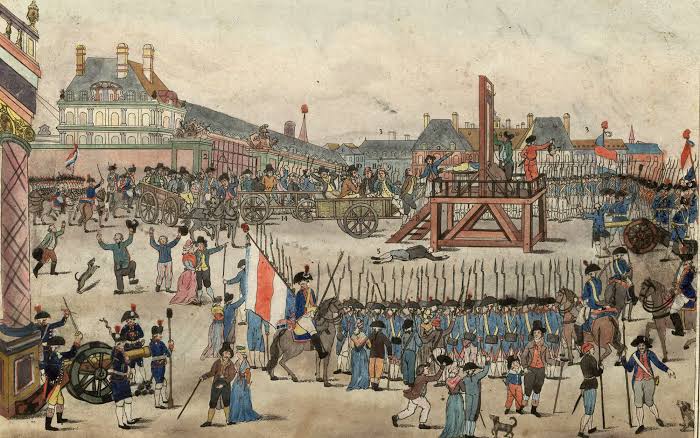
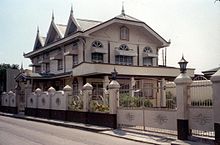
+2 more
@Koyang
I wonder if its a good idea to pixelated the Thumbnail I used every article I did, What do you think?
@Koyang
Project History (July 26) ALLIES RELEASE ULTIMATUM FOR JAPAN'S SURRENDER TO WAR `July 26, 1945` In the last months of World War II, the country of Japan became the remaining threat to the pursuit of the Allies forces in achieving world peace. And the Japanese, despite imminent defeat and collapse, were determined to fight to the death. So on this day in 1945, a declaration was drafted by the leaders of the three Allies forces President Harry S. Truman of the United States, Premier Joseph Stalin of the Soviet Union, and Prime Minister Winston Churchill of the United Kingdom, in conjunction with their conference in Potsdam, Germany. It was an ultimatum to force Japan to surrender unconditionally to the war as soon as possible, otherwise, it would face massive land, naval, and air aggression by American forces until Japan was allowed to surrender. The ultimatum also called for the complete surrender and disarmament of the Japanese Imperial army, the prosecution of its war criminals, and the establishment of a more democratic Japanese government. If Japan complies with and accepts these provisions, the Allied forces will respect the power of the Emperor of Japan, and allow its industries to operate without regard to the manufacture of weapons of war, and resume trade between Japan and the United States. global market. Coinciding with President Truman’s arrival in Germany on July 16, he received news of the success of testing the atomic bomb, which he was confident would save more Americans from their planned invasion of Japan. He informed Stalin, but what President Truman did not know was that Stalin already knew it because he had spied on the Manhattan Project. Truman, Churchill, and Stalin began a conference on 17 July in Potsdam, Germany to discuss the future of Europe after the war, including dividing Germany into four zones and prosecuting it. of war criminals. The Potsdam conference ended with the signing of the Potsdam Agreement in August 1945. The Allies' demands for their surrender reached Japan, but the Japanese government led by Prime Minister Kantaro Suzuki declared their non -response to the Potsdam Declaration, using the word tokusatsu or meaning silent kill. This decision will determine Japan's tragic fate next month. PHILIPPINES SIGN UNITED NATIONS CONVENTION ON THE RIGHTS OF THE CHILD `July 26, 1990` The United Nations Convention on the Rights of the Child (UNCRC) aims to further strengthen the 1959 UN Declaration on the Rights of the Child. And on July 26, 1990, the Philippines became the 31st country to sign such an international agreement. On November 20, 1989, the UN General Assembly adopted the UNCRC under Resolution 44/25. In addition to tightening the provisions of the 1959 declaration, it is emphasized here that children are people and individuals who also have the right to be respected and protected. The document also states that childhood begins from birth to before reaching the age of 18 and that a child should be allowed to play, learn, enrich talents and abilities, and grow as an individual with dignity in these times. To accomplish this, the government of each country must create policies that protect children from abuse, discrimination, violence, and exploitation. The government also needs to put in place programs that address the health needs of children, and allow them to participate in society. The Philippines, through our representative Deputy Permanent Representative to the UN Manuel Mendez, signed the said document on July 26, 1990. Although the said agreement took effect globally and began to be implemented on September 2, 1990, it came into force. only the document in the Philippines on September 20, 1990, 30 days after the country provided the instrument of ratification to the UN Secretariat. According to the last count in 2020, 196 countries in the world have signed the UNCRC. FRANCISCO PIZZARO EXECUTES THE LAST LEADER OF THE INCA EMPIRE, ATAHUALPA `July 26, 1533` On this day in 1533,the last Emperor of the ancient Inca Empire Atahualpa was executed. After Spanish forces captured Emperor Atahualpa of the Inca Empire in November 1532, Pizarro imprisoned him and released him only on the condition that Atahualpa grants his request for a large room full of Inca gold treasures that would reach more than two meters. the height, in the aggregate gold treasures of the Incas. The said room was also doubly filled with silver treasures. Eight months were spent on this work demanded by Pizarro, which at the current cost they would amount to 50 million dollars. Atahualpa was allowed to rule even as a prisoner of Pizarro to continue the collection of Inca treasures. But when Pizarro's demand for wealth was completed he did not keep his promise to free Atahualpa, and instead he was indicted in a Spanish court on charges of rebellion against the Spaniards, idolatry, and murder of his half-brother. and Huascar. He was sentenced to death by burning, and the morning before he was killed he was first baptized into the Catholic religion and hanged by strangulation, as he had requested. He was given a Christian burial afterward. Atahualpa only briefly served as Emperor of the Inca, and his empire faced the problem left behind by a bloody civil war of six years against his half-brother Huascar. Add to this the intensification of the smallpox epidemic throughout the empire brought on by the Spanish occupiers under the leadership of Francisco Pizarro, who had already killed nearly 90 percent of the empire's population. Atahualpa captured the throne after his father Wayna Qhapac died of smallpox, from the civil war that the Spaniards took advantage of to finally conquer the Incas. However, the Incas lived in luxury under the leadership of Atahualpa, who was also wanted by the Spaniards. Atahualpa tried to resist the attempts of foreigners to conquer their empire, but also fell into the hands of Pizarro. Atahualpa's death signaled the end of nearly three centuries of the largest empire in southern America. References: History.com Editors (2021, May 18). Potsdam Conference. History.com. https://www.history.com/.amp/topics/world-war-ii/potsdam-conference Project Vinta (2020, July 26). On July 26, 1990, the Philippines became the 31st country to ratify the United Nations Convention on the Rights of the Child (UNCRC). [Status update]. Facebook. https://m.facebook.com/story.php?story_fbid=2727018057545450&id=1922575111323086 United Nations Children’s Fund (n.d.). Frequently asked questions on the Convention of the Rights of the Child. Retrieved July 26, 2021. https://www.unicef.org/child-rights-convention/frequently-asked-questions Cartwright M. (2016, March 17). Atahualpa. World History Encyclopedia. https://www.worldhistory.org/Atahualpa/
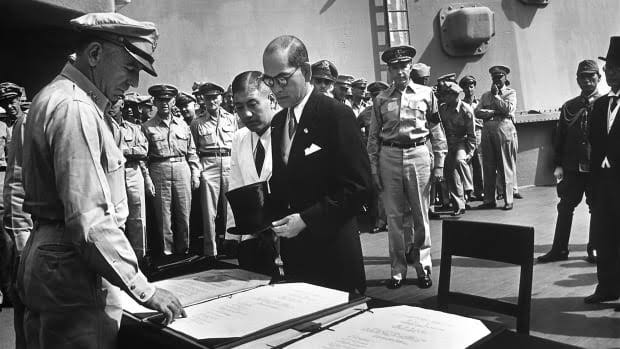

+1 more
@Koyang
Project History (July 25) THE TASTE OF UMAMI WAS DISCOVERED BY DR. KIKUNAE IKEDA `July 25, 1908` Sometimes, the taste of a dish is incomplete when it is not mixed with monosodium glutamate, especially Ajinomoto seasoning. Ajinomoto seasoning has become a part of Filipino cuisine and has given a new taste to many Filipino dishes. And on this day in 1908, the Japanese biochemist Dr. Kikunae Ikeda of Tokyo Imperial University has a secret ingredient that will impart a delicious taste to food in the juice of seaweed kombu (Laminaria japonica). Crystallized by Dr. Ikeda made the juice, and he discovered the taste of dashi, or broth of boiled kombu and katsuobushi, which he later called "umami". He studied that the properties possessed in the juice of kombu and katsuobushi which give umami are as follows; calcium, potassium, ammonium, and magnesium glutamate, and sodium glutamate were found to be more digestible and more palatable. Dr. called. Ikeda called this new crystallized spice “monosodium glutamate” and was patented the same year, and named this product Ajinomoto, which means the essence of taste. It was 1910 when it started appearing in Japanese markets, and like many inventions, Ajinomoto manufacturers even looked for alternative sources of monosodium glutamate, in the juice of salted soybeans in 1930, and by 1960 salted soybeans were used. sugarcane juice or sugarcane using the pasteurization process. In 1950, Japan began importing Ajinomoto seasoning products to the Philippines, and in 1962 the first Ajinomoto factory opened in Pasay city. Ajinomoto Company, Inc. currently has its headquarters in Tokyo, Japan. which is behind this historic innovation in improving the taste of food, and has already built 135 branches in 36 countries around the world, including the Philippines. BENITO MUSSOLINI OF ITALY IS OVERTHROWN FROM POWER `July 25, 1943` After two decades of the reign of Italy's "Il Duce" Benito Mussolini, he was finally ousted as Prime Minister on this day in 1943. This happened as many Italians were losing confidence in the face of succession. that defeat in the war they never wanted, and in the impending invasion of Allies forces into Italy, into Rome. His own Grand Council removed him from office as Prime Minister, saying Mussolini’s dictatorship had led to the gradual collapse of the Italian government, and agreed to transfer some power of the Grand Council to Italian King Victor. Emmanuel II. Mussolini was already ill, so he did not have the strength to oppose the council's decision. The king himself spoke to him to say that Italy had lost the war and that Pietro Badoglio would succeed him as Prime Minister. Mussolini’s formerly arrogant, haughty, and arrogant voice, which persuaded many Italians to follow in his footsteps, humbly surrendered to the king’s will. After that, the police arrested Mussolini, and he was later taken to the island of Ponza, Italy. Many Italians celebrated the demise of their hated dictator, hoping that Italy would survive the devastation of the war. His fascist supporters were unable to save him. Just two months later, Italy surrendered to the Allies in September 1943. PERLA SANTOS-OCAMPO WAS BORN `July 25, 1931` Today is the 90th anniversary of the birth of a pediatrician and one of the National Scientists of our country Perla Santos-Ocampo. A native of Dagupan, Pangasinan, Perla Santos was born in 1931. She graduated from the University of the Philippines Manila in 1955, and also took a post-graduate pediatric course at UP-Philippine General Hospital and a fellowship at Case Western Reserve. The University of Cleveland, Ohio in the United States. In response to the Department of Health’s campaign against diarrhea in children, Dr. Perla Santos-Ocampo of research on the relationship of malnutrition to child growth and development, which has been instrumental in our country's fight against the spread of malnutrition in children. UP Manila served as Chancellor, Dra. Santos-Ocampo, where he developed and improved health-related degree programs at the university to improve the quality of health education offered at the said university. Dra. Santos-Ocampo in the establishment of the following: National Institutes of Health, National Graduate School of the Health Sciences, and National Telehealth Center. A year before Dra. Santos-Ocampo on June 29, 2012, at the age of 80 he was awarded the Order of National Scientist award for his outstanding contribution to the field of pediatrics. DOLPHY WAS BORN `July 25, 1928` Today marks the 93rd anniversary of the birth of “King of Philippine Comedy” Rodolfo Vera Quizon or better known to us as Dolphy. Dolphy was born on July 25, 1928, in Tondo, Manila to Melencio Quizon, a mechanic, and Salud Vera, a seamstress. Dolphy experienced selling peanuts and watermelon outside a theater when he was young. He also got into being a porter and shoeshine boy despite the hardships caused by World War II during those times, before he went on to perform in the theater. Dolphy was first seen in the movie "Sa Isang Sulyap Mo" under the production of Sampaguita Pictures, starring Pancho Magalona and Tita Duran where he played Magalona's sidekick. He first made two films before he got his big break with the movie “Jack en Jill” which hit the box office across the country. He was given an eight-year exclusive contract that expired in the early 1960s. He has made more comedy films with veteran comedians Pugo, Tugo, Babalu, Panchito, Ike Lozada, and German Moreno. In 1966, he became part of the comedy duo Dolphy and Panchito, which opened for a Beatles performance at the Rizal Stadium in Manila. In 1967, he founded his film production firm RVQ Productions which produced 40 films most of which he starred in. His character John Puruntong was also recognized in the sitcom “John en Marsha” which he starred in alongside actress Nida Blanca. It lasted 17 years. After that, Dolphy returned to television in the sitcom “Home Along da Riles” where he played Kevin Kosme. In 2001, Dolphy and her sons Eric and Jeffrey Quizon won the Prix de la Meilleure Interpretation (equivalent to the Best Actor Award) in Brussels, Belgium for her performance as Walterina Markova in the film “Markova: Comfort Gay”. His colorful life ended on July 12, 2012. He passed away at Makati Medical Center after five years of battling the chronic obstructive pulmonary disease. SANTIAGO ALVAREZ WAS BORN `July 25, 1872` Santiago Alvarez was born on July 25, 1872 in Imus, Cavite. He was known as the “Lightning of Fire” because of his fiery courage and dedication as a commander in the battle of Dalahican, Cavite and was dubbed the “Hero of the Battle of Dalahican”. After the revolution, he entered the University of Santo Tomas and later moved to the Colegio de San Juan de Letran where he graduated with a Bachelor of Arts. He also studied law at the Liceo de Manila. After the establishment of the American civil government in the Philippines, he assisted Pascual H. Poblete, Lope K. Santos, and many others in the establishment of the Nacionalista Party for which he was appointed president of its first directorate. In 1902, he headed the Junta Magna de la Comisión de la Paz (Great Council of the Peace Commission). This commission was created to further expedite the rehabilitation of the injuries caused by World War II in the country. Alvarez died in San Pablo, Laguna at the age of 58 on October 30, 1930. His remains lie in the San Pablo municipal cemetery. References: Ajinomoto Philippines Corporation (n.d.). About Us Ajinomoto Philippines Corporation. Retrieved July 25, 2021, from https://www.ajinomoto.com.ph/about-us/ajinomoto-philippines-corporation/ Ajinomoto Group Global (n.d.). What is AJI-NO-MOTO and how is it made? Retrieved July 25, 2021, from https://www.ajinomoto.com/msg/what-is-aji-no-moto-and-how-is-it-made Wikipedia (n.d.). Ajinomoto. Retrieved July 25, 2021, from https://en.m.wikipedia.org/wiki/Ajinomoto History.com (n.d.). Mussolini falls from power. Retrieved July 25, 2021, from https://www.google.com/amp/s/www.history.com/.amp/this-day-in-history/mussolini-falls-from-power Wikipedia (n.d.). Perla Santos-Ocampo. Retrieved July 25, 2021, from https://en.m.wikipedia.org/wiki/Perla_Santos-Ocampo Adarna House, Inc. at Bench (2011) 101 Filipino Icons, volume 1. Quezon City: Adatna House, Inc. Hallare, K. (2020, July 25). Google celebrates 'King of Comedy' Dolphy's 92nd birthday with Doodle. Inquirer.net. https://www.google.com/amp/s/entertainment.inquirer.net/384743/google-celebrates-king-of-comedy-dolphys-92nd-birthday-with-doodle/amp The Shame Project (n.d.). Today in Philippine history, July 25, 1872, Santiago Alvarez was born in Imus, Cavite. Retrieved July 25, 2020, from https://kahimyang.com/kauswagan/articles/1245/today-in-philippine-history-july-25-1872-santiago-alvarez-was-born-in-imus-cavite

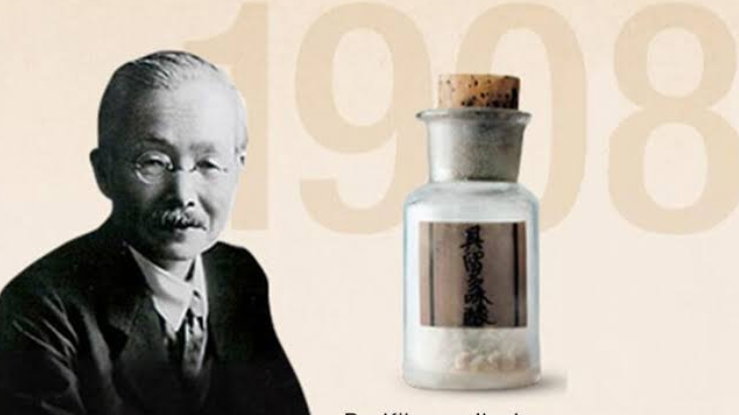
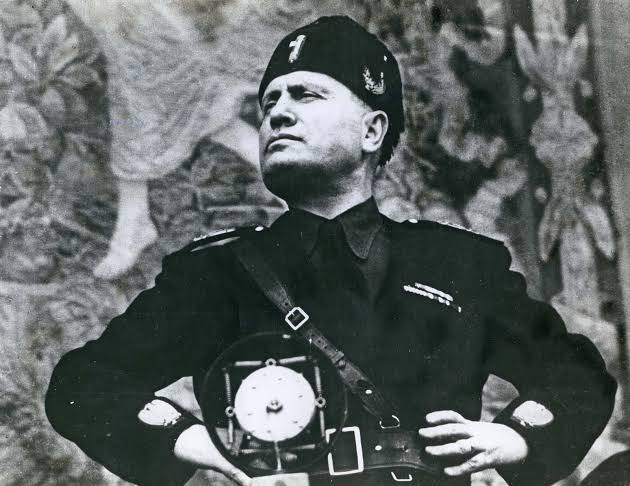
+3 more
@Koyang
Project History (July 24) THE FIREBOMBING IN THE CITY OF HAMBURG, GERMANY `July 24, 1943` In the Bible, the city of Gomorrah is one of the two “sinful” cities that God destroyed by raining brimstone and fire. So it is not surprising that a large-scale air-raid was carried out by the British air force on the port city of Hamburg in northern Germany on the night of this day in 1943. This air-raid by the planes was named "Operation Gomorrah". Royal Air Force bombers consisting of nearly 800 planes, and within an hour, they rained incendiary bombs totaling 2,300 tons across Hamburg, roughly equal to the number of bombs dropped by the Luftwaffe on London's first five days of the London Blitz. This created a hellish firestorm that heated nearly 1,000 degrees Celsius across the city. Even the civilians who hid in their bomb shelter did not survive the hell that fell on them. Strong winds exacerbated the spread of the fire in Hamburg. To keep them out of the enemy's radars, the planes first rained aluminum papers, confusing the radars and thinking that the falling aluminum papers were planes and so that anti-aircraft could not hit them. defenses of the Germans in the city. The next morning, American planes dropped bombs on Hamburg, and fires rained down on Hamburg six times until August 3 of the same year. Up to 31 sq. Km. km the extent of the damage caused by the firebombing in Hamburg, and an estimated 32,000-43,000 people were burned alive in this hellish attack by British and American planes in Hamburg. Hamburg is the second-largest city in Germany, it is an important industrial center in that country, especially in shipbuilding. More than 280,000 establishments, including hundreds of industrial plants, naval facilities, schools, and Nazi government offices, were destroyed in these bombings. In all, from 1940 to 1945, up to 69 air attacks were carried out in Hamburg, including Operation Gomorrah, and it was one of the most destructive air raids carried out against Nazi Germany. This disastrous firebombing by the British in Dresden, Germany in February 1945 was followed by this disastrous firebombing. **GUILLERMO TOLENTINO WAS BORN** `July 24, 1890` On July 24, 1890, Guillermo Tolentino was born in Malolos, Bulacan. He was awarded the title of National Artist for Sculpture in 1973. Before he achieved this, his name became famous due to his works such as UP Oblation commissioned by the then president of the University of the Philippines Rafael Palma, and the Bonifacio Monument in Caloocan City. Tolentino graduated in fine arts in 1915 from the University of the Philippines. He went to the United States to re-study and enrich his artistic skills with the help of a scholarship grant from Bernard Baruch of New York University’s Beaux School of Arts. He graduated there with honors in 1921. He has also toured some of the most famous museums and art galleries in Europe. He went there to study at the Regge Instituto Belle Arti in 1922. He won a national award for his work Bonifacio Monument in Caloocan City. He also designed the medal of the Ramon Magsaysay Awards as well as the emblem of the Republic of the Philippines. From 1953 to 1955, he served as director of the University of the Philippines School of Arts. He retired in 1955 as professor emeritus. Tolentino died at the age of 86 on July 12, 1976. GENERAL SIMON BOLIVAR WAS BORN `July 24, 1783` If in the Philippines, we have Emilio Aguinaldo, in America it is George Washington, General Simon Bolivar of Latin America was also a general who fought against foreign occupation and eventually ruled an independent country. Today is the 238th birthday of Simón José Antonio de la Santísima Trinidad Bolívar y Ponte Palacios y Blanco or simply Simon Bolivar, born in 1783 in Caracas, the capital of the country of Venezuela. From Bolivar’s wealthy family to the family of Spanish nobles who migrated to Latin America in the 16th century. Because the eldest and customary firstborns became heirs, Bolivar was privileged to study in Spain and France. There he became aware of the liberal thoughts of the philosophers of the Enlightenment. This gave him the motivation to fight the Spanish conquest of his country, and he took advantage of it during the turmoil in Spain caused by the war against Napoléon in 1807. Bolivar led the campaign for Latin America's independence from Spain, and although more Spanish troops rushed to suppress Bolivar's uprising he succeeded in liberating Venezuela in 1821, after the last battle of Carabobo. After this, General Bolivar participated in the establishment of Gran Colombia, the union of Latin American countries that wanted to break free from Spanish occupation, where he became its first President in February 1819. He also led the revolution against Spain. in Peru, Ecuador, and Bolivia, which would eventually bear his surname. He also became the first President of Bolivia, and even of Peru and Venezuela. General Bolivar led Gran Colombia (currently the countries of Ecuador, Venezuela, Panama, and Bolivia), and he wanted to unify and strengthen the newly independent country in the face of the Spanish threat and growing US influence, but within it who would break this dream of General Bolivar caused by the conflict between the leaders of Gran Colombia. Gran Colombia eventually disintegrated, and as a result, he retired as President of Gran Colombia in April 1830 and decided to leave for Europe. He was unable to sail because of pneumonia and at the age of 47, General Bolivar died in Santa Marta, Colombia, with the failure to unite the independent nations of Latin America. However, General Simon Bolivar was dubbed the "Liberator" of Latin America, along with other great generals in Latin America such as General Jose de San Martin. AMERICAN AVIATOR AMELIA EARHART WAS BORN `July 24, 1897` If there is a popular image of women's power around the world, it is the American aviator Amelia Mary Earhart or simply Amelia Earhart. Today is his 124th birthday, being born in 1897 in Atchison county, Kansas state in the United States, and the son of Samuel Earhart and Amelia Otis. As a child, she tried to break the traditional status of American women. There he was playing basketball with some boys, climbing a tree like a man, and acting like a man. Earhart attended college in Pennsylvania but did not finish it. During World War, I Earhart served as a Red Cross nurse in Canada after visiting her brother in Toronto. He was also stricken with the deadly Spanish Flu in 1918 but recovered as well. While watching an aerial exhibition in Canada he was amazed at flying airplanes, which he also dreamed of flying an airplane as well. He returned to the United States to study medicine at Columbia University, and in December 1920 his dream of boarding a plane came true, along with World War I flying ace Frank Hawks. He taught at a flying school while working for a telephone company in California. He also bought his plane which he named "Canary", and in December 1921 he obtained his license to fly an airplane. After participating in a flight exhibition in California, Amelia Earhart has already set world records for airplane flying. She was the first woman to fly an airplane solo, the first to cross the Atlantic Ocean continuously, and the first woman to fly across the entire United States, from Los Angeles, California to Newark, New Jersey, and fly from California to Hawaii. She was awarded the “Distinguished Flying Cross” medal, the first woman to receive such an award. She helped found Ninety-Nines, an organization that aims to open up opportunities for women to become airplane pilots, of which she also became its first President. In June 1937, Earhart's plane to fly around the world was carried out, and with pilot Fred Noonan they left Oakland, California airport aboard a Lockheed 10E Electra. After nearly a month of crossing southern America, the Atlantic, east to India and Southeast Asia, the Earharts flew again to another destination on Howland Island in the central Pacific from Lae, New Guinea on the 2nd of July, 1937. But this time, they were never seen again. Extensive search and retrieval operations were conducted across the Pacific to find Earhart's or even their plane, but they failed. Earhart and Noonan were declared dead in absentia on January 5, 1939, and several theories have been proposed about what happened to Amelia Earhart after her flight in July 1937. Reference: History.com (n.d.). Operation Gomorrah is launched. Retrieved July 23, 2021, from https://www.google.com/amp/s/www.history.com/.amp/this-day-in-history/operation-gomorrah-is-launched Watson, G. (2018, August 2). Operation Gomorrah: Firestorm created 'Germany's Nagasaki'. BBC News. https://www.bbc.com/news/uk-england-43546839.amp The Shame Project (n.d.). Today in Philippine history, July 24, 1890, Guillermo Tolentino was born in Malolos, Bulacan. Retrieved July 24, 2020, from https://kahimyang.com/kauswagan/articles/1244/today-in-philippine-history-july-24-1890-guillermo-tolentino-was-born-in-malolos-bulacan Wikipedia (n.d.). Simon Bolivar. Retrieved July 24, 2021, from https://en.m.wikipedia.org/wiki/Sim%C3%B3n_Bol%C3%ADvar History.com (n.d.). Amelia Earhart. Retrieved July 24, 2021, from https://www.history.com/.amp/topics/exploration/amelia-earhart

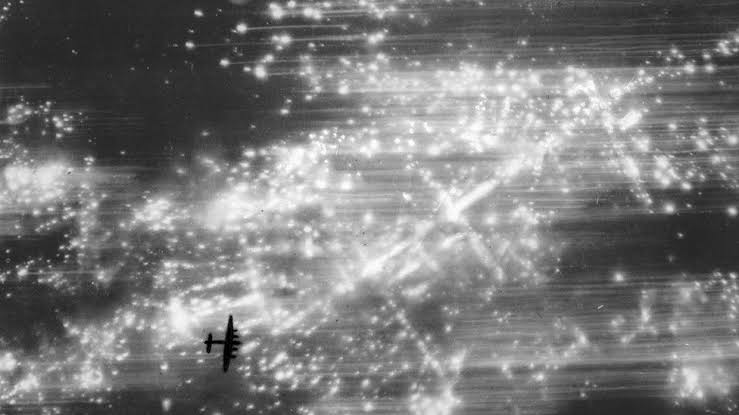
+2 more
@Koyang
Hello Socscis! I've been so busy yesterday, I forgot to post the Project history of July 24 and 25 but don't worry! I will post all of them including todays Project History which is July 26, again, I'm so sorry for the delay, Happy reading!
@Koyang
Project History (July 23) APOLINARIO MABINI WAS BORN `July 23, 1864` Today is the 157th birthday of the so-called "Great Paralytic" and "Brain of the Filipino Revolution" Apolinario Mabini y Maranan or simply Apolinario Mabini. He was born in Tanauan, Batangas in 1864 and the second of eight children of a poor family of Dionisia Maranan and Inocencio Mabini. With the help of his teacher, Padre Valeriano Malabanan, Mabini was able to study as a scholar at the Colegio de San Juan de Letran in Manila in 1881, and in order to support himself, he also tutored. Although underestimated due to his poverty, Mabini showed his talent in class, and after graduation he entered the University of Santo Tomas in 1884, to study law despite his mother's desire to graduate. After earning his law degree he worked at a law firm, and later joined the Mason organization, using the alias “Katabay”. He also joined Antonio Luna's Sala de Armas, or fencing school, and joined Jose Rizal's La Liga Filipina in July 1892. But when La Liga was disbanded, it split into two factions. One, the Katipunan founded by La Liga member Andres Bonifacio, and the other, Cuerpo de Compromisarios, were founded by Mabini to continue to demand reform and support the propaganda movement in Spain. In 1896, Mabini became seriously ill, and soon could no longer walk. When the revolution broke out against Spain, Mabini was one of the suspected accomplices in the revolution, but due to his disability, Mabini was hospitalized at the San Juan de Dios hospital. Mabini rediscovered his purpose in life when he was included in the new revolutionary government of Emilio Aguinaldo. He was appointed Aguinaldo's adviser, and Mabini voluntarily gave his talent to advise El Presidente on government policies. Mabini wrote the El Verdadero Decalogo, and was also one of those who wrote the outline of the new Constitution for the new Republic. January 1899, when the First Republic was inaugurated, Mabini was appointed head of the parliamentary government, and Secretary of Foreign Affairs. Mabini opposed the war between the Philippines and the United States, but when the Americans offered peace talks, Mabini agreed on the condition of a ceasefire, but the other party refused. Mabini became the target of black propaganda by political enemies, and rumors spread that syphilis was the cause of his paralysis. Mabini later retired from his positions in May 1899, but continued to provide legal advice. The Americans captured Mabini in Cuyapo, Nueva Ecija in December 1899, and in January 1900, he was deported to Guam along with 30 Filipinos who refused to swear allegiance to America. There Mabini wrote La Revolucion Filipina, and there he narrated what caused the failure of the revolution and criticism to his former friend Aguinaldo. Mabini also agreed to swear allegiance to America, and after returning to the Philippines, Mabini was caught by the cholera epidemic in Manila on May 13, 1903 at the age of 38. In 1980, it was discovered that polio and not syphilis were the cause of his paralysis. by Mabini. JORGE C. BOCOBO DIED `July 23, 1965` On this day, in 1965, teacher, writer, and lawyer Jorge Cleofas Bocobo passed away at the age of 78. Bocobo was among the first batch of pensioners sent abroad in 1904. Bocobo graduated with a Bachelor of Laws from Indiana University in 1907 and after that he decided to return to the Philippines to serve our government. He first became a clerk in the Executive Bureau and in 1910, he became a professor at the University of the Philippines College of Law. At the same institution he also served as dean (1924-1934), and later became university president (1934-1939). After that, he was appointed Secretary of Public Instruction (now Secretary of Education) from 1939-1941, and served as Supreme Court Associate Justice from 1942 to 1945. In 1946, Bocobo led a commission that drafted a code to replace the Civil Code of 1889 that had been drafted during the Spanish occupation. This led to the creation of the new Civil Code of the Philippines, which has remained in place in the country since 1949. Bocobo also received numerous recognitions and awards for his service to the country, and he was also awarded honorary doctorate degrees from the University of Southern California (1931), Indiana University (1951), and the University of the Philippines (1953). A great writer, Bocobo translated into English the novels of Dr. Jose Rizal. His speech entitled “College Uneducation” remains the main content of several textbooks in Philippine literature. In recognition of Bocobo’s unique contributions, one of the buildings at the UP College of Law complex in Quezon City, and the former Nebraska Street in Malate, Manila, were named after him. AUSTRO-HUNGARIAN EMPIRE GIVES ULTIMATUM TO SERBIA IN CONNECTION WITH THE MURDER OF ARCHDUKE FRANZ FERDINAND `July 23, 1914` Nearly a month after the assassination of Archduke Franz Ferdinand of the Austro-Hungarian Empire, tensions are rising in Europe and Austria wants revenge on those behind the assassination of the heir to the Austrian throne. When it was discovered that a Serbian had killed the Archduke and that Serbia was possibly behind the assassination, Austria used this excuse to punish it. So on this day in 1914, the Minister of Foreign Affairs of the Austro-Hungarian Empire issued an ultimatum for the Serbian Foreign Office. This Austrian action was supported by Germany, an emerging powerful European country and an ally of Austria. The ultimatum of the Austro-Hungarian Empire, issued past 6 pm, stated that Serbia would accept the Austrian investigation inside the country, remove any anti-Austrian propaganda, and punish the nationalist group Black Hand, which he had a plot to assassinate the Archduke. It also gave Serbia 48 hours to comply with the provisions of the ultimatum, but there will surely be turmoil between the two. Serbia complied with the provisions of the ultimatum except for one; the Austrian investigation into the Archduke's assassination. According to the Secretary of Foreign Affairs of Serbia, it is against their Constitution for a foreign country to interfere in its criminal procedures. Simultaneously with Serbia’s response to the ultimatum, the Serbian army has already prepared for the possibility of escalating tensions, as has Austria. Russia, which is also a Slavic country like Serbia, has pledged to help allied countries should the situation worsen. Austria did not like Serbia's response to the ultimatum, so just days after finally severing diplomatic ties between the two countries, the Austro-Hungarian Empire declared war on Serbia on July 28, 1914. DANIEL RADCLIFFE WAS BORN `July 23, 1989` Today is the 32nd birthday of the British actor who starred in one of the most popular Harry Potter movie series Daniel Jacob Radcliffe or simply Daniel Radcliffe. He was born in 1989 in London, United Kingdom and the only child of Alan George Radcliffe and Marcia Jeannine Jacobson, a Jew of South African descent. It was 1999 when his career as an actor began at the British Broadcasting Corporation (BBC), in a TV adaptation of Charles Dickens ’novel“ David Copperfield ”. In 2001, young Daniel Radcliffe reappeared in his first film "The Tailor of Panama" and in the same year, he was chosen to star in the upcoming novel series Harry Potter, along with other British actors and actresses Emma Watson. and Rupert Grint. It was all while he was studying at an all-boys school in London, that he had to teach a private tutor to catch up on education while in the acting role. Harry Potter is the witchcraft-themed novel series written by British novelist Joanne K. Rowling, and is part of seven Harry Potter movie series, from Book 1 "The Philosophers' Stone" in 2001 to "The Deathly Hallows ”in 2011 Radcliffe starred the popular character. After that, Radcliffe starred in other films such as the following: A Woman in Black (2012), Kill Your Darlings (2013), Victor Frankenstein (2015), three 2016 films Swiss Army Man, Now You See Me 2, and Imperium. It was 2019 when Radcliffe appeared in the TV anthology series Miracle Workers in 2019. His excellent performance in the role of Harry Potter has put him on the pedestal as one of the highest-paid actors in international showbiz. Moreover, Radcliffe was also known for his philanthropy and other humanitarian advocacy, his support of liberal politicians and for advocating the British republic. Radcliffe also stressed his condemnation of religious interference in the actions of the British legislature, and his wholehearted support for the advocacies of the LGBT community. References: Wikipedia (n.d.). Apolinario Mabini. Retrieved July 23, 2020, from https://en.m.wikipedia.org/wiki/Apolinario_Mabini Indiana University (n.d.). Jorge Cleofas Bocobo. Retrieved July 23, 2021, from https://www.repository.law.indiana.edu/notablealumni/186/ Project Vinta (2020, July 23). On July 23, 1965, educator, writer, and jurist Jorge Bocobo died at the age of 78. [Status update]. Facebook. https://m.facebook.com/story.php?story_fbid=2724469114467011&id=1922575111323086 History.com (n.d.). This day in history, Austria-Hungary issues ultimatum to Serbia. Retrieved July 23, 2021, from https://www.history.com/.amp/this-day-in-history/austria-hungary-issues-ultimatum-to-serbia Wikipedia (n.d.). Daniel Radcliffe. Retrieved July 23, 2021, from https://en.m.wikipedia.org/wiki/Daniel_Radcliffe

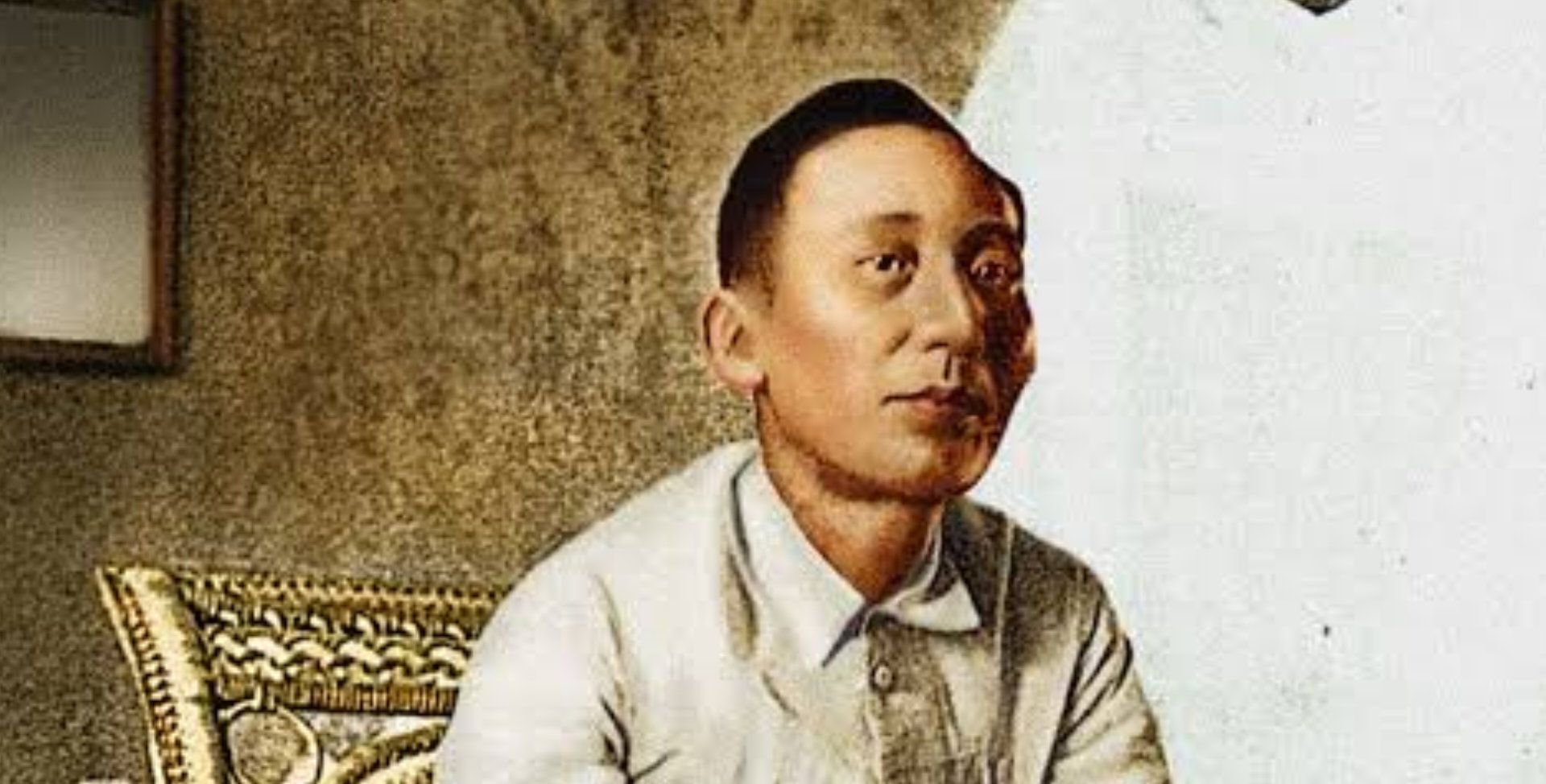
+2 more
@Koyang
Project History (July 22) THE BLOODY SHOOTING OF THEIR CHILDREN IN NORWAY `July 22, 2011` A decade ago, a heinous crime rocked Norway. On this day in 2011, past 3:20 pm, an explosion occurred in Oslo, the capital of Norway, which destroyed the headquarters of the government quarter and the Prime Minister of Norway in Oslo. The blast was so powerful that it killed eight people and injured more than 200 others. But just hours after the blast, on the island of Utoya in northern Norway, a few kilometers away from Oslo, an armed man in a police uniform stormed a youth camp organized by Norway's Labor Party, and boarded a ferry boat past 5:25 pm onboard shot the youths there on the said island. Nearly 70 youths, of which the youngest was 14, were killed in this wanton hunt. Among the youths killed on the said island was the half-brother of the Norwegian princess and several close friends of the Norwegian Prime Minister. The perpetrator of this wanton hunt was identified as Anders Behring Breivik, 32, a prominent supporter of fascist ideology and Nazism, and a racist extremist who believes the influence of Muslim immigrants in Norway should disappear. He was also the mastermind behind the bombing of a government office in Oslo. He was arrested by authorities on the island of Utøya, and in April 2012 he was indicted for his crimes. Although he admitted to the crimes committed, he denied that he had any accomplices in the blasting and killing of the youths. He was sentenced to 20 years in prison for his crimes. But in 2015, the incarcerated Breivik filed a lawsuit against the Norwegian government for human rights violations for making his treatment in prison, and in March 2016, Breivik’s appeal hearing began, which even showed his rudeness in court when giving a Nazi salute. The Oslo district court initially ruled that the Norwegian government had committed a violation of Breivik, but in 2017 Breivik's appeal was also dismissed, and the Norwegian court of appeals overturned the first verdict in Breivik's case. Breivik is still incarcerated, and his sentence will be extended in case he continues to pose a threat to Norwegian security. The so-called "July 22 attacks" have been called the bloodiest day since Nazi Germany invaded Norway during World War II. Many people around the world have strongly condemned this attack by an extremist. Breivik was also dubbed the biggest monster after Quisling for his crimes. JAPAN MAKES FINAL PAYMENT FOR ITS 800-MILLION DOLLAR DAMAGES TO THE PHILIPPINES `July 22, 1976` On this day in 1976, Japan completed the payment of war reparations to the Philippines after their disastrous occupation of our country during World War II. Japan's payment of its war reparations was part of the Reparations Agreement signed by the Philippines and Japan on May 9, 1956 which stated that Japan would pay the Philippines in damages amounting to US $ 800 million in damages for to damaged property and victims in our country during the war, for 20 years. The signing of the Reparations Agreement by the two countries was as part of the formal reconciliation and arrangement between the two countries divided by the previous war. With the effect of the San Francisco Agreement signed in 1951, the state of war between the Philippines and Japan formally ended, and as part of the reconciliation between the two countries, then -President Elpidio Quirino granted presidential pardon to Japanese prisoners who have committed crimes here in our country, including Japanese who have been sentenced to death here. However, some victims of the war, especially women who became comfort women, continue to petition for justice for what happened to them during the Japanese occupation. HERMANO PULE WAS BORN `July 22, 1815` Apolinario de la Cruz was born into a religious family. His father and mother, Pablo de la Cruz and Juana Andres, are both religious. So it is not surprising that the time came when he wanted to become a priest. Because of his intense desire to fulfill this dream, he tried to enter various religious orders Manila but none of them accepted him. He was very frustrated but it did not cause him to stop fulfilling his dream. After he joined some religious brotherhood, he founded the Confradia de San Jose. He served as the leader or brother mayor so he earned the nickname "Hermano Pule". Their organization has its own rituals, and prayers. He tried to ask for recognition from the church so that they could meet freely and spread their faith but their request was denied. The Spaniards did not allow any kind of religion other than Catholicism of those times. On November 1, 1841, Spanish soldiers attacked their camp, in which hundreds of members were killed. Hermano Pule tried to flee to Sariaya but was also captured by the Spaniards. He was hanged on November 4, 1841. References: The Associated Press (2021, July 19). Norway's July 22, 2011, terror attack: a timeline. Retrieved July 22, 2021, from https://apnews.com/article/europe-norway-oslo-anders-breivik-bd6c9d2efd6ce2148c3d85cb79d73af9 Wikipedia (n.d.). 2011 Norway attacks. Retrieved July 22, 2021, from https://en.m.wikipedia.org/wiki/2011_Norway_attacks Suliguin, G. (2018, May 22). :. Philippine News Agency. https://www.pna.gov.ph/articles/1036022 The Straits Times (2018, May 3). What do you want me to do?:. https://www.straitstimes.com/asia/se-asia/is-manila-now-making-concessions-for-tokyo-inquirer#:~:text=Japan's%20payment%20of%20war%20reparations,years%2C %20from%201956%20to%201976. & text = The%20government%20last%20year%20secured, to%20the%20Department%20of%20Finance. The Shame Project (n.d.). Today in Philippine History, July 22, 1815, Apolinario de la Cru was born in Lukban, Tayabas. Retrieved July 22, 2020, from https://kahimyang.com/kauswagan/articles/1521/today-in-philippine-history-july-22-1815-apolinario-de-la-cruz-was-born-in-lukban-tayabas

+1 more
@Koyang
Project History (July 21) SAN PEDRO CALUNGSOD WAS BORN `July 21, 1654` According to surviving records and other documents, on this day the catechist, sacristan and the second Filipino saint of the Catholic church, Pedro Calungsod, was born. He was born in 1654 in the town of Ginatilan, Cebu. There are very few records left about Pedro Calungsod's young life, but according to historical records, at the age of 14 he was one of the young native catechists and sacristans who joined the Spanish Jesuit missionaries on Isla del Ladrones or present islands of Guam and Marianas. The purpose of the missionaries there was to preach Christian doctrine and baptize the native Chamorro of the island into new faith. Pedro Calungsod was one of the young catechists who preached to indigenous children. Although many natives were persuaded to join the new religion, some doubted the purpose of the missionaries. Until a Chinese exiled to Guam Choco spread rumors among the natives that the water used by the missionaries in their infant baptism was poisonous. This convinced the indigenous Chamorro leader Mata'pang, who hated the spread of missionaries of their religion in his territory. Mata'pang became even angrier when he learned that his daughter had been baptized by Father Diego Luis de San Vitores, a Jesuit missionary. He attacked the priest, but the catechist Pedro Calungsod defended him. On April 2, 1672, Mata'pang stabbed 17-year-old Pedro Calungsod with his spear, while he was beheaded by Mata'pang's companion Hirao, also a native. They also killed Padre San Vitores, tied the two to a large rock, and then threw him into the sea. The beatification process was launched on Padre San Vitores, a few months after his death, until he was beatified in October 1985. Former Archbishop of Cebu Ricardo Cardinal Vidal proposed to start the beatification process on Pedro Calungsod, who became a martyr in the cheap age in the name of the Christian religion. On March 5, 2000, Pedro Calungsod was beatified by Pope John Paul II, and on October 21, 2013, Pope Benedict XVI ordained him as the second saint from the Philippines. A miracle from Pedro Calungsod was reported in March 2003, when with the help of the intercession of Blessed Pedro Calungsod, a woman from Leyte who had been "clinically dead" for two hours was healed. The feast of San Pedro Calungsod is designated on March 27, and he is considered by the Catholic church as the patron saint of the youth, altar servers, Overseas Filipino workers, the Cebuanos, and the Archdiocese of Cebu. PRAXEDES JULIA FERNANDEZ WAS BORN `July 21, 1871` Born July 21, 1871 in Sta. Cruz, Manila Praxedes Julia Fernandez, also known as Yeyeng. He is well known in the field of presentation. She was one of the founders of the Fersuta Company, from the name of the principal lady players Fernandez, Suzara and Tagorona. Their group presents benefit shows for the bereaved wives and children of bereaved Spanish soldiers. On September 30, 1891, the Spanish army held a gala affair in honor and gratitude to Fernandez for the charity performances he held for them. He was given a silver crown that night. He ended his performing career with a farewell presentation of the opera titled La Viuda Alegre on November 14, 1911 at the Manila Grand Opera House. She married Ricardo Penalos Pastor, a professor at the Escuela de Artes y Oficios in Iloilo, on August 18, 1892. But they were not blessed with a child. The so -called "singing sweetheart of Manila" and recognized "Queen of Philippine Drama" passed away on August 22, 1919 at the age of 48. MARGARITA MORAN CROWNED AS MISS UNIVERSE 1973 `July 21, 1973` For the second time, a Filipina was crowned on this day in 1973 as Miss Universe. The then 20-year-old candidate from our country Maria Margarita “Margie” Moran was the winner of the prestigious Miss Universe pageant, when Miss Universe 1973 was held at the Odeon of Herodes Atticus in Athens, Greece. As many as 61 candidates from around the world competed in beauty, talent and skill in answering the question, and in wearing national attire, evening attire and swimwear attire. Candidate from Spain Maria del Rocio Martin won Best in National Costume, while Amanda Jones of the United States won 1st Runner-up, Aina Walle of Norway 2nd Runner-up, María Martín 3rd Runner-up of Spain and 4th Runner-up Limor Schreibman-Sharir of Israel. Miss Universe 1973 was the first Miss Universe pageant held in Europe. Margarita Moran is currently the President of Ballet Philippines and Chairwoman of the Cultural Center of the Philippines. QUEEN REGENT MARIA CHRISTINA WAS BORN OF SPAIN `July 21, 1858` Today is the 163rd birthday of the Queen Consort and Queen Regent of the Kingdom of Spain Maria Christina Henriette Desideria Felicitas Raineria von Habsburg-Lothringen or simply Maria Christina de Habsburgo or Maria Cristina. He was born in 1858 in the province of Moravia, former territory of the Austro-Hungarian Empire, and the son of Archduke Karl Ferdinand and Archduchess Elizabeth Franziska of Austria. November 29, 1879 when she married as the second wife of King Alfonso XII of Spain, as part of the alliance between Spain and Austria. The union produced two daughters and a youngest son, but even before Maria Christina gave birth to her son Alfonso in May 1886, King Alfonso XII died in November 1885. Maria Christina was appointed Queen Regent of Spain on the day her husband died, meaning she would rule the kingdom and its colonies on behalf of her young son king Alfonso XIII. As Queen Regent of Spain it was her duty to take care of the kingdom and prepare her son the king to rule himself. She implemented reforms in the kingdom to prevent any political strife in the country, and respected the Constitution setting out her power as Queen Regent. But his regime also witnessed the outbreak of revolutions in Cuba, Puerto Rico in 1895 and in the Philippines in 1896, the defeat and loss of the Spanish colonies in the Spanish-American War in December 1898. When her son Alfonso XIII married and ruled the kingdom, all ceremonial duties of the now mother Queen Maria Christina became ceremonial. He died on February 6, 1929 at the palace of Madrid, Spain at the age of 70 due to heart disease. The death of his mother is said to have been a major blow to his son Alfonso XIII, causing the monarchy to collapse two years later. ACCOMPLICES SHOT IN FRONT OF FIRING SQUAD IN ATTEMPT TO KILL ADOLF HITLER `July 21, 1944` "Long live Sacred Germany!" This was the cry of 37-year-old Colonel Claus Schenk Count von Stauffenberg before firing in front of the firing squad at midnight on this day in 1944. German reserve army troops arrested Nazi government officials and occupied the government office, arrived at Benderblock, the office of the German high command in Berlin, carrying the order to arrest alive those involved in the attempted coup and assassination of Adolf Hitler. Colonel von Stauffenberg, his adjutant Lt. surrendered to the Benderblock authorities. Werner von Haeften, Colonel Albrecht Mertz von Quirnheim, General Ludwig Beck and Friedrich Olbricht after the brief shootout, and in front of the impromptu court martial led by General Friedrich Fromm, one of the silent accomplices in the attempt to overthrow the Hitler regime, and immediately Colonel von Stauffenberg was sentenced to death, despite an order to arrest them alive. General Beck committed suicide after the verdict was heard, and after that, they were taken out of the courtyard of Benderblock lit only by the headlight of the army truck, and they were shot one by one in front of the firing squad. Claus von Stauffenberg came from a blue -blooded family, and he joined the German army before World War II. He became a loyal soldier of Hitler, serving in the Nazi Germany campaign in Poland, France and northern Africa. But because he was also a devout Catholic, von Stauffenberg rejected its harsh policies against Jews, and the colonel lost even more confidence when he witnessed the brutality of his fellow soldiers against Jews and civilians in Russia. During his campaign in Tunisia in Africa they were ambushed by the British, and he had his arm amputated, his left eye blinded and even two fingers amputated. After recovering, he was assigned to the army general office, where he met General Olbricht, the author of Operation Valkyrie that would serve as an emergency contingency plan in case there was a coup against the government. General Olbricht was one of the military officers, including General Beck, Field Marshal Erwin von Witzleben, General Henning von Treskow, Colonel Mertz von Quirnheim, who conspired to oust Hitler, and planned to use the Valkyrie to sabotage the government. Nazis and form a new government to negotiate with the Allies. The accomplices had previously persuaded Colonel von Stauffenberg to join the destabilization against Hitler, and was later convinced as well. For the plan to succeed, Hitler had to die as well as his possible successors such as Hermann Goering and Heinrich Himmler, government officials who would not join the new government, and buildings and offices occupied. And because Colonel von Stauffenberg regularly attended military meetings with Hitler, he himself volunteered to kill Hitler. July 20, 1944 when Colonel von Stauffenberg went with his adjutant to Wolfsschanze, headquarters of the German high command on the Eastern Front, where Adolf Hitler and some of his generals met in a conference room instead of a concrete bunker, carrying bombs hidden inside the attaché case, After hiding the attaché case with only explosives under the table near Hitler the colonel simply left Wolfsschanze with his adjutant, when the explosion occurred. Colonel von Stauffenberg quickly went to Berlin, and carried out Operation Valkyrie. The situation was reversed when Hitler was probably still alive, although he received only a few scars. He angrily ordered the arrest of the mastermind of the attempted murder of him. General Fromm immediately ordered the execution of Colonel von Stauffenberg, to cover up his involvement in destabilization. Colonel von Stauffenberg's brother, along with others, were also hanged for involvement in destabilization in August 1944. The last attempt to overthrow the Hitler regime was dubbed the July Plot, and Colonel von Stauffenberg was considered heroes for their sacrifice to overthrow the oppressive and rotten Nazi regime. References: Everyday History (2019, July 21). # July 21 | On this day in 1654, Filipino Catholic martyr and missionary catechist St. Pedro Calungsod was born in Ginatilan, Cebu. [Status update]. Facebook. https://www.facebook.com/1427143654226060/posts/2308516122755471/ Wikipedia (n.d.). Pedro Calungsod. Retrieved from https://en.m.wikipedia.org/wiki/Pedro_Calungsod The Shame Project (n.d.). Today in Philippine history, July 21, 1871, Praxedes Julia Fernandez was born in Sta. Cruz, Manila. Retrieved July 21, 2020, from https://kahimyang.com/kauswagan/articles/1578/today-in-philippine-history-july-21-1871-praxedes-julia-fernandez-was-born-in-sta-cruz-manila Wikipedia (n.d.). Margie Moran. Retrieved from https://en.m.wikipedia.org/wiki/Margie_Moran Wikipedia (n.d.). Miss Universe 1973. Retrieved from https://en.m.wikipedia.org/wiki/Miss_Universe_1973 Wikipedia (n.d.). Maria Christina of Austria. Retrieved July 21, 2021, from https://en.m.wikipedia.org/wiki/Maria_Christina_of_Austria Wikipedia (n.d.). Claus Con Stauffenberg. Retrieved from https://en.m.wikipedia.org/wiki/Claus_von_Stauffenberg Wikipedia (n.d.). July 20 Plot Retrieved from https://en.m.wikipedia.org/wiki/20_July_plot https://www.google.com/search?q=operation+valkyrie&oq=opera&aqs=chrome.1.69i57j69i59j35i39j46i273j0i67.1334j0j9&client=ms-android-vivo&sourceid=chrome-mobile&ie=UTF-8

+3 more
@Koyang
Hello po, I wonder why my article is still not accepted, It was posted yesterday at 8:00 PM (+08 GMT), Please comment po any moderator if ever na may na violate po ako na rules thanks!
@Koyang
Project History (July 20) EUGENIO LOPEZ, SR. WAS BORN `July 20, 1901` On July 20, 1901 the broadcasting and publishing executive, Eugenio "Eñing" Lopez, Sr. was born in Jaro, Iloilo. He is the son of former Iloilo governor Benito Villanueva Lopez, and Presentacion Javelona Hofileña. He had four children (Eugenio, Jr., Oscar, Manuel, and Presentacion) with his wife Pacita Moreno Lopez. From a wealthy family, Eugenio, Sr., known as “Eñing” ventured out and built a business in the fields of transportation, communications, and commerce. After World War II, he bought the newspaper The Manila Chronicle, and he founded the TV network Chronicle Broadcasting Network (CBN). On February 24, 1957, Eñing acquired ownership of the Alto Broadcasting System (ABS). This paved the way for the establishment of ABS-CBN which is considered the largest broadcasting company in the Philippines. Eugenio, Sr. passed away at the age of 74. on July 7, 1975 at French Hospital (currently Kaiser Permanente French Campus) in San Francisco, California due to cancer. GREGOR MENDEL WAS BORN `July 20, 1822` Today is the 199th birthday of the Augustinian priest and considered the “Father of Genetics” Gregor Johann Mendel or simply Gregor Mendel. He was born in 1822 as Johann Mendel in a small town formerly a province of Moravia-Silesia of the Austro-Hungarian Empire that is now part of the Czech Republic, and from a family of German speakers. He was one of the children of Anton and Rosine Mendel, and at the age of 11 he became a scholar of a secondary school and graduated in 1840 despite the hardships of his family's life. He graduated from the Philosophy course in 1843 at the University of Olmutz, despite suffering from depression and repeated dropouts. Despite his father's opposition to managing his family's farm, he entered the monastery at St. Thomas Monastery in Brno, Switzerland, where he became aware of scientific activities and experiments in the monastery. After failing to obtain his teaching license, he entered the University of Vienna to study mathematics, physics and botany. While given the opportunity to teach in a secondary school in Austria, it was here that his experiments that would make him famous began. For nearly eight years, he studied the transmission of hereditary traits using cross-fertilization of peas with different characteristics, as such a plant is easier to grow and care for. He proposed two scientific laws after this experiment; the Law of Segregation where dominant and recessive traits constitute hereditary traits, and the Law of Independent Assortment where traits are freely passed from parent to his child. Mendel published the results of his experimentation in 1865, but did not immediately pay attention to his studies. It was only then that some researchers paid attention to Mendel's studies and were given the appreciation of botanists and biologists, a few years after Mendel's death on January 6, 1884. THE LAST ATTEMPT TO KILL ADOLF HITLER `July 20, 1944` During Adolf Hitler's 12 -year regime, there were as many as 15 attempts on his life, but he did not expect his own army to attempt his life. At noon on this day in 1944, a bomb exploded inside the conference room at Wolfsschanze, a secret headquarters of Nazi Germany on the Eastern Front, in Rastenburg, East Prussia (now Ketrzyn, Poland). At the time, Adolf Hitler was there with several generals and military officials for a military briefing, after moving the assembly from a closed concrete bunker, not far from the conference room. The interior of the room was severely destroyed, and three of his generals were immediately killed, and several generals were wounded. The perpetrator of the blast was 37-year-old Colonel Claus Schenk Count von Stauffenberg, who smuggled a bomb into an attaché case and hid it under a table in the conference room. He said goodbye leaving the room, and when he saw the explosion itself he hurriedly left Wolfsschanze with his adjutant Lt. Werner von Haeften, to Berlin, Germany. The bombing was just part of a larger plan to oust Adolf Hitler and some high -ranking Nazi Germany officials, to seize the government and the military, to form a new government that would negotiate with Allied forces to save Germany from destruction - - Operation Valkyrie. Operation Valkyrie was first developed as an emergency contingency plan in case of a coup against the government, but conspiracy leaders General Ludwig Beck, Henning von Treskow, Friedrich Olbricht and even Colonel Claus von Stauffenberg used it for the coup plan. in the Hitler regime. If the plan succeeds, General Beck will be appointed President of Germany, Carl Goerdeler will be the Chancellor and Field Marshal Erwin von Witzleben will serve as the head of the armed forces, who will negotiate peace with the Allies. When Colonel von Stauffenberg returned to Berlin, he announced Hitler's death, and immediately ordered the execution of the Valkyrie. Using the reserve army, they arrested senior SS officers, Gauleiters and others, unknowingly helping those planning the coup. The situation was reversed when Hitler was found alive, having received only a few scars from the explosion. The soldiers who arrested the officers came to arrest Stauffenberg and other accomplices. General Friedrich Fromm, chief of the reserve army and a supporter of the attempt to overthrow Hitler, turned around and implicated Colonel von Stauffenberg to save himself. In a brief court martial, he immediately sentenced to death General Olbricht, Colonel Albrecht Mertz von Quirnheim who had instructed Stauffenberg in bomb planting, Colonel von Stauffenberg and his adjutant Lt. von Haeften at Benderblock in Berlin, Germany. And at midnight the next day, July 21, in front of the firing squad outside Benderblock Colonel von Stauffenberg, General Olbricht, and Colonel von Quiernheim were shot. Not only did this end Hitler's crackdown on those who conspired to overthrow him, as thousands more were arrested for their involvement, which in the following months were indicted and immediately sentenced to death. Many other accomplices committed suicide instead of surrendering. And because the instigators of the overthrow and assassination attempt were from the military, Hitler lost even more confidence in the military. General Fromm, who overthrew his comrades, was one of the last to be hanged in March 1945. THE FIRST HUMAN LAND ON THE MOON `July 20, 1969` Exactly 52 years ago, mankind achieved one of perhaps its most important achievements in the field of science and technology. For the first time, people stepped on the Earth's surface on this day, in 1969. The plan to send astronauts to the moon was conceived by former US President John F. Kennedy, in May 1961. After many years of preparation and planning for this mission, the Kennedy Space Center in Florida, USA, launched the Saturn V rocket, on which it was carrying the lunar module Apollo 11, on July 16, 1969. And through live broadcasts on television and radio, many people around the world witnessed the landing of three American astronauts of National Aeronautics and Space Administration (NASA) Neil Armstrong, Edwin Aldrin, Jr., and Michael Collins on the moon, aboard the lunar module Apollo 11, or the "Eagle", west of the Sea of Tranquility. The words spoken by Neil Armstrong as he descended from Apollo 11, "That's one small step for man, one giant leap for mankind", also resonated with Armstrong's first descent from the lunar module, past 10:56 p.m. night time in America. The purpose of this mission was to study the land of the moon from the rocks available there, and to prove that man can live on the moon. They also collected rock samples from the Moon's terrain, one of which is about two billion years old and after sleeping inside their lunar module Armstrong left the Moon, past one o'clock in the morning. in America. They first left a plaque that read, "Here men from planet Earth first set foot on the moon — July 1969 A.D. — We came in peace for all mankind". Armstrong returned to earth successfully and safely two days later. While there are still some skeptics despite the varied evidence to testify, if this extraordinary mission actually happened on the Moon, it is undoubtedly the culmination of the Space Age, or the era of human space exploration, at the height of competition between America and the Soviet Union during the Cold War. References: ABS-CBN Corporate (n.d.). Our company. ABS-CBN Corporation. Retrieved July 20, 2021, from https://www.abs-cbn.com/who-we-are/our-story Everyday History (2019, July 20). #July20 | On this day in 1901, Filipino entrepreneur and media magnate Eugenio Lopez, Sr. was born in Jaro, Iloilo. [Post]. Facebook. https://www.facebook.com/1427143654226060/posts/2308515226088894/ The Silence Project (n.d.). Today in Philippine history, July 7, 1975, Eugenio Lopez Sr, patriarch of the Lopez clan, died of cancer in San Francisco. The Kahimyang Project. Retrieved July 20, 2021, from https://kahimyang.com/kauswagan/articles/2463/today-in-philippine-history-july-7-1975-eugenio-lopez-sr-patriarch-of-the-lopez-clan -died-of-cancer-in-san-francisco Biography.com Editors (2021, May 21). Gregor Mendel. Retrieved July 20, 2021, https://www.biography.com/.amp/scientist/gregor-mendel History.com Editors (2021, Feb. 4). July plot. History.com. Retrieved July 20, 2021. https://www.google.com/amp/s/www.history.com/.amp/topics/world-war-ii/july-plot Wikipedia (n.d.). 20 July plot. Retrieved July 20, 2021. https://en.m.wikipedia.org/wiki/20_July_plot History.com Editors (2021, May 14). 1969 moon landing. Retrieved July 20, 2021, https://www.history.com/.amp/topics/space-exploration/moon-landing-1969

+2 more
@Koyang
Hello, I'm Koyang, I'll be leading the Project History starting today, Project History is about History itself, History about Events, People, and Countries especially the Philippines. I'll start my introduction here, I'm a history teacher, a theorist, and a people sided person, I will not reveal any of my identity, I will just stick of what my purpose here. My purpose is to post an interesting History article (Project History), I might also post a Commentary of what is happening in my country right now. So no further introduction, if you want to follow my journey here, the subscribe button is easy to click, it will send you a notification every time I post, It will also help me grow my community, Thank you!