Fantastic Feathers: The marvel of design
In YOUR garden, a ruby-throated hummingbird hovers in all its glory to extract nectar from a beautiful flower. A peacock unfurls in the zoo, its splendid tail feathers in a dazzling play of colors. The splendor of these birds depends, of course, on the feathers.
For the human wardrobe, the tailor, the seamstress and the cutter choose fabrics of different types and colors. What an interesting amount of clothing they produce with their vines of wool, cotton, silk and synthetics! However, bird clothing is made from just one material - keratin. This resistant core protein is the substance of the nails as well as the hooves and claws of animals. With him, the great bird wardrobe designer has far exceeded the imagination of human stylists in terms of beauty, variety and utility.
**Tender but still strong**
Just as tubing has advantages over a solid rod, the hollow-based rod is similar to bone in strength, but only a fraction of the weight of solid bone. The thickest part of the feather is the vertical part that anchors the feather in a bird's hair follicle.
The spider then becomes the axis from which bifurcate parallel shards on each side. Perpendicular to each column are small protrusions called rails where small hooks act as hinges between adjacent tenons, creating a strong but soft fabric that can be bent freely or repeatedly without breaking.
With the bird's feathers unlocked, prepare them until all the feathers are properly closed. With all his sturdy feathers, he is completely protected from the cold and wears a waterproof headgear and a raincoat. Ducks and other sea birds have been observed to have their feathers distracting the birds' blows.
**Which way**
The feather cocoon forms in a small follicle in the skin of the bird. Wonderful and complicated changes take place during development. Unique spring segments are created in a cape that are tightly wrapped around an axis. The packaging is so ingenious that when you see a pen that has already grown, you might wonder: how does it fit on something that fits in such a small space?
When development is complete, the blood vessels feeding the growing cells dry out, the fur breaks, the bird quickly removes debris and prepares its new feather in great shape. The feather is basically dead tissue that no longer needs nourishment from the bird's bloodstream, a real boon in saving the bird's circulatory system.
**Different Varieties**
Feathers come in different shapes, sizes, colors, and variations. Most are for functional purposes, while others are for display purposes only. Birds have feathers, each in proportion to their needs, larger birds without excess, while dwarf birds are absent. In the royal edition, it was found that one of the larger birds, the whistling swan, had 25,216 feathers, while the small ruby-throated hummingbird, adorned with all its adornments, had 940!
Functionals include soft coats carefully designed to provide "thermal" underwear for our bird lovers. Under a magnifying glass, you can see chin guards and spikes that are long, thin and very flexible, but without hooks. The very light, deformed mass of soft, feathery twigs insulates the bird's body and keeps it warm in a cool, summery climate.
Some birds have more feathers than others. Ederanden is one of them. In fact, she uses the excess silk as insulation to cover a nest with the "baby blankets" for her fluffy ducklings. The Antarctic emperor penguin also wears a soft garment under its wind and waterproof contour feathers. This allows it to stand still for about three months without food while incubating a free-standing egg that can withstand winds of 80 km / h and temperatures of -50 ° C!
Speaking of outline feathers: these are designed to allow the bird to fly more efficiently and are arranged in a species-specific pattern. The central shoulder is slightly curved to adapt to body surfaces and always points from the beak to the tail. At the base, a soft part allows to modestly cover the "underwear" near the skin of the bird of the next row of feathers.
Have you ever seen a hen puffing up feathers to cover eggs or newborn chickens? The contour springs attach to the skin's muscles and fibers that lift them in this way. In addition, the bird can chemically clean or arrange its plumage as needed, or capture more air for insulation or air conditioning.
Perhaps even more fascinating are the flying feathers, the "propellers" that lift and move the bird in the air. Only one of them can hold up to a million intelligently designed and assembled parts. At the end of each wing there are 10 or more primary springs which are the main propulsion unit for the whole wing. Then there are 17 secondary springs which, like the primary springs, have an extremely strong spring and a step stem attached to the bone structure. They can all rotate on their own axis, so that they can overlap properly during the downward movement and open like a curtain during the upward movement. Incredibly light tertiary springs gently cover the rest of the wing structure, resulting in an aerodynamic profile of unmatched quality.
Other air springs belong to the tail, where strong muscles allow them to be pressed, folded out, folded or tilted at will. Therefore, these 10 or more springs have the same function as the rudder, stabilizers, flaps and cranes of an aircraft during take-off and flight and as a pneumatic brake during landing.
**Coloring**
Much less obvious is the representation of the colors that characterize the beauty of ornithology. Blue, green, yellow and red go well with Painted Bunting, while the male cardinal dares to appear in public with a light red coat from the top of the top to the tip of the tail, only his black face gives off contrast.
Many bird feathers differ in color depending on the habitat. The well-dressed cartridge changes from brown in summer to almost pure white in winter, a perfect camouflage for Arctic areas. In the lush green of the jungle are bright green rage. In desert regions, the colors of the sand they use make the birds go unnoticed by predators.
The color of the feathers is the result of a combination of structure, pigmentation and reflected rays. White feathers have a microscopic structure that fully reflects white light. To create shades of blue, small particles in the composition of the tip bend, scatter and reflect only rays of blue light. Green tones derive from the combination of a blue structure with a yellow pigment, while red pigmented feathers absorb the blue-green part of white light and therefore reflect only the red wavelengths. It is this wonderful feather structure that allows our eyes to have fun with all the colorful feathers in the bird world.
**Specialty**
There are many features in the feather world. The tough feathers in a woodpecker's tail, like a line stop, can support it when it climbs a tree. The parrot grows on its legs with very long and distinctive feathers, which act as "snowshoes" in winter. Infants of the African sand dune receive water every day from the absorbent feathers in the breasts of the male bird. Some torches and cartridges penetrate the air through special "musical" feathers on their wings to create a singing sound. Geese use the powerful feathers on their wings as weapons of war. We must not forget the gentle knights of the bird world who make their women special feathers. Among them are great crested grebe, heron with heron, unforgettable birds of paradise and Australian lyre.
In fact, feathers are a design marvel. Fascinating miracles are truly these technical masterpieces! All credit to the great creator and designer of this beauty and utility.
African forest giants
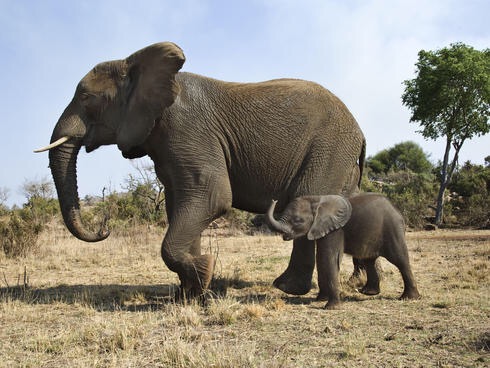
Like a mischievous child, the elephant calf wandered away from the herd and began to walk along the shore of an African canal. The independent calf ignored the warning horn of a nearby adult and suddenly fell into deep water! But four rescued elephant cows came to the rescue. Two of them climbed up and managed to lift the boy in panic with their fangs until two others parked on the river bank managed to save him.
When her baby was safe, the mother-in-law carefully examined the little culprit, who moaned with his luggage compartment and blew water and found that there was no damage. He also used it to give a strong dose of discipline. If a human mother had witnessed the incident, she would probably have felt a connection to this angry pachyderm grandmother, who then drove the villains out of the water and expressed her mother's concerns.
As a human child, the elephant learns from these experiences and training instructions. In fact, a young elephant will need the guidance of an adult for at least ten years, which is very unusual in the animal kingdom. This can be explained by the fact that an elephant, like a human child, is born with its brain only about a third as large as an adult. Therefore, much of its behavior develops as it grows, and not primarily instinctively, as is the case with most animals.
The parents of a young elephant may have gone on a "dating" and "honeymoon" journey that lasted several months. When the woman finally gets pregnant, she loses interest in her partner. Later, she seeks company with another cow who takes her to an isolated place and wanders away when the baby is born. The pregnancy lasted for up to twenty-two months. And no wonder! The future baby is 1 meter long and weighs about 90 kilos!
**The incredible trunk**
Much of the calf's first year takes him to learn to use his most valuable asset, the trunk. The sight of a clumsy child stumbling, stomping or twisting and twisting his ugly nose can create some fun moments.
An elephant calf does not suck on the mother's breasts with the trunk but instead allows itself to be wrapped around the head and sucks it with its mouth. But in three or four years, when the mother can no longer bear the pounding of her child's sprouts, she will forcibly wean the thirsty child. And a comedy can reappear when the little lawyer in obvious desperation puts his chest in his mouth and acts like a child sucking his thumb. As the little one grows, his suitcase can even fit into an adult's mouth to examine the chewed food there.
While an adult's upper body can weigh about 135 kg, the thousands of muscles throughout its 2 meter length and the flexible "fingers" at the end make it really versatile. It has a very sensitive nose and due to the animal's very limited hearing and vision, the trunk moves constantly, sniffs the environment like a sensitive antenna and registers shape, structure and temperature. An elongated trunk is also a typical greeting among elephants in what appears to be a measured movement of affection. When people deserve their trust, an extended tribe is accepted as a sign of mutual trust.
This combination of nose and upper lip is not only used for sensitive tasks. It is also a powerful tool that collects loose sand from the teeth and bones when the elephant digs for water, tears grass and loses root remains, reaches trees to harvest fruit or picks, sprays or sprays on the body. . uses dirt to cool and uses fangs to lift objects weighing up to a ton. It is also used as a snorkel when the elephant is paddling in deep water.
With its tubular luggage compartment, an elephant can draw up to 6 liters of water to evaporate or drink. To drink, simply sprinkle some water in your mouth so you can hear it bubbling in your stomach. Thus, it is possible to consume up to 190 liters of water or more per day, along with 225-270 kilos of food, which the multifunction box also puts in the mouth. by its owner. Therefore, if the strain is damaged as a poaching trap, the animal will have a real survival problem. Some disabled elephants ate grass on their knees.
**Huge teeth**
Chewing on those huge amounts of food requires something unusual in your teeth. Interestingly, only one tooth is used on each side of each jaw, a total of four at a time. What kind of teeth are they! They can weigh 8 or 9 pounds (4 pounds) each and be at least 30 inches long. In addition to the first baby teeth, six sets of these giant molars have been used throughout their lives.
The big mills move like a conveyor belt, the new tooth pushes back used newspaper. The last group arrives when the elephants are in their 40s. When these eventually disappear, the large creature loses the ability to chew and eventually dies from some form of malnutrition at the age of sixty or seventy.
However, elephants are best known for their other, much more visible “teeth”. You could say that they have the most extreme cases of protruding teeth in the world, because their large teeth are actually the front teeth. They are the longest and heaviest teeth of any living animal. Although they continue to grow throughout the life of the elephant, it is estimated that its length can reach up to 5 meters in the female and up to 6 meters in the male.
But these protruding "teeth" take a lot of effort to dig the ground for salt or food and water, to lift heavy weights or to fight for a good cow. A tooth consistently wears the most wear and may even be shorter due to chips and fractures. We can therefore imagine a left-handed or right-handed elephant which is "hand".
When he died in 1974 at the age of 55, Ahmed, the largest known male elephant in Kenya, was grazing 148 kg (67 kg) each. Ahmed's giant front teeth are worth up to $ 10,000 in the ivory market. Hence, it can be easily understood as it is protected by a special decree of the President of Kenya. Your prize was on your head!
**Growing**
As they age, male elephants don't become fearless protectors of the herd, as you might like to believe. Instead, young bulls usually stay on their own until they easily show signs that they are asserting their "manhood." When this happens, usually between the ages of ten and thirteen, the females in the herd respond by forcing the advancement of the juveniles. Oxen are born of a somewhat unique type, although they can be divided into smaller herds of bulls. Spending time with cows only happens when they have "passionate" intentions with which they are ready to mate.
As you may have guessed, the main herds are largely matriarchal society, usually ruled by a cow related to all other herd members such as mother, sister, or aunt. The strong bond between the cows strengthens the herds and allows the calves to survive.
When an African elephant reaches full growth, it is truly impressive, it is the largest living land animal in the world. African bulls are on average over 3.5 meters tall at the withers and weigh around seven tons. However, an African bull killed in 1955 was over three meters tall and reportedly weighed 12 tonnes - a real giant!
**The death of the giants**
Are there really so-called “elephant cemeteries”? Well, it seems the elephants are interested in the legs and grass of a dead friend. To test this strange behavior, the bodies were placed next to a group of surfers. They sniffed the animals, approached with diligent enthusiasm, and carefully examined the remains with their lines.
Some observers have even noticed the elephants' attempts to clear the grass, and others have reported that they actually carry their legs up to a mile from the carcass. However, no further confirmation has been given to the "elephant cemeteries" where old animals die in secret. In fact, the above seems to suggest the opposite, an expansion of bones and herbs rather than a collection of bones and herbs in one place.
In a sad case, a newborn calf died some time ago. A ranger saw his mother carry the dead baby on the pond for about three days, with the logs placed softly to hold it in place. Later, the mother was seen alone next to a tree without eating and attacking anyone who came close. When he finally left, after a few days, the keeper discovered that the cow had dug a small hole under the tree and buried the small body there.
The intelligence of these wonderful creatures is considered a factor in the current threats to their existence. Elephants learn that African national parks offer refuge from the extensive slaughter caused by the poisoned weapons and arrows of illegal ivory hunters, farmers and ranchers who occupy much of the country's elephants. The result of this artificial turn in nature is that elephants do not travel hundreds of kilometers but instead migrate to shelters in the park. This is usually followed by an upgrade where trees are cut down and these areas are turned into open pasture that is unsuitable for elephants.
The Appeal of Honesty
SIMPLE and sincere honesty brings attraction. The power of personal development seems to be with you, even if the person you are in is not well educated or financially good.
This is illustrated by what happened a few years ago. A well-trained doctor in the United States set an example of honesty for his children: a taxi driver! The doctor read that the taxi driver returned the owner two bags of jewelry that had been left in his cabin. Then he wrote to the taxi driver's children: “I have three children. Hope you are so proud of me in my business. ""
This honesty is very good and commendable. On the other hand, self-respecting people are quick to condemn obvious violations of honesty. They hate theft and find nothing attractive in the practice.
When interviewed they probably can't say exactly why theft doesn't appeal to them, it just seems wrong. But they also know that theft, shoplifting, tax evasion, etc. cost "honest" citizens billions of dollars each year in police protection plus taxes on goods and services. Dishonesty creates a climate of fear that no one can trust. Therefore, it is understandable that the apparent dishonesty does not attract decent people.
But that's all there is to say in terms of honesty: that one should not take personal property from third parties without their permission, that it is wrong to deceive the government, and that does anyone have to return the lost property to the owner? Hardly. Much more is involved.

The World’s Largest Living Things
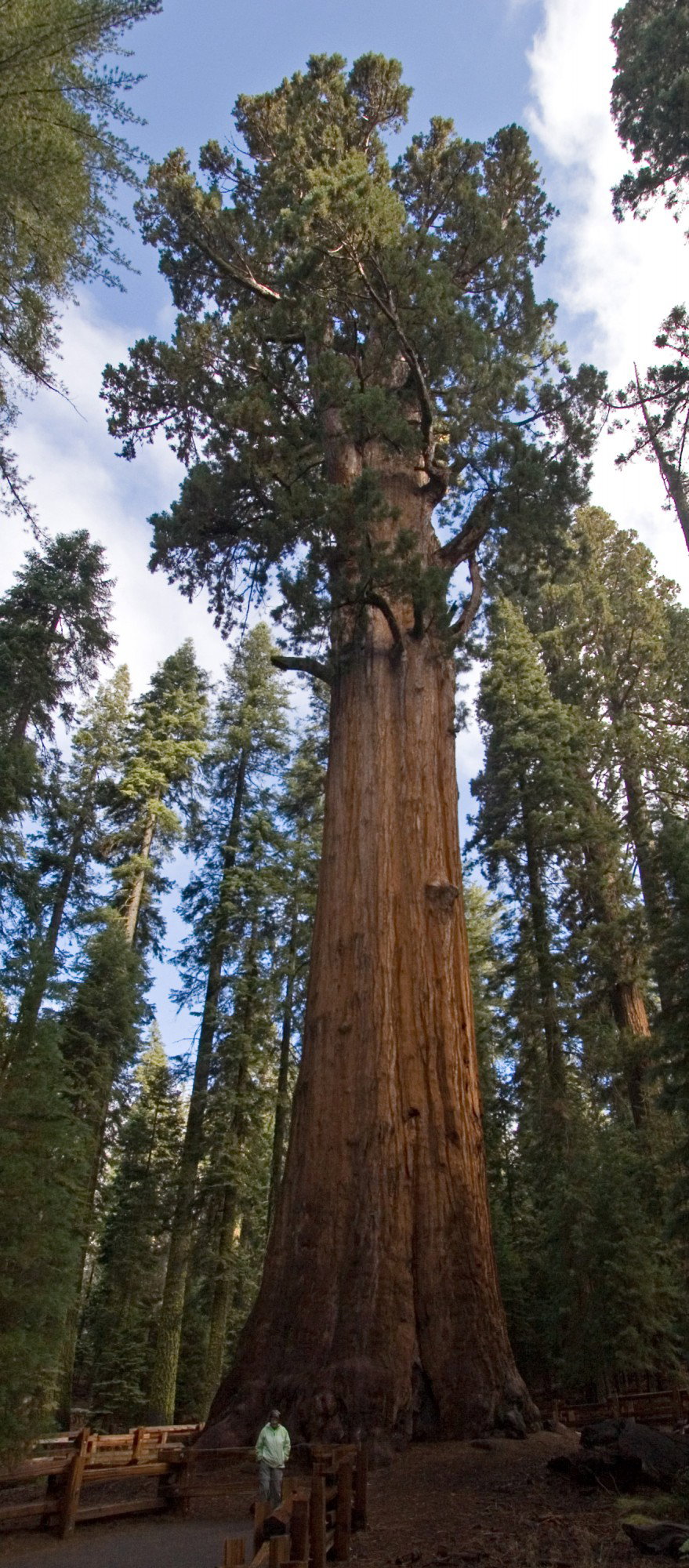
What appeared to be "crazy stories" once came from the American Old West. The men spoke of trees over a hundred meters tall with trunks thirty meters high. Nonsense, people thought; "Who could believe such a thing?"
But the trees were there. Nothing else in the world has reached its enormous size and few things have lived longer. How come these giants got so big and survived so long? You may be interested in the answers, as these amazing creation examples are unusual in more ways than most people realize.
These trees, called the Big Tree, Sierra Redwood, Giant Sequoia, or Sequoiadendron giganteum, govern only a limited area about 260 miles long and generally between 4,000 feet and 8,500 feet on the west side of a single mountain range - the Sierra Nevada of California.
They are generally found in forests that can contain six to several thousand trees. There are many forests in the country that are still accessible only to hikers, but some of them are easily accessible by trails that lead to California's fertile Central Valley.
The long, winding roads to Big Tree Country cut through large pine forests. But suddenly you feel like something bigger. You have your first vision of a giant sequoia.
***Tremendous Size***
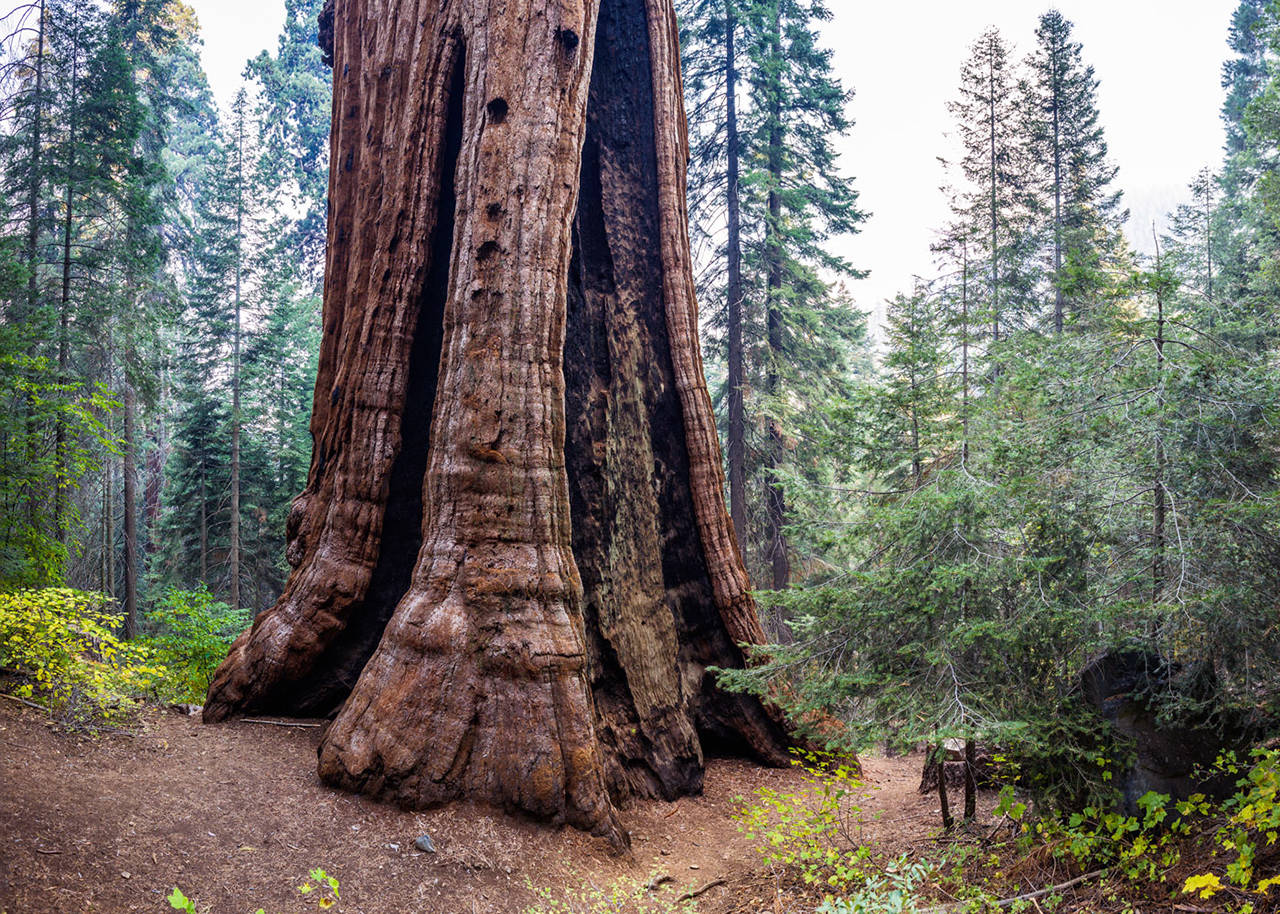
At first you don't realize the size of the redwood because the surrounding trees are so tall. Only when you stand at the base of a great tree and look up, or when you walk around it and count its steps, your incredible majesty begins to emerge in you.
Imagine a tree as tall as a 25-story building to illustrate the size of these trees. Imagine a single branch that is over six feet thick and imagine that branch so high on the tree trunk that you can place a twelve-story building on it. Imagine a tree with a trunk thirty feet in diameter. Cutting a city street and putting it aside would make it to the top of the third floor windows!
The largest of these trees contains more wood than is used to build 45-room houses, although its wood is generally not used in construction.
The General Sherman tree in Sequoia National Park is considered the largest living thing in the world. It is 272.4 feet tall and approximately 101.6 feet tall. It's a long way from the tallest tree in the world, but its massive trunk shrinks very little and contains an incredible amount of wood. Recent studies suggest that it may also be the fastest growing thing in the world, not in height, but in mass.
**The birth of a great tree**
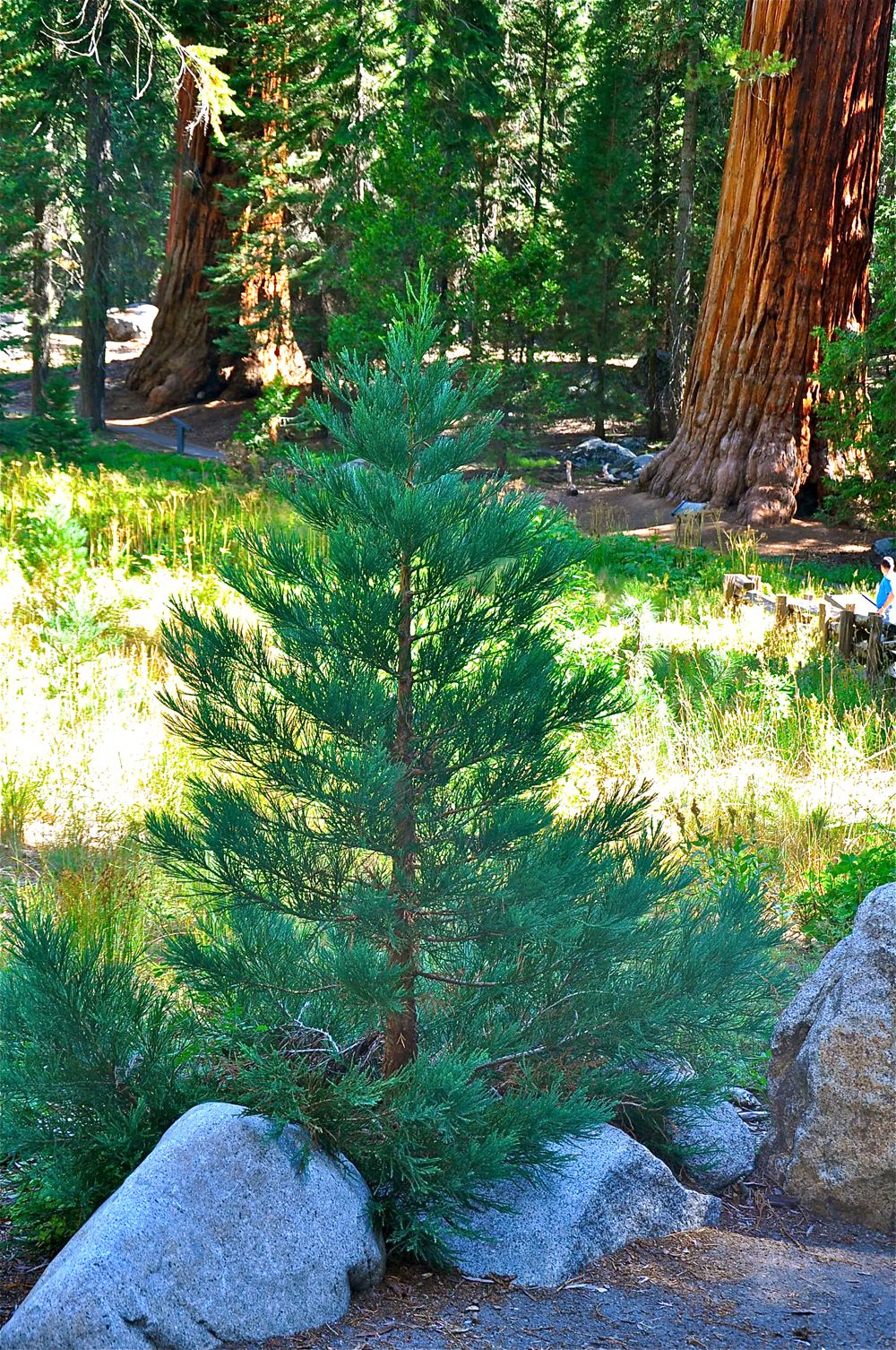
The birth of one of these mighty trees is a relatively rare event. The largest living things in the world grow from a nucleus of seeds as small as the tip of a pin. It takes 90,000 of these seeds to produce one pound. They come at 5600 an ounce!
A single redwood produces millions of these tiny seeds, but only a few germinate. Fewer still grow into large trees. It has already been said: "It is not uncommon to see trees that have been planted year after year for a thousand years or more, but do not show reproduction from below." - Big Trees, Walter Fry and John R. White, 59.
The little redwood seed requires exposed mineral soil. It only finds it after a disturbance removes the foliage and branches that normally litter the forest floor. A fire caused by lightning can burn this debris. Or an old tree can topple over and expose the soil at the root.
Therefore, a seed can float to be easily buried. When the conditions are right, it swells and a small root grows. A shy stick rises towards the light. Still, its chances of survival are not great. A bird can see the seed coat that is still attached to the bud. Or a little ant can cut it up and take it home, to what could become one of the largest living things in the world!
But when childhood ends, Sequoia develops incredible power. At the end of the 1st century it was almost two meters in diameter and 45 meters high. It can survive serious physical damage.
Like apples of Gold
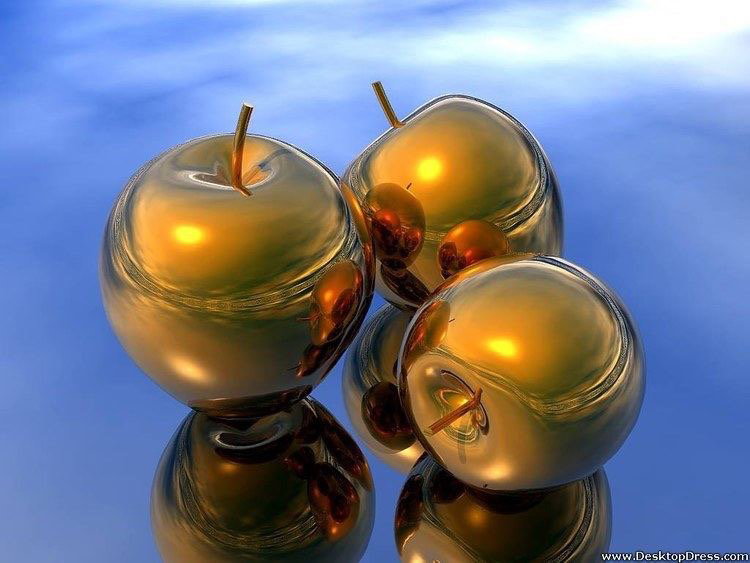
"Like apples of gold set in a silver filigree is a word spoken during the season." That is what the wise King Solomon said, and few would deny the correctness of this statement with him.
The right word spoken at the right time is a work of art as a beautiful silver and gold ornament. But few people realize how important it is to get a good expression and how to choose the words that will have the biggest impact on your audience.
First, we can vary the structure in which we enter our information. We could write a documentary based on simple facts to speak for ourselves. Or we can present our ideas in the form of a dialogue, as Plato or Aristophanes did, where each person has different views. Or we can write a comedy or a story and in fact the different characters show what we think about certain situations. Sometimes a choir on stage can comment on the whole plot to clarify the point, as in the case of Greek drama. Sometimes it is even more effective to let the action speak for itself. Some excellent works were done almost entirely in verse, such as the book of Job.
Second, the words we choose affect our audience. All critics agree that we should be simple and short, but varied. Aristotle judged purity and clarity to be very high, and Horace asked the writer to start tossing the jars of paint and words one foot long. By that I mean we should not be too floral or use long, erudite words that no one understands.
Even if we want to decorate what we say, there is absolutely nothing that can beat the simple and direct style. Too many words, too many words, can even confuse our audience and prevent them from reading. Take the example of John's biography of Christ. He is a model of simplicity, with John's style and vocabulary characterizing him as ordinary and illiterate, but his gospel is considered the most gripping of the four.
One of the first things that helps keep it simple is brevity, but being short is much harder than you might think. Blaise Pascal, the French philosopher, wrote to a friend: “I wrote this letter more than usual because I do not have time to shorten it. And poor Horace said with a little sadness that it was incomprehensible when he tried to be brief!
However, he was full of brilliant ideas on how to achieve it. First we need to eliminate unnecessary words and repetitive phrases - get rid of the fluff, so to speak. The information must be complete, but also compact. Clarity comes from cutting the idea to the bone and marking it in the same way that a person on stage is more likely to get attention from a group.
This simplicity and brevity that great writers defend does not mean that we cannot be varied. There are no interesting words or expressions. For example, we have many fascinating examples of different styles in the Bible and we would do well to imitate some of them.
There is the poetic diction of the Psalm; Habacuc dramatic style; the living images of Nahum talking about the flame of the sword and the glow of the spear; the epigrammatic style of the words; concrete and practical language in Jonah (certainly not to embellish this story!); or the daily discussion of the parables of Christ. To expose the lie, we could use an ironic style, as the apostle Paul did in his letter to the Corinthians, and subtly show his ingratitude and list his "super-fine apostles."
Our motivation is obviously important. We may wonder if our words will affect our readers, their outlook on life, their work, or their relationship with others. Do we hope to evoke good or bad thoughts from what we write? Should we describe an immoral person as our hero and try to apologize for wrongdoing, or perhaps we support a theory that contradicts the Bible?
No matter how good a book is, if it tries to promote an unethical idea, the true Christian will not like it. In fact, this book can be dangerous because if written well it can give people bad thoughts, just as good writing can inspire good ones.
After Terentianus Maurus once says he has said it all, the rest is "up to the reader." As a final illustration, take the case of the famous king who appreciated the value of the correct word pronounced on the station. He wrote one of the most beautiful love poems of all time and asked a young peasant girl to be his. He told this Shulamite that it was like dawn, beautiful like the moon, shining like the sun. But where did all your beautiful words come from? Nowhere!
The girl was in love with her pastor and nothing Solomon could say could change him. The Sulemites, on the other hand, lost their language and their time. So this is the right word, not just at the right time, but also for the right person!
Copper:Man’s Long-Time Servant
Free copper, in the form of nuggets, has never been abundant. Therefore, obtaining copper was not an easy task for the ancients. After cleaning the surface of earth and rock, rough tools were used to smash and pulverize minerals containing copper. Then the ore had to be smelted to separate and recover the metallic copper.
Until the 20th century, natives of Shaba in the Republic of Congo, they mined and smelted copper from a green gem-like mineral called malachite. In the 19th century, different tribes produced ten to fifteen tons of copper per year, all by hand. Let's take a look at how these people got the copper.
**Native extraction and blending**
The three main copper mining tribes were the Bayeke in the east, the Basangas in the central area and the Baluba in the west. The exploitation of copper for these peoples was a sacred profession. A wizard directed the work. Each mining group had its own professional secrets, traditions and superstitious rituals.
In May, at the onset of the drought, mining operations began. At this point, the harvest was ready, so that the important growing and harvesting of food would not be disturbed. The village chief signaled the start of the year's copper campaign by calling it “Tuye tukadie mukuba”, literally “We eat copper”. It actually meant: "We will enrich ourselves to support our lives."
As the village prepared to move to a temporary camp near the malachite deposits, the women prepared food. Axes and picks were collected, as well as baskets to carry bellows made of malachite and antelope skin to increase the heat of the furnace. When the caravan left, the wizards and rulers summoned the spirits to succeed.
As the deposits approached, and preferably near a river, grass huts were erected. Then, as the women and children scooped up malachite from the surface, the men went to work in the open air. Other people prepared charcoal for the ovens by cooking firewood in a pile of mud.
As men worked year after year in open pits, they reached 15 meters or more in depth and over 50 meters in diameter. And, imagine, those huge mining pits were dug by hand! After the ore was collected, it was pulverized and washed in reed baskets in the nearby river. Now was the time to melt the mineral.
The barrel-shaped ovens were built using mounds of mud and termites, the clay of which is particularly resistant to heat. The oven was usually a meter or more in length. Small holes were drilled in the sides and antelope skin bellows inserted into the holes provided a draft. The furnace was then lit with coal and other combustible materials. About one hundred kilograms of malachite ore were added.
Imagine the scene as the oven heats up. The foundry master added pieces of sacred bark or sprinkled ritual water into the oven. The two men operating the manual bellows worked feverishly to raise the fire until it was scorching. The spectators sang and danced to encourage their efforts and to summon the spirits.
Now, green flames have started to rise from the cauldron, announcing a heat close to 1,083 ° C, in which the copper melts. On the side of the furnace, a hole leading to a clay mold was ready to reveal the molten copper. Hence, the seemingly miraculous transformation has taken place. Once green, the malachite flowed like molten copper. It was considered the work of the spirits.
The merger continued in the field from mid-August to October. The villagers then set up a camp and returned home, where the copper was again smelted for refinement. Then it was molded into pots, pans, bowls and spoons. The warriors were equipped with helmets and shields made of copper. In addition, X-shaped copper crosses were used as currency, exchanged for desired goods.
Another way to model copper was wire. A bar of raw copper was hammered out over a large stone anvil. The stretching and thinning process continued to reach an even smaller anvil. The rod was then pulled over a small diameter wire with several ingenious methods. A copper ingot, less than six inches long, was drawn to a length of almost fifty feet with a diameter of only 0.02 inch! The thread was used to make bracelets.
It is not known to what extent copper-working activities in African tribes date back earlier. But the industry has developed so much that the tribes in this part of Africa produced some 700 tons of copper in the second half of the 19th century. Around that time, however, Belgian settlers arrived and indigenous extraction and smelting methods gave way to modern methods.
**Current copper production**
Today, large government-controlled companies oversee and operate the mines, as well as the necessary smelting plants. Some surface mines have turned into large stepped canyons, more than half a mile deep!
Instead of men working with picks and axes, explosives remove mineral deposits. Then, gigantic electric shovels gobble up up to 15.5 cubic meters of ore at a time and throw that "bite" into dump trucks capable of loading hundreds of tons of rock at a time.
The mineral is processed by washing it with water, spraying it and sieving it until the desired grain size is obtained. Copper ores generally contain less than 4% copper, but five tons of ore can produce only twenty pounds of copper. However, each year more than 5,750,000 tons of copper are produced worldwide. Modern large furnaces and an electrolytic recovery process separate copper much more quickly and efficiently than previous methods.
Today copper serves man in a thousand ways. Since copper is the best low-cost conductor of electricity, about half of the copper produced is used in the electrical industry. At home it is usually the basic material for locks, pipes, faucets, handles, chandeliers and lamps.
Therefore, from the days of Tubal-Cain, more than 5000 years ago, to the present day, copper has been a very useful servant to man.

Miraculous survival of life on Earth
Does it seem strange to you to talk about the miraculous survival of life? We tend to see life on Earth - plant, animal and human - as something natural. But most people would be surprised if they realized all that the continuation of earthly life entails. And that includes yours. Consider some of the reasons why the survival of life on this planet can rightly be called a miracle. As a result, you will enjoy life much more.
*****Arrangements in space*****
Life on Earth depends on the light and heat of the sun. It is believed that the sun transforms matter into energy at a rate of four million tons per second and that it can continue to do so for billions (billions) of years. But only two billionths of the enormous energy produced by the sun ultimately reaches Earth. However, this is enough for life to go on. Is it by chance that there is an oven that produces energy like the sun?
In the continuous flow of energy emanating from the sun, there is also radiation that can destroy life. But the atmosphere around the Earth provides a protective shield. For example, about 15 miles above the earth, a thin layer of ozone in the atmosphere filters out most of the harmful rays. If this ozone layer reached space, harmful radiation would no doubt soon destroy plant, animal and human life. This led Dr F. E. Miller (Smithsonian Institution) to comment that we are living "miraculously" on this planet due to the thin layer of ozone in our atmosphere.
Life on Earth must not only be protected from deadly radiation to survive, but also from meteorite bombardments. And life is protected. Most meteors never reach the ground because they burn as they descend through the atmosphere. In a warm layer of the atmosphere, meteors explode or disintegrate into fine dust. Imagine what would happen if most of the meteors weren't incinerated there! Millions of meteorites of different sizes would fall on all parts of the Earth, causing severe damage to life and property.
The atmosphere not only serves as a shield, but also provides the gases absolutely essential for life. Arthur Beiser, a geophysicist, described air as “a constant mixture; 78% nitrogen, 21% oxygen, 0.9% argon, 0.03% carbon dioxide, with traces of half a dozen other gases, plus a varying charge of vapor d 'water. “Now only some of these gases are highly lethal. However, because they are combined in the right proportions, we can inhale them without harming ourselves. Likewise, if the amount of oxygen in the air was a lot. higher, combustible materials would become highly flammable, making fire fighting extremely difficult.
Could a simple accident have produced a combination of gases suitable for life on Earth? On the contrary, doesn't that, like the way life is protected from deadly radiation and falling meteors, point to an intelligent being responsible for the arrangements that made life possible?
*****This wonderful supply: water*****
Without water, plant, animal and human life would not be possible. Fortunately, the water available is plentiful. And it really is an unusual liquid. Each water molecule is made up of two hydrogen atoms and one oxygen atom. Hydrogen is the most flammable gas known and oxygen is required for combustion. However, when two hydrogen atoms combine with one oxygen atom, one of the best extinguishers is surprisingly produced: water.
The effect of cold on water also shows that it is a unique liquid. As the water in lakes and seas cools, it becomes heavier, forcing lighter, warmer water to rise to the top. However, when the water as a whole reaches 39 ° Fahrenheit, a wonderful thing happens: the process is reversed! The water becomes lighter as it approaches the freezing point of 32 ° F and then stays as a layer above the warmer water below. This upper layer turns into ice and, being lighter than water, it floats; thus, marine life is protected. Without this phenomenon, all lakes and even oceans would eventually turn to solid ice, making this land a "deep freeze" in which no plants, animals or human life could exist.
It is also surprising how regions far from rivers, lakes and seas receive vital water for their survival. The heat of the sun constantly transforms thousands of millions of liters of water into vapor. This vapor, lighter than air, floats upwards and forms clouds in the sky. Wind and air currents, created by energy from the sun, move these clouds. As the air in clouds cools, the vapor condenses into tiny water droplets that attach to the dust particles. This atmospheric dust comes from a variety of sources, including disintegrated meteors. The droplets then join together, forming larger raindrops.
Raindrops only grow to a certain size and then start to fall. What if it doesn't and the raindrops become colossal? It would be disastrous. Observes Arthur L. Brown, in his book Footprints of God: "Without the provision of showers, the vegetation would be destroyed, the crops sunk in the ground, the trees stripped of leaves and fruit, the fields dug in deep trenches. And the land swept away. Any passing cloud would be an object of terror. But how beneficial the existing arrangement is! Instead of ruinous cascades of water, it flows in gentle fertilizing drops, as if the cloud were pierced like a sieve with tiny drops fall and rarely is a blade of grass hurt or the most delicate flower bruised. "—Pp. 110, 111.
Don't these factors related to the planet's vital water supply suggest that there is an expert designer behind it all?
*****The interdependence of life*****
Indeed, when one considers the earth which surrounds it, one cannot help but be astonished that one form of life depends on another form of life.
For example, green vegetation produces carbohydrates, an essential food for humans and animals. How plants do this puzzles scientists. According to plant physiologist Laurence C. Walker: “The botanist's biggest unknown is how to synthetically produce carbohydrates when given the ingredients that any green plant uses for this purpose. Chlorophyll can be prepared in the laboratory. The gases in the air can be mixed in any proportion and the energy of light can be supplied as a catalyst (accelerator). Yet the carbs just don't come out. If the secret were to come to light, man could probably feed the world, using a factory the size of a regular school building.
Plants not only produce carbohydrates, but in the process they use carbon dioxide and release oxygen so vital for human and animal life. Therefore, their production process purifies the air continuously. What a difference from the human factories responsible for air pollution.
There is evidence for the interdependence of living things in the contribution of bacteria, insects, birds and other animals to maintaining soil productivity. The droppings or wastes of various creatures enrich the soil with valuable nutrients, such as soluble nitrogen. Some soil bacteria convert nitrogen gas into compounds that plants need for growth. The topsoil thickness increases as worms and burrowing insects continually bring particles from the subsoil to the surface.
Isn't there something miraculous about all of these interdependencies?
*****Miracles at the time of human birth*****
Also think about how we humans come into the world. Consider, for example, two changes that occur in relation to the circulatory system at birth.
A normal adult heart is like a double pump that manipulates two separate circulatory systems. The left side contains oxygenated blood, while the right side contains deoxygenated blood. The complete separation of the two chambers of the heart prevents the deoxygenated blood from mixing with the oxygenated blood of the lungs.
However, a fetus does not need two separate systems to circulate blood. Why not? Because, although the baby's blood and the mother's blood separate from the placenta, through this organ, the mother's blood carries as much waste as oxygen and food. Since the fetal lungs do not work, the blood cannot be separated, but must flow together. How it's done The fetal circulatory system has two "alternative pathways." There is a hole in the dividing wall (septum) of the heart. This hole allows blood to mix in the two chambers. There is also a conduit or connective tube between the two main arteries that branch off from the heart. However, at birth, the continuation of the hole and the connective duct would mean death.
The way the mood changes and the critical moment involved in the change are miracles that confuse scientists. The tissue fragments around the hole in the heart are instantly closed at birth. Over time, the new tissue grows through the hole and seals it for life. The connective duct has a strong layer of smooth muscle that contracts at birth, closing the duct and forcing blood into the lungs. Eventually the contracted muscle degenerates and disappears. In the vast majority of births that occur every minute, these wonderful adjustments occur without incident. And we continue living because they happened at birth. Of course, in the rare event that these adjustments do not occur, surgery can usually correct the defect.

The extraordinary ostrich
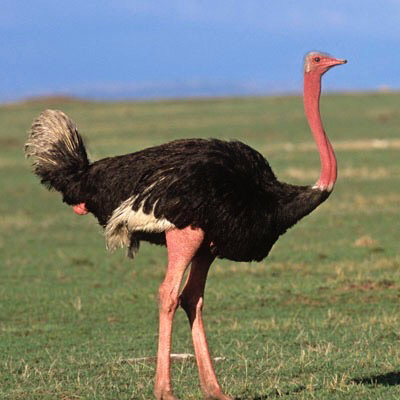
HOW would you like to start your meal by eating pebbles? It's not a pleasant way to dine, but for the amazing Mr. Ostrich, it doesn't get any better. Hard objects go immediately to the bird's stomach and from there to its second stomach, the gizzard. It works like a mill, the food is crushed by the action of the muscular walls.
The baby food for this amazing ostrich family is unusual. When the cubs are born, the mother's manure is an indispensable food for the baby. Provides the bacteria necessary to start the baby's digestive processes.
There are numerous ostrich farms in South Africa, where these huge birds are raised not only for their feathers, but also for their skins, which are made from quality leather. In the Oudtshoorn district, there are two hundred farms that raise around 70,000 ostriches. On these farms, Mr. Ostrich plays an important role in the incubation work. The hen sits during the day so that its grayish-brown feathers blend in with the surrounding karroo bushes. The male sits at night for the same reason: to blend in, his black and white plumage is invisible at night.
Just before the eggs hatch, the male sits next to the female even during the day or stands next to her, casting his shadow over her to protect her from the rays of the subtropical sun.
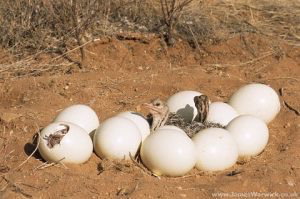
Mrs. Ostrich lays twelve to fifteen eggs. If a farmer removes these eggs, he will continue to lay up to thirty eggs, as long as they leave a false egg in the nest. In this way, you can get three shoots a year instead of one.
As you would expect from the largest living bird in the world, the eggs are huge and can weigh three pounds. The Great Creator caused the germ to remain in the egg for so long that, regardless of how the egg is transformed, the germ rises so that the vital point can contact the body. hot bird parent. . The chicks hatch after six weeks of incubation.
A cub is bent like a miniature umbrella inside the shell, with the legs and the beak together. In the final stage of incubation, the chick opens the shell with its hard claw reinforced with bone. As an adult, the ostrich can grow to nearly 2.5 feet tall and weigh up to 345 pounds.
Despite its constitution, the ostrich is a very elegant bird. In fact, they were seen dancing to the sound of a shepherd's cane.
Or maybe you prefer to watch a male bird perform his court dance? It sits on its hips, spreading its wings so the bright white plumage is fully displayed as it slowly moves its body from side to side. The neck arches back with swan elegance; the head hits with an alternating thud on both sides of the body. The mating call consists of three deep growls followed by a shorter call. It can be heard from a distance of three kilometers and sounds like the roar of a lion.
Although it is a bird that does not fly, the ostrich makes up for it by being an incredible runner. Its long legs can carry it at speeds of fifty or sixty kilometers per hour.
If the ostrich cannot escape danger, it does not hide its head in the sand. Instead, it defends its nest by kicking with its powerful legs. The ostrich is unique among all birds in that it only has two toes per foot, one of which is equipped with a claw-shaped hoof that becomes a dangerous weapon when the bird is forced to defend itself.
Some characteristics of the ostrich surprise scientists. It has a bladder that collects uric acid, a characteristic organ of mammals, but does not belong to any other family of birds. It also has tabs that protect your eyes from blowing sand. In fact, the extraordinary ostrich pays homage to the wisdom of its Creator.
Millions of insects
Every year, scientists discover between 7,000 and 10,000 new types of insects. More than 800,000 insect species are already known, and some officials estimate that if all insect species on Earth were known, the total would be well over 1,000,000
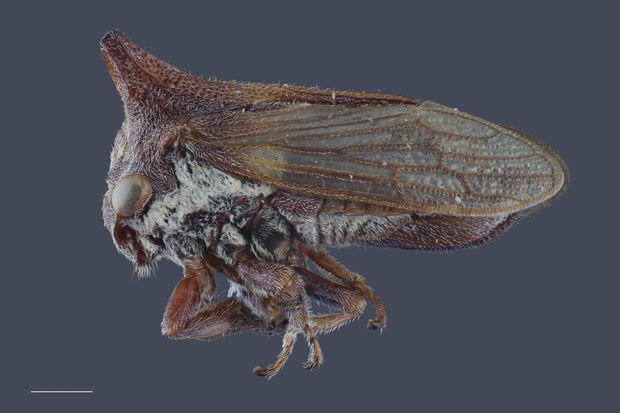
One of the recently identified/discovered insect which made headlines this year was ‘***Kaikaia gaga’*** an insect of the species of treehopper, a conspicuous but little-known group of insects that inhabits most of Earth's forests.This insect was named after a pop artist Lady gaga.
Learning to swim
SWIMMING is a skill that takes real effort to learn. But it opens the door to many pleasures, such as water skiing, surfing and diving. It also provides the best training/exercise and frees one from helplessness in the water, which can even save your life.
Mental methods and attitudes
Some believe that one way to teach people to swim is to throw them into deep water and force them to swim if they don't want to sink. But it can be a frightening experience, and people who have learned to swim this way rarely like water. They might even scare you. When learning to swim, it is best to follow a step-by-step program that avoids these experiences.
In fact, the fear of the water, and not the mastery of the skill itself, is the biggest obstacle to learning to swim. Indeed, swimming is quite simple because the human body has natural buoyancy and will stay afloat. Therefore, swimming is just about using your arms and legs as paddles to move your body.
But what if you are afraid of water?You should not fear being ridiculed or treated with impatience. Instead, effort should be made to develop the confidence that you can learn to swim easily. This should help to appreciate the simplicity of the movements used in swimming and that your body will not give in if you relax. Also, try to introduce each of the following steps into your swimming routine to avoid putting yourself in a situation where you might fail.
Preliminary steps
Before even starting the instructions in a swimming pool or other body of water, some preparations can be made. A child can practice holding their breath and then exhaling. It may sound very basic, but if you've never tried it before, it may take some practice.
The child can also practice by splashing himself,especially by wetting the face. It is important to get used to it. Another important achievement is being able to hold your breath underwater. You can practice doing it in the tub or even in a pan of water.This little results should not be taken for granted.
You can therefore practice breathing underwater.Try to breathe out of the mouth and you'll see bubbles as evidence that you doing it. You can have fun playing a game by pretending to be a speedboat. Then try to breathe through the nose with mouth closed. But before you try to do this, you can practice blowing air through your nose over the water. Otherwise, you can instinctively inhale, instead of huffing, while your face is lowered. This can cause water to rise painfully through the nostrils.
But whatever happens, be careful not to stir up irrational.Make a conscious effort to represent swimming as very comfortable.
In the swimming pool
While it is not that difficult to get into a tub and even put your head under water, a larger body of water can scare you,make sure you’re feeling well. If the water is hot, between 32 and 85 ° F, you are probably going to like it.
With patience and encouragement, even a modest child at the right time can help enjoy splashing in the water. Let him practice by placing his face in the water and exhaling, like in the bathtub. Don't minimize this step in learning to swim. It is very important that the person gets used to the water and is not afraid to get wet everywhere.
Another important step in learning to swim is mastery of rhythmic breathing. Bobbing is one of the best ways to learn this. Have the person hold your hand or hold the edge of the pool. So take a deep breath, dive straight into the water, blow through the nose, and stand up.Do this slowly, as directed: "Take a deep breath, dive in, breathe out, stand up to breathe."
Or you can do this together, make it a game. Stand face to face in the water up to your chest and keep your hands outstretched. Now turn while you rhythmically dive below the surface in a rocking motion. Remind the person to take a deep breath when standing up and breathing from the outside.
When a person puts his head under water for the first time, he is almost certain that his eyes are closed. But it is important that you get used to opening them. First, it will eliminate or alleviate the fear of water. And when you learn to swim, it will be for your safety and for others that you see where you are going.
You can also create a game by learning this skill. You can dive and shake your hand underwater. Or you can lift several fingers. Have the person count their fingers and ask them to tell you how many fingers they showed when they introduced themselves. Or another game that can be a lot of fun is this: with water up to the waist, go down to the bottom and collect stones, shells or colored coins.
When a person can do these things,it means they are developing well. You are now ready for the important step before you swim.
Learn to float
This phase varies. First try the so-called "cork floats". This involves Placing the student(or yourself) on his knees in the water up to his chest, until his chin is on the surface of the water. Then ask him to take a deep breath, lean forward, and bring your knees up to your chest and wrap your arms around them. It should float with its back to the surface, like a cork. It is good to learn this float first because it teaches the person how to get up from the float that is lying down.
Floating on the stomach or abdomen simply consists of lying face down in the water with arms and legs outstretched. To achieve this position, stay in the water a little more than your height. Then take a deep breath, lean forward with the arms outstretched and lie face down in the water.Legs should surface from behind. After a few seconds,raise your knees to your chest and return to an upright position.An expert should be present when this performing,of course😀
This float is important to learn because it shows the student(you) that he will not sink when he is in water and down swimming. It also states that swimming is achieved simply by pushing the floating body through the movements of the arms and legs.
If a person followed this step-by-step program up to this point and mastered each procedure, they are ready to work on their own characteristics.
Reaching the goal
First practice the movements.Ask the student to lie on his stomach. It can be hung on the pool wall or held by placing your hand under your stomach. Now tell him to kick his legs up and down from his hips. It can start pushing you through the water if you hug it. I really congratulate you on this achievement. He's almost a swimmer!
Later arm movements are necessary. A child may want to lift their arms out of the water, as most swimmers have done. But tell them you want me to take them underwater to begin with.
Let him assume the same floating position on his stomach by placing his hand under his stomach again to support him. Let him out one arm first and then the other. The arms should move in the same way as a dog moves its legs while swimming. When one arm is extended forward, the other is pulled down and back.
Now just kick your legs and stroke your arms to move your body. When the student can do this, he swims! Use the so-called "dog pad", the basic stroke.
Of course, there is much more to be learned in order to be a successful swimmer. Over time, the person will prolong their run and eventually find that they can increase their speed by reaching the water. Now start tracking, the fastest and most popular. But you must learn to synchronize your breathing with the movements of the arms and legs to be successful. Everything takes practice, practice and more practice. Knowing how to swim can not only contribute to many hours of fun activities, but also save your life.

A beverage for Millions
Those who prefer it say that it is not a drink that can be swallowed like water.No, they say, coffee is a drink to enjoy. To benefit, it must last a long time as it conveys the flavor. Some people like to drink more in the morning. Others prefer it after meals. But the masses are ready to drink at any time. It really is a million cup.
Coffee has come a long way in a short time. As a beverage, its 700-year history dates back half that of its competitor, tea. But where does the coffee come from?
According to legend, some herders in Ethiopia noted that sheep and goats were awake at night after eating the leaves of a particular tree. The shepherds tasted the leaves and berries and finally prepared a drink that turned out to be exciting.
Traders and travelers from the Arabian Peninsula brought plants from Ethiopia and did well in their new environment. In fact, from this migration to the Arabian Peninsula, the plant receives its scientific name, Kofi Arabica. The coffee lasted almost two hundred years, a secret kept by the Arabs. Others learned of the plant, and by the end of the 17th century the Dutch were already growing it in Java, and later in Suriname on the north coast of South America.
Despite its current popularity, coffee was not immediately accepted as a popular drink. Opposition to its use was raised for moral and religious reasons. Muslims are divided in their opinions on the religious relevance of this activated drink. In 1674, a group of British women asked the government to ban the use of drinks that they believed tended to ruin the male family. However, its popularity continued to grow steadily until it gained a reputation as a favorite hot drink in almost every country with a mild or cold climate.
Coffee achievements
To achieve its greatest victory, coffee first had to find the most suitable climate for its cultivation: humid and humid, with other basic requirements, such as the rich sandy soils of the highlands and a continuous temperature between 60 and 90 degrees Fahrenheit. We realized that the Dutch brought it to South America and that, like the Arabs before them, they tried to turn coffee into a national fraction.
In 1727 alone, Sergeant Francisco de Mello Paletta secretly transported Guyana's first coffee plants to Brazil. He and the others did not realize the great consequences of this act. Brazil now produces around a third of the world coffee crop and is now the world's leading source, producing three times as much as Colombia, its closest competitor.
The Brazilian performance of each tree is incredible. The average annual yield of a Brazilian coffee plant is between one and six kilograms of berries, while in other countries the yield can vary between seven ounces and more than one and a half kilograms. Why the big difference? In fact, Brazilian trees can produce two or three crops a year.
Coffee and berries
In general, coffee plants begin to bear fruit at the age of three and continue to produce twenty-five to fifty years after year.
At first, the berries are like little green olives. Then it turns red and, when ripe, turns dark red with a smooth, shiny surface. In the phase when the fruit is red, the distance between the beans and the outer shell contains a sweet nectar that really delights the palate. Berry selection must be made on time. If it is not fully ripe, it will have no flavor; If they are ripe, they fall to the ground and are ruined.
After coffee begins to accumulate, workers preserve it from early in the morning until late at night. There is a good reason for this, since sudden rains can ruin the harvest.
The berries are then crushed and either sent to dryers or manually placed on flat surfaces to dry in the sun. If time permits, three to ten days are sufficient to complete drying. When the berries can be broken manually, now is a good time to go through a peeler.
Coffee classification
People are often confused by the variety of coffee brands to choose from: quality, blends, and price ranges. Behind it all, there is a careful classification of coffee, based on the type, purity, size and flavor of the beans.
For example, the type classification is determined by taking samples from different bags. By counting the number of defects in each nine-ounce sample, the specialist classifies the shipment as higher or lower.
Each fault is assigned several points or a specific value. Defects can be of two types, namely impurities such as stones or branches which have not been removed by hand or hand sorting and bean defects due to deficient cultivation methods.
Then comes the glass test. Experts, trained to demonstrate whether the coffee is mild or strong, take a sip of sample after sample, never swallowing, but simply allowing the coffee to sit briefly in the throat before spitting out.
The most well-known brands of coffee do not differ much in terms of the types of coffee that make up their blends; However, each has a distinctive characteristic that some people like. The mixer uses its materials as an artist to produce a balanced and pleasant result. For example, a blend may contain "brazil" to give body and "sweetness" due to the delicacy of its aroma. By combining flavors, aromas and colors, the blender looks for a product that will illuminate the eyes, stimulate the palate and stand out in the aroma.
Some of the ground coffee on the market is made up of cheaper beans, since all the beans are ground into a powder, and who knows if the beans were of the best variety or not?
Some valuable tips
Due to its stimulating ability, coffee is often thrown away as a drink for people with heart problems or with a very nervous temper. But even among those with normal health, there must be an awareness of the tendency to create coffee drinking habits. Some people find it healthier to drink the coffee from which the caffeine has been extracted.
However, if you drink coffee, it may be beneficial to buy unroasted roasted coffee instead of ground coffee. Whenever possible, it is best to have ground coffee beans present. This way you can be sure of fresher coffee and are less likely to be fooled into mixing other ingredients with coffee, ingredients such as sand, corn, beans, peanuts or blood. , to name a few.
A simple test of the purity of ground coffee involves pouring a pinch of ground coffee over a cup of water. If the coffee is pure, the beans float as they absorb water very slowly. If the coffee contains any foreign matter, the bean will quickly absorb the water and sink to the bottom of the cup.
If properly protected, roasted coffee lasts ten to twenty days without losing its flavor. But if it is exposed to the air, roasted or roasted, it loses its aroma, flavor and color. Moisture will give you a musty smell. For these reasons, coffee should be stored in a dry place in tightly closed containers.
The Many Uses of Coffee
The appealing taste of coffee can delight the palate in a number of ways. For example, a cold coffee with sugar and a slice of lemon is quite refreshing. During the warmer months of the year, cold coffee and coffee flavored ice cream are popular. Some also use coffee as an ingredient in this delicious treat: coffee cake. However, the most popular form, the favorite of millions of people around the world, is still coffee or milk.
But scientists are testing many other uses for coffee beans. For example, coffee ash is a good fertilizer. In addition, disinfectants and insulation for walls, floors and ceilings were prepared with coffee. Glycerin can be produced from coffee oil, and coffee oil can be used in paints, soaps, and a variety of other products.
Thus, the coffee bean is used more and more. But its popularity, of course, is above all a drink. Think about it! Americans drink more than 800 million cups of coffee a day. The average American consumes about five kilograms of coffee per year. And nearly 4 billion pounds of coffee is consumed each year in the United States. Interestingly, this number is close to all coffee production in Brazil. Is there any doubt that coffee is the drink of millions of people?

The Giant water tanks of the Desert
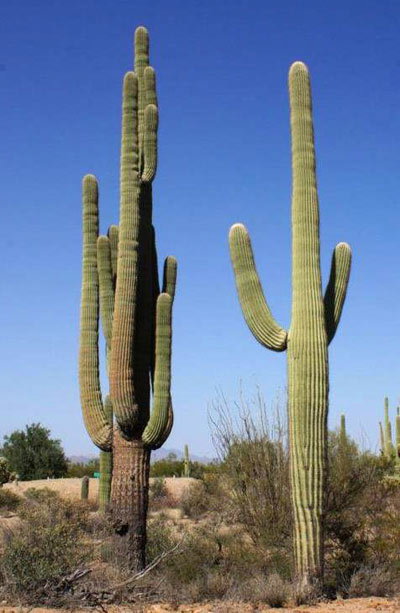
A real tank of living water! When you talk of that then you can summon the giant Saguaro cactus. Why? Due to the amount of water this desert plant can absorb and store. Look, the rain does not fall for several months in the desert. But when they do, the Saguaro cactus absorbs enough water to continue living and bearing fruit and flowers for a year or more. And, when it is filled with water, it can weigh five tons or more.
A thorough study of this aloe vera water tank tells us that it is perfectly suitable for your desert home. Instead of having a long root that cannot live in the desert sands, this cactus has long roots near the surface that extend in all directions from its main stem. When it rains, these roots quickly absorb water from the sand. In addition, the outer "skin" or lightly waxed lining is reinforced to stretch like the accordion when absorbing water. In addition, the interior of this wax coating and water are filled with a spongy material that absorbs the water absorbed by the roots.
What prevents the Saguaro cactus from flopping over into a heap?It is designed with a skeleton of supports in the form of runglike cells or solid cells one or two inches thick in the trunk and branches. These are also used to transfer water to the spongy tissues.
Look at the size of the Saguaro cactus! Some samples reached a height of fifteen meters or more and the diameter of the main stem is two feet. Some are said to be over two hundred years old.
Where can you see these gigantic water tanks? In the Sonora Desert in the southwestern United States, particularly in the area known as the Saguaro National Park.

Salads
Green vegetable salads have a lot to recommend. They contain many minerals, vitamins and enzymes, essential for the well-being of the body and, therefore, are called "protective foods". Salads are also used for health because they provide loose cellulose, which helps a person who suffer from constipation.
Currently, researchers conclude that most infectious diseases that affect modern humans are due to the fact that people eat too much and too much.Children, of course, often look at food like this, preferring sweets. But wise parents will not allow their children to follow their own path in these areas, but will teach them to eat such "protective foods." After all, when children get sick, the burden falls on their parents.
Most, in fact, are vegetables that can be eaten as a salad. These include leafy vegetables, carrot peels (when tender and soft), celery, chicory, dandelion leaves, chicory, endive, lettuce, turnip greens, and watercress.
Add flavor and value to these salads by adding chopped garlic rings or onions, bacon slices, toast cubes, red or white onions, chopped mushrooms, pieces of green cauliflower, slices of green or red bell pepper. , parsley, ripe or green cherry tomatoes. It is true that salad costs money and increases costs, but as an understanding heathy person said: "It is better to spend my money on vegetables than on medicines, and it is much easier." Yes, whatever you do to make a tastier salad like this will also make them more nutritious.
raw and cooked
Among the vegetables that make salads, there are sliced cucumbers, do not bother to peel them. They are very tasty with sour cream. Finely chopped tomatoes served with chopped onion are also an excellent salad. And what about chopped grated carrots with raisins ?
Cabbage salad, made from red or green cabbage, is inexpensive and rich in vitamin C. For a mixture of fresh cabbage and add finely chopped carrots or chopped carrots. Sauerkraut salad is closely related to coleslaw. Cut the strips into small pieces and add expensive apples and / or onions to a good salad that can be prepared year-round. In the only classroom, there is a sliced or sliced apple and onion salad to which a vinaigrette such as mayonnaise has been added.
Other vegetables used for salad include beets. Serve with onion rings or pricey onions, or sweet aniseed sweet, European flavors.
Green bean salad should not be overlooked. You can replace a green salad at any time. Serve with a small chopped onion.
In fact, some vegetables replace salads without any special preparation, such as radishes, carrot sticks, celery stalks, and vents.
Proteins and carbohydrates.
For many cooks, one of these salads, along with protein, carbohydrates, and raw vegetables, fuels a low-fat diet. But a salad can provide protein or carbohydrates. For example, there is a popular chicken salad featuring our favorite salads of tuna, salmon, shrimp, and crab. Made with celery or other vegetables, or with expensive onions, you can have a large nutritious dish. Fish salads provide a large amount of phosphorus, very important, it is believed, for the proper functioning of our central nervous system.
This should not be overlooked since a protein-providing salad is an egg salad, served with celery or other vegetables. It doesn't seem, it seems, that they should be completely concerned about their cholesterol, unless someone is eating heavy meat.
Another protein salad is made with cottage cheese. Add chives, green onions, or finely chopped onions and cartoon seeds to taste. If you like candy, use it with fruit, like crushed pineapple or sliced dates.
Perhaps the cheapest protein salad is one made from legumes, such as beans (marinated, red kidney, lime, or soy) or lentils. In fact, these must be cooked first, then served with chopped onion or with onion and / or your favorite vinaigrette.

How Much Energy Is in the Ground?
Coal and oil have been the main sources of energy since the beginning of the Industrial Revolution in the early 19th century. But they are sources of energy generally classified as non-renewable. So the question that concerns us today is: how long can we depend on these fossil fuels before they run out?
Coal was the first to be mined when Europe and the United States entered the industrial era. It was used in large quantities to produce steel and cement. Coal was supplied to land-based railway locomotives and steamships at sea. We burned it to heat our homes and workshops. From the late 19th century, coal was also used to run power plant generators.
When oil became available, its abundance and low cost meant that it was used instead of coal for many purposes. It is important to note that the convenience of liquid fuel and its ease of ignition led to the rapid proliferation of private cars, cargo trucks and airplanes for rapid travel. Industrialised countries became heavily dependent on oil as an indispensable energy source.
Waste of a resource
The promise of fabulous profits encouraged enterprising drillers to set foot in rich new oil fields. Natural gas from many wells was considered a by-product, sometimes almost a nuisance. In the wellhead, its value was so low that it was often burned simply to get rid of it. But with piping systems, it could be profitable to deliver them to common industrial facilities and housing at very low cost.
In oil-rich countries, the prodigious use of energy has been encouraged in every possible way. It was so cheap that waste was tolerated, and conservation was not worth thinking about. People thinking ahead realized that it could not last forever; sooner or later the oil reserves would have to run out. But known oil reserves were once sufficient for many years of use, and discoveries of new deposits continued to increase the reserves faster than they were running out.
Mass production of cars made them accessible to almost everyone, and car manufacturers became giant corporations, competing to sell each other with interesting gadgets added to each new year model. Governments have taxed the sale of cheap gasoline and built motorways everywhere. Cars were sold by tens of millions of people who wanted to travel faster and further. Oil companies followed a policy of seeking maximum immediate profit and paid little attention to the shortages that will inevitably affect future generations. But now that generation has arrived.
Determining the amount available
The political embargo imposed by the Arab countries in 1973 shook the optimism that previously prevailed over oil life. In 1978, a group of international experts warned that oil supplies could not meet the growing demand in 20 years, and perhaps even five years. Recent events have raised concerns about the likelihood of permanent global shortages in the early 1980s.
Suddenly serious problems arose. Oil supply is no longer determined solely by the technological capacity to find and produce it. It is further influenced by political manoeuvring. Governments have imposed complex tax structures and artificial price controls. Oil industry leaders complain that there are few incentives to undertake costly drilling to find new fields or to build the new refineries needed to meet growing demand.
Multinationals have encouraged oil production in countries that were previously lagging behind in exporting to industrial countries. Today, the most abundant oil reserves and the largest consumers of oil are in different, often conflicting, policy areas. OPEC countries, complaining that they have been exploited by more powerful nations, have come together to limit supply and thus raise prices and enforce policy requirements.
‘The Flying saucers’ What happened to them?
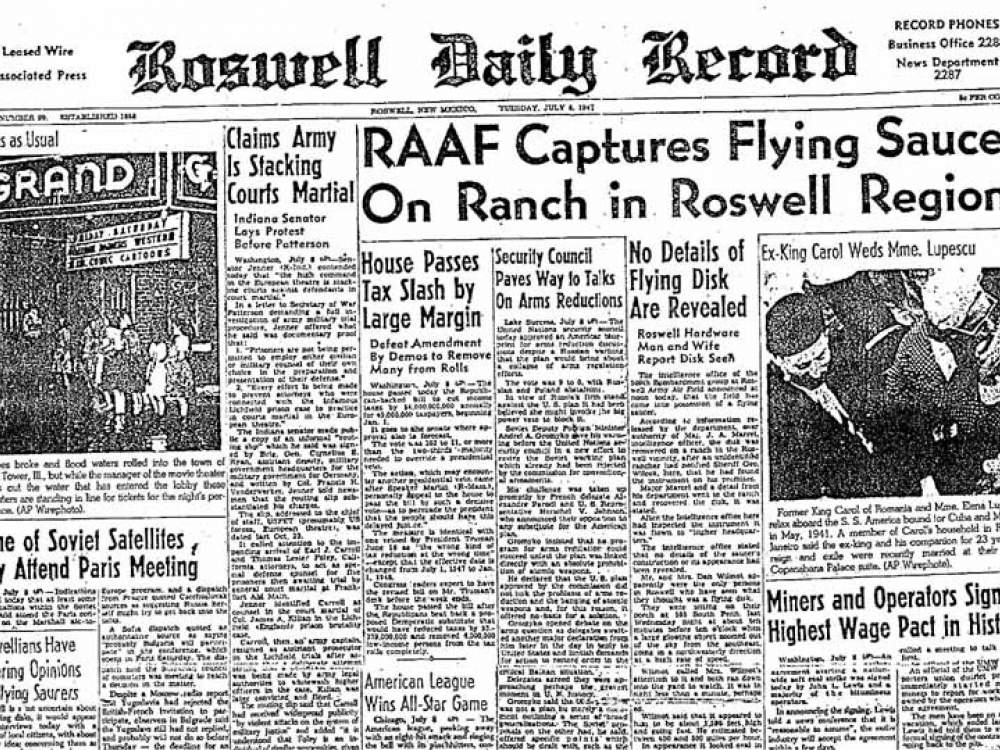
It all started in the summer of 1947, when the pilot of a private plane was flying near the mountain Rainier in Washington and saw various disk-shaped things move through the air, one after another, on a wavy path, "like cake plates leaping into the water."
This report was printed in numerous newspapers and was quickly followed by an avalanche of similar reports from other parts of the country.
The lights in the sky were said to float and then come on at high speed, making zigzag curves impossible for any known aircraft. A flotilla of oval lights was seen and photographed in Lubbock, Texas. Radar operators at airports and on the planes above began to notice dots on their screens that did not correspond to any plane known to be present. They traced strange paths and sometimes suddenly disappeared.
Numerous photographs have been published, most with lights scattered in the dark, but some have shown well-defined outlines of saucer-like objects in a daytime sky. A cross-country driver took a moving photo of a mysterious group of white spots surrounding the desert near Tremonton, Utah.
Early reports used the term "flying saucers" and this name became popular for all the strange objects seen in the sky. But many of the things seen are not shaped like a saucer; therefore, they are more precisely called "unidentified flying objects" or UFOs for short.
Sometimes the UFOs became so numerous that thousands of people observed them, almost in collective hysteria. The newspapers filled their columns with interviews, official reports, rumors, and opinions. In July 1952, an avalanche of reports of radar observations and strange lights around the Washington, DC airport caused such fear. In Mexico City, in September 1965, rush hour traffic was congested for several nights in a row and people spent nights on rooftops watching the lights move across the sky.
Many descriptions of UFOs imply that they were under intelligent control and reacted to observers who tried to get closer to get a better view. Sometimes the patrol police promised to follow UFOs at low altitudes. They found that their cars couldn't keep up and returned terrified by the stories of their race chases. Military research aircraft have been mounted to try to make contact with visible targets or radars. One afternoon in 1948 in Kentucky, an unhappy pilot attempted to catch a UFO. He appeared in front of him and reported that he was climbing 20,000 feet. It was his last word. He was found dead in the wreckage of his plane.
Speculation
There has been much speculation about the origin of the mysterious "flying saucers". Was the United States secretly testing a new type of vehicle, powered by atomic or magnetic or even gravitational energy? Or perhaps a foreign power had mastered such a driving force and was showing off its new exploits in the skies over the United States. However, the most common was the theory that space visitors had come to study Earth and its inhabitants. There is no doubt that it was this idea that gave "flying saucers" their main appeal. The fact that man was preparing to venture into his earthly home to explore other worlds made him wonder if the intelligent creatures elsewhere had done so before him. On the other hand, the idea bothered those who believed that man was unique in the universe as a carnal and intelligent creation of God.
Some people claimed that the flying saucers landed in remote locations and cited flattened vegetation or scorched earth at the landing site as evidence. Close encounters with interplanetary vehicles would turn off the lights and stop the clocks and even the engines of the cars, leaving the magnetic metal and the radioactive environment. Some people claimed to have been brought to the "flying saucers", one in the California desert and the other on a Brazilian farm, and found travelers from Venus. Although their testimony was not confirmed, the believers were ready to believe. A religious aspect was introduced with the emergence of a new cult centered on the divine superman of Venus.
Most scientists tend to take advantage of emotions. Astronomers were not particularly impressed. They pointed out that it was their business to look at the sky, but they had not seen any "flying saucers". Did they also ask where they would come from? Mars? Venus? From what we already knew about these planets, it would be absolutely impossible for a human creature to live there, because there was neither air nor water. And interplanetary probes, testing the atmosphere of Venus and taking close-up pictures of Mars, reinforced this view. Venus was found hot enough to melt zinc, Mars cold and dead like the moon. Few scientists found the UFO subject interesting enough to dedicate time to research or even talk about it in public. This was rarely mentioned in their newspapers. An astronomer took the trouble to write a book showing how mirages can produce effects like "discs" seen in the bush Rainier, or the Lubbock lights.
It seemed likely that most of the "flying saucers" seen were simply misunderstandings about common things, like stars, meteorites, airplanes, balloons and mirages, without excluding disappointments and hallucinations. But the remaining question remained: could all the strange visions reported be attributed to such prosaic causes? Or could there be real "flying saucers" beyond the ability of scientists to explain?
unajimu
Mimi ni mtu wa aina gani? " "Ni nini wito wangu maishani?" "Wakati ujao unanihusu nini?" Je! Umewahi kutafakari juu ya maswali hayo? Watu wengi wameweza. Katika kutafuta majibu mamilioni katika historia yote wamegeukia unajimu. Je! Inamaanisha nini?
Kamusi ya Century and Cyclopedia inafafanua unajimu kama uchunguzi "unaofikiria kwamba miili ya mbinguni [jua, mwezi, nyota na sayari] zinafanya, kulingana na nafasi zao wakati fulani, ushawishi wa moja kwa moja juu ya maisha ya watu na umilele."
Je! Kuna msingi fulani sahihi wa unajimu? Je! Mtu anaweza kupata ufahamu wa kawaida kwa kuitumia? Ikiwa ungeshiriki katika unajimu, je! Ingetumia ushawishi mzuri juu yako?
unafikiria nini juu ya unajimu