 @Jim
@Jim
Benefits of Modular Distance Learning
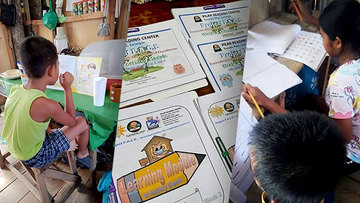
Problems have arisen as to how students who do not have stable internet connectivity will have access to education amidst this pandemic. Educators, parents, and students have different views on this issue, but the Department of Education proposed different modalities of learning. One of which is modular distance learning. This mode of learning is a response to the call for education among students who prefer the traditional way of learning. Teachers hand over the printed modules to the parents or guardians of students once a week. These contain different activities, discussions, and performance tasks which the students need to accomplish on their own. Here are some benefits of modular distance learning: Flexible. Students can set their own schedule in finishing the tasks in the module. Student-centered. Students have their own way of learning that would work for them. Since the accomplishment of tasks is self-paced, students learn to have a sense of responsibility. Accessibility. Resources within the locality are available not always in the form of online resources, but the help from the community. In this way, they become inquisitive and creative in looking for answers to their questions prior to the activities. Simplified. The contents of the module are easier to grasps than those in the books. Key points are included as supplements to the books as reference. Cost-efficient. Parents and guardians can save a lot of transportation and accommodation. The only expense is in the printing of modules which are shouldered by schools.

10 comments
I wonder about this because not a lot of kids are motivated through the modular method. A lot probably won't even have the luxury to study at home given some home problems and/or being distracted. I also can't imagine that every parent will be able to answer every question the child would have so there would be a lack of guidance in the end
It takes a village to raise a child. It is the parents' obligation to guide their children in making decisions in life, and it starts by giving time to them like when they need help in their school assignments in the usual face-to-face classroom learning. The roles of teachers are focused on the making of modules which consist of tasks and discussion that are based on the most essential learning competencies. These competencies are pre-determined as a response to the new normal. Curriculum experts and educators identified only the competencies which the students can demonstrate- only the essentials. This is a way to ensure that learning through modular instruction and even online learning is simplified.
Yeah but what about the uneducated parents and those that simply don't have time for their kids. The kids really won't understand what they're doing and not every child will have the drive and resources to look up what they don't understand in he modules, thus why I'm too against this. And in consideration to a lot of crowded environments we have here. It's not conducive of learning in any way. At least in a face-to- face classroom though, there would be some sort of guidance
The point why education should be continued amidst the pandemic is for students not to get stagnant. That is why schools will provide materials which are easy to grasp. Since students are aged 21 and below, they are not allowed to stay outside and one way to keep them busy is to let them study on their own pace. It is not necessary that they do it all day. In an instance that the students can not accomplish the tasks, an appointment for consulation may be conducted by the teachers through home visitation. Just think of this: When will the vaccine be available? What if it will be available not only after a year but more? Is that how long our children will wait to go to school? This is the reason why we need to coexist with Covid and not let the virus overexists us.
The case is, there might never be a vaccine since they're trialing antivirals and not the virus itself. But my case is, there must be a better approach to this than modules because if college students who /should/ be disciplined enough and have enough knowledge on where to find and get other resources, still have a hard time with modules and learning from those, then what more for kids who still have limited access to sources and lack the judgement to know what information they're searching for would be right or not? I don't believe the teachers would always be available to actually guide the students nor directly understand what some students would want to ask about. And not all students can properly phrase out what they're thinking about the topic. I'm not for keeping education stagnant but i do think that other approaches should be put into consideration and not just the modules and online classes
Modular distance learning is not only the option. There are more as prescribed by DepEd. See https://www.teacherph.com/deped-learning-delivery-modalities/. These are research-based. We have to understand that these modalities might be new for us but are not new anymore in the field of education. However, we do not expect that all of these will be effective since we are in an experimental stage. The only thing I am sure about is that educators and teachers are trying their best to instill to the people that education matters amidst any pandemic or circumstance as the future of a decade might be greatly affected by our actions today.
It’s also a good thing to know the advantages but as a student, it somehow have a big trouble to deal with distance learning knowing your in your house without any socialization and also written works are less important than performance task
Good Afternoon po. Can I ask if I can get your real name po to acknowledge you for our research paper. Thank you in advance.
Good day po, can I get your real name po to acknowlegde you for our research paper? If it's okay po sa'yo. Thank you.
And can I ask po when did you publish this? Thank you in advance po.