Layer 2 Solutions VS Sidechains. What Is The Difference and How Many Layers Are There?
If you go out into the wilderness of DeFi you will come across many terms such as **Layer 2** solutions and **Sidechans** but no one seems to bother too much explaining what they actually are. That's why we are going to peel off the layers and see what we can find underneath.
Since Ethereum is the most popular destination for Layer 2 solutions and sidechains we will use it as an example here. Our layer two competitor will be Matic and for our sidechain contestant, we will pick Arbitrum.
Sidechains vs Layer 2
The main difference between these two can be found by looking into their infrastructure. Since Matic is running its own network secured by nodes that have nothing to do with Etehreum it is considered a sidechain. It is EVM compatible and ETH dapps will run on it, but the Matic chain is a completely separate blockchain.
A true layer two solution would be Arbitrum as it benefits from ETH security and uses Etehreum as the native currency to settle transactions. If Etehreum was a tree, Arbitrum would be one branch on that tree while Matic would be a completely different tree growing beside it.
In other words, a layer two solution should be benefiting from the security of layer one while a sidechain has to handle that part on its own. According to the documents on Ethereum.org, these are the definitions for the two.
**Sidechains** https://ethereum.org/en/developers/docs/scaling/sidechains/
A sidechain is a separate blockchain which runs in parallel to Ethereum Mainnet and operates independently. It has its own consensus algorithm (e.g. Proof of Authority, Delegated proof-of-stake, Byzantine fault tolerance). It is connected to Mainnet by a two-way bridge. https://ethereum.org/en/developers/docs/consensus-mechanisms/ https://en.wikipedia.org/wiki/Proof_of_authority https://en.bitcoinwiki.org/wiki/DPoS https://decrypt.co/resources/byzantine-fault-tolerance-what-is-it-explained
What makes a sidechain particularly exciting is that the chain works the same as the main Ethereum chain because it's based on the EVM. It doesn't use Ethereum, it is Ethereum. This means if you want to use your dapp on a sidechain, it's just a matter of deploying your code to this sidechain. It looks, feels, and acts just like Mainnet – you write contracts in Solidity, and interact with the chain via the Web3 API. https://ethereum.org/en/developers/docs/evm/ https://ethereum.org/en/developers/docs/dapps/
**Layer 2** https://ethereum.org/en/developers/docs/scaling/layer-2-rollups/
Layer 2 is a collective term for solutions designed to help scale your application by handling transactions off the Ethereum Mainnet (layer 1), while taking advantage of the robust decentralized security model of Mainnet. Transaction speed suffers when the network is busy which can make the user experience poor for certain types of dapps. And as the network gets busier, gas prices increase as transaction senders aim to outbid each other. This can make using Ethereum very expensive.
Which Is Better?
If you support the idea behind Ethereum and the general decentralization narrative you will probably want to vouch for layer 2 solutions before sidechains. They are a part of the same infrastructure and they help the ecosystem grow locally. When ETH fees started to get more and more expensive Matic and BSC offloaded a lot of that traffic but this all comes at a cost. Users get less security and liquidity gets drawn aways from the main network.
If you aren't familiar with the blockchain trillema I highly recommend reading into it a bit. Basically, it explains why you can't have **security, decentralization, and scalability** all at the same time. You simply need to sacrifice one of those and that's exactly what BSC and Matic did. https://vitalik.ca/general/2021/04/07/sharding.html
When it was launched, the Binance Smart Chain was secured only by a handful of nodes controlled completely by Binance. If they decided to run away with all of your money there isn't much you could do about it because sidechains (for now) are mostly centralized databases.
To be completely fair, all of them have a long-term decentralization plan but a lot of pieces need to fall in the right place before that becomes a reality.
Will All Blockchain Have A Second Layer?
Yes, and probably even more beyond that. What we all tend to forget is that crypto isn't made to replace money, it is made to become programmable money. With programmable money, you can do almost anything and we are only seeing glimpses of that innovation.
Litebringer is a game built on top of the Litecoin blockchain. It is a working Dapp that you can use today and pay for the fees in LTC. Bitcoin Cash is experimenting with DeFi and smart contracts work on Bitcoin as well. When you think about the future think about what can be done today with "cheap chains" like Matic. Move that infrastructure over to BTC and teach BTC holders how to DeFi. Can you see where this whole thing is going?
Reposted from my account on LeoFinance. https://www.litebringer.com/ https://leofinance.io/@jerrythefarmer/defi-on-bitcoin-cash-why-not-how-to-guide https://www.cnbc.com/2021/06/12/bitcoin-taproot-upgrade-what-it-means.html https://leofinance.io/@jerrythefarmer/layer-2-solutions-vs-sidechains-what-is-the-difference-and-how-many-layers-are-there

Cross-Chain Swaps and Bridging Just Got A Whole Lot Easier With Rubic
Usually, when you want to swap your funds from one chain for assets on another, that process involves a lot of bridging and unnecessary headaches. Rubic may be the perfect solution to all of those problems.
Rubic is definitely one of those platforms that makes you think why didn't people build cross-chain infrastructure exactly like this from the very beginning? Let's dig a bit deeper so you can really appreciate the elegant solution this Dapp has introduced.
One Bridge To Rule Them All
Connecting to the website is as easy as it gets. The good part is that you can connect from any supported network and those include: ETH, Polygon, HarmonyOne, BSC, Tron, and xDai. Once you are connected you will be able to choose between three options - Swaps, Bridge and Cross-Chain.
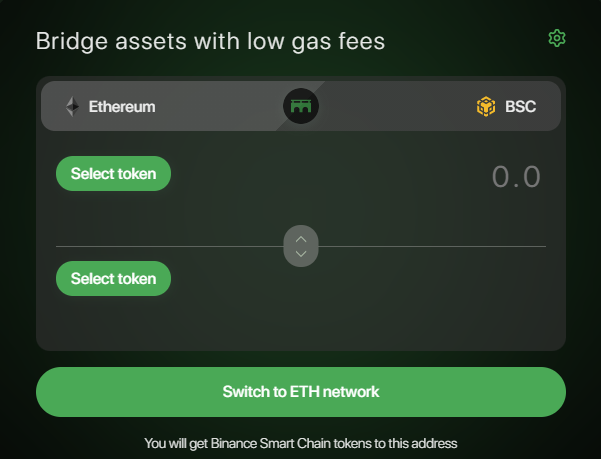
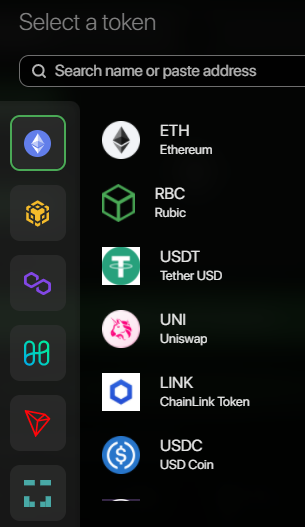
If you chose the bridge option you will be able to move your tokens from one chain to another with one simple transaction. To do this click on the "select token" button and chose the chain you want to send funds from. Do the same for the receiving end of the transaction and you are good to go.
Once you initiate the bridging process you will confirm only one transaction in Metamas and that's it. Your funds will now be available on the other chain.
Cross-Chain Swaps
This one will be a game-changer for many because now you don't have to move your funds anywhere in order to purchase a token on a different chain. For example, you can swap Matic from the Matic chain for BNB on the Binance Smart Chain with just one transaction. You can simply click on the Cross-Chain option and swap away. It should look something like this.
Keep in mind that not all chains will work with one another right now but that should be integrated in the near future. Also, there are some minimal amounts you need to swap in order to perform a cross-chain swap. For Matic to BSC and vice versa, that amount is somewhere around the $50 range. For smaller trades, you will need to move your assets via the bridge.
So What Is Rubic?
In their own words:
Rubic is a multichain DeFi ecosystem, which features cross-chain swaps, instant swaps and much more. Our aim is to deliver a complete ONE-STOP decentralized trading platform. The Rubic platform is a place where users can complete cross-chain swaps utilizing different solutions, where users will get the best rates from all the leading swap protocols (thanks to a DEX aggregator implementation), as well as buying MATIC or BNB directly via our Crypto Tap.
At the moment, Rubic supports trades on Ethereum, Polygon (ex Matic), and Binance Smart Chain networks and cross-chain swaps between Ethereum, Polygon (ex Matic), and Binance Smart Chain, xDai and TRON networks.
You can find the information about the team here and if you are a fan of FAQ pages you can find one here. And before we get too excited, swapping fees seem to be free only for a short period for time. Here is what I found on their FAQ page: https://rubic.exchange/team https://rubic.exchange/faq
Currently, our service doesn't charge any provider fees for Instant Trades.
Fees for using the bridges for BRBC and RBC will be:
From RBC (Ethereum) to BRBC (BSC) — 100 RBC (Ethereum).
From BRBC (BSC) to RBC (Ethereum) - 100 BRBC (BSC).
In every trade you need to pay gas fee, you will see the exact amount while confirming the transaction in your wallet.
Rubic’s Tap will help anyone begin using the Polygon and BSC networks, as well as providing a discount for users that complete the swap using the RBC token. Users will be able to swap more BNB and MATIC than normal and pay less RBC at the same time.
Commission fees in ETH is 0.02, and in RBC is just 150 RBC or about 0.007 ETH worth at the current market prices at the time of writing this article.
If they do end up including a 100 RBC fee in the future that may add up to a lot of money and drive away smaller traders. Right now RBC is trading at $0.28 so the fee would cost you $28 on top of the transaction fees you already need to pay. It may be very convenient for large traders but surely not for someone that is looking to invest very small amounts.
Why Are Cross-Chain Swaps So Important?
As we can all see there are at least 10 different chains competing with each other for liquidity and users with even more competition coming in the very near future. This saturates the whole market and instead of concentrating liquidity in one place, it scatters it in many different corners of the crypto world. For example, if all BTC/ETH pairs that are sitting on hundreds of different market makers were accessible in one single pool, we would have a lot more price stability as large buys and sales wouldn't make significant moves in said pools. Price aggregators and cross-chain solutions are more essential than we may think.
THORChain is one of the leading projects looking to solve this issue on the base layer so those that want to know more about cross-chain liquidity issues and solutions can find more information here. It will probably take a few more years before this idea becomes a usable product so for now, Rubic is the best possible replacement. https://thorchain.org/
Jerry Rating 8.5/10
Not all chains are still operational but the general concept is more than welcome. With a few more improvements it could become a reputable project in the space for sure.
Reposted from my account on LeoFinance https://leofinance.io/@jerrythefarmer/cross-chain-swaps-and-bridging-just-got-a-whole-lot-easier-with-rubic
Airdrop Alert: Adamant Finance Will Airdrop $Addy on Arbitrum For Polygon Stakers
In case you missed it, Adamant has announced their Arbitrum airdrop for those that are staking Addy on Polygon and there is still time if you want to participate.
Source https://adamantfinance.medium.com/arbitrum-airdrop-for-addy-lockers-4f12bf5d060c
Users who are locked in the Basic Lock or Lock Plus contracts on Polygon will be airdropped Arbitrum ADDY. Get locked today!
**The airdrop will be very simple: each user will receive 1 Arbitrum ADDY for each boost point they have on the Polygon network.**
The snapshot date for this airdrop is still to be determined and will allow time for users in our legacy lock to participate. To be eligible make sure to lock your ADDY in our Basic Lock or Lock Plus as soon as possible. More news on that snapshot is forthcoming.
To be very clear, the Polygon network will continue to be the main home of the Adamant platform. Polygon will remain as one of the top L2 scaling solutions because transactions on it are much cheaper than transactions on Arbitrum.
If you are unfamiliar with Adamant finance, @dalz has a great review piece waiting for you. And if you don't know how to get started with Polygon, I explained the whole process here. https://leofinance.io/@dalz https://leofinance.io/@dalz/adamant-finance-review-august-2021-or-a-look-at-the-top-yield-optimizer-on-polygon https://leofinance.io/@jerrythefarmer/from-cub-to-lion-polylion-farm-review-polygon
Before You Go
Before you go I want to give you a few tools that will help you identify upcoming airdrops and not miss the ones you already got.
Follow DeFi Airdrops on Twitter and turn notifications on. They aren't spammy and are almost always on top of things. https://twitter.com/defi_airdrops
If you are on Etehreum you have to go to EarnFi right now and check if you have some airdrops waiting to be claimed. I think it tracks a few other chains as well but I am not 100% sure on that one. https://earni.fi/
Be on the lookout for useful Dapps in the space that don't have a token yet. Slingshot is just one example. Test their products with a few transactions, keep using them if you find them useful and stay informed if you don't want to miss the payday when it comes. https://leofinance.io/@jerrythefarmer/get-the-most-out-of-your-trades-with-slingshot-finance-polygon
Another pro tip is to stop wasting time on raffles disguised as airdrops and look for actually good opportunities. The way "airdrops" work on Coinmarketcap and many other similar platforms is just insulting for participants. You give them so much personal information that they will probably resell to marketers, only to get a chance to win $20 or $50 worth of coins...
Be better, start using dapps that are actually innovative and your rewards will be much higher than ever before, I promise.
Reposted from my LeoFinance account. https://leofinance.io/@jerrythefarmer/airdrop-alert-adamant-finance-will-airdrop-usdaddy-on-arbitrum-for-polygon-stakers

DeFi on Bitcoin Cash? Why Not? [How-To Guide]
I have to be honest here, I didn't see this coming. When I saw the articles on Read.cash yesterday I couldn't believe my eyes but it is official now. DeFi season on BCH is just starting and Jerry is grabbing the front seat.
How?
This whole thing was made possible with SmartBCH, a sidechain that is EVM and Web 3 compatible. Yes, your Metamask account will work here. https://smartbch.org/
As always, click on the dropdown menu on Metamask, select **Custom RPC** and repeat after me:
**Network Name: SmartBCH**
**RPC URL:** **https://smartbch.fountainhead.cash/mainnet** **OR** **https://smartbch.greyh.at****. Both should work fine.**
**Chain ID: 10000**
**Currency Symbol: BCH**
**Block Explorer URL:** **https://www.smartscan.cash**
After that is done you will need some BCH in your Metamask wallet to get started. Unlike with the other chains we used recently, this one will actually be super easy. If you have BCH sitting in a wallet or an exchange, all you have to do is send it to CoinFLEX. https://coinflex.com/
Before you do that you will need to register an account and that can be done via Email or by connecting your Metamask wallet. I prefer the second option but it is completely up to you.
Once you get an account going, select the Deposit option in the top right corner.
From the dropdown menu on the left select BCH, and on the right you can choose between a CashAddress or Legacy, whichever works for you and your wallet. Depostis may take a few minutes depending on the block time on the BCH network but once they are in your wallet the last thing to do is to withdraw to your Metamask address.
From the same dropdown menu on the top right select "withdraw" and in the "Destinatin BCH Adress" field enter the Metamask wallet address you are using. Be sure to use SEP20 as the withdraw network option and click "Submit". After a few brief moments you will be all set up and your BCH will show up in your Metamask.
Why?
The network is just getting started and the BCH community should not be underestimated. If you are completely new to DeFi this may be the perfect starting point because the fees are super-cheap and you don't need a lot of money to get started. Even $10 of BCH will be enough to buy a few coins and make a couple of transactions.
There is only one exchange so far but in the first few days of existence, it has collected more than $40M in liquidity.
Benswap Homepage https://benswap.cash/
Risks Involved
SmartBCH is a newly-launched project with only a handful of Dapps to explore. Doing your own research is advised, as always, and you can get stated with the FAQ. The Benswap exchange is a clone of a BSC Project that currently only holds over $200k in liquid funds. More info on the BCH version can be found here. https://docs.smartbch.org/smartbch/faq https://benswap.finance/ https://docs.benswap.cash/
Jerry Rating - 7/10
The low transaction fees are refreshing and the setup can't be simpler. Even though it may be an ideal chance for beginners to get a taste of DeFi, there isn't much to see just yet. Trying it is OK, but waiting for better Dapps to come is highly advised.
Reposted from my blog on LeoFinance. https://leofinance.io/@jerrythefarmer/defi-on-bitcoin-cash-why-not-how-to-guide
Do You Know The Actual Value Of Your Crypto Investment? - Productive VS Unproductive Assets
If you go to Coingecko and look at the prices today, or any other day, you would think that people know why they are paying $3.5K for one Ethereum or 400 bucks for one Binance coin. Just a year ago you could buy 1 ETH for $80 and one BNB for $6. What changed in the past 400 days that made such a radical change in the crypto markets? Let's have a look.
If you were here last year you probably remember having a thought that went something like this:
*Oh look, ETH dropped to $80. Looks like it is going back to $10 so I can wait a bit longer before buying more...*
Things took a wild turn after that moment and buying ETH right now is such a moral dilemma. So many questions are involved in the process.
**Is it really worth this much? Will people keep paying $300 per transaction just to ming an NFT? If the fees go down wouldn't the value of ETH go down as well**?
These questions can be a pain but if you are asking them you're already on the right track.
Productive Assets
To identify a productive asset all you have to do is look at its utility. If we use Ethereum as an example, there are many use-cases for this token but we can categorize all of them in three main categories - Staking, Farming, and Payments. In the future there will probably be dozens of more opportunities for ETH holders but let's stick with the present for now.
**Staking**
As of recently, ETH staking has consumed almost 7 Million Ethereum tokens and the number keeps rising. Those that staked their ETH are earning passive rewards and this whole process is validating the fact that ETH is indeed a productive process. The only problem with this particular case is that once you stake your ETH you can't unstake it for an unknown period. Even the rewards you accumulate can't be withdrawn until ETH 2.0 launches. Check the FAQ form more fun facts. https://www.coindesk.com/markets/2021/08/19/ethereum-20-staking-contract-now-holds-the-most-ether-213b/ https://support.kraken.com/hc/en-us/articles/360052734432-Ethereum-2-0-staking-FAQ
Another problem is price fluctuation. If you look at your investment in ETH terms, your stack is always growing but if the price goes down and you measure your success in USD terms, it won't be as productive as you would want it to be.
**Farming**
If you are heavily involved in farming then you know that every single farm on every single chain will offer a pool where you can stake your ETH and earn passive rewards. This again validates the claim that ETH is a productive asset, only in a different way. In other words, ETH as an asset is so valuable that farms will give you seemingly infinite rewards for only 4% of your ETH stack. This, of course, is only true in theory most of the time.
**Payments**
Payments, in any shape and from, will always be the main driving factor for increased demand in the market. In the case of ETH, people simply need it if they want to transact on the Ethereum network or want to make an online purchase where ETH is the preferred form of payment. The second part may not apply to online stores yet but it definitely applies to the NFT market which is booming on the Ethereum network.
In this specific case, ETH holders can still consider their asset as productive because there is a growing demand in the market for that specific asset. Sitting in a wallet it may not accumulate rewards but theoretically, the value of the token will need to increase over time due to the burning mechanism and the ever-growing demand.
In simple terms, if ETH was the internet, owning it would be the equivalent of owning a small percentage of all the bandwidth that will ever exist.
Unproductive Assets
An unproductive asset would be the complete opposite of what was said above and a good market example for that would be Zcash. It is a currency that is currently in the top 80 but it is a prime example of an unproductive asset.
Zcash is a privacy coin that has found its place among the "OG" cryptos and according to the website, it is aiming to bring both privacy and convenience for mobile payments, among many other forms of payment. But can you really use it for anything? https://z.cash/
Without diving deep into the privacy rabbit hole and the whole "privacy coins are only used for buying drugs online" argument, we can clearly see that ZEC and ETH are hardly comparable when you look at them as assets. So why would Zcash be even close to the top 100 when you can hardly do any of the things with it that you can with Ethereum? The answer is speculation.
Speculation
I already talked about the guessing game we are all playing and it is by far the most defining factor in the whole crypto market. https://leofinance.io/@jerrythefarmer/having-the-right-perspective-with-your-long-term-investments
How can Ripple be a $50 Billion asset if it still generates zero profit as a business?
How can Cardano be worth anything for the past six years went it didn't even have smart contracts enabled and no usable platform?
Why is BNB worth $600 now and only $6 a year ago when its main use-case is paying for transactions on a centralized chain completely controlled by one exchange?
The answer to all of these is **speculation** and the reality of the situation is that we mostly don't have a clue how much one Bitcoin should be worth. That is why we are selling it and buying it at seemingly random prices in hopes that someone else will come and pay more for it in the future.
But, if you actually take the time to DYOR you may end up with a reasonable estimate for the next 10-20 years. Everything beyond that is just your imagination because we still can't comprehend the full impact of crypto as a whole. At the same time, it can bring immense change but it can also make no impact at all. Hence the guessing game. https://leofinance.io/@jerrythefarmer/how-to-dyor-like-a-champ-defi-edition
Which Is Better?
From my personal point of view, accumulating productive assets is the way to go. Cryptos that are designed to be a currency and nothing beyond that have a very slim chance of appreciating in value in the long-term, in my opinion. People will use whichever is the fastest and more convenient while privacy and security will be overlooked, as always.
If we take a look at the very long-term productive assets are a better bet. If you sell one card in Splinterlands today you may get a few hundred dollars out of that sale but if you rent it for the next 3 years it will probably bring you a lot more value and your asset will always be in mint state.
We are definitely drifting towards the metaverse where digital assets will be the hottest thing in town. So, would you rather have some Zcash on hand to pay for everything in the metaverse, or would you rather be the partial owner of the metaverse and rent out your unused assets for Zcash? That is the real question.
Reposted from my account on LeoFinance. https://leofinance.io/@jerrythefarmer/do-you-know-the-actual-value-of-your-crypto-investment-productive-vs-unproductive-assets

Maintaining Your Crypto Garden - Asset Management Tips and Tricks
*Disclaimer: Your funds are your responsibility. All information in this article is reflecting my own investing strategy and should not be taken as financial advice.*
As of today, there are 9233 coins listed on Coingecko, and probably 10x that number that are floating in the wilderness of DeFi. Finding the right one to invest in is definitely the hardest part of your crypto journey and sometimes keeping things simple may actually be the answer to that problem. Let me explain.
Networks VS Services
To get to the bottom of asset management, we must first understand the assets we are managing. Let's start with the basics and use the Ethereum network as our preferred chain for this explanation.
**If you were given $1000 to invest in one of the following three cryptocurrencies, which one would you invest in?**
Ethereum
Uniswap
AAVE
Those that prefer investments with bigger short-term upside may go with the lower cap choices, in this case, Uniswap and AAVE. The simple logic behind this is that ETH may already be priced in. It has a market cap of almost half a trillion US dollars and performing a 100% price increase would require immense amounts of money. And you would probably be right. Unless...
**What if instead of $1k you were given 1 Million Dollars. Would you still take the gamble or "play it safe" with Ethereum?**
Whichever way you put things on paper, your long-term investments should be oriented towards networks, not the projects built on top of them. Here's why:
**Uniswap will always need Ethereum, if it wants to operate within the Ethereum ecosystem, and AAVE will always need Uniswap if it wants to participate in the ETH market. Ethereum, on the other hand, needs none of them to be successful and that is a huge difference.**
The same goes for many "OG" networks that will soon have their own ecosystems enter the competition. Litecoin already has games built on top of it, BCH is slowly catching up and even Dogecoin may get an overhaul since Elon Musk announced his involvement in May this year. Many reasons for you to expect these to continue to grow over the next 10 or even 20 years as their full potential is still widely unknwon. https://twitter.com/elonmusk/status/1392974251011895300?lang=en
I consider these investments **the foundation** of every portfolio and once deployed in your wallet they should not be moved for at least a few years. For me personally, they make up 50% of the total invested amount. To be clear, Hive also makes this list since it is the home to Splinterlands, LeoFinance, new emerging games and projects, and who knows how many great ideas that will come in the future. At one point people will get frustrated with the insane transaction fees and slow performance, and Hive will be waiting with an already built and thought-out solution.
Short and Mid-Term Investmets AKA Risky Plays
Once you have built your foundation you can start looking for some "quick gains". Since there are may of them that are already considered as the "blue chip" tokens of our industry, I have allocated 40% of my portfolio space to them.
Finding the right ones is obviously the hardest part but you should be able to follow the money. Ask a few simple questions and you will get your answers.
**Is the project profitable?**
**Do they have paying customers?**
**Is there room for even more growth in the near future?**
**How is their competition doing and can they outpace them at any point in time?**
Many investors measure success based on the project's market cap but that is just the tip of the iceberg. If you are investing in ideas that don't actually generate a profit they are very likely to fail. Splinterlands is a great example because it requires every new player to purchase the spellbook and that is just the first step of getting involved.
This creates a two-way cash flow with money coming in from new and existing players and money flowing out in the form of rewards. Long-term success will require establishing an equilibrium between the two and if you see that happening, you have found your first **risky play**.
The Importance of Liquid Funds
The last step of setting up our ideal portfolio is leaving room for liquid funds. This can be the last 10% and I personally keep that in stablecoins but that choice should always be yours. These funds are used for very short-term plays that may bring in quick profits.
You may come across some insider information or news about upcoming developments that will surely increase the prices so instead of liquidating your long-term positions, you will have some gambling money on the side.
Liquid funds can also be used to build up your long and short-term positions when the markets take a hard hit but you still feel bullish. Scooping up some cheap coins can be a very rewarding experience when the prices rebound.
The third option would be to put those funds to work in DeFi until a good opportunity comes. There are many farms and protocols offering reasonable returns for stablecoin deposits. This allows you to farm with no impermanent loss since you are pooling two different stablecoins most of the time.
Flexible Funds
If you followed me closely so far you probably know that an ideal portfolio (according to Jerry) will be built like this:
**50% - The Foundation**
**40% - "Risky Investments"**
**10% - Liquid Funds**
It may sound very simple but this portfolio offers a lot of flexibility. In times of need you will not be forced to sell your assets because most of them can be used as collateral. For example, if you have ETH and BTC sitting in a wallet but need some cash on hand immediately, why not bridge those funds over to Matic and take a loan from AAVE using your ETH and BTC as collateral?
If the price keeps going up you are still exposed to 100% of your assets and the debt will virtually pay itself off. And since you are invested in the most popular and videly used currencies, you will be allowed to use them as collateral almost anywhere you go in the crypto world.
Of course, this comes with two risk factors involved - exploits and liquidations. Protocol breaches and exploits are everyday events in the crypto space so even depositing your funds to take out a loan can be a costly move. Market crashes aren't a new theme as well and overnight liquidations should be considered at all times. More on lending protocols and how they work can be found here. https://leofinance.io/@jerrythefarmer/lending-protocols
Hardware wallets should always be your first choice, unless you really need to move your funds for the reasons mentioned above.
Tips and Tricks
To end this off let's talk about FOMO and bad trades for a bit. It is very easy to get caught up in the craze, spend tons of cash on stupid plays and hate yourself for months to come. And if you really look back, how many of those calls you made during FOMO hours actually ended being profitable?
Exactly...
**Prove yourself wrong with margin trading** - Let's say that you see that XRP is sitting at $1.1999 and you get that feeling that this is the last time we will see this price, and you get an urge to invest $500 right now. Instead of doing that take out $50 of your money, deposit on an exchange that has leverage trading, use 10x leverage, and open a position. You will be exposed to the same amount of coins and if you end up being wrong it won't cost you as much as it could.
Avoid doing this often because 10x leverage is always a gamble, no matter how confident you feel about the market.
**Keep personal notes** - Every tame you ape into a project write that down in a journal or a text document. Add the reason behind that decision and where you think the price will be in the next 7 days or a month. Do this consistently and evaluate your results every once in a while. If you are in profit keep up the good work, but if you end up with overall looses reflect on your past mistakes and apply that knowledge next time an "opportunity" comes along.
**Locked/Vested funds are your friend** - Projects like Curve on ETH or Ellipsis finance on BSC offer a form of yield farming that requires you to lock your funds for 3 months or more. This idea sounds horrible because you can't access your funds whenever you want but if played properly, it can be a life saver.
Instead of locking everything at once, invest in smaller chunks every week. If you are locking funds for 3 months, divide your investment into 12 chunks and add one every week for the next 3 months. After the cycle is complete you will end up getting a portion of your investment back every next week. Depending on how the project is doing you may chose to compound for another 3 months and repeat the cycle.
This helps with those that are prone to FOMO but want to be involved in a long-term investment. When the urge comes to start selling your "old" coins for new ones, you simply won't be able to do that and in many cases, you will thank your past self for making that decision.
**When in profits, secure some with stablecoins** - Doubling your investment is an amazing achievement, even for those that consider themselves as small investors. It means that your bet has paid off but profits on paper don't mean much unless they are realized. My rule of thumb is to take some as soon as you get over 100% with your investment. Selling only 25% of your stack would give you back 50% of your initial investment while keeping 75% of the stack.
This rule applies only for short and mid-term plays and should not be a preferred choice for your long-term investments.
**Don't pick the winners, bet on all of them** - Uniswap, 1Inch, Sushiswap, BAOswap... All of them are trying to capture the most liquidity and become the leading DEX on Ethereum but no one knows who will emerge as the absolute leader. Uniswap looked like a sure winner but over time Sushi and 1Inch started to evolve and offer new services to their customers.
Such a climate makes it completely impossible to pick a winner so in times of doubt, bet on all of them. VC funds to this all the time. When an emerging technology is ripe for bringing in huge gains they invest in every single company that is working with that tech. All of their failed investments will be covered by that one winner that will consume the market.
**Remember To Breathe** - Crypto investing can feel like a full time job so taking a vacation every once in a while will be good for you and your health. This is not possible if you don't have a clear plan for the future and if you are always chasing for the next big thing.
Do your research, diversify as much as you think is necessary, have some liquid funds on hand at all times, and remember to breathe. We are all going to make it.
Reposted from my account on LeoFinance. https://leofinance.io/@jerrythefarmer/maintaining-your-crypto-garden-asset-management-tips-and-tricks
 @JerryTheFarmer