 @Jake
@Jake
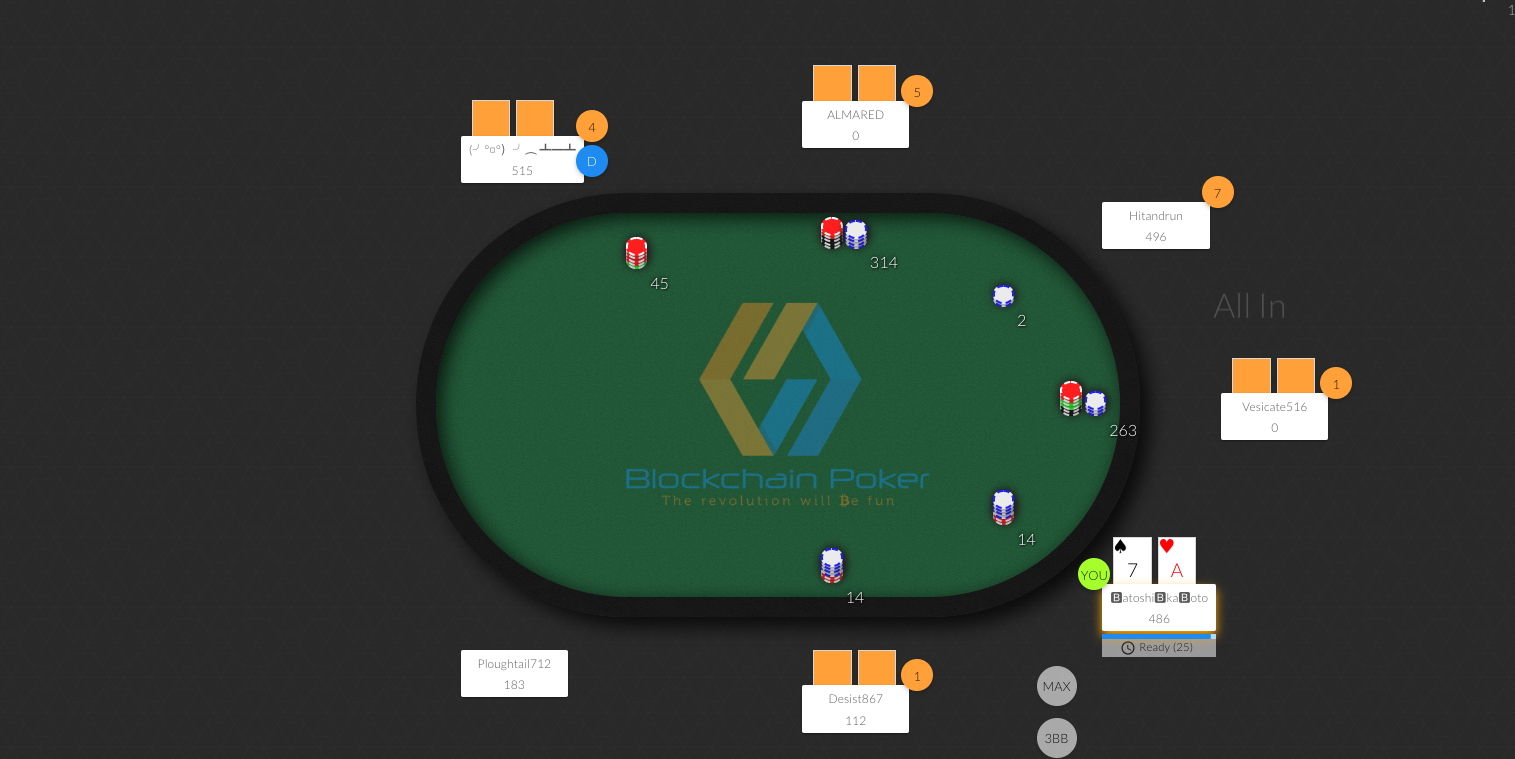
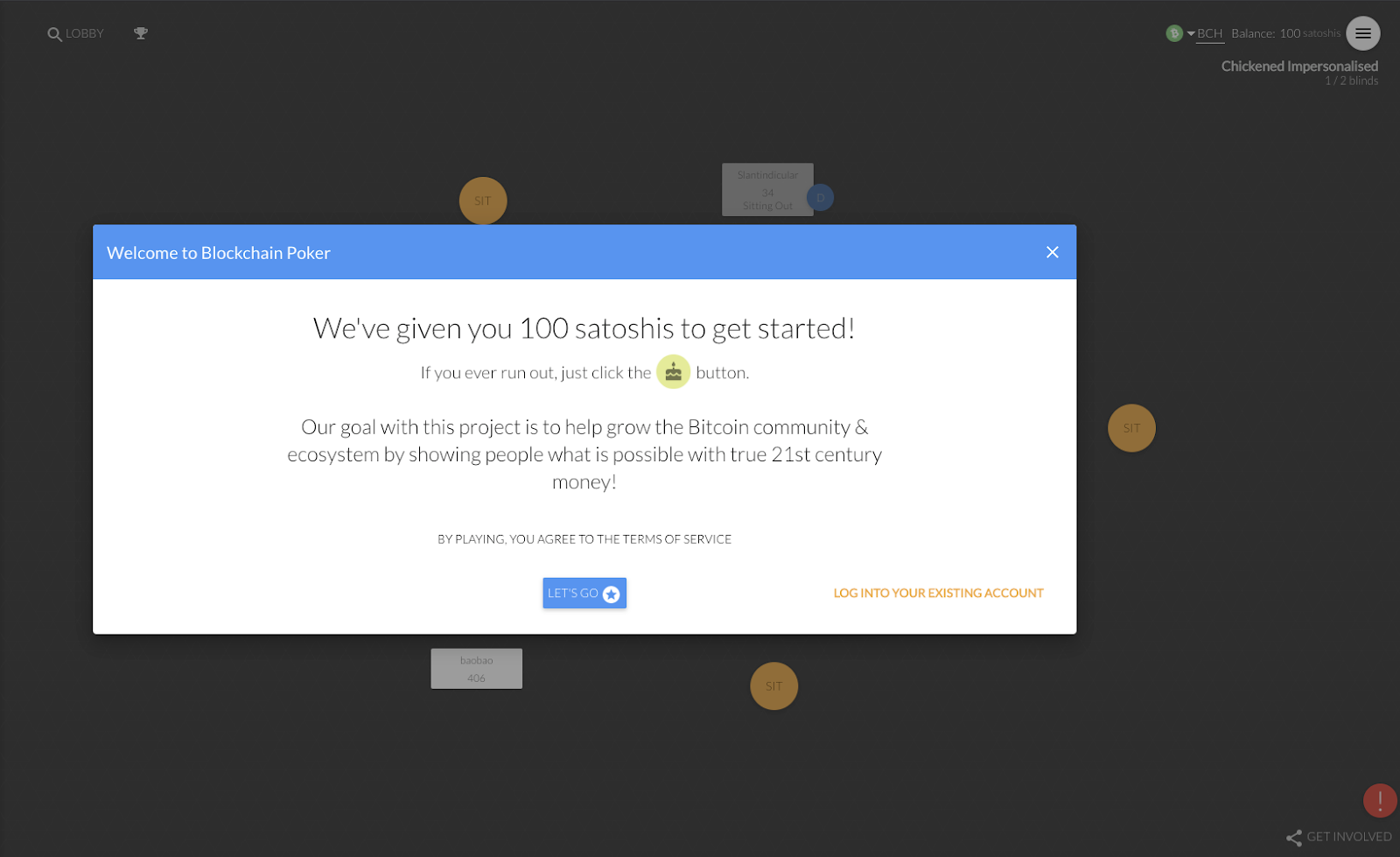
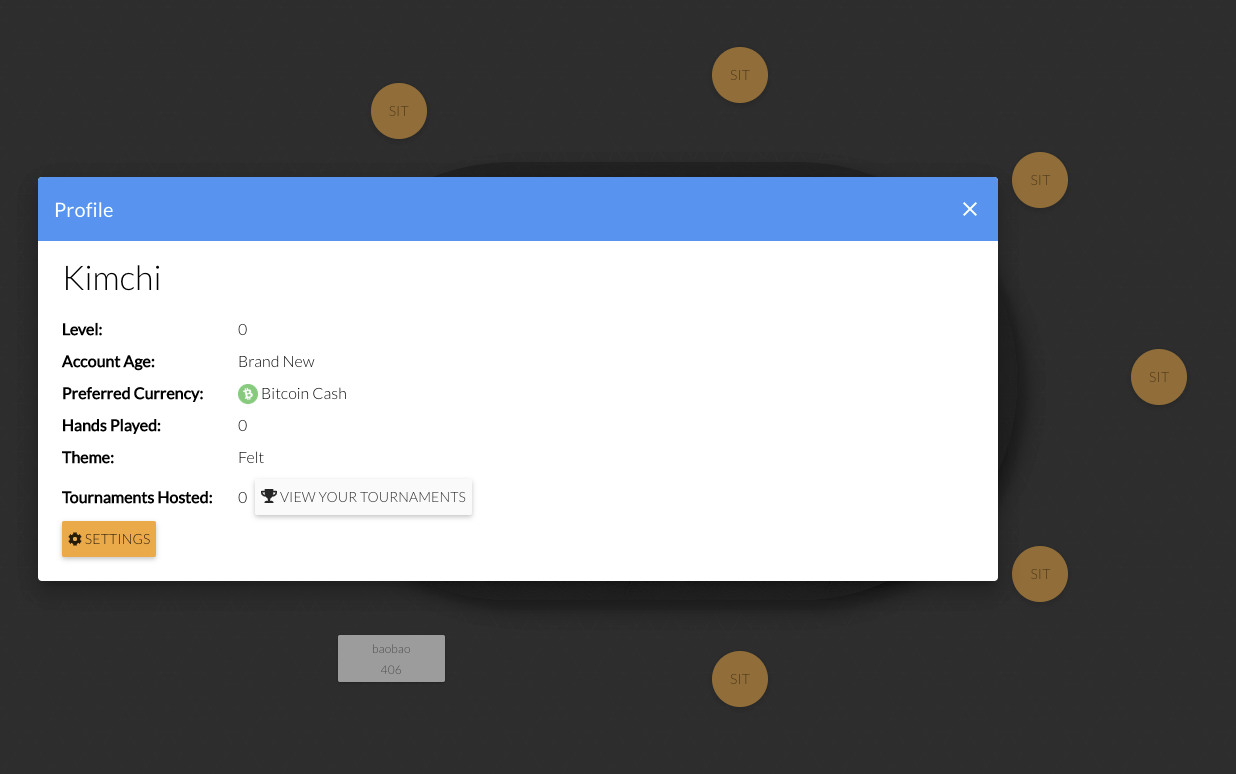
A Quick Tour of Blockchain.Poker **Contents:** **Overview** **Registration** **Deposits & Withdrawals** **Cash Games** **Tournaments** **Hosting a Tournament** **Hotkeys** **Affiliate Program** **Rake & Rakeback** **Playing on Mobile** **Downsides** Overview Blockchain.poker is a web-based poker site that supports play with three different cryptocurrencies: Bitcoin (BTC), Bitcoin Cash (BCH), and Bitcoin SV (BSV). Standout features of Blockchain.poker, when compared to other sites, are the low rake, ease of registration, and extremely fast processing of deposits and withdrawals. https://blockchain.poker/#/?affiliate=95a154e27e4e91f0e63ad4e11adda91d%23cash *Note that all chip amounts on the site are denominated in satoshis (fractions of a bitcoin). The 1/2 tables are not $1/$2, but are microstakes playing with stacks less than a penny.* Registration The registration process—or lack thereof—is one of the most attractive things about the site. Upon visiting the site for the first time, an account is automatically created for you and you are given 100 satoshis (a fraction of a penny)... enough to sit down at a 1/2 (satoshis) table and try the site without having to make a deposit. There are also several daily freeroll tournaments you can use to try to build up a bankroll. Clicking the hamburger menu in the top right of the screen will show you your account details. New users are automatically assigned a random username, which can be changed in the settings area. The settings menu also allows you to change the visual theme of the site, use a four-color deck, change standard bet shortcuts, and set a password. If you intend to deposit any amount of money on the site that you wouldn’t feel comfortable losing by mistake, please set a password to make sure that if your browser cookies are wiped, you’ll still be able to access your account. **Note that at no point in this process are users asked for any personal information, nor is any geolocating used to block users in certain jurisdictions.** This will be a big plus for people who live in areas that restrict access to online poker. **Deposits and Withdrawals** Another surprising feature of the site is the speed at which deposits and withdrawals are completed. Clicking ‘deposit’ in from the drop-down menu displays the following prompt. Deposits made using Bitcoin Cash or Bitcoin SV are credited to your account balance immediately. BTC deposits require waiting for 1 confirmation before the amount is credited. If you don’t have BCH, BSV, or BTC, you can also deposit using a number of other coins by clicking the ‘Deposit Other Currencies’ button, allowing users to deposit through SideShift.AI (another highly recommended service!) https://sideshift.ai/a/yZTmjtSUZ If using the SideShift deposit feature, please only send coins from a wallet that you control. If you request a withdrawal from an exchange, the exchange might take a long time to process your withdrawal and your rate quote will expire, creating a headache for you to get your funds back. For my test, I deposited 100 JPY. Less than 2 seconds after hitting the send button in my wallet, the amount was already credited to my account. (I actually sent three deposits trying to get the perfect screenshot, confetti included.) Withdrawals are just as easy, and in most cases also process instantly (the only time it hasn't been instant is when withdrawing a larger amount. Even then it only took ten minutes.) Withdrawals incur no cost when using BCH or BSV, but you do have to pay a transaction fee when using BTC. **Cash Games** With my modest bankroll of $2.50 ready to go, it’s time to sit down at a table. The table selection screen is as follows: I’m doing this test in the middle of the night during US/Europe hours, so there’s not much activity right now. I sit down at the 1/2 table, as that’s the only one open right now. I could also create a new table at higher stakes and wait for someone else to sit, but for the purpose of this report, the microstakes will do just fine. The UI of the site will be familiar to anyone who’s played online poker before. You have your hole cards, action buttons, and on the table you can see the bets of the other players. When it’s your turn to act, the previous action buttons are replaced with a fold button, a time bank, a bet slider, and preset bet-sizing buttons. One helpful feature is that mousing over any chip amount will show you the USD equivalent. This works not only for the pot, but also for player stacks and inside the text log of hand action. **Tournaments** I’m a big fan of the tournaments feature on the site, although as a consequence of being a relatively unknown site, the prize pools of the tournaments are usually quite small. The way the blinds are structured on the tournaments means that each tournament lasts for ~45 minutes to an hour. Customizable blind structures have not been implemented yet, but are listed on the site’s roadmap. If you bust out of a tournament, multiple entries are allowed! Even freeroll tourneys can be re-entered for a small re-entry fee. As you can see, there are plenty of freeroll tournaments throughout the day to choose from. These can be entered for free but offer real money prizes. Most tournaments are not offered by Blockchain.poker but are created by other users of the site. **Hosting a Tournament** This is another very unique feature of Blockchain.poker: the ability for users themselves to organize tournaments. If you market your tournament and get enough players, you can even make money by organizing them. When creating a new tournament, you can set the name and upload an image to be used on the table felt. Some people use this to show a logo and advertise a service, others just use it to be funny. The next page lets you set the guaranteed prize pool amount and either the buy-in cost or to make your tournament a freeroll. The preview slider shows a hypothetical prize pool, profit, and prizes based on how many players join. 5% of each tournament buy-in is collected as rake, half of which goes to the site and half of which goes to the tournament host. The other 95% goes to the prize pool. The amount guaranteed by the host is only the minimum prize pool. If 11 people register for my tournament, their buy-ins will cover the entire prize pool, and I will actually earn 275 satoshis in profit. Unfortunately, if only five people register, then I’ll be on the hook for covering the remainder of the guaranteed prize pool. The next page is for scheduling your tournament. It uses your computer’s clock for the time, so don’t worry about figuring out what time zone it’s supposed to be in. You can also make your tournament a recurring event. You can optionally make a password protected tournament if you’d like to host a private event. You can include a sponsor name and a link of your choice. The final screen shows a preview of everything else. Note that the maximum number of players in a tournament is 250, although this number will likely increase as the site grows. It was recently raised from 100 players to 250 to accommodate the growth of the site. I actually went ahead and made this a real tournament. It will run once per day for one week after the publication date of this post. You can check out the details here: **https://blockchain.poker?tournament=8356&affiliate=e3442498aa0df53ec8e815b81450d341** **Hotkeys** A number of hotkeys make it possible to play entirely using your keyboard, in case you get tired of clicking with the cursor. **Affiliate Program** If you get your friends to visit the site using your affiliate link, they’ll count as one of your referrals and you’ll earn a share of all the rake they generate playing on the site. **Rake & Rakeback** The site offers a very competitive rake structure. At the lowest stakes, it’s about on-par with all the major online cardrooms, but as you move up in stakes the rake becomes lower and lower. The lowest possible rake is 0.1% capped at 1 million satoshis per pot, or ~$3.30 if playing on BCH tables. For comparison, most online poker sites charge 5% regardless of the stakes you play. source: **https://www.yourpokerdream.com/the-big-rake-comparison-of-all-online-poker-sites-2018/** Under the Rewards tab in your drop-down menu, you can see the site’s rakeback promotion. Each hand you play earns you a certain number of points, based on how much rake was paid during that hand. You can get some money as rakeback for as low as 100,000 points, but if you play for long enough you can work your way up to 50% rakeback, cutting the rates in the above chart in half. *Note that you must spend your points in exchange for the rakeback.* Redeeming for a lower rakeback percentage will decrease your points by that much, so if you really want a certain rakeback percentage, you have to save those points. **Playing on Mobile** Because the site runs in your web browser, you can also play from any phone. The UI is a bit more compact but all of the same features are available. **Protip:** If you add the site as a home screen widget, it removes the URL bar from the top and it more closely resembles playing in an app. **Downsides** Of course, no poker site is perfect. It took me a while to get used to the UI of the site, but I think that’s just because I was more used to the user interface of America’s Cardroom before that. I’ve experienced very few bugs in more than a year of playing on the site, but they do happen from time to time. Mainly just minor display bugs, but nothing that’s ever caused me to lose money. I’ve only experienced site downtime on one occasion, which is infinitely better than the uptime of ACR. The biggest downside of playing on Blockchain.poker is that because it is still a relatively unknown site, the player pool is small and it’s hard to find games at the stakes I’d like to play. That’s why I’ve written this guide, in the hopes of attracting more people and getting some games going. The good news is, the site *is* growing. They have a pretty cool statistics tab to see how the site is progressing over time. If you’d like to try to organize a game at higher stakes, you can join this Telegram channel: **https://t.me/joinchat/Aw5xDlePT7rq0h5k8NiPTw** Thanks for reading, and good luck! **Click here to use my affiliate link for Blockchain.poker****!** If you don't want to use an affiliate link, you can click here instead. https://blockchain.poker/#/?affiliate=95a154e27e4e91f0e63ad4e11adda91d%23cash
+23 more