 @Geri
edited
@Geri
edited
AthlonXP vs Super Modern graphics cards The AthlonXP i have introduced in the previous articles, turned obsolete around 2006, with the arrival of the new 64 bit chips. The AGP port got also replaced by the new PCI-E port, IDE connector on hard disks also got replaced with SATA. A complete platform replacement was advised at that time, but what if someone could not upgrade his computer, and was stuck with the AthlonXP for longer? Lets find out! Upgrading to Windows Vista When using Windows Vista on the AthlonXP, of course only the 32 bit version can be used, because the chip doesn't supports the 64 bit operation mode. The PC must be upgraded to at least have 1 GB RAM, because Vista eats almost 400 mbytes on its own. Sadly, when trying to run post-2010 applications or games, none of them works. Configuration of the application is incorrect - or illegal instruction call due to missing CPU instruction extension support, are very common errors. Most of the games are just simply compiled to 64 bit only. This makes post-XP era applications impossible to run, even if Vista itself can run on the system. This is true even for late DirectX9 games, which typically refuse to work. Staying with Windows XP Therefore it makes no sense to upgrade to Vista, you will only lose speed, but will not gain functionality. This also means, DirectX10 and DirectX11 games are totally out of question, because Windows XP doesn't supports these APIs. This effeticely limits the AthlonXP system to pre-2010 games. OpenGL implementation is up to the graphics card driver, you can get drivers supporting OpenGL 3.1 or above from new graphics cards, but if the game is compiled for 64 bit, then that will out of the luck as well. Upgrade the graphics card The AthlonXP systems have AGP ports, which limits the possibilities. Typically, cheap AthlonXP systems were equipped with FX5200 or Radeon 9550 cards. Faster cards from the GeForce 6 and 7 series got also released for the AGP port, however, the strongest graphics card released for the AGP port is the Radeon HD 3850 (i have one, currently in non-working condition, so that will not be tested right now). Power supplies in AthlonXP systems however lack the required 6 or 8 pin graphics card connector, making it almost impossible to use such graphics cards in these systems. Even if the required power connector for the late AGP cards are present, compatibility problems can result compatibility problems with some motherboards, resulting the 3850 and such cards to crash the computer during the startup initialization. Then a miracle happened Around 2010, some manufacturers understood, there are users stuck with pre-2005 computers. Nowadays, 10-15 year compatibility span is the aboluste normal, however, in the early 2000s everything was obsolete just within a few years, and compatibility cycle with longer than a few years seemed a little bit unreasonable, and non-mainstream. SATA to IDE adapters got released regardless, allowing the new SATA hard drives to be connected to the older motherboards (or vice versa, connecting old hard drives to new motherboards). And there were manufacturers releasing graphics cards with new GPU cores, specifically the purpose for operation in older computers. Modern graphics cards for old systems There are serveral challenges when designing a modern graphics card for pre-64 bit systems. First of all, the AGP port was thrown from motherboards. Second, these old AthlonXP era computers usually had power supplies without the new PCI-E graphics card connector. Translating PCI-E to AGP is a non-straightforward task, requires a super compilcated bridge chip, and sometimes, specialized drivers, which only the creator of the GPU can write. The driver code can't rely on newer instruction set extensions, because the older processors may lack these. This means, the graphics card preferably has lower power consumption and can work without an external power plug, still works with Windows XP and on old 32 bit systems, must be cheaper than replacing the entire system, runs on relatively low temperatures to fight overheating, and will be produced in small numbers - the low quantity of production must be worth for the manufacturer to do it. The solution: PCI graphics cards, baby! Because a PCI-E-AGP bridge is very complicated, and the PCI is closer to PCI-E, the manufacturers decide to release PCI graphics cards instead. Some Pentium3, Pentium4 and AthlonXP computers had no AGP port at all - especially the low-end ones - and releasing graphics cards to the PCI port made it possible to release new graphics chips for them. Suddenly, the PCI graphics cards made a comeback just before 2010. The strong AGP graphics cards, such as the Radeon HD 3850 and Radeon HD4560 got withdrawn from the market after 2008. Both nVidia and AMD stopped producing AGP-PCI-E bridge chips (which were required these cards to be manufactured for the AGP port). PCI comeback Around 2008, the AGP graphics cards already got a phase out. Simultanously, PCI versions of the new DirectX10 graphics cards, such as the Radeon x1550 (dx9), the Radeon HD2400 (dx10) and GeForce 8400 and 9500 (dx10) was manufactured in very small quantities at the end of 2007. Older GPUs also got re-used for the purpose of building PCI graphics cards. Initially the PCI version of the GeForce FX5200 got restocked (which was a technology from 2004). The GeForce 6200 got released in PCI form in 2008, and got widely available around 2009. This means some manufacturers was desperate to release PCI graphics chips using very old stock graphics chips. The Radeon 4350 PCI got released at the end of 2008 and also got widely available in 2009. The GeForce 210 PCI got released in 2009. The PCI version of the RadeonHD 5450 (which is a DirectX11 hardware) got released in 2010. The NVIDIA GeForce GT 430 PCI edition is a card from 2010 and supports DirectX11, with newer drivers, it even supports DirectX12 on a 11_0 feature level. The NVIDIA GeForce GT 520 PCI is the last graphics card for the PCI slot, released in 2011, and also supports DirectX11, and DirectX12 with the feature level of 11_0. The disadvantages First and most obvious drawback of using a PCI graphics card is the bus system instead. The PCI port is limited to 133 MBytes/sec (or 266MBytes/sec when used in a 66MHz PCI port). The 1.0 version of PCI-E 16x can easily deliver 4 GBytes/sec. The second biggest problem is, these cards are limited below 20w, because 20w is the upper limit of PCI power delivery. To achieve this, these cards almost always use the simpler 64 bit VRAM interface and low clock speed, usually combined with DDR1 or DDR2 memory modues, rarely DDR3, limiting the graphics memory bandwidth to between 5-10 GBytes/sec. This means resolutions above 1024x768 can be laggy, or bandwidth consuming graphics effects will be slow in some situations, such as high quality smoke, depth of field, and so on. And of course, the DirectX 10 and 11 functionalities are useless on the systems where these graphics cards meant to be used. The advantages Unless you have an early Athlon64 or 64 bit Pentium4, the DirectX 10 and 11 capabilities will be not be used due to the lack of software environment. However, these graphics cards offer support for modern features. First of all, modern OpenGL capabilities can be used. And these modern and strong GPU cores promise to deliver much faster performance than the old FX or Radeon 9xxx class graphics cards. Can they fullfill this promise? We will find out. These modern GPUs also consume far less power. In theory, these graphics cards could gave a fresh boost to old computers, replace your dying and beloved GeForce Ti4200 and Radeon 9600 cards with something less powerhunrgy, less noisy, more modern, more compatible and flexible solutions. Radeon HD 5450 The star of this test is an HD4540 from Club3D. This card is a passive single slot card. Despite its a passive card, i recommend to have some air flow to prevent overheating. A generic 12cm fan on the front of the case should do it, that will move enough air for the card. The card itself has no fan connector. The card has VGA, DVI and an HDMI connector. It is equipped with 512 MByte of DDR2 memory.
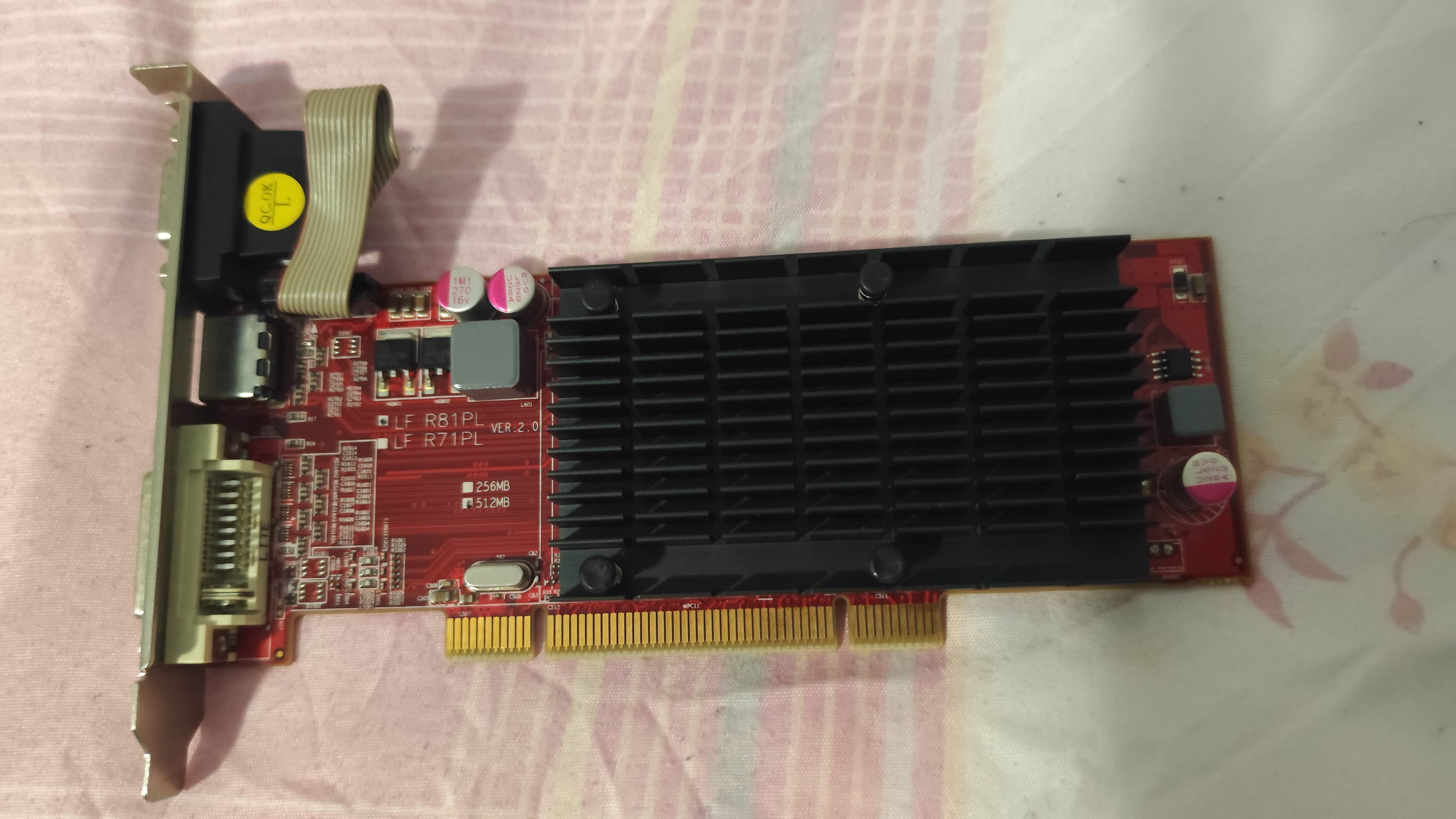
After taking a glance at the card, it looks quite minimalistic, not too much components can be found on the front.
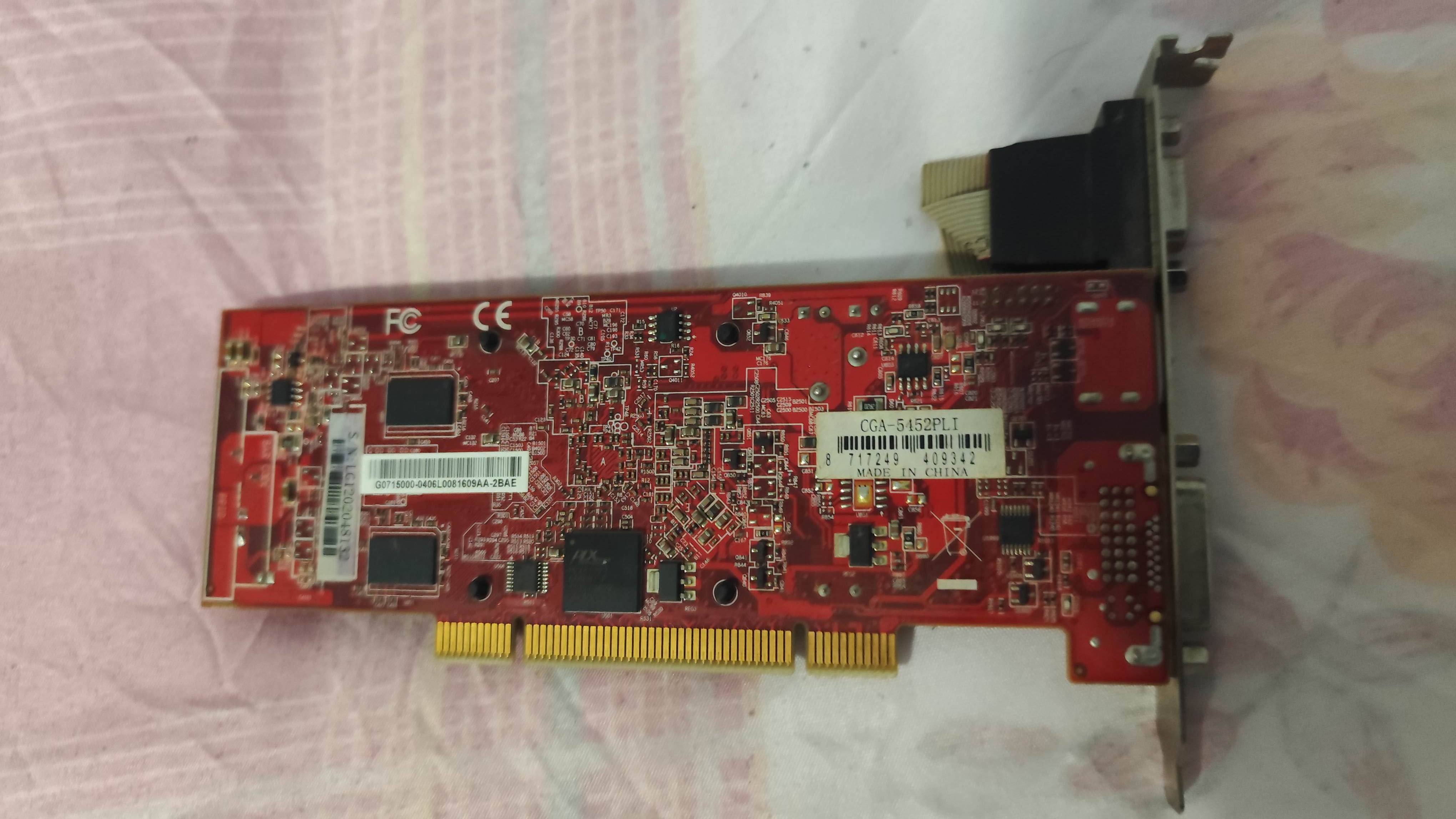
This is however, a wrong first impression. The card is packed with a lot of components on the back. The small black chip is the PCI-E to PCI bridge chip, and its support circuits can be found around it. Two of the memory chips are at the back of the card. The card feels very solid, its rated at 19,1w (the maximal available power rating of a PCI card). When these cards were brand new, their price were about $50 so they were quite affordable. Besides for modern 3D features support, it also supports hardware H264 video decoding. FX5200 AGP In this test, a regular generic passive GeForce FX5200 will be featured. This was a mass-card, the first and cheapest DirectX 9 accelerator from 2003 by nVidia. Its also a 64 bit card, it has VGA, DVI, and analog TV out plug. The FX5200 was frequently combined with AthlonXP systems as a cheap low end card, it was notorious to be known to be slower than nVidia's previous GeForce4 ti4200 cards, which it was supposed to replace, but due to its weak 2x2 pipeline and 64 bit memory interface, it turend out to be slower. Its a typical graphics card, which may lacks muscles, but its and AGP card, therefore it can profit from the larger bandwidth, where the game renders the polygons directly from system memory. This is a typical card for this system, which the HD5450 and other stronger cards attempted to replace. The test setup The test system will be the AthlonXP build i have showcased in this article a few months ago. The AthlonXP is paired with an ECS K7S5A motherboard, which is a SD/DDR memory combo motherboard, supporting up to 2 GHz processors and (unofficially) two 512 MByte memory sticks. It has an AGP4x port, five PCI ports, and two standard IDE ports. Windows XP will be used to carry out the test, even if it can run Windows Vista, the later one ran on it like a zombie. Motherboard: K7S5A CPU: AthlonXP 1800+ @ 1.65GHz (overclocked) RAM: 1GB Yumebench This is a benchmark and a demo of a never released Yumeria game's PC version. I have set the resolution to 1024x768, and measured the performance. Yumeria uses DirectX9.
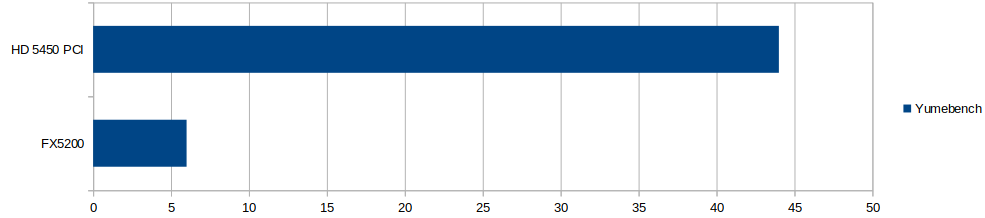
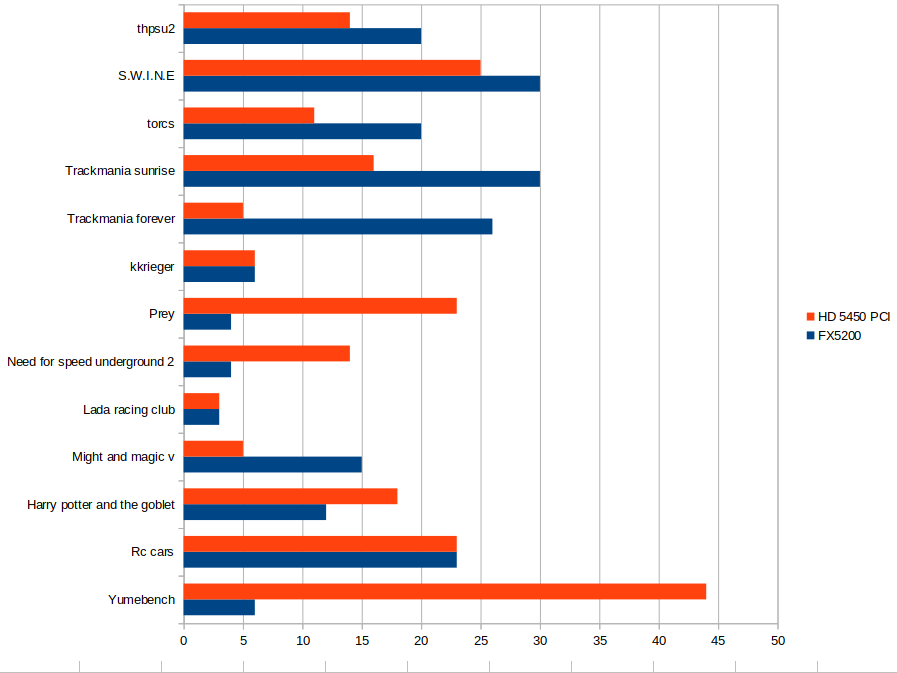
The HD 5450 ran with a good 55 fps, meanwhile the FX5200 sometimes struggled with 6 fps, which means, the 5450 was more than ten times faster. RC Cars RC Cars is a windows XP game, which i have never tried before. I don't like the controls, the cars react unnaturally, and its generally not a good experience. But how our graphics cards can run them?
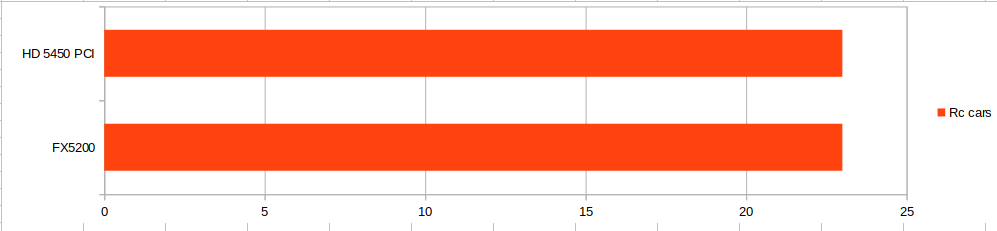
Both graphics cards max out at 23 fps, likely due to a CPU limit. As the CPU was already overclocked, likely the AthlonXP had no muscles left to run this game reliably above 25 fps. Harry potter and the goblet of fire This is a Harry Potter game, and this is one of the first Harry Potter games with demanding graphics (the early Harry Potter games ran fine even on GeForce2 class graphics cards). The graphics looks good, and the game runs on Windows XP without an issue.
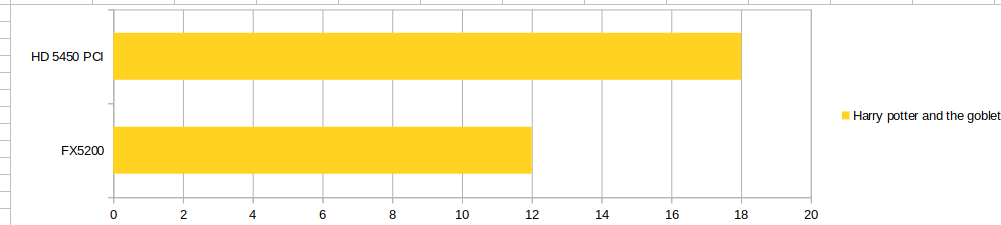
The performance was not so great. The FX5200 only managed to achvieve 12 FPS, and the 5450 was able to deliver 18, i wouldn't call this game playable on any of these cards. And this was in 640x480, so i would assume the low speed is due to a combination of various factors. Heroes of Might and Magic V This game is a role playing game, which looks like some sort of round based derivation of an RTS game. The game is a 3D game, but it uses older technologies to display the geometry.
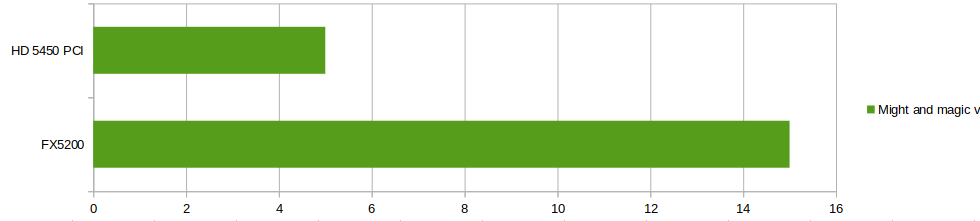
As we can see, the FX5200 was three times faster than the 5450, which is probably because the game renders the geometry from the system RAM. This limits the performance on the 5450 quite seriously. I wouldn't rule out better performance if playing a bit with the drivers, but that wouldn't do miracles either. This however a win for the FX5200, which reached almost playable frame rates. Lada Racing Club This is a russian game, which was released in 2006. In theory it should run well on a 2 GHz chip, but i got serious performance issues when running this game on this computer.
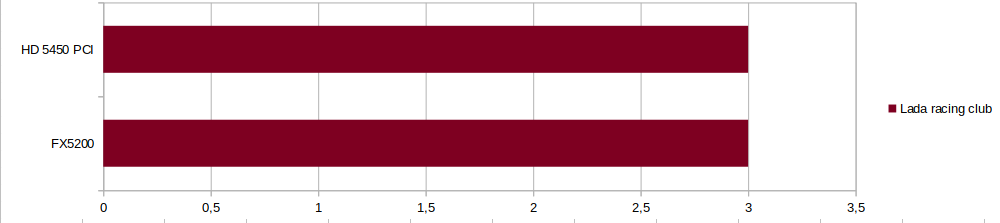
Both chip managed to reach 3 fps, which can be due to various factors. The game - according to the official specifications - requires far stronger graphics cards, such as strong Dx9 accelerators with 256 bit memory bus. On both graphics cards, the game produced some shadow bugs in a similar way. This game was unplayable. Need for speed underground 2 This was a popular race car game, but it was notorious for its huge graphics card requirements. I remember trying to play this game with FX5200 in its days, setting every details to minimal. This test was done with the default settings, with the eye candy effects turned on.
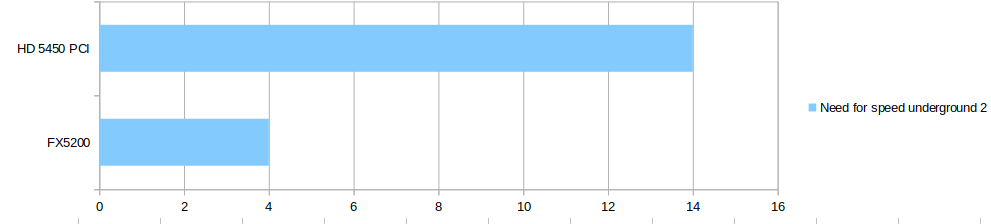
The FX5200 reached only 4 fps, but the HD 5450 reached 14. This means, the HD5450 would be playable with lowering some of the graphics details. This is a win for the HD 5450. Prey This game uses OpenGL 2.0, but can also work on graphics cards with OpenGL 1.x drivers. The game uses a modified version of Doom3, and its about an alien invasion, which happens in a native american reservee. I ran this game in 1024x768, with the default graphics settings.
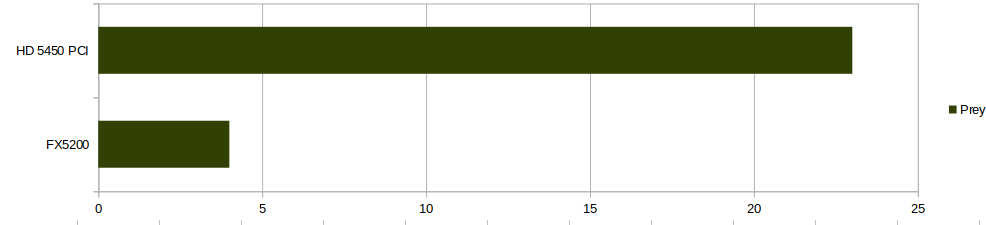
The FX5200 only reached 4 fps, and was totally unplayable. However, the HD5450 reaches 23 fps, and it was totally playble. Another win for the 5450. KKrieger This game is a minimalistic single-exe game, which is an FPS game which generates all of its conten't ony the fly. It can fit on a floppy disk. The game uses a simple graphics engine, which is sadly not very well optimized.
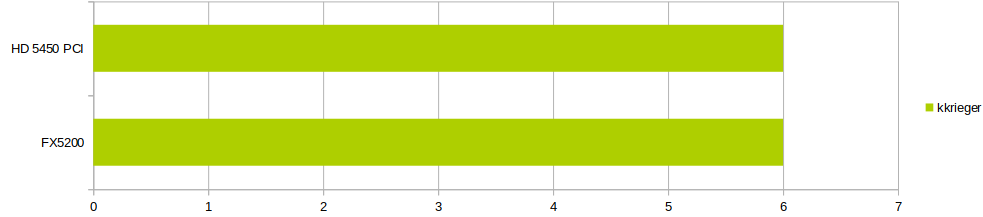
The performance is terrible, probably due to the lack of proper optimization. The game achieved only 3 fps on both cards, likely due to CPU limit. This AthlonXP cpu is not strong enough to run this game with acceptible frame rates. Trackmania Forever This game was a well known and simplistic car racing game with acceptible graphics and machine requirements. I remember playing it with the GeForce FX 5200 back then, and the game ran fine, meanwhile it delivered acceptible graphics quality. This game runs well on Windows XP.
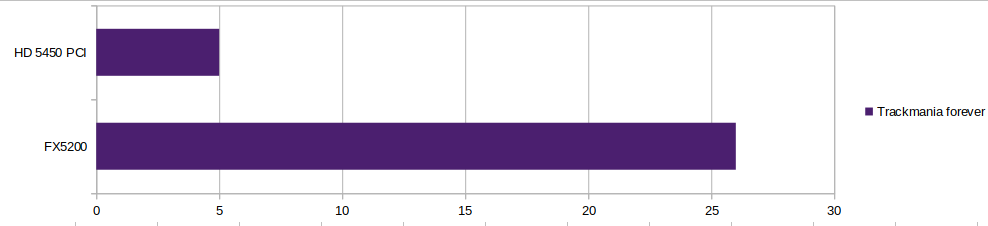
The FX5200 delivered 26 fps in 1024x768, meanwhile the HD 5450 delivered only 5 fps, and it was a stuttering mess. Likely the drivers of the HD 5450 was not able to handle this game well, because they are too new. Or the PCI bandwidth was just not enough for this chip. Anyway, this low result is unacceptable and unplayable. Trackmania Sunrise Another Trackmania game, which is probably even older than the previously tested trackmania game. It is fine tuned for Windows XP, and early GeForce FX graphics cards love this game.
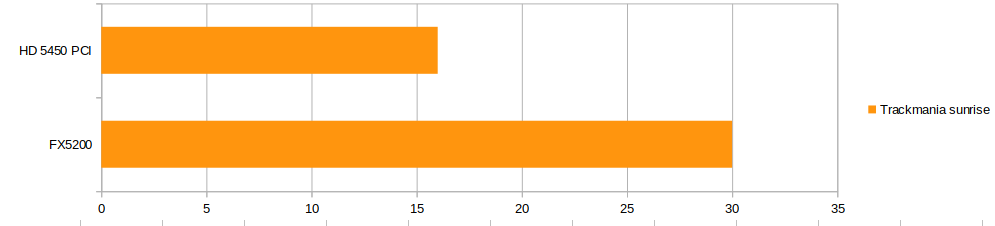
And just as before, the FX5200 delivered around 30 fps, the HD 5450 only reached half of this, topping out at 16 fps, likely due to driver issues, or due to the issues with the PCI bandwidth. This two game is just simply not a good experience on the HD 5450. TORCS This is a Linux game, but the Windows version was tested in this article. The engine of torcs uses the traditional OpenGL 1.x pipelines, but it can use newer extensions to render the geometry. This means, the performance of the HD 5450 shouldn't be hindered.
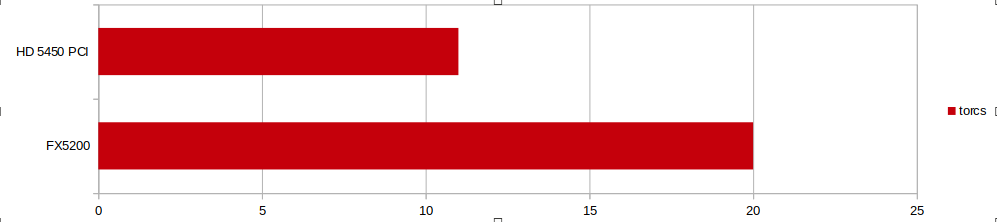
But it is. The FX5200 can run the game at 20 fps, meanwhile HD 5450 can only reach 11 fps, which is quite a bad result. The game is totally unplayable on it. S.W.I.N.E This is a Hungarian game from decades ago. Its a 3D strategy game, where the Rabbits and the Pigs are fighting their eternal battle. Its an RTS and the developer released it for free after it was removed from the markets.
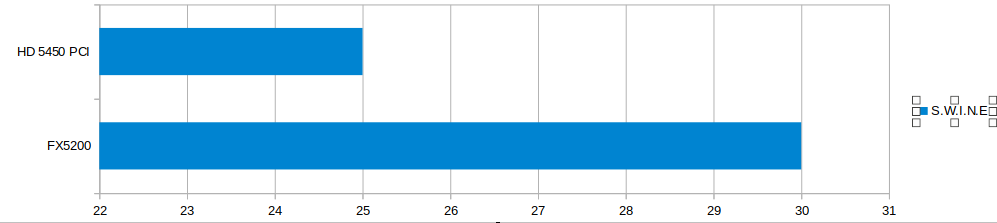
The FX5200 can pull a perfectly smooth 30 fps in this game, and the 5450 can reach 25 fps. The performance of the 5450 is once again dissapointing, and the problem could be rooted in the drivers. Tony Hawk's Underground 2 This game requires a stronger CPU more than it needs a strong GPU, i remember playing this on my Pentium 4 laptop with a Radeon 7200 back in school days, and the game ran fine on it. It features a skater, who tries to gather as much points on levels as possible, to compete with others.
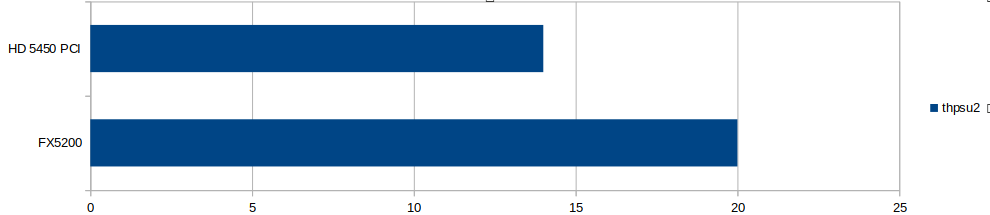
The game ran acceptible on the FX5200, reaching 20 fps. The same can't be said from the 5450, which once again lags behind the FX5200, and only can achieve 14 fps in some situations. The verdict Buying modern PCI graphics card for your old 32 bit computer to achieve better gaming experience is a wrong idea. The HD 5450 can't delivers what it promises. The drivers are too unoptimized for operating on an old AthlonXP environment from 2003. Its drivers are not fine tuned for the older applications. And to notice the elephant in the room, the PCI port can't deliver enough bandwidth. Due to the combination of these factors, even the FX5200 is faster than the HD 5450 in most games. There are exceptions, but you will be probably better off, if you just buy some old but stronger AGP card for the system instead, such as a Radeon 9550, or even a GeForce 6200. As those cards are about three times faster than the FX5200, and they still will have proper and well optimized drivers for AthlonXP systems.
No comments yet