 @Geri
edited
@Geri
edited
AthlonXP - the first gaming processor for PC The Athlon XP was released in 2001. The goal of AMD was to make a cheap CPU for gaming and HEDT type usage. It is considered to be the first cheap gamer processor ever. The Athlon XP platform is one of the most important milestones in the PC history and in the history of gaming. It has created, shaped and formed the phrase gaming system, as we know of it today. In this article, this platform is going to be explained and featured. Nowadays you can buy a decade old i5 system with an 8GB graphics card, for less than your lunch money, including RAM, PSU, and a small SSD. You can run every games on it, including the most modern titles, at least in minimal settings. This was not always the case. Before 2000, gaming was not for the masses. Every PC computer was specifically targeting office type of usage, it was intended to be a multimedia computer for home-users, it was a cheap internet browsing machine, or it was aiming to be a work-horse, or a server computer.
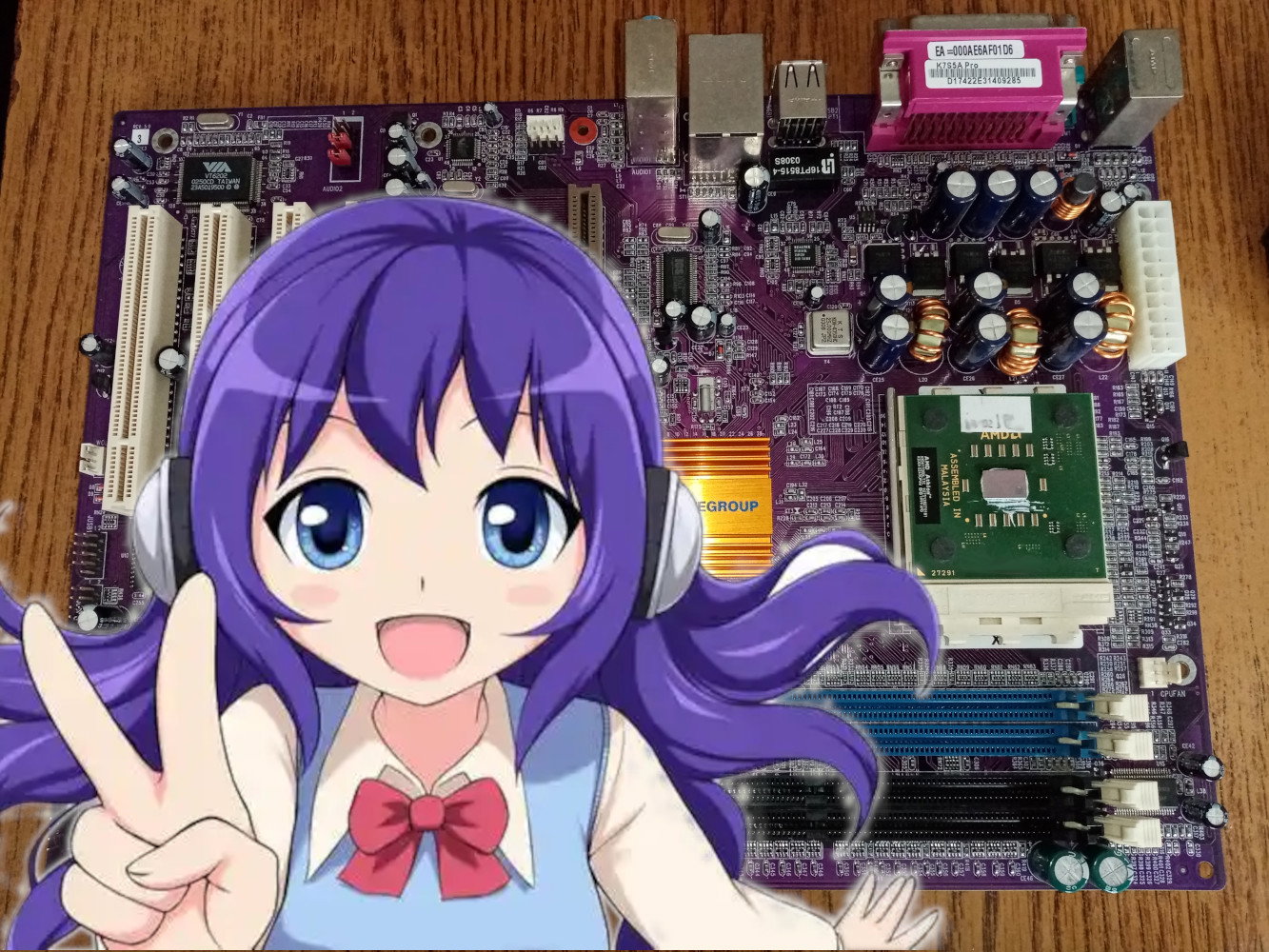
Gaming PC? Impossible. Around the year 2000, the typical cheap multimedia or internet-PC had a cheap Celeron or an AMD K6 based processor around 400 MHz. These systems weren't suitable for gaming. Only the simple C-class games, and games meant for casual gaming (mostly 2D games) were designed to be able to run on these systems. These computers were hard to upgrade. Even if so, a 600 MHz CPU was the possibility at most, without exceeding the power supply, VRM and FSB limitations of that time. Game developers optimized their games for the high-end systems, such as the Athlon or Pentium III. An AMD Athlon or an Intel Pentium III CPU around 1 GHz, with a compatible motherboard, power supply, RAM, would have set you back with $2000 (would worth around $5000 at current price). This price was too high, even in modern and rich western countries. CPU performance was not the only limiting factor to reach good gaming experience with the cheap multimedia computers. On the cheap home computers and office computers, motherboards had only AGP 2x slots, severily limiting the graphics card's bandwidth. Or they had no AGP slot at all, limiting the choice to old graphics cards. Chipsets sometimes only supported 66 MHz memory modules and it was not possible to set the FSB above 75 MHz on most of those systems. The only games running on these systems were 3-5 year old titles with typically less than 10k polygons in total, and simple shareware games. Even inserting newer graphics cards didn't helped any more, as the system was too weak to utilize its performance. As 2001 arrived, new titles frequently didn't managed more than 3-4 fps on these systems. Even if some game got carefully optimized to work well on these computers, that only meant 15-20 fps at most. Despite AMD and Intel increasing the clock frequency of the processors above 1 GHz neck by neck, doubling the CPU frequency almost within a year, prices of these high-end systems didn't decreased. AMD prepares the AthlonXP AMD was the first one to understand, they have a giant market gap which they could fill. People were hungry for gaming, but they couldn't spend half year worth of their savings on a high end PC. What AMD was designing, was the first gaming PC platform. The AthlonXP was not only meant to be a gaming PC, but also a CPU for generic multimedia, office, HEDT and server usage as well. The base of the new processor was the Athlon. It was released in 1999, and at a given clock speed, it was head to head to the Pentium 3 platform. The Athlon was a new architecture at its release, and motherboard and chipsets were very potent. VIA was one of the first partner of AMD to make motherboard chipsets for the Athlon, but SiS, ALi, nVidia, ATi also decided to develop motherboard chipsets for the upcoming AthlonXP. AMD decided to release the new AthlonXP between 1 GHz and 2 GHz clock speeds. And they tried to keep the price tag of the lower clocked models around 100$. They was able to do it by staying at the 180 nm manufacturing node for the early iterations of the Athlon XP chips (codenamed Palomino). This however came at a price, these processors exceeded 60W TDP alone, which was previously unheard for home computers. The Athlon XP is far more than just a cheap, high clocked high TDP version of the Athlon. They use the same pinout as their previous Athlon processors. They, however, have added the SSE instruction set (which was previously exclusively used by the high-end Intel processors), and did some upgrades in the microarchitecture, which allows better superscalar functionality. This meant some old Athlon motherboards were incompatible with it, or required a BIOS upgrade to work properly. The Athlon XP is ready Athlon XP got released in october 2001, and the cheapest model ran at 1.33 Ghz, its price was only $130. The fastest model at 1.53 GHz was $250. The price of the new motherboards were around $70, and these motherboards typically had a AGP 4x port, support for 133 MHz FSB and RAM. VIA, SiS and ALi, alongside with AMD itself, started to mass produce their motherboards for the new CPU. These motherboards were typically offering features, which were previously the courtesy of high-end systems: they had 5 or 6 PCI ports, 6 or more USB header pins, support for hard disks up to 120 GByte, and sometimes support for the new upcoming DDR memory standard. Intel was shocked Intel, which released the Pentium 4 (Willamette) processors a year ago, caught off guard. The Pentium 4 clock to clock was slower than the Athlon XP in gaming. Previously, Intel processors had the upper hand in raw performance, and AMD always competing only in the mid-range and low-end markets. The crown was taken, yet the price of Intel chips were more than twice of AMD. Not only Intels CPU, but their platform as a whole, was also very expensive. Initially, they used the very expensive Rambus RDRAM, and a new style of power supply unit was required to power the motherboards, having a new plug specific to Pentium 4 systems. A high-end Intel Pentium 4 system was easily around $2000. In contrast, an Athlon XP system was only $200-300 and it ran with most of the normal cheap power supplies and RAM modules. Intel refused to grant a license for chipset manufacturers to make motherboard chipsets for the Pentium 4 platform, and this meant they have no flexibility to offer. For example, early AthlonXP motheraboards were also backwards compatible with the old 3.3v AGP 2x cards, so older high-end graphics cards were also usable in AthlonXP systems, meanwhile most Intel motherboards by then were only compatible with AGP 4x. To avoid total facial loss, Intel restarted the production of the aging Pentium 3 chips, with a new generation called Pentium 3 Tualatin, with doubled L2 cache. They also discontinued the entire Pentium 4 Willamette core which was beyond saving at this point, so they switched to a new architecture called Northwood, using a new motherboard socket as well. Athlon XP turned out to be good AthlonXP was a turning point for AMD. The platform was stable, and AMD decided to keep the socket even longer. Newer models of the AthlonXP continued to be released for years. The 180nm Palomino core got replaced with the 130nm Thoroughbred core in 2002 summer, higher clocked models capable of exceeding 2 GHz. AthlonXP processors with the Barton core, released in 2003, doubled the L2 cache from 256 KB to 512 KB. AMD switched to a new socket for their new 64 bit processors at the end of 2003, however, it continued to sell AthlonXP based systems for a while as low end offering. New mobile variants continued to be released even in 2004. AthlonXP were gone from stocks in 2006, when the new dual core processors were released - and single core 64 bit chips became the low end. AthlonXP systems were widely kept used up to 2010, when the majority shifted to 64 bit systems. Athlon XP and me I have read about the Athlon XP in a game magazine, which was a common way to read about the IT news. When i saw the performance of the chip, i got very excited. Initially the system was out of my league. The 200$-ish price tag for the entire system was far outside of my budget. Once as i was wandering on a street market, where people are selling used stuff off all kinds, i stumbled upon a Socket A motherboard. The motherboard seemed intact besides a degraded usb chip, so i asked the price: the seller gave it to me for $5. The board also contained cooling on it, but no CPU. So this point, i only needed a CPU for it. I went to all shops, and no one had an used Athlon or Athlon XP processor. I waited for weeks, and nothing. Weeks turned into months, and i was not able to get an Athlon XP. Trading on internet was not a thing just yet (dial up, very few people, regular people had no camera phones). I needed an Athlon XP, not just for gaming. Previously, my game engines used third party rendering libraries and relied on third party 3D engines to do the rendering. I wanted to be able to have more control over my game engine. I was planning to get enrolled into college, and i wanted to learn C programming there. The 350 MHz K6/2 computer i had, was simple not up to this task. The chipset was so buggy, even initializing OpenGL failed with the newer GeForce drivers on it. Compiling C code above a few 1000 lines took an eternity on such computers. The computer was not up to the task. If i wanted to be able to descend into programming and 3D graphics more deeply, i needed the AthlonXP, as that was the only possible sysetm at that time powerful and cheap enough for me. Due to the lack of used chips, i decided i will buy a new CPU, and the Athlon XP 2 GHz-ish model i wanted, was about $80. I was a student, and the jobs in my area at that time paid only $150 per month, which was a standard in my country for the working class. Buying the CPU was not an unrealistic goal, the problem, it was almost impossible to get an actual job, especially as a student. I was searching without luck for a while. In the last minute, i got an opportunity. Dad knew someone's somebody, who knew somebody, and with the help of that connection, i was able to get a job in the summer break for 5 weeks, which i thought, will be a great help for me. The job was in a factory, and about twenty of us newcomers arrived there that day. Workers looked at us in disbelief in the cafeteria. They started to badmouth us, how we dare to come here? Should they lift their asses up from the chairs, so we can sit down, and then tomorrow, they will have to give their places to us in fron of the machines, so we can potentially take their jobs? They almost beat us. Then the bosses gave us damaged rotors and pliers to tear them down. We had to cut the wiring from the rotors with sharp pliers. They didn't gave us gear, not even a glove. As i was squishing the pliers to cut the wiring with my hands, my fingers and palm started to hurt. The elastic part of the plier started to eat down the skin on my hand, and my muscles in my hand started to hurt as well. This started to happen just after an hour of cutting the wires. And the whole day was still left (the job was about 9 hours per day). I forced myself to continue for the whole day. By the end of the day, my hand was swollen, the skin got teared on my fingers, and the blood was oozing from my hand and fingers mixen with dirt. When the day was over, as we tried to leave, large, tall security guards in uniforms jumped in front of us. They demanding us to answer, in deep throaty sounds, what we are thinking to walk out without their permission, and forced us to hand over our bags so they could search them if we are stoling anything. I had no chance but to endure the humiliation. Having the Athlon XP was essential to my dreams. I can't pursuit my passion without that processor. My future was floating in front of my eyes. Despite all of this humiliation, i had no chance but to go back next day, preparing for the worst. The group of twenty person, who i arrived with, was gone. I was the only one returned. First impressions When my salary got transfered to me, i cashed it out, and went straight to a shop to buy the CPU before anyone could have a chance to steal the money from me. I have put it into the motherboard... and nothing. Previously, i have tested the motherboard with the chip of a friend, and i verified it was working. I brought the motherboard with the CPU and RAM to the shop, and told them the CPU is defective. They have likely needed to do some bios flashing, and the system booted up, displaying the chip as an unknown 486-class CPU. One of the IDE channels got damaged, so i was only able to use one hard disk and one optical drive, but it was alive and kicking. Windows booted fine, and the system was stable. The computer was about 10 times faster than my previous one. Knowing this system is the road to continue pursuing my passion, i was laying back in my chair, and i had no regrets. In the upcoming weeks and months, i have updated the RAM in the system, bought a proper PC case for it, and found a PCI IDE controller card, so i could hook up more hard disks to the system. ECS K7S5A The motherboard in this test will be the K7S5A from ECS. This is the Pro version with PCB revision 5.0. This is one of the earlyest motherboards released for the Athlon XP platform. It is also compatible with the older Athlon processors. And its a very similar motherboard with the motherboard in my story, which i had bought. That was a bit different shade, this is more a bright purple, but more or less identical otherwise.
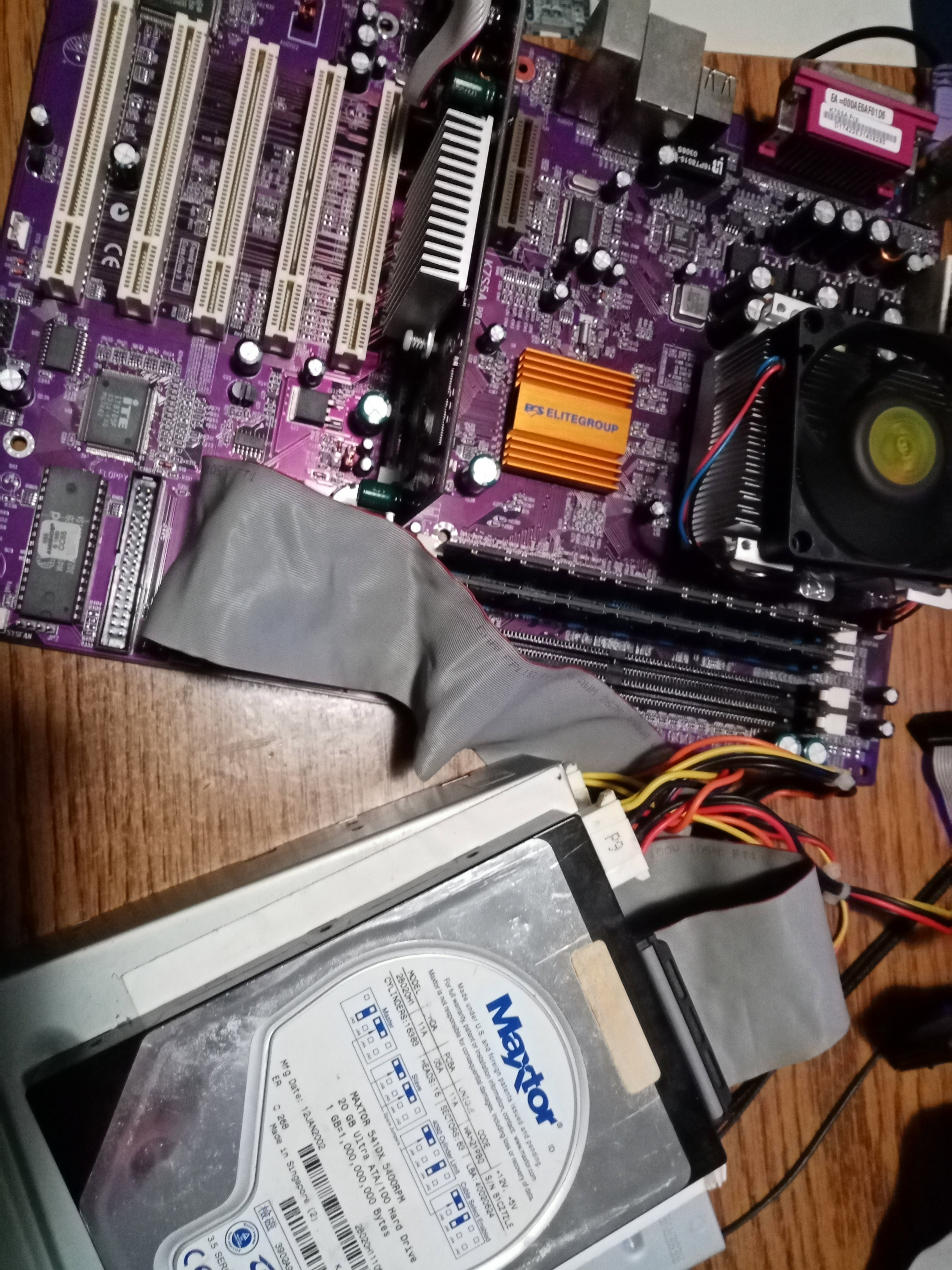
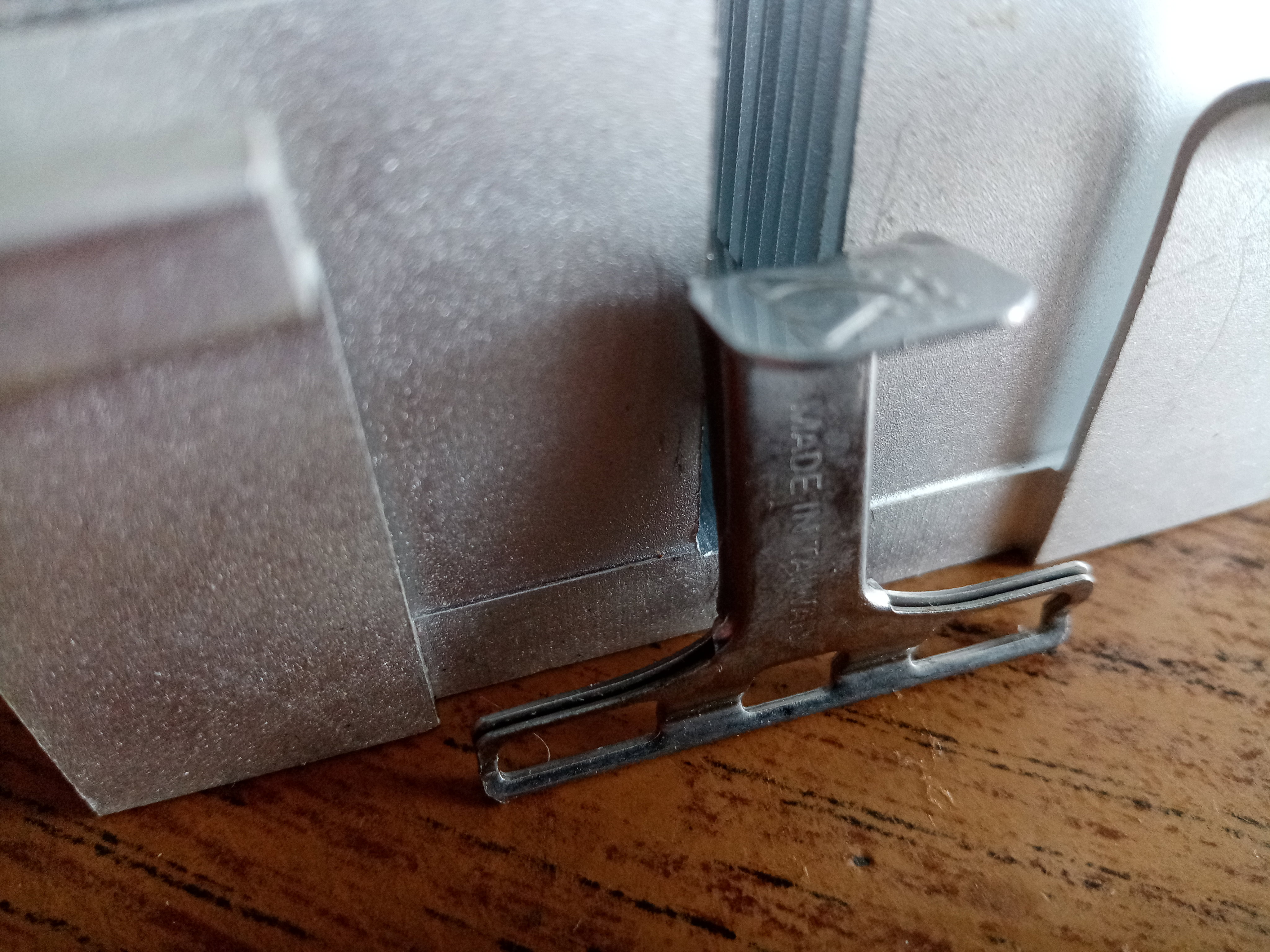
The K7S5A is a typical early Socket A motherboard with two DDR and two SD-RAM slots. When i first got the motherboard decades ago, i initially used my old SD-RAM sticks in it. Later on, upgrading to DDR gave a 10% performance boost when using a strong video card. If one of my RAM sticks died, i sometimes randomly juggled back my old SD-RAM sticks and used it like that, so it was quite a flexible motherboard. According to the original manual of the K7S5A pro, this motherboard only supports 128MB or 256MB sticks, and this is more or less true - only those were available at that time. It refused to do anything with my 32MB SD-RAM stick. I had to juggle in and out my 512MB DDR modules for about 15 minutes, till two dual sided 512MB finally got detected, and worked together, giving 1024MB memory in the system. The K7S5A was $80 when it was brand new ($160 on todays price). Not too cheap, but not super expensive either. Used prices were typically around $20. Nowadays you can get one for $30. Pros: -The early AthlonXP motherboards (like the K7S5A) had no special 12V power connectors, just a regular 20 PIN atx connector. This meant older cheap OEM power supplies were usable with the system, if it was able to deliver the required power. -SD and DDR RAM support. The memory was almost as expensive as the processor itself. Cheap Socket A motherboards usually had both SD and DDR memory slots. This meant, old SD-RAM memory modules could be used in these systems. This usually meant either two 128 MB sticks, or sometimes, one 128MB and one 256MB stick, giving a total of 384MB memory. As the AthlonXP had a large 256 KByte L2 cache, which was able to somewhat compensate for the slow memory. K7S5A rev 5.0 Pro - according to the manual - supports up to 1GB RAM, in reality 512 MB is more likely due to several factors. Like, for example, at that time, only 128 and 256 MB SD memory modules were available for the masses. The larger, 512 and 1 GB DDR modules only came years later. -AGP 4x, and AGP 2x 3.3v card support on K7S5A and similar early AthlonXP motherboards. This meant, old AGP Voodoo cards, G200 or TNT1 cards can be mounted and used in this system as well, and not only the newest cards. This allows old gamer video cards to be used, which sometimes were a better alternative than the low-end units of newer generations. -Integrated ethernet card, integrated sound card. Previously, ethernet chips were not commonly integrated on motherboards, and sound cards were not always present on entry level motherboards. This is all changed with AthlonXP, when manufacturers tried to integrate everything they could. Sometimes, they have integrated an external USB chip as well, allowing 4-6 extra USB front panel pins to be utilized. -The chipset on the K7S5A stays cool. The chipset requires no activel cooling. Cons: With early AthlonXP systems, such as an K7S5A based, there were several minor issues. Some of these were not forseeable, as these were the first of their kind. -Large coolers were required. The coolers for Celeron and Pentium3 processors were compatible with the AthlonXP systems, however, only the large ones. The smaller ones are not able to drive away the heat from the chip. The cooler must be mounted on the chip with unusually large force. The AthlonXP core (similarly to coppermine P3 processors) is exposed, and fragile. Large pressure can destroy the chip, and one must be very careful when mounting or unmounting the cooler. The coolers are hard to be handled, because the mechanism usually lacks a relese mechanism, and large force is required to press down to mount or release, potentially harming the motherboard as well. It was wise not to take off the cooler once it was mounted - ever. Under full load, the CPU is below 35c when the machine is assembled on the desktop, so the temperatures are fine at least.
-Weak (sub 200W rated) power supplies were not enough for an Athlon XP system. If using an inadequate power supply, the system either refused to turn on, the screen or sound card were noisy or was unstable. Some low quality power supplies were able to damage the system, when the magical smoke escaped them. Fun fact: a Hungarian power supply brand, using the brand name Vargáné és Társa (translates to: Wife of Varga and Co) was the name of the most notorious power supply importer. In their designs, when the power supply got damaged, due to how the control chip was wired, the 5V rails started to output 20V, permanently burning every circuits and chips in the computer. -Capacitor plague: the K7S5A and other AthlonXP and Pentium 4 systems are heavily affected by the cap plague. Capacitors made around this time are prone to early degradation due to a failed formula in the electrolite manufacturing. Due to this, there aren't a lot of surviving units from this era. The capacitors one mine look perfect. Either its an unaffected unit, or someone already recapped the motherboard. Or, the board was unused, and the caps didn't degraded. -No overclocking is possible on most of these motherboards. In some cases, modded bios available for these motherboards, which allows a few 100 mhz overclocking. I was able to flash the bios with an unofficial version, which allowed me to set the FSB to 147 MHz, which gave me 1.66GHz on the CPU, which is approximately 100 MHz overclock. -Primary IDE channel is flakey. It needs a 80-pin IDE cable to function properly, otherwise the disk drives will not be recognized properly. The secondary can use old 40-pin ide cables. -RAM compatibility is not the best. 128MB and 256MB modules usually work. Smaller and bigger ones can have problems. ECS only tested this two size when they designed the motherboard, according to the initial version of the manual. -24 pin power supply connectors won't fit. Caps are in the way. Only 20 pin ATX power supplies, or connectors with the detachable extra 4 pin will fit into the motherboard. The AthlonXP CPU The CPU of this test is an AthlonXP 1700+ running at 1.4 GHz. That chip consumes around 50w under full load. Luckily i had a cooler for the Socket A platform, from earlyer. I kept it just-in-case. This chip is the die-shrinked version of the AthlonXP core, code named Thoroughbred. Lower clocked AthlonXP CPUs are known to be great overclockers, and the K7S5A supports async FSB settings. I have decided to try booting the CPU at 166 MHz, but course, no luck.
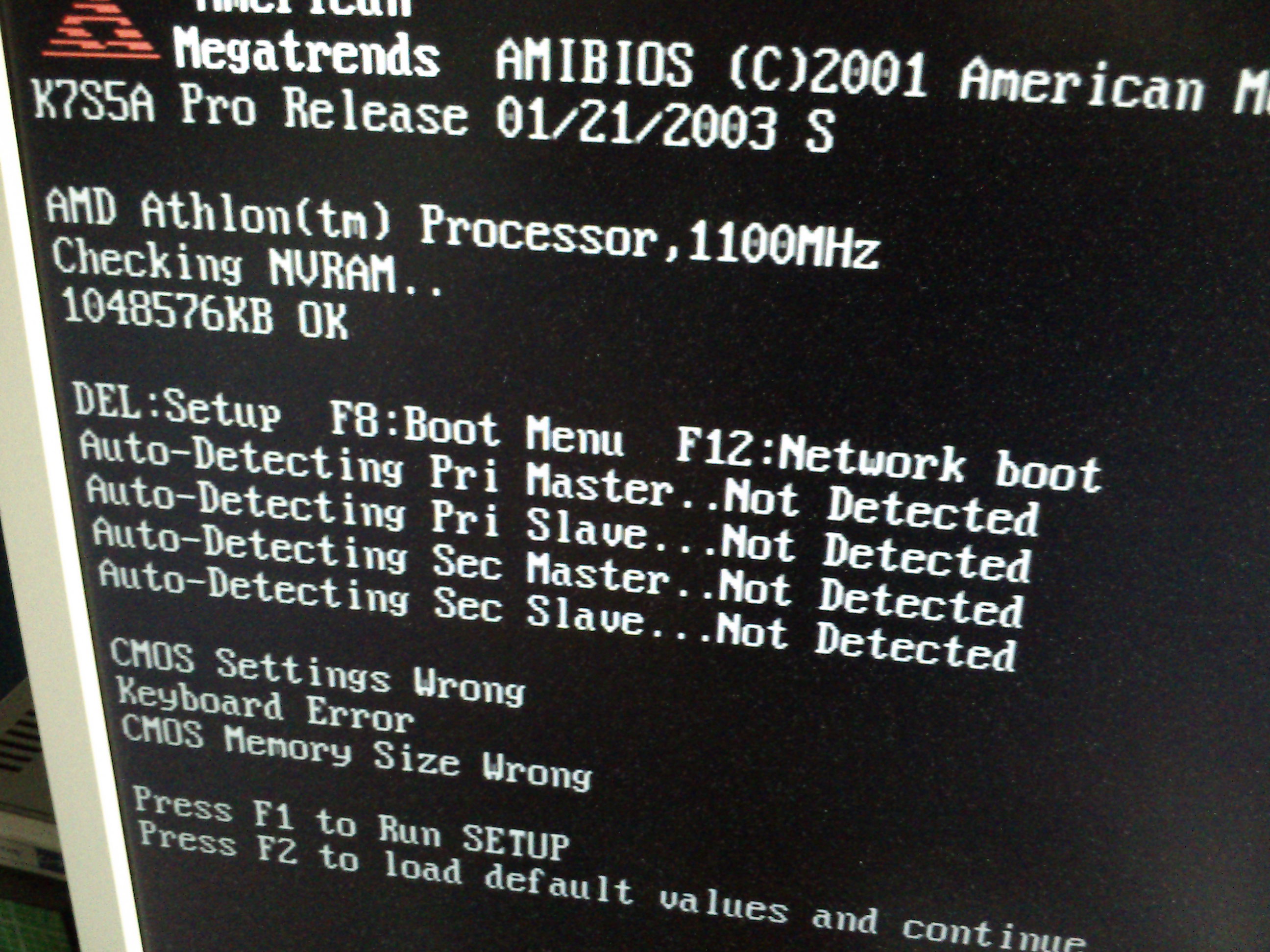
The K7S5A doesn't supports FSB speeds outside of 100 MHz, 133 MHz, and 166 MHz (only the first two is officially stable). At least, officially. The K7S5A (and the Pro version also) got unofficial bios releases, which allow other non-standard FSB settings. I have downloaded one of them, and flashed the bios. After that, more FSB settings also appeared. Such as 147 MHz and 150 MHz. Setting the FSB to 147 MHz i got 1630 MHz from the CPU, and it got recognized as Athlon XP 2000+. Then i lowered the timings of the RAM as much as i could. FX5200 These tests will be carried out with my passively cooled FX5200 AGP card (128 MB, 64 bit). This graphics card was released in 2003, so basically more than a year after this system, however, it was a quite popular and cheap pairing with lower clocked AthlonXP offerings. The configuration Motherboard: ECS K7S5A Pro 5.0 CPU: AthlonXP 1700+ (1.4 @ 1.6GHz) RAM: 2x512MB DDR-RAM (133MHz) GPU: FX5200 128MB 64bit The opponent To have something to compare, a mid-range Pentium3 configuration from 2000 also got included. This Pentium3 CPU and motherboard was already featured in my articles. Motherboard: ECS P6BAT-A+ CPU: Pentium3 700 MHz RAM: 128+128+256 MB SD-RAM (512MB @ 100 MHz) GPU: FX5200 128MB 64bit note: P3-700 MHz was also available in 133 MHz FSB version, and the price slowly decreased, to around $130 in 2002.
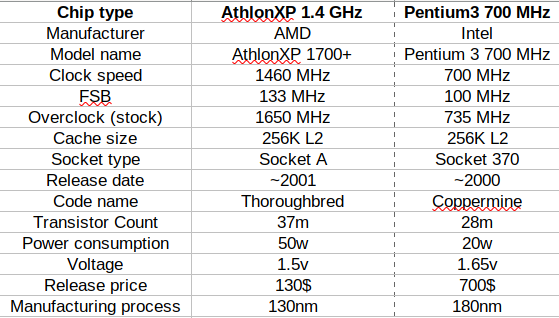
The tests In the tests, i am going to feature only games, because the AthlonXP was meant to be a multimedia/gaming platform initially. This test will not feature late XP-era games, because the FX5200 is not powerful enough to run those games (and i currently don't have any newer DX9 cards now for the AGP port). Re-Volt This game is supposed to run well on every systems above a Pentium2, but in reality, thats not the case. The game is very CPU heavy, its a slideshow on a Socket7 system, and barely becomes playable on sub-1 GHz Pentium3 systems. Lets see how the AthlonXP performs.
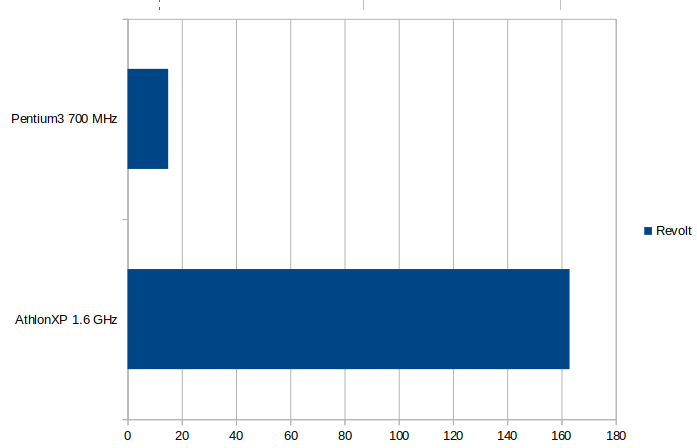
The AthlonXP desecrates the carcass of the Pentium3 in this title. The CPU is more than 10 times faster than the Pentium3, there is nothing what can save the Coppermine. MotoGP 2 This game is very CPU heavy for some reason. The FX5200 is also barely enough for it. Will the raw power of the AthlonXP help it to reach fluid frame rates?
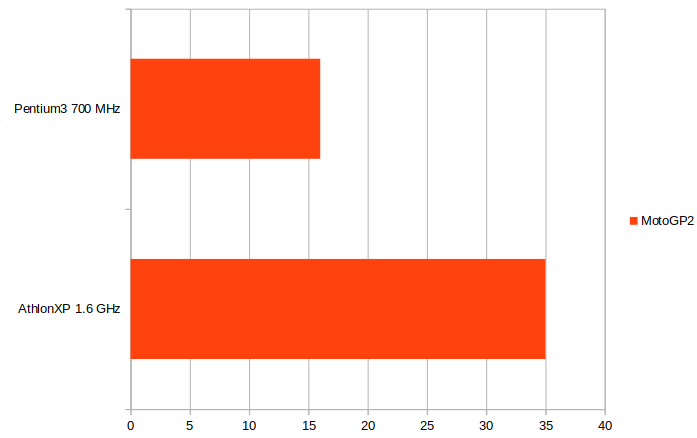
The AthlonXP is about twice as fast, likely hitting a GPU limit with the FX5200 at 35 fps. I can imagine a P3 above 1 GHz running this game also at acceptible frame rates. Tony Hawk's Pro Skater Underground 2 This is a game i quite liked to play. This game is from 2004 but the graphics engine is optimized, and it can run fine even on some DirectX7 video cards. Lets see how the AthlonXP performs under it.
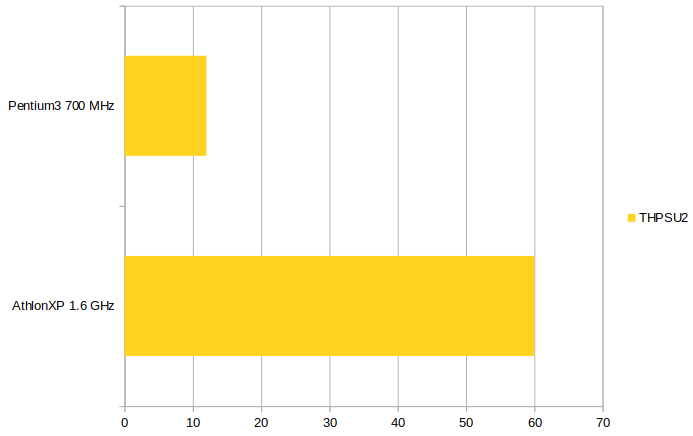
The AthlonXP hits Vsync at 60 fps, meanwhile the Pentium3 struggles to move the game above 15 fps. Only heavy overclock would help the Pentium3 to reach relatively playable framerates in this game. Etherlords 2 This is a russian game, released in 2004 again. Its quite era-correct for the AthlonXP, its a round based RPG strategy game featuring magic and deamons.
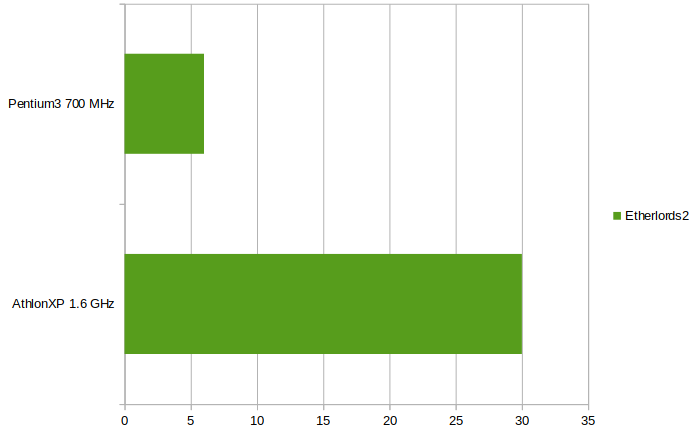
The AthlonXP manages to hit 25-30 fps, and the performance is likely limited by the FX5200. The Pentium3 offers 6 fps, and the game is stuttering mess. IL-2 Sturmovik 1946 Another Russian game this time from 2006, a little bit after the prime age of these systems. Lets see how the CPUs can keep up with this OpenGL based airplane simulator.
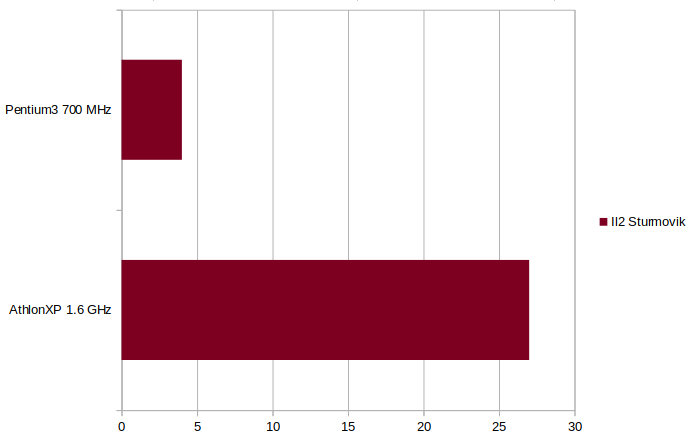
The AthlonXP can reach playable and fluid frame rates under this game above 25 fps, the Pentium3 struggles at 4 fps (2 fps at the intro scenes). Once again, the AthlonXP is about 5 times faster. GTA3 This game was knwon to be very CPU heavy when it was released. It also caused stutters when loading segments of the city, as the player moves around. The lower clocked socket 370 systems couldnt keep up with the demand of this game. Lets see what the AthlonXP has to say.
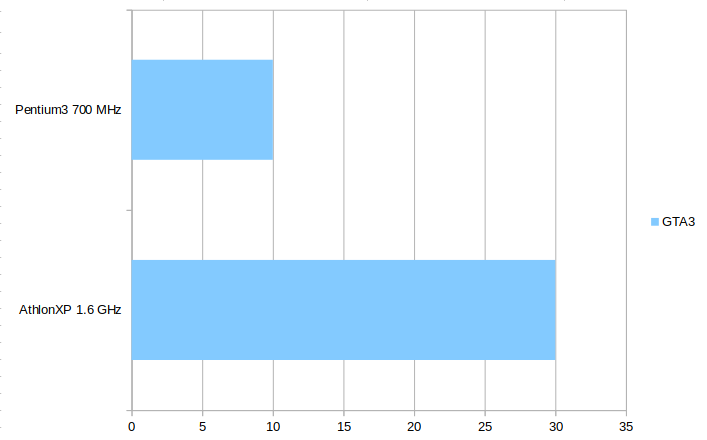
The AthlonXP has no problem running the game at around 30 fps. The Pentium3 can't reach smooth framerates. At least not in this motherboard. Maybe a model above 1 GHz with a good sound card and graphics card could produce frame rates around 20 fps. Another decisive victory for the Athlon XP. Postal 2 This british game features an antisocial antihero, who beats up his town, and creates chaos around himself. The game requires quite a strong hardware configuration.
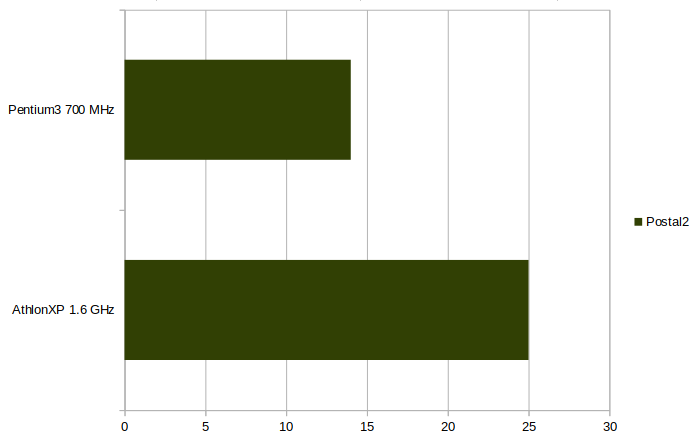
The game produced weak results on both computers, the AthlonXP system was however almost twice as fast, sometimes the FPS was below 20 fps even there. The Pentium3 didn't reached a playable frame rate, maybe a variant above 1 GHz could reach the performance of the AthlonXP - this is the only game where the AthlonXP is less than twice as fast. Conclusion The performance of AthlonXP was brutal, and a magnitude higher than a midrange Pentium 3 build. Contradicting the myths of gaming performance surrounding the Pentium3 systems after 2000, those systems are basically useless trash at that point. At least not in a generic midrange VIA Socket370 motherboard with integrated sound card, and not with a 700 MHz P3 CPU. The AthlonXP systems are sometimes more than 10 times faster. A Pentium3 build for gaming was not an acceptible route. A high clocked Pentium3 CPU only made sense, if someone already bought a compatible system earlier, and he was able to replace the CPU for cheap - yet even then, the performance of the AthlonXP was still much higher. The problem of the Pentium3 is not just the lack of CPU power, but also the platform itself: pre-2000 motherboards had AGP 2x only slots, very slow integrated sound cards, and no support for higher clocked Pentium3 chips. The AthlonXP, as the worlds first gaming PC processor, was unquestionably up to the task. It was multiple times faster than competitive Intel products for the same price tag. It was affordable, and aged well. When paired with a proper graphics card, it can run most of the tested games even 5-6 years after its release. The AthlonXP was the first chip which put the crown to the head of AMD.
No comments yet