‘Fast & Furious 9’ Release Pushed Back a Year Due to Coronavirus
https://www.youtube.com/watch?v=_qyw6LC5pnE
“Fast 9” has pushed back its theatrical release date by a year.
Universal Studios, the company behind the “Fast & Furious” franchise, made the decision because of the impact that the fast-moving coronavirus is having on the global economy and the distribution landscape. Theaters remain closed in Italy, South Korea and China, where the virus has hit hardest. There’s also a mounting sense that some theaters will close in the U.S. as the outbreak continues to spread. “Fast 9” will now open globally in April 2021 and in the U.S. on April 2. https://variety.com/t/coronavirus/
Vin Diesel made the announcement on social media. “We feel all the love and the anticipation you have for the next chapter in our saga,” he wrote. “That’s why it’s especially tough to let you know that we have to move the release date of the film. It’s become clear that it won’t be possible for all of our fans around the world to see the film this May.”
“While we know there is disappointment in having to wait a little while longer, this move is made with the safety of everyone as our foremost consideration,” Diesel added.
Several high-profile releases have moved their release date as the rate of infection has increased. “A Quiet Place Part II” has opted not to premiere in March and the James Bond adventure “No Time to Die” moved from April to November. These moves come at a cost. There’s often tens of millions of dollars in lost marketing revenue.
The “Fast & Furious” movies carry budgets of over $200 million and with their fast cars and crazy stunts, are designed to play well with international audiences. Roughly 75% of the gross of the three previous films came from overseas. Universal believed that it could not make a profit with so many theaters closed.
“Fast 9” was scheduled to be released in the United States on May 22, 2020. The move is a blow to movie theaters. “Fast & Furious” sequels tend to be among the year’s highest-grossing movies and the release date shift leaves Memorial Day weekend without one of its star attractions.

Potato City now just a memory
It didn’t take long for the wrecker’s ball to turn a Potter County landmark, Potato City Country Inn atop Denton Hill, into a pile of rubble.
The hotel and restaurant that served the public since 1949 closed in April and was demolished on Wednesday to make way for a new Pa. State Police barracks.
The most recent forecast for completion of construction
is November 2019.
Fate of the current state police station is uncertain.
It is owned by DBC Enterprises, a business entity that was operated for many years by the late Coudersport attorney, D. Bruce Cahilly.
In its early years, the hotel and restaurant functioned as a banquet center, through the combined efforts of the Pennsylvania Potato Growers Assn., packers and related industries.
Potter County’s potato industry was in its heyday and the local fields were being used for experimental plantings and other research.
A potato festival, crowning of a potato queen and other activities gave the business a high profile.
In the decades that followed, Potato City’s hotel and restaurant business relied largely on a tourist trade, including skiers, hunters, snowmobilers and others coming to the area for outdoor recreation.
Generations of Potter County residents came to know it as gathering place for food and beverages, wedding receptions, retirement parties, organization
meetings and other functions.
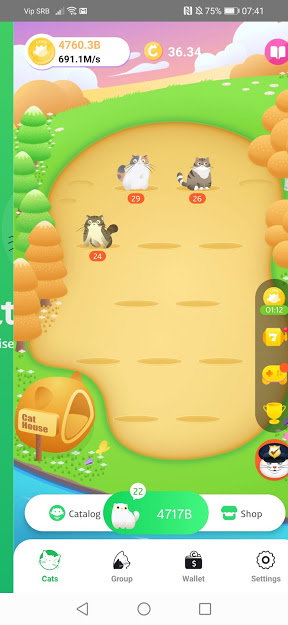
Catcoin
Welcome to my Garden!
**https://cats.garden/share/index.html?branch=QGE1DC78**
Happy birthday to my son
Today is big day for me and my family. My little son celibrate 4 birthday. I love you sou much my love my all.
Butterfly Children
Butterflies hurt every touch of children.
You’ve probably had a chance to hear this slogan, but you may not quite understand what it means.
Butterfly children suffer from a rare and severe genetic disease characterized by severe pain with each touch due to excessive skin sensitivity.
Even the simplest hug can hurt those suffering from this disease, and we can help them with the right approach, even if we show that we are without prejudice.
https://www.youtube.com/watch?v=F3DvPwlFFtk&feature=emb_title
Briefly about the disease
It is not easy to deal with this disease, especially in our environment and society where there is mutual blame. People do not understand what kind of disease it is, so they often come across staring and looking because they do not understand what it is about and they think that the child is burnt or similar. The environment should certainly show more understanding for those suffering from this disease. Butterfly children suffer from bullous epidermolysis, a disease characterized by strong sensitivity of the skin, and in some patients also mucous membranes, with the formation of blisters and wounds. The skin is sensitive to the slightest pressure, rubbing and touch, so painful wounds such as burns can easily occur. There are three basic types or types of diseases, which differ in the depth of separation of the skin layers. It is characteristic that all diseases that belong to hereditary bullous epidermolysis occur due to a congenital lack of various proteins in the skin. These proteins, or proteins, are responsible for connecting different layers and cells in the skin. Due to the change in the quantity and / or quality (structure) of individual proteins, different layers in the skin and mucous membranes separate. However, regardless of the severity of the disease, patients can still engage in various activities and lead, conditionally speaking, a normal life. When the family and the environment accept this disease, they can live with it normally. Children can go and sleep with friends and engage in various activities. Parents should know that they should not be too afraid of injuries and behave too protectively. Even if an accident happens and the skin peels off, it will heal in a few days and get better. Such injuries are a part of the life of butterfly children, but that does not prevent them from participating in various activities. - They are engaged in various activities, learn languages and work on the computer quite normally. They can best determine for themselves what they can and cannot do, and thus set their own limits. Butterflies need a lot of support from the environment in the form of understanding and conversation, and if we just listen to them, we will help a lot.
Children Butterflies from Serbia
About me
Hello everyone, my name is Dragana. I live in a small place near Belgrade (Serbia). I am proud to be the mother of 4 children, 3 beautiful girls and 1 son. I spend most of my time with children. I spend my free time relaxing listening to music. I am always smiling no matter what bad moments prepare my life for, but there is always something good in my life and those are my children that I love endlessly.
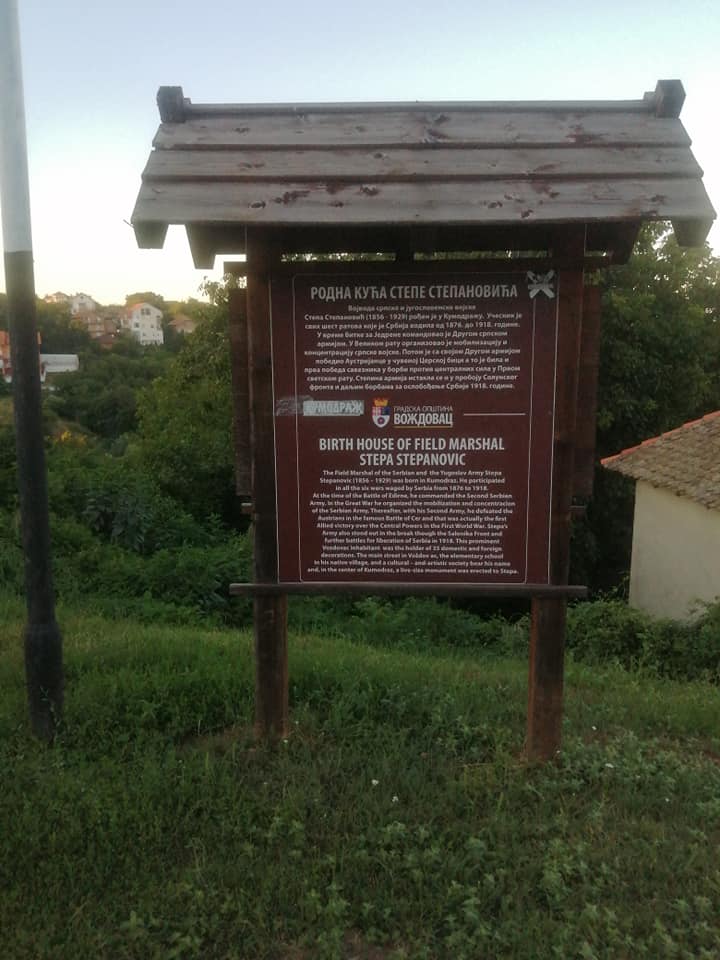
The house was built in the mid-1800s and in 1856 our renowned military commander vojvoda Stepa Stepanović was born there. The house is a monument to a great man from our recent history. His long military career comprises the whole narrative of the development and strengthening of the victorious Serbian army.
As an example of vernacular architecture the house where vojvoda Stepa was born possesses architectural and ethnographic qualities, and due to the fact that there are only a few houses of this type preserved in the vicinity of Belgrade its importance grows with the time. Vojvoda Stepa Stepanović (1856–1927) was one of the most significant Serbian military commanders. He obtained the rank of vojvoda because of the military skills he applied in the wars from 1876 to 1918. He served two terms as Defense Minister. Together with Radomir Putnik, he was in charge of the establishment and application of the organizational plan of Serbian military forces. His greatest military success was the breakthrough of the Salonika Front and he was consequently classified as one of the greatest military commanders of World War I. A year after the end of the war, he retired and lived quietly in Čačak, until the end of his life.
Is Investing In Bitcoin A Good Idea?
I'm not going to give advice on that. In even the best-case scenario, Bitcoin is incredibly risky ... so if you do invest, you should go in expecting to lose all of it.
https://www.youtube.com/watch?v=32l1ht1wlLI
Has anything strange ever happened to you? That it scared you?
Can you sugest me some crypto app for earn crypto?
How often do you play crypto games? Do you have anyone to recommend to me?
Beautiful minds quotes
Do You Believe Aliens Exist?
People are flocking to Area 51, a secretive military facility in the desert of Nevada, in search of aliens. Do you think there is intelligent life on other planets?
Moruroa, French Polynesia
Google Maps has eerily blurred out the atoll of Moruroa from its satellite images. Whilst some islands have been mapped, one large section has been completely blocked out. Rumour has it that the atoll contains an airstrip, a dock and a small collection of buildings. The area was a nuclear testing site for the French government between 1966 and 1996, which may explain why the images have been blacked out.
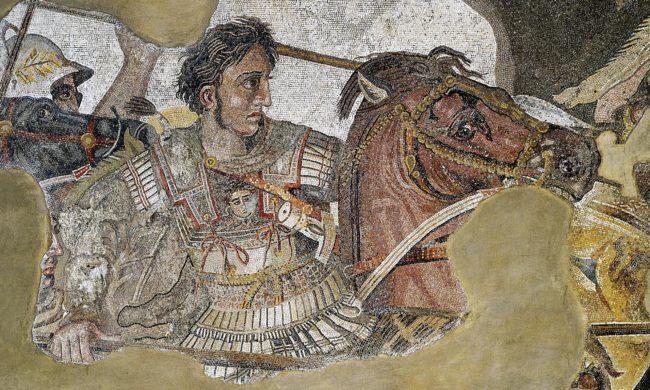
Tomb of Alexander The Great
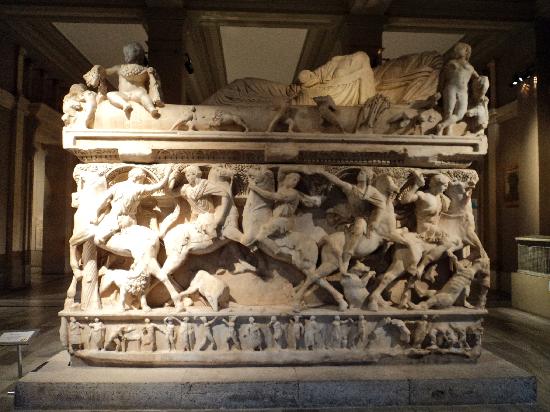
He is believed to have died all the way back in 323 BC, at the age of 32, after an all-night drinking bout in Babylonia, with his body then transported to Alexandria, Egypt for burial. However, archaeologists have never found the original site – plenty of ancient tombs have been uncovered but none contain the remains of the famous military leader.
https://www.youtube.com/watch?v=9ahMZdrEIlk
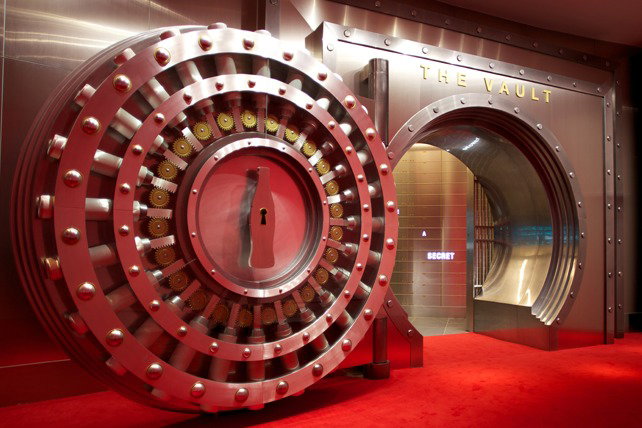
Coca Cola’s SunTrust Bank Vault, Atlanta
It’s estimated that people drink 1.8 billion servings of Coke every single day, across a total of 200 countries worldwide. In 2011 Coca-Cola was ‘The World’s Most Valuable Brand’, but for such a high-profile brand, the famous recipe is still a trade secret which very few people throughout history have ever known.
After its initial creation in 1886, the formula was only shared with a small group of people by its inventor, John Stith Pemberton. It was only written down in 1919 by Asa Candler’s son, who sold the company and placed the secret formula in an unknown New York bank vault in 1919. Coca Cola transferred the document to Atlanta, where it now resides somewhere in the depths of the SunTrust Bank.
Good morning friends.... ❤️❤️❤️
Good morning
Greeting each other in the **morning** is more than a genteel form of manners. Speaking to others in the **morning** has many positive results. It connects us with others. This is **important** because we are social beings who thrive on having positive relationships with other humans.
Think about all the things your partner has done for you. Which things meant the most? More than likely, it’s a collection of little things that popped into your mind. The daily things they’ve done time and time again are the things we appreciate most.
Because they’re consistent. They might be small things but they add up to one big result: your happiness. It’s not so much the major things they do that make you happy for a day but rather, it’s the simple things they do every single day that adds up to long-term happiness.
What you make happy??
The Fourth Era of Blockchain Governance
Stephanie Hurder, a CoinDesk columnist, is a founding economist at Prysm Group, an economic advisory focused on the implementation of emerging technologies, and an academic contributor to the World Economic Forum. She has a PhD in Business Economics from Harvard. https://www.prysmgroup.io/
If you follow our writing at Prysm Group, you know one of our mantras is that governance is essential for the long-term survival of blockchain projects. Blockchain projects are complex technical and economic systems that require a systematic and architectural approach to design. Governance enables blockchain projects to continually innovate, upgrade their protocols and adapt to changing market conditions while maintaining the desired level of decentralization. https://medium.com/prysmeconomics/the-prysm-group-house-a-framework-for-the-new-economics-of-blockchain-a96edf0fc41a
Blockchain governance design has faced a steep learning curve. I have described the evolution of blockchain governance design since 2018 as having three eras: https://medium.com/crypto-oracle/the-10-most-insightful-comments-on-our-crypto-governance-consensus-conf-call-9eeda0a89abc
Era 1: Informal/ad hoc governance design. The original blockchain projects, such as Bitcoin and Ethereum, had no formal governance. Decisions regarding upgrades and crises were made by developers and other influencers based on ad-hoc procedures.
Era 2: Copy and paste governance design. Realizing that projects need well-specified decision-making procedures to succeed, projects copied and pasted voting and proposal mechanisms from other, non-blockchain platforms.
Era 3: Bespoke governance design. Projects realized blockchain is a new and distinct environment and began to design systems ground-up based on first principles.
After a briefing I gave two weeks ago jointly with Mark F. Radcliffe, Partner at law firm DLA Piper, I believe we have entered Era 4: the era of *systemic governance design*. Systemic governance design also takes a ground-up approach based on first principles while explicitly considering the ways in which a project’s governance must be designed to work in harmony with the governance of other projects in the blockchain ecosystem. https://www.pli.edu/programs/successful-enterprise-blockchain-adoption?t=ondemand&p=302686
And this era, unlike the previous three, will be led by enterprise blockchain. Enterprise use cases not only require cross-platform development but also frequently undergo rigorous, multi-year planning cycles. Enterprises considering deploying blockchain solutions want to know how various platforms and their governance designs function in sum, so they can minimize unnecessary uncertainty and deliver on their project goals.
Mark is a corporate securities and IP lawyer who advises many blockchain projects and consortia. In his view, many of the current blockchain offerings do not have sufficient governance from both an economic and legal perspective to be effectively used by enterprises.
**ENTERPRISES CONSIDERING DEPLOYING BLOCKCHAIN SOLUTIONS WANT TO KNOW HOW VARIOUS PLATFORMS AND THEIR GOVERNANCE DESIGNS FUNCTION IN SUM.**
Having well-defined governance is one of the best ways that an enterprise blockchain consortium can incentivize new users to join. A shared ledger with distributed control can reduce costs and provide benefits for businesses in a variety of industries. But getting enterprises to attain and sustain the cooperation required to keep these consortia functioning – via contributions of time, money, and expertise – requires transparent and well-functioning collective decision-making.
For the earliest blockchain consortia, having any specified governance process put them at the head of the pack. But governance designed in isolation is no longer sufficient. Understanding the governance of the underlying technologies the consortium is using and the impact it will have on a consortium’s own governance also is essential.
Protocols and stablecoins
Consider two examples: protocols and stablecoins. Most blockchain applications will not build their own protocols, but will instead choose to build on existing options such as Hyperledger or Hedera. Each of these protocols has its own processes that determine development projects, upgrades and use rights. Poorly designed governance at the protocol level can have harmful and unintended impacts on the projects building on it.
Projects built on Ethereum, for example, have spent over three years wondering if and when Proof-of-Stake will be implemented and two years watching the community debate which changes, if any, to make to the transaction fee mechanism.
Projects may also choose to adopt a third-party stablecoin rather than establish and manage their own token. MakerDAO, the builder of the U.S. dollar stablecoin (dai) with the third-largest market cap, is planning to dissolve its governing Foundation and replace it with a DAO over the next two years. This is a risky path forward: DAOs have been notoriously difficult to run well and are slow in making decisions. The transition adds significant complexity to any enterprise project choosing to use dai. https://www.coindesk.com/price/dai http://coindesk.com/makerdao-foundation-plots-its-own-demise
Enterprise blockchain projects can make progress in the face of such uncertainty. But having the appropriate systems in place for designing governance is more important than ever.
***See also: Stephanie Hurder –*** ***Why Enterprise Blockchains Fail: No Economic Incentives*** https://www.coindesk.com/why-enterprise-blockchains-fail-no-economic-incentives
First, embrace that governance design is a complex process drawing on a combination of economics, law and other disciplines. Like all parts of a blockchain project, it involves iteration over time using multiple areas of expertise.
Second, vet the governance of potential tech partners just as thoroughly as you would vet their technology. Just having a voting system in place is typically not sufficient governance. Including more sophisticated steps such as soliciting and distributing expert feedback on proposals, introducing mechanisms to ensure timely implementation of upgrades, and having well-defined crisis governance with clear delineation of decision-making all increase the probability that governance will be reliable.
Finally, resist the urge to regress in the face of this challenge: to design myopically and to copy and paste without context. While blockchain governance best practices are rapidly evolving, there are frameworks projects can use to minimize the prospect of overlooking essential elements. The more innovative a project, the less likely an out-of-the-box governance solution will meet its needs. https://medium.com/prysmeconomics/a-framework-for-blockchain-governance-design-the-prysm-group-wheel-703279c1b0dd
But all blockchain consortia should recognize that governance practices are evolving and should pay particular attention to the processes for changing governance procedures. Successful consortia will need to adjust their governance procedures as the business, protocols and consortia evolve.


New York Regulator Fast-Tracks 10 Cryptocurrencies
**The New York State Department of Financial Services has created a Greenlist of pre-approved cryptocurrencies for custody service and listing. Meanwhile, crypto-friendly SEC Commissioner Hester Peirce, also known as Crypto Mom, has been confirmed for another term at the commission.**
NY Regulator’s Cryptocurrency Greenlist
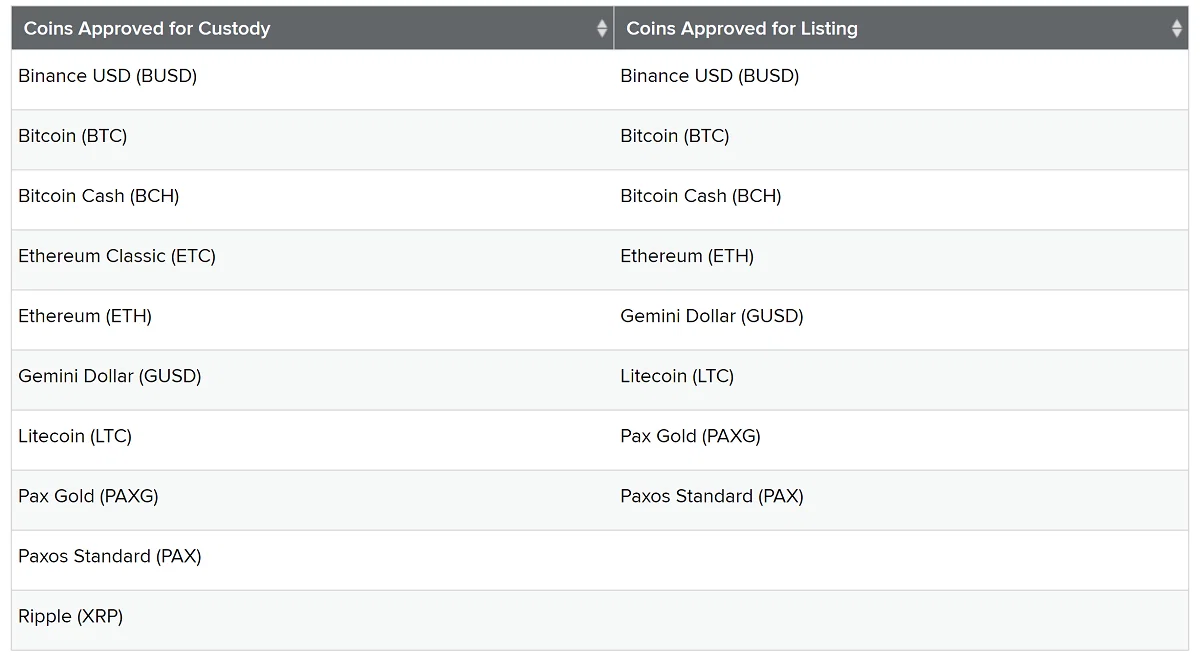
The New York State Department of financial services (DFS), the Bitlicense regulator, has published a Greenlist comprising 10 cryptocurrencies for custody and eight cryptocurrencies for listing. “Any licensed entity may use coins on the Greenlist for their approved purpose(s),” the regulator explained.
The 10 cryptocurrencies are binance USD (BUSD), bitcoin (BTC), bitcoin cash (BCH), ethereum classic (ETC), ethereum (ETH), gemini dollar (GUSD), litecoin (LTC), pax gold (PAXG), paxos standard (PAX), and ripple (XRP). The same cryptocurrencies are pre-approved for listing, except for ETC and XRP. “If a licensed entity decides to use a coin on the Greenlist, it must inform DFS prior to beginning its use,” the regulator noted. https://markets.bitcoin.com/crypto/BTC https://markets.bitcoin.com/crypto/BCH https://markets.bitcoin.com/crypto/ETC https://markets.bitcoin.com/crypto/ETH https://markets.bitcoin.com/crypto/LTC https://markets.bitcoin.com/crypto/XRP
The Greenlist follows guidance proposed by the DFS in December last year, which includes proposals for coin adoption or listing options that the regulator wanted to make available to crypto entities. https://news.bitcoin.com/ny-regulator-proposes-relaxing-new-coin-listing-requirements/
The DFS will maintain an updated list of all cryptocurrencies permitted for crypto companies’ business activities without its prior approval, “as long as such listed coins had not been subject to any material modification, division, or change after their listing on the DFS webpage (the ‘Greenlist’),” the regulator emphasized.
Crypto companies can create a “coin-listing or adoption policy” tailored to their specific business model and risk profile. If approved by the DFS, the company would be able to “self-certify the listing or adoption of new coins in addition to those on the Greenlist, without any further approval from DFS.” The guidance regarding the adoption or listing of cryptocurrencies can be found here. https://www.dfs.ny.gov/apps_and_licensing/virtual_currency_businesses/gn/adoption_listing_vc
https://www.dfs.ny.gov/apps_and_licensing/virtual_currency_businesses/gn/adoption_listing_vc
Meanwhile, the U.S. Senate has confirmed Hester Peirce, the crypto-friendly commissioner often known as Crypto Mom, for another term at the Securities and Exchange Commission (SEC). Peirce has been pushing for the approval of bitcoin exchange-traded funds (ETFs). In February, she announced her “Token Safe Harbor Proposal,” which she described as “a proposal to fill the gap between regulation and decentralization.” https://news.bitcoin.com/sec-commissioner-time-right-bitcoin-etf-funds/ https://news.bitcoin.com/sec-tokens/
The definition of a cryptocurrency is a digital currency built with cryptographic protocols that make transactions secure and difficult to fake. The most important feature of a cryptocurrency is that it is not controlled by any central authority: the decentralized nature of blockchain makes cryptocurrency theoretically immune to the old ways of government control and interference. Cryptocurrencies make it easier to conduct any transactions, for transfers are simplified through use of public and private keys for security and privacy purposes. These transfers can be done with minimal processing fees, allowing users to avoid the steep fees charged by traditional financial institutions.
However, the latest news on cryptocurrencies indicates that because cryptocurrencies are devoid of a central repository, a digital cryptocurrency balance can be wiped out by a computer crash, a hack, and other unexpected events.
Crypto card https://elitium.io/dashboard/?raf=ref2659091
Keep your crypto as crypto, right up until you spend it.
 @Gaga83