 @Fexonice1
edited
more from that month
@Fexonice1
edited
more from that month
Correction, not only Nigeria universities but everywhere
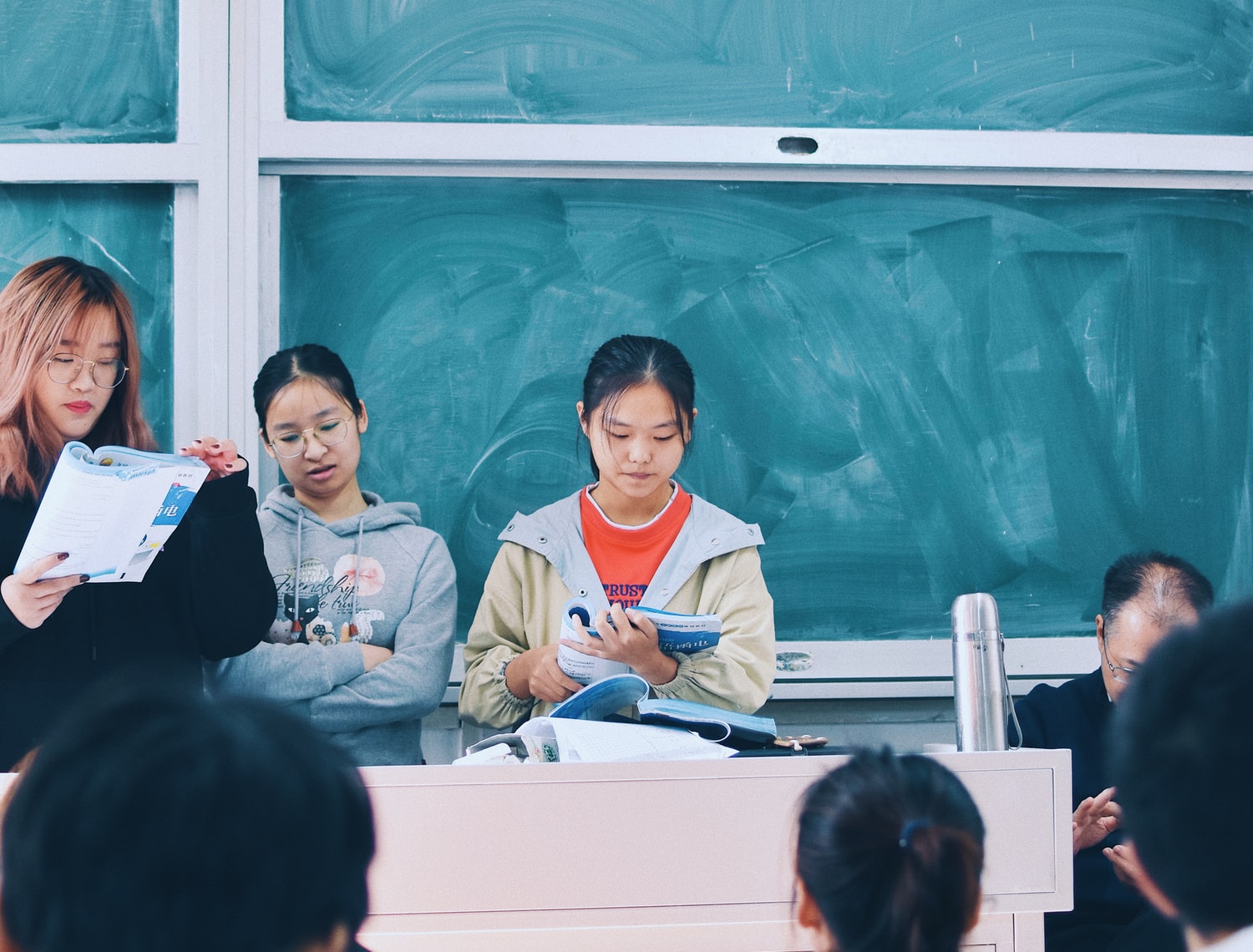
This was supposed to be my comment on @Princessbusayo article I read this morning dealing on some issues she thinks are peculiar with Nigeria universities, but while typing I discovered that it was almost longer than enough for an article. I do not agree with most of your points, and it seems you didn't do proper research to know if most of these issues you raised here are only peculiar with Nigeria universities. I passed through the system, although things might not be the same as it was in my time, yet most are just still going the same way. You said you want to believe Nigeria universities are the only places where acceptance fees are collected, which is only your assumption. You need to do a research for a sensitive topic of this nature so your writing will not be biased. Acceptance fees is not with Nigeria universities alone, it's a global practice in the higher institution system, even in America they do pay acceptance and it's also a non refundable practice. https://www.uvm.edu/admissions/undergraduate/paying-your-acceptance-fee-uvm Issue of textbooks, I don't think I have ever seen nor heard about where textbooks were included in the school fees. I think it's even better it's not included, considering the level of poverty in the country. I can tell you the truth, if textbooks are included in the school fees many students will not be able to pay the fee, and I don't think I would have been able to complete my studies back then. I think giving lecturers the autonomy to publish and sell textbooks to students makes it cheaper to acquire. Do you know how much one textbook of one of your course cost? Just try to find out and you will come back to appreciate the system you have now. Textbooks are never included in the school fees and not only in Nigeria. A list of books are issued in foreign universities and it's essential that a person pay for them upfront before starting out. That's the difference. Talking about project, do you think you were going to have your supervisor running all over students to get their project done? He or she is your supervisor and not the one to help you find your facts and put two together to be four. Their duty is to evaluate what you present to them, and in most cases they have numbers of students they are dealing with. These are lecturers that has to teach a number of classes everyday, attend several board meetings or departments meetings. Consider them not a failure because they are humans. It's your project and not your supervisor's. If you are lucky enough your project might not even required you to go outside your campus and might not as well cost much except the cost for typing, printing and binding. I remember in my time as a Town planning student, our project required a lot of financial input and also time consuming. I started by preparing questionnaires to get useful information from the public about the subject of the project I was dealing with. This questionnaires has to pass a lot of scrutiny before you can get it printed and set out for field trip to meet with the people living in the area where your project is focus on solving a problem. The information collected was then use to prepare the design and then the written report. The supervisor has no hands in any of these jobs, you are only given a time frame to complete the jobs, and whenever you need the assistance of the supervisors you can contact them to guide you. Mind you, do not expect your supervisor to come looking for you, you are the one to go look for them. On certificate collection, do you mean it has to be free? It has never been in any school system even in the kindergarten class. You pay money to collect your certificate anywhere, from first school leaving certificate, junior to secondary School leaving certificates money has always been paid to collect certificate. It cannot be different in the university, the only thing that is different is that the more you wait to collect your certificate the higher the amount of money you will have to pay when you decide to go get it from your university. I don't know if it's the same with every higher institutions in Nigeria, my school gives five years after graduation before certificates are available for collection, and it was $10 about 5k Nigeria Naira the last I heard about five years ago. You can't expect things to remain same today. You also wrote about awarding grades to students by lecturers in your article. This is not peculiar to Nigeria universities but a global phenomenal. Cheating is everywhere, humans will always be humans, and in a school environment with adults in question you can't think Less of that. People will always find a way to cheat and the problem is with the students and not the lecturers. It's the students who fails to study and instead chose to party when they should be reading, and at the end they are looking for a soft landing with the lecturers. The girls offer their bodies in exchange for marks, the boys offer huge cash to buy grades. But I tell you the truth, there is no way a cheat can be better than a person who works hard to earn his or her due. The school system knows those who genuinely earned their grades and they'll by no means give award to a cheater. It's better not to be bothered about those who engaged in buying grades because you can't do anything about it, and even the school authority can't do anything about it except a thorough investigation is carried out. Cheaters are everywhere and not just in Nigeria universities. Many in college today probably cheated in one way or the other. Some with a not-so-clever tricks like looking over someone else's shoulder during an exam, or copying their answers when they weren't looking; some even hired someone at the last minute to write their term paper! Cheating is not exclusive to Nigeria universities; in colleges around the world, it is estimated that at least half of all students cheat by taking some degree of unfair advantage on exams. Even in elementary school, kids are getting caught with notes hidden in their shoes or sticking their hands in the mouths of friends who are taking a test for them. I recommend you to read this article to know that academic dishonesty is not just about Nigeria universities. https://www.universityworldnews.com/post-mobile.php?story=20191211141100816 The use of virtual class or online classes is a new trend which was occasioned to the covid 19. I am not sure about that, because I don't have any of such experience. However, I still believe the system that makes students pay for WiFi wasn't a bad idea in the first place, and as circumstances changes operation also changes. Likely, you might get a refund for the payment. It can go the other way around as well, but all in all, none of the things you discussed are peculiar with Nigeria universities, they are the same everywhere.








11 comments
I have seen one online university application where students are asked to pay acceptance fees. So, it is Not for Nigerian universities alone. The only thing is that, ours seems to be a little expensive, most especially the school I passed through. Their acceptance fees is equivalent to the school fees which suppose not to be. Cheating does not just limit to Nigerian students but general as you have rightly said. Also, it is not a new thing that lecturers always give marks to the girls who give them their body. This is also general if a research is properly made. Nigeria is corrupt so as other countries. Welldone @Fexonice1
You are right sir, there a saying that if education is costly try ignorance
Well, I think I made myself clear in my article that it is only for fun even though I know it isn't only in Nigeria alone. I just write for the fun of it since @Kristofferquincy tagged me when he wrote his some days ago and I found it to be fun and I wanted to share my own experience in school too. In fact since I have gained admission into the University up till now, textbooks money have been included in our school fees and we must pay. There is another one they do add to it. Any student who fails to pay at the stipulated time, another charges would be included to it which they don't have a choice than to pay it. This is what is happening in my school that I just decided to share for fun only. Thanks for the clarification though.
I completely agree with you @princessbusayo your article is based on mine, and mine is centred on "Nigerian universities alone". Though it may be a general occurrence but we are writing based on our personal experience in our respective schools and those around us. It's clearly stated in our topic that "nigerian universities". I do not care if this happens in other parts of the world, my aim is to write my personal experience in Nigeria as a Nigerian.
Well, am not attacking anyone but based on my understanding of the article I read I wrote this. When you read something like Nigeria is the only place where they pay acceptance fees in the universities, how will you interpret that? Though, the writer was writing about personal experiences that statement makes it broader to mean every other countries. That's where I based my article on. We know we are all sometimes write for fun, just about anything, but we should also bear in mind that whatever we write here is on the internet for life except you take it down yourself. All the say, no need for ill feelings. I don't attack anyone. I got inspired to write from @princessbusayo article today. Thanks.
Most things are actually out of control in some universities in Nigeria. Where I wanted to make corrections was from your statement in your article that you wanted to believe it's only Nigeria universities that acceptance fees are collected. It's not an attack on your person or a disvalue on your article. However, there's something we must always bear in mind when writing, our articles are on the internet for anyone to see. Someone somewhere can just Google what to know about Nigeria universities and your article will appear and they can use that as basis of judgment.
Perhaps they want to be sure that those accepted have the books as well?
I read through both articles and I believe it was all said for fun and no real intention for a serious research, she particularly mentioned and talked about only Nigerian universities based in her personal experiences, I don't believe she has been to any other country and understand their educational system, just my opinion though
There's no problem about what they write, I am not attacking anyone. There are statements we use that has broad meanings and that's what determine how someone interpret what they read. For instance, when you write I believe it's only Nigeria universities that collect tuition fees from students, what do you think someone who read it will think about what you mean? Maybe I didn't see the fun part in what they wrote but for me I don't write for fun because whatever we write here is there in the internet forever except you take it down yourself. That's why I always tell people to write with facts because your writing may outlive you. You get what am saying now. So it's not to disregard anyone, at least I got something to write about after reading the article this morning.
They are the same everywhere. At least in what you have mentioned, it is similar to the universities in Venezuela. And I tell you this with basis. I was a university professor for some years, I served as a juror in the defense of research papers. And what you mention is correct, the project is the student's not the supervisor. Until the student approaches the supervisor the project cannot be evaluated. At one time I was working at another university where at registration there was a list of the books for each subject. If the student could pay for all the subjects, he/she was given the respective books. If he couldn't, he didn't register for that subject. It was all about money. And regarding the cheating, I agree 100% with all the points you mention. I don't currently work in any university. Here the profession, or rather, the salaries do not support a family. Sad reality that we live nowadays. Interesting post.
Everything you wrote I recognize. It's everywhere the same and they charge you(r parents) if you want something. Only at primary school books were owned by school (as I was a child) but I had to pay for my children's. Same if it comes to paper, pencils, paint, brushes and so on. Once at high school, the school gives you a list of books needed plus the edition. You can buy them new, second hand or use the one of a sibling. It's never in the school fee neither are extra amounts they charge for the class (festivities), making copies and all those extras no one counted with.