 @Faiqnisar
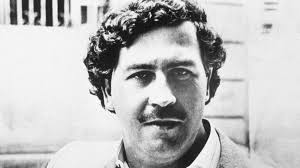
fact of the day in the late 1980s the drug lord pablo escober reportedly offered to pay off his country,s debt of $10 billion if he would be exempt from any extradition treaty
Joined 22 September 2020 · 178 posts
mariner . fitnesss . lover football . give 10 comment on my post i will give 12 ..my community pakistani talent dd50 pakistan trending 00ab imran khan 9aa9 m…
120 KT
0 KT · 1¢ received · 0 KT given
@Faiqnisar
fact of the day in the late 1980s the drug lord pablo escober reportedly offered to pay off his country,s debt of $10 billion if he would be exempt from any extradition treaty
@Faiqnisar
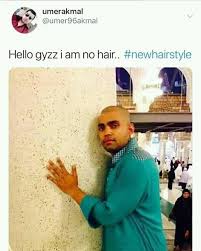
Umar Akmal meme game will live forever **KARACHI:**Just yesterday Umar Akmal was suspended by the Pakistan Cricket Board (PCB) under its anti-corruption laws, hours before he was set to play the opening match of PSL with Quetta Gladiators. Surprisingly the possible end of Akmal's decade-long career was overshadowed by a mere typo. Earlier in the week the cricketer had posted a photo of himself with colleague Abdul Razzaq with the caption "Mother from an another brother". While it's most likely a honest mistake by the batsman (some might still have doubts and we shouldn't blame them) the internet neither forgives or forgets. Hoards of memes around Akmal's typo (once again there is a possibility it was intentional, its Umar Akmal we are talking about) have flooded social media since then. Yup the disgraced cricketer has become an internet darling.
 @Faiqnisar
Honey Singh, Honey Singh, better known as Yo Yo Honey Singh, who recently came out from the testing times, opened up in an interview. After his 18-month long battle with bipolar disorder and alcoholism, he has made a comeback in Bollywood, this time even stronger. In an interview, he said, “Once a man falls sick, it’s not in his decision to sit at home or not work. From 2017 onward, there’s a lot happening, and *Inshaallah, sab kuchh badhiya rahe*,” he said. After feeling better in 2016 post two years of illness, the singer had fell sick again before restarting from 2017. https://www.hindustantimes.com/music/yo-yo-honey-singh-says-he-lives-in-people-s-hearts-you-can-only-remove-me-with-surgery/story-8KZ0erJd73vXlZThuYOSlI.html It was indeed a bad phase for Honey Singh but things seem to be going fine now. He recently won an award from the song *Dil Chori Sada* from *Sonu Ke Titu Ki Sweety* (2018). After making people groove to his music for almost a decade which became a rage among the youth and were played in every other party, Honey Singh had suddenly disappeared from the industry into thin air. It was later revealed that he had dealing with bipolar and alcoholism, which pushed him into anonymity. In the meanwhile, other competitions started taking over, the most dominant of them being *Badshaah*. However, Honey Singh does not fear being ousted as he believes people has kept in their hearts. “*Out of sight nahi, hum into the heart hain. Wahan se surgery karke hi nikaal paoge mujhe*! (laughs) *Main logon ke dil se nahi nikal sakta*. You can say that for a girlfriend, but not Yo Yo Honey Singh,” he jokes. On a positive note, his family too has shown him tremendous support. T Series owner Bhusan Kumar too pushed him to keep in touch with music compositions, which made him create the song *Dheere Dheere* that featured Hrithik Roshan and Sonam Kapoor Ahuja.
 @Faiqnisar
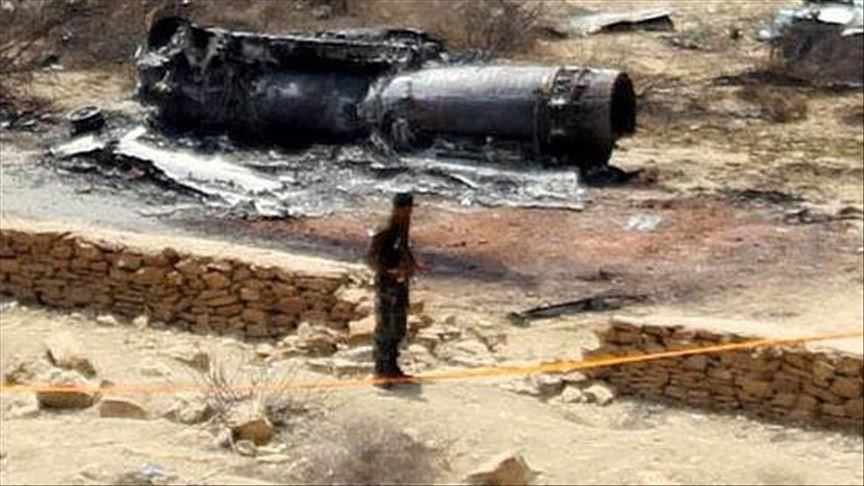
Pakistan Air Force aircraft crashes during training **KARACHI, Pakistan** A Pakistan Air Force (PAF) jet crashed in northeastern Punjab province on Tuesday during a training mission, the air force said. No loss of life or property was reported on the ground as the pilot ejected safely, it said in a statement. It added that "a board of inquiry has been ordered by Air Headquarters to determine the cause of the incident." Several training jets have crashed in the near past. In March, an F-16 fighter jet crashed near the capital Islamabad, killing the pilot. The aircraft was carrying out rehearsals for the March 23 national day parade.
 @Faiqnisar
How To Get Skinny Legs Without Building Muscle Someone once said that a man looks at a woman’s legs before anything else. Even if they don’t, who doesn’t want those long, sexy legs that dancers have? Everyone does, right? While there is nothing wrong with having bulkier legs, of course, but if you want those lean, skinny legs, how do you get them without spending 8 hours a day dancing and avoid those weight lifters legs from doing weight training? While weight training is still one of the best ways to get a super toned body, the fact remains that, **it’s not that difficult for women to get pretty bulky looking, especially the legs**. We know how it is. You want to have lean but toned legs that look stunning in a dress or on the beach. For those of you who want to have a more feminine silhouette and firm inner thighs, we have the answer. Lean Leg Plan First, we want to tell you that exercise alone won’t get you those great looking, lean and skinny legs if you are eating a ton of junk food like donuts and potato chips. To get the look you want, you will still need to: Eat a healthy, whole food diet **LISS exercises** (low intensity steady state), walking/cardio daily (30 minutes) https://www.healthyweightforum.org/eng/weight-loss/liss-cardio-workouts/ Stretching nearly every day is just as vital as exercise Do high intensity (HIIT) exercises at least twice a week (***15-minute HIIT Full Body Workouts**) https://www.healthyweightforum.org/eng/weight-loss/hiit-full-body-workouts/ Do strength training 2 to 3 times per week (upper body) We have listed the best cardio workouts to get those skinny legs at the end of this article so keep reading! **How Do I Slim Down My Bulky, Muscular Thighs?** For those of you who have bulky thighs and want to slim down your legs, consider cutting back on lifting heavy weights while strength training. As long as you are lifting weights that involve the legs or **doing exercises that use your legs, it will be difficult to lose the muscles on those legs.** It’s really that simple. Even if you’re doing light weights and high reps, you still won’t lose the muscle. You won’t necessarily build new muscle, but you will maintain the muscle that you already have. If you want to stop making your legs look any bulkier, **avoid anything that uses your legs, including the traditional squats, deadlifts, burpees, and leg weighted machines**. You might also want to avoid “leg only” workout days. Other exercises that are known to bulk up your legs are CrossFit and HIIT. While these are great exercises, they won’t give you those skinny, lean legs you are looking for. 15 Kick Butt Exercises for Lean and Lovely Legs without the Bulk These inner thigh and leg exercises are designed for minimal or no jumping. Jumping can increase bulk and it isn’t all that great for your knees!
 @Faiqnisar
Emiway Bantai & Raftaar battle The Emiway Bantai & Raftaar battle is finally over, & it left us a dope body of work. Hip Hop is a competitive sport. And, much like Curries are a part of Desi culture, rap battles are a part of the Hip Hop culture. With the spirit of competition, **Emiway** and **Raftaar** jumped in the ring and went at it with full force. And, this was not a boring battle like Drake Vs Pusha T. This was a real battle where both parties went at it hard with multiple shots fired… well, *figurative* shots. And, gladly, this is a beef that did not harm any one physically. But, a lot of notepads and studio hours were demolished.
 @Faiqnisar
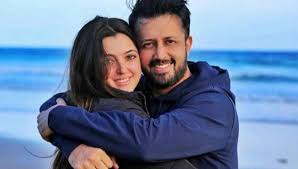
love story of atif aslam Every story has a beginning and so is Pakistani singer and actor Atif Aslam’s. It was a life-altering experience for the heart-throb when he formed his music band during his college days. Since then there was no looking back for the budding singer and songwriter. In fact, with his strong, rich and soul-stirring renditions of Bollywood numbers, he emerged as one of the accomplished singers in the industry. **Dated For 8 Yrs, Married For 18 Yrs And Parents To 2 Kids, Here's Arshad-Maria's 'Pyaar Ki Kahaani'** http://www.bollywoodshaadis.com/articles/arshad-warsi-and-maria-goretti-love-story-7724 But there was another life-changing thing that had happened while he was studying. The same campus also gave him a chance to meet his angel and have his share of college romance. Let’s meet the man and his lady-love Sara Bharwana. ADVERTISEMENT The start of the college love story When it all began for Atif, it was ‘love at first sight’. Well, it was when Atif went on to pursue his higher studies from Government University in Lahore that he met his girl at the same university. Like any filmy love story; flowers started blooming and butterflies fluttering. It did not take much longer for the couple to fall in love. Both could feel the love from the depth of their hearts
 @Faiqnisar
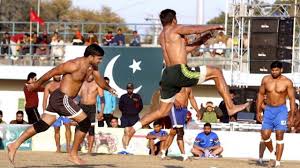
pakistan kabbadii and india controversy he arrival of an ‘Indian team’ in Pakistan for the World Kabaddi Championship has kicked up a controversy. India’s sports ministry and the Amateur Kabaddi Federation of India, the national federation, claim they haven’t given clearance to any sportsperson for participation in the competition. A contingent from India reached Lahore on Saturday via the Wagah border to take part in the championship, which is being hosted by Pakistan for the first time. The pictures and footage of the Indians arriving in Lahore have surfaced in social media. “The sports ministry and the ministry of external affairs have not granted any permission to any team, which is mandatory while representing the country at any international event,” a source from the sports ministry told *PTI* on a condition of anonymity. **No permission** The administrator of AKFI, Justice (Retd.) S. P. Garg, said, “We have no information about any kabbadi team which has gone to Pakistan. No permission was ever granted by AKFI to any team to go to Pakistan and play any kabbadi match there. We came to know about it only after information was sought. AKFI does not support any such activity. Legal action may be taken against the defaulters.” The AKFI is currently being run by an administrator as the Delhi High Court had struck down its elections held in 2018. To get the necessary permission for participation in overseas sporting competitions, the national federation for that particular sport communicates the requirement to the sports ministry which in turn writes to the Ministry of External Affairs for political clearance and the Home Ministry for security clearance, irrespective of whether the government funds the contingent or not. **Players garlanded** The championship begins on Monday at the Punjab Football Stadium in Lahore. Some matches will also be held in Faisalabad and Gujrat. Rai Taimoor Khan Bhatti, Pakistan Punjab Minister for Sports, welcomed the ‘Indian contingent’ at a Lahore hotel. The officials of the Pakistan Kabaddi Federation welcomed and garlanded the Indian players when they crossed into Pakistan from Wagah border from where they were taken in a security convoy to their hotel in Lahore. Welcoming Indian Kabbadi Team on their historic visit to Pakistan for #Kabbadi World Cup 2020. This is a great leap and step for return of International Sports in Pakistan. Kabbadi World Cup is starting tomorrow at Punjab Football stadium. https://twitter.com/hashtag/Kabbadi?src=hash&ref_src=twsrc%5Etfw
 @Faiqnisar
which brand is best!! nike or addidas? Nike has great lineage of iconic shoes in their line of Jordans, Kyrie, KD, LeBron, Air Force, Presto, Free,Air Max, Vapormax, Zoom Fly,etc and now soon to be launched REACT based sole technology to counter Adidas’ Boost series. While wearing a Nike you not only get great shoe but you also get to live up a legendary and iconic history of a world leading brand. Nike has a very long history of creating world famous shoes through a great design team backed by supreme technology. Adidas on the contrary had been lagging behind Nike in the USA up until a few years ago. But their partnering with BASF, Germany gave them a cutting edge foam material which they call Boost. This Boost foam totally changed Adidas’ fortune not only in the USA but also the world over. Their iconic shoes like Stan Smiths, Raf Simmons, Superstar, INKI, etc also ‘boosted their place in the ***athleisure*** market the world over. Their collaboration with Kanye West for Yeezy line up Boost series has also enabled them to gallop yards and leaps in the iconic shoes market. Currently Adidas’ Ultraboost is truly and well verified top of the line product. A very special mention of the Y-3 Range of shoes designed by none another but Yohiji Yamamoto http://www.y-3.com/IN/. Out of this world designs. https://www.google.co.in/search?client=firefox-b-ab&dcr=0&q=athleisure&spell=1&sa=X&ved=0ahUKEwivhqq-2Z_ZAhXCpY8KHX8QDGYQkeECCCMoAA As in the case of the Indian market, you will hardly find all these iconic shoes from Nike & Adidas, in any of the top showrooms in Tier-A cities too. They both have a very large collection of India centric and Indian Ecommerce centric line of shoes that don’t offer much of the attributes that they are famous for the world over. And wherever though if you may find their top of the line shoes, they are exorbitantly priced, upwards of INR 15,000 going upto INR 19,000 to INR 20,000. Rest of their range is more for allowing the customers to feel and live up their brands at an affordable price of INR 5,000 and above. Also there are too many fakes and other shoes selling through their so called factory outlets or discount stores. These low prices seconds and fakes rob the brand value of both these brands. For example you might have bought an exclusive Nike Airmax for INR 18,000 but find it in the feet of many other robbing it the exclusivity for which you spent so much money on. I mean you spend top bucks for a top brand not only for top quality but also for fair amount of exclusivity. Like Airmax 90 and Superstars can be seen worn by all and sundry on the streets of Delhi So you be the judge. However, in case you want some level of uniqueness in you footwear wardrobe, you could go in for Under Armour, because they too are very good and not yet proliferated the Indian market in a big way. Their latest HOVR is a remarkable line of great shoes INR 10,000 via ecommmerce site from USA. However they too suffer from under whelming India centric range.
 @Faiqnisar
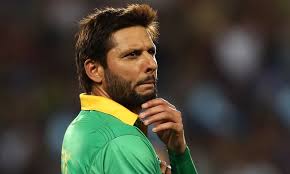
shahis afridi lala biography Full NameSahibzada Mohammad Shahid Khan AfridiNicknameBoom Boom Afridi and ShahProfessionPakistani Cricketer (All-rounder)**Physical Stats & More**Height (approx.)in centimeters- **178 cm** in meters- **1.78 m** in Feet Inches- **5’ 10”**Eye ColourBlackHair ColourLight Brown**Cricket**International Debut**Test**- 22 October 1998 vs Australia in Karachi **ODI**- 2 October 1996 vs Kenya in Nairobi **T20**- 28 August 2006 vs England in BristolCoach/MentorNot KnownJersey Number#10 (Pakistan) #10 (IPL, County Cricket)Domestic/State TeamICC World XI, Deccan Chargers, Asia XI, Pakistan, Hampshire, Melbourne Renegades, Dhaka Gladiators, Ruhuna Royals, Pakistan All Star XI, Knights, Rest of the World XI, Northamptonshire, St Kitts and Nevis Patriots, Sylhet Super Stars, Peshawar ZalmiNature on fieldVery Aggressive Likes to play againstIndia Favourite Shot/BallHit over mid-wicket/Googly Records (main ones)• For 19 years he had the record for the fastest century in ODIs. • He has 44 ducks in ODIs+Test+T20's. • 32 times he has won the man of the match award, the most by any Pakistani and the 3rd highest in the world. • Pakistan has won 212 out of the 384 ODIs that he has played.Career Turning PointIn his 2nd ODI match against Sri Lanka in 1996, he scored a 37-ball century.**Personal Life**Date of Birth1 March 1980Age (as in 2020)**40 Years**BirthplaceKhyber Agency, FATA, PakistanZodiac signPiscesNationalityPakistani
 @Faiqnisar
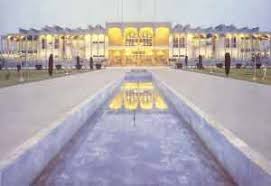
PAF Academy Risalpur renamed after Asghar Khan RISALPUR: Pakistan Air Force (PAF) Academy Risalpur has been named as the PAF Academy Asghar Khan. Asghar Khan was the first native Commander-in-Chief of the Pakistan Air Force, who served under the President Iskander Mirza and President Ayub Khan. In this regard, a ceremony was held on Wednesday which was attended by Chief of Air Staff Air Chief Marshall Sohail Aman. Former air chiefs, retired and serving higher officials of the PAF, and other dignitaries were also present on the occasion. PAF Academy cadets gave a spectacular parade performance. A short documentary on the illustrious career Air Marshall Asghar Khan was also shown on the occasion. Chief of Air Staff (CAS) Sohail Aman unveiled the plaque of the PAF Academy Asghar. He hailed the career of Asghar Khan calling him a man of integrity who possessed the most esteemed qualities. He said Asghar Khan served the nation and through his leadership made efforts for the development of the Pakistan Air Force. He said the motherland was proud of this patriotic ‘son of the soil’. World Space Week celebrations to start from Sunday https://nation.com.pk/03-Oct-2020/world-space-week-celebrations-to-start-from-sunday He added that renaming the academy after Asghar Khan was a befitting tribute to him. He said that Asghar Khan lifted the standard of the air force which was carried forward by later air chiefs. Sohail Aman said that the personality of Asghar Khan will be a role model and beacon of light for future generations. In 1957, Asghar Khan became the youngest to-date and first Muslim chief of the PAF. His tenure saw the extensive modernisation of the PAF in terms of both technical and military equipment. He resigned in 1965 before being appointment chairman of the national carrier Pakistan International Airline (PIA) and later started a political career with the Tehreek-e-Istaqlal party. PAF Academy is located in the town of Risalpur in Nowshera District of Khyber Pakhtunkhwa and is the premier cadet training institution of the Pakistan Air Force.
 @Faiqnisar
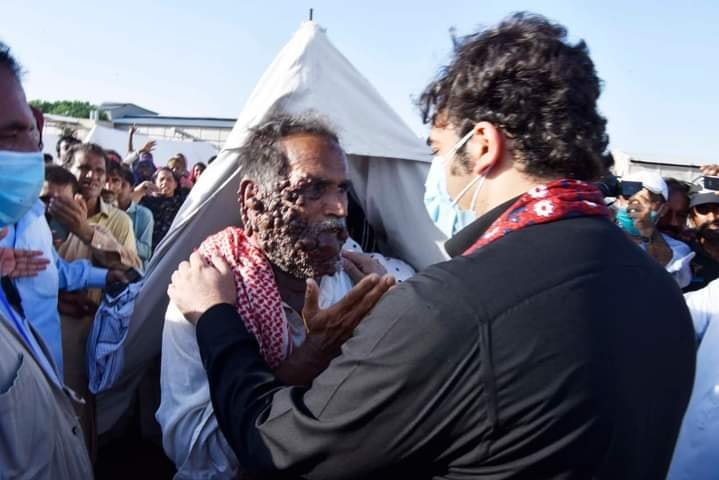
bilawal bhutto visit sanghar SANGHAR, September 9: Chairman Pakistan Peoples Party (PPP) Bilawal Bhutto Zardari during his visit to a relief camp for rain-affected people in Khipro is talking to a poor labourer, Jumoon Kunbhar, who is suffering from unidentified skin disease and is unable to get treatment due to poverty. PPP chairman directed Sindh Chief Minister Murad Ali Shah, who was present on the occasion, to immediately transfer the poor man to Karachi and treat him there at government expense.
 @Faiqnisar
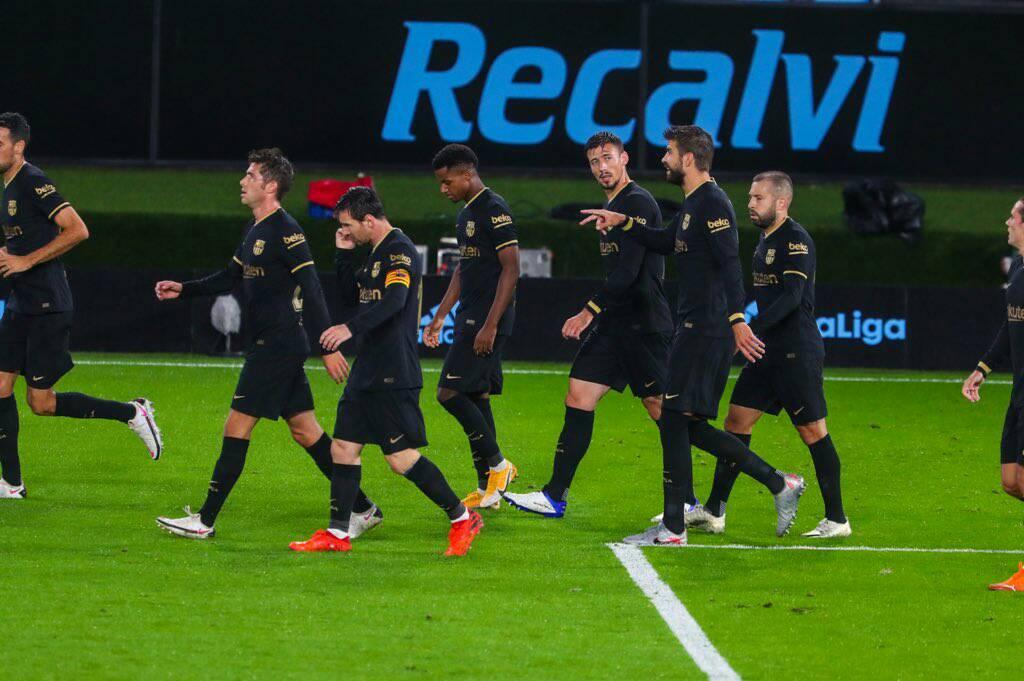
addiction to barcelona Some takes from the game: • Barcelona is less dependent on Messi in Koeman's system. • Coutinho and Ansu in top-form. • Barça continued to attack and put intensity with 10-men. • The away curse at Balaidos is over.
 @Faiqnisar
nawaz sharif pmln biography Mian Muhammad Nawaz Sharif was born on 25th December 1949 in Lahore. He is a politician and businessman. He was elected twice as Prime Minister of Pakistan and served two non-consecutive terms, the first from 1st November 1990 to 18th July 1993 and second from 17th February 1997 to 12th October 1999. He is now the leader of Pakistan Muslim League (N) party. Muhammad Sharif, the father of Nawaz Sharif, migrated to Pakistan from Amritsar in 1947. After independence Muhammad Sharif established a small business which gradually turned into what was later known as Ittefaq Group. Nawaz was a cricketer during his early life, and played first class cricket in the 1973-74 season representing Pakistan Railways. During his premiership he used to play cricket only as a batsman. He married Kulsoom Nawaz, who is the grandniece of the famous Kashmiri wrestler – The Great Gama. Nawaz Sharif was educated at Saint Anthony’s High School and Government College (Lahore), and received a law degree from Punjab University. Following his education, he entered Punjab provincial politics, joining the Punjab advisory district council. He initially joined politics in the late 1970s when he became a member of Asghar Khan’s Tehrik-e-Istiqlal. He was then chosen by Military leader Punjab Governor Jilani as Punjab finance Minister. He became finance minister of Punjab in 1981 and also served as minister of sports. He was credited with increasing funding for sports activities and rural projects. The Ittefaq Group saw its unprecedented upsurge during this period. He first became Prime Minister on 1st November 1990, running on a platform of conservative government and an end to corruption. His term was interrupted on 18th April 1993, when President Ghulam Ishaq Khan used the reserve powers vested in him by the Eighth Amendment to dissolve the National Assembly. Less than six weeks later, the Supreme Court overruled the President, reconstituting the National Assembly and returning Sharif to power on 26th May 1993. Sharif resigned from office along with President Ghulam Ishaq Khan on 18th July 1993, after his feud with the president, who had accused him of corruption. Moin Qureshi became caretaker prime minister, and was succeeded shortly thereafter by Benazir Bhutto, who was elected to office on 19th October 1993. Nawaz was returned to power in February 1997 with such a huge majority that the result was immediately questioned by Bhutto’s Pakistan People’s Party. One of the first things Sharif did at the start of his second term was to orchestrate the scrapping of Article 58-(2)(b) through another Amendment to the Constitution – an exercise in which Sharif’s party was joined by all the other political parties in the National Assembly and Senate. The Thirteenth Amendment to the Constitution of Pakistan was passed so that the President could no longer dismiss the Prime Minister; and the Fourteenth Amendment imposed so-called party discipline on members of Parliament. Party leaders now had unlimited power to dismiss any of their legislators if they failed to vote as they were told. This made it impossible to dismiss a prime minister by a motion of no confidence. In effect, the two amendments removed nearly all checks on the Prime Minister’s power, since they removed all legal remedies to dismiss him. He opposed the independence of the judiciary, clashing with the Chief Justice, Sajjad Ali Shah. The Supreme Court was stormed by Sharif’s party loyalists on 28th November 1997, and the Chief Justice was forced to resign. On the development front, Nawaz Sharif completed the construction of South West Asia’s first motorway, the 367 km M2, linking Lahore and Islamabad. The motorway, which was initiated during Nawaz Sharif’s first term, was inaugurated in November 1997 and was constructed at a cost of Rs.35.5 billion. The peak of his popularity came when his government undertook nuclear tests on 28th May 1998 in response to India’s nuclear tests two weeks earlier. However, after these tests, matter started going downhill. He suspended many civil liberties, dismissed the Sindh provincial government and set up military courts when the stability of the government was threatened. He was accused of cronyism and being too supportive of Punjabi candidates for office, which marginalized his party in the south Punjab. During his first term as prime minister, Sharif had fallen out with three successive army chiefs: with General Mirza Aslam Beg over the 1991 Gulf War issue; with General Asif Nawaz over the Sindh “Operation Clean-Up” issue; and with General Waheed Kakar over the Sharif-Ishaq imbroglio. At the end of General Waheed’s three-year term in January 1996, General Jehangir Karamat was appointed army chief. His term was due to end on January 9, 1999. In October 1998, however, true to form, Sharif fell out with General Karamat as well, over the latter’s advocacy of the need for the creation of a National Security Council. In October 1998 General Karamat resigned and Sharif appointed General Pervez Musharraf as army chief. He would later regret appointing Pervez Musharraf to the Chief of Army position, as Musharraf would lead a coup to topple Sharif’s government. Jealous of Musharraf’s growing power within the military, Sharif fired him in October 1999, while Musharraf was on a commercial jet, flying to Karachi. Sharif initially ordered the jet diverted. Musharraf orchestrated a bloodless coup from the plane and later arrested Sharif, charging him with hijacking, conspiracy to murder and treason. The Supreme Court upheld the hijacking charge. Musharraf eventually pardoned Sharif but also booted him out of the country. Sharif took up exile in Saudi Arabia. Sharif flew back to Pakistan on 10th September 2007. Musharraf immediately ordered him out of the country again. Sharif returned on 25th November 2007, this time for good, as Musharraf’s rule was slowly, irrevocably disintegrating in the face of popular outrage. For a time Sharif and Benazir Bhutto campaigned together until Bhutto’s assassination. After the 2008 parliamentary elections, Sharif’s PML and Bhutto’s PPP briefly ruled as a coalition. That arrangement collapsed in August 2008. In the 6th September 2008 parliamentary vote that was to decide Pakistan’s next president, Sharif nominated former chief justice Saeed-uz-Zaman Siddiqui to face Asif Ali Zardari and a Pervez Musharraf loyalist, Mushahid Hussain. Now he is the leader of the main opposition party.
 @Faiqnisar
economic vision of iqbal Publisher Information The Pakistan Institute of Development Economics was established at Karachi in 1957 and in 1964 accorded the status of an autonomous research organization by the Government of Pakistan. It is devoted to theoretical and empirical research in Development Economics in general and on Pakistan-related economic issues in particular. In addition to providing a firm academic basis to economic policy-making, its research also provides a window through which the outside world can view the nature and direction of economic research in Pakistan. Other social sciences, such as demography and anthropology and interdisciplinary studies increasingly define the widening scope of research that must be undertaken for proper economic policy and development to have sound underpinnings. Over the past 50 years PIDE has earned an international reputation and recognition for its research. Our faculty is rich and our advisory committee consists of world renowned economists such as Nobel Laureate Robert A. Mundell. PIDE is located at the Quaid-i-Azam University Campus in Islamabad, the capital of Pakistan. The campus rests against the backdrop of the Margalla hills on the Potohar Plateau, within a short distance of the remains of Taxila, which once housed the world's oldest university. Archaeological remains discovered in this area show that it has been a center of civilization for some 5,000 years. The Institute, neighbor to several other academic outfits situated in this historic and scenic part of the green foothills of the great South Asian mountain ranges, is the hub of economic and social science research in this part of the world.
 @Faiqnisar
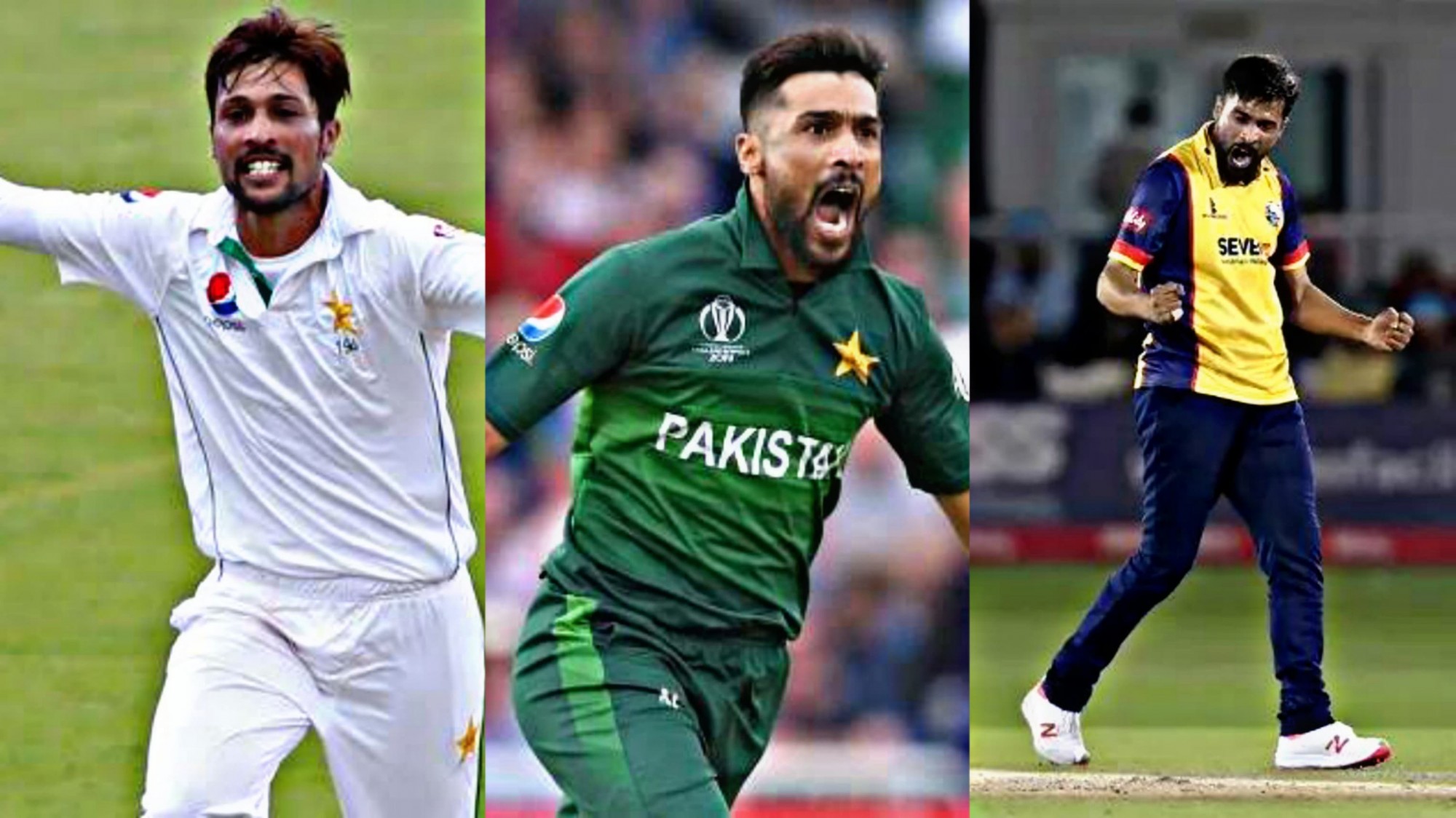
story of muhammad amir pak cricketer ike a drone, the end was hovering. And like a drone, I think it may have crept up on Mohammad Amir, perhaps even during the course of our conversation, gliding in from the periphery of his consciousness. The *end* end - a hard exit from the game - is still not here. But when we met two months before last year's World Cup, in Dubai, Amir talked himself into the revelation that he'd had enough. If he didn't get picked for the World Cup, he'd retire. And even if he did, he might retire after it. Either way, an exit was looming. http://www.espncricinfo.com/pakistan/content/player/290948.html The recorder was off by this stage. But given that he did retire from Tests soon after and that he's now, effectively, freelancing for Pakistan rather than employed by them, this doesn't feel like a betrayal of confidence. It *had* crept up. The year before, Amir had already spoken of managing his workload, by playing fewer Tests, itself a pronouncement that doused rumours he wanted to quit altogether. Pakistan were cool on the idea, then acquiesced by not picking him for five home Tests (in the UAE) in late 2018, but took him to South Africa. As much as acquiescence it was acknowledgment of a new reality that the once vast horizon of Amir's bowling had been hemmed in. There were limits to what he could do, to what he wanted to do. https://www.espncricinfo.com/story/_/id/22918546/mohammad-amir-likely-cut-tests-prolong-career Those would never have felt more constraining than in March last year. Since the 2017 Champions Trophy final, Amir had picked up five wickets in 15 ODIs. That encompassed a stretch in which he took one wicket in nine ODIs. The format is no friend to bowlers but somewhere across New Zealand, Zimbabwe, Dubai and South Africa, against opponents including Hong Kong, it must yield more than the solitary wicket of Zimbabwe's No. 10, Tendai Chatara (batting average 6.6), no? For your sweat, your skills, your genius? That is a run from hell and then some. https://www.espncricinfo.com/series/8081/scorecard/1022375/india-vs-pakistan-final-icc-champions-trophy-2017 https://stats.espncricinfo.com/ci/engine/player/290948.html?class=2;spanmax1=08+May+2019;spanmin1=19+Jun+2017;spanval1=span;template=results;type=bowling;view=match People talk after that kind of run. Players hear that kind of talk. A great deal of Amir's building frustration was with the criticism. Taking wickets was a difficult business and not taking wickets even more so and people didn't get it. In the 17 years since he first moved to Rawalpindi to pursue cricket seriously, Amir's career could have ended at any number of moments, in any number of ways "I wanted to talk about this," he simmered. "Everyone has an opinion, that's fine. Last Test series [in South Africa, where he took 12 cheap but not especially impactful wickets] my performance wasn't bad. In T20s I am probably the top Pakistan bowler. ODIs sure, last 12-14 matches haven't been great. "People can talk but not many see that since I've returned, I've been playing constantly, across all formats, playing and playing. And after a long break, doing that, the body, the mind, the tactics, all are affected. It has to. It could've been in Tests, in T20s or in ODIs. But somewhere it had to take a toll. Your body gets tired, your mind gets tired. "All I can do is keep trying and giving everything to it. Maybe this is a time when things just aren't happening for me." The point about the physical toll was valid. From his return till the day we spoke, only seven fast bowlers had bowled more overs. But actually it was the load in the first year of his return that had been overbearing, more than anybody realised. In that year, no fast bowler played more international matches and only Josh Hazlewood bowled more overs. No bowler on that list - fast, medium, slow, righty, leftie, tall, short, fat, thin, white, brown, black - was coming off a near five-year break in which they had not bowled at all. https://stats.espncricinfo.com/ci/engine/stats/index.html?bowling_pacespin=1;class=11;filter=advanced;orderby=overs;spanmax1=28+mar+2019;spanmin1=15+jan+2016;spanval1=span;template=results;type=bowling https://datawrapper.dwcdn.net/MnPRD/1/ In hindsight, it was that first year back that broke Amir and only now does it come across as truly negligent that Pakistan had no plan to ease him in. No plan, that is, other than to play him in every game possible - he missed only five matches all year - as if squeezing five years' worth of bowling inside a year. But he was housing a deeper frustration, more complicated because the focus was inwards. Amir was, I think, coming to terms with what he was, as against what he could have been. Or maybe he was coming to terms with the divergence between what he had always known himself to be and what people remembered him to be. Because, though it could be argued that this run of form was an outlier, it could equally be argued that it was a caricature of the broader sense that this Amir was not *that* Amir. And then we're a reasonable extrapolation away from the conclusion that *that* Amir never existed. The memory of that Amir is clearest from one ball, or rather one kind of ball. If you could rank by evocativeness, by the yearning they generate, all the deliveries in the world, Amir's inswing would be top. It is the delivery that most triggers Pakistani fans, sightings of it even now making cricket alive and vital like little else. It's the Shane Watson dismissal at Lord's a decade ago, leg-before and bowled in one ball, or Mitchell Johnson castled in the next Test, at Headingley. https://www.espncricinfo.com/series/13240/scorecard/426394/australia-vs-pakistan-1st-test-pakistan-tour-of-england-2010 https://www.espncricinfo.com/series/13240/scorecard/426395/australia-vs-pakistan-2nd-test-pakistan-tour-of-england-2010 These were deliveries that swooped upon a batsman, with the grace of a bird of prey unerringly picking up a tiny morsel off the ground and soaring back up; these deliveries looked like they gathered momentum off the bounce. Not least of the genius was in the precision - controlling swing is barely in nature's control, let alone man's. They were transcendental, no longer mere deliveries from bowler to batsman. They were engagement, a physical experience, because the stomach traced their trajectory as if on a roller coaster. They were powerful markers in the life of a nation, powerful enough to lift dark clouds, to find light at the end of tunnels, to help you sleep, to give you reason to wake up. Pakistan was a grim country around that time, but in the millisecond existence of those deliveries, it was the greatest place - or at least it was polite enough to fade into the background. And because memory is but the grandest deceit, those came to be deliveries we remembered Amir bowling all the time. Play04:06 Amir, before and after his ban And now he wasn't bowling them all the time. Now he was bowling them once a year. A few strung together to Rohit Sharma and Virat Kohli at the Asia Cup, a couple again in the Champions Trophy final (more than the swing, this was about occasion), a ball to Jonny Bairstow at Lord's, two in the first over of a PSL game in 2020. In between was a lot of reality. Barely three wickets a Test, an average over 31 and a wicket every 11 and a half overs worth of reality. Five-wickets-in-15-ODIs reality. At no point did Amir look like a bowler somebody could take apart, or one who was out of place. But he rarely looked like a bowler who could take others apart. The swing - no, the swoop that took you along - had gone. Some friends of mine on WhatsApp had begun to despair of Amir's bowling: *seedhi seedhi* - as straight as a boy scout, no swing, no movement, nothing. Curves ironed out meticulously like wrinkles from a shirt. Where had it gone? How had it gone? Why had it gone? There were no obvious answers. The wrist wasn't as rigidly locked in as before, slow-mo cameras revealed. He wasn't delivering from as close to the stumps as he used to. The most interesting were discussions around the lengths he was now bowling, especially in Tests. In short, went the diagnosis, he wasn't full enough for long enough. If only he went a little fuller, especially in his first spells. If only he didn't slip back to a shorter length so quickly, one that would keep batsmen honest but not necessarily see them off. This wasn't armchair sniping alone. Azhar Mahmood, Pakistan's bowling coach through much of Amir's return, would often sit in the pavilion and predict exactly how soon and often Amir would switch to back of a length. People cribbed that Amir was doing this to protect his figures, that his concern wasn't with taking wickets but with buttressing his economy. The perceived crime here was not so much one of selfishness - that he was looking after his own figures - as much as the betrayal of a tradition. How could a Pakistani fast bowler not be bowling full, because to bowl full is to attack, and if you're a Pakistani fast bowler who's not attacking then you're not Pakistani or fast: you're just some '80s county trundler. Didn't Amir in that first golden year bowl full all the time? Isn't that what brought him the swing? Go full boy, and see what the sky and clouds give you, because the earth underneath ain't giving you nothing. "One single guy with 220 million hopes behind him, he has to win a match - people have to understand it isn't easy"**MOHAMMAD AMIR** Except that, one, length is hardly binary, where, say, full is good and anything that's not is bad. It has never been as simple as that. Conditions, circumstances, the kind of ball being used, the opponent - there's so much else that goes into the length of one single ball. An often overlooked stat was that in 11 of the first 14 Tests Amir played, he had Mohammad Asif at the other end, as accomplished a pressure-building partner a bowler could hope to have as any. Amir's figures in those Tests may as well be of another bowler: over four wickets per Test, an average under 30, a wicket every 53 balls, nearly *two* overs quicker than his overall figures. https://www.thecricketmonthly.com/story/1154076/what-is-the-best-length-to-bowl-in-tests https://www.espncricinfo.com/pakistan/content/player/41411.html https://stats.espncricinfo.com/ci/engine/player/290948.html?class=1;filter=advanced;orderby=default;player_involve=19627;template=results;type=bowling But, two, there is no evidence that Amir did bowl fuller more often in that first year. The memory, see? According to ESPNcricinfo's ball-by-ball data, nearly a fifth (19.35%) of all his deliveries in Tests post-ban have been full (including full tosses and yorkers). Pre-ban, less than 5% of his deliveries were as full. Even accounting for the subjectivity of ball-by-ball scorers, that is a big difference. Looking at his use of the new ball doesn't make a difference. Before the ban, under 3% of his deliveries with the new ball (from overs 1-20) were classed as full. After it, nearly a fifth again. Neither does changing the lengths we're looking at. Let's expand the parameter for full to also include good-length deliveries, which, as Asif and Glenn McGrath forever remind us, are as much the bedrock of attacking bowling. That leaves us with the not wholly unreasonable argument that in most conditions, bowling back of a length with a new ball can be construed as a defensive move. Before his ban nearly 35% of Amir's deliveries were classified as back, or short, of a length; after his ban this fell to 21%. This kind of data is not for everyone. But it's undeniable that the two Amirs are different. Which brings us back again to this: What if the "what if" we posit about Amir is the wrong one? What if it isn't "What if Amir had not been banned then how good would he have been"? What if it is that *that* Amir never existed but for a brief, glorious period? What if *that* Amir existed because he played all but three of his Tests in Australia, New Zealand and England, and that in the English summer of 2010 the ball swung like a chandelier in a hurricane? What if that Amir was good, but not as good as we thought? That he was flattered by the conditions he played in, the bowlers he played alongside? https://datawrapper.dwcdn.net/luE2Z/4/ https://datawrapper.dwcdn.net/8nrY7/5/ https://datawrapper.dwcdn.net/cxIAH/3/ Amir defended his bowling in much the same way that all athletes do their poor performances - they are trying, it's the process that's important, bad times come to all, numbers don't tell the full story. But the more we spoke, the more he seemed to be arriving at that "what if", the right one, and even a broader disaffection. People remember that 2010 summer, I prompted. "That cricket has changed, those conditions have changed, people have to understand that." He was almost pleading. "That year everyone swung the ball. The wickets, the overhead conditions. Now the wickets have changed. Tell me how much does Mitchell Starc swing the ball? [Trent] Boult swings it in conditions where there is a little swing. I think he's the No. 1 bowler in the world, but conditions make a difference. In Ireland, in England, in South Africa, I swung the ball. When it doesn't swing in conditions for swing, then, sure, that is a problem. "But playing a lot of cricket takes a toll. After playing without a break, the body is tired, the mind is tired." Do you think those old memories of Amir are a burden? "I wouldn't say burden exactly but yeah, people's hopes from me are higher." Why aren't you doing what you did to Watson or Johnson in 2010? "People have to understand that age, rhythm… I had played consistently then and had a rhythm about my bowling, a confidence. Now I am back and things change. That is life. I'm nine years older. I was 18, now I'm 27. The biggest loss I've had is my mother, who passed recently. Even having a daughter makes a difference. "Ball in hand, playing - that isn't it for us, it isn't everything. There are a million things to manage in life, to look after family, the pressures of performance. Many things. One single guy with 220 million hopes behind him, he has to win a match - people have to understand it isn't easy." A miracle kid: when Mohammad Amir first burst onto the scene, we all watched with our mouths agape, like Shane Watson here at Lord's, 2010 Tom Shaw / © Getty Images Earlier this summer, a year on from when we spoke, Amir was cut from Pakistan's central contracts list. This was the official "We've-decided-to-move-on" moment. He initially made himself unavailable for Pakistan's current tour of England, for which he would only have been involved in the T20Is. His wife was expecting their second child and with quarantine requirements in place, it wasn't logistically feasible for him to be part of the series. But an early birth meant that he could play, a decade on from Lord's. https://www.espncricinfo.com/story/_/id/29168752/hasan-ali-wahab-raiz-mohammad-amir-lose-pcb-central-contracts https://www.espncricinfo.com/story/_/id/29500135/mohammad-amir-available-join-pakistan-squad-england In the 17 years since he first moved to Rawalpindi to pursue cricket seriously, Amir's career could have ended at any number of moments, in any number of ways. Those early weeks in the big city, when he yearned for home; major back injuries; the fixing ban - this slow fade is an innocuous and unexpected way for it to go. A story Amir has told many times is of the time he received his first Pakistan shirt. He couldn't stop looking at his name. He couldn't believe it was his name. He couldn't stop looking at himself wearing the shirt. He kept it on all night. So often has he told it, it now comes out as practised as the jokes a husband and wife tell every new couple they befriend about each other. But he's still able to summon a genuineness in every retelling. There is no question it meant a lot to him. To go from that to the disaffection of that March day, it didn't seem right that this is how it might end. That for all he has overcome, he isn't the balloon that popped but the balloon that exhaled itself out of existence, floating this way and that until it wasn't. **II** Get on
 @Faiqnisar
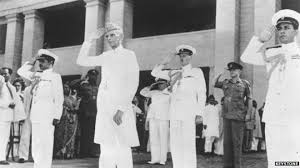
vision of quaid e azam,founder,pakistan Was Quaid-i-Azam Muhammad Ali Jinnah, the founder of Pakistan, a secular person or he visualized Pakistan to be a secular state? Who is Secular? The dictionary meanings of the term suggests that the one person concerned with the affairs of this world and not bound by a religious rule is called a secular person. The general perception of a secular person is the one who believes in the separation of religion and the temporal world i.e. who considers religion as one’s personal and private matter which has nothing to do with the affairs of the state. In Pakistan a debate has been going on for the past many decades as to the Quaid’s vision of Pakistan. A small number of writers, especially those contributing to the English press, insist that Quaid-i-Azam envisaged Pakistan’s political structure independent of the Islamic principles and desired to establish a secular democratic state. On the contrary, a large majority of the Pakistanis firmly believe that Pakistan was envisioned as a democratic but modern and Islamic state because the country was achieved in the name of Islam. The best way to understand Jinnah’s religious moorings and his vision of Pakistan is to examine his approach towards life and to study the consistent themes of his relevant speeches and statements extending over four decades. For example we come across Jinnah’s decision to seek admission in Lincoln’s Inn for his Bar-at-Law because it included the name of the Holy Prophet of Islam in the list of great lawgivers of the world. It was mentioned ∗ Senior Civil Servant, Government of Pakistan, Islamabad. 40 Pakistan Journal of History & Culture, Vol. XXIII/1, 2002 by the Quaid himself while addressing the Karachi Bar Association on Eid Miladun-Nabi. 1 The true significance of his decision cannot be easily appreciated because Jinnah appears to be a fine model of the western life style in all respects. Such a decision could be taken only by a person whose heart was kindled with the deep love for the Holy Prophet (peace be upon him); otherwise a young man of seventeen years is not expected to attach any importance to such matters in the free for all environment of London. I have referred to early years of Jinnah’s life because upbringing and education received during the formative period makes lasting impressions and plays a crucial role in shaping attitudes. Jinnah’s father Jinnah Bhai Poonja had religious inclination2 and used to teach Holy Qur‘an to the children of his locality in the evening. 3 In his childhood, Jinnah had developed an interest in listening to Islamic historical tales from his mother before going to sleep. Jinnah’s father, a teacher at Mission School of Karachi, in addition to his involvement in business, preferred to get his son admitted in Sind Madaressatul Islam because in the Mission School students were given lessons on Christianity whereas Sind Madrassah had Islamic milieu. According to the Madrassah’s record the word “Muhammadan”4 was registered in front of Muhammad Ali Jinnah’s name instead of “Khoja”. On migration to Bombay, the Anjuman-i Islamia School was selected for Jinnah for the same reasons. Thus, brought up in a religious cradle Jinnah received his early education in an Islamic environment, which motivated him to select the Lincoln’s Inn. 1. Syed Sharif-ud-din Pirzada, Some Aspects of Quaid-e-Azam’s Life (Islamabad: National Commission on Historical & Cultural Research, 1978), p.10 [Eid-i Miladun-Nabi means birthday celebrations of Prophet Mohammad (PBUH)]. See also Hector Bolitho, Jinnah, Creator of Pakistan (Lahore: Oxford University Press, 1969), p.9. 2. Poonja’s religious propensity and family background can be visualised from the fact that when Jinnah sought his father’s permission to join a theatrical company in London so that he could become financially independent, Poonja wrote him a long letter disapproving the proposal. One sentence that touched Jinnah the most was. “Do not be a traitor to the family.” Pirzada, p.11. 3. Rizwan Ahmad, Quaid-e-Azam - Ibtedai Tees Saal, (1876-1906) (Urdu) (Lahore: Aatish Fashan Publications, 1987), p.65. 4. Ibid., p.68. Jinnah’s Vision of Pakistan 41 After completing his bar at Lincoln’s Inn at the age of twenty, Jinnah reached Bombay in 1896. His religious propensity and interest in the welfare of the Muslims was evident from the fact that soon after reaching Bombay he started taking active part in the activities of Anjuman-i lslamia, an organisation of the Muslims. He attended its first meeting on 8th July 1897 and a month later on 12th August he attended Eid Miladun-Nabi function of the Anjuman.5 His love for the Holy Prophet (peace be upon him) can be judged from the fact that despite his legal and political engagements, he found time to attend the aforementioned commemorations. Jinnah’s career as a legislator began on 17 March 1911 when he introduced his first legislative bill on Waqf (tax exemption for Muslim endowments). As a result of the decision of the Privy Council of London in 1894, Islamic law of Waqf-ul Aulad was rendered ineffective because the Privy Council had invalidated testamentary gifts of Muslim property left in tax free Waqf (trust) for ultimate reversion to religious charity. The Muslims felt perturbed over the Privy Council’s decision but were helpless against the British government. Jinnah took upon himself, as a representative of the Muslim community in the Council to move the Waqf Validating Bill seeking legislative reversal of the Privy Council decision charging that it was opposed to the fundamental principles of Islamic jurisprudence. After lengthy debates extending over a period of two years, Jinnah succeeded in getting the bill passed on March 5, 1913. It was the first issue on which he ‘opened his mouth in the Council’ and was the first religious bill moved by a Muslim member of the Imperial Legislative Council, which became law of the land to the advantage of the Indian Muslims. When Jinnah decided to marry Miss Ruttie Dinshaw, daughter of Bombay’s famous Parsee leader, Sir Dinshaw Petit, he asked her to embrace Islam, which she did and accepted Islam as her new religion. Maulana Shah Ahmad Noorani, the well-known Pakistani religious leader, has verified this fact. He claims that Jinnah used 5. Dr. Riaz Ahmad, The Works of Quaid-i-Azam Muhammad Ali Jinnah, Vol.I, (Islamabad: Quaid-i-Azam Chair, N.l.P.S. Quaid-i-Azam University, 1996), p.4. 42 Pakistan Journal of History & Culture, Vol. XXIII/1, 2002 to consult and seek guidance in religious matters from his real uncle Maulana Nazir Siddiqui, Imam of Jamia Masjid Bombay, and a Sunni religious scholar who died at Madinatul Munawwarah and was buried in Jannat-ul Baquee‘ graveyard. Thus Muhammad Ali Jinnah took Ruttie to Maulana Nazir Siddiqui, for conversion to Islam.6 Jinnah’s prudence and circumspection is well known. He would never take any decision without weighing it properly. It is generally believed that he belonged to the Shi‘a sect of lsna Ash‘ari. No doubt his family had the same religious background but the question is why did he not select any Shi‘a scholar for performing the ceremony of Ruttie’s embracing Islam. However, their nikah was performed by the Isna Ash‘ari Qazi.7 This small and insignificant issue suggests us that Jinnah was far above sectarianism.8 It became further clear when somebody asked him as to which sect he belonged Sunni or Shi‘a? The Quaid retorted: “What was the religion of the Holy Prophet” (peace be upon him)? During his visit to Quetta, a Shi‘a delegation called on Jinnah. During the meeting, a member of the delegation remarked that we have prior right on you because you belong to our sect. Quaid’s reply was curt, “No. I am a Muslim”.9 Such instances amply speak about his attitude of mind and perception of religion. The renowned religious scholar Maulana Shabbir Ahmad Osmani, a stalwart of the Sunnis, led funeral prayers of the Quaid. It is an interesting co-incidence that Jinnah’s only daughter, Dina Jinnah, was born on the midnight of 14th and 15th August 1919 and exactly 28 years later on the midnight of 14th and 15th August, 1947 his political offspring, Pakistan emerged on the world map. It is a fact that Muhammad Ali Jinnah immensely loved his daughter, who was the only symbol of his first and the last love, 6. Pirzada, p.46. 7. Ibid. 8. S.M. Burke, Jinnah: Speeches & Statements (Karachi: Oxford University Press, 2000), p.148. 9. Hanif Shahid, Quaid-i-Azam awr Islam (Urdu) (Lahore: Bookman, 2001), p.34. Jinnah’s Vision of Pakistan 43 yet when Dina decided to marry a Parsee youth, Neville Wadia, Muhammad Ali Jinnah severed his relations with her forever. It can be argued that Jinnah could maintain social relations with her; after all she was his only daughter. There are many such examples where liberal Muslims have been maintaining social relations with their converted sons and daughters. But Jinnah decided to part his ways with Dina, never to see her again, because for him Dina’s parting with Islam meant permanent parting with Jinnah. After her conversion, Jinnah did not even mention her to his friends as if he never had a daughter. After her marriage, Dina wrote letters to her father, which he replied like a civilised and cultured person, but made it a point to address her as Mrs. Wadia10 instead of “My dear Dina”. It is a well known fact that Mrs. Wadia wanted to visit Pakistan to see her ailing father, the Governor General of Pakistan, but her request was turned down by the Quaid in spite of attempts at persuasion by some family friends. She came to Pakistan for the first and the last time, only to mourn the death of her late father. Muhammad Sharif Toosy of Wazirabad, was an educationist and a learned man. Despite his government service constraints, he contributed convincingly impressive articles to the press supporting Muslim demand for Pakistan, which caused a stir in the political circles. Jinnah admired his articles and asked for his assistance for the wider dissemination of his message through the press. During his stay in Bombay with the Quaid for six months Toosy happened to see Jinnah from very close quarters. Toosy says that Jinnah’s library had a valuable treasure of books on various Islamic subjects like Seerat-un-Nabi, (life of the Prophet PBUH) Islamic history, Islamic law, English translation of Holy Qur‘an, and the biographies of the pious Caliphs, which Jinnah used to study at intervals during his legal and political preoccupations. It is worth recalling that after the battle of Badar, one of the sons of Hazrat Abu Bakar, Abdur Rehman, who had not yet embraced Islam disclosed to his father that during the battle he had a chance to kill him but he refrained as “you are my father”. Hazrat Abu Bakar replied: “By God if I had found you in my range, I 10. Stanley Wolpert, Jinnah of Pakistan (Karachi: Oxford University Press, 2000), p.370. 44 Pakistan Journal of History & Culture, Vol. XXIII/1, 2002 would have killed you”. It means that in Islam loyalty to religion and not to blood determines relationship. Thus Jinnah followed the same principle by severing his relations with his only daughter after she renounced Islam. Some people may comment that Jinnah’s reaction to his daughter’s marriage was his attitudinal or egoistic response. Objective study of this episode would lead us to the conclusion that it was not the question of Jinnah’s ego but a matter of his religious sensibility. Detailed account of this episode, based on original source, has been given by Stanley Wolpert who writes that when Dina had expressed her wish to marry Wadia, “Jinnah tried his best to dissuade her... Jinnah in his usual imperious manner told her that there were millions of Muslim boys in India and she could have anyone she chose”.11 Dina’s insistence disappointed Jinnah who never spoke to her after she married.12 It is obvious that Jinnah wanted Dina to marry a Muslim, not any particular person or a family. By laying down the condition of “any Muslim” he made it clear that it was the question of religion and not of temporal world, nor a problem of his ego. Maulana Hasrat Mohani13 has revealed that once he wanted to discuss a problem of immediate nature with Jinnah and he went to see him early in the morning, knowing that he was an early riser. The guard at his house led him to the waiting room and told him to wait as Jinnah was expected any moment. According to Maulana, he waited for sometime and then decided to enter the next room himself in order to find Jinnah. As he entered the adjacent room, he heard a sobbing voice. The Maulana got worried and quietly peeped through the curtain on the door. He was surprised to find
 @Faiqnisar
The First Imam, ‘Ali (as) Ibn Abu Talib It was Friday 13th of Rajab 30 Amulfeel Hazrat Fatima binte Asad, the wife of Hazrat Abu Talib entered the precincts of the Kaaba and prayed to Allah saying O’my protector ease my pain.’All of a sudden the wall of the Kaaba opened up and she, as if by some unseen force went inside the Kaaba and the wall closed. ‘Ali (as) the youngest son of Abu Talib was born inside the Holy Kaaba. She stayed inside for three days. On the 3rd day she came out through the door and Muhammad was waiting outside. She told Muhammad (S) that the boy had not taken any milk. Muhammad gave him the first feed from his mouth and afterwards asked his uncle Abu Talib that he wished to adopt the baby. ‘Ali entered the house of Muhammad from the very first day of his birth. ‘Ali’s mother Fatima binte Assad Also lived there who looked after his own son as well as Muhammad (S) so much so that later the Holy Prophet used to say that she was like his own mother. Shah Waliullah, Mohadith-e-Dehlvi writes in the book “Izalatul Kholafa” giving reference from Imam Hakim in his Mustadrak Part 3, Page 483. Qud Tawatarul Akhbar Inna Fatimah Binte Asad woledat Aliyan Fi Jaufil Kaaba”. Another writer of the old school Sibtel Jauzi in his book Tazkeratul Khawas ul Umma, page 7 mentions the same fact that ‘Ali was born inside the Kaaba. Khawja Moinuddin Chishti Ajmeri mentions this fact in his famous Quartet saying that when ‘Ali was born inside the kaaba the Sky and the earth was filled with a light and Angel Gabriel announced that a child was born in the house of God. Maulana Rumi in his Mathnawi writes, “ O’one who travels to Najef to visit the tomb of ‘Ali must know the fact that the pearl of the Kaaba lies there to give us security because of our intense love for him.” Masoodi the famous historian writes in his book of history Muruj el Zahab, that ‘Ali was born inside the Kaaba on the orders of Muhammad the Messenger of God. It was after the adoption of ‘Ali (as) that he lived with the Holy Prophet in his house. Wherever Muhammad (S) went ‘Ali (as) was with him all the time. Even in the Mountain of Hira when Muhammad (S)went for meditation ‘Ali (as) went with him most of the time. Sometimes they stayed on the mountain for 3 or 4 days. Sometimes ‘Ali (as) took his food there. In Nahjul Balagha ‘Ali (as) said that “ I used to go with the Holy Prophet like the baby camel goes with his mother.” Some historians try to show that when Muhammad (S) declared his prophet hood ‘Ali (as) was the first among male children who accepted Islam. The implication here is that both Muhammad (S) and ‘Ali (as) were non -believers before this declaration. This is against the Qur’anic verdict which says that Ibrahim was a Muslim and he taught his children to be Muslims so that when the Prophet was born among the descendants of Ibrahim through the line of Ismael he was born a Muslim and so was ‘Ali. The correct thing to say would be that when Muhammad (S)declared his prophet hood openly ‘Ali (as) immediately adhered to the declaration without hesitation. The three persons seen in prayers in the Kaaba were Muhammad, Khadija and ‘Ali before anyone else accepted Islam. For 3 years young and poor persons of Makka were accepting Islam secretly. The first open declaration came when the Qora’nic verse tells the Prophet to "come out openly and warn the people of your own clan." Invitations were sent to leaders of the Banu Hashim to come to the house of Muhammad (S)for Dinner. Forty of them came, ate food and then heard Muhammad (S)about his mission of ‘ No god but Allah and Muhammad (S) as the messenger of Allah and whoever offers his help to propagate this religion will be his deputy and successor. No one stood up except ‘Ali (as) . After announcing this 3 times Muhammad (S) declared that ‘Ali (as) will be his deputy to his mission and will be his successor after him. People thought it as a joke that a 13 year old boy was to be a deputy of this prophetic mission. Even Abu Lahab jokingly told Abu Talib, go and obey your son to which AbuTalib smilingly accepted. ‘Ali (as) promised to help Muhammad (S) in his mission and kept this promise all his life. The next thing which we see in the life of ‘Ali (as) is the reflection of this promise he gave at this place in front of the leaders of the Quraish. We see ‘Ali (as) protecting Muhammad (S) from the abuses of the enemies of Islam. When Muhammad (S)went to Taif a nearby town to preach Islam children of Taif hurled stones and it was ‘Ali (as) who protected the Prophet and drove the stone throwing children away from the Prophet. As a youth ‘Ali (as) was strongly built, strong arms, wide chest and a very strong brave and shining face. Children of his age and even older to him were frightened of him and whenever they tried to mock the Prophet, they always ran away when they saw ‘Ali (as) standing by for protection. Time passed and hostility of the Quraish increased so much so that Muhammad (S) was ordered by Allah to leave Makka. ‘Ali (as) slept on Muhammad’s bed without hesitation and when the non-believers entered the house of Muhammad (S) to kill, they found ‘Ali (as) who was not afraid at all at the site of 40 swordsmen entering the house. When they questioned ‘Ali: ”where is Muhammad” he bravely replied, did you leave him in my custody? When after 3 days of Muhammad’s departure ‘Ali returned all the goods entrusted to Muhammad to their owners, he set out to leave Makka for Madina with the rest of the family. ‘Ali (as) had with him his mother Fatima binte Asad, His aunt, the wife of Hamza, and Fatima, the daughter of Muhammad (S) and many other ladies. Non-believers of Makka tried to stop ‘Ali (as) from his departure but ‘Ali (as) fought back, drove the infidels away and safely reached Madina. Muhammad (S) was waiting for the family outside the precincts of the town. He entered the city with ‘Ali (as) and the rest of the family. The Holy Prophet created a bond of brotherhood between the Muslims, making ‘Ali (as) as his Muslim brother saying O’’Ali, you are my brother in this world as well as in the next. Once the family settled in the newly adopted city of Madina their first task was to complete the mosque around which their houses were also built. ‘Ali initially stayed with his mother but when he married Fatima the daughter of the Prophet he was given a house next to the Prophet by the side of the mosque. He had been betrothed to her several days before the battle of Badr. But the marriage was celebrated three months later. ‘Ali was about 23 years old and Fatima was 18. This was most happy and celebrated marriage. The distinctiveness of their respective characters blended so well with each other that they never quarreled and complained of one another and led a happy and most contended life. Materially the couple did not possess much, spiritually they were at the highest level of assent. They had no worries if they go hungry or their clothes had patches. They would be more concerned if an orphan goes away from their door without receiving any food. History records ‘Ali’s life in Madina with the Holy Prophet for the next ten years as the busiest in defending Islam against the attackers from Makka. ‘Ali (as) was always the standard bearer of the Flag of Islam in all such battles and his bravery became legendary. Ibne Abil Hadid, the Motazelli commentator of Nahjul Balagha says that: ‘Ali (as) had a personality in which opposite characteristics had so gathered that it was difficult to believe a human mind could manifest such a combination. He was the bravest man that history could cite and such brave men are always hard hearted, cruel and eager to shed blood. On the contrary ‘Ali was kind, sympathetic, responsive and warmhearted person, qualities quite contrary to the other phase of his character and more suited to pious and God fearing persons.’Ali’s bravery and piety both became legendry. Life in Madina while the Holy Prophet was alive was the busiest for ‘Ali. But he remembers these times as the best times of his life. He says in Nahjul Balagha ‘Life with my brother was a life of ease and happiness.’ The battles of Badr, Ohud, Khandaq and Khyber were fought in the defense if Islam and won on the hands of ‘Ali (as) . He was not only the standard bearer of the Flag of Islam in these battles, but always led the forces of Islam against Kufr and came out victorious. Khyber was the climax of these battles when ‘Ali’s victory brought prosperity in the Muslim ranks. Ayesha the wife of the Prophet said once that until the victory of Khyber we in the house of the Prophet spent days without food. It was only after Khyber that life at home became a little easier. Thus ‘Ali (as) brought an end to the hostilities of Quraish in three encounters of Badr, Ohud and Khandaq. Their best warriors were killed, their unity against Islam was crushed, their pride was humiliated and their prestige before Arab clans was lowered by him and by him alone. Khyber saw an end to the hegemony of Jews in Arabia at the hands of ‘Ali (as) . The peace agreement of Hodaibiya was written by ‘Ali (as) and at the time of the peaceful victory at Makka, the idols of the Kaaba were demolished by the Holy Prophet with the help of ‘Ali (as) .Details of these battles were shown in the life of the Prophet. Battle of Honain https://www.al-islam.org/story-of-the-holy-kaaba-and-its-people-shabbar/first-imam-ali-ibn-abu-talib#battle-honain The Victory of Makka brought many non believers into the fold of Islam. Broadly speaking there were three types who embraced Islam. Fear, greed and the true understanding of Islam and its principles. Some of the Makkans became Muslims for fear of their lives, they were afraid that the Prophet would kill them, others were simply frightened that the Holy Prophet with the help of Angel Gabriel would bring the wrath of God on them. Then there was greed that Islam was now victorious, so if they joined in the good life would be theirs for free. Very few of them truly understood Islam and accepted it as a true faith. The Test of their true faith came immediately after the fall of Makka while Muslims were still in the sweet pleasure of this bloodless victory, that various tribes outside Makka gathered an army of 20,000 in Taif to fight the Muslims. The hostile tribes decided to attack at a vantage point at Hunain and selected two prominent places where they concealed their archers. The Muslims were proud of their success in Makka, but their behavior during the encounter was timorous and cowardly. The Qur’an tells us this in (9:9): ***“God came to your help on so many occasions, on the day of Honain, your vanity in the number of your soldiers and your arrogance did not prove any avail to you, you were badly defeated and could not find any place of shelter, you started running away without shame.”*** This encounter took place in the month of Shawwal 8th Hijri (Jan 630 AD). When the Muslim army marched towards the place where archers were concealed the enemy opened the campaign with such a severe onslaught that the Muslim army could not stand it. Their assault was fierce and confusion in the Muslim ranks made the archers bolder and they came nearer and attacked from both flanks and from the front. The Muslims could not stand the attack and started running without putting any resistance and where not concerned to leave the Prophet alone, (see Saheeh Bukhari). The first battalion to run was the one in the command of Khalid ibne Waleed(Rauzathus Safa vol II page 137) This was followed by such a disorderly and tumultuous flight that only 10 people were left out of an army of 15,000 with the Holy Prophet. Eight of them were of Bani Hashim,(.Abbas, two of his sons, ‘Ali and three other cousins of the Holy Prophet) Abbas was shouting to the Muslims to come back, reminding them of the oath of allegiance taken and promises made, but it was to no avail. Those who accepted Islam for greed , wealth and power were not willing to risk their lives. Many of them who had carefully hidden their enmity from the rising power were happy at the defeat. They gathered round Abu Sofian, started congratulating him and saying, "The magical circle of the lying Prophet is broken,” They were praying for the return of Polytheism. 1. Once again it fell to the lot of ‘Ali (as) to save the Holy Prophet and the Islam. Armies of Bani Hawaazen and Banu Saqeef under cover of their archers were rushing the hillock and were getting ready for a fierce onslaught. ‘Ali (as) divided the small band of faithful true Muslims in three divisions; to Abdullah Ibne Masood, Abbas ibne Abdul Muttalib and Abu bin Harris has assigned the duty of protecting the Holy Prophet, to three he ordered to guard the rear and he himself faced the onslaught with only three warriors with him. He fought, wounded at many places, but continued fighting when he faced the commander of the hostile army, Abu Jerdal in hand to hand fight and killed him with one stroke of his sword. He alone killed over 30 of the enemy and with this bravery his aids also fought bravely and enemy was defeated. The day was saved, the commander of the enemy’s army was killed, their ranks were broken they had no courage to face ‘Ali (as) and they started retreating. The sight of the powerful army in retreat, made the fleeing Muslims bold and they came back as victory was won for them 2. The defensive battles were over and the peaceful spread of Islam began. ‘Ali (as) was again in the forefront. He brought the whole tribe of Bani Hamdan to Islam by preaching . Similarly when he was sent to Yemen he brought the whole country in to the fold of Islam by his sermons. This news so pleased the Holy Prophet that he bowed down in Sajdah to thank God three times and said loudly, peace be to Bani Hamdan and to ‘Ali. Again in the year 10th of Hijra ‘Ali’s sermon and preaching proved so effective that the whole province embraced Islam as one man. In the 9th year of Hijra the famous event of Mobahela took place. Najran was a city in the province of Yemen. It was the center of Christian Missionary activities in southern Arabia. The Holy Prophet had written to the Chief Priest of the City to realize the blessings of Islam. In reply he wrote that he personally would like to discuss the teachings of this new religion. His name was Haris. He was invited and came with a group of 14 priests. These priests as guest of the Holy Prophet. Long discussions took place during the course of 4 days of their stay in Madina. When Sunday came the Chief priest wanted to go out of the city to have their Sunday Service. Prophet Islam said that they all have permission to conduct their religious service inside the mosque of the Prophet which they happily did. Long discussions continued about monotheism verses trinity and it was realized that these priests were not open minded, on the contrary they were prejudiced against monotheism. The Almighty Lord ordered the Holy Prophet to explain to that: ***“Verily Jesus is as Adam in the sight of God. He created Adam from dust. He said unto him, Be, and he was. This is truth from thy Lord. be not therefore one of those who doubt, and whoever shall dispute thee, say unto them, “come let us call together our sons and your sons, our women and your women, our Selves and your Selves, then let us make imprecations and lay the curse of God upon those who lie.”*** (3:61) According to Bibi Ayesha when the above verse was revealed to the Apostle of God, he called ‘Ali, Fatima, Hasan and Husayn and said, “Lord, this is my family (Ahlul Bayt). The Holy Prophet took this small family with them to the open land outside the city where they all assembled to bring the curse of God on those who lie. When the Chief priest saw these faces, he told his companions that he was looking at the faces that if they call the mountain, the mountain will go them. Do not have Mobahela with them or you will be destroyed. On hearing this they all agreed to pay homage to the Holy Prophet and an annual tax for living in the Islamic State and withdrew from the scene. Designation of ‘Ali as successor to the Prophet https://www.al-islam.org/story-of-the-holy-kaaba-and-its-people-shabbar/first-imam-ali-ibn-abu-talib#designation-ali-successor-prophet In history there were numerous occasions when the Holy Prophet designated ‘Ali as his Deputy and successor after him. From the moment of Zulasheera to the time of the conquest of Khyber and the occasion of the battle of Tabuke the Holy Prophet made it abundantly clear that no one deserved more than ‘Ali to be his Deputy and successor. But at the time of Ghadeer this was clearly ordered by Allah through a clear verse revealed on the Prophet. The Verse said, ***"O’ apostle; proclaim the whole of that which hath been sent down to thee from thy Lord, for if thou dost it not, it will be as if thou hast not at all performed the duty of His Prophethood. And God will protect thee from evil men, verily God guideth not the unbelievers.”*** (5:67.) The occasion was after the last pilgrimage in 10th Hijri. The Prophet delivered his Sermons on Mount Arafat, had the final rounds of the Kaaba and left for Madina. More than 120,000 pilgrims were coming out with him from Makka going to the North. Half way through their journey where the routes were separated for various pilgrims, the Holy Prophet ordered the whole caravan to halt. All those who went ahead were called back and for those who were behind they waited for them to arrive. The place was Ghadeer, near the pool of water. That is why it was named Ghadeer-e-Khom. When all assembled at this place the Holy Prophet stood up on top of the pulpit and said, "People, shortly I shall be called towards my creator where I shall have to give an account as to how I have conveyed His message to you and you in your turn will be asked as to how you have accepted and carried out the teachings. Now tell me what you will say”. Thereupon all the pilgrims declared as one man, "Apostle of God, we testify and declare that you have conveyed the message of God fully, you have strived your utmost to guide us to the Right Path and taught us to follow it. You were most kind to us and you never wished for us but our good, may God repay you for all that." After that the Prophet said, "Do you not testify that there is no god but Allah, that Muhammad is His creature, His servant, and His apostle, that there is the Heaven and the Hell, that death will overtake every one of you, that you will be brought back from your graves that the Day of Judgement will surely dawn and human beings will be resurrected from their graves to account for their deeds. The whole crowd declared in unison, "We believe and testify all this." Hearing this the Apostle declared, "I am leaving amongst you two most important things worthy of obedience, the Qur’an and my progeny (Ahlul Bayt). Take care how you treat them, they will not separate from each other till they reach me at the fountain of Kauser.” Then he said, “The Almighty God is my Lord (Maula) and I am the Lord of all Muslims and have more right and power on their lives than they themselves. Do you believe in this assertion of mine?" They all in one voice replied “Yes O’Apostle of God. Three times he asked the same question and three times he received the same affirmative reply. At this solemn affirmation he said, “Hear and remember that to whomever I am Lord or Maula, ‘Ali is the Lord and Maula to him. He is to me what Aaron was to Musa. The Almighty God is a friend to his friends and a foe to his foe, help those who help him and frustrate those who betray him. While saying this he raised ‘Ali High over his shoulders in order to be seen by all the Muslims assembled there. Thereupon the Holy Prophet received the final revelation: "***This day I have perfected your religion for you and have filled up the measure of my bounties upon you and I am pleased with Islam to be your Deen,"*** (5:3). After performing this ceremony and receiving the above revelation the Holy Prophet came down from the pulpit and ordered a tent to be erected. In this ‘Ali (as) was made to take his seat and all Muslims were ordered to pay homage to him and address him as Amirul Momeneen (Lord of the faithful) The first person to congratulate and address him as such was Omar Ibne Khattab saying, “I congratulate you, O’’Ali, today you have become my Maula and Lord and Lord of every Muslim man and woman. 1. The event of Ghadeer was on 18th of Zilhijja 10th Hijri, immediately after the last pilgrimage by the Holy Prophet. He then arrived back in Madina and lived only for 70 days after the event.(130 Prominent Companions of the Holy Prophet narrated this Hadith including the first three Kholafa-e-Rashidoon) The year 11th AH was the saddest year for ‘Ali. (as) He lost two of his best friends. One of whom he loved and venerated like a father, like a master and like a dearest friend, the Holy Prophet(S) who died on 28th Safar 11th Hijri, exactly 70 days after the event of Ghadeer. His death followed by the death of his dearest companion his wife Fatima, the Lady of Light. Immediately after the death of the Holy Prophet who was buried by ‘Ali (as) with the help of his uncle Abbas and all the family of Bani Hashim, the news was given to ‘Ali (as) about the events at the Saqeefa that Abubakr was made Caliph. Abu Sofian heard the news came to ‘Ali (as) and told him that his Right was taken away from him. If he wishes, Abu Sofian would fill the city of Madina with horsemen to defend ‘Ali’s Right of Khilafat. ‘Ali’s reply was typical, he said,” since when you have become friends of Islam”, you want to create serious dissension amongst the Muslims. You have always tried to harm Islam I do not need your sympathies or help.” ‘Ali realized that any serious dissension at this stage would harm the cause of Islam. He had before him the example of Hodaibiya and he had been foretold by the Holy Prophet of all that would happen. Allama ‘Ali Ibne Mohammed (630 AH) in his book Usdul Ghaba Vol iv page 31 says, The Holy Prophet had told ‘Ali, your status is like that of Kaaba. People go to Kaaba but that August house never approaches anybody. Therefore after my death, if people come to you and swear the oath of allegiance you accept it and if they do not come to you then you do not go to them.” ‘Ali’s love for Islam was so intense, he could not, for the sake of worldly rule, endanger Islam. He knew fully well that a civil war at this stage would give chances to the Jewish tribes of Banu Nuzair and Banu Qoraiza on the one side, and the Byzantine armies in the north with the Munafiqoon (hypocrites) the new converts on the third side to simply take advantage of the situation. When they would find the Muslims busy killing each other they would literally cut them to pieces and Islam would totally disappear as a message of peace. ‘Ali’s utmost desire was to see Islam and the Arabs in one piece and wanted the enemies of Islam to realize that Islam was strong enough to defend itself as “Deen”. even after the demise of the Apostle of God. He had another important job to complete that is the completion of the collection of Qur’an with its Tafseer (explanations) according to the instructions of the Holy Prophet. Qur’an as a book was already completed by the Holy Prophet, many copies were made and circulated among the Muslim communities all over the Islamic world. What ‘Ali did in the next six months after the demise of the Holy Prophet was to collect all the explanations of the various verses, reasons behind their revelation and their full context. This monumental job he completed in six months and brought before the Muslims in the city of the Prophet. Unfortunately this was ignored by the ruling party and ‘Ali (as) took it back with him. Their comment was "this is too bulky and people will not understand it.” The original remained with ‘Ali (as) all his life and then passed on to his son Hasan (as) and then to Husayn (as) which then continued with the Ahlul Bayt of the Prophet. It is now with the 12th Imam (as) . During the time of the three Kholafa, although ‘Ali (as) did not take part in any of the battles, he was always available when they sought his advice on religious matters. His position as the jurist was on the top of the list among the companions of the Holy Prophet. Omar Ibne Khattab the 2nd Caliph had given clear instructions that when ‘Ali was present in the mosque of the Prophet no one should take precedence over him in answering questions on religious matters. In one such encounter during the time of the 2nd Caliph, a group of Jewish scholars approached the caliph and said, “ We have a few questions. If we get the answers to these questions correctly, we will accept the Islamic faith. “Ask whatever you want to ask," said the caliph. They asked the following questions. 1. What are the locks and keys of heaven? 2. Who was the messenger who was neither of the human nor of the jinn and who warned his people? 3. Which are the 5 beings that were created without the aid of ovaries? 4 What are one, two, three, four, five, six, seven, eight, nine, ten, eleven and twelve? The caliph thought over these questions for a time, then said, I do not know the answers to these questions. I will take you to a man who is most knowledgeable in the commandments of God and the Prophet and the greatest among us. The caliph then brought the Jewish scholars to ‘Ali (as) . They asked the same questions to him. ‘Ali (as) answered thus: 1. The locks of the heavens are beliefs in more than one God, and its keys are the letters of “La Ilaha Illallah, Muhammad-Ur-Rasulallah.” 2. The messenger who warned his people is the ant who, when Solomon’s army was passing by, said to his people, “ Enter your houses so that the army may not stamp you out (without intention)”. So God states in the Holy Qur’an, ***“Until they came to the valley of the Ants, said an ant (addressing the other ants of the valley) O” you ants’ enter into your dwellings, so that Solomon and his hosts may not crush you while they know it not”.*** (27:18) 3. The five beings that were not born of ovaries are: Adam, Eve, the staff of Moses which used to change into a python, the camel of Saleh, and the sheep of Ibrahim (which was sent by God to become a ransom of the life of Ibrahim’s son Ismael). 4. One is God who has no partners, two are Adam and Eve, three are the substances ( i.e. non-living matter, plants and animals), four are the Heavenly books: Torah of Moses, Bible of Jesus, Zubur of Dawood and the Qur’an of Muhammad (S). Five are the daily prayers. Six are the days of creation of the heavens and earth, as per the verse of the Qur’an: ***“And indeed We created the heavens and the earth and what is between them two, in six periods and touched us not any fatigue.” (Surah 50:38). Seven are the seven heavens, in the light of the Qur’anic Verse: “And we have erected above you the seven strong ones.”*** (78:12) Eight are those angels who bear the heavens, as per the Qur’anic Verse: ***“And the angels shall be on the side of it; and above them shall bear that day ‘Arsh’(the throne of authority). of your Lord, eight of them*** (69:17) Nine are the nine signs given to Moses as stated by God: ***“And indeed we gave Moses nine clear signs (miracles); so ask the children of Israel when he came to them, Pharaoh said to him; “Verily I deem you O’Moses one bewitched.”*** (17:101). Ten are the ten days, i.e. God had promised Moses that he would stay on the mountain of Toor for thirty days, and later added ten more days to this duration, as it is stated in the Qur’an. ***“And we made an appointment with Moses for thirty nights and completed it with ten more;” Thus was completed the term of his Lord, forty nights, and (before he went up) Moses said to his brother Aaron: You take my place among my people, act rightly and follow not the path of the mischief-makers.”*** (7:142). Eleven are the brothers of Joseph, son of Jacob, as the Qur’an states, ***“When said Joseph to his father, O’my father; Verily I did see (dream) eleven stars and the sun and the moon,, I saw them all prostrating to me.”*** (12:4). Twelve are the Twelve water-springs manifested by the staff of Moses, as God states***,*** ***“And (remember) when Moses sought water for his people; said We, ‘Strike the rock with your staff’ Then gushed out therefrom twelve springs; each people knew their drinking place; “Eat and drink God’s provision, and commit not evil in the earth acting mischievously.”*** (2:60) When the Jewish scholars heard the replies of ‘Ali (as) they said, “We bear witness that there is no god but Allah and that Muhammad (S) is His Messenger and ‘Ali (as) is the “Wasi” and successor of the Messenger of God as Aaron was the Wasi of Moses. They all embraced Islam, went back to their tribe and converted all of them to Islam.(Kaukabe Durri). After the death of Osman the 3rd Caliph ‘Ali (as) was elected by the overwhelming majority of Muslims as the 4th Caliph. He was reluctant to accept the office of the caliph but when pushed by the majority , accepted it by saying that he was taking the reins of worldly authority only to bring back the Ummah of the Prophet on the Right Path, though the value of this worldly khilafat is less than the sneeze of a goat. His position as an Imam and guide was already established during the period of three earlier khulafa, with worldly power he began the daunting task of establishing the type of rule the Messenger of God had established during his time. Imam Bukhari mentioned in his Saheeh that the very first prayers which ‘Ali (as) led in the mosque of the Prophet as the Caliph, many companions of the prophet said that “today we have prayed as the Messenger of God used to pray”. But during the past 25 years many companions of the Prophet had, due to excessive wealth coming in from the conquest of the foreign lands, changed into the habit of living like feudal lords of the period of Jahiliya of pre-Islamic days. ‘Ali (as) as caliph warned them of the dangers of excessive wealth by these words. " Beware of the intoxication of wealth”.(Masudi,Muruj el Zahab). The path of ‘Ali (as) was full of thorns and as soon as he tried to establish the austere path of the Messenger of God, he created many enemies. The first and foremost was the Governor of Syria Moawiya ibne Abi Sofian. He persuaded Talha and Zubair,when they were denied the Governorship of various provinces by ‘Ali (as) , to start a revolt against ‘Ali. (as) Both of them left Madina, arrived in Makka and somehow persuaded bibi Ayesha the widow of the Prophet to start a fight against ‘Ali. (as) They left Makka for Basra and assembled an army against ‘Ali. (as) . He warned them of the dangers of war against the caliph upon whose hand they had taken the oath of allegiance, but persuasion from Moawiya and promises of Governorship of various provinces was so strong that they would not hear any advice. ‘Ali (as) left Madina in pursuit of these deviants and two Muslim armies faced each other near Basra. When many companions of the Prophet saw this they questioned the validity of this war and cast doubt as to which party was on the right path. ‘Ali (as) replied in the most subtle way to these doubters. “ Truth cannot be identified from men, find the truth and you will find the deserving person”. The battle of Jamal was fought, ‘Ali ‘s army was victorious, both Talha and Zubair were killed by their own men and bibi Ayesha was sent back to Madina under the escort of her brother Muhammad ibne Abibakr. She always repented this venture and asked forgiveness from God. When with the connivance of Moawiya her brother Muhammad ibne abi bakr was killed and his body was put into the body of a dead camel and burnt, she cursed Moawiya five times a day after every prayer, throughout her life.. The Battle of Siffin was also fought due to the deviant action of Moawiya against the Islamic State. Some companions of ‘Ali’s army deserted him by accepting bribes from Moawiya and due to this deceitful action the battle of Siffin remained indecisive, no one won and no one lost. In the meantime this deviant group which was later named as “Khawarij” meaning deviant, began to spread trouble within the Islamic State by looting and burning villages and killing women and children that ‘Ali (as) fought against them and the battle of Nahrwan took place. On the way to Nahrwan ‘Ali (as) passed a monastery. An old Christian monk who also claimed to be an astrologer of some repute called out, “ O’ army of Islam, ask your leader to come to me. Upon hearing this ‘Ali (as) turned his horse towards the monastery and approached the monk. Where do you go ask the monk. To fight the enemies of Islam, replied ‘Ali (as) *.* Do not fight now, because at this moment the stars do not favor the Muslims. Wait for a few days when the stars will become favorable for you. ‘Ali (as) replied, do you defy Allah for this action we are taking on the orders of Allah and for His Deen. ‘Ali (as) said, “ since you profess knowledge of the stars, tell me about the movement of such and such star.” The old man said, By God, I have never heard the name of this star. ‘Ali (as) asked him another question about the skies and when the old man failed to reply said “It is now known that you do not know about the skies. Shall I ask you about the earth? Tell me what is buried beneath your feet at the spot where you stand. I do not know said the old monk, “There is a vessel filled with so many silver coins and the coins bear such and such emblem. How do you know enquired the monk”. “By God’s grace.” said ‘Ali (as) . Then ‘Ali proceeded to say that in the ensuing fight, less than ten persons of Islamic army would be killed whereas less than ten persons from the opposing army would escape. The old monk listened astonished. As per ‘Ali’s command, when the earth beneath the feet of the monk was dug, a vessel filled with silver coins was found exactly as described by ‘Ali (as) ‘Ali (as) proceeded to Nahrwan and in the ensuing fight, the Khawarij were thoroughly defeated. Out of the four thousand men of the Khawarij only nine escaped and only nine men of the Islamic army were killed in this battle. (Rawdhatul Shuhada, Kaukab el Durri ) Returning from the battle ‘Ali (as) passed the monastery and when the monk heard the full story he embraced Islam immediately. ‘Ali (as) also admonished him about his belief in astrology. He said “ do you think you can tell the hour when a man goes out and no evil befall him. Whoever testifies this falsifies the Qur’an and becomes unmindful of Allah in achieving his desired objective and in warding off the undesirable.” Then ‘Ali (as) addressed to his own soldiers and said “Beware of learning the science of stars except that with which guidance is sought on land or sea, because it leads to divining and an astrologer is a diviner, while a diviner is like the sorcerer, the sorcerer is like the unbeliever and the unbeliever’s place is in hell.”(Nahjul Balagha) The four years and ten months of the Khilafat of ‘Ali (as) has been regarded by many historians as the best example of Islamic State after the Prophet of Islam’s death, in spite of the fact that the family of Abu Sofian tried their best to destroy it. Imam Abu Yousuf the famous disciple of Imam Abu Hanifa in his book about the history of Kholafae Rashedun declares above the title of his book that ‘Ali’s (as) time of Khilafat was the best in the management of the Islamic State and most just. Many European historians mentioned ‘Ali’s name with love and affection. Carlyle writes in his Heros and Heroworship that” ‘Ali had such a personality that he was liked, loved and venerated by everybody. He was the man of excellent character loving and lovable, so intensely brave that if anything stood against his bravery it was consumed as if by fire, yet he was so gentle and kind that he represented the model of a Christian Knight.” The famous Egyptian scholar Mohammad Abdoh relates a story about the time of the conquest of Alexandria during the reign of the 2nd caliph. They found a great library there and did not know what to do with it. Orders were issued from Madina that ‘if these books are according to the Holy Qur’an, then we do not need them and if they say anything contrary to the Holy Qur’an then we do not want them. Therefore, in any case they ought to be burnt. (Akhbarul Ulama wa Aakhbarul Hukama of Ibne Quftee, pages 232 and 233,Printed Cairo). When ‘Ali (as) heard the news of this, he tried to pursuade them to refrain from issuing such order. He told them, “These books are treasures of knowledge and they cannot say anything against the Holy Qur’an. On the contrary the knowledge contained therein would act as commentaries of the Holy Book and would assist and help in further explanations of the knowledge as presented by the Holy Prophet. Knowledge is an asset for human beings and a birth right of man. It should not be destroyed.” It was 19th of Ramadan 41 Hijri while ‘Ali (as) was leading the morning prayers and was in the second Sajdah of the 2nd Rakaat that Ibne Muljim’s sword fell and the life of the greatest warrior saint was taken away to his merciful Lord. The famous christian writer of Lebanon George Jurdaq writes in his books on ‘Ali (as) that with this one blow of the sword of Ibne Muljim the world was deprived of the person who, if had lived a few more years would have given the world a system of administration that future generations would have benefited for a long time to come.” In fact the letter to his Governor of Egypt Malike Ashter advising him of the “Do’s and Don’ts for a successful administration of the State is the hall mark in the annals of history”. We can only say that ‘Ali’s supreme wisdom provides the guidance of a stature that mankind can aspire to. ‘Ali (as) injured with the wound from the poisonous sword lived for two days. In these two days he dictated his Will and last testament to his son Hasan (as) which is again a brilliant part of literary history. He advised his eldest son to love God and obey Him and to live for the service of the people in the way of God. “And then do not forget to set apart the best of your time for communion with God, although every moment of yours is for Him, provided it is spent sincerely in the service of your people.” ‘Ali’s (as) sermons, collected by Sayyid Razi in the 4th century (AH) are the examples of the most brilliant piece of Arabic literature that after the Holy Qur’an and the authentic Hadith of the Prophet of Islam, ever produced. What Sayyid Razi could compile in Nahjul Balagha does not contain all the Sermons, letters and sayings of ‘Ali (as) . Masoodi (d.346) in his famous book of history Muruj-al-Zahab says that the only Sermons of ‘Ali, (as) which have been preserved by various people, number more than 480. These were extempore orations, people have copied them from one another and compiled them in the book forms’ they have cited them and quoted passages from them in their books. The famous companion and pupil of ‘Ali (as) Hasan al Basri had made such arrangements that one of his own friends would memorize the sermons delivered in the mosque of Kufa and relate the same in the next Friday prayer in Basra. This shows the deep interest people of his own time had in these sermons and sayings. Apparently out of these 480 sermons some were lost and Sayyid Razi could lay hands on only 245 sermons. Besides them he has collected about 75 letters and 489 sayings. Almost every one of the sermons, sayings and letters collected in Nahjul Balagha is to be found books of authors who died long before Sayyid Raza was even born. Here we quote a few selected sayings of ‘Ali (as) from Nahjul Balagha, The numbers given as they appear in the English translation by Sayyid ‘Ali Raza from Pakistan. 1. During civil disturbance be like an adolescent camel that has neither a back strong enough for riding nor udders for milking.”( 1, page 568) 2. He who adopts greed as a habit devalues himself, he who discloses his hardship agrees to humiliation, and he who allows his tongue to overpower his Nafs debases the Nafs.(2 page 569) 5. Knowledge is a venerable estate, good manners are new dresses and thinking is a clear mirror. ( 5, page 569) 7. Charity is an effective cure, and actions of people in their present life will be before their eyes in the next life.( 7, page 570) 10.Meet people in such a manner that if you die they should weep for you and if you live they should long for you.( 10, page 571) 27." Keep walking in your sickness as long as you can."(27, page 576)-A simple cure through exercise and ignoring the sickness as much as possible) 31. Faith stands on four supports: on endurance, conviction, justice and Jihad.(31 page 576) 40. The tongue of the wiseman is behind his heart and the heart of the fool is behind his tongue.(40 page 579) 45. Even if I strike the nose of a believer with this sword for hating me, he will not hate me, and even if I pile all the wealth of the world before a hypocrite for loving me he will not love. This is because it is pronounced by the tongue of the beloved Prophet. O’’Ali, a believer will never hate you and a hypocrite (Muslim) will never love you.( 45 page 580) 54. There is no wealth like wisdom, no destitution like ignorance, no inheritance like refinement and no support like consultation.(54 page 584) 64. The people of the world are like travelers who are being carried while asleep. 64, page 584) 67. Do not feel ashamed for giving little, because refusal is smaller than that.( 67, page 584) 90. The perfect jurist of Islam is he who does not let people lose hope from the mercy of Allah, does not make him despondent of Allah’s kindness and does not make him feel safe from Allah’s punishment.( 90 page 589) 117. Two categories of persons will face ruin on account of me; he who loves me with exaggeration and he who hates me intensely. (117 page 594) 146. Protect your belief by charity, guard your wealth by paying Allah’s share, and ward off the waves of calamity by praying.(146 page 600) 334. Beware of disobeying Allah in solitude, for the witness is also the judge.(334. page 648) The famous French historian and Orientalist Gabriel Enkiri writes in his famous book ‘Le chevalier de Islam’, In the extremely superfine, grand and noble character of ‘Ali, there were two traits which, it is difficult to believe that can be united in one man. Besides ‘Ali, history cannot show any other man who has displayed these two qualities at one and the same time, and each one, in such a marked way that none can surpass him. 1. He was the greatest marshal of his time (even of all time) and , 2. He was the wisest man who could explain and expound religion, philosophy, science, sociology and ethics, in a style which was not and which cannot be improved; what is more, he was such a great speaker that his speeches enchant you even fourteen centuries after his death”.
 @Faiqnisar
cristiano ronaldo life story **His full name is Cristiano Ronaldo dos Santos Aveiro, but he goes by Cristiano Ronaldo.** **Ronaldo was born on February 5, 1985 in Madeira, Portugal.** **He got the name "Ronaldo" after then-U.S. president Ronald Reagan, who was his father's favourite actor.** **He is the youngest child of Maria Dolores dos Santos Aveiro, a cook, and José Dinis Aveiro, a municipal gardener. He has one older brother, Hugo, and two older sisters, Elma and Liliana Cátia.** **He grew up poor and said he shared a bedroom with his siblings.** **At the age of eight, Ronaldo played for amateur team Andorinha, where his father was the kit man.** **Ronaldo was nicknamed "cry-baby" as a child. His mother Dolores Aveiro said: "When he got home from school I'd tell him to do homework but he'd say he didn't have any. I'd be making dinner and he would jump out of the window and run off until late. He used to cry when he passed and his friends didn't score. People called him 'cry-baby' and 'little bee' because nobody could catch him."** **Ronaldo was popular with other students at school, but he was expelled at the age of 14 after he threw a chair at his teacher. Ronaldo said the reason he did it was because the teacher disrespected him. Despite it being a negative thing, it turned into a great turning point in his life. His mother then encouraged him to focus all his attention on soccer which he did and turned him into an international sensation.** **Ronaldo signed with local club Nacional, and, after a title-winning campaign, he went on a three-day trial with Sporting CP, who subsequently signed him for an undisclosed sum. Paulo Cardoso, his first coach at Sporting Lisbon, said: "When he got the ball he went past two or three players. At the end of the game the players gathered around him, they knew he was a special kid."** **As a teenager, he would be in the gym training using weights on either foot, and then dribbling with the ball. Ronaldo thought training with weights would improve his game techniques because without weights, he would be even faster.** **At the age of 15 Ronaldo was diagnosed with a racing heart, a condition that might have forced him to give up playing football. He had an operation in which a laser was used to cauterise the area of his heart that was causing the problem. The surgery took place in the morning and Ronaldo was discharged from hospital by the end of the afternoon; he resumed training only a few days later.** **Cristiano admits that he owes his lucky break to one of his closest friends,Albert Fantrau. "I have to thank my friend Albert for my success. We played together for a youth club. When people from Sporting (Lisbon) arrived, they told us that whoever scored more goals would be accepted to their Academy. We won that game 3-0, I scored the first goal, the Albert scored a header, and the third was a goal that impressed everyone. Albert went to one on one with the goalkeeper. I was running next to him, he went round the keeper, all he needed to do was just to get the ball into the empty net. But, he passed it to me and I scored. I was accepted to the Academy. After the match, I approached him and asked him "why" and he answered; "You're better than me". Several years later, the journalist went to Albert's house and asked whether the story was true. He confirmed. He also said that his career as a football player finished after that match and he is now unemployed. "But where did you get such a gorgeous house, a car? You seemed to be a rich person. You also maintain your family ... .. Where is all this from?." Albert proudly replied; it's from Cristiano.** **His first professional game for Sporting Lisbon came when he play in the "Portuguese Super League" match at the age of 17 and that was the start of a journey which will make him one of the greatest players ever.** **Manchester United paid £12 million to sign him in 2003-a record fee for a player of his age.** **Sir Alex Ferguson had no hesitation in handing Ronaldo the No 7 shirt. He said: "We've had some fantastic No 7s, Bryan Robson, Eric Cantona, David Beckham, some wouldn't want that jersey but his confidence was high even at 18. When he made his debut as substitute against Bolton he took the place by storm."** **Ronaldo, however, did not disappoint. He showed his promise early on in the 2004 FA Cup final, scoring the team's first three goals and helping them capture the championship.** **In 2006, Ronaldo opened a fashion boutique under the name "CR7" (his initials and shirt number) on the island of Madeira, Portugal. Ronaldo expanded his business with a second clothes boutique in Lisbon in 2008. The stores include diamond-studded belts, jeans with leather pockets and patented buckled loafers.** **Ronaldo faced personal challenges in 2007 after his mother was diagnosed with breast cancer.** **In 2008, a year after signing a five-year, £31 million contract, Ronaldo set a franchise record for goals scored (42), and earning himself the FIFA World of the Year honor.** **His commitment to Manchester United was under question and in 2009, Spanish soccer club Real Madrid agreed to pay United a record $131 million for the chance to sign him. "I know that they are going to demand a lot of me to be successful at the club and I know that I'm going to have much more pressure than at Manchester United because I was there for many years," Ronaldo told reporters. "But it means a new challenge and is going to help me be the best footballer."** **On June 15, 2010, in Portugal's opening World Cup match against Côte d'Ivoire, Ronaldo was tackled by right-back Guy Demel, which led to an argument and both being booked. The next day, Portugal contacted FIFA to suggest that Ronaldo's yellow card be rescinded since he was "pulled into" the confrontation after having already moved away from the spot where he was tackled, but the appeal was rejected.** **Ronaldo announced that he had become a father on July 3, 2010. His official Facebook and Twitter pages reference the birth of his son and request privacy. The child, named Cristiano is in full custody of Ronaldo. The mother is a waitress that he once dated for a short time and the sons name is Cristiano Ronaldo Jr.** **In June 2010, during the build-up to the World Cup, Ronaldo became the fourth footballer - after Steven Gerrard, Pelé and David Beckham - to be represented as a waxwork at Madame Tussauds London** **Ronaldo has previously dated English models Alice Goodwin and Gemma Atkinson, and since the start of 2010, he has been dating Russian model Irina Shayk.** **He is a devout Roman Catholic.** **Ronaldo's autobiography, titled Moments, was published in December 2007.** **There is a museum named Museu CR7 in his hometown Funchal, Portugal, dedicated to him which contains his trophies, rare photographs, medals and lots more related to the player.** **In December 2011, Cristiano launched an iPhone game called Heads Up with Cristiano. The game is created by developer RockLive.** **In July 2012, computer security company McAfee produced a report ranking footballers by the probability of an internet search for their name leading to an unsafe website. Ronaldo's name led the list** **He is also philanthropic at heart. In November 2012, Ronaldo sold the golden boot he had won in 2011 for €1.5 million and gave the money to fund schools for children in Gaza. In December 2012, Ronaldo joined FIFA's '11 for Health' programme to raise awareness amongst kids of how to steer clear of conditions including drug addiction, HIV, malaria and obesity.** **Despite being a great player, there are many people who don't like him for his personality as he can appear a bit arrogant at times. In 2011, the legions of fans who dislike Ronaldo were justified when Ronaldo publicly proclaimed that people didn't like him because he was too rich, handsome, and talented.** **Cristiano Ronaldo is fast, really fast. He recently defeated a Spanish sprinter Angel David Rodriguez in the zigzag spring challenge by half a minute while he narrowly lost against professional sprinter in straight line.** **When Ronaldo jumps, he generates 5G of G-force on take-off - this is five times the power of a cheetah in full flight. This enables him to reach heights of 44cm in the air from a standing start and 78cm with a run-up - 7cm more than the average NBA player.** **Ronaldo will sprint 900 times more in a season than an Olympic sprinter.** **Cristiano Ronaldo's body fat is about 10 percent which makes him the perfect machine for fast sprinting and athletic courses.** **His free kick speed is about 13.1 kmph, which is compared roughly with the speed of a space shuttle while launching.** **Ronaldo lifts around 23,055 kg of weight during a training session, which is a total of 16 Toyota Prius cars. The guy just continues to amaze us.** **He is 6' 1" (1.85 m) tall.** **Ronaldo weighs an average of 176 lbs (80 kg).** **Arnold Schwarzenegger has said he thinks Ronaldo is one of the fittest athletes in the world.** **Ronaldo's father, Jose Dinis Aveiro, passed away at the age of 52 due to alcoholism. As a result, Ronaldo does not drink alcohol because drinking it reminds him of the death of his father. Ronaldo would offer ask him to go to rehab and address his alcohol addiction, but he always refused.** **Ronaldo also does not smoke nor does he have any tattoos on his body which he chose not to get any because he regularly donates blood.** **In October 2005, a month after his father died, Ronaldo was arrested on suspicion of raping a woman in a London hotel and released on bail. Ronaldo denied the allegations and charges were dropped by Scotland Yard in November 2005 due to "insufficient evidence". Ronaldo issued a statement saying: "I have always strongly maintained my innocence of any wrong-doing and I am glad that this matter is at an end so that I can concentrate on playing for Manchester United.** **In May 2014, Forbes ranked Ronaldo first in their list of the world's highest paid players, with earnings of $73 million in combined income from salaries, bonuses and off-field earnings for the previous 12 months.** **He earns a lot of this from product endorsements and sponsorships. Some of the products that is a spokesmodel for include Emporio Armani men's underwear and jeans, and Nike. He has also signed other sponsorships from Coca-Cola, Castrol, Konami, Banco Espirito Santo, Motorola, Jacob & Co., Herbalife, KFC, Tag Heuer and Fly Emirates.** **In addition to his FIFA World Player of the year award, Ronaldo has also won the coveted Ballon d'OR, the Golden Boot, and been named the UEFA Club Forward of the Year, among other honors during the course of his career.** **Cristiano Ronaldo's net worth is $250 million.** **If any club wants Cristiano Ronaldo to play for them, they would have to pay $1 billion.** **Cristiano Ronaldo is widely regarded as one of the two best players in the world within his generation (the other being Lionel Messi), Cristiano Ronaldo plays an attacking role, most often playing as either a striker or as a winger, and is known for his finishing, pace, dribbling, positioning, crossing and free kick ability.**
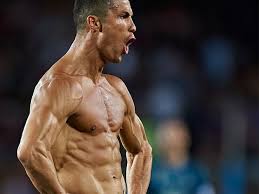 @Faiqnisar
imran khan One night the future first lady of Pakistan had a dream. Visions and prophecies were Bushra Maneka’s stock and trade, for she was a female *pir,* or living saint. Known as Pinky Peerni to her admirers, Maneka’s gift of clairvoyance had earned her a following well beyond her hometown of Pakpattan, a celebrated spiritual center 115 miles southwest of Lahore. In 2015, Maneka had added to her growing list of clients the man who was the object of her prophetic dream: Imran Khan, the legendary cricketer and most famous Pakistani alive. “Spiritual guides, or *pirs,*” Khan writes in his autobiography, “are quite common in Pakistan. Millions of people, particularly in rural areas of the country, follow them, consulting them on everything from religious matters to sickness and family problems.” Khan was, if not a living saint, then certainly a living god. From the late 1970s, when my mother, a reporter in India, first interviewed him, to well into the 1990s, when he led the Pakistan team to a World Cup victory against England, he towered over the landscape of practically all those nations where the Union Jack had ever flown. Born in 1952 to an upper-middle-class family in Lahore, he had come of age at a time when cricket, the “gentleman’s game” so intimately associated with the spread of the British Empire, was turning into a blood sport, imbued with the tensions of a newly awakened postcolonial world. “For teams like Pakistan, India, and the West Indies,” Khan writes in his autobiography, “a battle to right colonial wrongs and assert our equality was played out on the cricket field every time we took on England.” Into this gladiatorial arena, shirt open, eyes bedroom-y, hair long and tousled, stepped Khan. He was one of those rare figures, like Muhammad Ali, who emerge once a generation on the frontier of sport, sex, and politics. “Imran may not have been the first player to enjoy his own cult following,” writes his biographer Christopher Sandford, “but he was more or less single-handedly responsible for sexualizing what had hitherto been an austere, male-oriented activity patronized at the most devoted level by the obsessed or the disturbed.” Arrestingly handsome and Oxford-educated, albeit with a third-class degree, Khan found the doors of the British aristocracy thrown open to him. Mark Shand, the brother of Camilla Parker Bowles, now the Duchess of Cornwall, was among his best friends; he was seen out on the town with Jerry Hall and Goldie Hawn; if his second wife, the television personality Reham Khan, is to be believed, he took part in a threesome with Grace Jones. The man who shunned the label of “playboy”—“I have never considered myself a sex symbol,” he told my mother in 1983—nonetheless left a long line of Khan-quests from Bollywood to Hollywood, with a pit stop in Chelsea, where his flat, with its tented ceilings of gold silk, was one part harem, one part bordello. “He had a lot of women in his life,” my uncle, Yousaf Salahuddin, one of Khan’s best friends and a cultural institution in his own right, told me recently in Lahore, “because he was a very wanted man. In India, I have seen women from the age of just 6 to 60 going crazy over him.” In 1995, at age 43, Khan married Jemima Goldsmith, the daughter of the tycoon Jimmy Goldsmith, who is said to have presciently remarked of his son-in-law, “He’ll make an excellent first husband.” As a teenager, I remember gaping over paparazzi photos of the newly wed couple, including some of them *in flagrante* on a balcony in Marbella. If the fascination with Khan’s sexual prowess was fetishistic in Britain, it was edged with racial pride in Pakistan. As Mohsin Hamid, the country’s most famous writer, told me in Lahore, “Imran Khan was a symbol of emancipatory virility.” In the mid-1990s, there was not a cloud on Khan’s horizon. He had won the World Cup; he had married an alluring social beauty; he had, in memory of his mother, who died of cancer in 1985, opened Pakistan’s first hospital dedicated to the treatment of that disease. It was a massive philanthropic gesture and the crowning achievement of a life showered with gifts. At that juncture, it might well have been asked what a clairvoyant from a small town in Pakistan had to offer Khan that he didn’t already have. The short answer is politics. In 1996, after years of turning down pleas from established politicians and military dictators eager to align themselves with his celebrity, Khan launched his own political party. In its first election, the Pakistan Tehreek-e-Insaf party, or PTI—which translates as the Movement for Justice—won zero seats in parliament. Five years later, Khan won one seat, his own. Even by 2013, with his personal popularity at an all-time high, the PTI won only 35 seats. For 20 years, he had been telling his friends and well-wishers that “the next time you come to Pakistan, I will be prime minister.” But four elections had come and gone, two marriages had collapsed in their wake, and the quest of this aging playboy to be his country’s premier was no nearer its end. It was then, or not long after, that Bushra Maneka had her dream.
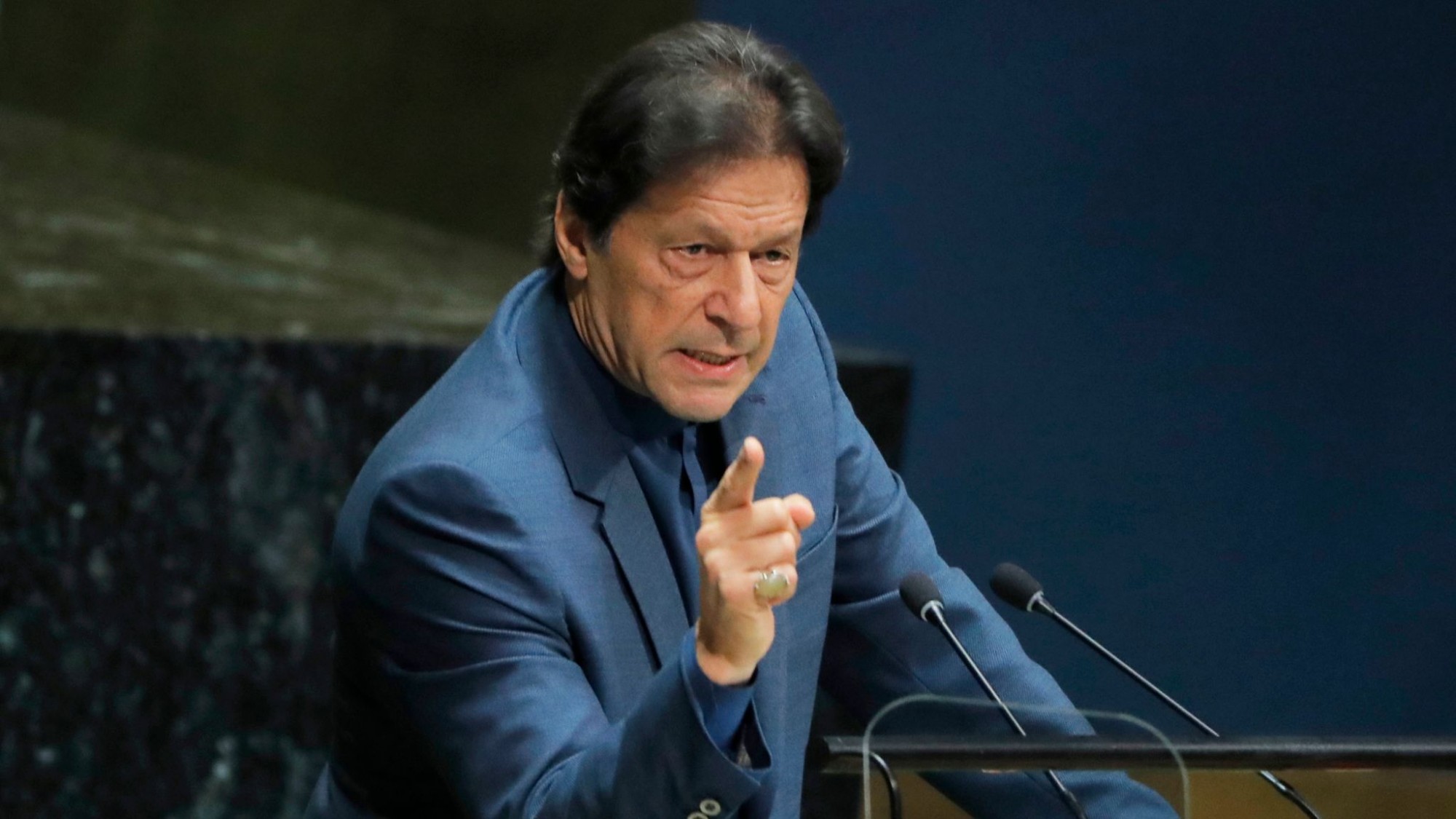 @Faiqnisar
Dawood Habib Group Dawood Habib Group Bank AL Habib Limited is a group company of Dawood Habib Group that has a long track record of banking. The group was amongst the sponsors and founder members of Habib Bank Limited, which was established in Bombay in 1941. Upon creation of Pakistan, the bank shifted its Head Office to Karachi and played a vital role in meeting the banking and financial needs of the country. Habib Bank was the leading private sector bank in Pakistan, with a large network of branches in the country as well as abroad, when it was nationalized by the Government of Pakistan along with all other private Pakistani banks on January 1, 1974. In 1991, the Government of Pakistan decided to allow the private sector to establish commercial banks in the country. It was under this privatization policy that Dawood Habib Group was granted permission by the Government to set up a new commercial bank in Pakistan. Accordingly, Bank AL Habib Limited was incorporated in October 1991 and commenced operations in January 1992. Although Bank AL Habib started functioning in 1992, it embodies the same high standards of integrity, prudence, and trust which has been the hallmark of the Habib’s banking tradition for over 70 years.
 @Faiqnisar
night sweet dreams **Dreams** can be fascinating, exciting, terrifying, or just plain weird. While there is no clear consensus on **why we dream**, researchers have learned quite a bit about what happens while we are dreaming. Here are 10 things you should know about dreams. https://www.verywellmind.com/understanding-your-dreams-2795935 https://www.verywellmind.com/why-do-we-dream-top-dream-theories-2795931 Illustration by Brianna Gilmartin, Verywell You Forget Most of Your Dreams https://imasdk.googleapis.com/js/core/bridge3.414.0_en.html#goog_204772384 Volume 90% 1:49 7 Theories on Why We Dream Simplified As much as 95% of all dreams are quickly forgotten shortly after waking. According to one theory about why **dreams so difficult to remember**, the **changes in the brain** that occur during sleep do not support the information processing and storage needed for memory formation to take place. https://www.verywellmind.com/why-cant-i-remember-my-dreams-4144687 https://www.verywellmind.com/what-is-the-activation-synthesis-model-of-dreaming-2794812 Brain scans of sleeping individuals have shown that the frontal lobes—the area that plays a key role in **memory formation**—are inactive during rapid eye movement (REM) sleep, the stage in which dreaming occurs. https://www.verywellmind.com/what-is-long-term-memory-2795347 https://aa5561caa8c284936c17d300953ddf45.safeframe.googlesyndication.com/safeframe/1-0-37/html/container.html Not All Dreams Are in Color While most people report dreaming in color, there is a small percentage of people who claim to only dream in **black** and white.1 In studies where dreamers have been awakened and asked to select colors from a chart that match those in their dreams, soft pastel colors are those most frequently chosen. https://www.verywellmind.com/the-color-psychology-of-black-2795814 https://aa5561caa8c284936c17d300953ddf45.safeframe.googlesyndication.com/safeframe/1-0-37/html/container.html Men and Women Dream Differently Researchers have found some differences between men and women when it comes to the content of their dreams. In **several studies**, men reported dreaming about weapons significantly more often than women did, while women dreamed about references to clothing more often than men. https://journals.ub.uni-heidelberg.de/index.php/IJoDR/article/viewFile/10954/pdf_52 **Another study** showed that men's dreams tend to have more aggressive content and physical activity, while women's dreams contain more rejection and exclusion, as well as more conversation than physical activity. https://doi.org/10.1016/j.concog.2008.08.005 Women tend to have slightly longer dreams that feature more characters. When it comes to the characters that typically appear in dreams, men dream about other men twice as often as they do about women, while women tend to dream about both sexes equally. Everybody Dreams Adults and babies alike dream for around **two hours per night**—even those of us who claim not to. In fact, researchers have found that people usually have several dreams each night, each one typically lasting for between five to 20 minutes. https://www.ninds.nih.gov/Disorders/Patient-Caregiver-Education/Understanding-Sleep During a typical lifetime, people spend an average of six years dreaming.
 @Faiqnisar
Women's Day : Pakistani women demand gender equality,bodily rights Thousands of Pakistani women took to the streets on Sunday in the largest-ever women's rights demonstrations in the country. The marchers, who were commemorating the International Women's Day, demanded gender equality, minimum wages for the working class and bodily rights, as they raised slogans against sexual harassment and gender-based violence. The World Economic Forum ranked Pakistan 151 out of 153 countries in its 2020 Global Gender Gap Index Report. Violence against women, including rape, domestic abuse and harassment, remains a major issue in Pakistan, according to human rights watchdogs. https://www.dw.com/en/violence-against-women-on-the-rise-in-pakistan/a-50550672 A manifesto released by "Aurat March" (women's march) organizers demands economic and environmental justice, reproductive rights and better access to public spaces for women. Additionally, the manifesto seeks an end to enforced disappearances and militarization, as well as protection of religious minorities in the country. "Every day, women in Pakistan are bullied, discriminated against and arrested, physically attacked and killed, simply for making choices about their bodies and the way they live their lives," said Amnesty International in a statement ahead of the rallies. "The people who commit these crimes are the ones who must be stopped, not the protestors," the statement added. *Read more:* Pakistan honor killings haunting young women https://www.dw.com/en/pakistan-honor-killings-haunting-young-women/a-45985192 **Harassment and attacks** The first "Aurat March" in Pakistan was held on International Women's Day in 2018. It has since become a major event for the women's rights movement in the South Asian country. This year, the main rallies were held in Islamabad, Lahore and Karachi, as well as several smaller cities
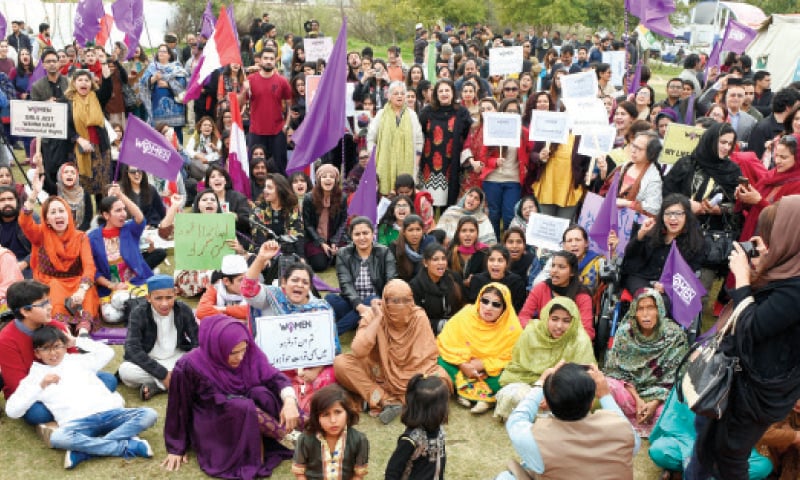 @Faiqnisar
barcelona loveeeeeeeee One man down before the second half, last victory on this ground 5 years ago and the team came up in the second half looking sharp, confident and full of passion. Scored two goals with 10 men on the field and kept a clean sheet, on top of all this his substitutes where: Pedri(17) and Triñcao(20), two youngsters instead of old ones. Fantastic job Koeman, fantastic job Have you recently been laid off? Have you been thinking of Moving on to a better Job? Our Resume checker is a free and fast algorithm that generates a tailored resume review report within seconds. We analyzed thousands of high-quality resumes and cover letters to gather insights on exactly what makes them effective. Our AI technology lets you see how your resume scores when compared to thousands of other resumes. Once submitted you will have access to $199 worth of free E-books. We will use our proprietary advanced AI to find subtle flaws in your cover letter and help you ace your job search.
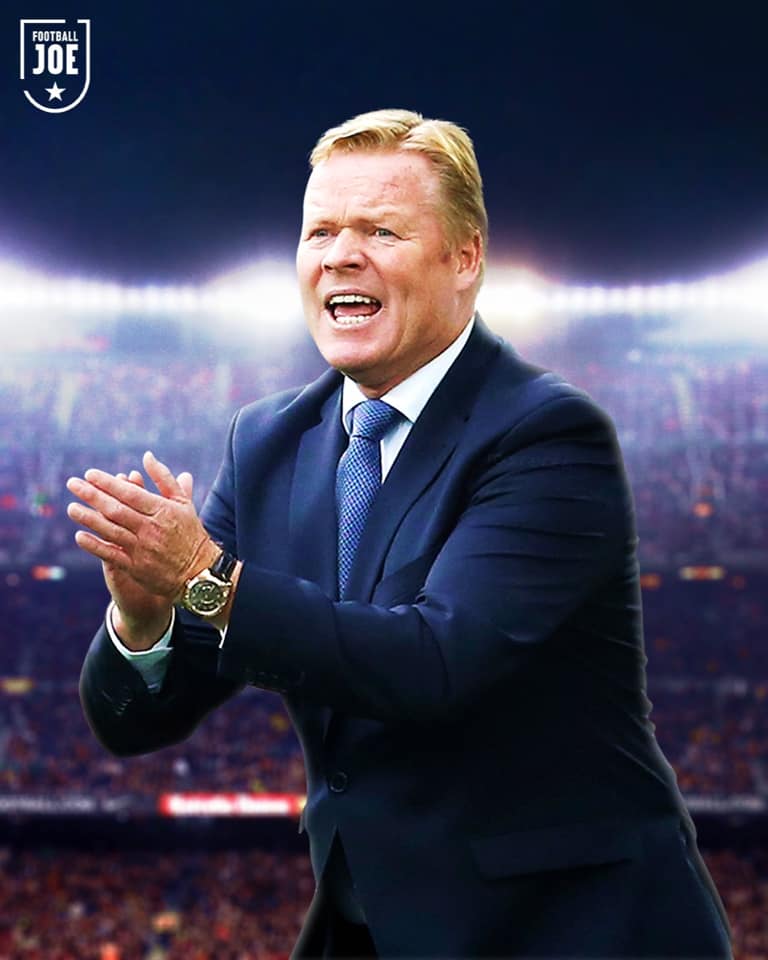 @Faiqnisar
never run for money and body Girls spoiling themselves into boys, smoking stuff/drinking is most common between two genders. "Friends with benefits" is the new trend. Money is everything nowadays. Girls getting laid with rich lads, Boys going crazy for Playgirls. Not being in a relationship is a shame now. Being a Playboy/play girl is more attractive. Perfect face and figure is the new beauty. Saying "Fuck" in usual conversations is getting common and it makes us very cool. Word "Beautiful" is replaced with "Hot" and "Sexy". Snapchatting food before Bismillah is becoming important. Love is replaced with lust." Universities / Colleges became dating points. Come over tonight" is getting more common than "Let's get married". I swear to God we are going toward massive destruction.You take these things very normal but you have no idea what you are heading to. Aanay walay kal k liye aaj ko badlo.. Aaj k liye khud ko badlo!!!
 @Faiqnisar
sindh,pakistan سنڌ جو هڪ سهڻو رنگ، سنڌ جا ڪنڀار بہ آهن جيڪي صدين کان هتي آباد آهن ۽ سندس مٽي مان ٺاهيل ٿانو بہ صدين کان ماڻهن جي ضرورت پوري پيا ڪن ۽ اڄ بہ هو پنهنجي حيثيت رکن ٿا۔ وقت سان گڏ جڏهن هن جديد دور ۾ نئين ٽيڪنولوجي هن هنر تي هاوي ٿيندي وڃي اِن ڪري ڪنڀارن جي ٿانئن جي اهميت گھٽ ٿيندي پئي وڃي پر پوءُ بہ اڃان ڳوٺن ۾ مٽي جا ٿانو گھڻن ڪم ۾ ڪتب آندا وڃن ٿا۔ اسان جي گذارش آهي، وقت جي حڪمرانن کي تہ هو سنڌ جي هن قديم هنر کي بچائين ۽ ڪنڀارن جي بقاءُ لاءِ جوڳا قدم کڻڻ تہ جئين ڪنڀارڪو هنر زنده رهي ۽ ڪنڀار برادري بہ معاشي طور ترقي ڪري سگھن۔
 @Faiqnisar
healthy vibes good day start with good routine and diet
 @Faiqnisar
Team Pakistan played their first ever small-sided world cup #DidYouKnow that Team Pakistan played their first ever small-sided world cup at this venue. https://www.facebook.com/hashtag/didyouknow?__eep__=6&__cft__[0]=AZWtEXmkpgWOcM5wkwHza9SaaTqWoV8pqu37ciNcxceSInBgn5GFHvhuO1FedX8YjP6buSrCe1kVWMt4UsacdvGj4mIbWrkp3kcK4KrRDOFyhSzKkfrFqBa3_rl-k77HxXvOlD-LewYo0hCXkfuaJqpTpUZAKqfN9_1DJYf0XvQ-jwujMYWKgOAI5_Ed50Z2swQ&__tn__=*NK-R The epic view of the Trunkwala Arena in Lisbon, Portugal Bro let us know the results Thank u #LeisureLeaguesPK #Trunkwala World Group https://www.facebook.com/hashtag/leisureleaguespk?__eep__=6&__cft__[0]=AZWtEXmkpgWOcM5wkwHza9SaaTqWoV8pqu37ciNcxceSInBgn5GFHvhuO1FedX8YjP6buSrCe1kVWMt4UsacdvGj4mIbWrkp3kcK4KrRDOFyhSzKkfrFqBa3_rl-k77HxXvOlD-LewYo0hCXkfuaJqpTpUZAKqfN9_1DJYf0XvQ-jwujMYWKgOAI5_Ed50Z2swQ&__tn__=*NK-R https://www.facebook.com/hashtag/trunkwala?__eep__=6&__cft__[0]=AZWtEXmkpgWOcM5wkwHza9SaaTqWoV8pqu37ciNcxceSInBgn5GFHvhuO1FedX8YjP6buSrCe1kVWMt4UsacdvGj4mIbWrkp3kcK4KrRDOFyhSzKkfrFqBa3_rl-k77HxXvOlD-LewYo0hCXkfuaJqpTpUZAKqfN9_1DJYf0XvQ-jwujMYWKgOAI5_Ed50Z2swQ&__tn__=*NK-R https://www.facebook.com/wgtrunkwala1912/?__cft__[0]=AZWtEXmkpgWOcM5wkwHza9SaaTqWoV8pqu37ciNcxceSInBgn5GFHvhuO1FedX8YjP6buSrCe1kVWMt4UsacdvGj4mIbWrkp3kcK4KrRDOFyhSzKkfrFqBa3_rl-k77HxXvOlD-LewYo0hCXkfuaJqpTpUZAKqfN9_1DJYf0XvQ-jwujMYWKgOAI5_Ed50Z2swQ&__tn__=kK-R
 @Faiqnisar
Zidane Iqbal pakistan talent At the age of only 16, Zidane Iqbal is in the Manchester United U-23 squad tonight in a top of the table clash vs West Ham. Iraqi mother and Pakistani Dad. Eligible to play for Iraq, Pakistan and England!
 @Faiqnisar
Pakistan squad so far for WCQs against Cambodia 15 - Shabban Hussain (Vanløse IF, Denmark) 23 - Muzammil Hussain (WAPDA) 17 - Rahis Nabi (Alvechurch FC, England) 12 - Samir Nabi (Torquay United, England) 18 - Yaqoob Butt (AB Taarnby, Denmark) 1 - Yousuf Butt (AB Taarnby, Denmark) 10 - Hassan Bashir (AB Taarnby, Denmark) 14 - Abdullah Qazi (A.S. Los Angeles, USA) 22 - Ahsanullah Khan (SSGC) 21 - Zesh Rehman (KC Southern FC, Hong Kong) 16 - Muhammad Riaz (K-Electric) 2 - Ali Khan Niazi (K-Electric) 4 - Ali Uzair (WAPDA) 8 - Mehmood Khan (SSGC) 7 - Tabish Hussain (Guiseley AFC, England) 5 - Umer Hayat (WAPDA) 6 - Ahmad Faheem (WAPDA) 19 - Navid Rahman (ProStars FC, Canada) Mohammad Ali (Greve IF) and Adnan Mohammad (Lyngby BK) will join the team directly in Cambodia after completing their club commitments in Denmark this week. Cambodia host Pakistan on 6 June in Phnom Penh, while Pakistan host Cambodia on 11 June in Doha, Qatar for 1st round of AFC qualifiers for 2022 WC.