Bitcoin Is Not Inherently Bad for the Environment — But BTC Is.
*Bitcoin is destroying the environment.*
*Bitcoin is a waste of energy.*
*Bitcoin is causing climate change.*
If you've spent much time in cryptocurrency spaces, you've probably heard these arguments time and time again. From environmental activists, from Bitcoin attackers, or from news outlets hoping to get your clicks, BTC finds itself under repeated criticism for the energy used to mine it. And every time, crypto fans leap to its defense. You've probably heard plenty of these before too:
*BTC uses energy — but whatabout the banks?*
*BTC uses energy, but that's actually good for the environment because it encourages sustainable energy.*
Or maybe *BTC uses energy but it's not really that much so we shouldn't worry about it.*
And for this article-writing competition, @SofiaCBCH calls the energy waste a **myth**, calling on us to explain why.
**Unfortunately, it's not a myth. BTC is wasting energy — but that doesn't mean Bitcoin has to.**
Before looking into the involvement of Bitcoin and other cryptocurrencies, we first need to understand the danger of climate change in general.
Although few will deny the global threat posed by climate change, regardless of the involvement of cryptocurrencies, notable exceptions in the crypto space make it worth mentioning. Bitcoin.com CEO Roger Ver, among others, has downplayed its importance, claiming climate change as an overblown issue fabricated for government control. While Ver may be an expert entrepreneur and very knowledgeable about Bitcoin, he is not a climate scientist and neither is the average crypto enthusiast. In looking at the issue of climate change, we need to consider what the experts and the evidence have to say. And the consensus is clear: climate change is a serious issue, and human greenhouse gas emissions are causing it. https://twitter.com/rogerkver/status/1366050491260665858 https://climate.nasa.gov/scientific-consensus/
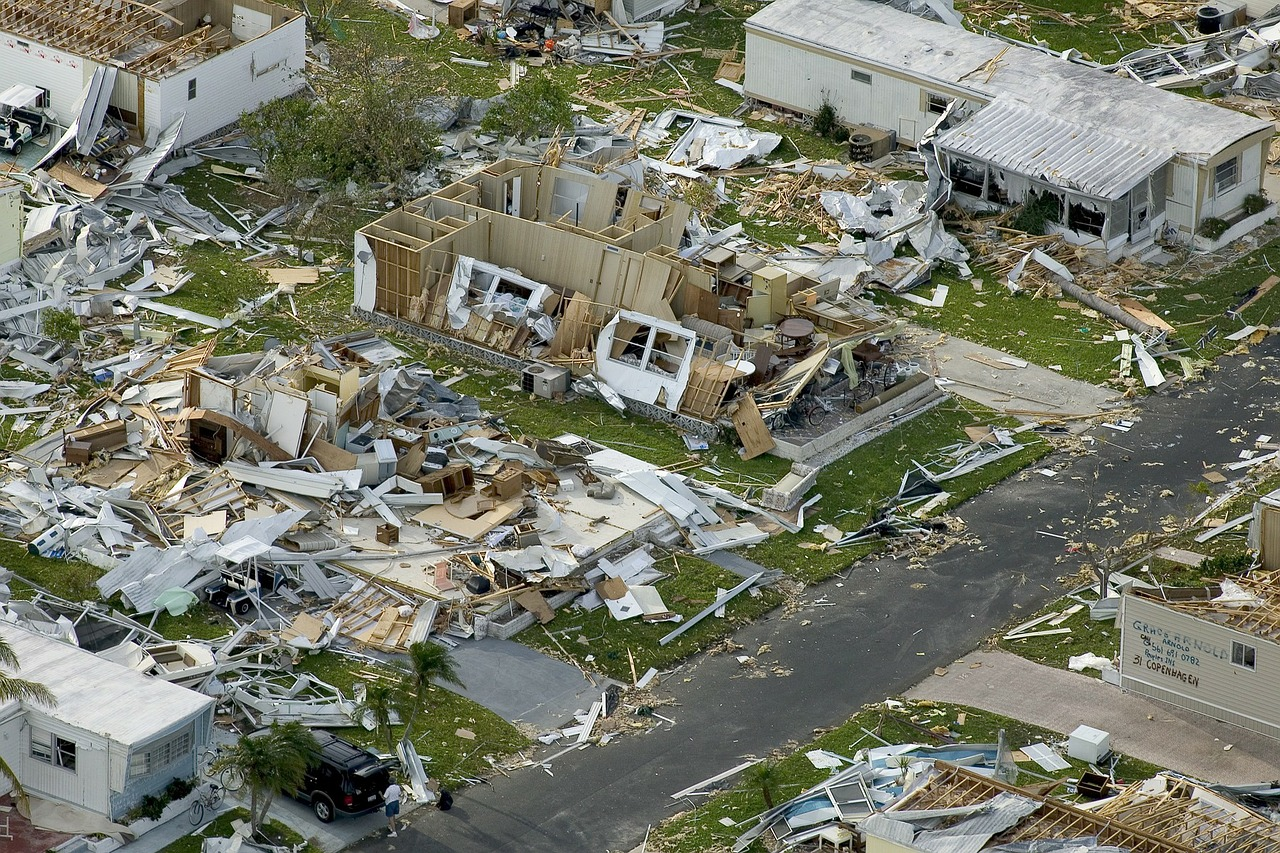
The specific dangers of climate change are a highly researched topic that goes far beyond the scope of this article, but for the purposes of the discussion on Bitcoin, we need to know that they are both avoidable and tangible. Avoidable so that we know how to prevent them, and tangible so that we know that the dangers are important enough to prevent. And indeed these dangers are both: we have already begun to see the tangible effects in disastrous and deadly hurricanes which disproportionally affect poor and marginalized people whom many early Bitcoin proponents hoped to help (remember banking the unbanked?). Fortunately, we can at least prevent these disasters from getting worse, but only by actually addressing our emissions that are the source of the problem. https://www.cnn.com/2021/08/21/weather/hurricane-henri-climate-change/index.html
That's where crypto comes in.
BTC mining uses energy. A lot of it. More than Chile, or Denmark, or whatever country the latest article named to get your attention. But less than some other country, or gold mining, or the banking industry.
While these kinds of comparisons might make for good headlines or easy arguments for one side or the other, they come far from telling the whole story. Beyond just reducing absolute energy consumption, addressing climate change is about reducing **waste**.
When the issue of BTC's energy consumption comes up, defenders of the excess energy usage tend to ignore this. Their arguments tend to compare absolute amounts of energy or emissions, with Galaxy Digital for example saying that as BTC uses around half the energy of the banking industry, its emissions need to be considered not harmful but beneficial. Or perhaps you've seen someone arguing that, as BTC produces only a small percentage of global emissions, it's not a problem for the environment. These arguments are bullshit, ignoring what that energy actually does and where it can be used more effectively. https://news.bitcoin.com/banking-system-uses-significantly-more-energy-than-bitcoin/ https://cointelegraph.com/news/bitcoin-mining-estimated-to-represent-0-4-of-global-emissions-in-2030
That's not to say that everyone who uses them is trying to spread disinformation — of course many will have seen these arguments from someone else and repeated them, believing them either naturally or because it would threaten their investments not to. But either way, these arguments grossly misrepresent the situation to make BTC look better than the reality. That's what myth busting needs to address anyway: it won't help much with the people who knowingly spread false information, but it can help to inform their victims. We need a broader understanding of how specifically BTC is indeed wasteful, and from there we can see how to fix it.
By looking not at absolute figures of emissions or of energy consumption but looking instead at efficiency, we can far more accurately pin down areas of waste.
Consider what this energy is used to achieve:
For the fiat banking industry, energy is used to provide a real service in processing transactions, storing money, and providing an exchange for borrowing and lending. Note that I by no means want to praise the banking industry — it is highly corrupt and has done a great deal of harm to many people out of greed. The '08 financial crisis commemorated in the first Bitcoin block stands out as an example of the devastating harm caused by banks' corruption. Regardless, for its many flaws, the energy used by the banking system does go towards providing a real service. Non-cash fiat payment services processed **785 billion transactions** in 2020, with that number only expected to increase. Handling these payments provides the core service of any kind of money as a medium of exchange,* allowing it to be transferred for goods or services in a market economy at a cost of roughly 260TWh per year. https://worldpaymentsreport.com/next-gen-payments-to-drive-the-growth/
While Galaxy Digital's report concludes that BTC has less total climate impact than the banking industry, it declines to take into genuine account this actual usage of the banking industry or that of BTC. This is where their report, along with most other arguments against mining being wasteful, falls short.
While the banking industry is able to achieve decent energy efficiency by processing a large volume of transactions, BTC here as everywhere else runs into its fatal flaw: the block size cap. BTC's biggest failing, as anyone in the BCH community knows all too well, is its limit on the volume of transactions the network is able to process. This harms adoption, causes high fees, and means that the energy poured into mining is restricted from being used to its full potential. There is the waste: while BTC uses half the energy of the banking system, it is only able to process around **100-200 million transactions a year**† with typical transaction sizes, compared to the **785 billion** of the banking industry. BTC processes something on the order of **one in five thousand** non-cash transactions handled by banks. Now that we're looking at efficiency, that 1/2 energy consumption ratio doesn't look so good anymore. Even if only a small portion of energy comes from harmful sources, as BTC fans like to theorize, that still represents hundreds or thousands of times as much environmental damage per transaction as the fiat system it hopes to compete with. **That's waste.**
That's what Bitcoin should be trying to avoid, not defending in the name of short-term greed. And there certainly is also waste in the banking industry, and the gold mining industry, and pretty much everywhere else. We should of course do our best to address waste in other areas of our lives, but when in cryptocurrency spaces we need to first look inward to address the obvious harm of BTC mining.
Fortunately, waste isn't the only option.
In the title and throughout this article, I make the distinction between BTC and Bitcoin for this reason. While BTC is indeed wasteful and inefficient, it is far from the original goal of Bitcoin or the best that Bitcoin can be. Bitcoin Cash, while of course not a perfect network either, continually works to improve while staying true to the spirit of Satoshi's whitepaper. Peer-to-peer electronic cash: a system designed to be better than banks, not worse. And while it may not have been the driving factor in the 2017 chain split, energy waste is among the many issues it addressed.
By working to increase the network's capacity to fit the needs of users instead of constraining capacity via an artificial limit, BCH enables miners' energy to be used to its full potential. In the long run, the diminishing block reward and BTC's limited capacity requires high fees from a very small amount of transactions in order to maintain security. BCH, on the other hand, will rely on large amounts of transactions, each paying more reasonable fees (one US cent or less tends to be a good estimate). In terms of energy usage, this means that even if total fees are the same, BTC miners become incentivised to be inefficient, using large amounts of energy for each transaction. BCH miners do not, instead being able to use a far smaller and more efficient amount of energy for each transaction while still profiting due to the greater scale. The increase in capacity on the BCH chain allows for, in addition to a plain increase in usability, a reduction of waste from the arbitrary limits on the BTC network.
But being better than BTC isn't really a particularly high bar. If BCH is trying to be a legitimate competitor to banks and other fiat payment processors, we need to consider its energy efficiency relative to them as well. Fortunately, it measures up far better than BTC: at a transaction fee of 1 cent, 785 billion transactions a year would translate to roughly 8 billion USD in fees paid to miners. Even if all of this money went into electricity, miners would be using around 80TWh annually — **3 times as efficient as banks** (and on the order of **ten thousand times as efficient as BTC)**. And any potential benefits of BTC energy usage, such as methane flaring or consumption of energy that would go to waste anyway, would apply to BCH just the same.
If we want to reduce waste — and we should — we don't need to get rid of Bitcoin mining entirely. Although many of the common defenses of BTC mining are simply wrong, and waste does exist, it is not a feature inherent in the nature of Bitcoin. It is a feature of the inefficient artificial constraints on the BTC chain, the same constraints BCH is designed to address.
By using Bitcoin Cash, we can get rid of those limits, making the network accessible to many more users while reducing inefficiency and waste.
Notes
* (I wasn't able to figure out how to do superscript to add endnote numbers, so I guess I'm using symbols.) Many proponents of BTC like to argue for it as purely a store of value now that it has been stripped of any real utility, but the main use case worth looking at is a medium of exchange (and the nearly 100 trillion USD money supply shows far more value being stored with the fiat banking system anyway). @Fexonice1 gives an effective description of the problem with considering an asset to be purely a store of value, in that any store-of-value asset gets its value from its use. https://www.visualcapitalist.com/all-of-the-worlds-money-and-markets-in-one-visualization-2020/ https://read.cash/@Fexonice1/myth-bitcoin-must-first-become-a-store-of-value-before-becoming-a-means-of-exchange-2-62d285d2
† But what about the lightning network? There are many problems with the current state of LN that go well beyond the scope of this article, but even assuming those problems were addressed it still would be ineffective due to the limits on the base chain. With the BTC network only able to process 100-200 million transactions a year, the ability for users to open and close LN channels is severely limited. For example, very generously assuming every on-chain transaction is for LN channels and each user makes just one such transaction a year, that still limits LN users to 100-200 million, far below the amount of people served by the fiat banking system. If Bitcoin wants to compete with fiat banking in usability, scale, or emissions, it needs to offer something better, and we can find that in Bitcoin Cash.
My no-sugarcoating criticism of the current state of BTC
I originally wrote this as a comment on a Reddit post asking for the downsides to BTC. I don’t really know why that specific post made me think this, but I realized I and others often sugarcoat the problems with BTC to fit more with the dominant, manufactured narrative on crypto platforms. And while that may often be the only way to effectively to get through to people, it also in some ways misrepresents the situation and understates the true problems and corruption with BTC. So this time, instead of saying how BTC used to be a currency and now it’s a store of value, I say how it used to a currency and now the store of value narrative is bullshit.
While this isn’t directly about Bitcoin Cash, since I wrote it as a response to a question specifically about BTC, it ultimately ends up describing the fundamental reasons for the creation of BCH - the preservation of Bitcoin as money after BTC was taken over by people whose interests contradicted with its success.
**My no-sugarcoating bear case for BTC:**
BTC’s development and community are centralized around a company invested in its failure as money. The Core development team is effectively run by a company called Blockstream, which got venture capital on a proposition to sell side chains to Bitcoin users driven off of the main chain by high fees or slow confirmations (which have been seen often in the past few years). For most of Bitcoin’s history, it was something that could be used as money quickly and with low fees, a concept near universally supported in the Bitcoin community, but if fees are low side chains won’t sell. So once fees started getting high, Blockstream developers naturally opposed any changes that would help Bitcoin scale significantly.
That shouldn’t have been much of a problem, since BTC development is in theory decentralized and anyone from the community can participate, but the community is also under central control by people with and allegiance to Blockstream. One user, u/theymos, has at least partial ownership over r/bitcoin, bitcointalk, bitcoin.it, and bitcoin.org, and has publicly said that they would be willing to ban 95% of the community for disagreeing with them in order to prevent a proposal to scale Bitcoin. In 2015 started removing posts and banning people for supporting it and decided that any implementation of Bitcoin not supported by Blockstream’s dev team would be removed as an altcoin regardless of support by any users, businesses, or miners. Since then they and their r/bitcoin mod team have been enforcing the centralization of the project around this one company, which lacks any accountability to the community and in its Liquid sidechain has interests directly contrary to the success of Bitcoin as money. https://old.reddit.com/u/theymos https://old.reddit.com/r/bitcoin
Meanwhile the same people have continued promoting BTC to outsiders as a currency despite the high fees making it unviable as one - bitcoin.org still calls it money, and the title of r/bitcoin is “the currency of the internet.” Both pages also claim low fees, despite the fact that 1 sat/vB transactions, standard before the network became congested, have not been confirmed for months and often fees are higher than $10 for typical transactions. And when people realize it doesn’t work as money, they get told it’s not supposed to be, it’s just a store of value - something to buy so the price goes up. Ultimately it just relies on people buying expecting the price to go up because of others buying expecting the price to go up... https://old.reddit.com/r/bitcoin
Not a very sustainable model. It relies on censorship and dedicated shilling to promote a deliberately broken product in order to get the next greater fool to buy for even more.

Bitcoin Cash Myth Busting - Block Size and Decentralization
The myth that Bitcoin's decentralization will be destroyed by an increase in block size is one of the most pervasive in the cryptocurrency space, and it has been one of the most most significant in slowing the development of peer-to-peer electronic cash. It's also blatantly false.
This myth was not always so popular. When the anonymous developer Satoshi Nakamoto first added the 1 MB block size limit in 2010, they did it as a temporary measure while every user had to run their own node. It was not expected to be a long-lasting feature; Satoshi thought it could be increased as needed with a single line of code. And, in theory, it could. The problem was, when the time came in around 2015 that an increase in the block size limit was needed, a new set of powerful people had come to replace Satoshi in leading Bitcoin's development. And unlike Satoshi, these people had a motive beyond just the success of the Bitcoin project.
They were motivated by profit, even if it came at the expense of Bitcoin's utility. This new group of developers with control over Bitcoin Core work to serve their for-profit company called Blockstream. This company has a stated business model of selling side chains where people can make transactions faster and with lower fees than on the base Bitcoin network. The problem for them was the lack of any need for a sidechain if the Bitcoin network could easily handle the amount of transactions people wanted to make. **So if Bitcoin could scale, Blockstream wouldn't make money.**
If their business was to succeed, Blockstream needed to find a way to keep Bitcoin from scaling on its own. A daunting task, considering the vast majority of the Bitcoin community tended to agree with Satoshi and support a block size increase. Fortunately for Blockstream, they had the power of censorship and propaganda on their side.
*Enter the myths*
Due to the decentralized nature of the Bitcoin network, in order to stop a block size increase from happening, they had to get an economic majority on their side. So they came up with a myth. They told the Bitcoin community that any increase in the block size would cause the network to become too centralized because the increase in hardware requirements would prevent users from running nodes. Of course, this was all bullshit, as anyone who needs to run a node easily can with significantly higher block sizes. And the Bitcoin community knew this. So, of course, the solution was to get rid of the Bitcoin community.
While the Bitcoin network is decentralized, its discussion platforms are generally not. I won't go into too much detail here since it's a very long story, but basically a single Blockstream supporter going by the username *theymos* controls many major Bitcoin forums and websites, and they are willing to censor anyone who disagrees with them. You can read more about how exactly that started to happen here. As time went on and more and more of the Bitcoin community was banned for disagreeing with Blockstream, the apparent consensus of the Bitcoin community shifted to favor the myth that small blocks were necessary. Even though this meticulously curated collection of viewpoints did not represent the true Bitcoin community, anyone who joined would not know this. They would only be exposed to the Blockstream myth, and nobody would be there to show them how clearly wrong it was. So as millions of new people joined the Bitcoin community in the speculative wave of 2017, small-blocker nonsense became the dominant belief system of the largest cryptocurrency discussion platforms. https://medium.com/@johnblocke/a-brief-and-incomplete-history-of-censorship-in-r-bitcoin-c85a290fe43
**Here, though, we are able to address these myths without our voices being censored.** So now that I've written probably way too much about the background for this myth, I'll explain in more detain the technical reasons that a significant increase in block size will result in no significant increase in centralization. This is the technical side of the block size debate that most people never get to see, and **it's the argument for Bitcoin cash.**
In order for Bitcoin to work as a currency at any significant scale, the block size limit must be increased beyond BTC's current million vByte (approximately 2 MB at best) limit. This has become abundantly clear over the past few years, as the increase in BTC usage has come with continual backlogs and median fees of several dollars, while the lightning network has yet to achieve a trustless solution that offers any real competition to Bitcoin Cash. This has become so clear, in fact, that most BTC and Blockstream proponents have given up on trying to say BTC is a currency, instead saying it's better off as a store of value without any real utility. (Of course, the headlines on pro-Blockstream bitcoin.org and r/bitcoin still call it a currency, since that tends to sound better than a pure speculative bubble to Bitcoin noobs.)
Whether or not a cryptocurrency as a pure store of value has any promise, this concept comes from the false premise that a network has to choose one or the other, a secure store of value or an easily usable medium of exchange. This of course comes from Blockstream's myth that increasing the block size to become a medium of exchange will cause a dangerous degree of centralization in the network. A myth entirely unsupported by mathematical and scientific analysis and the structure of the Bitcoin network.
**The biggest argument used to attack any increase in the block size is that small blocks are needed so that most users of the network can run their own nodes.** Small-blockers claim that increasing the block size limit will stop typical users from running their nodes on low-end hardware. Now, this argument falls flat on its face when you compare the ten thousand BTC nodes to the tens of millions of BTC holders (considered users in a digital gold model). Whatever the hardware requirements are, most people just won't run a full node, and for good reason: they simply don't need to. While full nodes do have some benefits, they don't really apply to a typical user. The most important benefit of a node is the ability to watch for double spends of fast payments. This can be quite useful for a merchant accepting high volumes of 0-conf payments, but it's unnecessary for a hodler or user who rarely takes payments that need to be accepted or denied quickly. Full nodes can also relay transactions to miners to get transactions confirmed in blocks, but miners can collect transactions on their own using their own full nodes. And if no miner will accept your payment, it's not getting into the blockchain whether or not you consider it valid on your node.
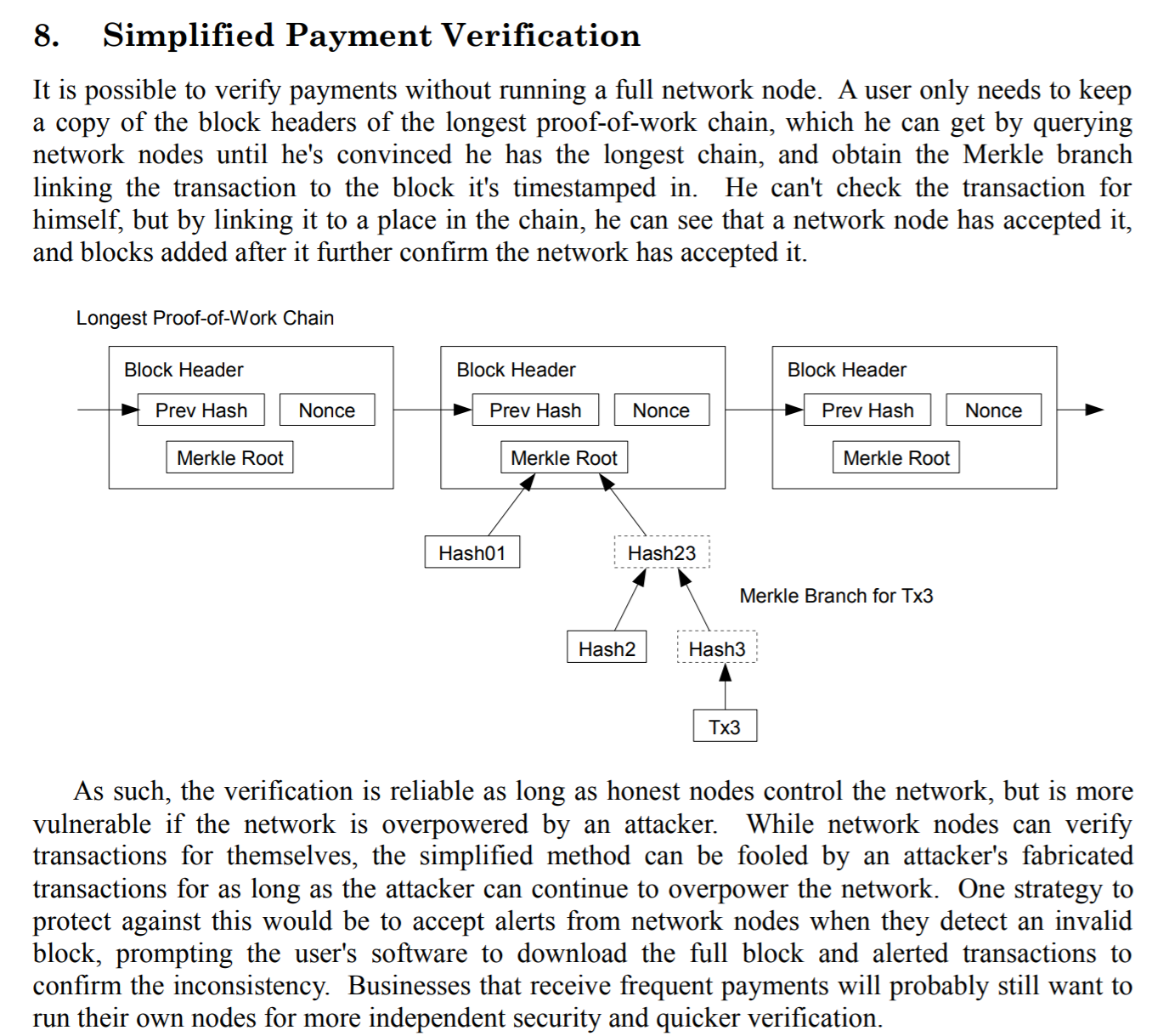
The idea that most users don't need to run a full node has been around for a long time, with Satoshi predicting that in the future there would be a limited amount of nodes run on high-end hardware, even including in the whitepaper an explanation of how most people can use Bitcoin without a full node. The basic design of the Bitcoin network, as outlined in the whitepaper, shows a system where miners are incentivized to act honestly and there is no need to rely on altruistic users running nodes without incentives.
https://www.bitcoin.com/bitcoin.pdf
And even if most users don't need to run their own nodes, they still can, even with very large block sizes. Storage requirements are negligible, since to run a node, one does not need to store all transactions, only those with unspent outputs (UTXOs). Currently, after 12 years, the Bitcoin network has produced about 4 GB of UTXOs, which has recently been increasing at a rate of 1 GB per year of full 1-2 MB blocks on BTC. This is a miniscule amount of data for the amount of time it takes to generate - with continuous full 32 MB blocks, you would need to replace a cheap SSD because of its age long before the UTXO set filled it up.
Bandwidth requirements are a bit more complicated to determine because they require some assessment of the network topology, but more in-depth analysis has also shown that an increase in the block size can easily be supported by the Bitcoin network. This article looked at the network in 2016, finding that an increase to 4 MB blocks would allow at least 90% of the nodes to continue operating, making the assumption that each node has to download entire blocks whenever they are found. In reality, nodes will already have most of the data, so using technologies like graphene and xthinner, large blocks can be compressed by about 99.8%, greatly increasing block propagation speeds and allowing for nodes to process large blocks even with poor internet connection. For example, using the average internet speed in Venezuela of about 4 Mbps, one can download a 99.8% compressed 32 MB block in about 1/8 of a second and upload it in 1/4 of a second. http://fc16.ifca.ai/bitcoin/papers/CDE+16.pdf https://old.reddit.com/r/btc/comments/bel67y/graphene_v2_interim_report/ https://speedify.com/blog/internet-speed/how-to-get-fast-internet-speed-in-venezuela-unblock-content/#:~:text=Venezuela%20has%20earned%20the%20title,and%201.56%20Mbps%20for%20upload.
As for the computing power necessary to process large amounts of transactions, Reddit user u/mtrycz was able to handle hundreds of transactions per second and 256 MB blocks using their Raspberry Pi. https://read.cash/@mtrycz/how-my-rpi4-handles-scalenets-256mb-blocks-e356213b
So anyone who needs to run a node (and most people who don't) easily can, even with low-end hardware and large block sizes. The myth that hardware requirements make blockchains unable to scale is just that: a myth, and perpetuating it serves only to enrich those trying to exploit the Bitcoin network at the expense of those who need it most.