Immune Systems and COVID-19: An Intricate Duo
We often hear this in the news from a random news anchor saying, *"As long as you have a strong immune system and take a lot of vitamins, you have a better chance of fighting of the novel coronavirus."*
While there's truth to that statement, it might not always be the case. Some immune systems are not optimized even when people are taking vitamins and supplements.
Why is that so?
Let's dive in first with some basic information.
COVID-19 and coronaviruses
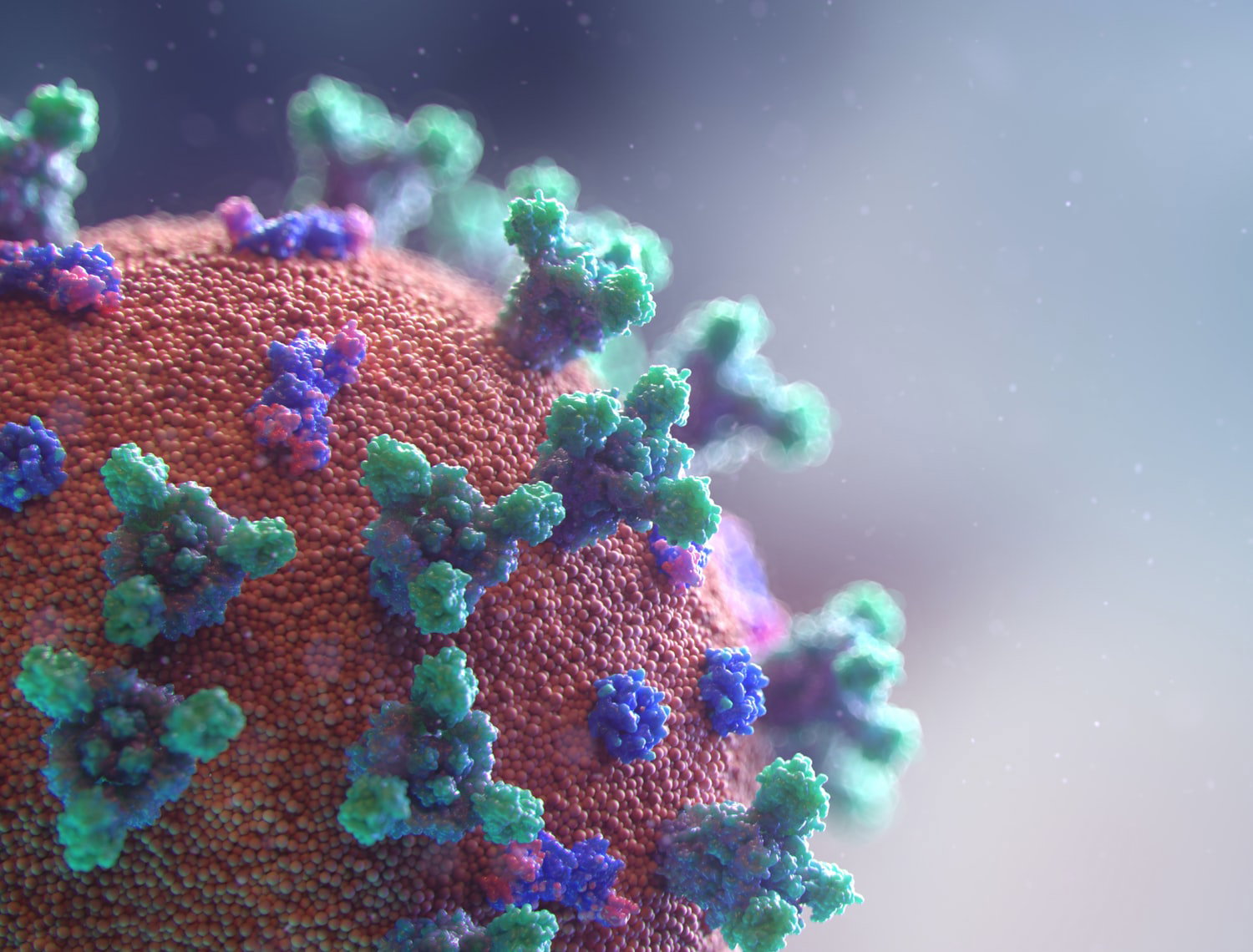
COVID-19 is the name of the disease caused by the SARS-CoV-2 virus. While this virus seems to be making the headlines now due to the worldwide impact of this disease, there are still many coronaviruses out there belonging to the Family Coronaviridae.
You might still be familiar with SARS-CoV, a virus that also began in China in the early 2000s. This virus is greatly similar to the one that's causing this pandemic. It also causes respiratory distress in severe cases.
Another virus from this family is the MERS-CoV which originated from camels in the Middle East.
Though these three often hog the spotlight, let's not forget that there are several strains of coronaviruses that often cause the common cold. Examples of these are the HCoV-OC43, HCoV-HKU1, HCoV-229E, and the HCoV-NL63. These typically cause mild symptoms and are usually benign.
How do viruses operate?
Viruses are nonliving things that contain genetic material enclosed in a protein shell called a capsid. Capsids perform three basic functions, that is to:
protect the genetic material,
deliver the genetic material to the host, and
interact with the host.
Viruses then find a host cell, attach their specific receptors to the host cell, and insert their genetic material into the host cell. This kickstarts the hijacking of cellular machinery, thus making the cell produce numerous copies of the virus.
The cell "bursts," releases the viruses into the body, and the cycle repeats.
How does our immune system respond?
While the intricacies of the basic principles of immunology are too complicated to explain here, the answer is plain and simple.
The immune system gets overwhelmed at first, takes a hold of the infection, then produces antibodies that inactivate and target the virus.
This means that theoretically, further infections could be fought off by our bodies since our immune system has learned how to fight the virus.
The only problem would be opportunistic pathogens that infect our body while our immune system is busy fighting off the virus just like bacteria and fungi. That is the reason why patients take antibiotics if another infection is suspected.
Cytokine release syndrome and infections
There's what we call in immunology an immune response called a ***cytokine storm****.* That is when the immune system makes a last-ditch effort in killing the pathogen while at the same time damaging healthy cells. While it's effective in killing the pathogen/s, the collateral damage is just too much.
Patients with cytokine storms can experience fever, fatigue, loss of appetite, muscle and joint pain, nausea, vomiting, diarrhea, rashes, fast breathing, rapid heartbeat, low blood pressure, seizures, etc.
This could mean that the patient would be needing intensive care in the hospital.
A strong immune system is still essential
While there might be cytokine storms, the best way to fend off infections is having a strong immune system to avoid experiencing severe symptoms in the first place. This means you have to build your immunity by abiding to the pillars of health.
Eating a healthy diet
A balanced diet makes sure that you have all the essential nutrients and vitamins that you need. While you could take multivitamins, it's much better to take it from natural sources that you can eat on your plate.
Taking too many vitamins is also not good. It's like speeding up a construction by pouring in more materials. It's simply not feasible.
Exercising daily
Exercise keeps the body active and produces endorphins, your body's feel-good hormones.
Exercise has been established that it could boost your immune system.
Sleep, sleep, sleep
Sleeping can also boost your immune system. It has been shown that persons who sleep less than 8 hours a day are more prone to being sick than those who sleep at least 8 to 9 hours a day.
This means that getting enough sleep not only keeps you rested but also gives you additional benefits.
Controlling stress
Stress releases your stress hormone cortisol which can also tax your immune system.
When you avoid stress your immune system is optimized and could do more than when you are stressed.
Takeaway
Our immune systems are simply a complex feat of evolution that simply is too complicated to boost.
Popping a pill or two could not boost your immune system if you're living a crappy lifestyle.
It means that you need to abide by the four pillars of health in order to boost and optimize your immune system especially with this pandemic going on.
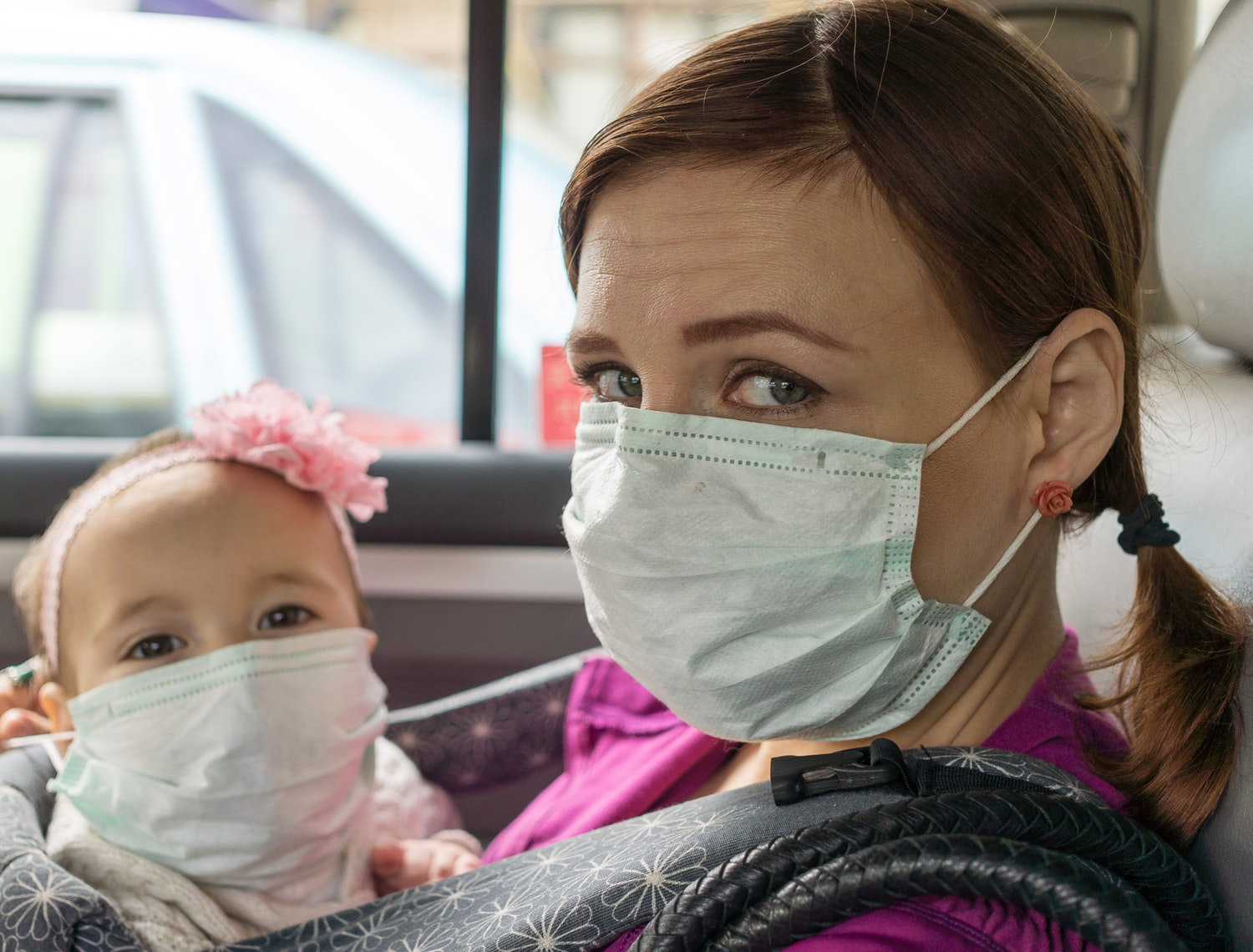
Couple that with proper personal hygiene, you could greatly decrease your chances of acquiring an infection.
***Stay well, be healthy, and wash your hands.***
Money and COVID-19: A Paradox?
Money and COVID-19 would almost seem to be a perfect combination. Money to buy masks, hand gloves, rubbing alcohol, food, and other basic necessities.
***But, why does it seem that despite having enough money, you still feel incapacitated?***
Have it ever crossed your mind that money and COVID-19, a seemingly perfect mixture of elements to combat COVID-19 itself would seem paradoxical or even quizzical in nature?
Money is dictated by its agreed value
Money is dictated by several factors to arrive with its agreed value. The central banks of several countries may either devalue, depreciate, or even increase interest rates in response to several crises especially the one that we're dealing with right now.
In the United States, we could see how the stock market crashed and we could foresee a possible economic meltdown due to this pandemic. Some reports indicate a whopping 30% unemployment rate by the end of the nationwide lockdown.
We could see how money seems to be elastic in response to several factors, thus we could infer how it's highly reliant on the economic managers of a certain country.
Money can't buy anything if there is no supply
Recalling the law of supply and demand, when the supply is low and the demand is high, it follows that prices will go up. The only dilemma is how can you buy a highly-priced good when the supply is scarce or even zero? That's right you can't.
Money can't buy happiness
We could often feel that despite our adequate resources coupled with this lockdown, we feel a sense of emptiness in our hearts. We feel inadequate.
Sheer monetary gains could not equate to happiness. We then ask ourselves, "Is money the most important thing in this world?"
***The answer is a resounding NO.***
The sheer concept of money began at the very beginning with valuing something, but when that something is often depreciated or devalued money can't do anything.
Happiness is valuable, but in this time of crisis, with quarantines here and there, we could never buy mere interactions and simple acts of kindness.
Takeaway
COVID-19 and money would seem to be a perfect combination, but in actuality, it's not.
We could see the gradual and incremental loss of money's value and its worth. We could now realize that money is only a figment of man's desire to value things, but with COVID-19 we could see that man's concepts are futile to our greatest master, Mother Nature.
Happiness, kindness, compassion, and empathy, those are the most important things to bear and foster in you.
Stay safe and be well.
Destiny or Fate? My Bitcoin Cash Story
**Introduction**
A lot of you might be thinking, ***“What does destiny or fate have to do with Bitcoin Cash? After all, it’s a cryptocurrency, right?”***
Well, for starters, I’m not a typical know-it-all in these types of transactions. Despite my young age (20 years old), I am quite too traditional in the way I do things. I keep an actual notebook to jot down and note important things. I also prefer actual textbooks over e-books due to their sheer comfort to me. Either way, you can call me traditional all you want.
So, what does destiny or fate have to do with my Bitcoin Cash story?
Let me share it with you in detail.
**My first encounter with Bitcoin Cash**
When I was not introduced to Bitcoin Cash, I thought it was a scam or just an easy way to make money without all the hard-earned effort. However, when I was tutoring some high school students for their chemistry class, I stumbled upon Mr. Stephen Buendia's scratch papers that included Bitcoin Cash.
I was quite interested in Mr. Buendia's "activity," so to speak. I then asked him to teach me all about Bitcoin Cash and the die was cast. ***I got hooked immediately.***
Given that I have worked as a writer for a KPO company for three months, I know a little bit about how to write blogs. So, I wrote and I wrote.
**My first writing stint**
I can never forget my first article in read.cash which was titled ***“Medical Bills and the Health Care System.”*** It was a rookie effort despite my experience in writing. Earning money was never on my mind, all I wanted was an avenue to showcase my abilities.
I published it and voila, it was bland. I had no pictures in the article. It was all plain text coupled with formatting.
Well, for a newbie who doesn’t know the basics, it isn’t quite that bad, I thought. Anyhow, I said to myself, well if it’s there it’s there. So yeah.
**My first upvote**
To my surprise, the following day, Mr. Buendia pitched in $0.50 for my article. He liked my content. He also said that to me in private that I should write more if it is my passion.
I was ecstatic and jubilant upon hearing that. Despite the pitfalls that I’ve experienced, it’s good to see that some people still appreciate me. Anyhow, this brings me to the next chapter of my Bitcoin Cash story, chasing your passion while earning.
**Chasing your passion while earning**
While in life we may be at the crossroads of choosing between passion and money, in Bitcoin Cash you simply can do both.
I understand that I may not be the best in writing, but, it sure is my passion. When you couple earning money with your passion, you don’t feel tired anymore but rather you feel free as an eagle in the sky.
I earned a little money and that’s okay. As long as I continue to be a voice to other people who share the same plight as me, I’m already okay with that.
In Bitcoin Cash, we can chase our passion while earning.
**To be determined…**
The next chapter of my Bitcoin Cash story is yet to be determined. However, the community can count on me to roll out more articles regarding health and Bitcoin Cash.
I shall continue to write and write so that I can be a beacon of information to people not only in our community but in other circles as well.
Destiny and fate has brought me to this amazing chapter of my life.
***The best is yet to come.***
Bitcoin Cash: Struggles, Pitfalls, and Resiliency of a College Student
**Introduction**
Bitcoin Cash, holding on to dear life (HODL), up-votes, and showing support to anonymous individuals?
If you are just a passerby and most especially just an average teenager, these terms will not simply pop-out of your lexicon out of the blue.
The greater question is, how can Bitcoin Cash take on such an instrumental role in the roller coaster ride of life, that is, the struggles, pitfalls, and resiliency of a typical (for now) college student?
You will see that Bitcoin Cash has not only given me a glimmer of hope in a tunnel of darkness but also a purpose. A purpose to have an advocacy in promoting writing as a medium of expression and as a means of building your future.
**What are my struggles in life?**
Let me start by giving you context about my life. When I was still in grade school I had a tumultuous and rather turbulent childhood. Though not belonging to the extremes of the societal hierarchy, the environment where I grew up was not that pleasing.
I had days wherein my parents would fight over matters that I was too young to even digest and understand. I had days wherein I was scheduled to stay with my father and days wherein I would stay with my mother. This reached a breaking point when I was in high school where my parents broke up.
I stayed with my mother. Though not extremely poor, we were also not well-off. My consolation in life was to study hard and do my best in school. This went so well as I was doing so well in school. When I was in college I was poised to be a Summa Cum Laude. However, everything turned backwards and went for the worst.
On March 24, 2017, I was diagnosed to have ***bipolar II disorder with psychotic features*** coupled with ***generalized anxiety disorder.*** It was like treading Dante’s circles of hell.
For every day I was living in this world, I had episodes wherein I wanted to take my life since all my dreams were shattered into pieces.
Learning, from being my only consolation became my worst nightmare. I started having failing grades, incomplete requirements, and missed exams. It then came to a screeching halt when my psychiatrist and I concluded to have a hiatus from school.
**What are my pitfalls in life?**
Despite the harsh scenario that I was faced, I tried to live a normal life. I continued reading college textbooks even though I was having a break from school. I even found a job wherein I became a content writer.
For the first few months of being a content writer, I found solace from my psychiatric disorder. I interacted with my colleagues, found enjoyment in what I do, and I grew.
But, one day my grandmother suffered from a stroke and was admitted to the hospital; couple that with my grandfather going through hemodialysis and my mental disorder, and a perfect storm was forged.
I was rushed to the nearest mental health facility for emergency care. It was like I jumped off a cliff. ***Everything has no purpose. It is gone.***
**How did BCH make me resilient?**
Unbeknownst to some, I was once a skeptic of cryptocurrencies. I had repercussions whether it is a great investment. But, upon realizing that writing is the only capital, I was enthralled upon learning that.
A friend of mine, Stephen, introduced to me BCH and he explained to me the basics: hard fork of Bitcoin, HODL-ing, conversion of BCH to our currency, etc.
However, the greater question that you may pose is that, ***"How did BCH make me resilient and changed my life?"***
Let me explain it to you in detail.
**BCH helped me find my purpose**
With the cacophony of people saying that BCH is just another scam, I had the guts to stand my ground and say, ***“This is where I am happy and this is what makes me happy.”***
Being a content writer before, I enjoyed writing. It is where I can find an avenue to express myself. It not only makes me happy but also gives me a sense of solace to all the stressors plaguing my life. It makes me forget about my disorder and makes me feel normal.
Though only joining the community for just a month and writing only a single entry since I joined, nonetheless, it made me feel joyful.
**BCH helped me earn while doing the things I love**
It's no surprise that writing is my passion. I could write for hours on end despite having no reward. However, BCH takes it up a notch. I could write in my free time and I could still earn. This could go a long way especially if you are a teenager who wants to save up for the rainy days especially when you are at school.
I understand that passion comes first, but earning with your passion is another thing. It gives you a greater drive to do your passion.
**BCH made me realize that not all that glitters is gold**
We heard that adage, right? I could find the same parallelism in BCH. Oftentimes in life, we associate our success with fancy degrees and office jobs, but, we neglect the fact that degrees and jobs are not everything in life.
Earning a degree is good. In fact, I am now back in school through a distance learning system. But, we can often find people who are so attached to their degrees that they forget the reason why they had that degree in the first place.
People working in office jobs are also not exempt from this characterization. When you do the same routine monotonously and become an automaton, you dismantle the core of what makes you human.
This is by no means to discourage you to earn a degree and find a good job, but we must always digest everything in a multifaceted way, that is, to find out each side of everything.
**Conclusion**
In life, we experience ups and downs. We can not control everything especially our fate. Despite having everything planned out, fate has its ways to make your life more memorable.
BCH may only be a part of my life for just a short while, but it has made great strides in steering my life for the better. By making me resilient through means like finding my purpose, earning while doing the things I love, and realizing that not all that glitters is gold. It has indeed changed my life.
***You too can have this change. Join us.***
@sjbuendia
Medical Bills and the Health Care System
Medical bills are often the most frowned upon expenses by the common household. With the heavy brawling in the US Democratic Party nomination for President of the United States, one could not negate and deny that ***universal health care*** is one of the most talked about topics with Vermont Senator Bernie Sanders leading the conversation since his bid last primary cycle in 2016 against Democratic juggernaut, Secretary Hillary Rodham Clinton. But, one question comes into mind.
Why talk about it?
Medical bills are the bane of every household in the modern world. While strides in modern medicine is indeed marvelous, it can come with a hefty price especially if your paying out of your own pocket.
Private insurance companies have blunted this blow to the consumer by paying for these expenses but sometimes it's not enough.
That is why there is a need for a statewide or national insurer for all the country's citizens.
I actually laud the European health care system for its efficiency in providing adequate health care to its citizens, but, for the rest of the developing world this is still far from the utopia that we are dreaming.
What is the US and other developing country's model?
For starters, the US has Obamacare which is an expanded Medicare program initiated under the administration of US President Barack Obama. Though a whopping 27.5 million Americans, according to the latest statistics, are still left uninsured.
Despite providing protections for preexisting conditions and a lot more, Obamacare still has a lot of spaces to fill to provide every American health insurance.
For the developing world let's cite the Philippines.
In the Philippines, a developing country in Southeast Asia, under the administration of President Rodrigo Duterte, the Universal Health Care Law was enacted in 2019 thus providing health insurance coverage to all Filipinos.
Despite being a giant leap towards the dawn of health care in the country, Filipinos are still flocking to private health care institutions to be treated for their various health conditions due to congestion and lack of facilities in government health care institutions.
Out of pocket expenses are still a problem in the Philippines since private institutions charge more for the services that they provide.
What's the measure of an efficient health care system?
According to the World Health Organization (WHO), the key indicator of an effective health care system are low out-of-pocket payments (OOPs).
The WHO defines OOPs as, *"Out-of-pocket payments (OOPs) are defined as direct payments made by individuals to health care providers at the time of service use. This excludes any prepayment for health services, for example in the form of taxes or specific insurance premiums or contributions and, where possible, net of any reimbursements to the individual who made the payments."*
Let's start from the low-end of the spectrum moving upward, shall we?
The Philippines in 2018 bore 58.6% in OOPs. This is a large number, but take note that this was before the Universal Health Care Law was enacted in 2019. This means that a majority of health expenses and medical bills are shouldered by households not insurers.
In the US, from 2016 to 2017, 4.1 million Americans spent 10% of their income on OOPs. This figure is monumentally better than that of the Philippines, but let's face the fact that 10% of their income could mean thousands of dollars. That can be difficult to stomach especially if you're hard up.
We can see a downward trend using this metric. This means the lower the OOPs the better the health care system.
How can we improve and lower OOPs?
According to the WHO there are ways to lower OOPs and further improve our health care system. These are listed in their website and are listed as follows:
abolish user fees and charges in public health facilities;
target and exempt specific population groups such as the poor and vulnerable, pregnant women and children from official payments; and
target and exempt a range of health services such as maternal and child care from official payments and deliver them free of charge.
These require political will and determination to pass this through the intricacies of government. However, doing so will drastically improve life expectancies and quality of life of the citizens living in that particular country.
Conclusion
Medical bills and the health care system are closely tied together. The better the health care system the lower the medical bills that people need to pay.
With several strides by governments around the world to improve their country's health care system, we can have a positive outlook towards our future ahead.
Take care of yourself!
References
Research and Markets. (2019, May 20). United States Out-of-Pocket Healthcare Expenditures Report 2019. In *PR Newswire: press release distribution, targeting, monitoring and marketing*. Retrieved from https://www.prnewswire.com/news-releases/united-states-out-of-pocket-healthcare-expenditures-report-2019-300852385.html
EXPLAINER: Universal Health Care Law and what it means to PH development. (2019, July 19). Retrieved from https://www.neda.gov.ph/explainer-universal-health-care-law-and-what-it-means-to-ph-development/
Out-of-pocket payments, user fees and catastrophic expenditure. (n.d.). Retrieved from https://www.who.int/health_financing/topics/financial-protection/out-of-pocket-payments/en/
 @DrPopsPenguin