Finding purpose, meaning and fulfillment outside dating
Dating humbled me in many ways
If you're like me, you're probably tired of being single, especially when you've never dated anyone before.
After all those years...
The yearning to be coupled and connected with someone special never really left, no matter how comfortable I am living in solitude, how patient I am dragging myself through the tedium of routines, all in the face of absurdity where life works in the most mysterious of ways.
It took years of courage, patience and negative feelings to put together my first date, and now I'm slowly coming to terms with one rejection after the next.
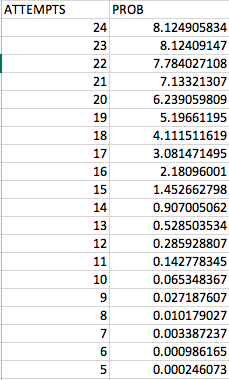
Regardless of how long you two have been courting each other, statistics say that you ( as a male ) will have 14% chance that the woman will reciprocate your feelings, and it takes at least 30 attempts to guarantee dating success ( the probability shoots up to 98% from the measly 14% ).
And needlessly to say, even if the statistics appears to underestimate the odds, I'd be hard pressed to meet even half of that number, given the fact that:
I work in a place where a majority of coworkers is committed to a relationship/marriage
During college years I isolated myself so much from society that I virtually removed myself from most of the situations where I can develop robust relationships ( and yes, even platonic ones ).
My family's zeal for racial purity caused me to sabotage advances from girls.
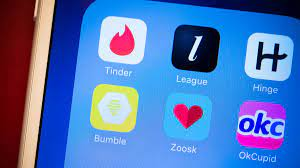
I don't like using dating apps
A silent, indifferent world where I live
Also, because you can't control whether the other side likes you or not, and you shouldn't spend too much effort trying to salvage it anyways.
Understandably, I threw long pity parties every night. Cursing my family for what they've done to me. Regretting over poorly made decisions in the past. Crying over my inability to stand up for myself.
I was painfully aware that, without a strong social network and robust friendships, I'll be more susceptible to a myriad of mental illnesses - from loneliness to depression.
The lack of connection and support from people other than my parents also cripples my emotional strength. It only took a few heated arguments to wear me down completely. Also, I'd get paralyzed mentally whenever someone's starting to win the argument. And predictably so I am always beaten to submission.
So I sucked at managing the dynamics of relationships.
However bad the situation is, I strived to overcome my overthinking mind, the ever so pervasive tendency to feel sorry for myself.
I told myself, that I have value, and with that I can earn back what I didn't have. And I can achieve it without having to depend on your boo.
And so, without further ado, here's what I'm gonna do.
Developing robust friendships
Developing friendships is a whole work in and of itself. Because it's not gonna develop by itself. But yet I was taught to believe that good friendships have to manifest spontaneously and naturally.
It's perhaps safe to assume we Asians all have been ingrained to believe in this strange hierarchy of people we should commit ourselves to.
Friendships are second to romantic relationships and romantic relationships are second to family relationships. And last but not least, the relationship with ourselves actually takes the cake. In other words, friendship is very likely our first casualty when we prioritize careers and higher level relationships.
But what if your family abused you ? And that your romantic relationship became routine ? What if you can't help but talking to yourself in distress ?
If maintaining friendship is so vital to our wellbeing, then why aren't we packed with friends already ?
The only thing that would make sense to me, is that, instead of waiting others to look for you, reach out to those you care. Just like investments, what you get back is what you put in.
Not wanting to appear as needy and annoying, I'm considering joining clubs and attend social events. While the latter is easy to spot, are underground and aren't accepting new members easily. In fact, my hobbies are either too specific to find like minded people or too generic to feel belonged.
It's easier said than done, but it's easier done than just guess.
Being your own best friend
Probably it's the same thing I've been telling myself over and over. To make peace with solitude and the tranquility that comes with it.
And through this tranquility you'd enter a state of contentment and peace with who you are and what you are, free from judgment coming from the world outside.
Through this date with yourself, you'll learn to appreciate the things that make you **you**.
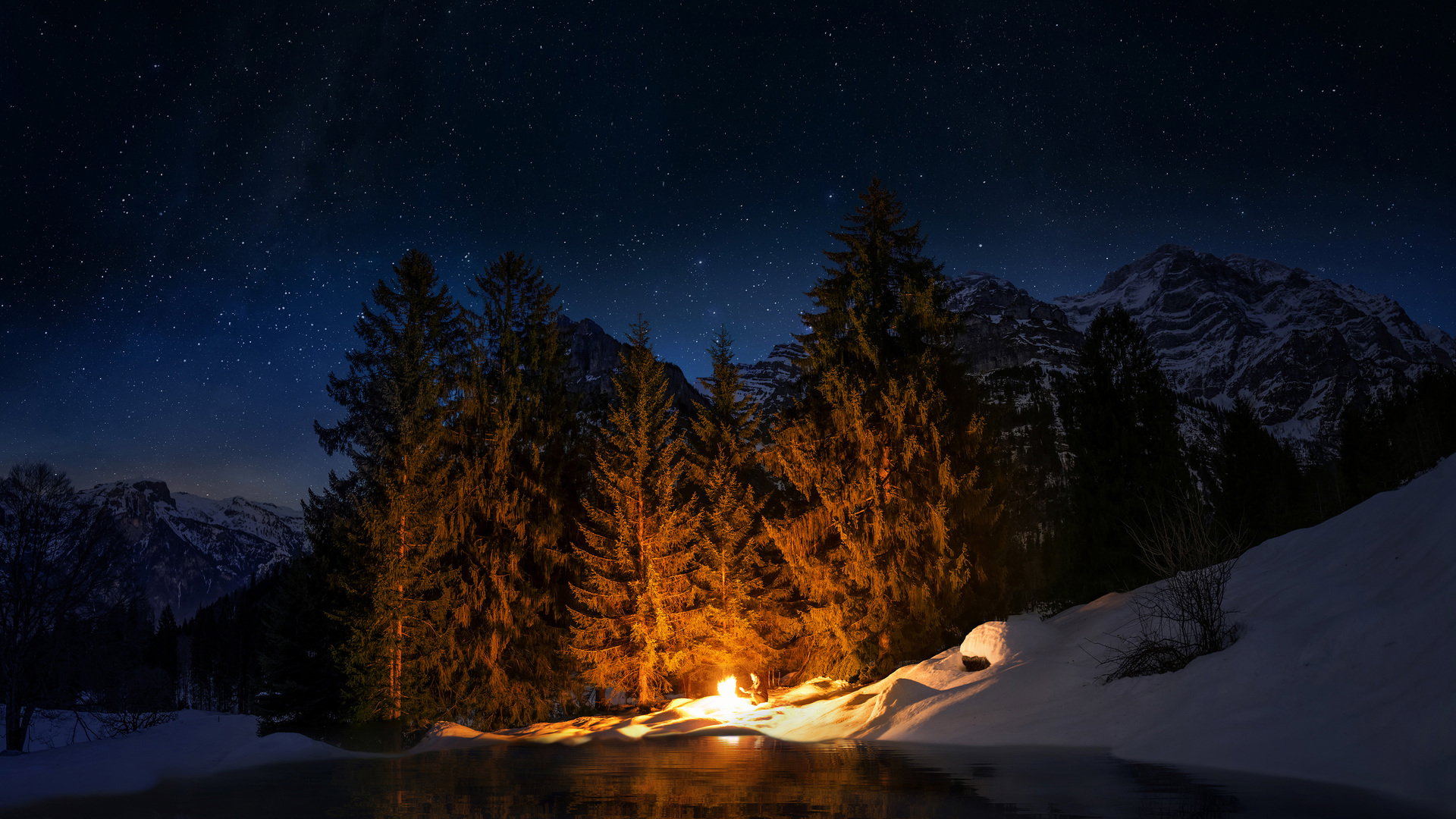
For me, my ideal solo date is to loiter around the campfire, in some random alpine forest covered in snow.
Apart from the rugged beauty of the wintry scene, it symbolizes the ever so pristine yet indifferent environment I live in.
Nothing really appears to be in my grasp, except from the warmth I can give to myself. Only after the long winter is when I will bloom again with colorful petals in full extension.
Like late bloomers, I may not be the kind of guy others will find attractive, nor that I will expect myself to realize my full potential on a short notice.
With grit, persistence and faith, there's a chance I can overcome this absurdity and grow from it. Stronger.
Even though my worst fear is seeing the world moving on without me, ironically by basking yourself in the silent backdrop you feel less lonely.
Because admittedly, according to the words of Ocean Vuong, loneliness is time still spent with the world.
Appreciating the simple things
How heartwarming it is to know that there are loads of things to live for.
Your life, if not being dictated by society, is never about chasing after someone or having a nice job to brag around friends.
I guess the biggest takeaway from my predicament is that you gotta appreciate the little things that come by.
The engine noises from cars driving afar.
The breezy crisp air blowing through the window after a shower.
The clicky feel of the keyboard as I'm typing out the article.
Goals and milestones are noble pursuits - don't get me wrong - my biggest goal in life to be able to be a part of something bigger - be it a project, a charity or a book club. And to be among its founders.
My metric of success in life, for me, is not putting everything on the line for those life milestones that society expects me to reach.
It is to feel content with how things are to some extent. And not to hyperfocus on things you don't have.
No amount of anxiety and overthinking can change the fact that, life always moves us forward somehow, and it will surprise us in the most unexpected of ways.
External references
https://www.cnet.com/pictures/best-dating-apps/
Top money making myths I've been made to believe
Growing up I've been the starry eyed person who wanted to make something out of his life, especially when he's been through so much disappointment, failure and loss.
And I've been working harder than ever in my life - less procrastination, more focus on pursuing wealth, more attention towards strategizing and planning towards the future.
Because all in all, I wanted to live on my own terms. To buy lifestyles that I didn't have in the past. To experience the finer things in life without having to look back and forth.
I'm not gonna say it's going to suck, because in fact it brought surprising benefits from improving my discipline to work ethic.
But spiritual benefits aside, the financial benefits would never match up. Because I try too hard. Especially when I'd haplessly tried to market everything I knew and liked on the internet, and neglected how reality works in the process.
If your goal is to generate steady amount of wealth over time, this article can be a right fit for you. This so far applies to my current situation, and depending on your life variables, each of these myths can pan out differently to different people.
Average millionaires have 7 sources of income
Without further ado this is an outright lie.
Most of the top tier income earners spend a good portion of their lives honing their skillsets in order to get the most from their highly compensated career. Then as their wealth grew together with age, they can start diversifying their incomes, by buying up assets or receiving dividends [ source ]. https://youtu.be/NF5H7ch2Ngg?t=406
It is increasingly becoming a myth for a reason - because there are armies of influencers out there trying to sell you hope ( through their online courses ).
Without needing to cite anything, I'm sure it's also common sense that we should remove any emotions or hype when we decide on our careers. Commit 100% on what we do best is the right way to go.
Then we can diversify our time accordingly with our interests at some point in future, and in style.
Lastly, there's nothing wrong in trying to make the most out of your money, and certainly there are people cashing in from deltas of income streams, but I can almost say for myself that their primary source of income makes almost the majority of the income.
Entrepreneurship is a lucrative career
Even though starting your own business is a noble pursuit, entrepreneurship rarely happens unless we receive backing from other bigger players.
To find audience or customer you need connections and networks, to put your business on Google Maps requires funding. To operate your business you need infrastructure. And lastly, great effort.
Without any means of production entrepreneurship is easily the most unprofitable thing that you can do.
By all metrics, YouTube's gonna be the easiest business you can run. YouTube sets up everything for you in exchange for a slice of your pie.
Incontrovertibly, as the barrier to entry is close to none, the competition on YouTube, and perhaps on other social media, borders on the level of absurdity.
With growing competition comes with higher volatility and instability. Judging from my personal rule of thumb, for every defining phenomenon observed across social media platforms, there are dozens or even hundreds of passing fads that comes before it.
In other words, you can go viral and famous for a few months before getting dethroned by an even bigger spectacle.
But nevertheless we are subservient to the platform's demands. We think we own a business, but it's actually under the stewardship of the higher masters.
The people that wants you to believe in such, be it guru-influencers or financial charlatans, would downplay the risks and hardships of getting your business off the ground. No one wants to hear a failed business owner retelling the stories of his venture that never took off despite his best intentions.
And the more people watch these false encouragement videos, the more likely it is going to be circulated around viewers. Thus the more convincing the idea gets.
Analysis paralysis
Dear readers,
Have you ever gone through a period of time where, you lay out all of your life options on the table like a deck of cards, mentally calculating what to pick the best one to start with ?
But as minutes turn into hours, and yet you haven't managed to come up with any initiatives.
When the paralysis becomes too much of an ordeal, you flip the table and leave the scene for good, regretting about the time wasted on such an unproductive activity.
We, at least we, have some problems with deciding what's best for us, and often times we find ourselves spending ample amounts of time fortune telling ourselves into favoring one option over one another, and then another with yet another one.
It's something that I still personally deal with, since I have a day job, a side hustle and a dream of living abroad.
My personal experience with analysis paralysis
If you've read my previous posts about my misspent youth, I could only become more cautious about how I spend my time productively.
Because of my aging mother, my youth would only become more valuable.
Even though I managed to use my time for productive ends more than ever, I still struggle with what to do in my free time.
Should I embark on yet another pet project ? Or should I spend more time with my date IRL ? Or perhaps sending out more freelancing proposals will suffice ?
The answer is, and has always been, spending more time with my date.
Because let's be honest, it's the easiest and most flexible option.
And yet, I still pain over lost money-making opportunities, and by opportunities I mean "gamble". Because you can't predict how the fruits of your labor will materialize - probably it won't be anything of substance at all.
Therefore, in other words, I've been dragged into this competitive tug of war between what ought to be done, what I want to be done and what I desire at the moment.
Coping with analysis paralysis
A large part of my analysis paralysis has a lot to do with FOMO. Which stands for fear of missing out.
And let me tell you this...it's not fun when you constantly fear over the fact that you'll let a hard-to-come-by opportunity slip away from you by simply choosing an option.
For every second ticks, you feel as if your opportunity cost is piling up. Especially when society demands so much value from just one person like you, to the point that you beg your higher powers to provide you an answer, when you're already dealing with the day-to-day physical and emotional overheads.
To calm down, I needed to keep focus on doing very few things very well, and by very well, I mean spending lots of time for it.
Give yourself some constraints, and start from there.
And how do you give yourself constraints you may ask ?
Well, according to one wise man named Nassim Taleb, he argued in his book, Black Swan, that no choice is really better than the rest, so you might as well choose the one that you think will give you the best leverage.
And what is the leverage here, you may ask ?
Aside from my day job, I'd spend some time alone to slowly appreciate what I do, and not to overthink about the past that has happened, and the future that's yet to happen.
This would keep my mood up long enough for me to overthink less when I'm confronted with competing priorities.
Self sabotage
Dear readers,
Have you ever wondered why all your days are as bad as usual ?
No matter how much you did, there's still a lingering feeling that you can't change anything for the better.
But even if you do get better, it feels awkward and weird that you feel better, as if the feeling doesn't belong to you.
And then you start crippling yourself with worry, fears, and pessimism that ultimately brought you back to where you started.
It's like a self perpetuating cycle of dooming yourself to not ever getting back up, even though you are acutely aware that this shouldn't be OK in the first place.
And if this sounds a lot like you, let me take you on a trip exploring the psychology behind my self limiting behaviors and the following actions to address it.
The psychology behind self sabotaging
Often times, our low self esteem are always to be blamed for our negativity towards self. When we feel like we don't truly deserve something or that everything good happens to us is dumb luck, we would actively refrain from them, and stay in our own comfort zones.
As we don't like to experience regret, disappointment and ambiguity, we've come to value certainty and safely above all else. Not even success can make us feel whole, if we think it brings unwanted changes to our lives.
Approaching a girl you like in the office next door sounds appealing, but the fear of embarrassment took over your mind (Sadly I still feel like this.)
Working on your favorite side hustle can rejuvenate you after a long day at work, but the thought of overworking and burnout keeps you at bay.
Judging from my own experiences, we are all psychologically wired to strive for consistency in life. In other words, we think to ourselves that anything that doesn't fall into our routine, like going on a date, or being proud of yourself for the little good things you achieved, subconsciously sounds like bad news to your brain and you'd prefer shutting yourself off of them.
Perfectionists can also relate to this experience as well. They (sometimes me included) tend to be dismissive of incremental improvements (like improving yourself just 1% per day) and to adopt an all-or-nothing approach to life. All of this restrictions we perfectionists put on ourselves are also causing us to do the same thing as self saboteurs.
The outsized damage of self sabotaging
Self sabotaging is easily the worst thing I've done to myself. And believe or not - it kind of took over my early adult life, without me even knowing.
In high school there were a handful of girls wanting to date with me. One of them even asked my friend to say hi. The other one teased me with her best bantering skills.
I was awfully close to my first love, but as I was going through a difficult phase, I distanced myself from them, thinking that I'd be doomed if they discovered how unworthy I was as their date.
Fast forward to college, and I had my first job as a part time worker in a convenience store. The job was taxing but nevertheless a fun experience, but there's one major problem.
Growing up in a hypercritical environment where your family correct every single thing you do, I lost the ability to stand up for myself and ultimately quit the job in order to escape the bullying and abuse from coworkers.
And so I never worked a contract job again throughout college, for fear of becoming a laughing stock and a pushover.
Combined this with other things I'm not ready to talk about, I'd have become the meekest boy in town, if there was a Guinness record for such title. And it's not surprising to see how I manage to become single, dependent and have less than $2000 in my bank account.
In short, my college life is a hot pile of dumpster fire, thanks to my inability to seize opportunities.
How I avoid further self sabotaging
Honestly it was hard to describe the emotions from knowing the extent of the damage. I even thought that I've prepared myself to fail as much as humanly possible.
More and more I was convinced that I was a loser in life. There didn't seem to be a way to deny this fact or to contradict it.
I began to hate my family and jealous of people around me.
I blamed my mom for her blatant ignorance and lack of responsibility. Her dumb conservatism came a long way f***ing my shit up.
I quickly grew jealous of my successful friends who had pretty much everything I lacked - respect, romance, riches.
It's also hard to watch people holding hands outside, or drink with friends in the coffee shops. Almost as if they are taunting to my face that you lack substance.
At this moment, it was incredibly tempting to become a perfectionist and go on a crusade to overcompensate myself.
But I said - f*** it.
By blaming my mother and over-perfecting myself I was essentially putting myself back in the same destructive loop. The heightened sense of self righteousness makes you feel good about yourself without making any actual progress.
And so I took a self compassion route, where I see myself as merely a struggling person who just wants to create value in this unforgiving and messy world. My mom herself was going through traumas from her own, without taking it out on me in violent and other abusive ways.
Through this, I came to relearn the maladaptive coping mechanisms that reliably hinders my potential. Only then did I stop trying to be productive for every waking hour and instead focus on healing from my early difficulties, not fixing nor compensating for it.
Learning lessons in life shouldn't be embarrassing or shameful.
Machiavellianism (from a nice guy's perspective)
TLDR;
A little bit of backstory
Lately I've been reading a lot about the problem with being too much of nice guy.
According to philosophical YouTubers and self help gurus out there, nice guys often finish last because they are actively putting others need in front of theirs, leaving them unable to muster any courage to be honest with others, much less confront them.
Having been a nice guy all my life, it should come as no surprise that I've been treated quite badly during school, and I was still a shy guy well into college. At work I came across as being a submissive, sheepish person who doesn't really want to ruffle any feathers.
Having raised in a morally strict Asian family, I never was taught about the value of standing for yourself, or to confront others. As our culture value politeness, obedience and honor above our emotional and spiritual needs, that leads me to believe subconsciously that confronting others is inherently a risky behavior, which will potentially humiliate me further and put myself in an even tougher spot.
The problem only got worse when my family sheltered me from having normal human experiences ( like going on roadtrips with friends, solo traveling to favorite destinations ).
The obsession of honoring your left me unable to speak the language properly, leading to more isolation and emotional suffering.
Therefore the fear of conflict is a problem that runs deep in my identity. And it takes copious amounts of deep thought to gain insights behind my behavior.
What Machiavellianism actually means
After studying the psychology behind tyrants, oligarchs and my former work bullies, I came to discover that they all share one common personality - Machiavellian.
The name "Machiavellian" comes from an Italian Renaissance diplomat called Niccolò Machiavelli, best known for his political philosophy from his tome - The Prince.
Politics, for him, was and has always been meddled with crime, treachery and deception. Therefore, morality is incontrovertibly not a solution to desired outcomes. Effectiveness could be guaranteed if we were to ignore popular judgment and do whatever it takes to reach your personal goals.
His way of thinking would justify the rise of countries, kingdoms and corporations. These large entities would go anywhere close to formations, if the forefathers were listening to their hearts all the time and never protect themselves against the malevolence of the murky world they live in.
Thus, he is the father of "the ends justify the means" credo. We abhor chasing money and power, but our undesirable behavior such as greed, lust, hatred and jealously still lies intact inside of us.
Therefore, any people or group with money and power would resort to crappy measures (at least once) in order to maximize their gains. Without Machiavellianism, multinational companies wouldn't be nearly as filthy rich and some countries wouldn't nearly be as influential.
And it appears to me, that Machiavellianism is a desirable trait for a young man like me. If I were to be a bit more cunning, inconsiderate and charismatic, then I'd be able to muster enough courage to move out my parents' home, earn some street cred, become an authority in my niche, and go on dates with women I like.
Man, had it not been for my strict parents....I would've been that person.
Is there a better alternative to being a Machiavellian ?
As much as I hate being beaten in an argument, or being subservient to my fear of conflict, I most likely have to go through intense periods of self-questioning before I take these Machiavellian leaps of faith.
My family seemed to be the antithesis of Machiavellian ideals - they want to live a principled life full of virtue and morals. But their adherence to selflessness and wholesomeness is also what makes them moral assholes. By failing to educate me about how the world really works, and distort my worldview in ways that makes me feel inferior.
Their overcommitment to creating a loving family removes them from considering my own needs, and allowing their inflated sense of entitlement to take over our conversations. Because they always think they are always doing the right things for me, so I have no place in arguing with them.
It is that single reason that I lost a good chunk of respect for them.
But on the other hand, being too much of a Machiavellian lands you in the same position that I hate.
Because once you've amassed enough enemies and harvested enough karma, the only solution to protect yourself is to keep going down the rabbit hole of evil.
You can no longer trust anyone in this world, and after so much deceit, control and manipulation there you have little option but to continue doing so, because the world is growing more desperate to outwit you, so chances are turning back means turning yourself in.
The only possible way, which I will not like, is to play with the system. Yes, be an asshole once in a while, but it has to be in the service of the greater good.
Learn to keep boundaries when things don't go your way. Always be more rational with people no matter how emotional the situation gets. Screw up other people if they take advantage of your forgiveness.
In other words, don't be too nice, but don't try to become the next mafia ever. Try to change the situation to favor you, but never at the great expense of others.
Hurting people is fine, so long as it doesn't jeopardize your dignity and your relationships. While you can get enormous rewards from exploiting your friends, family and other people, sadly, dignity and deep relationships aren't something you can actually buy.
Sure...this strategy doesn't help you to dominate the market, nor that it will equip you with the means to challenge the mafiosos, but one good thing is that you won't finish last. Because you don't have to abandon your morality and conscience to achieve your short term goals.
Being a total asshole is rewarding, but not mentally fulfilling.


The pros and cons of content creation
We've all been too familiar with the creator economy.
The economy where software makes it possible for us to monetize our hobbies and interests, from playing games like Pewdiepie to deep video essayists like Alice Cappelle.
The market value of the economy capped at an impressive $104.2 billion dollars, almost comprising the entire GDP of a small wealthy nation.
With ever more ways to offer value to consumers and even more ways to earn money from it, certainly things would only go up for the creators, right ?
But before you begin on your journey of content creation, I've compiled my insights regarding the business, after spending an entire year trying different kinds of ways to make content. From blogging, podcasting and yes, I'm now writing a book.
The pros
The rewards are exponential with time
Content creation comes in different shapes and sizes, and knowing which one's more profitable than the other is really a tricky business.
But if you got your insights right, then it shouldn't be hard to see how rewards can get exponential with time.
And YouTube algorithm is the best example of that. Even though it changes like weather.
I've seen dozens of channels taking off over a year or two, some of them got famous in a little over a week. Thanks to the uptick in donations and business conversions, I see them moving into their new homes, showing off their latest filming gear, traveling to more exotic places, and heck, they even dress differently.
Making content is easier than ever
Judging from the videomaker's standpoint, it's easy to hear they complain the sometimes tedious process of taking an idea from your brain to the platform.
I personally think serious content creators like Kurzgesagt or Wendover Productions are qualified to say that. Because it takes hundreds of hours of team effort to produce each videos with their calibre.
Much like how Canva disrupted the graphic design industry, several video editing software in the cloud were also making strides.
Editing a simple video shouldn't be more difficult than making a lead image for articles and posts, owing to its ever more intuitive UI designs. Examples for such products are Clideo, Veed and Clipchamp.
I personally use them to produce introduction videos for my tutoring business and so far I never had to spend a dime on something that would have set me back for 10 bucks or more.
Being able to access opportunities that you normally can't
I'm tired of people saying that you should use social media to promote your business.
While it does take one's part time job to manage social media accounts, I have to admit that if everything fits squarely at the right time, then it's not really hard to see why online branding creates loyal customers.
Once you acquire a certain amount of following, you'll get sponsorship opportunities out of nowhere, like affiliate marketing, trying out products for free or even more dramatic - partnerships.
That's why it's an exciting prospect formany aspiring content creators out there, considering all the pros up there and there's no reason not to try.
More and mmore, i am convinced that being part of the creator economy meant prosperity in the long term, emotionally and financially. I could only say it with certainty that the people I saw taking off are living their best lives.
Unless you don't consider....
The cons
The demand for your content can be volatile
It wouldn't come as a surprise if I were to tell you that you can never beat the market.
When content creators are competing for your attention, you'll be in the constant labor to fill a niche that others haven't. Simply put, you'll have to make content before others do, so that you won't be left behind in the race with other attention seekers.
Much like handling a business, the content you are promoting has to be a bit unique from the rest, and on top of that you'll also have to contend with the platform algorithms.
As an avid YouTube watcher myself, I'm not super familiar with how other social media platforms work, but I'm pretty certain that the algorithm changes constantly which can make those who are already successful, suffer.
The algorithm can direct massive amounts of attention to other niches or groups of creators, which leaves Anthony Padilla, the OG YouTuber, depressed over the disappointing analytics for the amount of effort and thought he put out for his videos (100+ hours per vid to be precise ).
Knowing what your niche is easy enough on your own, but for the next step, you need more than just personal experience or talent.
Some niches are more financially rewarding than others
It's sad to say that, in order to get the cream of the crop of content creation, you have to be lucky enough, or be diligent enough, to figure out where your unique talents, interests and market demand intersect.
I used to build a weather app which is not only functional, but offer more content than the existing products. Even though I made it as user friendly and educative as possible, all I got is a couple hundred of views and some stars on GitHub repository.
Another time is when I blogged about virtual traveling with Wordpress. The reception from other bloggers on my Facebook group was warm, but no one seemed to care what I had to write next.
It's a constant trial of error until you hit the jackpot. But to save you years of wishful thinking and wasted effort, I'll be recommending a tried-and-true strategy to know which niche is worth it.
It's called Blue Ocean strategy. Basically it tries to align the nature of the market with what you're into.
And after hearing what others say about this strategy, I'm tempted to try it someday.
You have to be passionate about what you're doing
Content creation is a skill that I haven't been able to master. But what differentiates this skill from the rest is the required mentality for it.
You need to be passionate enough to constantly think creatively as you make more content, and to stick with it despite setbacks and instability.
And in many cases, your work may not be noticed for a considerable period of time. And there's no telling if your idea is still worthy then.
No matter how determined and gritty you are, you still have to make preparations for failures and exit plans if it doesn't work out.
It's not your fault that the market doesn't cherish your content and ideas, but I'd be remiss not telling you that success matters more than passion, because success statistically creates passion more than anything could.
Overcompensation
Dear readers,
Have you ever thought to yourself that, no matter how much you achieve or how much success you've amassed, still you're feeling like you're not enough ?
And despite the approval and endorsement from your friends and family, you still feel broken inside, as if you don't deserve them in the first place ?
Or perhaps when you beat yourself up over a mistake that others call trivial ?
If the answers to those questions above are a "Yes", then perhaps you and me are on the same boat.
My story about overcorrection
It all starts with when my bad habits got out of control in my mid-teens.
I was a reclusive, timid and soft-spoken kid with fiery passion for simple pleasures. During downtime I'd indulge in games or those dirty stuff we all know and hate.
And after years of teenage mediocrity I had finally had enough of it. I knew for a fact that I needed to change, to change for the better.
Back then, it was fair to say that I was a piece of human anti-achievement. Apart from the school accolades in English competitions, I had no real hobbies, part time jobs or a vibrant social life. It's just me, the bright LED screen and occasionally some bags of chips.
Quitting those addictions got so hard that I eventually received traumas that took years for me to recover. I recovered somewhat from that mental rut, by working on my crafts and skills, adopting a couple of healthy habits like reading and writing.
I exercised 6 days per week, shunned sugar and comfort foods, meditated 15 minutes per day and set aside 1 hour or two for fun. I was in my best shape in my entire life and I could see my intelligence spiked. But no matter how much I've achieved, there was always something inadequate about me.
Those traumatic experiences from high school didn't stop creeping up into my mind, and that screwed my productivity by half. It impacted my self-image and self-esteem to the point that I kept questioning if I had some neurological condition, like ADHD or Asperger's syndrome. No girls seemed to be interested in me during those college years, got bullied by a coworker at my part time job and almost screwed up in school tests.
Feeling like a total train wreck, instead of backing down and reflect on my sad life, I doubled down on my self remediation effort. More work, harsher workouts and MORE discipline.
And guess what, few years down the road, I was relatively the same old me. Even though I've worked in a job and got some freelance work. Those trauma didn't stop giving me nervous reactions, my muscles didn't get significantly bigger, high paying jobs didn't grace my life enough, and **drumrolls please** involuntarily single.
20-something but still do be living like a moody, withdrawn college freshman. I never feel like I've grown up.
Surely this signals a bigger personal repair work, right ?
And my initial answer was "Right". I worked tirelessly for another round, formulate theories around my neuroses, and continued improving my social skills.
Except for the fact that my plan fell through by the time my hormones shuffled across the body. That's when I realized that I was putting myself through a loop of pain and frustration.
Why we tend to overcorrect
Overcorrection comes from a multitude of factors. Our families might be over critical of us when we were young ( that was me actually ), and other people simply projected their insecurities onto us.
"Son...don't hold your chopsticks like that."
"You shouldn't go out with friends like that."
"You shouldn't be thinking this way."
"Remember, a gentleman never admits failure."
A pattern emerging from those questions tells that it's wrong to be authentic to ourselves, and because it's difficult to determine our self-worth, our place in the society, we often compare ourselves to those high up on the social ladder, even if it sabotages your mental health.
Then we keep raising our bar to the level that is out of reach - that is, anything less than our goal is a disaster and you deserve a reality check.
Self-moderation is a tricky business and setbacks are likely going to occur, so the only viable choice is to overcompensate yourself and force yourself to change everything about you.
You would hyper-focus on your flaws, and get paranoid whenever things go too well for you.
In order to keep up with the momentum, you're gonna spend your life solving problems that don't exist anymore. And sadly we still think that we can eventually put our flaws under control.
Even though you feel like you're doing work and improving yourself, but in reality you're stuck in the same mental rut.
How I took action against it
I have to admit, it's difficult to make a playbook for dealing with this, but it's even more difficult to maintain your new mindset with the playbook.
Anyways, I reexamined the reason behind why I was overcorrecting.
My personal reason was probably being abstracted by other compelling ones, such as trying to be valuable to employers or being lovable to others. It took me a whole year of abject failure to recognize the root cause mentioned above.
Then I decided to move slower with my life, by taking quality breaks at the end of each day, went out more with friends and most importantly....
Make peace with your flaws.
I still get distracted from work at times, sometimes my brain would freeze up at some unpleasant flashbacks and screw up things that I shouldn't.
But they're all fine to me. Because I knew for a fact that they're not going to affect me as much. I can let go the thoughts and feelings just as easy as shaking off feathers. I don't have to change it or suppress it - just leave them as they are and they will fade into the background.
Truthfully speaking, those thoughts don't affect me as much as my pathological desire to control every outcome and mold myself ruthlessly to become the kind of person that I want.
We cannot self-hate our way into lives we love.
*Brianna Wiest from Medium* https://humanparts.medium.com/how-to-stop-overcorrecting-your-life-cf9cf2165627
I journaled down my thoughts, experiences and actions for over a year now, and from reading the old entries I was able to sympathize with the person I was back then. The old me was just as diligent and conscientious as I was now.
If I hadn't kept a journal, I'd sure to narrate my past stories with my inaccurate memories of it. Not to mention excessively negative feelings can distort our view of reality.
From there, I stopped being too hard with myself. I could let go of my past slip ups better and actually learn from it - not ruminate it.
I'd still try to improve myself no matter what, but it should came from self-respect and self-love. I want to self improve because I want to treat myself better, to keep becoming the person I knew and love.
Final words
This post has been the most personal since a year ago. and if you've been struggling with self-hate and overcompensation, I hope this post helps.
Because the happiest thing to happen to me is that I've helped you guys in a positive way. Don't hesitate to comment your thoughts down below !
Obsessing over my thoughts and emotions
How I felt over the past week.
Gotta say, the remaining days of the past week was nothing but quite a slumber. My optimism waned, negative thoughts started emerging and for many times I thought that I could no longer control my emotions and thoughts.
At many nights I struggled to write a single word, either because there's too much going inside or outside of my mind. I was demotivated to the point that I watched YouTube for most of the afternoon and lost interest in exercising.
All of them happened for little to no reason. I honestly couldn't remember if it's because of my hormonal changes or something else.
But one thing I knew for sure is that there's nothing much happening for the past week. And that made me a bit sullen about my life progress.
Nothing much happened last week.
My freelance business sees fewer and fewer clients each month, and you couldn't do anything else but prepare for the next interview.
That prevented me from pursuing side hustles and hunting for other jobs :(
What makes this situation even trickier is when intrusive thoughts and other distractions keep getting in your way of studying and learning. Including my pesky mom who constantly breaks into your room to get stuff.
I've spent the past few days trying to come up with coping skills to make my work time less choppy and more efficient, and to train my focus to something for a longer period of time.
Because the first job interview went through splendidly, now I have my sights on the last interview, which will be more difficult than the first ( because it's a technical interview in which you may do coding tests ).
Preparing for the job interview ahead almost became my full time job. I never imagined how stressful I'd be until I hopped on the coding interview questions.
It demanded my entire reserve of mental energy and attention span, and even more frustratingly, there are days when I kept screwing up midway for said reasons above.
The sacrifice was getting more realistic when I kept feeling sleepy after trying to solve a coding problem for too long, or that I kept falling back to my old patterns when things don't go the way you wanted.
This really is one of the few moments where I still doubt about my skills even after having achieved some form of success.
I gotta admit, its' really the nature of working as a tech professional - coding interviews were the rite of passage if you want to work for big grands and for big companies. But I heard rumors that even smaller or mid-sized companies used such hiring tactic to weed out candidates. Just like how impractical college entrance tests were used to filter out "undesirable" applicants.
Many times I wondered if my new job was as unrelentingly strict on meeting deadlines as I am to my personal work.
In all seriousness, things around me have changed a lot, except for some of my mental challenges.
Boredom really led me to weird places
Watching a documentary about life of Buddhist monks inspires me to become comfortable with whatever thoughts that arise, and the negative feelings that cloud your mind.
The essence of meditation and chanting is to get yourself into a state of subdued but heightened consciousness, in other words, getting into "trance state" or "the zone".
While that helps a lot with concentrating during those intense hours on the code editor, but it didn't really offer much in terms of positivity. Positivity is something you give yourself no matter what you do.
Boredom was supposed to enrich my empty soul with creativity and inspiration, but instead, the intrusive thoughts came flooding my senses and at the end of the day I felt like my self esteem has come under siege. Inarguably this was a shameful and confusing experience.
When I rethought about it hard enough, I realized that I became a bit hard on myself at times. Whenever I mentally complimented myself for being smart, or being in a positive state for too long, my brain would send fear signals that I'm about to experience a mood-changing and debilitating thought.
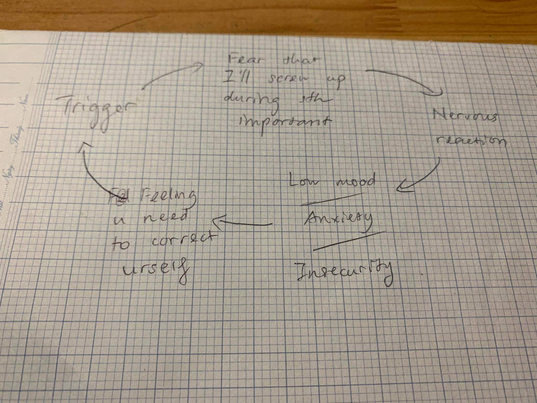
I hate to reeducate myself again and again that most of my irrational worries came from the excessive need to control.
As well as the underlying fear that I make a fool out of myself or do something inappropriate whenever an unwanted thought or nervous reaction come up.
Instead of falling for the same way of thinking, I chose to acknowledge those bad thoughts and emotions to come up, and finally convinced myself that I don't need to put everything under my control.
Sometimes the excessive control causes fear that I might run off course. And that same fear will cause even more of those thoughts to come back.
By understanding that kind of fear, it would affect me less. I don't have to be the best person every single second.
If this sounds familiar, I might be suffering the legacy of years of self help indoctrination. https://read.cash/@DjennisQuant/what-ive-learned-in-2021-622c1413
Dealing with chronic failure and loneliness
I've woken up today feeling groggy after a bad night sleep, and I struggled to lift up my mood to function properly through my mornings.
And during those moments of weakness I revisited my memories in managing my neuroses, the struggles that I've somehow overcame and contemplated on my perpetual loneliness.
Since my first failed interview I went to great lengths trying to maximize my chances of success. By synthesizing experiences from continuous trial and error.
One thing I've realized after so many years of trying, is that unfairness always exists among us.
The world decides who has and who has not.
Some people are going to be healthier than others, mentally and psychologically. Right from the get go.
Some people are always going to earn more than others, no matter what they do or how much they try.
At first, I refused to believe in this crazy unfairness we have to live with, and I even got resentful about it.
Managing the unfairness in life
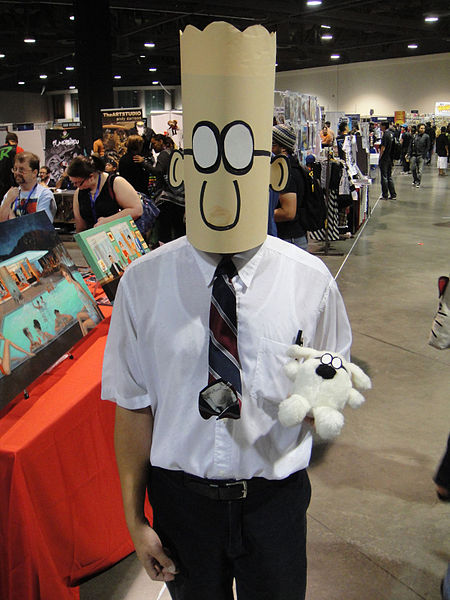
I feel like I kept living under my potential. But after having read a book called **How To Fail at Almost Everything And Still Win Big** by Scott Adams (famous for being the author of a comic strip series *Dilbert* ), it wasn't like I was having a transformative, mind-blowing realization about my life.
Nor that I woke up from a dogmatic slumber like Emmanuel Kant. The book had a few new ideas, but nothing much else ( **Side note**: I thoroughly enjoyed the first half of the book ).
*Image:* ***The Conmunity - Pop Culture Geek****, CC BY-SA 2.0 via* *Wikimedia* *Commons* https://www.flickr.com/people/26728047@N05 https://commons.wikimedia.org/wiki/File:CarduelisChlorisBerry.jpg https://commons.wikimedia.org/wiki/File:Long_Beach_Comic_%26_Horror_Con_2011_-_Dilbert_(6301706992).jpg
Even though it promises nothing, again, but it leaves clues on how to cope with the feeling of failure and loneliness, and from that you can start maximizing your chance of success.
The more I read the book, the more I realized, that failure begets loneliness and vice versa. Even though the tether doesn't seem apparent nor clear, it emerges to me that my loneliest times coincides with my biggest failures.
Failure is a subjective concept for many, but I'd define it as indulging in bad habits and not taking chances as many as I should to improve my current situation.
While it's not really possible to control failure nor bad things to happen to you, the best way to is to cope with them (with grace and patience)
Here are the coping skills I've tried myself, and hope it benefits you somehow.
Goals are ephemeral - Start building habits instead
Goals end when habits persist. In fact it gives you back some of the certainty that every human being craves.
Goals give meaning until you reach it. Even though it's much easier done than said, I'd regard goals as milestones to reach whatever goals you'll be having.
There's nothing much to say in this section because it was way too obvious, that habits are an extension of goals, which means that you set yourself better goals.
Besides giving stability, habits can also make sure you reach your goals consistently without risking burnout.
Goals in this situation should be thought of as milestones. Because hitting milestones on roadtrips are just as satisfying as reaching the finish line.
In my honest opinion, habits increases your chances of success, pro rata with your level of commitment. Even though it sounds like wishful thinking to you ( I even sometimes feel like this advice is close to nonsense ), but habits landed me a freelance job and a seasonal full time work. And that's just a stepping stone for me.
Learn to manage your mind and emotions
It's gotta be some of the best things you do for yourself. Even though it might be the hardest skill to master.
Because genetics would decide your tendency to exhibit unwanted behaviors - from sadness, anger, jealously, optimism to lashing out.
Not to mention how random our upbringing and livelihoods are. Each of us have unique life journeys, and it's fair to say that life is strange for all of us.
I might be wrong, but organized religion's greatest contribution to mankind is the management of our souls.
In all branches of Buddhism the monks inspired me to become more mindful of our thoughts and action. I believe a troubled person like I was 4 years ago would benefit immensely from disassociating yourself from feelings and emotions, no matter how valid they were.
I don't think I'm a qualified person to give out any advice on that matter, but what I can tell you, is that our feelings can be just as inaccurate as our intuition. Feelings are just what it is - it doesn't signal action nor change - unless your rational mind decides that it is. By that you prevent yourself from hurting yourself and others.
That said, if you happen to struggle with an addiction, I believe urge surfing encapsulates what the section is all about. https://www.therapistaid.com/therapy-worksheet/urge-surfing-handout
Never sacrifice time spent with family and friends
I was miserably lonely after having spent my time building one thing after the next, virtually in solitude.
None of them succeeded, but I didn't leverage the power of social connections.
I had this delusional belief that I could achieve what I set out alone. Thanks to the self help crap I've fed myself in those college years, I was left with virtually nothing.
I was almost friendless. My relationship with mom was as bitter as ever.
The lack of job networking put me in the state of perpetual financial stagnation.
I never knew how powerful meaningful relationships can be until I lost it. I learned it the hard way, as described in this piece of writing months ago. https://read.cash/@DjennisQuant/what-ive-learned-in-2021-622c1413
Final thoughts
I could've made an effort writing a longer post than this one, but I thought you guys might enjoy a shorter format like this. Because I knew you guys have work to do and people to care for.
That said, there's a boat load of online resources out there for each of my discussed topics. So if you're curious or interested, be sure to leave comments and tell me what your thoughts are ?
Have you ever been in the constant loop of failure and disappointment ? If so, how did you overcome it ?
Journey to getting my first real job
I spent a good part of my lifetime not knowing what I really wanted to do.
Everything seems to ignite the "passion" inside me until it wasn't.
Everything I did seems to be void of meaning, but what's the other options besides working your ass off all the time ?
There's nowhere but forward. Sitting 8+ hours in front of the computer like my livelihood depends on this computer.
Keeping trying one plan after the next, even though I was near exhaustion. But the enthusiasm towards having a fulfilling life still kept me up somehow.
Even now, I'm working on a handful of projects which took up a large portion of my day, and decidedly most of those "projects" are the building steps towards landing my first real job.
The real job was certainly a good fit than the other previous jobs that I took, and to this day it still amazes me how hard it is to actually get a decent job.
Let me tell you why.
My first interview went awry
I believed my first interview was a year ago, when I was still a college student awaiting graduation.
Being someone who is still very lost at life, and in fact, most of my life. I had developed web apps and websites more than a year, but I struggled greatly at finding internships and freelance opportunities.
As if I've struck on a chest of gold, the web app, which I very often frequented, was hiring someone who could write science content for them.
What's better is that there were relocation opportunities to Europe if I was skilled enough. Or at least if I had the courage and the eagerness to explore the world.
Without further ado, I pretty much spent the entire day filling out the application form, wrote both the CV ( aka. resume ) and the cover letter. To me back then, it was a ticket to opportunities I never knew existed.
Even though the interview went well, my naive optimism got crushed when the company decided not to move on with me. The HR left a legendary comment saying that I'm more suited to a more technical field, in other words, web development.
But sadly, I refused to believe in her words, and I was determined to look for another jobs like that.
What I did in my very first job
A little later after I was honorably kicked out of my university, I began drafting one plan after the next, looking for inspirations to make side income.
Even if I did everything right, there's no freelance clients to be seen. I tried everything and did anything, but sadly nothing's happening.
It was a big reality check for me. I might be biased, prejudiced or discriminated against by them. Or simply the fact that I don't look professional enough.
I felt sorry for myself most of the time, not having a clue how I ended up like this. Is there anything wrong with me ? Or is it my parents' fault that I became such an unemployable social reject ?
The brooding season seems to extend into eternity. There were infinite ways to pick out flaws from who I am and what I do.
But instead I got a surprise LinkedIn invitation from a company that I didn't know existed.
I was so used to rejection that I struggled to hope for a job offer. But turns out it did. Even though I had absolutely no clue about the work environment, but nevertheless it was a first step towards becoming something.
The workload was relatively light for the salary I receive, but...it irks me just how redundant the job is.
Sure, it's a stable job, but the salary was nowhere great, and you do pretty much the same thing months after probation.
Most painfully it didn't equip you with the skills that benefit you in the long run, the skills that gives you opportunities to work on better things.
I know for sure this is a spiritual rant that a lot of people can't afford to give. I'm grateful, in fact, I really do want to keep this job.
But the instability didn't allow me to go the way I planned.
There had been some form of skepticism around my work ethic, as well as my commitment to that company. Those tough conversations over Google Meet became more of a routine.
Until one day, I was "honorably discharged" from the company, leaving me scrambling to find my next job.
I was saddened by the company's decision, but at the same time I was elated. Finally I could pursue something that is truly mine.
Managing competing desires and priorities
Even when I was staying in my first job, I still don't have a clue if the side projects I'm working on are worth my time.
During the months at the company, I tried promoting my passion projects, working on another passion project, and still they don't work out at all.
I still wasn't realistic enough with my life plans. But what I actually did well is that I focused more and more on my programming skills - the skill that is surprisingly highly regarded during this day and age.
And the only skill that I mastered during my college years.
And I've been focusing on it ever since. Worked tirelessly on certificates and polishing my portfolio website.
After another round of trial and error, I finally landed some job interviews after applying to dozen companies. Before that I probably have looked through hundreds of job postings.
But it doesn't mean that it's gonna be easier. Well, a bit easier I should say.
The first interview was for an internship that was unpaid and lasts for 3 months. But the second one was a full time junior front end developer position for real.
I felt the most hopeful for the second one, so I hoped I can impress them anyway. And the HR who does the interviewing kind of liked me.
It's gonna be a few days left until there's a verdict on going for the next interview, which is gonna be a technical one.
Wish me luck as I keep posting more saucy content about my evolution. From a guy with no experience to being able to travel abroad for better opportunities.
I'm starting a new diary series
Hello everyone.
It's been a long while since I committed myself to writing on the site regularly. Of course there's a lot going on for the past few months, but mostly....I've ran out of ideas what to write here.
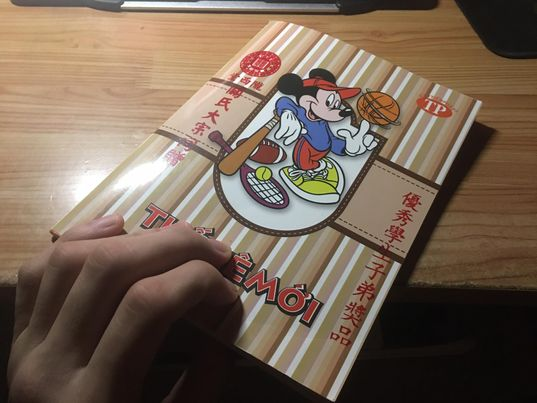
I've been keeping a physical diary for more than a year, and the picture below is my 6th edition :)
For all my diaries I wrote my own observations word by word, processed what I had been feeling at that time of day.
Why I wanted to start this diary series
While writing it out is therapeutic ( it really is ! ), I thought it'd be nice to type out my thoughts to see how fast I could type....hah just joking....to share my experiences and feelings as a person who dreams big, but yet don't have the means to achieve them as I want to.
One thing that inspired me to start this series, is how much you guys are willing to write just about anything out there, not expecting people to read back.
You guys don't care about what others think, and by writing stuff so freely I was able to learn from your perspectives, your culture and the worldview in general.
To see for myself just how big the world is, and through read.cash I was completely humbled by how normal your lives are, and that's what I find to be precious.
I can relate so much to you guys, especially when I live in Southeast Asia.
Whereas, let's say, blogging, you need to always make sure that you have to please the crowd in order to generate leads.
What I did before I blog
In its inception, blogging is very much like an e-diary. You put your thoughts out there, and since Google is still a Wild West territory, there's nothing much to care about your search results rankings, or in marketing terms, SEO.
In fact, nowadays, blogging and content creating only make up 20% of your work. Blogging has been commoditized to the point that it is becoming a means to an end. And that end is the products that you're selling, and ideas that your customers would buy into. Not to mention that your blog post has to be on point with the content and the user experience, and random screeds will not be tolerated.
And what that means is that many times to spend a whole week just to craft a proper 1000 word blog. Even if I got the SEO right, no one's gonna read it because, in the blogging space the readers are no longer interested in reading your thoughts.
Don't get me wrong, I see the world as it is and I'm not gonna act like the world is owing me something.
But as soon as I don't feel like blogging is my option anymore, I began spending more time thinking inwards, listening to whatever my instincts are telling me to do.
And that's when I rekindled my passion for writing, and to continue learning from you guys as well as sharing what I learn along the way.
Speaking of sharing what I learn, you'll be quick to ask what I'm gonna offer to you guys.
What I'll be writing on the site
As I've introduced myself in one post of mine, and on bio, I'm still currently on my journey to pursue wonder. https://read.cash/@DjennisQuant/introducing-dennis-2177aa53
The wonder - is being able to earn from the jobs that benefit me in the future, and also to be able to earn from what I love doing.
The best scenario has got to be early retirement. You could say I'm involved in the FIRE movement, but I'm saving up quite aggressively so hopefully I can retire by 40 or so. https://www.investopedia.com/terms/f/financial-independence-retire-early-fire.asp
The sooner the better.
Despite my enthusiasm, the road to early retirement is going to be long, boring and many times, daunting. So if you're working towards a goal or something, welcome to the ship !
I'll be documenting my journey with tidbits, life updates and life lessons along the way. I'll make it sure to write as much as you think is useful for y'all.
The evolution starts now. Wish me luck.
P/s: The diary will be aptly titled - "Diary of a dreamer"
Building a "time" investment portfolio ( part 1 )
When we talk about investment portfolios, we often think about stock options and index funds.
Like the list of coins and tokens that you call assets.
Amongst all resource in the world, time is easily the scarcest. As cliché as it is, time won't replenish itself and time machine would easily be the single most expensive thing in the world if it were to be auctioned.
If that time machine were to exist, the word "regret" should disappear from the dictionary within a month.
Therefore it's helpful to think time as a form of currency. Except that it can't be printed.
My definition of "time investment" is that you aim to reap the most gains to your personal benefit within a given period of time.
In other words, getting the most out of your time.
A good time investment portfolio should make us feel that we've spent our time meaningfully. So to do so, I've put together some ideas that may ( or may not ) change how you think about time and productivity.
Why I build my time investment portfolio
I'm fully aware that everyone's situation is different and unique, therefore, if my story happen to resonate with yours, then my philosophy towards time could be right for you.
With a little over $1000 in my bank account, investing in index funds or locking your savings in the bank would give very modest results in short term, well at least for 1 or 2 years.
On the other hand, staking and lending crypto would require me to study about the subject matter for hours. Also I don't think I could make my first dollar quickly enough.
Not to mention the hours spent on play to earn games like Axie and Town Star. In fact, for the former you'll have to pay first before you even play.
Unless your playing part time or full time, you'll have to spend additional hours learning game techniques and tokenomics in order to make the most out of your screen time. In short, it's a constant learning process.
I myself am practicing my skills for my future full time job, and I couldn't realistically afford to build more streams of income at once. I'll be spreading myself too thin to achieve in anything I do.
In my view, the only real way to build your physical wealth is to actively create wealth as much as possible in a given amount of time, let's say 2 years.
How you spend your time is how you invest money in crypto and stocks
Whereas you're fumbling over which app to buy stocks, when to stop HODLing them and who you should sell to, in the realm of time investment you're left to contend with competing desires and priorities.
Which job offer should I accept ? / Which company should I invest in ?
Which side gig should I partake in ? / Should I invest more in bonds or in stocks ?
Am I spending too much time in one thing ? / Am I focusing too much on one company ?
Am I doing too many things at once ? / Is my portfolio too spread out ?
How do I know if what I'm doing is worth my time ? / Am I being too speculative ?
The common theme of the questions above is that they're all value questions.
The thing is that I treat every job I do, every side gig I take as an investment in a business, in the form of time and energy, and in exchange for cash.
Every job requires careful company research, some degree of risk tolerance , and just like investing, requires making trade-offs.
First, invest time in something that pays back handsomely in the long run, albeit modestly in the short term
The meaning behind the heading is that, it's not worth chasing those get rich quick schemes. Just like when you prefer to see your investment portfolio bloom slowly rather than speculating.
Mapping that logic into our present moment, they could be things that we do everyday, but yet we take them for granted.
Things gets mundane because they're the most important. Because you're taking care of yourself. And that's what will pay you off in the long term.
Practice mindfulness by meditating
Cooking yourself healthy meals
Taking care of your personal hygiene.
Once we take good care of our physical and mental health, you may want to divert some of your time with family and friends.
None of those activities above will reap financial benefits, which is an obvious fact, but, it keeps you alive long enough so that you can see your efforts come into fruition.
Next, invest time and effort in things that give you energy
This can come as a straightforward concept to you, because we all know for sure that doing more of the things that makes us happier, more enthusiastic and more gives us more energy.
And of course, more time for other important matters.
The amount of examples for this case can be massive, but I gotta give a few here:
After work hobbies can boost your motivation to live, hence you start off the next day fresh.
Daydream about your ideal lifestyle in lunch break. This gives you enthusiasm to work towards your dreams, whether or not the dream will come true.
Chores always take a bad rap, but it is therapeutic in a way that it puts your mind in trance state. Not only the mundanity will hone your ability to stay mindful, but sometimes it can give you sudden inspiration or a fresh idea.
Instead of turning to social media for self comparison, reflect on what you really want out of life. Knowing what to you with your life is fulfilling in a way that it nourishes your happy soul.
Hope that those bullet points give you an idea of what keeps you moving forward.
I wish I could give you a solid advice on what not to do otherwise, but I beg to differ from those influencers who tell you what to do.
In my opinion, you should be your own influencer. I'm just a guy with a read.cash account.
Stay tuned for part 2 !
As the title already suggests, this is only part 1 of my blog series about my time investment.
I thought about putting all the tips and methods into one post, but that will certainly warrant a TLDR statement. So I'd just keep the post within 5 minutes of reading.
In the next part, I'll go deeper into my time investment strategy and how it may help me progress towards my personal goals.
Stay tuned !
Hard work may (or may not) pay off
We've internalized this moral fact when we approach the adult phase, where we have to go to great lengths to secure a future for ourselves, levelheadedly plan our finances so we won't die poor.
The "hard work always pays off" mantra circulates on social media like a meme. Almost as if it's codified in religious texts.
Not to mention the bills to pay and the family to take care of.
And trust me, if construction workers are the hardest working people you've ever come across, chances are they'll be rising to the top of the wealth hierarchy.
But my soul laments every time fate decides to betray my efforts and convictions. Hard work pays off super well if we don't have to contend with competing desires, conflicting priorities and instability in life.
But my biggest regret about working too hard, on the other hand, is that I don't learn much beyond the realm of self-help.
#1: Hard work may not pay off because of luck and chance
It bothers me, as a faithful person, to this day that luck plays an outsized role in deciding your life trajectory.
The world decides who has, and who has not.
I pondered endlessly how much I could gain financially from my inventions, my projects and my crypto investments.
But like it or not, where I came from decides how far work ethic can take me.
I knew from the beginning that I wanted to content create, and my creative mind has led me to spend countless hours creating one project after the next, with hopes that people to flock to visit one day.
But after all of this mindless struggle, I learned that most people don't give a dime about my work and subsequently they ended up as portfolio projects, or as pundits would put it, pet projects.
I quickly found myself isolated among the sea of people living paycheck to paycheck, with no interest in making content like me, except for a few handful of very privileged people in my country.
TikTokers and Facebook influencers reign supreme in the attention market. And if the size of our collective attention span measures to that of a universe, probably my achievements and accomplishments would be reduced to specks of dust.
Unless you're making content that people can't help but seeing, no amount of work can take you anywhere. And no one is ever completely sure whether people are into what you're into.
Sometimes your enthusiasm to achieve doesn't match with the amount of opportunities you're given.
Not to mention that you may still be recovering from toxic relationships, debilitating illnesses and financial hardship.
You must be thinking that I'm complaining all the time, but I think that I've done everything right, and still the results are still not coming.
#2: Hard work doesn't pay off because it's not proportional to the amount of success you expect to have.
We all like to think that hard work will efficiently translate to more results, but we hate being told that luck solves everything.
In fact, this article from Medium thinks that hard work is the prerequisite, and I totally agreed with the author in most things. https://medium.com/swlh/why-hard-work-doesnt-always-pay-off-fd8b7597d15c
What the author tries to preach is that productivity solves nothing if the goal you're trying to achieve is outside of your control.
And in order to know if something is worth your sweat and tears, is by sitting back and assess which goal you think you can realistically achieve within a given amount of time.
While this is a highly personal question to ask and I'm sure that this one can send your head spinning like a top, this existential question can save you hours of cyclical thinking and obsessive rumination.
In fact, it took me years to have a somewhat concrete answer. A few years ago, I was a starry-eyed who thought his world was his oyster, and with his enthusiasm and talent he was confident that he'd be able to receive the admiration, the recognition and the opportunities that he so deserves. But the harsh truth is that law of attraction doesn't work at all, and sometimes it even makes you delusional about life.
I thought I could get myself a nice job overseas by simply knowing the subject matter and impressing them with my solid work ethic, but the logistics of competing with the local candidates and studying for another degree snaps me back to reality.
In all seriousness, it's better to achieve something small with high certainty rather than risk your wellbeing for something huge.
#3: Hard work doesn't solve your life problems (unless....)
As much as I hate saying this, but hard work doesn't always change how you feel about yourself, unless you change yourself.
We're all too familiar with the feeling where the excitement of success is ephemeral.
Like when you finish your valedictorian speech, the dopamine was overflowing with the sense of accomplishment, but after the hype subsides you, you'd see that much of your problems are still there, waiting for you to solve them.
I struggled a lot with loneliness and dissatisfaction about my social life. I never dared ask a girl out or handle a long conversation with strangers, and I thought the only way to solve my social anxiety is to be a successful and talented brat.
Even though I'm able to achieve all the self development goals that I set out, I actually went nowhere, even though my friends and family are impressed with what I do.
My insecurities are still intact and my relationships don't really change much after all that I did.
It was at this moment I realized I've been over-prioritizing on one thing, and neglected just about everything else besides eating and sleeping.
My mental health suffered, and the lack of necessary connections in life meant that I couldn't do anything much besides embarking on one project to the next, never enjoying the taste of success like so many others.
And that's when I learned to balance my needs and my desires. By going out with friends more, by being more active in social events and traveling more.
By slowing down, you actually move faster forward.
If hard work sounds trivial, so why bother ?
The product of our hard labor, however influential, is still a triviality on a cosmic scale.
Seriously there's a lot to unpack and remember from my screed, and gotta admit - I don't think I follow all the advice I give.
Sometimes hard work is like the red pill that you're really tempted to take - because the world around me doesn't naturally move on unless I do something for once.
In fact, nothing's gonna happen if you sit there and wait. Right ?
But hear me out - hard work is just as valuable as the value that our work brings to society.
There's nothing wrong about being productive and spending most of the time working on yourself.
It's easy to clock in hours on finishing a task, or to focus on doing urgent things, but as the Pareto rule say, 80% of your effort should go towards:
Deciding what sort of value you can derive from your work
What your definition of success is
What can you achieve within your scope of control
Those stuff, in my opinion, only takes around 20% to 30% of your workload. But for years, I've been asking myself those same questions after so many failures and disappointment.
Hope you find this article helpful and let me know what you think in the comments.
Thank you for reading and enjoy !
What I've learned in 2021
**Key takeaways**
2021 has been a big reality check for me, but I learned a handful of valuable life lessons.
Outsource what you suck at. Focus on few things you're good at. It's cheesy but it took me a good while to change my mindset.
What you're passionate about probably don't matter as much as what you value in life. The values are going to help shape your life's purpose when things go rough.
**The full story**
Ah 2021, a year like no other.
From mental health problems to something as benign as being late on online classes.
It was my first year without any accomplishments besides personal ones. For the past 4 months of quarantine in Saigon life has literally stopped in time.
Those quarantine days were what I'd like to call as the "dark ages."
Ramens were staple for breakfast. 24 hour shifts at traffic checkpoints once every 3 days. Struggled with grocery shopping when traffic gets mangled.
But this year had a profound impact on how I see myself as a person and what kind of purpose and dreams I should be having. I've amassed a mountain of knowledge from learning natural science on the after-hours and reading people's stories.
So, without further ado, let's jump right in.
After spending 1-2 years of learning software engineering and app development as a hobby, I made a tough decision to take a break from it, in order to soul search and find my truer self. The break was supposed to be over many months ago, but I haven't returned from my adventure since.
The journey of self teaching science started off in the beginning of 2021. It was exhilarating but nonetheless pretty rough - months of learning hundreds of new concepts in Classical Mechanics and making flashcards plus fortune telling myself find what my future career will be. I went down the rabbit hole of figuring my career path and managed to managed to connect with some key people in my desired LinkedIn network, but the amount of support from them was far from enough to help make any discernible career changes. Because I have no relevant degree and experience, everything you do in the past few months was pretty much wasted.
When it became clear that I could only go so far, I had my first big rethink about life priorities. And so in the rainy season I finished my own Classical Mechanics coursework and dived into climatology, because it is the field that is closely in line with my interest in weather and climate. I ended up making a concise summary of what i've read for the past month poring over it. I had a wild ambition of writing a book about it, but it soon became too difficult and the thought of blogging about it is still far-fetched when you are still doubting whether that path is viable in the first place.
As I became more and more anxious about my inability to settle myself in one domain and the delays in achieving my dream to travel to New York, I overcompensated myself by trying to monetize every skill I have and learn more stuff than I feel is necessary.
Looking back, it was a symptom of toxic productivity. The narrative goes that if you're willing to work hard enough, then you could do absolutely anything without wasting a penny. And better yet, you don't have to haggle with freelancers about what the end product ought to be.
Even though I was literally a walking Wikipedia, I was still overzealous about my ability to do everything and generate income with little transferable skills.
Until reality slapped me hard in the face. For many months I did everything to prove my worth on freelance sites but ultimately my plans fell through. It was impossible to land writing gigs without lying everything about yourself and I was still very resistant about the idea of freelancing as a developer. Didn't I say that I wanted to take a break from it ?
Tired with my ambitious money making scheme and the constant shortcomings to accomplish it, I was back to the drawing board to come up with another master plan. And the planning coincided with citywide closures due to the unprecedented advance of COVID. So I dedicated the latter half of the year to bring my product idea that has been in my back burner for a long time into real life.
I'm gonna patent my idea.
So during the quiet quarantine days, I did exactly just that. Redesigning a vapor compression heat pump from scratch. All without any help from the outside world.
I thought my mental health would break into pieces, but nonetheless I managed to connect my ideas into a single coherent block of content.
I admired the blueprint whenever I look at it, but I was still troubled about whether my design would make it to the patent office.
So in the midst of the chaos I've created myself, I had my first sobering realization for years after I watched one video about our relationships with money.
The more negatively we think about the money, the less likely money will bring you comfort and wellbeing.
In short, the less I outsource, the more worse off I am when it comes to making progress in your projects.
Because of the negative bias I have about money, it is nearly impossible for me to specialize at one thing since I keep doing everything myself. And now I'm unemployable and I feel like none of my projects are going anywhere.
And I teared up very hard.
I felt like I've done a grave mistake. And somehow I convinced myself to repeat making that same BS mistake every time.
In the midst of my own existential crisis, it dawned on me that I was pressuring myself to succeed so hard that I keep doing too much without paying attention to what I want out of life.
2021 could easily be among my most productive years, but the lack of mental clarity ultimately led to indecision and exhaustion, as opposed to spiritual fulfillment as I once hoped.
Also, I did too many things that I don't necessary like nor enjoy. And it pretty much ruined my mental health just as much as I claim to improve it.
So I decided to cut everything that doesn't serve my values and purpose. That's why I'm writing about this now.
Even though life doesn't go as quick as I wanted to, at least I can feel peace.
Still more to come in part 2
Racism
Mass shootings are more than just common in a gun loving country like America, think of it as a sick festive tradition where some depressed asshat pulling up a gun and shoot whoever this nut-job pleases. Like many other festive traditions, this sick ritual of bloodshed happens not only yearly, but seasonally. From the tragic death of Breonna Taylor to the recent Atlanta spa shooting that claimed the lives of 6 Asian women ( including 2 others ). Not to mention the countless Asian lives harmed by this newfound hatred over the past few years.
In light of the increased violence towards the Asian American Pacific Islanders community (AAPI) observed in America due to the COVID pandemic, I spent copious amounts of time discussing with **you, my reader,** the pervasiveness of racism, how our obsession with race perpetuates racism itself in the first place and what we can learn and improve from these repeated displays of overt/covert racial discrimination.
Why racism is ubiquitous
When you're talking about a social issue that is as old as homo sapiens itself, you somehow discover that this has something to do with our human nature.
In fact, it stems from our very cognitive biases that helped the first humans to survive in our hostile world. As it has not been said enough times, we are not evolved for truth and compassion - we were evolved for opportunism and competition. To add on top of that, we tend to judge people based on their affiliations and conversely judge groups based on the actions of individuals ( aka. division/composition bias ).
As ancient humans we were constantly planning for survival and outsmarting other fellow humans, it is really a no-brainer that our 3-pound meat sack were hardwired to be tribalistic and hostile to the unknowns. Apart from that, it is of natural desire to feel belonged in a community, and this comes along with the tendency to discriminate between "us" and "them".
As a matter of fact, we humans also love to categorize things. In fact, our mind always put a label on something to create associations between our experiences, observations and the observed object itself. If you're seeing people coming from Sydney, you'd call them Sydneysiders. And when you see boats of yellow-skinned people washing up on Sydney's shores in the 70s, you call them boat people.
Categorizing is by no means harmful by itself, despite being the foundation of racism itself. A comprehensive study on 86000+ subjects revealed that everyone on Earth are the same 93% of the time and only 0.66% among them showed discrepancies of any kind. We all want the same thing, have the same values, and we all think alike. But yet, we seem to hyper-focus on the remainder 7% - i.e. languages, skin color and religion. Sigmund Freud named this tendency as "narcissism of the slight difference", where people get overly judgmental about our subtle differences in culture, custom and character. This phenomenon creates unnecessary hate, bigotry and the untold amount of suffering that comes with them. https://www.ncbi.nlm.nih.gov/pmc/articles/PMC6428189/
All those implicit biases and innate proclivities aside, racism was further promoted and accentuated by nativism and colonialism. It was during the colonial era that scientists started to categorize people based on race, and that racist ideologies and apartheid policies were enshrined in law and in practice. This "divide and control" style of governance later evolved into institutional and systemic racism, the consequences from which we can still feel even in today. It also plays a part in enabling this vicious cycle of denigrating the victims and favoring the oppressors, by denying services, welfare and opportunities to those oppressed. As their room for upward mobility becomes smaller and smaller, the belief that minorities are inferior and unimportant has slowly become a self-fulfilling prophecy.
Just as history is the narrative of struggles between factions and tribes for supremacy, racism encapsulates our effort of pitting our race against others, and vice versa. Racism, as we know it, is **ubiquitous**, not only for it is the fossil record of our Darwinist culture, but also the fact that it is both omnipresent and widespread, both insidious and prominent.
Racism is inherently irrational and clearly stupefying, yet it's still not on everyone's radar.
America is home to one of the most racially conscious societies in the world. Pretty much 90% of its 20th-century history has something to do with civil rights movements or racial justice. Race has disproportionate influence over many aspects of the American public life - be it education, politics, employment and even housing. Much like the caste system in India, there is some form of racial hierarchy in place that more or less promotes European Americans ( aka. the Whites ) over minorities.
As racism is as American as baseball and road trips, I consumed countless news article about racial abuse, talk shows about racial justice and lengthy podcasts about the struggle for representation and growing-up-as-a-what-American anecdotes. Eugenics and racial pseudoscience has long waned, but we somehow get caught up in endless dialogues about these difficult topics even to this day and age.
It pains me to see people striving ceaselessly just to protect their dignity and to be accepted by their community. I wonder what our ancient predecessors would have thought if they were to witness this pure farce of a commotion.
You know, it's kinda ridiculous just how this seemingly harmless bias can morph into a generational nightmare. It's not a question whether we have given enough race education or have developed awareness in our communities, it is our unwavering obsession about this arbitrary concept called **race** that created the wedge between us in the first place. Many of us expend so much energy on tackling the first block in the pyramid but yet pay so little attention to the foundations that support it. **Ignorance is the gravity that allows the pyramid of racism to stand firmly on the ground, virtually unshaken for centuries.**
But there's hope, nonetheless.
Dismantling systemic racism requires us to attack the root cause of it: implicit biases. Even though we can't program humans to think in the way we should, we can instead train ourselves to be more thoughtful and compassionate by practicing self-awareness. For those who are not familiar with the concept, it basically points to our ability of being aware of our traits, behaviors and feelings. Even though too much of it can result in excessive self-judgment and anxiety, putting our own consciousness into perspective helps us to identify our psychological flaws and realize why we act the way we act. Self-awareness has been credited for its overarching benefits ranging from being able to delay gratification to having greater mental health stability. Even better than that, we start realizing how drunk and irrational we are when we arbitrarily profile people based on their appearance. When we put our biases and stereotypes about other racial groups into question, we may, in some time later, delve into the nature about the verb **"hate" itself**.
It must not be forgotten that humans are not born to be hateful, instead they learn to be hateful. Not only it is that blissful ignorance can sow hate/neglect towards people, we also inherit that sentiment from our peers, friends, community and even our families. When large groups of people come together, everyone's IQ just plummets. Division/composition bias entails that ignorance and hatred goes hand in hand in the context of racism.
Widespread ignorance would be pretty hard to attain if it had not been for the help of **passivity**. If everyone around you feels okay about racism and hate crimes, then the shame of mistreating minorities would wear away. And the less people around you speak up about it, the more likely we dismiss and put up with the mistreatment. **Passivity** and **apathy** is the inertia that prevents the abuser and the abused from ignoring their actions and behaviors. And when ignorance becomes the norm, #BlackLivesMatter and #StopAAPIHate will keep appearing on Twitter like how comets periodically pass by Earth.
Mass education on racial issues and online activism are indeed the most helpful strategies to deal with hate and ignorance. Condemning racial discrimination and calling out racist shooters on social media won't work unless we have the balls to challenge the shared worldview of every existing racist on this planet.
Now I'm not a qualified community organizer or a sitting politician to make a playbook on how to make it happen, but I strongly believe that in the near future there will be a solid pathway to full racial integration. Think integration as some form of a social superglue and our society as a vase broken into pieces by racism. Our society may look ugly and twisted now, but if we were to patiently "integrate" all the pieces together one by one until it becomes whole again, the fixed pottery looks more beautiful than it used to be, despite the cracks here and there. The beauty here represents the civility of our society and the cracks represent our fight for racial equity. The vase may be shattered again many times, but as long as we keep the faith and fix it up, it will one day become unbreakable. I'd say this is a nice crossover between the philosophy of Kintsugi and Nelson Mandela's nonviolent approach to racial harmony.
Lastly, I suggest that #StopAAPIHate should be rebranded as #StopAAPIIgnorance.
**External readings & References**
Roots of Racism https://science.sciencemag.org/content/336/6083/825?__cf_chl_jschl_tk__=342266c1ed878cb60388c91c530c6912a4ba54f2-1616595525-0-AaXrDkvrJZCHstuOEwzyAwavZf6S3O8U_UKD9NqT_WNUGiAk78O5d8N0UAFc9dIWzOfudkWisT5ocy3FFg1LPkGRX7dR6k9sJwuut9bjWwWDTA2ABEE4RoQfwgpaOfWmISyPyeJjSDBaEfu6RxNONGIlHhihTNLZKMlF2mSr59omBnUYIZQWnZGzlnfUj7tyQri8dWxkrAmbNslKYx9HLehcolRl2mwYzQrgip60cE84-qTrUJ8RH0XD-C7KAtVN3FqjZjg-H6fQJzyRXs-tYD3zRg_8KpklXmbNZePbbll3L8edl0mPLOiUPslCdKzWpOCH1ud5aPeW1U-STuMrDgGUhMbHJLLKEmroVarQ0hyi
The Origins of Racism | The Conversation https://theconversation.com/the-origins-of-racism-8321
The philosophy of Kintsugi https://www.apartmenttherapy.com/broken-is-beautiful-kintsugi-makes-broken-things-even-better-231069
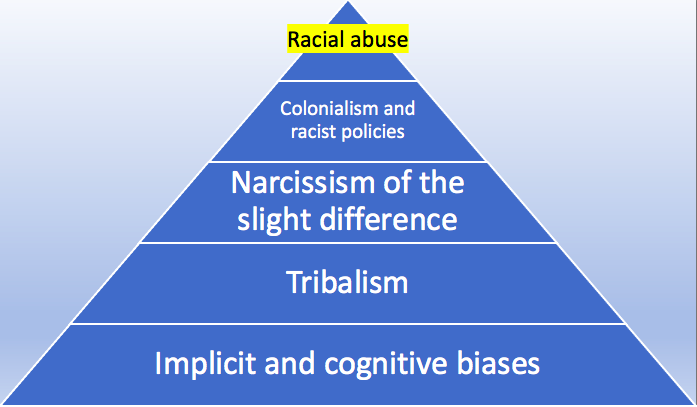
The evolution of kindness
**TL;DR:** Despite the apparent awfulness and the suckiness of our humankind, we all need kindness and we're evolved to receive and spread kindness.
There is no deny that humans were evolved to be opportunistic and sucky. Picture two chimpanzees with different personalities living together. The first one is always content and satisfied with the world as it is, while the other one is perpetually paranoid and constantly striving to find better ways to get food and escape predation. As you may have guessed already, the first one is gonna get killed very very quickly while on the other hand, the 2nd monkey not only survives, but also thrived as it made better tools for getting food and forced other monkeys into serving it.
In the world of natural selection, suckiness ( not compassion nor goodwill ) is optimal for survival. In the early days of our human race, the first humans found themselves between a rock and a hard place. On one hand, their bodies were neither strong enough to defend themselves against apex predators, nor they were resistant enough to live with food shortages and harsh climates. Moreover, they never met more than 30 people in their lifetime and survival was their full-time job. Human traits that benefit our societies now were pretty much useless to hunter gatherers.
Not until we started to cultivate lands and huddle together in communities did we begin to appreciate the value of consideration and sensitivity towards others. We started to realize that humans can barely survive without love and care from another, let alone thrive. What is particularly great about commensalism is that mutual consideration or kindness alone promotes survivability of our human race just as much as Darwin's survival-of-the-fittest theory does. It has not yet been proved, but it is widely held that wolves became domesticated mainly by coexisting and working together with humans, where the wolves would pick up food scraps left by humans while they in turn provide protection for us. Overtime, wolfs became cuter and puppy eyes started to be apparent as the result.
This may seem like a huge digression, but cuteness and kindness both share one thing in common, and that is oxytocin. Oxytocin certainly has tons of functions in our bodies, but it is mainly responsible for rewarding social cohesion as well as accentuating our nurturing instincts. It is the very chemical that our brain excretes when we see cute babies and spoon someone we love. This is literally the very substance that enables kindness in the first place.
It is no doubt that spreading kindness is a difficult job. We all have negativity bias where we see upsetting bits of information to be more impactful and important than positive ones, and it is considered unintelligent and naive to always be happy and content. What's more, being kind towards others requires more mental and emotional effort than dismissing and ignoring someone, as it forces us to look past what people do and decide what reason may be that a person may act in such a way. Being empathetic may feel like a chore but once you get good at it, the rewards are gonna be staggering. Besides making things easier for us to work as collectives, empathy is low-key a soft skill in the business world.
In conclusion, kindness does not optimize survivability like the survival-of-the-fittest strategy but it is a solution for societies to survive in a world that punishes any kind of imbalance...ment :v . This is also true in many parts of a natural world, where a dominant species become extinct from overwhelming and extremely successful people become victims of their own successes. Machiavellianism guarantees the survival of the few at the expense of the masses, and eventually those people themselves.

Can we green the Australian outback ?
**TL;DR** : Technically speaking the answer is a **no**, but there is always hope.
A lesser known factoid of Straya is that it is very well known for vast expanses of steppes and sandy desert sprawling from the heart of the country/continent. This big ass remote interior of Australia is colloquially known as the Outback.
Given the devastating summer bushfire in 2020 and its haunting consequences to Australia's biodiversity, it accentuated my burning question of whether any part, any piece of 6,000,000+ sq. kms of nothingness can be reforested or at least, cultivated.
It is immediately apparent that the intense heat accumulated during summer and the difficulty of clouds reaching inland makes reforestation efforts next to impossible. Australia has been geologically stable for millions of years and the last volcano literally erupted 5000 years ago. And the considerable lack of mountains in the interior prevents any chance of precipitation over the area and rivers are few and far between. The evaporation here is so intense that it could drain an entire basin worth of water in decades and groundwater is simply negligible.
Climate challenges aside, the logistics of tree planting in the Outback can be a daunting task. Because the job depends heavily on manpower from volunteers and full-time tree planters, the process of greening is painfully slow and expensive. As the vast majority of Aussies huddle in cities along the coastal areas, this dusty big area is practically devoid of infrastructures. Towns and even cities will have to be built from scratch to accommodate colonies of workers and volunteers. The plan is incredibly water-intensive as nearly the entire water supply for irrigation needs to be sourced from coasts thousands of km(s) away.
But maybe there is respite ?
Even though there is nothing much we can do for the interior, the good news is that the semi-arid regions and adjacent deserts are relatively wetter by international standards. By planting trees in regions cornering the great deserts, we can somehow stop the deserts from encroaching further into the coast. The most well-known tree planting project that does exactly this is called The Great Green Wall in the Sahel region, where countries in the African Union plant a gigantic tree fence in an effort stop the Sahara desert from expanding southward and even shrink deserts, if we were to use the right techniques and follow best practices in land restoration. https://www.greatgreenwall.org/ https://www.nature.com/articles/d41586-019-02789-w
Planting trees around the outback is no less challenging than the Great Green Wall, but the country offers some sort of silver lining. A sizable portion of Australians have volunteered once in their lives and there is absolutely no shortage of environmental agencies and NGOs headquartered in kangaroo-land. On top of that, more and more Aussies are made aware of the implications that climate change did to their nation and there are some pressure to the federal government to do something about it. https://www.aihw.gov.au/reports/australias-welfare/volunteers https://www.abc.net.au/news/science/2019-09-10/climate-of-nation-australia-attitudes/11484690
In conclusion, planting even the most drought-resistant trees in the middle of the desert is a total pipe dream. But by restoring tropical/subtropical forests in regions adjacent to the desert, it is hoped that more rain will be brought to the area and more moisture will be concentrated in the ground, and that would set a framework for future inland expansions. Logistics would be the biggest obstacle in achieving this, but when that has ever stopped mankind from creating life-changing inventions ?
**What I read**
Can we do this and what plant can we use ? https://www.quora.com/Could-we-green-the-Australian-desert-And-which-trees-would-we-use
**Appendices**:
(1): NGO groups like ReForest Now, EIANZ, ALGA, etc.
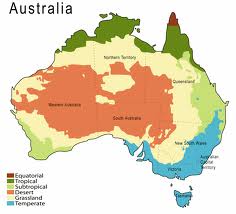
Hard work cannot realistically yield big results, but you'll go to places because well, the world is so full of surprises.
Overpopulation ( part 1 )
The ever increasing population in our world is something we would prefer to take for granted, or ignore blissfully. But the one thing we couldn't quite ignore, however, is the amount of influence population can have over our individual lives, not just society alone.
***The good...***
Economists and policy makers attribute high levels of productivity and the neck-breaking speed of innovation to the vast pool of intellects and visionaries thanks to the high population that makes these rare geniuses exist. This may come as a self-reinforcing positive loop, because think about it, the more babies were born the bigger the chance you get a smart one. And more smart people equals more productivity and creativity to fuel innovation and breakthroughs. It's kinda funny that without a booming population growth in the late 20th century Elon Musk, Bill Gates and Vitalik Buterin wouldn't have come to existence.
A YouTube channel called Economics Explained actually explained this very well in a video theorizing what happens in a world where half of the population is wiped from the face of the Earth by one Thanos snap. Property would immediately go down in price and the cost of living would decrease as well, but we are doomed to see less change and innovations will be few and far between. https://www.youtube.com/watch?v=_h_sWNsGssg
***The bad...***
If you had by any chance read my article about economic degrowth, you would've learned no matter how we resist the idea of artificial economic stagnation and the apocalyptical degrowth policies, nothing can grow exponentially in a sustainable fashion. Soaring GDP growth can damage our livelihood like how cancer does to our health. https://read.cash/@DjennisQuant/critique-of-economic-de-growth-608ae18a
Economics have shown that heavily crowded cities like Tokyo and New York have higher GDP figures than smaller cities, partly explained by the fact that more people living in proximity facilitate provision of service and exchange of goods, not to mention the speed that money changes hands. While population artificially raises the figures to desirable levels, I don't think everyone will enjoy the fair share of the prosperity.
The tendency for rural citizens to settle in major cities mean that the city will sprawl uncontrollably and incessantly. And this comes as a stress test for cities that are not timely equipped and prepared to deal with the sudden influx of people. People would be forced to live in tiny and squalid apartments, gridlock traffic would become the norm, and hospitals would be overcrowded and chaotic. As human waste and carbon emissions gets to levels beyond management, the living environment would be so polluted that it is hostile to humans. If it weren't for the call of money and fame more people would've left cities by now. As a city dweller myself I sometimes doubt if cities are actually sustainable at all.
This whole commotion actually shines the core question in the discipline of economics, which is to fulfill our unlimited human needs with limited resources. In spite of the declining birth rate and rapid urbanization observed across the globe partially due to innovation and higher standard of living, resources required to maintain societies have been fewer than ever before ( i.e fewer classrooms, hospital beds, unaffordable housing, etc. ) and this places an anvil on our ecological system. Population growth sort of follows a logistical curve: it does benefit societies to some extent, but once the bar is reached everything starts to go downhill. Unless we find a better alternative to consumerism and changing public opinion on economic growth, we are doomed to live with the same set of problems for many generations on repeat.
***And the ugly of overpopulation***
Intuitively and theoretically more people equal more socializing, but ironically this creates more barriers because we tend to connect less with big groups of people. According to my lived experience, people rather spend more time and engage more with their tight-knit group of friends than their 100 virtual friends on Facebook. There is nothing wrong with our psychology, but more people around really undermines altruism and collective responsibility. We feel less obligated to help someone as we imagine other people will swoop in and take care of that person on your behalf. This also has an impact how we treat societies as well. Big headlines such as corporate malfeasance and terrorism are the derivative product of collective ignorance and indifference towards society.
There's a silver lining to this, though it may be hard to notice and detect. More people around may protect you from dangerous groups of people ( and animals ), and there will be more people left in the world who cares about you, even though you haven't seen or met them ever. As a matter of fact, breakups and divorces will not be as devastating as before, because the saying goes: "There are plenty of fish in the sea".
***[ to be continued .... ]***

Why we all need mindfulness
*"When the sky falls down, mindfulness holds it."*
**Our chaotic world offers an infinite supply of problems**
If you make an effort to observe the world around you, you'll see near infinite instances of problems. From beggars on the street to big issues like climate change, COVID-19 and what not.
On the news ,you see civil unrest and social issues happening once in a while. Despite the grotesque effects these issues may present to our society, systemic racism seems to be a recurring issue as arbitrary arrests and killings of black people in the US is still very much a hot topic on the dining table. Climate change is happening but we somehow convince ourselves that if we deny its existence, it probably won't happen at all.
We can see how small actions of a few can snowball into gargantuan nation-wide problems. A good example to picture this phenomenon is institutional decay. Bad governance and corruption erodes public trust, which causes more tax evasion which in turn disables leaders from delivering their promises and encourages government officials to involve deeper in corruption. All in all, a handful of high-profile corruption scandals is all it takes to create anarchies.
The world is fundamentally chaotic and unpredictable. Order and stability exist out of pure luck and due to entropy it will sometime devolve into disorder and non-existence. It's just what it is.
Problems can be recursive
Have you ever taken shortcuts to avoid the gridlock traffic only to get lost soon after ?
Or the cautionary tales of people losing their entire savings to stock market crashes is so jarring and terrifying that you decided to stay off investing for good, even though investing in the long run might be beneficial to our financial well-being ?
Turns out that there is even a term to describe those cold-hard truths. The Law of Unintended Consequence applies to us when we come up with quick, instant and unthoughtful solutions which unintentionally exacerbates the very problem we're trying to solve. Unless we take a step back and examine whether our judgments and feelings are accurate and valid, we're jumping from one problem to the next.
**We will never be completely happy.**
If you're like me, you probably have set up life goals after one and another, but, the problem sometimes didn't quite go away, instead the problem evolved into something for the better or worse.
We all suffer from a condition known as hedonic treadmill. We all get the feeling that once we achieve a certain goal or reach a standard, we will be much much happier than before. But not long after we did so, we all noticed the bliss had just begun to fade away. Conversely, a person who have just been amputated might feel devastated at first, but overtime he/she will slowly adapt to it. Paris Syndrome should be considered if you think the Eiffel Tower should look like the one in the poster card.
https://youtu.be/e9dZQelULDk
Finding happiness is an undoing. It's cheesy and corny, I know. But a lot of us are still subconsciously looking for a dopamine kick and hoping for the next big thing, including me.
Don't take my word for it. A lot of authors and bloggers have already discussed on this topic to great lengths and depths. Among these outspoken people are Mark Manson and others.
**Why we need mindfulness**
It's sometimes hard to contend with these realities without getting off of your bed. It's even harder to confront them without losing some of your nerves.
For starters, those can be overwhelming and oppressive. They would identify their emotions and thoughts with who they are, and as the result every decision they ever make are based on how they feel at the moment. They are driven by constant dissatisfaction and over-reliance on external factors for happiness and well-being. Life is filled with unnecessary clutter and chances are they would get from one trouble to the next.
Meditation would mentally prepare us to contend with life hostilities and navigate through complex problems, and while the practice is known for chillaxing to binaural beats and calm ambient music ( which I find nothing wrong about it ), ancient Buddhists/Christians/Muslims all meditated to focus on a particular thought or object, and not to become "swayed" by their aimless thoughts and fleeting emotions, thus they sought order among our chaotic human nature. Perhaps the most important benefit of mindfulness/meditation is that the practice helps us to live in the present and take action, instead of hoping for a better future or wishing that the past never happened. As Eckhart Tolle mentioned in *The Power of Now*, the only time that we truly live is the present and the past and the present are psychological time ( aka. cognitive illusion ).
**Mindfulness is just a tool not a pill**
If mindfulness sounds like sunshine and rainbow, then why the heck do I still feel nothing after sitting still for ages ?
Despite all the praise and acclaims for this concept, mindfulness is by no means a one-size-fits-all solution. The point of meditating isn't to get rid of anxiety and life problems - it's just one of the ways to address our life issues with calmness and integrity.
Mindfulness is also a product, if not byproduct, of various life philosophies. Self-compassion encourages everyone to be mindful and compassionate about our failures so that we can live above it and weather the storm. Stoicism preaches that we should live with our best natures despite the chaos and turbulence around us.
I'm fairly confident to say that we will never be mindful all the time. Sometimes we think aimlessly and we think more than necessary ( I do too ), but it's okay.
Final thoughts
Mindfulness, in all regards, is more of an art of living than a mere technique.
P.S : This is pretty much a react blog to Mark Manson's book "Everything is F-ed". The book actually inspired me so profoundly that I decided to write this as a reflection. To those of you who haven't read the book I do recommend getting this book on your shelf.
I do aware that this article is somewhat a downer one. Reality has always been something we try to escape from whenever we think it's possible. But it's always important to acknowledge and live with the ugly side of it rather than escaping it only to feel worse upon revisiting.

Is college worth it ?
Recently I've seen a ton of videos and blogs bitching about soaring college tuition and the trillion dollar student debt in the US. They did do their job analyze the situation to certain breadth and depth but really most of them stopped at identifying cause and effect to this whole mess and some basic fix-shit-up recommendations. But none had actually done the job quite like Hasan Minhaj did in one of his Patriot Act episode.
https://youtu.be/YytF2v7Vvw0
Ivy League started to chase after rich kids, college presidents and endowment managers's salaries are paid in Ferraris, adjunct professors and TAs are treated like shit, low-income students are forced to work full time jobs to survive. Most of the tuition fees did not went back to education but went straight into an ever growing and vastly untapped "endowment". Putting his humor and unapologetic jokes aside, he was right about pretty much anything. Colleges are LLCs and public companies and education itself has become some sort of higher-end industry. Colleges flaunt their prestige on social media, compete with each other in the rankings for building brand awareness, rich students are treated like cruise ship passengers while their tuition fees are injected straight into hedge funds instead of into their education.
For long I had expected that colleges are somewhat greedy just like any other generic mega corporations. But now, it seems to me that they have gone a bit too far.
**In a world where people depend on marginal profits and tax breaks to survive and thrive, there's nothing wrong with college institutions asking for tuition fees.**
But the problem with them is their capital and resources are outrageously misallocated and mismanaged. Important priorities such as treating professors well and supporting poor/disabled/needy students are overshadowed by unsought amenities and lavish student experiences, as well as greedy endowment managers. It is almost a no-brainer that students don't get what they pay for.
**We get much less value from the service for more price.**
Imagine getting a drivers license for $3000 from a private institution. As everyone is expected to hold a license in order to drive and to make life for them easier, it does not make business sense if they jack up the price and expect everyone to buy into this crap. You would feel like being scammed and that school deserved to be sued to the ground. Ironically many colleges still use this unworldly pricing strategy and they miraculously got away with it.
The quality of instruction in college is somewhat stagnant. Teaching methods never went beyond mind-numbing lecture slide readings and group discussions. It is even possible to pass the entire course without reviewing school materials at all. Also you can learn way more things from Udemy, Masterclass, and the good'ol apprenticeships all combined with a tiny fraction of the current tuition level. One study even claimed that 34 hours on Duolingo equals 1 whole semester of language courses.
Companies and industries around the world has increasingly been finicky about hiring fresh undergrads. It is out of question that job seekers are expected to have real life experiences and a degree is simply not enough. As we can see, in tech industry sheer experience may substitute degrees completely regardless of the job.
**Normally if a consumer/customer gets a defective product or the service is found to be not suitable and adequate they are perfectly eligible to sue the provider for damages**
He/she would be able to sue the provider to recover damages under consumer protection laws. But students have never got the same kind of protection consumers have. One cannot simply take legal action against the school because he/she finds out that they are scamming him/her. Not only it is unlikely that he/she will get some of his/her money back, the school may as well expel them in retaliation. The opportunity cost of not going to college makes students more reluctant to drop out. Because of how modern society works, we are definitely going to be punished harshly for saying no to college. It sounds a lot like a carrot and stick analogy but in this case the stick is replaced with a freaking steel mace. Besides losing time, energy and money to your unfinished undergrad program, you also risk losing out the chance to improve your quality of life and to move up in the world.
**What happened to college and why is it such a nightmare for us millennials ?**
Back in the old days, particularly in the 60s in the US, attending college is something people with great aspirations would do. If people wanted to work for NASA as an aerospace engineer to become a doctor, then college would be the golden gate to their desired career path. A degree was necessary for those who want to work for science and humanity.Tuition fee was kept low and affordable thanks to government subsidization and incentives for military research. College was somehow insulated from corporatism as faculty outnumber administrator staff and had much bigger clout over the school. Now you are forgiven if you think I'm sugarcoating the past. Colleges back then did have major problems of their own, like racial segregation and overt sexism. However that is not what I'm focusing here.
Overtime more and more people joined the wagon as the value of getting a degree remained significant. Colleges/unis started growing up in numbers to fill the supply gap and competition over new students was getting intense. Thus the education industry was born.
From there that society started developing an unhealthy relationship with tertiary education. Employers thought college students should at least offer something better than those uneducated people. People from all walks of life spun up narratives about the necessity of a college degree in today's modern world. Our society's unquestioning addiction to higher education led to a brand new phenomenon known as degree inflation. The undue influence of that piece of thick decorated paper over our livelihood enabled colleges to assert huge control over our future and autonomy, thus incentivizing them to maximize their ROI by any means, even if it means killing our future and cripple our economy.
**Tertiary education is a relatively an under-regulated industry**
College indeed sucks. But I'm not saying that the college system itself is broken and should be abolished. In fact college is very much relevant to our knowledge-dependent society where soft skills and critical thinking are king traits. College are also among the few places that provide us a suitable environment to socialize, work and study simultaneously.
I'm saying college needs serious reforms if not regulation. Here are some of my suggestions for change sorted by feasibility.
**So how can we turn things around ?**
**Don't overvalue college degrees.**
Perhaps the most difficult thing to do but one of the effective measures if done by everyone. The tuition problem can be simply explained with a supply and demand curve. Our society's overvaluation of that stuff causes huge demand for it. The overwhelming demand over the limited supply of that piece of scented paper naturally raises tuition fee. The most intuitive solution that I can think of would be opening more colleges. But opening a college is a capital intensive and also idea intensive feat. Cash aside, you also need to spend considerable amount of time and energy in developing an education philosophy, making a curriculum, convincing people to invest or donate in your school, and worst of all, getting accreditation and government approval. Starting a college business is just unrealistic as telling Londoners to stop complaning about the weather. As such, demand is ultimately the driver of the degree market. Imagine how tuition would drop like a rock if everyone decided to take a break from the college obsession.
**Start a business and employ your friends.**
This one is pretty self-explanatory but in case your business is thriving, try spending more time interviewing and learning about new people instead of slapping a "BA degree required" punchline on the job description.
**Decide whether you need college**
You can try delaying college, exploring different careers and learning options, then decide whether they actually need higher education. There's many other ways to find answer to this question. So do the research yourself or, see the list of college alternatives here. https://www.nerdwallet.com/blog/loans/student-loans/alternatives-to-college/
**Ok how can colleges make our life better ?**
**Colleges/unis should only offer programs for jobs that absolutely require a degree** As bad as degree inflation and job regulation is, there are certain jobs that cannot have bad apples. Like doctors, nurses, lawyers and engineers. These jobs require years of training and preparation which makes self-teaching not enough for qualification. We would be better off going to college and save up time and money that would have otherwise been wasted through trial and error.
**Colleges/unis should weed out courses that can be easily reproduced and self-taught, as well as unimportant ones**.
I noticed that we have to go through a lot of subjects which can be easily learned at home ( especially during the COVID lockdown ) and learned somewhere else ( like LinkedIn Learning and Udemy ). Not only this could be a waste of time but also a waste of money for both college and students. If college was shorter and cheaper, we would find it slightly easier to repay debt and college can hire less teachers and professors. An added benefit to this is that professors wouldn't have to be burned out from teaching many classes in a row.
[sponsors]
References
Forbes. 2020. Universities: Then And Now. [online] Available at: https://www.forbes.com/sites/ccap/2017/08/25/universities-then-and-now/#adfc7f17c194 [Accessed 23 June 2020].
wikiHow. 2020. How To Start A College. [online] Available at: https://www.wikihow.com/Start-a-College[Accessed 23 June 2020].
**Suggested readings**
What is the true purpose of college ? : https://medium.com/modern-college/what-is-the-true-purpose-of-college-41434f47b824Colleges
Universities are Not What They Used to Be. Should You Bother Going?: https://medium.com/modern-college/colleges-and-universities-are-not-what-they-used-to-be-should-you-bother-going-da322462f7e8
The ugly side of hustling
There is nothing inherently wrong about working hard. But as long as you’re hustling on the right thing for the right reasons, working for long hours religiously does have its caveats and it generally has a negative impact on ourselves and even our society.
**Rise-and-grind culture teaches us to value wealth and accolades over everything else.**
"Working hard saves you from poverty. Work is what prevents people from descending into a social outcast. People who grind the hardest get to own ALL the good things in life. The hefty rewards for consistently-exploiting-your-ass-off ALWAYS worth the huge sacrifices in life ".
Our narrative for justifying workaholism is the classic example of how **meritocracy affects our society**. We believe that wealth and power should be vested in people on the basis of talent, effort and achievement. Theoretically, if we put serious effort into doing everything that sounds important and great, then all pain and suffering in life will miraculously go away. So, my dear readers, simply beaver away from sunrise until sunset every single day and in no time your face will be featured in Forbes magazine cover and hopefully your long-time crush will finally ask you out to dinner.
I'm not saying that the philosophy itself is a piece of junk. The untold prosperity of our world today wouldn't have been a reality if it hadn't been for meritocracy. But after all, as much as those woke IG posts and Tony Robbins motivational screeds extolled work ethic, “rise and grind” becomes pretty dehumanizing if we think work is the only thing we ever need.
Your mom sometimes asks you to come over her house for dinner, you’d come up with excuses like: “I’d love to, but I have a tight schedule “ or “ I’m catching a plane tonight “ or a blunt “Next time ok ?” . Your friends would ask you for help and support, and you feel like you’re too cool for this and you leave your friend alone. You feel fatigued and foggy from sitting at one place and chowing down on junk food, but you convinced yourself always that you are 100% fine. Even if you’ve gotten what you’d wished for, you’d be delighted for a short while and soon after when illness and loneliness set in those Wario memes start to hit different.
So, what’s the bottom line here? Simply put, accolades and achievements don’t really bring happiness and contentment if you give up everything else JUST for them. Success is a product of multiple variables in life and not the way around. Taking care of your body and spending time with your loved ones doesn’t sound like productive work, but in fact they are the recipe for a fulfilling and productive life.
**Hustling doesn’t correlate with productivity**
If you decide to hustle just because you think you're a lazy piece of shit, then you're in good company. We sometimes force ourselves to stay on the computer for no reason for any other reason than not being judged as a giant sloth.
There’s this ingrained belief among us that the more we work our ass off, the more work we will do. We assume that our effort brings linear returns period. It is especially evident if you flip burgers for Burger King as the more you flip the more burgers, you’re definitely gonna make. Although this is true for menial work though, the equation works differently if you’re working in a creative field or industry. That’s where your effort will bring diminishing returns as the more, you’re trying to create the less work you’ll be able to put out.
I remember there was a time when I had to build this one UI for a webpage. Looking back, the job was a breeze to me, but the silly me fell into the rabbit hole of constantly looking for a solution while the solution was actually just around the corner. I didn’t take breaks or whatsoever, and I was still stuck at the same problem for hours until the ‘aha’ moment at late night. What could’ve taken a couple hours total to get done costed me a whopping 8+ hours.
The worst part of hustling is that it gives you an illusion of being productive without actually being productive at all.
**Hustling exacerbates FOMO**
A knock-on effect of overvaluing work it leaves you susceptible to FOMO. It’s easy to see this coming, even if you don’t know what opportunity cost is. If you used to pull an all-nighter or skip lunch breaks to save time for work, a short break or a 6-hour sleep is enough to make you sweaty about missing out important events.
While FOMO is commonly used to refer the situation of seeing others having fun without you, you also get the same feeling as FOMO when others around you outwork you and get bigger bonuses. Chances are we would constantly press ourselves to work harder and grind longer in order to make “the most” of our working hours. Let’s skip lunch breaks, sleep on the office desk, burn the midnight oil and we will never have to regret being lazy again.
I never truly understand how FOMO could be a thing, because we all have to make trade-offs about literally anything. To do something is to give up something else. If you work for 12 hours, then you would miss 12 hours of social interaction, and vice versa. Missing out is natural and integral to human experience, however unpleasant it is, but what’s even more unpleasant is that we never truly savor the present moment – we need to deny reality to some extent. We begin to live in our own imaginations and fantasies where nothing would get in your way and no repercussions would never happen. And in that dream-land, it is logically convincing that our hard work can compensate for everything we’ve ever missed.
**Working addiction also encourages exploitation**
The last thing that many companies and employers would ever regret doing is to associate your ego and self-worth to the amount of hours you spend busting your ass off at the cubicle. Because having a team of hard-working salarymen/salary-woman largely benefits them employers.
I got an impression that major companies ( yes, the FAANG companies ) would cleverly push employees into overdrive by giving them bigger perks and financial rewards and in turn they would feel morally obliged to give up everything in life to close the moral gap even if it means killing off their well-being. I’m speechless on this one, but the guilt-tripping thing is probably why our working hours would never reduce, despite the unprecedented increase in productivity. Keynes predicted that in 2030 we will be having 15-hour work weeks, but in 2020 we’re pretty much still…. working, even during the pandemic.

Critique of economic de-growth
Recently there has been a massive push for change in our highly consumeristic society, on the basis that exponential increase in consumption canceled the efforts in developing clean energy solutions and geo-engineering infrastructures ( e.g C02 capturers, aerosols, etc. ). Finding the root cause of our inaction and indifference towards our living environment worldwide chicken-and-egg situation. On one side, capitalism should be blamed for perpetuating our obsession for producing and consuming more goods and services, and the fact that the top 100 companies are responsible for most of the GHG emissions. On the other side there are arguments that our constant pursuit for having more possessions and experiences are the root causes of environmental destruction, and that all economic ideologies are just as bad as how we apply it.
Even the public reaction is somewhat mixed and inconsistent. Politicians and policymakers would imagine an apocalyptic world of widespread famine and global resource wars, but they wish people were comfortable with living below their means. Ideologists and activists would picture a beautiful and peaceful world where people would finally chill from the consumer hype and finally live in the present, but at the same time fearing that the human race would stop evolving and progressing.
To sort things out of this mess, this article aims to determine what economic degrowth is, what is it about the concept that makes it such a big deal and what it will mean to us humans who have, by nature, view economic growth as a source of hope and meaning.
What is economic degrowth ?
According to Wikipedia, de-growth is a social movement or a set of theories advocating for a drastic and radical reconstructing of our economic and political paradigms leading to sharp reduction of energy and product throughput (Maria Rita Guercio, 2015). Proponents of degrowth seek to find other alternatives to GDP in order to gauge social prosperity and measures to increase standard of living despite minimal economic output.
How do we know if degrowth is not a joke anymore ?
The limitations of capitalism
Capitalism is an ideology constructed from countless assumptions. Among the boldest ones is that the market is almost, if not entirely, driven by demand. It is based on yet, another assumption that consumers will always make rational decisions and that the allocation of resources is best managed by the every day decisions of rational buyers/sellers, and it can be logically deduced that more people will enjoy high standards of living so long as they consume more and more. The final assumption validating this whole economic system is that once the resources run out, the inexhaustible well of human ingenuity and innovation will quickly generate solutions to replace them.
The fathers of capitalism was right about few things but also got a lot of things wrong. It somewhat accurately predicted that there is "an invisible hand" that equalizes supply and demand, and that there is no better agent that does the better than it does. But the major blow to this economic system is that humans by nature do not make the most logical decisions. In fact, we make decisions almost entirely out of feelings and emotions. We seldom stand back for a moment and consider whether you would really need to have those products at home, or whether the stakeholders such as the environment or the workers ( people who directly make those products ) be worse off from our purchase.
Marketers and advertisers have known this all along, so they profited from it by accentuating our feelings of inadequacy and sell promises that buying their products will alleviate the malaise. People buy trucks not because it helps them move more stuff easily, but because it gives them the visceral feeling of dependability and toughness. Consumerism alone proves that the supply and demand chart is unachievable, simply because demand and supply would influence each other, just like the push-pull system you learned from a proverbial Marketing 101 course. In other words, emotions and impulses are the actual "invisible hands" and our world as we know it runs on feelings.
Another byproduct of this "feelings" economy is that supply can actually create demand itself ( think of Say's law ). For high end luxury goods, the more expensive it is, the more meaning and prestige we will associate with it. That's why artworks can be auctioned at hundreds of millions of dollars and designer Nikes/Adidas are increasingly being sought after despite price hike. Numerous brands have reportedly burned their unsold merch in order to control prices and preserve prestige (Chavie Lieber, 2018).
The constant need to create profits pressures companies to use up more natural resources to increase production and to maintain the steady flow of profits for its shareholders. To maintain the status quo, company advertisers need to artificially generate demand for their products. The dynamic here is that suppliers create more demand and demand, in return, creates more supply. This positive but vicious feedback loop can wreak havoc on our living environment and the amount of waste it generates can proliferate to levels that human can no longer manage.
Perhaps the biggest mistake of the economic system is the actual value of everything in this world can be approximated with market price. And that could, perhaps, be the heart of the problem as given something as inconsequential as Gucci bags and Ferraris can be mistaken for high socioeconomic value while the most important ones such as caring for family members or saving the environment is regarded as socioeconomic deterrents. According to Merriam-Webster, the term "invaluable" is used to express something valuable beyond estimation, but for capitalists though, the word is synonymous with "worthless".
Ecological economics seeks to reconcile capitalism with our need to promote human well-being and environmental justice, by means of increasing the efficiency of production and decrease energy throughput. However, the sad truth is that efficiency can never be compatible with scale. In fact, more efficiency incentivizes manufacturers to produce more in the first place. It is reported that that each 1% increase in GDP is associated with a 0.6 to 0.8% increase in carbon emissions (Burke, Shahiduzzaman and Stern, 2015). While the Energy Return on Energy Investment (EROEI) for oil and coal has been on a steady decline in some parts of the world (Hall, Lambert and Balogh, 2014) and renewable energies ( solar, wind, etc. ) **can be cheaper than oil and gas,** exponential increases in consumption can easily outstrip clean energy production.
Long story short, there is nothing wrong about capitalism. In fact, capitalism had been around for centuries and the system lifted more people out of poverty than all others ( mercantilism, communism, etc. ). But again, it is the countless assumptions about the infallibility of cost/benefit analysis and overestimation of the world's adaptability that limited the effectiveness of the system in the first place.
Why degrowth could be a good economic theory ( to an extent )
Many people view degrowth as one form of artificial recession. Some may even think this is some sort of an utopian policy. For me though, it is not strictly necessary to implement this idea too literally. Achieving complete degrowth is unrealistic and even dangerous, because there **are some** evidences of eco-economic decoupling (McAfee, 2020) and growth is conducive to social mobility and meritocracy. Without it, societies would descend into chaos and humans will not evolve. In fact, economic growth to a **certain extent** can actually bring many desirable effects.
We can see that the political agendas across the world is geared towards growth as the validity of political institutions are based on how well they generate economic prosperity. Degrowth policies are designed to shift our focus away from this problematic tendencies by supporting activities that promote collective wealth and public well-being. Goods example include repairing or giving away old stuff instead of buying new ones, borrowing stuff-you-don't-use-much from your neighbors, making dinner for your kids and volunteer in public service.
Degrowth supporters also advocate for downsizing the economy by means of producing less and spending less. Imagine an elephant and a mice jumping off a high-rise building. The mice will be relatively left unscathed with a few bruises here and there, but the elephant unfortunately would burst violently. Same goes for small and large companies/economies. Therefore, not only the economy is more manageable and resilient to supply/demand shocks, workers can work for fewer hours. Those people would have more time for leisure and family activities, and the work-life balance would likely to increase worker productivity which drives growth despite fewer working hours. All of this would create a self-reinforcing loop that ensures the harmony will stay intact for generations. Surely enough, growth would not be as rapid as it is now, but it reflects our progress in humanism and public well-being.
The relevance of degrowth during and after COVID
The concept of degrowth has always been vilified and mocked by economists as an"irresponsible nonsense" and "blatantly ignorant". It is natural for humans to believe that growth is essential to alleviate suffering and the idea of living in a stagnant economy is abhorrently cruel. We pretty much associated the term with hope and prosperity and everything in the world should revolve around growth like how pop music revolves around love.
But during the quarantine, the virus actually gave a big reality check for many of us. It sort of challenged our beliefs on how the world economy should be like and whether having more is always better. There is a good chance we avoid thinking about them or refuse to settle with less, but there is always a likelihood you would think that life before corona isn't always as awesome that we imagine it is, and you only need 50% of what you have. Whatever our beliefs are, the pandemic prepped us mentally for inevitable economic slowdowns ( or even stagnation ).
There are calls for restructuring the economy so that the opportunities during this difficult time do not go to waste. Among the proposals are localizing agricultural and industrial production ( aka. localizing the supply chain), others include integrating new technologies to the economy. These policies resembles that of economic degrowth, but on paper they do look promising.
There are yet empirical evidences that proves degrowth will actually do work and only time will tell how the post-growth economy will look like. But what I do know is that there is be a massive shift, in cultural beliefs and how businesses are operated after this hell of a virus recedes. Maybe there will be less ads and billboards on the streets, or the sharing economy will somehow take off, or maybe the human species would simply get bored about growth and focus on something else.
Reference
Alexander, S. (2014). *Life in a “degrowth” economy, and why you might actually enjoy it*. [online] The Conversation. Available at: https://theconversation.com/life-in-a-degrowth-economy-and-why-you-might-actually-enjoy-it-32224 [Accessed 16 Dec. 2020].
Burke, P.J., Shahiduzzaman, M. and Stern, D.I. (2015). Carbon dioxide emissions in the short run: The rate and sources of economic growth matter. *Global Environmental Change*, [online] 33, pp.109–121. Available at: https://www.sciencedirect.com/science/article/pii/S0959378015000746?casa_token=HvVL34l49F8AAAAA:V15Aay0M7-OELjOXXuLA-MFLEgEw-3yqXWkzEHQETS68AVOjGnOnrfE3-xacrmO8Pt-IvBQpWw#tblfn0005 [Accessed 10 Dec. 2020].
Chavie Lieber (2018). *Burberry, H&M, and Nike destroy unsold merch. An expert explains why.* [online] Vox. Available at: https://www.vox.com/the-goods/2018/9/17/17852294/fashion-brands-burning-merchandise-burberry-nike-h-and-m [Accessed 14 Dec. 2020].
Kallis, G., Kostakis, V., Lange, S., Muraca, B., Paulson, S. and Schmelzer, M. (2018). Research on Degrowth. *Annual Review of Environment and Resources*, 43(1), pp.291–316.
Maria Rita Guercio (2015). *Sustainability and economic de-growth*. [online] Available at: https://sustainabledevelopment.un.org/content/documents/6534116_Guercio_Sustainability%20and%20economic%20degrowth.pdf.
McAfee, A. (2020). *Why Degrowth Is the Worst Idea on the Planet*. [online] Wired. Available at: https://www.wired.com/story/opinion-why-degrowth-is-the-worst-idea-on-the-planet/ [Accessed 16 Dec. 2020].
Park, J.T. (2015). Climate Change and Capitalism. *Consilience: the Journal of Sustainable Development*, [online] 14(2), pp.186–209. Available at: https://www.jstor.org/stable/26188749 [Accessed 5 Dec. 2020].
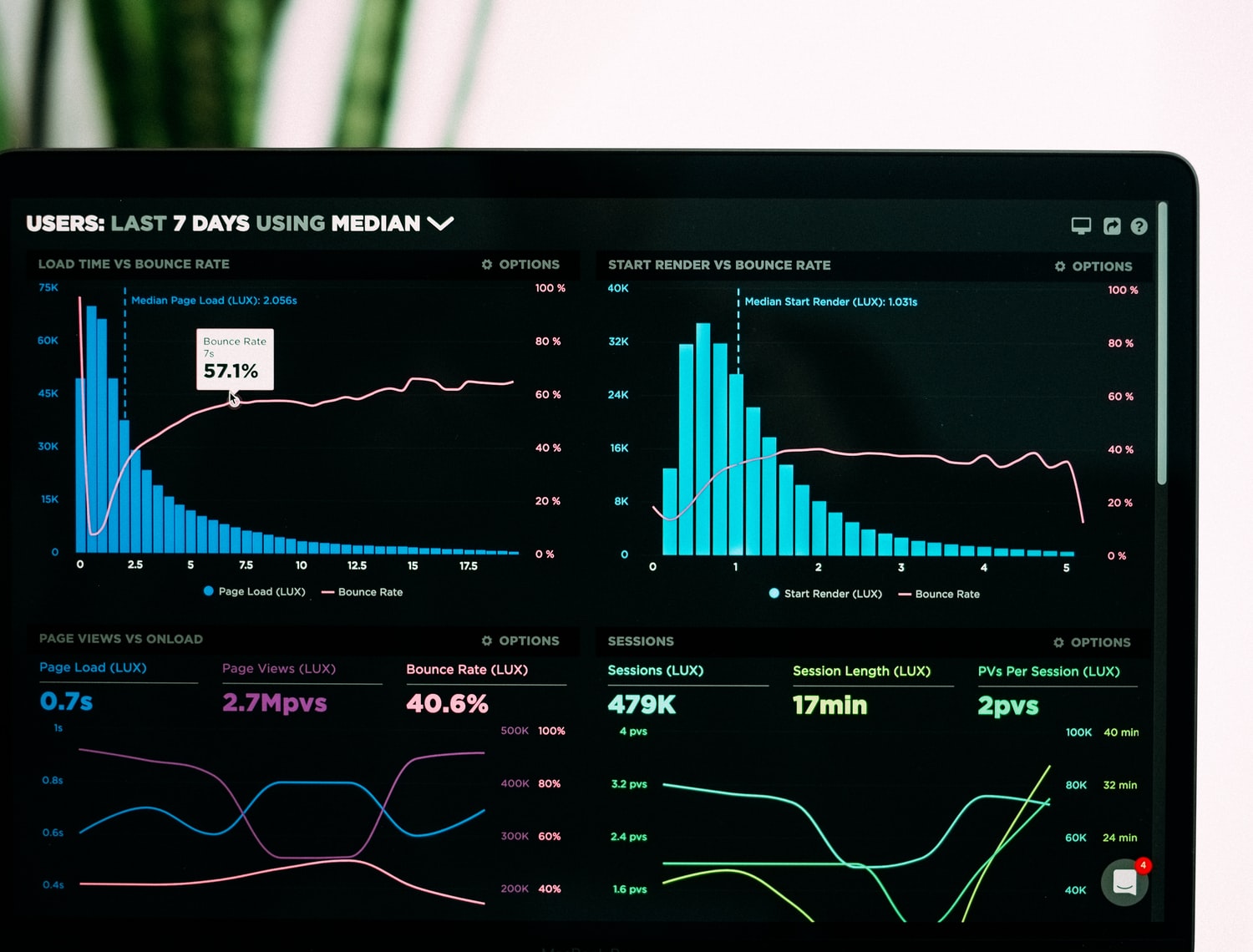
The truth about becoming a polyglot
**Disclaimer time**: Please bear in mind that this article does not intend to dissuade you from learning many languages, but I try to inform you before becoming a polyglot, based on my lived experiences and stuff I gather on the Internet.
When you google for keywords such as "polyglot", or "tips on how to become a polyglot", there's a great likelihood that results such as "Advantages of being a polyglot" or "Perks of polyglot" will pop up on the first page. Since polyglot has become mythicized to some kind of human superpower as very few people in the world are capable of conversing many languages fluently, being a polyglot is low-key desirable for many of us, including me. Besides impressing the ass out of your friends and family, you can actually use them to travel the world without looking like a confused tourist. And what's more, knowing a range of languages enables you to see the world from many different perspectives and that would promote widespread empathy among us.
Well, we can see that the perks are certainly numerous and not small enough to be dismissed. As someone who juggles with 4 languages nearly on a daily basis, I can assure you that most of what the Internet is talking about is probably true.
And ever so often, I see people trying to sell you quick tips/hacks/step-by-step-guide to be fluent on X in Y number of months, and insisting that being a polyglot is not impossible if you're willing to study smarter not harder. Well, don't get me wrong, flashcards and Leitner boxes are great vocabulary aids, and watching hours of YouTube in your target language won't help much unless you apply what you've heard. Language hacks are real and they **do work**, but three things Internet polyglots rarely talk about are:
You need considerable time and effort
Some people I see on YouTube flaunt about how quickly they pick up many languages without any help from their genetics and what not. No offense really, but they didn't mention is that their life circumstances, plus their freedom to make life decisions may help them more than their learning skills do.
If you live in ethnically diverse countries, such as the US or in most EU member countries, for example, you will find it way easier to learn many languages than if you live in India or Botswana. That's because in America and Europe there are much much more people from many ethnic backgrounds you can interact with on a regular basis, compared to a handful of foreign tourists you find with great luck in your home country.
That geographical barrier extends to all kinds of media as well. Media outlets in your target languages are often "not available in your location", even if you can afford their subscriptions. So if you're strapped for cash and travel on very special occasions, you're pretty much 100% dependent on the Internet for language immersion.
Dan Kahneman mentioned in his book, *Thinking Fast, and Slow*, a person is able to master a skillset provided that he/she gets quick and timely feedback from their performance. What that means, is that, aside from talking to yourself or your pen-pal who is always forgiving of you, your language skills can never truly be tested inside of your comfort zone. Try talking to complete strangers, and they almost certainly will not hesitate to express confusion and prompt you to speak English.
I'd say that Google Translate would be a possible remedy to the feedback issue. Contrary to what all of us may think, it provides fairly, if not very accurate, feedback on your writing and spoken sentences. GT has been around for more than a decade and decades of language input and machine learning makes this translator a viable alternative to real life speakers. Unless you are able to type quickly, learning with Google Translate is going to be a time-consuming work and feedback is not gonna be as quick.
YouTube serves as a great source for your language input, though it greatly depends on your target language. English would top the list for the easiest language to learn on YouTube as any content imaginable is available in English. But if you choose to learn Finnish on YouTube, then... good luck.
To put a full stop to this segment, I wanna tell you that life circumstances can influence how much effort you will put into learning. The less feedback we get from our environment, the longer you skills will take to develop. And obviously, if you're stuck with Google Translate and YouTube, the path to polyglotism is surely going to get wider and longer.
There are fluency trade-offs
There is one silent assumption that once you get fluent in a language you can't possibly lose fluency in that language ever again. And that assumption is extrapolated to another belief that you can learn as many languages as possible so long as you concentrate on one at a time.
I admit that when I was younger I believed all of those. But now I stand firmly against both of these claims. Learning languages is like building muscles - if you don't learn it often enough, your fluency in it would decline like muscle atrophy. Vocabulary and grammar would stay solid in your long-term memory, but being fluent requires that you recall them quickly without much effort.
And as you move on to another language after finishing the last one, you still have to spare some time to learn the last language. And the more languages you have to juggle at once, you more time you have to make in order to learn all of them. Consistency is the golden rule of language learning and there's definitely no way to work around that.
As you have spread yourself too thinly between each languages, you will certainly get better at some languages than others. The ugly tradeoff here is that it's possible to risk losing fluency in your native tongue to learn more languages, and vice versa.
I experience it firsthand when I attempted learning many languages at once. Months and years of consuming content and practicing in foreign languages caused my Vietnamese ( co-native tongue ) to suffer. I speak mainly Cantonese at home and I spent most of my working hours reading and writing stuff in English. Free time was then spent on Duolingo and watching YouTube in French and Spanish. I pretty much neglected my Vietnamese for a considerable period of time and soon after I realized that I had trouble articulating my thoughts in Vietnamese and talking to friends and relatives without pausing in-between. I culturally isolated myself from my society, so I decided to remove Spanish from my "curriculum" and I haven't regretted a single bit about it since.
You'll find it hard to appreciate each and every language you learn
This idea is somewhat related to trade-offs but I think this one deserves its own segment.
Applying marginal utility to learning languages, you would get less and less from each language in terms of satisfaction and reward. If you're a mono-linguist who is starting out with a new language, that language will give you huge perspective shifts. Your life would not be exactly the same after learning it. Taking on a 3rd language would be transformational as well, but not as intense as the second one. But as soon as you move on to the 4th language, you feel close to nothing. We can see that there are diminishing returns for more languages you learn.
What's more, being fluent is just a first step towards immersion. Imagine you've gotten good at English and move to America for work, it becomes clear to you that most people neither talk in the same manner you would talk to your IELTS examiner, nor they use the same vocabs as you've been learning all along. As you read fiction and talk to your colleagues over the phone, you suddenly realize that Americans are not "fluent" or "native" in English, they just internalize it.
Internalization is something that I made up in order to explain how native speakers are able to understand everything they read, giving nuanced opinions and expressing emotions effortlessly and using slangs more often than real words. In fact, they can write a whole novel at will. In general, these people are fully immersed into their native language.
People interpret this as C2 level ( or native level ) in CEFR. TOEFL graders would give it a solid 120. But I'd like to call it "beyond fluency (level)" .
"Beyond fluency " is the level where you appreciate every single thing about the language. And the word "fluency" just gives you an illusion that you know more about a language than you think you are. I can speak and read in English, but I still can't keep up with spoken English because it is always evolving.
Focusing and committing on a few languages keep you engaged and amused in the long term. Learning a ton of languages at once is gratifying because everything seems so new, so easy and so interesting to you, but the fun is pretty short-lived. Mark Manson himself said in one of his article that, having more options at disposal tends to make us more miserable than happy as chasing more languages leaves us feeling scattered and wandering. https://markmanson.net/5-common-beliefs
We need to train ourselves to let go of languages that we no longer have feelings for, and never let sunk-cost fallacy decide for us. Because we can only have so much, but we will never have them all.
Final thoughts
All in all, luck plays a very important role in determining whether you could become a polyglot. You need exposure to different cultures, the large amount of time to learn and you need to know whether the goal of having many tongues is worth chasing in the first place.
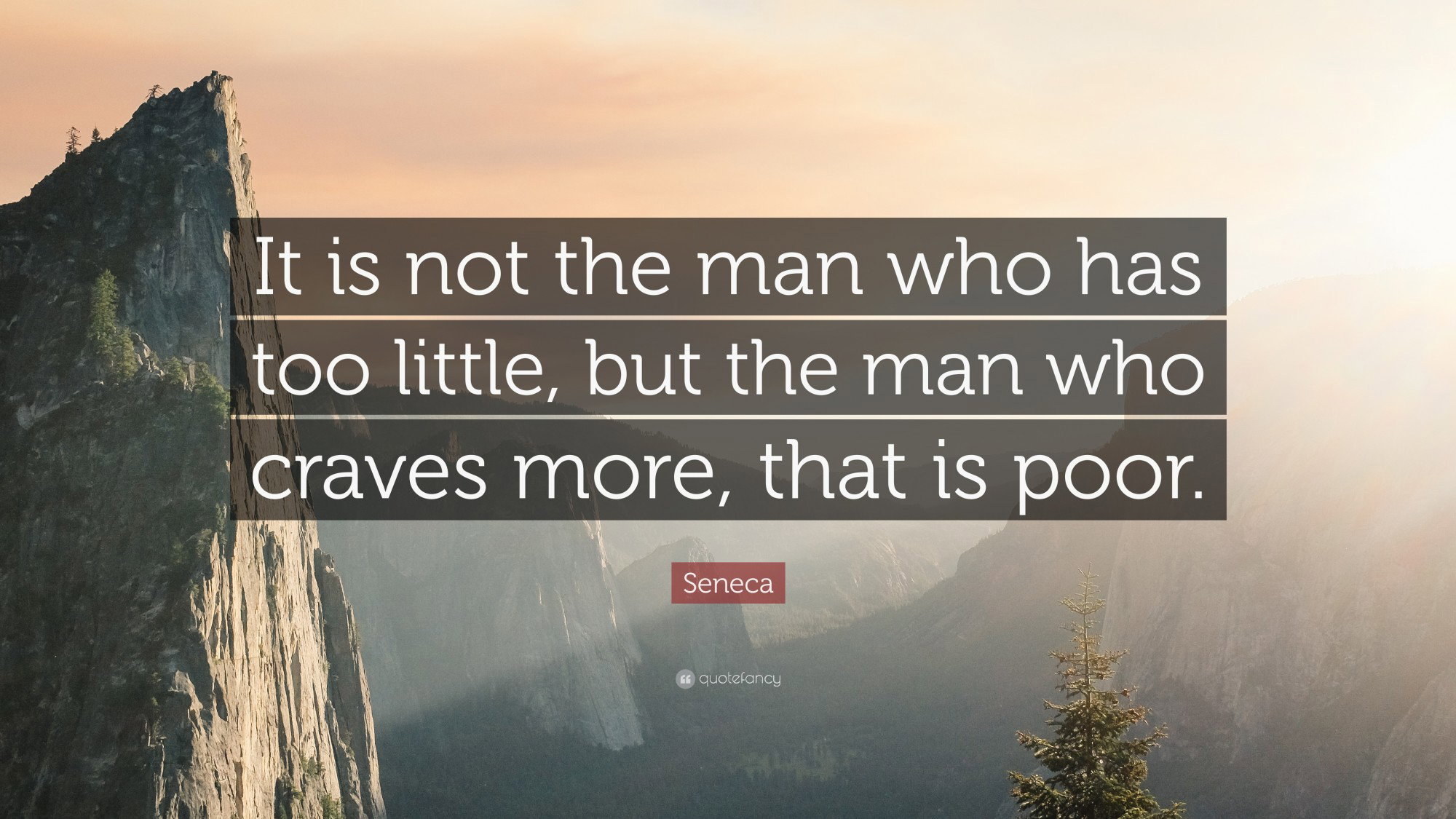
I had a fleeting thought that if we remain consumed by our emotions, our social life will somehow suffer.
We overreact when someone do something we dislike, and we don't dare to talk back if someone confronts you.
Introducing Dennis
Dear readers,
You may have guessed my real name from the nickname as Dennis Kwan. If it's your guess then you're goddamn right, congrats 🎉. I'm a 21-year-old well-intentioned college student in Ho Chi Minh City who is still trying to find a purpose of living, something that I can commit into for an extended period of time.
Saigon is hot all year round and packed with people. And there was not much open space and green areas that encourage me to be more outdoorsy. I don't fit in really well with the society here, and as an introvert I don't socialize much with the locals. So I spent most of my time at home listlessly doing some nerdy hobbies, like reading books, watching fun stuff on YouTube and learning different stuff on the Internet. It is fair to say that, my laptop represented my childhood more than anything.
I believe hobbies are among the most important parts of human experience and by pursuing hobbies we can learn different things that our job doesn't teach us. What's also great about it is that you can accomplish whatever you have in your mind without a specific deadline. It is the one of the few human activities we consider as an end itself rather as a means.
As an avid reader, I often read anything that educates me. I'm somewhat OK with self-help books and fanfics, but I was especially into three things: economics, psychology and philosophy. These kind of books shaped my thinkings and beliefs during my early adult years and honestly, it helped me through difficult times and solve complex problems . Like Warren Buffett's quote, relationships and money come and go but knowledge doesn't. Knowledge has no physical appearance and it doesn't say "I love you", but it is always there rooting for you. I had this habit of thinking how the world would be better off if everyone in the world behaved like what my books tell them to.
I have a love & hate relationship with coding. Web development is self-contained and highly business-oriented, so there is less creativity involved than I previously had thought. Most of the web technologies in the market revolve around UI/UX, APIs, frameworks and what not. It was a blast learning these technologies and I was eager to learn more, but as soon as I've gotten good at those I found myself doing the same thing for each new project, and my interest in web development started to dwindle. Unlike some developers who simply enjoy programming, I simply see coding as a tool to get something done. Tldr, web dev is to solve business problems but not world problems.
Now that my interest for web dev was gone, I decided to look for ways to earn crypto online. And through the rabbit hole I went, I was introduced to PublishOx and Brave Rewards. I initially wanted to become an author to PublishOx, but I found out that most content creators on the site focus solely on crypto and most non-crypto posts are either forgotten or ignored. And my authorship application is still pending to this day. So days kept flying by until someone on PublishOx introduced read.cash. And before I knew it, I was instantly hooked to the site.
One thing I loved about read.cash is that the community here is not obsessed with crypto and people here seem to enjoy writing what they want without worrying if anybody cares. What I'm grateful about is that I get rewarded for writing what I'm passionate about. Without all the encouraging comments from you guys and the generous tips from TheRandomRewarder, I wouldn’t have enough motivation to keep learning new things and write more stuff to share with the world. All in all, my writing "career" is just as successful as the amount of support I get from you, the readers.
My goal on read.cash is to not to offer life advice of any kind, but to give you detailed discussion on world problems and technologies with easy to read English and scientific reasoning, thus doing my part in keeping you informed in this post-modernist world.
**P/s**: So the last version of this article is lost because of my stupid mistakes. As I was working on another article and I wanted to add new stuff to this introduction but I unknowingly replace all the contents with my draft simply by clicking the **restore draft** button. A cautionary tale for folks who are still figuring out what the "you have an unsaved draft" message means. The article doesn't look as fresh and good as it was but at least I won't bounce you around.
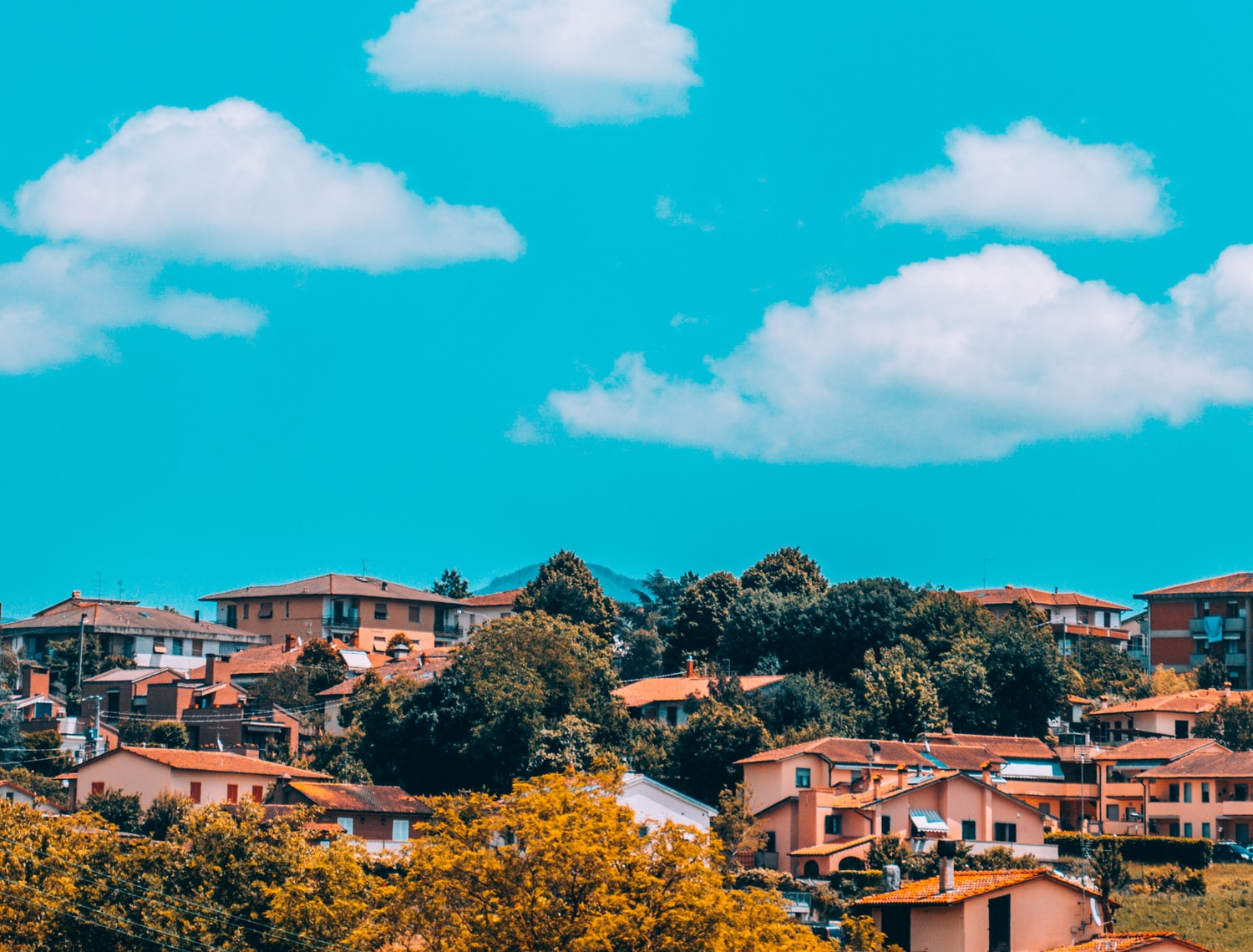
Fixing the American voting system
**TL;DR:** Forget Electoral College ( no offense ), upgrade electoral votes and replace winner-takes-all rule with electoral vote split between presidential candidates, like Maine and Nebraska.
Even though I am not an American citizen of any kind, I find the 2020 election is no less entertaining than a telenovela. The continuing drama between Trump and Biden after the election day sort of piqued my interest for the electoral process and how representative democracy works in Murica-land.
Electoral College and popular vote are just quick fixes
At first glance, I find it both surprising and weird that America doesn't follow most of the free countries where people directly decides which candidate will assume the presidency. But the more I see it, Electoral College ( EC ) somehow makes sense.
It should not be dismissed that most Americans live in urban areas (World Bank), and those people are more likely to vote for Blue candidates, every election could be an imminent defeat for the GOP. Also, given that each state has different demographics and possibly culture ( because history is not exactly the same for every state, pretty much every state has its own story to tell ). EC probably does it job well in making sure that popular opinion in every state is taken into account, and it certainly give states with sparse populations more representation.
But unlike popular vote, this ironically leaves the choice of millions of Americans unheard of. In the 2020 election, California is home to the largest community of conservative voters in the country - with 5.890 million registered votes for Trump and Pence as of November 20, but by winner-takes-all ( WTA ) law all of their votes are metaphorically cancelled by nearly 11 million Biden voters. The same issue happened in reverse in large states like Texas and Florida as well. The rule also creates extreme side effects where a single voter can theoretically flip the entire state should both candidates have the exact same number of votes.
Perhaps one of the most talked-about disadvantage of Electoral College is that it gives citizens of small states more power than others. A voter in Wyoming has 3.5 times more electoral votes than a Californian. From here it can also be inferred that ethnically homogenous states like Vermont and Alabama often have an upper hand in terms of votes.
In short, Republicans favor EC because it gives conservatives sense of control over the election and Democrats favor popular vote because they've been having more total votes since 2004. Like face masks, the electoral process appears to be politicized as well.
No matter where you look, popular vote and EC are solutions made in a hurry. And people across the nation are yearning for a better and fairer voting system. Suppose we're entrusted by the president-elect to come up with a less shittier electoral system and we've only got 7 days to make a new one, how are we gonna come up with a completely original system from scratch ?
But fret not my readers, fixing the electoral system is somewhat easier than you might have imagined. There are three things we should bear in mind as we design, and these are:
**Representativeness**: The system should guarantee that everyone's voice is heard and taken account of.
**Fairness**: Remember what I've talked about the voters in Wyoming and California ? That ain't gonna happen.
**Transient**: Elections should be quick and decisive. Ballots should not be bounced around.
The Solution
In my honest opinion, I think electors are as unnecessary as most people are already informed enough to make decisions. Lack of information nowadays is not as much a pressing issue as widespread misinformation. In fact, more levels of intervention and abstraction just leaves more room for corruption and malfeasance. ***Electors should be the first ones to go.***
To make sure the election a fair one, we shouldn't ditch the electoral votes completely but upgrade it. Iowa, for instance, has 3.155 million people as of 2019 (United States Census Bureau). **We can easily divide the state's population by 100k and rounding the result up we have 32. So Iowa will have 32 "electoral votes" instead of 6.** Same goes for California ( 395 ) and South Carolina ( 51 ). For the national total, 50 states should add up to somewhere from 3280 to 3290.
As you may have known already, the WTA-thing hurts representation seriously. To counter this, we give some credit to GOP voters in Blue Wall states and Dems living in the Red Wall. How much of the electoral vote is split between two sides depends on the difference between the candidates' popular vote. Oregon ( 42 ) is a Blue Wall state where Joe is 17% of votes ahead of Donald. Unlike WTA, Joe takes 84% ( 35.28 - yep, keep the fraction intact ) of the electoral votes from the state and concede the rest to Mr.Trump and other candidates like Jo Jorgensen and Howie Hawkins.
The method, however, cannot be applied to battleground states where the vote difference between two candidates is not really big. Applying the method to Texas ( 290 ), where Trump won Biden by 5.5%, Trump gets 55.5% ( 160.95 ) of votes and the rest will share the remaining 45.5%.
Conclusion
In conclusion, I'm not good at writing kick-ass conclusions, but I gotta say there will be always an infinite supply of solutions out there waiting to be discovered and unearthed. But hopefully this suggestion would be the first step toward something greater than the election itself. Let me know your thoughts in the comments below.
References
United States Census Bureau. “Population of Iowa.” *Census.Gov*, 2018, www.census.gov/glossary/#term_Populationestimates.
World Bank. “Urban Population (% of Total Population) - United States | Data.” *Data.Worldbank.org*, data.worldbank.org/indicator/SP.URB.TOTL.IN.ZS?locations=US.
My experience with boredom
I kinda have a love-hate relationship with boredom. On some occasion, boredom gives out inspiring shower thoughts and flashing lightbulbs in your head but on the other days it had me felt like a fish swimming listlessly in the pond, not knowing when to ever stop swimming.
I experience boredom very often and it's an essential part of my world. Whether it's beginning of school break, finishing big project/homework or being at home all day on Sundays, I would stare at my phone scrolling through my YouTube feed, then fixate vacantly at the ceiling awaiting the next inspiration, sometimes dozing off in the process.
I sometimes confuse boredom with procrastination and vice versa because these two produce similar emotions and unpleasant feelings. When I don't feel like doing anything and humming the Lazy Song, I would either see it as boredom or procrastination or both.
I'm in the final years of college, starting to feel the mounting peer pressure of getting internships and side hustles. Despite the seemingly vast selection of jobs and apprenticeships, most of them did not appeal much to me. Sure, you don't know how enjoying and rewarding it would mean to you until you get your hands on it, but their job descriptions somehow turn me off. What's more, school breaks doesn't give you enough time to complete a single internship. So here I am, bored as hell, planting my butt cheeks on the stool writing this at the speed of 80 WPM.
There's a silver lining to boredom, though it's sometimes hard to see.
It sends me an signal that I'm not enjoying what I'm doing. Many times I would continue double down on a project because I have invested effort and time on it, even if it's unreasonable to continue on. Boredom urges me to reassess the state I'm currently in, therefore I'd be less prone to sunk-cost fallacy.
As I've mentioned in the beginning, boredom sometimes offer inspiration as a gift. My mind would wander when I'm not focusing anything on particular. And that when I start seeing things from a different perspective or view, which enables me to solve difficult problems and make better decisions.
In conclusion, being bored is never a pleasant feeling, but it's one feeling that you can't live without. Without it, I'd be forever doing stuff that no longer matters and having no reason to reflect what I've done and how far I've gone. Avoiding or alleviating boredom means continue living in ignorance and neglect.
Thanks for reading and writing's kinda therapeutic ngl.
How likely will you win free 0.015 BTC jackpots in freebitco.in ?
**TL:DR;** It's 1/10000 but in a the odds in a given day are very different.
Recently I stumbled upon a Bitcoin betting site called freebitco.in. What's great about this website ( not a shill ) is that this web doesn't charge you anything in order to get started, and instead for every hour you're entitled to a free BTC roll provided that ur not a robot ( although the prize decreases the more you roll ). https://freebitco.in/?r=39233095
One thing that attracts me to the website is that all of its features and games are provably fair and unbiased. That being said, a question sorted of popped up in my mind: "What is the probability that I'll get that sweet 0.015 BTC jackpot given that I only have at most 24 attempts every day to earn it ?"
It was straightforward and easy to come up with a quick solution to the problem. You pick a number out of 10000 possible combinations, and the final probability should be 1/10000.
***" Gee, it's just as simple as rolling a dice or pulling one card out of a deck. What's going on in your mind ?"***
While the above solution is technically correct, this figure assumes that we hunch over our phones and roll forever ( providing that we neither age nor die ) without anything stopping us from rolling ( aka. long-run frequency). As good as freebitco is , we can't expect ourselves playing continuously for many months and years without getting nauseated at the idea of doing the same thing again and again. You would wonder : "What are the odds of winning jackpots in any given day - be it tomorrow, the next day, or your birthday ?"
Prolly 1/10000 isn't the best answer right ? There's gotta be something more to this answer and we're just getting started.
Firstly, there are a ton of ways to take a sample of 24 random numbers out of 10000. Let's call this simply as 10000 choose 24 (1).
Secondly, it is given that the success rate of winning at least one jackpot with 24 rolls is approx. 0.24% in total, assuming that those 24 numbers are independent and different from each other ( 2 ).
***" Ok, Dennis, what's next ? "***
Well, folks, this question could be answered by using binomial distribution and plugging (1) and (2) into the formula we get:
If you were to dutifully log into the site and roll once every hour for 100 days straight, you would have 7 or 8 days of winning $150+ worth of Bitcoin. Sure, this does not look like a realistic scenario since we can't afford to wake ourselves up every hour late at night just to push the button. We might at most roll 8 - 12 times a day without getting sick of it, but the probability from here takes a nosedive:
The probability just went down from 8% to just 0.01%-0.286%. In other words, you'll have to roll at least 8 times for nearly 27 years and a half ( or 12 times for 350 days ) in order to win. Seems a bit anti-climactic right ?
In conclusion, if you have a bot that somehow bypasses hCAPTCHA tests and play for you 24/24 you would certainly make a career out of it. But if you intend to roll free BTCs for fun and nothing else, then you shouldn't expect big gains from it, despite the promise the site is trying to sell you.
**Inspiration**
I got this inspiration to write this not long after I watched 3Blue1Brown's video on binomial distributions.
https://www.youtube.com/watch?v=8idr1WZ1A7Q&t=465s
**Limitations ( possibly a disclaimer )**
I wish I could do a better job in not giving you false information, but the results brought to you are not without limitations.
As I run through the calculations I made random and sporadic assumptions for the sake of simplification. The boldest one is that no matter how many jackpots you win after 24 rolls, the success rate ( 0.24%) is unchanged because I see jackpot streaks of any kind as a win (winning once is the same as 1 jackpot streak).
Next, the whole calculation only works in a single day. I'm not really sure if playing continuously for a calendar month ( 24 * 30 = 720 attempts ) increases your chance of winning, but when the amount of attempts increase the combinations (the n choose k thingy) seem to blow out of proportion. While the binomial distribution formula does not handle large numbers well, by reducing the proportion of the success rate ( from 720/10000 to 9/125 ) things will be a wee bit more manageable.
Finally, feel free to comment down below if you see any part that should be edited or remedied. Any feedback is welcome !
 @DjennisQuant