Lowliness and boringness
Lowliness and boringness are the two traits that, in my experience, are probably the main factors contributing to failure.
Lowliness is being so humble that you don't have the courage to go for what you really want. If you are low, you may be constantly thinking about what others think of you, so much so that you don't even know what you think of yourself. It may prevent you from taking risks, trying out new things, or doing something unusual. Even if it makes other people uncomfortable, do your own thing anyways.
*Lowliness and boringness. The lack of energy or the absence of movement. These two states are at the core of what I see in people and why they aren't successful in life, love and purpose. It is not just because they aren't motivated, but because they're afraid to move and take action because their actions may be misinterpreted or misunderstood.*
*Life's premise is to be a servant to humanity. We understand that we all have our own stories to tell but we do not anyone to feel alone in the journey of life. Life is a place where we can talk freely to one another from all walks of life without judgement. We try our best to add value to other people's lives by providing something meaningful for discussion on a daily basis.*
*Life recognizes that people have differing views about certain subjects and we encourage you to express them freely. All Life subscribers may block other users who are being negative or offensive.*
Lowliness is a state of mind that can be overcome. Humility and modesty are positive traits and they can actually help you succeed in your job and in your relationships. But when they become lowliness, you begin to suffer socially and professionally. Let's take a look at this common, but negative state of mind and 5 practical tips on how to deal with it.
Life tends to be full of very exciting things: the most interesting people, most exciting places, most pleasurable experiences, and so on. That's why we do it all – we want to experience everything we possibly can, and we want to do it now! And if we can't do it now, we want to at least share everything we're experiencing with everyone we know.
Lowliness is a state of mind that can be overcome. Humility and modesty are positive traits and they can actually help you succeed in your job and in your relationships. But when they become lowliness, you begin to suffer socially and professionally. Let's take a look at this common, but negative state of mind and 5 practical tips on how to deal with it.
Life tends to be full of very exciting things: the most interesting people, most exciting places, most pleasurable experiences, and so on. That's why we do it all – we want to experience everything we possibly can, and we want to do it now! And if we can't do it now, we want to at least share everything we're experiencing with everyone we know.
*The other factor is boringness. It's the opposite of creativity. Boringness is about constantly doing things that are comfortable, but are never really exciting. I think it's caused by simply not being passionate about what you are doing. But sometimes it could be about being satisfied with what you have already done, instead of constantly trying to do it even better.*
The other factor is boringness. It's the opposite of creativity. Boringness is about constantly doing things that are comfortable, but are never really exciting. I think it's caused by simply not being passionate about what you are doing. But sometimes it could be about being satisfied with what you have already done, instead of constantly trying to do it even better.
**Conclusion**
Happy comes when you say no to the thing make you lowly or boring.
The Bible said a lowly man is a devil workshop

Hunger to anger
**Hunger into anger: The real story behind the Food and Hunger. Hunger is a big problem in the world and some people kill their children to solve this problem.**
**And hunger can make us crazy. Hunger is a powerful emotion. Hunger has the power to turn people into animals. Hunger makes people like zombies. Hunger can make us do things we’ve never done before like stealing, killing, and even raping.**
*Hunger and anger are two different emotions, but they can both lead to aggressive behavior. That is why we ask if we can connect the two states, and what comes out of it.*
*The fact is that an empty stomach rarely turns into anger. Hunger does not turn into aggression. But the fact of hunger and the resulting increase in cortisol and stress hormones contribute to aggression*
**most people because of the lack of food got angry and began to fight each other most people were wounded most people used weapons most people were killed all hell broke loose most people wouldn't escape**
**The point is that everyone can be angry with anything. It is enough to go hungry, because it increases the stress hormones that eventually can lead to aggression, but not necessarily against those who are involved in malnutrition. The most important thing is the fact that hungry people are more likely to be angry.**
**It is assumed that social workers or even psychologists can use this knowledge to prevent aggressive behavior of the most vulnerable groups of people.**
**At least they try to postpone the first outbreak of aggressive behavior, although this will help only temporary. The main thing which can help people recover from hunger - first and foremost - food, and only then - psychotherapy.**
it was a hot day and because of the heat most people are angry and thirsty.
What is it possible to win a hungry person? Hunger is an unpleasant phenomenon for everyone. When there is hunger, all thoughts are focused on food. The body gradually begins to consume the reserves of fats, which not only spoils the appearance, but also reduces immunity and increases the risk of developing viral infections. The question arises: why are some people exceptionally susceptible to anger when they are hungry?
Example:
The answer is very simple. To understand it, you can recall memories, when you were hungry. Most likely, you reacted to the slightest annoyance with aggression, loud talking or even anger.
"The need for food elicits emotions that seem contradictory to its caloric value - overvaluation and devaluation," says one of the studies published in the "Journal of Consumer Research".
"Hunger makes us angry when it threatens our right to eat according to our will," explain the researchers who conducted the study.

The Universal Cooking Tip You Didn’t Know You Needed
Cooking is life, well at least eating is. This is definitely something those with any level of cooking experience can appreciate.
Flavor and aroma are extremely important when preparing meals. Beginning with a blank template allows the creation of taste to be built one ingredient at a time. You may have never considered how a sneaky agent, used daily in almost every kitchen, attempts to impart itself in every meal you make.
This really was a ‘smack myself in the forehead' realization when I pondered all the clues I already knew. Have you ever been to a store and carried liquid fabric softener or dryer sheets home in the same bag as your food? Everything in that bag was bathed in the bold fragrant scent of fresh laundry. When preparing food, would you ever wash up, apply perfumed lotion on your hands, and then start chopping veggies? That would be a guaranteed wreck! Would you spray air freshener in the kitchen while you’re cooking? Please, tell me you wouldn’t. We should be able to agree that ‘crisp linen’ and ‘eucalyptus potpourri’ are not in the flavor profile of any typical cuisine. We do not want to consume those overwhelming scents nor the chemicals they are made of.
The little lingering residue
The offender I want to shine the spotlight on is a bit more subtle, but may possibly be violating your meals regularly. It’s your dish soap! No need to fret though, there is a fail-proof technique to be certain contamination exists, and prevent unwanted aromas and non-food compounds from affecting the flavor of your work.
A simple solution
I never wash my cookware in the dishwasher. I hand wash and usually place in an oven, sometimes warm. When I am ready to fire up the stovetop, I place my empty pot or pan on the burner and turn the setting to high. Once the pan begins to smoke I turn down the heat, quickly remove the pan, and rinse the extremely hot cookware under running water for a few seconds. The first streams of water hit the pan and evaporate into scalding steam. That is the moment you can actually smell the fragrance of the remaining residue from the dish soap used to clean the pan. It’s gone now! What would have been a strange, soapy fragrance included in your meal has been completely averted. Your flavor canvas is now truly blank, hot, and awaiting your ingredients!
This is the kind of knowledge that sticks with you. Once you’ve tried it, you’ll have to try even harder to ignore what you’ve learned today.

10 Daily Habits That Are Significantly Improving My Life
believe habits are the key to success in everything we do.
From health to relationships to our career, if we get our habits right, the rest will follow. Habits are the tiny building blocks of our lives. In and of themselves, they’re small. But add them up, and you’ve got yourself a good life.
“Every action is a brick, meaning it’s what you do on a daily basis that determines the house you end up with. You are the house you build. ” — Nicolas Cole
1. Writing an article
I recently embarked on a challenge to write an article every single day.
In the game of online writing, consistency is key. So writing every day seemed like a sure way to improve my success in this domain.
But writing every day also taught me about life.
Writing every day teaches you discipline. It teaches you to make time for what’s important; we’ll have a hard time “finding” time, but we can sure as hell make time.
Without the ability to make time, we’re not going to accomplish all that we want in life.
Time is our most valuable asset, yet we hardly look at where our time goes.
Want to live a meaningful life? Spend more time looking at how you spend your time than how you spend your money.
Challenge yourself to find time for the things that matter.
It also ensures I’m getting my steps in, and am working towards mitigating all the detrimental effects of our sedentary society.
I also get outside — fresh air, sunlight, cold exposure. All the things that are good for our health.
Walking every day can change your life.
“Every day, I walk myself into a state of well-being & walk away from every illness. I have walked myself into my best thoughts, and I know of no thought so burdensome that one cannot walk away from it. But by sitting still, & the more one sits still, the closer one comes to feeling ill. Thus if one just keeps on walking, everything will be all right. ” — Soren Kierkegaard
3. 45 minutes of formal movement
Again, I’ve always been active, but to dedicate myself to completing a 45-minute formal movement session every day has been life -changing.
This ‘45 minutes’ is intentionally ambiguous — as someone prone to pushing way too hard and burning out, I need the flexibility to incorporate more recovery- directed days while still moving formally for 45 minutes (and by “formal” I mean I am intentionally exercising — for example, walking around the grocery store carrying heavy bags doesn’t count — I need to be doing some sort of workout).
While I would usually exercise most days, there were definitely days when I would skip my workouts. Which, of course, is fine. But I’m at my most happy when I exercise.
And having this allocated space every single day means I’m working on the things I wouldn’t normally work on.
I’m sure many of you can relate. How much of your gym/workout time do you spend warming up, stretching, working on mobility, doing your rehab exercises, and working on injury prevention? If you’re anything like me, probably minimal.
Now, being forced to do some sort of workout for 45 minutes, I’m getting all these things done. For example, after a weekend competing in ice hockey, I spent my Monday session working on active recovery. Furthermore, if I know I have a heavy exercise day coming up, I’ll spend more time on mobility and injury prehab (prevention). Whereas before, I would do my lifting, then leave. I wanted to maximize my time at the gym in regards to getting as much lifting done as possible, and completely neglected everything else.
So not only am I exercising more regularly and consistently, but I am also teaching my body how to move properly, and ensuring my body stays healthy and mobile for a long time to come.
4. 10 minutes of meditation
I know everyone is saying meditation is changing their life, but I truly believe it’s a practice everyone should include in their lives in some form.
For me, meditation allows me to create space between event and reaction — and even more than that, to respond rather than react.
It’s like meditation gives you more space, more clarity, more contentment. A meditation practice helps you be content with how things are, right now, no matter how they look. And this increases your overall happiness and wellbeing.
I generally do my meditation in the morning, as I like having some stillness before the day gets started. However, if I don’t manage to get my morning session in then I’ll do it just before I get into bed in the evening. This is also a great way to promote good quality sleep.
We don’t all have to meditate in the same way, and a lot of us probably don’t even need to sit down to a formal meditation practice. However, having some sort of practice in your day where you can be still, introspective, and build this incredibly important skill is something that would be valuable to every single person.
If there exists a source of psychological well-being that does not depend upon merely gratifying one’s desires, then it should be present even when all the usual sources of pleasure have been removed …. In my view, the realistic goal to be attained through spiritual practice is not some permanent state of enlightenment that admits of no further efforts but a capacity to be free in this moment, in the midst of whatever is happening. If you can do that, you have already solved most of the problems you will encounter in life.” — Sam Harris, Waking Up
5. Reading
My family has always been a reading family, but I seem to have taken this to an extreme.
I read an average of 2 books per week, without actively trying to read that much. I just love reading. I read whenever I have a spare minute. I use it to wind down. I use it as a hobby. I use it to continually improve myself.
Reading may be the greatest tool at our disposal. Through books (and articles) we get to learn the things other people have spent their whole lives learning. And we can learn it in a matter of hours! Books provide access to how other people think, how they’ve achieved great things, and provide information on how we too can experience success in the areas that matter most.
Having a daily reading practice is incredibly powerful. Pretty much everything I know has come from a book I’ve read, somewhere, at some point in my life.
If you want to grow, if you want to become better, read. Read anything you can get your hands on. Read whenever you have a spare moment.
6. Morning yoga
Every morning as soon as I get out of bed, I get dressed and roll out my yoga mat.
Yoga is a relatively new practice for me — something I’ve only started in the last 7–8 months. However, it is changing my life.
Since taking up this practice, my physical strength has improved, my mobility has improved, I feel better in my body, and I start my day feeling grounded.
I love waking up and getting my muscles working and my joints moving. This practice brings me into the present moment while also setting me up, both physically and mentally, for the day ahead.
It also acts as a primer for my daily writing session.
This session doesn’t count towards my 45 minutes mentioned above, but I find myself unwilling to skip it nonetheless. Just this morning, I was shorter on time than I usually am, and I thought about skipping yoga. But I couldn’t. This practice makes me feel so good, physically and mentally, that I’d be remiss to miss it.
Moving our bodies is so important. But more than that, yoga brings our attention to our breath, and teaches us to breathe through adversity.
Movement also allows deep access into who we are, and what it’s like to be in this body, right now. You can’t help but feel the breath going in and out of your lungs. The mat under your bare feet. The stretch of your muscles.
Movement forces you to be present in this moment, within yourself.
7. Evening routine
Sleep is crucial.
And crucial to good sleep is a good evening routine. As a light sleeper who often struggles to get good quality sleep, my evening routine is most definitely a life changer.
Even for people who sleep well, or at least think they sleep well, preparing both the mind and body for rest is so important.
My evening routine changes, but currently looks like this:
Hot shower 1–2 hours before bed
Chamomile tea and light snack 90 minutes before bed
Yin yoga or foam rolling session, starting one hour before bed
Get into bed, journal for 5–10 minutes
While my routine is simple, the reasons behind each practice are grounded in science.
For example, a hot shower or bath about an hour before getting into bed is a great way to lower the core temperature before bed, which is conducive to sleep (a hot shower causes blood to move to the extremities, meaning when we get out of the shower, the core temperature is lowered).
A gentle yoga session or foam rolling are a great way to activate the parasympathetic nervous system (rest and digest) and downregulate the sympathetic nervous system (fight or flight), which again is conducive to sleep.
A routine acts as a signal to both your body and your brain that it is time to sleep. Try to keep your routine consistent — don’t change your practices on a daily basis, and stick to the same start and end time. Our bodies and minds love consistency, especially in regard to sleep.
8. Two hours of **daylight**
One of the best ways to support our health is to get daylight exposure every single day.
The recommended dose is 2 hours per day, but I bet that most of us don’t get close to this — with the average person spending 93% of their day inside.
This is crazy, considering how important daylight is.
Daylight exposure is crucial for telling the body what time of day it is, which is vital for good quality sleep and health in general. Our circadian rhythms regulate the timing of everything — from hormone release to turning up or down the metabolism.
These days, we spend way too much time in dim or artificially lit rooms, and this can be harmful to our health and has even been linked to cancer and retina damage. LED lights appear to be the most harmful form of light, due to the imperceivable flicker these lights produce.
I make a conscious effort to get outside as much as possible, even if it’s cold, even if it’s drizzling. And if I’m not outside, I sit by a window. I don’t wear sunglasses when I drive.
Additionally, being outside and connected to nature is incredibly beneficial to our wellbeing.
9. Standing as much as *possible*
Standing could save **your** life:
“A large study involving over 100,000 US adults found that those who sit for more than six hours a day had up to a 40% greater risk of death over the next 15 years than those who sit for less than three hours a day regardless of whether the participants exercised. ” — Chris Kresser
I invested in a standing desk when I started taking my writing seriously, and it’s been worth every dollar. Since I generally spend a good portion of the day writing or completing other tasks on a computer, being able to stand and use a computer at the same time has truly been life -changing.
I’m someone who goes crazy from sitting too much anyway, but as Chris Kresser stated, even sitting more than 6 hours each day is bad for your health. Six hours isn’t much, when you consider this time includes commuting, sitting down to eat, watching TV, and any other situation where one needs to sit down. This time adds up fast.
Making a conscious effort to stand up as much as possible won’t just change your life, but could save it as well.
Try to incorporate more standing in your day:
Stand rather than sit in waiting rooms
Invest in or build a standing workstation (at work I use a bookshelf)
Want to scroll on social media? Stand up and do it
Stand up during commercial breaks (or after an episode if watching Netflix10. Eating single-ingredient foods
10. Eating single-ingredient foods
Nutrition is confusing, and at times, overwhelming and stressful.
Fortunately, I’ve found a nutritional protocol that my body responds well to and that eliminates confusion.
Health should be simple, and what’s simpler than eating single-ingredient foods? When I have the option to eat something, all I have to ask is, How many ingredients does this have?
Eat foods your great-grandmother would recognize. Eat foods with just one ingredient. This includes things such as fruits and vegetables, meat and eggs, nuts and seeds.
The majority of my diet consists of fruit and vegetables, and meat and eggs. Sometimes I have some nuts. Sometimes I have some dairy — such as grass-fed butter. I drink a lot of black coffee. And that’s about it. It’s easy. It’s sustainable. And I’ve never felt so happy with my body composition.We don’t need huge efforts to achieve great things in life.
In fact, small efforts, repeated over time, will beat big efforts every now and then every single time. Focus on the micro, and the macro takes care of itself. If you can focus on the small actions that will lead you to the person you want to be, I guarantee you will achieve big things
Want to improve your health, one habit at a time?
Sign up for my free weekly newsletter, Momentum. Each week you’ll receive one new habit to try. I’ll explain why it’s important and how to make it easy. This newsletter will help you to create the momentum you need to move towards a healthier and happier future.

Why Some Dreams Should Not Be Pursued
Recently, a friend of mine met a woman while on vacation in another country. They had immediate chemistry and decided to keep in touch after he left. As the months passed by, he became more and more enamored with her, telling me that he had never met a woman like this before. He said he hadn’t felt this way since he met his last serious ex. Apparently, the feeling was mutual, as the woman continued to battle through time zones to keep in touch with him. Soon, despite living on different continents, they conjured up plans to ‘follow their dreams’ and see each other again.
At one point, he went as far as to suggest to me that he’d be able to arrange his work travel situation to where he could even live in her country a few months out of the year and make a relationship work. This was serious business — especially coming from a friend I knew to be particularly commitment averse.
Eventually, they found a solution. He had another upcoming trip overseas, and he could take the following week off at a beach town nearby and arrange to have her flown there to meet him with his frequent flyer points. She excitedly accepted. He arranged for a romantic room, massage trips at a local spa, walks on the beach, the whole nine yards. It was finally going to happen.
Following Your Dreams Isn’t Always the Answer
We are all beaten over the head that we should always follow our dreams, always pursue our passions, always turn reality into what we believe will make us happy. Most marketing and advertising is based on this. The majority of the self-help industry pushes this. And with the “lifestyle design” and “self-improvement” obsession of this generation, it has become a borderline religion. https://markmanson.net/screw-finding-your-passion https://markmanson.net/how-to-be-happy https://markmanson.net/self-help
**To create and define one’s own life is viewed as some sort of salvation; to remain trapped within the confines of traditional society as some kind of hell.**
But this isn’t necessarily rock hard capital-T truth. In fact, it’s largely a cultural belief. The entire *modus operandi* of the United States was the idea that any person can achieve what they desire assuming they work hard enough. Individuality and originality have been successfully marketed to us the past century to the point of parody. We’re told that such and such shaving cream will make us “our own man” and that driving a mass produced sports car is the best way to express ourselves. https://markmanson.net/10-things-most-americans-dont-know https://markmanson.net/american-dream
Here’s an Audi commercial that tries to tell you that you’re being unique by buying a $39,000 car:
But it’s not just materialism. The “follow your dreams” mentality dominates our relationships as well. It’s only in the last couple centuries that romantic love has been championed as the sole prerequisite for a happy relationship.
https://markmanson.net/minimalism https://markmanson.net/romantic-love https://markmanson.net/healthy-relationship-habits
Lonely? Just fall in love and then live happily ever after! Duh.
It’s reached the point where practically all of our pop culture is based upon the idea that romantic love is a justification for just about any neurotic behavior. https://markmanson.net/disney
The underlying assumption behind all of this? You deserve to follow your dreams. You owe it to yourself to pursue them at all costs. Achieve your dreams and they will finally make you happy once and for all.
Whether it’s a new career, being the best dressed person at a party, reaching enlightenment, or realizing a tryst with a woman halfway around the planet, we’re told that we owe it to ourselves to go out and get it, and we’re some type of failure if we don’t. (Now buy this hemorrhoid cream for $19.95.) https://markmanson.net/life-purpose https://markmanson.net/the-zen-dilemma
Sometimes Wanting Something is Better Than Having It
This was supposed to be me one day.
For most of my adolescence and young adulthood, I fantasized about being a musician — a rock star, in particular. Any bad ass guitar song I heard, I would always close my eyes and envision myself up on stage playing it to the screams of the crowd, people absolutely losing their minds to my sweet finger -noodling. This fantasy could keep me occupied for hours on end.
The fantasizing continued up through college, even after I dropped out of music school and stopped playing seriously. But even then it was never a question of if I’d ever be up playing in front of screaming crowds, but when. I was biding my time until I could invest the effort into getting out there and making it work.
Even when I started my first online business, it was with an eye to cash in quick and then finally start my belated career as a musician. Even as recently as a year ago, I bought a guitar with half a mind to start practicing again and join a band in some of the locations I ended up living.
But despite fantasizing about this for over half of my life, the reality never came. And it took me a long time to figure out why.
*I didn’t actually want it.*
I’m in love with the result — the image of me on stage, people cheering, me rocking out, putting everything I have into what I’m playing — but I’m not in love with the process. https://markmanson.net/how-to-change-your-life
The daily drudgery of practicing, the logistics of finding a group and rehearsing, the pain of finding gigs and actually getting people to show up and give a shit. The broken strings, the blown tube amp, hauling 40 lbs of gear to and from rehearsals with no car. It’s a mountain of a dream and a mile-high climb to the top. And what it took me a long time to discover is that I don’t like to climb. I just want to imagine the top.
Our culture would tell me that I’ve somehow failed myself. Self-help would say that I either wasn’t courageous enough, determined enough or I didn’t believe in myself enough. Lifestyle designers would tell me that I gave in to my conventional role in society. I’d be told to do affirmations or join a mastermind group or something. https://markmanson.net/self-help
But the truth is far less interesting than that:
I thought I wanted something. But I didn’t. End of story.
I’ve since discovered that the rock star fantasy has less to do with actually rocking out on stage than simply feeling acknowledged and appreciated. It’s no coincidence that as my personal relationships improve dramatically, the fantasy slowly fades into the background. It’s a periodic mental indulgence now, not a driving need.
Reality is Always Messy
At the end of his brilliant album *Antichrist Superstar*, Marilyn Manson plays a loop of a spoken sentence, “When all of your wishes are granted, many of your dreams will be destroyed .” The line is repeated over and over as what was a dark and beautiful ballad devolves into a chaos of clustered samples and distorted noise. http://www.amazon.com/gp/product/B000001Y2U/ref=as_li_ss_tl?ie=UTF8&camp=1789&creative=390957&creativeASIN=B000001Y2U&linkCode=as2&tag=entsblo-20
Later, in his autobiography, Uncle Marilyn explained what that line meant and why he ended the album with it. http://www.amazon.com/gp/product/0060987464/ref=as_li_ss_tl?ie=UTF8&camp=1789&creative=390957&creativeASIN=0060987464&linkCode=as2&tag=entsblo-20
After achieving all of his goals — the fame, the fortune, the social critiques, the artistic statements, the rock star status — he was paradoxically the most miserable he had ever been in his life. Reality hadn’t lived up to his fantasies. There were stresses and pains he could have never imagined. Vices had taken hold. The character of those around him had changed.
In the book, he relates breaking down and crying into a pile of cocaine in the studio while recording the song. Because at the tender age of 27, he felt he had nothing else to look forward to in life. He had already achieved everything he had ever wanted. And the excess of it was destroying him.
In my own life, I’ve written about how the dream of living as a digital nomad — traveling the world and working online — has at times presented unpredictable challenges and downsides that you never get when you live in one place. Fellow nomad Benny Lewis recently wrote about similar issues in his life. https://markmanson.net/digital-nomad https://markmanson.net/5-life-lessons-5-years-traveling-world https://markmanson.net/international-lifestyle http://www.fluentin3months.com/vagabond/
The truth is that pain, longing, and frustration are just a fact of life. We believe that our dreams will solve all of our current problems without recognizing that they will simply create new variants of the same problems we experience now. Sure, these are often *better* problems to have. But sometimes they can be worse. And sometimes we’d be better off dealing with our shit in the present instead of pursuing some ideal in the future. https://markmanson.net/how-to-grow-from-your-pain https://markmanson.net/negative-self-help
How do we know the difference? How do we know what’s worth pursuing? We don’t always. But here are two guidelines that can help:
**Fall in love with the process, not the result**1 – If your job is drudgery now, then there’s no reason to suspect it won’t still be drudgery when you make partner or when you’re managing your own division. We live in a results-based society, and unfortunately, this gets most of us (70% by some surveys) into the wrong pursuits and career paths, even if we find our ‘dream job’.2 https://markmanson.net/dreams#footnote-1 https://markmanson.net/find-what-you-love https://markmanson.net/dreams#footnote-2
**What’s motivating you?** – Take a long, hard look at what’s really driving you. Is it some compensation for an unmet need? Or is it a genuine expression of enthusiasm and joy?3,4 The fact that I fantasized about being on stage in front of thousands of screaming fans and didn’t fantasize about writing or playing new songs is telling. https://markmanson.net/joy-and-meaning https://markmanson.net/dreams#footnote-3 https://markmanson.net/dreams#footnote-4
Does this mean you *shouldn’t* pursue your dreams? Is this some kind of nihilistic screed against how the world is shit and we should all waste away and nothing matters anyway? https://markmanson.net/everything-is-fucked
No.
I’m simply urging you to exert a little caution. We’ve all been bombarded with the message that if we’re not making ourselves special in some way, then we don’t matter. But as David Foster Wallace wrote at length about, some of the most heroic people in the world are those who toil silently through the monotony and boredom, who live lives of simple satisfaction and anonymous successes. And there’s nothing wrong with that. https://markmanson.net/being-special https://markmanson.net/this-is-water https://markmanson.net/boring-ways-to-become-more-creative
‘Follow Your Dreams’ Comes Crashing Down
When my friend informed me of his beach getaway plan with his foreign love interest, I strongly advised him against it. I went on about cognitive biases, how long distance relationships allow us to idealize others, about being blinded by infatuation, how it sets a terrible precedent for a relationship, and so on. https://markmanson.net/cognitive-biases-that-make-us-terrible https://markmanson.net/long-distance-relationships
He said he understood. But he had never met a woman like her and that if he didn’t at least find out, he’d wonder “What if?” for the rest of his life.
Sounds reasonable, even admirable. And hey, I don’t really blame him. Although I wouldn’t have done the same. Because my point was that he *actually hadn’t* met this woman yet. The woman he had met who was “like nobody else” was a product of his fantasies and desires, not reality. In reality, he ignored dozens of real women directly around him to pursue a romantic phantom.
The week of the getaway came. He disappeared for a few days. When he resurfaced, his first message to me was, “Well, I know you’re going to say ‘I told you so,’ but …”
From his account, the first day was fine, if a bit awkward and distant. But then the weight of the stratospheric expectations crashed through on the second day. She couldn’t square the circle of their lifestyle differences, the living on two different continents. I imagine reality hit her like a slap in the face. What the hell was she doing on a beach somewhere with some guy she only met for a few hours a year ago?
She told him that she thought they should just be friends.
Obviously, my friend was disappointed. He had followed his dreams, and it didn’t work out. But by the third day, the disappointment had turned into anger — and not necessarily at her, but at reality. This woman “had everything he looks for in a woman,” and was like “no one he had met before And within three days, she became “immature,” “entitled,” and unappreciative
But the fact is that she had always been those things. Just as he had always been just a friend to her. They were just the last ones to find out.
Conclusion
Happiness doesn’t work in the way most people think it does. In fact, it operates in kind of a “backwards” way.

How to change your life
HOW TO CHANGE YOUR LILIFE
So you want to change your life, or you want your life changed eh? You want to turn it all around and ooze silky smooth confidence while you kill it in a new career with a new car and a new spouse and a new dog because the old one smells like a dead rat?
When most people set out to change their lives, they often focus on all the external stuff, like a new job or a new location or new friends or a new romantic prospects and.
The reality is that changing your life starts with changing the way you see everything in your life, and the you take life to be. So below are some ways you can start to change your life.
1. DO SOMETHING. ANYTHING.
A lot of people get stuck when they try to change their lives because they don’t know “where to start” or “what to do" The simple answer is: to do something —anything, really.
The motivation to do anything change your entire life around , and it doesn’t just come from some magical, mystical place within you. Action is both the effect of motivation and the cause of it. You’ll figure out whether or not it’s right or not in good time (trust me), but only if you stop putting off delay and start engaging with the world.
2. RECOGNIZE THAT EVERYTHING YOU DO HAS A COST—BE WILLING TO PAY IT
A lot of life ultimately amounts to a series of improving that necessitate the corresponding loss. Everything has an opportunity cost, and the big things we want in life—like happiness and healthy relationships and wealth, they all have big opportunity costs. You don’t get to have the dream career at the top without putting in your time at the bottom, then taking a risk or twelve and breaking a few hearts along the way.
So the most important question you can ask yourself isn’t about what you want, it’s about what you’re willing suffer for. As I’ve previously said, doing what you love is not always loving what you do. So what kind of shit sandwich can you stomach? And—importantly—do you even really want your dream in first place?
3. EMBRACE THE FACT THAT NO ONE GIVES A SHITLook, I know you were told that you’re a special little snowflake in a sea of otherwise normal people, but I have some bad news for you: very few people actually give a shit about you because you’re actually not all that special (that, and people are too concerned with themselves to begin with). But before you take your ball and hit the back button on your browser, I want you to consider just how liberating that is: No one gives a shit. You are free to do whatever the hell you want and no one will care if you fail spectacularly. If anything, they’ll respect you more (for like, 5 seconds and then they’ll go back to posting selfies on Facebook).
So instead of basing all your life decisions on what others think of you or what you do or how attractive you’ll appear in your new car, figure out exactly what it is you value most in your life and cut all the other rubbish out.
4. FOCUS MORE ON HABITS, LESS ON GOALS
A lot of books and self-development advice focuses on goals and “systems” of developing, like, S.M.A.R.T. goals and creating an unrelenting focus on ACCOMPLISHING EVERY SINGLE GOAL YOU EVER SET NO MATTER WHAT OR YOU ARE LOSER.
The truth is, in and of themselves, goals are pretty overrated. There’s nothing wrong with having goals, but obsessing over them is often counterproductive because, in reality, achieving a goal isn’t always what it’s cracked up to be. Instead, I like to focus on creating a system of healthy habits that focus on the most important, highest impact areas of my life. My goals pretty much take care of themselves at that point.
5. FIGURE OUT WHO YOU ARE
Simple question: do you really know who you are? I mean do you know what drives you, what terrifies you, why you do the things you do, and do you know how others perceive you too? Self-awareness is, somewhat paradoxically, in short supply these days (self-delusion, on the other hand, is not). But there’s really no way to change your life if you don’t know what you’re changing about yourself in the first place.
6. FOCUS ON FEWER THINGS (AND GET REALLY, REALLY GOOD AT THEM)
In our modern-day culture of make more, buy more, be more, I’m guessing that some jackass on the internet telling you that “more” is not actually always “more” in life is sure to be drowned out pretty quickly with all the “life hacking” and “lifestyle optimization” podcasts and blog articles and so many more out there out there.
One of the consequences of living in a time with seemingly endless opportunities is that you have to choose which opportunities to pursue (everything has a cost, remember?). And I hate to break it to you, but you can’t have it all. And so, for the vast, vast majority of things you do, you will simply be average. That’s OK. You don’t have to be a superstar at everything you do to live a meaningful life.
But if you can do one or a few things really, really well, you’ll be ahead of almost everyone else who’s distracted by their smartphones and arguing about things they have no influence over on Facebook.
(That reminds me: like me on Facebook so we can argue about things.)
7. STOP TRYING SO HARD
As counterintuitive and counterproductive as it sounds, a strange thing happens when you try too hard to do just about anything. Trying too hard to make friends or meet someone who’s willing to see you naked every now and then often has the opposite effect of chasing them away. Trying too hard to be cool often makes you look desperate and uncool. Trying to be happy often makes you miserable.
But there’s a simple fix, and no, it doesn’t involve lowering your standards. It only requires that you look at things a little differently than you have been. As hokey as it sounds, be grateful for what you have while you’re working towards what you want. Everything you need to be happy is likely right in front of you. Start taking the time to appreciate the simple pleasures in life, like having a beer with a friend, taking a walk in nature, calling your grandma and telling her you love her, going to a game with your buddies.
These things might seem mundane, but if you can’t enjoy the simple joys in life, you won’t enjoy much if and when you actually do change your life either.

Why I'm going to leave in the present
From now on, I’m done worrying or even thinking very much about the future.
I’ve spent way too much time worrying about how my life will end up; whether I’ll be able to do things I want or if appliances are going to break, whether I’ll have enough money to retire and travel when I’m older, whether I’ll meet the guy I can live with for the rest of my life, or anything else.
Thinking about the future, beyond keeping me employed and allowing me to have saved a little money, hasn’t done me any favours so far, so I’m done with it.
The world in which we live does not encourage much calm and stillness, because there’s always something to do or think about. But since life happens in the present and the only way to really enjoy it is to be fully engaged in the now, we *have* to actively practice the stillness and calm that prevents us from worrying about the future or regretting our past.
Now I’m committed to changing my ways in order to change my thought patterns and have my mind fully engaged in the present. By that, I don’t mean I’m going to give up on a better future, but rather I’m not going to worry about it or dissolve into feelings of hopelessness based on certain things not having happened yet.
That requires being aware of and practicing the art of mindfulness. Mindfulness allows us to understand deep down inside that anything is possible and anything can change at any time. And no matter what happens **everything is still going to be fine** https://greatergood.berkeley.edu/topic/mindfulness/definition
Seek not to know where the path may lead, only to keep your feet upon it.” — Melissa McPhail.
Let Things Flow
There are certain things a person has to think about in order to keep their life out of the realm of chaos, such as planning how much and in what type of investments to put in their retirement accounts, deciding whether to change careers or get a degree, and whether the person they’re thinking about marrying is the right one.
Unless that type of decision needs to be made, I’ve learned that it’s best to just let things flow. Even those kinds of decisions are easier if a person’s mind isn’t cluttered with baggage from the past or about the future.
**True happiness only exists in the here and now.**
Thinking back on my life, it’s been most satisfying when I’ve been completely engaged in what I’m doing. Vacations, for instance, like when hiking in the mountains or lying on a warm beach, when I’m not worried about work or home life.
Here at home and in town, the times I feel the best are when I’m doing things like my favourite sport, sitting in the sun by a pool, or writing an article. Even at work, if I’m not worrying about something else in my life, I don’t mind being there. When I can fully participate in activities without thinking about something else, my mind is at ease.
Why can’t we always be in that state of mental calm? Probably because there’s always something we can think about, other than what we’re doing or experiencing at the time. We’ve been conditioned to let our thoughts control us, rather than the other way around. This “other way around” is a way of describing mindfulness, the practice of allowing yourself to observe your thoughts without becoming a slave to them. https://www.psychologytoday.com/us/blog/women-s-mental-health-matters/201606/easy-ways-practice-mindfulness
There’s a lot of literature out there recently about mindfulness, but it’s nothing new. Henry David Thoreau and Ralph Waldo Emerson wrote poems and essays about it hundreds of years ago. Many religions, including Buddhism, Taoism, and many Native American ones, are based on it. And there’s a good reason for that. **Mindfulness is a crucial component of happiness**
How to Start Living in the Present
To begin practicing mindfulness, make it easier for yourself by starting when you’re in a good mental place. Once you develop the habit, that foundation will also help you through the bad times.
One simple way to harness the power of mindfulness is to focus on your breathing, taking three or four good breaths and paying attention to how a long exhale helps calm your physical nerves and letting it help you regain your focus.
You can also work to notice the physical sensations involved in the things you do every day, like showering or walking your dog. When faced with something mildly frustrating, think about why it’s happening, which allows curiosity to take the place of frustration and also gives you the tools to make the best decision.
The Paradox of Mindfulness
Although the successful practice of mindfulness can provide many rewards, a person cannot receive those rewards if they’re consciously focused on them. That’s why in order for mindfulness to work for you, y**ou have to have a certain faith that the results will come.**
In my case, after realizing I’d probably psyched myself out of the results I’d wanted in certain areas of my life, I decided I had nothing to lose and everything to gain by making it a point to live in the present.
Mindfulness, or focusing on and appreciating things around us at any given time, allows us to think of ourselves as part of humanity, rather than our own separate entity. That allows us to be less self-conscious because we become less worried about what others will think of us.
Self-conscious paranoia is one of the most uncomfortable feelings there is. Confident people pay attention to what’s going on in their immediate environment, not on what people are thinking about them. Ditching the self-consciousness keeps us from getting lost in our own minds, which frees us from inventing new things to worry about.
Thinking in the present tense takes away the assumptions and defensiveness that can ruin relationships. If we focus only on what is going on now rather than assuming someone meant this or is saying or doing something because of something that happened in the past or might happen in the future, we don’t react in the impulsive way we otherwise would.
It’s important to savour the present in order to avoid worrying about the future. This reminds me of a time when I was in a beautiful place with an ex-boyfriend and I wanted him to stop so I could get out and take a picture. He acted annoyed and I said “*I might not ever be here again!*’
He was practicing a textbook example of not living in the moment. He was so sure we or I would be back there someday, and was so conditioned to put things into the future, that he was almost unwilling to stop and savour the moment. Too many instances of that type of behaviour can really cause your life to pass you by quickly
Negative Thinking Mostly Relates to the Past and Future
Have you ever taken the time to notice that most of the bad thoughts you’ve had have either been about the past, the future, or a hypothetical situation?
That’s exactly how thinking in the present tense can actually melt away worry, if you make it a habit. You can do the same thing to eradicate ruminations about the past. Get outside, go for a walk, and force yourself to keep your focus on what is going on now. Pay attention to details; the fresh air on your face, the sun, a bird, anything. And make it a habit.
“I have known a great many troubles, but most of them have never happened.” -Mark Twain
**Developing enough faith to live in the moment will transform our lives.**
Instead of taking things for granted, when we live in the moment we make it a practice to notice everything as it happens. That can attract good things, maybe even miracles, because it allows us to notice opportunities in the here and now that may be disguised or not visible with anything other than “fresh eyes”.
Mindfulness and living in the present keeps us objective, logical, and non-reactive. It keeps us from sabotaging opportunities and relationships. When our minds are open and present, anything is possible.

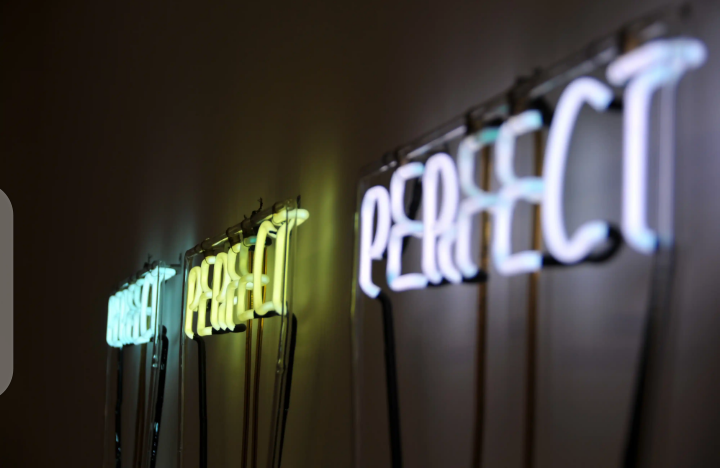
The Quest for perfection
The dream is to be the perfect human. You desire the idea of being perfect: the perfect spouse, the perfect employee, the perfect writer. The list goes on. Yet, the quest for perfection only burdens you, it blindly leads you to unhappiness.
The goal isn’t to be perfect. The goal is to be happy.
*If you look for perfection, you’ll never be content. —* *Leo Tolstoy* https://www.wisesayings.com/perfection-quotes/#ixzz6pZQhRLds
Perfection can be self-destructive in its nature. You’re left thinking, “you suck”, you think you suck because your work is not perfect.
The voice inside your head tells you to give up, don’t even try and improve. It’s really not worth it. You’re stupid; you lack talent.
You agree with the voice in your head. You’ll never be as good as *them*. “Give up now and leave it to the experts”, the voice says again.
This voice manifests in your mind, telling you to quit — whispering sweet nothings in your ear.
I know this whole process, as well. It still haunts me to this day. Even as I write this article, something tells me I should give up, something inside me. It reminds me that I failed English three times. I’m fooling myself if I think I’m a writer.
The perfect article
I sit there staring at a blank page, waiting for the perfect article to somehow magically formulate on the page. I’m overwhelmed with pressure.
“Anything you write can be fixed. The only thing you cannot fix is a blank page” Neil Gaiman.
I’m terrified of being judged for my work. I wonder if people will see through the facade, will they see I’m a traitor, pretending to be a writer. I can’t write a perfect article.
What does that even mean? What makes an article “perfect”.
That’s right, nothing, nothing is ever perfect. Everything has its flaws. That’s what makes life and art so damn unique. Even the elite writers of Medium make mistakes. They are human, after all.
You must fight the need to be perfect. Push through, write that first sentence, move your hand across the page, see the words appear. Before you know it, the draft is finished. Who cares if it’s full of errors. This is your creation. Created by you and your unique mind.
They can be deleted. It was never going to be perfect, not the first draft or the twenty-second.
Treat your first draft as you should, the first draft. Nobody in the world is going to read it, except you. You can delete 99% of it and publish one sentence. Nobody will know the rest ever existed. It never had to be perfect.
Learning to live with imperfection
Perfection manifests its way into your life. It makes you demand perfection for every little thing.
This is stopping you from enjoying life. You are left feeling stressed and disappointed all the time.
All your friends and family seem to have their shit together. Why can’t you be like them? Learn that perfection is not attainable. Everyone has flaws. People look at you and wish they were as perfect as you.
Learn that your quest for perfection is only hindering your progress. If you were “perfect”, how on earth would you grow? Perfection means 100% complete, finished, flawless.
You would stagnate if you were perfect. Nothing would bring you joy.
Remember, being imperfect is fantastic. It is how you live a genuinely fulfilling life.
With each day, you can get 1% better. Every day that passes will bring you one step closer to your goal of being *better.* Better, but never perfect.
Once you remove this thought process from your mind, you will become free. You are free to enjoy life with all the flaws and hick-ups you encounter along the way.
Your mind is now free to be creative. Your mind will be full of ideas. It is no longer being held back by the pressure of being perfect.
Becoming present
If you are forever trying to be perfect, you will find yourself stuck in a vicious cycle of critique.
Drop the need to be perfect, become fully present in the moment. This is when you begin to experience life.
For most of my life, I was my most prominent critic. Everything I produced was trash. I’d finish a drawing and throw it away even if my dad told me he loved it. It would still go in the bin because I didn’t think it was perfect.
I was never really present, I was never actually happy.
Since changing my framing on perfection, I have begun to enjoy life even more. Add in my newfound sobriety, and my life is now fantastic. I notice that I can’t be perfect. My work can be as good as I make it.
I’ve started exploring any insecurities that may have caused me to feel this way. As these are become addressed, I can feel my confidence rising.
Perfection is not attainable
When you’re caught up in the quest of being perfect, you forget how to enjoy life. Remember that perfection Is not attainable!
The perfect job does not exist, nor does the perfect body or life. Social media has twisted how you view reality. Everyone shares the best aspects of their lives naturally. Imagine how boring social media would be if everyone shared every single tedious element of their lives.
Remember this next time you compare yourself with another “perfect” person. Compare yourself to the person you were yesterday. Look at how you can improve in the moment. Look for that 1% improvement over a year. That’s a massive improvement.
Remember, you’re perfect the way you are. With your many flaws, that’s what makes you beautiful and unique.
11 thing smart person don't say
No matter how talented you are or what you've accomplished, there are certain phrases that instantly change the way people see you and can forever cast you in a negative light.
There are some things you simply never want to say at work. These phrases carry special power: they have an uncanny ability to make you look bad even when the words are true. Worst of all, there’s no taking them back once they slip out.
I’m not talking about shocking slips of the tongue, off-color jokes, or politically incorrect faux pas. These aren’t the only ways to make yourself look bad.
Often it’s the subtle remarks -- the ones that paint us as incompetent and unconfident -- that do the most damage.
No matter how talented you are or what you’ve accomplished, there are certain phrases that instantly change the way people see you and can forever cast you in a negative light. These phrases are so loaded with negative implications that they undermine careers in short order.
1. 'It’s not fair.'
Everyone knows that life isn’t fair. Saying it’s not fair suggests that you think life is supposed to be fair, which makes you look immature and naïve.
If you don’t want to make yourself look bad, you need to stick to the facts, stay constructive, and leave your interpretation out of it. For instance, you could say, “I noticed that you assigned Ann that big project I was hoping for. Would you mind telling me what went into that decision? I’d like to know why you thought I wasn’t a good fit, so that I can work on improving those skills.”
2. 'This is the way it’s always been done.'
Technology-fueled change is happening so fast that even a six-month-old process could be outdated. Saying this is the way it’s always been done not only makes you sound lazy and resistant to change, but it could make your boss wonder why you haven’t tried to improve things on your own. If you really are doing things the way they’ve always been done, there’s almost certainly a better way.
3. 'No problem.'
When someone asks you to do something or thanks you for doing something, and you tell them no problem, you’re implying that their request should have been a problem. This makes people feel as though they’ve imposed upon you.
What you want to do instead is to show people that you’re happy to do your job. Say something like “It was my pleasure” or “I’ll be happy to take care of that.” It’s a subtle difference in language, but one that has a huge impact on people.
4. This may be a silly idea .../I’m going to ask a stupid question.'
These overly passive phrases instantly erode your credibility. Even if you follow these phrases with a great idea, they suggest that you lack confidence, which makes the people you’re speaking to lose confidence in you.
Don’t be your own worst critic. If you’re not confident in what you’re saying, no one else will be either. And, if you really don’t know something, say, “I don’t have that information right now, but I’ll find out and get right back to you.”
Related: How Positivity Makes You Healthy and Successful
5. 'This will only take a minute.
'
Saying that something only takes a minute undermines your skills and gives the impression that you rush through tasks. Unless you’re literally going to complete the task in 60 seconds, feel free to say that it won’t take long, but don’t make it sound as though the task can be completed any sooner than it can actually be finished.
6. 'I’ll try.'
Just like the word think, try sounds tentative and suggests that you lack confidence in your ability to execute the task. Take full ownership of your capabilities. If you’re asked to do something, either commit to doing it or offer an alternative, but don’t say that you’ll try because it sounds like you won’t try all that hard.
7. 'He’s lazy/incompetent/a jerk.'
There is no upside to making a disparaging remark about a colleague. If your remark is accurate, everybody already knows it, so there’s no need to point it out. If your remark is inaccurate, you’re the one who ends up looking like a jerk.
There will always be rude or incompetent people in any workplace, and chances are that everyone knows who they are. If you don’t have the power to help them improve or to fire them, then you have nothing to gain by broadcasting their ineptitude. Announcing your colleague’s incompetence comes across as an insecure attempt to make you look better. Your callousness will inevitably come back to haunt you in the form of your coworkers’ negative opinions of you.
8. 'That’s not in my job
description.'
This often sarcastic phrase makes you sound as though you’re only willing to do the bare minimum required to keep getting a paycheck, which is a bad thing if you like job security.
If your boss asks you to do something that you feel is inappropriate for your position, as opposed to morally or ethically inappropriate, the best move is to complete the task eagerly. Later, schedule a conversation with your boss to discuss your role in the company and whether your job description needs an update. This ensures that you avoid looking petty. It also enables you and your boss to develop a long-term understanding of what you should and shouldn’t be doing.
9. 'It’s not my fault.'
It’s never a good idea to cast blame. Be accountable. If you had any role -- no matter how small -- in whatever went wrong, own it. If not, offer an objective, dispassionate explanation of what happened. Stick to the facts, and let your boss and colleagues draw their own conclusions about who’s to blame.
The moment you start pointing fingers is the moment people start seeing you as someone who lacks accountability for their actions. This makes people nervous. Some will avoid working with you altogether, and others will strike first and blame you when something goes wrong.
10. 'I can’t.'
People often don’t like to hear I can’t because they think it means I won’t. Saying 'I can’t' suggests that you’re not willing to do what it takes to get the job done.
If you really can’t do something because you truly lack the necessary skills, you need to offer an alternative solution. Instead of saying what you can’t do, say what you can do. For example, instead of saying “I can’t stay late tonight,” say “I can come in early tomorrow morning. Will that work?” Instead of “I can’t run those numbers,” say “I don’t yet know how to run that type of analysis. Is there someone who can show me so that I can do it on my own next time?
”
11. 'I hate this job.'
The last thing anyone wants to hear at work is someone complaining about how much they hate their job. Doing so labels you as a negative person and brings down the morale of the group. Bosses are quick to catch on to naysayers who drag down morale, and they know that there are always enthusiastic replacements waiting just around the corner.
Bringing it all together
Eliminating these phrases from your vocabulary pays dividends. They have a tendency to sneak up on you, so you’re going to have to catch yourself until you’ve solidified the habit of not saying them.
Please report any fake news or defamatory statements to [email protected]
Ten thing that make you rich and successful
Step One: Decide to Be Rich
I sat quietly that night and my lessons began all over again. I could hear my rich dad talking. “The only difference between the rich, poor and middle class,” he said, “is the kind of lifestyle they want. You don’t have to be psychic to tell a person’s future. If you listen to the words a person uses, they will tell you their future.”
Rich Dad believed that words were a person’s most important tool. He constantly reminded me to watch the words I spoke, simply because he believed tha the words you speak and the words you think ultimately become the world you live in. He often quoted the Old Testament: “And the word became flesh”.
So that night, I remembered Rich Dad reminding me to listen to different people’s words. I noticed that poor people often said: “I just want enough money to pay the rent.”
“I need a few dollars to get to the next pay day.”
“After I pay my bills, I don't know how my family can afford to eat.”
People who used words such as these, often focused only on financial survival. Rich Dad often referred to these people as “poor” people, because they were poor managers of money.
So a person who thought or spoke words such as these was constantly fighting for financial survival, regardless of how much money they made.
The middle class used different words because they had different ideas about how to use their money:
“Our home is our most important asset and our largest single investment.”
“We’re setting a few dollars aside every month, so we can afford the down payment on our dream home.”
“We’re saving money for our children’s college education and our retirement.”
I noticed that the middle class focused on comfort. That is why so many of them say, “I don’t want to be rich. I just want to be comfortable.”
That night, I recalled the words my dad’s friends used:
“How did you finance your shopping center? Did you syndicate it with a joint venture partnership or did you go to a hard money lender for the interim money?”
“My underwriter has a new private placement, pre-IPO offering. Do you want a position in it?”
“I bought the shares through my corporation because the long-term tax consequences are better.”
The rich used the vocabulary found in the asset column. Rich Dad said, “The rich are rich because they are not focused on day-to-day short-term survival, or the expense column as the poor are. Nor are the rich focused on comfort and the acquisition of liabilities using credit, as the middle class is.
The rich are rich because they focus on the long-term acquisition of assets... assets such as stocks, bonds, businesses and income producing real estate. Many times the rich will forsake meals, a steady pay check, a vacation, or the comfort of a nice home, to build or acquire real assets.”
So decide to be rich, even if you are broke and penniless today. In Rich Dad Poor Dad, I wrote of the difference between being poor and being broke. Poor is a state of mind where thoughts such as “I can’t afford it” or “Live below your means” come from. Being poor is eternal but being broke is temporary.
Today, even though we have plenty of money and several businesses, nothing much has changed. We continue to build businesses, reinvest in our businesses and invest through those businesses.
whether you have money or not, it is important to “Be” rich if you decide to do so, which means being willing to make being rich more important than merely surviving financially or being comfortable.
Step Two: Decide What Kind of Money Problems You Want
There are only two kinds of money problems:
1 NOT ENOUGH MONEY
2 TOO MUCH MONEY
Unfortunately, the kind of money problem most people know is not enough money.
Rich Dad stressed that his son desmond and I know not only how to make money but what to do with the money we made. Rich Dad said, “Most people know how to work for money, but they do not know how to have people and money work for them.” So he taught us how to plan on having too much money.
He said, “If you want to be rich, you must make sure your excess money creates more excess money. You must know what to do with your excess money before it gets to you. Most people, when they receive any excess money, spend it foolishly or just park it in the bank.”
Step Three: Write Your Plan and Follow It
After choosing between being rich, poor or middle class, and then choosing between too much money or too little money, it’s time to write your plan.
If you have chosen to be rich, even though you are broke today, and have decided to have the problem of too much money, read on. If you do not plan to be rich or to have too much money, then you need not read any further.
Rich Dad’s plan started with a few basic goals:
1. Change the characteristic of your income. Start a part-time business.
2. Change the characteristic of your expenses. Convert personal expenses into business expenses.
3. Place your business inside a legal entity.
4. Have your business buy your assets.
5. Harness the power of reinvesting.
If you’re willing to be a little uncomfortable to become very rich and retire early, develop your plan — even though you may be broke, but not poor, today. And if you are already rich, Rich Dad’s plan may help you become richer and happier...even beyond your wildest dreams.
Step Four: Decide on Where You Want to do Your Banking
Rich Dad often said that you could tell the difference between the rich, poor and middle class simply by where they went to get their money or to do their banking.
Rich Dad said, “A poor man’s bank is a pawn shop.” A pawn shop lends money on “assets” that a banker would not loan money on. When a poor person is short of cash, they will often go to the pawn shop and put their chainsaw, microwave oven, jewelry, TV sets, tools, or watches up as security.
The pawn shop gives them cents on the dollar, because what the poor spend their money on is not worth anything after they buy it anyway. The pawn shop makes money by charging legal usurious interest rates.
The middle class has the creditworthiness to use banks, savings and loans, or credit unions for their lines of credit. A popular form of credit for this group is the credit card, which is easy to obtain.
The rich also use banks. But they often use different banks. They use the services of investment bankers, or find private capital from wealthy individuals, or money from institutions such as pension funds, insurance companies or the stock market.
The rich, if successful as business people, have fewer problems raising large sums of money and at better interest rates. So decide where you will do your banking
.
Step Five: Choose Your Friends and Partners Wisely
One of the reasons the rich get richer is because they spend time with other good people. Most of my best investments come from my good friends, not from my stock brokers or real estate brokers. It is important to know if a person’s aspirations are to be rich, comfortable or simply survive.
Friends who merely want to be comfortable or survive will not understand why you want to be rich and may unconsciously pull you down. And besides, the investment tips I get from people who only want to be comfortable are often tips on investments that no one else wants.
How do you find people who are rich or want to be rich? Rich Dad had a simple answer: “It’s what you know that determines who you know. If you want to change who you know, simply change what you know.” So the most important investment you can make is in your financial education and financial experience. Invest in that first and the people you spend time with will change.
Step Six : Give Yourself Time
It takes time to build a business as well as an investment portfolio. Building a business is not the same as getting a job. With a job, you expect to be paid soon after starting work. With a business, you may not be paid for years, if you are paid at all. That is why I recommend keeping your daytime job and starting a part-time business.
It is said that 90% of all businesses fail in the first 5 years. In my opinion, there are two main reasons for this sad statistic. One reason is lack of education and experience. Business is not something you can learn in school. Business is a combination of formal education, experience and guts.
The second reason is lack of money. We have heard the old cliche “Killing the goose that lays the golden egg”. When starting a business, many people kill the baby-goose before it’s old enough to lay the golden egg.
In other words, most small businesses are undercapitalized, which means the new business owner tries to support him or herself and often a family on a business that is not yet up and running. So the business is drained of cash when it needs it most to grow.
Step Seven : Start Small, Dream Big
Many people start small and stay small, simply because they have small dreams. In my opinion, big dreams are important because they possess ingredients vital for success: hope, desire, passion, energy, vitality, faith, drive, inspiration and creativity. These ingredients make life worth living.
So dare to dream big. Dream of all the wonderful things this world and life have to offer. Write your plan on how you can have all your dreams come true and look at the plan every day. Talk to people about your dreams, even those who criticize them. Then use their criticism to make your desire even stronger.
Step Eight: Before You Expand You Must Contract
In 1975, I knew that if I was to achieve great wealth quickly, I first needed to tighten up before I could expand. I was hurting financially because I had been sloppy with my money during the past 10 years.
In high school , I’d spent a lot of money just having fun. In Vietnam, I’d developed the attitude of living life to the fullest because tomorrow I could be dead. If I was going to get ahead, I first needed to pull back a little. Instead of playing football, golf and tennis, I focused only on football.
Instead of spending every night in the with my phone or watching television, I needed to get back to studying. Instead of trying to be everywhere and do everything, I decided to focus. I began doing more — of fewer things.
So, regardless of what you did yesterday, if you want to do better financially tomorrow, you may need to forgive your past, tighten up your activities today, so you can have a bright and prosperous tomorrow. To expand, you must first contract.
Step Nine : Get Bigger Faster
The problem with a small business or small investments such as one single family rental, is that you have to do all the work. You do all the work because there is not enough money to support paid management. So you own it and manage it.
Very often, a person begins to buy real estate and soon quits because the work is hard and the pay is low. They started with a small plan and stayed small.
For business or investing to work for you, in most cases you must get big. Instead of buying only two rental properties, plan on acquiring at least 20 properties as soon as possible. (But make sure you know what you’re doing first.) With 20 properties you can afford professional management, if the cash flow is strong, or you can trade the 20 units into one larger apartment house or office building.
The same goes with businesses, especially franchises etc. If you have only one franchise, you are the chief cook, bottle washer, owner and manager. If you have 20 of them, you have a chance of finding freedom faster.
The people who dream small, think small, and work small, work the hardest and are paid the least. So that night in 2020 I vowed to focus, acquire education, gain experience, start small and get big as quickly as possible.
I always remind myself of my rich dad’s words: “The bigger the asset you build, the less you work and the more money you make.”
Step Ten : The More You Share, The Richer You Become
In 2020, I knew that if I wanted to acquire great wealth quickly, I had to be a person who shared. I had to be generous. If I was greedy, stingy or tight, it would take me longer to attain great wealth.
So, I decided to operate out of the B (Business Owner) quadrant, rather than follow my poor dad’s ideas on labor unions and protectionism. I knew that I needed to focus on doing more for less money, for more people. I needed to focus on sharing as much of my wealth with as many people as possible.
So Step Ten is to be generous and share. If you do that, you will become far richer than those who work only for themselves.

Today I Realized that everyone are Going To Die one day
Today I Realized that everyone are Going To Die one day
I’m going to die and so are you
Writing that headline gave me chills but it’s true, amigo.
We think we are so damn smart and we know we are going to die. The truth is we know we are going to die but subconsciously tell ourselves it’s going to happen sometime in the very distant future.
As I saw today, death could be brewing at any moment. The grim reaper could come and take you without notice.
You may not get a second shot
This whole health scare has shown me again that I may not get a second shot. This could be the last blog post I ever write. Tonight could be the last beautiful woman I ever kiss.
So given that we don’t know when our time will come, I believe we have to treat every moment like it’s our last shot. I write every blog post as if it’s my last.
Death is why speed matters
The uncertainty of death is what makes me want to act quickly. I don’t hesitate to do anything. If I feel something, want something, or believe something then I act right now. Not tomorrow, not next year, not when the time is right: right bloody now! That’s what many of you are missing. You think you’ve got all the time in the world but you don’t.
“The whole notion of death doesn’t have to be a big fat, Debbie Downer. You can treat the concept of death as the excuse that you fall back on when you procrastinate”
If you hate your job, then quit today.
If you want to inspire people, then do it today.
If you love someone, then don’t wait to tell him or her.
Mathematical Equation: UNDERSTANDING DEATH x TIME = Legacy
The moment it hit me that death is really going to happen, I changed the way I thought about time. Now all of my time is used to create a legacy. Death is a certainty, so there’s no time like now to create your legacy.
Legacy, to me, is the thing that will see me live on after my physical form is gone. This whole self-improvement movement combined with content creation is what I’m using to create my legacy. For you, the process could be different.
I suppose what I want you to get from this blog post is that not only are you going to die, but I want you to do something that matters. I want you to come to the same realization I have and create a whopping big legacy.
I used to be very naïve and think that I would never have children of my own. I thought to myself *“Hey I’m a big shot and I need all the time in the world to go out and be successful!”*
This whole way of thinking was BS. Creating a legacy is success. Going beyond yourself and having kids or serving others rather than your own selfish desires is success.
“Being the best version of you and finding a meaning for your life is the goal that matters”
The question I asked myself…..
To check in and see how I was going on this idea of death, I asked myself a question: *“What if I knew I was going to die in the next four weeks? How would I feel?*
If I had of asked these two question five years ago, I would have said “Freaking horrible!”
Now I have a different answer to these two questions. Now I would say that while I would be disappointed that the journey has come to an end, I’m proud of who I’ve become. I’m proud of my legacy.
A new way to feel about death
Rather than death being this horrible thing that I never want to experience, it’s now my motivation. It gives me optimism. It tells me if I’m on the right path.
It stops me from being the rude, selfish, spoilt brat I used to be who wasn’t grateful for anything that this world had given me including life itself. That’s how many people live. That’s not how you should live.
You’re going to die and it may not be that far away.
I’d tell you from my experience and health scare to fall in love with that fact.
It’s this answer that makes me so proud and has been the best learning experience from this recent health scare. It’s put death in perspective for me and it’s made me figure out the answers to life’s greatest questions.
What action could you take to build a legacy?
Are you proud of who you’re becoming?
If not, why, and what are you going to do about it?


 @Desmian