After many weeks ngayon lang nakapag open ng rc hahaha
@Dave14
Joined 14 July 2020 · 46 posts
120 KT
0 KT received · 0 KT given
Posts
Okay guys let's sleep na😇 goodnight 😊
Beginner Please rate my drawing 1-10😂

Goodmorning pipol😅😇
Hello po😊 pwede po ba comment kayo dito then subscribe kopo kayo, thanks😊
Isa nanamang magandang umaga sa 'ting lahat😇💗 hehehe💓 Sa mga gising na jan post na 😁
Goodmorning😇 have a nice day😇 isang magandang umaga nanaman para sa 'ting lahat😇 stay safe po💓
Sana tumagal pa 'tong readcash😇 dahil legit na legit 😊
Goodmorning it's time to post in readcash😂 hahaha have a nice day everyone😇 keep safe and be strong always😉
Hello guys haha bihira lang mag open ng readcash pero salamat kasi binabayaran😅😍💘
Thankyouuuu readcash sa walang sawang pagbayad😂 hahahaah kahit maliit lang nakukuha ko atleast binabayaran😂 stay legit and stay paying😇
Goodmorning mga ka readcash😊 almusal na kayo jan hahaha
Kahit minsan lang active binabayaran padin ni Readcash hahaha, thankyouu readcash😇💗💕
Hey guys😇 musta na Readcash nyo malaki naba kita nyo?😂
Good day everyone💗😇
Goodnight sa inyo😇 maulan sarap matulog hahaha, sleepwell and stay safe sa 'ting lahat😊
Gandang gabi po sa inyo😇
Goodmorning everyone😇eat breakfast first before use your phone😅😂
Hello guys have a nice day😇
Goodmorning😇
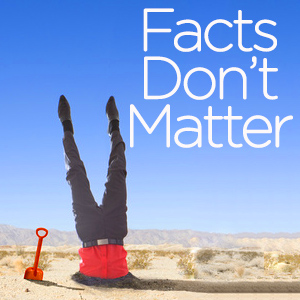
Why Facts Don’t Change Our Minds The economist J.K. Galbraith once wrote, “Faced with a choice between changing one’s mind and proving there is no need to do so, almost everyone gets busy with the proof.” Leo Tolstoy was even bolder: “The most difficult subjects can be explained to the most slow-witted man if he has not formed any idea of them already; but the simplest thing cannot be made clear to the most intelligent man if he is firmly persuaded that he knows already, without a shadow of doubt, what is laid before him.” What's going on here? Why don't facts change our minds? And why would someone continue to believe a false or inaccurate idea anyway? How do such behaviors serve us? The Logic of False Beliefs Humans need a reasonably accurate view of the world in order to survive. If your model of reality is wildly different from the actual world, then you struggle to take effective actions each day. However, truth and accuracy are not the only things that matter to the human mind. Humans also seem to have a deep desire to belong. In Atomic Habits, I wrote, “Humans are herd animals. We want to fit in, to bond with others, and to earn the respect and approval of our peers. Such inclinations are essential to our survival. For most of our evolutionary history, our ancestors lived in tribes. Becoming separated from the tribe—or worse, being cast out—was a death sentence.” http://atomichabits.com/ Understanding the truth of a situation is important, but so is remaining part of a tribe. While these two desires often work well together, they occasionally come into conflict. In many circumstances, social connection is actually more helpful to your daily life than understanding the truth of a particular fact or idea. The Harvard psychologist Steven Pinker put it this way, “People are embraced or condemned according to their beliefs, so one function of the mind may be to hold beliefs that bring the belief-holder the greatest number of allies, protectors, or disciples, rather than beliefs that are most likely to be true.” We don't always believe things because they are correct. Sometimes we believe things because they make us look good to the people we care about. I thought Kevin Simler put it well when he wrote, “If a brain anticipates that it will be rewarded for adopting a particular belief, it's perfectly happy to do so, and doesn't much care where the reward comes from — whether it's pragmatic (better outcomes resulting from better decisions), social (better treatment from one's peers), or some mix of the two.” False beliefs can be useful in a social sense even if they are not useful in a factual sense. For lack of a better phrase, we might call this approach “factually false, but socially accurate.” When we have to choose between the two, people often select friends and family over facts. This insight not only explains why we might hold our tongue at a dinner party or look the other way when our parents say something offensive, but also reveals a better way to change the minds of others. Facts Don't Change Our Minds. Friendship Does. Convincing someone to change their mind is really the process of convincing them to change their tribe. If they abandon their beliefs, they run the risk of losing social ties. You can’t expect someone to change their mind if you take away their community too. You have to give them somewhere to go. Nobody wants their worldview torn apart if loneliness is the outcome. The way to change people’s minds is to become friends with them, to integrate them into your tribe, to bring them into your circle. Now, they can change their beliefs without the risk of being abandoned socially. The British philosopher Alain de Botton suggests that we simply share meals with those who disagree with us: “Sitting down at a table with a group of strangers has the incomparable and odd benefit of making it a little more difficult to hate them with impunity. Prejudice and ethnic strife feed off abstraction. However, the proximity required by a meal – something about handing dishes around, unfurling napkins at the same moment, even asking a stranger to pass the salt – disrupts our ability to cling to the belief that the outsiders who wear unusual clothes and speak in distinctive accents deserve to be sent home or assaulted. For all the large-scale political solutions which have been proposed to salve ethnic conflict, there are few more effective ways to promote tolerance between suspicious neighbours than to force them to eat supper together.” Perhaps it is not *difference*, but *distance* that breeds tribalism and hostility. As proximity increases, so does understanding. I am reminded of Abraham Lincoln's quote, “I don't like that man. I must get to know him better.” Facts don't change our minds. Friendship does. The Spectrum of Beliefs Years ago, Ben Casnocha mentioned an idea to me that I haven't been able to shake: The people who are most likely to change our minds are the ones we agree with on 98 percent of topics. If someone you know, like, and trust believes a radical idea, you are more likely to give it merit, weight, or consideration. You already agree with them in most areas of life. Maybe you should change your mind on this one too. But if someone wildly different than you proposes the same radical idea, well, it's easy to dismiss them as a crackpot. One way to visualize this distinction is by mapping beliefs on a spectrum. If you divide this spectrum into 10 units and you find yourself at Position 7, then there is little sense in trying to convince someone at Position 1. The gap is too wide. When you're at Position 7, your time is better spent connecting with people who are at Positions 6 and 8, gradually pulling them in your direction. The most heated arguments often occur between people on opposite ends of the spectrum, but the most frequent learning occurs from people who are nearby. The closer you are to someone, the more likely it becomes that the one or two beliefs you don't share will bleed over into your own mind and shape your thinking. The further away an idea is from your current position, the more likely you are to reject it outright. When it comes to changing people's minds, it is very difficult to jump from one side to another. You can't jump down the spectrum. You have to slide down it. Any idea that is sufficiently different from your current worldview will feel threatening. And the best place to ponder a threatening idea is in a non-threatening environment. As a result, books are often a better vehicle for transforming beliefs than conversations or debates. In conversation, people have to carefully consider their status and appearance. They want to save face and avoid looking stupid. When confronted with an uncomfortable set of facts, the tendency is often to double down on their current position rather than publicly admit to being wrong. Books resolve this tension. With a book, the conversation takes place inside someone's head and without the risk of being judged by others. It's easier to be open-minded when you aren't feeling defensive. Arguments are like a full frontal attack on a person's identity. Reading a book is like slipping the seed of an idea into a person's brain and letting it grow on their own terms. There's enough wrestling going on in someone's head when they are overcoming a pre-existing belief. They don't need to wrestle with you too. Why False Ideas Persist There is another reason bad ideas continue to live on, which is that people continue to talk about them. Silence is death for any idea. An idea that is never spoken or written down dies with the person who conceived it. Ideas can only be remembered when they are repeated. They can only be *believed* when they are repeated. I have already pointed out that people repeat ideas to signal they are part of the same social group. But here's a crucial point most people miss: People also repeat bad ideas when they complain about them. Before you can criticize an idea, you have to reference that idea. You end up repeating the ideas you’re hoping people will forget—but, of course, people can’t forget them because you keep talking about them. The more you repeat a bad idea, the more likely people are to believe it. Let's call this phenomenon **Clear's Law of Recurrence:** The number of people who believe an idea is directly proportional to the number of times it has been repeated during the last year—even if the idea is false. Each time you attack a bad idea, you are feeding the very monster you are trying to destroy. As one Twitter employee wrote, “Every time you retweet or quote tweet someone you’re angry with, it *helps* them. It disseminates their BS. Hell for the ideas you deplore is silence. Have the discipline to give it to them.” Your time is better spent championing good ideas than tearing down bad ones. Don't waste time explaining why bad ideas are bad. You are simply fanning the flame of ignorance and stupidity. The best thing that can happen to a bad idea is that it is forgotten. The best thing that can happen to a good idea is that it is shared. It makes me think of Tyler Cowen's quote, “Spend as little time as possible talking about how other people are wrong.” Feed the good ideas and let bad ideas die of starvation. The Intellectual Soldier I know what you might be thinking. “James, are you serious right now? I'm just supposed to let these idiots *get away* with this?” Let me be clear. I'm not saying it's *never* useful to point out an error or criticize a bad idea. But you have to ask yourself, “What is the goal?” Why do you want to criticize bad ideas in the first place? Presumably, you want to criticize bad ideas because you think the world would be better off if fewer people believed them. In other words, you think the world would improve if people changed their minds on a few important topics. If the goal is to actually change minds, then I don't believe criticizing the other side is the best approach. Most people argue to win, not to learn. As Julia Galef so aptly puts it: people often act like soldiers rather than scouts. Soldiers are on the intellectual attack, looking to defeat the people who differ from them. Victory is the operative emotion. Scouts, meanwhile, are like intellectual explorers, slowly trying to map the terrain with others. Curiosity is the driving force. If you want people to adopt your beliefs, you need to act more like a scout and less like a soldier. At the center of this approach is a question Tiago Forte poses beautifully, “Are you willing to not win in order to keep the conversation going?” Be Kind First, Be Right Later The brilliant Japanese writer Haruki Murakami once wrote, “Always remember that to argue, and win, is to break down the reality of the person you are arguing against. It is painful to lose your reality, so be kind, even if you are right.” When we are in the moment, we can easily forget that the goal is to connect with the other side, collaborate with them, befriend them, and integrate them into our tribe. We are so caught up in winning that we forget about connecting. It's easy to spend your energy labeling people rather than working with them. The word “kind” originated from the word “kin.” When you are kind to someone it means you are treating them like family. This, I think, is a good method for actually changing someone's mind. Develop a friendship. Share a meal. Gift a book. Be kind first, be right later.
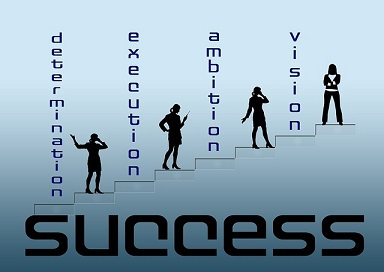
Absolute Success is Luck. Relative Success is Hard Work. In 1997, Warren Buffett, the famous investor and multi-billionaire, proposed a thought experiment. “Imagine that it is 24 hours before you are going to be born,” he said, “and a genie comes to you.” “The genie says you can determine the rules of the society you are about to enter and you can design anything you want. You get to design the social rules, the economic rules, the governmental rules. And those rules are going to prevail for your lifetime and your children's lifetime and your grandchildren's lifetime.” “But there is a catch,” he said. “You don't know whether you're going to be born rich or poor, male or female, infirm or able-bodied, in the United States or Afghanistan. All you know is that you get to take one ball out of a barrel with 5.8 billion balls in it. And that's you.” “In other words,” Buffett continues, “you're going to participate in what I call the Ovarian Lottery. And that is the most important thing that's ever going to happen to you in your life. It's going to determine way more than what school you go to, how hard you work, all kinds of things.” Buffett has long been a proponent for the role of luck in success. In his 2014 Annual Letter, he wrote, “Through dumb luck, [my business partner] Charlie and I were born in the United States, and we are forever grateful for the staggering advantages this accident of birth has given us.” When explained in this way, it seems hard to deny the importance of luck, randomness, and good fortune in life. And indeed, these factors play a critical role. But let's consider a second story. The Story of Project 523 In 1969, during the fourteenth year of the Vietnam War, a Chinese scientist named Tu Youyou was appointed the head of a secret research group in Beijing. The unit was known only by its code name: Project 523. China was an ally with Vietnam, and Project 523 had been created to develop antimalarial medications that could be administered to the soldiers. The disease had become a huge problem. Just as many Vietnamese soldiers were dying from malaria in the jungle as were dying in battle. Tu began her work by looking for clues anywhere she could find them. She read manuals about old folk remedies. She searched through ancient texts that were hundreds or thousands of years old. She traveled to remote regions in search of plants that might contain a cure. After months of work, her team had collected over 600 plants and created a list of almost 2,000 possible remedies. Slowly and methodically, Tu narrowed the list of potential medications down to 380 and tested them one-by-one on lab mice. “This was the most challenging stage of the project,” she said. “It was a very laborious and tedious job, in particular when you faced one failure after another.” Hundreds of tests were run. Most of them yielded nothing. But one test—an extract from the sweet wormwood plant known as qinghao—seemed promising. Tu was excited by the possibility, but despite her best efforts, the plant would only occasionally produce a powerful antimalarial medication. It wouldn’t always work. Her team had already been at work for two years, but she decided they needed to start again from the beginning. Tu reviewed every test and re-read each book, searching for a clue about something she missed. Then, magically, she stumbled on a single sentence in *The Handbook of Prescriptions for Emergencies*, an ancient Chinese text written over 1,500 years ago. The issue was heat. If the temperature was too high during the extraction process, the active ingredient in the sweet wormwood plant would be destroyed. Tu redesigned the experiment using solvents with a lower boiling point and, finally, she had an antimalarial medication that worked 100 percent of the time. It was a huge breakthrough, but the real work was just beginning. The Power of Hard Work With a proven medication in hand, it was now time for human trials. Unfortunately, there were no centers in China performing trials for new drugs at the time. And due to the secrecy of the project, going to a facility outside of the country was out of the question. They had reached a dead end. That’s when Tu volunteered to be the first human subject to try the medication. In one of the boldest moves in the history of medical science, she and two other members of Project 523 infected themselves with malaria and received the first doses of their new drug. It worked. However, despite her discovery of a breakthrough medication and her willingness to put her own life on the line, Tu was prevented from sharing her findings with the outside world. The Chinese government had strict rules that blocked the publishing of any scientific information. She was undeterred. Tu continued her research, eventually learning the chemical structure of the drug—a compound officially known as artemisinin—and going on to develop a second antimalarial medication as well. It was not until 1978, almost a decade after she began and three years after the Vietnam War had ended, that Tu’s work was finally released to the outside world. She would have to wait until the year 2000 before the World Health Organization would recommend the treatment as a defense against malaria. Today, the artemisinin treatment has been administered over 1 billion times to malaria patients. It is believed to have saved millions of lives. Tu Youyou is the first female Chinese citizen to receive a Nobel Prize, and the first Chinese person to receive the Lasker Award for major contributions to medical science. Luck or Hard Work? Tu Youyou was not fabulously lucky. My favorite fact about her is that she has no postgraduate degree, no research experience abroad, and no membership in any of the Chinese national academies—a feat that has earned her the nickname “The Professor of the Three No's”. But damn was she a hard worker. Persistent. Diligent. Driven. For decades she didn't give up and she helped save millions of lives as a result. Her story is a brilliant example of how important hard work can be in achieving success. Just a minute ago, it seemed reasonable that the Ovarian Lottery determined most of your success in life, but the idea that hard work matters feels just as reasonable. When you work hard you typically get better results than you would with less effort. While we can't deny the importance of luck, everyone seems to have this sense that hard work really does make a difference. So what it is? What determines success? Hard work or good fortune? Effort or randomness? I think we all understand both factors play a role, but I'd like to give you a better answer than “It depends.” Here are two ways I look at the issue. Absolute Success vs. Relative Success One way to answer this question is to say: Luck matters more in an absolute sense and hard work matters more in a relative sense. The absolute view considers your level of success compared to everyone else. What makes someone the best in the world in a particular domain? When viewed at this level, success is nearly always attributable to luck. Even if you make a good initial choice—like Bill Gates choosing to start a computer company—you can’t understand all of the factors that cause world-class outcomes. As a general rule, the wilder the success, the more extreme and unlikely the circumstances that caused it. It's often a combination of the right genes, the right connections, the right timing, and a thousand other influences that nobody is wise enough to predict. **As a general rule, the wilder the success, the more extreme and unlikely the circumstances that caused it.** Then there is the relative view, which considers your level of success compared to those similar to you. What about the millions of people who received similar levels of education, grew up in similar neighborhoods, or were born with similar levels of genetic talent? These people aren't achieving the same results. The more local the comparison becomes, the more success is determined by hard work. When you compare yourself to those who have experienced similar levels of luck, the difference is in your habits and choices. Absolute success is luck. Relative success is choices and habits. There is an important insight that follows naturally from this definition: As outcomes become more extreme, the role of luck increases. That is, as you become more successful in an absolute sense, we can attribute a greater proportion of your success to luck. As Nassim Taleb wrote in Fooled by Randomness, “Mild success can be explainable by skills and labor. Wild success is attributable to variance.” https://jamesclear.com/book-summaries/fooled-by-randomness Both Stories are True Sometimes people have trouble simultaneously holding both of these insights. There is a tendency to discuss outcomes in either a global sense or a local sense. The absolute view is more global. What explains the difference between a wealthy person born in America and someone born into extreme poverty and living on less than $1 per day? When discussing success from this angle, people say things like, “How can you not see your privilege? Don’t you realize how much has been handed to you?” The relative view is more local. What explains the difference in results between you and everyone who went to the same school or grew up in the same neighborhood or worked for the same company? When considering success from a local viewpoint, people say things like, “Are you kidding me? Do you know hard I worked? Do you understand the choices and sacrifices I made that others didn’t? Dismissing my success as luck devalues the hard work I put in. If my success is due to luck or my environment, then how come my neighbors or classmates or coworkers didn’t achieve the same thing?” Both stories are true. It just depends on what lens you are viewing life through. The Slope of Success There is another way to examine the balance between luck and hard work, which is to consider how success is influenced across time. Imagine you can map success on a graph. Success is measured on the Y-axis. Time is measured on the X-axis. And when you are born, the ball you pluck out of Buffett's Ovarian Lottery determines the y-intercept. Those who are born lucky start higher on the graph. Those who are born into tougher circumstances start lower. Here's the key: You can only control the slope of your success, not your initial position. In Atomic Habits, I wrote, “It doesn’t matter how successful or unsuccessful you are right now. What matters is whether your habits are putting you on the path toward success. You should be far more concerned with your current trajectory than with your current results.” http://atomichabits.com/ **You can only control the slope of your success, not your initial position.** With a positive slope and enough time and effort, you may even be able to regain the ground that was lost due to bad luck. I thought this quote summarized it well: “The more time passes from the start of a race, the less the head-start others got matters.” This is not always true, of course. A severe illness can wipe out your health. A collapsing pension fund can ruin your retirement savings. Similarly, sometimes luck delivers a sustained advantage (or disadvantage). In fact, one study found that, if success is measured by wealth, then the most successful people are almost certainly those with moderate talent and remarkable luck. In any case, it is impossible to divorce the two. They both matter and hard work often plays a more important role as time goes on. This is true not only for overcoming bad luck, but also for capitalizing on good luck. Bill Gates might have been incredibly fortunate to start Microsoft at the right time in history, but without decades of hard work, the opportunity would have been wasted. Time erodes every advantage. At some point, good luck requires hard work if success is to be sustained. How to Get Luck on Your Side By definition, luck is out of your control. Even so, it is useful to understand the role it plays and how it works so you can prepare for when fortune (or misfortune) comes your way. In his fantastic talk, You and Your Research, the mathematician and computer engineer Richard Hamming summarized what it takes to do great work by saying, “There is indeed an element of luck, and no, there isn't. The prepared mind sooner or later finds something important and does it. So yes, it is luck. The particular thing you do is luck, but that you do something is not.” https://jamesclear.com/great-speeches/you-and-your-research-by-richard-hamming You can increase your surface area for good luck by taking action. The forager who explores widely will find lots of useless terrain, but is also more likely to stumble across a bountiful berry patch than the person who stays home. Similarly, the person who works hard, pursues opportunity, and tries more things is more likely to stumble across a lucky break than the person who waits. Gary Player, the famous golfer and winner of nine major championships, has said, “The harder I practice, the luckier I get.” In the end, we cannot control our luck—good or bad—but we can control our effort and preparation. Luck smiles on us all from time to time. And when it does, the way to honor your good fortune is to work hard and make the most of it
how to make your future habits *This article is an excerpt from* *Atomic Habits**, my New York Times bestselling book.* https://jamesclear.com/atomic-habits While researching Atomic Habits, I came across a story that immediately struck me with its simplicity and power. It was the story of Oswald Nuckols, an IT developer from Natchez, Mississippi, and his simple strategy for making future habits easy. http://atomichabits.com/ Nuckols refers to the approach as “resetting the room.” For instance, when he finishes watching television, he places the remote back on the TV stand, arranges the pillows on the couch, and folds the blanket. When he leaves his car, he throws any trash away. Whenever he takes a shower, he wipes down the toilet while the shower is warming up. (As he notes, the “perfect time to clean the toilet is right before you wash yourself in the shower anyway.”) This might sound like he's just “cleaning up” but there is a key insight that makes his approach different. The purpose of resetting each room is not simply to clean up after the last action, but to prepare for the next action. “When I walk into a room everything is in its right place,” Nuckols wrote. “Because I do this every day in every room, stuff always stays in good shape . . . People think I work hard but I’m actually really lazy. I’m just proactively lazy. It gives you so much time back.” I have written previously about the power of the environment to shape your behavior. Resetting the room is one way to put the power back in your own hands. Let's talk about how you can use it. https://jamesclear.com/power-of-environment The Power of Priming the Environment Whenever you organize a space for its intended purpose, you are priming it to make the next action easy. This is one of the most practical and simple ways to improve your habits. For instance, my wife keeps a box of greeting cards that are presorted by occasion—birthday, sympathy, wedding, graduation, and more. Whenever necessary, she grabs an appropriate card and sends it off. She is incredibly good at remembering to send cards because she has reduced the friction of doing so. For years, I was the opposite. Someone would have a baby and I would think, “I should send a card.” But then weeks would pass and by the time I remembered to pick one up at the store, it was too late. The habit wasn’t easy. There are many ways to prime your environment so it’s ready for immediate use. If you want to cook a healthy breakfast, place the skillet on the stove, set the cooking spray on the counter, and lay out any plates and utensils you’ll need the night before. When you wake up, making breakfast will be easy. Here are some more: Want to draw more? Put your pencils, pens, notebooks, and drawing tools on top of your desk, within easy reach. Want to exercise? Set out your workout clothes, shoes, gym bag, and water bottle ahead of time. Want to improve your diet? Chop up a ton of fruits and vegetables on weekends and pack them in containers, so you have easy access to healthy, ready-to-eat options during the week. These are simple ways to make the good habit the path of least resistance. The Path of Most Resistance You can also invert this principle and prime the environment to make bad behaviors difficult. If you find yourself watching too much television, for example, then unplug it after each use. Only plug it back in if you can say out loud the name of the show you want to watch. (Which prevents you from turning on Netflix and “just finding something” to watch.) This setup creates just enough friction to prevent mindless viewing. If that doesn’t do it, you can take it a step further. Unplug the television and take the batteries out of the remote after each use, so it takes an extra ten seconds to turn it back on. And if you’re really hard-core, move the television out of the living room and into a closet after each use. You can be sure you’ll only take it out when you really want to watch something. The greater the friction, the less likely the habit. Whenever possible, I leave my phone in a different room until lunch. When it’s right next to me, I’ll check it all morning for no reason at all. But when it is in another room, I rarely think about it. And the friction is high enough that I won’t go get it without a reason. As a result, I get three to four hours each morning when I can work without interruption. If sticking your phone in another room doesn’t seem like enough, tell a friend or family member to hide it from you for a few hours. Ask a coworker to keep it at their desk in the morning and give it back to you at lunch. It is remarkable how little friction is required to prevent bad behavior. When I hide beer in the back of the fridge where I can’t see it, I drink less. When I delete social media apps from my phone, it can be weeks before I download them again and log in. These tricks are unlikely to curb a true addiction, but for many of us, a little bit of friction can be the difference between sticking with a good habit or sliding into a bad one. Imagine the cumulative impact of making dozens of these changes and living in an environment designed to make the good behaviors easier and the bad behaviors harder. Where to Go From Here Whether we are approaching behavior change as an individual, a parent, a coach, or a leader, we should ask ourselves the same question: “How can we design a world where it’s easy to do what’s right?” Reset your rooms so that the actions that matter most are also the actions that are easiest to do. When you master habits of preparation, habits of execution become easy. *This article is an excerpt from Chapter 12 of my New York Times bestselling book Atomic Habits.* *Read more here**.* https://jamesclear.com/atomic-habits
Baha rin ba dyan sa inyo? Sad naman ngnaraw na 'to dahil madami ang binaha at malakas ang ulan namay kasamang kidlat😢
Stay safe po sa 'ting lahat😊
Goodmorning everyone😇 have a nice day😊
Hello guys goodevening po sa inyo😇💗
Good evening po sa inyong lahat😊
Yesss nagbago nadin points ko akala ko di na magbabago eh thanks readcash😊
Hi guys nagmeryenda naba kayo?😅