This ain’t a complaint,but is Random Rewarder Working Alright?🤔
Does the Random Rewarder has some sort of ‘*favorite*’,’*certified*’ users or something now?
Over the past 2months have come to observe that the Random Rewarder tips the same users(while mostly)over and over regardless of there articles and how times they post in 24hrs,Yes this have observed over the stipulated period of time and they if you take your time to check as well you will definitely agree with me.
On the other hand they are some user like me,who,just receiving a tip from the Random Rewarder is more like a miracle.No matter how good the article is(good quality content and original) and how many times you post,the Random Rewarder doesn’t tip at all,receiving tips is only from other users,who finds the content interesting.
Anyone else experience this?is the Random Rewarder faulty(bugs)?or am missing something?
Have you ever Wondered-Why are bad habits so hard to break?
At the start of a new year, some people choose to start over by breaking a bad habit. In some countries it is very popular to make “New Year's resolutions”. But many again close the year and decide to do the same. Has it ever happened to you? Yes, bad habits are hard to break.
**WHY DO WE HAVE BAD HABITS?**
There are basically two reasons: (1) the impact on our environment and (2) various weaknesses that we are born with and the personality defects that we develop.
Our surroundings - including where we live, how we grew up, what types of friends we have, even what we want to have fun with - all of this definitely affects the types of habits we form. Furthermore, most people, when they are honest, agree that we too are born with a natural tendency to do what is wrong.
**WHAT SHOULD BE THE MOTIVE?**
We must have a good reason - an incentive - to break it. There are many things that can motivate. Sometimes the prospect of a reward is enough. It is known that a child's promise to wear a new dress or pair of ice skates to break the bad habit of biting their nails can produce surprising results.
Taking care of your well-being can be a powerful incentive. A person may know that smoking is harmful to their health and yet they will not stop. However, if you start to feel short of breath, accompanied by suspected chest pain, and your doctor tells you that smoking is to blame, your self-esteem may be an incentive to quit.
Love for others can also be motivating. For example, a young single person who wastes his money gambling may be ready to run out of food and clothing. But if you are married, one of your abandoned children may beg you, "Daddy, I'm hungry and there is no food at home!" Love for your family can keep you from playing. It is this fear of others that can cause someone to give up a habit that they feel bothers others, a habit that may have been acquired in their environment or previous studies.
Sometimes, however, the love for yourself and for others fails. However, there is another type of love that offers an even greater incentive and has succeeded where others have not.
**WHAT IS THE STRONGEST INCENTIVE?**
This type of love can be illustrated by the words that a mother said to her daughter. The girl really wanted to play the piano, but now she regretted: "How I hate this eternal exercise!" The mother replied: “Do you think that little by little it will be good to entertain the father when he comes out of the office tired! You know how much he loves music. So keep calm baby for daddy's sake "The boy never forgot those words" for daddy's sake. It gave him extra motivation to do what he already had in his heart. He loved daddy!
Likewise, loving Heavenly Father can be the greatest incentive to give up the habits you don't like.
**WHERE TO START**
Try to change this because our environment affects us a lot. It doesn't necessarily mean we are moving, but it does mean paying attention to what we allow to affect our senses. Are there things in our home that can cause us to continue our bad habit? Get rid of them!
Isn't it true that sometimes when you're around rude people you talk loudly? On the other hand, it is also contagious when you are surrounded by calm and self-controlled people. Would reading books or force-watching TV shows or movies make it easier or more difficult? In order to overcome some bad habits, we may need to replace some of our current “friends” with new ones and avoid certain types of entertainment.

Divorce,what’s the Answer?
Millions of people get married every year because they believe marriage will bring them the happiness they seek. But their expectations are often disappointed. Therefore, they differ in the hope that it can answer their problems and open the door to happiness.
But is divorce the answer? How about alternative accommodation to a traditional wedding?
**The basic problem**
There is a fundamental reason why so many marriages are unhappy or fail. To illustrate, when a manufacturer makes a product, they usually give instructions for use, right? But what if the instructions are ignored? The product, even if it is of perfect quality, can break and fail due to improper use.
So it is with marriage. Almighty God has its origin in marriage, provided that couples are united in marriage and have children in a domestic contract. God also gave instructions for family life. But if these instructions are ignored, even if the arrangement is perfect, the marriage can lead to bad luck for all involved, and experience often shows it.
The deal itself is good, however, with real potential for happiness that even people whose marriages have failed can recognize. After a two-year divorce, a 47-year-old New Jersey businessman began to reproduce his wife, stating, “What I lacked has built me for a lifetime. I knew exactly what my wife was thinking at a glance, in half a sentence. And she's the only one who really understands me. . .
“I failed to bring my children to school every morning. He took her out to dinner several times a week, but it wasn't the same. The spontaneity and ease of our relationship are gone. People need structure. For many years they have learned to value a home and a family and suddenly they think they can throw it all away, yes they can't. I could not ".
***The only correct answer***
Therefore, the key to a happy marriage is to follow the instructions of the Creator of marriage, Jehovah. However, this can be questioned. In fact, the advice of the Bible has helped many couples live happily together. Unfortunately, few are aware of the excellent instructions the Bible gives to husbands and wives, let alone follow those instructions.
Next, think about some advice the Bible gives to couples: “Men should always treat their wives with care in a normal life and respect women as someone who remains the weaker partner even then. He is also the heir of the life of grace. "You too, each of you, must love your wife as he loves himself." "- 1 Peter 3: 7
Yes, men should take the initiative to be attentive to their wives. You are largely responsible for the condition of the family. The Bible shows why when it says: "A husband is the head of his wife." (Ephesians 5:23.) For many women in this world of feminine deliverance, this can seem uncomfortable. But is it necessary? Not when leadership is exercised correctly and with love, while the husband considers and even favors the wife's opinions, likes and dislikes when there are no issues at stake. In doing so, he follows them. advice from the Bible to show consideration for his wife.
The Bible also urges: "Let wives be submissive to their husbands" and "Wives should have deep respect for their husbands." (Ephesians 5:22, 33) God wanted his wife to work with her husband and serve as a helper, a complement. (Gen. 2:18, 24) What a good agreement that can be, especially as each member of the couple follows this new biblical advice: “Dress in tender affections of compassion, kindness, humility, gentleness and great patience. Support each other and give yourself free!
When couples truly understand that marriage is a divine accord and that God's guidance is sought and followed, marriage can give husband and wife a life of true happiness. But does that mean that divorce is never the answer to marital problems?
Ideally, this should not be the case. However, the situation can arise when the husband or wife ignores the sanctity of the marriage contract and has sexual relations with someone other than her husband or even an animal. This behavior was called by the Greeks pornea or sexual immorality. And the Greek text in Matthew 19: 9 states that Pornea is the only basis on which Christians can divorce and remarry.
Unfortunately, God's counsel is often not used today, often because people do not know it. This often creates problems. We can learn from the experiences of others. We encourage you to read the following story about a young woman and her divorce.
The piano: a versatile and expressive instrument
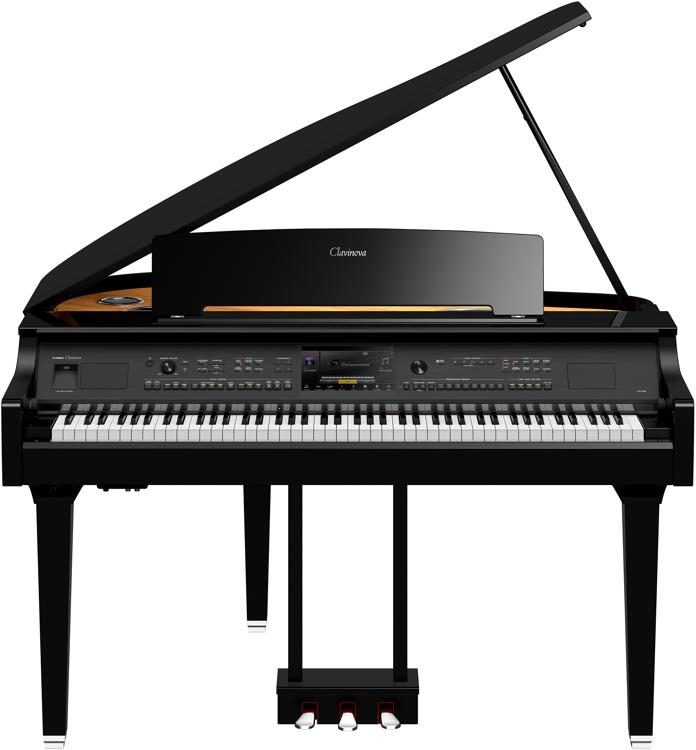
WHAT is your favorite musical instrument? It wouldn't be surprising if your answer was the piano. Over 21 million people play this instrument in the United States alone. And this is not surprising because the piano has many properties that make it ideal as a musical expression for both the hobbyist and the seasoned professional.
The piano's eighty-eight note spectrum is the broadest of all standard instruments. Their notes can be higher than a piccolo and lower than a bass violin. Due to its construction, it is possible for a pianist to play the melody and the accompaniment at the same time. In fact, two pianists can play up to twenty-four notes at the same time in a piano duet. The piano is suitable for many different musical styles and adapts to almost any combination of instruments. However, even the beginner can quickly learn to play simple songs that sound quite enjoyable. Without a doubt, you are one of the millions of people who love to listen to piano music, or maybe play the piano.
Have you ever wondered what goes into the big wooden box when listening to piano music? What creates this beautiful sound when the player touches the long row of black and white keys? How did we get the piano?
The piano is a relatively new development in the history of music. Although there are recordings of important instruments dating from the mid-14th century, it was not until around 1700 that the first real piano was born. It was the invention of Bartolomeo Cristofori, a harpsichord maker in Florence, Italy. The harpsichord had become the most popular keyboard instrument of the time, but had the disadvantage that it could produce music at almost one volume because the mechanism only played the strings. The variation was achieved by adding multiple sets of strings, but the player still could not significantly change the sound of the way the note was played. Cristofori's invention, on the other hand, uses small hammers that strike the strings instead of pulling them. This innovation allowed the player to control the sound of each note with the force with which they hit the fret. He could stress certain notes and had his full volume from piano (piano) to viola (viola). The new instrument was called Gravicembalo con Piano e Forte ("Harpsichord with softness and strength") and was then simplified to "Piano" and finally to "Piano".
While the piano underwent many changes in the years that followed, Cristofori's instruments had the essence of the modern piano: strings, hammers, keys, dampers (small pads that rest on the string to interrupt the note when the key is pressed. is released) and a drain, a device that drops the hammer. the string while holding the belt down. Cristofori's piano, however, had little success in Italy. As a result, he recreated the harpsichord and passed on the development of the new instrument to others.
The Germans who lived in Germany, Austria, England and the United States made the most important contributions to the development of the piano in the following years. At the start of the 18th century, Gottfried Silbermann from Freiberg got acquainted with Cristofori's design and started building the piano. Later, his pupil Johann A. Stein began construction in Augsburg in southern Germany.
For the piano to evolve, musicians had to appreciate the instrument and be encouraged to write piano music. Johann Sebastian Bach, the great German composer, is said to have played the Silbermann piano, although his imagination never woke up. However, two of Bach's sons, Carl Phillipp Emanuel and Johann Christian, made significant contributions to the acceptance of the piano. C. P. E. Bach wrote the first reliable guide to piano fingering, an essay on keyboard instruments and 210 keyboard compositions. His younger brother Johann Christian awarded the first public piano performance in London in 1777. The first composer to write exclusively piano works was Muzio Clementi, who published three sonatas in 1773.
However, the Austrian Wolfgang Amadeus Mozart is the one who became the most famous pianist composer of his time and contributed more than any other composer of the 18th century to the development of piano music. He wrote his first piano concerto at the age of eleven and composed many more during his life. He preferred the piano of German and Viennese producers, in particular Johann A. Stein. These pianos reached the peak of their development at the end of the 19th century.
**The piano gets all its meaning**
During this period, another piano school was developed in England, run by the Broadwood Company. Their piano was larger, narrower and could therefore produce a louder sound. This type of piano indicates the direction that the piano's construction would take in the early 19th century. With the development of the piano and the composition of the music, more and more demands were placed on the instrument.
Ludwig van Beethoven, who performed in Vienna in 1792 at the age of 22, had enormous technical abilities and was also known for his expressive depth and power. The music was really piano music. Many of the songs that were published before Beethoven could be played on most keyboard instruments and are often described as "for harpsichord or piano". But it was not a question of Beethoven's music. It was piano music and required the best player and instrument, often more than the piano of the time could offer. Beethoven was known for striking the piano with such force that keys, hammers and strings flew during performances.
To meet the pianists 'increasing demands, piano manufacturers have built larger and heavier frames to support the strings' desired tension. The real solution to the problem was the one-piece cast iron frame. In 1825, the idea was applied to the "square" piano (similar to harpsichord) by an American craftsman, Alpheus Babcock, and integrated into the grand piano by Jonas Chickering of Boston. It was later improved by the New York company Steinway & Sons, whose chassis, developed in 1855, served as a model for all subsequent pianos to date. In all respects, the mid-19th century piano was the instrument we know today, although many refinements are still being made.
**How the piano makes music**
So what do you see when you look at a modern grand piano? First, capture a large cast iron frame painted with gilded bronze. 240 steel cables of different lengths and intensities are lined up in the structure, the shortest and thinnest on the right or triple and the longest and heaviest - the serious cables - on the left. Another string is wrapped around the base strings so that they become heavier and can vibrate more slowly. The strings are held in place by "docking sticks" on the curved side of the frame and attached to the tuning sticks along the front of the piano, just in front of the player. These pins pass through holes in the frame and go into a rigid glue board or block of pins. The fighting board is made of maple or other hardwood and the pins are very tight to prevent it from slipping. The strings exert a pressure of almost twenty tons on the board.
In order for the instrument to be able to produce music, the strings must be set in motion. This is accomplished through "action." The only part of the action we usually see is the fingerboard, but when you hit the straps a perfectly balanced mechanism kicks in and you throw a small covered hammer on a string. The hammer strikes the string for just one hundredth of a second before it snaps into place and is ready to hit again. Each of these small mechanisms is called an "escape" and there are eighty-eight in a piano. The stock contains a total of more than 8000 different pieces. The guitar neck also activates "dampers", which are filter strips attached to wooden frames that rest on the strings. When you press the button, the damper rises so that the string can vibrate freely as long as the button is held down. When the key is released, the shock is activated again and stops vibrating the string.
All piece dampers can also be increased at the same time as the damper or "damper" driven by the musician's right foot. For most notes, each hammer strikes three set strings together. The lowest notes have only two or one string. The left pedal is called a "single string" or "soft" pedal. Move all action to the side so that the hammer hits fewer strings and makes a lower sound.
However, it is not enough to set the strings in motion with the aid of the action, as the vibration of the thin metal strings creates such small air waves that the sound can hardly be heard. For this reason, the piano contains a device common to all stringed instruments, a "resonance chamber". The sound box is a thin piece of spruce that covers the entire bottom of the piano (the back of the piano). In order to transfer the vibrations from the string to the sound card, the string is passed over a wooden bridge which is attached to the sound card. The vibrations pass the bridge and the sound card starts to move. The thin area you hear is due to increased air wave vibration from the sound card.
Piano builders make the piano attractive not only to the ears but also to the eyes by installing the instrument in a beautiful box that also serves as a second resonance box. Many piano cases come with beautiful veneers of mahogany, walnut or other fine woods. Some pianists prefer the simple elegance of the traditional black ebony finish. When finished, the modern piano will contain over 12,000 parts. It is a marvel of technology and design and the result of over 250 years of continuous development. As a result, it generates a lot of noise. No wonder composers have been fascinated by the seemingly endless musical possibilities, and pianists themselves never tire of playing.
Hot water
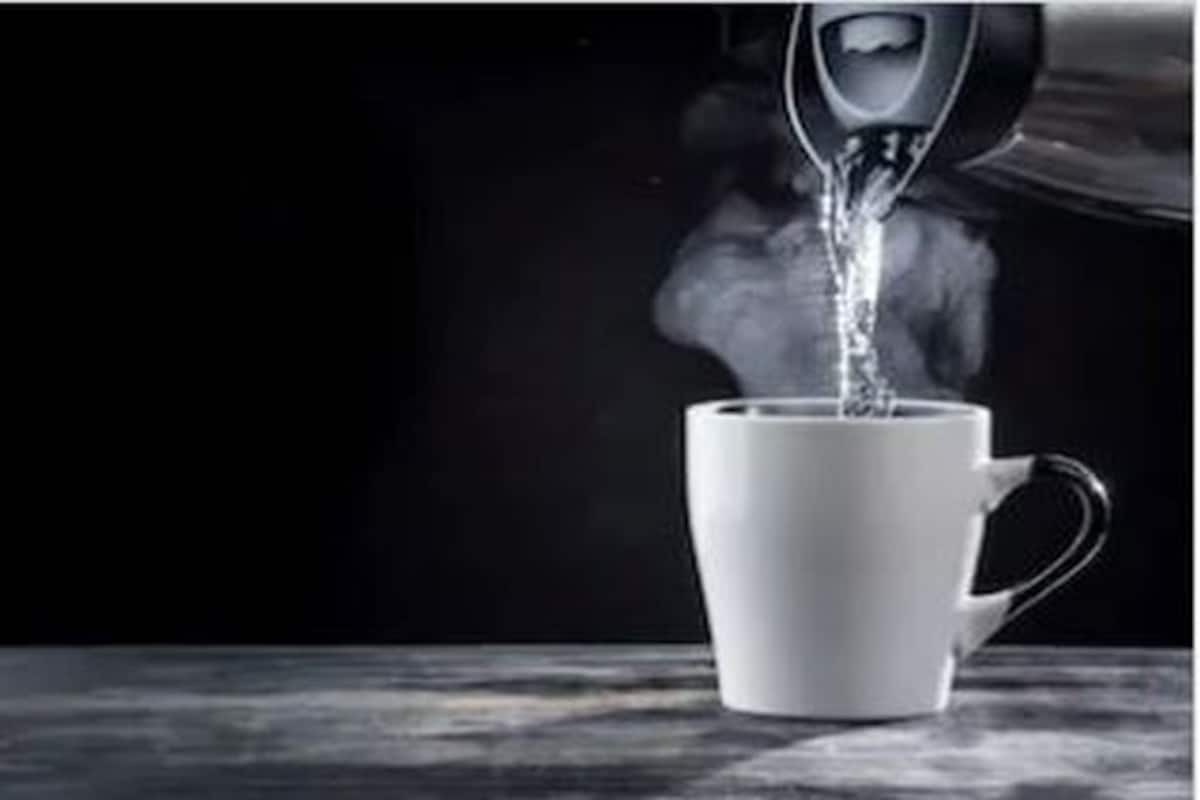
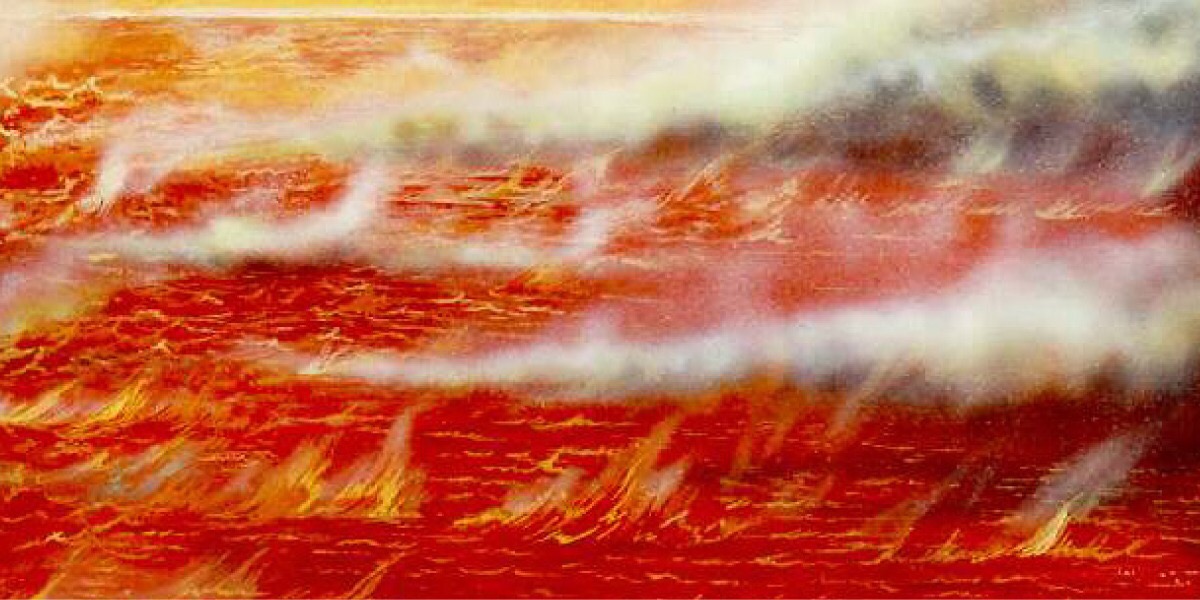
Some of the warmest sea waters are found in the Persian Gulf. The surface water temperature sometimes exceeds 90 degrees Fahrenheit (about 32 degrees Celsius) during the summer months. At sea, the areas with the highest water temperature are north of the equator.
The “Lake of fire" is it literal or symbolic?
The Bible book of Revelation often mentions a "lake of fire." We read, for example, of a symbolic "beast" and a "false prophet": "During their lives they were both cast into the lake of fire burning with sulfur." (Revelation 19:20) The next chapter adds to the thought of torment and says: “And the devil. . . he was thrown into the lake by fire and brimstone, where the beast and the false prophet were already; and they will be tormented day and night forever. "Revelation 20:10.
Many believe that this refers to true conscious torment forever in true fire. However, the book of Revelation contains many "signs" or symbols. Is the lake of fire and its torments symbolic? There is enough information in the Bible to draw the right conclusions. I like? 'Or what?
The book of Revelation defines the lake of fire and says: “And death and hell were cast into the lake of fire. It means the second death, the lake of fire. (Revelation 20:14; compare 21: 8). In what sense is death called a "second"?
Scripture says, "It is for man to die once for all, but after this judgment." This death "once for all" is due to sin inherited from Adam. The second death, however, is different. In what direction
According to the Bible, the Atonement of Jesus Christ allows for the "resurrection of the righteous and the unrighteous." (Acts 24:15). The Bible foretells that those returning from the dead during Christ's millennial reign will experience a period of "judgment" that will enable them to have eternal life. and stay away from your old bad habits.
What about those who do not repent of their sins against God and who do not want to live up to God's righteous standards? Revelation 20:15 says that "those who were not found in the book of life were cast into the lake of fire," which is the "second death." What does it mean?
Obviously, it means death forever without hope of resurrection. Because it lasts forever, this death is different from the one that Adam brought to all his descendants. It is a second type of death, properly called "second death."
Those who suffer a second death may not be aware of any literal torment in the real fire. The Bible assures us that the dead are "at rest," "know nothing." (Job 3:13; Ecclesiastes 9: 5; John 11: 11-14). So how are we to understand the biblical references to eternal torment?
The word of God first mentions fire and brimstone in connection with the fall of Sodom and Gomorrah. Interestingly, the biblical writer Judas explains: “Sodom and Gomorrah and the cities around them. . . they are presented to us as an example of warning before the court of punishment for eternal fire. But what really happened to these cities? Jesus himself said, "On the day Lot came from Sodom, it rained fire and brimstone from heaven and destroyed them all." For the people of Sodom and Gomorrah, fire and brimstone meant death. The true literal fire stopped burning thousands of years ago. But the destruction and devastation of cities continues today.
In the same language, the prophet Isaiah announced the fall of Edom: “His rivers must be turned into pitch and his dust into sulfur; and your earth becomes hot tar. He does not go out day or night; Its smoke will continue to rise indefinitely. It will dry up from generation to generation; No one will ever cross it forever. (Isaiah 34: 5, 9, 10) However, according to the same prophecy, the wild creatures of the desert would take their place in the ruined land. Indeed, the fire, the smoke of which continues to rise indefinitely, cannot be literal. Instead, it represents the total and permanent destruction of prosperous Edom.
When it comes to agony, it should not be taken literally as a conscious experience of suffering. In the Greek version of the Septuagint of the Hebrew Scriptures, the word torment (basanos) is used repeatedly to denote death. We read, for example: "And if the righteous depart from his righteousness and commit injustice, and I bring retribution [basanos, literally 'torment'] before him, he shall die." God later said to Ezekiel, “All who fell by the sword are dead. . . He received his sentence [Basanos] "and that the people" who come down kill Hades. . . he received his sentence [basanos]. Bagster's translation of the Septuagint in English adds a footnote to Ezekiel 3:20 and says, "Based on the Old Testament, this appears to involve punishment." And the punishment or torment mentioned in the Scriptures that Ezekiel quotes here is clearly death.
Other references to the biblical meaning of torment are the statements in Revelation about the symbolism of “Babylon the Great”. We read: "And I heard another voice from heaven". . . While she [Babylon the Great] gloried and lived in shameless luxury, you grant her the degree of agony and pain. . . . And the kings of the earth. . . They will cry and cry as they watch the smoke burn as they stand a distance away in fear of their torment. '”(Revelation 17: 1-5; 18: 4, 7, 9, 10) What is the significance of Babylon's great torment of fire? An angel declares: "With quick liberation Babylon the great city will be overthrown and never found." Again, the fiery plague relates to destruction and death and in the case of Babylon lasts forever.
What does our research show on the lake of fire? We have learned that in the case of Sodom, Gomorrah and Edom, the “eternal fire” was a symbol, that is, the total destruction of these cities. "Torment" is also found in the Bible in connection with destruction and death. Since the Bible states that the lake of fire "means the second death" and the dead "know absolutely nothing", it is clear that being tormented forever in the lake of fire must be symbolic. It means complete and eternal destruction for all repentant adversaries of God who are “cast” upon.
Corn:A plant in the service of modern man since Ancient Times
Hot buttered popcorn, juicy corn on the cob, sweet and sweet corn muffins, freshly baked; yes, corn or corn, prepared in different ways, is very popular. But did you know that corn has recently been introduced in many countries, while in others it has a very long history?
When Christopher Columbus set sail at the end of the 15th century, corn was unknown in Europe. However, it was subsequently cultivated widely throughout the Americas, from Canada to Chile. Today, almost 500 years later, corn is also produced on a large scale in countries such as China, Yugoslavia, the Soviet Union, South Africa, India and Romania.
Perhaps 3000 years ago, the first producers of corn were the American Indians, Aztecs, Incas, Mayans, and others. They believed that corn was a god or goddess and even believed that they themselves were formed from corn. Each indigenous tribe had its own rituals, dances and ceremonies to honor the god of wheat. When a person died, grain was buried with him, in the belief that it would give him seed.
For those with limited knowledge of corn, it may be surprising to know that there are varieties such as black corn, pink corn, red corn, and white corn, as well as the more famous yellow corn.
Nowadays, new varieties are obtained by artificial hybridization. To get a new seed, cover the ears of corn with bags so that unwanted wind-blown pollen does not fertilize the seed. Pollen is taken from the same plant to fertilize it. In this way, pure strains are obtained. Later, they can be crossed with another pure variant. Sometimes a third cross is done to get the best results from the mother plants. The seeds of these hybrids are very productive. However, the downside is that new seeds must be acquired with each sowing.
We can now take a closer look at the cultivation of corn. The plant itself is diclinical, that is, the stem and pistils (male and female reproductive parts) are in separate flowers. When the plants are crowned with a bouquet of male flowers, golden in color because of the pollen, the corn is said to be in bloom. The wind spreads the pollen and fertilizes the female flowers that grow along the stem of the plant. There are usually two or three of these flowers per plant, supported by broad green leaves that sometimes reach three meters in length.
When the flowers are fertilized, the corn kernels begin to grow on the plunger. Then, before the corn reaches maturity, more roots grow from the protruding ends of the lower roots and spread madly into the soil.
To get a good harvest, when not buying hybrid seeds, you should choose seeds of uniform size and shape of sturdy plants and excellent pistons. This seed should be planted in deep, cool soil rich in humus, nitrogen and moisture. Corn also needs a lot of sunlight. Careful cultivation is necessary because although corn survives in almost any soil, it will not produce abundantly until its growing conditions are more favorable. When the plants are about a third of their height, the corn bed should be cleared and the soil lifted around the base of each plant to provide support and nutrients to the soil. When the skin turns from green to grayish yellow, it is time to harvest the ripe ears. In many places, harvesting the corn is followed by replanting beans or other legumes to replace the nutrients the corn takes from the soil.
Is this culture really worth cultivating? Ensure. Think for a moment about some of the extra products that come from corn: coconut oil, dressing, margarine, syrup, and candy. Some alcoholic drinks are made from fermented corn mash. Grains, pots and leaves are used as food for livestock and other pets. In addition, many non-food products are made from derivatives of corn: soap, cosmetics, glycerin, explosives, drugs, adhesives for stamps and envelopes, gums, shoe soles, sponges, paper, etc.
We have good reason to love this wonderful plant. It provides further evidence that the true God has provided diversity for human needs.

The water you drink
"Drinking water", Leonardo da Vinci once wrote, "can be healthy, unhealthy, laxative, sulphurous, sad, angry, red, yellow, green, black, blue, oily, oily and thin".
The water you drink today probably has some of these properties. But even today, around 500 million people are said to be constantly sick from the water they drink. Ten million of them can die every year.
Surprisingly, even the developed countries that pride themselves on their “safe” water are now fighting. Modern agriculture and industry are introducing a growing list of potentially hazardous and difficult to eliminate chemicals from drinking water sources. “Anything that makes life easier seems to pollute the water,” said a US Senate hearing expert on the issue.
**Life depends on it**
Despite these problems, water remains one of the most wonderful and absolutely necessary substances. The existence of life on earth is based on this. In fact, water is the most important component of most living things. The human body has been described as a "virtual walking bag containing dangerous fluids". About two-thirds of your total weight is water, while three-quarters of your brain and muscles is water.
From this, it can be seen that life works best in the narrow temperature range in which water is present in liquid form. It is said that such an environment in which life can practically exist does not exist in other parts of the universe. Although scientists are speculating on the potential millions of planets in the universe, the book Water: The Web of Life is:
“When we learn about the truly unusual conditions on earth. . . We wonder if we might even find a duplicate Earth among millions of planets. . . . Apparently, there are a number of very special events that lead to a planet with liquid water on its surface. "What water does to support the life of your body shows just how remarkable it really is.
**Water in action in you**
Blood is often equated with the life of the creature, as in the term vital blood. Preferably, the blood is more than four fifths of the water. The unique properties of water make it ideal as a base for this vital fluid. For example, more substances are dissolved in water than in any other liquid. It also has the unique ability to move freely back and forth through the cell walls of the body, carrying the chemicals of life with it. At the same time, it functions as a medium in which complex chemical reactions take place in cells.
These reactions “burn” the food you eat for fuel and generate heat, just like a car engine burns when it burns. But how does your body maintain a constant temperature of 98.6 °? The water! If the water in your body were a different liquid like mercury, the heat in your cells would tend to rise in temperature thirty times faster than it does. This is because water takes a lot more heat to change temperature than most other substances.
But water also serves as another means of controlling body temperature. The rapid circulation in the bloodstream keeps the heat relatively even and quickly transfers excess heat to the skin to radiate into the air. On the other hand, the heat stored in body water gives your extremities a pleasant warmth when you are cold.
Even with this amazing system, your body usually cannot get rid of the heat it generates quickly enough. Then another fantastic property of water comes into play: evaporation. How it helps
When half a liter of water evaporates, it absorbs around 1,100 times more heat than when the temperature rises by only one degree! Feel this cooling effect when the wind dries the moisture from your skin. Since about two liters of body water is normally evaporated daily by breathing through the skin and lungs, this usually releases too much heat.
But on a hot day or when activity returns to normal, the sweat glands exhale more water, maybe liters, per day. All the sweat that evaporates from the surface, instead of running, brings with it enormous amounts of heat - truly a wonderful cooling system!
**Your need for water**
Since water is such an important part of our existence,we must take care of our body. Although a person can survive for up to eighty days without food, can go more than ten days without water. With a very small drop compared to normal water content, you quickly get thirsty. Even a 1% or 2% lack of water can be worrying or painful. Only 5% cause tightness of the skin, dry mouth and tongue and hallucinations occur. A loss of 15% is usually fatal.
Your body is constantly losing water. In addition to the two liters that are normally lost through the skin and breathing, another three or more liters can pass through the kidneys and intestines. Water and even tears drained through sweat should be added to the normal five or six liters, which should be replaced daily to maintain the body's water balance.
Does that mean you have to drink three liters of fluid a day? If you do not sweat a lot. In fact, about a third of the water we need comes from consuming "solid" foods, which are often primarily water. The bread is also about a third of the water. Interestingly, almost a quarter of how the body's cells chemically produce water (H2O), because they use oxygen (O) to burn hydrogen (H) from food for fuel.
Therefore, you may need to drink only five or six glasses of liquid such as milk, coffee, juice or water directly a day. Although water is one of the most common substances on earth, it is an important task to provide enough drinking water. Because it can dissolve so many different substances, water is not always drinkable without cleaning it.
**Make drinking water**
Drinking water can rarely be described as "pure" or "pure" in the chemical sense, as it almost always contains dissolved gases and minerals. To make the water "drinkable" or drinkable and good, it is not necessary to remove all impurities. In fact, some of the basic elements for good health and good taste are often found naturally in good quality drinking water.
Fresh groundwater from springs and wells is often, but not always, drinkable due to filtration and purification that occurs as it sinks through layers of soil and porous rocks. Even soft surface water can be cleaned. During movement, tap water tends to break down, dissolve and dilute the debris that has entered it to make it harmless, so that the heavier particles can settle. Wind and turbulence help ventilate running water, emit unwanted exhaust fumes and absorb oxygen.
Dissolved oxygen is important for an incredible gradual "digestive process" that takes place in moving water. Oxygen can directly oxidize or "burn" waste, neutralize it or more often support bacteria that make the waste harmless waste.
As it develops, the small life forms consume bacteria and remove more water. Sunlight penetrates more easily and promotes the growth of green algae, which in turn consume certain polluting compounds and releases a lot of oxygen in the process. The small aquatic creatures feed on algae and complete the "digestive cycle". In this way, fresh water tends to purify over time.
But even this wonderful system can suffer from indigestion, just as you do when you eat too much of the wrong things. Drainage from agricultural land usually contains chemical fertilizers and pesticide residues. New industrial waste networks connect them to our water sources and suffocate them with an infinite amount and amount of chemicals, often outside the capacity of the natural cleaning system. Consequently, according to preventive medicine and public health, self-purification has "at best become half-truth and has been used very often in the past to justify the acceptance of dangerous water." Today, almost all societies in developed countries treat water in one way or another before using it.
In this way, their methods often follow nature. Therefore, ventilation is usually the first step in a typical cleaning system. Water is sprayed, cascaded, or air bubbles to take in as much cleansing oxygen as possible. Then certain chemicals are added that stimulate pollutants and bacteria to "herd" together. This coagulation process accelerates the natural sedimentation process, which ends with sedimentation. Filtration is then done, usually through sand filters, to remove any remaining flakes and most other contaminants. Eventually, disinfection kills most of the remaining living organisms, usually with the help of chlorine.
**Problems with water treatment.**
You would think that the above process would remove anything dangerous from the water you drink. However, recent research from the United States Environmental Protection Agency (EPA) suggests that small amounts of many chemicals are getting into the crane in some cities. Some of these compounds are known to cause cancer. The irony here is that many are viewed as high chlorine compounds that are added to make water safe to drink.
Some doctors also show evidence that chlorine can trigger the formation of cholesterol in human blood vessels, which can lead to heart attacks and strokes. Joseph M. Price, MD, in Coronaries / Cholesterol / Chlorine, says that it is "one of the greatest paradoxes in history" that a public health measure responsible for saving so many lives must be suspected of being responsible for many chronic diseases of adult life ".
Although these results are controversial, hundreds of cities in Europe, Russia, Canada, and Japan prefer alternative methods of sanitizing their waters. For example, in Nice, France, ozone has been used in place of chlorine for over sixty years. Paris, since 1968. Ozone is an unstable form of oxygen that reacts with water in a chemical intoxication, quickly oxidizing pollutants and leaving no ozone residue.
Others offer granulated activated carbon instead of or in addition to conventional sand in filters. Activated carbon has a unique chemical "viscosity" that "absorbs" contaminants. It is said that a single pound exposes more than four million square feet of activated carbon surface to remove contaminants. Many American environmental activists are putting increasing pressure on them to force the adoption of such alternatives.
**Water as medicine**
Should citizens receive massive medical treatment with clean water? This problem still contradicts fluoridation, even though nearly half the American population now drinks fluoridated water. Children who drink treated water only have between half and a third of the cavities.
Opponents cite the fact that most people do not benefit from it as it certainly only helps young people. In addition, they claim that some who drink more water than others are at greater exposure to potential hazards, which are likely to include Mongolians, cancer, and shorter lifespans. While most medical authorities ignore the fee, opponents of fluoridation say they should be free to choose.
Some people fled in bottles of water for safety reasons. However, recent studies show that even some water bottles cannot be considered safe. A doctor writes in Medical World News' annual cardiovascular journal suggesting boiling drinking water to remove free chlorine. But even cooking doesn't necessarily eliminate other harmful compounds.
Surprising Sauerkraut
DINNER is special. In the middle of the table is a large pineapple that has been dug and filled with pineapple pieces and something white. Grated coconut? No, sauerkraut! Surprised? Not if you live in Germany or Poland.
German chefs not only serve sauerkraut in the traditional way, as a complement to meat dishes (especially sausages or pork), but also use them in combination with other foods, such as mixing them with grapes for a "spicy side dishes". There are recipes for polishing your sauerkraut in wine, with dried or pickled mushrooms. There are also kraut soups and salads. Yes, sauerkraut is popular.
Popular in many places, yes, but is it nutritious? Just think of an accident in long history. Did you know that sauerkraut was crucial in defeating the once feared "sailor's disease" scurvy? Scurvy is a disease caused by vitamin C deficiency "which generally reduced ship crews on long voyages" because they did not get fresh vegetables. In the late 18th century, British Captain James Cook discovered that sauerkraut, along with other vegetables and fruits, prevented and treated this disease. He began one of his journeys with a 7,860 pound stock of sauerkraut!
Even today, due to its vitamin and mineral content, nutritionists recommends raw sauerkraut.
In light of this, some may ask: "How to make sauerkraut?" Can it succeed at home? Yes, and the basic formula is very simple. Basically, if a person has access to fresh kale, they can make their own sauerkraut. Even a five-gallon frying pan is long enough for a family of four (depending on appetite, of course).
A German chef explains a basic recipe for "raw" sauerkraut in a five-liter bowl: "You need a bowl of glass, crockery, wood or earthenware; but do not use metal. If you have a vegetable slicer that is good, but if you do not, cut each cabbage in half and then slice the leaves into slices about one-eighth of an inch wide. Lengthen the chopped cabbage on the bottom of the pan and then use a mortar of some kind (slightly to squeeze the cabbage, but not with sharp points), wrap it tightly until it is about four inches thick. You can place a ruler or stick in the pot every ten inches marked to know when you have the right amount of diaper.
Now sprinkle a tablespoon of salt over this layer. Continue to wrap another 10 cm layer and sprinkle on top of the new layer with salt. Keep doing this until the container is almost full.
Place four whole cabbage leaves on top of the last layer of salt and then place a board on top (a piece of wood that is smaller than the opening at the top of the pot so that the board lies directly over the cabbage). Place a heavy stone on top of the board. For a pot of five liters, a stone of ten pounds or more is enough. When it boils, you can keep it warm somewhere, but when it turns into sauerkraut, store it in a cool place, perhaps in the basement.
“And now for the difficult, be patient! Cabbage takes about six weeks to turn into sauerkraut. At the end of this period, remove the upper cabbage leaves and also the upper rest. Then remove the first half inch or more (it gets darker than the rest of the sauerkraut) and below you you have enough sauerkraut for many meals.
There are many recipes for making "raw" sauerkraut that show their amazing versatility. In addition to adding salt to each layer, you can add cumin seeds, a combination of juniper berries, mustard and onion seeds, grape leaves or sliced apples. Garlic can also be used, but in moderation.
Surprisingly easy to make, surprisingly versatile in its uses, surprisingly healthy - Sausages can be a food you can think of for your family.


The life of A Mammal
MAN can live seventy or eighty years, but few other mammals can live that long. If we base a mammal's life on the number of heartbeats rather than years of existence, it's easy to calculate whether humans really live longer than some of those who live with their mammals on earth. On average, a mouse lives about 3.3 years, but its heart rate is around 550 beats per minute. There are approximately 526,000 minutes per year. So if we multiply the number of minutes per year by the number of beats per minute and then multiply it by the life expectancy, we get about 950,000,000 beats for the average mouse.
The same type of calculation can be done for other mammals such as dogs, horses, cows, and elephants. For example, an elephant with a heart rate of 20 per minute has a total of about 736.3 million beats in a 70-year life, much less than a mouse. It appears that mammals generally receive about 1,000,000,000 heartbeats or less in their lifetime. However, if you do the same calculation for humans, assuming 72 beats per minute and a lifespan of 70 years, the number of beats given to humans is about 2,600,000,000, more than double that of many other mammals. .
Isaac Asimov concludes in his book The Human Body: “Since trees have no heart and turtles (and cold-blooded creatures in general) beat very slowly, it is safe to say that the human heart surpasses all. other. It surely surpasses other mammalian hearts in a ratio of 2 1⁄2 or even 3 1 to 2 to 1 ... The human body is therefore, in all humility and from a completely objective point of view, the most wonderful that we know. “This is because the human body was designed by its Creator to live very much longer.
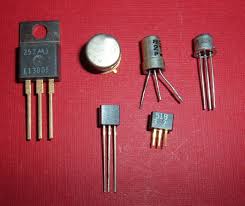
Transistor - Tiny Titans of Electronics
Miniature radios, televisions, headphones - they are very much indebted to their little electronic titans called transistors. What is behind these electronic wonders? The ideas have a lot to do with a branch of physics called quantum mechanics, which is about very small objects, such as atoms and electrons.
What do transistors do? What are its benefits? How they are created
In principle, a transistor does the same job as a vacuum valve. Many of its applications focus on its function as an amplifier. In other words, the transistor amplifies the signals received, for example with radio and TV antennas.
It can be believed that this amplifier takes a small amount of an electrical signal on one side of the transistor, copies it and produces a large amount of wiring diagram on the other side. The transistor used as an amplifier takes an electrical image as current and produces perhaps twenty times the input current with the same wiring diagram.
BENEFITS
You may be wondering if transistors basically do the same thing as a tube, why bother? Because the transistor has advantages over its ancestor, the vacuum valve.
The first advantage is the small size of the transistor. That's about one-hundredth of the size of a similar performance vacuum valve; In other words, a tube can be the size of a human thumb, but a transistor is the size of a pea. Thanks to transistors, it is possible to miniature all types of electronic devices.
Another advantage of these small electronic titans is that they can run on much less current than pipes. This is because transistors do not have a filament or a heater. For a tube to work, it must have a heater called a filament (like a burner in a much smaller electrical area) to "boil" electrons from the cathode or electron-emitting area of the tube. pipe. The transistor does not need such a heating element. And since the transistor barely produces heat, it does not heat up. When a pipe overheats, it consumes energy.
Other advantages are: the transistor, which does not need heating as valves, starts working immediately. The transistor is also more durable because it does not have thin wires like dangling tubes. As a result, the transistor has higher reliability. Some people estimate that a transistor that works all day and all night, every day of the year, would last eight to ten years. There are actually few reasons why these little electronic titans wear out; but shocks, sudden changes in temperature and humidity affect them.
Due to its many advantages, the communication satellite is one of the things that transistors have made possible. On July 3, 1962, the Telstar communications satellite was used to broadcast live television from the United States to Europe. Telstar received signals from a ground station in the United States, amplified these signals and then transmitted them so that they could be detected at another remote ground station. Because transistors run on very little current, batteries powered by sunlight can be used to supply power. The Telstar satellite uses a vacuum tube, 1,064 transistors and other semiconductor devices. The communications satellites launched by Telstar use all transistors. But what are transistors made of?
MADE OF SEMICONDUCTORS MATERIAL
Materials that conduct electricity very simply are called conductors. Silver, aluminum and copper, for example, are conductors. Why is a certain material a good leader? This is due to the large number of free electrons in the material. What exactly do we mean by "free" electrons? Well, electrons are free in these materials because they can easily move from one atom, including the conductor, to another.
Unlike materials that are good electrical conductors, some materials are called insulators. These materials do not have free electrons. Consequently, electricity will not easily pass through them. Of course, these materials are used in household appliances to avoid impact. That is why we have rubber-lined electrical sockets and plastic light switches.
There is still a third class of materials: a type of solids called semiconductors. Materials in this class do not conduct electricity very well or are good insulators. Therefore, these materials are called semiconductors. Germanium (discovered by a German chemist and named for Germany) and silicon are the best-known semiconductor materials.
Now, why is the third class of materials not suitable for use as a conductor or an insulator? The reason they are just good conductors is that they don't have free electrons. They are also not good insulators, because it doesn't take a lot of energy to produce free electrons. In fact, the number of free electrons increases about a million times when the temperature rises from 0 ° F to about 350 ° F.
Transistors start with a pure crystalline semiconductor material, and since that material is in the solid state of matter, as opposed to liquid and gaseous states, transistors are considered "solid state" devices.
IMPURITIES MUST BE ADDED
Interestingly, semiconductor material cannot be used with great force in its pure state; but when the right amount of impurity is added it can really work.
But why do we have to add impurities? Because a slight trace of certain impurities produces few free electrons or no electrons. Therefore, some impurities do not produce free electrons, but do remove electrons from some atoms in the semiconductor. The result? Lack of electrons in an atom. This is called a hole. However, the advantage of a "hole" is that it can move from one atom to another. And a flow from these "holes", moving from one atom to another, forms an electric current. The "hole" becomes a carrier of positive electricity, which is the opposite of the negatively charged electron.
The semiconductor material that has free electrons is called n-type (due to the negative charge). When the material has "holes" or electron deficits, it is called p-type (due to the positive charge).
To illustrate: if arsenic dissolves in very pure molten silicon or germanium, then there are a large number of electrons that can be considered nearly free electrons. The result is an n-type material because the arsenic atom has five outer electrons per atom, while germanium has only four, so there is an abundance of electrons. These electrons are easily excited to become free electrons.
What happens if boron or aluminum is added to the semiconductor material? Well, these two elements have only three outer electrons. So there is a shortage of electrons compared to germanium; therefore, there is a "hole". The result is a p-type material.
MADE OF LAYERS OF MATERIAL
Therefore, the transistor is made of a layer of p-type material sandwiched between two types of nodes. This is called an n-p-n transistor. Or a transistor may consist of a layer of n-type material between two types of sheets. This is called a p-n-p transistor.
The junctions where these materials meet are where the amplifying action occurs. Valves can be considered that make the current flow freely or not, depending on how the electrical potential or voltage is placed between these two junctions.
MICROMINIATURIZATION
Although the transistor is small and consumes little power compared to the valve, new developments have made electronic packages smaller than possible, even with transistors. They are called integrated circuits or simply integrated circuits.
In this new development, the transistors along with other elements of the circuit are assembled in a series of layers. These little packages are complete circuits rather than a single component (like a transistor) in a circuit. Integrated circuits allow micro-miniaturization.
The annual World Scientific Year of Science Book states: “Today's integrated circuits are one-tenth of an inch square and a few thousandths of an inch. Like transistors, they use little electricity in the form of heat and therefore require relatively little cooling. . . . A TV made entirely of integrated circuits, with the exception of the CRT and the speaker, would fit in a small matchbox. "
To illustrate the difference between complete circuits and individual components of a circuit, consider a box the size of a half gallon milk container. Now a circuit containing perhaps one hundred conventional parts can be placed in this box. But with integrated circuits, how many parts can be placed in the same space? About one billion (trillions).
So the new development is really amazing. Human advances in the art of miniaturization are largely due to transistors, these small electronic titans. However, the microminiaturation itself is not new. The creator of man micro-miniaturized the human brain. He designed it so that about one hundred billion (one hundred billion million) coins could be used in that space.
Bonsai - The amazing dwarf trees
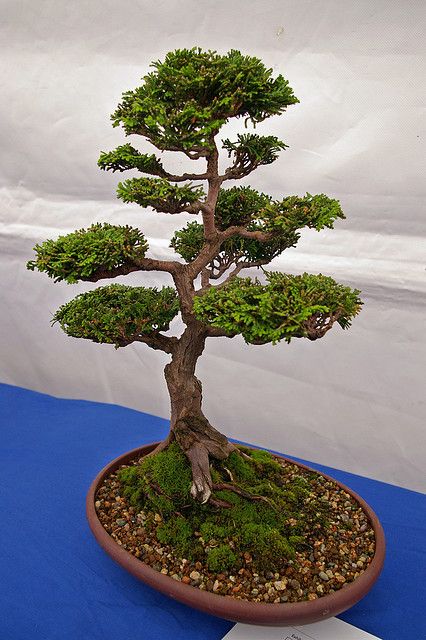
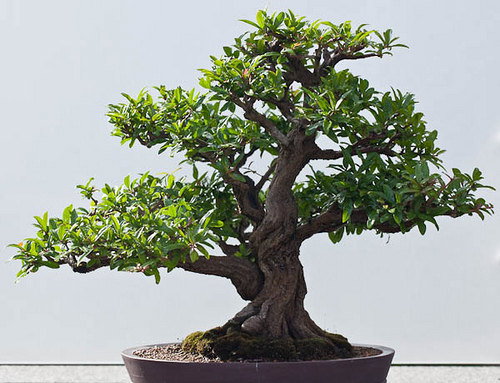
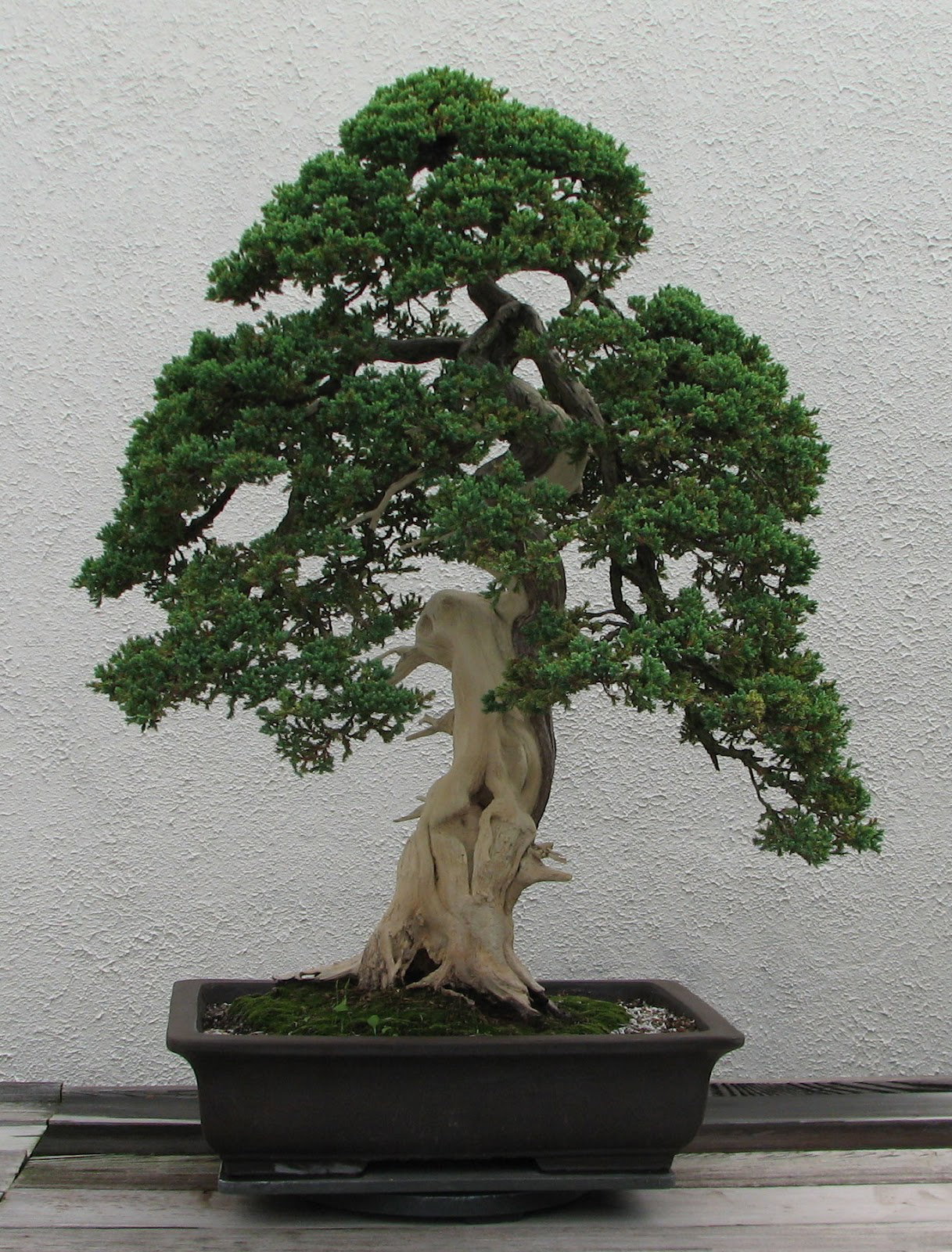
Dwarf trees became known as "bonsai", literally made of bone (shallow pot) and saigh (cultivation) or in other words "potted plant trees". They soon spread to Japan, China, Southeast Asia, the Pacific, Europe and America and found fans almost everywhere. In the 17th century, the Dutch brought this art to the West. Today, it is no longer just a matter of space that inspires enthusiasts and gardeners. It is the graceful beauty of dwarf trees.
Japanese immigrants brought bonsai to São Paulo about 30 years ago. Now they are losing not only imported trees, but also common Brazilian species, such as guava and palm trees, yellow ipe, bougainvillea and more.
Their ages is remarkable. For example, some imported from Japan to Brazil are more than two hundred years old. And in Japan, some would have reached six hundred years, like Osaka.
***How the Dwarfing Is Done***
The natural method of reducing the size of a tree is still the most popular, although chemicals and hormones are used to make specimens even smaller than the conventional height of about fifty centimeters (just under two feet).
The tree is shaped and formed over many years until it takes the majestic form of a large tree. Bonsai can be grown from seeds or cuttings. In the case of seeds, it is best to use them from naturally smaller trees, planted in soil mixed with medium sand. After four to eight months, they germinate and grow normally. The seedlings are planted like any other tree. The miniature trial begins after seven, nine, or twelve months, while still on the ground.
The side roots are cut with a shovel about 15-20 centimeters from the stem. Also at this point, a branch can be bent into the desired shape with a strong wire, which is wrapped around it. After eighteen months, the roots are cut again. This procedure is repeated at twenty-four, thirty-two and thirty-six months. In the crucial first three years, about 60-70% of the seedlings may die.
Then the tree is planted in a shallow pot. This time the pat is cut, leaving about two inches from where the root ends and the trunk begins. Therefore, all growth agents are stopped.
The shape of the boat must be adapted to the type of tree and to the scenario proposed to the observer. It is usually made of clay and its shape and depth should be proportional to the tree.
A wire mesh is attached to the pot to prevent dirt from sticking to the sides. A well-planted bonsai can be removed from the pot at any time, but it stays indoors for two to three years, when the soil changes to keep it from rotting. Then the plant is ready to prune the branches with scissors, and the branches can be bent with wire according to the manufacturer's schedule.
Watering is usually done once or twice a day, except in winter when the tree is at rest. Many people put a dry match on the floor and take it out. If it's wet, they don't water, but if it's dry, they water.
At regular intervals, the tree is taken out of the pot to prune the roots. This continues until the tree is "fully developed" after about ten to fifteen years or more!
Bonsai trees can be left outside in cold weather in the winter. Fresh air is essential, so where there is central heating, they cannot stay indoors for more than a week at a time.
The value of a bonsai tree is in its shape, height and age. The older the tree, the more valuable it is. Although the miniature is large and old-fashioned, it is a tree that will appeal to you,other observers and in your living room.
Set “Purposeful Goals” for Yourself
IF WE want to make progress, if we want to lead a full, useful and meaningful life, we must have goals set before us. Rather than follow the lines of least resistance, “taking it easy,” as the saying goes, being content to drift downstream, we must swim upstream, and to do that we must have goals that motivate us.
Of course, most of us have our daily routine. We get up, bathe, dress, eat and go off to work if we have a job. Or, if we are housewives, we care for domestic duties, or, if we are students, we go to school. But do we perform such daily functions as if pushed along against our will by necessity instead of eagerly doing so in order to reach a worthwhile goal? And what do we do with our leisure time after we have taken care of these necessary things?There simply is not enough time for everything we could or would like to do. So if we don’t set goals, we may find that the things of lesser importance crowd out the things of greater importance. As an old saying has it, “It is never this AND that, but this OR that.” This is a principle behind the counsel, “Never too busy to pray.”
Among purposeful goals that people have set for themselves are those of learning a specific computer program,getting regular exercises which is beneficial for both mind and body,to learn another language besides their native one which can be also most rewarding. Learning another language increases your thinking ability, thus enriching your life. It may also come in handy in other ways,even becoming a means of earning a higher salary in one’s employment.By setting such goal(s) and working at it, you can utilize the time that you would ordinarily have wasted, and eventually you can acquire a useful skill which can prove to be rewarding.And if you are working at a certain routine job, doing the same thing day after day, and that in the same manner and at the same pace,such may well be boring and make you discontented. So why not set yourself a goal that will make it more interesting or more rewarding? Could you find a way of increasing your production? Or could you improve the quality of your work? Could you become more efficient at it, doing the same job with fewer movements? Setting yourself some such goal will make work more interesting, resulting in your having a better frame of mind, and may even result in material benefit to both yourself and your employer.
Do not drift downstream. Be purposeful, set wise goals for yourself, and lead a richer and more meaningful life.What goals have you set for yourself or working at during this pandemic?Be free to share in the comment section.
image credits:https://diva.com
https://teamwork.com