Who stole the rain?
"It has got to be here somewhere." Tareeq whispered in frustration as he scanned through the leather map in front of him, riding his camel up a heap of fine desert sand. Upon reaching the top of the dune, the weary traveller sighed in relief, as his three-day journey was about to end. Smack in the middle of a depression surrounded by sand dunes was the Oasis of Adrua. It was nice to see vibrant life again after days in the drab landscape of the desert. The harsh sunlight, gusts of wind and the choking smell of arid air had not been nice either. He was tired, his camel was thirsty, and he had not taken a bath in forever. With newly found energy that was reciprocated in his beast, he rode faster down the dune.
At levelled ground, he alighted, took his camel by the reins and strolled towards the small town ahead of him.
"And what is an handsome foreigner like you doing in our town?" Tareeq heard a voice behind him.
"Good day ma'am. I was invited to see the council. Something about a recent robbery." He said as he turned around.
"Oh! You must be a seer?" The old woman said wide-eyed.
"Unfortunately not, I just track things. Can you please point me towards Chief Awan's house?"
"No problem boy, I live around there. We can stroll together." She adjusted her shawl, and they both started walking into town.
Unlike the environment outside, Adrua had vegetation scattered all over the town. There wasn't much of a wall around it, and houses were made of clay with some woodwork. People went about in robes and leather sandals. The women wore shawls, like the old woman.
The lake itself was in the middle of town. It was fairly large, and the water was surprisingly clear. Date palms and desert blooms flourished around it. The town was well structured to ensure equal access to water. Women and children were fetching water from all ends. Chief Awan's house was among the houses in the inner circle around the lake. From the looks of the houses, Tareeq deduced that the elders and the rich lived in them. So much for equal access, he thought to himself.
"Thanks for your help ma'am." Tareeq said and bowed.
"No problem. I hope you find what you are here for." She said joyfully and went her way.
"I hope so." he said, and walked towards the door of the chief's house. After a couple of knocks, the door got opened.
"Good day, who are you?" A young lad came out the door.
"I am Tareeq Al'duin, the tracker from Giza. I am here to see the council." He said, taking a glance at the house. It was nice, and had princely furnishing. He then studied the lad at the door, who from his appearance, as well as the brand on his collar bone, was one of the servants of the chief. The servant then led Tareeq towards the meeting place.
The council meeting was being held in what looked like a palace. It tent-like, with vibrant colors, and an impressive interior. In the room, seven elders were seated on cushions in a semicircle. The elder in the middle sat in a big chair made of fine wood. He also wore a white turban with gold strips. The servant bowed, and signalled to the chief at the right, closest to the head chief. The chief stood up and introduced Tareeq to the council, as well as his mission.
"Have you been given any explanation as to why you are here?" The head asked.
"No, my Lord. In the parcel I received, I was only told that something precious was missing."
"Yes. Precious indeed. Infact, necessary for survival." Chief Awan added. He pulled out a jewelry box made of blackwood. Inside it was a beautiful golden necklace. However, Tareeq noticed that the middlepiece of the jewelry was missing.
"What was it?"
"A pearl. And a very important one at that." Awan said as he came to the middle of the tent.
"A long time ago, the pearl was given to this town as a gift from a mysterious gentleman who enjoyed our hospitality. He said it could solve the major problem of every desert settlement: our water problem." He pulled out a golden bowl and showed it to Tareeq, who was intrigued by the claim.
"He instructed us to place the pearl in a bowl of water, and place the bowl on the ground. Every since, each time we did that ritual, rain fell in the oasis. When we had enough water, we would remove the pearl and hide it in the necklace you see in this box. It never failed. Not once! And that is why this oasis is one of the lushest in the desert."
Tareeq listened attentively to what the chief was saying while studying the people present.
"My family has been entrusted with this box for ten generations. A week ago it was stolen from my home. The next day, we found the box outside the town, but the rain pearl was missing. Since then, no rain has fallen and the lake might soon start to dry!"
"How could you have been so careless with something that important?" a furious chief, siting on the left barked.
"It had never been stolen, and I kept it in a good location." Awan said in his defense. "Besides, not many people knew that the pearl even existed, let alone that it had such power!"
"That means the thief must either be unaware of the power, or stole the pearl because of it." Tareeq added. After asking some questions, he bowed and exited the tent.
He was escorted to an inn where he stayed the night. Tired and starving, he took a short nap and then had some flat bread and roasted hare. He woke up around midnight, and he decided to take study the town for clues. While he was ruminating over the issue, he suddenly noticed someone pass by at the edge of his eye. The figure looked suspicious, donning a hooded robe and walking hastily through the row of houses. Tareeq instinctively followed him, watching him from a safe, unnoticeable distance. The person knocked at one house, and almost immediately the resident opened the door. There was somewhat of a transaction and the hooded entity left. After about a minute, Tareeq knocked at the door.
"I thought I told you no business after midnight!" The person said, oblivious of who was at the door.
"Actually, I have some questions."
The man tried to close the door, but Tareeq blocked the door with his leg.
"I promise you won't get hurt if you just answer my questions."
"What if I don't?"
"This will be the last door you ever try to close." Tareeq said with chilling assurance.
The man, realising his assailant was serious, invited the stranger in. Almost everywhere in the man's living area were priced artifacts. The rain pearl however was not there.
"I am looking for a particular precious stone. Not very common around here. You seem to be a dealer of sort."
"Well....if you say so." He chuckled nervously, scratching his head. "I do more of black market trades."
"Yes. That is just what I need." Tareeq said as he examined a sculpture on the wall. "It is a pearl. Did you see any recently?"
"Well, that is oddly specific, and rarely sighted in a desert." the dealer moved to the back. "But, I remember a person bringing a pearl for sale about a week ago. I obviously rejected it because I would never get a buyer in the desert." Tareeq was somewhat relieved. The dealer obviously did not know how powerful the pearl was.
"Do you know who came?" Tareeq moved closer to him.
"Yes actually." He reached for his records. "His master sent him on the errand. One of my frequent customers."
Tareeq was shocked on seeing a seal in the records the dealer showed him. It was exactly the same one on Awan's servant. Chief Awan himself stole the pearl!
The next day, Tareeq called the council and told them of his discovery. They were astonished and immediately sprung to action, arresting the backstabbing chief.
"Why would you do such thing, Awan?" The head chief asked as the guards were hurling him out of the large tent.
"You ask why? My family has suffered long, with no pay from the town, even though my only son died protecting this oasis from attack five years ago. No one helped me! Not one of you." He said in rage, and spat at them.
"So why go through the stress of hiring someone to find you?" Another chief asked.
"I wanted to shift suspicion from myself. If I had known, I would have left everyone in confusion, while I bask in the money I would make from the sale!"
"So you haven't sold it?" Tareeq added.
"Why do we even need a magic pearl to give us water? Our forefathers survived without the pearl! I just relieved us of what was deterring our innovation!" Awan shouted out as they bundled him out.
After the commotion had cleared, Tareeq was handed a bag of coins.
A day later, the rain pearl was found in Awan's house. Tareeq, about to leave the town, watched as they placed the pearl into the golden bowl, and put it on the floor.
"You had best be on your way, or you won't make it far out before the rain comes." The head said as he pointed to the grumbling storm clouds that were forming. That was his cue to leave. Tareeq Al'duin mounted his camel, and rode into the horizon, feeling fulfilled.
I hope this was a nice read. Please feel free to drop your comments. Peace!
The effect of the COVID-19 pandemic on career prospects for the Nigerian medical graduate
INTRODUCTION
Doctors are more important now than they have ever been before. The current unpredictability of disease-causing agents, exposure to unhealthy situations, the ever-increasing global population and the various consequences thereof are pointers to this fact. The medical profession grows more invaluable by the day, and this was proven last year, as the novel COVID-19 tore through nation after nation, forcing 90 countries and territories, and about half of the world’s population into some form of lockdown. It was up to doctors to secure the frontline, amidst the traumatic, unprecedented and unfamiliar coronavirus. Nigeria had her own fair share of the outbreak, recording over 170,000 cases so far, and over 2000 deaths. However, rather than tear down the insufficient Nigerian health sector, the pandemic could boost the prospects of its medical graduates, and improve the sector.
**MAIN BODY**
First, the COVID-19 pandemic could help aggrandise the most common career choice of the medical graduate: clinical practice. Since the establishment of University College Hospital in 1957, the medical education in the 38 medical schools of Nigeria has produced doctors, some of which are known all over the world. Unfortunately, however, Nigeria is an enormous source of medical human capital flight, with many Nigerian trained physicians leaving the country for better opportunities abroad. This is a recurring problem in Africa—a continent that experiences 25% of the global disease burden, but has only 1.3% of the world’s health workers—and it continues to stunt the growth of medical practice in the continent. For instance, of the 80,000 registered, Nigerian trained medical doctors, only about 35,000 practice in the country. In a country of approximately 200 million people, this means a ratio of one doctor to almost 6000 people, when the ideal ratio, according to the World Health Organisation, should be a doctor to 600 people. This deficiency problem, however, is not only faced by African countries. It is estimated that by 2030, Europe would be short of 600,000 doctors, and America would be short of 121,900 doctors by 2032.
The pandemic made things worse. The demand for healthcare givers (including primary care physicians and specialists) is much greater than the number available to fill the positions. The high rate of physician and nursing staff burnout, as well as the deaths of at least 115,000 health and care workers globally due to the COVID-19 battle has not helped either. It is also noteworthy that a tangible percentage of doctors are older. In the US for example, where the average retirement age for doctors is 66 years, the largest age group among doctors is the 55-65 age bracket. Burnout from the all-round stress of covid-19 even suggests earlier retirement. Clinicians are needed both home and abroad, and they can decide whether they want to go into private practice, or hospital-employed work. Nigeria especially is a fertile group for the establishment of practice, as excellent hospitals are few in the country, and the population is large. An increase in the number of active doctors would also improve the overall quality of healthcare in the nation, and tap into the 576 billion naira Nigeria loses to medical tourism yearly. Specifically, nephrology, oncology, cardiology, and orthopaedics make up 60% of the medical tourism cost, and so specialising in these areas could redirect the funds back into the country. Considering these, in the future post-COVID, clinicians can look forward to increased demand for their skills.
Second, the pandemic stressed the importance of pursuing academic career prospects in research work. Like the Ebola outbreak of 2014-2016, Africa was unprepared to face the coronavirus outbreak due to lack of adequate research facilities and personnel. Hence, Africa largely relied on first world nations like the United States or China for information. Inspite of the fact that Africa records high number cases of diseases like malaria (95% of all cases and deaths), HIV (25.7 million cases), tuberculosis, and cardiovascular disease (20 million cases), our research on health issues is just about 2.5% of global clinical trials. Africa is therefore a rich field of research subjects for medical graduates who want to become physician-scientists. These are doctors with or without other advanced postgraduate degrees pursuing a career path in clinically related, patient-oriented science research. Academic physicians play a vital role as they engage in both clinical practice and research. They work on how to use new knowledge to better the lives of patients and have more understanding of issues normal scientists might not put much thought into. The eradication of smallpox, development of the polio vaccine, procedures for the revitalisation of failing organs, and so on, came through physician-scientists. In fact, even though they make up less than 2% of doctors in the world, 50% of Nobel prizes in physiology and medicine were awarded to physician-scientists. From disease biology and mechanics to molecular medicine and biotechnology, research can bring breakthroughs in healthcare, especially in the fragile health sector of Africa.
The lack of clinical scientists has been to the disadvantage of the continent, as their shortage played a major role in disease progression and mortality for the indigenous Ebola virus. Africa lacks enough intellectual expertise to handle possible future disease outbreaks, which could be more deadly. The pandemic therefore serves as a wake-up call for the promotion of epidemiology research, clinical research, health services research and so on. Apart from the obvious advantages of discovery in research like credibility and accolades to the doctors, physician-scientists and their work contribute to the reputation and success of major academic medical centres. Breakthrough findings, or polishing of existing clinical practices with more effective alternatives could put Nigeria, and her academic medical centres, universities and research institutes in the spotlight. Indigenous doctors-in-research in Nigeria and Africa as a whole could also help to solve the many challenges in the management of some diseases that research inference from first world countries can not help with. Hence, medical graduates interested in research prospects can become the eyes and ears of the Nigerian health sector, providing better protection and knowledge to prevent future cluelessness in the face of continent-wide emergency.
Finally, the pandemic may pave the way for important business prospects. Because of safety restrictions, healthcare givers had to take care of patients without exposing them to the coronavirus. Examples include telemedicine, self-screening and outpatient surgeries and procedures. The COVID-19 pandemic also brought an underestimated but fundamental part of healthcare into the limelight: medical equipment, supplies and consumables. Monitoring devices, oxygen therapy equipment, airway management and incubation equipment, ventilators, to name a few, were put on the priority list by the WHO as part of necessary materials needed to handle the novel coronavirus. Many of the devices, however, were in limited amount in hospitals across the country, even before the pandemic. Into the pandemic, Nigeria suffered a shortage of ventilators, beds, and even oxygen tanks. The pandemic had affected manufacturing of medical equipment overseas, and our source countries also needed these equipments, hence a decrease in the supply and a consequent increase in the price. Without medical technology, devices, and products like IV start-up kits, gloves, gauzes and so on, it would be virtually impossible to practise medicine. Therefore, a career or investment in medical technology manufacturing, sales, and distribution could be a goldmine in a country where 64% of said devices are imported from China alone. As doctors, such a career path could affect thousands of patients nationwide through accessibility and affordability of essential supplies, even without having to see any of the patients. Furthermore, experts say the market entry into medical devices is promising; the market is expected to hit $201.8 million by 2023. Medical graduates can access this career path, and the various opportunities in it, and could help prepare for possible new waves or diseases in the future.
**CONCLUSION**
While the loses (time, money, human resources) due to the coronavirus outbreak of 2020 can not to regained, the pandemic has taught the world a lot of lessons. In a spontaneous time like now, it would therefore be wise as medical graduates to find sustainable s olutions to these problems, as doing so could help set them well in their different areas of practice, and the Nigerian health sector on a path to greatness. Besides, the medical profession itself is a problem solving profession. The COVID-19 pandemic created a void that needs to be filled, but has also shown how important it is to address the pre-existing shortcomings of the Nigerian health sector, and as important future stakeholders, medical graduates can make use of these opportunities to achieve heights in their individual careers.
***Hi guys! I am back!!! Yep. I hope this was a nice read. Any comments would be appreciated. Bye for now.***
Is it necessary?
Looking at all that has happened this year; how everyone was forced to stay home to ensure minimal contact with potential and actual carriers of the disease, we see that a lot of the things that happened were out of our immediate control. Life can sway away from what we think it would be into the unexpected in a blink of an eye. We therefore need to live in the moment and make sure we aren't overly anxious or worried about what tomorrow holds in store for us!
Living in the moment however doesn't mean we have to ignore the doors of opportunity that open around us. Being too relaxed or at peace can quickly lead to laziness and procrastination. These can in turn spoil everything you have had in mind for your future. In short: Don't over or under think!
A good way to go through or filter the thoughts running through your mind is to ask: ***Is it necessary?***
In the right moments, hanging out at the beach might be the best thing for you mentally, emotional and even physically. However, in times like this, it wouldn't be necessary or advisable to go running around in a swimsuit at the beach! Why? Because life is in seasons and right now we are in the coldest one! Analyzing the situation around you by using the question 'is it necessary?' would help make decision making better and even simpler.
It would not be necessary to go partying when you have a pile of work. You obviously can go without any query! However, thinking about the consequences of the few hours you would spend at a party on your goals can help persuade you not to go for one.
Another important thing to note is that most of the ephemeral stuff we do now are pointless! They might look so fulfilling right now but we know deep down that they are unnecessary! This is a big mistake many people make and it is what separates the good from the great. The allure of money, fashion and enjoyment can make us young people feel we need things that are really just distractions from our main goals. This is a big reason why people's dreams die in their heads! People with wonderful goals and dreams for their selves, their family and country, who get lost and entangled in the siren's call of the present seldom make it out well.
I ask again: ***Is it necessary?***
Do you really need to buy that car?
Do you really have to get that designer outfit?
Do you really think watching TV all day brings you closer to your goals?
Remember you aren't the only one in the race! The race requires you to be smart and cautious of the possibilities our actions carry. The classic song goes:
*Here we go! It's getting close. Now it's just who wants it most......*
Are you sure you are the one among your colleagues or competitors or classmates that wants that price, promotion or win the most?
Did you know that when Elon Musk had put a lot of money into his ventures at a time, he had to borrow money for his rent? He was already rich by then but he knew having a million dollar mansion wasn't necessary at that point. Many of the billionaires dress casual and simple because at that level, you really don't need to impress people.
Will you be able to achieve that future you have in mind if you continue on the same frequency you are now? Or won't you be happy you made the inconvenient sacrifices of life at this moment and get to enjoy the bountiful returns?
SNAP OUT OF IT!!! Concentrate on what matters to you and your tomorrow!
Decide today to quit making excuses for yourself and your failures and do something! Order your life and with the help of God, the sky is the beginning!
What up people!!! Thanks for going through my article! I really appreciate it. Leave a comment:)!
Crypto for the simple minded (part 2): private keys, public keys and public address
INTRODUCTION
Understanding bitcoin and its intricate structure requires understanding the difference between public keys, private keys and public address. Simplifying crypto would be pointless without understanding these concepts. This is because they are easily and mistakenly interchanged. However, I have got your back, people!!! I will try to make it simple.
Private keys
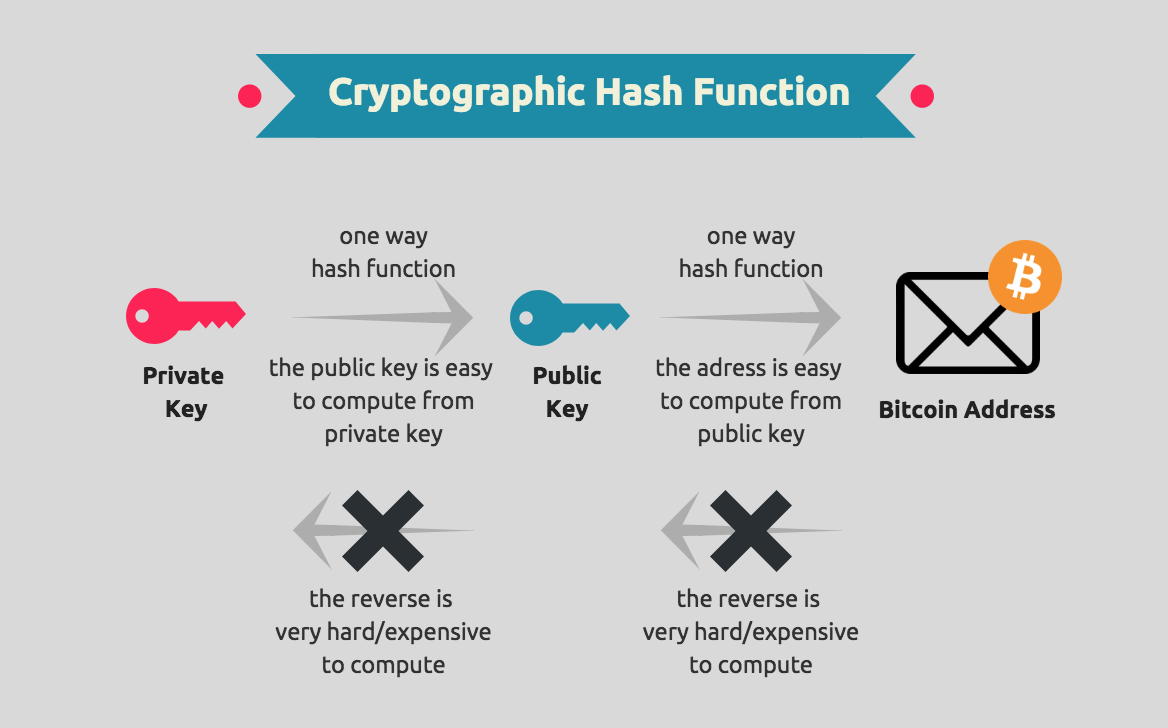
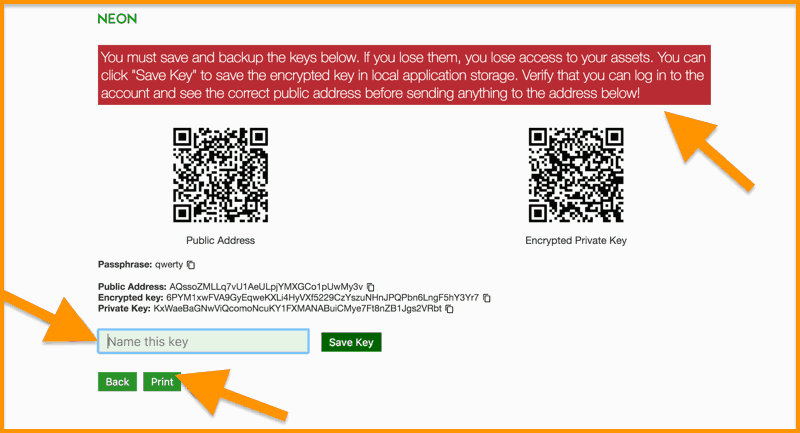
In their purest form, private keys are 256-bit numbers. They are randomly generated and are actually sophisticated cryptography.
`A bit is short for binary digit. A binary digit is either 1 or 0. Get it?`
However, because the number of possible combinations for a 256-bit number is extremely large and the system is complex, the use of a 64-character hexadecimal system was implemented.
`A character is a symbol representing a number or an alphabet. It is usually larger than the bit and unlike the bit, allows numbers 0 to 9. An hexadecimal system uses letter A to F and numbers 0 to 9. This alphanumeric system is more simple.`
Private keys allow users to access cryptocurrency and helps protect users from theft and authorized access to funds. They are also an important part of bitcoin and altcoins.
A digital wallet stores the private key of user. The wallet software creates a digital signature when a transaction is initiated by processing the transaction with the private key.
`This signature confirms a particular transaction and ensures transaction cannot be changed in any way. If you try to alter it even a little, THE SIGNATURE WILL CHANGE!`
An example is: a1red3b6c4fc650ba3e6d4e8f912d3bc4ab0d5e3c7dba7e7c21ad4f8a3fe5ab9. I made this up.
Private keys can also be stored on paper wallets (`which are documents that have been printed with the private key and with a QR (Quick Response) code on them so that it can easily be scanned when a transaction needs to be signed`) or using a hardware wallet (`which uses smartcards or USB devices to generate and secure private keys offline`).
Public keys
Public keys are created from private keys. It is usually 24 to 34 characters. commonly, a bitcoin public key starts with 1. To avoid confusion and fraud, small letter l, capital letter I, number 0 and capital letter O are excluded. They are used to confirm authority of action in a blockchain and comes from the owner of the specific private key. Hence, the private key is private and cannot be seen. Since the private key takes the form of a digital signature, the person on the other side only sees the digital signature and public key.
`The public key is derived from the mathematically theory of elliptic curve multiplication.`
`Every public key is 256 bits long and the final hash which is your public address is 160 bits long. Trying to use reverse mathematics to derive the private key would take the world’s most powerful supercomputer many trillion years to crack!`
Public address
The public address is derived from the public key. It is a major identifier for a transaction as it is where funds are deposited and received. This is also what people input if they wish to send you cryptocurrency. Each transaction has a unique public address generated by applying the public key into a cryptographic algorithm called secure hash algorithm.
`Imagine the public address was a mailbox. The private key would be the key of the box (obviously!). The mailman or anyone could insert letters through the mailbox's opening. However, only you can retrieve the contents of the box with the key. Anyone gets the key, the contents are compromised. You lose it, you cant access it!`
And that is all for now! Thanks for going through the article. I would love to hear from you :)!
Please! Who can put me through on writing better (tip worthy) articles. i do not seem to get the hang of it. Thanks for understanding!!!
Crypto for the simple minded: The Satoshi story....
***Out of the blue in the mid-2000s rose a legend from the world of cyptography; Satoshi Nakamoto. Satoshi is credited as the genius creator of both bitcoin and Bitcoin ( to be explained later). However, as popular and widespread the cryptocurrency and system has travelled, little is known about the brain behind the whole enterprise.***
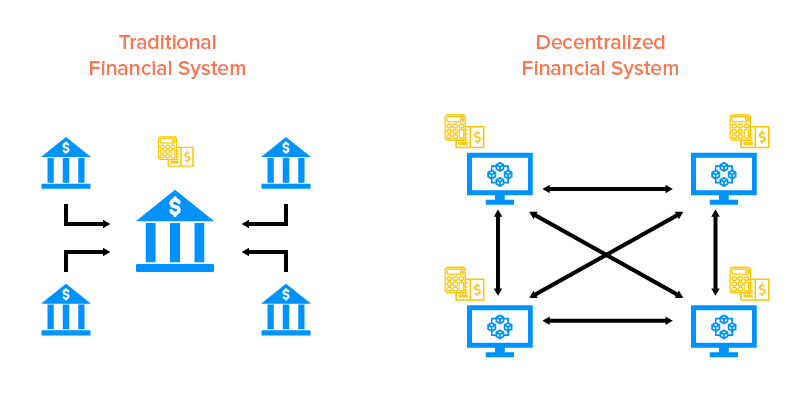
As a direct response to the financial crisis of 2008, Satoshi Nakamoto envisioned a new and decentralised digital currency system he called bitcoin.
`On the 31st of October 2008, Nakamoto published a paper entitled "Bitcoin: A Peer-to-Peer Electronic Cash system", talking about a payment system based on chain of data blocks (that later became known as blockchains) and the exclusion of third party influence in transactions. He published the paper on the cryptography mailing list at metzdowd.com.`
The idea the entity put forward was perfectly timed because the financial crisis of that time had damaged the trust the people had in the traditional financial system, especially the institutions. His proposed novel system needed no financial institutions to function.
It completely eliminated a central controlling body for payment and ensured that nobody proved smart-ass by trying to double-spend (also to be explained later). In fact, Satoshi was the first to solve the problem of double spending.
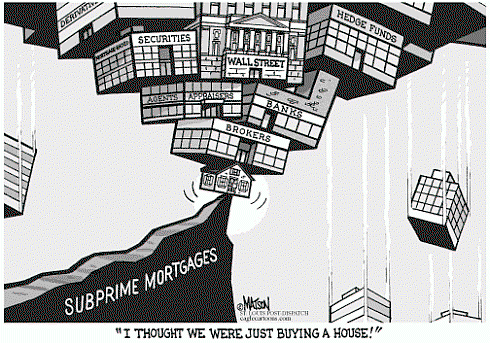
`The severe financial crisis of 2007-2008 was also known as the GFC (Global financial crisis). Simply put, a financial crisis happens when large financial assets suddenly lose a large chunk for their nominal value. That of 2007-2008 happened because banks were taking excess risks and there was a sudden decline in the price of real estate in the US. Even though it happened in America, it affected the world in general and damaged global financial institutions. It was one of the worst five financial crisis the world had experienced!`
Suprisingly, in December of 2010, just few years after the proposal, Satoshi completely disappered into thin air! Nobody has heard from him ever since. In fact, for what it's worth, Satoshi Nakamoto might not be a man, a Japanese or even a single person.
Who Satoshi might be
Nakamoto never disclosed any personal information when discussing technical matters.
However, in his P2P Foundation profile as of 2012, Satoshi claimed to be a 37 year old Japanese nationale (so he would be 45 years this year). He is also believed to have been born on the 5th of April. This claims actually raised questions among some because they believed he couldn't have been Japanese if he used english language that well. Also, his software had no Japanese blueprint or writing. In fact, his source code, comments and forum postings even potrayed a british persona. His expressions and spellings made people believe he was either from commonwealth origin or a member of the supposed group using the name as a pseudonymn was.
Over the years, certain people were suspected to be Satoshi. However, only one was even of Japanese descent.
Hal finney (1956-2014)
He was a pre-bitcoin cryptographic pioneer.
He was also the first person after Nakamoto Satoshi himself to use , file bug reports and improve the software.
`Forbes journalist Andy Greenberg theorized that Finney may have been a ghostwriter on behalf of Satoshi. Unfortunately, he died as a result of complications of ALS.`
Nick szabo
Szabo is a decentralized currency enthusiast.
He published a paper on 'bit gold', one of the bitcoin's precursors.
He was also known to have been interested in using peudonyms in the 1990s.
He however denied being Nakamoto in an email to Domin Frisby, a financial author.
Dorian Satoshi Nakamoto
He is a Japanese American living in California.
His birth name was really satoshi Nakamoto.
He was a physicist, software engineer on classified defense projects and computer engineer for tech companies.
He actually hinted that he was the real Satoshi, but denied ever saying that later
The pseudonymous account of Nakamoto in the P2P foundation became briefly active, after 5 years of silence, stating: " Iam not Dorian Nakamoto".
Craig Wright
He is an australian academic.
Craig was the most controversial of them all.
He stated he was Satoshi Nakamoto.
However, bitcoin developers Peter Todd and Jeff Garzik proved he wasn't the owner by rendering his claim unsubstantial.
May 2019, Wright started using uk libel law to sue people who denied he was the inventor of bitcoin.
Other people, who all denied the speculations include Dr Vili Lehdonvrita, a Finnish economic sociologist, Shinichi Mochizuki, who was a Japanese mathematician, Elon Musk and even drug dealer Paul le Roux to mention a few.
POSSIBLE REASONS FOR HIS ANONYMITY
Satoshi could be the richest man or group in the world. Not only that, he would have international acclaim and praise. However, do these ups outweigh the downs? Definitely not! Some reasons include:
**Possible loss of decentralization**
The fact that a person 'owns' and inevitably 'controls' the system could lead to implementation of regulations on transactions by financial institutions, the government or even Satoshi himself. These regulations can become unbearable and cancel the good that the wonderful cryptocurrency pioneer had done.
**The human factor**
When opportunities present themselves, we humans tend to try our luck with things. Satoshi's step into the light can trigger unwarranted lawsuits, stalking, excess media attention and even physical attacks.
**Avoidance of authority**
Let us face it, the adoption of bitcoin worldwide affected the traditional financial system. Hence, directly or indirectly, the authorities might be after him. Also there were cases where government agencies arrested entrepreneurs in the alternative currency space.
CONCLUSION
13 years after this entity began working on what is now the world's best performing asset, we still can't figure out who or what he is and what plans he/it has for the future. Was this anonymity a smart move?
Hi guys! I hope you enjoyed it. I actually want it to be part of a series. Let me know what you think about it! Bye for now!
Detective Smith: Part 1
Hi guys! I just decided to drop part of my story. Your reception of it will really be a motivation as I am yet to complete it. Please leave a comment. Thanks!
PROLOGUE
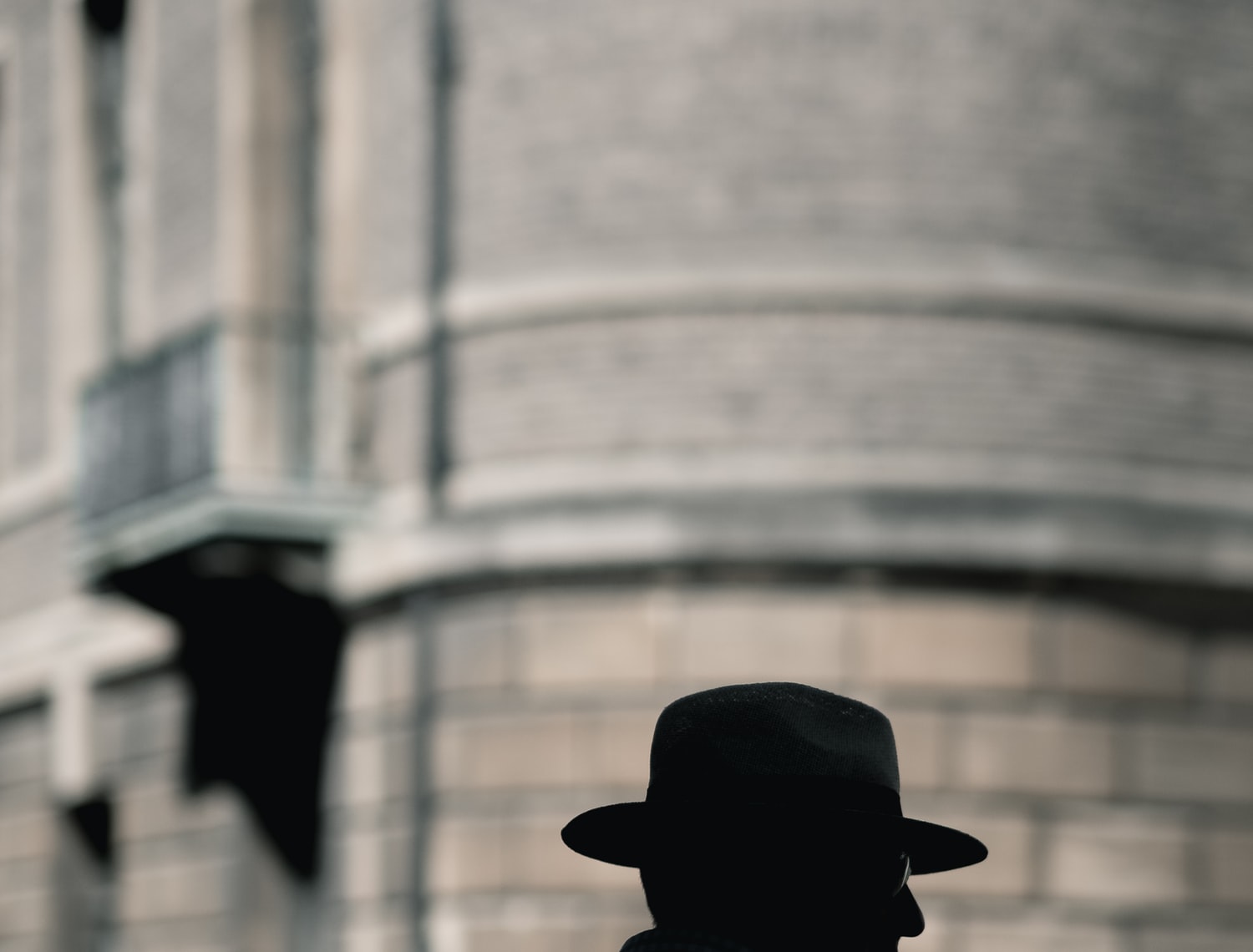
`Photo by Shalva Gogichashvili on Unsplash`
"How can that guy make that move!" Jeff exclaimed.
"He could have just moved the pawn, waited for the other guy to move his queen and boom!" He clapped his hands together,"it's a checkmate!"
"Why don't you just go there and give them a piece of your mind instead of exacerbating the pain I am feeling right now." Bosun mumbled with a thermometer in his mouth. He was indisposed and hoped watching the chess contest would ease him a little but obviously, it wasn't.
"I would have if the competition was not on the TV!" Jeff said it with all seriousness pointing at the television. He was seriously incensed at the performance of a particular player. The better player was just grinning at the stupid moves of his competitor.
"Ooh! In fact, all these is making me hungry. I need to get some food" Jeff stood up, heading towards the kitchen.
"Wait" he stopped. "What of the rice and beans you cooked this evening?" he faced Bosun. Bosun faced the other side of the room to avoid eye contact with Jeff.
"Don't tell me you ate everything!"
"It wasn't much! Just three cups"
"Three cups! I see why you are sick. Why will you eat three cups of rice?"
"Don't judge me! Leave me alone. Go and cook or make Eba." Bosun said as he picked up his phone.
"Instead let me order pizza" Jeff said as he picked up his phone. Bosun's face brightened up and he sat right. "I will eat o"
"If that is what will heal you, I would rather let you die than give you"
"That shows how much you hate me. God will not give you the opportunity. Yes! Have you heard from the guy that you sold the laptop to?" Bosun asked.
"No. But he promised me tomorrow"
"Okay. We'll see." Bosun adjusted his blanket and removed the thermometer.
"Wow, my temperature is high!"
"Why won't it be high with three cups of rice and beans shoved into your throat! Don't even let me hear anything from you." Jeff said.
Jeff went to the kitchen to get a plate and a drink. He opened the fridge and brought out a cold bottle of apple juice. All of a sudden, there was a knock on the door.
"Jeff get the door!" Bosun shouted.
" Ok! It must be the pizza delivery guy". Jeff hurried out of the kitchen to the front of the house passing the back door. On getting outside he saw a man wearing a black coat and a drab pair of jeans. The man was facing the back so he wasn't identifiable easily.
"Hey! Guy! Bring it here na!" The man did not move at all. Jeff approached him angrily and tapped him at the back"
"Why are you not with the pizza? Or are you not the pizza delivery man?"
"I am not" the man replied.
"Then who are you and what do you want"
"Something simple......." he grinned " your life!"
........................................................................................................................................
Bosun changed the channel to a movie channel but after about 15 minutes of silence outside, he became suspicious.
"Jeff!" He said and stood up. He kept on calling his name until he went out the back door. He went to the front of the apartment and found a body, lying prone on the floor. As he moved closer he realized that the body was Jeff's.
" Jeff! Jeff! What happened?" He turned him over and was appalled by the sight of his closest friend, battered and scathed badly on his head and torso. Blood was gushing out of his body seriously and he was apparently dead. Bosun could not control himself anymore. He burst into wailing, crying profusely as he carried his friend to his chest. He dropped the corpse and ran to the house, picked up his phone and dialed the emergency number.
"Hello!" Cleaning the tears off his eyes. "Is this the Cleftord Police department? Please hurry! Somebody attacked my friend, we need help!" He cried more and more and put off the phone.
.....and a little bit of the next part.......
`Photo by CHUTTERSNAP on Unsplash`
The alarm clock of the Detective Joe Smith rang but he was already awake. He just sat on the bed, looking through the window of this condominium. After sometime, he stood up from his deluxe bed, picked up his phone and went towards the rest room. Before he could enter, his phone buzzed.
"Hi, Good morning!" the caller said.
"Good morning, Sophie. Why the early morning call? You don't call often so this must be an emergency"
"Don't humor me please. We just got some information about a murder case at Romic Avenue. Please report by 8:00"
Joe peered at his smart watch. "But this is 7:00 already!"
"None of my business bro...none of my business. See ya!" She hung up. He hurriedly entered the bathroom, took his bath, wore a checkered T-shirt and a pair of brown trousers and hurried into his sports car.
That's all for now guys! I would really love to hear from you. Bye!
7 reasons why the violin is the hardest musical instrument to take up.
The violin, along with its much larger and relatively lower pitched counterparts; the viola and the cello were first made in early 16th century Italy. In fact, the earliest evidence of their existence is in paintings by Gaudenzio Ferrari from the 1530s. However, the instruments in these paintings had three strings and an extravagant curved shape unlike their four-stringed, sleek relatively modern counterparts.
The violin gained rapid popularity amongst all and sundry when King Charles XI of France commissioned a range of string instruments around the 1550s. In fact, an observer in 1573 wrote of how melodious the music by about 30 violinists accompanied a ballet at one of Catherine de Medici’s celebrations.
Although the violin looks somewhat simple, it is made up of 72 indispensable parts. Some of these parts actually have to be made from specific materials as they affect the tone volume and quality. An excellent example is the sound post. The sound post is a small round wooden prop inside the violin. It cannot be noticed if the violin isn’t inspected well. However, put in the words of Maia Bang “owing to its great influence upon the tone of the violin, the sound post is rightly called L’ame du Violon (the soul of the Violin)”. All these points already point towards the complexity of the violin.
The violin can be played as a part of an orchestra, in a chamber ensemble or as a solo instrument. In fact, it takes the majority of the slots in all orchestras. Also, the concertmaster, who is the top player in the whole orchestra is always a violinist and sometimes commands more attention and control in the orchestra than the conductor himself! Each individual musician-in-training has to go through a tedious journey to become a virtuoso, even though only a few make it to such status.
Why?
The following are among the crucial factors that make the violin the most tasking musical instrument to learn:
· **The training process**
I hear people saying that if they were really interested in learning the violin, they could do so in a year and I chuckle! That is just preposterous! The learning process takes a lot of time. A typical training starts at a young age; mostly before the teenage years and really never ends. You keep learning and learning and you have to worry about new concepts like colour and advanced musicality when you feel you are already a boss. It not only takes time but also requires patience and endurance. You get tempted to jump straight into playing at the very beginning (which never works by the way) when you still need to learn subtle things like posture for an amount of time. The posture, as an example is crucial because it will affect your use of the instrument in the long run. You need to do things at a steady pace to avoid oppression by the prodigies your age that you see online. You also need to practice over and over and over to meet the expectations of your teachers, family and . In fact, violinists seldom enjoy the practice process because of the frustration. Funny enough, if you do not play for some time, it can make your playing or technique rusty! You might try to defend other instruments regarding this point; however the next ones will convince you.
· **Tuning the violin**
Something as simple as this can wreck your career if not handled with utmost scrutiny. The process is complex, sensitive and susceptible to change suddenly without prior warning. You also have to tune ear to notice the change. The fact that the instrument uses strings and a bow applies friction to the strings leads to the heating of the strings as a result of long music renditions like a 45-minute concerto. When above the threshold, the strings extend in length slightly, distuning the instrument. Hence, trained violinists learn how to adapt in order not to have a dissatisfying ending after all the work by the soloist and the orchestra at large.
· **Making Sound**
How do you play a musical instrument if you make no sound? However, producing the right sound is a major problem in violin playing. Almost everybody who tries to play the violin for the very first man produces a dissatisfying, screeching sound or doesn’t produce any at all! The violin has a limited space to play, called the contact point, which can be adjusted to give a softer or louder sound by changing the position of the bow but must be done with dexterity. In fact, your tone grows as you increase in your ability to play. Seriously! Playing in tune (intonation) is a very important factor. Professor Leopold Auer, like many other pedagogues, insists on not even playing at all if you are going to play out of tune. Also, playing out of tune on the violin sounds very disgusting, to the musically trained ear, at least.
· **TECHNIQUES!!!!**
The violin has a lot of techniques. I think I saw 420 on the internet! It isn’t really easy to incorporate colour to the violin without adding a lot of techniques to violin playing. There are separate techniques for the left hand, right hand and even techniques that require the two hands working like gears. There are even different styles of play, and two different important bow holds. In fact, (I say ‘in fact’ a lot) the techniques have to be dished out to the students little by little according to their level of assimilation. These techniques take years to perfect and can be very frustrating during the practice period. The most annoying part is that composers like Bach and Paganini couldn’t seem to get tired of infusing serious techniques into their pieces. To understand what I mean, watch Paganini’s Caprice no. 24 on YouTube.
· **Price**
Violins, like other members of the string family, are expensive. Instruments of about 300years of age, especially those by Stradivari and Guarneri del Gesu are largely sought after by performers and wealthy people in general. The most expensive sold instrument in the world is the Vieuxtemp violin by Guarneri at 16million dollars!!! The Macdonald Stradivarius viola would have been the most expensive at $45 million but it has never been sold. Who would buy it though? Haq!
· The violin has many strict rules about body posture while playing, how to hold the bow, how the bow must run along the instrument, how to clean the violin to mention a few. Ignoring these rules can rubbish your performance.
· You can get injured from playing the violin if you do not do the right things. You need to stretch your body after a tedious session, especially your neck and back, because it can affect your normal posture. You can even develop tendinitis, an overuse injury or musculoskeletal disorder.
The irony of the whole issue is that this instrument gets the most allure and attention by musicians even though it is intense, just like many people try to get into med school even though it has the lowest selection rate of any course in a Nigerian University. They also get the longest parts in ensemble pieces most of the time. Looking on the bright side, however, the violin sounds majestic and lovely. Playing it is rewarding and is a thing of pride to you and people around you. Also, it helps to instil discipline. Trust me; conquering certain pieces of music takes a lot of discipline, patience and hard work. It also teaches dexterity, brain imaging and hand-eye coordination. If you still believe a certain instrument is more difficult or tasking than the violin, YOU OBVIOUSLY PLAY THE INSTRUMENT!
**DID YOU KNOW?**
1. Classical players, especially violin soloists also get awarded Grammy awards every year.
2. The oldest surviving violin in the world is the “Charles IX” (probably in honour of the king) made by Andrea Amati in 1564 probably.
3. The most famous and pristine violin is the Messiah Stradivarius made in 1716. It might have **never** been played and it is now in a museum in Oxford.
Hi guys! I would love to hear from you. Pleeeeeeeeeeaaaaase!!!! Write to me in the comments. Thanks:)!
Get to meet me!
*Hi! My name is Daniel. A friend of mine nicknamed me Da brainbox in high school and I couldn’t shake it off me (believe me I tried). I am new over here and I would like to give you guys a lay of the land I will be cultivating.*
*I am a Nigerian by nationality and a Yoruba by tribe. In case you aren’t familiar with the aforementioned, I am from the same tribe as Wole Soyinka, David Oyelowo or the iconic Fela Kuti.*
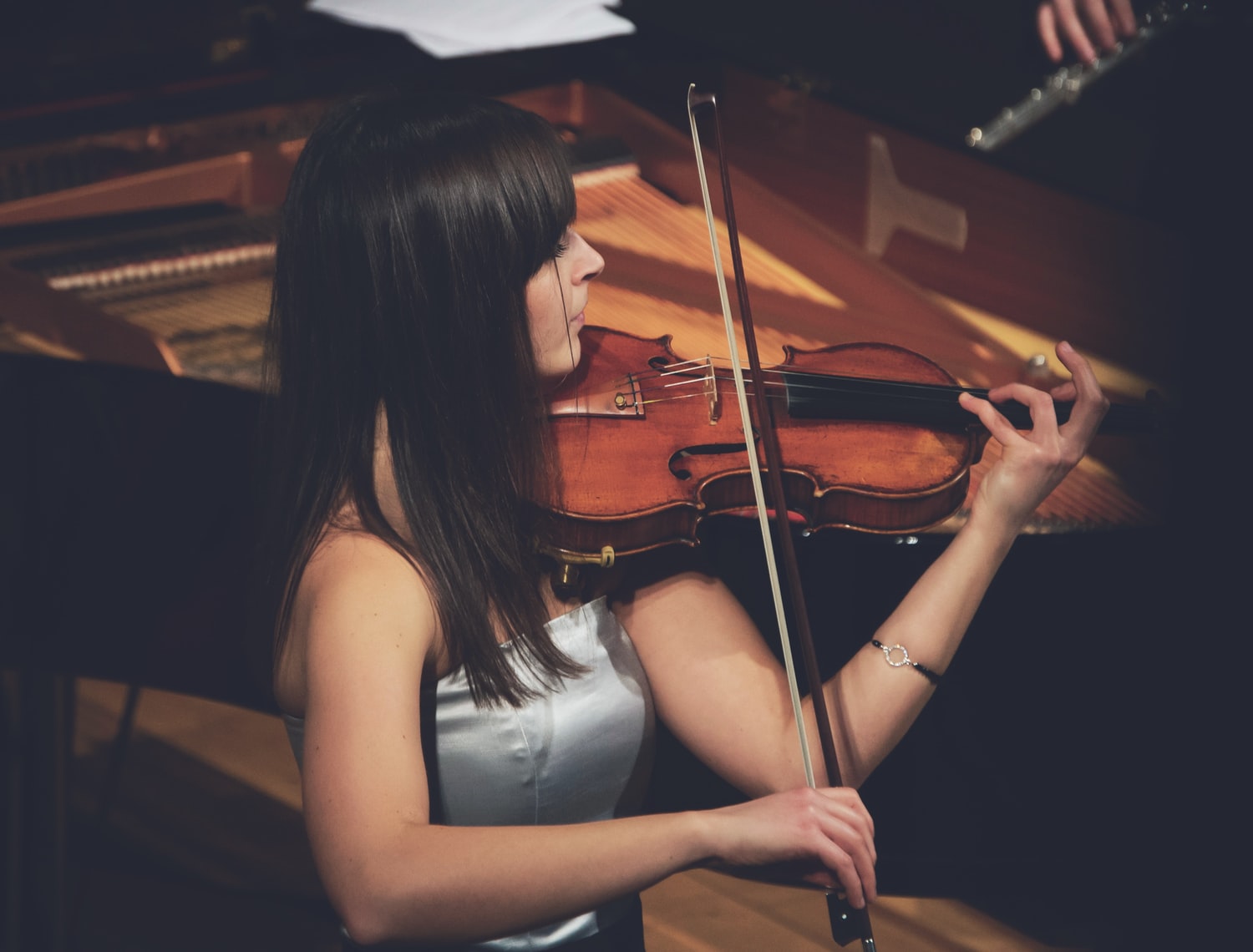
*Importantly, I am a Christian and I love God. I also love a lot of stuff. I am a medical student because medicine is a wonderful field and a path I am willing to take. Another very important thing I love is music. I love music! I love classical music the most, from the soothing simplicity of Dvörak’s Humoresque to the intense technicality of Paganini’s La Campanella. As might have been noticed from the music pieces, I play the violin. I came across that beauty of an instrument when I was about ten years of age and I have fallen in love with it all this years.*
I love dogs!!! I really do actually and the sight of them, especially beautiful breeds fills me with joy. They really are man's best friend and we do not deserve them. The funny part of it is that I do not have a dog!
*I also love information. In fact, that is one of the reasons I got that nickname. Since I was young, my Dad made us watch and read stuff ranging from fact, geography, mythology, history e.t.c. In short, I am a nerd :) ! Unlike most nerds however, I love fashion, food, photography and interior decoration. I promise to make my articles worth your time. Till my next post, have a good time. O dábò!*