Hydrogen, a solution for future ?
Currently, hydrogen has two main uses: for the production of methanol and ammonia (fertilizers), for refining petroleum products, fuels and biofuels.
World hydrogen consumption in 2018 is estimated at 74 million tonnes.
Hydrogen is starting to be used in the transport sector by equipping vehicles with a fuel cell. It offers advantages in terms of autonomy and recharging time by compared to other electric vehicles that run on batteries.
Hydrogen is now being considered as a source of electrical energy to contribute to the production of decarbonated electricity and to compensate for the variability in the production of certain energies (wind, photovoltaic) with the possibility of storing it.
Hydrogen is now seen as a solution for the future, in particular because of its uses in the following areas that have emerged in recent years. Before potential applications can be developed, it is necessary to still await certain developments.
The efficiency of the production chain must improve further to convince its detractors. Accessibility to a resource such as hydrogen, on the other hand, can already be envisaged at any point on the planet since primary resources such as wind and sun are distributed over the entire surface of the Earth.
To affirm that hydrogen has a bright future, it should be remembered that hydrogen can be produced from renewable energies. If the electricity used for electrolysis is decarbonised, i.e. produced from renewable or nuclear energy, hydrogen production is not a viable option. emitting CO2. Decarbonated hydrogen can therefore be produced and sustainably included in the energy transition that we are experiencing.
From now on, we must develop applications and structure the sector to reduce costs even further. costs, such as electrolysers and fuel cells... to make it more difficult for this promising energy, accessible to the greatest number.

What does success look like?
The method is based on a kind of mythical, somewhat distant, idealized objective, which allows us to better imagine the ambition we are trying to achieve. It can then be taken up again to determine the means of achieving it, combining a mixture of strategies (the chosen path) and tactics (the operational details). This also helps to give meaning to the project you are leading, to mobilize your teams and to identify possible disagreements between stakeholders upstream, like the co-founders of a startup.
Such an approach also makes it possible to identify, sometimes absurdly, that the objective sought is not easy to achieve, to identify pitfalls and to take them into account. The method must take into account the potential movement of the other actors in the ecosystem in which one gravitates. Finally, it makes it possible to put a figure on the things and means required. It makes it essential to find out what makes the project unique and how it stands out in a competitive environment. It is then necessary to iterate, because once the expected success has been achieved, what are the next steps?
Finally, you can ask yourself the question of your personal success. Defining it is probably one of the most difficult questions in one's life, regardless of one's age. How do you define success in your next professional or personal life? Managers who move from role to role in large organizations can lose the meaning of their lives, tossed around by organizations that mechanically program each other's evolution but ultimately treat you like a cell in a spreadsheet. I have experienced this in the past. I can only tell you that by being independent, you have a little more control over what you do and what you want to achieve. And unless you live as a hermit, those goals are mechanically turned towards others.
In all roles, you spend your time looking for your usefulness. We apply the Ikigai method, which aims to choose an activity that we like to do, in which we have some talent, which is useful for something and which, if possible, can be monetized according to our needs. But that's not all. The "serves a purpose" is variable geometry. Here, too, success needs a little scalability. On this point of the definition of personal success, I advise you to watch this inspiring speech by Philippe Gabilliet, delivered in the last 2019 edition of the USI conference organized by Octo Technology: Changing life: an art like no other.

The challenges of scientific fact-checking
Fact-checking is currently being put to the test with the covid-19 pandemic. Unlike many of the topics discussed in this paper, covid-19 is generating a wealth of scientific information, including detailed structure analysis of the virus and evaluations of initial treatments, prior to the development of a vaccine. Nevertheless, fake news is rampant and spreads easily through social networks. Added to this is the difficulty of analysing public data on mortality rates, which is highly dependent on the method used to measure cases of infection, and the complexity of mathematical models of the exponential spread of the virus and the comparative impacts of masks, tests and confinement. This leads to judgements overriding public policies in France, which are ultimately quite similar from one country to another, particularly in Europe.
Here are a few leads that may induce doubt:
Who publishes and disseminates information: This is a key indicator of the veracity of information.
The esoteric and vague jargon used: the more vague and unusual, the more suspicious.
Scientific tests with questionable methods: the devil is in the details with reduced sample sizes, protocols and methods.
Ancestral medicines brought up to date: ancestral does not mean that it works better than the placebo method.
The amalgamation of several techniques: where one train can hide another.
Ambiguity about the effects: with techniques that work in a particular case but not in the one advertised.
The violation of the great laws of physics: as the second principle of thermodynamics in miracle sources of energy.
The questioning of "official" science: where conspiracy theory is used as an authoritative argument.
The exaggerations: where nothing is necessarily false, but not necessarily true either.
And I'm well aware of the law of the square of the bullshit. It says that in order to counteract a given bullshit, one must expend an energy proportional to the square of the bullshit in question. This is true in politics and even more so in science. It's even closer to a cube than a square! Don't ask yourself about the homothety of the units used to calculate energy, it's just a picture! In short, all this may be a waste of time. But that doesn't stop you from trying!
The definition of stock market risk
The beta of an investment measures the risk exposure of an asset by indicating whether it is more or less volatile than the market. A beta less than 1 indicates that the investment is less volatile than the market, while a beta greater than 1 indicates that the investment is more volatile than the market. Volatility is measured as the fluctuation of the price around the mean (i.e. the standard deviation).
For the majority of value investors: beta is a preposterous concept. It is disturbing (even worrying) that it is still taught as a fundamental concept in almost all business schools around the world.
Beta uses historical market prices to measure risk instead of intrinsic economic fundamentals. As Ben Graham said, "In the short run, the market is a voting machine, but in the long run, it is a weighing machine. Market prices can deviate from the economic realities of a business in the short term. If the share price doesn't necessarily tell us a company's intrinsic value, how can it provide a basis for assessing risk?
In addition, beta does not reflect the influence that investors can themselves exert on the risk of their holdings through efforts such as proxy challenges, shareholder resolutions, communications with management or the ultimate purchase of sufficient shares to acquire control of the company and allow it direct access to the underlying securities.
The use of beta is also based on the principle that the upside potential and downside risk of any investment are essentially equal, and are simply a function of the volatility of that investment relative to the volatility of the market as a whole. This principle is also subject to legitimate scepticism. According to Klarman: "Past volatility of security prices is not a reliable predictor of future investment performance (or even future volatility) and is therefore a poor measure of risk. »
According to Warren Buffett, risk corresponds exactly and simply to the dictionary definition: "The strategy we have adopted excludes the standard dogma of diversification. Many experts would therefore say that our strategy is riskier than that employed by more conventional investors. We disagree. We believe that a policy of portfolio concentration may well reduce risk if it increases, as it should, the intensity with which an investor thinks about a company and the level of comfort he must feel with its economic characteristics before buying it. In expressing this view, we define risk, using dictionary terms, as "the possibility of loss or damage.
For Buffett, therefore, risk has nothing to do with volatility. Risk is simply the probability of losing your initial investment. Over the long term, it is intimately linked to the economic fundamentals of the company in which you invest.
Good luck dear readers and stay safe.

The investment property
First of all, there are no more condo meetings, because you are THE ONLY owner.
Second, you do what you want, when you want, without having to ask anyone for anything.
Third, when you put your apartments under management in a real estate agency, it goes straight, because you are a big client.
Another BIG advantage of real estate is the management of the apartments.
It is YOU who chooses the work you want to do... or not to do.
It is YOU who chooses the tenants you want... no bad profiles on the same floor as your tenants.
It is YOU who chooses the type of rental (short term, shared...) you want... and nobody will complain.
If you're aiming for financial independence, you're not going to get away with flats.
You can go straight to the big leagues
Contrary to popular belief, you don't have to go through the "galley" stage before reaching the "boss" stage.
You don't have to start with an apartment to "get your hands dirty".
You can directly invest in a rental building and avoid considerable losses in TIME and MONEY.
To put you once and for all in "BOSS" mode, it is time to move to the apartment building.
Good luck for business readers =)

AI and ethics
More and more AI-based systems can have an impact on our lives. They include algorithms for quality loan applications, managing patri- monks, automatically analyzing CVs, assisting in medical diagnostics, monitoring critical sites... Public decisions are also concerned: combating tax fraud, allocating social housing, assigning pupils to a school or students to a training course...
Whether they are based on learning techniques or more symbolic approaches, the design of these algorithmes is not neutral, the results they produce are not necessarily correct and their performance evolves over time, either through their intrinsic capacity for learning or through changes in their environment. Moreover, the impact of the data used for learning is critical to their functioning.
Indeed, these algorithms (whether learning-based or symbolic AI-based) implement, most often in an opaque and sometimes unmastered manner, priority, preference and ranking criteria that are generally unknown to the people concerned. This opacity can also mask all kinds of abuses: discrimination, unfair treatment, manipulation, etc.
From the user's point of view, the real need is to have an intelligible explanation (explicability) rather than traceability of the reasoning behind the decision.
ringing. Indeed, the operation of the underlying algorithm is of little interest to them: it is mainly a question of obtaining a useful explanation to understand or even interpret the results. However, providing these explanations is not simple, especially when the algorithms are based on learning techniques. Even the designers of these algorithms are not able to analyse the reasoning behind the results of these methods. This is the "black box" effect.
From the point of view of companies, organisations, public authorities and users, understanding these black boxes and guaranteeing their behaviour will become a major challenge. This is particularly true if we want to promote the insertion of AI components for the financial industry or in critical applications, whether for mobility, medicine, aeronautics, defence and security.
Take care and be safe.

Future prospects of thermal power station
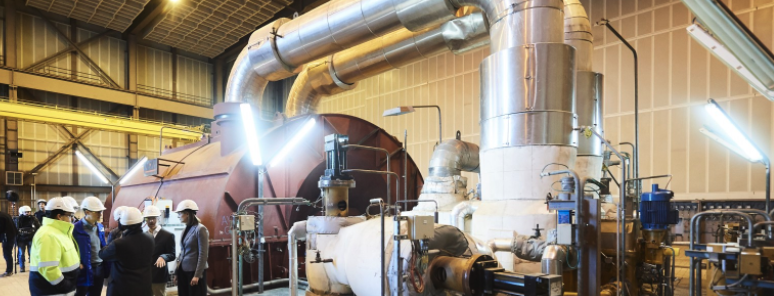
****Limiting polluting discharges :**** Various devices already exist to limit SOx and NOx emissions, in particular through smoke treatment technologies.
****Reduce CO2 emissions :**** By improving the efficiency of installations, it is already possible to emit less CO2 per kWh produced. Pulverized coal technologies in the supercritical cycle allow a significant improvement, which could be reinforced by 2015-2020, with the "ultra-supercritical" thermodynamic cycle.
****CO2 capture and sequestration :****
• Capture technologies under development are not yet ready to be generalized and will not be before 2020.
• sequestration could make coal a clean fuel contributing to the improvement of the overall balance sheet GHG emissions, provided that the unsolved problems are resolved (social acceptance of a hazardous waste storage solution, profitability, efficiency of capture).
Gas is a non-renewable fossil fuel. Natural gas reserves are larger than petroleum reserves, but they are also poorly distributed geographically (2/3 being concentrated in Russia).
Borrowing without contribution
A banker will always ask his clients to put in a deposit. It's normal; he likes security. He seeks to minimize his risk.
Unfortunately, too many clients settle for that.
On the other hand, every day lots of home loans are granted without a down payment, simply because the customer has said "no, I won't make a down payment".
Everything is negotiable. There is no universal rule.
If your file is good and your project is good, there is no reason for a bank to require a contribution.
You have to know how to present things, i.e. show the banker that the project is viable and low-risk.
And you have to be able to make him understand that if he wants to keep you as a client, he has to make an effort. Otherwise another bank will do it, so that you become a client.
Your savings are your bargaining power. It's better to bait bankers with your cash than to spend it on contributions.
Everything is negotiable, everything is argumentative. You are the master of your project. Show that you have a beautiful project, that you are serious, that you know what you are doing, and go around the agencies.
Two branches of the same bank may receive you in a totally different way. It depends a lot on the personality of the advisor, and his or her desire to build a credit file. Some people just don't feel like it, so they find excuses such as demanding a contribution.
Real estate millionaires get around that.
Good luck for business.

FairEmbo project
**What is that?**
**FairEmbo** is the literary contraction of "fair embolization".
Arterial embolization is a recent radiology technique that allows the **occlusion of a vessel that bleeds** quickly, efficiently and safely. This technique is widely used in developed countries, replacing surgery today in a large number of indications (post traumatic bleeding, delivery bleeding, hypervascularized tumors).
The FairEmbo project aims to make this procedure **available in each country and each hospital center in the world**, with a minimum of means on site.
**Why?**
Post-traumatic bleeding (voluntary bodily injuries, accidents) and after childbirth are responsible for a great mortality.
According to a report published by the WHO in 2014, 661,000 women died worldwide between 2003 and 2009 as a result of hemorrhagic delivery due to lack of care, and 99% of these deaths take place in emerging countries.
These deaths are the result of a failure to manage bleeding urgently and could therefore have been avoided by arterial embolization techniques.
However, embolic agents allowing the occlusion of bleeding vessels are very expensive (ranging from $50 to sometimes more than $500 per unit) and are especially unavailable because of a lack of distribution in many countries worldwide.
**Principle**
FairEmbo is an **innovative project** to stop bleeding in a simple, effective, and safe way, **using simple sutures.**
Sutures are **available** from anywhere in the world, anytime, and inexpensive compared to embolic agents currently available.
**What needs today?**
Interventional radiology techniques, and in particular arterial embolization, are still little known to the general public today, even in our western countries where, however, they are very widespread (emergency bleeding treatment, stroke treatment, stent placement, neoplasic treatments…).
Our desire is therefore to make this technique known and develop in hospitals, especially to radiologists in emerging countries. For this we need everyone, in order to identify the most important shortages and needs (material and human), and to promote this project which has the realistic but ambitious objective of offering effective treatment to urgent and vital situations in the greater number.
A foundation has also been created to raise funds, with a view to developing partnerships and collaborations with emerging countries.
Thanks to the community to be aware of our ambitious project. Be sure that all funds raised by the community will be redistributed to the foundation.
 @DIBI
@DIBI