Ultimate Cryptocurrency Trading Tools
The cryptocurrency market rose from $193 billion in Q1 2020 to $668 billion in Q4 2020, with Bitcoin's market cap increasing by more than $300 billion. Overall, the crypto market capitalization rose by more than 3.3 times, suggesting that cryptocurrencies are becoming more common. Developers have created a variety of resources, such as fund managers, wallets, market watchers, portfolio balances, crypto news aggregators, and exchanges, to make crypto trading simple and efficient while mitigating danger.
To be effective in cryptocurrency trading, you must have the right set of crypto trading tools and a proper trading mentality. Here's a list of cryptocurrency trading instruments to consider in 2021 and beyond if you want to take your trading to the next stage.
Cryptocurrency Exchange
Cryptocurrency exchanges provide investors with a way to enter the cryptocurrency environment by enabling them to swap cryptocurrencies for other assets including other digital currencies and traditional fiat money. Wire transfers, credit cards, and other types of payment considered secure and convenient can be accepted by cryptocurrency exchanges. There are several different types of exchanges in the crypto world. Some act as market makers, taking the bid-ask spreads as a fee for the exchange service they provide. Others, on the other hand, operate as matching sites and charge a transaction fee. Traditional assets such as stocks and fiat currencies are also available on certain cryptocurrency exchanges.
Trading Platforms
You may want to trade your crypto portfolio on several exchanges at times, either because of different listed rates or because you choose to trade a certain coin on a specific exchange. It can be time-consuming to log in and out of exchanges. Trading platforms simplify your crypto trading experience by allowing you to access all of your exchanges and conduct trades from a single location. This helps you to execute trades quickly as opportunities arise and keep a close eye on the market.
Charting Tools
Crypto traders may use charting software to analyse indicators and draw trend lines to assess their course. Technical analysis (TA) can be used to determine whether a market is in a downtrend or uptrend using charting methods.
Cryptocurrency Market Stat Tools
Complete supply, circulating supply, market capitalization, and other cryptocurrency market data are critical in the crypto markets. Traders can quickly evaluate a coin and decide if it is appropriate for investment using market data providers.
Cryptocurrency News Aggregator
In the crypto space, fundamental analysis is critical for developing a successful trading strategy. Coin prices are affected in any way by cryptocurrency news, both real and speculation or false news. Every hour, a slew of crypto-related news emerges, making it impossible to keep up with the market's movements. Crypto news aggregator tools are useful for keeping up to date on the latest crypto news from a single source.
Crypto Events Calendar
Calendar tools keep you up to date on the latest trends in a specific coin as well as future events like Bitcoin's halving. You will find everything you need to know about a specific coin, including coin burns, forks, exchange delistings, and crypto-related conferences and events, all in one place.
Trading Bots
Trading bots have become common among both experienced and novice traders in the crypto room. Expert traders use trading bots to execute trades at specific conditions in a market that operates 24 hours a day, seven days a week. Beginners use trading bots to automate their crypto trades, while experts use the tool to execute trades at specific conditions in a market that operates 24 hours a day, seven days a week. You can comfortably rake in lucrative profits even while you sleep if you use the right trading strategy and a dependable trading bot. Hundreds of trading bots are available on the crypto market, and you should choose one that complements your trading strategy.
Crypto Tax Tools
Several countries have already enacted cryptocurrency taxes, necessitating the creation of tax management software. Since regulators have yet to enforce accurate, multi-coin rules, manually calculating cryptocurrency taxes can be difficult. When you concentrate on other investment activities, crypto tax software will handle all of your crypto tax calculations. Tax evasion is characterised as the filing of false tax returns, which is a serious offence punishable by unjustified fines, penalties, and even imprisonment. Use the tools mentioned below to measure and manage your crypto taxes. It's worth mentioning that most crypto tax tools have a tiered pricing structure that can cost up to $600 per year.
Cryptocurrency Portfolio Trackers
As an investor, you should always be aware of the results of your portfolio, and portfolio trackers are the best tool for this. Since cryptocurrencies are so unpredictable, manually keeping track of and coin you're investing in by updating prices in an Excel spreadsheet is difficult. You can use portfolio trackers to see the value of your assets in real time. Given the vulnerability of these tools to hackers, it's critical to choose a portfolio tracker with excellent security features and other useful features that are suitable for your crypto trading needs.
Portfolio Rebalancing Tools
If you want to minimise risk and maintain a consistent profit stream, portfolio rebalancing is a must-have crypto trading strategy. Portfolio rebalancing tools buy and sell assets in your portfolio automatically to retain the set allocation. For eg, if you want Bitcoin to only be worth 50% of your portfolio, but its price increases, making it worth 70%, rebalancing tools would automatically sell some BTC to get it back to 50%, and vice versa.
Portfolio rebalancing strategies are useful for hedging your investments and ensuring that you continue to make money.
DeFi Risk Assessment Tool
Investing in new cryptocurrency ventures is dangerous, as there have been exit scams designed to defraud naive investors. Risk evaluation tools look at a variety of facets of a crypto project to see if it's a fraud or not. As a result, you can use these resources to assess the suitability of investing in any crypto project, whether it's a wallet, an exchange, or an ICO.
Final Thoughts
Being well-informed of important news events and catching trends before they break can mean the difference between a win and a loss when it comes to crypto trading. Using the tools mentioned above will give you a distinct advantage over other traders, ensuring your success in a highly competitive market. There are obviously other resources in the room, but the ones mentioned here are the most reliable and leading in their respective fields. To take your cryptocurrency trading to the next level, try out these tools right now.
Centralized Wallet vs DeFi wallet
As many individuals and institutional investors seek high-yielding opportunities, the Decentralized Finance (DeFi) sector continues to grow. They also recognize that blockchain has the potential to transform financial services by introducing revolutionary solutions based on accuracy, decentralization, scalability, and security.
Despite Bitcoin's impressive rebound, the price of ETH versus BTC more than doubled in the year leading up to the end of January 2021. Although the rise is due to Ethereum's upgrade to ETH 2.0, it also represents the growing interest in DeFi projects.
Here are seven main differences between DeFi wallets and centralized solutions to help you understand how they differ:
1. Control over funds
Non-custodial wallets are those in which the owner holds the private keys and has complete control over the crypto funds. Crypto exchanges, online wallet providers, and other organizations have centralized wallets elsewhere. As a result, third parties hold the private keys and have the final say on every deal.
2. Supported assets
A large number of assets can be stored in both centralized and DeFi wallets. Even, the key distinction between a centralized and a DeFi wallet is that the latter is primarily based on DeFi ventures. As most DeFi projects are based on Ethereum, any DeFi wallet will support ERC-20 tokens.
3. Investment features
In the DeFi market, DeFi wallets are the key to yield farming and staking opportunities, which is not always the case with centralized wallets.
4. KYC procedures
Users do not need to go through KYC (know-your-customer) procedures or exchange background information because DeFi wallets are non-custodial. Aside from that, centralized wallets are run by separate organizations that aim to adhere to the laws of their respective jurisdictions. Before withdrawing cryptocurrency funds, users are usually required to share their ID details.
5. Security
One of the most critical distinctions between a centralized and a decentralized wallet is stability. Wallets that are centralized are vulnerable to hacking attacks, which occur frequently. Such attacks and fraud attempts have been documented at a number of major crypto exchanges. Because the private keys are kept by the users, DeFi wallets are much more secure.
6. Compatibility
The majority of centralized wallets are part of a broader ecosystem based around an exchange network or other flagship product, which is why people use them in the first place. DeFi wallets, on the other hand, may be a part of the DeFi ecosystem. In addition, most DeFi wallets are web3 wallet compliant.
7. Fiat operations
While the DeFi wallet is the way of the future, people will still need to link to the fiat world. Many centralized wallets make it easy to convert cryptocurrency to fiat currency and vice versa. Although DeFi wallets do not always allow fiat transactions, Eidoo does, but users must first complete the standard KYC verification process.
Conclusion
Users can communicate with the DeFi space using DeFi wallets. They have more benefits than centralized wallets because they already have all of the regular features
Best Place to Buy Crypto with Fiat
The cryptocurrency market has recently experienced rapid growth. Every week, new platforms and features are introduced to make life easier. Previously, if you wanted to fund these ventures with altcoins, you had to first get your hands on some BTC or ETH. This extra phase usually entailed locating a centralised fiat-on-ramp and an exchange that supported the Altcoin you wanted. It was a time-consuming process that allowed you to navigate through several channels and pay fees.
Because of the advent of altcoin/fiat trading pairs, this mechanism has been greatly simplified. Some of the more well-known exchanges have extended their fiat trading pairs to include some of the market's other common coins. You will save time and money by making this decision.
Kriptomart
Kriptomat is a cryptocurrency exchange and blockchain service provider based in the European Union. The network is supervised and provides users with custodial services. Kriptomat was created to eliminate many of the technological hurdles that new traders face. The platform has a simple interface that requires no prior knowledge to use.
Kriptomat provides a variety of fiat/altcoin trading pairs as well as payment options to make it more user-friendly. You can register several bank accounts on the exchange, and you can buy cryptocurrency with credit cards. The exchange operates in 80 countries and supports 20 languages, demonstrating its openness. Kriptomat has deep liquidity with active markets 24 hours a day thanks to its foreign clientele.
Kriptomat's creators incorporated multi-layered protection. The network employs a sophisticated DDoS security scheme and maintains cold storage for 98 percent of its assets at all times. Kriptomat also has low fees and a high degree of accountability. Multiple third-party audits have been performed on the network. Investors from the United States are currently barred from Kriptomat.
Bitpanda
Bitpanda is another well-known EU-based alternative in the industry. Users may buy Bitcoin and altcoins directly with fiat currency on the network. It is regulated in the European Union and provides services to a wide range of companies and institutions. Stablecoins, DeFi tokens, an outstanding array of altcoins, Bitpanda Pay, and a cryptocurrency database are currently supported by the exchange.
Bitpanda offers low prices, as well as high security and reliability. The platform also has a range of exclusive features, such as a savings account that rewards interest on your investments. You can also use the user-friendly gui to set up automatic dollar-cost averaging (DCA).
The expansion of fiat currency trading pairs has always been a priority for Bitpanda. It was also one of the very first Crypto Indexes available. The Bitpanda index includes a lot of automation to make your trading strategy easier. Based on market cap and liquidity, users can choose from the top 5, 10, or 25 cryptos.
Binance
In terms of daily trading volume, Binance is the largest exchange in the world. The exchange's fiat pairing options and altcoin range continue to grow. With the recent launch of the Binance Smart Chain, the platform's native blockchain, the network now supports many of the most common DeFi features, including staking and NFTs.
For many altcoins, Binance has a lot of liquidity and a lot of trading value. You can buy crypto with a bank account, debit card, or credit card on the website. Binance was able to develop into the well-known and top-performing exchange it is today thanks to its versatility.
Binance charges you a scaling fee depending on your trading volume. If you use the network's native utility token, BNB, you can get a discount on your fees. As part of the BSC rollout, BNB now provides staking and peer-to-peer (P2P) functionality. Binance is a good choice for traders looking for a trustworthy site with a lot of features.
Conclusion
You're able to move on with your investment plan now that you've learned about the best places to buy altcoins with fiat currency. It's critical that you only trade on reputable, well-established exchanges. This method will assist you in avoiding losses due to fraud or hacking. Fortunately, all of the exchanges mentioned above will provide you with a safe trading environment as well as resources to help you maximise your profits.
Experiencr is the Best Teacher
Life is nothing more than a collection of opportunities for learning and experience. It is difficult for a child to know anything about life at such a young age. That is why, over time, we all learn things that we need, and this is referred to as experience. It's important to note that experience can be positive or negative. Both types of encounters, however, are important in life to ensure that you excel and do well. In certain cases, the most successful instructor is practice. It is up to you to decide how to get the most out of the lessons. ( Why you should aspire to learn something new)
Reasons why life's greatest teacher is experience
**The true lesson is taught to you.**
The real things in life are learned by experience. When you read about stuff, you will learn a few things. The true type of education, on the other hand, is based on real-life experience. As a result, real-life lessons are taught to us by experience.
**This leads to personal growth**.
You can't mature as a human without making any errors. As a consequence, it's important to take what you've seen in life and apply it to your personal growth. Remember that without experience, you won't be able to develop as a person.
**You get to meet your allies and adversaries.**
During difficult times, you will see who supported you and who did not. This experience shows you how to tell the difference between true well-wishers and those who are only pretending to be. For this reason, it is important to have previous experience.
**It instills in you the ability to remain calm.**
It is crucial to gain experience in order to handle things more efficiently in the future. As a result, after you have dealt with a difficult situation, you learn to stay calm and cool in the situation. As a consequence, the best instructor for learning calmness is practice.

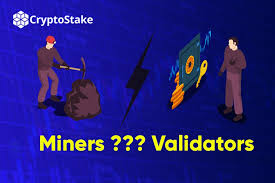
Cryptocurrency: Mining vs Validating
Blockchain technology is a secure network that ensures cryptocurrencies/digital currencies stay trustworthy and fulfill their original intent. For technology enthusiasts and novice investors, learning about blockchain and cryptographic processes is very interesting.
Mining is the mechanism by which cryptocurrencies are released into the blockchain. While mining is what attaches the blocks to the chains, it is preceded by a validation process that streamlines all for mining. What is the difference between validation and mining? What is the difference between the two?
Crypto Validation
Crypto validation is the process of authenticating and verifying transactions and blocks in a blockchain. A block validator analyses the particulars of individual transactions in a blockchain, verifies their validity, and combines them with others to form a block.
The validator is notified of pending transactions and works to validate and authorize them. A validator checks the validity and accuracy of each transaction, among other things. Another important thing that a validator looks out for is double-spending.
Validators' job, on the other hand, must go through consensus algorithms in order for a block to be complete in a blockchain.
Crypto Mining
It's the mechanism in which the blockchain uses consensus algorithms to accept a validator's block. Evidence of work and proof of stake are the two forms of consensus used today.
Proof of work (POW) allows miners to solve complicated equations in order for their work to be added to the blockchain. The first person to solve the problem gets their block posted.
When it comes to proof of stake (POS), investors keep a certain amount of a cryptocurrency during the validation period in exchange for a portion of the reward.
While validation and mining must work together to complete the process, it is helpful for an investor to know how the two compare.
The Difference
Complexity Level
Validation and mining have different levels of difficulty. The earlier focus was on simply verifying the specifics of each transaction.
To release the blocks, the latter, i.e. mining, requires solving complex arithmetical problems. As opposed to validating, the difficulty level of mining is relatively high.
Cost involved
Another factor to consider when determining the differences between mining and validating is the associated costs. The masternode is an important part of the mining and validating process.
The validating section has lower costs than the mining section. The user is in charge of the node and participates in transaction verification.
Mining, in particular, the difficulty of solving arithmetic equations, necessitates a broad resource allocation. As a result, mining needs a lot of power and computers with a lot of processing power.
Transacation level
When users submit transactions via the blockchain, crypto validation begins. To avoid double-spending and scamming, the validator receives a notice and begins checking the validity of the transactions.
The aim of mining is to get the block into the distributed ledger. The mining process is completed when several transactions are combined into a new block and added to the chain. The end result of mining is a block of new coins.
Rewarding
In mining and validation, the remuneration is also different. The job of the validators is completed only when the mining process is completed. The revenue produced by the mining process is distributed in the form of coins. After the mining process is completed and a miner's block has been selected and attached to the chain, the miner will collect the rewards.
Why Validation and Mining Work Together
Although the two processes appear to be independent, they must collaborate if the blockchain is to be safe. When the validation process is completed, the miners' work will begin, and the result should be shared among the added block participants. Consider how mining and validation work together in POW and POS systems.
Proof of Work
You may be interested in participating in the mining or validation phase as a beginner; however, you must be prepared to complete the entire validation and mining process. For effective block release, massive amounts of electricity and high-performance computers are needed.
Recently, however, several crypto ventures have started to deliver cloud-based computing machines as a way to make the mining process simpler. Utilizing cloud mining platforms will allow you to receive better rewards at a lower cost.
Proof of Stake
Simply run your masternode and stake some crypto if you're using a network that uses proof of stake mechanisms. Stakers will keep a certain amount of crypto assets as collateral during the validation process. The sum of rewards in POS is determined by the stake value and stake duration.
Conclusion
When comparing the costs, rewards, and complexity of crypto validation and mining, some variations in costs, rewards, and complexity arise. Mining, for example, is a highly complicated process involving certain complex computations that can only be completed with the power of powerful computers. Furthermore, a validator/miner receives incentives only after the validation and mining processes are completed. Crypto validation is more concerned with the transaction that is added into the blockchain, while mining is concerned with transaction blocks, and their addition to the blockchain.
However, despite their many variations, the processes are mutually beneficial. To protect the blockchain and release new coins, the duo processes are necessary. Anyone interested in mining or validating crypto should be prepared to go through the entire process.
Diversified Portfolio
It's important to incorporate certain techniques to manage your cryptocurrency investments in the competitive world of cryptocurrency trading. By carefully handling your savings, you can guarantee that your coin portfolio is risk-free.
Risk
Risk is described as an investor's willingness to accept the risk of losing money in return for the possibility of making money from his investments.
**In the cryptocurrency industry, there are two types of risk:**
Market risk
The risk associated with the overall performance of the cryptocurrency markets is known as market risk. Market risks are unavoidable. If you've been watching the cryptocurrency market since the beginning of 2018, you'll realise that it's strongly associated with Bitcoin and other cryptocurrencies. After a phenomenal run in 2017, the entire market collapsed at the start of 2018, and almost all coins and tokens suffered huge losses, regardless of which ones you invested in. Market risk is exemplified by this example.
Coin-specific risk
Coin-specific risk is the risk associated with a single coin or token in the cryptocurrency market, which is affected by factors unique to the project. If a project, for example, suffers a negative event (such as network failure or the theft of investors' funds), the coin holder who invested in that project will be a victim of the project-specific danger. Diversification can help to mitigate coin-specific risk.
Risks are both an opportunity and a red flag in the investment marketplace. According to conventional financial wisdom, the higher the risk, the higher the anticipated return. Cryptocurrencies are, without a doubt, the riskiest investments you can make.
KEY FACTORS TO CONSIDER WHEN INVESTING
**Timing**
It's important to understand the basics of tokens and coin trading when you construct your cryptocurrency trading portfolio. You will be well-positioned to know what to do when the market turns red and movement is trending downwards if you understand the timing factor.
The general rule is to buy when the bears are in control (when the market is down) and sell when the bulls are in charge (when the market is up) (when the market is up). The main problem here is not market price predictability, but rather knowing what step to take in the face of current circumstances.
**Investing vs Trading**
Before investing in something, do your research, particularly if you're just going to invest in cryptocurrencies. There are over 8,000 coins and tokens to choose from, and the cryptocurrency market's intense volatility can make for a bumpy ride. Fundamental analysis and technical analysis are the two primary forms of analysis used in the investment environment.
Fundamental analysis is commonly used by investors to determine a cryptocurrency's long-term prospects and viability. A investor, on the other hand, will use technical analysis to make short-term decisions by analysing price charts, trends, signals, and indicators. Knowing what kind of person you are and what types of risks you are comfortable with is crucial to determining which type of research to use. Because of the uncertainty of the markets, short-term trading is riskier.
**Personal competency**
Focusing on your core competencies and abilities is another important factor for your cryptocurrency investment portfolio.
You get grounded in the tokens and coins that will fit best for you when you create a competence cycle for yourself. Nobody knows everything, so it's best to focus on one field where you have a competitive advantage. You would be able to call the shots in your area of specialisation and minimise risks by doing so.
Final thoughts
In the ever-changing and unpredictable cryptocurrency markets, a well-diversified portfolio goes a long way toward ensuring success. Investors can select from over 8,000 coins and tokens with varying degrees of danger and characteristics. Having a well-balanced coin portfolio will save you a lot of time and money. Finally, before investing in any coin, investors should always conduct rigorous due diligence.