Why Nigerians Are Using Crypto-Native Payments (And What You Should Know First)
If you’ve recently attempted sending or receiving money across borders in Nigeria, you already know the pain points: delayed bank transfers, unpredictable exchange rates, and platforms that just don’t work for us. That’s a big reason why crypto-native payment rails—stablecoins, P2P exchanges, and blockchain-based payouts—have quietly become a lifeline for freelancers, content creators, and everyday people trying to move money in and out of the country.
The Problem With Old Rails
“Traditional payment processors like PayPal have always been unreliable or unavailable to Nigerians who want to receive payments directly. Where access exists, conversion fees and slow settlement times erode earnings that are often already modest. Getting paid on time and in full is just as important as getting paid if you’re doing freelance or content work—writing, design, or development.
Where Crypto Needs To Be
This is where stablecoins (like USDT) and P2P platforms have come in. A freelancer in Lagos or Enugu can now:
• Get paid in USDT directly from an international client without a bank.
• Next, P2P trade your USDT for naira on exchanges like Binance or Bybit.
Transfer Funds Without Waiting Days for a Wire Transfer To Clear
For a lot of people this isn’t speculation; this is about having a payment rail that works.”
But It’s Not Without Risk
1. P2P trading comes with counterparty risk. And always confirm payment before releasing coins. Use platforms that have buyer/seller protection and dispute resolution.
2. There is risk in stablecoins. They are generally more stable than volatile coins like BTC or ETH. However, they are dependent on the issuer to maintain the peg.
3. Not all “crypto earning” apps are legit. Mining apps, faucets, and “tap to earn” games with quick payoffs are almost always of low value or outright scams. The real income here is from doing real work — freelancing, content creation, trading — not from apps that promise free money.
The Bottom Line
Crypto-native payments are not a silver bullet, but for many Nigerians they are a genuinely more reliable alternative to broken traditional infrastructure. If you’re interested in this space, start with education, use reputable platforms, and approach anything that is “too good to be true” with healthy skepticism.
What has been your experience with crypto payments in Nigeria – easier than the normal banking experience or more hassle? Tell me in the comments.
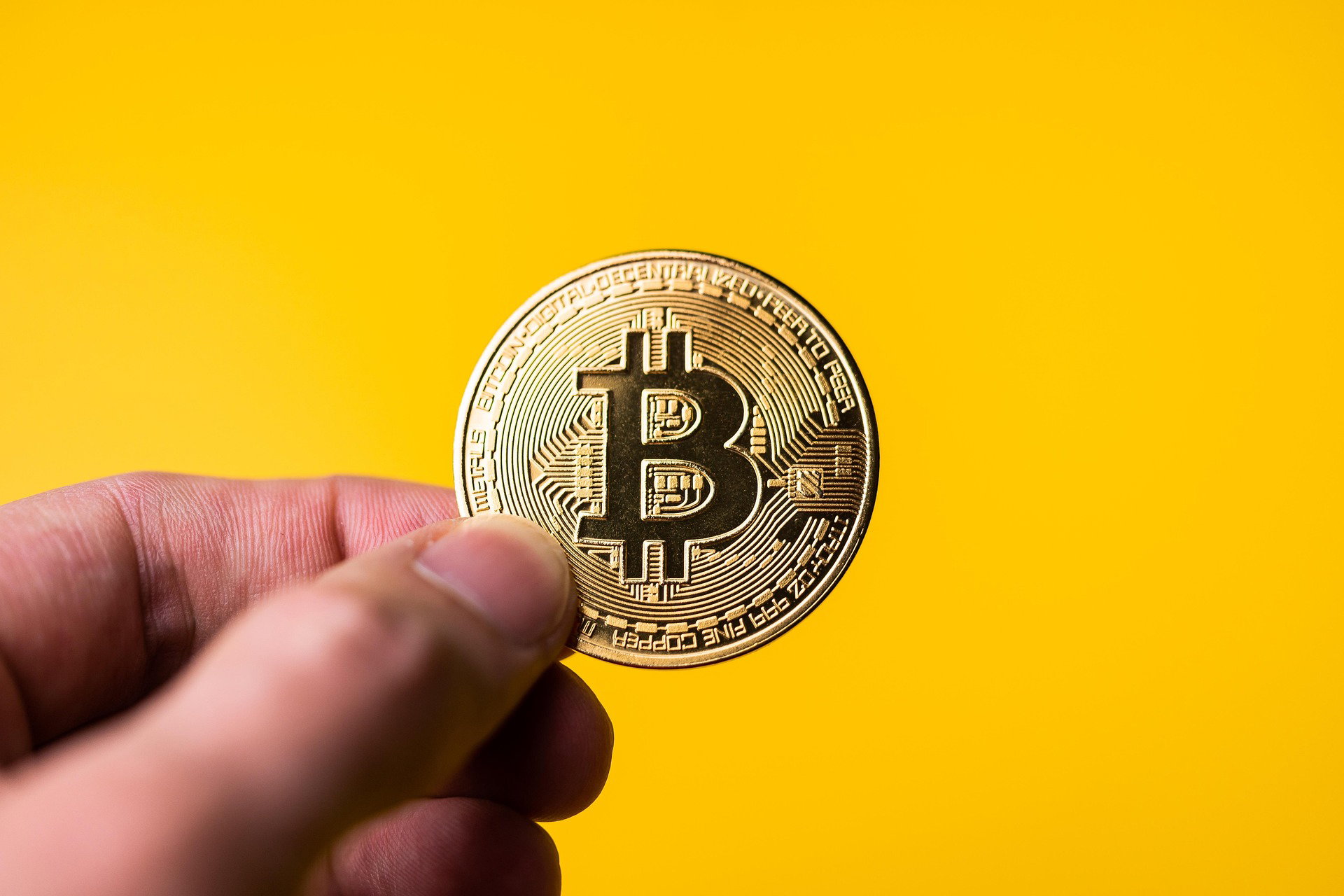
Bitcoin ETFs Lose $91 Million as Morgan Stanley's MSBT Adds Fresh Capital
Crypto ETF flows remained subdued on Thursday, June 18, as bitcoin and ether funds posted another day of outflows ahead of the Juneteenth market closure. Solana and XRP ETFs attracted modest inflows, while HYPE products saw no trading activity.
Key Takeaways:
Bitcoin ETFs lost $90.66M on June 18, led by Blackrock IBIT’s $96.66M outflow.
Solana and XRP ETFs gained $2.99M and $2.55M, showing selective investor demand.
Franklin targets Sept. 1, 2026, launch for two bitcoin-linked dividend reinvestment ETFs.
Bitwise Leads Solana and XRP Inflows as Bitcoin ETFs Extend Losses
The market limped into the holiday break with a quieter tape and a familiar divide.
Bitcoin and ether ETFs remained under pressure, though volumes eased as traders prepared for the Juneteenth closure. The day was not without pockets of demand. Solana and XRP products both added capital, but the broader tone stayed cautious.
Bitcoin ETFs recorded $90.66 million in net outflows, led by two funds. Blackrock’s IBIT accounted for the bulk of the pressure, losing $96.66 million. Vaneck’s HODL added a smaller $4.44 million exit.
Morgan Stanley’s MSBT was the lone positive contributor, drawing $10.43 million in inflows. It helped soften the overall loss, but not enough to reverse the day’s direction. Total bitcoin ETF value traded came in at $2.40 billion, while total net assets closed at $78.32 billion.
Morgan Stanley’s MSBT has seen four days of inflows despite the broader market outflows. Source: Sosovalue
Ether Outflows Stay Concentrated
Ether ETFs also finished in negative territory, with the entire $12.77 million outflow coming from Blackrock’s ETHA. There were no offsetting inflows across the category. Total ether ETF value traded stood at $436.41 million, while net assets closed at $9.30 billion.
The result kept ether funds under pressure, even as the scale of redemptions remained moderate compared with earlier sessions this month.
Solana and XRP Find Buyers as HYPE Goes Quiet
Solana ETFs offered the strongest positive flow of the day, adding $2.99 million. The entire inflow went into Bitwise’s BSOL. Total traded value was $38.30 million, and net assets closed at $794.01 million.
XRP ETFs also ended in the green, bringing in $2.55 million, all through Bitwise’s XRP product. Total value traded reached $11.98 million, while net assets slipped below the $1 billion mark to close at $994.81 million.
HYPE ETFs saw no trading activity. Net assets closed at $221.22 million.
The session also brought a fresh sign of how issuers are trying to blend traditional income strategies with bitcoin exposure. Henry Jim, ETF analyst at Bloomberg Intelligence, noted two new Franklin filings: the Franklin US Equity Bitcoin DRIP Index ETF and the Franklin US Innovation Bitcoin DRIP Index ETF. Both are structured to invest dividends into bitcoin, with an effective date listed as Sept. 1, 2026.
Thursday’s flows showed a market winding down before the holiday, without finding a decisive direction. Bitcoin and ether remained weak, but steady inflows into solana and XRP suggested selective demand is still present beneath the slower trading tape.
Bitcoin Eyes $70K Breakout as 21Shares Sees Path Toward $100K by Q3
Bitcoin remains above a key support zone despite a Federal Reserve-driven pullback, while 21Shares sees a potential path to $100,000 by the end of Q3. The firm’s outlook depends on a decisive breakout above $70,000.
Key Takeaways:
21shares sees a potential route to $100,000 if bitcoin clears $70,000.
After a Fed-driven pullback, BTC continues defending support around $65,000.
Meanwhile, inflation concerns and rate expectations could shape near-term market sentiment.
21Shares Says Bitcoin’s Upside Case Starts With a $70K Break
Bitcoin could climb to $100,000 by the end of the third quarter if it clears $70,000 resistance, according to Matt Mena, Senior Crypto Research Strategist at crypto asset manager 21Shares. The forecast comes after the Federal Reserve signaled a more hawkish policy outlook.
Market reaction to the Fed decision pushed BTC down roughly 2%, though Mena viewed the decline as consolidation rather than a change in direction. He said the next major test is whether buyers can reclaim $70,000.
The 21Shares senior crypto research strategist stated: “ Bitcoin itself, while consolidating in the near term, remains structurally well-positioned.” He added:
“With eyes now on $70k, Bitcoin’s next resistance level, if we are able to break through $70k with strength, we are primed to retest $75k and target $80k again as we did in May – setting us up to end Q3 at the coveted $100k level.”
The projection keeps the focus on price action rather than the Fed decision alone. Mena’s view makes $70,000 the threshold that separates near-term consolidation from another attempt at prior highs.
Fed Policy Pressure Keeps Macro Risk in Focus
The Federal Reserve held rates steady under Kevin Warsh, a move Mena described as fully expected. The larger signal came from updated projections, with the median dot, or midpoint of policymakers’ rate forecasts, now pointing to a possible rate hike later this year.
Inflation running at a three-year high added pressure on the Fed’s stance after an energy spike tied to the Iran conflict. Mena also cited the Bank of Japan’s rate increase to 1%, its highest level since 1995, as another source of pressure on risk assets.
The strategist said:
“Warsh is also a distinctive figure for digital-asset markets: the first Fed Chair with personal ties to the crypto industry (including an early investment in multiple crypto projects) and a more constructive posture toward bitcoin than his predecessors, publicly stating he is a fan of bitcoin.”
That leaves the next move tied to whether buyers can sustain momentum after the Fed-driven pullback. For Mena, the hawkish backdrop has not changed BTC’s broader setup.
Crypto Fees Explained: How to Avoid Failing Transactions as a Beginner
Hello Read.cash community! CryptoMasterNG here again. First of all, I want to say a massive thank you to everyone who welcomed, liked, and supported my introduction post. The warmth of this community is truly incredible!
Today, I want to talk about a vital lesson I learned while exploring the Web3 space: understanding blockchain network fees.
When I first started interacting with decentralized applications and wallets like Phantom, I ran into an instant error message while trying to claim some rewards from a platform called BULB. I thought I had just enough money to cover the transaction, but the blockchain kept blocking me. Here is what I discovered, and how it can help you avoid making the same mistakes:
1. You Must Pay in the Native Currency
Every blockchain network requires its own native coin to process transactions. If you are interacting on the Solana network, your gas fees must be paid exclusively in SOL. Even if you are claiming millions of alternative tokens, the validators will not accept those tokens to cover the transaction costs. You must hold the native coin in your wallet out of pocket.
2. Watch Out for "Account Creation" Fees
One major trap that catches beginners off guard is the one-time account creation or "rent" fee. On networks like Solana, the very first time your wallet receives a brand-new type of token, the network charges a mandatory fee to permanently open a secure storage slot for it on the blockchain. This fee is often higher than a regular transfer fee, causing your transaction to fail instantly if your balance is even a fraction of a cent too low.
3. The Golden Strategy: Let Rewards Accumulate
If you are earning small payouts from Web3 apps weekly, never click the claim button every single week. If your rewards are only worth a few cents, paying a network fee to pull them out will result in a net loss. The smartest move is to let your earnings stack up inside the app for a month or more. Once the accumulated value is much higher than the network fee, you can deposit a small cushion of native crypto and claim everything at once profitably.
Always keep at least $1.00 worth of native gas tokens in your wallets to keep your blockchain transactions running smoothly!
What about you? Have you ever had a crypto transaction fail because you were short on gas money? What is your favorite blockchain network for low fees? Let me know in the comments below!
My Crypto Journey: Introduction of CryptoMasterNG to Read.cash
Hello Read.cash community!
My name is CryptoMasterNG, and I am excited to join this platform. I am a crypto and Web3 enthusiast based in Nigeria, and I love exploring decentralized applications, blockchain technology, and new ways to participate in the global crypto economy.
Lately, I have been testing out various Web3 platforms like the BULB app and interacting with networks like Solana using my Phantom wallet. While the crypto space is filled with incredible opportunities, it can also be challenging for beginners to navigate things like network fees, smart contracts, and token account creations.
My goal on Read.cash is to share my honest experiences, write educational articles about cryptocurrency, and connect with other creators. I want to build a space where we can learn from each other and discover real, sustainable ways to grow our portfolios.
Thank you for reading my first post! Please drop a comment below to introduce yourself, and let me know what your favorite crypto token or project is ri
ght now.
 @CryptoMasterNG