NFTs from the Fathers of Blockchain Technology Those who know the Bitcoin whitepaper well are aware that Stuart Haber and Scott Stornetta are named as three of the eight references supporting the paper. The gentlemen, whose research in the early 1990s and commercialization of that theory in 1995 support their position as the fathers of the meta-blockchain, are now promoting NFTs that commemorate their early work; that early work has been captured in the New York Times Sunday classified through regularly published hashes, with NFTs on the Kadena blockchain commemorating the hashes of that early proto-blockchain and cartoons noting events of the time. Two NFTs are already sold, the first for 3,500 KAD and the second for 175 KAD. (KAD is going for around 0.63 USD as of this writing). The third NFT is for sale right now with a current bid of 501 KAD. Those of us who are believers of Satoshi and the real Bitcoin can show our support through recognizing the work of Haber and Stornetta. I am not connected to this offering and receive no compensation for encouraging others to consider taking part in this offering. Learn more at nft dot immutablerecord dot com.
@CryptoEric
Joined 19 February 2021 · 5 posts
120 KT
0 KT received · 0 KT given
Posts
Good news and bad news for Crypto-incentivized publishing sites Publish0X has announced that it will be undergoing some changes. The short term opportunity is for those who have had Ethereum holdings locked in with little change of withdrawal - the minimum for withdrawal to your wallet has been dropped from $5 to $1 for a few days only. Like read.cash, Publish0X is a self-publishing site where people can earn crypto through tipping. Publish0X provides tip money and readers can use the provided money to thank particular authors, while keeping up to 80% of the tips for themselves. Most recently, the tips have been in ETH, AMPL and iFarm. Skyrocketing gas prices led Publish0X to make it more difficult to withdraw the money. Unless you used one specific exchange, a minimum $5 withdrawal made getting amounts out difficult for the earnings you expect on a faucet site. Publish0X has announced it will no longer offer ETH for tipping, is cutting back tipping by 50% and doing other activities to be more profitable. However, they - for a few days - have lowered the ETH withdrawal minimum from $5 to $1. That means amounts that would otherwise be stuck or left there can be sent to your wallet. Many thanks to Read.Cash, Publish0X, noise.cash and other sites that have made working with crypto a reality for so many.
Where "USA Dedicated Token" May Mean "Un-Satisfactory Airdrop": A Cautionary Tale Disclaimer: The following is not meant as investment advice, nor is it meant to demean anyone involved in the efforts. The goal is to be as fact-based as possible. I have been following the release of a new token. It's only been a month since the domain name was procured and the campaign began, and a series of airdrops have been in place as part of a bounty program. What I have been watching will make an interesting cautionary tale, although the end is not yet seen. The "organization" behind the program calls itself "Reed Elsevier". The token is called "RELX". At first glance, this may seem unexceptional, with one major issue: there is a global company called the RELX Group, which was previously known as Reed Elsevier. The RELX Group is widely known in professional and technical space, is the publisher of major professional journals, runs trade shows, and is the home of the data service known as *LexisNexis*, one of the best known and longest lived search tools for legal information. The "Reed Elsevier" website has very little information about the team, no technical whitepaper, and very little else other than buzzwords. The headline, or branding, you see when you first visit the site is "RELX is the World's Best Complete USA Dedicated Token". That is odd, when you realize there is nothing on the website, in their social media, or anyplace else that speaks to USA or "USA dedication", let alone lays out completeness. Hence the mention in the title that USA must mean something other than *United States of America* ; as I will discuss, it is evidencing itself as a completely un satisfactory airdrop. Reading the ongoing flood in their Telegram feed, it might stand for *unstable angina* or perhaps one of the more vulgar terms available at https://www.acronymfinder.com/USA.html. https://reedelsevier.digital/index.html The HTML page title is "Reed Elsevier - The Next Generation Of Social Investments". However, there is little indication of any evolution or how "social" this is., other than claims "**your swap is a new form of the governance system, a think-tank where innovation, entrepreneurship, and technological advancements are the priority, creating a much needed utility focus to the blockchain space."** The website lists a contact address that does not resolve to a real place on Google or Bing Maps; there is a phone number with a Missouri area code; the Twitter social media link has been suspended; and the project plan goes no further than next month. The Youtube channel has a few videos, the most recent on how to withdraw tokens. It is not uncommon for people to take part in bounties, going on their own social media to speak about how great and important the project is, what a professional team, how they will change the world - but other than wondering where their promised bounty is, the biggest question people have is "How do I sell this stuff as quickly as possible?" https://www.youtube.com/channel/UCJidDC3g01AjtYove64T_pA The Telegram channel has been a study of chaos and mismanagement. It boasts almost 30 000 members. Not saying that it's not a much smaller number of people with many accounts to get multiple dips into the token giveaway. It is a constant flow of people complaining they didn't receive their base or additional tokens, spammers shilling other airdrops, people saying "Hi" and others hoping to trigger some automated receipt of free tokens. Tracking where the 10 000 000 tokens are going, the only large movement was 150 000 a little more than a week ago. At a minimum of 10 tokens for the bounty and 30 000 Telegram members, the payment out simply doesn't begin to reflect full payment, given people claiming hundreds due to them due to their referrals. https://bscscan.com/token/0x1430c804b8309fb38aa4f6e953c2178c7fc62e34 It has been two weeks from the start of the airdrop and the promised payment date, and a week since the 150 000 moved to start some kind of distribution; although the Facebook page boasts that all payments went out at the last update there one week ago, it's very clear that something is amiss. Yet, they started a second airdrop and bounty. The Facebook page, by the way, was opened February 10, and is managed out of Bangladesh. https://www.facebook.com/reedelsevier1 I do not have all the facts, of course. And this RELX/"Reed Elsevier" group is not unique. Similar situations happen under names like DryCake (which at least listed a team and offered a whitepaper, but their Telegram channel is almost interchangeable with RELX's), Hyperliquidity, HardPal Swap and others. The latter all went under the same basic byline: "*Be Decentralised and Feel Centralised"*


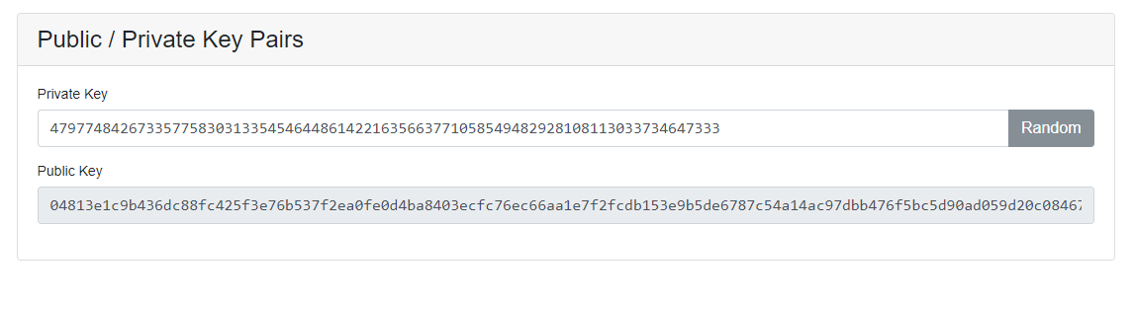
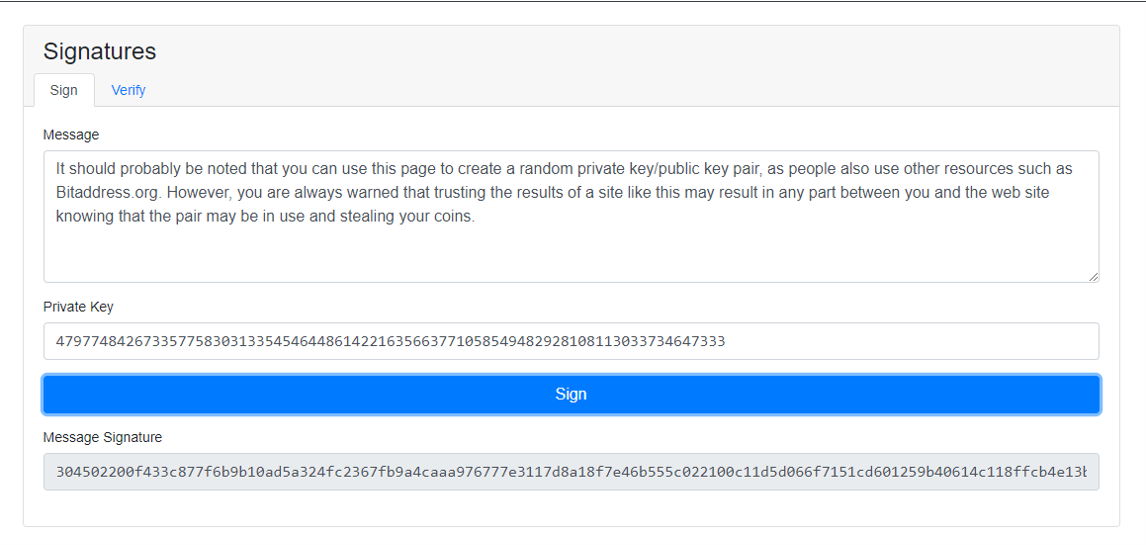
Learn Blockchain Technology in a Visual Manner - Part Two In the first part of this series, I introduced you to a fascinating web site that shows how Bitcoin Cash (and other forks from the Bitcoin blockchain, and similar cryptocurrencies) work. That introduced concepts such as *hashs*, *blocks*, *nonces*, and *tokens*. And my thanks to Anders Brownworth for providing this very useful visualization tool. In this second part, I want to highlight a follow up page that Anders created, to illustrate the use if public and private keys, and signing transactions. You can ignore what I am about to write completely and just go direct to Anders' site with his very complete and informative Youtube videos, or read on. https://andersbrownworth.com/blockchain/public-private-keys/ Brief crypto backgrounder In the first part of this series, I discussed cryptography ("secret writings"), and the tools of mathematicians and cryptographers used in blockchain, largely based on the works of Stuart Haber and Scott Stornetta, whose works represent three of the eight references in the Satoshi Nakamoto Bitcoin whitepaper. https://bitcoin.org/bitcoin.pdf You often hear that blockchains use advanced *encryption* (or perhaps encryption techniques). Encryption is a *two-way* process: a message is uniformly changed into ciphertext - something that can only be understood and transformed back to the original by someone with the secret. The basics of blockchain - whether Bitcoin Cash or Ethereum, or any of the other major cryptos - do not involve encryption; everything is in clear text on the blockchain. That is not to say that encryption is not used as part of the digital signature process, as we shall see. Keys The first part of Ander's second demonstration (2) begins with illustration of private and public keys. There are any number of great tools online that illustrate the process of starting with a random seed (my favorite being the Graphical Address Generator at The Royal Fork), or starting one step later with a private key to create the public key. https://royalfork.org/2014/08/11/graphical-address-generator/ https://gobittest.appspot.com/ It's always interesting to see whether the tools return the same results, of course, and sometimes they fail. It should probably be noted that you can use this page to create a random private key/public key pair, as people also use other resources such as Bitaddress.org. However, you are always warned that trusting the results of a site like this may result in any part between you and the web site knowing that the pair may be in use and stealing your coins. https://www.bitaddress.org/ Signing The next page on Ander's site illustrates how private keys are used to sign a message and public keys are used to check the signature. Sign In the screencap below, you can see the paragraph above "signed" with the private key from the first screencap. The original message is 351 characters long; the signature is 142 characters. Verify On the same tab, you will also find the "verify" function. Here you see the original message (remember - no encryption of the blockchain), the public key and the Signature. Pressing the verification button, the message box turns green if everything is correct; change the message (even adding a space at the end) , the public key or the signature will make the message turn red when you verify. Transaction Transaction makes it a little more "real" instead of random content for the message, you see something that looks a lot more like a BCH transaction. There is a transaction amount (for the illustration, it is in $ rather than BTC), and the address from which the amount is transferred, along with the address the amount is transferred to. Sign and Verify As with the unstructured text, you sign the transaction with the public key to create a message signature; if the amount, addresses, signature are changed, verification will come back with a red result; if all is clear, the message comes back with a green result. Blockchain Finally, the last page, *Blockchain,* illustrates how all of this security works in a chain of blocks. You sign a transaction, you sign a block, and any change will break the chain to protect the transactions and make sure they are from the people who should be able to authorize the transaction. You see a lot of misinformation about blockchain and Bitcoin Cash. If you have a private key, you are ready to receive Bitcoin Cash; nowhere in this process did you see the message encrypted - it's clear text. But Ander's visualizations really help take the lid off the workings and show how simple the process really is, if you have some simple tools. (1) https://andersbrownworth.com/blockchain/ (2) https://andersbrownworth.com/blockchain/public-private-keys/
+1 more
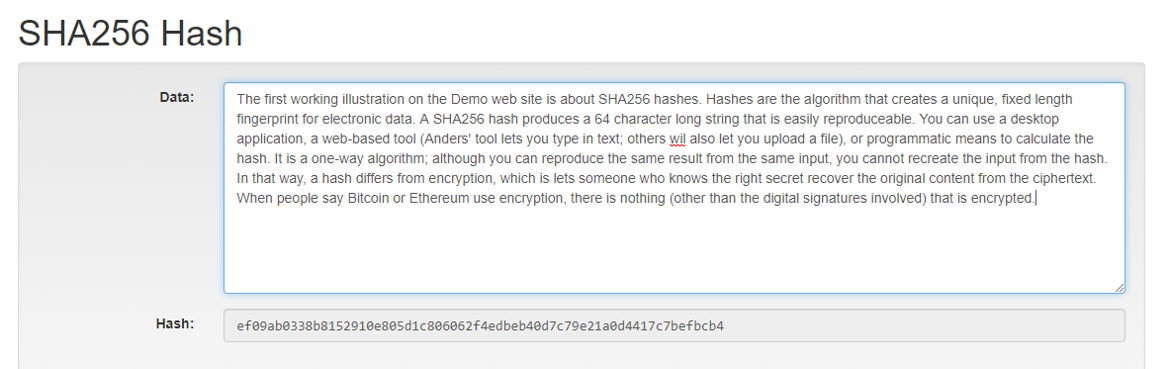
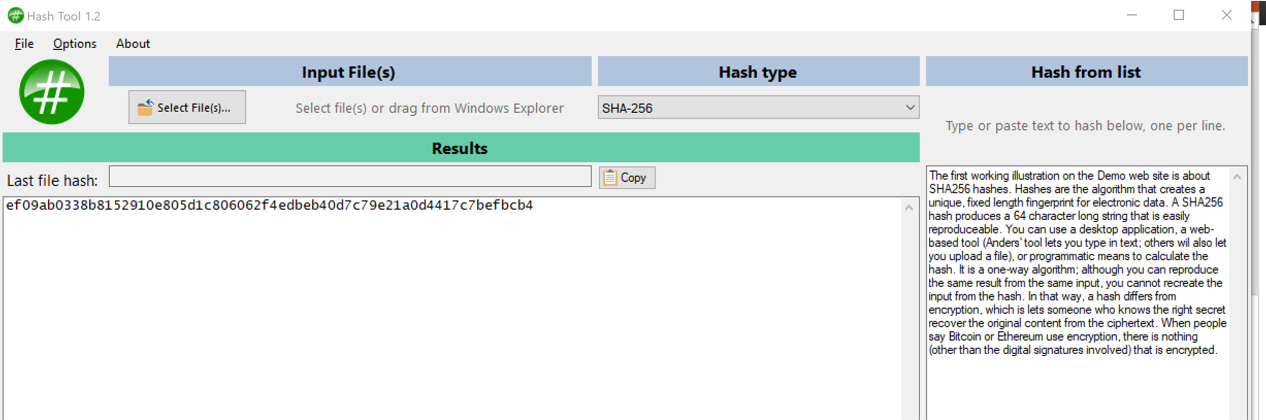
Learn Blockchain Technology in a Visual Manner Difficult Concepts Made Simple Blockchain technologies are filled with buzz words that can be very confusing, starting with the phrase blockchain (or "block chain") itself. Terms like cryptographic hash, Merkel tree, nonce, distributed ledger, wallet and coins/tokens can be confusing. Good people have published lots of prose and illustrations to try to explain these concepts. I have found that a gentleman named Anders Brownworth set up a very clear and useful web site to help illustrate these concepts, along with a series of Youtube videos that show how to use the web site. https://andersbrownworth.com/ https://youtu.be/_160oMzblY8 Blockchain Demo web site SHA256 Hash The first working illustration on the Demo web site is about SHA256 hashes. Hashes are the algorithm that creates a unique, fixed length fingerprint for electronic data. A SHA256 hash produces a 64 character long string that is easily reproduceable. You can use a desktop application, a web-based tool (Anders' tool lets you type in text; others wil also let you upload a file), or programmatic means to calculate the hash. It is a one-way algorithm; although you can reproduce the same result from the same input, you cannot recreate the input from the hash. In that way, a hash differs from *encryption*, which is lets someone who knows the right secret recover the original content from the ciphertext. When people say Bitcoin or Ethereum use encryption, there is nothing (other than the digital signatures involved) that is encrypted. https://andersbrownworth.com/blockchain/hash You can see from the above illustrations that the paragraph above, when hashed with a SHA256 hash, returns the same 64 character result - ef09ab0338b8152910e805d1c806062f4edbeb40d7c79e21a0d4417c7befbcb4 - whether calculated in the demonstration hash tool or a desktop tool (here, the DigitalVolcano Hash Tool). Block Now that we understand a hash, next we can understand the basics about *blocks,* *nonces* and *mining*. Ander's Block demo demonstrates the mathematical puzzle miners go through when competing for the mining fee for adding a block to a blockchain. https://andersbrownworth.com/blockchain/block The block displayed has information that will be hashed - in this case, a block number, a "nonce", and the content in the block, and then shows the resulting hash. The Bitcoin white paper speaks to the challenge: "*we implement the proof-of-work by incrementing a nonce in the block until a value is found that gives the block's hash the required zero bits".* https://bitcoin.org/bitcoin.pdf In the example, pressing the blue Mine button changes the Nonce value so the hash of the combined information results in a Hash that starts with four zeros. Additional demos The web site has additional visual demonstrations that show: **Blockchain**: How attempting to change the content in a prior block impacts the results of the chain throughout **Distributed**: How the duplication of the chain on multiple peers provides even more integrity **Tokens:** How to expand from generic content to structured transactions with values being transferred from user to user (address to address) - not about balances, and **Coinbase:** How new coins/tokens can be given (such as with the miner's fee) and dispersion is controlled. Another demo is available for demonstrating the use of public and private keys, signatures and signing transactions. More on that in another posting. https://andersbrownworth.com/blockchain/public-private-keys/ Open Source Code If you teach about blockchain, all of this code is available and open sourced from Anders' Github, and can be found here: https://github.com/anders94/blockchain-demo I am not associated with Anders in any way, but have been looking for a resource just like this, for my own teaching and working with the academic profession as they seek easy to use tools for their students.

+1 more