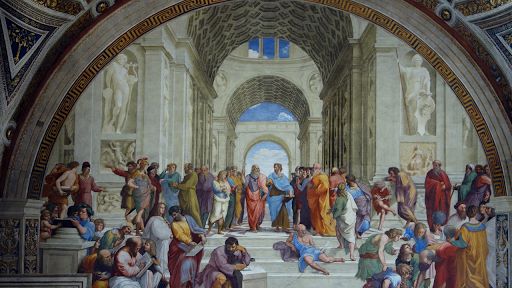
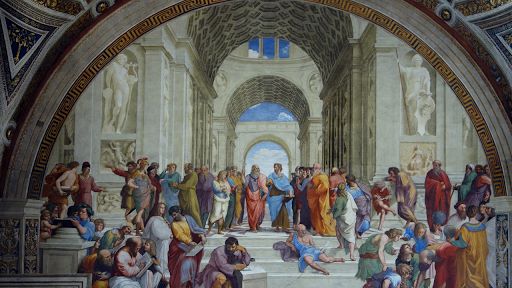
To Be a Better Writer, Don't Identify as a Writer
After college, I got a few gigs by offering editing and proofreading to writers with many different goals. I found that I much preferred the dry and clunky writing of an ESL graduate student’s thesis over the super writer-y writings of a writer. The graduate student has something to tell us, so she uses language as a tool to convey that information. But the writer is trying to be a writer. He uses language to present himself to us as a writer. Reading their work always reminded me of a waiter that Jean-Paul Sartre had once. The waiter was just a little too "waiter-esque", trying too hard to do what he imagines good waiters do, being too pleasing to the guests, too precise, too… ergh! https://en.wikipedia.org/wiki/Bad_faith_(existentialism)
The best writing has little do with showing off vocabulary and prose. It always starts with having something to tell others. Something that is either a useful skill or insight, or maybe a new or humorous way of looking at an old idea. From there, the task becomes one of finding the best and most concise words to express that thing you are trying to tell others.
Many who identify as writers do have things to tell people about, but those things are always collateral to the one big thing they want to tell us; that is, they are writers. Many of the words they place in their sentences only seem to be there illustrate this facet of their identity. It’s as distracting as the pimp who wears the quintessential pimp hat and gold watch. The best way to prevent this – to keep your writing clear and to the point – is to always critique yourself as you write. Ask yourself, “what is my genuine motivation for writing this? Do I have something worth saying? Or am I writing from my ego – to secure the bag?”
In Coty’s perfect world, everyone would stay at their soul crushing jobs, privately mumble to themselves about how much they hated it, and then go home to write only if they had something worthwhile to say. Or, at the very least, people who identified was writers would live a life of voluntary poverty, like Plato’s elite class whose only interest is pursuing the good, the beautiful, and the true. Unfortunately, we don’t live in Coty’s perfect world. Writing is permanently wrapped up in the economy—the information economy—and what to write about will always be tied to the whims and the appetites of the markets on any given day.
What do the markets want? They want something aesthetic. Something pleasing. Naturally, the writing that will perform best in these markets will be rather superficial. They will also be rushed. To be a writer, to be someone whose status or economic well being is connected to writing, means to increase your output. Depth will be sacrificed in favor of frequency, and conciseness replaced by flare.
If you don’t want to get trapped in the hamster wheel, or for writing to become another soulless job, here is my advice. Don’t be a writer. Don’t write anything simply because you think it’s what will get the most attention, upvotes, tips, etc. Don’t write anything because you imagined that’s how a “good writer” would write it. Don’t be like Sartre’s waiter. Instead, go out into the world. Develop some skills, have new experiences, and take risks. In the words of Nietzsche, “Build your cities on the slopes of Vesuvius! Send your ships into uncharted seas! Live at war with your peers and yourselves!”
Whether your adventures end in triumph or tragedy, you will then have something worth writing about. The reader will sense the richness of your experiences on the page. It will stand out compared to the daily turning of the hamster wheel the other writings are running on. The reader is going to forget about their listicles. They’ll remember you. You won’t be just another writer, but a complete human being who uses writing to inform, entertain, and share your breadth of experience and wisdom.

This GIF was Encoded into the DNA of a Bacterium
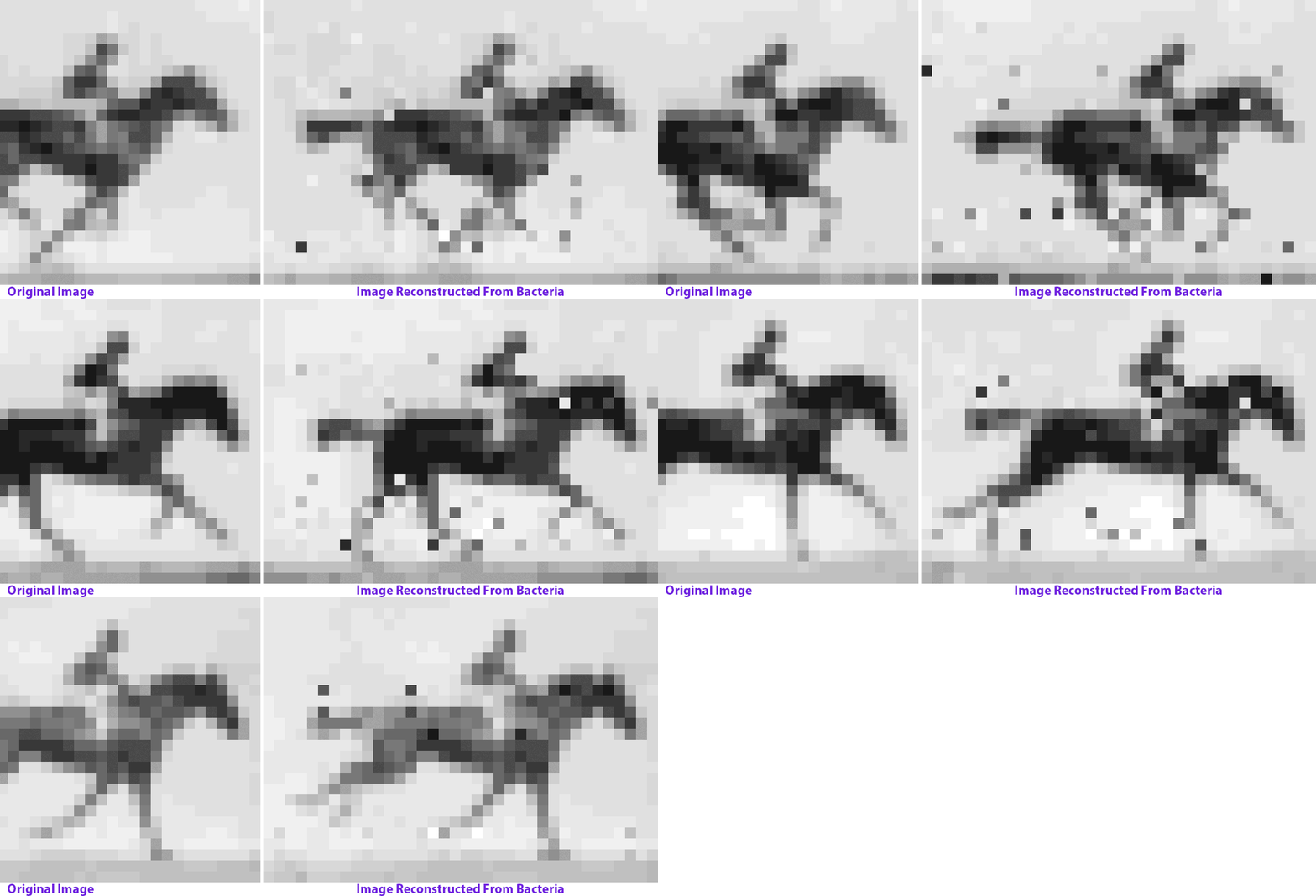
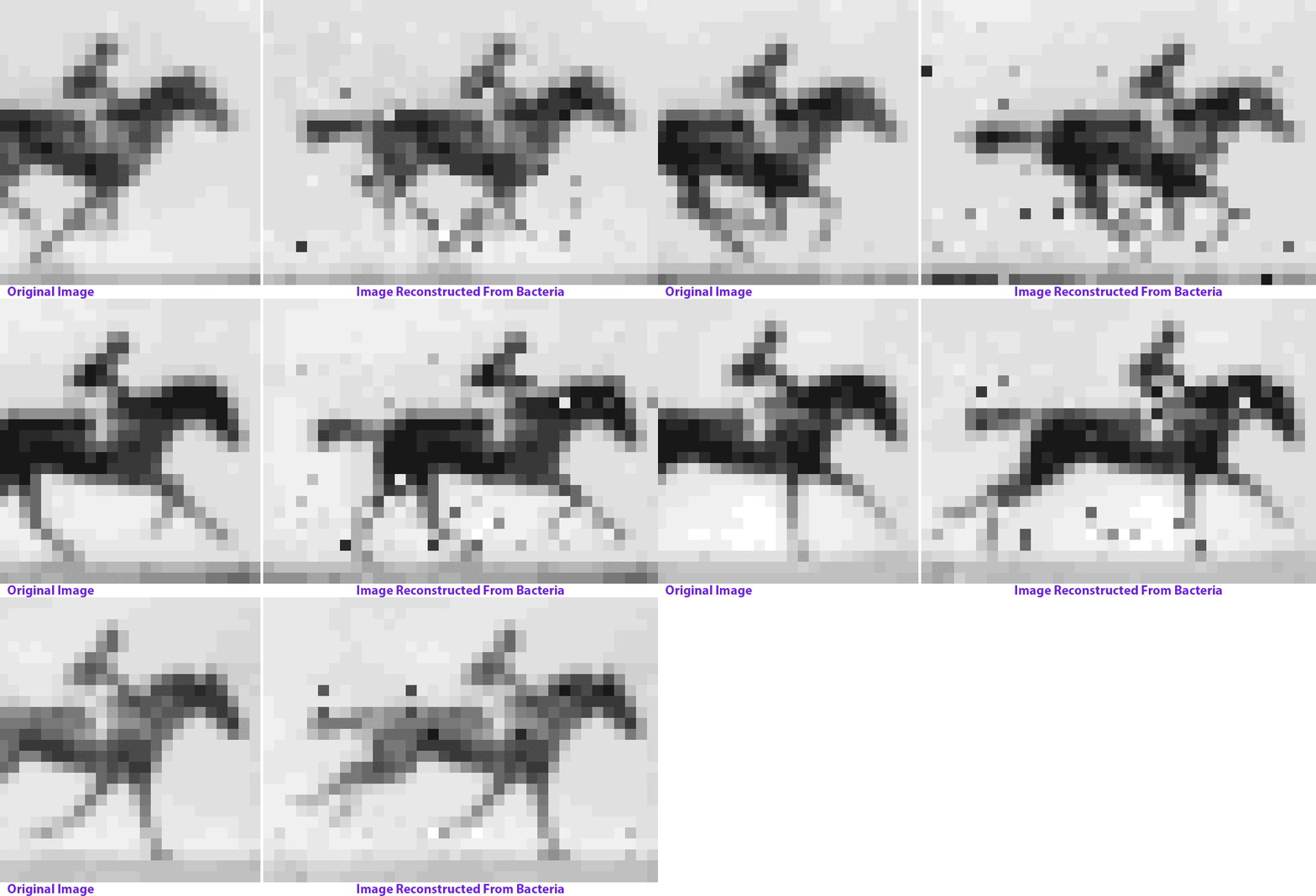
It may not look like much, but consider the fact that this GIF was encoded into the DNA of a bacterium. From a study published in Nature back in 2017, a team of scientists lead by Seth L. Shipman and Jeff Nivala used the CRISPR–Cas system to encode the pixel values of black and white images and a short movie into the genomes of a population of living bacteria. https://www.nature.com/articles/nature23017
What they did was they converted the digital information making up the .gif file (the 1s and 0s that a computer reads) and converted it into a .DNA file (to As, Cs, Ts, and Gs).
Then that information was turned into the physical piece of DNA that was stored in E coli. Let a few generations go by and take a descendant of that bacteria and read its DNA. Anyone who has the means to sequence it can retrieve the .DNA file from the organism. Then they can translate it back into a .gif format.
There is an effort to switch over to DNA to store all kinds of information since its over 100x more information dense than computer chips, and virtually indestructible. Hard drives and CDs lose information if their physical form is altered, but DNA can essentially exist in a liquid state in a test tube while still preserving the information.
Scientists Created Empty Synthetic Cells that Behave like the Real Thing
Sometimes there is an art to doing biology, especially when it comes to overcoming technical limitations to your research. Cellular biologists, for example, have to trade off between the frustrating challenge of growing cells for experimental use and the considerable “lifelessness” of synthetic cell models. Back in August of 2019, a team of researchers at Penn State published a paper in *Nano Letters* describing how they successfully created a synthetic cell which mimics the movement of living cells, without all the extra baggage that living cells bring with them.
The team's protocell doesn't do anything else that normal cells do. It doesn't reproduce or mutate, for example, because it doesn't have any DNA to do so. They made what's called a liposome – just an empty cell membrane – but the twist is that they embedded into the membrane an enzyme called ATPase. They did this because the whole purpose of their study was to study how cells move (which involves ATPase), and by building a fake cell that had only the one feature they were interested in, they could isolate that variable from all the other nonsense living cells do that they weren't interested in.
How cells move is actually poorly understood, so starting from scratch like this allows the scientists to deconstruct and understand the mechanics of their movement one enzyme at a time.
In the research team’s experiments, the protocells have artificial membranes composed of a naturally occurring lipid called phosphatidylcholine. The ATPase enzymes were incorporated directly into the membrane. ATPase works by breaking down ATP into ADP. This chemical reaction in central to how cells store and use energy. In the membrane, this reaction is able to fuel motion and propel the cell.
The scientists in this case used a liposome structure to create their synthetic cells. Cell membranes are built from the same mechanics here, in which the heads of the phospholipids are hyprophillic and their tails are hydrophobic.
Explaining the significance of this study to the Penn State News, lead author Subhadip Ghosh said, “Our results basically give other researchers the first steps toward making artificial cells with enzymatic activity.” You can read the paper in it's entirety here – it's called “Motility of Enzyme-Powered Vesicles. https://pubs.acs.org/doi/full/10.1021/acs.nanolett.9b01830
Fabricating enzymatically active protocells opens new opportunities. Armed with these mimics of motile living cells, the researchers aim to reveal the fundamental mechanisms governing active membrane dynamics and cellular movement. Given the current limited understanding of how cells move, including how enzyme action plays into cell movement, the research team members believe their work can have significant implications for future medical research.
Now We Can Reproduce Inanimate Objects like Living Organisms
Imagine if inanimate objects were like living organisms in the sense that they contained their own assembly and operating instructions in the form of DNA. You could sample the genetic code of chair and clone it, for example. It turns out, we are on the verge of doing just that. A team of scientists at ETH Zurich devised a ‘DNA-of-things’ (DoT) storage architecture to produce materials with immutable memory. This approach allows us to integrate the instructions for how to 3D print an object into the materials of the object itself. It's not as farfetched as it sounds!
Here's how it works. The 3D printing instructions are encoded as a strand of DNA. The DNA is stored in glass nanobeads which are fused into materials for printing or casting objects in any shape. The printed object now carries it's own instructions for producing another copy. You can then remove a piece of the object and retrieve these instructions to print another.
The team practiced this technique by printing a plastic rabbit. Their rabbit contained a 45 kB digital DNA blueprint for its synthesis. They successfully synthesized five generations of the rabbit, each from the memory of the previous generation without additional DNA synthesis or degradation of information. DoT has many other potential applications, including storing electronic health records in medical implants and hiding data in everyday objects. This breakthrough puts us in the beginning stages of building self-replicating machines.
Scientists have already been building on DNA as a new way of storing information for years. It has two advantages that set it apart from all other storage media. One, it is the most information dense stores of information available. The structure of DNA evolved almost exclusively for this advantage - it's helical structure allows it to be packed down as tight as possible. Also, other known forms of storage have a fixed geometry: a hard drive has to look like a hard drive, a CD like a CD. You can’t change the form without losing information. DNA is currently the only data storage medium that can also exist as a liquid, which allows us to insert it into objects of any shape.
Their results were recently published in Nature Biotechnology. https://www.nature.com/articles/s41587-019-0356-z#Sec14
Image from needpix under the license of free to use, even commercially. https://www.needpix.com/photo/1772734/dna-matrix-genetics-control-biology-warning-caution

The Forces of Status and Shame
See that guy in blue robes sitting by himself on the stairs? That is Diogenes. No one dares be near him because he smells like shit. The other day I retold an apocryphal dialogue that took place between him and Alexander the Great. His great contribution to Western philosophy is the idea that if something isn’t shameful in private, then there is no reason to feel shame for it in public. He lived his philosophy every day by masturbating out in the marketplace. https://read.cash/@CotyReh/the-myth-of-diogenes-the-two-cosmopolitans-2bcc7fa1
Diogenes renounced social life for its posturing and social climbing mentality. He believed that people were oversocialised. He prescribed a life of voluntary poverty as a treatment for their oversocialisation. Years later in a country far away, a Jewish man would attempt Diogenes’ treatment and choose to live a life of poverty and hardship. He renounced social life for 40 days. He starved himself and lived in the wilderness. Unfortunately, this exercise made him lose his mind and he came back to society telling everybody that he was the omniscient, omnipotent creator of the universe.
Let’s back up a little. What does shame have to do with this? Shame is what gets you locked into the daily bustle of the crowd. We are pushed and pulled by the forces of Status and Shame to behave in ways we would otherwise not if no one was around to see us. Diogenes, on the other hand, would still masturbate even if there was no one around to see him do it. We get snared by society into seeking satisfaction through professional success, good salaries, respectability, and—above all—to not being perceived as failures in the game of life.
Speaking of shame, here’s a picture of another man who has no shame:
Kanye West dropped out of college and over the course of three studio albums—The College Dropout, Late Registration, and Graduation—presents his thematic journey of walking away from a life that was prescribed for him to thinking and acting independently. These albums were huge successes, but recently he appears to be losing his mind. It all started in 2013 when he released Yeezus, explicitly comparing himself to Christ. Interesting fact about the name Diogenes: it is composed of the Greek words Dio (God) and Genes (to be born of; “genetic”), literally translating to “Son of God”.
Finding Evolution in the Data
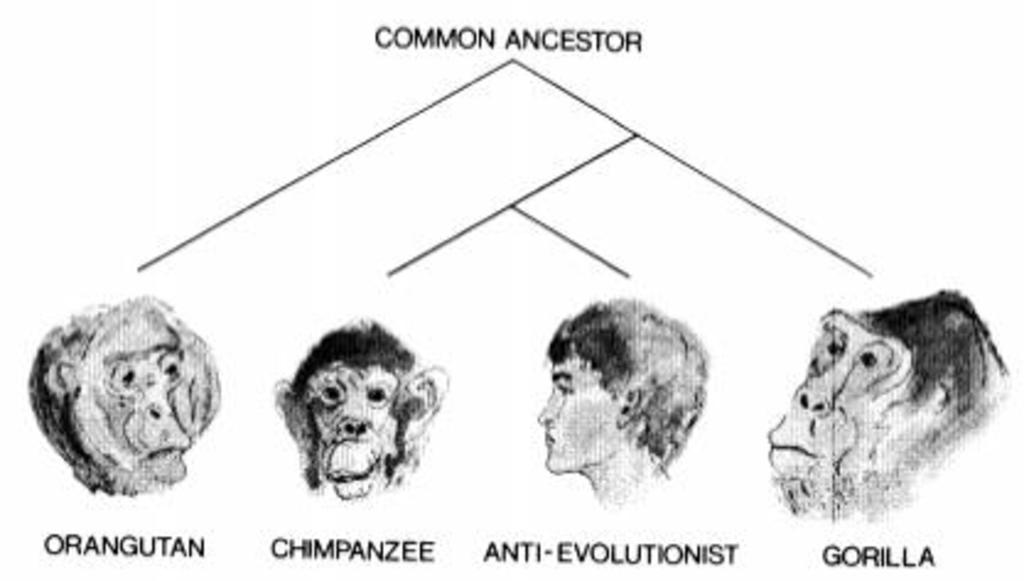
In the 1980s, David Penny and his colleagues pooled together their collective knowledge of biology, statistics, and philosophy to address Karl Popper’s criticism that “Darwinism is not a testable scientific theory, but a ‘metaphysical research program’—a possible framework for testable scientific theories." While he was personally convinced that evolution was a fact, Popper was concerned that the theory of evolution boiled down to a tautology: in the struggle for existence, the fittest will survive. But who are the fittest? The ones with the highest survival rate, of course. In other words, “survival of the survivors.” For something to be a scientific theory, it must in principle be vulnerable to being proven wrong by outside evidence. Tautologies are true by definition, regardless of the evidence.
Penny figured that this problem with the theory was qualitative and linguistic, and that he could develop a method that would quantitively falsify the theory of evolution if it were untrue. He turned to the model of the tree of life. He looked at 11 species, and according to the math there are (2n - 5)!!, or 34,459,425 different evolutionary trees you could construct with just 11 species. He then compared 5 different genes across the species. His reasoning was that if the differences between the genes of these species were not the product of gradual mutations and binomial speciation, then there would be no consensus between the genes about which of the 34 million trees best represents the relationship between the species. If the tests did not agree across different genes and species, that would be the end of the theory of evolution.
As a matter of fact, not only was there a consensus between the five genes across his sample of species, but this experiment has been replicated across hundreds of genes in thousands of species, all forming the consensus that there is just one tree of life relating the lineage and common ancestry of all life on Earth.
*Postscript: The above picture is taken from a book called* **The Society of Mind** *by Marvin Minsky. The book outlines a theory of how natural intelligence can emerge from unintelligent systems working together. It would be an otherwise dry and textbookish read if it weren't for humorous illustrations like this one scattered throughout.*
Two Enlightenments
There are two moments in history that are referred to with the term “Enlightenment”: one in India in the 6th Century BC, and the other in Western Europe in the 18th Century. Each is directly opposed to the other on three metaphysical doctrines.
Whereas the Indian Enlightenment puts forward the doctrine of Dukkha—that pain is an inescapable aspect of existence—the European Enlightenment puts forward the doctrine of Utilitarianism, which states that we can maximize utility (pleasure, profit, etc.) and ultimately export pain from the human condition.
Against the doctrine of Anicca—that nothing is fixed, and everything is always transforming and going out of existence—the West places the doctrine of Sustainability, claiming we can indefinitely preserve human existence without coming into conflict with the world around us.
Finally, opposed to the doctrine of Anatta—that the individual self is an illusion—the West rests its entire moral and political framework on the sanctity of the individual.
The Myth of Diogenes | The two cosmopolitans
“Commander, we’ve reached Corinth.”
Alexander, without looking up from his page, replied, “Thank you, Captain. I’ll be right out.”
He scribbled his final thoughts onto the page. Alexander was returning from a military campaign in the East. He had heard that a man named Diogenes was in Corinth, and he had hoped to finally meet him for he had a reputation of being one of the wisest living philosophers.
He stepped ashore the port in Corinth. Adorned by a breastplate fastened with silk and leather, and surrounded by high-ranking officers, Alexander’s presence called upon the attention of the crowds. The merchants paused their business as he made his way inland. Statesman and philosophers hurried to greet him. Everyone felt the gravitas of the man who landed at the port; everyone, except a smelly beggar sunbathing near an empty wine barrel.
Curious, Alexander approached the man, “may I ask why you are lying around in the trash?
“I was digging around for the bones of your father, Commander. I gave up after considering I wouldn’t be able to tell them apart from the bones of his slaves.”
“Hmph. You are aware, then, that I am Alexander. I’ve conquered Egypt, Syria, and Persia. I am on my way to meet Diogenes, but after seeing you in your situation my nobility obliges me to address it. Is there anything I can do for you?”
“Yes,” the beggar paused, “could you step out of my sunlight?”
Annoyed, Alexander pushed back, “Surely there is something I can do for you! I am the most powerful man in the world; the great cosmopolitan building cities in my name everywhere I go.”
“So what? All those cities named Alexandria are standing on the ruins of the cities your father toppled over.”
“They fell due to their own petty infighting. The old cities were ruled by regimes based on superstition, ignorance, and prejudice. They were easily disrupted. The Alexandrian cities across the world have constitutions based in reason. Whether it be the Alexandria on the Indus, the Alexandria in Egypt, or the Alexandria in Ariana, every city which bears my name is subject to a single, coherent and universal order. It’s what makes them durable. They are repositories of great wealth and knowledge. Say, have you always lived in Corinth?”
“I am not a citizen of Corinth. Nor of Egypt, or Syria, or Persia. I am a citizen of the world.”
“So be it, then.”
Alexander pressed on past the smelly old man. With a snide smirk, the beggar said, “Is that all? Surely, there must be something I could do for you, Alexander the great cosmopolitan.
“I haven’t any more time to waste on you, vagrant. I am here to meet Diogenes, the wisest man in the world.”
“What would the wisest man in the world want with you? Even I am too turned off by your vanity and pride to let you rescue me from my misery.”
“You know I could give you a kingdom if I were inclined.”
“I don’t doubt that. I also don’t doubt that if I had one you could easily take it away from me.”
“And yet you display such a shallow opinion of my power. As we speak, the riverbank of Granicus remains soiled with the bodies of the Persians. Artists will depict my victory at the Battle of Issus centuries after I’m gone, while you and the many I conquered will disappear from history.”
The beggar let out a groan as his eyes traced an arc from left to right. “This is what you have to show for your greatness? You’ve reached heights by building a mountain of bones to stand on. Long after you are gone, people will say your name with the same breath they use to utter the great plagues and famines of history. Everyone was perfectly well-off living lives dominated by superstitious beliefs and ignorant prejudices. Now, you herd them into cities like goats into a pen. Yes, they are safer and better fed when ruled by reason, but they are more dependent and less self-reliant. And who is the most dependent of them all? You are, Commander, for where else do your feelings of pride and self-esteem come than from the opinions of those you’ve conquered and domesticated!”
Alexander bent down so that he was face to face with the beggar. He leered into the eyes of the old man and said, “you only say these things out of resentment. You speak of yourself as if you are more virtuous because you don’t kill or plunder, but it is out of a lack of virility, not abstinence, that you don’t. In fact, you desire to be capable of the mischief I’ve caused; to use others as instruments of conquest as I have. If placed in my position, you would do exactly as I have done.”
“Perhaps you’re right. Had you never been born, your troops would have achieved the same—maybe greater—conquests under any other leader,” the beggar sat relaxed in the face of the impassioned Alexander.
“What is your point?”
“My point? Consider why you’re here. Was your longing for power and violence not satiated when you conquered the Persians? Have you not acquired enough wealth and prestige after defeating Darius and Porus? Everywhere on Earth people know your name. You have no constraints preventing you from satisfying your any and every craving. Yet, you seek a man named Diogenes. What do you want from him, his acknowledgement of your greatness too?”
“Just the simple pleasure of conversing with a wise man. Something you wouldn’t understand. You’re crude, and you piss on everything and snarl like a dog out of envy. Your attitude is the product of impotence—because you cannot satisfy your cravings. Here, you lash out at me, the very person who lent out his hand to you!”
“Nay, I piss on everything and snarl like a dog out of my love for mankind. When I bark at people, I do so to scare them away from sinfulness and chase them down a path of virtue.”
Alexander stood up. He rummaged his foot through the debris that lay around the beggar. “If you know what is right and good, then why are you preaching it to the trash? Why are you not out in the marketplace teaching your wisdom to the people?”
The beggar explained, “when I lived in Athens, I spent my days as a living example of my philosophy. Everyone was too busy putting on a display for others to realize. They perform as themselves for others, but would not do half of what they do if there was no one else around to notice them. As for me, I would still lay around in my filth and masturbate even if there was no one around to show off to. I resigned from city life after I realized it was superficial nonsense.”
“If the Athenians have condemned your philosophy and turned their noses up at your virtue, then let me avenge you! I will bring you with me and as my army destroys them, you can rise up and reveal that it is your resentment which has brought this calamity upon them.”
“Though I would not enjoy causing such harm, they do deserve it at my hands. But why be particular? It is not Athens, but all city life that makes man inauthentic and pathetic. We must flatten all the cities of the world into rubble. Start here in Corinth.”
“But why destroy their wealth? Why not massacre the people and let the soldiers keep the spoils as payment for their deed? The demolition of the cities will not further their punishment after their throats are cut.”
“You make a fair point, Commander. But as the inhabitants of the cities have insulted me with their riches, I ask that I may keep a little for myself. Not too much, but just enough to show the world I can despise wealth just as much when I have it as I did when I was poor.”
Alexander laughed.
“Shall we keep searching for Diogenes, Commander?” the captain interrupted.
“No need. We should move along. Maybe another time.” He turned back to the old man who was content scratching his crotch and sniffing his hand, and said, “If I were not Alexander, I would wish to be just like you.”
“And if I were not Diogenes, I could almost content myself with being you.”
“Farewell, stray dog.”
Two Cosmopolitans
Alexander was a student of Aristotle, who taught him that the city is to man what the beehive is to bees. Specifically, that the city is both a natural byproduct of human nature, but also necessary for the individual to fully utilize his humanity. City life, according to Aristotle and his descendants, cultivates man’s natural faculties and develops them to their fullest potential. If you’ve ever seen a case of a feral child, you can see the effects of what under-socialization does to an individual. Cases like these are what led Aristotle to remark that “he who is unable to live in society, or who has no need because he is sufficient for himself, must be either a beast or a god,” in his Politics.
When Alexander says in the dialogue that he is a cosmopolitan, he is expounding what we will call here positive cosmopolitanism. It maps onto the cosmopolitan beliefs of many liberals and progressives today. The city is necessary and good. Alexander’s intercessor puts forward a doctrine of what we will call negative cosmopolitanism when he says that he is neither a citizen of this city or that city, but a citizen of the world. The city is unnecessary, according to negative cosmopolitanism, because man can become self-sufficient and independent. There are possible interpretations that many may make of negative cosmopolitanism which would seem to also map onto the beliefs of modern progressives. Namely, they may see the rejection of the city as an endorsement for a borderless world, and therefore believe the progressive and the negative cosmopolitan are on the same page.
Negative cosmopolitanism is rather outside the progressives’ framework altogether. The negative cosmopolitan places the responsibility over one’s destiny solely in the hands of the individual. The progressive has a different worldview: he sees the entire external world as inhabited by enemies of the individual, who limit his destiny in one way or the other. He therefore challenges the establishment head on and demands that the city or the nation does away with their old traditions and prejudices to free the individuals. The negative cosmopolitan is simply not at all concerned about that. The negative cosmopolitan says that the city can have whatever constitution it desires and can be as liberal or restrictive as it wants to be, but he will take no part in it either way.
Modern Sociology and the Two Cosmopolitanisms
I think a lot about the dynamic between Alexander and Diogenes because I believe their dialogue still goes on in the modern human soul. Many of us have relatively fixed temperaments, so some of us are more consistently status seekers while others more consistently desire solitude and self-sufficiency. Most people feel that the tug-of-war between the two shifts over the course of their lives. Modern sociology, however, has taken a peculiar stance on human nature. As one of its central dogmas, it has defined man a priori as “the social animal”, which I believe leads us in the field to see ourselves and most other people as more naturally like Alexander the status seeker, and take on Aristotle’s attitude that those who either can’t or don’t want to take part in social life as exceptions to the rule.
In the 1960s, Dennis Wrong wrote an essay titled “The Oversocialized Conception of Man”, in which he says about the field of sociology that, “if our assumptions are left implicit, we will inevitably presuppose of a view of man that is tailor-made to our special needs; when our sociological theory over-stresses the stability and integration of society we will end up imagining that man is the disembodied, conscience-driven, status-seeking phantom of current theory.” https://web.ics.purdue.edu/~hoganr/SOC%20602/Spring%202014/Wrong%201961.pdf
Every science has certain dogmas that it takes for granted. A sober scientist understands that his job is to make a representation of reality—he is a cartographer drawing a map. Many modern sociologists miss this point and see themselves more like landscapers and architects. The world often doesn’t conform to their theoretical assumptions, and it doesn’t conform to their egalitarian ideals, either. They take it upon themselves to be armchair moral and political philosophers of how things ought to be, rather than the scientists they were trained to be. I’ve been to a few academic conferences in my day, both in sociology and biology, and I’ve seen firsthand the desire to forcibly fit imperfect, flesh-and-blood humans into a theoretically perfect world. The statement that “humans are social animals” is a useful axiom to build a scientific research program on that focuses on man’s sociality as just one of many dimensions of human nature. But many social scientists in my experience have been self-serious, and seek to change the world according to their smoothened, perfectly organized ideals.
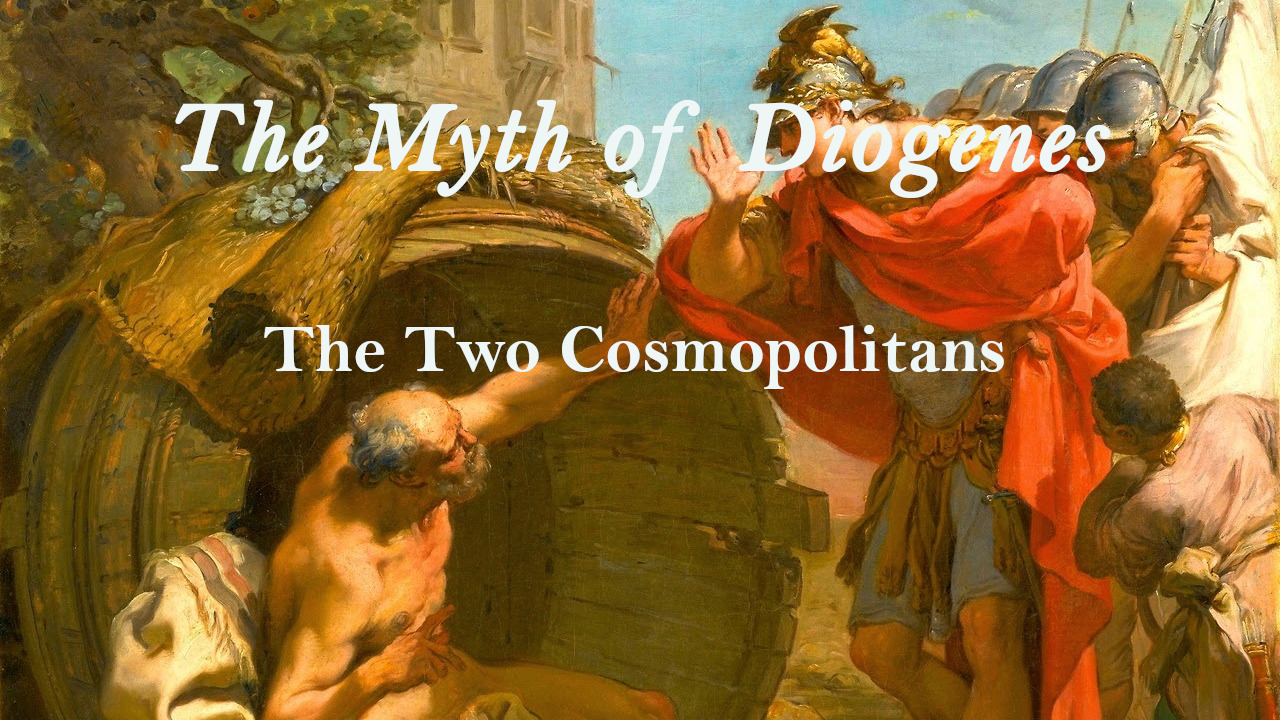
The Automation of Charisma
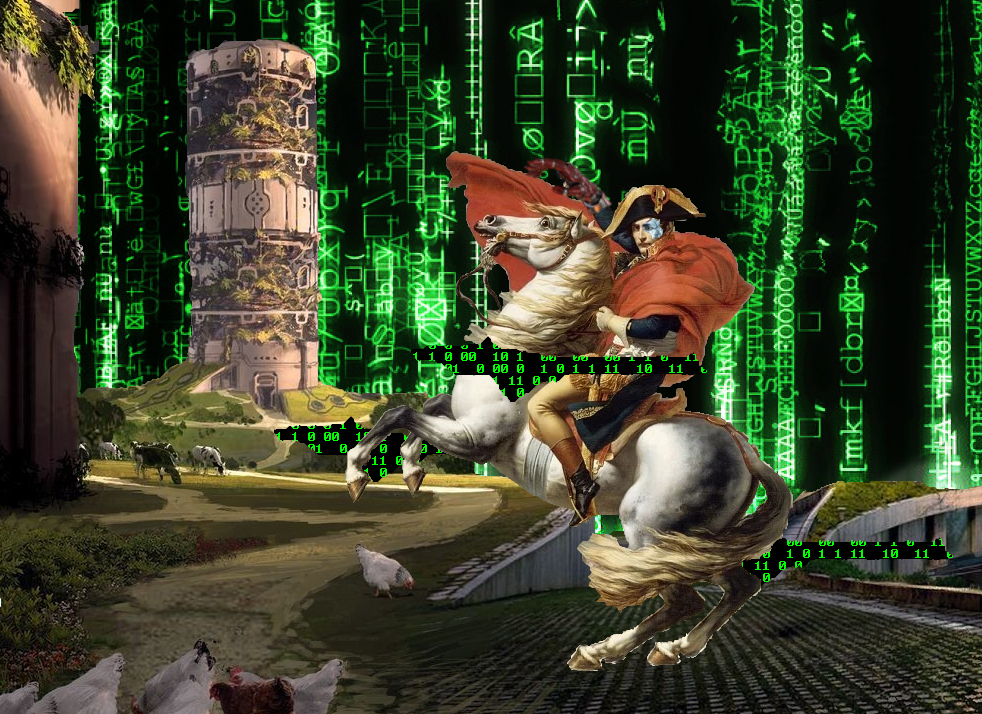
“The technique of warfare and the structure of armies being what they were, the individual decision and driving power of the leading man—even his actual presence on a showy horse—were essential elements in the strategical and tactical situations. Napoleon’s presence was, and had to be, actually felt on his battlefields. This is no longer so,” explains economist Joseph Schumpeter in “Can Capitalism Survive?” This military analogy summarizes a historical trend that Karl Marx and Max Weber each attempted to describe at length. If capitalism will come to an end, argues Schumpeter, it will go in a long-drawn-out whimper, not a revolution. http://sites.middlebury.edu/econ0450f10/files/2010/08/schumpeter.pdf
For most of human history, you could feel someone’s authority by being in their presence. Their authority was a result of their individual character and charisma. In other cases, individuals inherited their authority through hereditary lines. We usually did what our fathers did; if your father smelted iron, you were a Smith; if your father ruled others, you were a King. Most people never challenged this latter authority—it was the common-sense order. When the rare revolution occurred, it was from individuals with great character changing things by force and violence. This is how the economy evolves, by “creative destruction”, according to Schumpeter.
Creating new products and production processes is difficult, he explains, “first, because they lie outside of the routine tasks which everybody understands and, secondly, because the environment resists in many ways that vary, according to social conditions, from simple refusal either to finance or to buy a new thing, to physical attack on the man who tries to produce it.” The charismatic leader or, in this case, the entrepreneur is a rare genius who must overcome resistance from those who can’t see his vision, and destroy the old to create new markets and ways of life.
These revolutions become less frequent because economic progress tends to become depersonalized and automatized. Old innovations become routinized. They’re reduced to a formula. The routinization begins at the base of the economy and works its way up, making society more rigid and predictable. First, the work of the laborers is automated, then the middle classes, and finally the innovative spirit of the entrepreneurs is the last to be reduced to a routine. “Rationalized and specialized office work will eventually blot out personality, the calculable result, the ‘vision.’ The leading man no longer has the opportunity to fling himself into the fray. He is becoming just another office worker—and one who is not always difficult to replace.”
In the long arc of history, the authority of people dominating other people is usurped by the authority of reason and formula.
The Lesson of Heraclitus
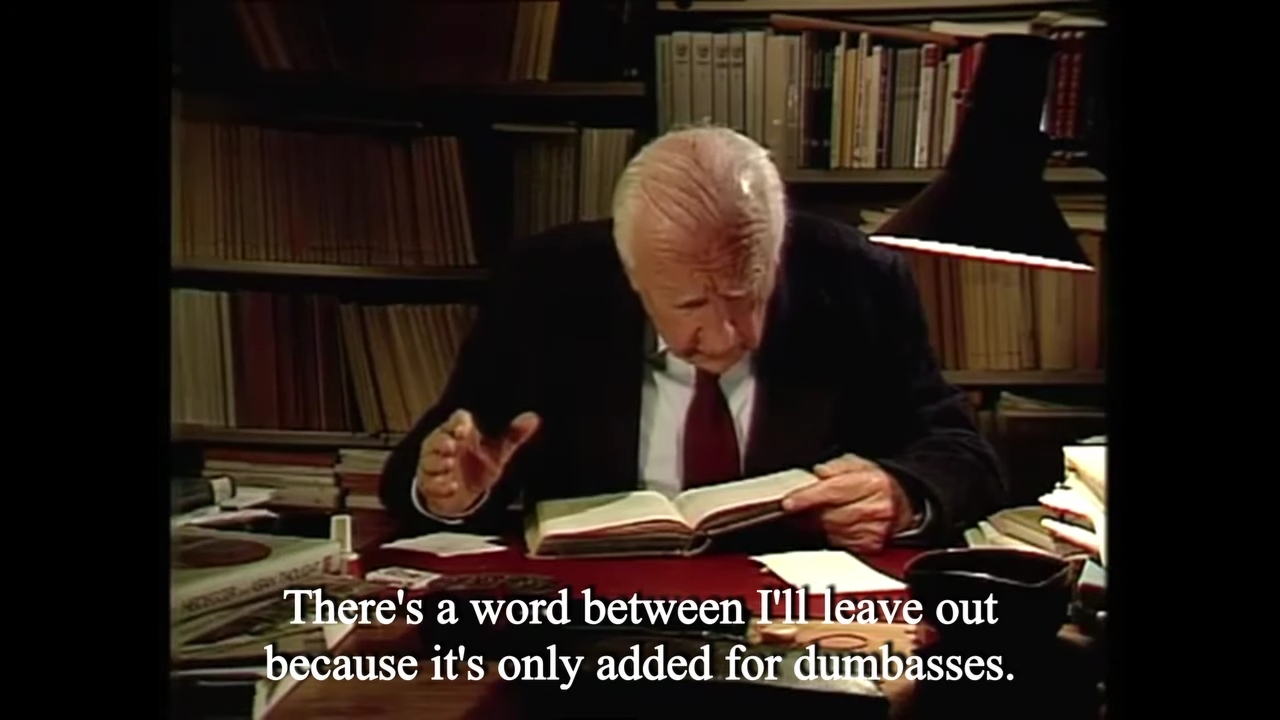
The following sentence in ancient Greek was the first in book by Heraclitus that has since been lost: τοῦ δὲ λόγου ἀεὶ ἄνθρωποι γίγνονται ἀξύνετοι ἀκούσαντες τὸ πρῶτον πρόσθεν ἀκοῦσαι. It’s translated in modern English as something like, “Though this discourse is true evermore, men are as unable to understand it when they hear it for the first time as before they have heard it at all.” The reason we know about this fragment at all is because Aristotle wrote about how frustrated it made him.
Aristotle was a pedant, and dismisses Heraclitus as not being very clear about whether the word ἀεὶ (“evermore”) is modifying the phrase that comes before it or after it. Does it mean that what is stated in this book is “eternal truth”, or that what is stated is one of those ordinary truths but men are too “eternally ignorant” to get it, Aristotle wonders. To the ancient Greek reader, it could go either way.
Heraclitus did this on purpose, though, precisely to get under the skin of people like Aristotle. Really smart people never seem to see the meaning through the words. They never catch the meaning of what people convey to them because they are too concerned with trivial things like grammar and standardized dictionary entries. Heraclitus made sure to write in a way that disturbed their sensibilities.
Many people know him as the guy who said you can’t step in the same river twice. We’re told by translators that he means we can’t step in the same river twice because the river is always changing as it flows. Could Heraclitus really have been so dull as to make such a pseudo-profound point? Let’s look at his sentence closer: ***potamoisi toisin autoisin*** ***embainousin*** ***hetera kai hetera hudata epirrei****.* He places the word for river (potamoisi) at the beginning of the sentence – which is irregular for Greek prose – so that he can pull the same stunt as before, placing the modifier “the same” (toisin autoisin) between the river and “those standing” in it (*embainousin*) . Some translators are certain that it’s saying that the person is the one who remains the same because the rest of the sentence says, “different and different waters flow.” Certainly, he is saying the river is constantly changing.
This interpretation goes against the overall theme of Heraclitus’ writings. The river and the person standing in it are one thing, he’s trying to teach us. To say that a person stepping into the river for a second time is the same person he was when he stepped into the first time is absurd. Matter is constantly flowing in and out of his body, being metabolized and transformed. Everything does this – rivers and people do it, and if you scale out enough, even solid rocks and mountains are behaving like a fluid. The whole universe is just one fluid – a giant fire, actually – according to Heraclitus.
We are blind to this because we process our experience though language (λόγου). Language arbitrarily projects an image of stability and solidity onto the flux and fluidity. The really smart people – the scientists and the scholars – insist that there is some solid ground that all our knowledge stands on. They prove this by showing how extensive their vocabulary is. They can describe to us trees and rocks and rivers and people with evermore precise terminology, all the way down to the molecular level. And then they describe those molecules with evermore precise terminology. All they are doing here is making more and more articulate noises at us. They’re just babbling. Speaking of babbling, say the sentence “*potamoisi toisin autoisin embainousin hetera kai hetera hudata epirrei”* out loud once.
Back Inside the Box | How I structure my time
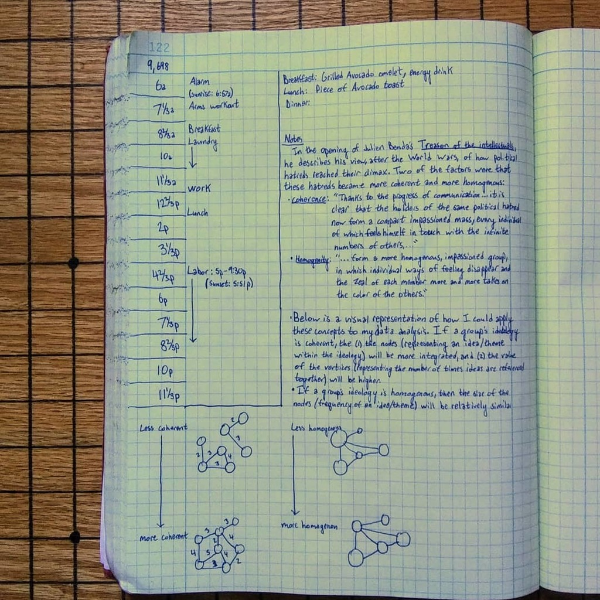
Here’s a look at a page from an old journal/daily planner of mine. A few years ago, during my last semester in college I was so burnt out that I decided to quit my job and fall off the radar for a few months. I used the time to digest my experiences over the last few years before making any decisions about my future. In that time, I developed a journaling format that really helps me when I’m in a slump.
First thing I do is break out of the ol’ Gregorian Calendar system and take some time to figure out the rhythm that my body prefers. In the lefthand corner of the page is the number of days old that I am that day. Going down the left column, I break my day into 18 eighty-minute hours. This gives me 2 forty-minute chunks per hour that I can focus on one task. Or to delegate more complicated projects into 40-minute chunks across time. I think one of the biggest contributors to burnout is that the standard workweek isn’t suitable to most people’s rhythm. If I had one piece of advice to give people from this little experiment of mine, it’s that it’s never too late to start from scratch. If you’re feeling worn down, then stop the clock, and start building a new daily schedule based on your body’s own daily rhythms.
It also helps you if you want to change your rhythm—maybe kick things up a notch. While cataloging my days I discovered when I became the most tired, and which conditions led me to fall into those slumps. This helped me calibrate myself, to make adjustments, and work more effectively.
 @CotyReh