Embrace the change
Who moved my cheese?🧀
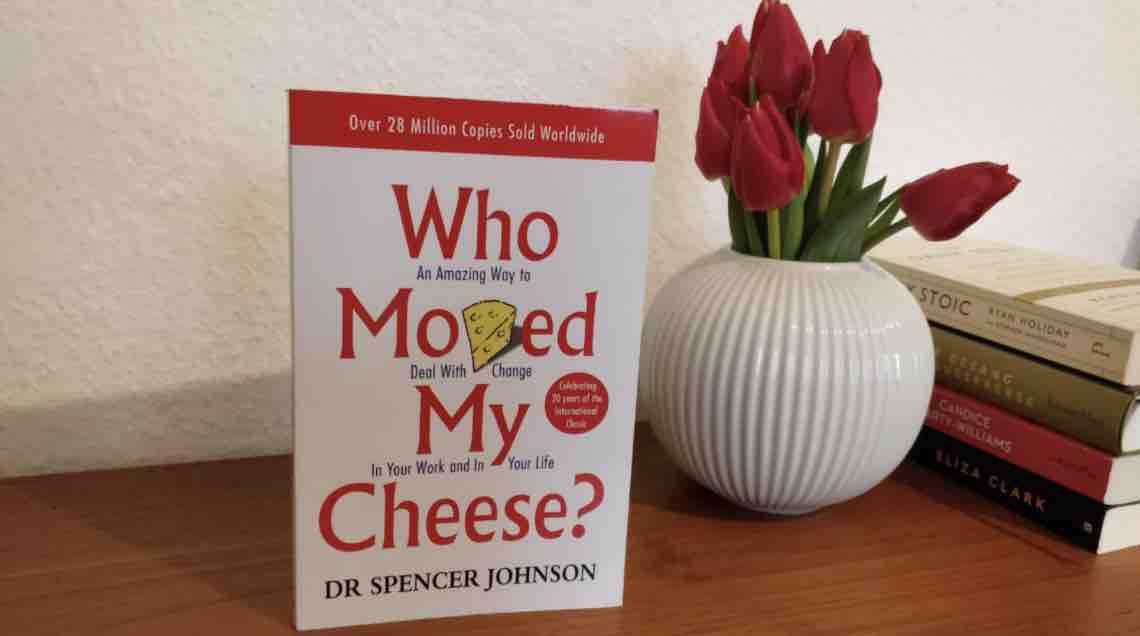
The book *Who moved my cheese?* presents a tale inside the main story that consists of 4 characters: two mice, **Sniff** and **Scurry**, and two little persons, **Hem** and **Haw**.
Published in 1998, and I just read it at the beginning of 2021. Better late than never. Actually, thanks to my brother Jesús, who recommended it to me.
They live in a Maze (that represents one’s environment) and in order to survive they need to go out of their comfort zone and look for cheese (which represents happiness and success).
The tale starts when both groups end up at “Cheese Station C”, full of cheese. The humans established routines while the mouses kept their instincts active.
One day the mousses arrive at the “Cheese Station C” and find no cheese left. So they go out to find more cheese somewhere else. On the contrary, when Hem and Haw see that there is no cheese left, they start complaining. Hem, angry and annoyed, demands “Who moved my cheese?!”. Both humans counted on the cheese supply would be endless constant, so they weren’t prepared for that unexpected. The main difference here is how Haw and Hem react to this situation.
Hem denies moving away from the “Cheese Station C”, so he keeps going there every day expecting to find cheese without success, being weaker, and with continuous fear of doing something different. Haw, on the other hand, decides to laugh at the situation, turns down his fear, and goes out looking for more cheese.
… I will leave the rest of the tale to you.
The tale is a beautiful metaphor of the different attitudes that people adopt as part of their identity in life when they have to confront any change.
Noticing small changes early helps you adapt to the bigger changes that are to come.
This book is full of lessons that apply to everyone no matter who they are or when they read it. I fully recommend it.
My favorite lessons of the book
Change happens. They keep moving the cheese.
Anticipate change. Get ready for the cheese to move.
Monitor change. Smell the cheese often so you know when it’s getting old.
Adapt to change quickly. The quicker you let go of old cheese, the sooner you can enjoy new cheese.
Change. Move with the cheese.
Enjoy change. Enjoy the taste of new cheese
Be ready to change quickly and enjoy it again. They keep moving the cheese.
“Everyone knows that not all change is good or even necessary. But in a world that is constantly changing, it is to our advantage to learn how to adapt and enjoy something better. It is not what is in the story of “Who moved my cheese?” but how you interpret it and apply it to your own situation that gives it the value.“ - Ken Blanchard.
https://youtu.be/OvYCLxqkfvY
“Life moves on and so should we” — Spencer Johnson
Originally published in: https://chemaclass.es/blog/embrace-the-change/
Test-Driven (Development)
What is challenging about it?
The complexity here is not about writing tests itself, but the habits that we have to change to create software that is easy to be tested.
The root of the problem
Without (a solid) experience in testing, developers can have a hard time while trying to apply testing in general as part of their daily job. It’s not simply because of the topic’s complexity, but **because they are used to write code that is hard to test.**
Writing tests for already working software (mainly when it was done without considering testing at all) translates as something boring, next to useless, usually accompanied by a lack of motivation, blaming the wrong subject in this context: “the tests itself are reducing my speed”.
In a domain context, if a piece of software logic is hard to be tested, the problem is not the test, but the code which wasn’t well written.
There are already hundreds of tutorials, books, and documentation about testing, but I can share my experience and how I do apply this great (and must) philosophy in my daily work.
Test-Driven is based on this simple rule
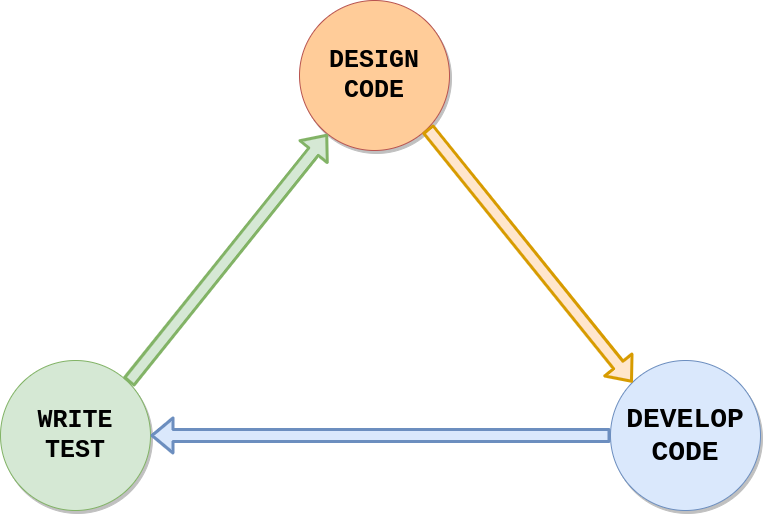
Instead of: design code -> develop code -> write tests.
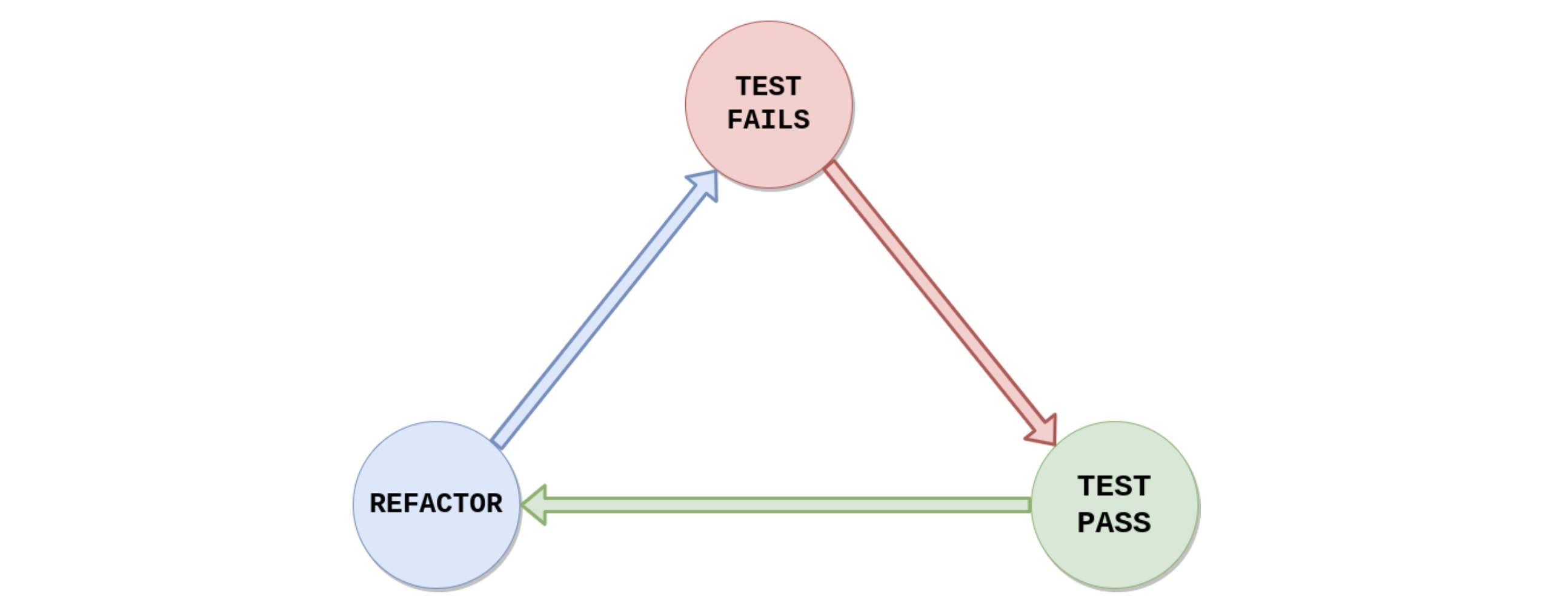
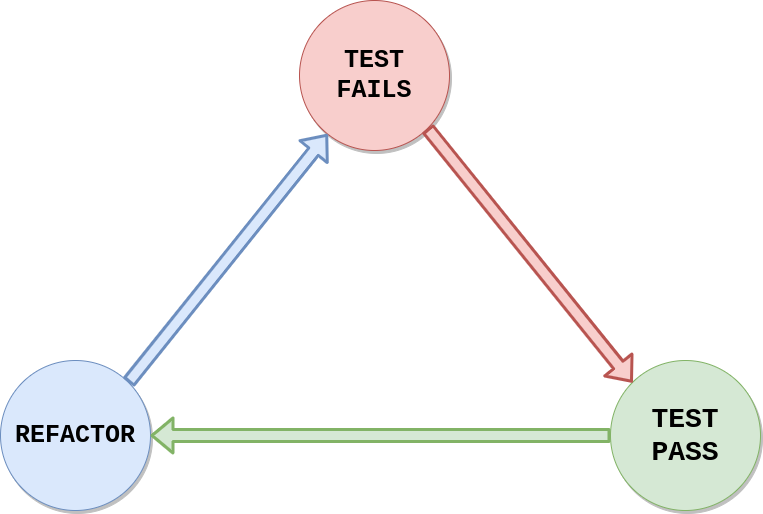
It’s about: write failing automated test -> run failing test -> develop code to make test pass -> run test -> repeat.
The idea of driving your code by testing can be understood depending on the abstraction level of what you’re writing at the moment. You don’t want to create a wrong coupling between the tests and the code being tested. You want to test the behavior of your logic.
TDD is based on a loop of baby steps that helps you find **patterns** and guide your software design every little iteration with **constant refactoring**. It’s the best choice if you want to ensure the expected behavior of all possible paths of your logic.
The beauty of this is that you don’t need to know the full algorithm from the very beginning. Instead, you are **discovering** how your logic should be by expressing the desired implementation, step by step, on automated tests.
Considering writing tests for your software at the same time you’re writing it, will **irremediably force you to write better software**. Because you want to write software which has to be easy to be tested, and therefore it will end up with higher quality.
I already wrote another post about the relation between software **quality and testing**: The Art of Testing: where design meets quality. https://chemaclass.es/blog/the-art-of-testing/
Improve your Test-Driven skills
The best way to learn Test-Driven is doing software katas. Try them alone and with others. Both are equally important.
Alone: to challenge your inner self without any distraction but yourself.
With others: pair-programming is essential in our job. Katas are the best tools to train our communication skills and learn together from each other.
What’s a Code Kata?
Software developers don’t practice enough. Most of our learning takes place on the job, which means that most of our mistakes get made there as well.
Other creative professions practice: musicians play technical pieces, poets constantly rewrite works. In karate, most of a student’s time is spent learning and refining basic moves. These are katas.
What is the goal of a kata? What should we have at the end?
Katas exist to help developers get the same benefits as practicing in any other profession. There are simple, artificial exercises that let you experiment and learn without the pressure of a production environment.
There are no right or wrong answers in any software kata: the benefit comes from the process, not from the result.
Tips
Once you have resolved a kata, try it again in a few weeks or months.
Try to explore new solutions. Be creative in the process and do not rush.
When doing them in groups, they are not a competition to see who will accomplish more of the exercise.
The focus should be on the process, never on the result.
The true valuable outcome of any kata is the learnings that you (and your team) will get after talking about it and sharing your experiences.
You can find a lot of katas on the Internet. For example:
http://codekata.com
https://codingdojo.org/kata
https://katalyst.codurance.com/browse
https://github.com/gamontal/awesome-katas
TDD is more as a workflow than a design
“TDD is a design tool.” That’s what Sandro has said for years. But not anymore. After working with different teams and in different organisations, and also carefully inspecting how he works, Sandro changed his mind about the role of TDD in software design.
https://youtu.be/KyFVA4Spcgg
TDD in a nutshell; it’s about the rhythm.
Specify what you want.
Make it work.
Make it better.
Originally published in: https://chemaclass.es/blog/test-driven-development/
*All graphics images in this post are originals from* *Emmanuel Valverde Ramos**.* https://twitter.com/evrtrabajo
 @Chemaclass