Fractions
It seems like all educators would agree that it can be difficult and frustrating to teach fractions, but learning fractions is a required skill for learners to have as they get older. In a recent article titled, "Are we forcing too many students to take high-level math they will never use?" the Atlanta Journal-Constitution addresses how math is taught in a recent article titled, "Are we forcing too many students to take high-level math they will never use?" The author, Maureen Downey, notes that as a nation, we continue to raise the bar for the math performance of our students, and notes that despite these high-level courses, many students struggle with the complex teachings. Some teachers claim that students can be advanced too easily by colleges, and they do not really master basic skills like fractions.
Although some higher-level mathematics courses are only necessary for some fields, basic mathematical skills, such as knowing fractions, are essential for all to learn. From cooking and carpentry to sports and sewing, fractions of our everyday lives can't escape us.
Fractions are hard
This isn't a new discussion subject. In reality, a Wall Street Journal article in 2013 spoke about what parents and teachers already know when it comes to math, fractions of which are difficult for many students to remember. In fact, the article cites statistics that can't place three fractions in order of size for half of the eighth graders. As many students fail to learn fractions, which are typically taught in third or fourth grade, research into how to help children learn fractions is currently supported by the government. The newer ways of teaching fractions use strategies that help children really understand what fractions mean by number lines or templates instead of using rote methods to teach fractions or relying on old techniques such as pie charts.
The educational business, Brain Pop, for instance, provides animated lessons and homework to help children understand concepts in math and other subjects. Their Battleship Numberline requires children to bomb a battleship using fractions between 0 and 1, and their teachers have noticed that the students' intuitive knowledge of fractions improves after students play this game. Other fraction teaching methods involve splitting paper into thirds or sevenths to see what fraction is greater and what denominators mean. Other methods include the use of new terminology for words such as "denominator" such as "fraction name," so students understand why fractions with different denominators should not be added or subtracted.
Using number lines allows children to compare various fractions, something that is difficult for them to do with conventional pie charts in which a pie is broken into parts. A pie split into sixths, for instance, may look a lot like a pie divided into sevenths. Moreover, the newer methods emphasize learning how to compare fractions until learners master processes such as adding, subtracting, separating, and multiplying fractions. In fact, according to the Wall Street Journal report, a more significant indicator of fourth-grade math success than arithmetic skills or even the ability to pay attention is to position fractions on a number line in the correct order in the third grade. Furthermore, studies show that the ability of a student to comprehend fractions in fifth grade is also a predictor of long-term high school math achievement, even after IQ, reading ability, and other variables are monitored. In fact, the comprehension of fractions is considered by some experts as the door to later math learning, and as the basis for more advanced math and science classes such as algebra, geometry, statistics, chemistry, and physics.
Why fractions are important to learn
Math concepts such as fractions not learned in the early grades by students will later confuse them and cause them a lot of math anxiety. The new research demonstrates that students need to grasp concepts intuitively rather than only memorize language or symbols, as long-term comprehension does not benefit from such rote memorization. Many math teachers may not know that students may be confused by the language of math and that students need to understand the principles behind the language.
According to federal guidelines known as the Common Core Principles that are practiced in most jurisdictions, children who attend public schools now must learn to divide and multiply fractions by fifth grade. Studies have shown that public schools outperform private math schools, partially because math teachers in public schools are more likely to know and obey the latest studies related to math teaching. While most private school students do not have to show Common Core Standards mastery, teachers of private school math may also use new methods to teach fractions of students, opening the door to later math learning.

Blackhole
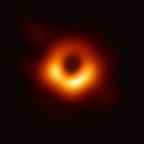
It is more likely that a black hole is described as a product of a dying star, or as it may be called "star dust"; one of the most dangerous objects is black holes, as they can be shown as massive cosmic vacuum cleaners. What makes them dangerous is that they have a gravitational force that is so strong that even light passes through it. These former stars or star dust have been the concern of many scientists, so with special telescopes, they observe them and their surroundings.
Types
There are three types of Black Holes: stellar, supermassive, and intermediate-mass. The smallest is the stellar type; it is primarily created by a supernova, a star's super-powerful and luminous explosion. Everything around our galaxy are stellar black holes; the most distant one ever observed is around 13.1 billion light-years from Earth, so it can't do any harm to us. Typically, each has a mass of about three to ten solar masses. A solar mass is a standard unit used in astronomy, defined as our Sun's mass, and equals about 2 to 1030 kg.
In the center of most galaxies, including our Milky Way, the supermassive form, on the other hand, is often found. This form is colossally heavy, and has a mass range of more than millions of solar masses, even billions. Because of their centralized existence in the galaxies, scientists say they are extremely large. When the galaxies merge, this unique form of black holes appears to develop into heavier ones, making them the most dangerous form of black holes.
The third form is the Black Hole (IMBH) intermediate mass, which is estimated to have a mass of between one hundred and one thousand solar masses. It is believed that it could be formed by a single black hole devouring so many objects, or even merging with another black hole; leaving great problems for scientists who have no answers so far. This type can not be from just a single star dust.
Earth suns becoming blackhole
Some experiments were performed to illustrate what would happen if, at some stage in its history, the Sun became a black hole. Those hypothetical studies suggested that the World would plunge into complete darkness if the Sun were to become a black hole, and everything would freeze immediately.
The Sun would never turn into a black hole, however, because it is said to have less mass to turn into one than required. As the Sun reaches its end and runs out of its fuel, external layers are immediately thrown off, turning into a glowing gas ring known as a planetary nebula. There will only be a white dwarf star after reaching this point, which is a relatively small star.
Black holes follow the laws of gravity, which the great scientist Isaac Newton first brought to the universe. There is a force, as described in his rule, that attracts all bodies, making them move in calculated directions and measuring velocities depending on the mass of those bodies.
That being said, black holes can't just wander through outer space, or the universe swallowing planets in their path. It has to be so close to the solar system in order for a black hole to impact Earth, which seldom occurs. And if our Sun were to be replaced by a black hole of the same mass, the Planet would be fully in its natural position, since the black hole would hold the same gravity as the Sun.
As far and remote items of interest, black holes can be thought of; nothing to think about here and now. Yet, when groups of scientists researching black holes manage to create one for an experiment, it may be a greater problem than we thought! People believe that the end of our planet could be brought on by this.
Researchers suggest that it's very fun to research the mystery of those amazing black holes, and it will certainly lead to new findings that could be of great benefit to us. Some of the famous physicist Stephen Hawking's claims led scientists to believe that those tiny black holes can only exist for a tiny bit of time until they disappear permanently. They would theoretically vanish instantly, but what if they did not? What if they were able to continue for a lot longer? Should we then be doomed?
Of course not; those black holes are traveling so rapidly that they are going out into outer space. Some of them would travel slower than others, which is far from happening; because of their gravity, they would be stuck on Earth, but would not be a danger to humans at all, since they would only consume a tiny amount of matter from Earth.
Scientists have not managed to create a black hole until now; but, as curiosity is the mother of science, in the near future we will be hearing of some active experiments. It would be something that could be a great help to develop and explain those ideas.
Cosmetics is way too old
Do you think that a common innovation is cosmetics? If you think so, you are totally wrong; cosmetics are as old as history itself! Ancient cultures not only had cosmetics, but they perfected the making and preparation of cosmetics. Its first use dates back to the Ancient Egyptians; there were traditional cosmetic instruments in many of their tombs. You will find several cosmetics if you visit a museum showing ancient Egyptian antiquities, or those of other ancient cultures, such as eyeliner, mirrors, wigs, among others.
Ancient Egyptians, including eye-shadows and eyeliner, were particularly good at making eye cosmetics; they used malachite powder, adding a special green dye, applying oils to cure it. In ancient Egypt, both men and women used eyeliner; they used a mixture of metal, lead, copper, ash, and burnt almonds, and we all recall the famous eyeliner that characterized the eyes of Cleopatra.
Eyeliner was applied by ancient Egyptians to ward off the evil eye and dangerous spirits, and for its effectiveness in dispersing the harsh desert Sun. In addition to the function of beautification, eyeliner has many medical advantages; scientists have noticed in recent years that the formula of the eyeliner accidentally helped the Egyptians avoid infectious diseases and get rid of bacteria. As of now, many products, including natural or industrial components, are used in the manufacture of eyeliner.
Similarly, in ancient civilizations, particularly the Roman civilization, there was an omnipresent confidence that the fairer the skin is, the greater the prestige and beauty. In some contemporary nations, this assumption still exists; that is why skin bleaching or whitening products have always been commonly used. Chalk was used in the beginning, but it did not last long; then, China and Japan extracted face powder from rice. Several materials are used in the making of foundations in modern times, such as: silicon and water, or a combination of water, oils, and moisturizing substances, or silt to create foundations based on water.
Over time, with the addition of shades, the history of cosmetics has become less strange. Fair skin was reserved for the bourgeoisie from the Middle Ages to the end of the 19th century; only lower-class females used shades on their lips, cheeks, or eyes. With a combination of lead and vinegar known as ceruse, upper-class women painted their ears, necks, and bosoms. I was famous for the use of this mixture by Queen Elizabeth to give herself a pale skin look; back then, it appeared to distinguish between the aristocratic and the middle class, but many claim that this mixture also contributed to her death.
Face coloring powders made of metals and stones were also used by the ancient Greeks and Romans; women in ancient Greece used mashed berries as a blusher for their cheeks. Many forms of blushers have emerged in our modern era, such as the tint that gives a long-lasting natural color. Lipsticks made of Crimean beetle dye were also used by Cleopatra. In addition, women used red iron and mud mixed with water to stain their lips in the past, but it wasn't healthy, so they replaced it with lipstick oils and beeswax.

Learning Vs performance
Addressing inequality is never too late in later life. At any generation, individuals and societies can make improvements and strengthen behaviors; decision-makers and policy-makers can do the same. Indeed, these optimistic changes at every age will bring advantages; always note that' there is life left to be lived.'
You wonder why you can't make any progress and begin to blame yourself for not working hard, but it will lead you nowhere to blame yourself; it's time to think and focus on what you were doing.
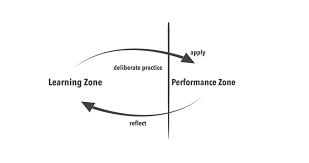
Many individuals appear to spend much of their time applying abilities they have gained and practicing to achieve the best possible outcomes. They believe that learning ends at the stage of entering the work environment, in which a person should only perform and perform every second. Learning, however, is not a stage to finish; it is continuing and should never stop at any moment. It is about finding a balance between time spent in the learning zone and time spent in the success zone to get better results.
Features of the Learning Zone
Expecting mistakes is a really natural aspect, because you're working on something you haven't yet learned.
Focusing on progress, and not always being right.
Trying out new ideas, and asking for and drawing on input.
Identifying areas for change that should be extended to the success zone.
You should have a growth mentality to get the best outcome from this point, which helps you to pursue change and never think of mistakes as disastrous. You should also have a goal to focus on through learning, and a good vision of how you want to develop.
In addition, deliberate practice is included in the learning zone, which refers to that type of purposeful practice that involves concentrated attention and is carried out with the clear objective of improving performance. This is entirely distinct from daily mindless practice that relies only on repetition.
Features of Performance Zone
Trying as best as you can to do things.
Concentrating on implementation as you focus on stuff that you have learned already.
Expecting errors to be minimized.
Giving feedback on what needs to be changed and working on it before returning to the learning zone.
Staying in the success zone maximizes our immediate performance and helps us to apply what we have learned already. It also gives us a sense of satisfaction with what we do; but spending too much time there hinders and impacts development. Here, to boost our growth and our potential results, the value of the learning zone emerges.
In short, you can achieve a balance between the two zones if you want to produce the best results ever. You should always bear in mind that there are periods for learning to prevent mistakes, and other times for making evident and material progress to perform and execute. It is a spiral; when you are trying to learn, when you are trying to perform.
Basics on crypto trading
Cryptocurrency investment is unlike investing in any other commodity. It is young, new and exciting. You witness a much stronger shift in producing a return on your investment with the correct trading approach.
To get started, first:
Choose a reputable crypto exchange: A crypto exchange is where cryptocurrencies are bought, exchanged and traded
Choose a currency, . You may want to invest in one of the better-known currencies with a high market cap, such as Bitcoin, Ethereum, Bitcoin Cash, if you're new to the market.
Things to keep in mind
There are some key points to keep in mind about the crypto-currency market when you consider your plan.
**The market is highly volatile**
In a matter of days, it's normal to see fluctuations of 20-30 percent in a coin's value.
**Blockchain technology is new and evolving**
The fact that the technology behind it (blockchain) is new and evolving is a factor behind the uncertainty of the crypto sector. If the value of technology rises for sectors outside the marketplace of cryptocurrencies, so does the value of the currency.
**Only invest money you can afford to lose**
Currency prices are fast moving up and down. Hacks and bugs that decrease in value in unpredictable ways will affect blockchains and cryptocurrencies. There are fluctuations in the standard stock market, but if you keep your positions and make good choices, it is difficult to see large losses over time. But the chance of losing cash is much greater with cryptocurrencies. Play it safely.
**Do your own research: #DYOR**
This applies to every form of investment, but it is especially important for cryptocurrencies. Study the currencies that you are considering purchasing to ensure that they fulfill your investment targets, while still becoming businesses that you support your task. Note, an investment in a cryptocurrency, as well as an investment in blockchain technology, is an investment in the business that produces it.
**Avoid FOMO (Fear of Missing Out)**
Cryptocurrencies have a lot of hype. This can result in individuals purchasing coins at a high price, only to lose money if the value of the currency decreases. Don't invest in a currency just because the hype around it is massive.
**Diversify your portfolio**
There are more than 1,500 cryptocurrencies on the market, and you can make decisions about which coins to invest in. But it's advisable to have some stable bets along with any riskier investments you want to make, just like with stocks.
**Take profits at intervals**
If you closely watch the market for cryptocurrencies, you can see that prices can at any time increase and decrease. You may want to see if the value would increase any further if you're doing short-term trading and see a big increase in value. What goes up, however, must fall down. So you increase the risk that you'll see steady returns by setting up a plan where you take profits at regular intervals.
**Long-term trading**
A individual may rely on historical data to make a decision when using a long-term trading strategy for investing in the stock market. Since there is only a small amount of data available, it is not always the case with cryptocurrencies.
However, individuals who tend to do long-term trading evaluate that data along with more recent and current market behavior to predict how a cryptocurrency will do in the long-run.
The strategy may be particularly useful for investing in cryptocurrencies that have been around for a couple of years.
**Short-term trading**
The opposite approach to long term investing is taken by short-term trading. In a short period of time, it helps to achieve a return on an investment. Ideally, you are saving, the price is rising, you are selling for profit.
**Technical analysis**
Technical Analysis is a method of evaluating a currency using historical volume and price data to investigate factors relevant to prices of similar assets in the past and present marketplace.
Basically, it is an approach focused on the premise that the future will be predicted by the past, so it uses an asset's past output to forecast how a stock will do in the future.
**Fundamental analysis**
Fundamental analysis attempts to define the worth of a currency on the basis of the project's fundamentals.
The difficulty of applying basic research to cryptocurrencies is that companies are not cryptocurrencies. They do not have financial statements that are public. Their sustainability is based on the strength of the network population.
By searching for our project whitepaper, which will outline priorities and features, you can begin fundamental research. You may also check for material, such as Reddit, on the cryptocurrency blog or other community forums.
The development of a crypto-currency investment strategy does not guarantee success. You need to keep up-to-date on the evolving market and any related news, periodically execute your plan, and make sure you make the best possible, most educated decisions.
Protocols
It's not the same for all blockchains. A protocol defines the way they operate.
Basically, a protocol is a simple layer of code that tells something how to work. It's the framework that forms the software base of any given network. Think of a protocol as a collection of rules that allow information to be shared and transmitted by individuals.
The protocols are not crypto-currency specific. In certain places, they live.
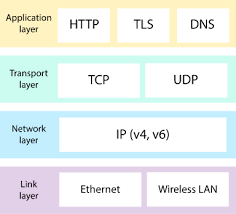
Protocols on the Internet make it possible for websites to work. HTTP and HTTPS are the most popular Internet protocols, while TCP/IP and SMTP may also be visible.
The underlying code that allows all Internet applications to run is those protocols. Almost every website you use runs on one of these internet protocols; Facebook, Amazon, Twitter, Google, Netflix, banking websites, news websites.
Cryptocurrencies have protocols, like the internet does. Any cryptocurrency has its own distinct protocol-Bitcoin, Ethereum, XRP.
Cryptocurrency protocols only allow a few applications to run, often only the cryptocurrency application itself. Protocols provide the security of a blockchain and its connectivity.
Historically, to protect the accuracy of our bank account and ensure that our money is not "double spent," we had to trust a bank. This is conventional financial management's centralized model.
But protection is given by the protocol in the decentralized environment of the blockchain, which enables data to be communicated.
As the digital world has evolved, we have allowed our data to be held and viewed by more and more organisations. Across several websites, we have several paying accounts.
Having personal data in so many ways makes it difficult to preserve the accuracy of our data ("What is my email password?") and, in the case of a hack, makes our information vulnerable.
Cryptocurrency protocols allow their data to be handled by users. They allow people to build an account or a wallet on a protocol that can then be used on other websites to pay for services and make financial transactions.
The protection and unique identity of these applications is contained in the protocol at its fundamental level. The protocol, while also providing protection, powers the applications above it.
Why is this cool?
It means you own your unique data and have accessto a range of products and services more powerful and secure.
Thin and Fat Protocol
The major difference between internet protocols and cryptocurrency protocols is that the former normally requires one to a few applications to work, while the latter offers more applications to run.
This is why protocols for cryptocurrencies are called fat: they have very few apps running on them. Internet protocols are thin: they have thousands and thousands of applications that run on them, many millions.
For every crypto-currency, the value is the protocol. It's what the blockchain drives and helps the cryptocurrency to do what it's supposed to do.
Candlesticks
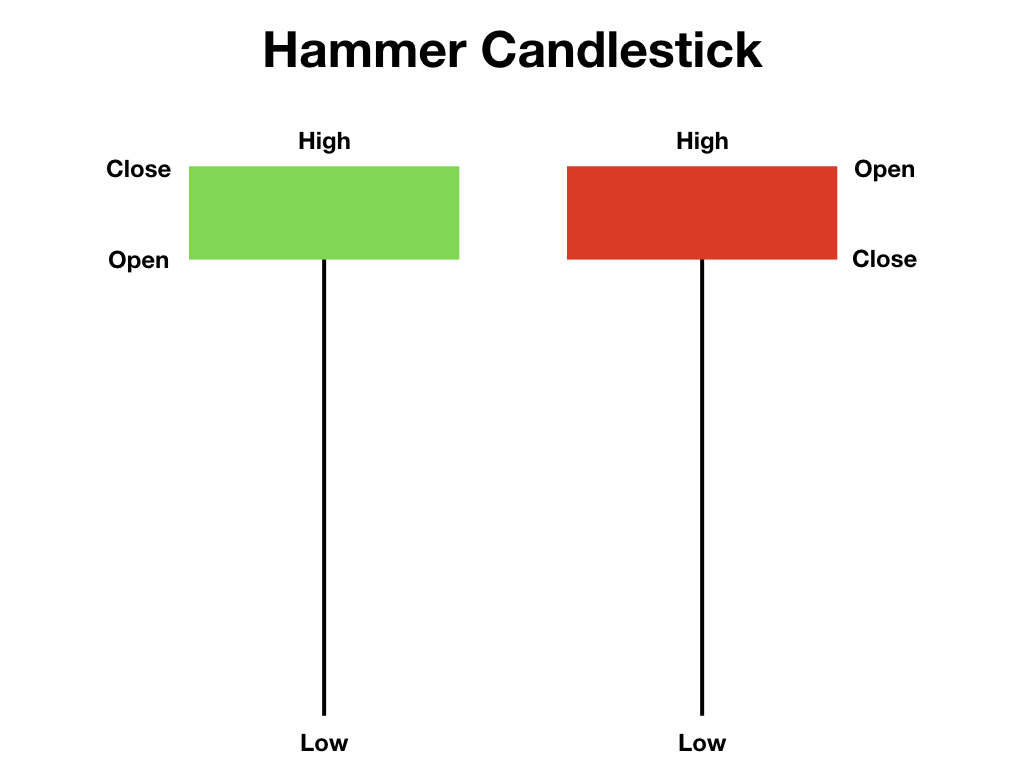
Two of the most common and easily recognizable reversal patterns in technical analysis of financial markets, including for crypto traders, are the hammer and inverted hammer candlestick patterns.
Usually, these two candlestick varieties emerge at the end of downtrending market action and are defined by:
Small body (open, high, and close are approximately the same price)
Long shadow or wick that is twice the size of the body, at least.
Hammer candlestick
A hammer candlestick is a bullish pattern of reversal that occurs mostly at the end of downtrends.
It is distinguished by a tiny bullish body with the downside of a long wick.
A hammer candlestick suggests a complete rejection of bears by the bulls in terms of market psychology.
The long wick to the downside tells us that before bullish momentum emphatically drives the price back up to the opening price or high price of the candlestick, bears were able to drive price downward.
Inverted hammer candlestick
An inverted hammer candlestick is actually a bullish reversal pattern that usually occurs at the end of a downtrend, despite having a similar appearance to the bearish shooting star candlestick.
An inverted hammer represents a scenario in terms of market psychology in which bulls are able to effectively drive the price upwards before closing at or above the opening price.
After creating an initial level of trust, the inverted hammer sets the stage for bulls to enter the market.
Risk Strategy
Crypto trading can be highly lucrative. If you're good at it, it's a chance to work whenever you want, from anywhere you want.
Would you have done it?
For trading, most people are not cut out. It's physically exhausting and emotionally taxing.
Above all, good traders in cryptocurrencies are distinguished by one key thing from losing traders: risk strategy.
**What is a strategy for risk?**
Risk strategy is simply the art of, every time, considering the risk during each of your trades. The risk strategy is the approach to risk management when trading. It's a rule book that you obey each time you enter a trade, to the letter.
It can be very profitable to have a 50 percent failure rate for your transactions over time. All you have to do is maintain a solid risk plan and you're going to be able to cut short your losses and let your profits fly.
How a strong risk strategy can be built
**To take losses**
As a crypto trader, you have to be capable of taking a loss. If you're going to trade, you're going to lose. Get it in your head now. Often, all the traders lose money. That we know.
To cut them short, you take losses early on. Many traders fear taking the loss, which ends up cascading into huge losses and placing them in a much worse situation than if, as expected, they had taken the original smaller loss.
When you start a deal, if anything goes wrong, know where you can leave. This brings us to a stop.
**Set stops**
Stop loss is an incredible tool. To stop the loss from getting any bigger, you use them to close your trade. All you have to do is to determine where you want the trade to end and your trade will close if the price gets there.
You need to find out at what stage your trade would have gone wrong every single time before you enter a trade. That's where you would want to leave your place at that stage and take the loss.
All you have to do is measure the "wrong" location of your trade and put your stops there. You can keep losses to a minimum that way.
Bigger isn't better
Each successful risk strategy allows you to determine the size of your job. You will not be a dealer of the same place size and trade continuously.
Not every trade carries the same risk. You can have a smaller role if the trade is more expensive, because you don't have too much money at risk in case the trade goes wrong.
Ensuring that the size of your job is appropriate for the amount of risk you are taking.
Risk vs recompense
Not all prospects for trade are equal.
Technical analysis returns targets, giving you an idea of exactly where you think the price is going to go. Take the goal, combine it with the invalidation level and work out the ratio of risk vs reward.
There's no hard and fast rule, but without at least a 1:2 risk vs reward ratio, you shouldn't enter a deal. If you win 50% of the time, it's always going to net a nice profit.
Stick to your weapons
You have, for a reason, a trading risk strategy. Stick with that.
Unless you have measured the risk, don't enter trades and you are more likely to win than lose. Using Loss Stop. Make sure the size of your place is suited to the trade.
Do not chase it if you miss a trade. There will be plenty more coming around. Chasing transactions is a risky game.
Trading: When to take Profits
One of the key factors that differentiate successful cryptocurrency traders from unprofitable ones is knowing when to make a profit.
It is necessary to have a strategy before entering a position in order to know when to make a profit.
Tell yourself, as well:
Why do you still join the trade?
Where do you intend to be taken by this trade?
If the market turns against you, what is your plan?
We'll look at some ideas on how to decide when to take profit in this article.
**Cautiously tread**
Cryptocurrency volatility is a double-edged sword. With occasional 40-50 percent spikes, most 4-5 percent travel within the span of an hour, something unheard of in conventional markets.
Crypto markets are also much more open because, to start trading, most exchanges do not need a minimum balance.
We end up with a situation in which novice traders can be provided with a life-changing financial opportunity in the form of uncertainty by combining these two main variables, but often beginners fall into the pit of letting their emotions determine their trades.
Controlling our feelings
Take-profit methods will not succeed if the feelings can not be held in check.
Once your benefit goals have been hit, try not to let yourself slip into a routine of waiting for more profits.
During the 2017 bull rally, we saw the implications of this sort of mentality. There are many tales of traders who sat without taking benefit from huge gains.
Some traders saw their holdings dwindle as markets changed.
Keep your feelings under control, make a plan and stick to it.
A benefit plan take-away
Some individuals like to exit their entire place at once, while others tend to exit orders over a variety of prices on the ladder.
It's important to always set a stop loss order if you're in the above category, to avoid losing all your gains.
Here's an example of how a stop loss order can be set:
You could set a stop loss order at break-even (3,300 USD) to avoid losing cash if you reach a 1 BTC long position at 3,300 USD and leave 50 percent of the position at 4,000 USD for 350 USD of benefit.
Later on, you have the option to close the original order entirely if you see BTC beginning to decline. You will guarantee you won't lose money on an already profitable trade by setting a stop loss order at break-even.
When do I make a profit?
In certain situations, technological research will address the question of when to take income.
Here are a few tactics that will help you decide when to call it a day to close a spot.
**Watch for inconsistencies**
A perfect instrument for seeking profitable entry and exit rates is the divergence between market behavior and the relative strength index (RSI).
**Pay attention to the levels and pivot points of the Fibonacci**
At least to some degree, Bitcoin and the remaining crypto markets are affected by automated trading bots and algorithms. This business condition continues to boost prices to the level of Fibonacci.
As a trader, you can take advantage of Fibonacci levels by paying close attention, especially during retracements.
In most situations, there will be some kind of reaction from various levels of Fibonacci, which will provide you with a temporary pool of liquidity to close a position and make profit.
Mistakes of a Novice Trader
Crypto traders are all hungry for profits. This hunger, however, can also lead to errors, particularly among inexperienced traders, who all too often fall into the same traps. Master a few simple tactics, however, and in no time, you'll be trading smarter.
Knowledge is phase one, but you'll need to learn from your mistakes and others' errors to truly excel in crypto trading.
Ignoring risk vs recompense
Your focus is capital security as a dealer. Think about it this way: you don't have anything to sell if you lose your money. Maintaining your money makes it possible for you to profit.
You should determine risk versus reward for any trade you are going to join. This means that you should have a target price for the trade where you take benefit and know where your stop loss is going to be set.
Your risk vs reward standard must be met by any exchange. Traders usually want the incentive to be at least 2 times greater than the risk. Don't enter it if a trade doesn't meet the expectations. Other opportunities will be there.
Too Big Trading
Your trade's size counts. A great deal.
The larger the trade, the higher the risk. Size your trade in keeping with the risk:reward ratio measured. If there is a higher chance, you shouldn't be as large a trader.
With position size, you can monitor your risk. A general rule is that in a single deal, a trader can lose no more than 1 percent of their trading account.
With that in mind, if your stop loss were to hit before you join the exchange, determine how much you will lose. Lower the size of your place if the loss is too high.
Without a timetable trading
You are kept in place by a trading strategy. When you search for new trades, it directs you and lets you handle the ones you have available.
Trading with a schedule keeps your mind organized and your trading eliminates emotion.
Emotionally Trading
Emotions waste money on you. End of story.
If you're going to be an emotional investor for a long time, you're not going to be a trader.
Trading with no analysis
This one's easy: before trading, do your own research. Before making a trade, consider business dynamics, fundamental analysis and technological analysis.
A change in just one tiny factor could alter the cost and leave you underwater. Before you enter a trade, ensure that you are 100% in touch with what the market is doing.
How to prevent such errors
Novice traders already know about these failures, and a novice trader can fall into the same traps time and time again.
You have to be disciplined to stop them. Create a schedule for trading, analyze every transaction. Create a checklist and make sure that before you enter a deal, every single point is reached.
Don't trade if you aren't sure.
Keep these points at the forefront of your mind and in no time will you be a better trader.
