Coinbase Stock Overview | The Next 10x Stock? | What is Cathie Wood Doing? | Buying Strategy
https://youtu.be/io4Fx_R2Lkw
Hello everyone, welcome to BudgetHolics. Here's a short overview of what's happened with Coinbase since their DPO, some Price targets and Growth prospects.
Since it went public, Coinbase (COIN) stock has dropped by 20%. This begs the question: Is COIN a good buy, or was it an overhyped company with little to no value? To answer this question, we'll look into what are the growth prospects for the company, what are investors saying about the company, and what are some price targets we can look forward to.
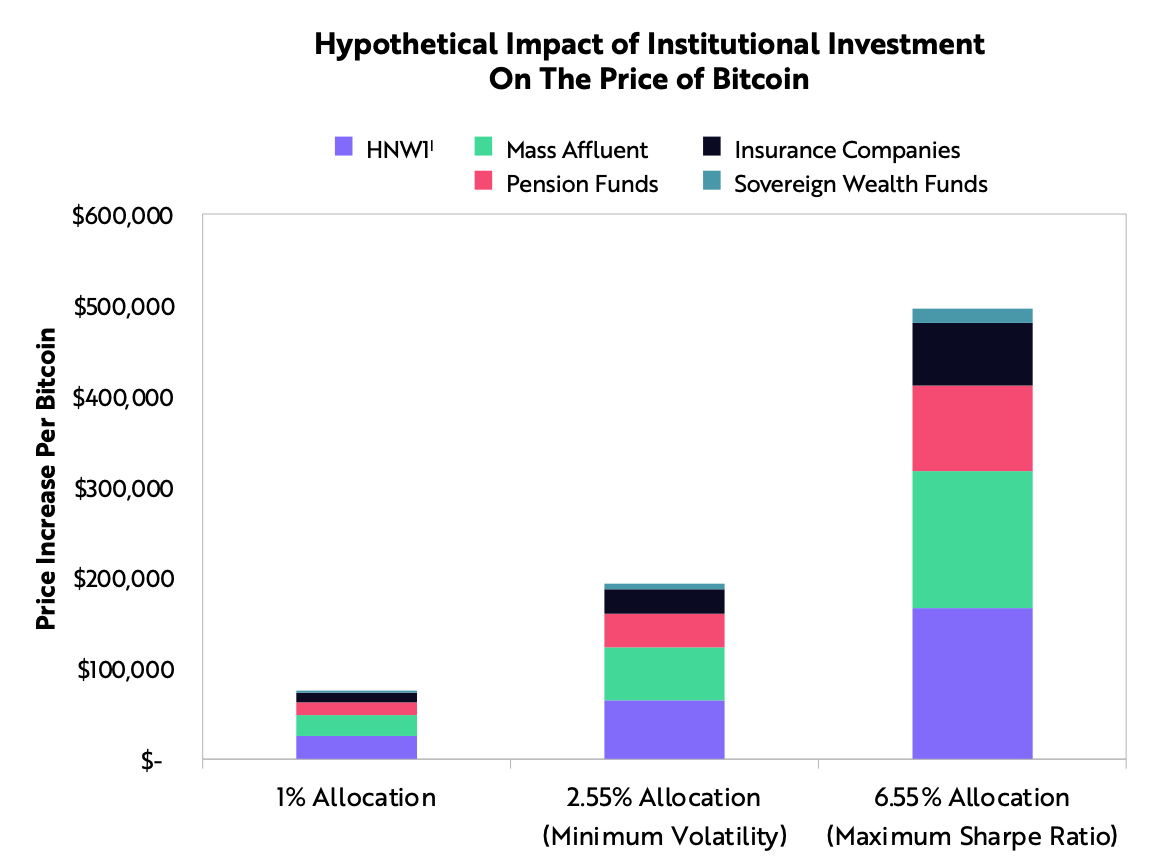
On an Bloomberg Interview, a few hours before the DPO, Cathie Wood argued that Coinbase is a great company. She stated that she expects a high amount of volatility, as is the case with Bitcoin and other cryptocurrencies, but she will take advantage of this volatility, buying the dip whenever possible. Wood also underlined that a $500k bitcoin price target is possible, with just a 5% asset allocation by S&P 500 companies, which would boost COIN's price. The reason, according to Wood, institutional investors are increasingly looking into cryptocurrencies, and BTC in particular, is its low correlation with other assets, such as Equities and Real Estate. Although ARK Invest's CIO didn't give a specific price target, she said she expects Coinbase to perform way above ARK's minimum hurdle rate of return of 15% per annum. In terms of competition, although other exchanges are expected to force Coinbase to lower their margins, she believes that institutional clients and subscription revenues will make up for it. Lastly, Wood mentioned that analysts cannot yet properly analyze and price the company, as it is a novel type of business. https://youtu.be/SU_YjT6KvT8
Institutional interest in Bitcoin and Coinbase has indeed spiked. The company announced that it "was selected as the primary execution partner by MicroStrategy". According to a Block article, there is speculation that "Coinbase was behind Tesla’s bitcoin buy". This speculation is further supported by the exchange of Tweets between Elon Musk, Tesla's CEO and the CEO of MicroStrategy, Michael Saylor. Tesla's announcement of $100 million profit from Bitcoin sale on Monday will surely further incentivize Institutional Investors to look into allocating a percentage of their balance sheet into bitcoin, some of whom will chose to do so via Coinbase. https://blog.coinbase.com/coinbase-is-helping-corporate-companies-diversify-with-crypto-444e8d91ebca https://www.theblockcrypto.com/post/95146/coinbase-tesla-bitcoin-buy https://www.marketwatch.com/story/tesla-turns-a-profit-on-bitcoin-sale-but-its-technoking-and-master-of-coin-say-it-wont-become-a-habit-11619489017
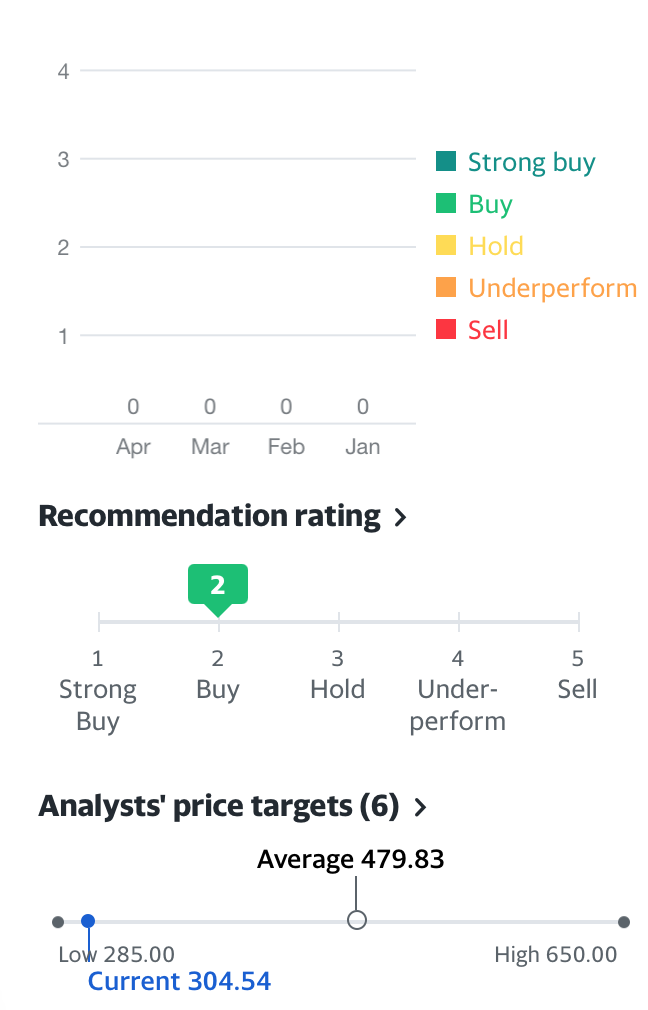
In terms of price targets, according to a Fortune article, DA Davidson's Gil Luria has set a price target of $650/share. He describes Coinbase as a diversified ETF for crypto assets, however, he also underlines some of the risks of investing into Coinbase, such as Crypto volatility, the threat of being hacked and increasing competition, forcing them to reduce their margins. BTIG's Mark Palmer has set a more moderate price target of $500/share, underlining that Coinbase is expected to diversify their revenue stream by leveraging their robust platform for institutional investors. https://fortune.com/2021/04/15/coinbase-stock-price-shares-cryptocurrency-bull-case/
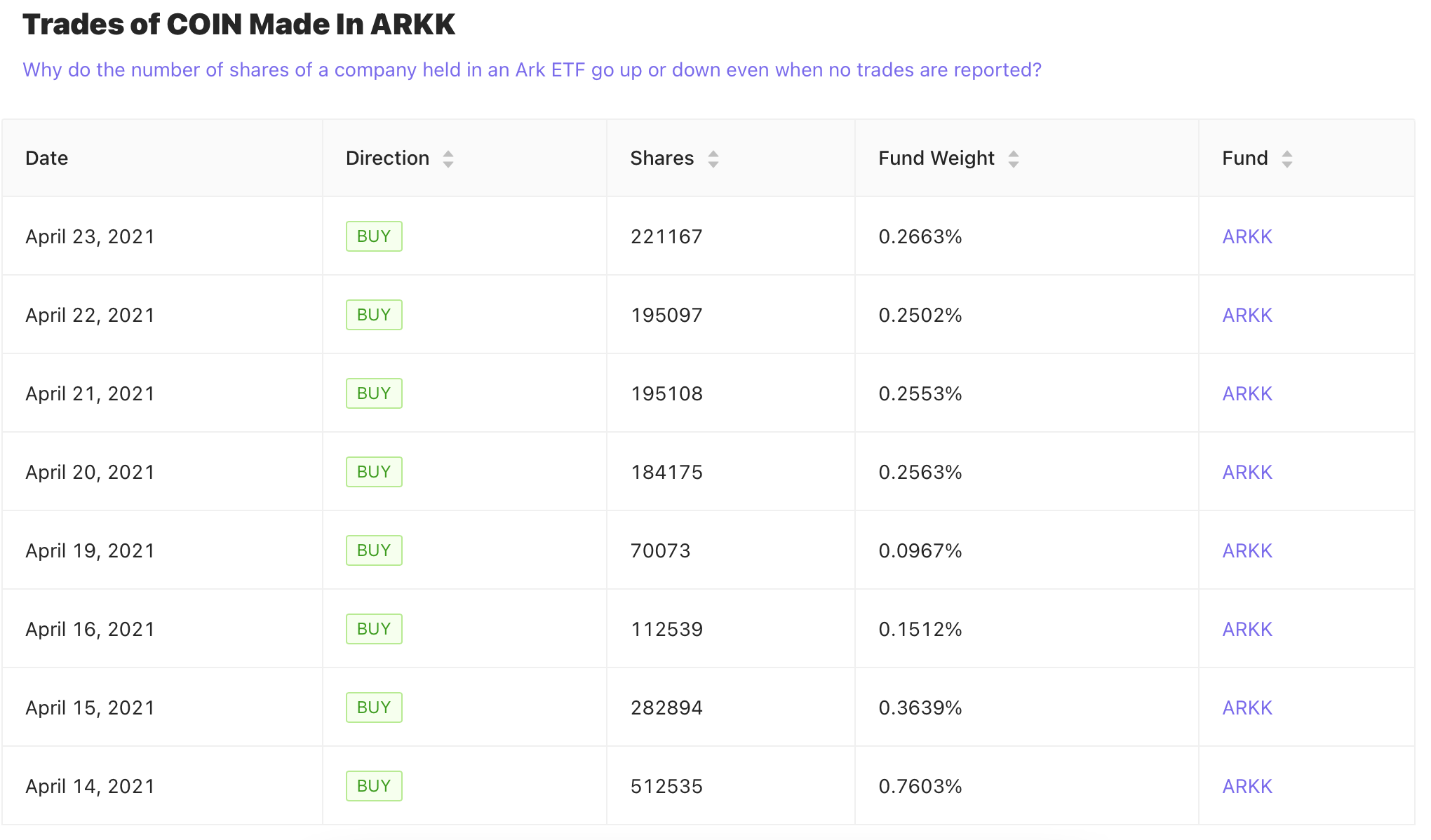
Although Cathie Wood has not publicly disclosed a price target, ARK invest bought COIN for 8 consecutive days, with a position of 1.746 million shares. https://fortune.com/2021/04/15/coinbase-stock-price-shares-cryptocurrency-bull-case/
According to Yahoo Finance, COIN is a Buy, with the stock trading below the Average Analysts' price targets.
I'd love to hear your thoughts on Coinbase, your buying strategy and your price targets down in the comments.
Thank you to my sponsors:
Microstrategy Board of Directors to be Paid in Bitcoin | HUGE PRICE PREDICTION by Cathie Wood
https://youtu.be/CDpbHF6xpA4
Hello everyone, welcome to BudgetHolics! In this video I’ll share my thoughts on Michael Saylor’s announcement that all Microstrategy non-employee members of the Board of Directors will be paid in Bitcoin.
A number of athletes are, or have requested to be paid in bitcoin:
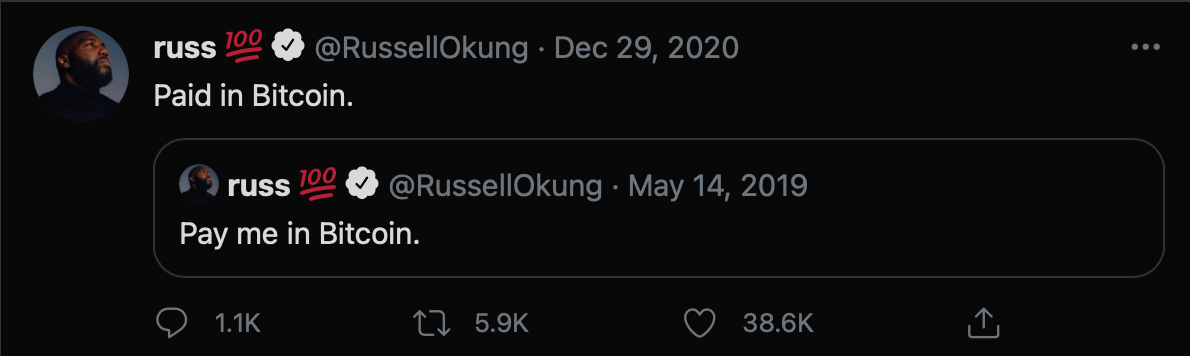
On December 2020, Russel Okung Tweeted “Paid in Bitcoin”
In reality, half of his salary is exchanged to bitcoin through ZAP!
Matt Barkley also wanted to get paid in Bitcoin, but his request was denied
According to a Coindesk article, the owner of NBA’s Kings will offer to pay players in bitcoin . https://www.coindesk.com/sacramento-kings-to-offer-bitcoin-salary-option-to-all-players?utm_source=newsletter&utm_medium=email&utm_campaign=newsletter_axiossports&stream=top
Some artists have also sought to be paid in bitcoin:
In 2013, Snoop Dog was selling albums for 0.3 BTC/piece . https://www.businessinsider.com/13-celebrities-who-back-cryptocurrency-and-may-own-millions-in-bitcoin-2019-1?IR=T#snoop-dog-4
In 2014, 50 Cent was accepting bitcoin for his album ‘Animal Ambition” https://www.coindesk.com/50-cent-bitcoin-payments-new-album-animal-ambition
Not to mention what is going on with smaller cryptocurrencies and the NFT space.
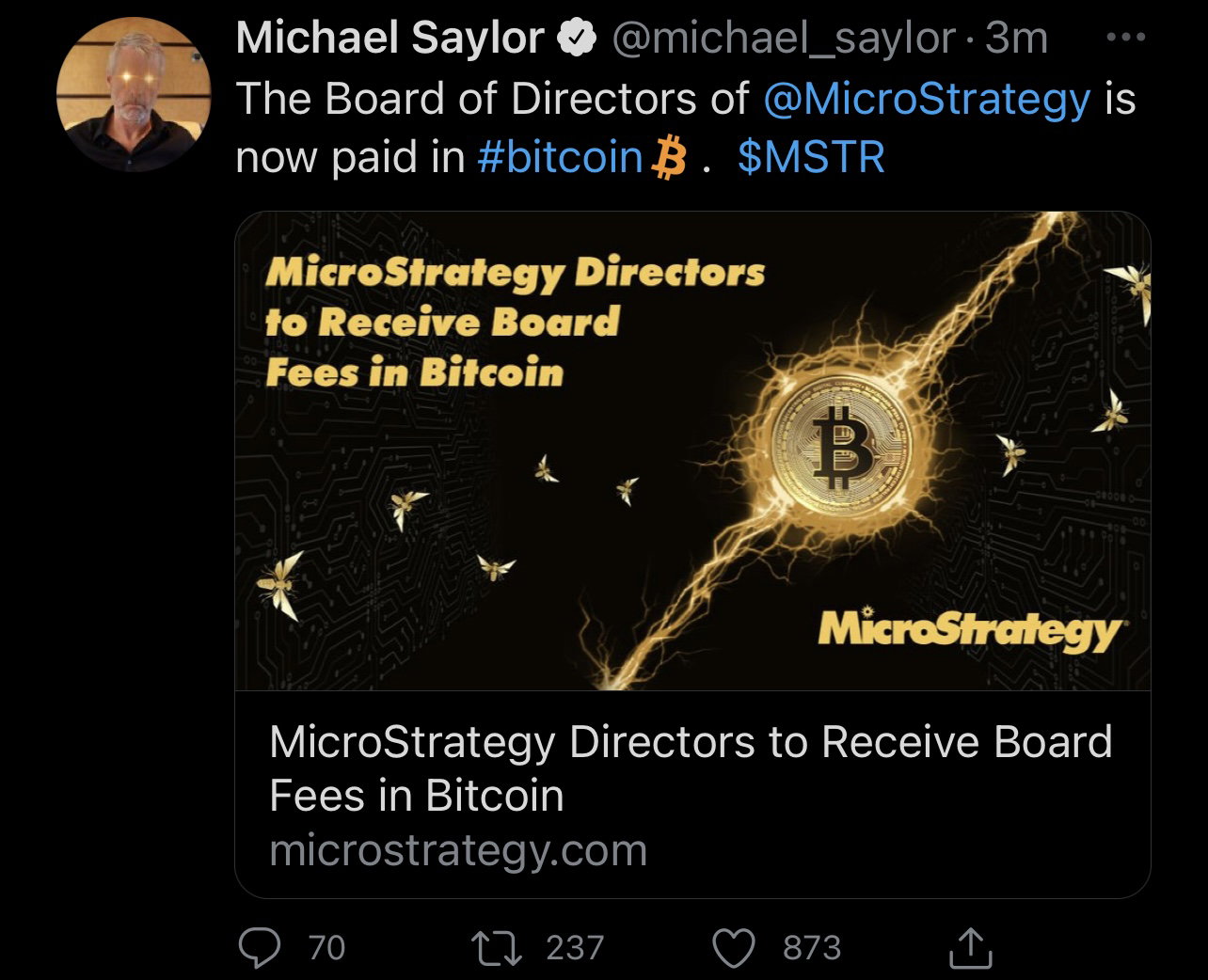
Earlier today, Michael Saylor tweeted that the Board of Directors of Microstrategy will now be paid in Bitcoin.
In his tweet he included an 8-K form which reads:
Cathie Wood said on CNBC that the 60/40 rule is dead. Due to the amount of cash being printed and the low interest rates, according to Wood, a 60/20/20 allocation would be optimal, in Equities, Bonds and Bitcoin, accordingly. Ray Dalio also said that it is “crazy to own bonds” right now.
Michael Saylor, on a Bloomberg Interview said that “When you can generate 5-6% short term interest in treasuries and the cost of capital is 7% you could take a -2% yield. When that became -5% people got through it. In 2020, the cost of capital rose to 25% due to monetary expansion.. That’s turning up the heat and causing everyone to realise that conventional strategies are broke. bitcoin yields a much higher return and it’s the best overall store of value
Microstrategy has purchased 91 bitcoin todate. At $60,300 the current price at which I’m recording that video, their investment is currently worth $5.5 bn.
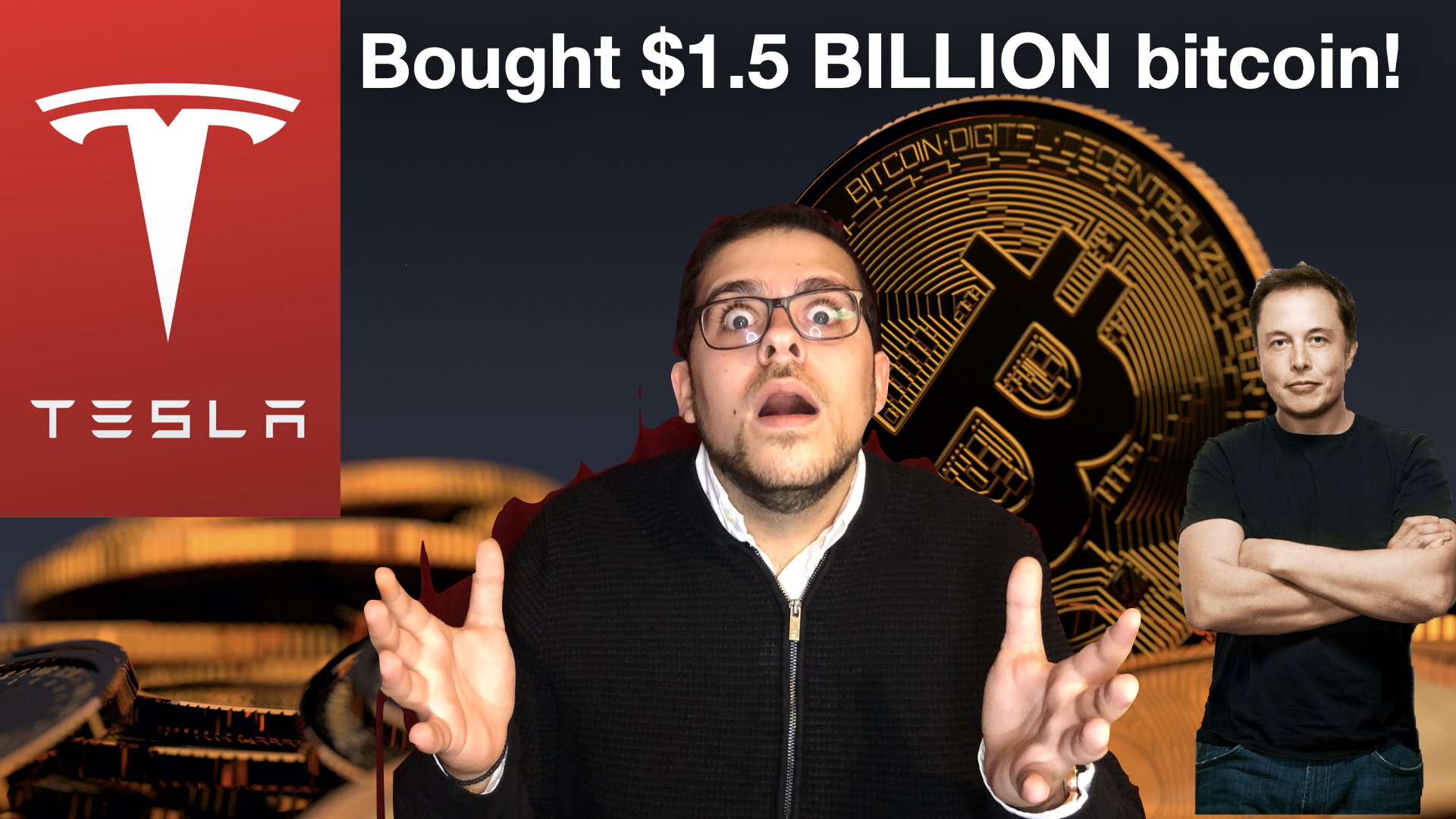
On February, Tesla also announced they bought $1.5bn worth of bitcoin. In late march, they announced that they are now accepting BTC payments, and that the bitcoin they receive will not be converted back to USD. They’re operating their own nod, and they appear to be committing to bitcoin’s long term potential. https://youtu.be/Jb_MiOU0UWU
Other Cathie Wood favorites, such as SQuare, also have significant bitcoin holdings. If you want to learn more about cathie wood’s top 10 holdings, check out a review of her portfolio. https://youtu.be/HHMMJLsfjYg
Where does this lead us in terms of price?
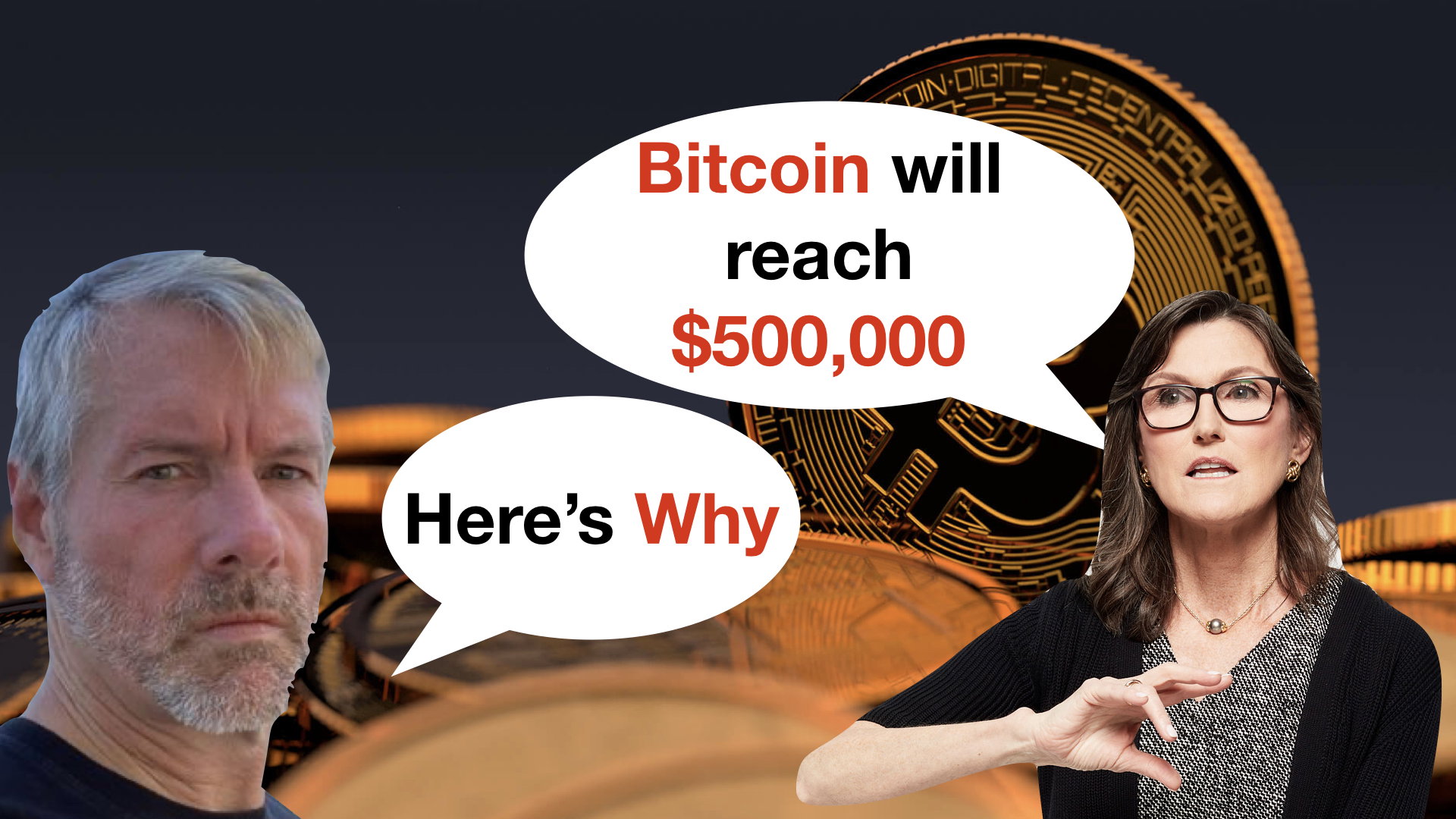
Cathie Wood, in ARK invest’s big ideas 2021 presentation states that if S&P 500 institutions were to allocate 10% of their holdings into bitcoin, this would lead to a price of $500k per coin. If they were to allocate 1% of their holdings, this would make BTC go around $80k.
Since I released the price prediction video, bitcoin’s Market Cap has increased from $800bn to $1Trillion. And that’s only 1.5 months ago. https://youtu.be/EyXEis8rBXo
The microstrategy announcement falls in line with the ever increasing commitment by institutional investors and big money.
Coinbase Going public on Wednesday will also further increase crypto legitimacy and awareness. https://youtu.be/KuZZF3IivAY
MASSIVE Coinbase IPO News! | 13X Valuation! | Best Growth Stock in 2021?
https://youtu.be/KuZZF3IivAY
Hello everyone, welcome to BudgetHolics! In this video I’ll share my thoughts on Coinbase’s IPO, scheduled for April 14.
On April 1st, Coinbase tweeted that it’s going public via Direct Listing. If you’re unfamiliar with Coinbase, along with Kraken and Binance, it’s one of the largest crypto exchanges! Many people speculate that it’s going to be the largest IPO of 2021. Coinbase’s IPO is another event bridging the gap between cryptocurrencies and traditional finance.
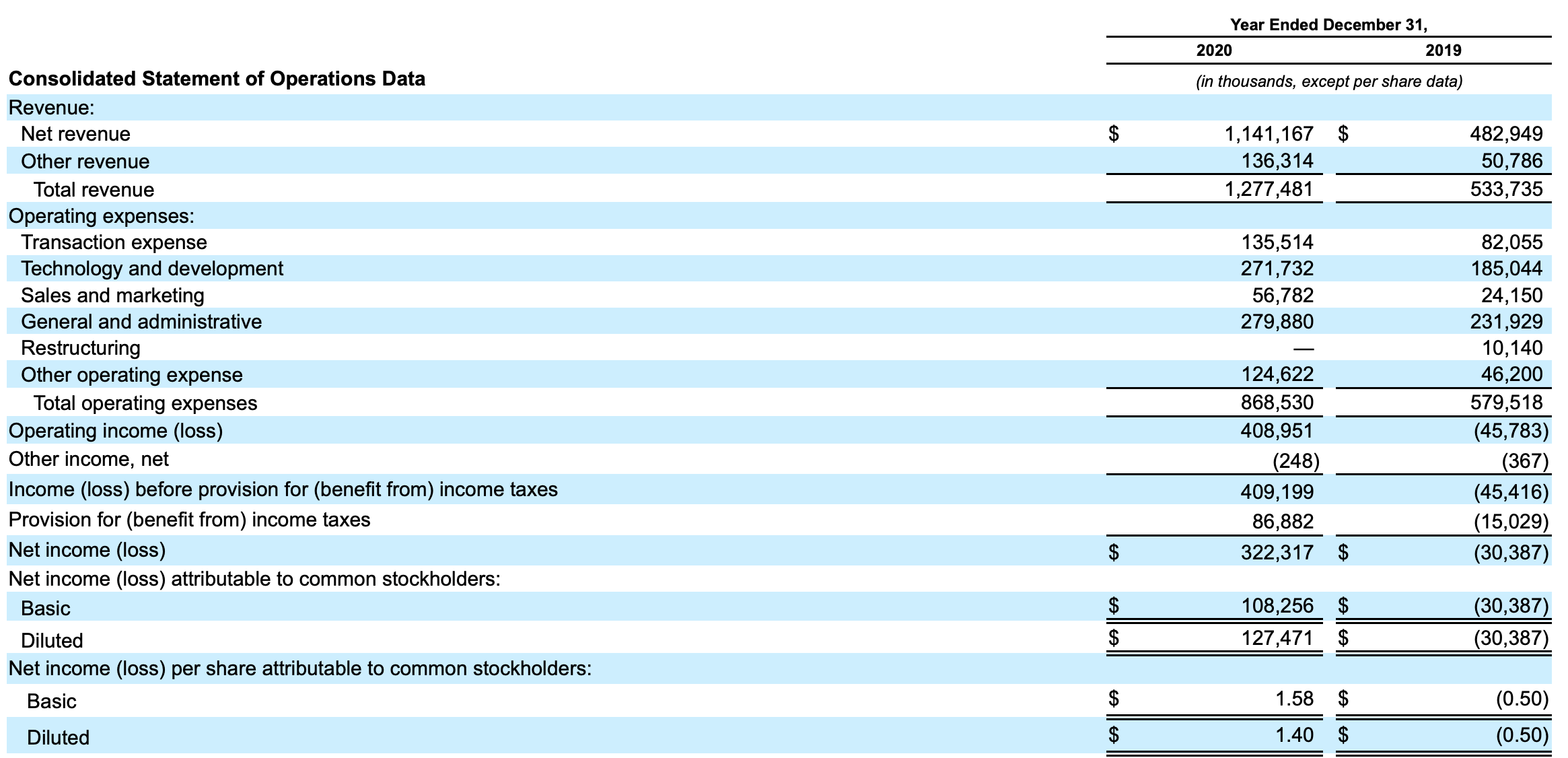
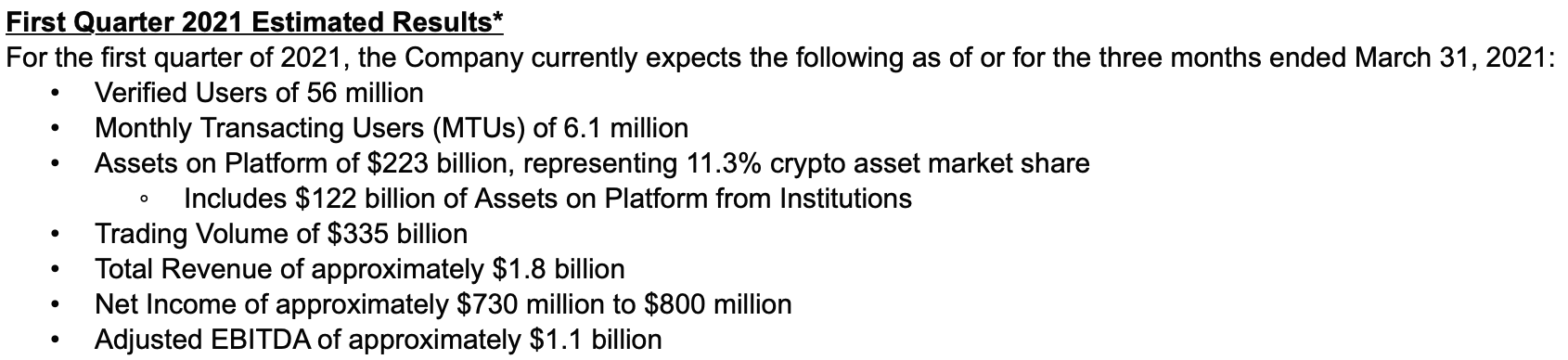
Coinbase released its S-1 filing earlier this month. It's total revenue increased by 139% Y-o-Y, from 2019 to 2020, with a profit margin of 26%. Being a Tech company that is already profitable is a great plus for its IPO. What's more, in their announcement of the company's Q1 2021 profits, Coinbase announced a Total Revenue higher than that of the entire 2020 FY. Moreover, their profit margin also increased to 40%. https://www.sec.gov/Archives/edgar/data/1679788/000162828021003168/coinbaseglobalincs-1.htm https://www.sec.gov/Archives/edgar/data/0001679788/000162828021006601/exhibit991-8xk.htm
In a funding round in 2018, Coinbase was valued at $8bn. On March, according to CNBC Coinbase is now worth $68bn. The article writes: https://www.cnbc.com/2021/03/17/coinbase-valuation-rises-to-68-billion-ahead-of-crypto-listing.html
*"The latest valuation is based on a volume-weighted average share price Coinbase cited in a revised S-1 filing released Wednesday. The company reported private shares trading at $343.58 apiece for the first quarter of 2021 ended March 15, which increases the company’s valuation 13-fold."*
Since the Q1 2021 Results Announcement, the company's valuation may have increased, potentially up to $270 bn.
This brings us to the main question when it comes to stocks and stock videos. Should you buy the stock? Will coinbase be the new tesla? Will you 2x, 5x or 10x your money? Before I answer this question I should point out that I’m not a licensed professional, that this channel is for entertainment purposes only, and that you should always do your own research when it comes to investing.
The answer to this question largely depends on your attitude towards bitcoin and cryptocurrencies in general. If you’re a bitcoin bull, and you believe that Cryptocurrencies will become an ever increasing part of everyday finance, that more people will start investing and transacting in crypto, and that more companies will start accepting crypto payments, then investing in Coinbase stock would be the next logical step. Coinbase, however, differ from other companies in that most of its revenue comes form transaction fees. It is therefore the Fear of Missing Out and FUD (Fear, Uncertainty and Doubt), that fills investors with the impulse to buy and sell crypto during market Ups and Downs that will further increase Coinbase's profits.
There are more factors to take into account when investing in a company, even in the case of Coinbase with cryptocurrencies holding such immense potential. Does this company have a competitive advantage? Can it do something that other companies can’t? To answer this question, although there are a number of other platforms that have lower fees, or provide more options than Coinbase pro, Coinbase, in my view, is still the best platform to buy crypto for new investors. That being said, I believe that by 2025, a number of other platforms will have gone public, with Kraken already having announced their Direct Listing in 2022, and Gemini - potentially - soon to follow. Another thing to consider is the price. Again, as with any company, you should make sure that the stock is priced at a fair value. I do expect a lot of speculation to drive up Coinbase price, especially due people having easier access to trading via platforms like Robinhood. And since we don’t currently have any information about the price, other than CNBC's $300/share estimate, I can’t say whether Coinbase will be a buy or not. The fact that it’s an already profitable tech company is always a plus. https://capital.com/kraken-considers-going-public-in-2022 https://cointelegraph.com/news/winklevoss-brothers-reportedly-eye-public-listing-for-gemini-crypto-exchange
Thank you to my sponsors:
What is Ethereum? | Understanding Smart Contracts, Ether and Ethereum 2.0
https://youtu.be/-X4ruiNB5ms
Let’s take a dive into FinTech and explore what Ethereum is.
Ethereum is a decentralized network of computers offering users the ability to create decentralized applications (DAPPs), and offer them to the whole network of Ethereum users. In this video we will look into what Ethereum’s purpose is, how it works, and what is Ether. Lastly, we will look into Ethereum 2.0and the ways in which it will change Ethereum as we know it.
Ethereum's goal is to truly decentralize the internet. Similarly to how Bitcoin’s goal was to connect users directly without intermediaries such as banks, a decentralized payments system. Ethereum’s goal is also to connect users directly, without a third party, a decentralized supercomputer. People can rent hard drive space directly to other people, and make applications such as dropbox obsolete. Drivers can offer services directly to customers, and remove uber as the middleman. People can buy cryptocurrency directly from each other, without the need for an exchange that can get hacked.
Smart Contracts
Ethereum's coding language, Solidity, is used to write “smart contracts'' that is the logic that runs DAAPs. In real life, all a contract is, is a set of IFs and THENs, a set of conditions and actions. If I pay a landlord $1000 at the beginning of the month, then he lets me use an example. If I get a student loan of $100,000 thousand dollars, then I can ensure financial stability for the rest of my life. That’s how Ethereum works, and they are called smart contracts, because they run all of the aspects of the contract, including, enforcement, management, performance, and payment. If I have a smart contract that is used for paying rent, the landlord doesn’t actively have to collect the money.
Ether was created to compensate the miners who help keep Ethereum safe. When people talk about the price of ethereum, they actually refer to Ether.. In order to deploy a smart contract in the Ethereum network, its author must pay to do so. That payment is made in the form of Ether. Ether can be divided into 1 quintillion units, with the smallest one called Wei, after Wei Dai, a cryptography activist advocating the widespread use of strong cryptography, and privacy-oriented technologies. Fees for transactions are calculated in GigaWei, that is 1 billion Wei. Etherium runs on Gas, meaning that each line of code of a smart contract that needs to be executed requires a certain amount of gas. For example, sending Ether from one address to another, requires 21k Gas units.
Ethereum 2.0
Ethereum 2.0 will change how the network works and promises to solve the scalability issue, making Ethereum capable of supporting the workload of all those smart contracts.
The most significant change that Ethereum 2.0 will bring is that it will transition Ethereum from a proof of work consensus mechanism to a proof of stake mechanism. With proof of stake the energy cost is replaced with a financial commitment. Staking involves committing 32 ETH to the network.
Secondly, Ethereum 2.0 will feature shard chains: Individual blockchains that run in parallel with the main chain, called the Beacon chain. Their purpose is to take part of the load of validating and adding new blocks to the blockchain, while the beacon chain makes sure that all the shard chains are up to date with the latest data. This is done so that the network is able to process and increase the number of tps.
The introduction of Ethereum 2.0 is set to take place in three phases:
Phase 0 was implemented in December 2020, and introduced the Beacon chain.
Phase 1 is set to be implemented in 2021. Firstly shard chains will be introduced, followed by the implementation of the Proof of Stake consensus in Phase 1.5.
Phase 2 will involve the full implementation of Ethereum 2.0, with shards being able to communicate with each other, and developers being able to create their own shards.
THE BEST GROWTH ETF? | Cathie Wood's Portfolio Overview | ARK Invest Innovation ETF
https://youtu.be/HHMMJLsfjYg
Cathie Wood is the manager of ARK Invest, an Asset Management Company. Founded in 2014, ARK Invest focuses on companies that can bring about “Disruptive Innovation”. According to their Big Ideas 2021, “ARK aims to identify large-scale investment opportunities
by focusing on who we believe to be the leaders, enablers, and beneficiaries of disruptive
innovation. While we believe innovation is the key to growth, the opportunities it creates can
be missed or misunderstood by traditional investment managers who are more focused on
sectors, indexes, short-term earnings, and price movements.
ARK seeks to gain a deeper understanding of the convergence, market potential, and long-term impact of disruptive innovation by researching a global universe that spans sectors,
industries, and markets. Today, we are witnessing an acceleration in new technological breakthroughs.” When it comes to investing, ARK has a strict rule of only picking up companies that will grow by at least 15%. Their suggested time frame for holding an ARK ETF is a minimum of 7 years.
ARK Invest has 5 Actively Managed ETFs, ARK Innovation, Autonomous Tech & Robots, Next Generation Internet, Genomics Revolution and Fintech Innovation. On this video we will focus on the general portfolio, ARK Innovation (Ticker Symbol: ARKK). It consists of 56 companies, of which we’ll review the top 10, making up 47.64% of the total portfolio.
ARK Invest uploads their trades daily on their website, so everyone can have a neigh-real time look at their moves. This is especially useful for those of us who reside outside the US, and access to such ETFs is much harder. Having access to the daily trades allows investors to copy ARK’s portfolios without needing to purchase the actual ETF.
Today’s list comprises enterprises that are developing the following Big Ideas Technologies: Deep Learning, Data Centres, Digital Wallets, Bitcoin, EVs, Automation, Autonomous Ride-Hailing, Cell and Gene Therapy.

What Are SPACs? | IPO 2 0 or FRAUD?!
https://youtu.be/auBeS85n5gw
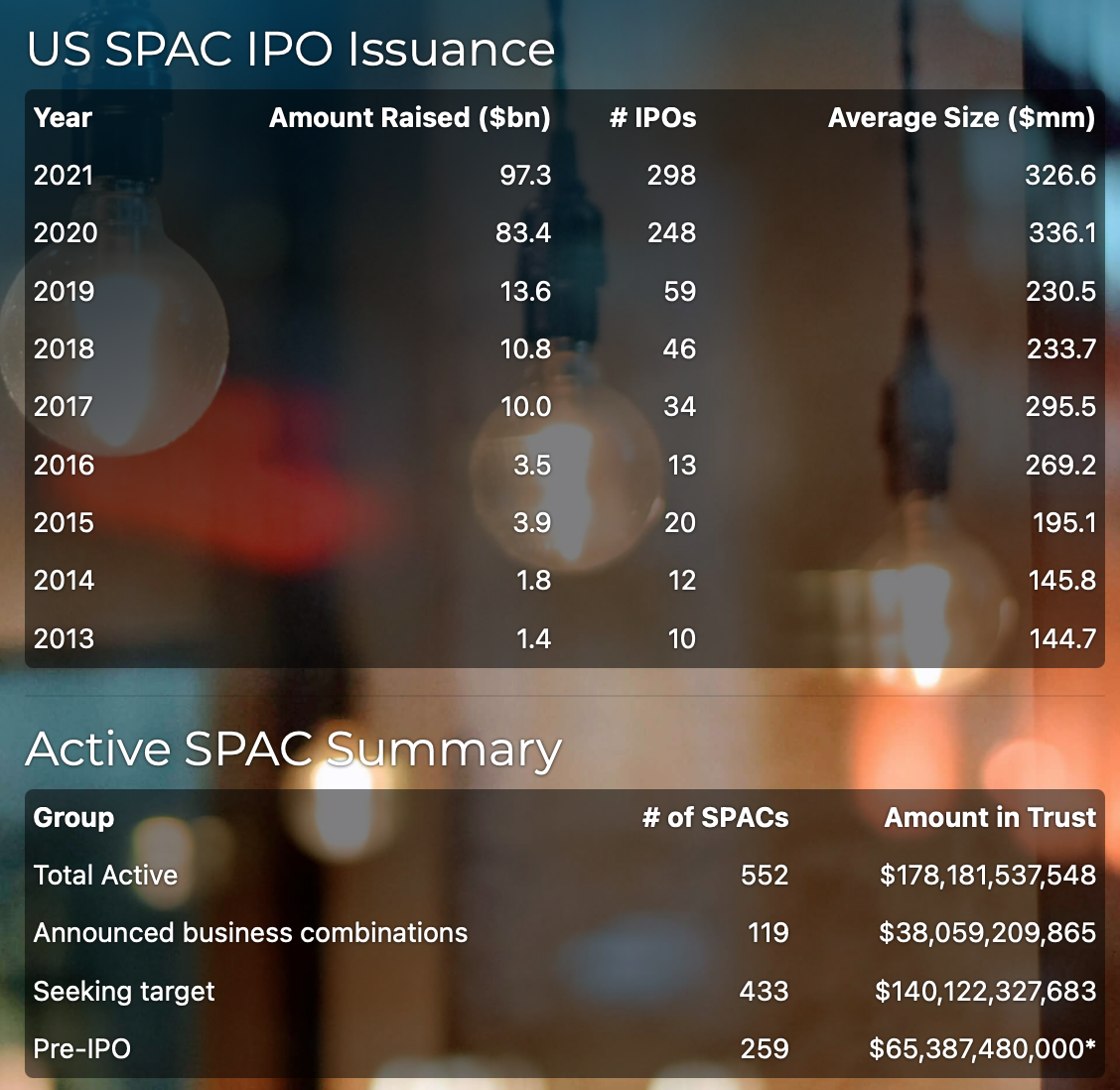
Here's a short overview of Special Purpose Acquisition Companies (SPACs), how they work, the advantages of SPACs over IPOs, the history of SPACs, how to determine whether to invest in a SPAC and what some of their proponents have to say.
How SPACs work
A Management Group, called sponsors, decides to form a SPAC. They raise money through an IPO by selling units, typically priced at $10, and they are made up of a share and a warrant, or partial warrant. The warrant is a contract that allows holders to buy a set amount of stock at a certain point in the future, for a predetermined price. Investors can buy or sell shares at the current market value, after the IPO.
The money from the IPO goes into a trust, usually held in Money Market accounts or short-term government securities, such as Bonds. Sponsors have 18-24 months to buy a company that shows tremendous promise.If they don’t do so, investors are reimbursed for their money, and their share is proportional to the units they own. If a company is found and approved by the board, the SPAC and the private company merge into a publicly traded company, AKA the de-SPAC process.Shareholders can decide whether to hold their shares, or pull the money out. If they stay, then their investment will rise and fall with the share price of the company.
Sponsors are paid by the success of a SPAC through share ownership called a Promote, which allows sponsors to buy 20% of the outstanding shares at a discounted price.
Advantages of SPACs
Bypassing regulatory barriers associated with traditional IPOs.
Greater price certainty and control over the private company compared to a company taking the traditional IPO route, because there is less guesswork in determining at which price to offer the shares.
For investors: Ability to get in early at an IPO → Enormous Potential
If the SPAC is successful, the initial investment will appreciate and investors will earn money.
History
Spacs have been around since the 90s, and they’ve gained a **bad reputation for defrauding investors**. However, they have been **regulated by the SEC since 2011**. This regulation allowed investors to **redeem units, to cash out, before the acquisition**.
Last decade Tremendous Growth:
Examples:
Virgin Galactic (SPCE), Draft Kings (DKNG, Nikola (NKLA)
How to determine whether to invest in a SPAC
You can’t evaluate a product, since there isn’t any, so you must be absolutely sure, that the management team knows what they’re doing.
Carefully read SPAC’s IPO Prospectus as well as periodic and current reports, filled with the SEC
If a target company is identified, investors need to decide if it’s a good Investment.
Weigh Opportunity Cost
Why invest in a SPAC and not an established company
A Study form 2011 to 2017, following 97 SPACs found that they underperformed the market by an average of 3%.
In 2015 -2019, majority of SPACs are trading below the $10/share mark.
Proponents
Some SPAC proponents include Chamath Palihapitiya, founder and CEO of Social Capital, and Bill Ackman, founder of Pershing Square Capital Management.
Social capital allowed sponsors to buy shares at less than $0.01, while regular shareholders purchased shares at $10. However, SPACs are not without risk; Chamath is being accused of misleading investors.
Thank you to my sponsors:
5 BEST Dividend Stocks to BUY NOW | April 2021
https://youtu.be/fOvrIHaTNQs
Here's a list of the 5 Best Dividend Stocks to Buy Now, and Hold On for Dear Life!
Dividend stocks, when you choose them properly, allow for the generation of stable passive income, for as long as you hold them.
The selection process of a dividend stock includes the dividend the company is currently paying, the rate at which it is increasing its dividend, and the degree to which this dividend is sustainable. More importantly, owning a share of company represents owning part of the company itself. Hence, when picking which dividend stock to buy, one should transcend financial ratios and look into the fundamental strengths and weaknesses of the company first.
The criteria for stocks to make the list were:
Company Performance, Room for Growth, Sustainability
Payout Ratio: a statistic indicating the safety of a stock's dividend. (For REITS, a better statistic to look at is the AFFO Payout Ratio)
PE Ratio: the ratio of a company's share price to the company's earnings per share.
Dividend Growth Rate: The rate at which a company is increasing its dividend yield.
Years of Consecutive Dividend Growth Current Dividend Yield.
The list is made up exclusively of stocks portrayed in previous dividend stock TOP 5s. The goal is to strengthen our position in solid companies, and differentiate across sectors. Today's list is made of a REIT, a Financials, a Technology, a Healthcare and a Telecommunications company.
Thank you to my sponsors:

Can Bitcoin Finally Become Currency? | Understanding the Lightning Network | Scalability Solved?
https://youtu.be/hhu2Q2hD1yM
Bitcoin has established itself as both an investment vehicle and as a reverse currency. Both individual and, this time, institutional investors have allocated part of their portfolios into bitcoin, yet, it still hasn't established itself as a currency. This is due to the fact, that bitcoin as a currency has two main problems:
Volatile transaction fees, making it too expensive for micro-transactions.
A scalability problem, i.e. it can handle a limited amount of transactions, and it takes time to process them. For reference, while Visa can scale to handle up to 24k transactions per second (tps), Bitcoin can only handle 7 tps.
The Lightning Network offers a solution to this problem. Instead of users executing on-blockchain transactions, it allows them to execute off-blockchain transactions via private payment channels. The Lightning Network is only a second layer implementation, not a blockchain substitute. It is built on top of the existing blockchain. The white paper for this technology was published in 2015, however it was only possible in 2017, when the Bitcoin community approved the SegWit protocol, enabling those second layer solutions. In fact, the Lightning Network can be used by any cryptocurrency that allows for the following two features:
Multi-signature wallets
Time locks
The way this technology works is by setting up a payment channel between you and another party. This party can either be a company or an individual. The problem with on-blockchain payments is that, it didn't make sense to pay for a cup of coffee, for example, using bitcoin, because of the transaction costs and the 3 to 6 confirmation needed to consider the transaction fully confirmed, which could take you 30 to 60 minutes. Instead, by opening up a payment channel with the coffee shop, you essentially get the equivalent of a coffee shop card. You top up the card, and instead of paying money from your bank account, i.e. you wallet, every time you visit the store, you pay using the balance you have on the card, i.e. the payment channel. By doing so, you avoid paying transaction fees every time you transact with the store, and you also avoid the 30' wait time for the transaction to confirm.
If you want to make a payment to somebody you don't have a payment channel with, you can do so through a third party you both have payment channels with. And this can be a single individual or company, or a number of intermediary nods, that will allow the transaction to go through them. The incentive, each of those nods have, is that they get paid a small fee for offering themselves as a bridge between you and the final recipient, which is much lower to the mining fee you would pay for that transaction, and much faster. The assurance you have that the transaction will go through, is the fact that, before your funds are sent, every single nod has to agree to (sign the) transaction beforehand. If anyone backs out, the money is returned to your account.
As with any network, the Lightning Network is susceptible to the 'network effect'. Its applicability relies on the degree to which it is adopted. Moon has offered another solution to spending bitcoin. Instead of setting up lightning payment channels with the merchant, this browser extension allows you to pay online using bitcoin to any visa-accepting merchant. To do so, the company sets up a payment channel between your wallet and a prepaid card, and then send a digital invoice to your wallet, using the lightning technology. Keep in mind that this is not a decentralized transaction, as both Moon and Visa are both centralized institutions.
Thank you to my sponsors!
How to Invest during a Stock Market Crash
https://youtu.be/e6kHda1rjEc
Here are my thoughts on last week's stock market crash, and how to invest during a crash.
The crash of 1987, known as Black Monday, wherein we witnessed the single largest decline of the stock market.
The dot-com crash of 1999-2000, whereby .com companies were overhyped, hence, overvalued.
The housing crash of 2008, due to overvalued Mortgage-Backed Securities.
Last week’s drop in asset prices could be attributed, partly, to the transition of growth stocks to value stocks (from Tesla to GM), and partly to the transition to bonds from stocks. And depending on your asset allocation, you may have not seen a huge impact on your portfolio. Companies in the Nasdaq were hit hard, as well as cryptocurrencies, such as Bitcoin and Etherium.
As Cathie Wood explains in the most recent ARK Invest video, individual investors have 3 main advantages, compared to institutional investors:
We do not have to rely on benchmarks. We do not have to justify our returns based on how much better or worse our portfolio did compared to an index, such as the S&P500.
We do not have a short term time horizon. In contrast to most fund managers, our time horizon could span from 5 to 40 years, depending on when and if we want to cash out.
We can be generalists. We can simultaneously study different sectors, and not be constrained on what sector specific analysts are predicting. Given the interplay of sectors for most growth stocks, this gives us a unique advantage.
In terms of strategy, you should simply buy the dip. Assuming that your investments are well researched, a change is stock price should mean nothing about the value of the underlying asset. If you’ve done your due diligence, a market crash is just an opportunity to buy assets at a discount.
A Big thank you to my sponsors! Unfortunately, I can't add the sponsorship block....

Warren Buffett’s 2021 Portfolio | Berkshire Hathaway Stocks into 2021
https://youtu.be/l7tMvESszXU
In this video we will dissect Warren Buffett's Berkshire Hathaway holdings, and look into what moves the G.O.A.T has made in Q4 2020. Warren Buffett is a man who needs no introduction. He started investing in 1955, and since then, he's had an average annual return of 30%! He bought Berkshire Hathaway in 1962, which was then a textile company, before converting it into the most successful investing company to this day. His motto: "Be fearful when others are greedy, and be greedy when others are fearful". In Q4 2020 he increased Berkshire's holdings from $235bn to $269bn.
Let's take a look at Berkshire's top 10 holdings, which make up 85.24% of the portfolio.
10. Chevron (NYSE: CVX) - 1.52% of Portfolio
Chevron Corporation is an American multinational energy corporation. One of the successor companies of Standard Oil, it is headquartered in San Ramon, California, and active in more than 180 countries. Buffett first added CVX to the Berkshire portfolio in Q3 2020. Berkshire currently owns 48,498,965 shares, valued at $4,095,738,000 (@$84.45/share). During Q4 they added 9.55% to the Q3 position.
9. DaVita Inc. (NASDAQ: DVA) - 1.57%
DVA provides kidney dialysis services through a network of 2,753 outpatient dialysis centers in the United States, serving 206,900 patients, and 259 outpatient dialysis centers in 10 other countries serving 28,700 patients. The company primarily treats end-stage renal disease. The company has a 37% market share in the U.S. dialysis market. Berkshire currently owns 36,095,570 shares, valued at $4,237,620,000 (@$117.40/share).
8. US Bancorp. (NASDAQ: USB) - 2.26%
U.S. Bancorp is an American bank holding company. It is the parent company of U.S. Bank National Association, and is the fifth largest banking institution in the United States. Berkshire currently owns 131,137,998 shares, valued at $6,109,721,000 (@46.59/share). During Q4, they reduced their Q3 position by 0.62%.
7. Moody's Corporation (NYSE: MCO) - 2.65%
Moody's, is an American business and financial services company. It is the holding company for Moody's Investors Service (MIS), an American credit rating agency, and Moody's Analytics (MA), an American provider of financial analysis software and services. Berkshire currently owns 24,669,778 shares, valued at $7,160,156,000 (@$290.24/share).
6. Verizon Communications (NASDAQ: VZ) - 3.19%
Verizon Communications is a holding company for Verizon Consumer Group, providing Wired and Wireless internet services to consumers, Verizon Business Group, providing services to businesses, and Verizon Media, a holding company owning Yahoo! and AOL, among others. Buffett first bought VZ in Q3, and Berkshire currently owns 146,716,496 shares, valued at $8,619,594,000 (@$58.75/share). They added 151% to their Q3 position.
5. Kraft Heinz Co. (NASDAQ: KHC) - 4.18%
Kraft Heinz is an American food company formed by the merger of Kraft Foods and Heinz. Kraft Heinz is the third-largest food and beverage company in North America and the fifth-largest in the world with over $26.0 billion in annual sales as of 2020. Berkshire currently owns 325,634,818 shares, valued at $11,286,503,000 (@$34.66/share).
4. American Express (NYSE: AXP) - 6.79%
AXP is a multinational financial services corporation The company was founded in 1850 and is one of the 30 components of the Dow Jones Industrial Average. Berkshire currently owns 151,610,700 shares, valued at $18,331,249,000 (@$120.91/share).
3. Coca-Cola (NYSE: KO) - 8.13%
Coca-Cola is one of the Flagship Holdings of Buffett. After buying in in the late 80s, we've always seen the G.O.A.T. drinking a can of cherry coke in his interviews and during the Berkshire annual shareholder meetings. Berkshire owns 400,000,000 shares, valued at $21,935,999,000 (@$54.84/share).
2. Bank of America (NASDAQ: BAC) - 11.34%
Buffett first bought into BAC in 2011, with an initial investment of $5 billion. Moreover, he got warrants, allowing him to buy shares for $7.4 for the next 10 years. Berkshire owns 1,010,100,606 shares, valued at $30,616,150,000 (@$30.31/share).
1. Apple (NASDAQ: AAPL) - 43.61%
The Tech giant is Buffett's favorite brand. Instead of looking at Apple as a technology company, Buffett views it as a consumer brand, with great financials. Berkshire owns 887,135,554 shares, valued at $117,714,016,000 (@$132.69/share). They reduced their Q3 position by 6.05%
Additional Facts
Other Moves in Q4
Dividends
Berkshire currently receives $3.8bn annually in dividends.
Allocation
Most Holdings are in the Technology sector, followed by Financials, and Consumer Defensive:
Will Warren Buffett Buy Bitcoin? | Answering the G O A T 's Criticism
https://youtu.be/jdqtzFlW-fY
1. All about Speculation, No Real Value, Doesn’t Produce Value
Speculators vs. Investors
Retail Investors Caused the Bubble of 2017. And as with any asset, the degree of speculation around it does not affect its underlying value. People speculated in favor of a small online bookstore in the late 90s, which proved to be a bubble, but then evolved into one of the largest companies out there. When the fundamentals of an asset is great, investors’ short term votes have no significance.
Bitcoin vs. Cryptocurrencies
Bitcoin is one of the cryptocurrencies out there, and although it’s the flagship of cryptocurrencies with over 70% of the total crypto market cap, it is not at all what cryptocurrencies stand for. Bitcoin is indeed mostly used as a reserve asset.
Hate on Gold
Indeed, one of the uses of Bitcoin is to be a reserve asset. In some ways similar to gold, which I know you don’t like, but it does provide a hedge against inflation. Also, calling Bitcoin 'digital gold' neither does justice to Bitcoin, not does it help sway the G.O.A.T.
2. Anyone can start a currency
Yes this is true. That’s why we have seen the rise of various meme currencies, such as Dogecoin. And they again contribute to the speculation question. But creating a currency does not mean that people will be using it. Bitcoin is the safest cryptocurrency out there, in terms of the integrity of the bitcoin blockchain. It is even safer than most of Traditional Banking networks. Finally, as with Fiat currencies, the value of bitcoin is based on trust. But in contrast to a fiat currency, where you place your trust in a Government, in the case of Bitcoin you place your trust in the mathematical algorithms that govern it.
3. Companies Are Not Doing Business in Bitcoin
Financial products don’t count. Buffett has called derivatives WMDs, so we can’t use the argument that JPM are selling Bitcoin-denominated financial products as a response. Which is fair. That’s the strategy the GOAT has been using and he has the results to back this strategy up! But companies have started using bitcoin. Cryptocurrencies are not only a product, but a service. And one of the pros of using bitcoin is the swiftness of use. Granted, that for small purchases, using bitcoin doesn’t make a lot of sense. You wouldn’t go to the corner store and but a bottle of water, wait for 3 confirmations, taking 30 minutes, to clench your thirst. But in the case of larger transactions everything is different. If you want to buy a house, or pay an employee his or her monthly salary, you’ll have to make a wire transfer, which takes 3-5 business days, excluding bank holidays such as today.
4. Used for Illegal Activities The USD is the primary means of exchange for arms and drug dealers.
Nobody has said that we should stop using the USD because it’s being used by criminals. Same goes with many technologies. Back in 2015, the San Bernardino terrorists used the iOS’s iMessage encryption to hide and secure their communications, and there are other examples of criminals using other end-to-end encrypted messaging apps, even chats features of online games. New technologies are going to be used by legitimate individuals, institutions, and criminals alike. The adoption of a new technology by a criminal party says nothing about the value this technology can add to society.

Tesla Bought $1.5 Billion of bitcoin!
https://www.youtube.com/watch?v=Jb_MiOU0UWU
Twitter
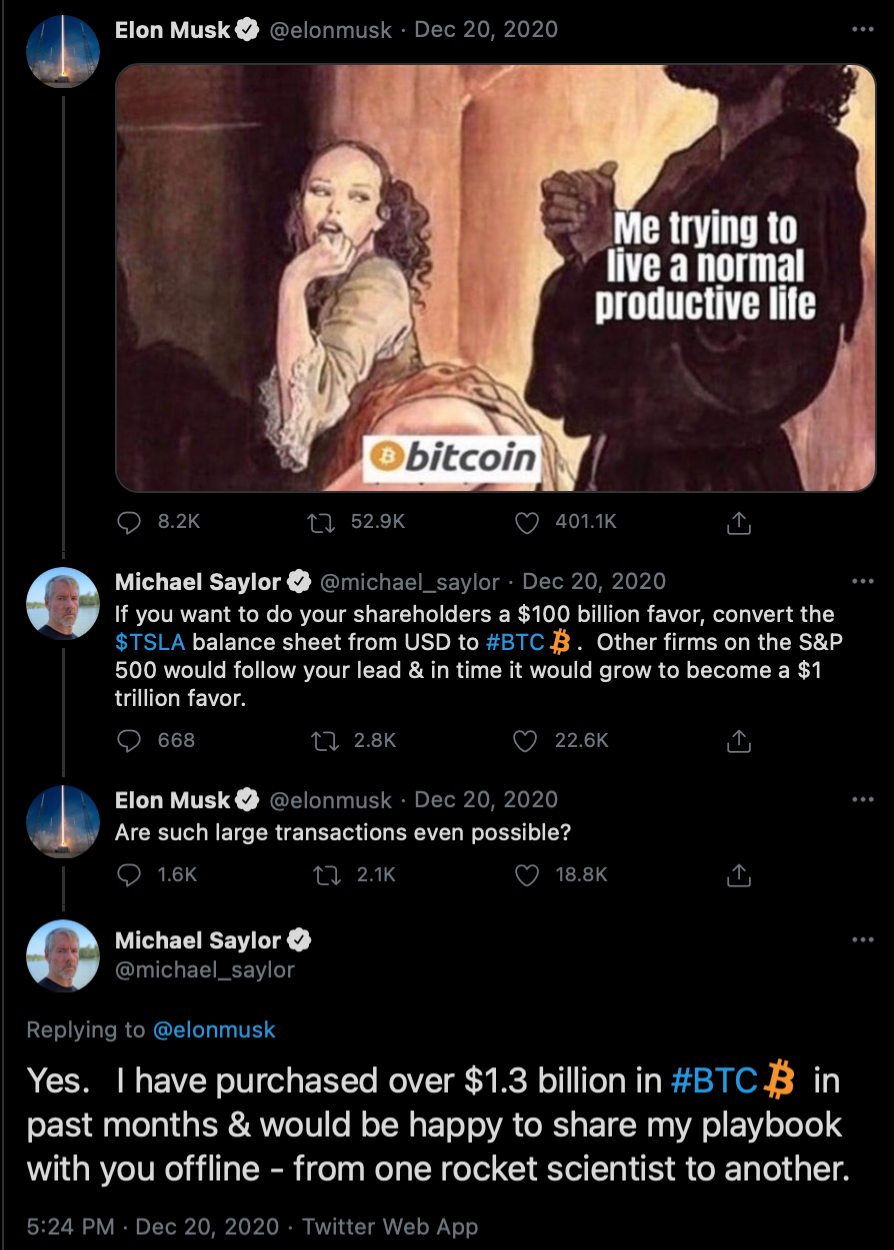
As with every Elon Musk - related story lately, everything began on Twitter. On December 20th, Elon started publicly stating that he's now interested in Bitcoin. To that, Michael Saylor, the CEO of Microstrategy answered yes, and after an exchange of tweets, Saylor offered to give Elon some offline advice on how to convert part of the Tesla Balance Sheet to Bitcoin. A few days later, Elon changed his Twitter Bio to #bitcoin, and tweeted "It was inevitable". https://www.youtube.com/hashtag/bitcoin
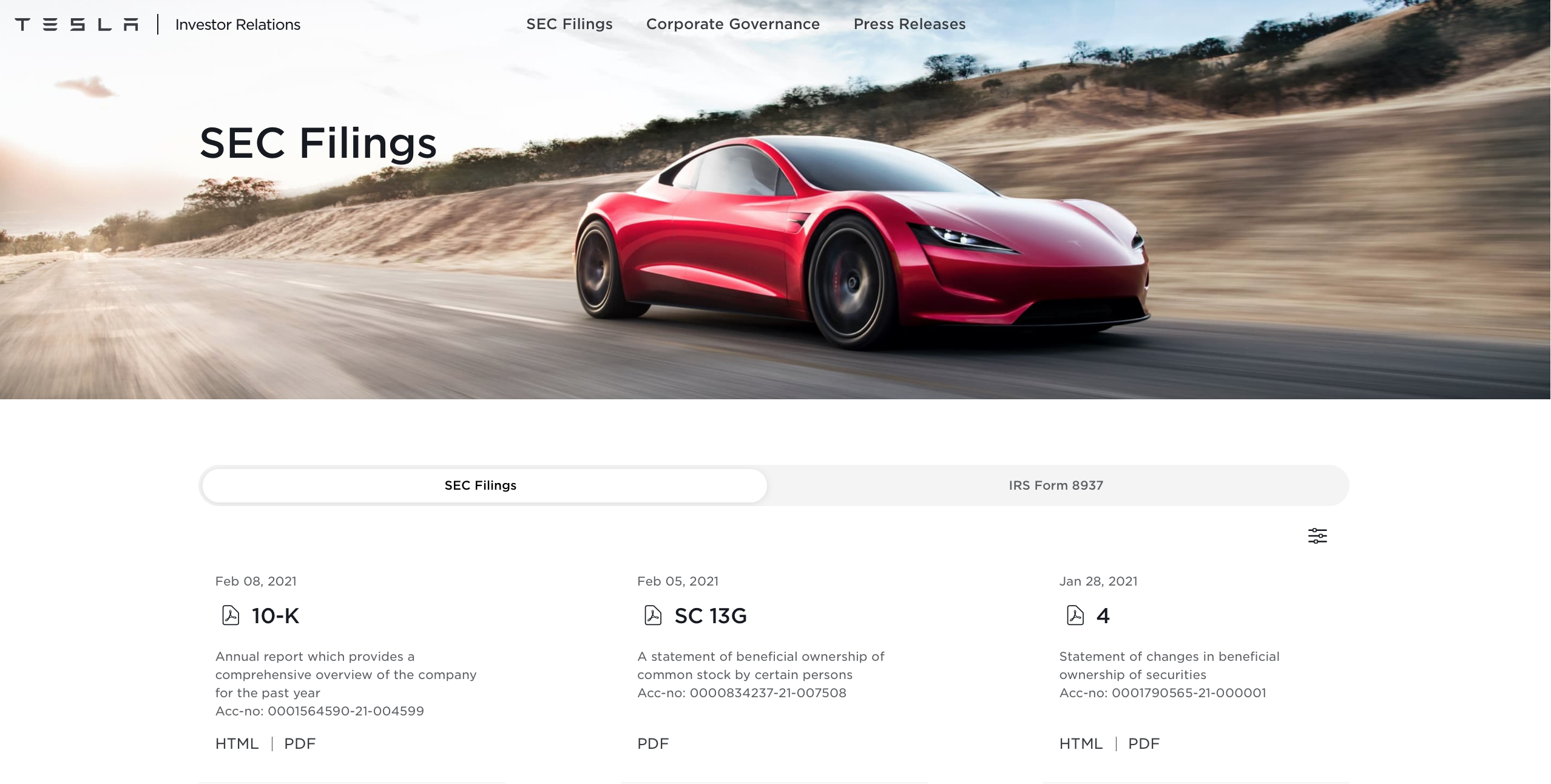
Tesla 10-K form https://ir.tesla.com/_flysystem/s3/sec/000156459021004599/tsla-10k_20201231-gen.pdf
On February 8th, Tesla released their 10-K form, in which they state:
*"In January 2021, we updated our investment policy to provide us with more flexibility to further diversify and maximize returns on our cash that is not required to maintain adequate operating liquidity. As part of the policy, we may invest a portion of such cash in certain specified alternative reserve assets. Thereafter, we invested an aggregate $1.50 billion in bitcoin under this policy. Moreover, we expect to begin accepting bitcoin as a form of payment for our products in the near future, subject to applicable laws and initially on a limited basis, which we may or may not liquidate upon receipt. Digital assets are considered indefinite-lived intangible assets under applicable accounting rules. Accordingly, any decrease in their fair values below our carrying values for such assets at any time subsequent to their acquisition will require us to recognize impairment charges, whereas we may make no upward revisions for any market price increases until a sale. As we currently intend to hold these assets long-term, these charges may negatively impact our profitability in the periods in which such impairments occur even if the overall market values of these assets increase."*
There are 2 key takeaways from this statement:
1. Tesla is HODLing bitcoin, viewing it as an investment rather than a mere reserve asset.
2. Tesla will be accepting bitcoin as payment.
If you're interested in Personal Finance, Investing and Wealth Building, make sure to subscribe to my YouTube Channel. https://www.youtube.com/channel/UC87TBl7VMjbstW7wiCrkpKQ?sub_confirmation=1
Thank you to my Sponsors:
Is it Too Late to Buy Bitcoin? | Bitcoin Price Prediction (ft. Cathie Wood, Michael Saylor)
https://www.youtube.com/watch?v=EyXEis8rBXo
Hello everyone, here are my thoughts on future bitcoin price, based on the work of Ark Invest and Microstrategy. This hasn't been the first All Time High in the history of bitcoin. Bitcoin also reached and ATH of $20,000 in 2017, before crashing back down to $3,000. So what makes this time different?
Retail Investors
Previously, most bitcoin was owned by short term speculative retail investors, or at least, so the story holds. This led to an extreme bubble, which soon burst. In contrast, today's Millenials and Gen Xers view bitcoin as a true alternative investment, while baby boomers consider it a great hedge against inflation. However, the most important difference between now and 2017 is:
Institutional Investors
Bitcoin has gotten large institutional approval and adoption. Institutions, including both established financial enterprises and large companies, are gaining exposure to bitcoin, with regulators allowing this move. With the money supply increasing, and the USD losing purchasing power, a conversion of at least a portion of a company's balance sheet is not only smart, but to many, the only real option. Institutions can gain exposure to bitcoin in two manners:
1. Balance Sheet Exposure
The fastest and easiest way is through balance sheet exposure. As with Tesla's story at the beginning of the week, an increasing number of institutions are trading some of their cash assets for bitcoin. This does not only provide them with a reserve asset, but also, with a great diversifier, (as bitcoin has the lowest correlation with all other assets), as well as with the best performing asset of recent years. Examples of companies gaining bitcoin exposure are Microstrategy, with $2.5bn invested in bitcoin, Tesla with $1.5bn invested in bitcoin and Square, with $50m invested in bitcoin. A secondary way companies can gain bitcoin exposure is accepting bitcoin as payment for products and services. Tesla and Square are, again, examples of such practices.
2. P&L
The second way is through P&L, meaning that companies can opt to create products and services around bitcoin. In terms of products the most common are bitcoin mines, such as those created by Marathon or mining hardware, such as the products sold by Bitmaine. When it comes to bitcoin services, the sky is the limit. Some examples are exchanges and custodial services, such as the ones offered by Coinbase, derivatives offered by Binance and Loans offered by BlockFi and Fidelity.
Why $500,000?
https://ark-invest.com/big-ideas-2021/
According to Arc Invest Big Ideas 2021 report, If S&P 500 companies invested 1% of their balance sheets in bitcoin, this would push the price of bitcoin to $80,000. If they chose to invest enough to minimize volatility (2.5%), the price would go to $200,000. And if they chose to maximize their Sharpe Ratios (6.25%), the price of bitcoin could go up to $500,000. This does not take into account companies from emerging markets such as China.
Is it too late to buy now?
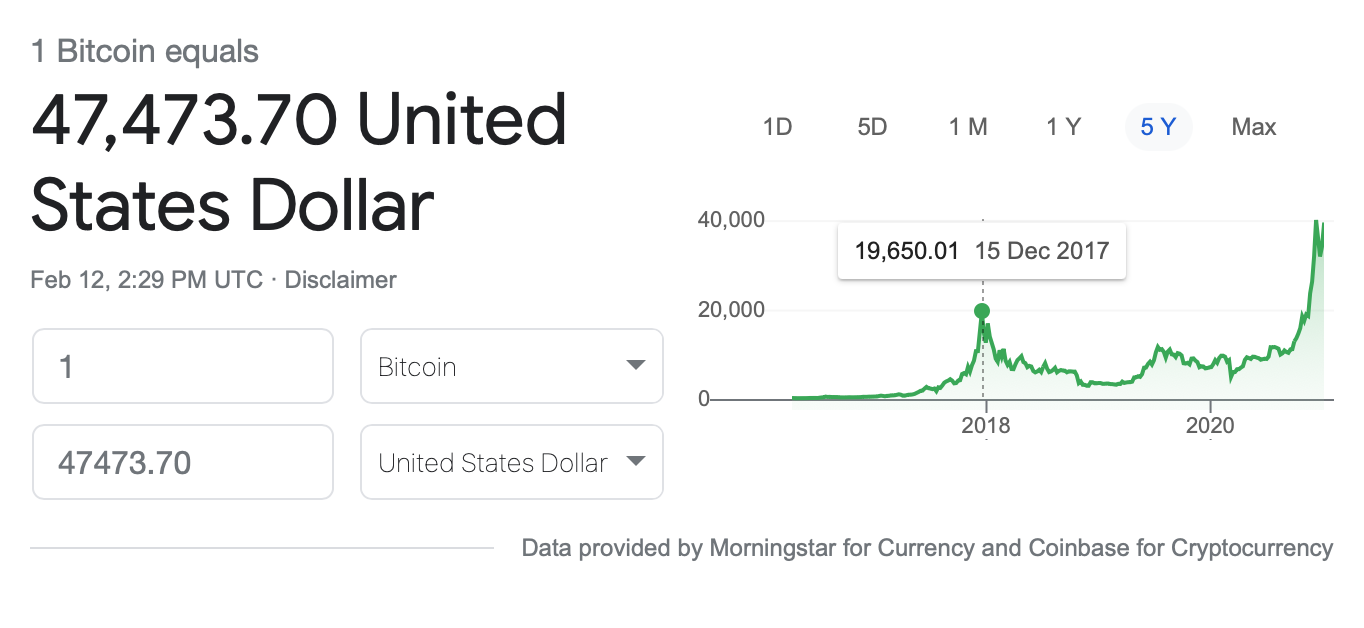
Even by the most modest prediction, of $80,000 there is still a chance to double your money if you invest when bitcoin is at $40,000. Depending on when you read this the price of bitcoin could have far surpassed the $500,000 mark. But regardless of when you read this, keep in mind that bitcoin is by nature a deflationary asset, given its fixed supply. With central banks inflating the money supply, most of the value held in fiat currencies will be lost within 5 to 10 years. A conversion of a dilutive asset into a profitable one, regardless of if you are an individual or a business, is never a bad practice.
My Investing Strategy for 2021
https://www.youtube.com/watch?v=M92xMvSdByk&ab_channel=BudgetHolics
Hello everyone, welcome to BudgetHolics. Here is my investing strategy for 2021!
2020 Overview
2020 has been a great year for most investors. I had a return of 120% which I know is not duplicable. If you want to learn more about my best stocks of 2020 check out this video, but you should know these results are not duplicable. A lot of it was due to sheer luck. 2020 was a great year to start investing, and moreover, the companies that already fell within my circle of competence, the companies that did well, were the biggest winners of this past year. There is no way this is going to happen again in 2021. And we should all realise that. You making a good choice, or having a good overall year, doesn’t make you an investing Guru. As you can see from that video, most of my profits came from a handful of companies, which I was then able to use and buy other companies, which, at the time were undervalued or fairly valued. https://www.youtube.com/watch?v=glctoSTr-CI
Active Investing
My strategy only involves active investing. No ETFs, no Index Funds. Prices are inflated, with the 2nd stimulus bill in the works, prices are going to go up even more. Most companies in my portfolio are currently overvalued.
Inflated asset prices, a slow rollout of vaccines and further lockdowns are a clear indicator of an imminent stock market crash. Or at least a correction. I’ve made a full analysis of my thoughts on the 2021 stock market crash, if you want to learn more, check out my video. https://www.youtube.com/watch?v=g2a4Ah5UYtc&t=2s
Timing the market is pointless though. You don’t know when the stock market is going to crash and you could lose months or even years worth of profits by trying to find the right time to invest. Although keeping some investing cash on the side is a good habit, as ti will allow you to grasp good investment opportunities.
Increasing Circle of Competence
I will also seek to widen my Circle of Competence, with respect to both Asset Classes, and Assets.
Crypto
For the past months I’ve been studying up and researching cryptocurrencies, the technologies behind them, their possible application, and their future impact into the world. Particularly I’ve been looking into BTC and ETH as the main assets, extending my research into BCH and smaller cryptocurrencies, in terms of market cap.
My goal for this year is to better my understanding in Crypto, as I will keep DACing into that specific class, and start learning about real estate. From what I have gathered so far, when you look into real estate you need to look into the fundamental characteristics of the region you will invest in.
Stocks
IPOs will continue to stay in sight. A lot of companies going public like stripe, Instacart, Robinhood and Coinbase. Will be rebalancing the portfolio. Trying to DAC in other assets, the main focus is the building of a dividend portfolio.
I am aiming for a 70-30 dividend paying stocks, and I am expecting some companies, like Apple, to overlap.
A lot will depend on the price. Most of the companies in my portfolio are overvalued, and regardless of the type of stock investor you are, dividend or growth, you should always look to buy a good price.
Let me know what is your investing strategy for 2021, and if you enjoyed this article please subscribe to both my read.chash page, and my YouTube Channel! https://www.youtube.com/channel/UC87TBl7VMjbstW7wiCrkpKQ?sub_confirmation=1
Understanding Bitcoin | The future of Money, Banking and Finance?
https://youtu.be/vmwrJ4JMAGI
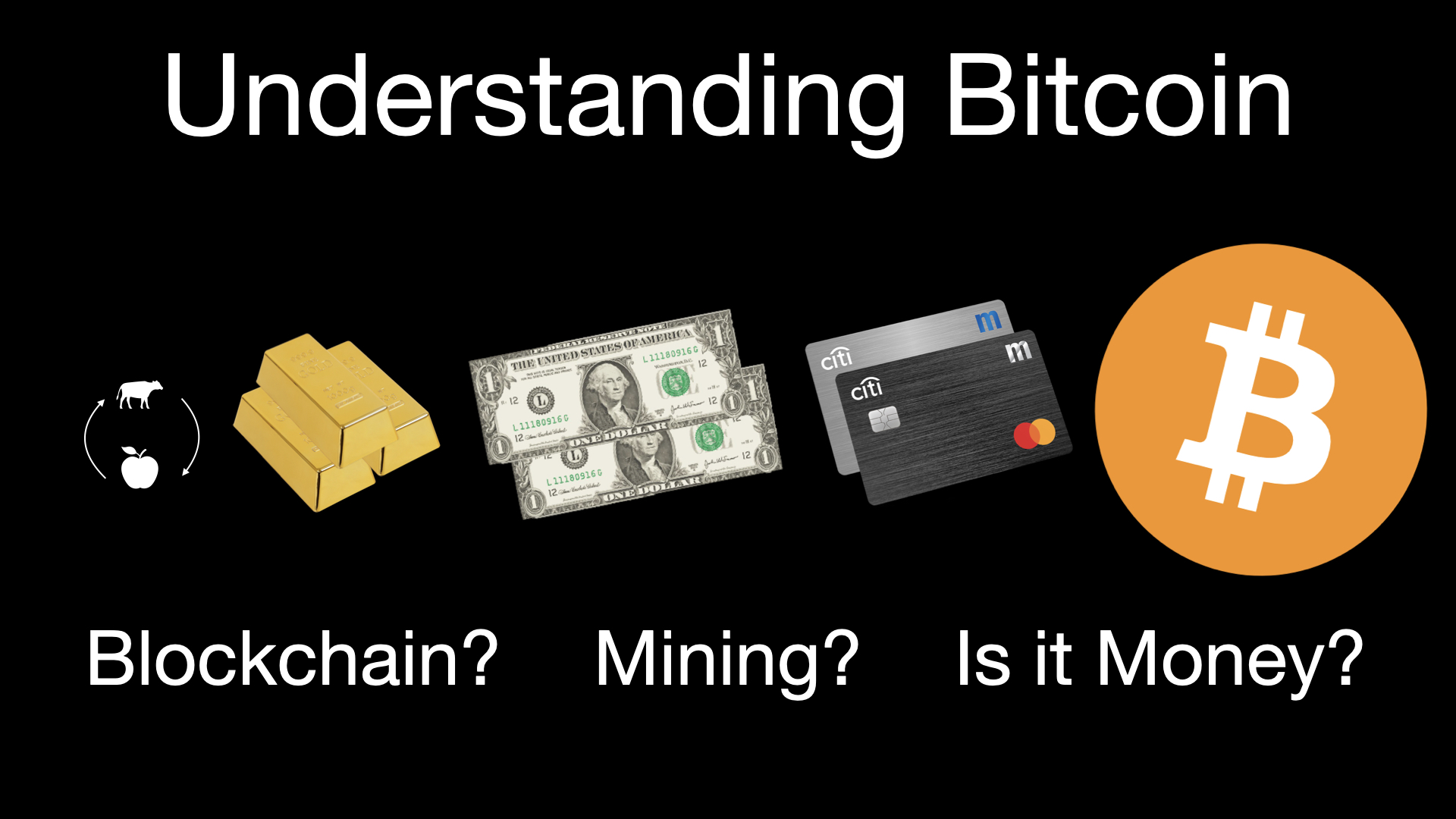
Here are my thoughts on Bitcoin, a short explanation of why it works and how it could be useful in the future.
BTC and cryptocurrency is a form of digital money invented recently, available through the internet. In many countries, people have limited or no access to traditional financial products. In Europe and the US, millions are either unbanked or underbanked. Developing countries are even worse, people's money is controlled by totalitarian governments and corrupt institutions.
Bitcoin is created through mining. Similarly to minerals, in order to get a coin, the miner, which in the case of bitcoin is a computer, needs to run an algorithm, solving complicated equations. These equations validate the transactions of the network, and miners are compensated in BTC by the algorithm, to make up for their hardware and energy expenditure. Transactions are validated by all the systems participating in the process, and a copy of all transactions are stored on each Block (each computer participating on the network), and every participant has access to those transactions. Bitcoin is by design inflationary, as, roughly every 4 years, the reward to miners is halved, reaching to an asymptotic finite number of bitcoins we will reach, at the current rate, in 2140.
The network itself is called Blockchain. It works as an accounting ledger, only, instead of being in the hands of a single individual or entity, it is in the hands of every participant. It is thus a decentralized currency, in contrast to other fiat alternatives. The more Blocks in a Blockchain, the more secure it is, as the more processing power is dedicated to ensuring that each bitcoin is authentic.
For something to qualify as money it needs to have 4 characteristics and serve 4 functions. In the video I analyze how Bitcoin fits all these criteria, and how it serves all these functions.
In order to buy Bitcoin, you only need to sign up to an app on your phone or on your computer. You can use the sign up links below to earn rewards on your deposits.
Earn another $10 in BTC when you buy $100 of Bitcoin, Etherium or any other cryptocurrency: https://www.coinbase.com/join/tafas_e
Earn up to 8.6% APY on your Digital Currency, and up to $250 when you deposit $25 or more using BlockFi: https://blockfi.mxuy67.net/b6LYP
5 Huge Mistakes Investors Make
https://www.youtube.com/watch?v=13WwAySIBdM
Cockyness
The first huge mistake investors make, especially beginners, is that they are too cocky when they start investing. They put a lot of research into their asset purchases. You can’t break down investing into 5 or 10 simple steps. You need to do lots and lots of research, and you can’t rely on a single video, article, or any other resource. Reckless investing can result in two scenarios. The first scenario is that your investment fails, you lose your principal, you lose faith in investing, and you stop investing altogether. The second scenario is that your speculation pays off, you make money, and you invest even more in the same manner and you lose more. Instead, if you’ve made a profit from a speculative investment treat it as a lucky break. If you lost money, treat it as a lesson, reflect on what you did wrong and learn from your mistake. If it was an investment early on in your life, the amount you invested is most probably insignificant, in the long term, and although it might seem like a huge setback at the moment, you can surely recover in the future if you put the right amount of research into your investment.
Investing in Assets they Don't Understand
The second mistake is investing in assets you don’t understand. If you buy a stock, for example, you don’t just buy random rumbers on a screen, or ratios with no real value. When you purchase a stock, you purchase part of a company, and in order to correctly evaluate which company to purchase, you need to be able to understand the company, as well as the products and services it offers to consumers. Cryptocurrencies are even trickier than companies, however, there is tons of material online for you to research cryptocurrencies in general, as well as the specific assets you want to invest in.
Succumbing to Peer Pressure
The third mistake new investors make is succumbing to peer pressure. When formulating your investment strategy and executing transactions you need to base them in your own research and ignore what everyone else is doing. This includes ignoring your friend that bought the next hot stock or the next big cryptocurrency, ignoring what you read in the media about which asset’s price will go up or down, and ignore what the market is doing. Fear of missing out naturally kicks in when you hear lots of people buying an asset, or if you see their returns on that asset. Nonetheless, stay true to your course, and don’t try to duplicate what others are doing, or what others have done. After all, no one cares more about your money than you, thus do your research and trust your instincts. If you can’t do the research yourself, you can always talk to a financial advisor, or buy into an ETF.
Underinvesting
The fourth sin investors commit is underinvesting. There are various reasons that prevent people from investing as much as they should. The most common reason is lack of funds due to lack of income or lack of proper budget. You can counter the lack of incomes buy investing in yourself, getting a better job, a side hassle, or getting a promotion at your current job. The lack of a proper budget can also be fixed, by creating a very strict allocation for each paycheck you receive and sticking to it. If you want to learn more about budgeting your money, check out this video. https://www.youtube.com/watch?v=qVqiB60qQpI
Not Investing at All
Finally, the fifth and largest mistake is not investing at all. This might be due to lack of funds, getting disheartened by previous failures, and trying to time the market. The lack of funds you can fix. If you made an investing mistake previously in your life, you can treat it as a lesson and learn from your past experience. Timing the market also doesn’t make any sense. If you’re a beginner investor you can’t expect to do what others, more experienced, and with much more resources than those currently at your disposal, can’t do. Instead focus on Dollar-Cost averaging your investments, i.e. Putting money on the side and investing at regular intervals over a certain period. By doing so, you hedge against market volatility, that is the fluctuation of asset prices, and you focus on determining the value of the asset you are investing in. Also, if you’re still not comfortable with investing your money, you can use virtual brokers and try out different strategies.
A big thank you to my sponsors:

Encryption in the United States | The battle between Apple Inc. and the F.B.I.
**Disclosure: This is a paper I wrote back in 2016. It looks at the Privacy vs. National Security Debate through a Human Geography Lense, hence the Harvard-style References**
**Introduction**
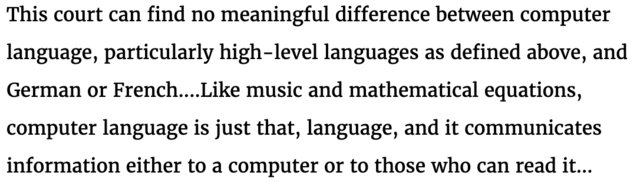
The history of the United States (US) has been traditionally linked to scientific and technological innovation (Nye, 1994). Advancements in the field of cryptology have enabled both the government and privateers to stay ahead of their enemies and competitors. Governments have utilised the encryption software to preserve national security whereas companies have marketed the software to citizens demanding the protection of their privacy, and corporations demanding the safeguarding of their data. The recent debate between Apple Inc. and the Federal Bureau of Investigations (FBI), as well as the public discussion it has stimulated, springs from an amalgamation of perspectives regarding the role of encryption in society. The purpose of this essay is to draw from this debate and comprehend the sociotechnical dynamics of encryption. In doing so, there will be a description of the current debate followed by a brief historical overview of encryption in the US. Thereupon, there will be an analysis of the networks formed within the current case under an Actor-Network Theory (ANT) framework. Thereafter, there will be a co- production analysis divided into three sections: Firstly, the legal environment surrounding encryption will be analysed to facilitate an understanding regarding the atmosphere in which encryption software was developed. Secondly, there will be a section devoted to the use of mobile phones in US society to determine their value and their implication on the routine of US citizens. Thirdly, drawing from the history of technological innovation in the US , this essay will present the sociotechnical imaginaries of encryption technologies, followed by the future implications of this debate.
Description
The Current Debate
The current debate between Apple Inc. and the FBI concerns an iPhone 5c, recovered on December 2015, belonging to Syed Rizwan Farook, one of the terrorists involved in San Bernardino terrorist attack of the same year (Zimmer, 2016). The government was unable to crack the iPhone’s security, and requested that Apple, the phone’s manufacturer, creates a ‘backdoor software’ to provide access to encrypted data in Farook’s iPhone ranging from photos to iMessages – a messaging software shared by all Apple devices that allows for Short Message and Multimedia Message Services (SMS & MMS) over the internet with whoever owns an Apple device (Nakashima, 2016a). In contrast to previous operating systems which required a four-digit numerical password limited to 10,000 possible combinations, the iPhone ran iOS 9, which allowed for an internal six-digit lower-case password consisting of both letters and numbers, a security feature which would require the FBI to spend more than 5 years to crack (Nakashima, 2016a). Additionally, to protect the users’ privacy, iOS 9 has a feature that wipes all data after ten incorrect password entries (ibid). The FBI requested a court order asking for the wiping feature to be removed from the specific iPhone by installing a new operating system on the random access memory of the phone (Blankstein, 2016) under the All Writs Act (Chesney, 2016; Mitchell, 2016; Nakashima, 2016a). The order was granted by Judge Sheri Pym, however it did not account for the viability of such a modification, consequently putting the company in a position where it may face financial penalties regardless of its willingness to cooperate with the aforementioned order (Mitchell, 2016). Apple’s CEO, Tim Cook (2016) issued a statement arguing that Apple is not willing to comply with the FBI’s request for two reasons; firstly, because such a software may hinder the data security of thousands of law abiding customers as the backdoor could be used on multiple phones, and, secondly, because it would establish a legal precedence for all similar cases involving technology companies and encryption software, both locally and globally. Consequently Apple Inc. appealed the court order and built a case arguing that the order violated the company’s first amend rights claiming that code is speech, and in the words of Ted Olson, Apple’s lead attorney, “if we’re saying that there is a serious threat, throw out the constitution in order to prevent that threat, where do we draw the line?” (Segall, et al., 2016). Apple’s position was supported by the ‘Reform Government Surveillance’ movement which consists of leading tech companies such as Microsoft, Google and Facebook (RGS, 2015; 2016). The FBI disputed violation of first amendment rights by asserting that programming code is not a form of speech, to which Apple responded that the government does not understand technology (ibid). At this point a recurring theme arises: Technology changes faster than social norms and conventions, such as laws and constitutions, which leads to a need for increasingly specialized knowledge when addressing how technology advancements affect societal matters and vice versa. Governments and corporations may afford to keep up with these advancements; however common citizens may lag behind, ergo finding themselves vulnerable to an invasion of their privacy. On March 28, the FBI announced that it had managed to access the data on the iPhone, aided by an anonymous third party hackers (Weise, 2016). This development precipitates two even grander debates (Nakashima, 2016b). On the one hand there is the question of the nature of those hackers (ibid). Hackers are traditionally classified into two main groups; ‘white hats’, who uncover the liabilities of software either publicly, or privately to the organisation responsible for its developments, and ‘black hats’, who exploit those vulnerabilities to access networks and purloin personal data (ibid). However, in this case the hackers worked to introduce software vulnerability to a private product, contracted by the government’s needs to gain intelligence, they acted as ‘grey hats’. This is problematic for two reasons. Firstly, there is no clear evidence regarding the hackers’ intention to sell the vulnerability of the software to third parties, endangering the data security of US citizens, due to the reluctance of the FBI to disclose their identity. Secondly, those hackers were paid $1 million of taxpayers’ money, and their work provided little to no value to the investigation, thus raising concerns towards the FBI’s appropriation of funds towards non-traditional projects (Barrett, 2016). On the other hand, the FBI is sceptical regarding whether it should or shouldn’t disclose the flaw with Apple Inc. on the grounds that they may need to prolong this vulnerability so as to exploit it in future terrorist incidents.
It should, at this point be noted that, in April 2015, Michael S. Rogers, the director of the National Security Agency (NSA), suggested that technology companies should be required to “guarantee government access to encrypted data on smartphones and other digital devices” (Nakashima & Gellman, 2015). Edward Snowden (2016) has tweeted that “the FBI is creating a world where citizens rely on Apple to defend their rights, rather than the other way around”. In his book, The Refinement of America: Persons, Houses and Cities, Richard Bushman (1993) illustrates how the US government has promoted individual consumer rights, exemplified by the 2nd amendment right for private ownership of firearms – a right that has more than once backfired against civil security (Greenhouse, 2008). Snowden’s statement on the current debate along with Roger’s statement regarding technology companies are of pivotal importance as they encapsulate, intentionally or not, how the role of the state is shifting from a liberal mind-set of no government intervention to a controlling state that accumulates power and intelligence through technology. As Dolan and Kim (2016) have pointed out this debate is not limited to a specific device in a specific case, but it will potentially establish a precedent in a wider debate of privacy versus national security. John McAfee, the developer of the first commercial antivirus software, has in several instances highlighted the importance of this debate (McAfee, 2016a). Regarding the outcome provided by the third party hackers, he commented that this solution bears no difference to the universal key that Apple refused to provide (Balakrishnan, 2016). Hence, Tim Cook’s dystopian prediction, of a future where consumers’ privacy is threatened, may come to reality, especially when taking into accounts various incidents where US government agencies such as the NSA have been hacked due to backdoors they installed in supposedly secure networks (McAfee, 2016b), exposing the citizens to the number one threat to national security, cyber-attacks (Limitone, 2016).
History of Encryption
Cryptography has been a field of study since 1900BC, as various parties have historically sought to conceal some sort of information (SANS Institute, 2001). Etymologically, encryption derives from the word “κρυφό”, meaning hidden in Greek. In 1929 the American Cryptogram Association was found (Zimmer, 2016). After WW1, William F. Friedman, a renowned US cryptographer was able to break the Japanese ‘Purple’ cipher (Kahn, 1996). However, the field sustained an exponential change during WW2, when the allied forces sought to decrypt the German Enigma Cipher, primarily through the work of Marian Rajewski and Alan Turing, who built one of the first analogue decryption computers (SANS Institute, 2001). Post WW2, encryption and cryptography were clearly rooted in US governance policies. An extremely influential figure in science and technology studies was Vannevar Bush, an MIT educated engineer that became a policy advisor to the US government, and made several recommendations to President Franklin D. Roosevelt regarding the importance of scientific research for the advancement of the American Society (Zachary, 1997). Consequently, encryption played a crucial role during the Cold War as it effectuated the NSA’s formation in 1952 under President Truman, an agency that came into being with the objective to monitor surveillance and global communications to avert a crisis such as the Pearl Harbor incident (Johnson, 2008). In the report, several intelligence agency rivalries are present especially between CIA and the NSA regarding the nature of surveillance and the manner in which the data collected will be used (ibid). David Kahn (1996) devotes an entire chapter of his book on the history of cryptography to depict how the NSA was developing surveillance technologies observing individuals and government/corporate bodies both within and outside the US. It should at this point be noted that when googling a summary of this book, the first result was a review posted by the CIA library written by Roger Pineau (1996), who expresses scepticism towards the majority of Khan’s sources. Within the book, and the review itself, it is stated that British intelligence dissuaded Khan from revealing all the evidence he had gathered on British cryptology, and it is logical to assume that the US intelligence agencies might have also tampered with the content of the book, especially since the first edition was published in 1967, an era when the internet was not widely used (ibid). Similarly, many segments of Johnson’s report are redacted, leading to the conclusion that government sources on the history of encryption in the US do not provide the entire story.
Actor-Network Theory
Throughout the history of science and technology studies, two main understandings have been clashing; social determinism, the view that society shapes technology, and technological determinism, the view that technology shapes society (Tatnall & Gilding, 1999). However, ANT, developed by Michael Callon, Bruno Latour and John Law provides us with an analytical framework in which neither view is privileged, offering an imaginary wherein society, denoted as human actors, and technology, denoted as non-human actors, are entangled in a network of correlations that determines those actors’ identities (Tatnall & Gilding, 1999; Cressman, 2009). ANT is built on the axiom of ‘generalised symmetry’, a conception that cognizes the heterogeneity of human and non-human actors, whilst acknowledging gravity of both actors in the formation of social dynamics (Callon, 1986).
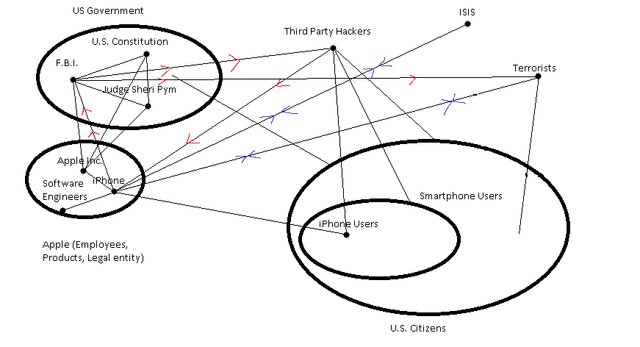
Figure 1 depicts some of the actors in the Apple vs. FBI debate described previously, and the network(s) they form. When software engineers coded the encryption software, as well as the feature that wipes the iPhone to protect data security, their identity was not limited to the advancement of technology. They were simultaneously ‘sociologist engineers’ that engaged in the process of ‘heterogeneous engineering’ as they affected the sociotechnical reality by concurrently producing new software, thus designing novel technology, and by designing a social world wherein personal data could be safeguarded (Callon, 1987; Law, 1987). The property of ‘secret keeping’ that would otherwise be attributed to a friend or family member, a human actor, is ‘translated’ into the iPhone, a fusion of software and hardware that constitutes a non-human actor, which has become the ‘delegate’ of this property (Latour, 1992). ANT is often concerned with natural sciences research and laboratories (Latour & Woolgar, 1979). It describes laboratory equipment as ‘inscription devices’ that transform matter into text (ibid). The value of those devices is that they partake in a process of classifying and translating natural findings into numbers and graphs that may be understood by a plethora of human actors. On a similar note, the order of Judge Sheri Pym may be interpreted as an inscription device that instructs different human and non-human actors on how they should behave. Another noteworthy observation of ANT is the value of ‘network effects’ (Bosco, 2006). The behaviour of actors within networks determines the nature of those networks, hence Judge Pym’s order, requiring Apple to alter the behaviour of their employees to assist the FBI investigation, would not solely affect the actors themselves, or the network within the company, but also the an external network of human and non-human actors that interact with Apple, as well as all future cases that may involve a similar piece of technology. Moreover, the process of ‘punctualisation’ proposes that actor-networks may be ‘black-boxed’, decomposed as technological artefacts and analysed as nods in grander networks (Cressman, 2009). The figure above only illustrates a network within the case study at hand. It is therefore significant to appreciate how any development within the specific network might affect other aspects of the sociotechnical sphere.
Co-Production
Legal Environment
Vannevar Bush was a key player in reshaping American science policy both during the war, but especially in the post-war era (Dennis, 2004). In 1945, he delivered to President Franklin D. Roosevelt “Science, The Endless Frontier” a report where he “conceptualized science as part of a larger problem: the nature of postwar American state” (Dennis, 2004, p. 228). Many argue that this altered the US’s perception of science in society as he underlined “the interconnectedness [...] of politics, science and social order” (ibid). The beginning of WW2 found America to be importing scientific and technological knowledge from Western Europe, however the war prevented the production of knowledge in those geographies, hence a need to fund research in American universities emerged (Dennis, 2004). The Manhattan project elucidated the perils of direct armed conflict, hence the Coordinating Committee for Multilateral Export Controls (COCOM) was founded so as to protect the secrecy of technologies associated with both munitions and commercial uses (Yashura, 1991). The beginning of the Cold War found encryption to be demanded primarily by the military, thus the export of encryption ‘know-how’ was regulated through COCOM, however the rise of finance in the 1970s generated a need for encryption software in the private sector which was answered by the establishment of the Data Encryption Standard contracted to IBM (Tuchman, 1997). Importantly, it was President Clinton’s order 13026 that shifted commercial encryption software from military to commercial control (Clinton, 1996). Since the mid-1990s the legal landscape around cryptography has been constantly changing with an array of legislations, bills and through various cases (Koops, 2013). The legal environment revolves around import and export controls, patents, as well as issues regarding the conditions under which private citizens or other entities should allow for, or facilitate the decryption of data (ibid). Specifically, the Digital Millennium Copyright Act, of 1998, “creates penalties for circumventing copyright-protection systems” (ibid). Regarding imports of encryption software there is no regulation in the US, however the export of encryption software is divided into two categories; national security and commercial cases (ibid). Export regulations have been loosening since 1996, as the National Research Council published a study promoting the commercial use of encryption, arguing for reduced state intervention on cryptography in the private sector (ibid). A case that altered US export restrictions on cryptography was Bernstein v. Department of Justice (Dame-Boyle, 2015). In short, the court ruled that the administration’s export regulations that prevented Daniel Bernstein from publishing an encryption algorithm online, violated his 1st Amendment rights as they deprived him of free speech (ibid). This ruling is of particular importance to the Apple v. FBI case as it provided a legal precedent on which Apple based its motion to vacate Judge Pym’s order, arguing that it “amounts to compelled speech and viewpoint discrimination in violation of the First Amendment” (Solomon, 2016).
Use of Smartphones in Society
As illustrated in Figure 2, mobile phones are intertwined with the fundamental aspects of US citizenship (Smith, 2015). We should clarify that the smartphones are much more advanced than traditional mobile phones, as they are similar to laptops or desktop computers in that they allow the user to access the internet and perform various tasks. There are apps created by the company that markets the smartphone, however leading companies, such as Apple, tend to encourage third parties to design applications for their products and market them through e-shops (Jobs, 2007). Technological and social orders are being produced together (Jasanoff, 2004a).The idiom of co-production describes a process wherein scientific knowledge is produced within a societal network of norms, conventions, rules and laws (ibid). This network is, in turn, altered by advancements in the scientific fields (ibid). However, co-productive accounts are traditionally concerned with natural sciences, their impact on society and vice versa (Jasanoff, 1996; Jasanoff, 2004a; Jasanoff, 2004b). Although computer science is not a natural science per ce, we could utilise a co-productive approach to the subject given the rapid advancements on the field and theorisations regarding the ‘Technological Singularity’ – a time in which artificial intelligence will enable the future of man and computer to merge (Vinge, 1993). Although, such theorisations have been a field of dispute, we should only take into account that they stem from an undeniable realisation: computer science is a field advancing exponentially, and it is ineludibly revamping the landscape of social reality. Encryption software was created due to social needs of privacy and confidentiality. The ‘sociologist engineers’ that programmed the iPhone’s security features were driven by a social demand for increased data security. Although the privacy of US citizens was fortified, the malicious use of this technology by criminal groups such as terrorists, concealing their communications, often renders society unable to defend itself against threats, steering our analysis to the understanding that technology impacts society, in that it may hinder the state’s capacity to preserve national security. Consequently, the implementation of the ‘grey hats’ solution may be interpreted as an incident in which society once again alters technology. In general, we may deduce that society and technology co-produce aspects of our sociotechnical reality and that cases such as the one discussed in this essay extend to broader, often conflicting issues, such as the preservation of privacy and national security. President Barack Obama addressed these issues, suggesting that both parties, the Government and Apple Inc., should ‘co- produce’ a solution in which strong encryption does not undermine national security commenting that he is “way on civil liberties side of this thing” (Obama, 2016). In contrast, Donald Trump, the republicans’ leading candidate, has taken a much more absolute stance in the matter, asking consumers to boycott Apple until it cooperates with the FBI (CNN, 2016).
Sociotechnical Imaginaries of Encryption Technology
David E. Nye (1990; 1994) has argued that Americans draw their identities from the nation’s technological achievements over time highlighting the social, political, cultural and economic embeddedness of technological innovation. He describes how the ‘technological sublime’ – a term describing the “sense of awe and disorientation that we experience in the presence of some gigantic structure or immensely powerful machine” (Jeffrey, 1995, p. 85) – was transformed from an artistic representation of technological innovation to an articulation of the American consciousness of exceptionalness (Nye, 1994). New technologies have, essentially, been sources and emblems of national pride, “fundamental to building the state, both as literal articulations of power and as legitimizing structures” (Nye, 2006, p. 162). It is important to understand that while humanity has been involved in technological innovations to increase either safety or efficiency, those innovations often result to unpredicted accidents or disasters (Nye, 2006). Furthermore, Nye underlines that “technology is man’s reaction upon nature or circumstance and that it leads to the construction a new nature, a supernature imposed between man and original nature” (2006, p. 190). This ‘supernature’ is apparent in our current debate, we can thus construct a ‘sociotechnical imaginary’ of encryption technology, “descriptive of attainable futures and prescriptive of the kinds of futures that ought to be attained” (Jasanoff, et al., 2007, p. 1). Technological innovation has allowed for the formulation of a new reality, a new geography in some cases, wherein values such as data security may be preserved and safeguarded in an imaginary ‘cyber-vault’. This overdependence often facilitates the immersion in a supernatural reality in which individuals neglect the existence of the ‘original nature’ and the social dynamics external to this supernature. On a larger scale, this might lead us to two equally dystopic scenarios. On the one hand, it might lead to an Orwellian future in which the state or government enforces draconian measures, sacrificing values such as privacy and diversity on the altar of natural security, implementing policies of extreme and total surveillance, propaganda and so on. One can at this point appreciate the tragic irony of Apple’s 1984 advertisement in which the company promises a future that will bear no similarity to George Orwell’s 1984 (Cole, 2010). On the other hand, it might lead to an actuality of pure anarchy, where the state has succumb to cyber-attacks or terrorist incidents, leading to the eradication of any effective form of governance and the technological return to the ‘dark ages’. Although both scenarios might have crossed the realm of science fiction, the inevitability of some of their aspects cannot be underemphasized. We are therefore in a dire need for the cooperation of the social sphere, including government agencies, judiciary systems and policymakers, and the technological sphere, including technology companies, software and hardware engineers. The inadequacy of the current legal system is apparent as both its rules and its employees seem to be lagging behind advancements in technology, hence the aid of the tech community is required for the establishment of new frameworks under which both privacy and security may be preserved simultaneously to avoid the perils of any dystopian future.
Conclusion
Concluding, encryption has been a matter of diachronic significance to the history of the US. A revision of the debate between Apple Inc. and the FBI encapsulates the multifarious technological and social dimensions of this technology, especially regarding its implications for civil liberties and matters of the state. ANT has been essential in deconstructing the processes and interactions that formulate between various actors within the current debate, thus providing a clear representation of the réseau of sociotechnical dynamics. The legal environment vis-à-vis encryption software as well as the co-production of smartphones in society speak of those technologies’ significance. All things considered, the manner in which this dispute will be resolved will provide a precedent for similar cases, establishing the modus operandi for the co-production of encryption technologies and society. The purpose of this essay was not to vilify or sanctify either party, but to highlight the gravity of fortifying citizens’ privacy while preventing the co- production of terrorist, or other criminal cultures, globally. However, “power tends to corrupt, and absolute power corrupts absolutely” (Dalberg-Acton, 1887), an independent authority should thence ensure that neither a government nor a corporation abuses this power. Given the novelty of this debate, there is not sufficient research on the subject, especially from a STS perspective. Academics, along with trained professionals and experts should provide an interdisciplinary, integrated solution to this disharmony so as to prevent it from hindering either privacy or national security.
A big thank you to my sponsors:
Bibliography
Balakrishnan, A., 2016. McAfee: I know who's helping the FBI hack Apple. [Online] Available at: http://www.cnbc.com/2016/03/22/john-mcafee-speaks-out-on-fbi-apple-hacks-third- party.html
[Accessed 20 April 2016].
Barrett, D., 2016. FBI Paid More Than $1 Million to Hack San Bernardino iPhone. [Online] Available at: http://www.wsj.com/articles/comey-fbi-paid-more-than-1-million-to-hack-san-bernardino- iphone-1461266641
[Accessed 21 April 2016].
Blankstein, A., 2016. Judge Forces Apple to Help Unlock San Bernardino Shooter iPhone. [Online] Available at: http://www.nbcnews.com/storyline/san-bernardino-shooting/judge-forces-apple-help- unlock-san-bernardino-shooter-iphone-n519701
[Accessed 2 April 2016].
Bosco, F. J., 2006. Actor network theory, networks and relational approaches in human geography. In: S. Aitken & G. Valentine, eds. Approaches to Human Geography. London: Sage Publications, pp. 136-146.
Bushman, R., 1993. The Refinement of America: Persons, Houses and CIties. New York: Random House.
Callon, M., 1986. The Sociology of an Actor-Network: The case of the Electric Vehicle. In: M. Callon, J. Law & A. Rip, eds. Mapping the Dynamics of Science and Technology: Sociology of Science in the real World. London: MacMillan Press, pp. 19-34.
Callon, M., 1987. Society in the Making: The Study of Technology as a Tool For Sociological Analysis. In: W. E. Bijker, T. P. Hughes & T. F. Pinch, eds. The Social Construction of Technological Systems. Cambridge, MA: MIT Press, pp. 83-106.
Chesney, R., 2016. Apple vs FBI: The Going Dark Dispute Moves from Congress to the Courtroom. [Online] Available at: https://lawfareblog.com/apple-vs-fbi-going-dark-dispute-moves-congress-courtroom [Accessed 26 March 2016].
Clinton, B., 1996. Executive Order 13026 of November 15, 1996: Administration of Export Controls of Encryption Products. Federal Register: Presidential Documents, 61(224), pp. 58767-58768.
CNN, 2016. Donald Trump: Boycott Apple if they don't help FBI. [Online] Available at: https://www.youtube.com/watch?v=uJmUlh5beLc [Accessed 20 April 2016].
Cole, R., 2010. Apple 1984 Super Bowl Commercial Introducing Macintosh Computer. [Online] Available at: https://www.youtube.com/watch?v=2zfqw8nhUwA [Accessed 20 April 2016].
Cook, T., 2016. A Message to Our Customers. [Online] Available at: http://www.apple.com/customer-letter/
[Accessed 17 February 2016].
Cressman, D., 2009. A Brief Overview of Actor-Network Theory: Punctualization, Heterogenous Engineering & Translation [Online] Available at: http://summit.sfu.ca/item/13593 [Accessed 28 February 2016].
Dalberg-Acton, J., 1887. Letter to Archbishop Mandel Creighton. [Online] Available at: http://history.hanover.edu/courses/excerpts/165acton.html
[Accessed 20 April 2016].
Dame-Boyle, A., 2015. EFF at 25: Remembering the Case that Established Code as Speech. [Online] Available at: https://www.eff.org/deeplinks/2015/04/remembering-case-established-code-speech [Accessed 20 April 2016].
Dennis, M. A., 2004. Reconstructing sociotechnical order: Vannevar Bush and US science policy. In: S. Jasanoff, ed. States of Knowledge: The Co-Production of Science and Social Order. London: Routledge, pp. 225-253.
Dolan, M. & Kim, V., 2016. Apple-FBI fight over iPhone encryption pits privacy against national security. [Online]
Available at: http://www.latimes.com/business/la-me-fbi-apple-legal-20160219-story.html [Accessed 2 April 2016].
Elite NWO Agenda, 2015. IPHONE ENCRYPTION BATTLE - Iphone Encryption Is So Good, COps Cant Get Past It. [Online] Available at: https://www.youtube.com/watch?v=67oans5gsjk [Accessed 10 April 2016].
Greenhouse, L., 2008. Justices Rule for Individual Gun Rights. [Online] Available at:
http://www.nytimes.com/2008/06/27/washington/27scotuscnd.html?_r=1&pagewanted=all [Accessed 20 April 2016].
Jasanoff, S., 1996. Beyond epistemology: relativism and engagement in the politics of science. Social Studies of Science, 26(2), pp. 393-418.
Jasanoff, S., 2004a. The idiom of co-production. In: S. Jasanoff, ed. States of Knowledge: The Co- Production of Science and the Social Order. London: Routledge, pp. 1-12.
Jasanoff, S., 2004b. Ordering knowldege, ordering society. In: States of Knowledge: The Co-Production of Science and Social Order. London: Routledge, pp. 13-45.
Jasanoff, S., Kim, S.-H. & Sperling, S., 2007. Sociotechnical Imaginaries and Science and Technology Policy: A Cross-National Comparison. Cambridge, MA: NSF Research Project, Harvard University.
Jeffrey, K., 1995. [Review of American Technological Sublime]. Environmental History review, 19(2), pp. 85-87.
Jobs, S., 2007. Third Pary
Available http://web.archive.org/web/20080218214950/http://developer.apple.com/iphone/devcenter/third_party_apps.php
[Accessed 20 April 2016].
Johnson, T. R., 2008. American Cryptology during the Cold War, 1945-1989, Washington: National Security Agency.
Kahn, D., 1996. The Codebreakers: The Story of Secret Writtig. 2nd ed. New York: Scribner.
Koops, B.-J., 2013. Cryptography Law: Overview per country. [Online] Available at: http://www.cryptolaw.org/cls2.htm#us [Accessed 20 April 2016].
Latour, B., 1992. What Are the Missing Masses? The Sociology of a Few Mundane Artifacts. In: W. E. Bijker & J. Law, eds. Shaping Technology/Building Society: Studies in Sociotechnical Change. Cambridge, MA: MIT Press, pp. 225-258.
Latour, B. & Woolgar, S., 1979. Laboratory Life: The Construction of Scientific Facts. Beverly Hills: Sage.
Law, J., 1987. Technology and Heterogeneous Engineering: The Case of Portuguese Expansion. In: W. E. Bijker, T. P. Hughes & T. F. Pinch, eds. The Social Construction of Technological Systems: New Directions in the Sociology and History of Technology. Cambridge, MA: MIT Press, pp. 111-134.
Limitone, J., 2016. Fmr. NSA, CIA Chief Hayden Sides with Apple Over Feds. [Online] Available at: http://www.foxbusiness.com/features/2016/03/07/fmr-nsa-cia-chief-hayden-sides-with- apple-over-feds.html
[Accessed 20 April 2016].
McAfee, J., 2016a. Why Apple vs. The FBI Matters To Everyone (CNBC Interview). [Online] Available at: https://www.youtube.com/watch?v=32c-JBVgZPw [Accessed 20 April 2016].
McAfee, J., 2016b. JOHN MCAFEE: The NSA's back door has given every US secret to our enemies. [Online]
Available at: http://www.businessinsider.com/john-mcafee-nsa-back-door-gives-every-us-secret-to- enemies-2016-2?IR=T
[Accessed 20 April 2016].
Mitchell, A. P., 2016. Full Explanation of Court Order to Apple to Unlock San Bernardino Shooters’ iPhone and Apple Refusal (Full text of court order and Tim Cook’s letter included). [Online] Available at: https://www.theinternetpatrol.com/full-explanation-of-court-order-to-apple-to-unlock-san- bernardino-shooters-iphone-and-apple-refusal-full-text-of-court-order-and-tim-cooks-letter-included/ [Accessed 25 March 2016].
Nakashima, E., 2016a. Apple vows to resist FBI demand to crack iPhone linked to San Bernardino attacks. [Online]
Available at: https://www.washingtonpost.com/world/national-security/us-wants-apple-to-help-unlock- iphone-used-by-san-bernardino-shooter/2016/02/16/69b903ee-d4d9-11e5-9823- 02b905009f99_story.html
[Accessed 10 April 2016].
Nakashima, E., 2016b. FBI paid professional hackers one-time fee to crack San Bernardino iPhone. [Online]
Available at: https://www.washingtonpost.com/world/national-security/fbi-paid-professional-hackers- one-time-fee-to-crack-san-bernardino-iphone/2016/04/12/5397814a-00de-11e6-9d36-33d198ea26c5_story.html
[Accessed 20 April 2016].
Nakashima, E. & Gellman, B., 2015. As Encryption spreads, U.S. grapples with clash between pricavy, security. [Online] Available at: https://www.washingtonpost.com/world/national-security/as-encryption-spreads-us- worries-about-access-to-data-for-investigations/2015/04/10/7c1c7518-d401-11e4-a62f- ee745911a4ff_story.html?tid=a_inl
[Accessed 10 April 2016].
Nye, D. E., 1990. Electrifying America: Social Meanings of a New Technology, 1880-1940. Cambridge, MA: MIT Press.
Nye, D. E., 1994. American Technological Sublime. Cambridge, MA: MIT Press.
Nye, D. E., 2006. Technology Matters: Questions to Live With. Cambridge, MA: MIT Press. Obama, B., 2016. Obama Explains The Apple/FBI iPhone Battle [Interview] (11 March 2016).
Pineau, R., 1996. The Codebreakers: The Story of Secret Writing by David Kahn. Book review by Roger Pineau. [Online] Available at: https://www.cia.gov/library/center-for-the-study-of-intelligence/kent- csi/vol12i3/html/v12i3a09p_0001.htm
[Accessed 20 April 2016].
RGS, 2015. Reform Government Surveilance: Global Government Surveillance Reform. [Online] Available at: https://www.reformgovernmentsurveillance.com/ [Accessed 20 April 2016].
RGS, 2016. Reform Government Surveillance statement on the filing of amicus briefs in support of Apple. [Online]
Available at: http://reformgs.tumblr.com/post/140411522597/reform-government-surveillance- statement-on?is_related_post=1
[Accessed 20 April 2016].
SANS Institute, 2001. History of Encryption. [Online] Available at: https://www.sans.org/reading-room/whitepapers/vpns/history-encryption-730 [Accessed 20 April 2016].
Segall, L., Pagliery, J. & Wattles, J., 2016. FBI says it has cracked terrorist's iPhone without Apple's help. [Online]
Available at: http://money.cnn.com/2016/03/28/news/companies/fbi-apple-iphone-case- cracked/index.html
[Accessed 20 April 2016].
Smith, A., 2015. U.S. Smartphone Use in 2015. [Online] Available at: http://www.pewinternet.org/2015/04/01/us-smartphone-use-in-2015/ [Accessed 20 April 2016].
Snowden, E., 2016. The @FBI is creating a world where citizens rely on #Apple to defend their rights, rather than the other way around. [Online] Available at: https://twitter.com/Snowden/status/699984388067557376
[Accessed 20 April 2016].
Solomon, B., 2016. Apple To FBI: Forcing Us To Unlock iPhone Violates Free Speech. [Online] Available at: http://www.forbes.com/sites/briansolomon/2016/02/25/apple-to-fbi-forcing-us-to-unlock- iphone-violates-free-speech/#13398e9548a1
[Accessed 20 April 2016].
Tatnall, A. & Gilding, A., 1999. Actor Network Theory and Information Systems Research. [Online] Available at: http://citeseerx.ist.psu.edu/viewdoc/download?doi=10.1.1.10.1265&rep=rep1&type=pdf [Accessed 28 February 2016].
Tuchman, W., 1997. A brief history of the data encryption standard. In: D. E. Denning & P. J. Denning, eds. Internet Besieged: Countering Cyberspace Scofflaws. New York: ACM Press, pp. 275-280.
Vinge, V., 1993. Vision-21: Interdisciplinary Science and Engineering in the Era of Cyberspace. [Online] Available at: https://docs.google.com/file/d/0B-5-JeCa2Z7hN1RfRDlqcXpVYzA/edit [Accessed 20 April 2016].
Weise, E., 2016. Apple v FBI timeline: 43 days that rocked tech. [Online] Available at: http://www.usatoday.com/story/tech/news/2016/03/15/apple-v-fbi-timeline/81827400/ [Accessed 20 April 2016].
Yashura, Y., 1991. The Myth of Free Trade: The Origins of COCOM. The Japanese Journal of American Studies, 4(1), pp. 127-148.
Zachary, G. P., 1997. Endless Frontier: Vannevar Bush, Engineer of the American Century. New York: The Free Press.
Zimmer, B., 2016. Encryption, From Nazis to iPhones. [Online] Available at: http://www.wsj.com/articles/encryption-from-nazis-to-iphones-1458312000 [Accessed 12 April 2016].
Coinbase IPO | Best Growth Stock of 2021?
https://youtu.be/zXuzk7qIXJc
Last Thursday Coinbase announced that it’s going public. If you’re unfamiliar with Coinbase, along with Kraken and Binance, it’s one of the largest crypto exchanges! Many people speculate that it’s going to be the largest IPO of 2021. After Fidelity’s BTC fund, and its partnership with BlockFi to provide BTC-Backed loans, Coinbase’s IPO is another event bridging the gap between cryptocurrencies and traditional finance. https://youtu.be/lIE3z7O7dK8?t=435 https://www.youtube.com/watch?v=-QYnQcpAMhk
Valuation
In a funding round in 2018, Coinbase was valued at $8bn, and since the, the company’s value must have increased due to both the surge in crypto prices, an increase in the price of most tech stocks, along with the increasing number of investors interested in BTC. Moreover, the stock market is at an all time high, which makes investors even more willing to put their money in untested products. Finally, CB is one of the few tech companies that are already profitable! Tesla wasn’t profitable at the time of the company’s IPO and this is the case with most tech companies.
Is Coinbase a Buy?
This brings us to the main question when it comes to stocks and stock videos. Should you buy the stock? Will coinbase be the new tesla? Will you 2x, 5x or 10x your money? Before I answer this question I should point out that I’m not a licensed professional, that this channel is for entertainment purposes only, and that you should always do your own research when it comes to investing.
Are you Bullish on Crypto?
The answer to this question largely depends on your attitude towards bitcoin and cryptocurrencies in general. If you’re a Bitcoin bull, and you believe that BTC will go up, that more people will start investing in Crypto, and that more companies will start accepting Crypto payments, then investing in Coinbase stock would be the next logical step.
Competitive Advantage
However, there are more factors to take into account when investing in a company, even in the case of coinbase with cryptocurrencies holding such immense potential. Does this company have a competitive advantage? Can it do something that other companies can’t? To answer this question, although there are a number of other platforms that have lower fees, or provide more options than coinbase pro, coinbase, in my view, is still the best platform to buy crypto for new investors. That being said, I believe that by 2025, a number of other platforms will have gone public, with robinhood being one such example.
Price
Another thing to consider is the price. Again, as with any company, you should make sure that the stock is priced at a fair value. I do expect a lot of speculation to drive up coinbase price, especially due people having easier access to trading via platforms like Robinhood. And since we don’t currently have any information about the price I can’t say whether Coinbase will be a buy or not. The fact that it’s an already profitable tech company is always a plus, and I would buy if it’s priced at a P/E ratio of up to 30. I realise this is a huge bet, but it’s also a limit. Obviously this could change as new information comes out.
Let me know what are your thoughts on the Coinbase IPO, and if you enjoyed the article and the video, please give them a thumbs up!
A big thanks to my sponsors!
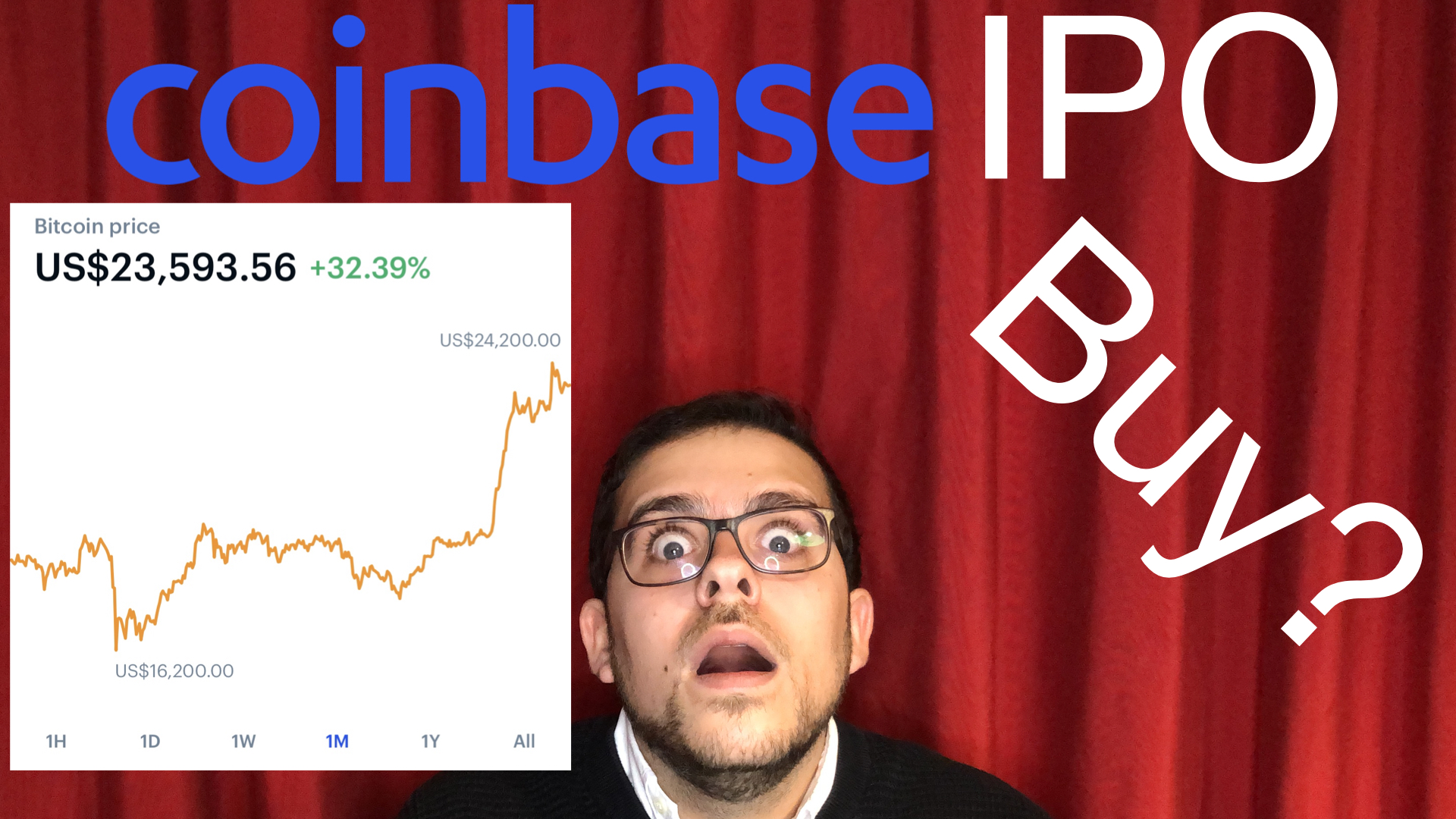
Investing for Beginners | How to Start Investing in 2021, Step by Step
https://youtu.be/oOwq0gC2XSY
In this video we’ll go over a quick guide to investing in 2021 for complete beginners!
Step 1: Before starting to invest you need to have completed 3 tasks:
- You have set up an Emergency Fund.
- You have paid off any High Interest Rate Debt.
- You have money on the side you will not need for the next 3-5 years.
Step 2: Set a goal
You need to ask yourself the following questions:
- Why are you Investing? Is it for a house downpayment? A college fund? Are you trying to build a source of passive income to retire early?
- What is your time frame? How much time do you have until you reach this goal?
- What amount do you need to have invested by the desired date?
If you answer these questions successfully, you will be able to work backwards to today and successfully determine the amount you need invested by now, and by the years to come, to reach your desired goal at the desired time.
Step 3: Decide what kind of Investor you want to be
Do you see yourself as an active investor, i.e. will you devote a lot of time researching different assets and deciding on which assets to buy and when? Or are you planning to take a more laid back approach? The type of Investor you want to be will determine the kind of assets you will purchase.
Step 4: Choose your Broker
You need to find a broker that provides you access to the assets you want to invest in. There are plenty of options online and in the form of apps in your phone. Research different brokers diligently, as it can be a pain to switch between brokers. Also, watch out for fees.
Step 5: Choose which Assets you will Invest in
This refers to choosing the Asset Class (Stocks, Crypto, Bonds, etc.), as well as the Specific Assets (Apple stock, Bitcoin, etc.). Stocks are usually a good starting point for beginner investors, as you likely have an idea of which company's products you'll keep using in the future, hence figure out which of those companies may have future value. HOWEVER, don't just base your investment decisions on your gut, but carefully research your choices.
Step 6: Tune Out your Emotions
When investing, you need to tune out all emotions, and rely on cold, hard logic instead. This includes ignoring what other people are doing and what the media are saying, and doing your own research instead, and figuring out for yourself if this is a good investments, and the risks associated with investing in that particular asset.
Step 7: Do your own research, Don't Rush!
It is always better to lose out on a week's worth of returns, than to invest in something early and then decide you've made a terrible mistake. Research each investment diligently, especially if you're an active investor, and only invest in assets you completely understand. A useful method, especially for new investors, is Dollar-Cost Averaging (DCA), i.e. spreading out the amount you're going to invest across 10-12 months. This method absorbs price volatility, and affords you time to re-evaluate your investments.
How to Manage Your Money |Budgeting Like the 1%
https://youtu.be/qVqiB60qQpI
Welcome to Budgetholics! In this video I'm going to go over the 5 steps you need to take to create an effective Budget.
Step 1: Monitor your Expenses
Keep every receipt, and write everything down. Depending on what kind of person you are, you might do this on a piece of paper or you can create a spreadsheet. You can also do this using your bank’s website or mobile app. Whatever method you use, it’s important to keep a record of what you’re spending. Do this as a favor to me, write everything down for a month. I know it sounds like a lot of work, but trust me it works. After a month of writing everything down, separate those expenses into needs and wants.
Step 2: Open a Checking Account
The second step is to deposit your paycheck into a checking account. If you’re one of the people being paid directly into your Bank account, or already depositing your cash and paychecks, that’s great, you’ve already completed step 2. For those of you who are getting paid in cash or with checks, you need to immediately deposit that money into a checking account. Especially when it comes to checks, when you cash out a check, the person you’re chasing the check out may charge you 1-10% fee, and try to take another portion of that paycheck by selling you other products sold by his store. Shoutout to Minority Mindset for pointing that out. The money you get paid is the maximum money you can spend until your next paycheck. Also, avoid payday loans. Interest rates on those things can get out of hand, and you can end up owing Months of paychecks in interest.
Step 3: Build up an Emergency Fund
Next, create a separate savings account and start creating an emergency fund. Aim to save 3-6 months worth of income. This is not money that should be invested in Real Estate, the Stock Market or Cryptocurrencies, for two reasons. You want to leave this fund as reliable as possible. Your stock portfolio might go up and down, and the same holds for the price of BTC. When the time comes and you need to tap into this fund you don’t want to encounter a balance that is 10 or 30 % down. Also, when selling your stocks, you will be paying a capital gains tax, the cost of tapping into your emergency fund, increases. The second reason you don’t want the money in your emergency fund invested, is that you need it to be as liquid as possible. When selling your crypto, apart from the mining fees, you will also have to wait up to 45’ for your transaction to go through, and in the case of stocks, depending on your broker, it can take up to 5 business days. So you want this fund stored in a savings account to have cash on hand, as soon as you need them!
Step 4: Get Rid of High Interest Rate Debt
Pay-off any high interest rate debt, such as Credit Cards, Payday loans, and Student Loans. Anything that has an interest rate higher than 5% needs to go as fast as possible. Don’t fall into the trap of believing that you can get away with paying the interest while you make money in the stock market, or in bitcoin, because this is a guaranteed return you can achieve!
Step 5: Invest
Finally, you can start investing. When it comes to investing there are two things you need to keep in mind. To begin with, stay within your circle of confidence! Only invest in businesses and assets that you understand. This is the only way you can evaluate them. Ignore what others are doing, where other people are investing their money, and what the newspapers are saying. Do your own research and rely on your own competences.
BTC-Backed Loans | Is Bitcoin becoming Mainstream? Is Ray Dalio the newest Bitcoin Bull?
https://youtu.be/-QYnQcpAMhk
Welcome to Budgetholics! In today’s video we’re gonna talk about BlockFi and Fidelity working together to provide BTC-backed loans, and an apparent change in Ray Dalio’s attitude towards BTC.
Fidelity has approved Bitcoin as Collateral when borrowing on BlockFi. This is a major development in the world of Cryptocurrencies as it signals Bitcoin’s introduction into one of the core facets of banking, lending, with the stamp of approval of a major financial institution. First things First, if you’re into personal finance, investing and cryptocurrencies, but also stock and wealth management, please hit the like and subscribe buttons as this helps immensely with the youtube algorithm!
Fidelity is a financial services company. Based in Boston, MA, it was founded in 1946, and currently manages over $3T in assets!
BlockFi was founded in 2017 by Zac Prince and Flori Marquez with the goal of providing credit services to markets with limited access to financial products.
After BlockFi successfully created a high interest savings account for digital currencies the next logical step is to provide you with a way to spend those currencies. And what better way is there to do that than with a credit card?
BlockFi also has a loan service, whereby you can receive a loan using your CryptoDeposit as collateral.
Fidelity Digital Assets will allow its institutional investors to pledge bitcoin as collateral against cash loans, in partnership with BlockFi.
What this means is that even Hedge Funds, Crypto-miners and OTC trading desks will now be able to apply for loans by offering their Cryptocurrencies as collateral, similarly to how you can receive a mortgage by offering your house as collateral.
In a Twitter thread, Ray Dalio expressed his 3 main concerns when it comes to BTC: https://twitter.com/RayDalio/status/1328731042690306048?s=20
Granted, BTC is not currently being widely accepted by all retailers. However an increasing number of companies, such as Microsoft, Home Depot, and Starbucks have started accepting bitcoin payments.
While BTC has indeed experienced extremely high volatility, according to a Fundstrat research it has proven to be the best performing asset to 2020, outperforming every other asset class such as Treasuries, Gold and Bonds by at least 19%. Looking at its 10-year performance, From 2010 to the end of 2019, BTC has yielded a return of 9 million%.
Dalio’s final argument consists of two points. 1st, he argues that if BTC is deemed to be harmful to national currencies, governments will outlaw it. Secondly he underlines that Gold is the asset most central Banks hold in reserve, and he can’t see large institutions investing in BTC. Up to the end of the 1960s the dollar had a fixed exchange rate with gold, meaning that at any time you could exchange your Dollar bills with a predetermined amount of gold, which up to this time was constant. After 1976, Gold and Dollar were no longer connected by fixed exchange rate, meaning that the dollars circulating across the globe no longer correspond to a fixed amount of gold, stored at the Federal Reserve vaults. Regarding his argument on the willingness of large institutions to incorporate BTC as an asset class, Paypal’s acceptance of BTC trading and payments, along with Fidelity’s BTC fund and the recent partnership with BlockFi, are examples of this willingness. In Dalio's defense, in a Reddit AMA he held 3 days ago, he changed his standing in BTC.
Earn Interest on Crypto: Get up to $250 in crypto when you deposit $25 or more, and earn up to 8.6% APY on your cryptocurrency: https://blockfi.mxuy67.net/b6LYP
Investing in Dividend Stocks
https://youtu.be/dzpMlSpNSPY
Before you instantly hit the dislike button, hear me out! I realize that most of us in the forum consider cryptocurrencies to be the future. A way to right the wrongs of the previous generation, if you will. However, any investor needs do diversify, both in terms of assets, as well as in terms of asset classes. It is therefore important to understand the difference between all asset classes out there.
Here's a short introduction to dividend stocks! I’ll go into what is a dividend stock, what it means to own one, and different strategies when it comes to dividend stock investing.
When a public company, i.e. a company that is listed in tho stock market makes a profit, they have the following 3 options of how to invest this extra sum of money.
1. Reinvest these profits into RnD
Or they can decide to distribute those profits among existing shareholders. This can be done in two ways:
2. Buy-back shares: They buy back shares of their own company, if they believe the company is undervalued by the stock market, indicating that they have more trust in their company and thinking the price will go up in the future.
3. Distribute a percentage of those profits amongst shareholders in the form of a dividend. The company decides how much of it’s profit it will distribute to their shareholders, usually at the end or at the beginning of a financial year, and this is usually expressed as a fixed payment you will receive for each stock you have.
You can choose to buy Fractions of a stock. This means that you don’t buy a single stock but a fraction of the stock, which you can do in two ways. Either, you buy 10% of a $100 stock, thus $10 of that stock or $10 of a $100 stock, thus 10% of that stock. Fractional investing was a breakthrough, especially for young aspire traders in our age, as you can optimise your buys and sells, adjusting them to your budget, you ideal portfolio diversification and so on.
When it comes to individual stocks you can either be a passive or an active investor. A passive investor usually buys a stock and sits on it for a long time, whereas an active investor actively buys and sells stocks every day, every week, every month every year. A common misconception when it comes to dividend investing is that dividend investors are passive, i.e. they buy a stock and they just sit on it. The most common example of why this is not true is Warren Buffet. Buffet has a number of dividend paying stocks, such as apple, and coca-cola, but he is by no means a passive investor. He actively monitors the price of his holdings and increases or lowers his positions based on whether he perceives these stocks are overvalued, undervalued or fairly priced. Berkshire Hathaway, Buffet’s company owns 52 stocks, 36 of which are currently paying dividends (BH does not do so). BH uses those dividends to further his positions and open new positions in new stocks.
Steps to Take:
-Setup a Watchlist
-Shorten The List
-Look for advice, wither through your own research or online.
-Rank the stocks
-Decide on a buying price for each stock.
Dividend Investing Strategies:
-High Dividend Yield
-Dividend Capture
-High Growth Stocks converted into Dividend Stocks
-Investing in Stocks with High Dividend Yield Growth
If you want to learn more about Dividend Stocks, check out my video above.
Happy investing 🤑🤑

5 Best Dividend Stocks to BUY NOW | December 2020
https://youtu.be/fUN0sT-JQR4
Here's a list of the 5 Best Dividend Stocks to Buy Now, and hold throughout 2021, and Beyond!
Dividend stocks, when you chose them properly, allow for the generation of stable passive income, for as long as you hold them.
The most common technique among dividend investors is the Dividend Reinvestment Plan (DRIP). This technique involves the reinvestments of dividends received into the same stock, thus increasing your shares, at no extra cost to you. This is referred to video as a "meta-abusing" strategy, or, if you had a life in high school and/or college, an optimal strategy, increasing your returns with minimal effort on your part, the easiest strategy to implement successfully, when it comes to individual stock investing.
The criteria for stocks to make the list were:
Payout Ratio: a statistic indicating the safety of a stock's dividend.
Dividend Growth: The rate at which a company is increasing its dividend yield.
Sector: The sector in which the company operates, as well as the kind of products/services the company produces.
Earnings: The ability of the company to produce products that will stand the test of time.
Growth: The company's ability and potential to grow either through innovation or an increase in sales.
The list is made up of 4 Dividend Kinds, 2 of Warren Buffett's favorites, and a company that has had the highest growth among dividend stocks in 2020.
Hormel Foods (HRL) - Dividend King
Founded **1891**
Years of Dividend Increases: **55**
Annual Dividend Growth: 10%
Payout Ratio: 56%
3M (MMM) - Dividend King
Years of Dividend Increases: **58**
Annual Dividend Growth: 10%
Paid a dividend for **100** consecutive years
Div. Yield: 3.41%
PR: 64.2%
Coca-Cola (KO) - Dividend King
Years of Dividend Increases: **58**
Annual Dividend Growth Rate: 4.55%
Paid a dividend for **100** years
Div. Yield: 3.09%
PR: 77.73%
Johnson & Johnson (JNJ) - Dividend King
Years of Dividend Increases: **58**
Annual Dividend Growth Rate: 5.98%
Div. Yield: 2.69%
PR: 46.54%
Apple (AAPL) - Dividend King
Years of Dividend Increases: 7
Annual Dividend Growth: 5.98%
Div. Yield: 0.67%
PR: **25%**
For a full analysis check out the link above.
Disclaimer: I am not a Financial Advisor. When it comes to investing, always do your own research!
My Take on the 2021 Stock Market Crash | Expectations and Moves
https://youtu.be/g2a4Ah5UYtc
Here are my thoughts on what will happen to the stock market in 2021, what this means, and how to invest in the following year.
There are 3 main indicators that point towards a Stock Market Crash:
1. Lockdowns
Lockdowns are detrimental for regional economies, especially for SMEs. Although a stimulus package might soften the blow to small businesses and households, it does not address the structural damages of the real economy.
2. Vaccine
A vaccine ready for circulation is great news. However, people's confidence towards the efficacy and safety of the vaccine, along with logistics limitations may slow down the positive impact it would otherwise have.
3. Recessions are Inevitable
Even without the current health crisis, economic recessions take place approximately every 10 years, meaning, we're right on schedule for the next one.
As with previous market crashes, the 2021 stock market crash should not be a problem for well diversified investment portfolios. My strategy for the crash is to:
1. Re-evaluate current positions, and adjust accordingly.
2. Buy into companies I am confident in, especially if their price falls.
3. Utilize a small investment fund for opportunities that may arise during the crash.
Thumbnail Icons taken from Flaticon:
https://www.flaticon.com/premium-icon/bull-market_2386690
https://www.flaticon.com/premium-icon/bear-market_2386689

7 Best Ways to Make Money in 2021
https://youtu.be/lIE3z7O7dK8
Here are my thoughts on the 7 best ways to save, invest, and make money in 2021.
To start with, you need to seal any financial leakages. These appear in the form of High Interest Debt, such as Credit Card Debt and Student Loans. Anything with an interest rate of more than 5% should go.
Next, build a safe financial haven with 3-6 months worth of expenses. This way, you are protected from unpredicted misfortunes and you protect yourself from further debt accumulation, and your investments from untimely liquidations.
Commodities are the safest investment of 2021, and have historically been the best hedge against inflation. Before Bitcoin, Gold was the best performing asset of the past 20 years.
The turbulent times of the stock market are far from over, however, stocks are still one of the best assets to look into investing in the following year. Whether you choose to invest in an index fund or individual stocks, there are opportunities for high returns and large gains. Keep in mind, that the higher the potential gains, the higher the risk, hence, the higher the potential losses.
BTC, ETH and other Digital Currencies appear to be the most interesting asset class of the 2020s. With demand for cryptocurrencies rising, and their acceptance as a payment means increasing, and a fixed supply for most of them, it seems that the earlier you invest, the better.

Introduction
Short Bio:
Hello everyone, my name is Paris, welcome to BudgetHolics! In the middle of my degree in Investment and Finance I came to realize how truly rotten the banking sector had become, and the finance industry in general. However, I pushed through and got my MSc. Since then I’ve been working in a food-importing business, based in the East Coast. In 2018, my interest in Finance was renewed, as I explored various fin-tech ventures and as I dove deeper in the world of Cryptocurrencies.
The Birth of BudgetHolics
Since February, I was on the fence about creating a YouTube Channel and utilizing other media to educate others on personal finance. Being a finance graduate myself, I realized there is much more to know about finance. https://youtube.com/channel/UC87TBl7VMjbstW7wiCrkpKQ
Purpose
Hence, I am here to help YOU figure out what is up with finance. We weren’t taught anything about finance in school, and college didn’t make any improvements. Yet this seems to the main problem of most teenagers and young adults. We were never taught how to file a tax document or no-one provided us with any rudimentary accounting knowledge. We focus on is the generation of passive income sources. At some time we all want to retire and maximize our earnings during that period so as to enjoy life, travel and experience. You can either be a FIRE believer, or you may follow the traditional retirement at your late 60s model, but there are Three constants you need to take into account, regardless of your approach: 1. Proper Budget Management, 2. Generation of Income, 3. Consistent Investment of Funds.
Other Media
YouTube https://youtube.com/channel/UC87TBl7VMjbstW7wiCrkpKQ
Twitter https://twitter.com/budgetholics?s=21
Facebook https://www.facebook.com/BudgetHolics/

 @BudgetHolics