Distributed Ledger System
Accounting is built on the basis of ledgers. They were widely used and built on wooden, clay, and stone tablets, but computers were developed in the 1980s and 1990s, and paper records were digitized, often by manually entering data.
What is the purpose of ledgers?
These early digital ledgers imitated cataloguing and accounting from the days when paper was the standard, and it can be said that digitization was more convenient for record organization rather than document production. Our society's foundation remains paper-based institutions: we constantly use bills, seals, signatures, certificates, and the double-entry bookkeeping system. Nonetheless, advances in computing power and cryptography, as well as the development of new algorithms, allowed us to build a distributed ledger system.
Distributed Ledger
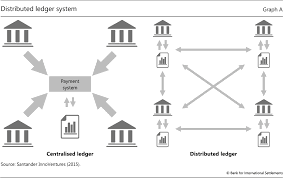
In a nutshell, a distributed ledger is a database that each user (or node) in a wide network stores and updates independently. Its distribution is unusual in that records are not distributed from a central authority to various nodes, but are built and stored separately in each node. It means that each node in a network processes each transaction, comes to its own conclusions, and then votes on those conclusions to ensure that the majority agrees with them. The distributed ledger system is modified after the consensus is reached, and each node holds an identical copy of the ledger. A storage framework with this structure can be more versatile and turn into something more than just a database. Distributed ledgers are extremely flexible, with properties and capacities that greatly exceed those of traditional accounting books. They allow us to formalize and secure new types of digital relationships in a nutshell. Because of the assets and layout of distributed ledgers, the cost of confidence, which is usually provided by attorneys, banks, notaries, and other third parties, can be avoided in these partnerships. When it comes to the way knowledge is stored and exchanged, the invention of a distributed ledger system is a revolution. It refers to both static and dynamic data (a registry) (transactions). Users of distributed ledgers can do more than just store databases; they can manage a system of record instead of just running a database.
Uniswap V3
In November 2018, Uniswap was introduced as a proof-of-concept for automated market makers. The Decentralised Exchange (DEX) enables direct peer-to-peer transactions without the use of a middleman or an intermediary. Developers were able to create a decentralized exchange with automated market-making capabilities using Ethereum.
Uniswap V2 was released two years later, in May 2020, with new features and optimizations that set the stage for massive development. Fast forward to today, and Uniswap has directly mediated $135 billion in trading volume, making it one of the world's biggest cryptocurrency exchanges and responsible for 20% to 25% of all daily Ethereum transactions.
Uniswap was able to challenge the world's largest centralised exchanges in a limited period of time.
The decentralised platform, which is ranked in the top 100 exchanges, provides mission-critical financial infrastructure for everyone who wants to participate in a robust marketplace without borders and with complete financial independence.
What is the aim of Uniswap V3?
The exchange's next update, Uniswap V3, is needed for scalability. The stress tests and traded volumes become more difficult as the network grows in size. Uniswap V3 is designed to improve automated market making and resource efficiency in order to meet rising demand.
Although the DEX has progressed significantly over time, there is still much room for improvement, especially in terms of versatility. Lower fees, less order slippage, and an increase in the impermanent loss structure are among them.
In summary:
Individual liquidity providers (LPs) now have low resolution control over which price ranges their capital is allocated to thanks to Uniswap V3. Individual positions are merged into a single pool, creating a single combined curve on which users can trade.
Multiple fee rates are introduced as part of the update, allowing LPs to be fairly compensated for taking on varying degrees of risk.
Thanks to the keeping of a cumulative record of previous inquiries, improved oracle feeds allow for quicker and less expensive price checks.
To avoid replication of the update on other platforms, Uniswap V3 is not open-source.
Concentrated Liquidity
Uniswap V3 incorporates the idea of concentrated liquidity, which allows limited partners to choose which price levels their resources would be allocated to. With a single pool, liquidity providers may combine numerous concentrated positions.
In an ETH/DAI liquidity pool, for example, an LP will assign $100 to the $1,000-$2,000 price range and another $50 to the $1,500-$1,750 price range. The form of any order book or automated market maker can be approximated using this method by LPs. Trading takes place against all of the individual curves' liquidity, with no additional gas costs per LP.
This function is often marketed as a temporary fix for "permanent loss." If you're into DeFi, you've probably heard the word impermanent loss tossed around in online forums. When the price of your tokens varies between when they're deposited in a tank and when they're not, it's called impermanent loss. The greater the disparity, the greater the loss.
Uniswap V3 is the "only viable alternative" to impermanent loss using concentrated liquidity, according to Uniswap Founder Hayden Adams on Twitter.
Fee tiers for Uniswap V3
The third version of Uniswap contains a new feature that allows users to build custom pools with different fee dynamics. A regular 0.03 percent trading fee was applied to all transactions in V2.
In order to address an inefficiency, the redesign eliminates the one-size-fits-all solution. As a result, Uniswap V3 has several fee levels, allowing liquidity providers to be appropriately compensated for varying degrees of risk under certain parameters.
Uniswap V3 has three dynamic fee tiers per trading pair, having selected the history of capital efficiency: 0.05 percent, 0.30 percent, and 1.00 percent. As a result, liquidity providers will change their margins based on anticipated pair volatility. Non-correlated trading pairs, on the other hand, will have a high risk, while correlated trading pairs will have a low risk. Unfortunately, the average consumer would find these notifications uninteresting.
In response to the question of LP capital performance, Uniswap stated that V3 will have the same liquidity depth as V2 within defined price ranges, but will threaten much less capital.
Oracle feeds have been improved.
The oracles of Uniswap have also increased the performance of time-weighted average prices (TWAP) by lowering the cost of integration. Thanks to the Optimism L2 upgrade, which is an Ethereum-based second-layer solution that will be introduced shortly after V3 releases, Gas fees will be significantly reduced in comparison to V2.
Apart from the reduced rates, the three main improvements in the protocol are essentially uninteresting to the regular user. That isn't it, however.
Departure from the open-source community
Finally, due to misuse of its intellectual property, Uniswap developers have abandoned their open-source origins. Since several exchange clones appeared after Uniswap's launch, the version 3 update includes approved code with a two-year time limit on authorized commercial use. The code will be repurposed as open-source ‘in perpetuity' for the crypto community to use or expand on after this time is over.
Putting all together
On paper, Uniswap V3 is a better model that aims to increase capital flows, liquidity, and overall performance. The implementation of Optimism's layer-2 solution is also expected to significantly reduce Ethereum network fees, which is a top priority for most users. Overall, the cards are on the table, and the stakes for Uniswap V3 are high.

Protect yourself from Scams
Scams target people from all walks of life. Scammers thrive because what they offer you seems genuine, but it is typically too good to be true. Here are a few pointers to help you avoid being a victim of fraud.
Often accept the risk of a scam when approached by an individual or a business entity over the phone, by email, or on a social media site. Be skeptical of deals and don't take them at face value.
Common types of scams
**Social Media Scams**
Financial services scams
A individual posing as a financial advisor, professional trader, or investment adviser can contact you via social media in some cases. Scammers also ask their victims to download an app so that they can conveniently swap fiat currency for cryptocurrency and send money back and forth.
Important: These con artists can suggest that you download a legitimate cryptocurrency exchange or wallet app. The fact that the app is legal does not mean the scammer is offering legitimate financial services.
Sometimes, these con artists will begin by providing a free trial of their services, in which they trade with their own money and share a portion of their income with the target as a way of gaining confidence.
After their victim downloads the app, the scammer will ask them to send small amounts of money to the app, exchange the money for cryptocurrency, and then send the cryptocurrency to the scammer. The scammer then says that they will use these funds for trading and that they will begin sending ‘profits' to their target's bank account, which will then need to be transferred to the app and transformed into crypto before being sent back to the scammer for more trading.
The sums in this case grow larger over time, and there are always several transactions going back and forth in the same day, which is intended to confuse the target so that they can't tell what is their own money and what is the scammer's.
If something sounds too good to be true, it most likely is. Act with caution if anyone calls you out of the blue and offers you up-front profits as part of a free trial, then actively forces you to participate in an investment or trading scheme.
Impersonating well-known people/companies
Hopefully, most of you will immediately recognize this as being too good to be true. Legitimate companies' social media accounts, such as Binance (shown below), are imitated in an attempt to gain access to your personal information or wallet by impersonating the legitimate business. This can happen if you use a social media handle that is identical to the official one but differs slightly.
**Phishing scams**
Phishing is a type of fraud in which someone tries to persuade you to give up your personal information so that it can be used for malicious purposes.
Falsely claiming to be a website or service
Clicking on a link that you think will take you to a website (like an online wallet or exchange) but actually takes you to a clone is one of the easiest scams to fall for. The fake site will request your login credentials and/or other personal information in order to sign in to your account on the real site, possibly stealing any available cryptos.
When visiting a website, make sure to check the URL for a lock symbol and that the website address is right, with no odd symbols or characters preceding the https portion. The absence of a S at the end of the HTTP indicates that the domain does not have a security certificate. This does not necessarily imply that the site is a scam, but it does indicate that you should proceed with caution.
Obtaining details by sending bogus emails
Who hasn't got the classic email from a Nigerian prince in desperate need of assistance with a bank transfer? Many crypto scammers will send fake emails in an attempt to obtain your personal information, similar to the previous example. They will often send emails that seem to be from an official source and ask you to ‘confirm' your information. As a result, they have complete access to everything in the account until this occurs.
**Scams involving Ponzi or pyramid schemes**
A Ponzi scheme is a business model in which investors profit from the investment of new members rather than from the sale of real goods or services. Charles Ponzi coined the term after promising investors 50 percent returns in just 90 days.
There are a few red flags to be mindful of.
If you're not sure if you've been a victim of a scam, here are some common red flags to look out for:
Receiving unsolicited financial resources or advice for the first time
Guilt and emotional coercion are being used to persuade you to give money or cryptocurrency to anyone.
Social media pressure to share personal information (such as evidence of identity or address)
if you do not reply immediately, you will receive several messages with increasing urgency.
Multiple transactions of varying sizes in a short amount of time - this is designed to confuse you, and make it harder to keep track of what you are paying for and whether you are being paid back in full
if you start asking questions or threaten to contact the authorities, you will be blocked or have your account deleted.
This is not appropriate behavior for a financial professional who is giving investment advice or carrying out investment activities on behalf of their clients.
Never give out your recovery key for any app or cryptocurrency exchange, and never transfer money to an untrustworthy wallet.
How do you avoid becoming a victim of a scam?
Don't open connections in emails from people you don't know. Also, double-check the sender's email address to ensure that the email is coming from the person it claims to be from.
Wherever possible, use two-factor authentication. Even if the scammers have stolen your passwords, this will shield your accounts from unauthorized logins.
Do not give out your Private Key, banking or credit card details, birthdate, or Social Security/Social Insurance numbers to anyone who contacts you over the phone, by email, or via social media.
Paying in advance is not a good idea. Scammers usually promise you profits or tell you that you have earned something, but you must pay taxes or fees up front; most likely, they just want your money.
If you've received an enticing offer but have reservations, take some time to consider it and speak with someone you can trust. Take the time to discuss it with a family member, friend, or financial advisor if you are forced to move quickly, as scammers often try to persuade you that something is scarce or on a limited-time bid.

Automated Market Makers
When you exchange digital assets with another trader, you do so on the basis of confidence. Do you recall the person who sold his pizza for 10,000 Bitcoins? Before sending Bitcoins, he had to make sure that the person to whom he was sending BTC would not take his money.
One way to conduct such trading is through Bitcoin forums and IRC networks, where you can rely on an individual's credibility score. Typically, such trading takes place on peer-to-peer (P2P) trading sites. However, there are several threats associated with these networks. After winning confidence, there's a chance the person will betray you.
The need for trusting credibility scores vanished with the creation of exchanges like Coinbase and Mt Gox. Individual traders can deposit money into a centralized account and exchange with each other. However, as with Mt Gox, such trading entails custody risks.
As the number of digital assets grew, these centralized exchanges became liquidity gatekeepers. NFTs, personal tokens, and other on-chain representations of value can increase the amount of digital assets. In this situation, having an infrastructure that allows for the exchange of one asset for another without the intervention of a third party is important. It is at this point that automated market makers and liquidity pools enter the picture.
Automated Market Makers
Automated Market Makers (AMMs) are a type of decentralized exchange protocol that uses a mathematical formula to determine a token's price. Each protocol has its own formula. Balancer, for example, uses the formula x*y=k, where x is the value of one token in the liquidity pool and y is the value of the other. Since k is a constant in this formula, the pool's total liquidity will always be constant.
Different AMMs use different formulas, but they all have one thing in common: they all use algorithms to calculate prices. Smart contracts are used by AMMs as a maker in exchange transactions. AMM's definition is similar to ShapeShift and Changelly's facilities. The only difference is that liquidity pools replace the company's savings. In 2017, the first AMM was developed. It was Bancor, and today we have Uniswap, Curve, Kyber, and Balancer, among other market makers.
**How does it work?**
A market maker that is automated operates in a similar way to an order book exchange. Since all you have to do with AMM is communicate with a smart contract that "makes" the market for you, you don't have to trust your fellow trader.
An automated market maker can be thought of as a peer-to-contract transaction. In most cases, the exchange is conducted between the user and the contract. A formula is used to calculate the price of an asset. Although no counterparties are needed, someone should be in charge of creating the market.
Liquidity Pools
Liquidity suppliers contribute to the pool's liquidity. A liquidity pool is a large sum of money that traders can use to exchange with. LPs that provide liquidity to the pool are rewarded for the trades that take place in their pool. The protocol will determine the incentives that the LPs will receive.
The slippage that occurs in each trade is the primary reason for providing liquidity to the pool. The price was calculated using a parabola-like formula. It means that the shape of a parabola depicts low slippage for small orders and exponentially increasing slippage for large orders.
Different AMM designs would have different slippage issues. You may want to buy all of the ETH in the ETH/DAI pool on Uniswap, for example. You should pay a higher premium for each additional ether in this situation. x*y=z is the formula used here. The equation would not make sense if one of the terms (x or y) is zero. It means that if the pool has no ETH or DAI, the equation will fail and you will be unable to purchase it from the pool.
Impermament Loss
If you deposit a certain amount of tokens in a pool and the price ratio changes after you deposit them, you have suffered an impermanent loss. The amount of loss is determined by the magnitude of the transition. It means that if the price change is significant, the loss would be significant as well. However, if the price ratio is small, the loss would be small as well. Stablecoins and wrapped coins benefit from Automated Market Makers.
Impermanence assumes that the losses will be recovered if the assets return to the same values as they were at the time of the initial deposit. If you withdraw your funds at a different price ratio than when you invested them, on the other hand, the losses are irreversible.
Advantages of AMMs
AMMs are decentralized because they do not use gatekeepers to keep projects or users out, and they do not need any central authority.
The AMM protocols do not enable users to build specific accounts or perform any KYC tests, so they are permissionless. To connect with the protocols, the user only needs a wallet address.
There are no listing fees or admission requirements on the AMM Decentralized Exchanges since everyone can build a liquidity pool for a token.
These DEXs provide intuitive user interfaces.
Disadvatanges of AMMs
AMMs are vulnerable to hacks and bugs, and users can lose money as a result of complicated smart contract interactions.
Traders make their plan known to the rest of the planet. It helps the front-runners to get their orders first and exploit legitimate customers.
Arbitrage traders are important in AMM to correct asset pricing, but on many platforms, they result in a impermament loss.
Conclusion
AMMs (Automated Market Makers) are a must-have in the DeFi space. Markets can be created quickly and easily by anyone. AMMs have a major impact on the cryptocurrency industry. AMMs are still in the early stages of production. There are many AMMs with sleek designs, such as Uniswap, Curve, and PancakeSwap, but they have minimal features and are working to improve the platform. You should expect to see a variety of groundbreaking AMM designs in the future. In the end, each DeFi consumer would benefit from lower transaction costs, less friction, and increased liquidity.