 @Ayukyukyu2
edited
@Ayukyukyu2
edited
Grammar : Tenses 1 When learning a language, we cannot avoid grammar. Grammar is a set of structured rules that govern the arrangement of sentences, phrases, and words in any language. The main function of grammar is so that we can make sentences correctly. The word structure is neat, making it easier for people to understand what we mean. In English there is also learning about grammar and there are lots of them. One of them is *****TENSES.*****
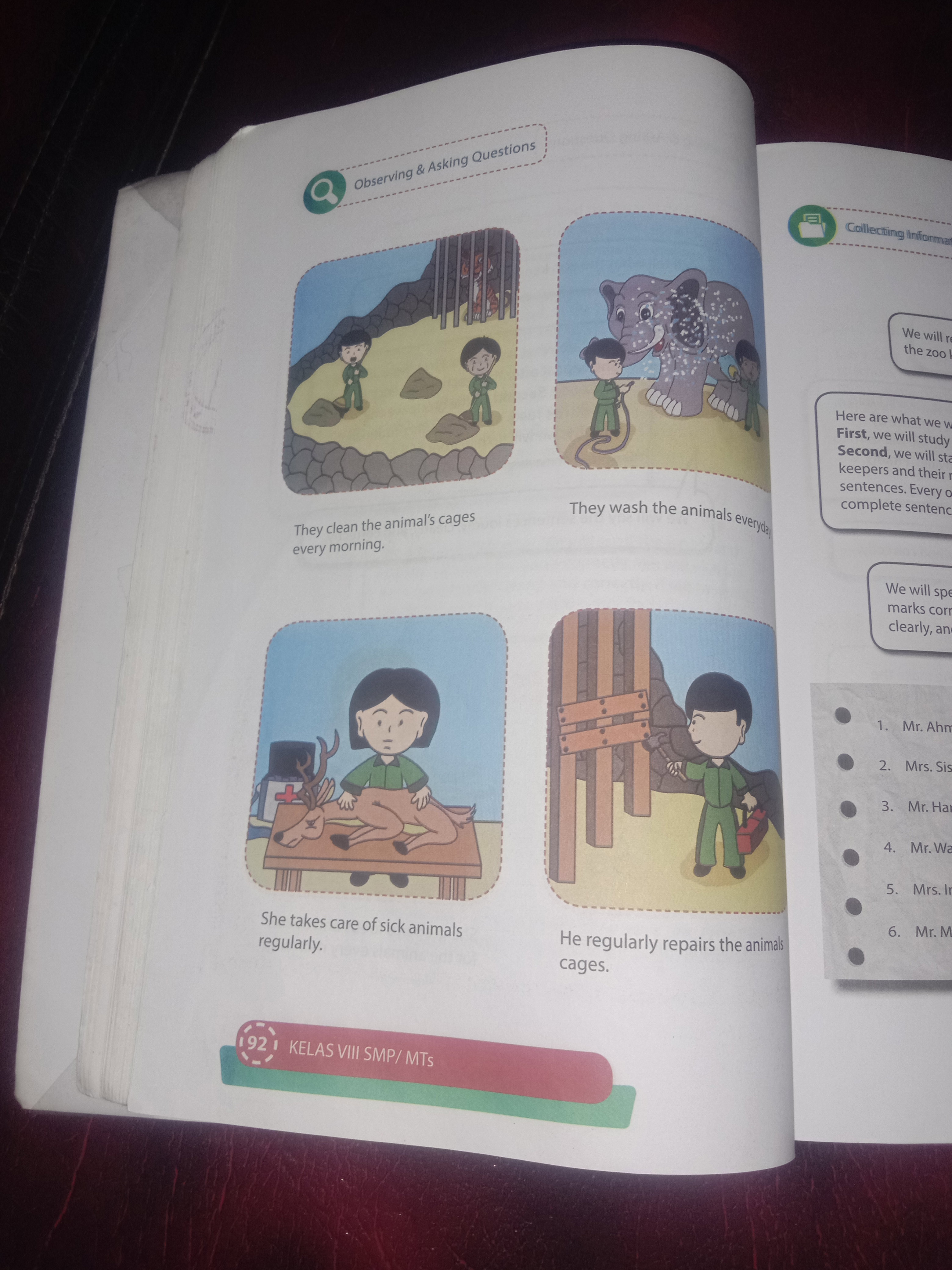
***Do you still remember this subject?*** Tenses are changes in the form of the verb based on the adverb of time and the nature of the activity or event. Tenses are divided into 4 kinds, namely present, past, future, and past future. Then, the tenses become 16 tenses. The basis in learning tenses or sentence forms in English is verbs. Because each tense has a different occurrence, the writing of the verb is also different. There are 4 types of verb changes and each verb has a different function and meaning
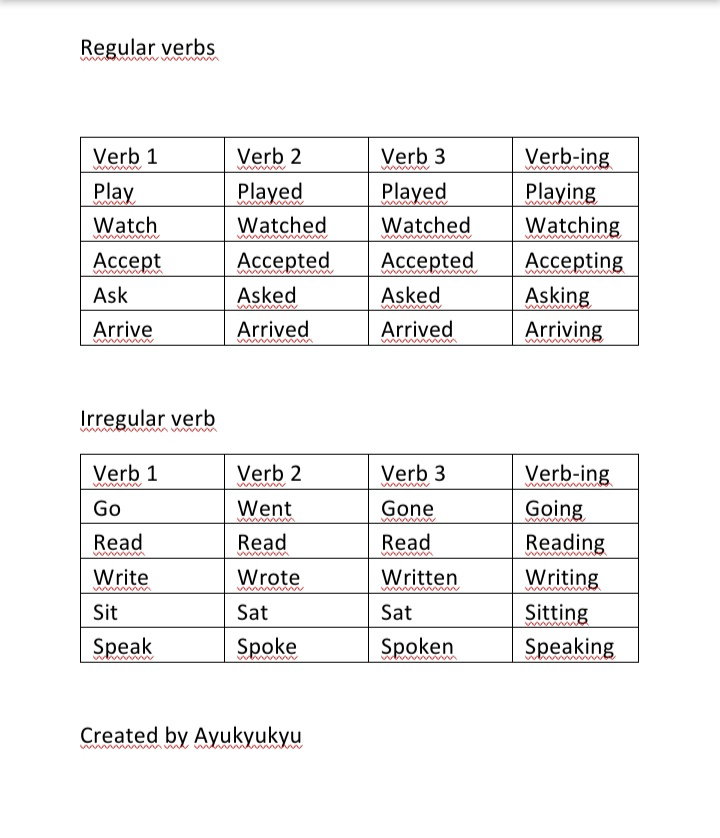
The importance of studying tenses in English subjects when we write in English.
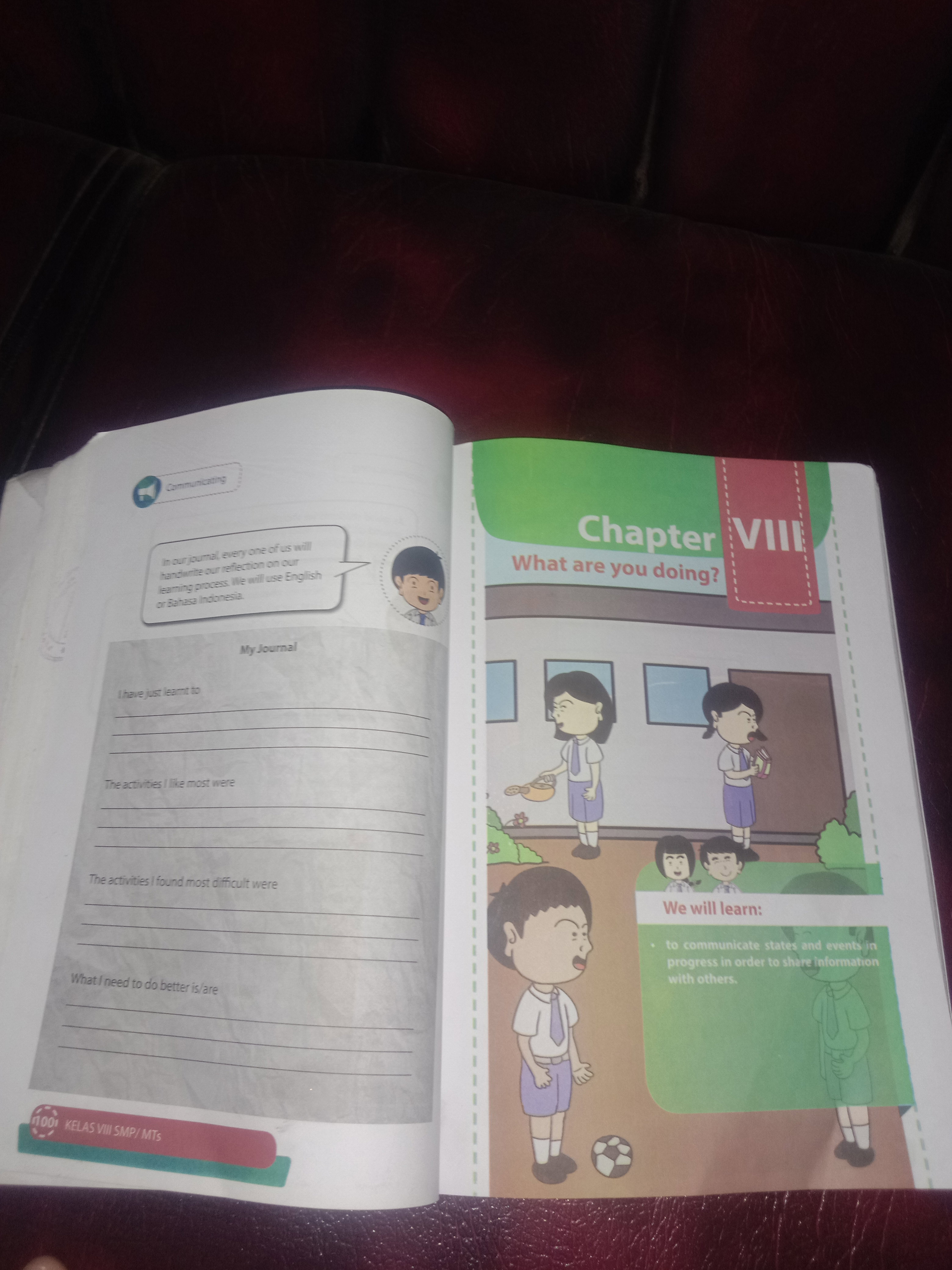
When writing, these tenses will apply. When speaking, it may not be very important in the use of tenses as long as they understand each other, that is enough. But not in normal situations, such as speeches, writing scientific papers, articles, essays etc. So, these tenses will be used. There are many tenses in English but I only want to explain 4 tenses, namely ***Simple Present Tense*** ***Present Continuous Tense*** ***Simple Past Tense*** ***Future Tense*** I will share in two articles. For this time, I want to explain the difference between *****Simple Present and Present Continuous Tenses.***** Simple Present Tense ***Present Tense*** is a form of sentence that tells about everyday events or things that become a habit. And the verb used is the ***first verb ( Verb 1)*** or the basic verb.
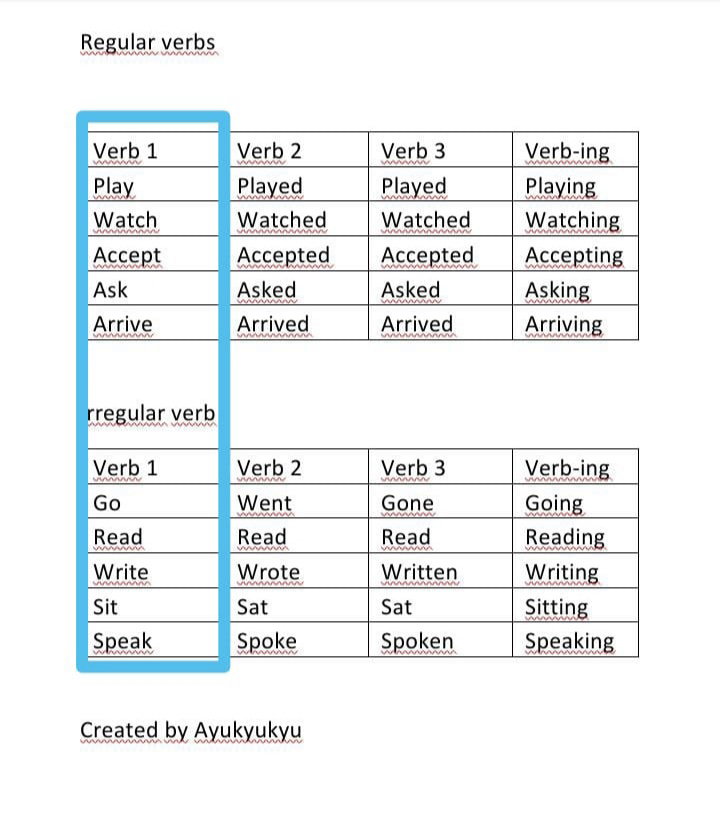
Formula for writing present tense sentences. Formulas in positive ( + ), interrogative ( ? ) and negative sentences (- ) **For example** I go to school by bus every day ( + ) Do you go to school by bicycle every day ( ? ) I don't go to school by bus every day ( - ) *****Subject***** ***I, you, they, we = Do*** ***She, He, it = Does*** If the subject **( she, he, it)** then the verb is added **"S ".** And the verb ends in **O, SH, CH, SS, X** then add the letter **"ES"**. Only for postive sentences. *****For Examples***** ***Sleep - Sleeps*** ***Bring - Brings*** ***Write - writes*** ***Go - goes*** ***Watch - watches*** ***Wash - Washes, etc*** ***For examples*** ***She goes to work by car every day ( + )*** ***Does she go to work by bus every day ( ? )*** ***She doesn't go to work by bus every day ( -)*** **Example of a short text that uses the simple present tense** ***Hello, my name is Ayu. I am a teacher in junior high school. I go to school everyday. I usually wake up at 5 am. Then, I have breakfast at 6 and go to school at 7 by motorbike.*** Present Continuous Tenses Almost the same as the simple present tense. The present continuous is a form of sentence that tells an event that is currently happening. And the verbs used are verbs with the addition of *****ING.***** And in this sentence we use to be *****( is, am, are )*****
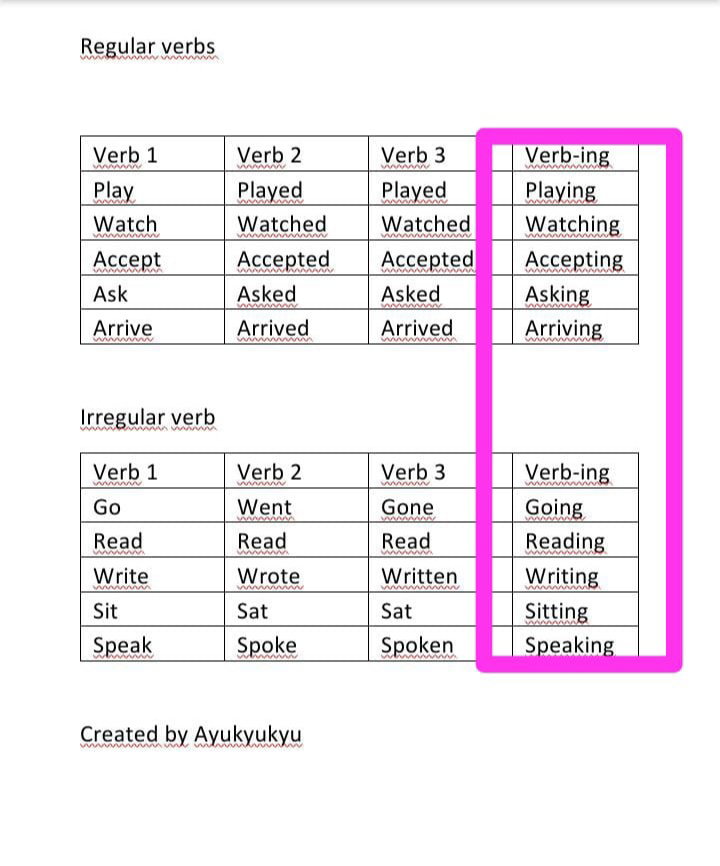
**for Example sentences of present continuous** **He is writing an article ( + )** **Is he writing an article ( - )** **He isn't ( is not ) writing an article ( ? )** So, the verb is only added to ing. But if the verb ends in the letter **E,** change the e to the letter **I** and add the letter **NG** *****Example***** **Write - writing** **Give - giving, etc.** *****Subject and To be***** **I = am** **You, they, we = are** **She, he, it = is** **Example of a short text in the form of the present continuous tense** ***We spent relaxing time at home. My dad is reading the newspaper in the living room. My mother is cooking in the kitchen. And my two younger brothers are watching tv. And I'm helping mom in the kitchen. I usually do the dishes and sweep the house*** Simple Present and Present Continuous Tense are sentence forms that we use very often and sometimes these two tenses can be used at the same time. In the next article I will continue about **the simple past tense and future tense**

Regards AYU







15 comments
Yeah ! Grammar is very important and helpful..so thankful for sharing this amazing content .keep writing
Hopefully useful, thanks for reading.
one confusing lesson for me.. haha
Haha. that's what my students are experiencing now and I'm very slowly explaining this theme. not enough 2 or 3 meetings. I remember when I was in school. This verb must be memorized until it can. if not....😬😬😬
I often skip English lessons, now I just know how to use it. lol
😁😁now it's easy because it uses google translate. But we also have to be careful when using google translater sometimes it doesn't match what we mean. For example, to call her a girl, on Google it comes out "HE" should be SHE. so have to check again
I am always punished for my grammar mistakes at school. I come home from school with the grammar law in mind, and as soon as I step into the house, my mind forgets all that haha. This is important if we want to learn strong English. That was enough for today haha.
I who wrote this article also dizzy. It's easier to explain directly than to write. 😀😀 Enough today, if it's too long, it's make headache. Grammar is important when we are writers
if the different grammar rules are kept in mind then they become easier to learn. These are very important. No, it's not longer than our teacher's staff haha.
This reminds me of english 101 subject
have you ever had trouble? while studying grammar.
Haha nope, english is one of my favorite subject actually
Great dear.. You're awesome. learning English makes it easier for us to have a dialogue with foreigners, at least we understand
Well .. this is why I love English It was my best subject in college
Great.. Friend. English makes it easier for us to communicate with someone from a different country than us. Because English is the unifying language of the world